
Hogg S. Essential microbiology
Подождите немного. Документ загружается.


JWBK011-07 JWBK011-Hogg August 12, 2005 16:8 Char Count= 0
168 PROCARYOTE DIVERSITY
The phylum Eurychaeota is a bigger group than the Crenarchaeota, and includes
halophilic and methanogenic forms. The former are aerobic heterotrophs, requiring a
chloride concentration of at least 1.5 m (generally 2.0–4.0 m) for growth. One species,
Halobacterium salinarum, is able to carry out a unique form of photosynthesis using
the bacterial pigment bacteriorhodopsin, and uses the ATP so generated for the active
transport into the cell of the chloride ions it requires.
Members of the Euryarchaeota such as Methanococcus and Methanobacterium are
unique among all life forms in their ability to generate methane from simple carbon com-
pounds. They are strict anaerobes found in environments such as hot springs, marshes
and the gut of ruminant mammals. The methane is derived from the metabolism of var-
ious simple carbon compounds such as carbon dioxide or methanol in reactions linked
to the production of ATP. e.g.
CO
2
+ 4H
2
−−−−−−−→ CH
4
+ 2H
2
O
CH
3
OH + H
2
−−−−−−−→ CH
4
+ H
2
O
In addition, a few species can cleave acetate to produce methane:
CH
3
COO
−
+ H
2
O −−−−−−−→ CH
4
+ HCO
3
−
This acetotrophic reaction is responsible for the much of the methane production in
sewage sludges. Although sharing the unique facility to generate methane, some of the
methanogenic genera are quite distantly related to one another.
Pleomorphic means
lacking a regular shape.
Other representatives of the Eurychaeota include
the Thermoplasmata and the Thermococci. Thermo-
plasmata are highly acidophilic and moderately ther-
mophilic; they completely lack a cell wall, and are pleo-
morphic. A unique membrane lipid composition allows them to withstand temperatures
of well over 50
◦
C. Thermococci are anaerobic extreme thermophiles found in anoxic
thermal waters at temperatures as high as 95
◦
C. Enzymes isolated from thermococci
have found a variety of applications. A thermostable DNA polymerase from Pyrococcus
furiosus is used as an alternative to Taq polymerase (see Phylum ‘Deinococcus-Thermus’
later in this chapter) in the polymerase chain reaction (PCR).
Representative genera: Methanobacterium, Halobacterium
Members of the Crenarchaeota are nearly all extreme thermophiles, many of them
capable of growth at temperatures in excess of 100
◦
C, including Pyrolobus fumarii,
which has an optimum growth temperature of 106
◦
C, and can survive autoclaving at
121
◦
C.
Many utilise inorganic sulphur compounds as either a source or acceptor of electrons
(respectively, oxidation to H
2
SO
4
or reduction to H
2
S).
Crenarchaeotes are mostly anaerobic, and are thought by many to resemble the
common ancestors of all bacteria.
Representative genera: Thermoproteus, Sulfolobus

JWBK011-07 JWBK011-Hogg August 12, 2005 16:8 Char Count= 0
DOMAIN: BACTERIA 169
Domain: Bacteria
All the remaining bacterial groups belong to the domain Bacteria. This is divided into
23 phyla (Table 7.2), the more important of which are discussed in the following pages,
according to their description in the second edition of Bergey. As with the Archaea,
many other forms are known only through molecular analysis and it is estimated that
these represent at least another 20 phyla.
Phylum: Proteobacteria
We start our survey of the Bacteria with the Proteobacteria. This is by far the biggest
single phylum, and occupies the whole of volume 2 in the second edition of Bergey.
The size of the group is matched by its diversity, both morphological and physiologi-
cal; most forms of metabolism are represented, and the wide range of morphological
forms gives rise to the group’s name. (Proteus was a mythological Greek god who was
able to assume many different forms.) The reason such a diverse range of organisms
Table 7.2 Phyla of domain Bacteria
Phylum Aquificae
Phylum Thermotogae
Phylum Thermodesulfobacteria
Phylum ‘Deinococcus–Thermus’ *
Phylum Chrysiogenetes
Phylum Chloroflexi
Phylum Thermomicrobia
Phylum Nitrospira
Phylum Deferribacteres
Phylum Cyanobacteria
Phylum Chlorobi
Phylum Proteobacteria
Phylum Firmicutes
Phylum Actinobacteria
Phylum Planctomycetes
Phylum Chlamydiae
Phylum Spirochaetes
Phylum Fibrobacteres
Phylum Acidobacteria
Phylum Bacteroidetes
Phylum Fusobacteria
Phylum Verrucomicrobia
Phylum Dictyoglomi
∗
This Phylum has not yet been assigned a
formal name.
Those phyla discussed in the text are shown
in bold print.
JWBK011-07 JWBK011-Hogg August 12, 2005 16:8 Char Count= 0
170 PROCARYOTE DIVERSITY
have been assigned to a single taxonomic grouping is that their 16S rRNA indicates a
common ancestor (thought to be photosynthetic, though few members now retain this
ability). At the time of writing more than 460 genera and 1600 species had been iden-
tified, all of them Gram-negative and representing almost half of all accepted bacterial
genera. These include many of the best known Gram-negative bacteria of medical, in-
dustrial and agricultural importance. For taxonomic purposes, the Proteobacteria have
been divided into five classes reflecting their presumed lines of descent and termed the
Alphaproteobacteria, Betaproteobacteria, Gammaproteobacteria, Deltaproteobacteria
and Epsilonproteobacteria (Figure 7.4). It should be stressed that because classification
is based on molecular relatedness rather than shared phenotypic traits, few if any mor-
phological or physiological properties can be said to be characteristic of all members of
each class. Equally, organisms united by a particular feature may be found in more than
one of the proteobacterial classes, for example nitrifying bacteria are to be found in the
α, β and γ Protobacteria. For this reason, in the following paragraphs we describe the
Proteobacteria in terms of their phenotypic characteristics rather than attempt to group
them phylogenetically.
Photosynthetic Proteobacteria
The purple sulphur and purple non-sulphur bacteria are the only members of the Pro-
teobacteria to have retained the photosynthetic ability of their presumed ancestor. The
type of photosynthesis they carry out, however, is quite distinct from that carried out
by plants, algae and cyanobacteria (see later in this chapter), differing in two important
respects:
r
it is anoxygenic – no oxygen is produced by the process
r
it utilizes bacteriochlorophyll a and/or b, which have different absorbance prop-
erties to chlorophylls a and b.
Like organisms that carry out green photosynthesis, however, they incorporate CO
2
into
carbohydrate by means of the Calvin cycle (see Chapter 6). All are at least facultatively
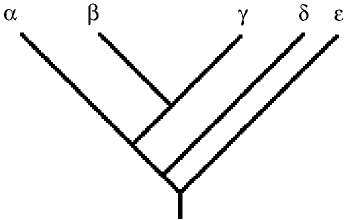
Figure 7.4 The phylogenetic relationships of the Proteobacteria, based on 16S rRNA
sequences
JWBK011-07 JWBK011-Hogg August 12, 2005 16:8 Char Count= 0
DOMAIN: BACTERIA 171
anaerobic, and are typically found in sediments of stagnant lakes and salt marsh pools,
where they may form extensive coloured blooms. Because the absorption spectrum of
bacteriochlorophylls lies mostly in the infrared part of the spectrum, they are able to
utilise light energy that penetrates beyond the surface layers of water.
The coloration, ranging from orange/brown to purple, is due to the presence of
carotenoid pigments such as lycopene and spirillixanthin, which mask the blue/green
colour of the bacteriochlorophylls. The photosynthetic pigments are located on highly
folded extensions of the plasma membrane. Photosynthetic proteobacteria include rods,
cocci and spiral forms.
Under anaerobic conditions, the purple sulphur bacteria typically utilise hydrogen
sulphide or elemental sulphur as an electron donor for the reduction of CO
2
.
H
2
S + CO
2
−−−−−−−→ (CH
2
O)
n
+ S
0
S
0
+ CO
2
+ H
2
O −−−−−−−→ (CH
2
O)
n
+ H
2
SO
4
Many store sulphur in the form of intracellular granules. The purple sulphur bacteria
all belong to the γ -Protobacteria. They are typically found in surface muds, and sulphur
springs, habitats that provide the right combination of light and anaerobic conditions.
Representative genera: Thiospirillum, Chromatium
The purple non-sulphur bacteria were distinguished from the above group because of
their apparent inability to use H
2
S as an electron donor. It is now known, however,
that the majority can do this, but are able to tolerate much lower concentrations in
comparison with the purple sulphur bacteria. The purple non-sulphur bacteria are fac-
ultative anaerobes able to grow as photoheterotrophs, that is, with light as an energy
source and a range of organic molecules such as carbohydrates and organic acids as
sources of both carbon and electrons. In addition, many are able to grow aerobically as
chemoheterotrophs in the absence of light. Under present classification systems, purple
nonsulphur bacteria are divided between the α- and β-Proteobacteria.
Representative genera: Rhodospirillum, Rhodopseudomonas
Nitrifying Proteobacteria
This group comprises aerobic Gram-negative chemolithoautotrophs that derive their
energy from the oxidation of inorganic nitrogen compounds (either ammonia or nitrite),
and their carbon from CO
2
. The nitrifying bacteria are represented in both the α- and
β-Proteobacteria.
The oxidation of ammonia through to nitrate is a two-stage process, with specific
bacteria carrying out each stage (ammonia to nitrite and nitrite to nitrate). This is
reflected in the generic names of the bacteria, bearing the prefix Nitroso- or Nitro-
according to whether they carry out the first or second reaction. Nitrifying bacteria play
an essential role in the cycling of nitrogen in terrestrial, marine and freshwater habitats.
Nitrite, which is toxic to many forms of life, rarely accumulates in the environment,
due to the activity of the Nitrobacteria. As was the case with the purple photosynthetic
bacteria, several cell forms are represented among the nitrifiers.
JWBK011-07 JWBK011-Hogg August 12, 2005 16:8 Char Count= 0
172 PROCARYOTE DIVERSITY
Representative genera: Nitrosomonas (NH
4
+
−−−−−→ NO
2
−
)
Nitrobacter (NO
2
−
−−−−−→ NO
3
−
)
Iron- and sulphur-oxidising Proteobacteria
Two further groups of environmentally significant chemolithoautotrophs derive their
energy through the oxidation of reduced iron and sulphur respectively.
Among the sulphur oxidisers, perhaps the best studied are members of the genus
Acidithiobacillus*, which includes extreme acidophiles such as A. thiooxidans that are
capable of growth at a pH as low as 1.0! These may utilise sulphur in its elemental
form, as H
2
S, metal sulphides, or other forms of reduced sulphur such as thiosulphate:
2S
0
+ 3O
2
+ 2H
2
O −−−−−−−→ 2H
2
SO
4
S
2−
+ 4O
2
−−−−−−−→ 2SO
4
2−
S
2
O
3
2−
+ 2O
2
+ H
2
O −−−−−−−→ 2SO
4
2−
+ 2H
+
The result of all these reactions is the production of sulphuric acid and a lowering of the
environmental pH. Bacteria such as these are responsible for the phenomenon of acid
mine drainage. Their environmental impact is discussed in Chapter 16, whilst Chapter
17 describes their use in the extraction of valuable metals from intractable mineral ores.
A particularly valuable organism in the latter context is A. ferrooxidans, due to its
ability to use not only reduced sulphur compounds as energy sources, but also reduced
iron (see below).
A second group of sulphur oxidisers are bacteria that exist not as single cells, but
join to form filaments, the best known of which is Beggiotoa. These are typically found
in sulphur springs, marine sediments and hydrothermal vents at the bottom of the
sea.
Acidithiobacillus ferrooxidans is also an example of an iron oxidiser. At normal
physiological pH values and in the presence of oxygen, reduced iron (iron II, Fe
2+
)is
spontaneously oxidised to the oxidised form (iron III, Fe
3+
). Under very acidic con-
ditions, the iron remains in its reduced form, unless acted on by certain bacteria. A.
ferrooxidans; is an obligate aerobe able to use iron II as an energy source, converting it
to iron III at an optimum pH range of around 2:
2Fe
2+
+
1
/
2
O
2
+ 2H
+
−−−−−−−→ Fe
3+
+ H
2
O
Gallionella ferruginea, on the other hand, grows around neutrality in oxygen-poor
environments such as bogs and iron springs. Ferric hydroxide is excreted from the
cell and deposited on a stalk-like structure projecting from, and much bigger than,
the cell itself. This gives the macroscopic impression of a mass of red/brown twisted
filaments.
Representative genera: Acidithiobacillus, Beggiotoa (sulphur oxidisers)
Leptospirillum, Gallionella (iron oxidisers)
∗
Note: A. thiooxidans and A. ferrooxidans formerly belonged to the genus Thiobacillus. In 2000, several
species where assigned to new genera, however you may still find them referred to by their old names.

JWBK011-07 JWBK011-Hogg August 12, 2005 16:8 Char Count= 0
DOMAIN: BACTERIA 173
Hydrogen-oxidising Proteobacteria
This diverse group of bacteria are united by their ability to derive energy by using
hydrogen gas as a donor of electrons, and oxygen as an acceptor:
2H
2
+ O
2
−−−−−−−→ 2H
2
O
Nearly all the members of this group are facultative chemolithotrophs, i.e. they can
also grow as heterotrophs, utilising organic compounds instead of CO
2
as their carbon
source, and indeed most grow more efficiently in this way.
Representative genera: Alcaligenes, Ralstonia
Nitrogen-fixing Proteobacteria
Nitrogen fixation is lim-
ited to a few species
of bacteria and cyanob-
acteria. No eucaryotes
are known to have this
property.
The α-Proteobacteria includes certain genera of
nitrogen-fixing bacteria. These are able to fix (reduce)
atmospheric N
2
as NH
4
+
for subsequent incorporation
into cellular materials, a process that requires a consid-
erable input of energy in the form of ATP:
N
2
+ 8e
−
+ 8H
+
+ 16ATP −−−−−−−→, 2NH
4
+
+ 16ADP + 16Pi
Nitrogen-fixing bacteria may be free-living in the soil (e.g. Azotobacter), or form a
symbiotic relationship with cells on the root hairs of leguminous plants such as peas,
beans and clover (e.g. Rhizobium). The nitrogenase responsible for the reaction (actually
a complex of two enzymes) is highly sensitive to oxygen; many nitrogen fixers are
anaerobes, while others have devised ways of keeping the cell interior oxygen-free.
Nitrogen fixation is discussed further in Chapters 15 and 16.
Closely related to Rhizobium, but unable to fix nitrogen, are members of the genus
Agrobacterium. Like Rhizobium, these enter the tissues of plants, but instead of forming
a mutually beneficial association, cause cell proliferation and tumour formation. A.
tumefaciens has proved to be a valuable tool in the genetic engineering of plants, and
is discussed further in Chapter 12.
Representative genera: Rhizobium, Azotobacter
Methanotrophic Proteobacteria
Methane is one of the so-
called greenhouse gas-
es, responsible for the
phenomenon of global
warming. Its effects
would be much more pr-
onounced if it were not
for the activity of metha-
notrophic bacteria.
In discussing the Archaea earlier in this chapter, we en-
countered species capable of the production of methane,
a gas found widely in such diverse locations as marshes,
sewage sludge and animal intestines. Certain proteobac-
teria are able to utilise this methane as a carbon and
energy source and are known as methanotrophs.
Methanotrophs are strict aerobes, requiring oxy-
gen for the oxidation of methane. The methane-
generating bacteria, however, as we’ve seen are anaer-
obes; methanotrophs are consequently to be found at
aerobic/anaerobic interfaces such as topsoil, where they

JWBK011-07 JWBK011-Hogg August 12, 2005 16:8 Char Count= 0
174 PROCARYOTE DIVERSITY
The methylotroph Meth-
ylophilus methylotrophus
was once produced in
huge quantities as a
source of ‘single cell
protein’for use as animal
feed, until the low price
of alternatives such
as soya and fish meal
made it commercially
unviable.
can find both the oxygen and the methane they require.
The methane is firstly oxidised to methanol, then to
formaldehyde, by means of separate enzyme systems.
Some of the carbon in formaldehyde is assimilated into
organic cellular material, while some is further oxidised
to carbon dioxide.
Bacteria able to utilise other single-carbon com-
pounds such as methanol (CH
3
OH) or methylamine
(CH
3
NH
2
) are termed methylotrophs. Depending on
whether they possess the enzyme methane monooxyge-
nase (MMO), they may also be methanotrophs.
Representative genera: Methylomonas, Methylococcus
Sulphate- and sulphur-reducing Proteobacteria
Some 20 genera of anaerobic δ-Proteobacteria reduce either elemental sulphur or oxi-
dised forms of sulphur such as sulphate to hydrogen sulphide. Organic compounds such
as pyruvate, lactate or certain fatty acids act as electron donors:
Desulfovibrio
2CH
3
CHOHCOO
−
+ SO
4
2−
−−−−−−→ 2CH
3
COO
−
+ H
2
S + 2HCO
3
−
Lactate Acetate
Sulphate- and sulphur-reducers are found in anaerobic muds and play an important role
in the global sulphur cycle.
Representative genera: Desulfovibrio (sulphate), Desulfuromonas (sulphur)
Enteric Proteobacteria
This is a large group of rod-shaped bacteria, mostly motile by means of peritrichous
flagella, which all belong to the γ -Proteobacteria. They are facultative aerobes, charac-
terised by their ability in anaerobic conditions to carry out fermentation of glucose and
other sugars to give a variety of products. The nature of these products allows division
into two principal groups, the mixed acid fermenters and the butanediol fermenters
(Figure 6.23). All the enteric bacteria test negative for cytochrome c oxidase (see Vibrio
and related genera below). In view of their similar appearance, members of the group
are distinguished from one another largely by means of their biochemical characteris-
tics. An unknown isolate is subjected to a series of tests including its ability to utilise
substrates such as lactose and citrate, convert tryptophan to indole, and hydrolyse urea.
On the basis of its response to each test, a characteristic profile can be built up for the
isolate, and matched against those of known species (see Table 7.3).
The most thoroughly studied of all bacteria, Escherichia coli (E. coli) is a member
of this group, as are a number of important pathogens of humans such as Salmonella,
Shigella and Yersinia (the causative agent of plague).
Representative genera: Escherichia, Enterobacter

JWBK011-07 JWBK011-Hogg August 12, 2005 16:8 Char Count= 0
Table 7.3 Identification of enteric bacteria on the basis of their biochemical and other properties
Some of the tests used to identify isolates of enteric bacteria are listed below. The table on the next page indicates typical results obtained for
common genera; note, however, that for many cases, the result of a test may vary for different species within a genus. The symbols + and −
indicate that most or all species within a genus give a positive or negative result, whilst +/− denotes that results are more variable within a
genus.
Test Description
Indole Tests for ability to produce indole from the amino acid tryptophan.
Methyl Red Acid production causes methyl red indicator to turn red.
Voges-Proskauer Tests for ability to ferment glucose to acetoin.
Citrate utilisation Demonstrates ability to utilise citrate as sole carbon source.
Urease Demonstrates presence of the enzyme urease by detecting rise in pH due to urea being converted to ammonia
and CO
2
.
Gas from sugars Production of gas from sugars such as glucose is demonstrated by collection in a Durham tube (a small inverted
tube placed in a liquid medium).
H
2
S production Production of H
2
S from sulphate reduction or from sulphur-containing amino acids is demonstrated by the
formation of black iron sulphide in an iron-rich medium.
Ornithine decarboxylase Growth on medium enriched in ornithine leads to pH change when enzyme is present.
Motility Diffusion through soft agar demonstrates cellular movement.
Gelatin liquefaction Demonstrates presence of proteolytic enzymes capable of liquefying a medium containing gelatin.
% age GC Nucleotide composition determined by melting point measurements.
(Continued )
175

JWBK011-07 JWBK011-Hogg August 12, 2005 16:8 Char Count= 0
Table 7.3 Identification of enteric bacteria on the basis of their biochemical properties (Continued )
Escherichia Salmonella Shigella Citrobacter Proteus Serratia Klebsiella Enterobacter Erwinia
Indole +−+/−+/−+/−− +/−− −
Methyl Red ++++++/−+ +/−+
Voges-Proskauer −−−−+/−+ + + +
Citrate utilisation −+/−− ++/−+ + + −
Urease −−−++−+/−− −
Gas from glucose ++−+++/−+ + −
H
2
S production −−−+/−+− − − +
Ornithine decarboxylase +++/−++/−− +/−+ −
Motility ++−+++−++
Gelatin liquefaction −−−−++−+/−+/−
% GC 48–52 50–53 49–53 50–52 38–41 53–59 53–58 52–60 50–58
176

JWBK011-07 JWBK011-Hogg August 12, 2005 16:8 Char Count= 0
DOMAIN: BACTERIA 177
Table 7.4 Differentiation between enteric bacteria, vibrios and
pseudomonads
Enteric bacteria Vibrios Pseudomonads
Oxidase test −ve +ve +ve
Glucose fermentation +ve +ve −ve
Flagella Peritrichous Polar
∗
Polar
∗
When grown on solid media, some Vibrio species also develop lateral
flagella, a unique arrangement termed mixed flagellation.
Vibrio and related genera
A few other genera, including Vibrio and Aeromonas, are also facultative anaerobes
able to carry out the fermentative reactions described above, but are differentiated from
the enteric bacteria by being oxidase-positive (Table 7.4). Vibrio and Photobacterium
both include examples of marine bioluminescent
species; these are widely found both in seawater and
associated with fish and other marine life. The lumi-
nescence, which requires the presence of oxygen, is
due to an oxidation reaction carried out by the en-
zyme luciferase.
Bioluminescence is the
production of light by
living systems
Vibrio cholerae is the causative agent of cholera, a debilitating and often fatal form
of acute diarrhoea transmitted in faecally contaminated water. It remains a major killer
in many third world countries. Several species of Vibrio, including V. cholerae, have
been shown to possess two circular chromosomes instead of the usual one.
Representative genera: Vibrio, Aeromonas
The Pseudomonads
Burkholderia cepacia
can utilise an exception-
ally wide range of or-
ganic carbon sources,
including sugars, carbo-
xylic acids, alcohols,
amino acids, aromatic
compounds and ami-
nes, to name but a few!
Members of this group of proteobacteria, the most im-
portant genus of which is Pseudomonas, are straight
or curved rods with polar flagella. They are chemo-
heterotrophs that generally utilise the Entner–Doudoroff
pathway (see Chapter 6) rather than glycolysis for the
oxidation of hexoses. They are differentiated from the
enteric bacteria (Table 7.4) by being oxidase-positive
and incapable of fermentation. A characteristic of many
pseudomonads is the ability to utilise an extremely wide
range of organic compounds (maybe over 100!) for car-
bon and energy, something that makes them very im-
portant in the recycling of carbon in the environment. Several species are significant
pathogens of animals and plants; Pseudomonas aeruginosa is an effective coloniser of
wounds and burns in humans, while P. syringae causes chlorosis (yellowing of leaves)
in a range of plants. Because of their ability to grow at low temperatures, a number of
pseudomonads are important in the spoilage of food.