
Holik H. (ed.) Handbook of Paper and Board
Подождите немного. Документ загружается.


Table 7.5 Woodfree offset printing paper – double-coat, matt
quality.
Precoat Topcoat
Amount (parts) Component Amount (parts) Component
100 GCC (60–75% < 2 mm) 80 GCC (90–99% < 2 mm)
8 starch 20 high glossing kaolin
6–8 synthetic binder 10–12 synthetic binder
0.5–1.0 co-binder, thickener
0.5–0.8 optical brightener (as received)
65–68% solids content 66–70% solids content
Table 7.6 Woodfree offset printing paper – single-coat, gloss
quality.
Amount (parts) Component
70–80 GCC (60–99% < 2 mm)
20–30 high glossing kaolin
12 synthetic binder
0.5–1.0 co-binder, thickener
0.5–0.8 optical brightener (as received)
65–70% solids content
Table 7.7 Woodfree offset printing paper – double-coat, gloss
quality.
Precoat Topcoat
Amount (parts) Component Amount (parts) Component
100 GCC (60–75% < 2 mm) 80 GCC (60–90% < 2 mm)
8 starch 10 kaolin
6 synthetic binder 10 talc
12 synthetic binder
0.5–1.0 co-binder, thickener
0.5–0,8 optical brightener (as received)
65–68% solids content 66–68 % solids content
7 Coating of Paper and Board352
Table 7.8 Wood-containing light weight coated (LWC) paper for
rotogravure printing (51–72 g m
–2
), gloss quality.
Amount (parts) Component
70–100 kaolin
30–0 talc or GCC (90–99 % < 2-mm)
4.5–5.5 synthetic binder (sole binder)
0.5–0.8 stearate (sodium, ammonium or calcium stearate)
50–60% solids content
Table 7.9 Wood-containing light weight coated (LWC) paper for
rotogravure printing (51–72 g m
–2
), matt quality.
Amount (parts) Component
45–50 GCC (75–90% < 2-mm)
20 kaolin
30–35 talc
5.0–5.5 synthetic binder (sole binder)
0.5–0.8 stearate
50–60% solids content
Table 7.10 Wood-containing light weight coated (LWC) paper
for web offset printing (50–70 g m
–2
).
Amount (parts) Component
50–70 GCC (90–99% < 2 mm)
30–50 kaolin
10–12 synthetic binder
0.5–1.5 co-binder, thickener
2–4 natural co-binder
60–70% solids content
7.6 Coating Color Formulations 353

7.7
Coating Color Preparation [1, 3, 4, 8]
7.7.1
General Aspects of Coating Kitchen Set-up
The objective of a coating color preparation plant is to prepare the desired amount
of coating color in the required quality using a combination of mixing, pumping,
storing, conveying, metering, and screening processes. Such a plant consists of
storage tanks, pipelines, pumps, valves, mixer, screens and dosing equipment.
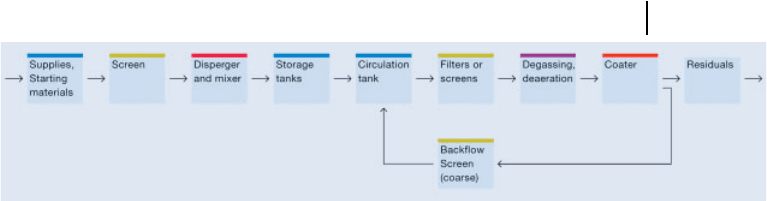
Figure 7.12 shows the key processes starting from unloading chemicals to the
coating color application.
Table 7.11 Solid bleached board (SBS–100 % bleached chemi-
cal pulps) – double coated.
Precoat Topcoat
Amount (parts) Component Amount (parts) Component
80–100 GCC (60–90 % < 2 mm) 60–80 GCC (90–99 % < 2 mm)
0–20 kaolin 20–40 kaolin
12–14 synthetic binder 12–15 synthetic binder
0.5–1 co-binder, thickener 0.5–1.5 co-binder, thickener
55–68% solids content 65–70 % solids content
Table 7.12 White-lined chipboard (WLC-mainly recycled fibers)
– triple coated.
Precoat Middlecoat Topcoat
Metering bar Air knife Bent-blade
Amount
(parts) Component
Amount
(parts) Component
Amount
(parts) Component
80–100 GCC (60–75 % < 2 mm) 60–80 GCC (60–90% < 2 mm) 80 GCC (90–99% < 2 mm)
0–20 kaolin 10–20 titanium dioxide 20 high glossing kaolin
12–14 synthetic binder 10–20 calcined kaolin 12–14 synthetic binder
0.5–1 co-binder, thickener 14–18 synthetic binder 0.5–1.0 co-binder, thickener
0.5–2.0 co-binder (low viscosity)
50–60% solids content 45–60 % solids content 66–70 % solids content
7 Coating of Paper and Board354
In the coating kitchen all raw materials needed for coating are combined in the
requisite form and sequence. In the past, work in the coating kitchen was largely
manual. Today, the same tasks are usually handled by a process controlled system,
without much human intervention except for monitoring. The mill operators can
track every detail of preparation and coating operations. All the process data are
stored for instant recall. This is to support uniform high quality by selection of the
appropriate raw materials, their separate or joint preparation with strict adherence
to timed dosing sequences, and clean working practices.
Coating kitchens operate either batchwise or continuously. In view of problems
such as dusting of powdery products and for operational reasons, many paper
mills have switched from dry to liquid storage of their starting materials. This also
brings the advantage that individual components can be precisely dosed. In every
case a special handling and make-up process for the individual products is nec-
essary.
7.7.2
Dispersing of Pigments
These days, most of the pigments are delivered as slurries or dispersions with
60–78% solids. These pigments are very well dispersed by the suppliers. Pigments
supplied in the dry form have to be carefully dispersed in the paper mill before
being temporarily stored and converted in liquid form. Poor dispersing leads to
problems such as blade scratches, excess rejects at screens, rheological fluctu-
ations, and runnability disturbances at the coaters.
The first step in dispersing is wetting the particles, eliminating the air layers on
the pigment surfaces. Water is absorbed into the agglomerate pores by capillary
action. Chemical deflocculation will proceed slowly by diffusion. The resulting
dispersion will not be homogenous and will contain agglomerates, which require
physical stress to break them down. For good pigment dispersion at high dry solids
content, a disperser is used to create the physical shear and mixing forces. Two
examples of batch dispersers are shown in Fig. 7.13 and Fig. 7.14. To achieve the
required high solids content of the coating colors some chemicals, namely dispers-
ing agent and caustic soda, must be added to the suspension to improve and
stabilize the dispersion (see section 3.6.9.3.2).
Fig. 7.12 Schematic flow of coating color preparation
(source: Omya).
7.7 Coating Color Preparation
355
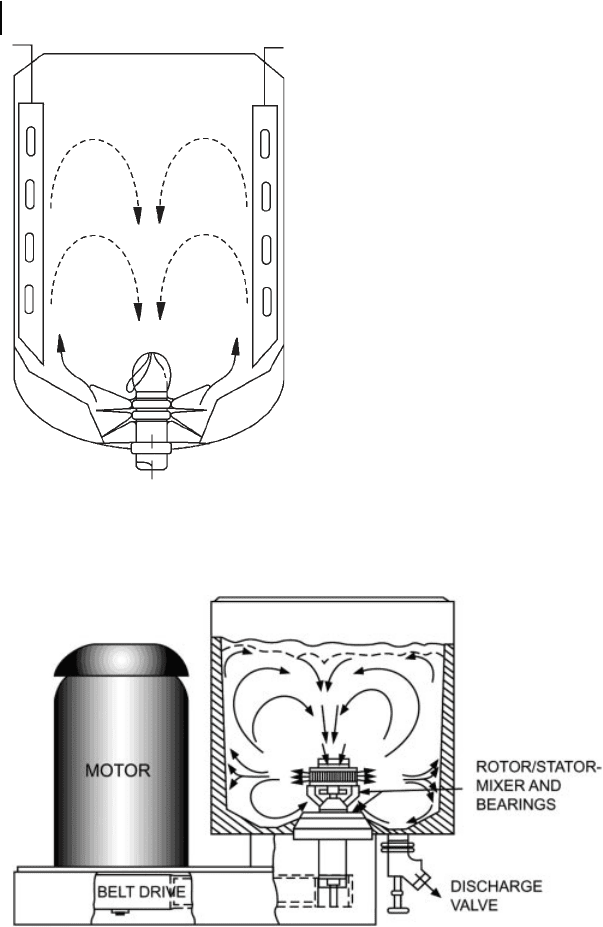
Fig. 7.13 Deliteur disperser (source: Metso).
Fig. 7.14 Kady mill disperser (source: Metso).
7 Coating of Paper and Board
356
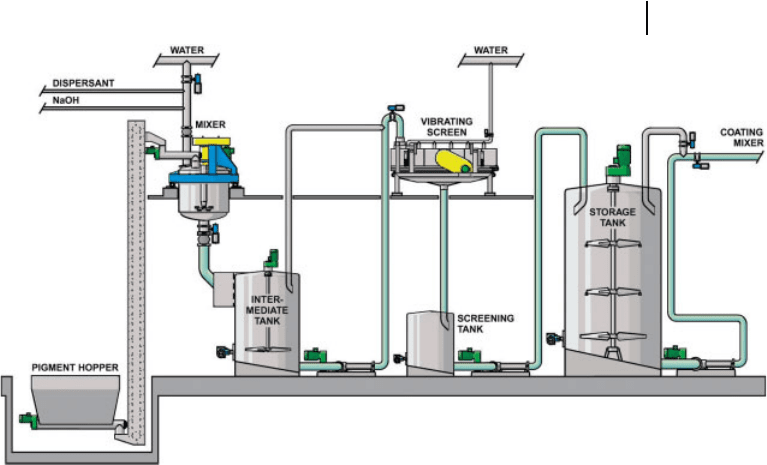
A complete pigment makedown batch process is shown in Fig. 7.15. Railway cars
or truckloads are emptied into a hopper. The pigment is conveyed and dosed into a
disperser by measuring the weight of pigment with load cells. The same is done
with the feed water and dispersing agent plus pH-control chemical. After disper-
sion the content of the disperser is emptied into an intermediate tank. Screening is
a continuous process to ensure maximum capacity and screening efficiency. From
the screens, the slurries go to a screening tank. The slurry will then be pumped to
a large storage tank where it waits for pumping and dosing into the coating color
mixer.
7.7.3
Processing of Binders
7.7.3.1 Latexes
Latexes are delivered by the manufacturers as a water-containing dispersion of
polymerized synthetic chemicals at dry solids levels of approximately 50%. Latexes
contain certain surface-active chemicals, and the main task in coating color prepa-
ration is not to disturb or break their balance. This means that the whole handling
must be clean and without any harmful chemicals. For delivery and storage of the
different latexes a truck or railway car is emptied, using either its own pumps or a
pump from the mill. The storage capacities of latexes are optimized according to
their consumption. Normally these storage tanks are made of stainless steel and
not equipped with any agitators. From these storage tanks, latexes are pumped and
screened into the coating color mixer.
Fig. 7.15 Pigment makedown process (source: Metso).
7.7 Coating Color Preparation
357

7.7.3.2 Starch
Starch has been one of the most popular binders for decades, because it is a cheap
product, especially when utilizing low-cost unmodified starches. These grades are
normally sold at lower costs than pulp. Starch is also a very flexible material and a
paper or board coating mill can convert it to their specific coating requirements.
The starch producing companies can also modify starch by introducing esters or
ethers of starch. A special feature of starch acetates for the paper industry is that
these ester groups are efficient in preventing amylose retrogradation (see below).
They have extremely good viscosity stability. An ether starch, e. g., is appropriate
for its good film-forming property or holdout of organic solvents.
Native or unmodified starch dispersed in cold water, settles out rapidly due to
lack of solubility. A dispersion of starch in water has no adhesive power. To become
an adhesive, the starch has to be heated in water above the gelatinization tem-
perature of the starch, which differs depending on its plant origin (Table 7.13).
When a starch suspension is heated beyond the gelatinization temperature, the
individual starch granules begin to swell and, after a time, a colloidal sol or starch
paste is obtained with adhesive and binding properties. The hot gelatinized starch
paste is a non-Newtonian fluid. A starch paste derived from unmodified starch has
relatively high viscosity at very low solids concentration. In practice, it is nearly
impossible to prepare a manageable starch paste exceeding 7% unmodified starch.
With time and temperature decrease, an increase in viscosity or thickening can be
observed. This thickening is due to a well-known phenomenon for all unmodified
starches called setback. It occurs because during thermal decomposition, e.g., ge-
latinization, the original crystalline arrangement of the starch molecules is lost.
When cooling the starch paste, the molecules cling together again, thus forming
insoluble aggregates. As a result of this crystallization process, the paste solution
gradually turns turbid, while the viscosity increases. Finally, the viscous paste turns
into an opaque mass or gel. In very dilute solutions, there is not enough material
Table 7.13 Basic characteristics of starch.
Potato Barley Wheat Corn Waxy
maize
Tapioca
Source Tuber Grain Grain Grain Grain Tuber
Particle size (m) 10–100 10–35 3–35 5–25 4–30 3–30
Gelatinization temperature (°C) 60–65 80–85 80–85 75–80 65–70 65–70
Moisture at 65% RH (%) 19 13 13 13 13 13
Protein (%) 0.05–0.1 0.3–0.5 0.3–0.5 0.3–0.5 0.2–0.4 0.05–0.1
Fat (%) 0.05 0.4 0.8 0.7 0.2 0.1
Ash (%) 0.3–0.4 0.1–0.2 0.2–0.4 0.1–0.2 0.1–0.2 0.2–0.3
Phosphorus (%) 0.08 0.02 0.06 0.02 0.01 0.01
7 Coating of Paper and Board358
to gel the entire solution so insoluble starch particles sink to the bottom. It is
mainly the linear amylose molecules which exert this usually undesirable ten-
dency, called amylose retrogradation or simply retrogradation, which is an irrevers-
ible process. To prevent retrogradation effectively, modification of the starch is
necessary. Methods to reduce and stabilize the viscosity of starch by gelatinization
and depolymerization are discontinuous or continuous cooking processes. All
starch cooking applications involve an initial dispersion of starch in water to give a
slurry. According to the intended application of the starch, the slurry concentration
will vary between 5% and 40 % dry substance.
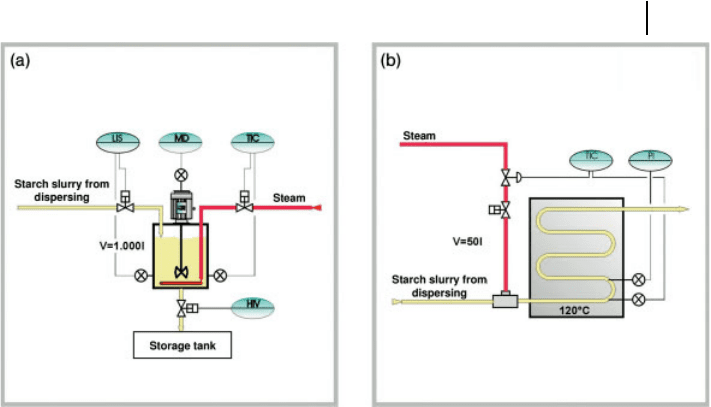
The batchwise cooking of modified starch takes place unpressurized at tem-
peratures around 95 °C for approximately 30 min under good stirring conditions
(Fig. 7.16(a)). Continuous starch cooking is done in the so-called jet cooker at a
steam temperature of approximately 120–130 °C. The steam immediately interacts
with the starch in a Venturi tube and the gelatinization is completed within a few
seconds (Fig. 7.16 (b)). Another common possibility is the enzyme conversion of
native starch, again done either discontinuously or continuously. With the aid of
highly active protein molecules from bacteria, so-called alpha-amylase, the starch
molecules are broken up at 70–85 °C and the enzyme must be inactivated after
approximately 10–20 min, in order to stop further break up. The inactivation can
take place through the addition of acids and holding at 95 °C for 10–15 min or by
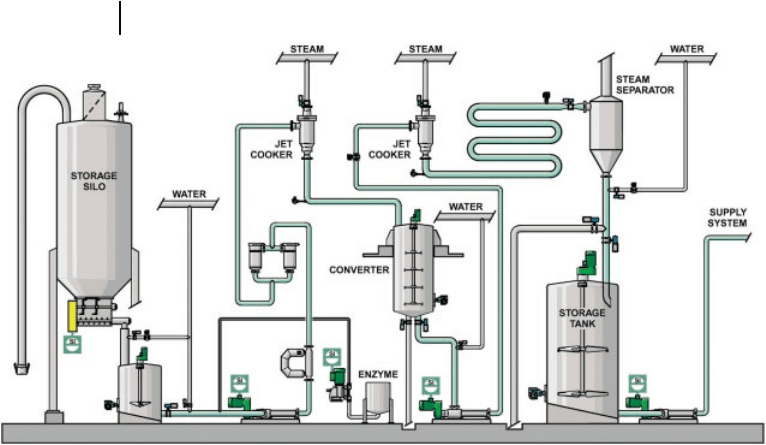
swift heating up to 130 °C. A continuous starch cooking and converting system is
shown in Fig. 7.17.
Fig. 7.16 Starch cooking processes: (a) discontinuous,
(b) continuous (source: BVG).
7.7 Coating Color Preparation
359
7.7.3.3 Other Binders
Polyvinyl alcohol (PVA) and proteins are delivered to the paper or board mills as dry
powder. in sacks or big bags. The handling system for these products has the same
features, cooking with steam, as starches. The key equipment here for the batch
process is a heavy-duty mixer with steam inlet tubes for even distribution of steam
bubbles. The product slurries are heated to 90–100 °C with direct steam heating
and then held at this temperature for 20–30 min until there is a clear solution of
the product in the batch cooker. For example, the PVA solution has a viscosity
maximum at temperatures of 65–75 °C. The major difference between PVA and
starch cooking is that in a PVA cooking system the molecular structure or polymer
chain length is not altered. The hot PVA solution is also held warm in its storage
vessels in order to avoid viscosity changes due to decrease in temperature.
The key control parameter of a protein solution is the solids content, therefore
the metering of water and protein powder must be accurate. Some pH-controlling
chemicals must be added to have the right caustic process conditions. Typical
protein processing parameters are 10–25% solids content, alkali amount (one-
third of sodium hydroxide and two-thirds of ammonium water) around 7% of the
protein, heating to 60 °C and holding at this temperature for between 15 and
30 min. The protein will be cooked until the binder is a lump-free solution.
7.7.3.4 Additives
Additives are, for example, carboxy methyl cellulose (CMC), flow modifiers, pH-
controlling chemicals, preservatives (biocides), defoamers, deaeraters, dyes and
Fig. 7.17 Continuous starch cooking and converting process
(source: Metso).
7 Coating of Paper and Board
360
optical brighteners. All products except CMC are delivered as solutions, emul-
sions, or dispersions. Their concentration can be suitable for direct metering into
the coating color preparation, or they may be diluted to a lower concentration in
order to improve the metering accuracy or to avoid shocks caused by too strong
chemicals. Therefore proper investments in handling and metering systems of
these additives have to be made.
7.7.4
Tanks
The mixing, storage and circulation tanks for coating colors are made of stainless
steel, since the pH range of raw materials and coating colors tends to corrode
standard steels. Most vessels are equipped with an agitator, and some also have a
shell/jacket that may be heated or cooled. Agitators are mostly indispensable be-
cause, in low-viscosity colors especially, solid color components are prone to sed-
imentation unless the suspension is stirred continuously.
7.7.5
Screens and Filters
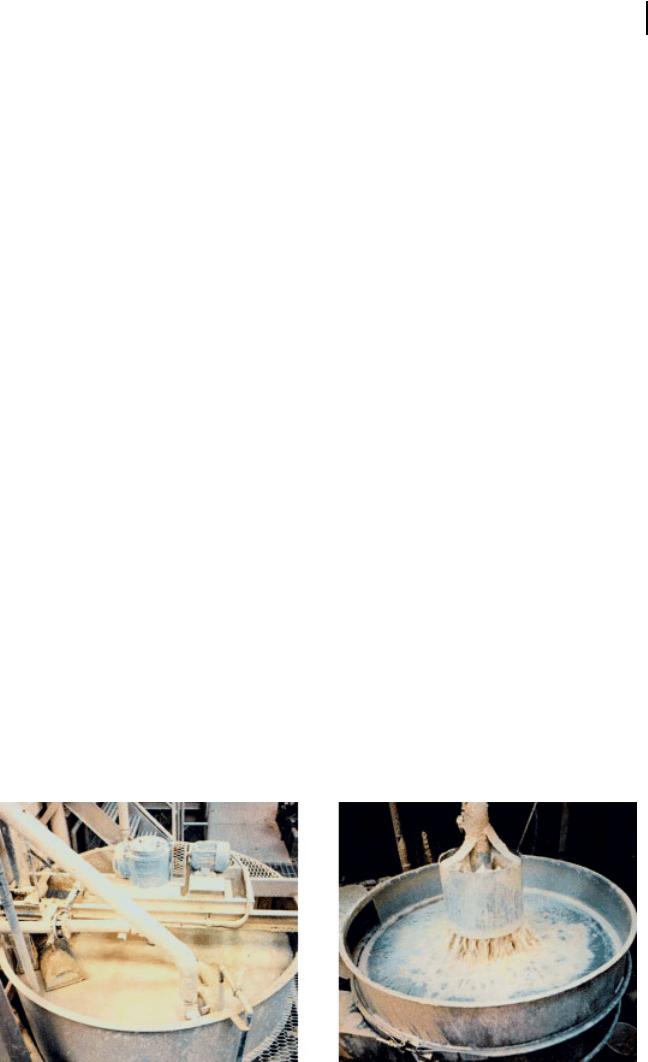
Impurities of any kind in coating colors may lead to serious problems in coating
machines so these contaminants have to be removed by means of either open
vibrating screens (Fig. 7.18) or closed filters (Fig. 7.19). Open screens are fre-
quently preferred, because the retained dirt is visible and defective screens can be
quickly replaced. However, there is a risk of air becoming entrained with the coat-
ing color. Also, color splashes and blocked screens can heavily contaminate the
immediate environment. Closed filters are clean by comparison. In parallel ar-
rangement, they incorporate pressure controls and automatic backwashing func-
tions. In everyday practice, color losses inevitably occur during backwashing. Also,
retained dirt particles can only be identified after filter cartridges are removed.
Fig. 7.18 Open Screen for filtration of pigment slurry/coating
color (source: Omya).
7.7 Coating Color Preparation
361