
Kallen A. Understanding Biostatistics
Подождите немного. Документ загружается.

200 CORRELATION AND REGRESSION IN BIVARIATE DISTRIBUTIONS
0.3
0.4
0.5
Second binomial proportion p
2
0.5 0.6 0.7 0.8
proportionbinomialFirst p
1
0.2
0.6
0.8
0.95
p
1
−
p
2
=
0.
42
p
1
/p
2
=
.
2.34
OR
=
5.94
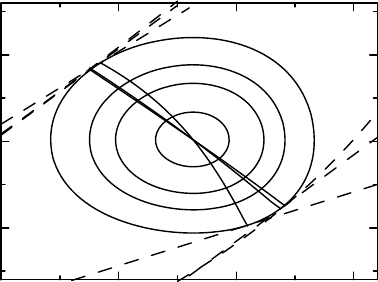
Figure 7.7 Ninety-five percent confidence region for two independent binomial proportions,
illustrating how confidence intervals for functions of these are obtained.
contour to derive simultaneous confidence intervals for the most important triad of de-
rived parameters: the difference = p
1
− p
2
, the ratio RR = p
1
/p
2
, and the odds ratio
OR = p
1
(1 − p
2
)/[p
2
(1 − p
1
)].
Confidence intervals are obtained geometrically as follows. A particular parameter is a
function of the parameters f (p
1
,p
2
), for which we consider the curves f (p
1
,p
2
) = θ for
different, but fixed, θs. Such curves are illustrated in Figure 7.7 as dashed curves (found
outside the confidence region). We vary θ until we find the values for which this curve is
tangential to the 95% contour, as we did for functions of the means in Example 7.5. These
choices of θ determine the confidence interval for the parameter θ = f (p
1
,p
2
). Only the
curves in the lower part of the graph have been labeled, but they all have their counterparts in
the upper portion of the graph. In the graph we see:
•
two straight lines p
1
/p
2
= θ, for θ = 1.19 and 2.34, that are tangential to the 95%
confidence region and therefore define the confidence interval for the risk ratio;
•
two straight lines p
1
− p
2
= θ, for θ = 0.09 and 0.42, that are tangential to the confi-
dence region and define the confidence limits for the risk difference;
•
two nonlinear curves p
1
(1 − p
2
)/[p
2
(1 − p
1
)] = θ, for θ = 1.45 and 5.94, that are tan-
gential to the confidence region and define the confidence limits for the odds ratio.
This approach is geometrically simple, but is more complicated to implement numerically.
To get a more convenient numerical method, we note that for a given curve θ = f (p
1
,p
2
)we
look for the smallest value of the function C(p
1
,p
2
) on it. Once we have done so for each θ,
we look for the θs that intersect with the appropriate confidence contour. Mathematically this
means that we define the function
C
∗
(θ) = min{C(p
1
,p
2
); f (p
1
,p
2
) = θ},
from which we obtain the confidence interval as {θ; C
∗
(θ) ≤ 1 −α}. If this was a maximiza-
tion, instead of a minimization, problem (so that higher surface peaks hide lower ones) this
SIMULTANEOUS ANALYSIS OF TWO BINOMIAL PROPORTIONS 201
would mean graphically that if we look at the surface z = C(p
1
,p
2
) in the coordinates (θ, p
2
),
the function C
∗
(θ) would be the profile of the surface as seen from the θ-axis. The method is
therefore called profiling. The procedure is also illustrated in Figure 7.7; for each θ the points
(p
1
,p
2
) that define C
∗
(θ) are shown as the solid curves within the confidence region. The
intersections of these curves with the 95% level contour define the same confidence intervals
as above. As before, if we want the univariate confidence interval for a particular θ, we replace
the CDF for the χ
2
(2) distribution with the CDF for the χ
2
(1) distribution in the definition of
the confidence function.
We can also produce a p-value for the (single) test of the hypothesis that p
1
= p
2
.For
this we first compute the number (corresponding to finding the best fit to this assumption)
K = min
0<p<1
n
1
(p
∗
1
− p)
2
+ n
2
(p
∗
2
− p)
2
p(1 − p)
= 14.26,
from which the p-value is computed as 1 − χ
1
(K) = 0.00016. In our case, the p-value is the
same as the corresponding p-value in Section 5.4, which was one-sided and therefore should
be multiplied by 2 to compare. So in this particular case, accounting for the uncertainty in
the reference proportion did not make any difference to our conclusions. We can find this
geometrically as the level at which the identity line is tangential to the univariate confidence
surface. We may note the analogy between this p-value for equality and the Breslow–Day
test in Section 5.5, as illustrated in Figure 7.8 for the data in Example 5.5.
1
2
3
4
5
Odds ratio for second study
321
Odds ratio for first stud
y
0.2
0.5
0.74
0.9
0.95
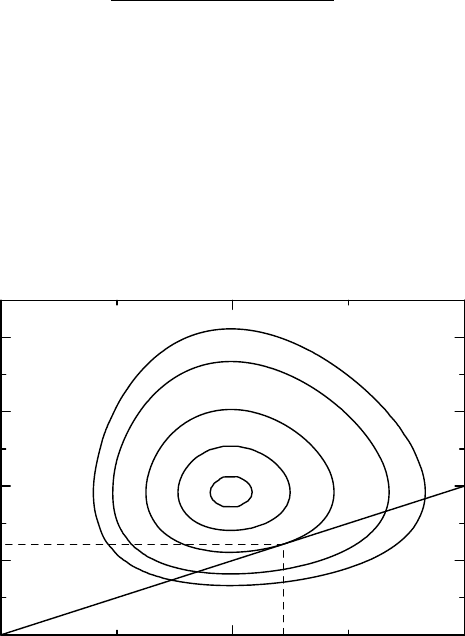
Figure 7.8 If we use different odds ratios in the two terms of Breslow–Day quadratic form
in Example 5.5 and apply the χ
2
(1) CDF to it, we get a confidence function with the contours
in the graph. The straight line is the line θ
1
= θ
2
, which is tangential to the 0.74 level of
the confidence function. This means that the p-value for homogeneity is p = 0.26, as was
obtained earlier.

202 CORRELATION AND REGRESSION IN BIVARIATE DISTRIBUTIONS
Box 7.8 Estimation of the interquartile range
To obtain asymptotic confidence limits for the interquartile range of a distribution, or,
more generally, the difference between any two percentiles, we can proceed as follows.
Let x
1
<x
2
be two percentiles, corresponding to levels p
1
and p
2
respectively, and let
= x
2
− x
1
. Introduce the notation
u
n
(x
1
,) =
F
n
(x
1
) − p
1
F
n
(x
1
+ ) −p
2
,=
p
1
(1 − p
1
) p
1
− p
1
p
2
p
1
− p
1
p
2
p
2
(1 − p
2
)
.
Then we have that
u
n
(x
1
,)
t
−1
u
n
(x
1
,) ∈ Asχ
2
(2).
To obtain confidence limits for we proceed in the same way as in Section 7.7: for
given , estimate x
1
= x
1
() by minimizing the function above. This gives us a new
sample statistic, P
n
() = u
n
(x
1
(),)
t
−1
u
n
(x
1
(),), and (univariate) knowledge
about can now be obtained from the confidence function C() = χ
1
(P
n
()).
This whole approach can be adapted to other situations. As one further example we outline
how to obtain confidence intervals for the interquartile range in a CDF F (x). This requires us
to compare two ordered proportions for the same CDF, such as the upper and lower quartiles,
and for this we need to find the appropriate confidence function for this situation. This is
found in Appendix 6.A.3, which shows that
n(F
n
(x) −F (x),F
n
(y) − F(y))
−1
F
n
(x) −F (x)
F
n
(y) − F(x)
∈ Asχ
2
(2),
where the variance matrix is given by equation A.3 on page 175. Using this, we can then
proceed with calculations in the same way as above to obtain confidence intervals for the
interquartile range of a distribution. Some more details can be found in Box 7.8.
Finally, for the analysis of two parameters in independent binomial distributions, the
objective function in equation (7.11) is not the only option. In fact, for most statisticians a more
natural choice is based on the log-likelihood, which means that we compute the probability of
the outcome (p
∗
1
,p
∗
2
) from two independent binomial distributions, and take the logarithm of
this. In principle we can analyze this using the binomial distributions (and not large-sample
approximations), but the mid-P problem in the estimation problem becomes somewhat more
complex. However, as a test for the equality of the binomial proportions this exact test is used,
and is called Barnard’s test. What it amounts to is that we compute the probability H(p) for
an outcome at least as extreme as the one we got, which means that we sum the probabilities
for all outcomes (x
1
,x
2
) such that x
1
/n
1
− x
2
/n
2
≥ 67/101 − 43/107 (for a one-sided p-
value). In this case the function H(p) is bimodal (has two local maxima), with the largest
value occurring for p = 0.54. The value of the function at this point is H(0.54) = 0.00015,
which therefore is the p-value for the hypothesis of equal binomial proportions. This may
be considered to be the exact p-value for the test of equality. Alternatively, we can apply
REFERENCES 203
large-sample approximations (to be discussed in Chapter 13) to the log-likelihood, which
provides almost identical results to those we obtained above.
7.8 Comments and further reading
When understood, the phenomenon of regression to the mean is almost obvious, but it is still
consistently misunderstood and considered to be a fallacy, or a paradox, by many. The history
of its origin with Galton is described by Stigler (1997) in an issue of Statistical Methods in
Medical Research devoted to the subject. More details on other aspects of this concept can
also be found there. The same author has also given an overview of how Galton came up with
the correlation concept (Stigler, 1989). The original publication is Galton (1886).
In the next to last section we introduced the ideas behind one-sample multivariate analysis,
based on Gaussian distributions. We will discuss the two-sample case in the next chapter, and
a few words about the general theory of multidimensional Gaussian distributions are given
in Appendix 7.A.2 below. More comprehensive introductions to this area of statistics can be
found in numerous textbooks, including classics such as Anderson (1984) and more practically
oriented ones such as Srivastava and Carter (1983).
The Fieller interval was discussed by Edgar Fieller, an early statistician in the pharma-
ceutical industry. It was developed in connection with work on insulin in the Boots company
during the Second World War, but was described later (Fieller, 1954) as a special case of the
problem of obtaining confidence limits (though he talked about fiducial limits) for the solution
to a polynomial equation with coefficients that have a joint Gaussian distribution. Like us, he
used the Cushny–Peebles data as an illustration for the linear case.
The use of the confidence function in equation (7.10) to obtain univariate confidence
intervals for a particular combination of the means may only be accurate if we use straight
lines in the graphical method (and therefore both for a mean difference and ratio). It is then a
consequence of the fact that a linear combination of Gaussian variables (also when dependent)
is a univariate Gaussian variable, together with a similar property for the Wishart distribution.
For nonlinear functions no accurate general method seems available, but we can use the method
outlined to get an approximation, which is expected to be better the more linear the functions
are. It allows us at least a large-sample justification for the method for nonlinear parameter
functions. For more details, see Appendix 7.A.3 below. The simultaneous approach using the
confidence function in (7.9) is always valid, also for nonlinear functions of the parameters.
Stein’s paradox is really a paradox in estimation theory (Lehmann and Casella, 1998,
Chapter 5) and more general than we have indicated. A popular introduction can be found in
an article by Efron and Morris (1977), whereas Stigler (1990) gives a discussion more along
our lines.
References
Anderson, T.W. (1984) An Introduction to Multivariate Statistical Analysis second edn. John Wiley &
Sons.
Das, P. and Mulder, P.G.H. (1983) Regression to the mode. Statistica Neerlandica, 37, 15–21.
Efron, B. and Morris, C. (1977) Stein’s paradox in statistics. Scientific American, 236(5), 119–127.
204 CORRELATION AND REGRESSION IN BIVARIATE DISTRIBUTIONS
Fieller, E.C. (1954) Some problems in interval estimation. Journal of the Royal Statistical Society, Series
B, 16(2), 175–185.
Galton, F. (1886) Regression towards mediocrity in hereditary stature. Journal of the Anthropological
Institute, 15, 246–263.
Lehmann, E.L. and Casella, G. (1998) Theory of Point Estimation Springer Texts in Statistics 2nd edn.
New York: Springer.
Senn, S. (1990) Regression: A new mode for an old meaning. American Statistician, 44(2), 181–183.
Srivastava, M.S. and Carter, E.M. (1983) An Introduction to Applied Multivariate Statistics. New York:
North-Holland.
Stigler, S.M. (1989) Francis Galton’s account of the invention of correlation. Statistical Science, 4(2),
73–86.
Stigler, S.M. (1990) The 1988 neyman memorial lecture: A galtonian perspective on shrinkage estima-
tors. Statistical Science, 8(1), 147–155.
Stigler, S.M. (1997) Regression towards the mean, historically considered. Statistical Methods in Med-
ical Research, 6(2), 103–114.

APPENDIX: SOME TECHNICAL COMMENTS 205
7.A Appendix: Some technical comments
7.A.1 The regression to the mode equation
Let a (true) subject characteristic Z have a distribution described by the probability density
h(x). When we observe it, there is a measurement error ξ, described by the density ψ(x). In
other words, what we observe is X = Z + ξ, for which we have the probability density
g(x) =
∞
−∞
ψ(x − u)h(u)du.
(We assume the measurement error is independent of Z.) If we assume that the error term
follows a Gaussian distribution with density
ψ(x) = ϕ
σ
(x) = σ
−1
ϕ(x/σ),
what can we say about Z from the observation of X? We know that ϕ
(x) =−xϕ(x), which
means that σ
2
ψ
(x) =−xψ(x).
The bivariate distribution for (Z, X) has density h(z)ψ(x − z), so the density for the
conditional distribution of Z given that X = x is this, divided by the density g(x) for X.It
follows that
E(Z − x|X = x) =
1
g(x)
∞
−∞
(z − x)ψ(x − z)h(z)dz =
σ
2
g(x)
∞
−∞
ψ
(x − z)h(z)dz,
from which we deduce that E(Z|X = x) = x + σ
2
(ln g(x))
. We can also compute the condi-
tional variance. For this we use the equations
V (Z|X = x) = E((Z − x)
2
|X = x) − E(Z − x|X = x)
2
and
∞
−∞
(x − z)
2
ψ(x − z)h(z)dz =
∞
−∞
(σ
2
ψ(x − z) +σ
4
ψ
(x − z))h(z)dz.
Together these observations imply that
V (Z|X = x) = (σ
2
+ σ
4
g
(x)/g(x)) −(σ
2
g
(x)/g(x))
2
= σ
2
+ σ
4
(ln g(x))
.
In the Gaussian case, where σ = σ
w
and g(x) = σ
−1
ϕ((x − m)/σ),σ
2
= σ
2
b
+ σ
2
w
,wehave
(ln g(x))
=−σ
−2
and the variance becomes
V (Z|X = x) = σ
2
w
−
σ
4
w
σ
2
b
+ σ
2
w
= σ
2
w
ρ.
This analysis is easily extended to cover the situation discussed in Section 7.5, in which
X = Z + ξ and Y = Z + η, where ξ, η are independent with the common probability density
ψ(x) above. The distributions of X and Y both have the density g(x) and since we have that
E(Y |X = x) = E(Z|X = x), equation (7.7) follows from the analysis above. Moreover
V (Y |X = x) = V (Z|X = x) +V (η) = 2σ
2
+ σ
4
(ln g(x))
,
which in the Gaussian case becomes σ
2
w
(1 + ρ) = σ
2
(1 − ρ
2
).

206 CORRELATION AND REGRESSION IN BIVARIATE DISTRIBUTIONS
Based on these results, Das and Mulder (1983) suggested changing the description of
the phenomenon from regression to the mean to regression to the mode, a suggestion not
welcomed by everyone (Senn, 1990).
7.A.2 Analysis of data from the multivariate Gaussian distribution
The multivariate Gaussian distribution was introduced at the end of Appendix 6.A.1 as defined
by densities that are proportional to the exponential of a quadratic form. In this chapter we
have looked more closely into the bivariate case. The extended univariate Gaussian theory
that was discussed in the same appendix has its immediate counterpart for multivariate data,
though the mathematics now relies more heavily on matrix algebra and therefore is more
complicated. Here we only highlight the absolute bare essentials, and refer the reader who
wishes to know more to Anderson (1984)
In the same way that the univariate Gaussian distribution is associated with the χ
2
,tand F
distributions, there is a family of distributions related to the general Gaussian distributions;
a family which in the case p = 1 reduces to what we discussed in Appendix 6.A.1. In the
univariate case the χ
2
(f ) distribution was obtained as the distribution of X
t
X =
f
i=1
X
2
i
,
where the X
i
∈ N(0, 1) are all independent, and is a special case of the gamma distribution
(namely (f/2, 1/2)). In the multivariate case the corresponding variable S = X
t
X is a p × p
positive definite matrix and therefore has a distribution on the manifold of such matrices. The
natural definition of the p-dimensional gamma distribution
p
(f, I / 2) is the distribution on
this manifold that has the density that is proportional to
(det S)
f −(p+1)/2
e
−
1
2
Tr S
.
When p = 1 this reduces to the definition of the corresponding univariate gamma distribution
(the space of positive definite matrices in this case is the space x>0). The general Wishart
distribution is defined by the requirement that S ∈
p
(f, ) precisely when
−1
S ∈
p
(f, I ).
One of its important properties is that if A is a matrix of correct dimensions, we have that
ASA
t
∈
p
(f, AA
t
)ifS ∈
p
(f, ) (a fact used in Box 7.7). Another is that if X ∈ N
p
(0,)
and fS ∈
p
(f/2,/2) are independent, then
f − p + 1
pf
X
t
S
−1
X ∈ F(p, f − p + 1).
This was used in the beginning of Section 7.6, for p = 2 and f = n − 1, and will be used
again in Section 8.8.
A further important observation is the generalization of the regression to the mean phe-
nomenon. If we decompose a multivariate Gaussian variable X into two parts
(X
1
X
2
) ∈ N
r+s
(m
1
m
2
),
11
12
t
12
22
,
it is easy to show that the conditional distribution of X
1
given that X
2
= x
2
has the multivariate
Gaussian distribution
N
r
(m
1
+
12
−1
22
(x
2
− m
2
),
1.2
),
1.2
=
11
−
12
−1
22
t
12
.

APPENDIX: SOME TECHNICAL COMMENTS 207
7.A.3 On the geometric approach to univariate confidence limits
In this appendix we will explain mathematically why the geometric approach to univariate
confidence limits of functions of two parameters works, and thereby explain why it gives
accurate results for linear combinations of the means. Suppose we want to derive confidence
intervals for the parameter θ = f (m). The geometric criterion, as discussed on page 196, is
that the curve {m; f (m) = θ} is tangent to a contour (¯u − m)
t
S
−1
(¯u − m) = C, which means
that they have proportional normals. In other words, there is a λ such that S
−1
(¯u − m) =
λf
(m). Inserting the expression ¯u − m = λSf
(m) into the confidence contour shows that
λ is defined by λ
2
f
(m)
t
Sf
(m) = C. Next we note that f (¯u) − f (m) ≈ f
(m)
t
(¯u − m) =
λf
(m)
t
Sf
(m), and if we combine this with the expression above we see that
f
(m)
t
(¯u − m)
f
(m)
t
Sf
(m)
=
√
C.
This is immediately applicable to the mean difference f (m) = m
2
− m
1
, and shows that
for a nonlinear function the extent to which the confidence levels are accurate depends
on how linear the function f (m) is in the region of interest. That this works for the rela-
tions f (m) = m
1
− θm
2
= 0, defining Fieller intervals, comes from a trivial modification of
the argument.

8
How to compare the outcome
in two groups
8.1 Introduction
This chapter is a continuation of Chapter 6, with a discussion on how we can compare two
CDFs using the corresponding e-CDFs. The two CDFs represent the distributions of an out-
come variable in two different groups, and we look for ways to describe how these differ.
There are two basic approaches to the comparison of two CDFs, horizontal and vertical. In
the horizontal approach we look at how much the CDFs differ horizontally, which can be done
using percentiles or the mean, all of which are location measures. If the full distributions are
(at least approximately) horizontal shifts of each other, it does not matter whether we use the
median (or some other percentile) or the mean to estimate this shift, but the corresponding
tests use the data in different ways. The mean, which uses all the data, would be expected to
be the best when there is a true shift, whereas the median, which ignores the actual values
with low or high ranks, might be better at describing the center of the distribution, if our data
contains ‘outliers’, that is, data in the tails with a heavy influence on the means.
The classical test in the horizontal approach is the t-test, whereas tests that are done using
the vertical approach correspond to classical non-parametric tests. For the latter, we will
focus our attention on the Wilcoxon test, which is very much the mother of such tests. We
will describe how it can be used for different purposes, including parameter estimation. To
many proponents of non-parametric testing, the presentation here is probably unnecessarily
mathematical. My defense is that this discussion gives us some useful insights into the nature
of these tests which are not provided by most standard textbooks. The Wilcoxon test as such
also prompts a discussion about ways to compute p-values.
At that stage in this chapter there is no need to have read the previous chapter about the
bivariate normal distribution and multivariate analysis. However, we also wish to compare
the two groups in situations where we have multivariate data. More precisely, we want to
understand how we can use a baseline measurement to improve upon an estimated treatment
Understanding Biostatistics, First Edition. Anders K¨all´en.
© 2011 John Wiley & Sons, Ltd. Published 2011 by John Wiley & Sons, Ltd. ISBN: 978-0-470-66636-4
210 HOW TO COMPARE THE OUTCOME IN TWO GROUPS
difference, which to a large extent is a continuation of the discussion we had in Section 7.3.
This discussion also serves as an introduction to Chapter 9, where general linear models
are discussed.
8.2 Simple models that compare two distributions
We will use the data discussed in Section 6.6 for illustration purposes, but now we assume
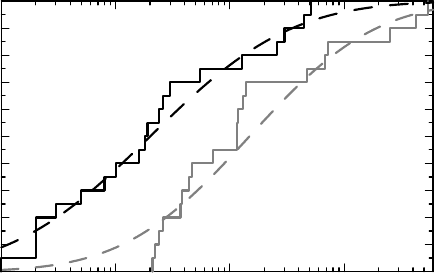
that they come from two independent groups. These data are shown as the two e-CDFs
in Figure 8.1. The claim we wish to make is about the true (population) CDFs, which are
indicated as dashed curves. We assume that the black curve shows the data of the outcome
variable obtained from patients who have been treated with a new drug (also referred to as the
active group), while the gray curve shows the distribution for patients who have been given
a placebo instead. The CDF for the placebo group is denoted by F (x) and that for the active
group by G(x). In most cases we want a simple description of the difference between these
CDFs. A single p-value for the hypothesis G(x) = F (x) (for all x, which will not be pointed
out below) is, however, not very informative. It gives us the confidence to claim that treatment
with the new drug has an effect, but tells us nothing about what this effect looks like. What
we wish to demonstrate with the data displayed in Figure 8.1 is that the treatment moves the
CDF to the left, which means that small values are more likely in the active group than in the
placebo group. The logical extreme of this is to assume that the only difference between G(x)
and F (x) is that the former is a shifted version of the latter, so that
G(x) = F (x − θ) (8.1)
for some shift parameter θ. In this case θ<0, since the G(x) curve lies to the left of the
F (x) curve. Of course, this does not mean that the corresponding e-CDFs have this relation.
The e-CDFs are obtained from the CDFs by adding noise, and that noise may well blur
this property.
0
0.1
0.2
0.3
0.4
0.5
0.6
0.7
0.8
0.9
1
Fraction of patients
10
0
10
1
10
2
10
3
Neutrophilcount/g sputum
Figure 8.1 The e-CDFs for sputum cell count data for two groups, one (gray) on placebo
and one (black) on a treatment. The dashed curves show the corresponding true CDFs.