
Kallen A. Understanding Biostatistics
Подождите немного. Документ загружается.

SIMPLE MODELS THAT COMPARE TWO DISTRIBUTIONS 211
The assumption in equation (8.1) implies that the location measures, the mean and the
percentiles, including the median, are all shifted by the same amount θ, whereas the variances
for F(x) and G(x) are the same. This means that whether we estimate the difference between
the means or some percentiles, we would be estimating θ. We therefore base our statistical
approach on one such measure, but it may not be irrelevant which one we choose. Firstly,
equation (8.1) is a model assumption. It is only an approximation of the real world, and may
not hold true in the tails of the distributions, but may still be a useful approximation to reality.
Different parameters are sensitive to different extents to what goes on in the tails. The mean,
for example, is more sensitive than the median.
The data in Figure 8.1 do not really support a parallel shift of F (x), since the plot is on
logged data. If we think we see a parallel shift in in Figure 8.1, the model for the sputum data
is really of the form
G(x) = F (x/θ), (8.2)
a type of model that may be appropriate only if we have a variable that takes only positive
values. This model is called the accelerated failure time (AFT) model when it appears in the
context of survival data. As discussed in Section 6.6, with this model we derive results for
ratios of (geometric) means or ratios of percentiles.
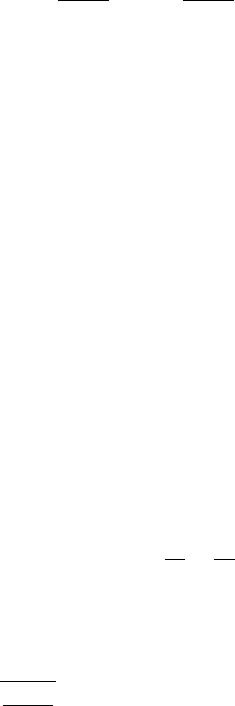
Another model that compares two CDFs is the proportional odds model
G
c
(x)
G(x)
= θ
F
c
(x)
F (x)
, (8.3)
which is used primarily for ordered categorical data. In fact, consider the simple case of
binomial data, where the probability for 0 (no event) is 1 − p and the probability for 1 (event)
is p. Then F
c
(0)/F (0) = p/(1 − p) is the odds, which means that θ becomes the odds ratio
for the two groups. Related to this is the proportional hazards model G
c
(x) = F
c
(x)
θ
, which
is more important for survival data, and will be discussed in that context.
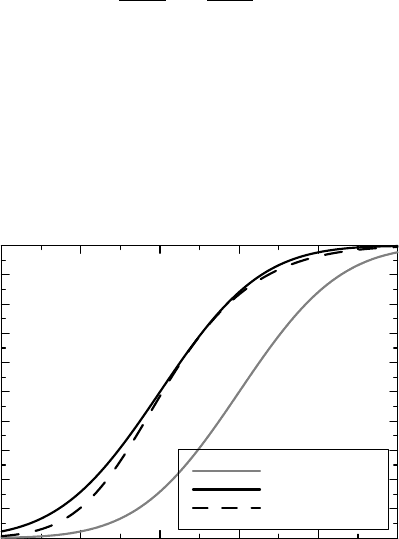
Figure 8.2 illustrates what the function G(x) looks like when it is obtained from F (x)
as described by some of these models. We start with the standard normal F (x) = (x), the
0
0.1
0.2
0.3
0.4
0.5
0.6
0.7
0.8
0.9
1
−3 −2 −1 210
Original function
Horizontal shift
Proportional odds
Figure 8.2 Illustration of how some one-parameter models change the location and shape
of the CDF. The gray curve shows the original function F (x).
212 HOW TO COMPARE THE OUTCOME IN TWO GROUPS
gray curve, which we first shift one step to the left (we take G(x) = (x + 1)), which is the
solid black curve. The dashed curve is the CDF from the proportional odds model with factor
θ = 5. We see that both these curves are to the left of the original, and that the proportional
odds model has also changed the shape of the CDF.
We will use the following notation in this chapter. The sample taken from F(x) is denoted
by x
1
,...,x
n
and that from G(x) is denoted by y
1
,...,y
m
. Combining these two samples
gives a sample from a population whose CDF is given by
(x) = rF (x) + (1 − r)G(x).
Here r is the probability that a randomly chosen individual is from the first group. If we have
two real groups, such as men and women, it is the fraction of the first group within the total,
whereas in a randomized clinical trial situation, r is defined by the allocation ratio to the two
groups. With a balanced randomization we have r = 1/2. The samples from the two groups
define two e-CDFs, F
n
(x) and G
m
(x) respectively, and the e-CDF for the total sample is
nm
(x) =
n
n + m
F
n
(x) +
m
n + m
G
m
(x).
Note that the assumption that this is an estimate of (x) rests on the assumption that the
sample sizes actually reflect the underlying fraction r. Note also that the rank of a particular
observation x in the combined sample is given by
R
nm
(x) = nF
n
(x) +mG
m
(x);
in other words,
nm
(x) = R
nm
(x)/(n + m). In a randomized study we usually make all statisti-
cal analysis conditionally on the randomization outcome, in which case we take r = n/(n + m)
in the definition of (x).
8.3 Comparison done the horizontal way
We will now discuss how we can compare the distributions F (x) and G(x) horizontally – how
to describe the difference between the two CDFs in terms of location measures. The most
important of these location measures are certain percentiles, in particular the median, together
with the mean, and the discussion is closely related to the discussion on understanding a single
CDF in Section 6.5.
We start with the mean. If the two distributions have means and standard deviations
(μ
1
,σ
1
) and (μ
2
,σ
2
), respectively, the CLT tells us that
¯
Y −
¯
X ∈ AsN
,
σ
2
1
n
+
σ
2
2
m
,
with = μ
2
− μ
1
. To be a true horizontal shift, we need to have equal variances σ
2
, and
then we have that
nm
n + m
(
¯
Y −
¯
X − ) ∈ AsN(0,σ
2
).

COMPARISON DONE THE HORIZONTAL WAY 213
Box 8.1 Correlation of an outcome with a group variable
It is of some interest to understand what correlation measures turn into when we correlate
an outcome variable Y with a group variable X. For this we need numerical values
for the group variable, and for convenience we choose X = 1 for the first group and
X =−1 for the second. Let the fraction from the first group be r, so that the mean
value of X is 2r − 1. With this notation we have that P (Y ≤ y|X = 1) = F (y) and
P(Y ≤ y|X =−1) = G(y), and the covariance is
ydF (y)(1 − (2r − 1))r +
ydG(y)(−1 − (2r − 1))(1 −r) = 2r(1 − r)(m
1
− m
2
).
The Pearson correlation coefficient is therefore half the mean difference normalized to
the standard deviation of Y in the whole sample, since V (X) = 4r(1 − r).
In order to compute Kendall’s tau defined in Box 7.1, we need to compute the prob-
ability of events of the form (Y
1
− Y
2
)(X
1
− X
2
) > 0, a criterion we see is equivalent
to the outcome variable being larger for a subject from group 1 than for group 2. This
means that if we sample one subject from each group and let Z
i
be the outcome for
group i, then
τ = P(Z
1
>Z
2
) − P(Z
1
<Z
2
).
This relates Kendall’s tau to the important non-parametric Wilcoxon test as discussed
in the main text. If we have more than one group, ordered in some way (e.g., according
to which dose of a drug a particular group is given), Kendall’s tau leads us to a related
non-parametric test, the Jonckheere–Terpstra test, which is sometimes used to establish
dose response.
This actually reduces this discussion to the results obtained for the one-sample t-test in
Section 6.5. All we need is an estimate of σ
2
, for which we use the pooled sample vari-
ance defined by
s
2
=
(n − 1)s
2
1
+ (m − 1)s
2
2
n + m − 2
,
which leads us to the approximate confidence function
C() =
− (¯y − ¯x)
s
√
1/n + 1/m
.
If our original data are actually described by shifted Gaussian distributions, we obtain exact
inference if we replace (x) with the CDF for the t(n + m − 2) distribution, because under
that assumption the numerator of s
2
is a sum of two independent χ
2
distributions with n − 1
and m − 1 degrees of freedom, respectively. As for the single mean parameter, the Bayesian
approach to these data allows us to view C() as a posterior probability function, with
carefully chosen (non-probabilistic) priors for the parameters (the same as in Section 6.5). We
can also use this observation to derive the a posteriori density distribution from an informative
214 HOW TO COMPARE THE OUTCOME IN TWO GROUPS
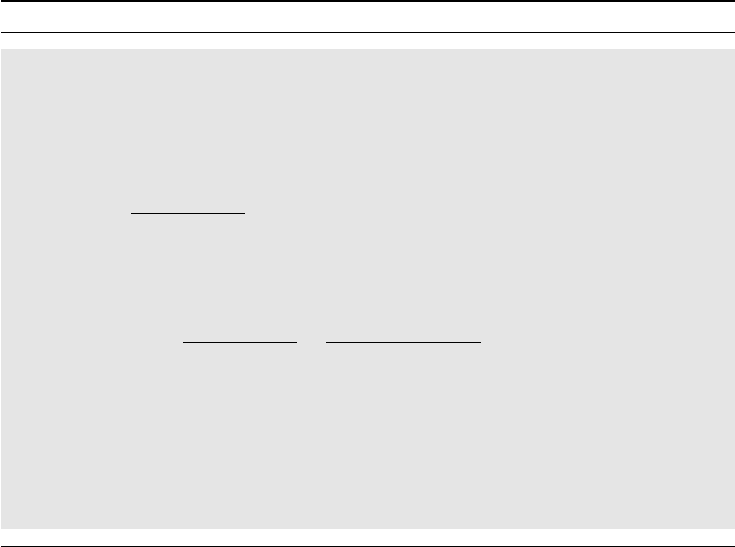
Box 8.2 Analysis of a percentile difference for two groups
Here we outline how we can obtain confidence claims for the difference for a particular
percentile for two independent distributions F (x) and G(x). Consider any particular
percentile, x
p
,ofF (x) (so that F (x
p
) = p). Let the corresponding percentile for G(x)
be written x
p
+ θ, so that G(x
p
+ θ) = p. In order to obtain knowledge about θ we use
the approximation
(F
n
(x
p
) − p)
2
V (F
n
(x
p
))
∈ χ
2
(1), where V (F
n
(x
p
)) = p(1 − p)/n,
for F (x), and similarly for G(x). Since the test statistics for F(x
p
) and G(x
p
+ θ) are
independent, we can sum two quadratic forms to get
(F
n
(x
p
) − p)
2
V (F
n
(x
p
))
+
(G
m
(x
p
+ θ) − p)
2
V (G
m
(x
p
+ θ))
∈ χ
2
(2).
From this we derive a confidence function for (x
p
,θ), and in order to obtain knowledge
about θ we now profile x
p
out of this, as in Section 7.7. This means that for given θ
we estimate x
p
= x
p
(θ) by minimization, which gives us a function P
mn
(θ)ofθ alone.
The end result is the two-sided confidence function C(θ) = χ
1
(P
mn
(θ)), from which we
can obtain asymptotically correct knowledge about θ. Properly modified, this approach
also allows us to compare the two percentiles in other ways, such as their ratio.
a priori distribution for the mean difference, but we will follow the biostatistical tradition and
not discuss this any further.
In order to apply the discussion above to the data in Figure 8.1 we estimate the group
mean values of the logarithmic data to 4.99 and 3.00, respectively, which gives us a mean
difference of 1.99 with 95% confidence interval (0.80, 3.17). This is the (estimated) size of
the shift in Figure 8.1. However, to get the shift back to the original measurement scale we
back-transform by exponentiation. This gives us a ratio of geometric means for treated versus
placebo of e
−1.99
, which is 14%, with 95% confidence interval (4.2, 45)%.
Next we consider the median. A key difference between the mean and the median is that
whereas the difference of two means is the mean of the difference, this need not be true for
medians. So the approach is more complicated, building on ideas used in Section 7.7 when
we analyzed two independent binomial parameters. An outline is given in Box 8.2. When
we carry out this analysis for our sputum data on the log scale, we get an estimated median
difference of 1.83 with 95% confidence interval (0.26, 3.39), which we can back-transform
to a statement about the ratio of the medians for the two distributions as being 16% with 95%
confidence interval (3.4, 77)%. For these data there is therefore a close agreement between
the mean and median estimates of a possible horizontal shift. The confidence interval for the
median is wider than that for the mean, because the mean value analysis uses more of the
information in the data than the median analysis does.
Now we return to the original cell count scale, instead of their log values. For the mean
values we have the estimates 752 and 93 for the two groups, giving a mean difference estimate
of 659 with 95% confidence interval (−34, 1351). In this computation we have assumed equal
COMPARISON DONE THE HORIZONTAL WAY 215
0
0.1
0.2
0.3
0.4
0.5
0.6
0.7
0.8
0.9
1
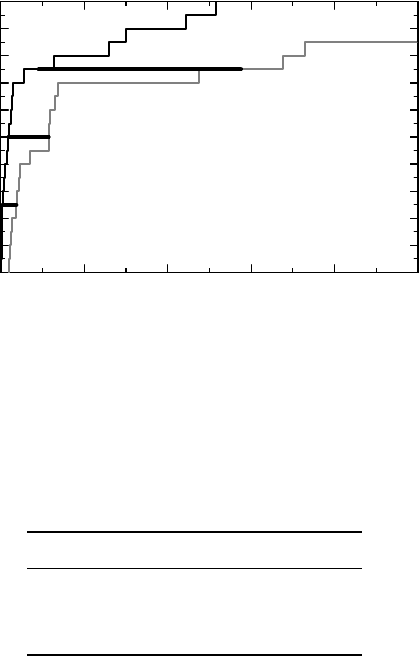
Fraction ofpatients
10008006004002000
Neutrophil count/
g
sputum
Figure 8.3 The percentile difference increases with level for the sputum data on the
original scale.
standard deviations and used the t distribution. But the standard deviations are estimated as
1521 and 157 respectively, so it is probably not a valid assumption to make. Alternatively, we
can analyze the difference for some percentiles, as described in Box 8.2. The result for the
median and the two quartiles is shown in the following table:
Parameter Estimate 95% CI
25% −33.5(−69, −8)
50% −96.5(−459, −14)
75% −485 (−4260, 312)
Figure 8.3 shows the percentile differences as horizontal lines connecting the corresponding
percentiles for the two e-CDFs. Clearly the differences vary considerably between levels,
strongly indicating that it is not appropriate to assume that the two distributions are simple
shifts of each other.
A little mathematics explains this observation. For two Gaussian distributions N(μ
1
,σ
2
1
)
and N(μ
2
,σ
2
2
), the percentile difference is given by
θ
p
= μ
1
− μ
2
+ (σ
1
− σ
2
)z
p
,
where z
p
is the pth percentile for the standardized Gaussian distribution. In particular, this
shows that we have a horizontal shift precisely when the variances are equal; only then is
θ
p
independent of p. For lognormal distributions we have the percentiles x
p
= e
μ+σz
p
, and
when we have equal σ, the percentile difference becomes
θ
p
= e
μ
1
+σz
p
− e
μ
2
+σz
p
= e
σz
p
(e
μ
1
− e
μ
2
),
which increases with p if μ
1
/= μ
2
. This is, to a reasonable approximation, what happens in
our data.

216 HOW TO COMPARE THE OUTCOME IN TWO GROUPS
8.4 Analysis done the vertical way
This section is about the famous Wilcoxon two-group test, which may come as a surprise,
since a casual look at the following pages shows a considerable number of mathematical
expressions involving integrals. The Wilcoxon test is usually presented as a very simple test:
rank-transform data and do a few simple calculations. However, the framework within which
we derive it has a number of important extensions built into it. It becomes more than a simple
test for equality; it also provides a method to do parameter estimation. The price for this is a
little more mathematics.
The vertical approach for comparing two independent CDFs F (x) and G(x) looks for a
vertical shift (x) = F (x) − G(x) of the two CDFs at different points x. In this section we
will tacitly assume that the true CDFs are both continuous, a restriction that will be removed
in Section 8.6. Essentially there are two major ways to derive scalar quantities from (x) that
we can use to test the null hypothesis that (x) = 0 for all x. The obvious way may be to look
for the maximal difference, which we estimate by
D
nm
= max
x
|F
n
(x) −G
m
(x)|.
This leads us to the Kolmogorov–Smirnov test, which is discussed in Appendix 6.A.2. Al-
ternatively we may take a weighted average
∞
−∞
(x)dw(x)ofthe(x) with some weight
function w(x). A partial integration and some algebra shows that this is proportional to
∞
−∞
w(x)d(F (x) − (x)), (8.4)
which is the integral we want to concentrate on. It is zero if the distributions are equal, whatever
weights we choose. We typically want to take the weights where the data are, and one way to
ensure this is to use a function of the CDF for the combined sample, so that w(x) = a((x)).
This means that the requirement for the integral to be zero is that
∞
−∞
a((x))dF (x) =
1
0
a(u)du,
where we have changed to the variable u = (x) in the integral
a()d (we consider only
continuous distributions at present). The corresponding test statistic is obtained if we insert
e-CDFs instead of the CDFs:
∞
−∞
a(
nm
(x))dF
n
(x).
We can use this to test the hypothesis of equality and also to estimate a parameter in some
simple models. We will illustrate this in some detail by looking closely at the simplest choice of
weight function, which is to take a(u) = u, so that w(x) = (x). This gives us the test statistic
∞
−∞
R
mn
(x)
n + m
dF
n
(x) =
1
n(n + m)
n
i=1
R
mn
(x
i
),
so this test amounts to the analysis of the total rank sum of the first sample and is the well-known
Wilcoxon rank sum statistic. Under the null hypothesis F (x) = G(x), the expected value of the
rank sum is n(n + m + 1)/2, so we test the null hypothesis of equality by comparing the rank

ANALYSIS DONE THE VERTICAL WAY 217
Box 8.3 The Wilcoxon test and the rank-transformed t-test
To compute the p-value for the Wilcoxon test based on the statistic W =
n
1
R(x
i
), we
first compute its mean and variance under the null hypothesis (we assume no ties):
E(W) =
n(N + 1)
2
,V(W) =
nm(N + 1)
12
,
where N = n + m. Appealing to large-sample theory, we can show that
T =
W − E(W)
√
V (W )
∈ AsN(0, 1),
from which p-values can be computed.
This is closely related to the following procedure: first rank-transform all the data
and then apply the t-test to the resulting data. For this test the mean difference and
pooled sample variance are given by
ˆ
R
=
N
nm
W −
n(N + 1)
2
and s
2
R
=
N
(N − 2)nm
V (W )(N − 1 − T
2
),
respectively. The corresponding t-statistic is therefore given by
t
R
=
ˆ
R
s
R
1
n
+
1
m
=
T
1 +
1−T
2
N−2
.
This relationship holds also in the presence of ties, and shows that for all practical
purposes we can compute the Wilcoxon test by applying the t-test to rank-transformed
data, at least when the sample size is large enough to allow for the asymptotic p-values
(conventionally considered to be when N ≥ 40).
There is also a relation to the Wilcoxon probability P
W
. In fact, the relation between
Mann–Whitney scores and the rank sum discussed in the text shows that the true mean
difference is
R
= N(P
W
− 1/2). We can therefore use the information obtained from
the t-test on ranks to obtain an estimate and approximate confidence interval for P
W
,
when the sample is large.
sum to this value. This test is frequently used in biostatistics as an alternative to Student’s t-test
to compare two independent distributions when data are distinctly non-Gaussian in nature.
The Wilcoxon rank sum test is sometimes referred to as a test of medians, which it is not. It
is a test of the mean rank and has no more to do with medians than the t-test has. In fact, it
is essentially a t-test on the ranks of the observations, instead of the original observations, as
outlined in Box 8.3. To put it another way, we apply the t-test to the variable (X) instead
of X (which is a non-linear transformation of data), a variable which we know has a uniform
distribution on (0, 1) when the null hypothesis of equal distributions for the two groups holds.
When it comes to computing p-values for the Wilcoxon test, this can be done in different
ways, which we will discuss in the next section. For the rest of this section we will instead try
to better understand the nature of the test. It is to a large extent a mathematical investigation
of relationships and is about how we transform the test into a parameter estimation method.

218 HOW TO COMPARE THE OUTCOME IN TWO GROUPS
Box 8.4 An alternative derivation of the Hodges–Lehmann estimator
An alternative derivation of equation (8.7) is based on the squared horizontal difference
between the two CDFs,
L
2
=
∞
−∞
(F (x) − G(x))
2
dx
as the measure of the extent to which they differ. We can use this to estimate the θ in
the shift model defined by equation (8.1) by considering the function
L
2
(θ) =
∞
−∞
(F (x − θ) −G(x))
2
dx.
For this function we have that L
2
(0) = L
2
; also, when F (x) = G(x), we have that L
2
(θ)
has its minimum (which is zero) when θ = 0. Therefore, if the minimum of L
2
(θ)is
at a point other than zero, we cannot have equality of the two distribution functions.
A short calculation shows that θ is the point where L
2
(θ) is minimal precisely when
equation (8.7) is fulfilled.
This characterization of the Hodges–Lehmann estimator suggests various related
parameters obtained by minimizing the integral
∞
−∞
w(x)(F (x − θ) − G(x))
2
dx
as a function of θ, for some specified weight function, preferably of the form
w(x) = a((x)).
We have seen that the Wilcoxon test is derived from the relationship
∞
−∞
F (x)dF (x) =
1
2
, (8.5)
which is true for every continuous CDF F (x). This statement says that the mean value of
F (X)is1/2, when F (x) is the CDF for the stochastic variable X. When G(x) = F (x) there
are a few equivalent statements, including
∞
−∞
G(x)dF (x) =
∞
−∞
(x)dF (x) =
∞
−∞
(x)d(x) =
1
2
.
For each of these integrals there is a test statistic obtained by replacing the CDFs with
e-CDFs, and each such test statistic will provide the Wilcoxon test. We will pick the first
of these, because this will simplify variance computation. We will also generalize it, so that
we let the function G(x) depend on a single parameter θ, which we write G(x, θ). Providing
evidence that the equation
∞
−∞
G(x, θ)dF(x) =
1
2
(8.6)
does not hold then constitutes evidence against the null hypothesis that G(x, θ) = F (x). More
importantly, we can use this equation to estimate and obtain knowledge of θ.

ANALYSIS DONE THE VERTICAL WAY 219
The classical example of parameter estimation here is when we do it on the shift model
G(x) = F (x − θ). We then have that F(x) = G(x + θ), and the θ we require is the parameter
value that solves the equation
∞
−∞
G(x + θ)dF (x) =
1
2
. (8.7)
This equation means that θ is the median of the CDF
H(z) =
∞
−∞
G(x + z)dF (x) =
y−x≤z
dF (x)dG(y).
This is the CDF for the stochastic variable Z = Y − X, where X and Y are independent with
CDFs F (x) and G(x), respectively. When F(x) = G(x) we have that H(0) = 1/2, where H(0)
is the probability P(Y<X) that Y is less than X, which we call the Wilcoxon probability and
denote by P
W
. This parameter must be clearly distinguished from the p-value obtained from
an application of the Wilcoxon test to test the null hypothesis.
From this discussion we can immediately derive two ways to disprove the null hypothesis
that G(x) = F (x). We can either prove that the median θ of H(z) is not zero, or that the
Wilcoxon probability
P
W
=
∞
−∞
G(x)dF (x)
is not 1/2. Whichever method we use, we need to estimate H(z). For this we replace the CDFs
with the corresponding e-CDFs and obtain the estimate
H
mn
(z) =
∞
−∞
G
m
(x + z)dF
n
(x).
This is a sum, and if we expand it we find that it can be written as
H
mn
(z) =
1
n
j
G
m
(z + x
i
) =
1
nm
i,j
I(y
j
− x
i
≤ z),
so this function is obtained as the e-CDF for all the nm differences z
ij
= y
j
− x
i
. The sample
median of H
mn
(z) is called the Hodges–Lehmann estimate of location. It therefore serves the
same purpose of separating two distributions as the mean or median group difference. Also
note that H
mn
(0), which estimates P
W
, can be written as H
mn
(0) = U
mn
/mn, where U
mn
is
called the Mann–Whitney statistic and is defined as
U
nm
=
ij
1
2
(1 + Z
ij
), where Z
ij
=
1ify
j
>x
i
,
−1ify
j
<x
i
.
The Z
ij
are called the Mann–Whitney scores, and we may note that the sum of these, divided
by the product nm, estimates the relative difference
RD = P(Y>X) − P (Y<X) = 2P
W
− 1.
This is a transformation of the Wilcoxon probability that relates the comparison of continuous
data for two groups to the corresponding description of binary data. It also relates the Wilcoxon
220 HOW TO COMPARE THE OUTCOME IN TWO GROUPS
0
0.1
0.2
0.3
0.4
0.5
0.6
0.7
0.8
0.9
1
Fraction of patients
−3 −2 −1 876543210
Neutrophil count/g sputum
Figure 8.4 The e-CDF for the treatment difference together with pointwise confidence
limits, also showing estimates and confidence limits for the Hodges–Lehmann estimate (hor-
izontal line) of location and the Wilcoxon probability (vertical line).
probability to Kendall’s τ (see Box 8.1). Note further that, for continuous data, the odds
P
W
/(1 − P
W
) can be interpreted as an odds ratio comparing the two groups, (see page 127; this
is the generalized odds mentioned in Box 7.1). If we compare Gaussian variables with a mean
difference and a common variance σ
2
, this log-odds ratio is essentially proportional to the
standardized difference /σ. (This can be seen by approximating the Gaussian distribution
with a logistic one; see Box 9.4.) Finally, the Mann–Whitney statistic is equivalent to the
Wilcoxon rank sum, because n(n + 1)/2 + U
mn
is equal to
n
2
∞
−∞
F
n
(x)dF
n
(x) +nm
∞
−∞
G
m
(x)dF
n
(x) = n
∞
−∞
R
mn
(x)dF
n
(x),
where the right-hand side is the rank sum of the first group.
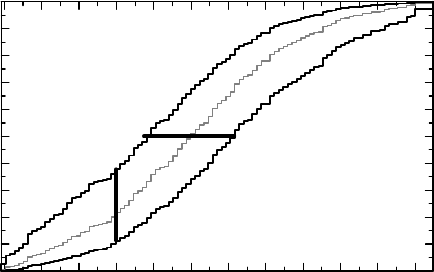
Figure 8.4 shows the function H
mn
(z) for the logarithm of the sputum cell count data
as the gray staircase function in the middle. It is surrounded by pointwise 95% confidence
limits, such that for a given z, the vertical interval determined by the black curves defines
the pointwise confidence interval for H (z). How these confidence limits are calculated will
be discussed below. In the graph there are also two confidence intervals shown as solid lines:
the horizontal one at the level 1/2 shows that of the Hodges–Lehmann estimator, which is
estimated as 1.97 with 95% confidence interval (0.74, 3.15). The vertical line represents a
confidence interval for the Wilcoxon probability P
W
for which we have the estimate 0.22
with 95% confidence interval (0.11, 0.38). Both confidence intervals convey proof, at the
conventional two-sided 5% significance level, of a treatment effect – the first excludes 0 and
the second excludes 1/2.
We have tacitly analyzed the log-count of the sputum data. If we choose to analyze the
count directly, the only thing that changes is the shape of H
mn
(z) and the Hodges–Lehmann
estimate. The Wilcoxon test and the Wilcoxon probability are both independent of the scale
on which we analyze the data. On the original scale we obtain a Hodges–Lehmann location
estimate of 60 with 95% confidence interval (19, 129). This is the median of the differences, as
opposed to the difference in medians which was analyzed earlier. The estimate 1.97 discussed