
Kenny Anthony. The Rise of Modern Philosophy: A New History of Western Philosophy. Volume 3
Подождите немного. Документ загружается.

accompanied by an impoverishment of philosophy. Though Aristotle’s
scientiWc physics was shown to be very largely mistaken, his conceptual
scheme retained much of its value. All too often, both bad and good were
thrown overboard together.
The establishment which persecuted Galileo has long been denounced
by historians as hidebound, protection ist, and obscurantist. In particular,
the scholastic professors have been blamed for preferring a priori speculation
to observation and experiment. Not only were they reluctant to conduct
research themselves, the charge goes, but they were unwilling to take
account of the research of others. They rejected observation, even when it
was handed to them, as when a Paduan professor refused to look through
Galileo’s telescope.
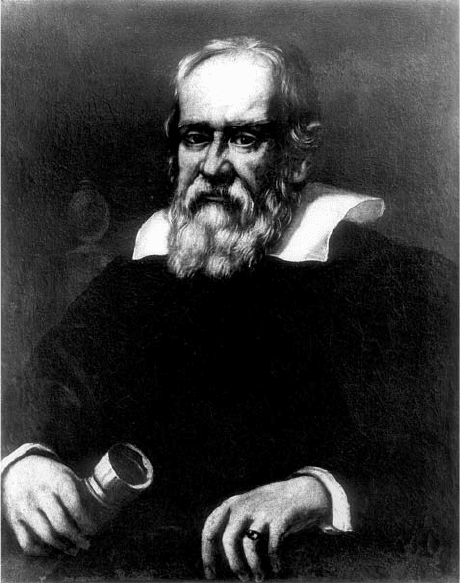
Susterman’s portrait
of the ageing Galileo
PHYSICS
166
The charge is basically just, though overdrawn. Some of Galileo ’s Jesuit
adversaries were respectable astronomers in their own right. More import-
antly, we must remember that the anti-empiricist bias of these latter-day
Aristotelians was not typical of Aristotle himself. In a famous passage,
Aristotle had aYrmed the primacy of fact over speculation: ‘We must
trust observation rather than theory, and trust theories only if their results
conform with the observed phenomena.’1 Indeed, that passage was often
quoted by Galileo’s critics: heliocentrism was only a theory, but the motion
of the sun was something we could see with our own eyes.
Aristotle’s own works are full of original and careful observation, and it
is no disgrace to him if his physics was shown to be mistaken after a lapse of
eighteen centuries. It is paradoxical that one of the greatest scientists of the
ancient world should have turned out to be the greatest obstacle to
scientiWc progress in the early modern world. The explanation, however,
is simple. When Aristotle’s works were rediscovered in the Latin West they
were introduced into a society that was predominantly text-based. Chris-
tianity, like Judaism and Islam, was a ‘religion of a book’. Supreme
authority rested with the Bible: the function of the Church was to
preserve, proclaim, and interpret the messages contained in that
book, and to promote the ideals and practices that it presented. Once
Aristotle’s texts secured acceptance in Latin academia, instead of being
read as stimuli to further research, they were treated with the reverence
appropriate to a sacred book. Hence Galileo’s genuine contradictions of
Aristotle caused as much scandal as his imagined contradictions of the
Bible.
ScientiWc method, as it has been commonly understood in recent
centuries, consists of four principal stages. First, systematic observation is
undertaken of the phenomena to be explained. Second, a theory is pro-
posed which would provide an explanation of these phenomena. Third,
from this theory is derived a prediction of some phenomenon other
than those already included in the survey. Fourth, the prediction is
tested empirically: if the prediction turns out false, than the theory is to
be rejected; if it comes true, then the theory is so far conWrmed, and
should be put to further test. At each of these stages, mathematics plays
a crucial role: in the accurate measurement of the phenomena to be
1 See vol. I, p. 73.
PHYSICS
167
explained and of the result of the test experiment, and in the formulation
of the appropriate hypotheses and the derivation of their expected conse-
quences.
During our period four philosophers, through their writings, contrib-
uted features of the eventual consensus: Aristotle, Galileo, Bacon, and
Descartes. Each of them, however, was guilty of a failure to appreciate
one or other element that was needed for the synthesis, and for most of
them a key deWciency was a misunderstanding of the relationship between
science and mathematics.
Aristotle, while an admirable empirical investigator in practice, pre-
sented in his Posterior Analytics an unrealistic model of science based on
geometry, the most advanced branch of mathematics in his day. He
believed that a completed science could be presented as an axiomatic
a priori system such as was later developed by Euclid. Descartes, himself a
distinguished mathematician, thought that science should imitate math-
ematics not by adopting its methods of ratiocination and calculation, but
by looking for truths which had the immediate intuitive appeal of pro-
positions of simple arithmetic and basic geometry.
Bacon, while devoting more care than either of these philosophers to
describing procedures for the systematic collection of empirical data and
the formation of appropriate hypotheses, had little appreciation of the
importance of mathematics in these two tasks. He thought of mathematics
as a mere appendix to science, and he complained about ‘the daintiness and
pride of mathematicians, who will needs have this science almost domineer
over physic’ (De Augmentis, 476).
Of our quartet only Galileo fully appreciated the essential role of
mathematics. The book of the universe, he famously said, ‘is written in
the language of mathematics, and its characters are triangles, circles and
other geometric Wgures, without which it is humanly impossible to under-
stand a single word of it’ (Il Saggiatore, 6). His weakest point was precisely
the one insisted on by his Aristotelian opponents: he failed fully to
appreciate that a hypothesis is only conWrmed, not proved with certainty,
by the success of a predicti on. It is this point which was seized on by
twentieth-century philosophers of science, such as Pierre Duhem and Karl
Popper, who judged Bellarmine the victor in the debate on heliocentrism.
They were perhaps over generous in attributing to the cardinal a full grasp
of the hypothetico-deductive method.
PHYSICS
168
Cartesian Physics
Like Galileo, and unlike Bacon, Descartes thought that mathematics was
the key to physics, though he did not have Galileo’s grasp of the use of
mathematics in the construction and veriWcation of experiments. In the
Principle of Philosophy he wrote:
I recognize no kind of matter in corporeal objects except that matter susceptible
of every sort of division, shape, and motion which geometers call quantity and
which they presuppose as the subject matter of their proofs. Further, the only
properties I consider in it are those divisions, shapes and motions; and about
them I accept only what can be derived from indubitable true axioms with the
sort of self-evidence that belongs to a mathematical proof. All natural pheno-
mena, as I shall show, can be explained in this way: I therefore do not think
any other principles in physics are either necessary or desirable. (AT VIII. 78;
CSMK I. 247)
Descartes’ physical system is mechanistic; that is to say it assumes that all
natural phenomena can be explained by the motion of geometrical matter.
It is not just a matter of seeing everything, outside the mind, as being
merely clockwork. Even the simplest form of clock, as naturally explained,
is not a mechanistic system, since it involves the notion of weight, and for
Descartes weight, as distinct from motion or extension, is just one of many
properties which are to be dismissed as subjective or secondary:
I observed . . . that colours, odours, savours and the rest of such things, were
merely sensations existing in my thought, and diVering no less from bodies than
pain diVers from the shape and motion of the instrument which inXicts it. Finally,
I saw that weight, hardness, the power of heating, attraction, and of purging,
and all other qualities which we experience in bodies, consisted solely in motion or
its absence, and in the conWguration and situation of their parts. (AT VII. 440;
CSMK II. 397)
To prove that the essence of matter is constituted by extension, Descartes
argues that a body, without ceasing to be a body, can lose any of its properties
with the exception of extension. Consider our idea of a stone. Hardness is
not essential to it: it may be ground into a Wne powder. Colour is not
essential: some stones are transparent. Weight is not essential to a body: Wre
is bodily but light. A stone may change from being warm to being cold and
yet remain a stone. ‘We may now observe that absolutely no element of our
idea remains, except extension in length, breadth and depth.’
PHYSICS
169
One might agree that properties such as colour and warmth are not
essential to a body, and yet claim that they are genuine, objective properties.
Such was the position of Descartes’ scholastic predecessors, who regarded
such things as ‘real accidents’ of substances—‘real’ because they were
objective, and ‘accidents’ because they were not essential. Descartes oVers
several arguments against this position.
First he points out that such properties are perceived only by a single
sense, unlike shape and motion which are perceived by several senses—
warmth and colour are, in Aristotelian jargon, ‘proper sensibles’ not
‘common sensibles’. This seems a poor argument. It is true that judge-
ments, if they are to be objective, must be capable of assessment and
correction, and that a judgement of a single sense cannot be corrected by
the operation of any other sense. But any individual’s sense-judgement can
be corrected by his own further, closer, investigation by the same sense, or
by the cooperation of other observers using the same faculty.
Descartes’ main argument for the subjectivity of proper sensibles is a
negative one: the scholastic notion of ‘real accidents’ is incoherent. If
something is real, it must be a substance; if it is an accident, it cannot be
a substance. If, per impossible, there were such things as real accidents, they
would have to be specially created by God from moment to moment
(AT III.505, VII.441; CSMK II. 298, III. 208).
Possibly some of Descartes’ scholastic contemporaries were vulnerable to
this argument. But Thomas Aquinas, centuries earlier, had pointed out
that the idea that accidental forms must be substances rested on a misun-
derstanding of language:
Many people make mistakes about forms by judging about them as they would
about substances. This seems to come about because forms are spoken of in the
abstract as if they were substances, as when we talk of whiteness or virtue or
suchlike. So, some people, misled by ordinary usage, regard them as substances.
Hence came the error of those who thought that forms must be occult and those
who thought that forms must be created. (Q. D. de Virt in Comm., ed. R. Pession
(Turin: Marietti, 1949), 11)
Descartes saw no need for the accidents and forms of scholastic theory
because he claimed to be able to explain the whole of nature in terms of
motion and extension alone. Becau se matter and extension are identical,
he argued, there cannot be any empty space or vacuum, and the only
possible movement of bodies is ultimately circular, with A pushing B out of
PHYSICS
170
its place and B pushing C and so on, until Z moves into the place vacated
by A. In the beginning God created matter along with motion and rest: He
preserves the total quantity of motion in the universe as constant, but
varies its distribution in accordance with the laws of nature. Descartes
claims to deduce these laws a priori from the immutability of God. The Wrst
law says that every body, if unaVected by extraneous causes, perseveres in
the same state of motion or rest; the second states that simple or elemen-
tary notion is always in a straight line. On the basis of these laws Descartes
constructed an elaborate system of vortices, that is to say whirlpools of
material particles varying in size and velocity. This system, he maintained,
was adequate to explain all the phenomena of the natural world (AT VIII.
42–54, 61–8; CSMK I.224– 33; 240–5).
Descartes’ physical system enjoyed a limited popularity for a period, but
within a century it had been totally superseded. It was, in fact, internally
incoherent, as can be shown in many ways. Inertia provides the simples t
example. According to Descartes’ Wrst law everything tends, so far as it can,
to remain in the same state of motion or rest in which it is. But if a moving
body’s tendency to continue moving is not a genuine property of a body,
then it cannot explain physical eVects. If, on the other hand, it is a genuine
property of the body, then it is untrue that bodies have no properties
except motion and geometrical properties. For a tendency to move cannot
be identiWed with actual motion; the one may be present without the
other. Descartes is badly served here by his c ontempt for the Aristotelian
categories of potentiality and actuality.
Experimental observation during his own lifetime exhibited the weak-
nesses in Descartes’ system. Descartes incorporated into his account of
the human body the circulation of the blood recently discovered by
William Harvey, but he attempted to explain it purely mechanistically in
terms of rarefaction and expansion. This involved him in an account of
the movement of the heart that was in total conXict with Harvey’s own
results, because, unlike Harvey, he believed that it was the expansion of
the heart, rather than its contraction, that was responsible for the expul-
sion of blood.
Again, because he identiWed matter with extension, Descartes denied the
possibility of a vacuum. If God took away all the matter inside a vessel
without allowing it to be replaced, he said, then the sides of the vessel would
touch each other (AT VIII.51; CSMK I. 231). Because of his rejection of the
PHYSICS
171
vacuum, he also opposed the atomic hypothesis. Matter, being identical
with extension, must be inWnitely divisible, and there was no such thing as a
void for the atoms to move about in. Descartes sought to explain away the
evidence for the existence of a vacuum that had been provided in 1643 by
Evangelista Torricelli’s invention of the barometer.
The Atomism of Gassendi
When Descartes published his Principles, atomism was being revived by
Pierre Gassendi, on the model of the ancient theories of Democritus and
Epicurus, whose ideas had recently become familiar to the learned world
through the discovery and wide dissemination of Lucretius’ great Epicurean
poem, De Rerum Natura.2 A Catholic priest, who held both a professorship of
mathematics and the deanship of a cathedral, Gassendi sought to show that
the philosophy of the pagan Epicurus was no more diYcult to reconcile
with Christianity than was the philosophy of the pagan Aristotle. Both
pagan philosophers had erred in teaching that the world was eternal and
uncreated; but from a philosophical point of view the e xplanation of
physical phenomena in terms of the behaviour of atoms was to be preferred
to an account in terms of substantial forms and real accidents. Gassendi
attacked Aristotle in his earliest treatise, and in a series of works between
1647 and his death in 1655 Gassendi defended not only the atomism, but also
the ethics and character, of Epicurus.
Natural bodies, said Gassendi, following Epicurus, are aggregates of small
units of matter. These units are atoms, that is to say, they are indivisible.
They possess size, shape, and weight, and solidity or impenetrability. These
atoms, according to Gassendi, possess motion under the constant inXuence
of the divine prime mover: they move in a straight line unless they collide
with other atoms or get incorporated into a larger unit (which he called
a ‘molecule’). All bodies of whatever size are composed of molecules of
atoms, and the motions of atoms are the origin and cause of all motions in
nature.
Philosophical objections against atomism, Gassendi argued, rested on a
confusion between physics and metaphysics. One could accept that any
2 See vol. I, pp. 179–80.
PHYSICS
172
magnitude must be theoretically capable of further division—no matter
how short a line may be, it always makes sense to talk of a line only half as
long—and yet maintain that there are some physical bodies which cannot
be divided by any power short of the omnipotence of God. A distinction
between the two kinds of divisibility is ruled out only if one accepts
Descartes’ identiWcation of matter with extension. But Gassendi rejected
this identiWcation, and was willing to accept the Aristotelian term ‘prime
matter’ to describe the ultimate constituents of his atoms.
Against both Aristotle and Descartes, but again following Epicurus,
Gassendi maintained that there could be no motions, whether of atoms
or of composite bodies, unless there was a void or vacuum for them to
move through. When air is compressed, for instance, the air atoms move
into the empty spaces that were hitherto between them. Empty space, he
believed, would exist even if there were no bodies in existence; it existed
before creation, and so too did time:
Even if there were no bodies, there would remain a steady place and a Xowing
time; so time and place do not seem to depend on bodies or be accidents of
bodies . . . Place and time must be considered real things, or actual entities, for
although they are not the kind of thing that substance and accident are com-
monly regarded, they do actually exist and do not depend on the mind like
a chimaera, for whether mind thinks of them or not place stays put and time Xows
on. (1658, 182–3)
Space, according to Gassendi, is immense and immovable, and spatial
regions are also incorporeal—not in the sense of being spiritual, but in
the sense of being penetrable in a way that solid bodies are not.
Newton
Subsequent thinkers more often agreed with Gassendi than with Descartes
about the nature of matter and the possibility of a vacuum. Nonetheless, in
the mid-seventeenth century Gassendi’s system was not a serious competi-
tor to Descartes’ theories. The death blow to Descartes’ physics was given
by the publication in 1687 of Sir Isaac Newton’s Principia Mathematica. Newton
established a universal law of gravitation, showing that bodies are attracted
to each other by a force in direct proportion to their masses and in inverse
proportion to the square of the distance between them. The force of
PHYSICS
173
gravity was something above and beyond the mere motion of extended
matter which was all that was allowed in Cartesian physics. Descartes had
considered the notion of attraction between bodies, but had rejected it as
too like Aristotelian Wnal causes, and as involving the attribution of
consciousness to inert masses.
What is it, Newton asks, that glues together the parts of homogeneous
hard bodies? Descartes tells us that it is nothing but lack of motion;
Gassendi talks of the hooks and eyes of atoms. The Wrst answer explains
nothing; the second merely puts the question back. ‘I had rather infer from
their cohesion’, Newton said, ‘that their particles attract one another by
some force, which in immediate contact is exceedingly strong.’ It was this
same power of attraction which, operating upon bodies not in immediate
contact, was the force of gravity. Was this then a case of action at a distance?
At W rst Newton denied this; but by the time of his Opticks (1706) he seemed
to be willing to accept that gravity, magnetism, and electricity were indeed
forces or powers by which the particles of bodies could act at a distance. He
seems to have remained agnostic whether the laws that he had discovered
could eventually be explained without appeal to action across a vacuum—
e.g. by the postulation of some medium such as an aether.3
By accepting the existence of forces in nature which may, for all we
know, have no explanation in terms of matter and motion, Newtonian
physics made a complete break with the mechanism of Descartes. And by
bringing under a single law not only the motion of falling bodies on earth,
but also the motion of the moon round the earth and the planets round
the sun, Newton put to rest for ever Ari stotle’s idea that terrestrial and
celestial bodies were totally diVerent from each other. His physics was quite
diVerent from the competing systems it replaced, and for the next two
centuries physics simply was Newtonian physics.
The Labyrinth of the Continuum
The separation of physics from the philosophy of nature, set in train by
Galileo, was now complete. However, Newton left one problem for philo-
sophers to chew upon for a century or more: the nature of space. On
3 See Steven Nadler, ‘Doctrines of Explanation’, in CHSCP, pp. 342–6.
PHYSICS
174
the basis of the experiments with a vacuum, Newton believed that space
was an absolute entity, not a mere set of relations between bodies. In
this Newton resembled Gassendi, but he went further than him when
he described space as ‘the sensorium of God’. It is not quite clear what he
meant by this—he probably did not wish to attribute organs to God—but
undoubtedly he thought of space as some kind of divine attribute. ‘God
endures for ever and is present everywhere,’ he wrote, ‘and by existing
always and everywhere he constitutes space, eternity, and inWnity’ (Newton
1723: 483).
These views of Newton were criticized by Leibniz in 1715 in a letter to
Caroline, Princess of Wales. This led to a famous exchange of letters with
Newton’s admirer Samuel Clarke. Leibniz argued that space was not real,
but simply ideal: ‘I hold space to be something merely relative, as time is; I
hold it to be an order of coexistences as time is an order of successions. For
space denotes, in terms of possibility, an order of things which exist at the
same time, considered as existing together’ (A, 25–6). An empty space, he
maintained, would be an attribute without a subject, and he oVered many
arguments against the idea that space was a substance or any kind of
absolute being.
Clarke replied by reaYrming Newton’s idea of time and space as belong-
ing to God:
Space is not a Substance, but a Property . . . Space is immense, and immutable, and
eternal: and so also is Duration. Yet it does not at all from hence follow, that
anything is eternal hors de Dieu. For Space and Duration are not hors de Dieu, but
are caused by, and are immediate and necessary consequences of his existence: And
without them, his Eternity and Ubiquity (or omnipresence) would be taken away.
The identiWcation of space with the immensity of God is not plausible, since
God has no parts and it is essential to the notion of space that one part of it
is distinct from another. On the other hand, Leibniz’s own view contradicts
not just an absolute notion of space, but denies any reality to space at all.
For the only real substances in his system are monads, and these are not in
any spatial relationship to each other, being each a world of its own. He
adopted this position because he could see no coherent way of accepting the
reality of the continuum. ‘The geometers’, he wrote, ‘show that extension
does not consist of points, but the metaphysicians claim that matter must
be made up of unities or simple substances’ (G II.278).
PHYSICS
175