
Kerry J., Butler P. Smart Packaging Technologies for Fast Moving Consumer Goods
Подождите немного. Документ загружается.

OTE/SPH OTE/SPH
JWBK126-16 JWBK126-Kerry March 3, 2008 13:30 Char Count= 0
Laser Surface Authentication 291
1
10
100
1,000
10,000
100,000
0.44 0.46 0.48 0.5 0.52 0.54 0.56
Count
Bit Match Ratio (BMR)
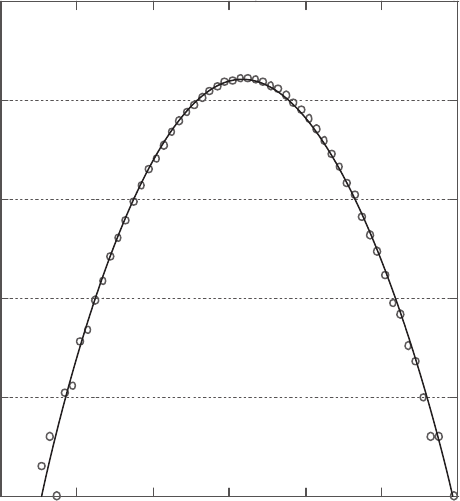
Figure 16.8 The same data shown in the left hand histogram of Figure 16.7 plotted on a
logarithmic-linear scale and without any attempt to shift the signatures to optimise the match.
The line is a best-fit binomial distribution curve using p = 0.504 and N = 1684.
The uniqueness is defined as the reciprocal of the false positive probability, and corre-
sponds to the number of items that would need to be sampled on average before one is
found that matches the current item as well or better. It is a measure of how many items
can be held in a database and still be uniquely and unambiguously identified by their LSA
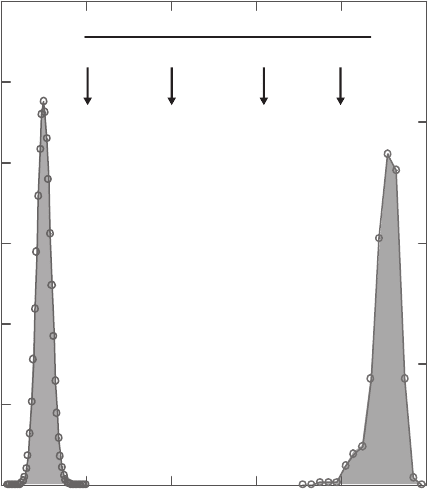
signature. Figure 16.9 shows the same data as Figure 16.7 but with the uniqueness values
superimposed above the BMR axis for the values of N and p derived from Figure 16.8. One
sees that for the level of BMR usually obtained when an item is correctly identified, the
uniqueness is extremely high. This means that the LSA signature can be considered to be
absolutely unique and can be used to identify items even in the largest of inventories. This
makes it very well suited to consumer goods, where many billions of nominally identical
items may be in circulation at a given time. As far as LSA is concerned, each one is different.
In biometric technologies one usually distinguishes between ‘one-to-one matching’ and
‘one-to-many matching’. One-to-one matching is used when the question to be answered
is: I believe that I know which item of my inventory this is – am I correct? One-to-many
matching is used when the question is: which of all of the items in my inventory is this
one? A second identifier is required for one-to-one matching, although this identifier does
OTE/SPH OTE/SPH
JWBK126-16 JWBK126-Kerry March 3, 2008 13:30 Char Count= 0
292 Smart Packaging Technologies for Fast Moving Consumer Goods
0
5,000
10,000
15,000
20,000
25,000
30,000
0
50
100
150
200
0.5 0.6 0.7 0.8 0.9 1
10
16
10
62
10
142
10
271
Uniqueness
Count
Bit Match Ratio (BMR)
Figure 16.9 The same Hamming plot of Figure 16.7 but with the bit match ratio values
converted into equivalent uniquenesses by applying the binomial distribution model using the
fitting parameters obtained in Figure 16.8.
not have to be secure. Examples include: a unique serial code printed on the box, in human
readable form, a one-dimensional barcode or a two-dimensional barcode; the name of the
owner of an identity card or passport; the account number and cheque number on a cheque;
a unique identity code carried by an RFID (Radio Frequency IDentification) chip or a
smart card chip. The advantage of one-to-one matches is that lower uniqueness values can
be tolerated. For the data shown in Figure 16.9 this is hardly important since even the very
poorest rescans lead to uniqueness in excess of 10
150
. Suppose, though, the uniqueness
were only 10
6
(see later for reasons) and a one-to-one match were being performed. One
could then say with a 99.999 % certainty (i.e. a one part in 10
6
uncertainty) that this
item is genuine. If, on the other hand, a one-to-many search was being performed across
an inventory of 10 million items with the same level of uniqueness, then one could say
nothing about whether the item was genuine, since one would expect there to be 10 items
in that inventory that match any randomly selected signature, regardless of whether they
are genuine. The other advantage of one-to-one matching is that much less computational
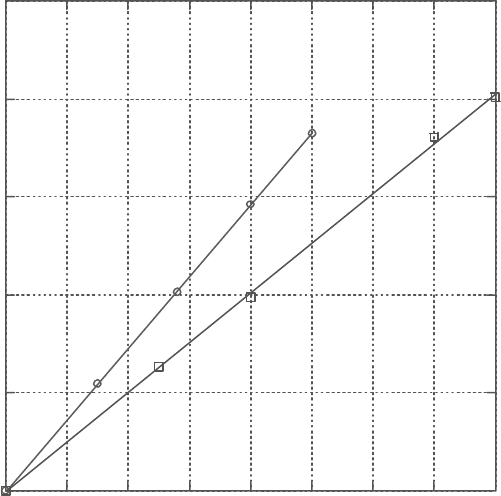
power is required and so the answer can be obtained more quickly. Figure 16.10 shows the
maximum searching speed achievable today using standard computing hardware in a one
to many search. One-to-many searches are always divided into two steps. In the first step, a
OTE/SPH OTE/SPH
JWBK126-16 JWBK126-Kerry March 3, 2008 13:30 Char Count= 0
Laser Surface Authentication 293
0
1
2
3
4
5
0 1020304050607080
192 bits
128 bits
Search time (s)
Number of thumbnails (millions)
Figure 16.10 The search time of a single Pentium microprocessor using 128- and 192-bit
thumbnails. Signatures can be tested at a rate of up to 20 million per second on a single
processor.
reduced version of the fingerprint (called a thumbnail) is searched very rapidly. However,
since N is low for the thumbnail (recall that N cannot be larger than the number of physical
bits in the signature), the uniqueness is poor and so a given search always finds multiple
hits. These hits are considered a most likely list and each one is then re-matched using the
full length signature. Figure 16.10 shows that up to 20 million thumbnail targets can be tried
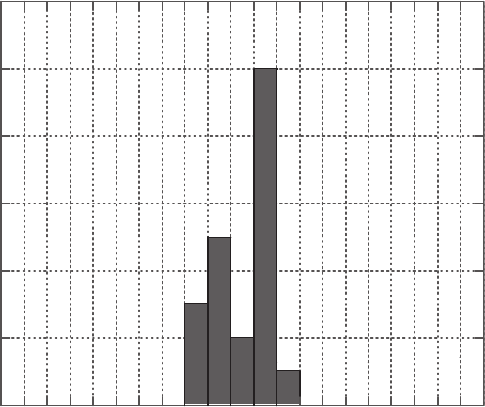
per second on a single Pentium processor. Figure 16.11 shows the results of a full system
implementation of a one-to-many search across 150 million database targets. The query
was launched from a remote country using a low quality internet connection, transmitted
to a central server, which then used multiple separate PCs to perform the thumbnail search.
The correct match was then transmitted back to the overseas issuing machine. The entire
query time from original launch to receipt of result (including all Internet transmission
delays) took an average of approximately 5 seconds.
What causes the uniqueness to fall from the astronomical values shown in Figure 16.9
down to levels where only one-to-one matching is possible? There are four main sources.
(i) Materials that offer poorer LSA responses, both in terms of the amplitude of the signal
and hence its detectability and also how easy it is to find the correct position for
OTE/SPH OTE/SPH
JWBK126-16 JWBK126-Kerry March 3, 2008 13:30 Char Count= 0
294 Smart Packaging Technologies for Fast Moving Consumer Goods
0
2
4
6
8
10
12
012345678910
Count
Total waiting time for identification (s)
Figure 16.11 A histogram of the total waiting time for a response toa1tomany LSA search
among 150 million items, including all Internet transmission delays. All signatures were stored
on one 32-bit server with five Pentium search clients attached to it. No meta-data was used to
subdivide the 150 million items.
scanning. For example, soft, pliable materials can be more difficult than solid, rigid
ones. Both of these reduce the BMR of genuine matches, and hence the uniqueness.
(ii) Items that need to undergo high levels of wear and tear such as chemical attack. This
also reduces the BMR of genuine matches and again the uniqueness. In general, LSA
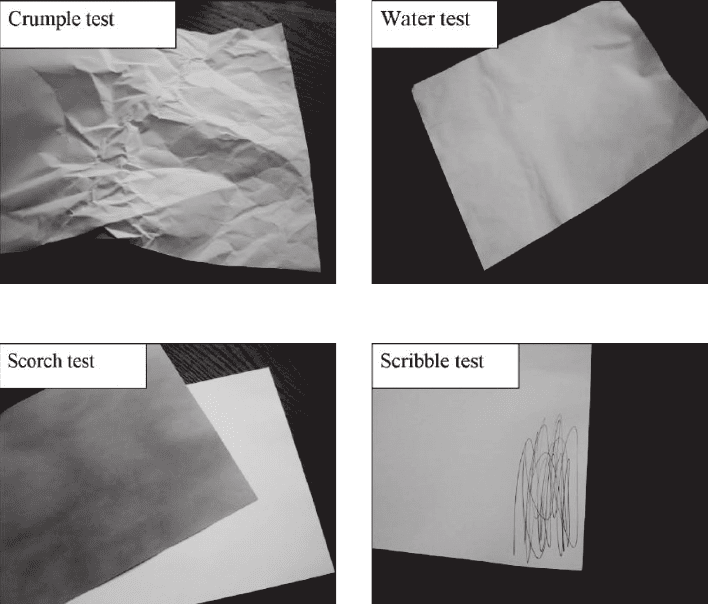
has been found to be remarkably robust when items are exposed to damage. Figure
16.12, for example, shows four sheets of paper that underwent an LSA registration
scan when pristine, and were then artificially damaged in a number of different ways.
In all cases, a good recognition was still possible, although the BMR (and uniqueness)
was lower than if no damage had been inflicted.
(iii) Small items where the available area for scanning is less than 10 cm
2
. In these cases,
the total amount of recorded data is reduced and consequently N in the binomial
distribution falls. In this case, even a good BMR level will correspond to a lower level
of uniqueness.
(iv) Items that have a large amount of high density printing on the surface. If the lengthscale
of surface contrast is too small, it is not possible to use signal processing to separate
the LSA signal component from the intensity variations due to surface printing. These
must be separated since in most applications the surface printing is the same for every
item and is not random. Consequently, large areas of the scan must be discarded in the
signal processing and the end result is that there is too little data, i.e. N becomes too
low again.
OTE/SPH OTE/SPH
JWBK126-16 JWBK126-Kerry March 3, 2008 13:30 Char Count= 0
Laser Surface Authentication 295
(a)
(c) (d)
(b)
Figure 16.12 Four different types of damage applied to office paper. An LSA signature was
recorded from the paper before and after damage. In all cases, a match quality corresponding
to a uniqueness of at least 10
18
was obtained after damage.
In terms of the Hamming plot of Figure 16.7, (i) and (ii) cause the right-hand distribution
to move to the left, while (iii) and (iv) cause the left-hand distribution to move to the right.
When there is no longer any clear space between these distributions it becomes impossible
to select a threshold above which authenticity can be guaranteed; if the distributions overlap,
there is no way of knowing if a BMR value in the overlap region is a poor quality match of
a genuine item, or a lucky high quality match of a counterfeit item. In these cases, one must
limit the use of LSA to one-to-one matching scenarios, or else start to deal with realistic
values of both false positive and false negative probability. These situations can sometimes
be improved by including additionally considering meta-data about the item, for example
its brand, country of origin and date of manufacture.
These limitations apply to all biometric and most sensing technologies. In general terms,
LSA has better levels of discrimination than human biometric technologies.
OTE/SPH OTE/SPH
JWBK126-16 JWBK126-Kerry March 3, 2008 13:30 Char Count= 0
296 Smart Packaging Technologies for Fast Moving Consumer Goods
16.5 The Practicalities of Using LSA
LSA is usually a two step process. The first half is known as registration and is used to
populate a database of all known items. For most scenarios, especially those involving large
inventories of items to be protected (as is the case for consumer goods), this registration
phase should be fully automated. This is usually achieved by mounting a static LSA sensor
close to a conveyorbelt such thatthe itemspass bythe sensor asthey movealong the belt. The
advantage of this approach is that the normal production environment is not disturbed. The
current generation of LSA sensors is designed to accept a maximum linear speed of 4 metres
per second (790 feet per minute) and up to 10 items per second (36 000 items per hour).
These two limitations are more than sufficient for most production environments without
any modification other than the addition of channelling rails to improve the positional
stability of items as they move along the belt. An electronic speed signal is also required to
allow the LSA sensor to monitor the instantaneous speed of the item and hence ensure that
data points are recorded at a precisely defined spacing. This is usually achieved by adding
a rotary encoder to the motor driving the belt. Scans are collected in a local database table
on the same computer that drives the LSA sensor. These scans are then uploaded in batch
mode on a regular basis (usually between once an hour and once a day) to a central database
store. An association is also made in that local database table between each scan and any
known meta data. This could include a date–time stamp, a batch number or a customer
number (especially if the sensor is placed close to the point where the items go into a final
shipping crate) and also some information about the type of product if multiple products are
produced on the same line. Meta data has two distinctive roles. The first is to make one-to-
many searching easier. For example, many manufactured items carry a batch code stamped
onto them. Although this code is rarely unique, a one-to-many search can then be limited
only to items with the same batch code. The total search space is then often significantly
reduced and, if the uniqueness is low, the false positive/false negative statistics is improved.
The second role of meta data is as information to be returned once a successful match has
been achieved. This is useful if LSA is not being used only as an authentication technology,
but also as a tracing technology, as would be the case for tackling grey market trading. In
grey market trading, the item is often known to be genuine but in the wrong country in
order to take advantage of differential taxation or pricing. LSA can then be used to retrieve
all of the meta data that was stored with the LSA signature at the time of registration, and
hence work out who the intended customer was, which shipping route was being used, etc.
Although a similar function could be performed by a printed unique identity code, such
codes are often defaced by grey market traders to avoid such tracing. In consumer products
such as perfume, the aesthetic impact of a printed code may also be undesirable.
If one-to-one matching is to be performed, then the local database table must also contain
the association between a second identifier and the LSA signature. The simplest way to
achieve this is by having a reader on the production line, as close as possible to the LSA
sensor, which reads the existing second identifier at the same time as the LSA signature is
being recorded. The two can then be tied together in the same database entry. If this is not
possible and the second identifier has to be read either before or after the LSA signature,
then a date–time stamp can be used to reconcile the two. This reconciliation does not have
to happen in real time, which simplifies much of the integration engineering.
The choice of how large an LSA signature field should be in each database record is
a compromise between total database size and uniqueness: N in the binomial distribution
OTE/SPH OTE/SPH
JWBK126-16 JWBK126-Kerry March 3, 2008 13:30 Char Count= 0
Laser Surface Authentication 297
0
20
40
60
80
100
0.6 0.65 0.7 0.75 0.8 0.85 0.9 0.95 1
log
10
(Uniqueness)
BMR
N=100
N=200
N=300
N=400
N=500
N= 750
N=1000
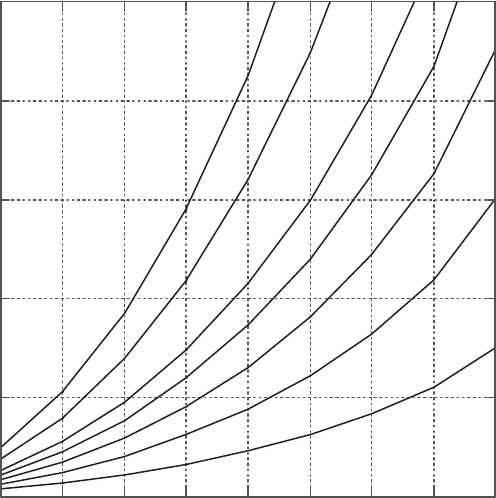
Figure 16.13 A uniqueness table obtained from the binomial distribution model. The unique-
ness is calculated for a given bit match ratio and number of effective bits.
cannot be larger than the number of bits physically stored, and is often less. A typical
working point is to store 3000 bits (375 bytes) per item, usually made up of 500 bits from
each of six photodetectors. Figure 16.13 shows some sample calculations made from the
binomial distribution for different values of N and BMR. A BMR of 0.7 can usually be
achieved for genuine items unless the items are very heavily damaged or poorly positioned.
For one-to-many matching across an inventory of 100 million items it is assumed that a
uniqueness of 10
14
is required. Figure 16.13 shows that in this case, N must be greater
than or equal to 400. For one-to-one matching with a 99.99 % confidence, a uniqueness of
10
4
is required. Figure 16.13 shows that in this case, N must be greater than or equal to
100. Remember that this is the number of degrees of freedom in the binomial distribution,
and not necessarily the database field size, which may be larger. However, with careful
system design it is usually possible to arrange for the database field size (in bits) to be no
more than twice N, and in many cases it can be much closer. A minimum of 800 bits per
item should therefore be allowed for one-to-many searching and 200 bits for one-to-one
matching. Extra space must also be allowed for indexing information, etc.
The scenario of one-to-one matching is interesting because this field size is small enough
to go directly into a two-dimensional bar code of approximately 8 mm × 8 mm, which
could be printed directly onto the item itself. This is then a variation on the one-to-one
matching mode, where the second identifier is not simply a record locator to a database
OTE/SPH OTE/SPH
JWBK126-16 JWBK126-Kerry March 3, 2008 13:30 Char Count= 0
298 Smart Packaging Technologies for Fast Moving Consumer Goods
entry, but rather carries the LSA information itself. In this case, digital encryption must also
be added to prevent an attack with access to LSA equipment from printing his or her own
codes. The two advantages of this ‘without database’ mode are firstly that there is no need
for the cost of a database infrastructure, and secondly that items can be validated in the field
even in extremely remote locations where there is no Internet or mobile phone access. The
disadvantage is that there is a considerable technical challenge to printing two-dimensional
bar codes in real time on a high speed production line, as the LSA data must be recorded,
processed, digitally signed and then formed into a barcode image all within a few tens
of milliseconds if the printer is to be close to the LSA sensor. Although more time could
be obtained by moving the printer further downstream, there is then a further logistical
challenge of ensuring correct synchronisation, especially if items may be removed from
the conveyor by quality inspectors, etc.
The second half of most LSA implementations is the process of rescanning items in the
field for the purpose of authenticating or tracing them. This is usually a manual process,
since it is normal for only a small number of items to be authenticated in the field. The
portable field scanner therefore incorporates a motor that movesthe LSA sensor with respect
to the static item. Scanning takes approximately 1 second. The LSA sensor is designed for
a working distance of 5 mm between its surface and the surface being scanned. In order to
make this distance as easy as possible to find manually, the sensor is sunk into the scanner
by 5 mm so that the item to be scanned only needs to be placed in contact with the top of the
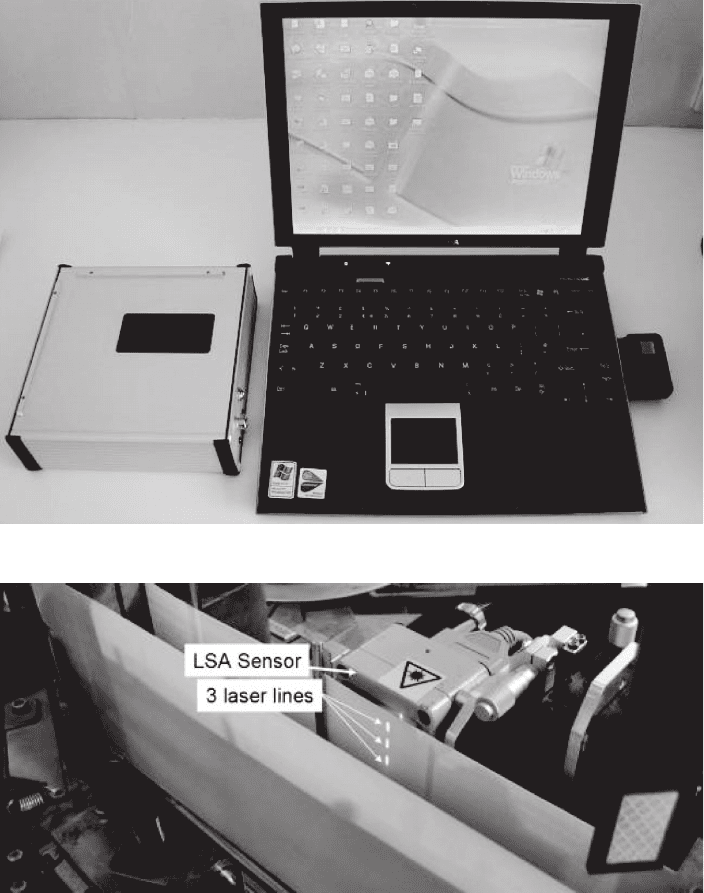
scanner. Figure 16.14 shows pictures of both the static production line registration sensor
and a portable field scanner. The portable field scanner connects to a lap-top computer,
which receives the raw scan data from the sensor and applies some initial digital filtering.
If no database is being used, then the lap-top must also read the expected LSA signature
and then perform the comparison locally. If one is in a one-to-one matching mode but with
a database (i.e. the item only carries a record locator) then the lap-top sends the recent
scan to the central server, along with the record locator, has been read from the item and
the comparison is performed on the server. Alternatively, the lap-top may choose only to
transmit the record locator to the central server, retrieve the expected LSA signature and
then perform the comparison locally. Which of these modes is used will depend upon the
degree of trust that can be assigned to the lap-top and whether security policy allows the
proprietary matching algorithms to be placed onto the central server.
The way in which a field scan is processed and matched against one or many database
targetscan depend upon the item being scanned. In particular,differentmaterial types benefit
from different digital filter settings and items with a large amount of printed contrast on
them will need specially constructed masks to determine which bits should be used. In
scenarios where a given field scanner may encounter a wide range of different products
(for example a major brand owner may have many products but limited brand protection
officers, or customs officials may need to use LSA to verify imports of a wide range of
products across multiple brand owners), it is necessary for the user to communicate the
product type to the field scanner lap-top before any scans can be processed.
Since different items of a nominally identical type exhibit independent and unique LSA
signatures, it also follows that different parts of the surface of an item also have different
signatures. It is therefore necessary to perform the field scan in approximately the same area
as the registration scan was taken. Achieving this is probably the single greatest challenge
to implementing LSA. The problem has been made easier by careful design of the laser
OTE/SPH OTE/SPH
JWBK126-16 JWBK126-Kerry March 3, 2008 13:30 Char Count= 0
Laser Surface Authentication 299
(a)
(b)
Figure 16.14 (a) A portable field scanner and laptop computer; (b) a production line sensor
mounted onto a production line.
OTE/SPH OTE/SPH
JWBK126-16 JWBK126-Kerry March 3, 2008 13:30 Char Count= 0
300 Smart Packaging Technologies for Fast Moving Consumer Goods
optics and matching algorithms to engineer the maximum possible tolerance to errors in
this positioning. Mispositioning in the direction of scan is relatively easy to correct, since
it leads simply to a shift in the position of the maximum value of the cross-correlation
function. The cross-correlation function must therefore be evaluated across a wide enough
range to be sure to catch the proper peak. The main impact of mispositioning in this
direction is therefore an increase in computation time for matching, although if uniqueness
is low it can be reduced even further by the number of effective trials inherent with a wider
cross-correlation range.
Sensitivity to mispositioning in the direction transverse to the scan direction (but still in
the plane of the item being scanned) is achieved by focusing the laser spot to a line rather
than a spot, using a cylindrical focusing lens. The short axis of the focused line follows
the direction of scan, allowing a short autocorrelation width to the LSA signal and hence a
high value for N. The long axis of the focused laser is therefore in the direction for which
mispositioning would cause the greatest problem and the recorded LSA signal is derived
from a spatial average of the surface structure along the length of the focused laser line.
Even if the item is mispositioned much of the same area still ends up being scanned and
hence the BMR does not change too much for small misplacements. Figure 16.15 shows a
quantitative measure of how BMR depends on transverse mispositioning, along with similar
curves for misplacement in the direction of focus of the laser and the yaw rotation axis.
A good LSA implementation will attempt to minimise the uncertainty in the position of
the registration scan through the use of guide rails on the conveyor belt. This then allows
for the maximum amount of permitted manual misplacement at the field scanner.
Two strategies are in place to minimise misplacements at the field scanner. The first is
through mechanical positioning. The field scanners can be fitted with mechanical guide
rails that hold the item in the correct place. This works well for rigid rectangular cartons,
for plastic cards and for paper documents. It is less suitable where there is a wide range of
items to be scanned on a single field scanner, or where the item is a cylindrical bottle or an
irregular shape. In these cases, an imaging approach is used. The field scanners contain a
small camera that observes the area that is about to be scanned. The camera can be used
to identify a location mark on the surface. This may be a brand owner’s logo, an explicit
‘protected by LSA’ logo, an existing bar code or the edge of the item. Software on the
laptop uses image recognition to tell the user when the location mark is within a predefined
tolerance range of its correct position. In the simplest cases the user then manually moves
the item until informed that it is correctly positioned; in more advanced situations a servo
moves the item automatically to the correct place.
16.6 Applications and Advantages of LSA
LSA offers many advantages over traditional approaches to brand protection and document
security:
r
It works across a wide range of materials, including paper, coated paperboard, plastics
and metals, allowing the possibility of using a single technology to protect many different
types of items. This has advantages for cost of ownership, ease of training and the required
amount of supporting infrastructure.