
Kerry J., Butler P. Smart Packaging Technologies for Fast Moving Consumer Goods
Подождите немного. Документ загружается.

OTE/SPH OTE/SPH
JWBK126-16 JWBK126-Kerry March 3, 2008 13:30 Char Count= 0
Laser Surface Authentication 301
50
(a)
(b)
60
70
80
90
100
0 0.5 1 1.5 2 2.5 3 3.5
BMR (%)
Transverse position (mm)
50
60
70
80
90
100
0246810
BMR (%)
Depth position (mm)
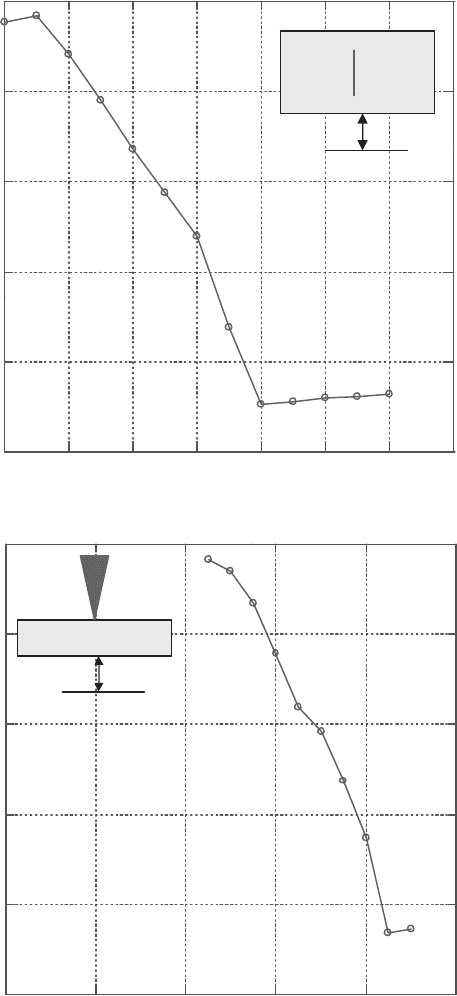
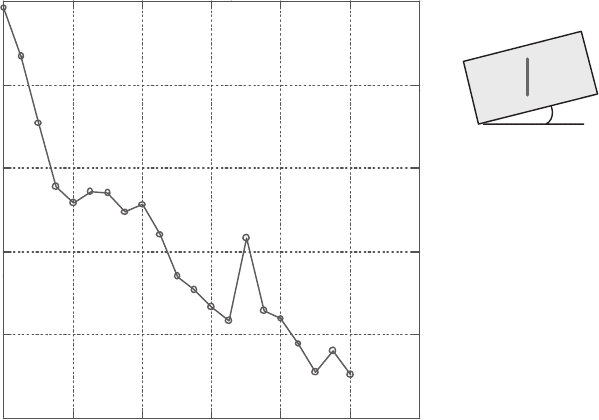
Figure 16.15 Variation in the bit match ratio as an item is misplaced in (a) the direction
transverse to the scan, (b) the direction along the laser beam and (c) yaw.
OTE/SPH OTE/SPH
JWBK126-16 JWBK126-Kerry March 3, 2008 13:30 Char Count= 0
302 Smart Packaging Technologies for Fast Moving Consumer Goods
50
60
70
80
90
100
0 2 4 6 8 10 12
BMR (%)
Yaw (deg)
(c)
Figure 16.15 (Continued)
r
It does not require any modification to the item being protected such as the embedding of
chips, the attachment of tags or the incorporation of special inks, fibres or particles into the
material of the item. This has significant cost implications in high volume manufacture,
as well as preserving the aesthetic appeal of items.
r
In most cases, the database registration can be achieved without slowing the production
line. This is important for keeping the marginal cost added to the product to a minimum.
r
It is intrinsically very robust. Items can be exposed to normal levels of wear and tear (and
in some cases heightened levels) without loss of recognition of the signature.
r
It can be entirely covert. This is essential for grey market tracing, where it is important
that the grey market trader does not realise that items are traceable.
r
It is privacy neutral. Concern has been expressed at the possibility of remotely read tech-
nologies such as RFID being compromised by attackers with sensitive radio equipment.
This can range from having person details remotely extracted from a passport or identity
card to criminals filtering crowds of people to see who is carrying high value items. The
physics of LSA means that it can only ever be read by proximity, i.e. it is a line of sight
only technology.
Five distinct areas of application of LSA have been identified so far:
(i) Use as an authentication technology for documents, pharmaceuticals and high-value
branded products. Preventing counterfeiting, with its associated loss of market, loss
of brand integrity and increased liability is the main benefit to the customer.
OTE/SPH OTE/SPH
JWBK126-16 JWBK126-Kerry March 3, 2008 13:30 Char Count= 0
Laser Surface Authentication 303
(ii) Use as a tracing technology for items that might be grey market traded.
(iii) Use as a privacy technology, where the LSA signature is involved in an encryp-
tion/decryption system.
(iv) Preventing the copying of unique identifiers. An increasingly popular trend is to use
online digital printing to apply a unique identity code to items such as pharmaceuticals.
The code can be used to implement tracing and providing codes are allocated sparsely,
it offers a degree of prevention of counterfeiting since the probability of a counterfeiter
hitting upon a valid code by chance is small. A veryattractivefeature of digitally printed
unique identity codes is that they can be checked by the consumer from home using
an Internet web site. The main disadvantage to digitally printed unique identifiers is
that they can be copied. A fraudster only has to buy one genuine item and then make
multiple copies of that valid code. The database containing all known genuine codes
also has to be very carefully protected. However, by combining unique identifiers with
LSA, this final weakness can be overcome, as the unique identifier can be tied to a
particular physical product.
(v) Adding functionality to overt security features. Many brand owners like to use an overt
security feature, such as a hologram or security label, which can be checked without
special equipment. We find that most holograms and security labels have a good LSA
signature that can then be used as an additional covert feature. There is a useful synergy
between the two technologies since the image of the hologram or security label can be
used as the location mark for the LSA field scanner, and the registration LSA scan of
the hologram or security label can be read before it is applied to the item. This means
that it is not necessary to implement LSA reading technology onto the production line,
thus making the solution more ubiquitous and lower cost.
References
1. Daugman, J. (2006) Probing the uniqueness and randomness of IrisCodes: Results from 200 billion
iris pair comparisons. Proc. IEEE, 94, 1927–1935.
2. Buchanan, J. et al. (2005) Nature, 436, 475.
3. Indeck, R. S. and Glavinas, E. (1993) Fingerprinting of magnetic media, IEEE Trans. Magn., 29,
4095.
4. Pappu, R., Recht, B., Taylor, J. and Gershenfeld, N. (2002) Science, 297, 2026.
5. Metois, E., Yarin, P. M., Salzman, N. and Smith, J. R. (2002) Proceedings of the Third Workshop
on Automatic Identification, Tarrytown, NY, March, pp. 147–154.

OTE/SPH OTE/SPH
JWBK126-17 JWBK126-Kerry March 3, 2008 13:32 Char Count= 0
17
Legislative Issues Relating
to Smart Packaging
Rinus Rijk
17.1 Introduction
Every day large quantities of food have to be discarded because they are no longer fit for
consumption. This may emanate from production failures but an important part is found
in the elapse of the ‘best before’ date [1]. Particular perishable foods like fresh meat
and meat products have to be taken from the shelves. In some cases a supermarket may
successfully sell the products that have reached their shelf life by significant reduction in
price. From an economic point of view this is an undesirable situation, while disposal of
food is considered more and more to be an unacceptable environmental burden. Failures
in production may be incidental and difficult to avoid, but many cases of deterioration of
food due to microbiological contamination, enzymatic or chemical reactions are occurring.
Proper hygiene, and good quality control systems and suitable packaging may contribute to
avoiding the ultimate decay of the food, but also the use of smart packaging may contribute
to a decrease in food disposal.
Today, consumers show a preference for fresh and mildly preserved foods with good
quality and taste. Quality, price and appearance are important but food safety is the major
issue in consumer perception. Safe food with good taste and quality starts with the selection
of the food itself. As the saying goes ‘garbage in, garbage out’ is certainly applicable to
perishable foods. Processing of the food should be subject to good manufacturing practice in
which high standards of hygiene and proper preservation are leading issues. Consumers, and
also retailers and producers, are often very interested in relevant information on the quality
of the packaged food. Information on the composition is obligatory for most packaged
Smart Packaging Technologies for Fast Moving Consumer Goods Edited by Joseph Kerry and Paul Butler
© 2008 John Wiley & Sons, Ltd. ISBN: 978-0-470-02802-5
OTE/SPH OTE/SPH
JWBK126-17 JWBK126-Kerry March 3, 2008 13:32 Char Count= 0
306 Smart Packaging Technologies for Fast Moving Consumer Goods
foodstuffs [1,2] as well as information on the shelf-life of the food. The composition of the
food is mainly of nutritional interest, whereas the best-before data gives guidance on the
maximum storage period. The best-before data is usually established based on experience
but is no guarantee that the food is still fit for consumption. When the food is contaminated
before packing, not stored at the prescribed temperature or when the packaging has failed,
then the food may be spoiled before the best-before date. New developments in smart
packaging provide the consumer tools to obtain information on the quality of the food
and allows food producers to pack the food in packaging material that releases or absorbs
substances that influence positively the quality and shelf-life of the packaged food.
This chapter is focused on the current status of legislative requirements for active and
intelligent materials and articles, which are in place at the European level or which will be-
come valid within a reasonable time frame. In this chapter ‘active and intelligent packaging’
or ‘smart packaging’ refers to any form, shape or size of active and intelligent, materials
and articles. Where ‘packaging’ is used this is not restricted to packaging materials used
only to wrap the food.
In this chapter the expression ‘smart packaging’ covers both ‘active packaging’ and
‘intelligent packaging’. Active packaging is designed to absorb or release substances from
or to the packaged food. Intelligent packaging does not influence the food but is capable of
providing information on the conditions of the packaged food.
It is evident that smart packaging offers a number of benefits in the food production,
retail and distribution chain, but the consumer may also profit from this smart packaging.
Unacceptable migration, misleading the consumer or providing incorrect information are
only a few drawbacks that may occur with smart packaging. In the European Community,
individualmember states have not drafted any regulations to guarantee food safety in respect
of smart packaging. The European directives require that packaging materials are as inert
as possible, which is a contradiction to smart packaging that may be designed to release
substances to the food. Therefore, in 2004 the EU commission has amended the general
requirements for food contact materials and has drafted a specific regulation taking into
account the results of a European Commission funded project (FAIR-project CT-98-4170)
knownby the acronym of ‘ACTIPAK’ [3]. The aim is to havesafe materials with harmonised
requirements all over the European Community. The Actipak project included an inventory
of existing active and intelligent packaging, classification of active and intelligent systems
in respect of:
r
legislation on food contact materials;
r
an evaluation of microbiological safety;
r
shelf-life-extending capacity, efficacy of active and intelligent systems;
r
toxicological, economic and environmental evaluation of active and intelligent systems
and recommendations for legislative amendments.
The results of the investigation contributed to the revision of the old framework Directive
89/109/EEC [4] on food contact materials. In the new Framework Regulation (EC) No.
1935/2004 [5] the provisions for the use of active and intelligent packaging systems is
specified.
A project group under the Nordic Council of Ministers published, in 2000 [6], a compre-
hensive report on legislative aspects of active and intelligent food packaging, which also
contributed to proposals for new legislation.

OTE/SPH OTE/SPH
JWBK126-17 JWBK126-Kerry March 3, 2008 13:32 Char Count= 0
Legislative Issues Relating to Smart Packaging 307
17.2 Smart Packaging
Smart packaging may be divided into three different groups, i.e. (i) intelligent materials that
provide information to the user; (ii) active absorbing materials that remove substances from
the food or the environment of the packaged food, and (iii) active releasing materials that
are designed to release substances to the food or its environment. Smart packaging is today
considered a new development but actually the principles are very old. As an example, the
use of oak barrels for storage and maturation of wine, whisky and other alcoholic drinks
has been used for centuries. The release of oak aroma is an appreciated additional effect
besides the storage of the drinks.
In Tables 17.1 and 17.2 below a non-exhaustive overview is given of different smart
packaging and its intended function.
Table 17.1 Examples of typical active packaging materials
Active function
Oxygen absorbers Based on iron or iron oxide, enzymatic oxidation, ascorbic
acid oxidation, light activated quinone containing film or photo
initiated polymers and applied to remove oxygen to avoid
bacterial growth and oxidation.
Oxygen scavenger plus
carbon dioxide generator
Based on the dye-sensitised oxidation of furoic acid, which
consumes oxygen and generates a similar volume of carbon
dioxide [7].
Also enzymatic systems based on the enzymatic oxidation of
glucose to gluconic acid will absorb oxygen and release
carbon dioxide at the same time.
Moisture absorbers Based on cellulose fibres or a cross-linked polymer to remove
the drip from fresh meat. Some times mixtures of herbs are
added to avoid microbiological growth in the drip juice to
assure a longer shelf life.
For dry foods, e.g. biscuits, moisture regulators based on silica
gel or molecular sieves may be employed.
Moisture regulators Based on sugar solution contained in a water permeable plastic
bag. The regulator is used for fresh meat or fish to obtain better
backing properties.
Ethylene scavenger Based on potassium permanganate on an inorganic substrate.
Other systems include plastic films with finely dispersed
minerals, e.g. silica gel, zeolite or active carbon. Reaction of
the coloured tetrazine with ethylene. As the reaction product of
ethylene with tetrazine is colourless, the packaging serves as
intelligent packaging at the same time [7].
Aldehyde scavenger Based on the reaction of amines, incorporated in the
packaging, with aldehydes (Schiff bases).
Amine scavenging film Based on ionomeric polymer. Depending on the degree of free
acid groups in the polymer, a film made of ionomer has a
capacity to absorb and remove amines from fresh fish [8].
(Continued )

OTE/SPH OTE/SPH
JWBK126-17 JWBK126-Kerry March 3, 2008 13:32 Char Count= 0
308 Smart Packaging Technologies for Fast Moving Consumer Goods
Table 17.1 Examples of typical active packaging materials (Continued)
Active function
Sulphite scavenger Based on absorption of sulfite by zeolite-containing polymers
[8].
Bitter taste remover Based on an immobilised enzyme, naringinase, in a cellulose
acetate film to remove the bitter taste (naringin and limonin
from grapefruit juice [9].
Carbon dioxide absorber Carbon dioxide is scavenged by calcium hydroxide provided
the water content is sufficiently high. This is an irreversible
system. Reversible systems are based on absorption on zeolite
or active carbon [10].
Antimicrobial systems More efficient systems are based on the release of an
antimicrobial agent by transmission through the gas phase.
Known releasers are ethanol, SO
2
or CO
2.
Many other systems
are being tested. Application of non-volatile substances
requires an intimate contact with the food to allow transfer
from the packaging onto the food. Tests have been performed
with organic acids, nisin, lysozyme [11], chitosan, herb
extracts, allyl isothiocyanate, but none of the systems were
found to be generally applicable.
Heat releaser Microwave susceptors.
Other releasers Packaging that can release antioxidants, flavours, and colours
is of great interest.
Table 17.2 Examples of intelligent packaging materials
Active Function
Time/temperature
indicators
Many time-temperature indicators (TTIs) are available today.
Most of the indicators are based on the diffusion rate of one
layer into a second layer of the TTI, leading to colour change.
Some indicators only register the time or the temperature. A
system using enzymatic reaction is commercially available. In
general all these indicators are readable by the consumer. An
example of an indicator only intended for the retailer is a
printed bar code label. The bar code will change in time and
that package will be recognised as not suitable for sale.
Oxygen indicators Based on a colour change when oxygen is present. In this way
they may be applied to indicate leakage of, e.g., modified
atmosphere packaging.
Carbon dioxide indicator Generally used to detect the microbiological activity by
means of a colour change.
Microbial growth
indicator
Indicators to detect metabolites are of great interest, but
reliable systems are not yet commercially available.
Ripening indicator The indicator shows the best time of consumption by means
of colour indicator.
OTE/SPH OTE/SPH
JWBK126-17 JWBK126-Kerry March 3, 2008 13:32 Char Count= 0
Legislative Issues Relating to Smart Packaging 309
17.3 Legislation Relevant to Smart Packaging
Smart packaging may have a complex composition. In principle a smart packaging may
be composed of different parts. There is the active or intelligent ingredient, which may
be ‘absorbed’ on carrier materials and the active or intelligent ingredient together with
the carrier may be packaged in a sachet composed of different materials. The substances
released or absorbed to the food may be subject to specific regulations related to food
quality, whereas the packaging material may be subject to EU or national regulations.
However, the use of smart packaging may also be subject to other legal requirements. In
the following sections the relevance of the various legal requirements is discussed.
17.3.1 Framework Regulation (EC) No 1935/2004 on Food Contact Materials
Framework regulation (EC) No 1935/2004 [5] applies to all materials and articles intended
to come into contact with foodstuffs. It sets general requirements and provisions are formu-
lated that specific directives or regulations may be published that set detailed requirements.
If such detailed requirements are not established then national regulations may be valid, or
it should be demonstrated that the material or article does not pose a threat to human health.
Particular Article 3 of the Framework Regulation requires that food contact materials shall
not transfer their constituents to foods in quantities that could: ‘endanger human health,
or bring about an unacceptable change in the composition of the food, or bring about a
deterioration in the organoleptic characteristics’. In addition, there is a requirement that the
consumer shall not be misled by labelling, advertising or presentation. Also in the former
framework directive 89/109/EEC [4] these requirements were included. However, smart
packaging, like releasing materials, cannot meet these requirements as they are designed to
change intentionally the composition or the organoleptic properties of the food. Absorbing
materials may also change intentionally the composition or organoleptic properties of the
food. The amended framework was transposed into a regulation, which has legal power
whereas a directive has to be implemented in the national laws of the member states.
Active and intelligent packaging are described by the following definitions:
‘“active food contact materials and articles” (hereinafter referred to as “active materials and
articles”) means materials and articles that are intended to extend the shelf-life or to maintain
or improve the condition of packaged food. They are designed to deliberately incorporate
components that would release or absorb substances into or from the packaged food or the
environment surrounding the food;
“intelligent food contact materials and articles” (hereinafter referred to as “intelligent materials
and articles”) means materials and articles which monitor the condition of packaged food or
the environment surrounding the food’.
The definition of active packaging refers to ‘deliberately incorporated components’ with the
intention of releasing or absorbing substances to or from packaged food. This distinguishes
active materials from passive packaging materials, which in a few cases may have an effect
on the food, but which are added for other reasons, e.g. a monomer. The definition also ex-
cludes all packaging materials from natural sources. For instance, wooden barrels are there-
fore not subject to the provisions on active materials. The substances released from such bar-
rels are not deliberately added to the FCM, but, if a wood extract were to be incorporated into
OTE/SPH OTE/SPH
JWBK126-17 JWBK126-Kerry March 3, 2008 13:32 Char Count= 0
310 Smart Packaging Technologies for Fast Moving Consumer Goods
an active packaging system then this would fall under the general and specific measures on
active materials and articles. The definition on intelligent materials is restrictive as it refers
to packaged foods only. This means that an ordinary thermometer or recording equipment
used in food production or storage are not considered ‘intelligent’ articles.
A special article 4 has been inserted, which sets specific requirements for active and
intelligent packaging. Changes in the composition or organoleptic characteristics of the food
due to the use of active packaging is allowed, on condition that the final food complies with
the provisions of Directive 89/107/EEC [12] on food additives and its related implementing
measures. In the absence of Community measures, national provisions shall be applicable.
Actually this means that only substances recognised as food additives or food ingredients
may be released to the food. As they intentionally become part of the food, the final food
product should be labelled properly in accordance with Directive 2000/13/EC [1] as last
amended by Directive 2003/89 [2]. Insert of Article 4 in Regulation 1935/2004 took away
the major hurdle, in the old framework Directive 89/109/EEC, for the introduction of active
packaging with a releasing function. Additional requirements on active and intelligent
materials are related to misleading the consumer and to labelling. Active packaging used
to change the composition of food or its organoleptic properties, in order to mask spoilage
of that food, is not acceptable, whilst information provided by intelligent packaging shall
be reliable and not mislead the consumer. It is required to label non-edible parts of a smart
packaging when brought into contact with food. In practice this may be restricted to that
smart packaging that is packed together with the food in the form of, for instance, a sachet.
Smart packaging integrated in the primary packaging itself will not need any labelling
because it cannot be distinguished from the packaging material itself. Finally the consumer
should be informed about the presence of smart packaging by adequate labelling.
A provision is made to allow the introduction of a specific measure for active and
intelligent materials and articles. The specific measure may include a list of authorised
substances incorporated into active and intelligent packaging and, where applicable, the
conditions of use of these substances.
The regulation introduces the European Food Safety Authority (EFSA) and its role,
including procedures and time frames. These are in accordance with ‘general food law’
[13]. EFSA has to be consulted on issues affecting public health. This means also that the
authorisation of active and intelligent components will be subject to an EFSA evaluation.
If required in a specific measure, then relevant food contact materials (FCM) shall be ac-
companied by a declaration of compliance, while appropriate documents shall be provided
to the relevant authorities to demonstrate such compliance. As most of the requirements
in the framework regulation are applicable to all FCM, active and intelligent materials are
subject to these rules as they can be considered FCM. In some cases there may be no
direct contact with the food, e.g. intelligent packaging positioned on the outside of the
primary package, but they are subject to the framework regulation for the reliability of the
information provided to the consumer.
17.3.2 Specific Regulation on Active and Intelligent Materials and Articles
A specific regulation [14] on active and intelligent packaging is under preparation and
approaching its final stage. In spite of the fact that this is still a draft regulation, the
final regulation most likely will not significantly differ in the principles laid down in that
OTE/SPH OTE/SPH
JWBK126-17 JWBK126-Kerry March 3, 2008 13:32 Char Count= 0
Legislative Issues Relating to Smart Packaging 311
document. Therefore the document can be taken as a starting point for requirements on
active and intelligent packaging.
The draft regulation deals in particular with the authorisation procedure for active and
intelligent ‘components’. Active and intelligent packaging shall comply with the require-
ments of Regulation (EC) No 1935/2004 [5] and they should be ‘suitable and effective
for the intended purpose’ and the active and intelligent components shall be included in
the Community list. Only if these requirements are fulfilled is an active and intelligent
packaging considered to comply with the requirements of this draft regulation.
Active and intelligent components are defined as ‘individual substances or a combination
of substances which cause the active function or provide the intelligent information’. As
mentioned already, most active and intelligent packaging has a complex structure. In gen-
eral, active and intelligent packaging can be split into two parts. One part includes the active
or intelligent components, while the second part concerns the so-called carriers or passive
parts that contain the component. Carriers may be interpreted as including a material on
which a releasing component is adsorbed, but also the packaging of the components. In the
example of an ethanol releaser, the ethanol is absorbed onto a silica gel, which in turn is
packaged in a paper or plastic sachet. The ethanol is defined as the active component, which
is subject to authorisation. The silica gel and the sachet form the passive part and should
comply with safety requirements as defined in the framework regulation and implemented
EU or national measures, but they are not subject to this draft regulation.
Migration of food contact materials (FCM) is subject to EU or national regulations.
Overall migration and specific migration limits are established in the various regulations
[15,16]. These limits are set to assure inertness and safety of the FCM. Active releasing
packaging is not designed to be inert. It will in many cases exceed the overall migration limit
and in some cases the specific migration limits set for FCM. Thus a substance released on
purpose from an active packaging material should not be included in the overall migration.
So special protocols may be needed for the determination of the overall migration. CEN
methods EN 1186, Parts 1–15 [17] may not be suitable. Specific migration limits mentioned
in the regulations on packaging materials may be exceeded provided the final food complies
with the rules and restrictions applicable to processed foods.
Authorisation of the active or intelligent components will be granted after a positive
opinion from EFSA and will only be valid to the applicant for an authorisation. The autho-
risation will be valid for a period of 10 years and may be renewed for another period of 10
years. The authorisation will be published in a Decision to the applicant. In addition the
active and intelligent components will be inserted into a list of authorised components. In
the Community list, issues like name and address of the applicant, name of the component,
description of the active or intelligent system and the conditions of use, maximum amount
of released components and any other relevant restriction will be inserted and made public.
Besides the requirements for labelling of FCM there is an addition requirement for active
and intelligent packaging. Materials that may be mistaken as a part of the food such as loose
sachets must be labelled using the words ‘DO NOT EAT’ and where possible the symbol
for a non-edible part (Figure 17.1).
A requirement, in line with Regulation (EC) No 1935/2004 [5], concerning a declaration
of compliance and the availability of appropriate documentation, has been confirmed in the
draft regulation. It means that for any active and intelligent material a statement shall be
provided that certifies that the material is safe to be used in contact with food under specified
conditions of contact. To support such a statement the certifier shall have documentation