
Lehner G. Electromagnetic Field Theory for Engineers and Physicists
Подождите немного. Документ загружается.

384 Time Dependent Problems I (Quasi Stationary Approximation)
θ-functions that allow one to transform poorly converging series into well
converging series.
Now, we return to the above announced proof of (6.167) and (6.168), where it
was claimed that
.
(6.177)
It may be sufficient to prove one of the two cases. Let us pick the case . This
equation meets the requirements to apply the residue theorem to find the inverse
Laplace transform (see Sect. 6.3). According to (6.60), we need the residues for
.
(6.178)
Using
,
(6.179)
one might as well write
.
(6.180)
The zeros of the denominator are at
.
(6.181)
However, notice that there is no pole for , i.e. , as the nominator also
vanishes with and the limit has a finite value. The
poles are therefore at
.
(6.182)
or in terms of p
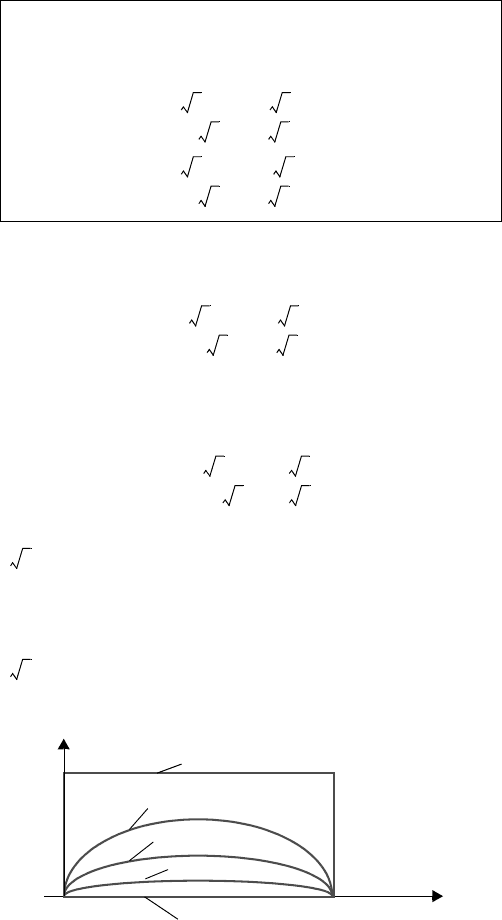
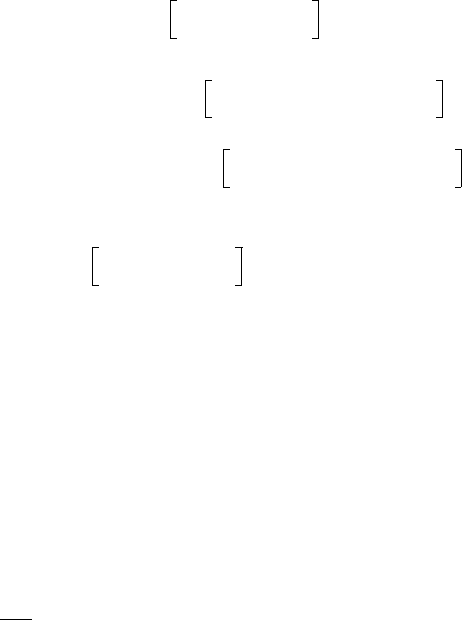
Fig. 6.25
x
t 0=
x 0= xd=
B
0
tt
1
t
2
<=
tt
2
t
3
<=
t ∞=
tt
3
=
B
Z
L 2 nπξ()sin nπξ'()sin n
2
π
2
τ–[]exp
n 1=
∞
∑
pξ[]sinh p 1 ξ'–()[]sinh
pp[]sinh
-------------------------------------------------------------------
for ξ' ξ >
pξ'[]sinh p 1 ξ–()[]sinh
pp[]sinh
-------------------------------------------------------------------
for ξ' ξ <
=
ξ' ξ>
f
˜
p() pτ()exp
pξ[]sinh p 1 ξ'–()[]sinh
pp[]sinh
-------------------------------------------------------------------
pτ()exp=
z()sinh iiz()sin–=
f
˜
p() pτ()exp i–
ipξ[]sin ip1 ξ'–()[]sin
pip[]sin
------------------------------------------------------------------
pτ()exp=
ip nπ=
n 0=
p
0=
p
0= f
˜
p() pτ()exp[]
p 0→
ip nπ, = n 1≥
6.6 Field Diffusion in a Plane Plate 385
.
(6.183)
These are poles of order 1. There are no other poles. Its residues are
.
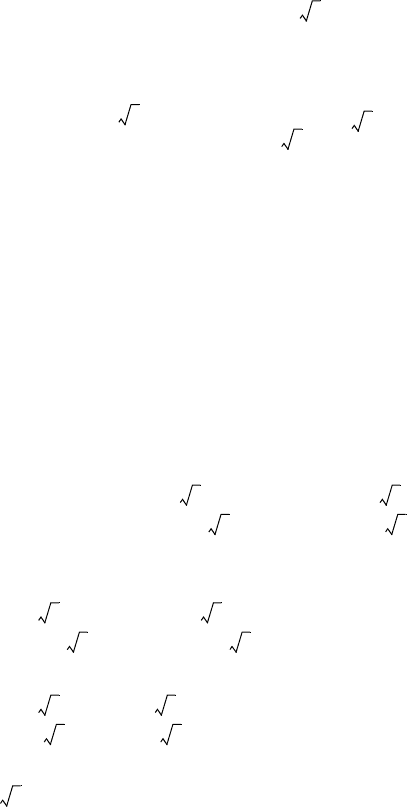
This requires l’Hospital’s rule (6.63), by which we find
,
(6.184)
and its residue is
.
(6.185)
Summing all these residues from through totals to exactly what
was claimed in (6.177).
6.6.3 Impact of Boundary Conditions
Now we study the impact of the boundary conditions at and (this
relates to and , respectively). The first two parts from (6.165)
responsible for the boundary conditions are
.
(6.186)
The convolution theorem shall be used to find the solution in the time domain, if
we are able to find the inverse Laplace transform of the two functions
.
and
.
Both have poles of order 1 at
(6.187)
or
.
(6.188)
Again, there is no pole for because both functions are finite there. Now one
needs to find the residues for
p
n
2
– π
2
, = n 1≥
R
n
i– nπξ()sin nπ 1 ξ'–()[]sin n
2
π
2
τ–[]exp
nπ
i
------
ip[]sin
---------------------------------------------------------------------------------------------------
pn
2
π
2
+()
pn
2
π
2
–→
lim=
pn
2
π
2
+
ip[]sin
----------------------
pn
2
π
2
–→
lim
1
i
2 p
----------
ip[]cos
----------------------------------
pn
2
π
2
–→
lim
2nπ
nπ()cos
--------------------–==
R
n
2– nπξ()sin nπ()sin nπξ'()cos nπ()cos nπξ'()sin–[]n
2
π
2
τ–[]exp
nπ()cos
-------------------------------------------------------------------------------------------------------------------------------------------------------------------=
2 nπξ()sin nπξ'()sin n
2
π
2
τ–[]exp=
n 1= n ∞=
ξ 0= ξ 1=
x 0= xd=
B
˜
z
ξ p,()f
˜
1
p()
p 1 ξ–()[]sinh
p[]sinh
----------------------------------------
f
˜
2
p()
pξ[]sinh
p[]sinh
--------------------------
+=
p 1 ξ–()[]sinh
p[]sinh
----------------------------------------
ip1 ξ–()[]sin
ip[]sin
---------------------------------------=
pξ[]sinh
p[]sinh
--------------------------
ipξ[]sin
ip[]sin
-------------------------=
ip nπ, = n 1≥
p
n
2
– π
2
, = n 1≥
p
0=
386 Time Dependent Problems I (Quasi Stationary Approximation)
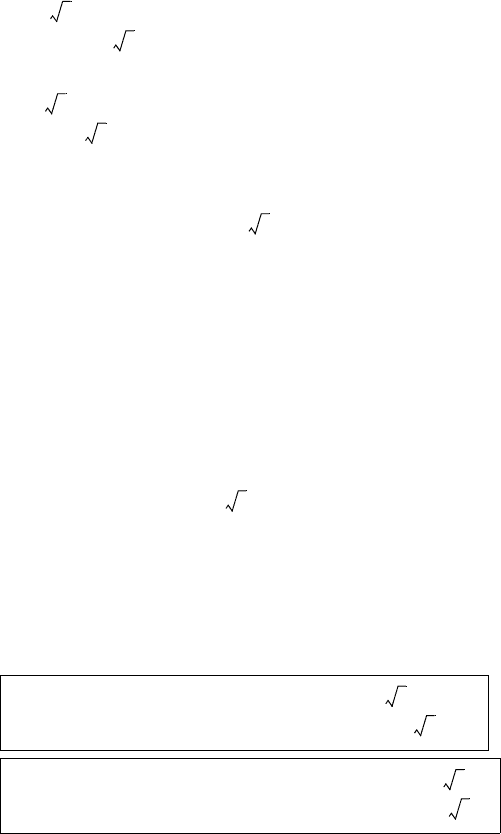
(6.189)
and
.
(6.190)
For the first case it is
and by (6.184)
.
(6.191)
In like manner, one finds for the second case:
.
(6.192)
The residues of (6.191) belong to the function of (6.189) and the residues of
(6.192) belong to the function (6.190). This enables one to write:
,
(6.193)
. (6.194)
In principle, one of the formulas is sufficient because they are equivalent since
.
Using this, the convolution theorem (6.54), and eq. (6.186), i.e. for
, yields
ip1 ξ–()[]sin pτ()exp
ip[]sin
------------------------------------------------------------
ipξ[]sin pτ()exp
ip[]sin
----------------------------------------------
R
n
nπ 1 ξ–()[]sin n
2
π
2
τ–[]exp
ip[]sin
---------------------------------------------------------------------
pn
2
π
2
+()
pn
2
π
2
–→
lim=
R
n
2– πnnπ 1 ξ–()[]sin n
2
π
2
τ–[]exp
nπ()cos
-----------------------------------------------------------------------------------=
2– πnnπ()sin nπξ()cos nπ()cos nπξ()sin–[]n
2
π
2
τ–[]exp
nπ()cos
------------------------------------------------------------------------------------------------------------------------------------------------=
R
n
2nπ nπξ()sin n
2
π
2
τ–[]exp=
R
n
nπξ()sin n
2
π
2
τ–[]exp
ip[]sin
-------------------------------------------------------
pn
2
π
2
+()
pn
2
π
2
–→
lim=
2– πnnπξ()sin n
2
π
2
τ–[]exp
nπ()cos
---------------------------------------------------------------------=
R
n
2nπ 1–()
n
nπξ()sin n
2
π
2
τ–[]exp–=
L 2nπ nπξ()sin n
2
π
2
τ–[]exp
n 1=
∞
∑
p 1 ξ–()[]sinh
p[]sinh
----------------------------------------
=
L 2– nπ 1–()
n
nπξ()sin n
2
π
2
τ–[]exp
n 1=
∞
∑
pξ[]sinh
p[]sinh
--------------------------
=
nπ 1 ξ–()[]sin nπ()sin nπξ()cos nπ()cos nπξ()sin–1–()
n
– nπξ()sin==
h ξ() 0=
6.6 Field Diffusion in a Plane Plate 387
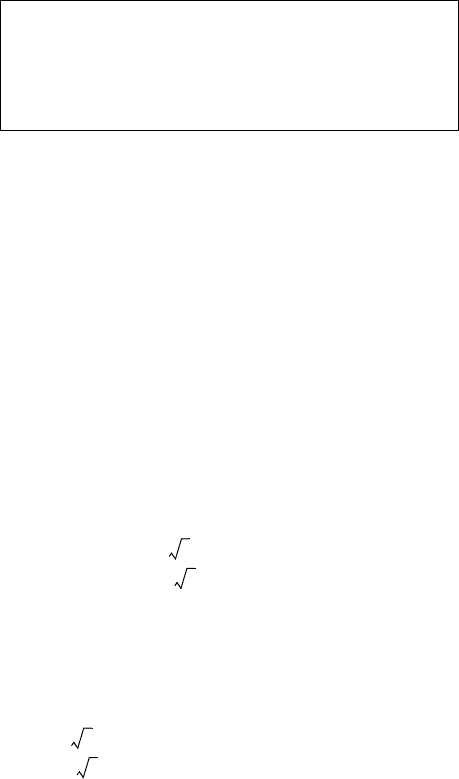
or slightly rewritten
(6.195)
This solves the problem for arbitrary boundary conditions. The solution of the
overall problem is the result of adding all contributions resulting from the initial
condition (6.169) and all contributions due to the just calculated boundary
conditions (6.195).
It is time for a simple example. The boundary conditions shall be
(6.196)
(6.197)
Their Laplace transform is
(6.198)
, (6.199)
and therefore with (6.186)
.
(6.200)
This problem can be solved by the inverse transform of (6.200) as well as by
applying (6.195). We shall do both. First, the inverse transform of (6.200) is carried
out in a similar way as in the previous example. The difference is essentially that
now, there is also a pole at and all the other residues have an additional
factor in the denominator of . The residue of
at the pole is
and the overall result is therefore
B
z
ξτ,() f
1
τ
0
() 2nπ nπξ()sin n
2
π
2
ττ
0
–()–[]τ
0
dexp
n 1=
∞
∑
0
τ
∫
=
f
2
τ
0
() 2nπ 1–()
n
nπξ()sin n
2
π
2
ττ
0
–()–[]τ
0
dexp
n 1=
∞
∑
0
τ
∫
–
B
z
ξτ,()2 nπ nπξ()sin n
2
π
2
τ–[]exp
n 1=
∞
∑
=
f
1
τ
0
() 1–()
n
f
2
τ
0
()–[]n
2
π
2
τ
0
[]τ
0
.dexp
0
τ
∫
⋅
f
1
τ() 0=
f
2
τ()
B
2
0
= for
τ 0 ≥
τ 0 .<
f
˜
1
p() 0=
f
˜
2
p()
B
2
p
------=
B
˜
z
ξ p,()
B
2
p
------
pξ[]sinh
p[]sinh
--------------------------
=
p
0=
p
n
2
π
2
n 1≥()–=
B
2
p
------
pξ[]sinh
p[]sinh
--------------------------
pτ()exp
p
0=
R
0
B
2
ξ=
388 Time Dependent Problems I (Quasi Stationary Approximation)
.
(6.201)
Now, taking the other approach, using eq. (6.195) as staring point, then
.
This is the same result as before, where it is to be noted that
.
(6.202)
The proof can be provided by means of eqs. (3.118) and (3.120). We conclude that
both methods produce the same result. There is another way to understand this. For
the limit of large times, it is
(6.203)
or
.
(6.204)
The consequence is that since the boundary conditions (6.196) and (6.197) are time
independent, that for large times the field has to be time independent. This means
that is must be
.
(6.205)
Its general solution is
.
(6.206)
It follows from (6.196) that
B
z
ξτ,()B
2
ξ 2B
2
1–()
n
nπξ()sin n
2
π
2
τ–[]exp
nπ
----------------------------------------------------------------------
n 1=
∞
∑
+=
B
z
ξτ,()2 nπ nπξ()sin n
2
π
2
τ–[]exp
n 1=
∞
∑
=
B
2
n
2
π
2
τ
0
[]τ
0
1–()
n
–[]dexp
0
τ
∫
⋅
2B
2
nπ nπξ()sin n
2
π
2
τ–[]
n
2
π
2
τ[]exp 1–
n
2
π
2
--------------------------------------
1–()
n
–[]exp
n 1=
∞
∑
=
B
z
ξτ,()2B
2
1–()
n
nπξ()sin
nπ
----------------------
–
n 1=
∞
∑
=
2B
2
1–()
n
nπξ()sin n
2
π
2
τ[]exp
nπ
----------------------------------------------------
n 1=
∞
∑
+
B
z
ξτ,()B
2
ξ 2B
2
1–()
n
nπξ()sin n
2
π
2
τ[]exp
nπ
----------------------------------------------------
n 1=
∞
∑
+=
ξ 21–()
n
nπξ()sin
nπ
----------------------
–
n 1=
∞
∑
= for -1<ξ +1<
B
z
ξτ,()
τ∞→
lim B
2
ξ=
B
z
xt,()
t ∞→
lim B
2
x
d
---
=
x
2
2
∂
∂
B
z
x() 0=
B
z
x() ax b+=
6.7 The Cylindrical Diffusion Problem 389
,
(6.207)
and from (6.196) follows that
,
(6.208)
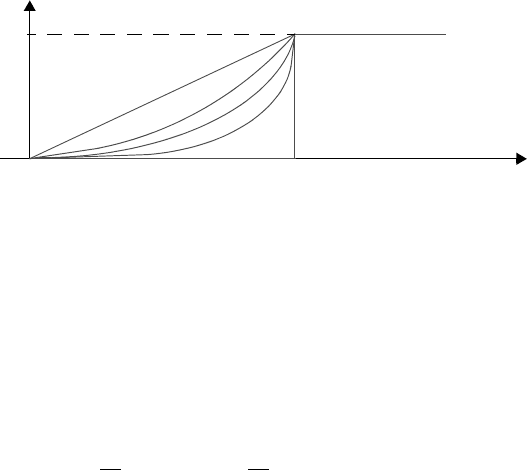
which leads to the solution (6.204). The complete solution (6.201) describes how
the steady state (6.204) is gradually achieved. This is illustrated qualitatively in
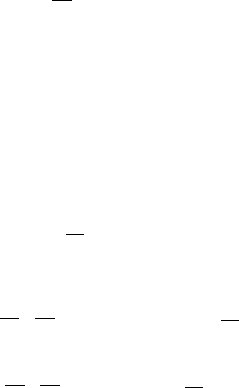
Fig. 6.26. If one considers the current, for which one can write:
.
(6.209)
Initially, there is a surface current
,
(6.210)
which gradually spreads out in order to uniformly occupy the entire available space
in its final state, the steady state:
.
(6.211)
The overall current per unit length remains unchanged
.
(6.212)
It is fixed by the boundary conditions chosen in this example.
6.7 The Cylindrical Diffusion Problem
6.7.1 The Basic Formulas
We will now focus on problems that are important for practical applications, but
nevertheless represent very simple specific cases, such as the skin effect in a
b 0=
a
B
2
d
------=
Fig. 6.26
x
t 0=
x 0= xd=
B
2
t ∞=
B
Z
g
y
xt,()
x∂
∂
H
z
xt,()–
1
µ
0
------
x∂
∂
B
z
xt,()–==
g
y
B
2
µ
0
------
δ xd–()–=
g
y
B
2
µ
0
d
---------–=
I
l
- g
y
x()xd
0
d
∫
B
2
µ
0
------–==
390 Time Dependent Problems I (Quasi Stationary Approximation)
cylindrical wire. The wire considered, is to be infinite in length and rotationally
symmetric (i.e. a circular) cylinder. The magnetic field which surrounds it, or is
present inside depends only on r. Consequently, all derivatives of ϕ and z have to
vanish. The requirement that B has to be source free leads under these
circumstances to the condition that the radial component has to vanish.
Otherwise, it would diverge at the axis. Eq. (3.32) gives
,
(6.213)
from which it follows that
.
(6.214)
Therefore,
.
(6.215)
The diffusion equation
(6.216)
for the assumptions made here and with (5.14) becomes
(6.217)
. (6.218)
Thus, we have to solve different equations for and . Subsequently, we will
discuss the field components separately. To simplify, we will limit our discussion to
a solid, circular cylinder of radius . We further simplify the problem by
assuming a vanishing initial field,
.
(6.219)
It shall be noted that the general initial value problem with an arbitrary initial field
can be solved without particular difficulties, for example, by expanding the initial
field into a Fourier-Bessel series. The boundary conditions for our problem are
(6.220)
. (6.221)
We Introduce again the dimensionless variables
(6.222)
and
.
(6.223)
The equations for and read now:
B
r
B∇•
1
r
---
r∂
∂
rB
r
()0==
B
r
const.
r
--------------=
B 0 B
ϕ
rt,()B
x
rt,(),,〈〉=
∇
2
B µκ
t∂
∂B
=
1
r
---
r∂
∂
r
r∂
∂
1
r
2
-----–
B
ϕ
rt,() µκ
t∂
∂
B
ϕ
rt,()=
1
r
---
r∂
∂
r
r∂
∂
B
z
rt,() µκ
t∂
∂
B
z
rt,()=
B
ϕ
B
z
r
0
B rt,()[]
to=
B r 0,()0==
B rt,()[]
rr
0
=
B r
0
t,()f t()==
B rt,()[]
r 0=
B 0 t,() finite==
xrr
0
⁄=
τ
t
µκr
0
2
------------=
B
ϕ
B
z
6.7 The Cylindrical Diffusion Problem 391
(6.224)
, (6.225)
with the initial condition
(6.226)
and the boundary conditions
(6.227)
. (6.228)
This is the form for which eqs. (6.224) and (6.225) have to be solved – now, with
the conditions (6.226) through (6.228). We will first solve for the longitudinal field
, and thereafter for the azimuthal field .
6.7.2 The longitudinal Field B
z
Consider an infinitely long cylinder in a space where a uniform magnetic field is
created, that is, the field is oriented parallel to the cylinder axis:
(6.229)
If there is no field initially in the cylinder, then one has to solve the above specified
problem. Instead of immediately solving for , we introduce its Laplace
transformed field and then, from (6.225) with the initial condition
(6.226), we obtain the equation
,
(6.230)
and the boundary conditions in the p-domain
(6.231)
. (6.232)
This needs to be solved. Previously, in eq. (3.164), we had already met the Bessel
differential equation:
.
(6.233)
Substituting
.
(6.234)
in eq. (6.230) gives the new equation
.
(6.235)
1
x
---
x∂
∂
x
x∂
∂
1
x
2
-----–
B
ϕ
x τ,()
τ∂
∂
B
ϕ
x τ,()=
1
x
---
x∂
∂
x
x∂
∂
B
z
x τ,()
τ∂
∂
B
z
x τ,()=
B x 0,()0=
B 1 τ,()f τ()=
B 0 τ,()finite=
B
z
B
ϕ
B
z
τ() f
z
τ()=
B
z
x τ,()
B
˜
z
xp,()
1
x
---
x∂
∂
x
x∂
∂
p–
B
˜
z
xp,()0=
B
˜
z
1 p,()f
˜
z
p()=
B
˜
z
0 p,()finite=
1
ξ
---
ξ∂
∂
ξ
ξ∂
∂
1
m
2
ξ
2
-------–
+ Z
m
ξ() 0=
ξ xi p=
1
ξ
---
ξ∂
∂
ξ
ξ∂
∂
1+ B
˜
z
ξ p,()0=
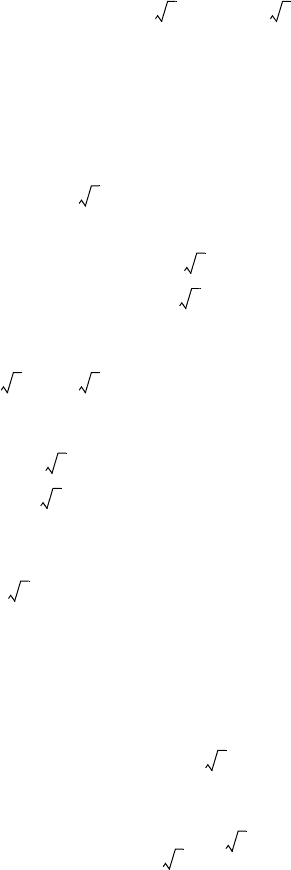
392 Time Dependent Problems I (Quasi Stationary Approximation)
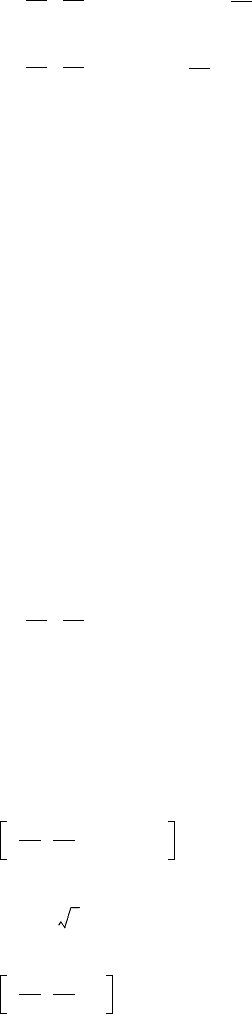
This is Bessel’s differential equation with index or order zero. Therefore
,
(6.236)
where A and B may depend on p but not on x. Because of the boundary conditions
(6.232)
,
(6.237)
and because of the boundary condition (6.231), the other constant has to be
.
(6.238)
Therefore, the Laplace transformed field is
.
(6.239)
We can obtain the general solution for arbitrary boundary conditions in the time
domain from this formula, if we are able to find the inverse transform for
. This is possible by means of the residue theorem. Notice the
broad analogy to the problem of Sect. 6.6.3.
For the inverse transform, we need the residues of the function
.
(6.240)
This has an infinite number of poles of order 1. If we use the notation introduced in
Sect. 3.7.3.3, eq. (3.209) to address the zeros of by , then it is for the poles
(6.241)
or
.
(6.242)
The residues of the function in (6.240) are
Using the identity
gives
B
˜
z
xp,()AJ
0
xi p()BN
0
xi p()+=
B 0=
A
f
˜
z
p()
J
0
ip()
-------------------=
B
˜
z
xp,()f
˜
z
p()
J
0
xi p()
J
0
ip()
----------------------
=
J
0
xi p()J
0
ip()⁄
J
0
xi p()
J
0
ip()
----------------------
pτ()exp
J
0
λ
0n
ip λ
0n
=
p
λ
0n
2
–=
R
n
J
0
λ
0n
x() λ
0n
2
– τ()exp
J
0
ip()
----------------------------------------------------
p λ
0n
2
–→
lim p λ
0n
2
+()=
J
0
λ
0n
x() λ
0n
2
– τ()exp
i
2 p
----------
J '
0
ip()
----------------------------------------------------
p λ
0n
2
–→
lim .=
J '
0
J
1
–=

6.7 The Cylindrical Diffusion Problem 393
(6.243)
and therefore, we have the transform
.
(6.244)
Applying the convolution theorem to eq. (6.239) yields
or
.
(6.245)
The result is in the form of a Fourier-Bessel series according to (3.213). Its
coefficients are time dependent functions:
.
(6.246)
The structure of eq. (6.245) is very similar to the corresponding structure of the
plane equation (6.195).
The current in the cylinder is
.
(6.247)
It is remarkable that this is not a Fourier-Bessel series, but rather a so-called Dini
series, which we will not discuss further. Details for further study to the various
types of series involving Bessel functions, including Dini series, can be found in
[7].
As an example, let us consider the simple boundary condition
(6.248)
or
.
(6.249)
Then one writes the field with (6.239)
R
n
2λ
0n
J
0
λ
0n
x() λ
0n
2
– τ()exp
J
1
λ
0n
()
----------------------------------------------------------------=
L
2λ
0n
J
0
λ
0n
x() λ
0n
2
– τ()exp
J
1
λ
0n
()
----------------------------------------------------------------
n 1=
∞
∑
J
0
xi p()
J
0
ip()
----------------------
=
B
z
x τ,() f
z
τ
0
()
2λ
0n
J
0
λ
0n
x() λ
0n
2
– ττ
0
–()[]exp
J
1
λ
0n
()
--------------------------------------------------------------------------------
τ
0
d
n 1=
∞
∑
0
τ
∫
=
B
z
x τ,()
2λ
0n
J
0
λ
0n
x() λ
0n
2
– τ[]exp
J
1
λ
0n
()
----------------------------------------------------------------
f
z
τ
0
() λ
0n
2
τ
0
()exp τ
0
d
0
τ
∫
n 1=
∞
∑
=
C
n
C
n
τ()
2λ
0n
λ
0n
2
– τ()exp
J
1
λ
0n
()
------------------------------------------
f
z
τ
0
() λ
0n
2
τ
0
()exp τ
0
d
0
τ
∫
==
g
ϕ
r()
r∂
∂H
z
–
1
µ
0
------
r∂
∂B
z
–
1
µ
0
r
0
-----------
x∂
∂B
z
–== =
2λ
0n
2
J
1
λ
0n
x() λ
0n
2
– τ()exp
µ
0
r
0
J
1
λ
0n
()
----------------------------------------------------------------
f
z
τ
0
() λ
0n
2
τ
0
()exp τ
0
d
0
τ
∫
n 1=
∞
∑
=
f
z
τ() B
0
=
f
˜
z
p() B
0
p⁄=