
Lehner G. Electromagnetic Field Theory for Engineers and Physicists
Подождите немного. Документ загружается.

404 Time Dependent Problems I (Quasi Stationary Approximation)
.
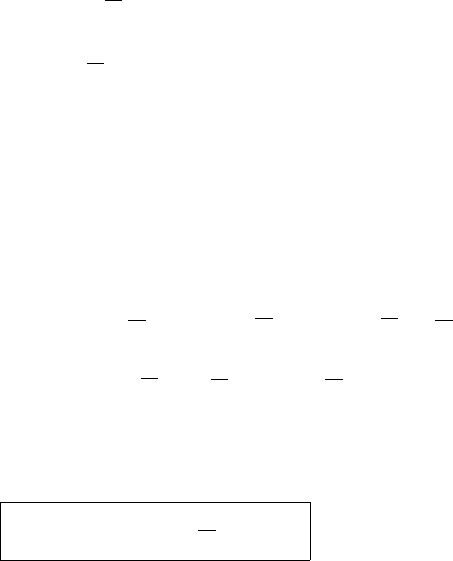
The time is the relaxation time, discussed in Sect. 4.2. For the case of the skin
effect, a necessary requirement is that the frequency is
.
These prerequisites and the related approximations can be dropped when
considering the displacement current, as we will do in Chapter 7. Specifically in
Sect. 7.12, we will return to the currently discussed problems and solve some of
which exactly, from the perspective of the wave theory. The limits of the quasi
stationary theory will become more apparent in this context. Then, we will also see,
how the solutions of the quasi stationary approximation transform into the wave
theory and vice versa.
t
ε
κ
---» t
r
=
t
r
ω
2π
t
------=
1
t
r
---«
κ
ε
---=
7 Time Dependent Problems II (Electromagnetic
Waves)
7.1 Wave Equations and their simplest Solutions
7.1.1 The Wave Equations
Now we consider Maxwell’s equations in their complete form. Assume that the
medium in which we will solve them is uniform, i.e., are constant over all
space.
(7.1)
(7.2)
(7.3)
(7.4)
(7.5)
(7.6)
(7.7)
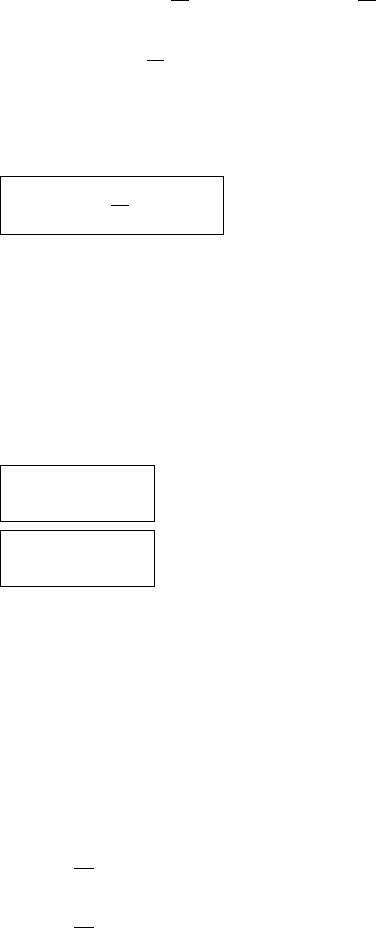
Taking the curl of (7.2) and substitute by use of (7.7), (7.1), (7.6), and (7.5) yields
Making use of the vector identity
gives
.
(7.8)
On the other hand, taking the curl of (7.1) and substitute by use of (7.6), (7.5),
(7.2), and (7.7) yields
εµκ,,
H∇× g
t∂
∂D
+=
E∇×
t∂
∂B
–=
B∇• 0=
D∇• ρ=
D εE=
g κE=
B µH=
E∇×()∇×
t∂
∂
B∇×()– µ
t∂
∂
H∇×()– µ
t∂
∂
g
t∂
∂D
+()–== =
µ
t∂
∂
κE
t∂
∂
εE+()– µκ
t∂
∂
E µε
∂
2
E
∂t
2
----------
––==
A∇×()∇× A∇•()∇∆A– A∇•()∇∇
2
A–==
∇
2
EE∇•()∇– µκ
t∂
∂E
µε
∂
2
E
∂t
2
----------
+=
G. Lehner, Electromagnetic Field Theory for Engineers and Physicists,
DOI 10.1007/978-3-540-76306-2_7, © Springer-Verlag Berlin Heidelberg 2010
406 Time Dependent Problems II (Electromagnetic Waves)
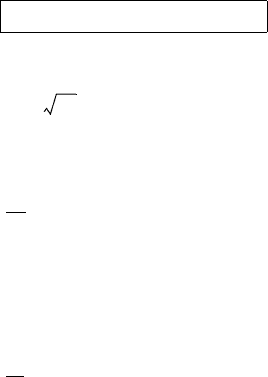
and with (7.3) obtain
.
(7.9)
The two equations (7.8) and (7.9) represent the so-called wave equations for E and
B in their most general form for uniform media.
Inside a charge-free and non-conducting dielectric, vacuum (or free space) in
particular, we have
,
,
,
giving rise to the more specific wave equations
(7.10)
. (7.11)
7.1.2 The simplest Case: Plane Wave in an Insulator
Initially, only the simplest solutions of the wave equations (7.10) and (7.11) shall
be examined. It shall be assumed that E and B depend on only one of the three
Cartesian coordinates for example, z, but are time dependent.
(7.12)
(7.13)
Both fields have to be source free since , i.e.,
(7.14)
. (7.15)
It follows that
(7.16)
H∇×()∇× g∇×
t∂
∂
D∇×()+ κ E∇× ε
t∂
∂
E∇×()+==
κ
t∂
∂B
– ε
∂
2
B
∂t
2
----------
–
1
µ
---
B∇×()∇×==
1
µ
---
B∇•()∇∇
2
B–()=
∇
2
B µκ
t∂
∂B
µε
∂
2
B
∂t
2
----------
+=
ρ 0=
g 0=
κ 0=
∇
2
E µε
∂
2
E
∂t
2
----------
=
∇
2
B µε
∂
2
B
∂t
2
----------
=
EEzt,() E
x
zt,()E
y
zt,()E
z
zt,(),,〈〉==
BBzt,() B
x
zt,()B
y
zt,()B
z
zt,(),,〈〉==
ρ 0=
E∇•
z∂
∂
E
z
zt,()0==
B∇•
z∂
∂
B
z
zt,()0==
E
z
E
z
t()=
7.1 Wave Equations and their simplest Solutions 407
.
(7.17)
Later, we will find that neither nor may depend on t. It is possible that the
space contains a field or , neither of which depend on time or space, and
thus, do not interest us. We might as well assume that
,
(7.18)
. (7.19)
Fields which, when a coordinate system is chosen properly, depend only on one
Cartesian coordinate and time are called plane waves. Therefore, we note that
plane waves have no field components in propagation direction (here the z-
direction), that is, they are inevitably transverse waves. This results from above
assumption, namely the absence of any volume charges. In the presence of volume
charges, it is entirely possible to have plane waves with field components in
propagation direction, the so-called longitudinal waves. The so-called “plasma
waves”, which are important in plasmas and solid state physics, are of this kind.
We will limit our discussion to transverse waves. In this case, one only needs to
consider the transverse field components , and :
(7.20)
. (7.21)
Almost obvious is that arbitrary functions and satisfy the associated wave
equation
.
(7.22)
This is d’Alembert’s solution to the wave equation, where
(7.23)
is the speed of light in the observed medium.
The proof is simple. Starting with the derivative
,
,
and
B
z
B
z
t()=
E
z
B
z
E
z
B
z
E
z
0=
B
z
0=
E
x
E
y
B
x
,, B
y
∂
2
E
x
∂z
2
------------ εµ
∂
2
E
x
∂t
2
------------
=
∂
2
E
y
∂z
2
------------ εµ
∂
2
E
y
∂t
2
------------
=
f
x
g
x
E
x
f
x
zct–() g
x
zct+() +=
c
1
εµ
----------=
z∂
∂E
x
f '
x
g'
x
+=
∂
2
E
x
∂z
2
------------ f ''
x
g''
x
+=
t∂
∂E
x
cf '
x
– cg'
x
+=

408 Time Dependent Problems II (Electromagnetic Waves)
,
from which is obvious that this satisfies (7.20). This applies similarly to and the
components of B ( and ). On the other hand, the components of B and E are
not independent of each other. From (7.2) follows that
.
A consequence thereof is that has to be constant in time. Anticipating this, we
have used this fact already above. Furthermore
or when integrating over the time
(7.24)
. (7.25)
On the other hand, using (7.1) for an insulator with , we get
.
This means, as claimed before, that and thus are also independent of t.
Moreover
∂
2
E
x
∂t
2
------------ c
2
f ''
x
c
2
g''
x
+ c
2
∂
2
E
x
∂z
2
------------
1
εµ
------
∂
2
E
x
∂z
2
------------
===
E
y
B
x
B
y
E∇×
e
x
e
y
e
z
00
z∂
∂
E
x
E
y
E
z
∂E
y
∂z
---------
–
∂E
x
∂z
---------
0,,〈〉
∂B
x
∂t
---------
∂B
y
∂t
---------
∂B
z
∂t
---------
,,〈〉–== =
B
z
∂B
x
∂t
---------
∂E
y
∂z
--------- f
y
' zct–() g'
y
zct+()+==
∂B
y
∂t
---------
∂E
x
∂z
---------– f
x
' zct–()– g'
x
zct+()–==
B
x
1
c
---
f
y
zct–()–
1
c
---
g
y
zct+()F
x
z()++=
B
y
1
c
---
f
x
zct–()
1
c
---
g
x
zct+()– F
y
z()+=
g 0=
H∇×
e
x
e
y
e
z
00
z∂
∂
H
x
H
y
H
z
∂H
y
∂z
----------–
∂H
x
∂z
----------
0,,〈〉
∂D
x
∂t
----------
∂D
y
∂t
----------
∂D
z
∂t
---------
,,〈〉== =
D
z
E
z
∂B
x
∂z
--------- εµ
∂E
y
∂t
---------
1
c
2
-----
c f
y
' zct–()– cg
y
' zct+()+[]==
1
c
---
f
y
' zct–()–
1
c
---
g
y
' zct+()+=
∂B
y
∂z
--------- εµ
∂E
x
∂t
---------
–
1
c
2
-----– c f
x
' zct–()– cg'
x
zct+()+[]==
1
c
---
f
x
' zct–()
1
c
---
g
x
' zct+() .–=

7.1 Wave Equations and their simplest Solutions 409
Integrating for z gives
(7.26)
. (7.27)
Comparing eqs. (7.24) through (7.27) with each other provides a condition for the
integration constants, which is
.
(7.28)
Consequently, these may not depend on either z or t, i.e., they have to be constant in
space and time. Disregarding such constant fields, the field of a plane wave has to
be:
.
(7.29)
This plane wave has two parts, one which moves in positive z-direction without
changing its shape:
.
(7.30)
Its propagation direction is
Expressed in a different form, one writes
(7.31)
B
x
1
c
---
f
y
zct–()–
1
c
---
g
y
zct+()G
x
t()++=
B
y
1
c
---
f
x
zct–()
1
c
---
g
x
zct+()– G
y
t()+=
F
x
z() G
x
t()=
F
y
z() G
y
t()=
E
x
f
x
zct–() g
x
zct+()+=
E
y
f
y
zct–() g
y
zct+()+=
E
z
0=
B
x
1
c
---
f
y
zct–()–
1
c
---
g
y
zct+()+=
B
y
1
c
---
f
x
zct–()
1
c
---
g
x
zct+()–=
B
z
0=
E
x
f
x
zct–()=
E
y
f
y
zct–()=
E
z
0=
B
x
1
c
---
f
y
zct–()–=
B
y
1
c
---
f
x
zct–()=
B
z
0=
e
a
001,,〈〉=
B
e
a
E×
c
---------------
=
410 Time Dependent Problems II (Electromagnetic Waves)
or
,
(7.32)
where
(7.33)
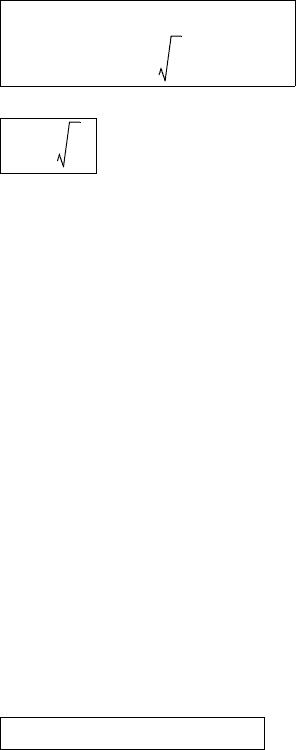
is the so-called characteristic impedance of the medium. The other part propagates
also without changing its shape, but in the other direction, that of the negative z-
axis:
.
Writing
allows to write this in the form of eqs. (7.31) through (7.33). These equations are
generally applicable for any plane wave. Since they are in vector form, they are
independent of a coordinate system. In a rotated coordinate system, the
propagation direction would not be along the z-axis anymore, but eqs. (7.31)
through (7.33) would still apply. Conversely, it is also true that
(7.34)
i.e., the three vectors E, B (or H), and (in this order) form a right handed
system. To show this, one multiplies (7.31) in a vector product with to obtain
.
Applying
and
,
completes the proof.
The characteristic impedance for vacuum is
H
e
a
E×
µc
---------------
e
a
E×
µ
ε
---
---------------
e
a
E×
Z
---------------
===
Z
µ
ε
--- =
E
x
g
x
zct+()=
E
y
g
y
zct+()=
E
z
0=
B
x
1
c
---
g
y
zct+()=
B
y
1
c
---
g
x
zct+()–=
B
z
0=
e
a
00 1–,,〈〉=
E c Be
a
×()Z He
a
×() ==
e
a
e
a
Be
a
×
e
a
E×
c
---------------
e
a
× e
a
e
a
E⋅()
c
------------------
–
Ee
a
e
a
⋅()
c
------------------------+==
e
a
E⋅ 0=
e
a
e
a
⋅ 1=
7.1 Wave Equations and their simplest Solutions 411
.
(7.35)
If in eq. (7.29) (and therefore also ) or if (and therefore
also ), then the electromagnetic field oscillates only in a plane. These
waves are called linearly polarized. A general plane wave can be constructed from
two waves which are polarized perpendicular to each other. The result is then just
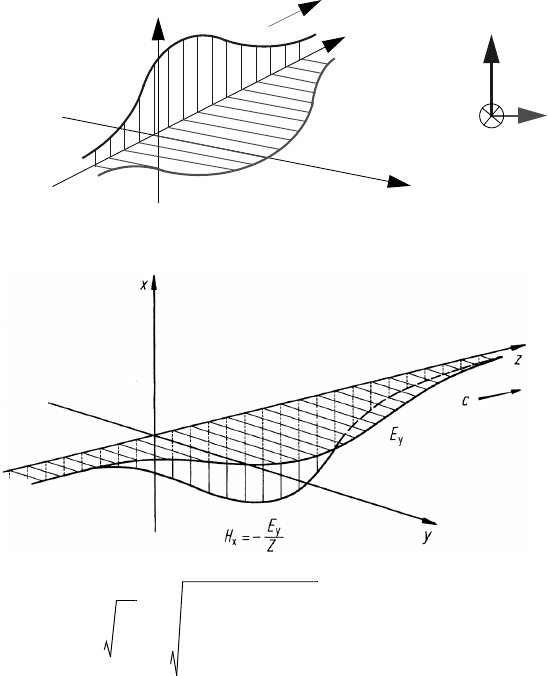
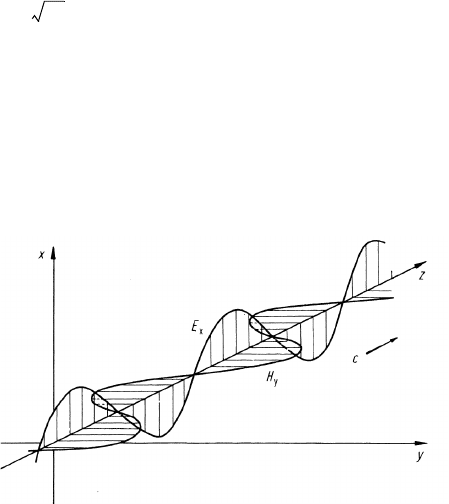
the wave described in (7.29). Fig. 7.1 and Fig. 7.2 illustrate examples of both types
of linearly polarized waves.
7.1.3 Harmonic Plane Waves
The waves of the kind depicted in Fig. 7.1 and Fig. 7.2 are also referred to as
“wave trains” or “wave packets”. They can be formed by superposition of
appropriate sets of harmonic waves with specific wave lengths. The underlying
ZZ
0
µ
0
ε
0
------
4π 10
7–
⋅
Vs
Am
--------
8.855 10
12–
⋅
As
Vm
--------
---------------------------------------- 3 7 7 Ω 120πΩ≈≈== =
E
x
0= B
y
0= E
y
0=
B
x
0=
Fig. 7.1 Linearly polarized plane wave train or wave packet (i)
E
x
H
y
E
x
Z
-----=
c
H
y
E
x
c
y
z
x
Fig. 7.2 Linearly polarized plane wave train or wave packet (ii)
412 Time Dependent Problems II (Electromagnetic Waves)
formal concept is the possibility to represent any function as a Fourier integral, i.e.,
by superposition of so-called harmonic waves. For instance
.
(7.36)
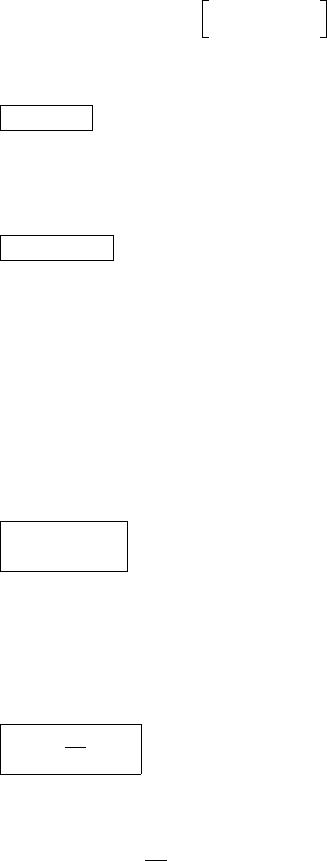
This wave is sketched in Fig. 7.3.
Here, and are the amplitudes of the fields; is a phase angle which
depends on where the origin of the chosen coordinate system is, and the choice of
when the time is zero. is the angular frequency of the wave and is the wave
number. If is its frequency, its period, and its wave length, then we may
write
(7.37)
. (7.38)
The “phase velocity” of the wave is
(7.39)
This is a result of the wave equation (7.10) when using it in (7.36). We obtain
,
which, again, gives (7.39). Moreover, the wave expressed in (7.36) can be regarded
as a special case of (7.22). The reason is that
E
x
zt,() E
x0
ωtkz– ϕ+()cos=
H
y
zt,() H
y0
ωtkz– ϕ+()cos=
H
y0
E
x0
Z
--------=
Fig. 7.3 Harmonic Plane Waves
E
x0
H
y0
ϕ
ω k
f τλ
ω 2πf
2π
τ
------==
k
2π
λ
------=
c
1
εµ
---------- λ f
2π
k
------
ω
2π
------
⋅
ω
k
----=== =
k
2
E
x
–
1
c
2
-----
ω
2
E
x
–=
7.1 Wave Equations and their simplest Solutions 413
,
i.e., a function of .
From (7.39) one obtains
.
(7.40)
The relation between and is called the dispersion relation, here for the case of
a plane electromagnetic wave in an ideal insulator. In other circumstances the
relation between and could be different, i.e., the dispersion relation could be
of the form:
.
(7.41)
In this general case, we have to associate different velocities with the wave. The
velocity with which the phase propagates is still the phase velocity. The phase
remains constant for
.
The constant phase is then
.
Therefore, the phase velocity in general is
.
(7.42)
Dispersion accounts for the fact that the phase velocity according to (7.42) may be
a function of the frequency (wave length). In the special case when the dispersion
relation is of the form given in (7.40), then the phase velocity is the same for all
frequencies (wave lengths), i.e., this is the dispersion free case.
In addition, the so-called group velocity is also of great importance. It is
defined by
.
(7.43)
For the specific case of the dispersion relation as of (7.40), both velocities coincide,
both are equal to c:
.
(7.44)
In later sections, we will find dispersion relations for which this is not true. The
significant quantity in these cases is not the phase velocity, but the group velocity,
which describes the transmission of signals or the energy transfer. It relates to a
group of waves (a wave packet), which is composed of individual waves having
different wave lengths. In the case of (7.40), all individual waves travel with the
same phase velocity . Under these circumstances, the wave packet
ωtkz– ϕ+()cos ϕ kz
ω
k
----
t–
–cos ϕ kz ct–()–[]cos==
zct–()
ω ck =
ω k
ω k
ωωk() =
ω k()tkz– ϕ+
zz
0
ω k()
k
-----------
t+=
ω k()tkz
0
– ω k()t– ϕ+ ϕ kz
0
–=
v
ph
ω k()
k
-----------
=
v
G
v
G
kd
d
ω k() =
v
ph
ω
k
---- c
kd
dω
v
G
=== =
v
ph
c=