
Lehner G. Electromagnetic Field Theory for Engineers and Physicists
Подождите немного. Документ загружается.

434 Time Dependent Problems II (Electromagnetic Waves)
[ .
(7.141)
These are Fresnel’s equations for the case of perpendicular polarization. They were
derived only from the boundary conditions of the parallel components of E and H.
The perpendicular components of D vanish, which makes them automatically
continuous. The perpendicular components of B are continuous if
(7.142)
or
.
Using (7.136) gives
or
,
that is, continuity of the perpendicular components of B is ensured by Snell’s law
and by the continuity of the parallel components of E.
Multiplying (7.136) by (7.139) yields
.
(7.143)
In conjunction with (7.72), this gives
.
(7.144)
This equation expresses the conservation of energy principle. The incident field
energy is passed in parts to the reflected wave and the remainder to the transmitted
wave.
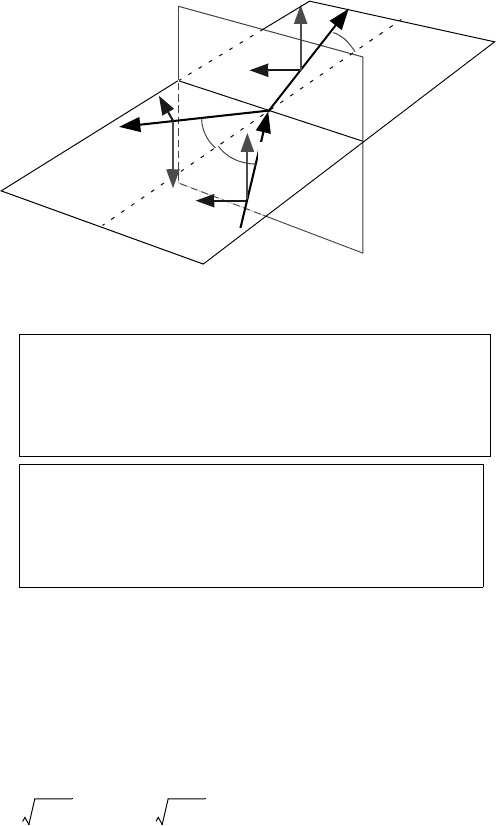
Now we approach the case of parallel polarization (Fig. 7.11). Here one has
(7.145)
or
(7.146)
This ensures continuity of the parallel components of H. Those of E have to be
continuous as well
.
(7.147)
The result are Fresnel’s equations for the case of parallel polarization.
E
t0
E
i0
--------
⊥
2
α
1
cos
Z
1
---------------
α
1
cos
Z
1
---------------
α
2
cos
Z
2
---------------+
-------------------------------------
2Z
2
α
1
cos
Z
2
α
1
cos Z
1
α
2
cos+
-------------------------------------------------
==
µ
1
H
i0
H
r0
+()α
1
sin µ
2
H
t0
α
2
sin=
µ
1
α
1
sin
Z
1
--------------------
E
i0
E
r0
+()
µ
2
α
2
sin
Z
2
--------------------
E
t0
=
µ
1
α
1
sin
Z
1
--------------------
µ
2
α
2
sin
Z
2
--------------------=
ε
1
µ
1
α
1
sin ε
2
µ
2
α
2
sin=
E
i0
2
E
r0
2
–()
α
1
cos
Z
1
---------------
E
t0
2
α
2
cos
Z
2
---------------
=
S
i
α
1
cos S
r
α
1
cos– S
t
α
2
cos=
H
i0
H
r0
– H
t0
=
E
i0
E
r0
–()Z
1
⁄ E
t0
Z
2
⁄=
E
i0
E
r0
–()α
1
cos E
t0
α
2
cos=
7.3 Reflection and Refraction 435
,
(7.148)
. (7.149)
The perpendicular components of B vanish and, thus, are continuous. Continuity of
the perpendicular components of D is ensured by Snell’s law and by the continuity
of the parallel components of H:
.
(7.150)
Using (7.146) gives
or
,
in agreement with Snell’s law.
Multiplying (7.146) by (7.147) and in conjunction with (7.143) and (7.144) yields
the conservation of energy, as before.
Fig. 7.11
α
1
p
l
a
n
e
o
f
i
n
c
i
d
e
n
c
e
m
e
d
i
a
b
o
u
n
d
a
r
y
α
1
α
2
E
i0
κ 0=
µ
2
ε
2
,
κ 0=
µ
1
ε
1
,
1
2
E
r0
E
t0
H
t0
H
r0
H
i0
E
r0
E
i0
--------
||
α
1
cos
Z
2
---------------–
α
2
cos
Z
1
---------------+
α
1
cos
Z
2
---------------
α
2
cos
Z
1
---------------+
------------------------------------------
Z
1
α
1
cos Z
2
α
2
cos+–
Z
1
α
1
cos Z
2
α
2
cos+
-----------------------------------------------------
==
E
t0
E
i0
--------
||
2
α
1
cos
Z
1
---------------
α
1
cos
Z
2
---------------
α
2
cos
Z
1
---------------+
-------------------------------------
2Z
2
α
1
cos
Z
1
α
1
cos Z
2
α
2
cos+
-------------------------------------------------
==
ε
1
E
i0
E
r0
–()α
1
sin ε
2
E
t0
α
2
sin=
ε
1
α
1
sin Z
1
ε
2
α
2
sin Z
2
=
ε
1
µ
1
α
1
sin ε
2
µ
2
α
2
sin=
436 Time Dependent Problems II (Electromagnetic Waves)
7.3.3 Nonmagnetic Media
For the special case
,
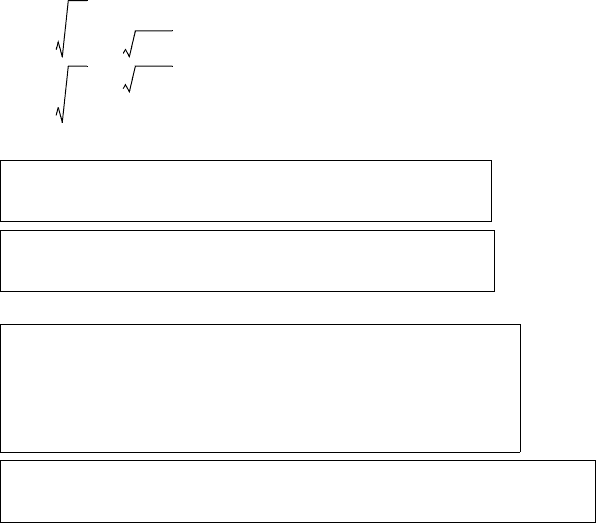
Fresnel’s equations (7.140), (7.141), (7.148), and (7.149) simplify. Using
(7.151)
now yields
,
(7.152)
, (7.153)
and
,
(7.154)
.
(7.155)
If , which means that there is no media boundary and nothing noteworthy
happens, i.e., the incident wave continues and there is no reflection. There is no
reflection because of
,
.
Less self-evident is that in the case of parallel polarization, there is no reflected
wave when
.
(7.156)
That this is true can be derived from (7.154):
µ
1
µ
2
µ
0
==
Z
1
Z
2
-----
µ
0
ε
1
------
µ
0
ε
2
------
----------
ε
2
µ
0
ε
1
µ
0
---------------
α
1
sin
α
2
sin
--------------== =
E
r0
E
i0
--------
⊥
α
2
sin α
1
cos α
1
sin α
2
cos–
α
2
sin α
1
cos α
1
sin α
2
cos+
------------------------------------------------------------------
α
2
α
1
–()sin
α
2
α
1
+()sin
--------------------------------
==
E
t0
E
i0
--------
⊥
2 α
2
sin α
1
cos
α
2
sin α
1
cos α
1
sin α
2
cos+
------------------------------------------------------------------
2 α
2
sin α
1
cos
α
2
α
1
+()sin
---------------------------------
==
E
r0
E
i0
--------
||
α
2
sin α
2
cos α
1
sin α
1
cos–
α
2
sin α
2
cos α
1
sin α
1
cos+
------------------------------------------------------------------
2α
2
sin 2α
1
sin–
2α
2
sin 2α
1
sin+
-----------------------------------------
==
α
2
α
1
–()sin α
2
α
1
+()cos
α
2
α
1
+()sin α
2
α
1
–()cos
-----------------------------------------------------------------
α
2
α
1
–()tan
α
2
α
1
+()tan
--------------------------------==
E
t0
E
i0
--------
||
2 α
2
sin α
1
cos
α
1
sin α
1
cos α
2
sin α
2
cos+
------------------------------------------------------------------
2 α
2
sin α
1
cos
α
1
α
2
+()sin α
1
α
2
–()cos
-----------------------------------------------------------------
==
α
1
α
2
=
E
r0
E
i0
--------
⊥
E
r0
E
i0
--------
||
0==
E
t0
E
i0
--------
⊥
E
t0
E
i0
--------
||
1==
α
1
α
2
+
π
2
---=
7.3 Reflection and Refraction 437
.
(7.157)
Snell’s law states that
.
The thereby defined angle
,
(7.158)
is the so-called Brewster angle, also called the polarization angle. It is a
remarkable angle because, if we shine unpolarized light or any unpolarized
electromagnetic radiation, under this angle onto a boundary, then the polarization
of the reflected radiation is completely perpendicularly polarized because the
parallel polarized radiation passes through the boundary in its entirety without
reflection. Modification of eq. (7.158) are necessary if . Furthermore, in
such case there would also be a polarization angle for the perpendicularly polarized
wave. We will discuss neither case any further.
Let us divide (7.143) by : This gives
.
(7.159)
is the fraction of incident energy which is reflected. Conversely,
is the fraction of incident energy which passes
through. Therefore, one defines the two quantities
(7.160)
and
.
(7.161)
R is called reflectance and T is called transmittance. Their sum is of course
.
(7.162)
Take as an example the perpendicular incidence on a non magnetic material, i.e.,
.
(7.163)
Then we use (7.140) and (7.148) together with (7.151) to obtain
E
r0
E
i0
--------
||
0= for α
1
α
2
+
π
2
---=
α
1
sin
α
2
sin
--------------
ε
2
ε
1
-----
n
2
n
1
-----
α
1
sin
π
2
--- α
2
–
cos
------------------------------
α
1
sin
α
1
cos
--------------- α
1
tan=== = =
α
1
α
1
tan
n
2
n
1
-----
ε
2
ε
1
-----==
µ
1
µ
2
≠
E
i0
2
α
1
cos Z
1
⁄
1
E
r0
E
i0
--------
2
–
E
t0
E
i0
--------
2
Z
1
α
2
cos
Z
2
α
1
cos
---------------------
=
E
r0
E
i0
⁄()
2
E
t0
E
i0
⁄()
2
Z
1
α
2
cos Z
2
α
1
cos⁄()
R
E
r0
E
i0
--------
2
=
T
E
t0
E
i0
--------
2
Z
1
α
2
cos
Z
2
α
1
cos
---------------------
=
TR+1=
α
1
α
2
0==
α
1
cos α
2
cos 1==
438 Time Dependent Problems II (Electromagnetic Waves)
(7.164)
and using (7.141) and (7.149) together with (7.151) to obtain
.
(7.165)
Consequently for the reflectance we get
(7.166)
and for the transmittance
.
(7.167)
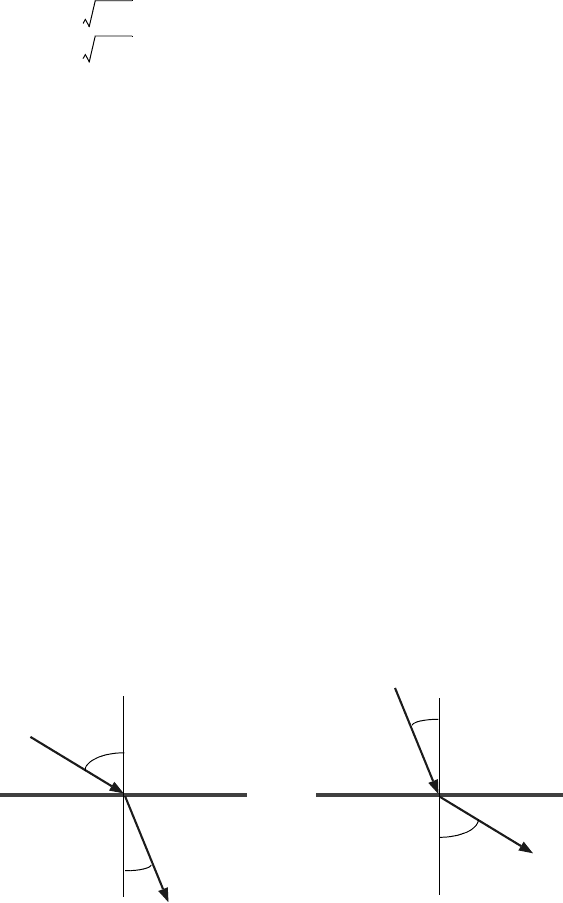
Of course, in case of it must be and . The graph of R and T
is illustrated in Fig. 7.12 for perpendicular incidence.
E
r0
E
i0
--------
⊥
E
r0
E
i0
--------
||
Z
2
Z
1
–
Z
2
Z
1
+
------------------
1
Z
1
Z
2
-----–
1
Z
1
Z
2
-----+
---------------
1
ε
2
ε
1
-----–
1
ε
2
ε
1
-----+
-------------------====
E
t0
E
i0
--------
⊥
E
t0
E
i0
--------
||
2Z
2
Z
1
Z
2
+
------------------
2
1
Z
1
Z
2
-----+
---------------
2
1
ε
2
ε
1
-----+
-------------------====
R
⊥
R
||
R
ε
2
ε
1
-----1–
ε
2
ε
1
-----1+
-------------------
2
===
T
⊥
T
||
T
4
ε
2
ε
1
-----⋅
ε
2
ε
1
-----1+
2
---------------------------===
ε
1
ε
2
= R 0= T 1=
1
0
Rx()
Ax()
64
0.016 x
R
T
H
2
H
1
-----
1
2
-- -
1
4
-- -
1
8
-- -
1
16
----- -
1
32
----- -
1
64
----- -
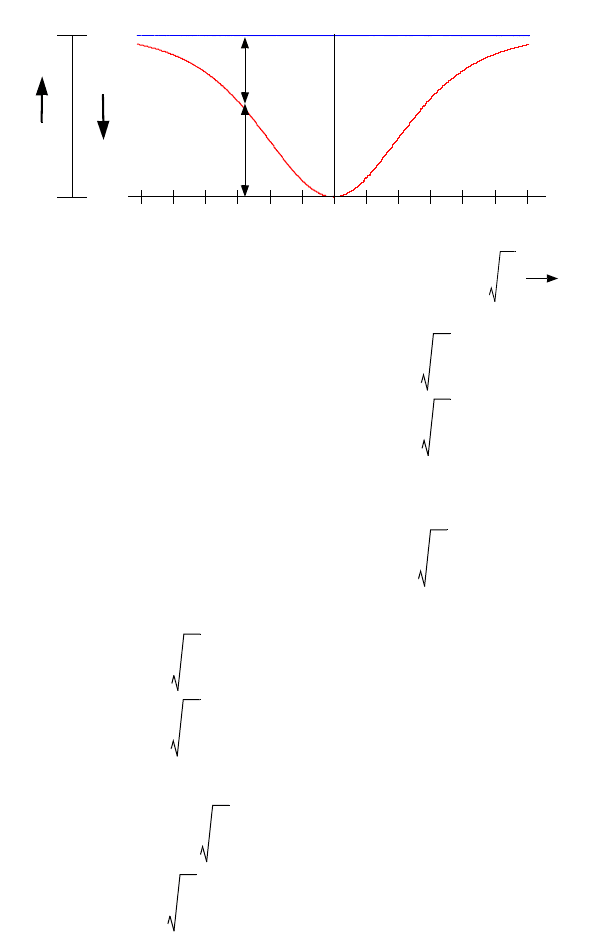
1 2 4 8 16 32 64
0
1
R
T
1
0
Fig. 7.12 Reflectivity and transmissivity
7.3 Reflection and Refraction 439
7.3.4 Total Reflection
Snell’s law states
.
(7.168)
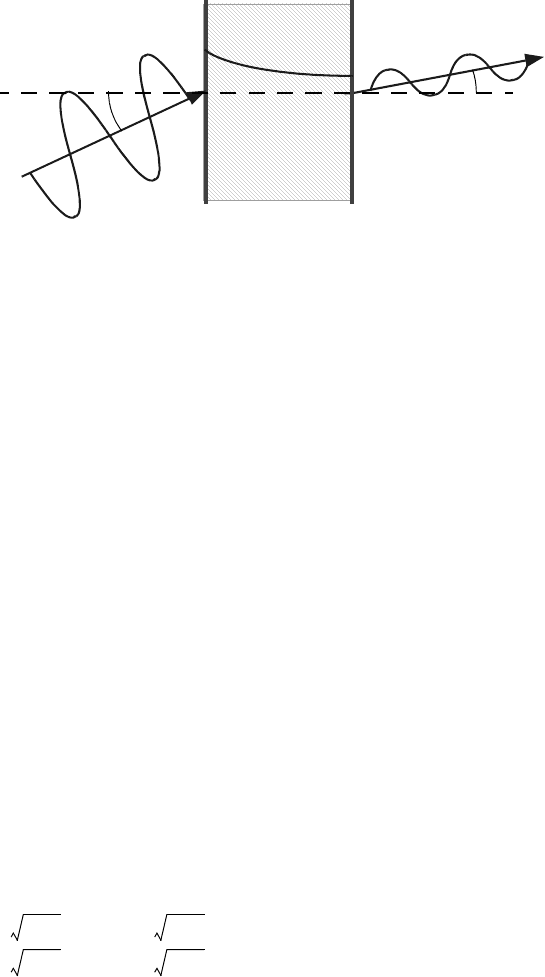
The medium with the relatively lower speed of light is a higher-index medium, the
one with the greater speed of light is a lower-index medium.
The lower-index medium belongs to the larger angle, while the higher-index
medium corresponds to the smaller angle. When light travels into a higher-index
medium, refraction is towards the normal direction, while when travelling into a
lower-index medium, refraction is away from the normal (Fig. 7.13).For the
refraction away from the normal we have
.
(7.169)
Now, there are certain angles which require . This is not possible for
real angles. The result is, that in this case the entire incident energy is reflected.
There is no refracted plane wave. The limit between ordinary reflection and this so-
called total reflection, i.e., the maximum possible angle for which regular
reflection and refraction is possible is given by
i.e.,
.
(7.170)
This angle is called critical angle of total reflection.
It must be emphasized that this does not at all mean that there are no waves in
medium 2. However this wave in medium two is not a plane (homogeneous) wave,
α
2
sin
α
1
sin
--------------
ε
1
µ
1
ε
2
µ
2
---------------
n
1
n
2
-----
c
2
c
1
-----===
Fig. 7.13 Refraction at boundary
α
2
α
1
boundary
ε
1
µ,
1
c
1
,
c
2
c
1
>
µ
2
ε
2
µ
1
ε
1
<
α
2
α
1
boundary
c
2
c
1
<
µ
2
ε
2
µ
1
ε
1
>
refraction towards the normal refraction away from the normal
n
1
n
1
n
2
n
1
> n
2
n
1
<
ε
1
µ,
1
c
1
,
α
2
sin
c
2
c
1
-----
α
1
sin α
1
sin>=
α
1
α
2
sin 1>
α
1
α
2
sin 1
c
2
c
1
-----
α
c
sin==
α
c
sin
c
1
c
2
-----=
α
c
440 Time Dependent Problems II (Electromagnetic Waves)
but an inhomogeneous wave. This wave is necessary to satisfy the boundary
conditions. It travels parallel to the boundary surface and decreases exponentially
in the direction perpendicular to the boundary. The wave is of the kind discussed in
Sect. 7.2.3, eq. (7.115). One can calculate amplitude, phase constant, and damping
constant for the wave in medium 2, when starting from appropriate statements,
including the boundary conditions. This is not difficult but tedious and therefore,
will not be presented here. A formal solution would start from Snell’s law. The
angle becomes imaginary when and the refracted wave becomes
inhomogeneous.
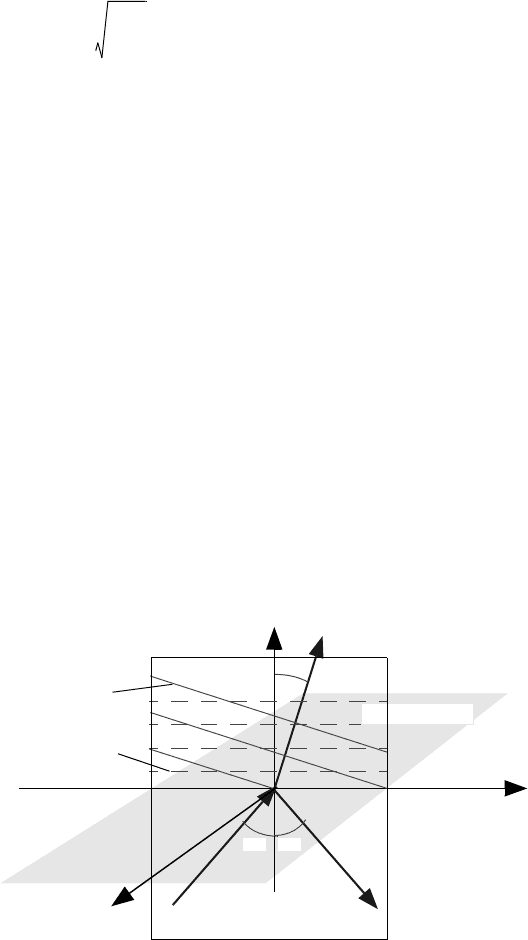
Of fundamental interest is a slightly modified case. This is illustrated in
Fig. 7.14, which shows a wave in medium 1, incident on a thin layer (medium 2).
Because of ( ), this should be a case of total reflection. However, a certain
fraction of energy is still passing through. What is happening here is that the
incident wave causes in the medium 2, a wave which decreases exponentially in the
direction perpendicular to the boundary. When the decaying wave has reached the
other end of the thin layer, it has not decayed enough to be actually zero. Under
certain conditions, this remainder of the wave can be the source of another
propagating wave into medium 3. Depending on the thickness of the layer, the
amplitude of this wave may be very small, however. This wave is necessary to
satisfy the boundary conditions on the boundary between medium 2 and 3.
Formally, this is analogous to Quantum Mechanics famous tunnel effect, which is
highly important also for electrical engineering because of its significance for the
properties of semiconductors. Fig. 7.14 sketches the behavior of the refracted wave
for
,
α
2
α
2
sin 1>
Fig. 7.14 Tunneling wave
α
2
α
1
E
1
E
2
E
3
123
α
1
α
1c
>
ε
3
µ
3
ε
1
µ
1
---------------
α
1
sin
ε
2
µ
2
ε
1
µ
1
---------------
>>
7.3 Reflection and Refraction 441
that is, is greater than the critical angle for medium 2, but is smaller than the
critical angle for medium 3. Then, Snell’s law applies for media 1 and 3, just as if
there were no intermediate layer
.
7.3.5 Reflection at a Conducting Medium
The case of another inhomogeneous wave, will not be calculated, but only touched
upon briefly. Consider a wave emerging from an insulator that is incident on a
conductor. Here too, besides the reflected wave back into the insulator, we also
need an inhomogeneous wave in the conductor to satisfy the boundary conditions
between an insulator and the conductor. Fig. 7.15 illustrates this. The
inhomogeneous wave is such that the propagation direction is given by Snell’s law,
but at the same time decays exponentially in the direction perpendicular to the
media boundary. The locus of constant phase is perpendicular to the propagation
direction.
With a coordinate system as defined by Fig. 7.15, the following Ansatz may
serve to solve this problem:
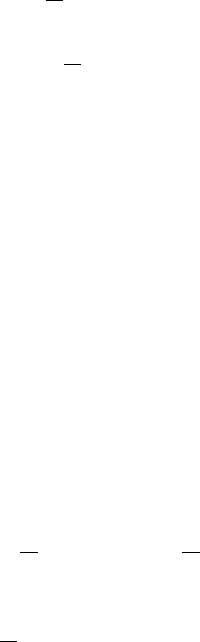
(7.171)
(7.172)
. (7.173)
Besides the material constants and , the quantities and
have to be considered as given. The task is to find the appropriate , which
α
1
α
3
sin
α
1
sin
--------------
ε
1
µ
1
ε
3
µ
3
-----------=
Fig. 7.15 Reflection at a Conducting Medium
m
e
d
i
a
b
o
u
n
d
a
r
y
α
2
κ 0=
µ
1
ε
1
,
1 – insulator
z
const. phase
const. amplitude
plane of incidence
y
µ
2
ε
2
,
κ 0≠
α
1
α
1
2 – conductor
x
E
i
E
i0
i ωtk
1
y α
1
sin– k
1
z α
1
cos–()[]exp=
E
r
E
r0
i ωtk
1
y α
1
sin– k
1
z α
1
cos+()[]exp=
E
t
E
t0
i ωt β
2
y α
2
sin– β
2
z α
2
cos–()[]exp γ
2
z–[]exp=
µ
1
ε
1
µ
2
ε
2
,,, κ
2
ω k
1
,α
1
α
2
β
2
γ
2
,,
442 Time Dependent Problems II (Electromagnetic Waves)
is possible by means of the dispersion relation of the wave in eq. (7.173) and by
means of the following phase relation which was obtained from the phases above
.
(7.174)
This represents Snell’s law in the here applicable from. Calculating the amplitudes
and requires one to invoke the boundary conditions, applicable for the
various field components, whereby the proceedings are analogous to Sect. 7.3.2.
We shall pass on the tedious details of this calculation.
7.4 Potentials and their Wave Equations
7.4.1 The Inhomogeneous Wave Equation for A and ϕ
Starting point are again Maxwell’s equations
(7.175)
(7.176)
(7.177)
. (7.178)
Because of (7.177), one may define as
,
(7.179)
where is a vector depending on space and time
,
(7.180)
But A is not unique. For instance, another vector potential may provide the
same B-field.
,
therefore
.
Consequently, by means of an arbitrary scalar function we may write
.
(7.181)
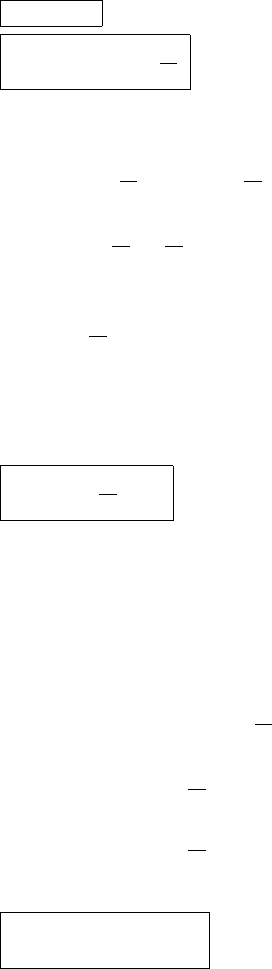
Inserting (7.179) in (7.175) gives
or
.
(7.182)
k
1
α
1
sin β
2
α
2
sin=
E
r0
E
t0
E∇×
t∂
∂B
–=
H∇× g
t∂
∂D
+=
B∇• 0=
D∇• ρ=
BA∇×=
A
AArt,()=
A
e
BA∇× A
e
∇×==
AA
e
–()∇× 0=
ψ
AA
e
– ψ∇–=
E∇×
t∂
∂
A∇×+ E
t∂
∂A
+
∇× 0==
E
t∂
∂A
+ ϕ r t,()∇–=
7.4 Potentials and their Wave Equations 443
Consequently, one may calculate B and E from A and ϕ, and considering (7.179)
and (7.182) write:
(7.183)
. (7.184)
ϕ is not unique either. Instead of calculating B and E from A and ϕ, we might as
well choose and as starting point,
inasmuch as
.
(7.185)
Therefore, the relation between A, ϕ and , is given by (7.181) and (7.185).
is a function that may be chosen arbitrarily. Thus, there is substantial freedom
when choosing the potentials A and ϕ. We use this freedom to require that the
following condition be met:
.
(7.186)
This condition is called the Lorentz gauge. For time independent problems, this
reverts into the previously introduced Coulomb gauge (5.9). Should the potentials
in a given problem not correspond to the Lorentz gauge, then by means of an
appropriate function , it is always possible to find potentials that do so.
The fields given by (7.183), (7.184) automatically satisfy two of Maxwell’s
equations, namely (7.175) and (7.177). To satisfy the other two requires some
work. We start with (7.176):
With (7.186) we get
.
(7.187)
On the other hand, using (7.178) yields
BA ∇×=
E ϕ r t,()∇–
t∂
∂A
–=
A
e
ϕ
e
E ϕ
e
∇–
t∂
∂A
e
– ϕ∇–
t∂
∂A
–==
ϕ∇–
t∂
∂A
e
–
t∂
∂
ψ∇+=
ϕϕ
e
–
t∂
∂ψ
=
A
e
ϕ
e
ψ
A∇• µε
t∂
∂ϕ
+0 =
ψ
H∇×
1
µ
---
A∇×()∇× g ε∇
t∂
∂
ϕ– ε
∂
2
A
∂t
2
----------
–==
A∇×()∇× εµ∇
t∂
∂
ϕεµ
∂
2
A
∂t
2
----------
++ µg=
A∇•()∇∇
2
A– εµ∇
t∂
∂
ϕεµ
∂
2
A
∂t
2
----------
++ µg .=
∇
2
A εµ
∂
2
A
∂t
2
----------
– µg –=