
Lehner G. Electromagnetic Field Theory for Engineers and Physicists
Подождите немного. Документ загружается.

444 Time Dependent Problems II (Electromagnetic Waves)
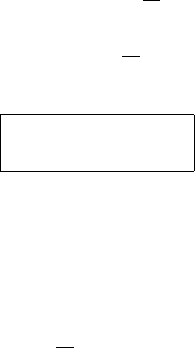
Finally with (7.186), we get
.
(7.188)
The two equations (7.187) and (7.188) are the wave equations for the potentials A
and ϕ. They are inhomogeneous if there are currents or charges involved. The two
inhomogeneous wave equations are equivalent to the four Maxwell equations.
They serve to calculate the potentials A and ϕ when the current density and
charge density are given. With some limitations, these may be chosen
largely arbitrarily. The continuity equation
is also a consequence of the inhomogeneous wave equations, just as it was before a
consequence of Maxwell’s equations. This can be immediately verified by
inspection when calculating in (7.187) and in (7.188) while also
considering the assumed Lorentz gauge. If we try to solve eqs. (7.187), (7.188)
with incompatible current densities and charge densities , then we
end up in contradictions. For instance, the resulting potentials will not satisfy the
Lorentz gauge as required.
As a particularly simple example, let us take a plane wave. The particular
solution of the wave equations (7.187), (7.188) for and are the
following plane waves:
with the requirement that
.
The Lorentz gauge mandates
.
If we split into a part parallel to and one perpendicular to it:
,
then we may write
,
εϕ∇–
t∂
∂A
–
∇• ρ=
εϕ∇()∇•– ε
t∂
∂
A∇•– ρ .=
∇
2
ϕεµ
∂
2
ϕ
∂t
2
---------
–
ρ
ε
---
–=
grt,()
ρ r t,()
g∇•
t∂
∂
ρ+0=
g∇• ∂ρ ∂t⁄
grt,() ρr t,()
g 0= ρ 0=
AA
0
i ωt kr•–()[]exp=
ϕϕ
0
i ωt kr•–()[]exp=
ω
2
k
2
------ c
2
1
µε
------==
ikA
0
•–
1
c
2
-----
iωϕ
0
+0=
A
0
k
A
0
A
0||
A
0⊥
+=
ikA
0||
–
1
c
2
-----
iωϕ
0
+0=

7.4 Potentials and their Wave Equations 445
i.e.,
.
Applying (7.184) gives
,
or
For the magnetic field, one obtains with (7.183) and in analogy to (7.85)
.
Thus, ultimately, is irrelevant and may be dropped altogether. When
then also and the fields result exclusively from A:
.
Thus, one can describe a plane wave by means of a vector potential A which is
proportional to the electric wave:
.
7.4.2 Solution of the Inhomogeneous Wave Equations (Retardation)
In the presence of charges or currents, the wave equations for A and ϕ become
inhomogeneous. This poses the question on how to solve these, which we will
discuss for ϕ in conjunction with eq. (7.188). As long as we use Cartesian
coordinates, this result can easily be ported to the three components of (7.187).
First, however, we need to deal with the following equation:
.
(7.189)
We will start with a time dependent charge at the origin
,
(7.190)
and later generalize the result. This problem is spherically symmetric. Furthermore,
there are no volume charges for . Therefore, using (3.43) we can write
.
Re-writing this a little gives
ϕ
0
kc
2
ω
--------
A
0||
cA
0||
==
E ikϕ
0
iωA
0
–()i ωt kr•–()[]exp=
E ikϕ
0
iωA
0||
– iωA
0⊥
–()i ωt kr•–()[]exp=
iωA
0⊥
– i ωt kr•–()[] .exp=
BA∇× ikA×– ikA
0⊥
× i ωt kr•–()[]exp–== =
A
0||
A
0||
0=
ϕ 0=
E iωA–=
B ikA×–
kE×
ω
-------------==
A
i
ω
----
E=
∇
2
ϕ r t,()εµ
∂
2
ϕ r t,()
∂t
2
----------------------
–
ρ r t,()
ε
---------------–=
ρ r t,() Qt()δr()=
r 0>
1
r
2
-----
r∂
∂
r
2
r∂
∂
ϕ rt,()
1
c
2
-----
∂
2
∂t
2
-------
ϕ rt,()[]–0=

446 Time Dependent Problems II (Electromagnetic Waves)
.
D’Alembert’s general solution for this equation is
.
(7.191)
describes a process originating at the origin, while describes a process
terminating at the origin. In other words, describes an effect traveling with the
speed of light from the origin to a point a distance r away, where it arrives at time
.
For this reason, is called the retarded (delayed) solution.
Conversely, may not be caused by processes at the origin, since they would
have arrived even before their cause (namely at time ). is therefore
called the advanced solution. This contradicts the causality principle and,
therefore, may not be considered. Only has physical meaning. This additional
requirement is called the condition of outward radiation. Consequently, the
potential has to be of the form
.
(7.192)
Also, for the potential must be
.
(7.193)
Overall, the potential for the time dependent charge at the origin becomes:
.
(7.194)
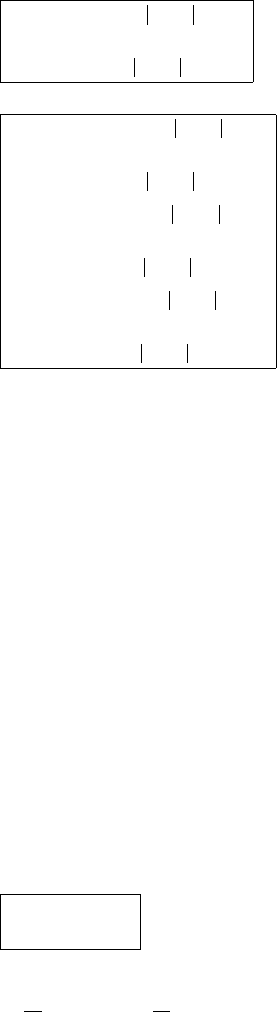
The potential of an arbitrary charge distribution can be calculated by superposition.
Consider the volume charges
.
Their share in the volume element at location is
.
Its contribution to the potential is given by
.
Overall, the potential becomes then
∂
2
∂r
2
--------
rϕ rt,()[]
1
c
2
-----
∂
2
∂t
2
-------
rϕ rt,()[]–0=
rϕ rt,() f
1
t
r
c
--
–
f
2
t
r
c
--
+
+=
f
1
f
2
f
1
t
r
c
--=
f
1
f
2
trc⁄–= f
2
f
1
ϕ rt,()
1
r
---
f
1
t
r
c
--
–
=
r 0→
ϕ rt,()
Qt()
4πεr
------------=
ϕ rt,()
Qt
r
c
--
–
4πεr
----------------------=
ρ r t,()
dτ' r'
dQ r' t,()ρr' t,()dτ'=
dϕ rt,()
ρ r' t
rr'–
c
---------------–,
dτ'
4πε rr'–
----------------------------------------------=
7.4 Potentials and their Wave Equations 447
.
(7.195)
In similar manner we find the solution to the components of the vector potential
(7.196)
It shall be emphasized again, that the quantities and in the solutions
(7.195) and (7.196) have to satisfy the continuity equation. If, and only if this is the
case, then the potentials described in (7.195) and (7.196) satisfy the Lorentz gauge.
Similarly to the case of magnetostatics (see Sect. 5.1), the Lorentz gauge is not a
consequence of continuity (as sometimes claimed). For every gauge choice, there
will be contradictions if the continuity equation is violated.
Let us specifically look at a charged particle moving along a given trajectory
then:
and
.
With this, eqs. (7.195) and (7.196) yield the so-called Liénard-Wiechert potentials,
which we will discuss in appendix A4.
7.4.3 The Electric Hertz Vector
The Lorentz gauge (7.186) makes it seemingly dispensable to work with two
potentials A and ϕ, since ϕ can be eliminated by means of this formula. We will
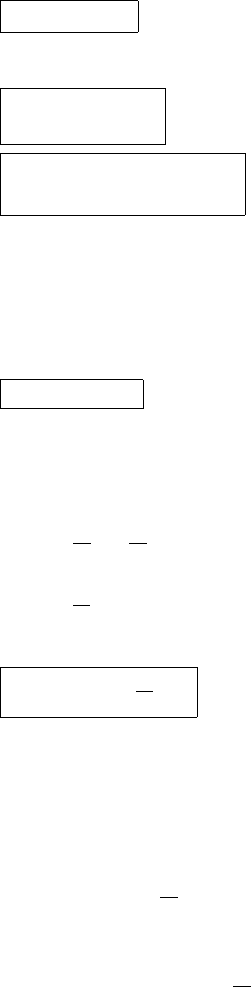
pursue this and define a new vector , the electric Hertz vector in the following
way:
.
(7.197)
It follows form (7.186) that
.
and we may substitute
ϕ
ρ r' t
rr'–
c
---------------–,
4πε rr'–
---------------------------------------
dτ'
∫
=
A
x
µg
x
r' t
rr'–
c
---------------–,
4π rr'–
---------------------------------------------
dτ'
∫
=
A
y
µg
y
r' t
rr'–
c
---------------–,
4π rr'–
---------------------------------------------
dτ'
∫
=
A
z
µg
z
r' t
rr'–
c
---------------–,
4π rr'–
--------------------------------------------
dτ'
∫
=
grt,() ρr t,()
r
0
t()
ρ t() Qt()δrr
0
t()–[]=
g t() Qt()v
0
t()δrr
0
t()–[]=
P
e
µε
∂ P
e
∂t
----------
A =
µε
t∂
∂
P
e
∇•()µε
t∂
∂ϕ
+0=
448 Time Dependent Problems II (Electromagnetic Waves)
.
(7.198)
Thus, we can express ϕ and A by means of . The fields result from (7.183) and
(7.184):
,
(7.199)
. (7.200)
7.4.4 Vector Potential for D and Magnetic Hertz Vector
For a region, free of volume charges, one finds according to (7.178)
and therefore, D may be expressed as
.
(7.201)
(Note that we use to represent the electric vector potential. The asterisk shall
differentiate it from the magnetic vector potential A and here, is not meant to
indicate the complex conjugate. This applies also to the quantity , which we will
introduce shortly.) If the region is current free, then according to (7.176)
,
,
i.e.,
.
(7.202)
The two eqs. (7.201) and (7.202) are analogous to eqs. (7.183), (7.184). is a
new kind of vector potential and a scalar potential for H, which we have met
before under a different notation (see Sect. 5.1, eq. (5.22) in particular). With the
fields of (7.201) and (7.202), eqs. (7.176) and (7.178) are automatically satisfied.
One also needs to consider the other two of Maxwell’s equations. Using (7.175)
one gets:
or
.
ϕ P
e
∇•–=
P
e
B µε
∂ P
e
∂t
----------
∇×=
E P
e
∇•()∇µε
∂
2
P
e
∂t
2
------------
–=
D∇• 0=
DA
*
∇×– =
A
*
ϕ
*
H∇×
t∂
∂D
t∂
∂
A
*
∇×–()==
H
t∂
∂
A
*
+
∇× 0=
H ∇ϕ
*
–
t∂
∂
A
*
–=
A
*
ϕ
*
1
ε
---
A
*
∇×–
∇× µ
t∂
∂
∇ϕ
*
µ
∂
2
A
*
∂t
2
-------------
+=
∇ A
*
∇•()– ∇
2
A
*
+ µε∇
t∂
∂
ϕ
*
µε
∂
2
A
*
∂t
2
-------------
+=
7.4 Potentials and their Wave Equations 449
Gradient and time derivative commute. Regarding and , one has similar
freedom as for and . Choosing again the Lorentz gauge,
,
(7.203)
from which one obtains
.
(7.204)
Finally, with (7.177) one finds
i.e.,
.
(7.205)
We conclude that the Lorentz gauge (7.203) is responsible that the homogeneous
wave equations (7.204) and (7.205) for and emerge from the Maxwell’s
equations (7.175) and (7.177).
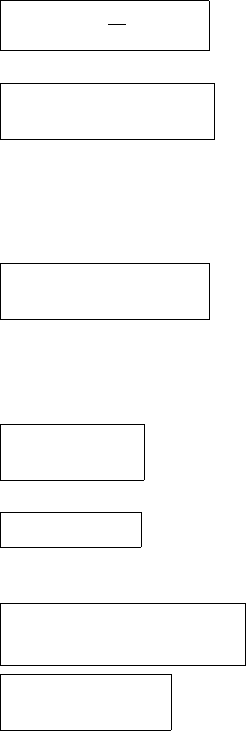
Now defining
(7.206)
and
.
(7.207)
This satisfies the Lorentz gauge (7.203) and one can calculate the fields of (7.201)
and (7.202) in the following way
(7.208)
. (7.209)
These two expressions should be compared to (7.199) and (7.200). The vector
introduced here is called the magnetic Hertz vector or also the Fitzgerald vector.
Because all this is largely in analogy to the previous section, we will be brief
here. It shall be emphasized once more, that every formula in this section has its
“dual” formula in a previous section.
According to (7.197) and (7.198), as well as (7.206) and (7.207), the Hertz
vectors allow one to calculate the potentials and as well as and . Thus
one might say, the Hertz vectors are potentials to calculate potentials, which
sometimes is accounted for by calling them super potentials.
A
*
ϕ
*
A ϕ
A
*
∇• µε
t∂
∂
ϕ
*
+0 =
∇
2
A
*
µε
∂
2
A
*
∂t
2
-------------
–0 =
µ∇ϕ
*
– µ
∂A
*
∂t
----------
–
∇• µ∇
2
ϕ
*
– µµε
∂
2
ϕ
*
∂t
2
------------
+0==
∇
2
ϕ
*
µε
∂
2
ϕ
*
∂t
2
------------
–0 =
A
*
ϕ
*
A
*
µε
∂ P
m
∂t
-----------
=
ϕ
*
P
m
∇•–=
H ∇ P
m
∇•()µε
∂
2
P
m
∂t
2
----------------
–=
D µε
∂ P
m
∂t
-----------
∇×–=
A ϕ A
*
ϕ
*

450 Time Dependent Problems II (Electromagnetic Waves)
7.4.5 Hertz Vectors and Dipole Moments
The two Hertz vectors are a useful tool for many field calculations, and we will
take advantage of them in this context.
In the general case, it is possible to calculate the fields from and , and
then use superposition, so that according to (7.199), (7.200) and (7.208), (7.209),
one obtains
(7.210)
. (7.211)
Now, based on these fields, we want to discuss the case when there are
“permanent” electric or magnetic dipoles present, besides the just described
polarization or magnetization effects caused by and . Allow these “permanent”
dipole moments to be time dependent. The word “permanent” shall mean that these
thereby addressed dipoles are not caused or “induced” by an applied electric or
magnetic field. Maxwell’s equations (7.175) through (7.178) apply,
(7.212)
. (7.213)
The induced polarization and magnetization effects are contained in the constants
and . M and P represent the permanent fraction of the fields. Using this in
Maxwell’s equations gives:
(7.214)
(7.215)
(7.216)
. (7.217)
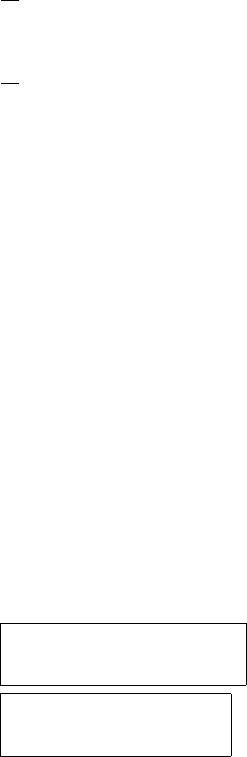
This is a very interesting form of Maxwell’s equations. It contains the polarization
current which results from the displacement current , if D is chosen
according to (7.213). However, this is not necessary, as we have seen in Sect. 2.13.
The polarization current might contain an additional source free term. This would
mean that during polarization, the transport of charges does not take the shortest
route. Also interesting are the terms and . If one takes advantage of
the concept of magnetic charges, then we might think of these in terms of and
, as of eqs. 1.82, i.e., magnetic current densities and magnetic volume charges.
Although these charges are entirely fictitious, they may still be useful.
Now, we will find out if these equations can be satisfied by means of fields
given by (7.210) and (7.211). We substitute these and after some algebra, which we
skip, find in this order:
P
m
P
e
H ε
∂ P
e
∂t
----------
∇× ∇ P
m
∇•()µε
∂
2
P
m
∂t
2
--------------
–+=
E µ
∂P
m
∂t
-----------
∇×– P
e
∇•()∇µε
∂
2
P
e
∂t
2
------------
–+=
εµ
B µHM+=
D εEP+=
εµ
E∇× µ
t∂
∂
H
t∂
∂
M––=
H∇× g ε
t∂
∂
E
t∂
∂
P++=
µ H∇• M∇•+0=
ε E∇• P∇•+ ρ=
∂P ∂t⁄∂D ∂t⁄
∂M ∂t⁄ M∇•
g
m
ρ
m
7.4 Potentials and their Wave Equations 451
,
(7.218)
, (7.219)
, (7.220)
, (7.221)
where we assumed that
.
Thus, there are no free charges and no free currents (nevertheless, there are bound
charges and bound currents, both magnetization currents and polarization currents.
From (7.218) and (7.220) we would at first conclude that
.
In this case, C is an arbitrary time independent vector. Considering a time
dependent magnetization M as the only cause of potentially existing fields
(described by ), then it turns out that must vanish. A similar approach for
the two equations (7.219) and (7.221) eventually yields
(7.222)
. (7.223)
These make it obvious that the wave equation also applies to the Hertz vectors. The
electric polarization and “magnetic polarization” (= Magnetization) are the
inhomogeneities. Therefore, the Hertz vectors are also called polarization
potentials. Solving eqs (7.222) and (7.223) for given M or P is carried out in the
same manner as described in Sect. 7.4.2, i.e., in analogy to the results (7.195) and
(7.196).
The homogeneous wave equations apply to regions where M or P vanish:
t∂
∂
∇
2
P
m
µε
∂
2
P
m
∂t
2
--------------
–
M
µ
-----+
0=
t∂
∂
∇
2
P
e
µε
∂
2
P
e
∂t
2
------------
–
P
ε
---+
0=
∇
2
P
m
µε
∂
2
P
m
∂t
2
--------------
–
M
µ
-----+
∇• 0=
∇
2
P
e
µε
∂
2
P
e
∂t
2
------------
–
P
ε
---+
∇• 0=
ρ 0=
g 0=
∇
2
P
m
r t,()µε
∂
2
P
m
r t,()
∂t
2
--------------------------
–
Mrt,()
µ
------------------+ Cr()∇×=
P
m
Cr()
∇
2
P
m
µε
∂
2
P
m
∂t
2
--------------
–
M
µ
-----
–=
∇
2
P
e
µε
∂
2
P
e
∂t
2
------------
–
P
ε
---
–=
∇
2
P
m
µε
∂
2
P
m
∂t
2
--------------
– ∇ P
m
∇•() P
m
∇×()∇× µε
∂
2
P
m
∂t
2
--------------
––0==

452 Time Dependent Problems II (Electromagnetic Waves)
,
i.e.,
.
Now, instead of (7.210) and (7.211), and under the condition that as well
as , we write
(7.224)
. (7.225)
The next few sections shall be used to discuss radiation of an oscillating
electric dipole (dipole antenna) and the radiation of an oscillating magnetic dipole
(frame antenna). Furthermore, we shall study the wave propagation in cylindrical
wave guides. For all this, we will find that the just developed methods and
terminology will be extremely useful.
7.4.6 Potentials for Uniformly Conductive Media without Volume
Charges
In the above sections, we have discussed Maxwell’s equations for given current
densities g and volume charges ρ. The current densities can not be prescribed
inside a uniformly conductive medium, rather – applying Ohm’s law – one has
.
Volume charges, one the other hand, will vanish very quickly and therefore, shall
be neglected. Thus, taking Maxwell’s equations in the following form:
(7.226)
(7.227)
(7.228)
. (7.229)
These are solved with the Ansatz
(7.230)
∇
2
P
e
µε
∂
2
P
e
∂t
2
------------
– ∇ P
e
∇•() P
e
∇×()∇× µε
∂
2
P
e
∂t
2
------------
––0==
∇ P
m
∇•()µε
∂
2
P
m
∂t
2
--------------
– P
m
∇×()∇×=
∇ P
e
∇•()µε
∂
2
P
e
∂t
2
------------
– P
e
∇×()∇×=
M 0=
P 0=
H P
m
∇×()∇× ε
∂ P
e
∂t
----------
∇×+=
E P
e
∇×()∇× µ
∂P
m
∂t
-----------
∇×–=
g κE=
E∇×
t∂
∂B
–=
H∇× κE
t∂
∂D
+=
B∇• 0=
D∇• 0=
BA∇×=
7.4 Potentials and their Wave Equations 453
,
(7.231)
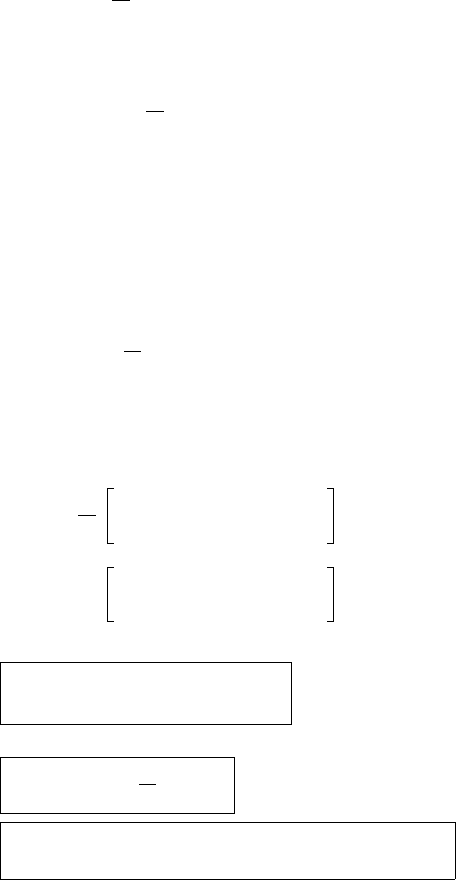
which automatically satisfy eqs. (7.226) and (7.228). The other two, eqs. (7.227)
and (7.229), in conjunction with the gauge choice
,
(7.232)
yield the homogeneous equations
(7.233)
. (7.234)
Letting
(7.235)
, (7.236)
satisfies the gauge condition (7.232). Then, the wave equations (7.233), (7.234)
yields
which is satisfied if
.
(7.237)
With this, one can calculate B and E from in the following manner:
(7.238)
. (7.239)
A different approach is also possible. Now, starting with the Ansatz
(7.240)
, (7.241)
E ϕ∇–
t∂
∂A
–=
A∇• µκϕ µε
t∂
∂ϕ
++ 0=
∇
2
A µκ
∂A
∂t
-------
– µε
∂
2
A
∂t
2
----------
–0=
∇
2
ϕµκ
∂ϕ
∂t
------
– µε
∂
2
ϕ
∂t
2
---------
–0=
A µκ µε
t∂
∂
+
P
e
=
ϕ P
e
∇•–=
µκ µε
t∂
∂
+
∇
2
P
e
µκ
∂ P
e
∂t
----------
– µε
∂
2
P
e
∂t
2
------------
–0=
∇
2
P
e
µκ
∂ P
e
∂t
----------
– µε
∂
2
P
e
∂t
2
------------
–∇• 0=
∇
2
P
e
µκ
∂ P
e
∂t
----------
– µε
∂
2
P
e
∂t
2
------------
–0 =
P
e
B µκ µε
t∂
∂
+
P
e
∇×=
E ∇ P
e
∇•()µκ
∂
∂t
----
µε
∂
2
∂t
2
-------
+
P
e
– P
e
∇×()∇× ==
DA
*
∇×–=
H ϕ
*
∇–
κ
ε
---
∂
∂t
----+
A
*
–=