
Lehner G. Electromagnetic Field Theory for Engineers and Physicists
Подождите немного. Документ загружается.

504 Time Dependent Problems II (Electromagnetic Waves)
(7.492)
which results in
(7.493)
and therefore
.
(7.494)
The inverse Laplace transformation yields:
(7.495)
Here again, the best approach to prove this is by the transform of
according to eq. (7.495). We achieve this by using for example, [5], Vol. I, p. 200,
equation (8), and p. 129, eq. (5), which is the previously mentioned “damping
theorem”.
Specifically gives
,
(7.496)
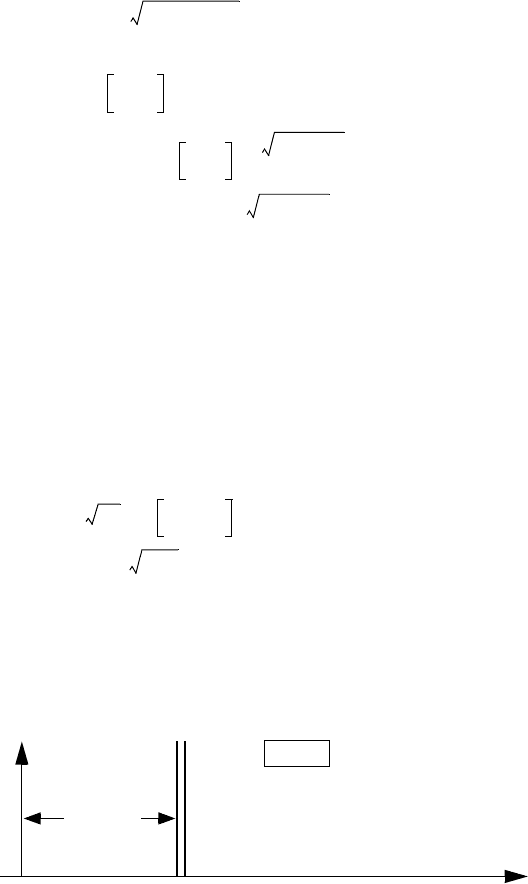
that is, the field of the very narrow impulse, created on the surface at
penetrates the medium with the speed of light. (Fig. 7.43). Conversely, if ,
then taking the limit and by means of eq. (3.181) one obtains
,
(7.497)
that is, just the result obtained when using eq. (6.111) and eq. (7.492). This
corresponds to a pure diffusion process (Fig. 7.44).
The general case involves a damped δ-function and a diffusing field, which
the δ-function drags behind itself. There is no field in front of the δ-function.
f
t() Gδ t()=
f
˜
p() G=
B
˜
z
xp,()G µκp µεp
2
+– x[]exp=
B
z
xt,() G
κx
2εc
---------–exp δ t
x
c
--–
=
G
κx
κt
2ε
-----– exp I
1
c
2
t
2
x
2
–
2εc
-------------------------
Ht
x
c
--
–
2ε c
2
t
2
x
2
–
--------------------------------------------------------------------------------------------
.+
B
z
xt,()
κ 0=
B
z
xt,() Gδ t
x
c
--–
=
t 0=
Fig. 7.43
B
z
x()
x
xct=
κ 0=
ε 0=
B
z
xt,() G
x µκ
µκx
2
4t
------------– exp
4πt
3
-----------------------------------------------
=
7.12 Boundary and Initial Value Problems 505
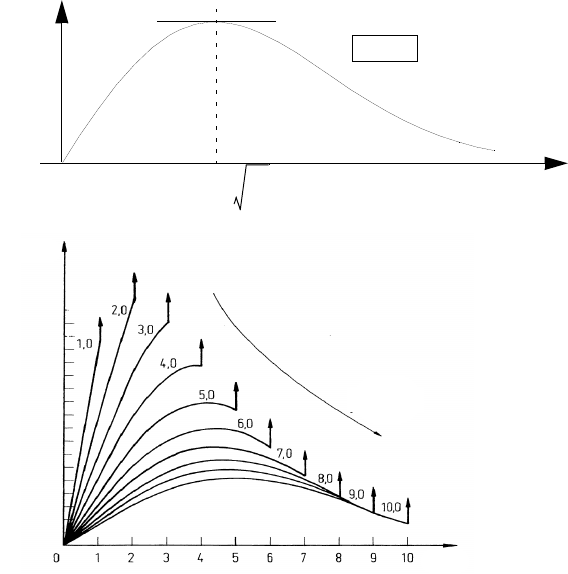
Various states of this process are illustrated in Fig. 7.45. For times , the field
looks more and more like the one shown in Fig. 7.44
Fig. 7.44
B
z
x()
x
x
max
2t
µκ
-------=
ε 0=
Fig. 7.45
B
z
x()
x/ct
r
τ
t
t
r
---=
t 4t
r
»
8 Numerical Methods
8.1 Introduction
This text has introduced the terminology of electromagnetic field theory, which
governs the relations between the various field quantities – Maxwell’s equations in
particular – and a few of the methods that are suitable to analytically solve field
theoretical problems. It is obvious, however, that for many problems, analytical
methods may only allow for an approximate solution or may not be solvable this
way at all. If we need to solve such problems, a different methodology has to be
employed. Sometimes, if the problem under consideration differs only slightly
from one that can be solved exactly, then perturbation theory may be applied. We
shall not discuss perturbation in this text. A discussion of that topic can be found at
Morse Feshbach [9]. In contrast, the various types of numerical methods are
generally applicable, at least in principle. In light of the ever increasing potential of
computer power, these methods become more and more attractive and constitute a
fruitful area for field theory as well. The subject is so vast, that we can only touch
on the basic ideas. On the other hand, numerical methods are so important that it
should not go unmentioned and therefore, the following shall be dedicated to
describe the most important numerical methods, including some simple examples.
Although we will focus on electrostatic problems, these methods are applicable to
all areas of field theory, in particular to magnetostatics and to time dependent
problems. It shall particularly be illustrated that, and how the various methods
relate to the analytical methods formally, and in to the field theoretical problems
from a content perspective. It is advisable to always work numerical and analytical
problems in parallel. This is an important basis for successful work in this area of
study. Such approach fosters a deeper and clearer understanding that is sufficiently
critical of the problem and its results. Areas for possible errors can be recognized
more easily and testing of the created programs can focus on the critical aspects of
the problem and thus be more efficient.
The following sections (8.2 though 8.5) prepare for the later sections (8.6
though 8.10), where the various numerical methods shall be explained.
8.2 Basics of Potential Theory
8.2.1 Boundary Value Problems and Integral Equations
The potential theory only briefly described in Sect. 3.4, is a basic building block for
both, the analytic as well as the numerical methods. This is particularly true for
Kirchhoff’s theorem (see 3.4.7, eq. (3.57)), which because of its far reaching
significance could easily be called the principal theorem of potential theory.
G. Lehner, Electromagnetic Field Theory for Engineers and Physicists,
DOI 10.1007/978-3-540-76306-2_8, © Springer-Verlag Berlin Heidelberg 2010
8.2 Basics of Potential Theory 507
.
(8.1)
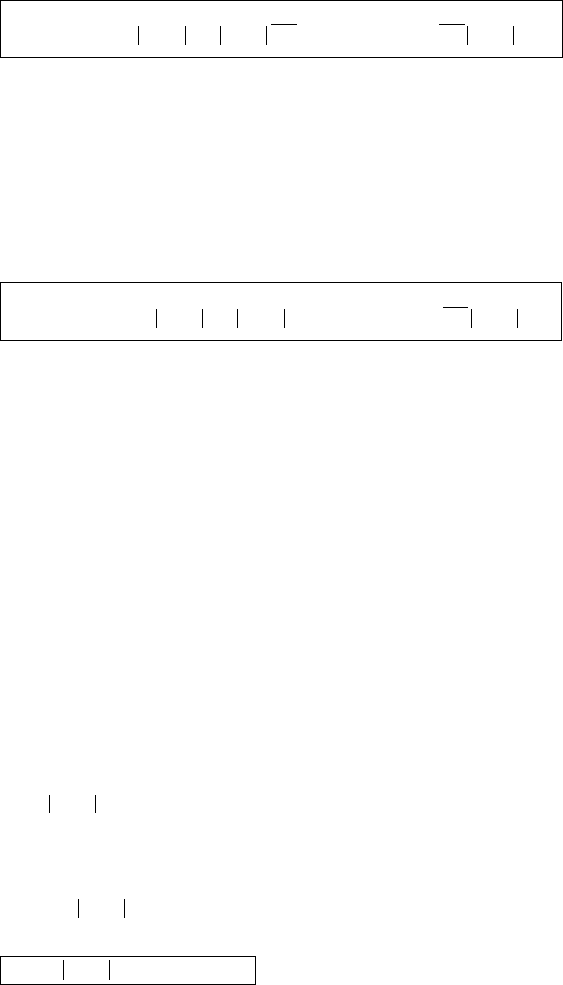
This equation is valid for the three-dimensional space, where it addresses a point
inside a given region. We have already emphasized that the equation in this form is
not suitable to solve boundary values problems by arbitrarily specifying and
on the surface so that inside could be found. Only one or the other
boundary condition is allowed on any one surface element (in case of a mixed
boundary value problem, it has to be clear for which part of the area and for
which part applies. Nevertheless, we may use this equation to solve
boundary value problems (analytically, as well as numerically). Instead of using
eq. (8.1), for points on the surface one has
.
(8.2)
is a factor that for objects with smooth surfaces everywhere has a constant
value of . These are characterized by tangential planes which are uniquely
defined everywhere. For instance, the surface of a sphere is smooth. However, this
is not true for the surface of a cube (which has edges where it is obviously not
smooth), or that of a cone (which has a tip). Consider the three-dimensional δ-
function as the limit of a series of functions, which, within a given volume V, takes
on the constant value and vanishes outside of the volume. This makes it
intuitively clear that the integral necessary for the derivation of eq. (8.1), and of
eq. (3.57) in Sect. 3.4.7 becomes
,
where is the solid angle that arises at point of the surface inside the region.
For smooth surfaces, we have . On the edges of a cube the relation is
and at its corners . This allows one to include the
singular points of not-smooth surfaces as well.
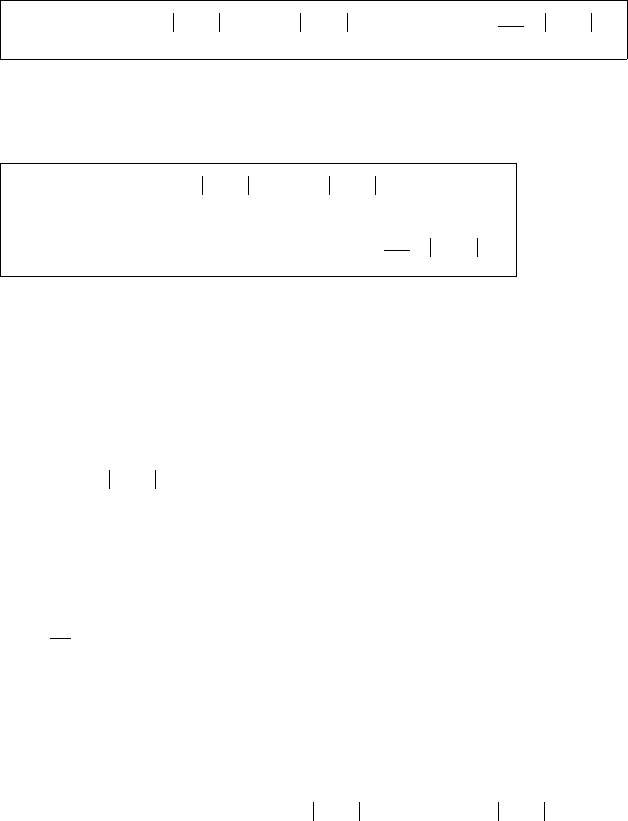
A similar approach is possible for two-dimensional (plane) problems. In this
case, the so-called fundamental solution of the three-dimensional space
,
(8.3)
that is, the Coulomb potential of a point charge, has to be replaced by its two-
dimensional analogue, which is the potential of an infinitely long, straight, and
uniform line charge. Disregarding constant factors this is given by
,
(8.4)
where
.
(8.5)
With this, instead of eq. (8.1), we obtain for points inside a two-dimensional region
4πϕ r()
ρ r'()τ'd
ε
0
rr'–
--------------------
V
∫
1
rr'–
---------------
∫
°
n'∂
∂
ϕ r'()dA' ϕ r'()
n'∂
∂ 1
rr'–
---------------dA'
∫
°
–+=
ϕ
∂ϕ ∂n⁄ϕ
ϕ
∂ϕ ∂n⁄
C r()ϕr()
ρ r'()τ'd
ε
0
rr'–
--------------------
V
∫
1
rr'–
---------------
∫
°
∂ϕ r'()
∂n'
---------------
dA' ϕ r'()
n'∂
∂ 1
rr'–
---------------dA'
∫
°
–+=
C r()
2π
1 V⁄
ϕ r()4πδ rr'–()τd
V
∫
C r'()ϕr'() Ωϕr'()==
Ω r'
C 2π=
C Ωπ== C Ωπ2⁄==
ψ
1
rr'–
---------------=
ψ rr'–ln–=
∇
2
rr'–ln 2πδ rr'–() =
508 Numerical Methods
.
(8.6)
The last two integrals are line integrals along the path element which
constitutes the boundary of the area. On the boundary itself one has
.
(8.7)
The quantities and in equations (8.4) through (8.7) are two-dimensional
vectors in a plane.
represents the plane angle seen from inside the area. In case of a
smooth boundary, , for the corners of a rectangle we have , etc.
In case of one-dimensional problems, the fundamental solution can be
expressed in the form
(8.8)
This case yields
,
(8.9)
and by Sect. 3.4.5
.
(8.10)
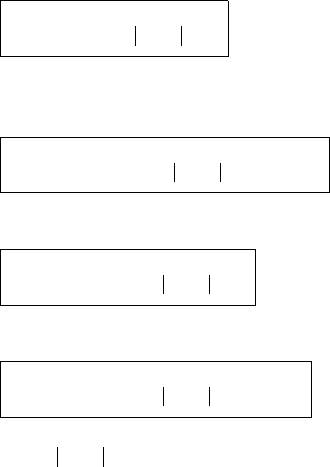
The discontinuity of at is typical and of immense significance. This is
similar to the discontinuities of or in case
of three- or two dimensions, respectively. The value of the function at location
is the average of the left and right sided limit at this point.
If one wishes to solve a Dirichlet or Neumann boundary value problem, to
start with eq. (8.2) or eq. (8.7) is advisable in order to find the boundary values of
from those of or vice versa. This method provides compatible values for
and over the entire boundary. With these, eq. (8.1) or eq. (8.6) finally
allow one to determine the potential in the entire region. The boundary value
problem is thereby reduced to these integral equations.
If, in case of a Dirichlet problem, is given, then eq. (8.2) or eq. (8.7)
represent the so-called Fredholm Integral equation of the 1st kind for . In
2πϕ r()
ρ r'()
ε
0
------------
rr'–ln A'd
A
∫
– rr'–ln
∫
°
∂ϕ r'()
∂n'
---------------
ds'+ ϕ r'()
n'∂
∂
rr'–ln ds'
∫
°
–=
ds'
C r()ϕr()
ρ r'()
ε
0
------------
rr'–ln A'd
A
∫
– rr'–ln
∫
°
∂ϕ r'()
∂n'
---------------
ds'–=
ϕ r'()
n'∂
∂
rr'–ln ds'
∫
°
+
rr'
C r()
C π= C π 2⁄=
ψ xx',()
1
2
---
xx'–
1
2
---
x' x–() for xx' ≤
1
2
---
xx'–() for xx' .≥
==
ψ'
x∂
∂
ψ
1
2
---–forxx'<
0 for xx'=
+
1
2
---
for xx'>
1
2
---– Hx x'–()+== =
ψ'' ∇
2
ψδxx'–()==
ψ' xx'=
∂∂n'⁄()1 rr'–⁄()
∂∂n'⁄()rr'–ln()
ψ'
xx'=
∂ϕ ∂n⁄ϕ
∂ϕ ∂n⁄ϕ
ϕ
ϕ
∂ϕ ∂n⁄
8.2 Basics of Potential Theory 509
case of a Neumann problem, eq. (8.2) or eq. (8.7) represent the Fredholm Integral
equation of the 2nd kind for .
There is another way how boundary value problems can be reduced to
integral equations. Consider a surface bounding a region carrying a surface charge
density . Then in the three-dimensional case (the one- and two-dimensional
cases can be solved analogously), the potential inside the volume and on the
boundary is
.
(8.11)
The perpendicular component of the electric field is discontinuous at the surface, as
we have already discovered before (Sect. 2.5.3 and 2.10). On the inside of the
surface, it is therefore
.
(8.12)
If there is a double layer or dipole layer on the surface with the surface density of
the dipole moment , then the potential is
.
(8.13)
In this case, even is discontinuous at the surface (see Sect. 2.5.3, eq. (2.73),
eq. (2.82)). The potential on the inside of the double layer is
.
(8.14)
From a formal perspective, both discontinuities are a consequence of the fact that
is discontinuous on the surface. Eqs (8.12) and (8.14) are valid
for an approach of the surface from the inside, in order to calculate the surface
integrals. The additional terms of Eqs (8.12) and (8.14) carry a factor 1/2, which is
a result of the fact that the value on the surface is obtained as an average of the both
sided limit, which can be regarded as dividing the discontinuities and
in half.
Eqs. (8.11) through (8.14) may be used to calculate the solutions of Dirichlet,
Neumann, or mixed boundary value problems. We start by just considering points
on the boundary. For Dirichlet problems, one finds either from (8.11) or
from (8.14). From there, either use (8.11) or (8.13) to find the potential in the
entire region. In case of Neumann problems, one calculates by means of
(8.12) and then finds the potential in the entire region by (8.11). Again, depending
on the type of problem, one needs to solve either the Fredholm Integral equations
of the 1st or 2nd kind.
These integral equations are of fundamental significance for field theory. For
the Fredholm Integral equations, there exists a well established mathematical
theory, which is also plausible because it is entirely analogous to the theory of
linear algebraic equations. The Fredholm Integral equations are nothing else than
ϕ
σ r()
ϕ r()
σ r'()
4πε
0
rr'–
---------------------------
dA'
∫
°
=
∂ϕ r()
∂n
--------------
σ r'()
4πε
0
------------
∂
∂n
------
1
rr'–
---------------
dA'
∫
°
σ r()
2ε
0
-----------
+=
τ
ϕ r()
τ r()
4πε
0
------------
∂
∂n'
-------
1
rr'–
---------------
dA'
∫
°
=
ϕ
ϕ r()
τ r'()
4πε
0
------------
∂
∂n'
-------
1
rr'–
---------------
dA'
∫
°
τ r()
2ε
0
----------
–=
∂∂n'⁄()1 rr'–⁄()
σε
0
⁄τε
0
⁄
σ r'()
τ r'()
σ r'()
510 Numerical Methods
the continuum analogues of linear algebraic equations. For instance, there are
theorems about the existence or non-existence of solutions, as well as their
uniqueness or multiplicity, which are an almost verbatim copy of their analogue in
linear systems of equations. They form the basis for many fundamental theorems of
potential theory, for example about the existence of solutions of boundary value
problems (see for example [10 through 16]). An analytical solution of the equations
is possible in some cases, which is what shall be demonstrated in the following by
an example. Finally – and this is important for our case – they are also suitable for
numerical evaluation, which results in the boundary element method and is
presented in Sect 8.8.
8.2.2 Examples
8.2.2.1 The One-dimensional Problem
This basic problem illustrates how to use eqs (8.1) through (8.7) in the not so trivial
2-D and 3D cases. We use Green’s integral theorem in one-dimension
(8.15)
and let be according to eq. (8.10). Then we find for points inside
(8.16)
and on the surface (i.e. for or )
.
(8.17)
The factor corresponds to the factors or in eqs (8.2) and
(8.7), respectively.
We chose a simple example where
, ,
(8.18)
and the Dirichlet boundary conditions
.
(8.19)
The exact solution to this problem is
.
(8.20)
This solution shall be obtained by means of the one-dimensional Kirchhoff
theorem, eqs. (8.16) and (8.17). We start from eq. (8.18) with eq. (8.8)
.
(8.21)
From eq. (8.17), and the fact that the surface consists of only two points, it follows
that
ψϕ'' ϕψ''–()xd
a
b
∫
ψϕ' ϕψ'–[]
a
b
=
ψ''
ϕ x'() ψ∇
2
ϕ xd
a
b
∫
ϕψ' ψϕ'–[]
a
b
+= ax' b<<
x' a= x' b=
1
2
---
ϕ x'() ψ∇
2
ϕ xd
a
b
∫
ϕψ' ψϕ'–[]
a
b
+=
12⁄ C 2π= C π=
∇
2
ϕ Ax=0x 1≤≤
ϕ 0() ϕ1() 0==
ϕ
Ax x
2
1–()
6
--------------------------=
ψ∇
2
ϕ xd
0
1
∫
A
12
------
2x'
3
3x'–2+()=
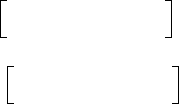
8.2 Basics of Potential Theory 511
or
,
with the solutions
, .
(8.22)
Thereby, the boundary values of determine the boundary values of (the
perpendicular derivatives). Together with eq. (8.16), they provide the solution
,
which is the same as previously given in eq. (8.20).
As our second example we choose
, ,
(8.23)
where
, .
(8.24)
Again, using eq. (8.17) gives
.
Note that here, is discontinuous for and by eq. (8.9)
, .
Furthermore:
,
,
and
.
This means that by eq. (8.16)
1
2
---
ϕ 0() 0
A
6
--- ψ 10,()ϕ'1() ψ00,()ϕ'0()–[]–==
1
2
---
ϕ 1() 0
A
12
------ ψ 11,()ϕ'1() ψ01,()ϕ'0()–[]–==
A
6
---
1
2
---
ϕ'1()⋅ 0 ϕ'0()⋅–=
A
12
------0ϕ'1()⋅
1
2
---
ϕ'0()⋅–=
ϕ'0()
A
6
---–= ϕ'1()
A
3
---=
ϕ∂ϕ∂n⁄
ϕ x'()
A
12
------
2x'
3
3x'–2+()
A
3
---
1 x'–
2
------------
⋅
A
6
---
x'
2
---
⋅––
Ax' x'
2
1–()
6
----------------------------==
∇
2
ϕ 0=0x 1≤≤
ϕ 0() A= ϕ 1() B=
1
2
---
ϕ 0()
A
2
--- Bψ'10,()Aψ'00,()– ϕ'1()ψ10,()– ϕ'0()ψ00,()+[]==
1
2
---
ϕ 1()
B
2
--- Bψ'11,()Aψ'01,()– ϕ'1()ψ11,()– ϕ'0()ψ01,()+[]==
ψ' xx',() xx'=
ψ'00,()0= ψ'11,()0=
A
2
---
B
2
---
ϕ'1()
2
------------–=
B
2
---
A
2
---
ϕ'0()
2
------------+=
ϕ'0() ϕ'1() BA–==

512 Numerical Methods
.
(8.25)
Of course, we obtain the linear potential, necessary for this case.
It shall be noted that the fundamental solution can be chosen differently.
Important is only that it satisfies eq. (8.10). Therefore, the function
with
can also be chosen as the fundamental solution. Naturally, both of our examples
will give the same result, which to verify is left for the reader as an exercise.
8.2.2.2 Dirichlet’s Boundary Value Problem of a Sphere
In this example, we will use the above presented integral equations to solve the
inner Dirichlet boundary value problem of a sphere, for which Laplace’s equation
holds (that is no charges) in three different ways. This requires an expansion of the
fundamental solution (i.e. the inverse distance) by means of spherical harmonics.
By eq. (3.324) we write
.
(8.26)
The upper term is valid for , while the lower one holds for . The
perpendicular gradient is
ϕ x'()
B
2
--- BA–()
1 x'–
2
------------
–
A
2
--- BA–()
x'
2
---
++=
ABA–()x'+=
ψ xx',()
x'1 x+() for xx'≤
x 1 x'+() for xx'≥
=
ψ' xx',()
∂ψ
∂x
-------
x' for xx'<
1
2
--- x'+ for xx'=
1 x'+ for xx'>
x' Hx x'–()+== =
1
rr
0
–
---------------- 2 δ
0m
–()
r
n
r
0
n 1+
------------
r
0
n
r
n 1+
------------
m 0=
n
∑
n 0=
∞
∑
nm–()!
nm+()!
--------------------
=
P⋅
n
m
θcos()P
n
m
θ
0
cos()m ϕϕ
0
–()[]cos
rr
0
≤ rr
0
≥
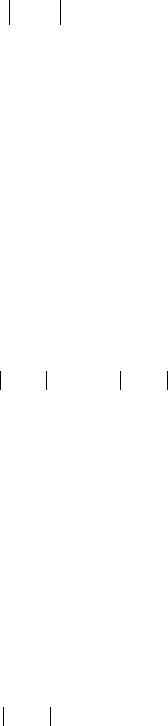
8.2 Basics of Potential Theory 513
.
(8.27)
Significant is that the expression is discontinuous for . Now, the upper term
is valid for , the middle term is for , and the lower one holds for
. This discontinuity is the main reason for presenting this example here.
From a formal perspective, this is the reason for the discontinuity of the electric
field at charged surfaces and that of the potential at dipole layers which was
demonstrated in Sect. 2.5.3 and has culminated in the integrals eq. (8.12) and
eq. (8.14). This shall be demonstrated again by means of the present example. Note
the frequently used relation:
.
We also need the completeness relation for the spherical harmonics. It results form
expanding in terms of spherical harmonics by means of
eq. (3.300) and the corresponding expression, now using sine instead of cosine:
.
We start by analyzing the integral in eq. (8.12). With the exception of the sign, the
perpendicular gradient contained therein is given by eq. (8.27). For we find
that at the inside and the outside boundary, respectively:
.
∂
∂n
0
--------
1
rr
0
–
----------------
2 δ
0m
–()
n 1+()
r
n
r
0
n 2+
------------
–
1
2r
0
2
--------–
n
r
0
n 1–
r
n 1+
------------
m 0=
n
∑
n 0=
∞
∑
nm–()!
nm+()!
--------------------
=
P⋅
n
m
θcos()P
n
m
θ
0
cos()m ϕϕ
0
–()[]cos
rr
0
=
rr
0
< rr
0
=
rr
0
>
∂
∂n
------
1
rr'–
---------------
∂
∂n'
-------
1
rr'–
---------------
–=
δθ θ'–()δϕϕ'–()
2n 1+()nm–()!
4π nm+()!
-----------------------------------------
2 δ
0m
–()
m 0=
n
∑
n 0=
∞
∑
P
n
m
θcos()P
n
m
θ'cos()m ϕϕ'–()[]cos θ'sin
δθ θ'–()δϕϕ'–()=
rr
0
=
∂
∂n'
-------
1
rr'–
---------------
nm–()!
nm+()!
--------------------
2 δ
0m
–()P
n
m
θcos()P
n
m
θ'cos()
m 0=
n
∑
n 0=
∞
∑
–=
m ϕϕ'–()[]cos
n 1+()–
r
0
2
--------------------
+
n
r
0
2
-----
⋅