
Lehner G. Electromagnetic Field Theory for Engineers and Physicists
Подождите немного. Документ загружается.

514 Numerical Methods
Next, one calculates the integral at the outside as well as on the inside boundary, or
the difference between the two integrals. One then finds the value of discontinuity
to be
.
From eq. (8.13), in complete analogy, while recognizing the changed sign, one sees
that the discontinuities of the integral is
.
Obviously, these discontinuities are local properties of each individual surface
element. For instance, suppose that is true only for one particular surface
area element. Therefore, the results apply in general to an arbitrary surface.
Suppose is given on the entire surface and if the coordinate system is
chosen appropriately, then the boundary values can be expanded in terms of
spherical harmonics:
.
(8.28)
For we use the Ansatz
,
(8.29)
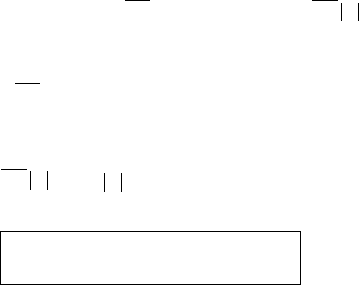
which allows to determine by means of eq. (8.11) and eq. (8.26), as well as
the orthogonality relation eq. (3.300). One finds
.
(8.30)
This solves the problem. One can now use eq. (8.11), together with eq. (8.29) and
eq. (8.30) to write the solution for the interior of the sphere
,
(8.31)
which was expected based on eq. (8.28). The purpose of this example was to
demonstrate that the integral relation eq. (8.11) is suitable to calculate the correct
result.
In similar manner, one may use eq. (8.14) and the Ansatz
(8.32)
σ r'()
4πε
0
------------
nm–()!
nm+()!
--------------------
2 δ
0m
–()P
n
m
θcos()P
n
m
θ'cos()m ϕϕ'–()[]cos
m 0=
n
∑
n 0=
∞
∑∫
°
–
2n 1+
r
0
2
---------------
r
0
2
θ'sin dθ'dϕ'⋅
σ r'()
ε
0
------------
δθ θ'–()δϕϕ'–()dθ'dϕ'
∫
°
–
σ r'()
ε
0
------------–==
τ r'()
ε
0
-----------
δθ θ'–()δϕϕ'–()dθ'dϕ'
∫
°
τ r'()
ε
0
-----------=
σ 0≠
φ r()
φ r() B
nm
P
n
m
θcos()mϕ()cos
m 0=
n
∑
n 0=
∞
∑
=
σ r
0
()
σ r
0
() C
nm
P
n
m
θ
0
cos()mϕ
0
()cos
m 0=
n
∑
n 0=
∞
∑
=
σ r
0
()
C
nm
2n 1+()ε
0
B
nm
r
0
------------------------------------=
φ r() B
nm
r
r
0
----
n
P
n
m
θcos()mϕ()cos
m 0=
n
∑
n 0=
∞
∑
=
τ r
0
() D
nm
P
n
m
θ
0
cos()mϕ
0
()cos
m 0=
n
∑
n 0=
∞
∑
=
8.2 Basics of Potential Theory 515
to determine . Then
,
(8.33)
which solves the problem as well. Again, one finds the potential (8.31).
Finally, with the Ansatz
,
(8.34)
we may base the analysis on eq. (8.2), where we let . One obtains
(8.35)
and using eq. (8.1) gives again the potential (8.31).
Of course, this approach is applicable to arbitrarily shaped surfaces. If
analytical solutions do not exist, then the problem can be solved numerically. To do
this we partition the surface (the “boundary”) into small surface elements
(“boundary elements”). This leads to the boundary value method, which we will
discuss in Sect. 8.8.
8.2.3 Mean Value Theorems of Potential Theory
The so-called mean value theorems of potential theory are a consequence of
Kirchhoff’s theorems. They illustrate important relations in a clear and intuitive
manner. Consider a spherically shaped area, centered at the origin with radius R
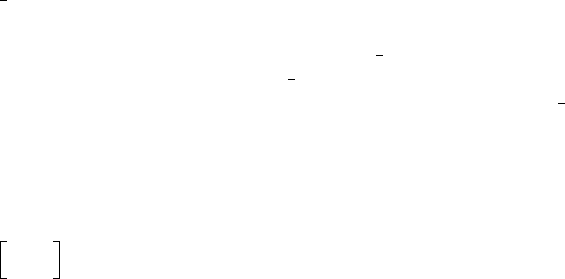
that does not contain charges ( ). Then by eq. (8.1)
.
Because there are no charges, one has
.
Furthermore
.
This gives
,
(8.36)
i.e., the potential at the center of a charge-free sphere is equal to the mean value of
the potential on the surface of the sphere. We might as well consider the entire
volume of the sphere and apply the mean value theorem onto all spherical shells
that are contained within the sphere and obtain
D
nm
D
nm
2n 1+()ε
0
B
nm
n 1+
------------------------------------–=
∂φ
∂n
------
rr
0
=
E
nm
P
n
m
θ
0
cos()mϕ
0
()cos
m 0=
n
∑
n 0=
∞
∑
=
C 2π=
E
nm
n
r
0
----
B
nm
=
∇
2
ϕ 0=
ϕ 0()
1
4π
------
1
R
---
∫
°
n'∂
∂
ϕ r'()dA'
1
4π
------
ϕ r'()
n'∂
∂ 1
r'
------ dA'
∫
°
–=
n'∂
∂
ϕ r'()
∫
°
dA'0=
n'∂
∂ 1
r'
------
r'
r'
3
---------
–
n'
1
R
2
------–==
ϕ 0()
1
4πR
2
-------------
ϕ r'()A'd
∫
°
ϕ〈〉
A
==

516 Numerical Methods
.
(8.37)
This applies in much the same way to two-dimensional spherical regions. Eq. (8.6)
for the center of a circle reads:
.
Using
and
gives
,
(8.38)
and for the entire area of the circle
.
(8.39)
There are analogous statements for the one-dimensional case
,
which has only a linear solution that is
.
This case yields
(8.40)
and
.
(8.41)
The conclusion is, that the solution of the Laplace equation in one-, two-, and three
dimensions has the property that its values at the center of a line, circle, sphere are
equal to the mean value of the corresponding values on its boundary, which is the
average of the line, the entire circle, or the entire sphere. We will encounter this
fact again when we will discuss the method of finite differences.
ϕ 0()
1
4πR
3
-------------
ϕ r'()τ'd
V
∫
ϕ〈〉
V
==
ϕ 0()
Rln
2π
---------
∂ϕ r'()
∂n'
---------------
ds'
∫
°
–
1
2π
------
ϕ r'()
n'∂
∂
r'ln ds'
∫
°
+=
∂ϕ r'()
∂n'
---------------
ds'
∫
°
0=
n'∂
∂
r'ln
1
r'
------
r'
r'
------
n'
1
R
---==
ϕ 0()
1
2πR
----------
ϕ r'()s'd
∫
°
ϕ〈〉
s
==
ϕ 0()
1
πR
2
----------
ϕ r'()A'd
∫
ϕ〈〉
A
==
∇
2
ϕ x() 0=
ϕ ABx+=
ϕ
ab+
2
------------
ϕ a() ϕb()+
2
------------------------------
=
ϕ
ab+
2
------------
1
ba–
------------
ϕ x()xd
a
b
∫
=
8.3 Boundary Value Problems as Variational Problems 517
8.3 Boundary Value Problems as Variational Problems
8.3.1 Variational Integrals and Euler’s Equations
Many problems that are formulated with differential equations can be reduced to
variational problems. This is also true for some problems of the electromagnetic
field theory. We already encountered one such example when studying
electromagnetic waves inside a cylindrical wave guide (Sect. 7.11). The general
task in Variational Calculus is to find the function (or functions) which constitutes
an extremum of its dependent integral, which is called functional, meaning a
function of functions. Consider the following integral that spans a region in space:
(8.42)
Initially, we require that vanishes on the boundary. Later, we will
consider different boundary conditions. represent the partial derivatives
of u with respect to . Let u be the function that gives an extremum to the
integral. We define a differing, so-called reference function
,
(8.43)
where f represents a mostly arbitrary function, which vanishes on the boundary and
its derivative is continuous. The reference function satisfies the same boundary
conditions as u. If we replace u in I(u) by , then we obtain a function that depends
on ε and whose derivative with respect to ε vanishes for , i.e., for .
This gives
(8.44)
and
,
whereby
.
Using the same procedure for and one obtains
.
The second integral vanishes because of Gauss’ integral theorem and because of
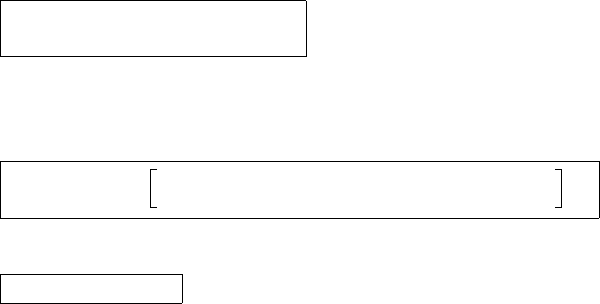
the boundary condition for f (i.e. on the boundary). Since f is an arbitrary
function, the integrand of the first integral has to vanish as its integral must do so
and therefore:
Iu() Fxyzuu
x
u
y
u
z
,,,,,,()τd
V
∫
extremum==
u uxyz),,()=
u
x
u
y
u
z
,,
xyz,,
uuεf+=
u
u
ε 0= uu=
I ε() Fxyzu εf+ u
x
εf
x
+ u
y
εf
y
+ u
z
εf
z
+,,, , , ,()τd
V
∫
=
∂I ε()
∂ε
-------------
ε 0=
F
u
fF
u
x
f
x
F
u
y
f
y
F
u
z
f
z
+++()τd
V
∫
0==
F
u
x
f
x
∂F
∂u
x
--------
∂f
∂x
-----
1
∂x
-----
f
∂F
∂u
x
--------
f
∂
2
F
∂u
x
∂x
---------------
–==
F
u
y
f
y
F
u
z
f
z
F
u
∂
2
F
∂u
x
∂x
---------------–
∂
2
F
∂u
y
∂y
---------------–
∂
2
F
∂u
z
∂z
--------------–
f τd
V
∫
1
∂x
-----
f
∂F
∂u
x
--------
1
∂y
-----
f
∂F
∂u
y
--------
1
∂z
-----
f
∂F
∂u
z
--------
++
f τd
V
∫
+0=
f 0=
518 Numerical Methods
.
(8.45)
This is the so-called Euler differential equation (also known as Euler-Lagrange
equation). Its solution is the solution of the variational problem given by eq. (8.42)
and vice versa.
As an example, consider the following integral
.
(8.46)
The corresponding Euler-Lagrange equation is
,
(8.47)
which as a special case contains Laplace’s equation ( ), Poisson’s
equation ( ), and the Helmholtz equation ( ). In case of the
Laplace equation, the integral
possesses the very interesting property to assume an extremum (a minimum,
specifically). This also minimizes the integral
.
(8.48)
This expresses the remarkable theorem that the electric field in a charge-free region
arranges itself such that the electrostatic energy it contains is minimized
(compatible with the boundary conditions).
The reader is reminded, that we have started with a Dirichlet problem and
then introduced competing reference functions which had to satisfy the boundary
conditions, who’s task was to facilitate minimization of the functional. Therefore,
not every arbitrary solution of the corresponding Euler-Lagrange equation is a
suitable solution, but only the one which satisfies the Dirichlet boundary
conditions. The next question is how to proceed when the boundary condition is
given in a different form. This question leads to the need to distinguish between
essential boundary conditions and natural boundary conditions . Suppose the
boundary is A, partitioned into the parts and . Let the essential Dirichlet
boundary condition
(8.49)
apply to part and the natural boundary condition
(8.50)
shall apply on the remaining part of the boundary . For , this condition
reduces to the Neumann boundary condition (in case of or , these
boundary conditions are called homogeneous, otherwise they are inhomogeneous).
∂F
∂u
------
∂
∂x
-----
∂F
∂u
x
--------
–
∂
∂y
-----
∂F
∂u
y
--------
–
∂
∂z
-----
∂F
∂u
z
--------
–0 =
IFτd
V
∫
∂u
∂x
------
2
∂u
∂y
------
2
∂u
∂z
------
2
2u r()g r()– u
2
r()h r()–++ τ d
V
∫
==
∇
2
ughu++ 0 =
g 0 h, 0==
h 0= g 0 h, const.==
∇u()
2
τd
V
∫
E
2
τd
V
∫
=
ε
0
2
-----
∇u()
2
τd
V
∫
ε
0
E
2
2
-----------
τd
V
∫
=
A
1
A
2
ubr()=
A
1
∂u
∂n
------ d r()u+ e r()=
A
2
d 0=
b 0= e 0=

8.3 Boundary Value Problems as Variational Problems 519
The distinction between essential and natural boundary conditions is based on the
fact that the reference functions used in the variation must satisfy the essential
boundary conditions, but do not need to satisfy the natural boundary conditions. In
order to satisfy the natural boundary conditions, the variational integral has to be
supplemented by a boundary integral, i.e., eq. (8.46) is replaced by
(8.51)
Notice that the boundary integral applies to the surface only, that is, the part
where the natural boundary conditions (8.50) apply. We will skip the proof of this,
which can be found for example, at Davies [17]. If and , then the
boundary integral is obsolete, which means that in case of Neumann boundary
conditions, only the volume integral remains. Its variation automatically results in
the solution which satisfies the homogeneous Neumann boundary conditions.
Unlike the Dirichlet boundary conditions, these do not require the choice of
suitable reference functions to ensure a solution. We will demonstrate this
difference by means of simple examples.
The reader shall be reminded that the Neumann boundary condition may not
be prescribed entirely arbitrarily. For the inner (but not the outer) Neumann
problem it has to be
,
(8.52)
that is, the electric flux has to be compatible with the total charge inside the region
(this is irrelevant for the outer problem because there, the electric flux is assumed
to extend to infinity and the flux through the imaginary surface at infinity may take
any value).
One can avoid the need to choose the reference functions in case of the
Dirichlet boundary condition and start with arbitrary functions when
supplementing the variational integral by appropriate supplemental conditions and
consider these by means of Lagrange parameters (Lagrange multipliers). We will
illustrate this with an example.
The variational integrals are very well suited to obtain both an exact, as well
as an approximative solution of the corresponding problem. Oftentimes,
astonishingly accurate results can be obtained even with relatively simple means.
They also provide starting points for the method of Finite Elements (Sect. 8.7).
A practically important method to obtain approximate solutions of the
variation problems is the so-called Ritz method also known as Rayleigh-Ritz
method. It is based on writing the solution as a series of linear independent
functions in the following form:
.
(8.53)
I ∇u()
2
2u r()g r()– u
2
r()h r()–[]τd
V
∫
d r()u
2
r() 2u r()e r()–[]A .d
A
2
∫
+=
A
2
d 0= e 0=
DdA•
∫
°
ε
∂ϕ
∂n
------
dA
∫
°
– Q==
ϕ
i
uc
i
ϕ
i
i 1=
n
∑
=
520 Numerical Methods
Substitute this series into the variational integral and let the derivatives of the
resulting function with respect to be zero:
.
(8.54)
If the functions form a complete basis within the region where the functions u
are defined, then this allows to obtain the exact solution.
8.3.2 Examples
8.3.2.1 Poisson’s Equation
As our first example to demonstrate the variational calculation, consider the one-
dimensional Poisson equation
(8.55)
with its general solution
.
(8.56)
Initially, the boundary conditions shall be left undefined. Later we will solve the
problem under the following boundary conditions
a) First, the problem shall be solved by means of the variational integral for the
Dirichlet boundary condition
.
(8.57)
The series solution eq. (8.53) shall have the form
.
(8.58)
It must satisfy the essential boundary conditions. This requires that
.
(8.59)
Next, the coefficients C and D have to be chosen such that the variational inte-
gral is minimized:
.
(8.60)
Calculating this integral and letting its derivative with respect to C and D be
zero gives
(8.61)
and
.
(8.62)
Ic
1
… c
n
,,() c
i
∂Ic
1
… c
n
,,()
∂c
i
---------------------------------0,= i 1 … n,,=
ϕ
i
∇
2
ugx()– abx+ ,== 0x 1≤≤
uABx
a
2
---
x
2
b
6
---
x
3
++ +=
u 0() γ ,= u 1() δ=
ux() ABxCx
2
Dx
3
++ +=
ux() γ δ γ– C– D–()xCx
2
Dx
3
+++=
Iu' x()[]
2
2ux() abx+()⋅+{}xd
0
1
∫
ICD,()==
C
a
2
---
,= D
b
6
---=
ux() γ δ γ–
a
2
---–
b
6
---–
x
a
2
---
x
2
b
6
---
x
3
+++=

8.3 Boundary Value Problems as Variational Problems 521
This represents the exact solution because the statement (8.58) is flexible
enough to contain this as a special case.
b) The same problem can be solved in a different manner. The boundary condi-
tions are introduced here as supplementary conditions when varying the inte-
gral and considered by means of the Lagrange multiplier λ and µ. Then with
(8.58), the integral gives
.
(8.63)
The supplemental conditions that correspond to the boundary conditions are
.
(8.64)
This makes the functional which we have to vary
.
(8.65)
The next step is to take the derivative with respect to , and µ:
.
(8.66)
Eliminating λ and µ gives
(8.67)
which, again, is the solution eq. (8.62).
c) Now, we will cover Neumann’s boundary value problem. Because of
eq. (8.52), the Neumann boundary conditions have to be chosen such that
.
(8.68)
This means, we require that
,
(8.69)
Now, by eq. (8.51), we have to add the expression
IABCD,,,()B
2
4
3
---
C
2
9
5
---
D
2
2BC 2BD 3CD+++ + +=
2 aA
1
2
---
aB
1
3
---
aC
1
4
---
aD
1
2
---
bA
1
3
---
bB
1
4
---
bC
1
5
---
bD+++ +++++
A γ–0 ,= ABCDδ–+++ 0=
FABCD,,,()IABCD,,,()λA γ–()µABCDδ–+++()++=
ABCDλ,,,,
∂F ∂A⁄ 2abλµ+++ 0==
∂F ∂B⁄ 2B 2C 2Da
2
3
---
b µ+++++ 0==
∂F ∂C⁄ 2B
8
3
---
C 3D
2
3
---
a
1
3
---
b µ+ + +++ 0==
∂F ∂D⁄ 2B 3C
18
5
------
D
1
2
---
a
2
5
---
b µ++ +++ 0==
∂F ∂λ⁄ A γ–0==
∂F ∂µ⁄ ABCDδ–+++ 0==
A γ ,= B δγ–
a
2
---–
b
6
---
,–= C
a
2
---
,= D
b
6
---=
u'1() u'0()–
2ab+
2
---------------=
u'1() β ,= u'0() β
2ab+
2
---------------–=
522 Numerical Methods
(8.70)
to the variational integral. Then from the functional
(8.71)
we obtain the equations
.
(8.72)
The first of these four equations is identically satisfied. The reason is that the
Neumann boundary conditions were chosen in the allowed manner. Had we
not considered eq. (8.68), that condition would have to be imposed posteri-
orly. The remaining three equations give
,
(8.73)
while A may be chosen arbitrarily (since in case of a Neumann problem u is
only specified up to a constant). Therefore:
.
(8.74)
This represents the exact solution of the problem. In contrast to the Dirichlet
boundary conditions, the Neumann boundary conditions had to be supple-
mented by the boundary integral (where in this one-dimensional case, this
consists of only two terms). Omitting the boundary integral in an attempt to
satisfy the Neumann boundary conditions by means of a reference function
leads to an incorrect result. The reason is that the wrong quantity is mini-
mized. The reader is encouraged to try this and thereby verify the claim.
Thus far, in above examples, we have found the exact solution. Now, consider a
simplified Ansatz, which only allows to solve by approximation:
.
(8.75)
d) When considering the Dirichlet boundary value problem with the boundary
conditions eq. (8.57) we have to require
2 u
∂u
∂n
------
dA
∫
°
–2uu'[]
0
1
–=
2A β
2ab+
2
---------------–
2 ABCD+++()β–=
GABCD,,,()IABCD,,,()2A β
2ab+
2
---------------–
2 ABCD+++()β–+=
∂G ∂A⁄ 2ab2β 2ab+()–2β–++ 0==
∂G ∂B⁄ 2B 2C 2Da
2
3
---
b 2β–++++ 0==
∂G ∂C⁄ 2B
8
3
---
C 3D
2
3
---
a
1
2
---
b 2β–++++ 0==
∂G ∂D⁄ 2B 3C
18
5
------
D
1
2
---
a
2
5
---
b 2β–++ ++ 0==
B β
2ab+
2
---------------
,–= C
a
2
---
,= D
b
6
---=
ux() A β
2ab+
2
---------------–
x
a
2
---
x
2
b
6
---
x
3
+++=
ux() ABxCx
2
++=
8.3 Boundary Value Problems as Variational Problems 523
.
(8.76)
The variational integral obtained yields
and therefore
.
(8.77)
e) Considering the Neumann boundary value problem with the boundary condi-
tions eq. (8.69) gives the first three of the eqs. (8.72) when and thus
, , ,
(8.78)
and
.
(8.79)
This solution neither satisfies the Poisson equation nor the boundary condi-
tions exactly, but only approximately.
f) To satisfy the boundary conditions of the Neumann problem exactly, requires
one to find suitable reference functions. This requires a consideration of the
additional boundary integral for the variation, because otherwise, the solution
would be incorrect. For the present case, this leads to the trial function
.
(8.80)
There are no more variational parameters left. The parameter A is arbitrary
and the variation does not depend on it. When comparing the two approxima-
tions (8.79) and (8.80) with the exact solution (8.74), then we observe that the
approximation (8.79) more closely resembles the exact solution and therefore
can be regarded as the better of the two approximations. This can be general-
ized. When starting from the same Ansatz, then the case where the Neumann
boundary conditions are considered exactly, is generally the less accurate
approximation. This is still the case, even if variational parameters remain
after the Neumann boundary conditions were applied. A better approach to
determine the variational parameters is, to leave this to the variation integral,
which defines the approximation and yields an optimized compromise for the
solution.
8.3.2.2 Helmholtz Equation
As our second example, we shall employ the Helmholtz equation, which describes
for example, the waves in wave guides and was discussed in sects. 7.7 through
7.11. The Helmholtz equation is
ux() γ δ γ– C–()xCx
2
++=
C
2ab+
4
---------------=
ux() γ δ γ–
2ab+
4
---------------–
x
2ab+
4
---------------
x
2
++=
D 0=
A arbitrary= B β
12a 7b+
12
----------------------–= C
2ab+
4
---------------=
ux() A β
12a 7b+
12
----------------------–
x
2ab+
4
---------------
x
2
++=
ux() A β
2ab+
2
---------------–
x
2ab+
4
---------------
x
2
++=