
Lowe D. Networking For Dummies
Подождите немного. Документ загружается.

Book I
Chapter 2
Understanding
Network Protocols
and Standards
37
The TCP/IP Protocol Suite
Gigabit Ethernet
Gigabit Ethernet is Ethernet running at a whopping 1,000 Mbps, which is 100
times faster than the original 10 Mbps Ethernet. Gigabit Ethernet was once
considerably more expensive than Fast Ethernet, so it was used only when
the improved performance justified the extra cost. However, today Gigabit
Ethernet is the standard for nearly all desktop and laptop PCs.
Gigabit Ethernet comes in two flavors:
✦ 1000BaseT: Gigabit Ethernet can run on Category 5 UTP cable, but
higher grades such as Category 5e or Category 6 are preferred because
they’re more reliable.
✦ 1000BaseLX: Several varieties of fiber cable are used with Gigabit
Ethernet, but the most popular is called 1000BaseLX.
The TCP/IP Protocol Suite
TCP/IP, the protocol on which the Internet is built, is actually not a single
protocol but rather an entire suite of related protocols. TCP is even older
than Ethernet. It was first conceived in 1969 by the Department of Defense.
If you’re a history buff, you may be interested in
the story of how Ethernet came to be so popu-
lar. Here’s how it happened: The original idea
for the Ethernet was hatched in the mind of a
graduate computer science student at Harvard
University named Robert Metcalfe. Looking for
a thesis idea in 1970, he refined a networking
technique that was used in Hawaii, called the
AlohaNet (it was actually a wireless network),
and developed a technique that would enable
a network to efficiently use as much as 90 per-
cent of its capacity. By 1973, he had his first
Ethernet network up and running at the famous
Xerox Palo Alto Research Center (PARC). Bob
dubbed his network “Ethernet” in honor of
the thick network cable, which he called “the
ether.” (Xerox PARC was busy in 1973. In addi-
tion to Ethernet, PARC developed the first
personal computer that used a graphical user
interface complete with icons, windows, and
menus, and the world’s first laser printer.)
In 1979, Xerox began working with Intel and
DEC (a once popular computer company) to
make Ethernet an industry standard networking
product. Along the way, they enlisted the help
of the IEEE, which formed committee number
802.3 and began the process of standardizing
Ethernet in 1981. The 802.3 committee released
the first official Ethernet standard in 1983.
Meanwhile, Bob Metcalfe left Xerox, turned
down a job offer from Steve Jobs to work at
Apple computers, and started a company
called the Computer, Communication, and
Compatibility Corporation — now known as
3Com. 3Com has since become one of the larg-
est manufacturers of Ethernet equipment in the
world.
Ethernet folklore and mythology
06_625873-bk01ch02.indd 3706_625873-bk01ch02.indd 37 9/21/10 10:06 PM9/21/10 10:06 PM
38
The TCP/IP Protocol Suite
For more on the history of TCP/IP, see the sidebar, “The fascinating story of
TCP/IP,” later in this chapter. Currently, the Internet Engineering Task Force,
or IETF, manages the TCP/IP protocol suite.
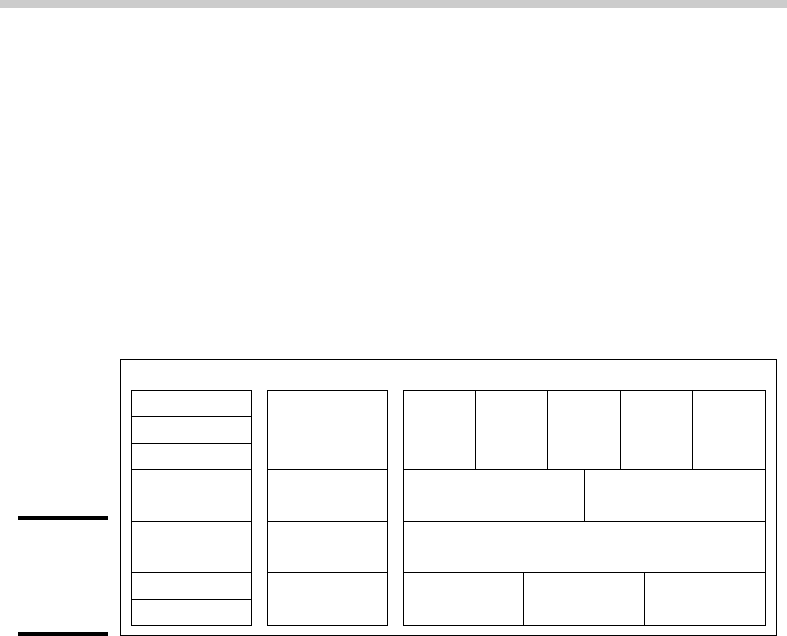
The TCP/IP suite is based on a four-layer model of networking that is simi-
lar to the seven-layer OSI model. Figure 2-7 shows how the TCP/IP model
matches up with the OSI model and where some of the key TCP/IP protocols
fit into the model. As you can see, the lowest layer of the model, the Network
Interface layer, corresponds to the OSI model’s Physical and Data Link
layers. TCP/IP can run over a wide variety of Network Interface layer proto-
cols, including Ethernet, as well as other protocols, such as Token Ring and
FDDI (an older standard for fiber-optic networks).
Figure 2-7:
TCP/IP and
the OSI
model.
Application Layer
OSI Layers
Presentation Layer
Session Layer
Transport Layer
Network Layer
Data Link Layer
Physical Layer
Application Layer
TCP/IP Layers
Transport Layer
Network Layer
Network Interface
Layer
HTTP
TCP/IP Protocols
FTP Telnet SMTP DNS
TCP UDP
IP
Ethernet Token Ring
Other Link-Layer
Protocols
The Application layer of the TCP/IP model corresponds to the upper three
layers of the OSI model — that is, the Session, Presentation, and Application
layers. Many protocols can be used at this level. A few of the most popular
are HTTP, FTP, Telnet, SMTP, DNS, and SNMP.
You can find out about many of the details of these and other TCP/IP proto-
cols in Book IV. In the following sections, I just want to point out a few more
details of the three most important protocols in the TCP/IP suite: IP, TCP,
and UDP.
IP
IP, which stands for Internet Protocol, is a Network layer protocol that is
responsible for delivering packets to network devices. The IP protocol uses
logical IP addresses to refer to individual devices rather than physical (MAC)
addresses. A protocol called ARP (for Address Resolution Protocol) handles
the task of converting IP addresses to MAC addresses.
06_625873-bk01ch02.indd 3806_625873-bk01ch02.indd 38 9/21/10 10:06 PM9/21/10 10:06 PM
Book I
Chapter 2
Understanding
Network Protocols
and Standards
39
The TCP/IP Protocol Suite
Because IP addresses consist of a network part and a host part, IP is a
routable protocol. As a result, IP can forward a packet to another network if
the host is not on the current network. (The ability to route packets across
networks is where IP gets its name. An internet is a series of two or more
connected TCP/IP networks that can be reached by routing.)
TCP
TCP, which stands for Transmission Control Protocol, is a connection-ori-
ented Transport layer protocol. TCP lets a device reliably send a packet to
another device on the same network or on a different network. TCP ensures
that each packet is delivered if at all possible. It does so by establishing
a connection with the receiving device and then sending the packets. If a
packet doesn’t arrive, TCP resends the packet. The connection is closed
only after the packet has been successfully delivered or an unrecoverable
error condition has occurred.
One key aspect of TCP is that it’s always used for one-to-one communica-
tions. In other words, TCP allows a single network device to exchange data
with another single network device. TCP isn’t used to broadcast messages
to multiple network recipients. Instead, the User Datagram Protocol (UDP) is
used for that purpose.
10Base what?
The names of Ethernet cable standards resem-
ble the audible signals a quarterback might
shout at the line of scrimmage. In reality, the
cable designations consist of three parts:
✓ The first number is the speed of the net-
work in Mbps. So 10BaseT is for 10 Mbps
networks (Standard Ethernet), 100BaseTX
is for 100 Mbps networks (Fast Ethernet),
and 1000BaseT is for 1,000 Mbps networks
(Gigabit Ethernet).
✓ The word Base indicates the type of net-
work transmission that the cable uses.
Base is short for baseband. Baseband
transmissions carry one signal at a time
and are relatively simple to implement.
The alternative to baseband is broadband,
which can carry more than one signal at a
time but is more difficult to implement. At
one time, broadband incarnations of the
802.x networking standards existed, but
they have all but fizzled due to lack of use.
✓ The tail end of the designation indicates the
cable type. For coaxial cables, a number is
used that roughly indicates the maximum
length of the cable in hundreds of meters.
10Base5 cables can run up to 500 meters.
10Base2 cables can run up to 185 meters.
(The IEEE rounded 185 up to 200 to come up
with the name 10Base2.) If the designation
ends with a T, twisted-pair cable is used.
Other letters are used for other types of
cables.
06_625873-bk01ch02.indd 3906_625873-bk01ch02.indd 39 9/21/10 10:06 PM9/21/10 10:06 PM

40
The TCP/IP Protocol Suite
Many well-known Application layer protocols rely on TCP. For example,
when a user running a Web browser requests a page, the browser uses
HTTP to send a request via TCP to the Web server. When the Web server
receives the request, it uses HTTP to send the requested Web page back to
the browser, again via TCP. Other Application layer protocols that use TCP
include Telnet (for terminal emulation), FTP (for file exchange), and SMTP
(for e-mail).
UDP
The User Datagram Protocol (or UDP) is a connectionless Transport layer
protocol that is used when the overhead of a connection isn’t required.
After UDP has placed a packet on the network (via the IP protocol), it forgets
Some people are fascinated by history. They
subscribe to cable TV just to get the History
Channel. If you’re one of those history buffs,
you may be interested in the following chron-
icle of TCP/IP’s humble origins. (For maximum
effect, play some melancholy violin music in
the background as you read the rest of this
sidebar.)
In the summer of 1969, the four mop-topped
singers from Liverpool were breaking up. The
war in Vietnam was escalating. Astronauts
Neil Armstrong and Buzz Aldrin walked on the
moon. And the Department of Defense built a
computer network called ARPANET to link its
defense installations with several major uni-
versities throughout the United States.
By the early 1970s, ARPANET was becoming
difficult to manage. So it was split into two net-
works: one for military use, called MILNET, and
the other for nonmilitary use. The nonmilitary
network retained the name ARPANET. To link
MILNET with ARPANET, a new method of con-
necting networks, called Internet Protocol or
just IP for short, was invented.
The whole purpose of IP was to enable these
two networks to communicate with each other.
Fortunately, the designers of IP realized that it
wouldn’t be too long before other networks
wanted to join in the fun, so they designed IP to
allow for more than two networks. In fact, their
ingenious design allowed for tens of thousands
of networks to communicate via IP.
The decision was a fortuitous one, as the
Internet quickly began to grow. By the mid-
1980s, the original ARPANET reached its limits.
Just in time, the National Science Foundation
(NSF) decided to get into the game. NSF had
built a network called NSFNET to link its huge
supercomputers. NSFNET replaced ARPANET
as the new background for the Internet.
Around that time, such magazines as Time and
Newsweek began writing articles about this
new phenomenon called the Internet, and the
Net (as it became nicknamed) began to grow
like wildfire. Soon NSFNET couldn’t keep up
with the growth, so several private commer-
cial networks took over management of the
Internet backbone. The Internet has grown at
a dizzying rate ever since, and nobody knows
how long this frenetic growth rate will con-
tinue. One thing is sure: TCP/IP is now the most
popular networking protocol in the world.
The fascinating story of TCP/IP
06_625873-bk01ch02.indd 4006_625873-bk01ch02.indd 40 9/21/10 10:06 PM9/21/10 10:06 PM

Book I
Chapter 2
Understanding
Network Protocols
and Standards
41
Other Protocols Worth Knowing About
about it. UDP doesn’t guarantee that the packet actually arrives at its desti-
nation. Most applications that use UDP simply wait for any replies expected
as a result of packets sent via UDP. If a reply doesn’t arrive within a certain
period of time, the application either sends the packet again or gives up.
Probably the best-known Application layer protocol that uses UDP is DNS,
the Domain Name System. When an application needs to access a domain
name such as www.wiley.com, DNS sends a UDP packet to a DNS server
to look up the domain. When the server finds the domain, it returns the
domain’s IP address in another UDP packet. (Actually, the process is much
more complicated than that. For a more detailed explanation, see Book IV,
Chapter 4.)
Other Protocols Worth Knowing About
Other networks besides Ethernet, TCP/IP, and IPX/SPX are worth knowing
about:
✦ NetBIOS: Short for Network Basic Input/Output System, this is the basic
application-programming interface for network services on Windows
computers. It’s installed automatically when you install TCP/IP, but
doesn’t show up as a separate protocol when you view the network con-
nection properties. (Refer to Figure 2-1.) NetBIOS is a Session layer pro-
tocol that can work with Transport layer protocols such as TCP, SPX, or
NetBEUI.
✦ NetBEUI: Short for Network BIOS Extended User Interface, this is a
Transport layer protocol that was designed for early IBM and Microsoft
networks. NetBEUI is now considered obsolete.
✦ IPX/SPX: A protocol suite that was made popular in the 1980s by Novell
for use with their NetWare servers. TCP/IP has become so dominant that
IPX/SPX is now only rarely used.
✦ AppleTalk: Apple computers have their own suite of network protocols
known as AppleTalk. The AppleTalk suite includes a Physical and Data
Link layer protocol called LocalTalk, but can also work with standard
lower-level protocols, including Ethernet and Token Ring.
✦ SNA: Systems Network Architecture is an IBM networking architecture
that dates back to the 1970s, when mainframe computers roamed the
earth and PCs had barely emerged from the primordial computer soup.
SNA was designed primarily to support huge terminals such as airline
reservation and banking systems, with tens of thousands of terminals
attached to central host computers. Now that IBM mainframes support
TCP/IP and terminal systems have all but vanished, SNA is beginning to
fade away. Still, many networks that incorporate mainframe computers
have to contend with SNA.
06_625873-bk01ch02.indd 4106_625873-bk01ch02.indd 41 9/21/10 10:06 PM9/21/10 10:06 PM

Book I: Networking Basics
42
06_625873-bk01ch02.indd 4206_625873-bk01ch02.indd 42 9/21/10 10:06 PM9/21/10 10:06 PM

Chapter 3: Understanding
Network Hardware
In This Chapter
✓ Introducing servers
✓ Working with network interface cards
✓ Becoming familiar with network cable, network hubs, and switches
✓ Exploring repeaters, bridges, and routers
✓ Figuring out network storage
T
he building blocks of networks are network hardware devices such as
servers, adapter cards, cables, hubs, switches, routers, and so on. This
chapter provides an overview of these building blocks.
Servers
Server computers are the lifeblood of any network. Servers provide the
shared resources that network users crave, such as file storage, databases,
e-mail, Web services, and so on. Choosing the equipment you use for your
network’s servers is one of the key decisions you’ll make when you set up a
network. In the following sections, I describe some of the various ways you
can equip your network’s servers.
Right off the bat, I want to make one thing clear: Only the smallest networks
can do without at least one dedicated server computer. For a home network
or a small office network with only a few computers, you can get away with
true peer-to-peer networking. That’s where each client computer shares its
resources such as file storage or printers, and a dedicated server computer
isn’t needed. For a more-detailed explanation of why this isn’t a good idea
for larger networks, see Book II, Chapter 1.
What’s important in a server
Here are some general things to keep in mind when picking a server com-
puter for your network:
07_625873-bk01ch03.indd 4307_625873-bk01ch03.indd 43 9/21/10 10:07 PM9/21/10 10:07 PM

44
Servers
✦ Scalability: Scalability refers to the ability to increase the size and
capacity of the server computer without unreasonable hassle. It’s a
major mistake to purchase a server computer that just meets your cur-
rent needs because, you can rest assured, your needs will double within
a year. If at all possible, equip your servers with far more disk space,
RAM, and processor power than you currently need.
✦ Reliability: The old adage “you get what you pay for” applies especially
well to server computers. Why spend $10,000 on a server computer
when you can buy one with seemingly similar specifications at a dis-
count electronics store for $2,000?
One reason is reliability. When a client computer fails, only the person
who uses that computer is affected. When a server fails, however, every-
one on the network is affected. The less-expensive computer is probably
made of inferior components that are more likely to fail.
✦ Availability: This concept of availability is closely related to reliabil-
ity. When a server computer fails, how long does it take to correct the
problem and get the server up and running again? Server computers are
designed so their components can be easily diagnosed and replaced,
which minimizes the downtime that results when a component fails. In
some servers, components are hot swappable, which means that certain
components can be replaced without shutting down the server. Some
servers are designed to be fault-tolerant so that they can continue to
operate even if a major component fails.
✦ Service and support: Service and support are factors often overlooked
when picking computers. If a component in a server computer fails, do
you have someone on site qualified to repair the broken computer? If
not, you should get an on-site maintenance contract for the computer.
Don’t settle for a maintenance contract that requires you to take the
computer in to a repair shop or, worse, mail it to a repair facility. You
can’t afford to be without your server that long.
Components of a server computer
The hardware components that comprise a typical server computer are simi-
lar to the components used in less expensive client computers. However,
server computers are usually built from higher-grade components than
client computers for the reasons given in the preceding section. The follow-
ing paragraphs describe the typical components of a server computer:
✦ Motherboard: The motherboard is the computer’s main electronic
circuit board to which all the other components of your computer are
connected. More than any other component, the motherboard is the
computer. All other components attach to the motherboard.
07_625873-bk01ch03.indd 4407_625873-bk01ch03.indd 44 9/21/10 10:07 PM9/21/10 10:07 PM

Book I
Chapter 3
Understanding
Network Hardware
45
Servers
The major components on the motherboard include the processor (or
CPU), supporting circuitry called the chipset, memory, expansion slots,
a standard IDE hard drive controller, and I/O ports for devices such as
keyboards, mice, and printers. Some motherboards also include addi-
tional built-in features such as a graphic adapter, SCSI disk controller, or
network interface.
✦ Processor: The processor, or CPU, is the brain of the computer.
Although the processor isn’t the only component that affects overall
system performance, it’s the one that most people think of first when
deciding what type of server to purchase. At the time of this writing,
Intel had two processor models specifically designed for use in server
computers, as summarized in Table 3-1.
Each motherboard is designed to support a particular type of processor.
CPUs come in two basic mounting styles: slot or socket. However, you
can choose from several types of slots and sockets, so you have to make
sure that the motherboard supports the specific slot or socket style
used by the CPU. Some server motherboards have two or more slots or
sockets to hold two or more CPUs.
The term clock speed refers to how fast the basic clock that drives the pro-
cessor’s operation ticks. In theory, the faster the clock speed, the faster
the processor. However, clock speed alone is reliable only for comparing
processors within the same family. In fact, the Itanium processors are
faster than Xeon processors at the same clock speed. That’s because the
Itanium processor models contain more advanced circuitry than the older
model, so they can accomplish more work with each tick of the clock.
The number of processor cores also has a dramatic effect on perfor-
mance. Each processor core acts as if it’s a separate processor. Most
server computers use dual-core (two processor cores) or quad-core
(four cores) chips.
Table 3-1 Intel Processors
Processor Clock Speed Processor Cores
Itanium 9300 1.60–1.73GHz 4
Xeon 1.83–3.4GHz 2–6
✦ Memory: Don’t scrimp on memory. People rarely complain about serv-
ers having too much memory. Many different types of memory are avail-
able, so you have to pick the right type of memory to match the memory
supported by your motherboard. The total memory capacity of the
server depends on the motherboard. Most new servers can support at
least 16GB of memory, and some can handle up to 256GB.
07_625873-bk01ch03.indd 4507_625873-bk01ch03.indd 45 9/21/10 10:07 PM9/21/10 10:07 PM

46
Servers
✦ Hard drives: Most desktop computers use inexpensive hard drives
called SATA drives. These drives are adequate for individual users, but
because performance is more important for servers, another type of
drive known as SCSI is usually used instead. For the best performance,
use the SCSI drives along with a high-performance SCSI controller card.
(However, because of its low cost, SATA drives are often used in inex-
pensive servers.)
✦ Network connection: The network connection is one of the most impor-
tant parts of any server. Many servers have network adapters built into
the motherboard. If your server isn’t equipped as such, you’ll need
to add a separate network adapter card. See the section, “Network
Interface Cards,” later in this chapter, for more information.
✦ Video: Fancy graphics aren’t that important for a server computer.
You can equip your servers with inexpensive generic video cards and
monitors without affecting network performance. (This is one of the few
areas where it’s acceptable to cut costs on a server.)
✦ Power supply: Because a server usually has more devices than a typi-
cal desktop computer, it requires a larger power supply (typically 300
watts). If the server houses a large number of hard drives, it may require
an even larger power supply.
Server form factors
The term form factor refers to the size, shape, and packaging of a hardware
device. Server computers typically come in one of three form factors:
✦ Tower case: Most servers are housed in a traditional tower case, similar
to the tower cases used for desktop computers. A typical server tower
case is 18-inches high, 20-inches deep, and 9-inches wide and has room
inside for a motherboard, five or more hard drives, and other compo-
nents. Tower cases also come with built-in power supplies.
Some server cases include advanced features specially designed for
servers, such as redundant power supplies (so both servers can con-
tinue operating if one of the power supplies fails), hot-swappable fans,
and hot-swappable disk drive bays. (Hot-swappable components can be
replaced without powering down the server.)
✦ Rack mount: If you need only a few servers, tower cases are fine. You
can just place the servers next to each other on a table or in a cabinet
that’s specially designed to hold servers. If you need more than a few
servers, though, space can quickly become an issue. For example, what
if your departmental network requires a bank of ten file servers? You’d
need a pretty long table.
07_625873-bk01ch03.indd 4607_625873-bk01ch03.indd 46 9/21/10 10:07 PM9/21/10 10:07 PM