
Manning Ch. D., Raghavan P., Sch?tze H. Introduction to Information Retrieval - Введение в информационный поиск
Подождите немного. Документ загружается.


Online edition (c)2009 Cambridge UP
96 5 Index compression
◮
Table 5.3 Encoding gaps instead of document IDs. For example, we store gaps
107, 5, 43, . . . , instead of docIDs 283154, 283159, 283202, . . . for computer. The first
docID is left unchanged (only shown for arachnocentric).
encoding postings list
the docIDs .. . 283042 283043 283044 283045
gaps 1 1 1
computer docIDs . . . 283047 283154 283159 283202
gaps 107 5 43
arachnocentric docIDs 252000 500100
gaps 252000 248100
correspond to line 3 (“case folding”) in Table 5.1. Document identifiers are
log
2
800,000 ≈ 20 bits long. Thus, the size of the collection is about 800,000 ×
200 × 6 bytes = 960 MB and the size of the uncompressed postings file is
100,000,000 × 20/8 = 250 MB.
To devise a more efficient representation of the postings file, one that uses
fewer than 20 bits per document, we observe that the postings for frequent
terms are close together. Imagine going through the documents of a collec-
tion one by one and looking for a frequent term like computer. We will find
a document containing computer, then we skip a few documents that do not
contain it, then there is again a document with the term and so on (see Ta-
ble 5.3). The key idea is that the gaps between postings are short, requiring a
lot less space than 20 bits to store. In fact, gaps for the most frequent terms
such as the and for are mostly equal to 1. But the gaps for a rare term that
occurs only once or twice in a collection (e.g., arachnocentric in Table
5.3) have
the same order of magnitude as the docIDs and need 20 bits. For an econom-
ical representation of this distribution of gaps, we need a variable encoding
method that uses fewer bits for short gaps.
To encode small numbers in less space than large numbers, we look at two
types of methods: bytewise compression and bitwise compression. As the
names suggest, these methods attempt to encode gaps with the minimum
number of bytes and bits, respectively.
5.3.1 Variable byte codes
Variable byte (VB) encoding uses an integral number of bytes to encode a gap.VARIABLE BYTE
ENCODING
The last 7 bits of a byte are “payload” and encode part of the gap. The first
bit of the byte is a continuation bit.It is set to 1 for the last byte of the encodedCONTINUATION BIT
gap and to 0 otherwise. To decode a variable byte code, we read a sequence
of bytes with continuation bit 0 terminated by a byte with continuation bit 1.
We then extract and concatenate the 7-bit parts. Figure
5.8 gives pseudocode
Online edition (c)2009 Cambridge UP
5.3 Postings file compression 97
VBENCODENUMBER(n)
1 bytes ← hi
2 while true
3 do PREPEND(bytes, n mod 128)
4 if n < 128
5 then BREAK
6 n ← n div 128
7 bytes[LENGTH(byte s)] += 128
8 return bytes
VBENCODE(numbers)
1 bytestream ← hi
2 for each n ∈ numbers
3 do bytes ← VBENCODENUMBER(n)
4 bytestream ← EXTEND(bytestream, bytes)
5 return bytestr eam
VBDECODE(bytestream)
1 numbers ← hi
2 n ← 0
3 for i ← 1 to LENGTH(bytestream)
4 do if byte stream[i] < 128
5 then n ← 128 × n + bytestream[i]
6 else n ← 128 × n + (bytestream[i] −128)
7 APPEND(numbers, n)
8 n ← 0
9 return numbers
◮
Figure 5.8 VB encoding and decoding. The functions div and mod compute
integer division and remainder after integer division, respectively. PREPEND adds an
element to the beginning of a list, for example, PREPEND(h1,2i, 3) = h3, 1, 2i. EXTEND
extends a list, for example, EXTEND(h1,2i, h3, 4i) = h1,2, 3, 4i.
◮
Table 5.4 VB encoding. Gaps are encoded using an integral number of bytes.
The first bit, the continuation bit, of each byte indicates whether the code ends with
this byte (1) or not (0).
docIDs 824 829 215406
gaps 5 214577
VB code 00000110 10111000 10000101 00001101 00001100 10110001

Online edition (c)2009 Cambridge UP
98 5 Index compression
◮
Table 5.5 Some examples of unary and γ codes. Unary codes are only shown for
the smaller numbers. Commas in γ codes are for readability only and are not part of
the actual codes.
number unary code length offset γ code
0 0
1 10 0 0
2 110 10 0 10,0
3 1110 10 1 10,1
4 11110 110 00 110,00
9 1111111110 1110 001 1110,001
13 1110 101 1110,101
24 11110 1000 11110,1000
511 111111110 11111111 111111110,11111111
1025 11111111110 0000000001 11111111110,0000000001
for VB encoding and decoding and Table 5.4 an example of a VB-encoded
postings list.
1
With VB compression, the size of the compressed index for Reuters-RCV1
is 116 MB as we verified in an experiment. This is a more than 50% reduction
of the size of the uncompressed index (see Table
5.6).
The idea of VB encoding can also be applied to larger or smaller units than
bytes: 32-bit words, 16-bit words, and 4-bit words or nibbles. Larger wordsNIBBLE
further decrease the amount of bit manipulation necessary at the cost of less
effective (or no) compression. Word sizes smaller than bytes get even better
compression ratios at the cost of more bit manipulation. In general, bytes
offer a good compromise between compression ratio and speed of decom-
pression.
For most IR systems variable byte codes offer an excellent tradeoff between
time and space. They are also simple to implement – most of the alternatives
referred to in Section 5.4 are more complex. But if disk space is a scarce
resource, we can achieve better compression ratios by using bit-level encod-
ings, in particular two closely related encodings: γ codes, which we will turn
to next, and δ codes (Exercise
5.9).
✄
5.3.2 γ codes
VB codes use an adaptive number of bytes depending on the size of the gap.
Bit-level codes adapt the length of the code on the finer grained bit level. The
1. Note that the origin is 0 in the table. Because we never need to encode a docID or a gap of
0, in practice the origin is usually 1, so that 10000000 encodes 1, 10000101 encodes 6 (not 5 as in
the table), and so on.

Online edition (c)2009 Cambridge UP
5.3 Postings file compression 99
simplest bit-level code is unary code. The unary code of n is a string of n 1sUNARY CODE
followed by a 0 (see the first two columns of Table
5.5). Obviously, this is not
a very efficient code, but it will come in handy in a moment.
How efficient can a code be in principle? Assuming the 2
n
gaps G with
1 ≤ G ≤ 2
n
are all equally likely, the optimal encoding uses n bits for each
G. So some gaps (G = 2
n
in this case) cannot be encoded with fewer than
log
2
G bits. Our goal is to get as close to this lower bound as possible.
A method that is within a factor of optimal is γ encoding. γ codes im-γ ENCODING
plement variable-length encoding by splitting the representation of a gap G
into a pair of length and offset. Offset is G in binary, but with the leading 1
removed.
2
For example, for 13 (binary 1101) offset is 101. Length encodes the
length of offset in unary code. For 13, the length of offset is 3 bits, which is 1110
in unary. The γ code of 13 is therefore 1110101, the concatenation of length
1110 and offset 101. The right hand column of Table
5.5 gives additional
examples of γ codes.
A γ code is decoded by first reading the unary code up to the 0 that ter-
minates it, for example, the four bits 1110 when decoding 1110101. Now we
know how long the offset is: 3 bits. The offset 101 can then be read correctly
and the 1 that was chopped off in encoding is prepended: 101 → 1101 = 13.
The length of offset is ⌊log
2
G⌋ bits and the length of length is ⌊log
2
G⌋ + 1
bits, so the length of the entire code is 2 × ⌊log
2
G⌋ + 1 bits. γ codes are
always of odd length and they are within a factor of 2 of what we claimed
to be the optimal encoding length log
2
G. We derived this optimum from
the assumption that the 2
n
gaps between 1 and 2
n
are equiprobable. But this
need not be the case. In general, we do not know the probability distribution
over gaps a priori.
The characteristic of a discrete probability distribution
3
P that determines
its coding properties (including whether a code is optimal) is its entropy H(P),ENTROPY
which is defined as follows:
H(P) = −
∑
x∈X
P(x) log
2
P(x)
where X is the set of all possible numbers we need to be able to encode
(and therefore
∑
x∈X
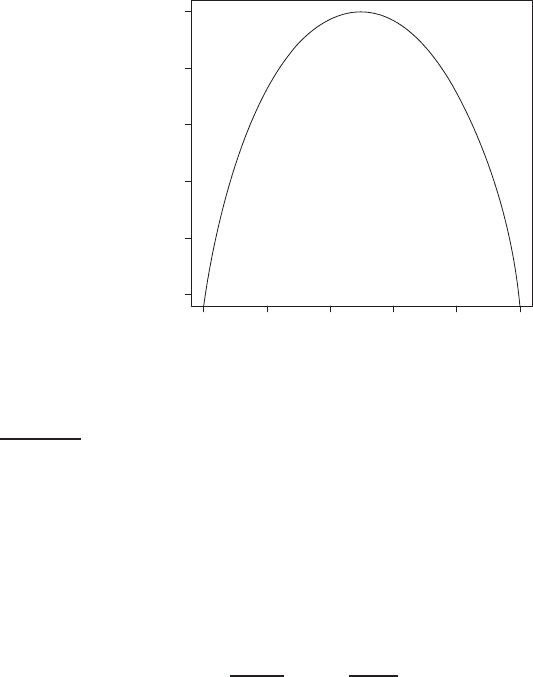
P(x) = 1.0). Entropy is a measure of uncertainty as
shown in Figure
5.9 for a probability distribution P over two possible out-
comes, namely, X = {x
1
, x
2
}. Entropy is maximized (H(P) = 1) for P(x
1
) =
P(x
2
) = 0.5 when uncertainty about which x
i
will appear next is largest; and
2. We assume here that G has no leading 0s. If there are any, they are removed before deleting
the leading 1.
3. Readers who want to review basic concepts of probability theory may want to consult Rice
(2006) or Ross (2006). Note that we are interested in probability distributions over integers (gaps,
frequencies, etc.), but that the coding properties of a probability distribution are independent of
whether the outcomes are integers or something else.
Online edition (c)2009 Cambridge UP
100 5 Index compression
0.0 0.2 0.4 0.6 0.8 1.0
0.0 0.2 0.4 0.6 0.8 1.0
P(x
1
)
H(P)
◮
Figure 5.9 Entropy H(P) as a function of P(x
1
) for a sample space with two
outcomes x
1
and x
2
.
minimized (H(P) = 0) for P(x
1
) = 1, P(x
2
) = 0 and for P(x
1
) = 0, P(x
2
) = 1
when there is absolute certainty.
It can be shown that the lower bound for the expected length E(L) of a
code L is H(P) if certain conditions hold (see the references). It can further
be shown that for 1 < H(P) < ∞, γ encoding is within a factor of 3 of this
optimal encoding, approaching 2 for large H(P):
E(L
γ
)
H(P)
≤ 2 +
1
H(P)
≤ 3.
What is remarkable about this result is that it holds for any probability distri-
bution P. So without knowing anything about the properties of the distribu-
tion of gaps, we can apply γ codes and be certain that they are within a factor
of ≈ 2 of the optimal code for distributions of large entropy. A code like γ
code with the property of being within a factor of optimal for an arbitrary
distribution P is called universal.UNIVERSAL CODE
In addition to universality, γ codes have two other properties that are use-
ful for index compression. First, they are prefix free, namely, no γ code is thePREFIX FREE
prefix of another. This means that there is always a unique decoding of a
sequence of γ codes – and we do not need delimiters between them, which
would decrease the efficiency of the code. The second property is that γ
codes are parameter free. For many other efficient codes, we have to fit thePARAMETER FREE
parameters of a model (e.g., the binomial distribution) to the distribution

Online edition (c)2009 Cambridge UP
5.3 Postings file compression 101
of gaps in the index. This complicates the implementation of compression
and decompression. For instance, the parameters need to be stored and re-
trieved. And in dynamic indexing, the distribution of gaps can change, so
that the original parameters are no longer appropriate. These problems are
avoided with a parameter-free code.
How much compression of the inverted index do γ codes achieve? To
answer this question we use Zipf’s law, the term distribution model intro-
duced in Section
5.1.2. According to Zipf’s law, the collection frequency cf
i
is proportional to the inverse of the rank i, that is, there is a constant c
′
such
that:
cf
i
=
c
′
i
.
(5.3)
We can choose a different constant c such that the fractions c/i are relative
frequencies and sum to 1 (that is, c/i = cf
i
/T):
1 =
M
∑
i=1
c
i
= c
M
∑
i=1
1
i
= c H
M
(5.4)
c =
1
H
M
(5.5)
where M is the number of distinct terms and H
M
is the Mth harmonic num-
ber.
4
Reuters-RCV1 has M = 400,000 distinct terms and H
M
≈ ln M, so we
have
c =
1
H
M
≈
1
ln M
=
1
ln 400,000
≈
1
13
.
Thus the ith term has a relative frequency of roughly 1/(13i), and the ex-
pected average number of occurrences of term i in a document of length L
is:
L
c
i
≈
200 ×
1
13
i
≈
15
i
where we interpret the relative frequency as a term occurrence probability.
Recall that 200 is the average number of tokens per document in Reuters-
RCV1 (Table
4.2).
Now we have derived term statistics that characterize the distribution of
terms in the collection and, by extension, the distribution of gaps in the post-
ings lists. From these statistics, we can calculate the space requirements for
an inverted index compressed with γ encoding. We first stratify the vocab-
ulary into blocks of size Lc = 15. On average, term i occurs 15/i times per
4. Note that, unfortunately, the conventional symbol for both entropy and harmonic number is
H. Context should make clear which is meant in this chapter.
Online edition (c)2009 Cambridge UP
102 5 Index compression
N documents
Lc most
frequent N gaps of 1 each
terms
Lc next most
frequent N/2 gaps of 2 each
terms
Lc next most
frequent N/3 gaps of 3 each
terms
.. . .. .
◮
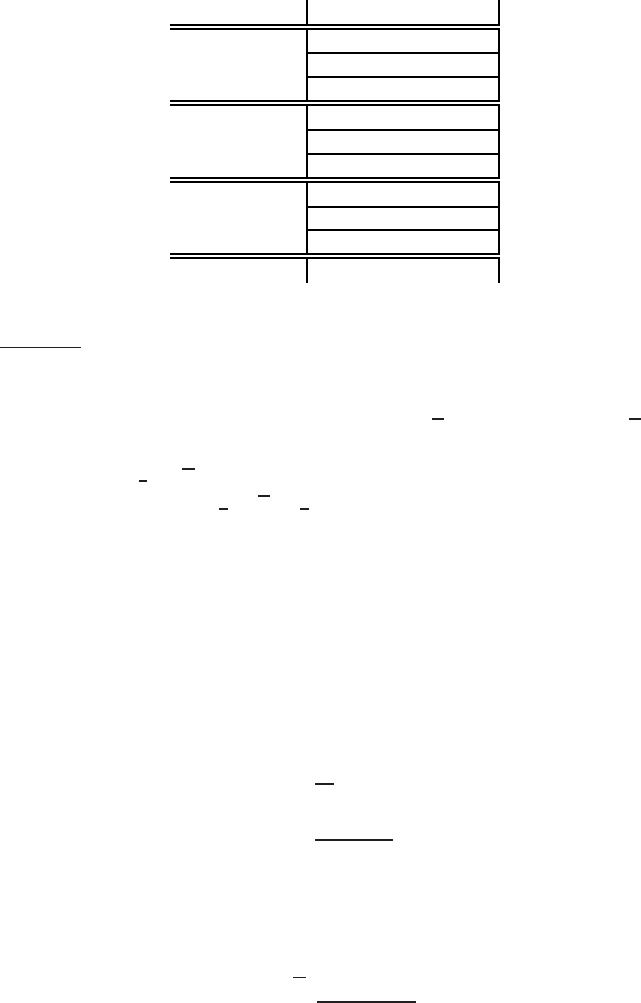
Figure 5.10 Stratification of terms for estimating the size of a γ encoded inverted
index.
document. So the average number of occurrences f per document is 1 ≤ f for
terms in the first block, corresponding to a total number of N gaps per term.
The average is
1
2
≤
f < 1 for terms in the second block, corresponding to
N/2 gaps per term, and
1
3
≤
f <
1
2
for terms in the third block, correspond-
ing to N/3 gaps per term, and so on. (We take the lower bound because it
simplifies subsequent calculations. As we will see, the final estimate is too
pessimistic, even with this assumption.) We will make the somewhat unre-
alistic assumption that all gaps for a given term have the same size as shown
in Figure
5.10. Assuming such a uniform distribution of gaps, we then have
gaps of size 1 in block 1, gaps of size 2 in block 2, and so on.
Encoding the N/j gaps of size j with γ codes, the number of bits needed
for the postings list of a term in the jth block (corresponding to one row in
the figure) is:
bits-per-row =
N
j
×(2 × ⌊log
2
j⌋ + 1)
≈
2N log
2
j
j
.
To encode the entire block, we need (Lc) ·(2N log
2
j)/j bits. There are M/(Lc)
blocks, so the postings file as a whole will take up:
M
Lc
∑
j=1
2NLc log
2
j
j
.
(5.6)

Online edition (c)2009 Cambridge UP
5.3 Postings file compression 103
◮
Table 5.6 Index and dictionary compression for Reuters-RCV1. The compression
ratio depends on the proportion of actual text in the collection. Reuters-RCV1 con-
tains a large amount of XML markup. Using the two best compression schemes, γ
encoding and blocking with front coding, the ratio compressed index to collection
size is therefore especially small for Reuters-RCV1: (101 + 5.9)/3600 ≈ 0.03.
data structure size in MB
dictionary, fixed-width 11.2
dictionary, term pointers into string 7.6
∼, with blocking, k = 4 7.1
∼, with blocking & front coding 5.9
collection (text, xml markup etc) 3600.0
collection (text) 960.0
term incidence matrix 40,000.0
postings, uncompressed (32-bit words) 400.0
postings, uncompressed (20 bits) 250.0
postings, variable byte encoded 116.0
postings, γ encoded 101.0
For Reuters-RCV1,
M
Lc
≈ 400,000/15 ≈ 27,000 and
27,000
∑
j=1
2 ×10
6
×15 log
2
j
j
≈ 224 MB.
(5.7)
So the postings file of the compressed inverted index for our 960 MB collec-
tion has a size of 224 MB, one fourth the size of the original collection.
When we run γ compression on Reuters-RCV1, the actual size of the com-
pressed index is even lower: 101 MB, a bit more than one tenth of the size of
the collection. The reason for the discrepancy between predicted and actual
value is that (i) Zipf’s law is not a very good approximation of the actual dis-
tribution of term frequencies for Reuters-RCV1 and (ii) gaps are not uniform.
The Zipf model predicts an index size of 251 MB for the unrounded numbers
from Table
4.2. If term frequencies are generated from the Zipf model and
a compressed index is created for these artificial terms, then the compressed
size is 254 MB. So to the extent that the assumptions about the distribution
of term frequencies are accurate, the predictions of the model are correct.
Table
5.6 summarizes the compression techniques covered in this chapter.
The term incidence matrix (Figure 1.1, page 4) for Reuters-RCV1 has size
400,000 ×800,000 = 40 ×8 ×10
9
bits or 40 GB.
γ codes achieve great compression ratios – about 15% better than vari-
able byte codes for Reuters-RCV1. But they are expensive to decode. This is
because many bit-level operations – shifts and masks – are necessary to de-
code a sequence of γ codes as the boundaries between codes will usually be
Online edition (c)2009 Cambridge UP
104 5 Index compression
somewhere in the middle of a machine word. As a result, query processing is
more expensive for γ codes than for variable byte codes. Whether we choose
variable byte or γ encoding depends on the characteristics of an application,
for example, on the relative weights we give to conserving disk space versus
maximizing query response time.
The compression ratio for the index in Table
5.6 is about 25%: 400 MB (un-
compressed, each posting stored as a 32-bit word) versus 101 MB (γ) and 116
MB (VB). This shows that both γ and VB codes meet the objectives we stated
in the beginning of the chapter. Index compression substantially improves
time and space efficiency of indexes by reducing the amount of disk space
needed, increasing the amount of information that can be kept in the cache,
and speeding up data transfers from disk to memory.
?
Exercise 5.4
[⋆]
Compute variable byte codes for the numbers in Tables
5.3 and 5.5.
Exercise 5.5 [⋆]
Compute variable byte and γ codes for the postings list h777, 17743, 294068, 31251336i.
Use gaps instead of docIDs where possible. Write binary codes in 8-bit blocks.
Exercise 5.6
Consider the postings list h4, 10, 11, 12, 15, 62, 63, 265, 268, 270, 400i with a correspond-
ing list of gaps h4, 6, 1, 1, 3, 47, 1, 202, 3, 2, 130i. Assume that the length of the postings
list is stored separately, so the system knows when a postings list is complete. Us-
ing variable byte encoding: (i) What is the largest gap you can encode in 1 byte? (ii)
What is the largest gap you can encode in 2 bytes? (iii) How many bytes will the
above postings list require under this encoding? (Count only space for encoding the
sequence of numbers.)
Exercise 5.7
A little trick is to notice that a gap cannot be of length 0 and that the stuff left to encode
after shifting cannot be 0. Based on these observations: (i) Suggest a modification to
variable byte encoding that allows you to encode slightly larger gaps in the same
amount of space. (ii) What is the largest gap you can encode in 1 byte? (iii) What
is the largest gap you can encode in 2 bytes? (iv) How many bytes will the postings
list in Exercise
5.6 require under this encoding? (Count only space for encoding the
sequence of numbers.)
Exercise 5.8 [⋆]
From the following sequence of γ-coded gaps, reconstruct first the gap sequence and
then the postings sequence: 1110001110101011111101101111011.
Exercise 5.9
γ codes are relatively inefficient for large numbers (e.g., 1025 in Table 5.5) as they
encode the length of the offset in inefficient unary code. δ codes differ from γ codesδ CODES
in that they encode the first part of the code (length) in γ code instead of unary code.
The encoding of offset is the same. For example, the δ code of 7 is 10,0,11 (again, we
add commas for readability). 10,0 is the γ code for length (2 in this case) and the
encoding of offset (11) is unchanged. (i) Compute the δ codes for the other numbers

Online edition (c)2009 Cambridge UP
5.4 References and further reading 105
◮
Table 5.7 Two gap sequences to be merged in blocked sort-based indexing
γ encoded gap sequence of run 1 1110110111111001011111111110100011111001
γ encoded gap sequence of run 2 11111010000111111000100011111110010000011111010101
in Table 5.5. For what range of numbers is the δ code shorter than the γ code? (ii) γ
code beats variable byte code in Table
5.6 because the index contains stop words and
thus many small gaps. Show that variable byte code is more compact if larger gaps
dominate. (iii) Compare the compression ratios of δ code and variable byte code for
a distribution of gaps dominated by large gaps.
Exercise 5.10
Go through the above calculation of index size and explicitly state all the approxima-
tions that were made to arrive at Equation (
5.6).
Exercise 5.11
For a collection of your choosing, determine the number of documents and terms and
the average length of a document. (i) How large is the inverted index predicted to be
by Equation (
5.6)? (ii) Implement an indexer that creates a γ-compressed inverted
index for the collection. How large is the actual index? (iii) Implement an indexer
that uses variable byte encoding. How large is the variable byte encoded index?
Exercise 5.12
To be able to hold as many postings as possible in main memory, it is a good idea to
compress intermediate index files during index construction. (i) This makes merging
runs in blocked sort-based indexing more complicated. As an example, work out the
γ-encoded merged sequence of the gaps in Table
5.7. (ii) Index construction is more
space efficient when using compression. Would you also expect it to be faster?
Exercise 5.13
(i) Show that the size of the vocabulary is finite according to Zipf’s law and infinite
according to Heaps’ law. (ii) Can we derive Heaps’ law from Zipf’s law?
5.4 Refe rences and further reading
Heaps’ law was discovered by Heaps (1978). See also Baeza-Yates and Ribeiro-
Neto (1999). A detailed study of vocabulary growth in large collections is
(Williams and Zobel 2005). Zipf’s law is due to Zipf (1949). Witten and Bell
(1990) investigate the quality of the fit obtained by the law. Other term distri-
bution models, including K mixture and two-poisson model, are discussed
by Manning and Schütze (1999, Chapter 15). Carmel et al. (2001), Büttcher
and Clarke (2006), Blanco and Barreiro (2007), and Ntoulas and Cho (2007)
show that lossy compression can achieve good compression with no or no
significant decrease in retrieval effectiveness.
Dictionary compression is covered in detail by Witten et al. (1999, Chap-
ter 4), which is recommended as additional reading.