
Manning Ch. D., Raghavan P., Sch?tze H. Introduction to Information Retrieval - Введение в информационный поиск
Подождите немного. Документ загружается.


Online edition (c)2009 Cambridge UP
116 6 Scoring, term weighting and the vector space model
is
[1 − (1 − g)]
2
n
01r
+ [0 −(1 − g)]
2
n
01n
.
By writing in similar fashion the error contributions from training examples
of the other three combinations of values for s
T
(d
j
, q
j
) and s
B
(d
j
, q
j
) (and
extending the notation in the obvious manner), the total error corresponding
to Equation (6.4) is
(n
01r
+ n
10n
)g
2
+ (n
10r
+ n
01n
)(1 − g)
2
+ n
00r
+ n
11n
.
(6.5)
By differentiating Equation (6.5) with respect to g and setting the result to
zero, it follows that the optimal value of g is
n
10r
+ n
01n
n
10r
+ n
10n
+ n
01r
+ n
01n
.
(6.6)
?
Exercise 6.1
When using weighted zone scoring, is it necessary for all zones to use the same Boo-
lean match function?
Exercise 6.2
In Example 6.1 above with weights g
1
= 0.2, g
2
= 0.31 and g
3
= 0.49, what are all the
distinct score values a document may get?
Exercise 6.3
Rewrite the algorithm in Figure 6.4 to the case of more than two query terms.
Exercise 6.4
Write pseudocode for the function WeightedZone for the case of two postings lists in
Figure
6.4.
Exercise 6.5
Apply Equation 6.6 to the sample training set in Figure 6.5 to estimate the best value
of g for this sample.
Exercise 6.6
For the value of g estimated in Exercise 6.5, compute the weighted zone score for each
(query, document) example. How do these scores relate to the relevance judgments
in Figure
6.5 (quantized to 0/1)?
Exercise 6.7
Why does the expression for g in (6.6) not involve training examples in which s
T
(d
t
, q
t
)
and s
B
(d
t
, q
t
) have the same value?
Online edition (c)2009 Cambridge UP
6.2 Term frequency and weighting 117
6.2 Term frequency and weighting
Thus far, scoring has hinged on whether or not a query term is present in
a zone within a document. We take the next logical step: a document or
zone that mentions a query term more often has more to do with that query
and therefore should receive a higher score. To motivate this, we recall the
notion of a free text query introduced in Section 1.4: a query in which the
terms of the query are typed freeform into the search interface, without any
connecting search operators (such as Boolean operators). This query style,
which is extremely popular on the web, views the query as simply a set of
words. A plausible scoring mechanism then is to compute a score that is the
sum, over the query terms, of the match scores between each query term and
the document.
Towards this end, we assign to each term in a document a weight for that
term, that depends on the number of occurrences of the term in the doc-
ument. We would like to compute a score between a query term t and a
document d, based on the weight of t in d. The simplest approach is to assign
the weight to be equal to the number of occurrences of term t in document d.
This weighting scheme is referred to as term frequency and is denoted tf
t,d
,TERM FREQUENCY
with the subscripts denoting the term and the document in order.
For a document d, the set of weights determined by the tf weights above
(or indeed any weighting function that maps the number of occurrences of t
in d to a positive real value) may be viewed as a quantitative digest of that
document. In this view of a document, known in the literature as the bagBAG OF WORDS
of words model, the exact ordering of the terms in a document is ignored but
the number of occurrences of each term is material (in contrast to Boolean
retrieval). We only retain information on the number of occurrences of each
term. Thus, the document “Mary is quicker than John” is, in this view, iden-
tical to the document “John is quicker than Mary”. Nevertheless, it seems
intuitive that two documents with similar bag of words representations are
similar in content. We will develop this intuition further in Section
6.3.
Before doing so we first study the question: are all words in a document
equally important? Clearly not; in Section
2.2.2 (page 27) we looked at the
idea of stop words – words that we decide not to index at all, and therefore do
not contribute in any way to retrieval and scoring.
6.2.1 Inverse document frequency
Raw term frequency as above suffers from a critical problem: all terms are
considered equally important when it comes to assessing relevancy on a
query. In fact certain terms have little or no discriminating power in de-
termining relevance. For instance, a collection of documents on the auto
industry is likely to have the term auto in almost every document. To this
Online edition (c)2009 Cambridge UP
118 6 Scoring, term weighting and the vector space model
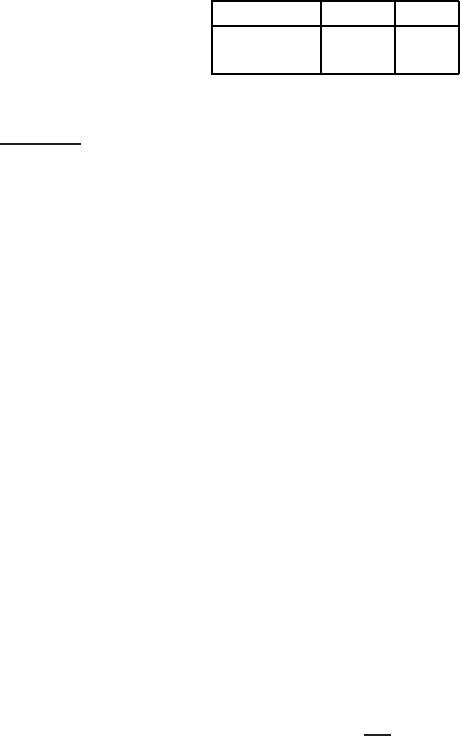
Word cf df
try 10422 8760
insurance 10440 3997
◮
Figure 6.7 Collection frequency (cf) and document frequency (df) behave differ-
ently, as in this example from the Reuters collection.
end, we introduce a mechanism for attenuating the effect of terms that occur
too often in the collection to be meaningful for relevance determination. An
immediate idea is to scale down the term weights of terms with high collec-
tion frequency, defined to be the total number of occurrences of a term in the
collection. The idea would be to reduce the tf weight of a term by a factor
that grows with its collection frequency.
Instead, it is more commonplace to use for this purpose the document fre-DOCUMENT
FREQUENCY
quency df
t
, defined to be the number of documents in the collection that con-
tain a term t. This is because in trying to discriminate between documents
for the purpose of scoring it is better to use a document-level statistic (such
as the number of documents containing a term) than to use a collection-wide
statistic for the term. The reason to prefer df to cf is illustrated in Figure 6.7,
where a simple example shows that collection frequency (cf) and document
frequency (df) can behave rather differently. In particular, the cf values for
both try and insurance are roughly equal, but their df values differ signifi-
cantly. Intuitively, we want the few documents that contain insurance to get
a higher boost for a query on insurance than the many documents containing
try get from a query on try.
How is the document frequency df of a term used to scale its weight? De-
noting as usual the total number of documents in a collection by N, we define
the inverse document frequency (idf) of a term t as follows:INVERSE DOCUMENT
FREQUENCY
idf
t
= log
N
df
t
.
(6.7)
Thus the idf of a rare term is high, whereas the idf of a frequent term is
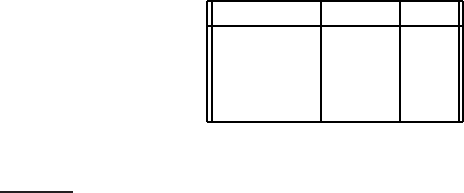
likely to be low. Figure
6.8 gives an example of idf’s in the Reuters collection
of 806,791 documents; in this example logarithms are to the base 10. In fact,
as we will see in Exercise 6.12, the precise base of the logarithm is not material
to ranking. We will give on page
227 a justification of the particular form in
Equation (6.7).
6.2.2 Tf-idf weighting
We now combine the definitions of term frequency and inverse document
frequency, to produce a composite weight for each term in each document.
Online edition (c)2009 Cambridge UP
6.2 Term frequency and weighting 119
term df
t
idf
t
car 18,165 1.65
auto 6723 2.08
insurance 19,241 1.62
best 25,235 1.5
◮
Figure 6.8 Example of idf values. Here we give the idf’s of terms with various
frequencies in the Reuters collection of 806,791 documents.
The tf-idf weighting scheme assigns to term t a weight in document d givenTF-IDF
by
tf-idf
t,d
= tf
t,d
×idf
t
.
(6.8)
In other words, tf-idf
t,d
assigns to term t a weight in document d that is
1. highest when t occurs many times within a small number of documents
(thus lending high discriminating power to those documents);
2. lower when the term occurs fewer times in a document, or occurs in many
documents (thus offering a less pronounced relevance signal);
3. lowest when the term occurs in virtually all documents.
At this point, we may view each document as a vector with one componentDOCUMENT VECTOR
corresponding to each term in the dictionary, together with a weight for each
component that is given by (
6.8). For dictionary terms that do not occur in
a document, this weight is zero. This vector form will prove to be crucial to
scoring and ranking; we will develop these ideas in Section
6.3. As a first
step, we introduce the overlap score measure: the score of a document d is the
sum, over all query terms, of the number of times each of the query terms
occurs in d. We can refine this idea so that we add up not the number of
occurrences of each query term t in d, but instead the tf-idf weight of each
term in d.
Score(q, d) =
∑
t∈q
tf-idf
t,d
.
(6.9)
In Section 6.3 we will develop a more rigorous form of Equation (6.9).
?
Exercise 6.8
Why is the idf of a term always finite?
Exercise 6.9
What is the idf of a term that occurs in every document? Compare this with the use
of stop word lists.
Online edition (c)2009 Cambridge UP
120 6 Scoring, term weighting and the vector space model
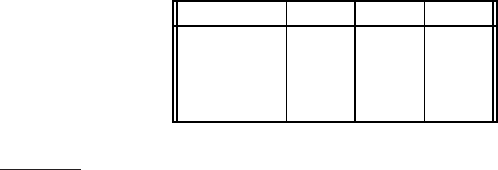
Doc1 Doc2 Doc3
car 27 4 24
auto 3 33 0
insurance 0 33 29
best 14 0 17
◮
Figure 6.9 Table of tf values for Exercise 6.10.
Exercise 6.10
Consider the table of term frequencies for 3 documents denoted Doc1, Doc2, Doc3 in
Figure
6.9. Compute the tf-idf weights for the terms car, auto, insurance, best, for each
document, using the idf values from Figure
6.8.
Exercise 6.11
Can the tf-idf weight of a term in a document exceed 1?
Exercise 6.12
How does the base of the logarithm in (6.7) affect the score calculation in (6.9)? How
does the base of the logarithm affect the relative scores of two documents on a given
query?
Exercise 6.13
If the logarithm in (6.7) is computed base 2, suggest a simple approximation to the idf
of a term.
6.3 The vector space model for scoring
In Section
6.2 (page 117) we developed the notion of a document vector that
captures the relative importance of the terms in a document. The representa-
tion of a set of documents as vectors in a common vector space is known as
the vector space m o del and is fundamental to a host of information retrieval op-VECTOR SPACE MODEL
erations ranging from scoring documents on a query, document classification
and document clustering. We first develop the basic ideas underlying vector
space scoring; a pivotal step in this development is the view (Section
6.3.2)
of queries as vectors in the same vector space as the document collection.
6.3.1 Dot products
We denote by
~
V(d) the vector derived from document d, with one com-
ponent in the vector for each dictionary term. Unless otherwise specified,
the reader may assume that the components are computed using the tf-idf
weighting scheme, although the particular weighting scheme is immaterial
to the discussion that follows. The set of documents in a collection then may
be viewed as a set of vectors in a vector space, in which there is one axis for
Online edition (c)2009 Cambridge UP
6.3 The vector space model for scoring 121
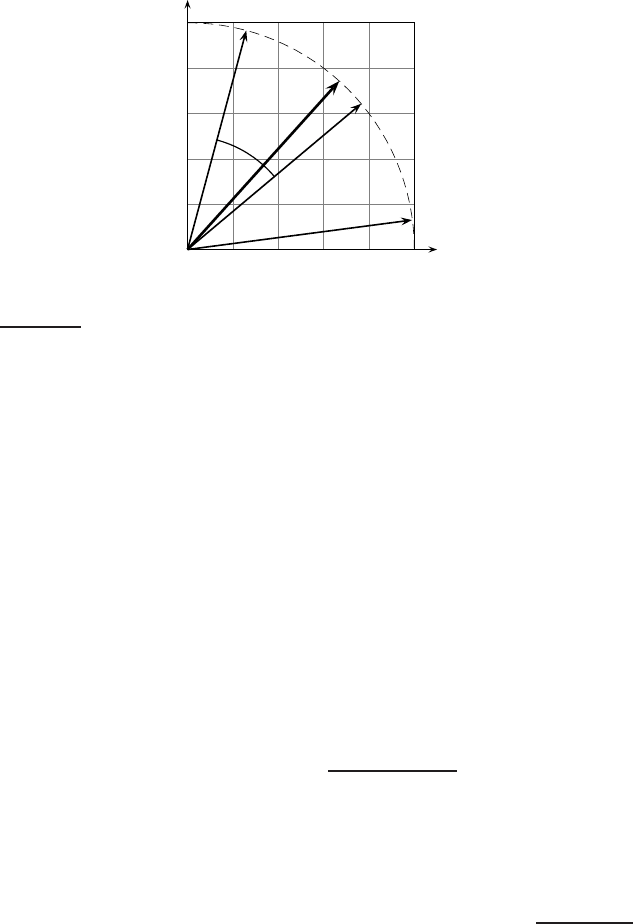
0 1
0
1
jealous
gossip
~v(q)
~v(d
1
)
~v(d
2
)
~v(d
3
)
θ
◮
Figure 6.10 Cosine similarity illustrated. sim(d
1
, d
2
) = cos θ.
each term. This representation loses the relative ordering of the terms in each
document; recall our example from Section 6.2 (page 117), where we pointed
out that the documents Mary is quicker than John and John is quicker than Mary
are identical in such a bag of words representation.
How do we quantify the similarity between two documents in this vector
space? A first attempt might consider the magnitude of the vector difference
between two document vectors. This measure suffers from a drawback: two
documents with very similar content can have a significant vector difference
simply because one is much longer than the other. Thus the relative distribu-
tions of terms may be identical in the two documents, but the absolute term
frequencies of one may be far larger.
To compensate for the effect of document length, the standard way of
quantifying the similarity between two documents d
1
and d
2
is to compute
the cosine similarity of their vector representations
~
V(d
1
) and
~
V(d
2
)COSINE SIMILARITY
sim(d
1
, d
2
) =
~
V(d
1
) ·
~
V(d
2
)
|
~
V(d
1
)||
~
V(d
2
)|
,(6.10)
where the numerator represents the dot product (also known as the inner prod-DOT PRODUCT
uct) of the vectors
~
V(d
1
) and
~
V(d
2
), while the denominator is the product of
their Euclidean lengths. The dot product ~x ·~y of two vectors is defined asEUCLIDEAN LENGTH
∑
M
i=1
x
i
y
i
. Let
~
V(d) denote the document vector for d, with M components
~
V
1
(d) . . .
~
V
M
(d). The Euclidean length of d is defined to be
q
∑
M
i=1
~
V
2
i
(d).
The effect of the denominator of Equation (
6.10) is thus to length-normalizeLENGTH-
NORMALIZATION
the vectors
~
V(d
1
) and
~
V(d
2
) to unit vectors ~v(d
1
) =
~
V(d
1
)/|
~
V(d
1
)| and
Online edition (c)2009 Cambridge UP
122 6 Scoring, term weighting and the vector space model
Doc1 Doc2 Doc3
car 0.88 0.09 0.58
auto 0.10 0.71 0
insurance 0 0.71 0.70
best 0.46 0 0.41
◮
Figure 6.11 Euclidean normalized tf values for documents in Figure 6.9.
term SaS PaP WH
affection 115 58 20
jealous 10 7 11
gossip 2 0 6
◮
Figure 6.12 Term frequencies in three novels. The novels are Austen’s Sense and
Sensibili t y, Pride and Prejudice and Brontë’s Wuthering Heights.
~v(d
2
) =
~
V(d
2
)/|
~
V(d
2
)|. We can then rewrite (6.10) as
sim(d
1
, d
2
) = ~v(d
1
) ·~v(d
2
).
(6.11)
✎
Example 6.2 : Consider the documents in Figure
6.9. We now apply Euclidean
normalization to the tf values from the table, for each of the three documents in the
table. The quantity
q
∑
M
i=1
~
V
2
i
(d) has the values 30.56, 46.84 and 41.30 respectively
for Doc1, Doc2 and Doc3. The resulting Euclidean normalized tf values for these
documents are shown in Figure
6.11.
Thus, (
6.11) can be viewed as the dot product of the normalized versions of
the two document vectors. This measure is the cosine of the angle θ between
the two vectors, shown in Figure
6.10. What use is the similarity measure
sim(d
1
, d
2
)? Given a document d (potentially one of the d
i
in the collection),
consider searching for the documents in the collection most similar to d . Such
a search is useful in a system where a user may identify a document and
seek others like it – a feature available in the results lists of search engines
as a more like this feature. We reduce the problem of finding the document(s)
most similar to d to that of finding the d
i
with the highest dot products (sim
values)~v(d) ·~v(d
i
). We could do this by computing the dot products between
~v(d) and each of ~v(d
1
), . . . ,~v(d
N
), then picking off the highest resulting sim
values.
✎
Example 6.3: Figure
6.12 shows the number of occurrences of three terms (affection,
jealous and gossip) in each of the following three novels: Jane Austen’s Sense and Sensi-
bility (SaS) and Pri de and Prejudice (PaP) and Emily Brontë’s Wuthering Heights (WH).
Online edition (c)2009 Cambridge UP
6.3 The vector space model for scoring 123
term SaS PaP WH
affection 0.996 0.993 0.847
jealous 0.087 0.120 0.466
gossip 0.017 0 0.254
◮
Figure 6.13 Term vectors for the three novels of Figure 6.12. These are based on
raw term frequency only and are normalized as if these were the only terms in the
collection. (Since affection and jealous occur in all three documents, their tf-idf weight
would be 0 in most formulations.)
Of course, there are many other terms occurring in each of these novels. In this ex-
ample we represent each of these novels as a unit vector in three dimensions, corre-
sponding to these three terms (only); we use raw term frequencies here, with no idf
multiplier. The resulting weights are as shown in Figure
6.13.
Now consider the cosine similarities between pairs of the resulting three-dimensional
vectors. A simple computation shows that sim(~v(SAS), ~v(PAP)) is 0.999, whereas
sim(~v(SAS), ~v(WH)) is 0.888; thus, the two books authored by Austen (SaS and PaP)
are considerably closer to each other than to Brontë’s Wuthering Heights. In fact, the
similarity between the first two is almost perfect (when restricted to the three terms
we consider). Here we have considered tf weights, but we could of course use other
term weight functions.
Viewing a collection of N documents as a collection of vectors leads to a
natural view of a collection as a term-document matrix: this is an M ×N matrixTERM-DOCUMENT
MATRIX
whose rows represent the M terms (dimensions) of the N columns, each of
which corresponds to a document. As always, the terms being indexed could
be stemmed before indexing; for instance, jealous and jealousy would under
stemming be considered as a single dimension. This matrix view will prove
to be useful in Chapter
18.
6.3.2 Queries as vectors
There is a far more compelling reason to represent documents as vectors:
we can also view a query as a vector. Consider the query q = jealous gossip.
This query turns into the unit vector ~v(q) = (0, 0.707, 0.707) on the three
coordinates of Figures
6.12 and 6.13. The key idea now: to assign to each
document d a score equal to the dot product
~v(q) ·~v(d).
In the example of Figure 6.13, Wuthering Heights is the top-scoring docu-
ment for this query with a score of 0.509, with Pride and P rejudice a distant
second with a score of 0.085, and Sense and Sensibility last with a score of
0.074. This simple example is somewhat misleading: the number of dimen-
Online edition (c)2009 Cambridge UP
124 6 Scoring, term weighting and the vector space model
sions in practice will be far larger than three: it will equal the vocabulary size
M.
To summarize, by viewing a query as a “bag of words”, we are able to
treat it as a very short document. As a consequence, we can use the cosine
similarity between the query vector and a document vector as a measure of
the score of the document for that query. The resulting scores can then be
used to select the top-scoring documents for a query. Thus we have
score(q, d) =
~
V(q) ·
~
V(d)
|
~
V(q)||
~
V(d)|
.(6.12)
A document may have a high cosine score for a query even if it does not
contain all query terms. Note that the preceding discussion does not hinge
on any specific weighting of terms in the document vector, although for the
present we may think of them as either tf or tf-idf weights. In fact, a number
of weighting schemes are possible for query as well as document vectors, as
illustrated in Example
6.4 and developed further in Section 6.4.
Computing the cosine similarities between the query vector and each doc-
ument vector in the collection, sorting the resulting scores and selecting the
top K documents can be expensive — a single similarity computation can
entail a dot product in tens of thousands of dimensions, demanding tens of
thousands of arithmetic operations. In Section
7.1 we study how to use an in-
verted index for this purpose, followed by a series of heuristics for improving
on this.
✎
Example 6.4: We now consider the query best car insurance on a fictitious collection
with N = 1,000,000 documents where the document frequencies of auto, best, car and
insurance are respectively 5000, 50000, 10000 and 1000.
term
query document product
tf df idf w
t,q
tf wf w
t,d
auto 0 5000 2.3 0 1 1 0.41 0
best
1 50000 1.3 1.3 0 0 0 0
car
1 10000 2.0 2.0 1 1 0.41 0.82
insurance
1 1000 3.0 3.0 2 2 0.82 2.46
In this example the weight of a term in the query is simply the idf (and zero for a
term not in the query, such as auto); this is reflected in the column header w
t,q
(the en-
try for auto is zero because the query does not contain the termauto). For documents,
we use tf weighting with no use of idf but with Euclidean normalization. The former
is shown under the column headed wf, while the latter is shown under the column
headed w
t,d
. Invoking (
6.9) now gives a net score of 0 + 0 + 0.82 + 2.46 = 3.28.
6.3.3 Computing vector scores
In a typical setting we have a collection of documents each represented by a
vector, a free text query represented by a vector, and a positive integer K. We

Online edition (c)2009 Cambridge UP
6.3 The vector space model for scoring 125
COSINESCORE(q)
1 float Scores[N] = 0
2 Initialize Leng th[N]
3 for each query term t
4 do calculate w
t,q
and fetch postings list for t
5 for each pair(d, tf
t,d
) in postings list
6 do Scores[d] += wf
t,d
×w
t,q
7 Read the array Length[d]
8 for each d
9 do Scores[d] = S cores[d]/Length[d]
10 return Top K components of Scores[]
◮
Figure 6.14 The basic algorithm for computing vector space scores.
seek the K documents of the collection with the highest vector space scores on
the given query. We now initiate the study of determining the K documents
with the highest vector space scores for a query. Typically, we seek these
K top documents in ordered by decreasing score; for instance many search
engines use K = 10 to retrieve and rank-order the first page of the ten best
results. Here we give the basic algorithm for this computation; we develop a
fuller treatment of efficient techniques and approximations in Chapter
7.
Figure 6.14 gives the basic algorithm for computing vector space scores.
The array Length holds the lengths (normalization factors) for each of the N
documents, whereas the array Scores holds the scores for each of the docu-
ments. When the scores are finally computed in Step 9, all that remains in
Step 10 is to pick off the K documents with the highest scores.
The outermost loop beginning Step 3 repeats the updating of Scores, iter-
ating over each query term t in turn. In Step 5 we calculate the weight in
the query vector for term t. Steps 6-8 update the score of each document by
adding in the contribution from term t. This process of adding in contribu-
tions one query term at a time is sometimes known as term-at-a-time scoringTERM-AT-A-TIME
or accumulation, and the N elements of the array Scores are therefore known
as accumulators. For this purpose, it would appear necessary to store, withACCUMULATOR
each postings entry, the weight wf
t,d
of term t in document d (we have thus
far used either tf or tf-idf for this weight, but leave open the possibility of
other functions to be developed in Section
6.4). In fact this is wasteful, since
storing this weight may require a floating point number. Two ideas help alle-
viate this space problem. First, if we are using inverse document frequency,
we need not precompute idf
t
; it suffices to store N/df
t
at the head of the
postings for t. Second, we store the term frequency tf
t,d
for each postings en-
try. Finally, Step 12 extracts the top K scores – this requires a priority queue