
Moser A.P., Folkman S. Buried Pipe Design
Подождите немного. Документ загружается.

compounds were tested: filled and unfilled. The filled compound con-
tained thirty parts calcium carbonate by weight and is designated as
ASTM cell class 12364B, and the unfilled compound is designated as
ASTM cell class 12454B.
Some of the pipe ring test specimens were notched prior to deflection
to produce stress and strain intensifiers which would amplify any ten-
dency for brittle fracture. The notches were placed along the length in
four places corresponding to the locations of the highest tensile
stresses—12 and 6 o’clock positions on the inside surface and the 3 and
9 o’clock positions on the outside surface. These longitudinal notches
were cut to a depth of 0.012 0.006 in. In all, there are 91 specimens
being tested in the study which started January 1977 (see Table 7.4 for
details).
Plastic Flexible Pipe Products 399
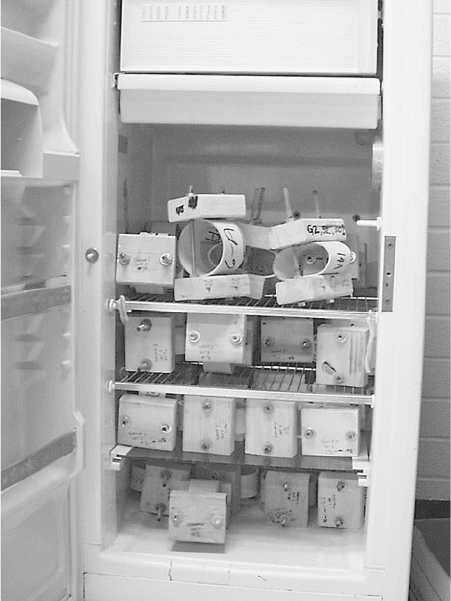
Figure 7.5 Stress relaxation specimens in the refrigerator at
40°F.
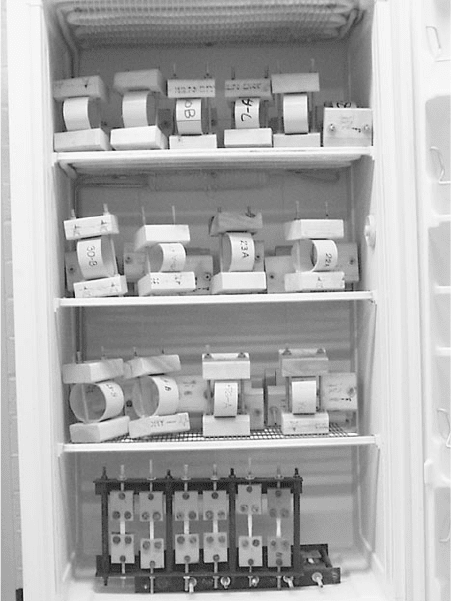
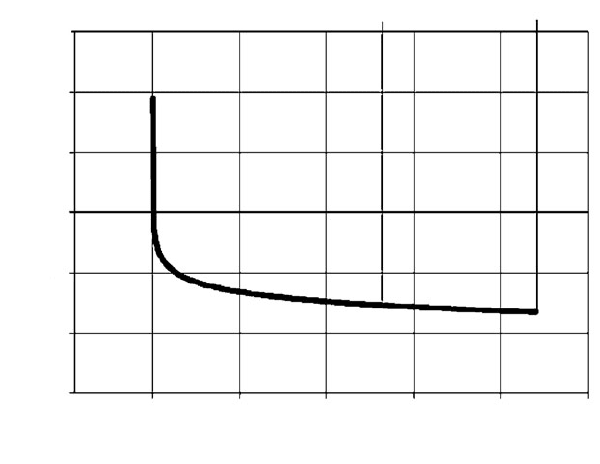
Figure 7.11 shows one of the stress relaxation curves plotted on lin-
ear axes. This figure clearly shows the time interval since 1990. As has
been reported previously, stress relaxation curves for PVC pipe com-
pounds follow an inverse exponential function. As such, the curves plot
as straight lines on log-log axes.
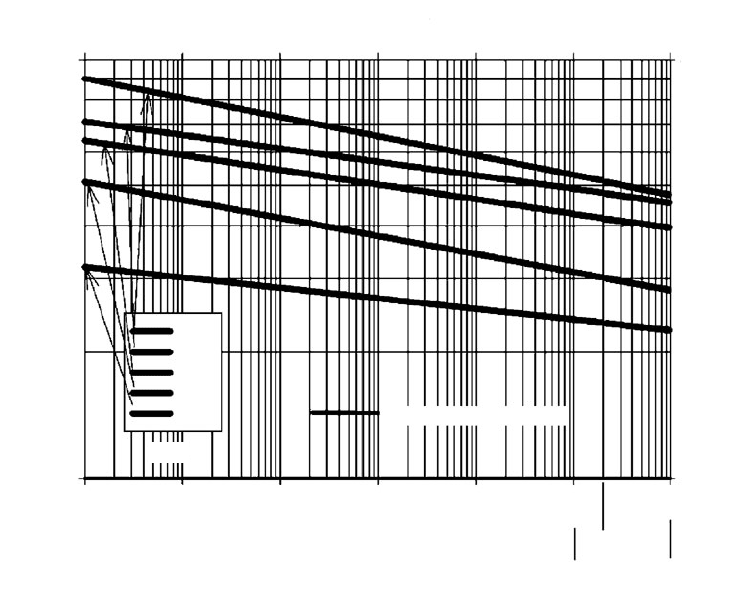
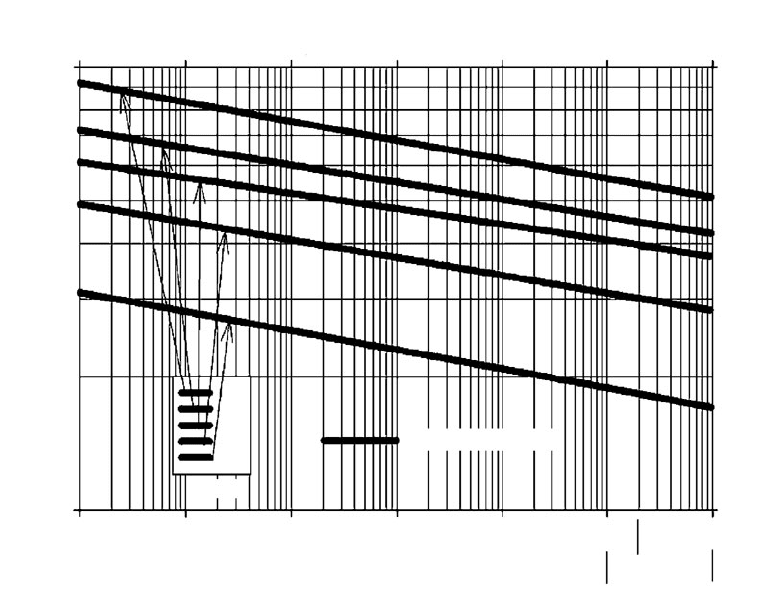
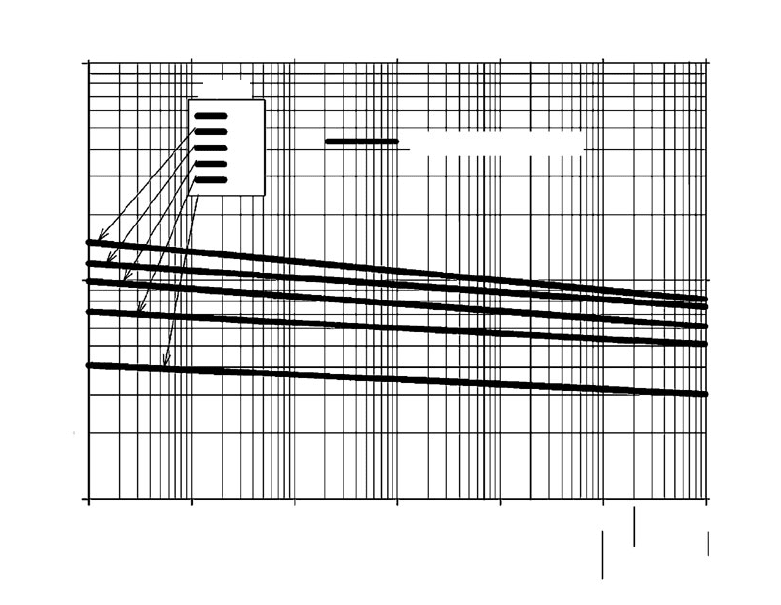
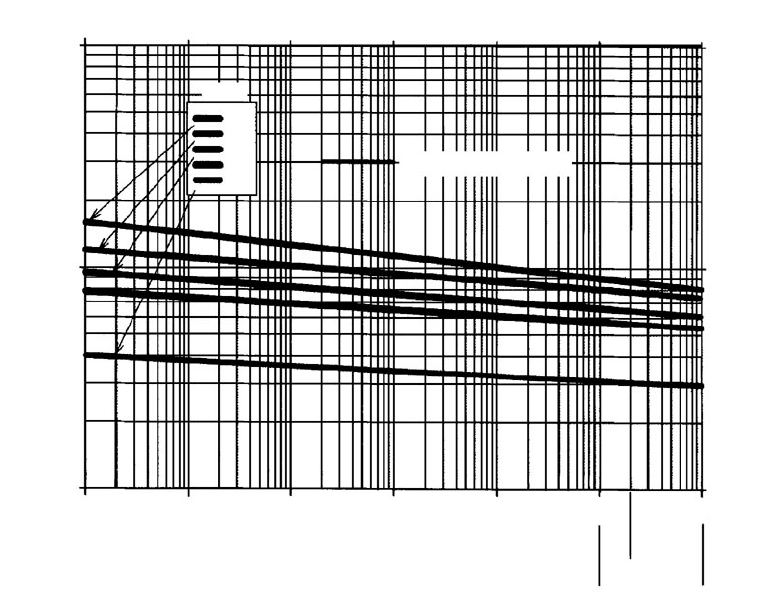
Figures 7.12 through 7.17 show stress relaxation data that plot as
straight lines on log-log axes. As of August 1999, after more than
22 years, none of the test specimens had failed. The data are similar
for pipes manufactured from both filled and unfilled PVC compounds
when tested at the same temperature. The slopes of the stress relax-
ation lines show that the relaxation rate is less for lower tempera-
tures in both the filled and unfilled PVC pipe compounds. Thus,
lower-temperature testing may be representative of longer-duration
400 Chapter Seven
Figure 7.6 Stress relaxation specimens (ring and tensile) in
the freezer at 0°F.
Plastic Flexible Pipe Products 401
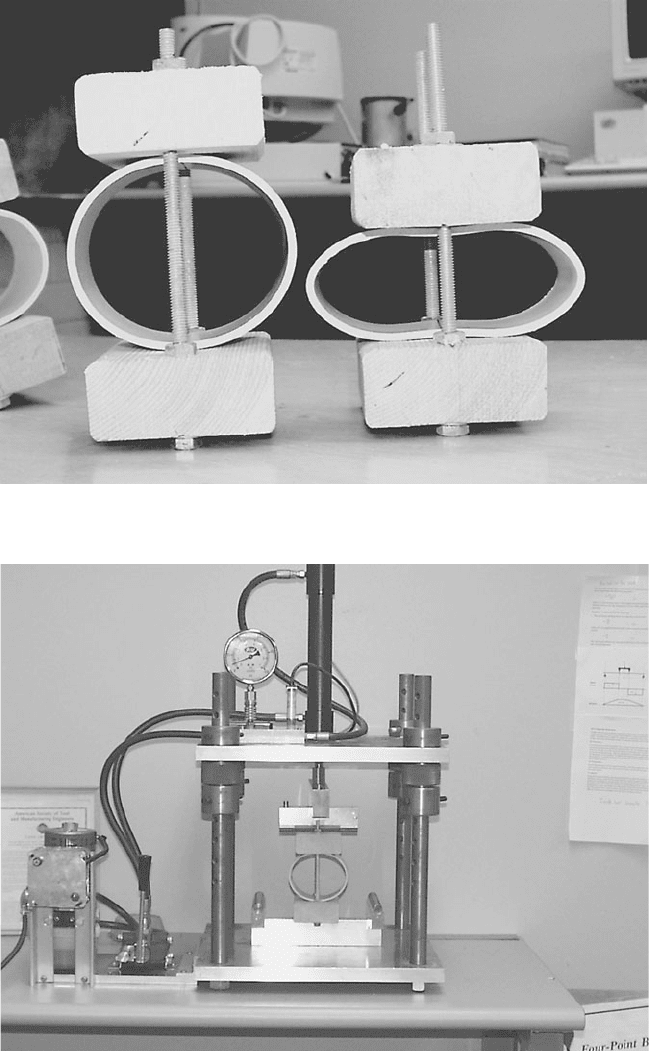
Figure 7.7 Pipe ring specimens held in constant deformation.
Figure 7.8 Pipe ring undergoing stress relaxation testing.
402 Chapter Seven
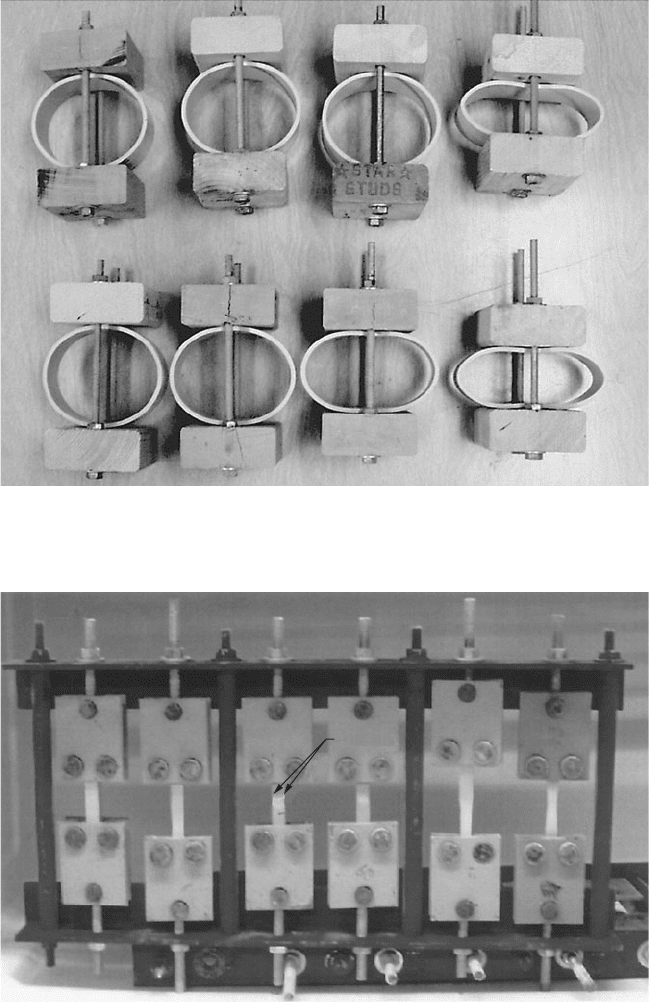
Figure 7.9 Pipe rings at various constant deflections.
Notches
Figure 7.10 Uniaxial tensile stress relaxation specimens.

constant-strain conditions at higher temperatures. Calcium carbonate
additions, up to 30 parts by hundredweight evaluated in this study, do
not cause brittle failure to occur with time. The difference in the stress
relaxation curves for filled and unfilled PVC is that more force was
required to deflect the unfilled specimens. The unfilled PVC specimens
had thicker pipe walls which gave them a pipe stiffness higher than
those of the filled PVC pipe specimens. Had the same wall thickness
been used for both the filled and unfilled specimens, the filled speci-
mens would have been stiffer due to a higher elastic modulus.
Plastic Flexible Pipe Products 403
TABLE 7.3Pipe Ring Properties Used In Stress Relaxation Tests
(Pipe rings were cut from 4-in-diameter PVC pipe)
Average
Wall flexure
Material thickness, Length, modulus, Average pipe
PVC in in lb/in
2
stiffness, lb/in
2
Filled 0.132 0.05 2.0 540,000 87
Unfilled 0.153 0.04 2.0 470,000 117
TABLE 7.4 Grouping of the 91 Pipe Specimens in the Stress Relaxation Tests
Deflections of number of
specimens, percent
Groups Sets 1 23456
Group 1: Specimens were Set 1, ambient 5 10 15 25 50
filled and unnotched Set 2, 40°F 5 10 15 25 50
Set 3, 0°F 5 10 15 25 50
Group 2: Specimens were Set 1, ambient 5 10 15 25 50
filled and unnotched Set 2, 40°F 5 10 15 25 50
Set 3, 0°F 5 10 15 25 50
Group 3: Specimens were Set 1, ambient 5 10 15 25 40
filled and notched Set 2, 40°F 5 10 15 25 35
Set 3, 0°F 5 10 15 25 35
Group 4: Specimens were Set 1, ambient 5 10 15 25 40 35
filled and notched Set 2, 40°F 5 10 15 25 40
Set 3, 0°F 5 10 15 25 40
Group 5: Specimens were Set 1, ambient 5 10 15 25 50
unfilled and unnotched Set 2, 40°F 5 10 15 25 50
Set 3, 0°F 5 10 15 25 50
Group 6: Specimens were Set 1, ambient 5 10 15 25 50
unfilled and notched Set 2, 40°F 5 10 15 25 50
Set 3, 0°F 5 10 15 25 50
In comparing the stress relaxation curves for the notched and
unnotched specimens, within the filled and unfilled groups, respec-
tively, no significant difference could be observed. The increased strain
at the base of the notches had no apparent effect on the stress relax-
ation characteristics of either filled or unfilled PVC. Therefore, it was
concluded that PVC is not notch-sensitive when it is deformed dia-
metrically in a constant-deflection test.
It is interesting to note that the relaxation that has taken place in
the 22-year period is small. The total stress relaxation associated with
the 5 percent initial deflection is small for the ambient temperature
and is negligible for the 40 and 0F temperatures. A slightly higher
relaxation rate occurs with higher initial deflections. This is evident
because the slope of the relaxation line is steeper for specimens which
have the greatest imposed deflection or initial load.
Bending strain versus ring deflection. For the convenience of the reader,
the following from Chap. 3 is repeated here: Ring deflection produces
bending in the pipe wall which in turn leads to bending strains. The
bending strains can be calculated by using the following equation. The
equation requires ring deflection y/D and the dimension ratio D/t.
The equation is based on the pipe’s deforming into an elliptical shape.
404 Chapter Seven
Years
Load (lb)
1977 19901999
180
160
140
120
100
80
60
0 5 10 15 20 25
Figure 7.11 Typical stress relaxation curve plotted on linear axes.
Load (Pounds)
Time (Years)
Load (Newtons)
Time (Hours)
Extrapolation to 114 years
90
80
70
60
50
40
30
20
10
10
0
10
1
10
2
10
3
10
4
10
5
10
6
100
22 yr
11.4 yr
114 yr
50%
25%
15%
10%
5%
0.0001 0.0011 0.011 0.114 1.14 11.4 114
444.8
400.3
355.9
311.4
222.4
133.4
89.0
44.5
266.9
177.9
DATA
Figure 7.12 Relaxation curves for filled, unnotched PVC pipe rings at specified deflections
and a temperature of 40°F.
405
Load (Pounds)
Time (Years)
Load (Newtons)
Time (Hours)
DATA
Extrapolation to 114 years
90
80
70
60
50
40
30
20
10
10
0
10
1
10
2
10
3
10
4
10
5
10
6
100
22 yr
11.4 yr
114 yr
40%
25%
15%
10%
5%
0.0001 0.0011 0.011 0.114 1.14 11.4 114
444
400
356
311
222
133
89
44
267
178
Figure 7.13 Relaxation curves for filled, notched PVC pipe rings at specified deflections and
a temperature of 40°F.
406
Load (Pounds)
Time (Years)
Load (Newtons)
Time (Hours)
Extrapolation to 114 years
90
80
200
300
400
500
600
700
800
900
70
60
50
40
30
20
10
10
0
10
1
10
2
10
3
10
4
10
5
10
6
100
1000
22 yr
11.4 yr
114 yr
50%
25%
15%
10%
5%
0.0001
0.0011
0.011
0.114
1.14 11.4
114
444
400
356
311
222
133
89
44
267
178
889
1333
1778
2222
2667
3111
3556
4000
4444
DATA
Figure 7.14 Relaxation curves for unfilled, unnotched PVC pipe rings at specified deflec-
tions and a temperature of 40°F.
407
Load (Pounds)
Time (Years)
Load (Newtons)
Time (Hours)
DATA
Extrapolation to 114 years
90
80
70
60
50
40
30
20
200
300
400
500
600
700
800
900
10
100
10
0
10
1
10
2
10
3
10
4
10
5
10
6
1000
22 yr
11.4 yr
114 yr
50%
25%
15%
10%
5%
0.0001
0.0011
0.011
0.114
1.14
11.4
114
445
400
356
311
222
133
89
44
267
178
890
1334
1779
2224
2669
3114
3559
4003
4448
Figure 7.15 Relaxation curves for unfilled, notched PVC pipe rings at specified deflections
and a temperature of 40°F.
408