
Moser A.P., Folkman S. Buried Pipe Design
Подождите немного. Документ загружается.

Plastic Flexible Pipe Products 429
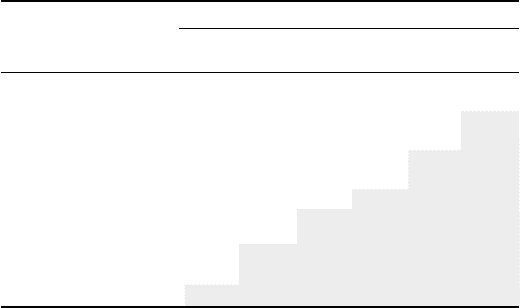
The shaded areas in Table 7.10 are those combinations of pressure
and temperature that lead to factors of safety less than recommended
by the standards (i.e., 2.5 for AWWA C900-89). However, this does not
mean that the pipe will not perform as expected. If a factor of safety is
approaching 1.0, it means that particular pipe is expected to perform
under those conditions for 11.4 years only. No pipes should be replaced
unless there is a pattern of continual breaks, and then only if a cost
analysis shows that replacement is more economical than repair. In
such an analysis, actual costs as well as public inconvenience and pub-
lic goodwill must be considered.
At 200 lb/in
2
, the safety factor of a derated pipe (operating at 100°F)
is 1.46. This means that the effective stress is
2640 lb/in
2
Failure due to long-term sustained pressure. According to the stress
regression line (Fig. 4.6), the pipe will never fail by stress regression.
Thus, it is virtually impossible for the pipe in this system to be failing
due to long-term sustained pressure. Even when one derates the pipe
because it is operating at 100°F, the pipe will not fail due to the sus-
tained operating pressures of the system. Derating the DR 18 pipe to
62 percent of its strength is equivalent to analyzing the pipe as though
it were a DR 29 pipe (see Table 7.11). A DR 18 pipe operating at 185 lb/in
2
has an internal hoop stress of 1573 lb/in
2
. By derating this pipe to a
DR 29, the effective hoop stress is 2590 lb/in
2
. According to the stress
regression line for PVC pipe, this pipe will not fail due to sustained
pressure. No sample exhibited a failure due to long-term sustained pres-
sure. In such a failure, there is some ductile deformation associated
4000
1.46
TABLE 7.10 Safety Factors for AWWA C900 DR 18 PVC Pipe
Temperature, °F
Working Working
pressure plus surge 73.4 80 85 90 95 100
75 110 4.28 3.76 3.49 3.21 2.93 2.65
80 115 4.09 3.60 3.34 3.07 2.80 2.54
85 120 3.92 3.45 3.20 2.94 2.69 2.43
90 125 3.76 3.31 3.07 2.82 2.58 2.33
95 130 3.62 3.19 2.95 2.71 2.48 2.24
100 135 3.49 3.07 2.84 2.61 2.39 2.16
110 145 3.25 2.86 2.65 2.43 2.22 2.01
120 155 3.04 2.67 2.47 2.28 2.08 1.88
130 165 2.85 2.51 2.32 2.14 1.95 1.77
140 175 2.69 2.37 2.19 2.02 1.84 1.67
150 185 2.54 2.24 2.07 1.91 1.74 1.58
165 200 2.35 2.07 1.92 1.76 1.61 1.46
429 Chapter Seven
TABLE 7.11 Cyclic Life Data
DR 18 DR 29 (Derated DR 18 at 100°F)
Average pressure, lb/in
2
100 130 150 185 210 100 130 150 185
Peak stress, lb/in
2
850 1105 1275 1573 1785 1400 1820 2100 2590
Pressure amplitude 25 25 25 25 25 25 25 25 25
Stress amplitude 213 213 213 213 213 350 350 350 350
Approx. No. cycles to failure 3.5E07 3.0E07 2.7E07 2.4E07 2.1E07 9.0E06 7.2E06 6.5E06 5.5E06
For 50-yr life
Cycles per year 700,000 600,000 540,000 480,000 420,000 180,000 144,000 130,000 110,000
Cycles per day 1918 1644 1479 1315 1151 493 395 356 301
Cycles per hour 79.9 68.5 61.6 54.8 47.9 20.5 16.4 14.8 12.6
Cycles per minute 1.33 1.14 1.03 0.91 0.80 0.34 0.27 0.25 0.21
Life (in years) @ 3 cycles/min 22.2 19.0 17.1 15.2 13.3 5.7 4.6 4.1 3.5
Minutes per year 365 24 60 525600
Cycles per year at 3 cycles/min 1576800
430
with the failure. The failure is usually catastrophic in nature (does not
start with short crack that later propagates).
The conclusion is that the pipes did not fail due to sustained pressure.
An obvious conclusion that follows is that the failures are not due to
temperature only. A further proof of this is as follows: If the failures
were due to temperature only, then they would be somewhat randomly
located wherever the temperature was elevated. Areas with the high-
est temperatures should have the most failures. This pattern was not
evident.
Cyclic pressure analysis. Design standards make the tacit assumption
that the water system will not be operating in such a manner that the
pipe will be subjected to more than 1 million pressure surges in the design
life of the system. In certain areas in this water system, the pressures
are cycling at 2 to 4 cycles/min. For 3 cycles/min, the pipe will be sub-
jected to more than 1.5 million cycles in just 1 year.
The cycles to failure in Table 7.11 were determined from Fig. 4.18,
which is the cyclic failure graph given in Chap. 4. Consider an average
pressure of 150 lb/in
2
and a pressure amplitude of 25 lb/in
2
. This is for
the case of pressure varying from 125 to 175 lb/in
2
and is typical for our
system. According to Table 7.11, DR 18 will have the ability to take this
abuse for 17.1 years, which is less than the typical design life. For the
derated pipe operating in the same manner, the predicted life is only
4.3 years. The data are very clear: Without the cyclic pressures that are
being experienced in this system, the pipe would not be failing.
The overall conclusion is that the primary cause of failure in this
system is that the system is operating with continuous cycling of pres-
sures. That is, the system is subjected to a high cyclic loading rate
along with peak pressures high enough to cause premature failure.
Temperature is an aggravating cause and allows the cyclic fatigue to
take place in a shorter time.
The follow-on conclusion is that if the pressure fluctuations can be
brought under control, the breaks due to fatigue will stop. It is well
known that the life of PVC pipes due to sustained pressure and life of
PVC pipes due to cyclic loading are independent.
Cyclical pressures and surges. In a water distribution system, surge
conditions normally occur on a rather infrequent basis. However, a sys-
tem that is operating such that frequent and/or continuous cyclical
pressure surges occur, will need to be brought under control. Surge is
the occasional pressure rise brought on by the stopping of flow, often
called water hammer. In the water system, there were occasional
spikes that were seen in the pressure charts. AWWA warns of the
necessity of controlling these occasional water hammer spikes.
Plastic Flexible Pipe Products 431

432 Chapter Seven
(See App. B of AWWA C905-97.) Pressure surges, as allowed for by
AWWA C900, and continuous cyclic pressures found in this system are
two totally different things.
Cyclic pressures can and will cause fatigue failures. These were not
addressed in previous versions of AWWA C900. However, cyclic pres-
sures are addressed in App. B of AWWA C900-07. Information in this
appendix is based on research completed at Utah State University.
Cyclic pressures should not be present in a municipal water system
because they will cause problems not only for the piping system, but also
problems for things like early water heater failures in homes and busi-
nesses served by such systems. The bottom line is, cyclic pressures
should be designed out of the system. Research work has shown that
1. Plastic pipe possesses two life funds—static and dynamic (or hydro-
static and cyclic).
2. These funds are separate and independent of each other.
3. The cyclic pressure life fund is a critical parameter if the number of
surges is very large or if the magnitude of surges is high.
To select the appropriate PVC pipe for a new installation, the follow-
ing steps can be taken:
1. Determine the years of service required.
2. Determine the average pressure and the pressure amplitude antic-
ipated in your system.
3. Calculate the average hoop stress* and the stress amplitude for the
class of pipe.
4. Use the graph in Fig. 4.18 to determine the number of cycles that
will cause failure.
5. Based on these data and the cyclic rate, the expected system life-
time can be calculated.
6. If the calculated life is not sufficient, return to step 3 and use a
higher class of pipe. Or better yet, control the cyclic stresses and/or
rate to acceptable levels.
Evaluation of PVC pipe performance
AWWA Research Foundation. In 1994, Utah State University completed a
study which was sponsored by the AWWA Research Foundation
(AWWARF). Some water utilities reported pipe failures of installed
polyvinyl chloride pipe. These reported failures ranged from joint leakage
*Hoop stress is the tensile stress in the wall of the pipe in the circumferential direc-
tion due to internal hydrostatic pressure.
Plastic Flexible Pipe Products 433
to catastrophic failures during tapping under pressure. In addition, there
were reported long-term failures which some have attributed to aging of
the PVC material. Other concerns that were expressed dealt with chemi-
cal permeation, variability of PVC composition between manufacturers,
and variability between runs of PVC pipe from the same manufacturer.
The extent and seriousness of the reported failures and the bases for
these concerns at the time were unknown. Also, comprehensive informa-
tion on the extent to which installation techniques and tapping proce-
dures have influenced performance was lacking.
The objectives of this study were: (1) to perform a comprehensive
evaluation of the use and performance characteristics (including per-
formance limits) of PVC water pipe, (2) to conduct the necessary
research and analysis to resolve problems and concerns identified by
the first objective, and (3) to report results of analyses along with
appropriate conclusions and recommendations.
Procedure. The technical approach for this study was as follows: (1) A
questionnaire was developed and used to survey utilities and engineer-
ing firms. (2) The research team compiled the data from the question-
naire and analyzed the results. (3) Follow-up telephone survey
questionnaires were developed to resurvey selected utilities who
reported tapping and long-term problems with PVC pipe. (4) Utilities
were resurveyed for additional tapping information, and some were
resurveyed for more data on long-term problems. (5) Failure analysis
studies were conducted that involved (a) the analysis of collected data,
(b) the collection of pipe samples, (c) the running of tests for product qual-
ity, and (d) the analysis of test data. (6) All of the above were conducted
under standards of quality assurance and quality control. There were
162 water utilities and 29 engineering firms who contributed valuable
time in collecting and submitting information. In addition, 79 of these
utilities participated in a more detailed follow-up survey on long-term
performance and tapping of PVC pipe. Seventeen utilities contributed by
collecting representative PVC pipe samples and shipping the samples at
their expense to Utah State University for testing.
Quality assurance. Two areas must be considered when a questionnaire
is used to gather information: questionnaire design and sampling bias.
The principles which were used to design the questionnaire ensured
that the information obtained via the questionnaire would provide data
from which meaningful conclusions could be drawn. Each research team
member determined areas to be covered by the questionnaire and evalu-
ated every question. Overall and specific areas of information content of
the questionnaire were thoroughly considered. Questions were designed
to be answered with a minimum of effort. Research team areas of exper-
tise included geotechnical engineering (soils), structures, engineering
mechanics, materials, science, and hydraulics and fluid mechanics. This
434 Chapter Seven
varied technical background of the team members provided multiple
insights into the problems and ensured clarity of individual questions
and linkages between questions. A possible bias was due to nonresponse.
The response rate was 71 percent, which is very good for this type of sur-
vey. Based on the above, it was concluded that this bias was kept to a
minimum. Responses from engineering firms provided data from a dif-
ferent perspective than that received from utilities. Engineering firms
are further removed from the day-to-day operation and the associated
problems. However, agreement of utility data and data from engineering
firms was quite good in most areas.
The 162 utilities surveyed were made up of 125 PVC users and
37 nonusers. The nonusers of PVC reported 0 miles of PVC in their
systems. There were some utilities that have PVC in their systems, but no
longer allowed it to be installed. These utilities were classified as users
since they reported their experience with PVC. Forty-one utilities reported
1 to 10 mi of PVC, 38 reported 10 to 50 mi of PVC, and 46 reported over 50
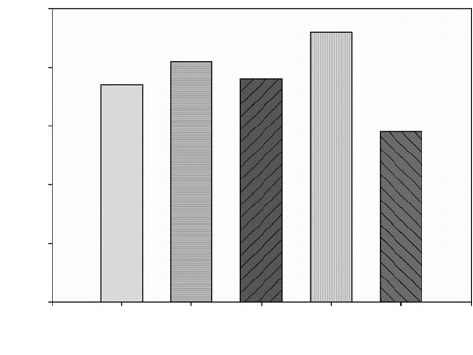
mi of PVC in their systems. The utilities were fairly well distributed in
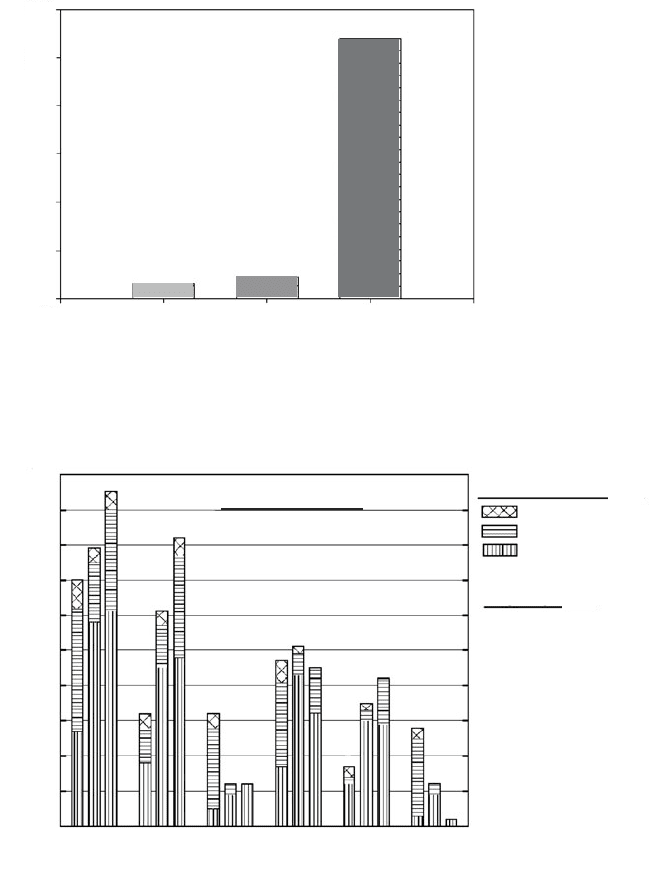
each user group. These data are shown graphically in Fig. 7.19.
Data on PVC pipe given in the tables and figures are classified as
follows: Data labeled PVC are inclusive of all data reported in the sur-
vey on PVC pipe, data identified AWWA are inclusive of data reported
on AWWA C900/C905 pipe only, and data labeled ASTM are for ASTM
D 2241 PVC pipe only.
Pressure surges. Pressure fluctuations and pressure surges are known
to influence pipe performance, so each utility was asked to report on
pressure variations in its system during a typical day’s operation.
Number of Respondents
PVC User Cate
g
or
y
50
40
30
20
10
0
Nonuser
1–10
10–50 50 Firms
Figure 7.19 Number of respondents in each PVC user category
(based on miles of installed PVC pipe) and number of responses
from firms.
Plastic Flexible Pipe Products 435
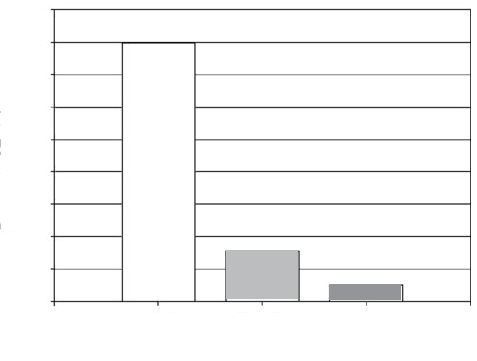
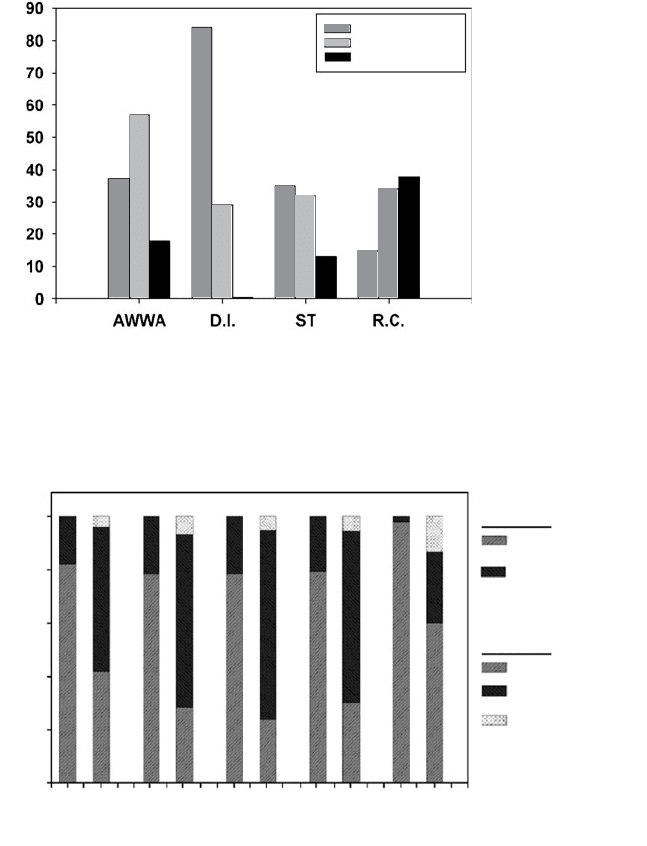
Figure 7.20 shows percentage of utilities reporting water pressure
variations in each of three pressure ranges.
Tapping. Each utility was asked to respond to the following question
regarding pressure tapping of various pipe products. “Based on expe-
rience in your water system, are problems associated with pressure
tapping for each listed product considered to be major, minor, or no
problem?” Figure 7.21 gives tallies of responses. In the figures, AWWA
refers to AWWA C900/C905 PVC pipe, ASTM refers to ASTM D 2241
PVC pipe, D.I. refers to ductile iron pipe, ST refers to steel pipe, and
R.C. refers to reinforced-concrete pipe.
Tapping of PVC pipe. In the utility survey, utilities were asked for tap-
ping information on PVC only. Figure 7.22 gives data on how taps were
made. About 80 percent of all taps are made with saddles, and more
than 60 percent of taps are made with pipe under system operating
pressure—sometimes called hot tapping. A tally of responses regard-
ing the type of training provided for those making taps is given in
Fig. 7.23. They indicated most of the training on tapping techniques for
their technicians was informal-type training.
Utilities were asked “How many PVC pipe failures do you experience
per year that are caused by direct pressure tapping?” The answers to
this question were linked to other questions dealing with tapping; the
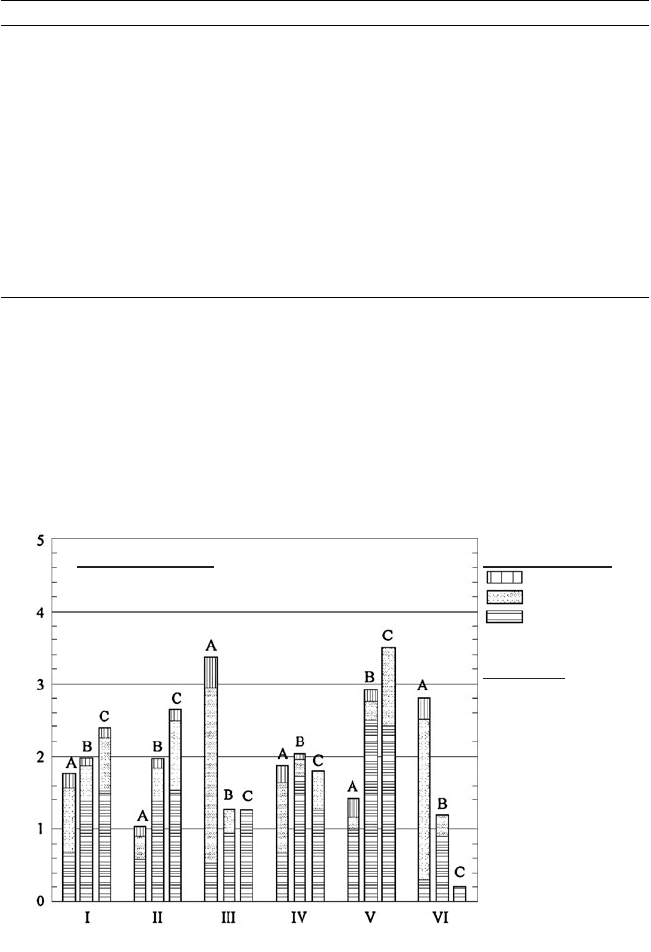
results of this analysis are given in Fig. 7.24. The listed restrictions are
constraints placed on the query of the database as explained below.
Restriction V, for example, produced data from those utilities who
Percent of Total
<20
20–40
>40
Water Pressure Fluctuation (lb/in
2
)
90
70
80
60
50
40
30
20
10
0
Figure 7.20 Percent of respondents reporting a pressure fluctu-
ation in each range.
436 Chapter Seven
Percent of Total
COLUMN 1
COLUMN 2
100
80
60
40
20
0
1–10 10–50 >50 All Firms
Pvc User Category
(Miles of PVC Pipe)
12 12 12 12 12
TAPS Made W/Saddles
or Collars
Taps Made Direct
TAPS Made Dry
TAPS Made Wet
W/Pressure
TAPS Made Wet
W/O Pressure
Figure 7.22 Average responses concerning taps made on AWWA C900/C905 PVC pipe for
each PVC user group and engineering firms.
Type of Pipe
No Problem
Major Problem
Minor Problem
Number of Responses
Figure 7.21 Tally showing whether respondents consider pres-
sure tapping to be a major problem, a minor problem, or no prob-
lem for various pipe types.
Plastic Flexible Pipe Products 437
Type of Restriction
Number of Incidences
Column Identification
A: Catastrophic Failures
B: Leakers >10 g/h
C: Leakers <10 g/h
100
90
80
70
60
50
40
30
20
10
0
I II III IV V VI
A
A
A
A
A
A
B
B
B
B
B
B
C
C
C
C
C
C
PVC User Category
1–10 mi
10–50 mi
>50 mi
Restrictions
I: None
II: Over 75% Saddles
III: Over 75% Direct
IV: Only 100% AWWA
V: 100% AWWA and
Over 75% Saddles
VI: 100% AWWA and
Over 75% Direct
Figure 7.24 Stacked bar graph showing reported tapping problems.
Number of Responses
Type of Training
120
100
80
60
40
20
0
None Formal Apprentice
Figure 7.23 Tally showing the type of training provided to tech-
nicians making direct pressure taps.
438 Chapter Seven
reported that all PVC pipe in their systems was AWWA C900/C905 and
over 75 percent of their taps were done with saddles.
Restriction Explanation
I: None No restriction—data are from all respon-
dents.
II: Over 75% saddles Utilities reporting over 75% of taps are
with saddles.
III: Over 75% direct Utilities reporting over 75% of taps are
done directly.
IV: Only 100% AWWA Utilities reporting all PVC pipe in system
is 100% AWWA.
V: 100% AWWA and over 75% saddles Utilities reporting all PVC pipe in system
is 100% AWWA and over 75% of taps
are made with saddles.
VI: 100% AWWA and over 75% direct Utilities reporting all PVC pipe in system
is 100% AWWA and over 75% of taps
are made directly.
Information obtained in the follow-up telephone resurvey on the num-
ber of taps made was combined with data given in Fig. 7.24 to produce
a tapping incident rate (incidents per 1000 taps made). Figure 7.25 is a
representation of these normalized data. The use of saddles with AWWA
C900/C905 pipe does not reduce the number of tapping problem inci-
dents. However, the use of saddles does reduce the rate of catastrophic
failures. It is interesting to note that utilities reporting 10 to 50 mi of
PVC in their systems report the largest number of catastrophic failure
Type of Restriction
Number of Incidents Per 1000 Taps Made
Column Identification
A: Catastrophic Failures
B: Leakers >10 g/h
C: Leakers <10 g/h
PVC User Category
1–10 mi
10–50 mi
>50 mi
Restrictions
I: None
II: Over 75% Saddles
III: Over 75% Direct
IV: Only 100% AWWA
V: 100% AWWA and
Over 75% Saddles
VI: 100% AWWA and
Over 75% Direct
Figure 7.25 Stacked bar graph showing the reported number of tapping problem inci-
dents per 1000 taps made.