
Raven P.H., Johnson G.B., Mason K.A. Biology (Ninth Edition)
Подождите немного. Документ загружается.

Apago PDF Enhancer
Myofibril
Na
;
Sarcolemma
Neuromuscular
j
unction
Motor neuron
Nerve
impulse
Neurotransmitter
Sarcoplasmic
reticulum
Transverse
tubule
(T tubule)
Release
of
Ca
2 +
Ca
2 +
Muscle depolarization
Ca
2
;
a.
b.
Actin
Myosin
head
Myosin
Troponin Tropomyosin
Binding sites for
cross-bridges blocked
Binding sites for cross-bridges exposed
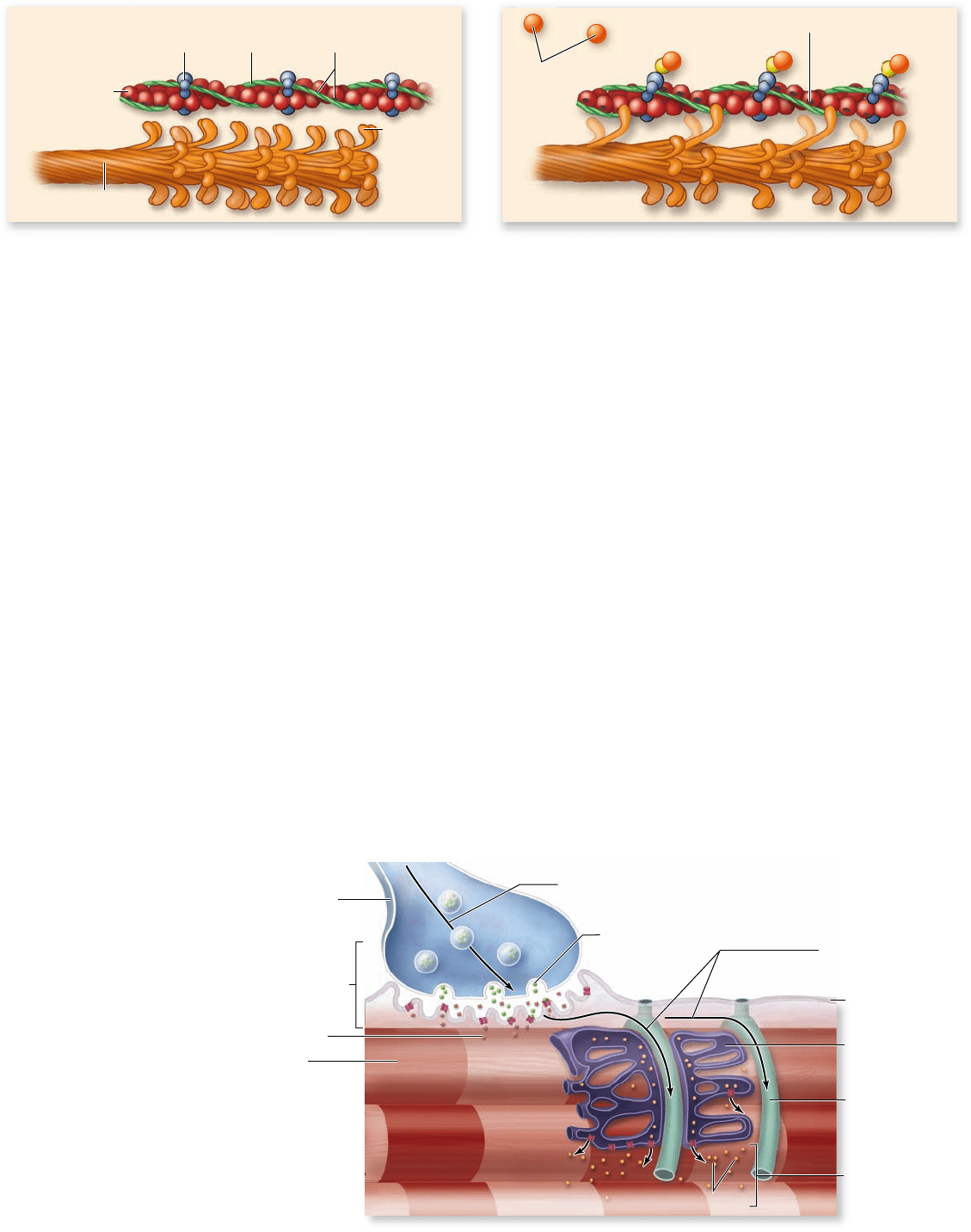
Figure 47.15
How calcium controls striated muscle contraction. a. When the muscle is at rest, a long lament of the protein
tropomyosin blocks the myosin-binding sites on the actin molecule. Because myosin is unable to form cross-bridges with actin at these sites,
muscle contraction cannot occur. b. When Ca
2+
binds to another protein, troponin, the Ca
2+
–troponin complex displaces tropomyosin and
exposes the myosin-binding sites on actin, permitting cross-bridges to form and contraction to occur.
Contraction depends on calcium ion
release following a nerve impulse
When a muscle is relaxed, its myosin heads are in the activated
conformation bound to ADP and P
i
, but they are unable to
bind to actin. In the relaxed state, the attachment sites for the
myosin heads on the actin are physically blocked by another
protein, known as tropomyosin, in the thin filaments. Cross-
bridges therefore cannot form and the filaments cannot slide.
For contraction to occur, the tropomyosin must be moved
out of the way so that the myosin heads can bind to the uncov-
ered actin-binding sites. This requires the action of troponin,
a regulatory protein complex that holds tropomyosin and actin
together. The regulatory interactions between troponin and
tropomyosin are controlled by the calcium ion (Ca
2+
) concen-
tration of the muscle fiber cytoplasm.
When the Ca
2+
concentration of the cytoplasm is low,
tropomyosin inhibits cross-bridge formation (figure 47.15a) .
When the Ca
2+
concentration is raised, Ca
2+
binds to tro-
Figure 47.16
Relationship
between the myo brils,
transverse tubules, and
sarcoplasmic reticulum.
Neurotransmitter released at a
neuromuscular junction binds
chemically gated Na
+
channels,
causing the muscle cell membrane
to depolarize. This depolarization
is conducted along the muscle
cell membrane and down the
transverse tubules to stimulate
the release of Ca
2+
from the
sarcoplasmic reticulum. Ca
2+
diffuses through the cytoplasm to
myo brils, causing contraction.
ponin, altering its conformation and shifting the troponin–
tropomyosin complex. This shift in conformation exposes
the myosin-binding sites on the actin. Cross-bridges can thus
form, undergo power strokes, and produce muscle contrac-
tion (figure 47.15b).
Muscles need a reliable supply of Ca
2+
. Muscle fi-
bers store Ca
2+
in a modified endoplasmic reticulum called a
sarcoplasmic reticulum (SR) (figure 47.16) . When a muscle
fiber is stimulated to contract, the membrane of the muscle
fiber becomes depolarized. This is transmitted deep into the
muscle fiber by invaginations of the cell membrane called
the transverse tubules (T tubules). Depolarization of the
T tubules causes Ca
2+
channels in the SR to open, releasing
Ca
2+
into the cytosol. Ca
2+
then diffuses into the myofibrils,
where it binds to troponin, altering its conformation and allow-
ing contraction. The involvement of Ca
2+
in muscle contrac-
tion is called excitation–contraction coupling because it is
the release of Ca
2+
that links the excitation of the muscle fiber
by the motor neuron to the contraction of the muscle.
972 part
VII
Animal Form and Function
rav32223_ch47_961-980.indd 972rav32223_ch47_961-980.indd 972 11/18/09 10:51:23 AM11/18/09 10:51:23 AM
Apago PDF Enhancer
Muscle
fiber
Fewer Motor
Units Activated
More Motor
Units Activated
Motor
unit
Tapping Toe Running
a. b.
This cumulative increase of numbers and sizes of motor units
to produce a stronger contraction is termed recruitment.
The two main types of muscle bers
are slow-twitch and fast-twitch
An isolated skeletal muscle can be studied by stimulating it ar-
tificially with electric shocks. A muscle stimulated with a single
electric shock quickly contracts and relaxes in a response called
a twitch. Increasing the stimulus voltage increases the strength
of the twitch up to a maximum. If a second electric shock is de-
livered immediately after the first, it produces a second twitch
that may partially “ride piggyback” on the first. This cumula-
tive response is called summation (figure 47.18) .
An increasing frequency of electric shocks shortens the re-
laxation time between successive twitches as the strength of con-
traction increases. Finally, at a particular frequency of stimulation,
no visible relaxation occurs between successive twitches. Contrac-
tion is smooth and sustained, as it is during normal muscle con-
traction in the body. This sustained contraction is called tetanus.
(The disease known as tetanus gets its name because the muscles
of its victims go into an agonizing state of contraction.)
Skeletal muscle fibers can be divided on the basis of
their contraction speed into slow-twitch, or type I, fibers and
fast-twitch, or type II, fibers. The muscles that move the eyes,
for example, have a high proportion of fast-twitch fibers and
reach maximum tension in about 7.3 milliseconds (msec); the
soleus muscle in the leg, by contrast, has a high proportion
Nerve impulses from motor neurons
Muscles are stimulated to contract by motor neurons. The mo-
tor neurons that stimulate skeletal muscles are called somatic mo-
tor neurons. The axon of a somatic motor neuron extends from
the neuron cell body and branches to make synapses with a
number of muscle fibers. These synapses between neurons and
muscle cells are called neuromuscular junctions (see figure 47.16).
One axon can stimulate many muscle fibers, and in some ani-
mals, a muscle fiber may be innervated by more than one motor
neuron. However, in humans, each muscle fiber has only a single
synapse with a branch of one axon.
When a somatic motor neuron delivers electrochemical
impulses, it stimulates contraction of the muscle fibers it in-
nervates (makes synapses with) through the following events:
1. The motor neuron, at the neuromuscular junction,
releases the neurotransmitter acetylcholine (ACh). ACh
binds to receptors in the muscle cell membrane to open
Na
+
channels. The in ux of Na
+
ions depolarizes the
muscle cell membrane.
2. The impulses spread along the membrane of the muscle
ber and are carried into the muscle bers through the
T tubules.
3. The T tubules conduct the impulses toward the
sarcoplasmic reticulum, opening Ca
2+
channels and
releasing Ca
2+
. The Ca
2+
binds to troponin, exposing
the myosin-binding sites on the actin myo laments and
stimulating muscle contraction.
When impulses from the motor neuron cease, it stops re-
leasing ACh, in turn stopping the production of impulses in the
muscle fiber. Another membrane protein in the SR then uses ener-
gy from ATP hydrolysis to pump Ca
2+
back into the SR by active
transport. Troponin is no longer bound to Ca
2+
, so tropomyosin
returns to its inhibitory position, allowing the muscle to relax.
Motor units and recruitment
A single muscle fiber can produce variable tension depend-
ing on the frequency of stimulation. The response of an entire
muscle depends on the number of individual fibers involved
and their degree of tension. The set of muscle fibers innervated
by all the axonal branches of a motor neuron, plus the motor
neuron itself, is defined as a motor unit (figure 47.17) .
Every time the motor neuron produces impulses, all
muscle fibers in that motor unit contract together. The division
of the muscle into motor units allows the muscle’s strength of
contraction to be finely graded, a requirement for coordinated
movements. Muscles that require a finer degree of control, such
as those that move the eyes, have smaller motor units (fewer
muscle fibers per neuron). Muscles that require less precise
control but must exert more force, such as the large muscles of
the legs, have more fibers per motor neuron.
Most muscles contain motor units in a variety of sizes,
and these can be selectively activated by the nervous system.
The weakest contractions of a muscle involve activation of a few
small motor units. If a slightly stronger contraction is necessary,
additional small motor units are also activated. The initial in-
crements of increased force are therefore relatively small. As
ever greater forces are required, more units and larger units are
brought into action, and the force increments become larger.
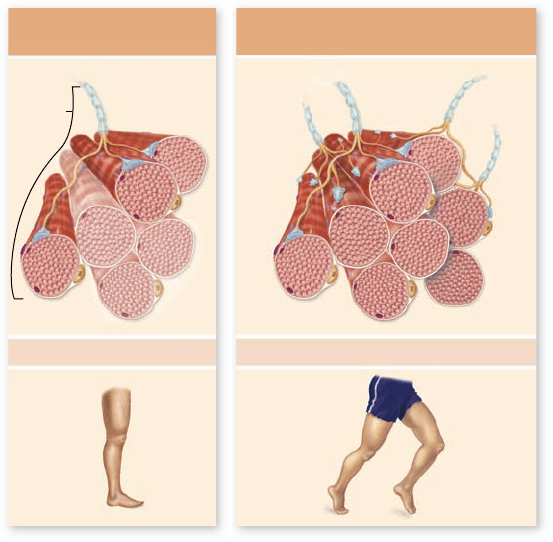
Figure 47.17
The number and size of motor units.
A motor unit consists of a motor neuron and all of the muscle bers
it innervates. a. Precise muscle contractions require smaller motor
units. b. Large muscle movements require larger motor units. The
more motor units activated, the stronger the contraction.
www.ravenbiology.com
chapter
47
The Musculoskeletal System
973
rav32223_ch47_961-980.indd 973rav32223_ch47_961-980.indd 973 11/18/09 10:51:52 AM11/18/09 10:51:52 AM
Apago PDF Enhancer
Complete
tetanus
Twitches
Stimuli
Incomplete
tetanus
Time
Amplitude of Muscle Contractions
Summation
• • • • • •
Time (msec)
Contraction Strength
eye muscle (lateral rectus)
calf muscle (gastrocnemius)
deep muscle of leg (soleus)
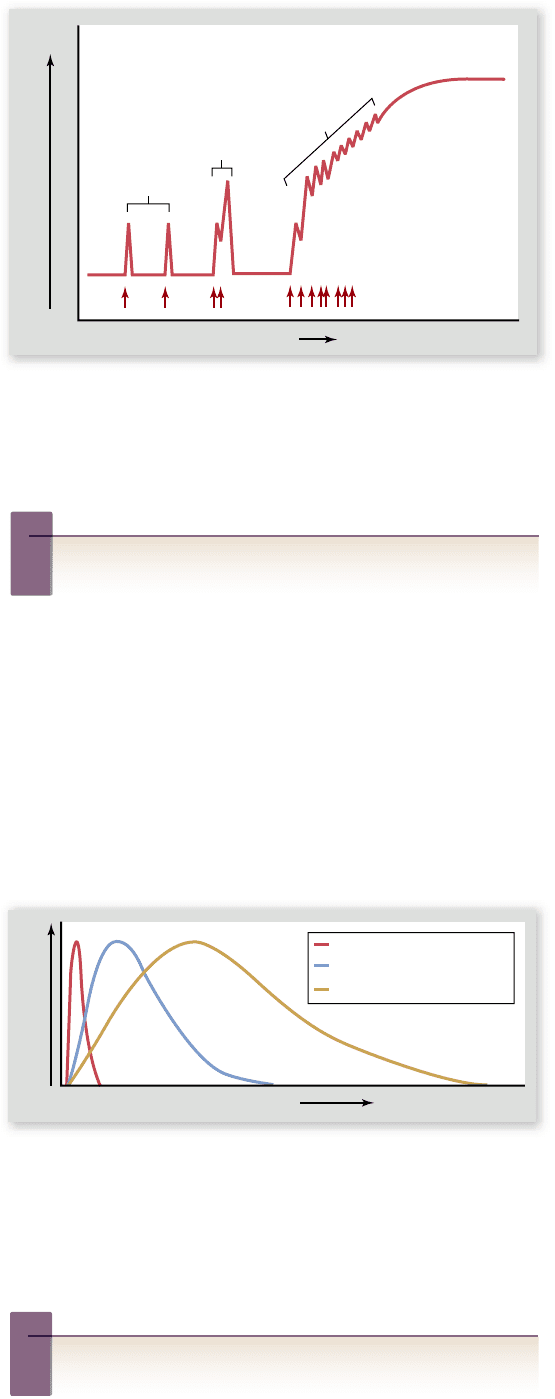
Figure 47.18
Summation. Muscle twitches summate to
produce a sustained, tetanic contraction. This pattern is produced
when the muscle is stimulated electrically or naturally by neurons.
Tetanus, a smooth, sustained contraction, is the normal type of
muscle contraction in the body.
Inquiry question
?
What determines the maximum amplitude of a summated
muscle contraction?
Figure 47.19
Skeletal muscles have di erent
proportions of fast-twitch and slow-twitch bers.
The muscles that move the eye contain mostly fast-twitch bers,
whereas the deep muscle of the leg (the soleus) contains mostly
slow-twitch bers. The calf muscle (gastrocnemius) is intermediate
in its composition.
Inquiry question
?
How would you determine if the calf muscle contains a mix of
fast-twitch and slow-twitch fibers, or instead is composed of
an intermediate form of fiber?
twitch fibers. Because of their high myoglobin content, slow-
twitch fibers are also called red fibers. These fibers can sustain
action for a long period of time without fatigue.
Fast-twitch fibers
The thicker fast-twitch fibers have fewer capillaries and
mitochondria than slow-twitch fibers and not as much myo-
globin; hence, these fibers are also called white fibers. Fast-
twitch fibers can respire anaerobically by using a large store of
glycogen and high concentrations of glycolytic enzymes. The
“dark meat” and “white meat” found in chicken and turkey
consists of muscles with primarily red and white fibers, respec-
tively. Fast-twitch fibers are adapted for the rapid generation
of power and can grow thicker and stronger in response to
weight training; however, they lack the endurance characteris-
tics of slow-twitch fibers.
In addition to the type I and type II fibers, human muscles
have an intermediate form of fibers that are fast-twitch, but they
also have a high oxidative capacity and so are more resistant to
fatigue. Endurance training increases the proportion of these
fibers in muscles.
In general, human sprinters tend to have more fast-twitch
fibers, whereas long-distance runners have more slow-twitch fi-
bers. These differences are paralleled in the animal world. Com-
parisons of closely related species that differ in their lifestyles
show that species that rely on short, high-speed movements to
capture prey or evade predators tend to have more fast-twitch
fibers, whereas closely related species that move more slowly, but
for longer periods of time, have more slow-twitch fibers.
Muscle metabolism changes
with the demands made on it
Skeletal muscles at rest obtain most of their energy from the
aerobic respiration of fatty acids (see chapter 7). During use
of the muscle, such as during exercise, muscle stores of glyco-
gen and glucose delivered by the blood are also used as energy
sources. The energy obtained by cellular respiration is used
to make ATP, which is needed for the movement of the cross-
bridges during muscle contraction and the pumping of Ca
2+
back into the sarcoplasmic reticulum during muscle relaxation.
Skeletal muscles respire anaerobically for the first 45 to
90 sec of moderate-to-heavy exercise because the cardiopul-
monary system requires this amount of time to increase the
oxygen supply to the muscles. If exercise is not overly strenu-
ous, aerobic respiration then contributes the major portion of
the skeletal muscle energy requirements following the first
2 min of exercise. However, more vigorous exercise may re-
quire more ATP than can be provided by aerobic respiration,
in which case anaerobic respiration continues to provide ATP
as well.
Whether exercise is light, moderate, or intense for a par-
ticular individual depends on that person’s maximal capacity for
aerobic exercise. The maximum rate of oxygen consumption in
the body is called the aerobic capacity. In general, individuals in
better condition have greater aerobic capacity and thus can sus-
tain higher levels of aerobic exercise for longer periods without
having to also use anaerobic respiration.
of slow-twitch fibers and requires about 100 msec to reach
maximum tension (figure 47.19) .
Slow-twitch fibers
Slow-twitch fibers have a rich capillary supply, numerous
mitochondria and aerobic respiratory enzymes, and a high con-
centration of myoglobin pigment. Myoglobin is a red pigment
similar to the hemoglobin in red blood cells, but its higher af-
finity for oxygen improves the delivery of oxygen to the slow-
974 part
VII
Animal Form and Function
rav32223_ch47_961-980.indd 974rav32223_ch47_961-980.indd 974 11/18/09 10:51:53 AM11/18/09 10:51:53 AM
Apago PDF Enhancer
reactive force
push
lateral force
thrust
Trout
a. b.
90°
90°
Eel
Physical training increases aerobic
capacity and muscle strength
Muscle fatigue refers to the use-dependent decrease in the
ability of a muscle to generate force. Fatigue is highly vari-
able and can arise from a number of causes. The intensity of
contraction as well as duration of contraction are involved. In
addition, fatigue is affected by cellular metabolism: aerobic or
anaerobic. In the case of short-duration maximal exertion, fa-
tigue was long thought to be caused by a buildup of lactic acid
(from anaerobic metabolism). More recent data also implicate
a buildup in inorganic phosphate (P
i
) from the breakdown of
creatine phosphate, which also occurs during anaerobic metab-
olism. In longer term, lower intensity exertion, fatigue appears
to result from depletion of glycogen.
Because the depletion of muscle glycogen places a
limit on exercise, any adaptation that spares muscle glyco-
gen will improve physical endurance. Trained athletes have
an increased proportion of energy derived from the aero-
bic respiration of fatty acids, resulting in a slower depletion
of their muscle glycogen reserve. Athletes also have greater
muscle vascularization, which facilitates both oxygen deliv-
ery and lactic acid removal. Because the aerobic capacity of
endurance-trained athletes is higher than that of untrained
people, athletes can perform for longer and put forth more
effort before muscle fatigue occurs.
Endurance training does not increase muscle size. Mus-
cle enlargement is produced only by frequent periods of high-
intensity exercise in which muscles work against high resistance,
as in weight lifting. Resistance training increases the thickness
of type II (fast-twitch) muscle fibers, causing skeletal muscles
to grow by hypertrophy (increased cell size) rather than by cell
division and an increased number of cells.
Learning Outcomes Review 47.4
Sliding of myofi laments within muscle myofi brils is responsible for
contraction; it involves the motor protein myosin, which forms cross-
bridges on actin fi bers. The process of shortening is controlled by
Ca
2+
ions released from the sarcoplasmic reticulum. The Ca
2+
binds to
troponin, making myosin-binding sites in actin available. Slow-twitch
fi bers can sustain activity for a longer period of time; fast-twitch fi bers
use glycogen for rapid generation of power.
■ What advantages do increased myoglobin and
mitochondria confer on slow-twitch fibers?
47.5
Modes of Animal Locomotion
Learning Outcomes
Describe how friction and gravity affect locomotion.1.
Discuss how lift is created by wings.2.
Explain how evolution has shaped structures used 3.
for locomotion.
Animals are unique among multicellular organisms in their
ability to move actively from one place to another. Locomotion
requires both a propulsive mechanism and a control mecha-
nism. There are a wide variety of propulsive mechanisms, most
involving contracting muscles to generate the necessary force.
Ultimately, it is the nervous system that activates and coor-
dinates the muscles used in locomotion. In large animals, ac-
tive locomotion is almost always produced by appendages that
oscillate—appendicular locomotion—or by bodies that undulate,
pulse, or undergo peristaltic waves—axial locomotion.
Although animal locomotion occurs in many different
forms, the general principles remain much the same in all groups.
The physical constraints to movement—gravity and friction—
are the same in every environment, differing only in degree.
Swimmers must contend with friction
when moving through water
For swimming animals, the buoyancy of water reduces the ef-
fect of gravity. As a result, the primary force retarding forward
movement is frictional drag, so body shape is important in reduc-
ing the force needed to push through the water.
Some marine invertebrates move about using hydraulic
propulsion. For example, scallops clap the two sides of their
shells together forcefully, and squids and octopuses squirt water
like a marine jet, as described in chapter 34 .
In contrast, many invertebrates and all aquatic vertebrates
swim. Swimming involves pushing against the water with some
part of the body. At one extreme, eels and sea snakes swim by
sinuous undulations of the entire body (figure 47.20a). The un-
dulating body waves of eel-like swimming are created by waves
of muscle contraction alternating between the left and right
axial musculature. As each body segment in turn pushes against
the water, the moving wave forces the eel forward.
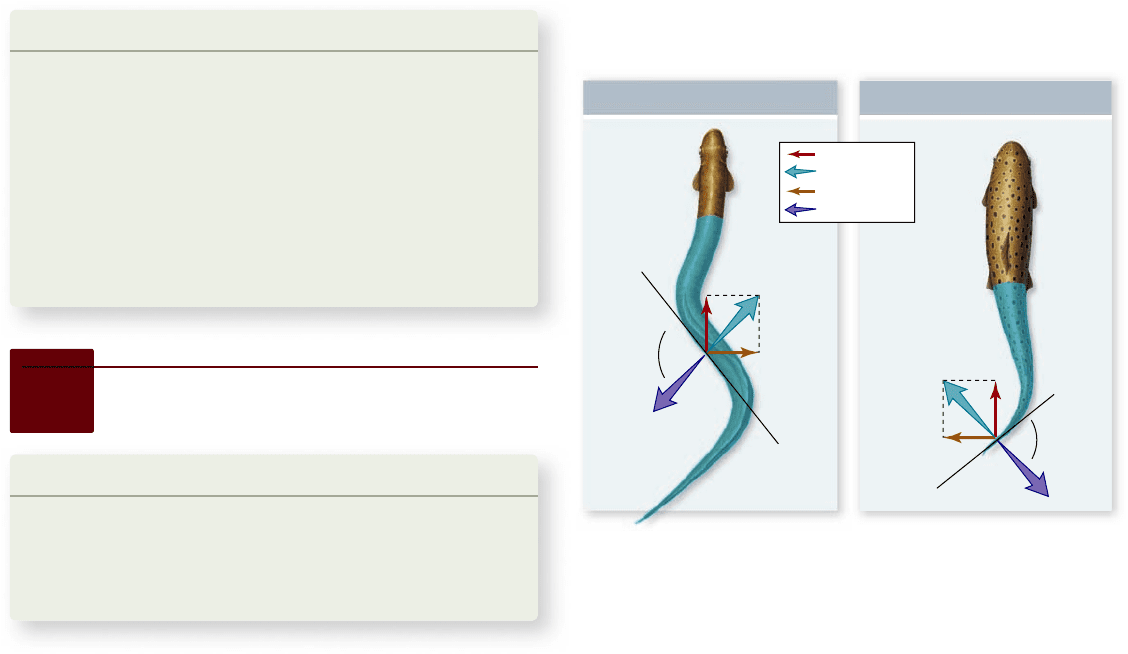
Figure 47.20
Movements of swimming shes. a. An eel
pushes against the water with its whole body, whereas (b) a trout
pushes only with its posterior half.
www.ravenbiology.com
chapter
47
The Musculoskeletal System
975
rav32223_ch47_961-980.indd 975rav32223_ch47_961-980.indd 975 11/18/09 10:51:53 AM11/18/09 10:51:53 AM
Apago PDF Enhancer
Other types of fish use similar mechanics as the eel but
generate most of their propulsion from the posterior part of the
body using the caudal (rear) fin (figure 47.20b) . This also allows
considerable specialization in the front end of the body without
sacrificing propulsive force. Reptiles, such as alligators, swim in
the same manner using undulations of the tail.
Whales and other marine mammals such as sea lions have
evolutionarily returned to an aquatic lifestyle (see figure 21.12)
and have convergently evolved a similar form of locomotion.
Like fish, marine mammals also swim using undulating body
waves. However, unlike any of the fishes, the waves pass from
top to bottom and not from side to side. This difference il-
lustrates how past evolutionary history can shape subsequent
evolutionary change. The mammalian vertebral column is
structured differently from that of fish in a way that stiffens the
spine and allows little side-to-side flexibility. For this reason,
when the ancestor of whales reentered aquatic habitats, they
evolved adaptations for swimming that used dorsoventral (top-
to-bottom) flexing.
Many terrestrial tetrapod vertebrates are able to swim,
usually through movement of their limbs. Most birds that swim,
such as ducks and geese, propel themselves through the water
by pushing against it with their hind legs, which typically have
webbed feet. Frogs and most aquatic mammals also swim with
their hind legs and have webbed feet. Tetrapod vertebrates that
swim with their forelegs usually have these limbs modified as
flippers and “fly” through the water using motions very similar
to those used by aerial fliers; examples include sea turtles, pen-
guins, and fur seals.
Terrestrial locomotion must
deal primarily with gravity
Air is a much less dense medium than water, and thus the fric-
tional forces countering movement on land are much less than
those in water. Instead, countering the force of gravity is the
biggest challenge for nonaquatic organisms, which either must
move on land or fly through the air.
The three great groups of ter-
restrial animals—mollusks, arthro-
pods, and vertebrates—each move
over land in different ways.
Mollusk locomotion is much
slower than that of the other groups.
Snails, slugs, and other terrestrial
mollusks secrete a path of mucus
that they glide along, pushing with
a muscular foot.
Only vertebrates and arthro-
pods (insects, spiders, and crusta-
ceans) have developed a means of
rapid surface locomotion. In both
groups, the body is raised above the
ground and moved forward by push-
ing against the ground with a series
of jointed appendages, the legs.
Although animals may walk on
only two legs or more than 100, the
same general principles guide terrestrial locomotion. Because legs
must provide support as well as propulsion, it is important that
the sequence of their movements not shove the body’s center of
gravity outside the legs’ zone of support, unless the duration of
such imbalance is short. Otherwise, the animal will fall. The need
to maintain stability determines the sequence of leg movements,
which are similar in vertebrates and arthropods.
The apparent differences in the walking gaits of these
two groups reflect the differences in leg number. Vertebrates
walk on two or four legs; all arthropods have six or more
limbs. Although the many legs of arthropods increase stability
during locomotion, they also appear to reduce the maximum
speed that can be attained.
The basic walking pattern of quadrupeds, from sala-
manders to most mammals, is left hind leg, right foreleg,
right hind leg, left foreleg. The highest running speeds of
quadruped mammals, such as the gallop of a horse, may in-
volve the animal being supported by only one leg, or even
none at all. This is because mammals have evolved changes
in the structure of both their axial and appendicular skeleton
that permit running by a series of leaps.
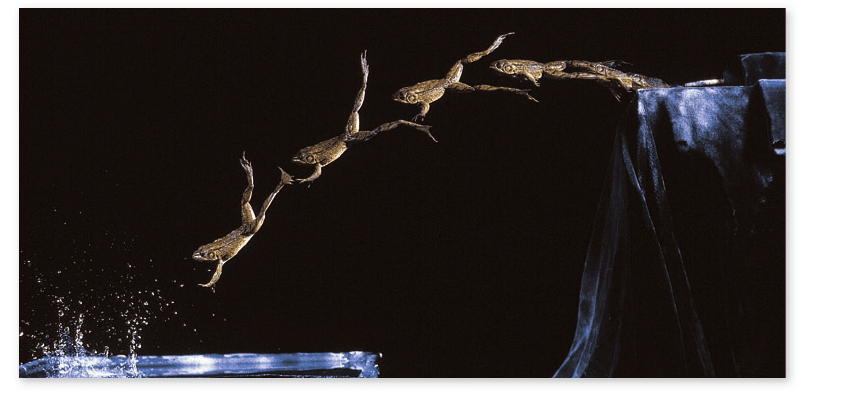
Vertebrates such as kangaroos, rabbits, and frogs are
effective leapers (figure 47.21) . However, insects are the
true Olympians of the leaping world. Many insects, such as
grasshoppers, have enormous leg muscles, and some small
insects can jump to heights more than 100 times the length
of their body!
Flying uses air for support
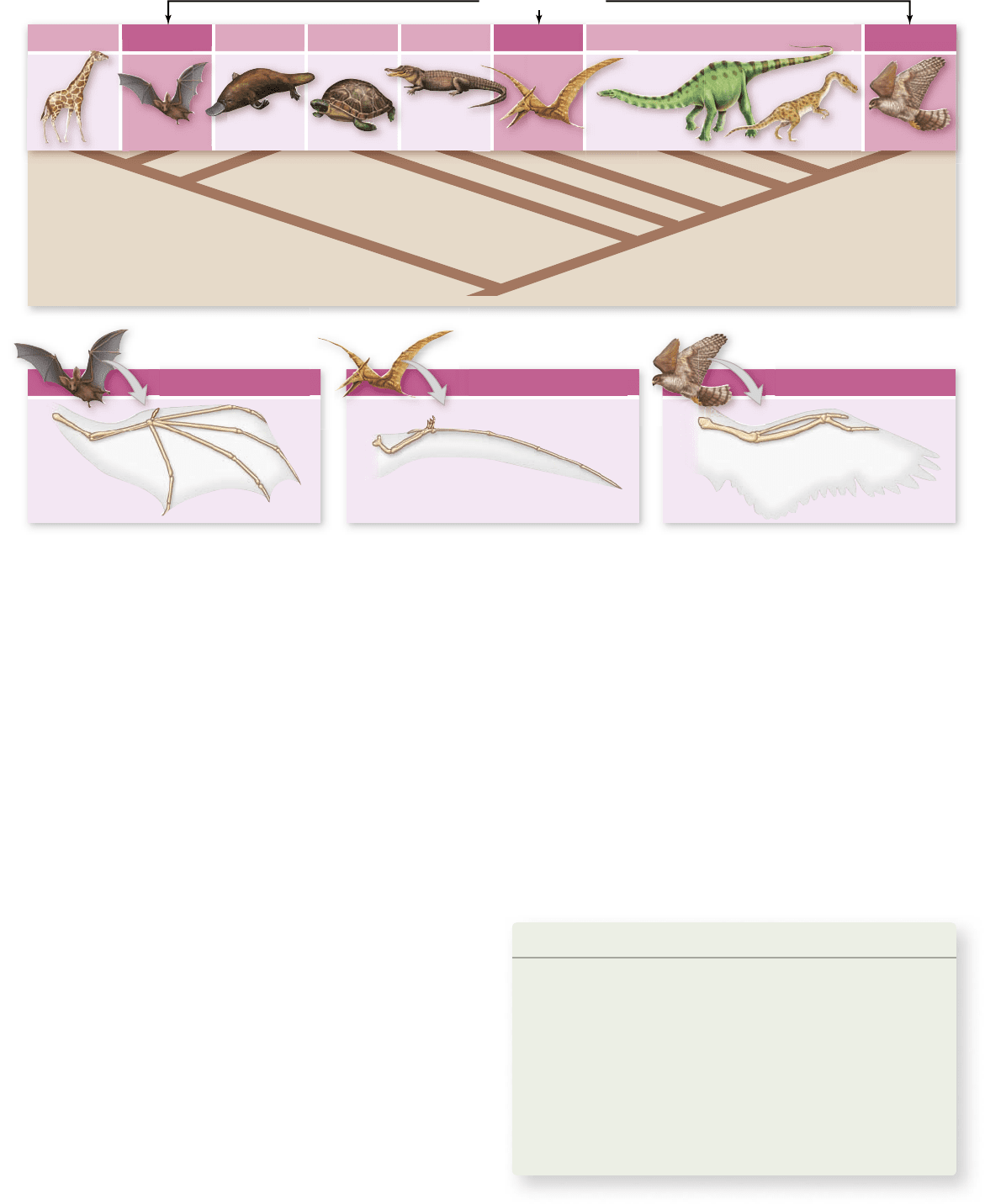
The evolution of flight is a classic example of convergent evolu-
tion, having occurred independently four times, once in insects
and three times among vertebrates (figure 47.22a) . All three
vertebrate fliers modified the forelimb into a wing structure,
but they did so in different ways, illustrating how natural selec-
tion can sometimes build similar structures through different
evolutionary pathways (figure 47.22b). In both birds and pte-
rosaurs (an extinct group of reptiles that flourished alongside
Figure 47.21
Animals that hop or leap use their rear legs to propel themselves
through the air. The powerful leg muscles of this frog allow it to explode from a crouched
position to a takeoff in about 100 msec.
976
part
VII
Animal Form and Function
rav32223_ch47_961-980.indd 976rav32223_ch47_961-980.indd 976 11/18/09 10:51:54 AM11/18/09 10:51:54 AM
Apago PDF Enhancer
a.
Polyphyletic Group
b.
Giraffe Bat Platypus Turtle Crocodile DinosaursPterosaur Hawk
Bat Pterosaur Hawk
Flying Vertebrates
is distorted in and out by their contraction. The reason these
muscles can contract so fast is that the contraction of one mus-
cle set stretches the other set, triggering its contraction in turn
without waiting for the arrival of a nerve impulse.
In addition to active flight, many species have evolved
adaptations—primarily flaps of skin that increase surface area
and thus slow down the rate of descent—to enhance their abil-
ity to glide long distances. Gliders have done this in many ways,
including flaps of skin along the body in flying squirrels, snakes,
and lizards; webbing between the toes in frogs; and the evolu-
tion in some lizards of ribs that extend beyond the body wall
and that are connected by skin that can be spread out to form a
large gliding surface.
Learning Outcomes Review 47.5
Locomotion involves friction and pressure created by body parts,
often appendages, against water, air, or ground. Walking, running,
and fl ying require supporting the body against gravity’s pull. Flight
is achieved when a pressure diff erence between air fl owing over
the top and bottom of a wing creates lift. Solutions to locomotion
have evolved convergently many times, in both homologous and
nonhomologous structures.
■ In what ways would locomotion by a series of leaps be
more advantageous than by alternation of legs?
the dinosaurs), the wing is built on a single support, but in birds
it is elongation of the radius, ulna, and wrist bones, whereas
in pterosaurs it is an elongation of the fourth finger bone. By
contrast, in bats the wing is supported by multiple bones, each
of which is an elongated finger bone. A second difference is that
the wings of pterosaurs and bats are composed of a membrane
formed from skin, whereas birds use feathers, which are modi-
fied from reptile scales.
In all groups, active flying takes place in much the same
way. Propulsion is achieved by pushing down against the air
with wings. This alone provides enough lift to keep insects in
the air. Vertebrates, being larger, need greater lift, obtaining it
with wings whose upper surface is more convex (in cross sec-
tion) than the lower. Because air travels farther over the top
surface, it moves faster. A fluid, like air, decreases its internal
pressure the faster it moves. Thus, there is a lower pressure on
top of the wing and higher pressure on the bottom of the wing.
This is the same principle used by airplane wings.
In birds and most insects, the raising and lowering of
the wings is achieved by the alternate contraction of extensor
muscles (elevators) and flexor muscles (depressors). Four insect
orders (including those containing flies, mosquitoes, wasps,
bees, and beetles) beat their wings at frequencies ranging from
100 to more than 1000 times per second, faster than nerves can
carry successive impulses!
In these insects, the flight muscles are not attached to the
wings at all, but rather to the stiff wall of the thorax, which
Figure 47.22
Convergent evolution of wings in vertebrates. Wings evolved independently in birds, bats and pterosaurs, in each
case by elongation of different elements of the forelimb.
www.ravenbiology.com
chapter
47
The Musculoskeletal System
977
rav32223_ch47_961-980.indd 977rav32223_ch47_961-980.indd 977 11/18/09 10:51:57 AM11/18/09 10:51:57 AM

Apago PDF Enhancer
Chapter Review
contraction occurs when actin and myosin laments form cross-
bridges and slide relative to each other.
The globular head of myosin forms a cross-bridge with actin when
ATP is hydrolyzed to ADP and P
i
. Upon bridging, it pulls the thin
lament toward the center of the sarcomere. The head then binds to
a new ATP, releasing from actin (see gure 47.14).
Contraction depends on calcium ion release following
a nerve impulse.
Tropomyosin, attached to actin by troponin, blocks formation of a
cross-bridge. Nerve stimulation releases calcium from the sarcoplasmic
reticulum into the cytosol, and formation of a troponin–calcium
complex displaces tropomyosin, allowing cross-bridges to form (see
gures 47.15, 47.16).
Motor units are composed of a single motor neuron and all the
muscle bers innervated by its branches (see gure 47.17).
The two main types of muscle bers are slow-twitch and fast-twitch.
A twitch is the interval between contraction and relaxation of a
single muscle stimulation. Summation occurs when a second twitch
“piggybacks” on the rst twitch. Tetanus is the state when no
relaxation occurs between twitches (see gure 47.18).
The two major types of skeletal muscle bers are slow-twitch bers
(endurance), and fast-twitch bers (power bursts).
Muscle metabolism changes with the demands made on it.
At rest skeletal muscles obtain energy by metabolism of fatty acids.
When active, energy comes from glucose and glycogen.
Muscle fatigue is a use-dependent decrease in the ability of the
muscle to generate force.
Endurance training does not increase muscle size; high-
intensity exercise with resistance increases the size of the
muscle (hypertrophy).
47.5 Modes of Animal Locomotion
Swimmers must contend with friction when moving through water.
Among vertebrates, aquatic locomotion occurs by pushing some or
all of the body against the water. Many vertebrates undulate the body
or tail for propulsion, but others use their limbs (see gure 47.20).
Terrestrial locomotion must deal primarily with gravity.
Most terrestrial animals move by lifting their bodies off the
ground and pushing against the ground with appendages. Terrestrial
animals that walk or run use fundamentally the same mechanisms
during locomotion.
Flying uses air for support.
Propulsion is accomplished as wings push down against the air. Lift in
larger organisms is created by a pressure difference as air ows above
and below a convex wing.
In both ying and gliding, convergent evolution has produced the
same outcome through different evolutionary pathways.
47.1 Types of Skeletal Systems
Hydrostatic skeletons use water pressure inside a body wall.
By muscular contractions, earthworms press uid into different parts
of the body, causing them to move (see gure 47.1).
Exoskeletons consist of a rigid outer covering.
The exoskeleton, composed of hard chitin, must be shed for the
organism to grow (see gure 47.2a).
Endoskeletons are composed of hard, internal structures.
Endoskeletons of vertebrates are living connective tissues that may
be mineralized with calcium phosphate (see gure 47.2b).
47.2 A Closer Look at Bone
Bones can be classi ed by two modes of development.
In intramembranous development, bone forms within a layer of
connective tissue (see gure 47.3). In endochondral development,
bone lls in a cartilaginous model.
Osteoblasts initiate bone development; osteocytes form from
osteoblasts; and osteoclasts break down and resorb bone.
Bones grow by lengthening and widening. Cartilage remaining after
development of the epiphyses serves as a pad between bone surfaces
(see gure 47.4).
Bone structure may include blood vessels and nerves.
In birds and shes, bone is avascular and basically acellular. In other
vertebrates, bone contains bone cells, blood capillaries, and nerves
collected in Haversian systems.
Bone remodeling allows bone to respond to use or disuse.
Bone structure may thicken or thin depending on use and on forces
impinging on the bone (see gure 47.5).
47.3 Joints and Skeletal Movement
Moveable joints have di erent ranges of motion, depending on type.
Ball-and-socket joints can perform movement in all directions;
hinge joints have restricted movement; gliding joints slide, providing
stability and exibility; and combination joints allow rotation and
sliding (see gure 47.7).
Skeletal muscles pull on bones to produce movement at joints.
Muscles attach to the periosteum directly or through a tendon.
Skeletal muscles occur in antagonistic pairs that oppose each other’s
movement (see gure 47.8).
47.4 Muscle Contraction
Muscle bers contract as overlapping laments slide together.
The different myo bril bands seen microscopically result from the
degree of overlap of actin and myosin laments (see gure 47.10). Muscle
978
part
VII
Animal Form and Function
rav32223_ch47_961-980.indd 978rav32223_ch47_961-980.indd 978 11/18/09 10:51:58 AM11/18/09 10:51:58 AM

Apago PDF Enhancer
7. If you wanted to study the use of ATP during a single
contraction cycle within a muscle cell, which of the following
processes would you use?
a. Summation c. Treppe
b. Twitch d. Tetanus
8. Place the following events in the correct order.
1. Sarcoplasmic reticulum releases Ca
2+
.
2. Myosin binds to actin.
3. Action potential arrives from neuron.
4. Ca
2+
binds to troponin.
a. 1, 2, 3, 4 c. 2, 4, 3, 1
b. 3, 1, 2, 4 d. 3, 1, 4, 2
APPLY
1. Bone develops by one of two mechanisms depending on
the underlying scaffold. Which pairing correctly describes
these mechanisms?
a. Intramembranous and extramembranous
b. Endochondral and exochondral
c. Extramembranous and exochondral
d. Endochondral and intramembranous
2. You have identi ed a calcium storage disease in rats.
How would this inability to store Ca
2+
affect muscle
contraction?
a. Ca
2+
would be unable to bind to tropomyosin, which
enables troponin to move and reveal binding sites for
cross-bridges.
b. Ca
2+
would be unable to bind to troponin, which enables
tropomyosin to move and reveal binding sites for
cross-bridges.
c. Ca
2+
would be unable to bind to tropomyosin, which
enables troponin to release ATP.
d. Ca
2+
would be unable to bind to troponin, which enables
tropomyosin to release ATP.
3. How do the muscles move your hand through space?
a. By contraction
b. By attaching to two bones across a joint
c. By lengthening
d. Both a and b are correct
4. How can osteocytes remain alive within bone?
a. Bones are composed of only dead or dormant cells.
b. Haversian canals are bone structures that contain blood
vessels that provide materials for the osteocytes.
c. Osteocytes have membrane extensions that protrude from
bone and allow them to exchange materials
with the surrounding uids.
d. Bones are hollow in the middle and the low pressure
there draws uid from the blood that nourishes
the osteocytes.
UNDERSTAND
1. Exoskeletons and endoskeletons differ in that
a. an exoskeleton is rigid, and an endoskeleton is exible.
b. endoskeletons are found only in vertebrates.
c. exoskeletons are composed of calcium, and endoskeletons
are built from chitin.
d. exoskeletons are external to the soft tissues, and
endoskeletons are internal.
2. Worms use a hydrostatic skeleton to generate movement. How
do they do this?
a. Their bones are lled with water, which provides the
weight of the skeleton.
b. The change in body structure is caused by contraction of
muscles compressing the watery body uid.
c. The muscles contain water vacuoles, which, when lled,
provide a rigid internal structure.
d. The term hydrostatic simply refers to moist environment.
They generate movement just as arthropods do.
3. You take X-rays of two individuals. Ray has been a weight lifter
and body builder for 30 years; Ben has led a mostly sedentary
life. What differences would you expect in their X-rays?
a. No difference, they would both have thicker bones than a
younger person due to natural thickening with age.
b. No difference, lifestyle does not affect bone density.
c. Ray would have thicker bones due to reshaping as a result
of physical stress.
d. Ben would have thicker bones because bone accumulates
like fat tissue from a sedentary lifestyle.
4. Which of the following statements best describes the sliding
lament mechanism of muscle contraction?
a. Actin and myosin laments do not shorten, but rather, slide
past each other.
b. Actin and myosin laments shorten and slide past
each other.
c. As they slide past each other, actin laments shorten, but
myosin laments do not shorten.
d. As they slide past each other, myosin laments shorten, but
actin laments do not shorten.
5. Motor neurons stimulate muscle contraction via the release of
a. Ca
2+
.
c. acetylcholine.
b. ATP. d. hormones.
6. Which of the following statements about muscle metabolism
is false?
a. Skeletal muscles at rest obtain most of their energy from
muscle glycogen and blood glucose.
b. ATP can be quickly obtained by combining ADP with
phosphate derived from creatine phosphate.
c. Exercise intensity is related to the maximum rate of oxygen
consumption.
d. ATP is required for the pumping of the Ca
2+
back into the
sarcoplasmic reticulum.
Review Questions
www.ravenbiology.com
chapter
47
The Musculoskeletal System
979
rav32223_ch47_961-980.indd 979rav32223_ch47_961-980.indd 979 11/18/09 10:51:59 AM11/18/09 10:51:59 AM

Apago PDF Enhancer
5. Swimming underwater using forelimbs for propulsion is similar
to ying through the air because
a. birds are the only class of vertebrates that have species that
do both.
b. both involve coordinating movements of the forelimbs and
hindlimbs.
c. both must counter strong forces caused by friction.
d. both involve generating lift by pushing down on the air or
water to counter gravity.
6. If a drug inhibits the release of ACh, what will happen?
a. Somatic motor neurons will fail to activate.
b. Somatic motor neuron impulses will not lead to muscle
ber contraction.
c. Myosin molecules will fail to release ADP.
d. An in ux of sodium ions will lead to muscle cell membrane
depolarization.
SYNTHESIZE
1. You are designing a space-exploration vehicle to use on a planet
with a gravity greater than Earth. Given a choice between a
hydrostatic or an exoskeleton, which would you choose? Why?
2. You start running as fast as you can. Then, you settle into a jog
that you can easily maintain. How do energy sources utilized by
your skeletal muscles change during the switch? Why?
3. The nerve gas methylphosphono uoridic acid (sarin) inhibits
the enzyme acetylcholinesterase, required to break down
acetylcholine. Based on this information, what are the likely
effects of this nerve gas on muscle function?
4. If natural selection favors the evolution of wings in different
types of vertebrates, why didn’t it produce structures that were
built in the same way?
980
part
VII
Animal Form and Function
ONLINE RESOURCE
www.ravenbiology.com
Understand, Apply, and Synthesize—enhance your study with
animations that bring concepts to life and practice tests to assess
your understanding. Your instructor may also recommend the
interactive eBook, individualized learning tools, and more.
rav32223_ch47_961-980.indd 980rav32223_ch47_961-980.indd 980 11/18/09 10:51:59 AM11/18/09 10:51:59 AM
Apago PDF Enhancer
P
CHAPTER
Chapter
48
The Digestive System
Chapter Outline
48.1 Types of Digestive Systems
48.2 The Mouth and Teeth: Food Capture
and Bulk Processing
48.3 The Esophagus and the Stomach: The Beginning
of Digestion
48.4 The Intestines: Breakdown, Absorption,
and Elimination
48.5 Variations in Vertebrate Digestive Systems
48.6 Neural and Hormonal Regulation of the
Digestive Tract
48.7 Accessory Organ Function
48.8 Food Energy, Energy Expenditure,
and Essential Nutrients
Introduction
Plants and other photosynthetic organisms
can produce the organic molecules they need from inorganic components.
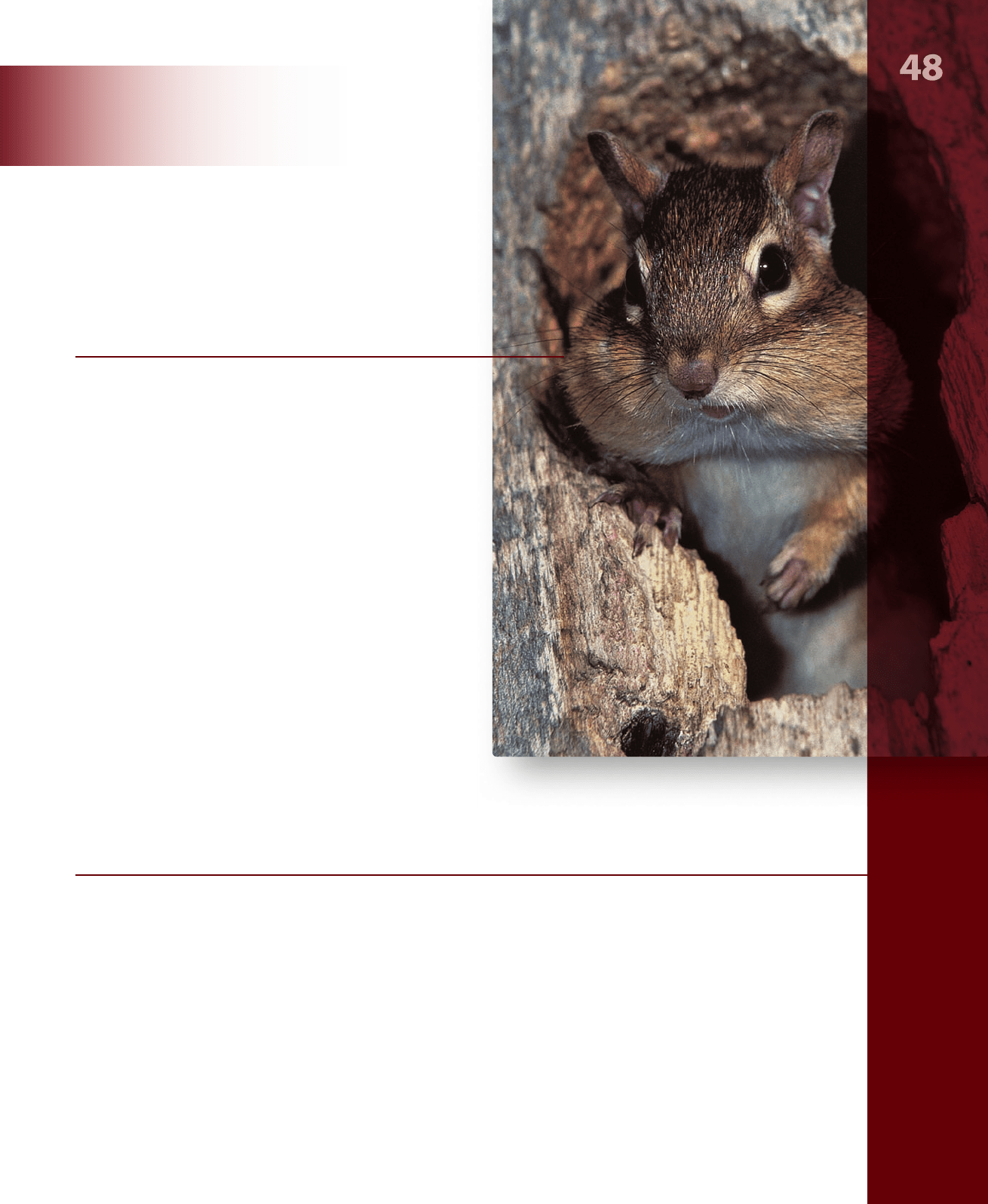
Therefore, they are autotrophs, or self-sustaining. Animals, such as the chipmunk shown, are heterotrophs: They must
consume organic molecules present in other organisms. The molecules heterotrophs eat must be digested into smaller
molecules in order to be absorbed into the animal’s body. Once these products of digestion enter the body, the animal can
use them for energy in cellular respiration or for the construction of the larger molecules that make up its tissues. The process
of animal digestion is the focus of this chapter.
rav32223_ch48_981-1000.indd 981rav32223_ch48_981-1000.indd 981 11/18/09 5:01:50 PM11/18/09 5:01:50 PM