
Raven P.H., Johnson G.B., Mason K.A. Biology (Ninth Edition)
Подождите немного. Документ загружается.


Apago PDF Enhancer
Figure 49.1
Elephant seals are respiratory champions.
Diving to great depths, elephant seals can hold their breath for over
2 hr , descend and ascend rapidly in the water, and endure repeated
dives without suffering any apparent respiratory distress.
direction of gas diffusion is the reverse of that in the respira-
tory organs.
The mechanics, structure, and evolution of respiratory
systems, along with the principles of gas diffusion between the
blood and tissues, are the subjects of this chapter.
Gas exchange involves di usion
across membranes
Because plasma membranes must be surrounded by water to
be stable, the external environment in gas exchange is always
aqueous. This is true even in terrestrial vertebrates; in these
cases, oxygen from air dissolves in a thin layer of fluid that cov-
ers the respiratory surfaces.
In vertebrates, the gases diffuse into the aqueous layer
covering the epithelial cells that line the respiratory organs.
The diffusion process is passive, driven only by the difference
in O
2
and CO
2
concentrations on the two sides of the mem-
branes and their relative solubilities in the plasma membrane.
For dissolved gases, concentration is usually expressed as pres-
sure; we explain this more fully a little later.
In general, the rate of diffusion between two regions is
governed by a relationship known as Fick’s Law of Diffusion.
Fick’s Law states that for a dissolved gas, the rate of diffusion
(R ) is directly proportional to the pressure difference (∆p) be-
tween the two sides of the membrane and the area (A ) over
which the diffusion occurs. Furthermore, R is inversely propor-
tional to the distance (d ) across which the diffusion must occur.
A molecule-specific diffusion constant, D, accounts for the size
of molecule, membrane permeability, and temperature. Shown
as a formula, Fick’s Law is stated as:
R =
DA ∆p
d
Major evolutionary changes in the mechanism of respiration
have occurred to optimize the rate of diffusion (see figure 49.1). R
can be optimized by changes that (1) increase the surface area, A;
(2) decrease the distance, d; or (3) increase the concentration dif-
ference, as indicated by ∆p. The evolution of respiratory systems
has involved changes in all of these factors.
Inquiry question
?
What part of the vertebrate cardiovascular system maximizes
surface area?
Evolutionary strategies have
maximized gas di usion
The levels of oxygen needed for cellular respiration cannot be
obtained by diffusion alone over distances greater than about
0.5 mm. This restriction severely limits the size and structure
of organisms that obtain oxygen entirely by diffusion from the
environment. Bacteria, archaea, and protists are small enough
that such diffusion can be adequate, even in some colonial forms
(figure 49.2a) , but most multicellular animals require structural
adaptations to enhance gas exchange.
49.1
Gas Exchange Across
Respiratory Surfaces
Learning Outcomes
Describe gas exchange across membranes.1.
Explain Fick’s Law of Diffusion.2.
Compare evolutionary strategies for maximizing 3.
gas diffusion.
One of the major physiological challenges facing all multicel-
lular animals is obtaining sufficient oxygen and disposing of
excess carbon dioxide (figure 49.1) . Oxygen is used in mito-
chondria for cellular respiration—a process that also produces
CO
2
as waste (see chapter 7). Respiration at the body system
level involves a host of processes not found at the cellular level,
ranging from the mechanics of breathing to the exchange of
oxygen and carbon dioxide in respiratory organs.
Invertebrates display a wide variety of respiratory organs,
including the epithelium, tracheae, and gills. Some vertebrates,
such as fish and larval amphibians, also use gills; adult amphib-
ians use their skin or other epithelia either as a supplemental or
primary external respiratory organ.
Many adult amphibians, reptiles, birds, and mammals
have lungs to perform external respiration. In both aquatic
and terrestrial animals, these highly vascularized respiratory
organs are the site at which oxygen diffuses into the blood,
and carbon dioxide diffuses out. In the body tissues, the
1002 part
VII
Animal Form and Function
rav32223_ch49_1001-1017.indd 1002rav32223_ch49_1001-1017.indd 1002 11/19/09 12:40:47 PM11/19/09 12:40:47 PM
Apago PDF Enhancer
d. e. f.
a. b. c.
Single Cell Organisms
Amphibians
Insects Fish Mammals
Echinoderms
CO
2
CO
2
CO
2
CO
2
CO
2
CO
2
O
2
O
2
O
2
O
2
O
2
O
2
Epidermis
Epidermis
Papula
Blood vessel
Blood
vessel
Gill
lamellae
Alveoli
Spiracle Trachea
CO
2
O
2
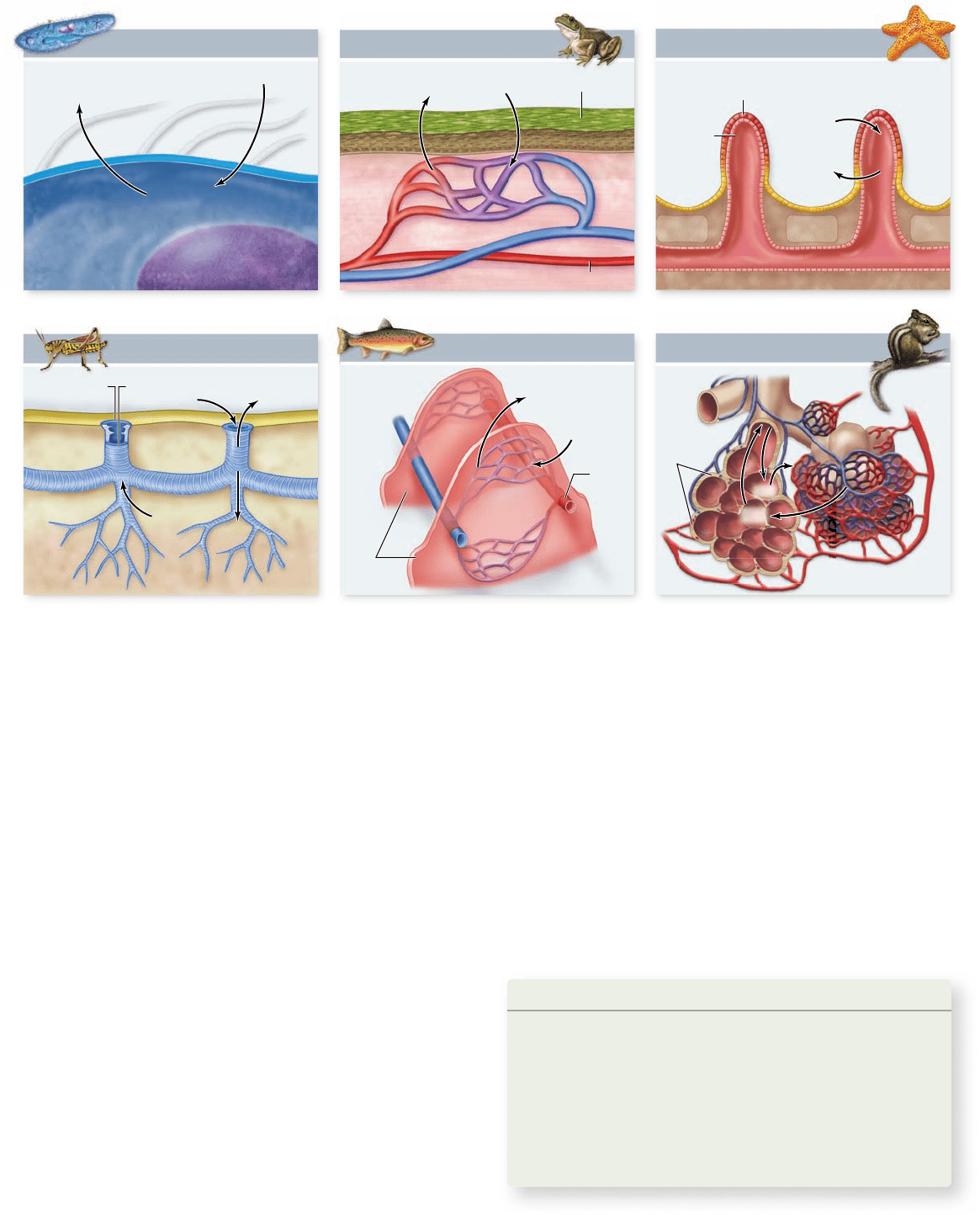
Figure 49.2
Di erent gas exchange systems in animals. a. Gases diffuse directly into single-celled organisms. b. Most
amphibians and many other animals respire across their skin. Amphibians also exchange gases via lungs. c. Echinoderms have protruding
papulae, which provide an increased respiratory surface area. d. Insects respire through an extensive tracheal system. e. The gills of shes
provide a very large respiratory surface area and countercurrent exchange. f. The alveoli in mammalian lungs provide a large respiratory
surface area but do not permit countercurrent exchange. Inhaled fresh air contains some CO
2
, but levels are higher in the lungs, so more
CO
2
is exhaled than inhaled; similarly, O
2
levels are higher in fresh air, leading to an in ux of O
2
.
sion (see figure 49.2). These adaptations also bring the external
environment (either water or air) close to the internal fluid,
which is usually circulated throughout the body—such as blood
or hemolymph. The respiratory organs thus increase the rate
of diffusion by maximizing surface area (A ) and decreasing the
distance (d ) the diffusing gases must travel.
Learning Outcomes Review 49.1
Gases must be dissolved to diff use across living membranes. Direction
of diff usion is driven by a concentration diff erence (gradient) between
the two sides. Fick’s Law states that the rate of diff usion is increased
by a greater pressure diff erence and membrane area, and decreased
by greater distance. Evolutionary strategies have therefore aimed to
increase gradient and area and to lessen the distance gases must travel.
■ Which factor is affected by continuously beating cilia?
Increasing oxygen concentration difference
Most phyla of invertebrates lack specialized respiratory organs,
but they have developed means of improving diffusion. Many
organisms create a water current that continuously replaces the
water over the respiratory surfaces; often, beating cilia produce
this current. Because of this continuous replenishment of water,
the external oxygen concentration does not decrease along the
diffusion pathway. Although some of the oxygen molecules that
pass into the organism have been removed from the surround-
ing water, new water continuously replaces the oxygen-depleted
water. This maximizes the concentration difference—the ∆p of
the Fick equation.
Increasing area and decreasing distance
Other invertebrates (mollusks, arthropods, echinoderms) and
vertebrates possess respiratory organs—such as gills, tracheae,
and lungs—that increase the surface area available for diffu-
www.ravenbiology.com
chapter
49
The Respiratory System
1003
rav32223_ch49_1001-1017.indd 1003rav32223_ch49_1001-1017.indd 1003 11/19/09 12:40:49 PM11/19/09 12:40:49 PM
Apago PDF Enhancer
Buccal cavity Operculum
Gills Opercular
cavity
Oral valve
Mouth opened,
jaw lowered
Water
Mouth closed,
operculum opened
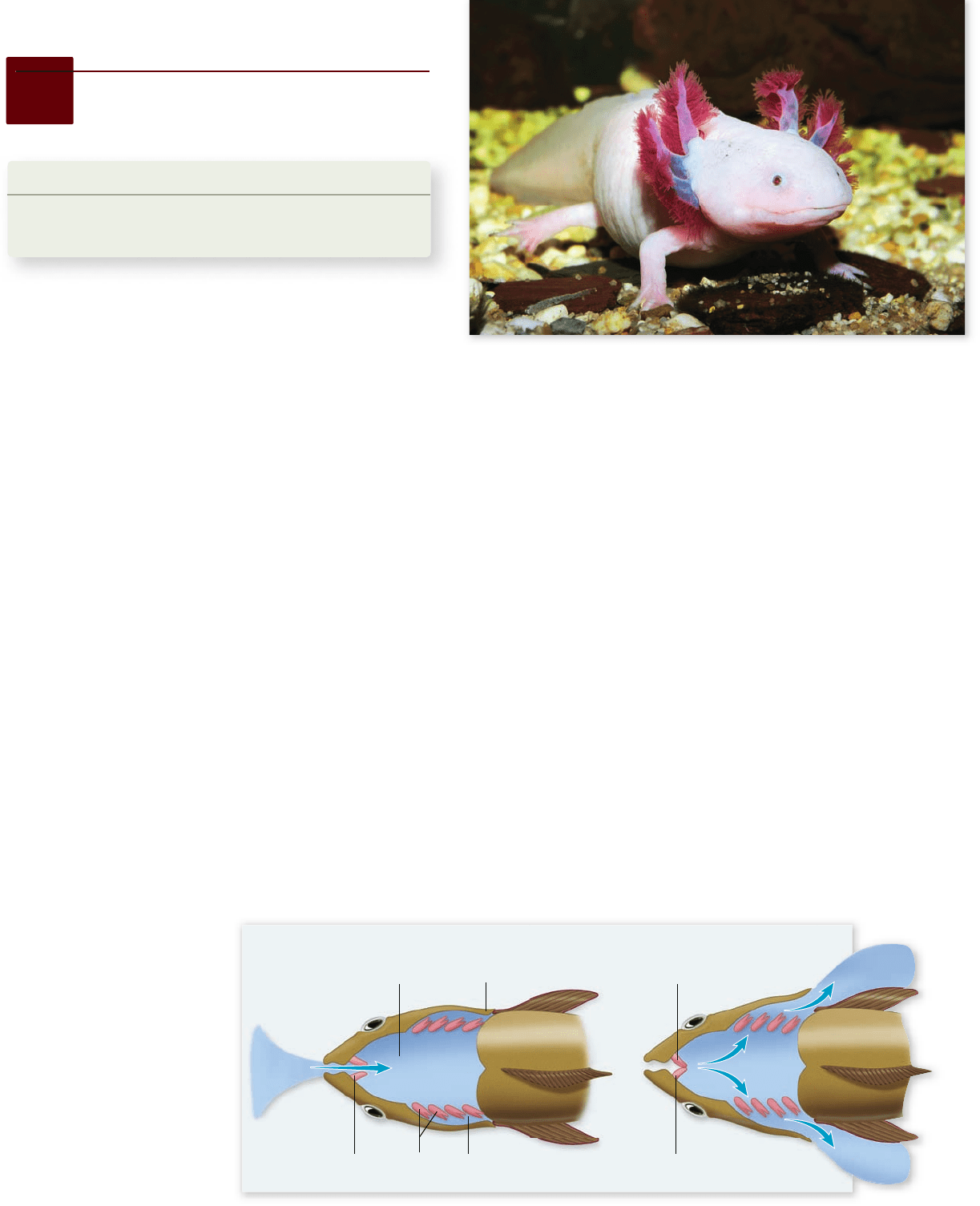
Figure 49.4
How most
bony shes respire. The gills
are suspended between the
buccal (mouth) cavity and the
opercular cavity. Respiration
occurs in two stages. The oral
valve in the mouth is opened and
the jaw is depressed, drawing
water into the buccal cavity while
the opercular cavity is closed.
The oral valve is closed and the
operculum is opened, drawing
water through the gills to
the outside.
Branchial chambers protect gills
of some invertebrates
Other types of aquatic animals evolved specialized branchial
chambers, which provide a means of pumping water past station-
ary gills. The internal mantle cavity of mollusks opens to the out-
side and contains the gills. Contraction of the muscular walls of
the mantle cavity draws water in through the inhalant siphon and
then expels it through the exhalant siphon (see chapter 34) .
In crustaceans, the branchial chamber lies between the
bulk of the body and the hard exoskeleton of the animal. This
chamber contains gills and opens to the surface beneath a limb.
Movement of the limb draws water through the branchial
chamber, thus creating currents over the gills.
Gills of bony shes are covered
by the operculum
The gills of bony fishes are located between the oral cavity,
sometimes called the buccal (mouth) cavity, and the opercular
cavities where the gills are housed (figure 49.4) . The two sets
49.2
Gills, Cutaneous Respiration,
and Tracheal Systems
Learning Outcomes
Describe how gills work.1.
Explain the advantage of countercurrent flow.2.
Gills are specialized extensions of tissue that project into
water. Gills can be simple, as in the papulae of echinoderms
(figure 49.2c), or complex, as in the highly convoluted gills of
fish (figure 49.2e). The great increase in diffusion surface area
that gills provide enables aquatic organisms to extract far more
oxygen from water than would be possible from their body
surface alone. In this section we concentrate on gills found in
vertebrate animals.
Other moist external surfaces are also involved in gas ex-
change in some vertebrates and invertebrates. For example, gas
exchange across the skin is a common strategy in many am-
phibian groups.
Terrestrial arthropods such as insects take an alternative
approach; their tracheal systems allow gas exchange through
their hard exoskeletons (figure 49.2d).
External gills are found in sh and
amphibian larvae
External gills are not enclosed within body structures. Exam-
ples of vertebrates with external gills are the larvae of many
fish and amphibians, as well as amphibians such as the axolotl,
which retains larval features throughout life (figure 49.3) .
One of the disadvantages of external gills is that they must
constantly be moved to ensure contact with fresh water having
high oxygen content. The highly branched gills, however, offer
significant resistance to movement, making this form of res-
piration ineffective except in smaller animals. Another disad-
vantage is that external gills, with their thin epithelium for gas
exchange, are easily damaged.
F i g u r e 4 9 . 3
Some amphibians have external gills.
External gills are used by aquatic amphibians, both larvae and some
species that live their entire lives in water such as this axolotl, to
extract oxygen from the water.
1004
part
VII
Animal Form and Function
rav32223_ch49_1001-1017.indd 1004rav32223_ch49_1001-1017.indd 1004 11/19/09 12:40:51 PM11/19/09 12:40:51 PM
Apago PDF Enhancer
a. b.
50%
40%
30%
20%
10%
50%
No further
net diffusion
Blood (0%
O
2
saturation)
Blood (50%
O
2
saturation)
Concurrent Exchange
Water (50%
O
2
saturation)
Water (100%
O
2
saturation)
Water (15%
O
2
saturation)
60%
70%
80%
90%
Blood (0%
O
2
saturation)
Blood (85%
O
2
saturation)
Countercurrent Exchange
Water (100%
O
2
saturation)
15%
30%
40%
50%
60%
70%
80%
90%
100%
10%
20%
30%
40%
50%
60%
70%
80%
85%
Water flow
Water
flow
Gill arch
Operculum Gills
Gill
filaments
Gill
filament
Oxygen-
deficient blood
Oxygen-
deficient
blood
Oxygen-
rich
blood
Oxygen-
rich
blood
Gill raker
Blood flow
Lamellae with
capillary networks
Water
flow
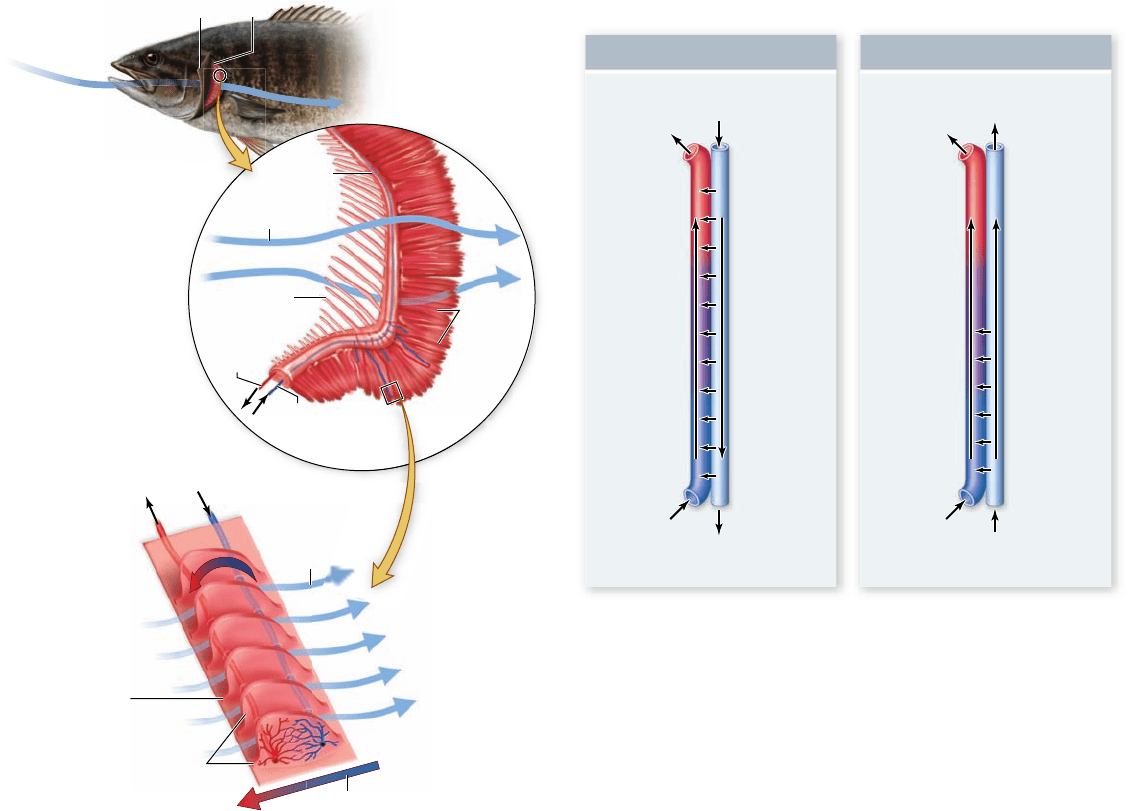
Figure 49.6
Countercurrent exchange. This process
allows for the most ef cient blood oxygenation. When blood and
water ow in opposite directions (a), the initial oxygen (O
2
)
concentration difference between water and blood is small, but is
suf cient for O
2
to diffuse from water to blood. As more O
2
diffuses
into the blood, raising the blood’s O
2
concentration, the blood
encounters water with ever higher O
2
concentrations. At every
point, the O
2
concentration is higher in the water, so that diffusion
continues. In this example, blood attains an O
2
concentration of
85%. When blood and water ow in the same direction (b), O
2
can
diffuse from the water into the blood rapidly at rst, but the
diffusion rate slows as more O
2
diffuses from the water into the
blood, until nally the concentrations of O
2
in water and blood are
equal. In this example, blood’s O
2
concentration cannot exceed 50%.
Figure 49.5
Structure of a sh gill. Water passes from the
gill arch over the laments (from left to right in the diagram).
Water always passes the lamellae in a direction opposite to the
direction of blood ow through the lamel lae. The success of the
gill’s operation critically depends on this countercurrent ow of
water and blood.
of cavities function as pumps that expand alternately to move
water into the mouth, through the gills, and out of the fish
through the open operculum , or gill cover.
Some bony fishes that swim continuously, such as tuna,
have practically immobile opercula. These fishes swim with
their mouths partly open, constantly forcing water over the
gills in what is known as ram ventilation. Most bony fishes,
however, have flexible gill covers. For example, the remora,
a fish that rides “piggyback” on sharks, uses ram ventilation
while the shark is swimming, but employs the pumping action
of its opercula when the shark stops swimming.
There are between three and seven gill arches on each side
of the fish’s head. Each gill arch is composed of two rows of gill
filaments, and each gill filament contains thin membranous plates,
or lamellae, that project out into the flow of water (figure 49.5) .
Water flows past the lamellae in one direction only.
Within each lamella, blood flows opposite to the direc-
tion of water movement. This arrangement is called counter-
current flow, and it acts to maximize the oxygenation of the
blood by maintaining a positive oxygen gradient along the en-
tire pathway for diffusion, increasing ∆ p in Fick’s Law of Dif-
fusion. The advantages of a countercurrent flow system are
illustrated in figure 49.6a. Countercurrent flow ensures that
an oxygen concentration gradient remains between blood and
water throughout the length of the gill lamellae. This permits
oxygen to continue to diffuse all along the lamellae, so that the
blood leaving the gills has nearly as high an oxygen concentra-
tion as the water entering the gills.
If blood and water flowed in the same direction, the flow
would be concurrent (figure 49.6b). In this case, the concentra-
tion difference across the gill lamellae would fall rapidly as the
water lost oxygen to the blood, and net diffusion of oxygen
www.ravenbiology.com
chapter
49
The Respiratory System
1005
rav32223_ch49_1001-1017.indd 1005rav32223_ch49_1001-1017.indd 1005 11/19/09 12:40:54 PM11/19/09 12:40:54 PM

Apago PDF Enhancer
would cease when the level of oxygen became the same in the
water and in the blood.
Because of the countercurrent exchange of gases, fish gills
are the most efficient of all respiratory organs.
Cutaneous respiration requires
constant moisture
Oxygen and carbon dioxide can diffuse across cutaneous (skin)
surfaces in some vertebrates (see figure 49.2b). Most commonly,
these vertebrates are aquatic, such as amphibians and some tur-
tles, and they have highly vascularized areas of thin epidermis.
The process of exchanging oxygen and carbon dioxide across
the skin is called cutaneous respiration. In amphibians, cuta-
neous respiration supplements—and sometimes replaces—the
action of lungs. Although not common, some terrestrial am-
phibians, such as plethodontid salamanders, rely on cutaneous
respiration exclusively.
Terrestrial reptiles have dry, tough, scaly skins that not
only prevent desiccation, but also prohibit cutaneous respi-
ration, which is utilized by many amphibians. Some aquatic
reptiles, however, have the ability to respire cutaneously. For
example, soft-shelled turtles can remain submerged and inac-
tive in river sediment for hours without having to ventilate
their lungs. At that level of activity, cutaneous respiration oc-
curring through the skin lining the throat provides enough
oxygen to the tissues. Even the common pond slider uses cuta-
neous respiration to help stay submerged. During the winter,
these turtles can stay submerged for many days without need-
ing to breathe air.
Tracheal systems are found in arthropods
The arthropods have no single respiratory organ. The res-
piratory system of most terrestrial arthropods consists of
small, branched cuticle-lined air ducts called tracheae (see
figure 49.2d ). These trachea, which ultimately branch into
very small tracheoles, are a series of tubes that transmit gases
throughout the body. Tracheoles are in direct contact with
individual cells, and oxygen diffuses directly across the plas-
ma membranes.
Air passes into the trachea by way of specialized open-
ings in the exoskeleton called spiracles, which, in most terrestrial
arthropods, can be opened and closed by valves. The ability to
prevent water loss by closing the spiracles was a key adaptation
that facilitated the invasion of land by arthropods.
Learning Outcomes Review 49.2
Gills are highly subdivided structures providing a large surface area for
exchange. In countercurrent fl ow, blood in the gills fl ows opposite to
the direction of water to maintain a gradient diff erence and maximize
gas exchange. Some amphibians rely on cutaneous respiration. Highly
subdivided tracheal systems have evolved in arthropods, and these have
been modifi ed with valves as an adaptation to terrestrial life.
■ What are the anatomical requirements for a
countercurrent flow system?
49.3
Lungs
Learning Outcomes
Explain why lungs work better than gills in air.1.
Compare the breathing mechanisms of amphibians 2.
and reptiles.
Describe the breathing cycle of birds.3.
Despite the high efficiency of gills as respiratory organs in
aquatic environments, gills were replaced in terrestrial animals
for two principal reasons:
1. Air is less supportive than water. The ne
membranous lamellae of gills lack inherent structural
strength and rely on water for their support. A sh out
of water, although awash in oxygen, soon suffocates
because its gills collapse into a mass of tissue. Unlike
gills, internal air passages such as trachaea and lungs
can remain open because the body itself provides the
necessary structural support.
2. Water evaporates. Air is rarely saturated with
water vapor, except immediately after a rainstorm.
Consequently, terrestrial organisms constantly lose
water to the atmosphere. Gills would provide an
enormous surface area for water loss.
The lung minimizes evaporation by moving air through
a branched tubular passage. The tracheal system of arthropods
also uses internal tubes to minimize evaporation.
The air drawn into the respiratory passages becomes
saturated with water vapor before reaching the inner regions
of the lung. In these areas, a thin, wet membrane permits gas
exchange. Unlike the one-way flow of water that is so effective
in the respiratory function of gills, gases move in and out of
lungs by way of the same airway passages, a two-way flow sys-
tem. Birds have an exceptional respiratory system, as described
later on.
Breathing of air takes advantage
of partial pressures of gases
Dry air contains 78.09% nitrogen, 20.95% oxygen, 0.93%
argon and other inert gases, and 0.03% carbon dioxide. Con-
vection currents cause the atmosphere to maintain a constant
composition to altitudes of at least 100 km, although the amount
(number of molecules) of air that is present decreases as alti-
tude increases.
Because of the force of gravity, air exerts a pressure down-
ward on objects below it. An apparatus that measures air pres-
sure is called a barometer, and 760 mm Hg is the barometric
pressure of the air at sea level. A pressure of 760 mm Hg is also
defined as one atmosphere (1.0 atm) of pressure.
Each type of gas contributes to the total atmospheric
pressure according to its fraction of the total molecules
present. The pressure contributed by a gas is called its
partial pressure, and it is indicated by P
N
2
, P
O
2
, P
CO
2
, and so
1006 part
VII
Animal Form and Function
rav32223_ch49_1001-1017.indd 1006rav32223_ch49_1001-1017.indd 1006 11/19/09 12:41:00 PM11/19/09 12:41:00 PM
Apago PDF Enhancer
Air
Lungs
Esophagus
Air
External nostril
Buccal cavity
Nostrils open
Nostrils closed
a.
b.
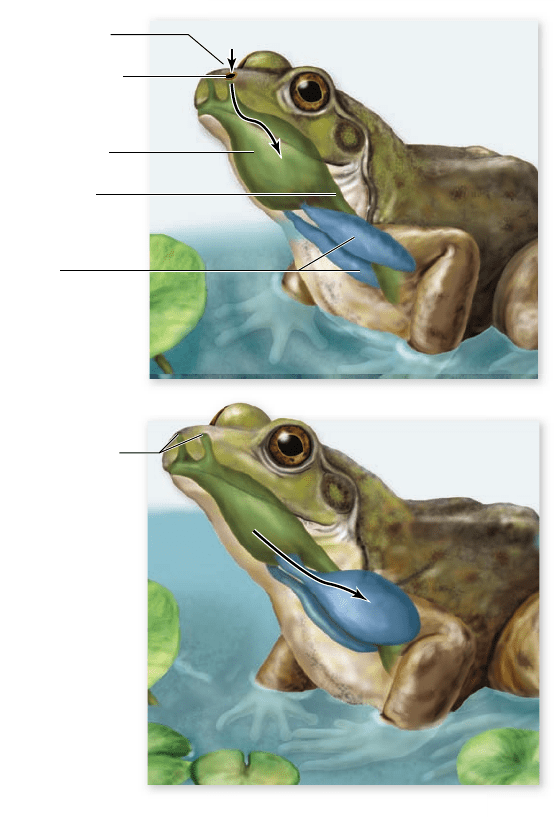
Figure 49.7
Amphibian lungs. Each lung of this frog is an
outpouching of the gut and is lled with air by the creation of a
positive pressure in the buccal cavity. a. The buccal cavity is
expanded and air ows through the open nostrils. b. The nostrils
are closed and the buccal cavity is compressed, thus creating the
positive pressure that lls the lungs. The amphibian lung lacks the
structures present in the lungs of other terrestrial vertebrates that
provide an enormous surface area for gas exchange, and so are not
as ef cient as the lungs of other vertebrates.
on. At sea level, the partial pressures of N
2
, O
2
, and CO
2
are
as follows:
P
N
2
= 760 × 79.02% = 600.6 mm Hg
P
O
2
= 760 × 20.95% = 159.2 mm Hg
P
CO
2
= 760 × 0.03% = 0.2 mm Hg
Humans do not survive for long at altitudes above
6000 m. Although the air at these altitudes still contains 20.95%
oxygen, the atmospheric pressure is only about 380 mm Hg, so
the P
O
2
is only 80 mm Hg (380 × 20.95%), half the amount of
oxygen available at sea level.
In the following sections, we describe respiration in ver-
tebrates with lungs, beginning with reptiles and amphibians.
We then summarize mammalian lungs and the highly adapted
and specialized lungs of birds.
Amphibians and reptiles
breathe in di erent ways
The lungs of amphibians are formed as saclike outpouchings
of the gut (figure 49.7) . Although the internal surface area of
these sacs is increased by folds, much less surface area is avail-
able for gas exchange in amphibian lungs than in the lungs of
other terrestrial vertebrates. Each amphibian lung is connected
to the rear of the oral cavity, or pharynx, and the opening to
each lung is controlled by a valve, the glottis.
Amphibians do not breathe the same way as other ter-
restrial vertebrates. Amphibians force air into their lungs; they
fill their oral cavity with air (figure 49.7a), close their mouth
and nostrils, and then elevate the floor of their oral cavity. This
pushes air into their lungs in the same way that a pressurized
tank of air is used to fill balloons (figure 49.7b). This is called
positive pressure breathing; in humans, it would be analo-
gous to forcing air into a person’s lungs by performing mouth-
to-mouth resuscitation.
Most reptiles breathe in a different way, by expanding their
rib cages by muscular contraction. This action creates a lower
pressure inside the lungs compared with the atmosphere, and
the greater atmospheric pressure moves air into the lungs. This
type of ventilation is termed negative pressure breathing be-
cause of the air being “pulled in” by the animal, like sucking
water through a straw, rather than being “pushed in.”
Mammalian lungs have greatly
increased surface area
Endothermic animals, such as birds and mammals, have con-
sistently higher metabolic rates and thus require more oxygen
(see chapter 7). Both these vertebrate groups exhibit more
complex and efficient respiratory systems than ectothermic
animals. The evolution of more efficient respiratory systems
accommodates the increased demands on cellular respiration
of endothermy.
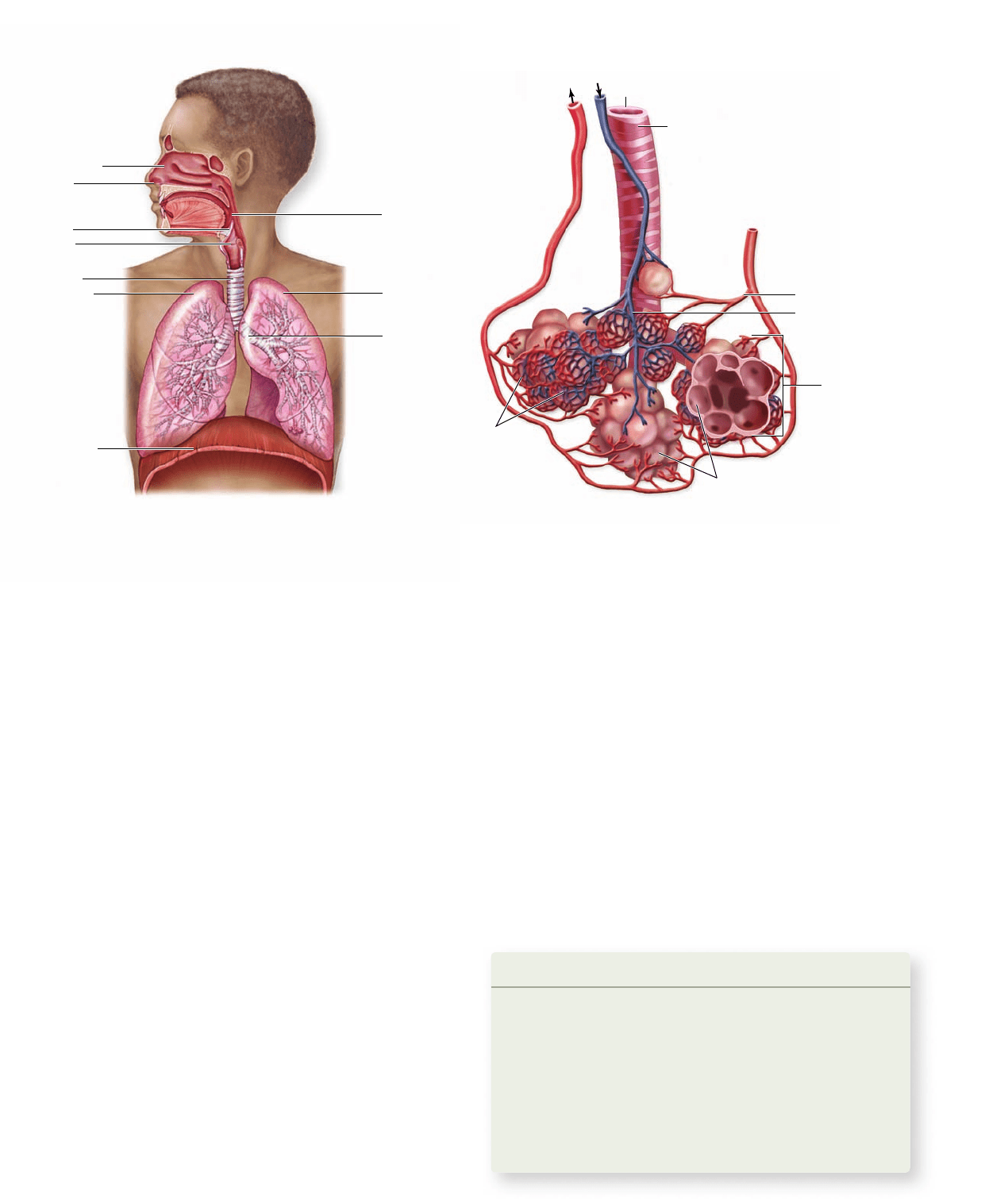
The lungs of mammals are packed with millions of
alveoli, tiny sacs clustered like grapes (figure 49.8) . This pro-
vides each lung with an enormous surface area for gas exchange.
Each alveolus is composed of an epithelium only one cell thick,
and is surrounded by blood capillaries with walls that are also
only one cell layer thick. Thus, the distance d across which gas
must diffuse is very small—only 0.5 to 1.5 μm.
Inhaled air is taken in through the mouth and nose past
the pharynx to the larynx (voice box), where it passes through
an opening in the vocal cords, the glottis, into a tube supported
by C-shaped rings of cartilage, the trachea (windpipe). The
term trachea is used both for the vertebrate windpipe and the
respiratory tubes of arthropods, although the structures are
obviously not homologous. The mammalian trachea bifur-
cates into right and left bronchi (singular, bronchus), which
enter each lung and further subdivide into bronchioles that
deliver the air into the alveoli.
The alveoli are surrounded by an extensive capillary net-
work. All gas exchange between the air and blood takes place
www.ravenbiology.com
chapter
49
The Respiratory System
1007
rav32223_ch49_1001-1017.indd 1007rav32223_ch49_1001-1017.indd 1007 11/19/09 12:41:01 PM11/19/09 12:41:01 PM
Apago PDF Enhancer
Nasal cavity
Nostril
Larynx
Trachea
Right lung Left lung
Pharynx
Left
bronchus
Glottis
Diaphragm
Pulmonary venule
Pulmonary arteriole
Blood flow
Bronchiole
Alveolar
sac
Alveoli
Capillary
network on
surface
of alveoli
Smooth muscle
Figure 49.8
The human respiratory system and the structure of the mammalian lung. The lungs of mammals have an
enormous surface area because of the millions of alveoli that cluster at the ends of the bronchioles. This provides for ef cient gas exchange
with the blood.
across the walls of the alveoli. The branching of bronchi-
oles and the vast number of alveoli combine to increase the
respiratory surface area far above that of amphibians or rep-
tiles. In humans, each lung has about 300 million alveoli, and
the total surface area available for diffusion can be as much as
80 m
2
, or about 42 times the surface area of the body. Details
of gas exchange at the alveolar interface with blood capillaries
is described in sections that follow.
The respiratory system of birds is a
highly e cient ow-through system
The avian respiratory system is a unique structure that affords
birds the most efficient respiration of all terrestrial vertebrates.
Unlike the mammalian lung, which ends in blind alveoli, the
bird lung channels air through tiny air vessels called para-
bronchi, where gas exchange occurs. Air flows through the
parabronchi in one direction only. This flow is similar to
the unidirectional flow of water through a fish gill.
In other terrestrial vertebrates, inhaled fresh air is mixed
with “old,” oxygen-depleted air left from the previous breath-
ing cycle. The lungs of amphibians, reptiles, and mammals are
never completely empty of the gases within them. In birds,
only fresh air enters the parabronchi of the lung, and the “old”
air exits the lung by a different route. The unidirectional flow
of air is achieved through the action of anterior and posterior
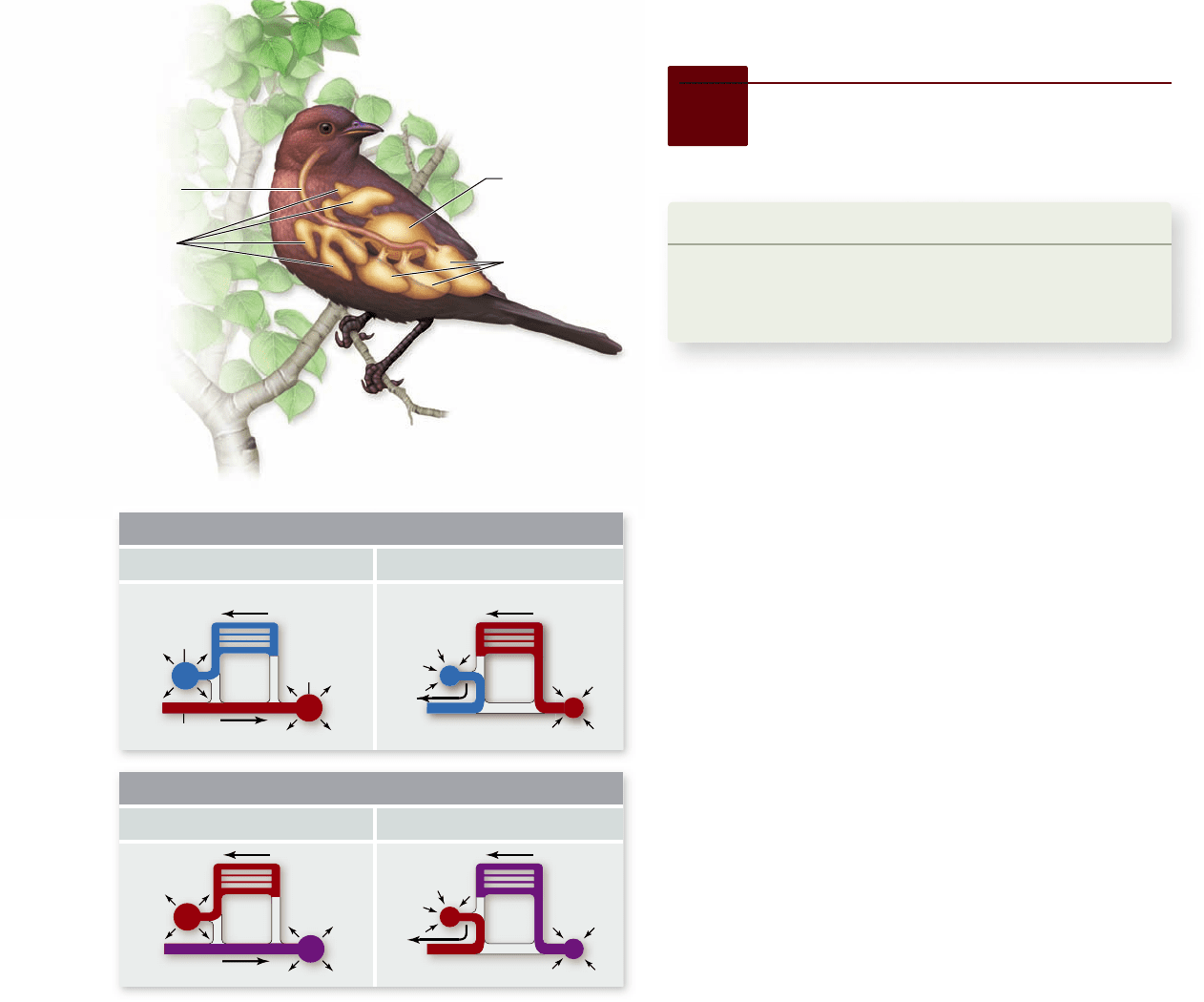
air sacs unique to birds (figure 49.9a) . When these sacs are ex-
panded during inhalation, they take in air, and w hen they are
compressed during exhalation, they push air into and through
the lungs.
Respiration in birds occurs in two cycles (figure 49.9b).
Each cycle has an inhalation and exhalation phase—but the air
inhaled in one cycle is not exhaled until the second cycle.
Upon inhalation, both anterior and posterior air sacs ex-
pand. The inhaled air, however, only enters the posterior air sacs;
the anterior air sacs fill with air pulled from the lungs. Upon ex-
halation, the air forced out of the anterior air sacs is released out-
side the body, but the air forced out of the posterior air sacs now
enters the lungs. This process is repeated in the second cycle.
The unidirectional flow of air also permits further respira-
tory efficiency: The flow of blood through the avian lung runs at a
90° angle to the air flow. This crosscurrent flow is not as efficient as
the 180° countercurrent flow in fishes’ gills, but it has a greater ca-
pacity to extract oxygen from the air than does a mammalian lung.
Because of these respiratory adaptations, a sparrow can
be active at an altitude of 6000 m, whereas a mouse, which has
a similar body mass and metabolic rate, would die from lack of
oxygen in a fairly short time.
Learning Outcomes Review 49.3
Lungs provide a large surface area for gas exchange while minimizing
evaporation; unlike gills, they contain structural support that prevents
their collapse. Amphibians push air into their lungs; most reptiles and all
birds and mammals pull air into their lungs by expanding the thoracic
cavity. The respiratory system of birds has effi cient, one-way air fl ow and
crosscurrent blood fl ow through the lungs.
■ What selection pressure would bring about the
evolution of birds’ highly efficient lungs?
1008 part
VII
Animal Form and Function
rav32223_ch49_1001-1017.indd 1008rav32223_ch49_1001-1017.indd 1008 11/19/09 12:41:02 PM11/19/09 12:41:02 PM
Apago PDF Enhancer
Inhalation Exhalation
Trachea
Anterior
air sacs
Lung
Posterior
air sacs
Cycle 1
Cycle 2
Parabronchi of lung
Inhalation
Trachea
Anterior
air sacs
Posterior
air sacs
Exhalation
a.
b.
Figure 49.9
How a bird breathes. a. Birds have a system of
air sacs, divided into an anterior group and posterior group, that
extend between the internal organs and into the bones. b. Breathing
occurs in two cycles. Cycle 1: Inhaled air (shown in red) is drawn
from the trachea into the posterior air sacs (shown expanding as it
lls with air) and then is exhaled into the lungs (posterior air sacs
de ate). Cycle 2: Air is drawn from the lungs into the anterior air
sacs, which expand, and then is exhaled from these air sacs through
the trachea. Passage of air through the lungs is always in the same
direction, from posterior to anterior (right to left in this diagram).
These cycles are always going on simultaneously; during inhalation,
fresh air enters the posterior air sacs at the same time that air from
the previous breath that was in the lungs moves into the anterior air
sacs. In exhalation, the newer air moves from the posterior air sacs
to the lung at the same time that air in the anterior air sacs is
exhaled from the body. At the same time, another breath of inhaled
air (purple) is moving through cycle 1.
49.4 Structures and Mechanisms
of Ventilation in Mammals
Learning Outcomes
Explain what is meant by anatomical dead space.1.
Describe how the nervous system regulates breathing.2.
List and characterize the major respiratory diseases.3.
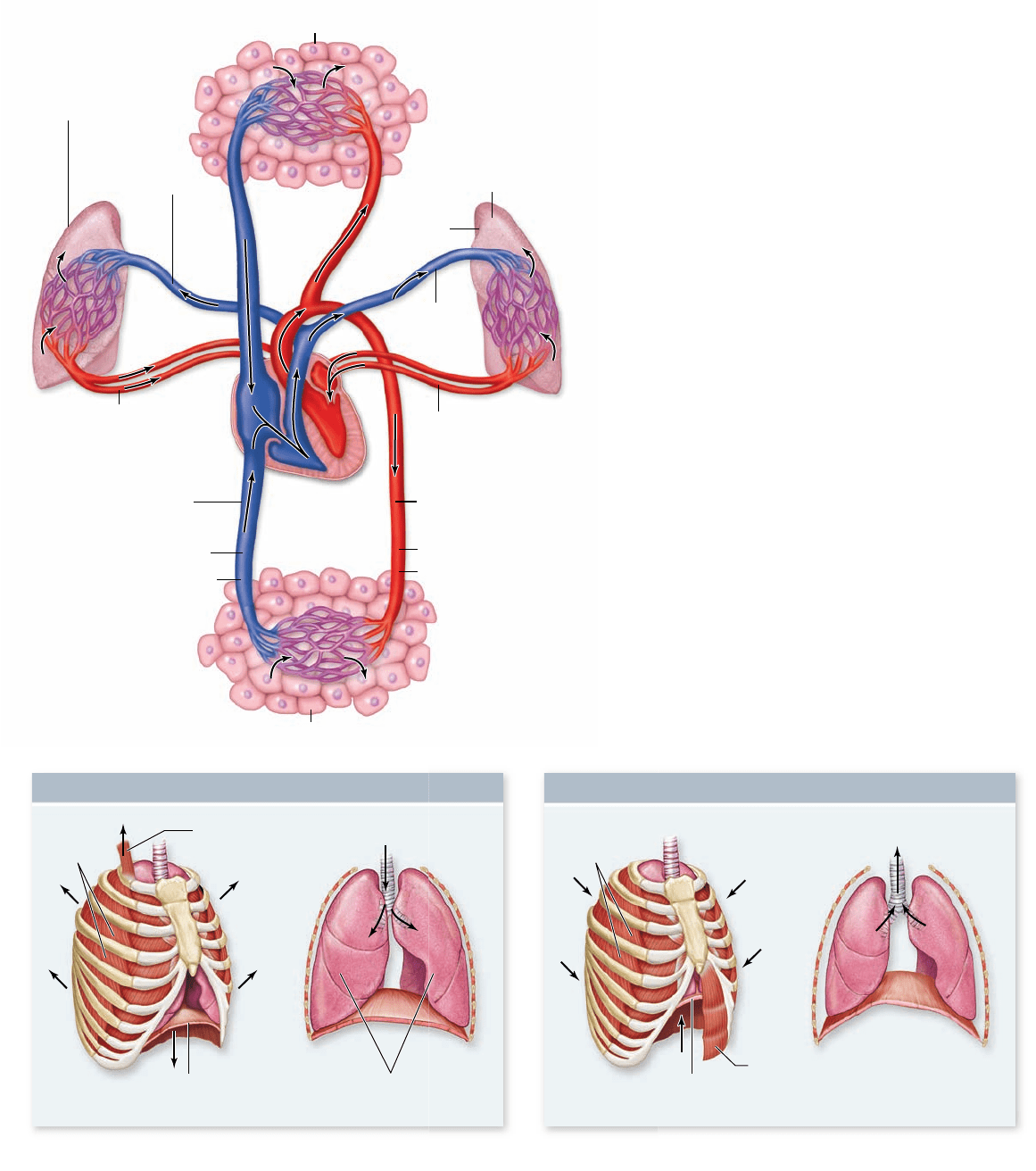
About 30 billion capillaries can be found in each lung, roughly
100 capillaries per alveolus. Thus, an alveolus can be visualized
as a microscopic air bubble whose entire surface is bathed by
blood. Gas exchange occurs very rapidly at this interface.
Blood returning from the systemic circulation, depleted in
oxygen, has a partial oxygen pressure (P
O
2
) of about 40 mm Hg.
By contrast, the P
O
2
in the alveoli is about 105 mm Hg. The dif-
ference in pressures, namely the ∆p of Fick’s Law, is 65 mm Hg,
leading to oxygen moving into the blood. The blood leaving the
lungs, as a result of this gas exchange, normally contains a P
O
2
of about 100 mm Hg. As you can see, the lungs do a very effec-
tive, but not perfect, job of oxygenating the blood. These changes
in the P
O
2
of the blood, as well as the changes in plasma carbon
dioxide (indicated as the P
CO
2
), are shown in figure 49.10 .
Lung structure and function
supports the respiratory cycle
In humans and other mammals, the outside of each lung
is covered by a thin membrane called the visceral pleural
membrane. A second membrane, the parietal pleural
membrane, lines the inner wall of the thoracic cavity. The
space between these two membrane sheets, the pleural cavity,
is normally very small and filled with fluid. This fluid causes
the two membranes to adhere, effectively coupling the lungs to
the thoracic cavity. The pleural membranes package each lung
separately—if one lung collapses due to a perforation of the
membranes, the other lung can still function.
During inhalation, the thoracic volume is increased
through contraction of two sets of muscles: the external intercos-
tal muscles and the diaphragm. Contraction of the external inter-
costal muscles between the ribs raises the ribs and expands the
rib cage. Contraction of the diaphragm, a convex sheet of stri-
ated muscle separating the thoracic cavity from the abdominal
cavity, causes the diaphragm to lower and assume a more flat-
tened shape. This expands the volume of the thorax and lungs,
bringing about negative pressure ventilation, while it increases
the pressure on the abdominal organs (figure 49.11a).
The thorax and lungs have a degree of elasticity; expansion
during inhalation places these structures under elastic tension.
The relaxation of the external intercostal muscles and diaphragm
produces unforced exhalation because the elastic tension is re-
leased, allowing the thorax and lungs to recoil. You can produce
a greater exhalation force by actively contracting your abdominal
muscles—such as when blowing up a balloon (figure 49.11b).
www.ravenbiology.com
chapter
49
The Respiratory System
1009
rav32223_ch49_1001-1017.indd 1009rav32223_ch49_1001-1017.indd 1009 11/19/09 12:41:06 PM11/19/09 12:41:06 PM
Apago PDF Enhancer
Pulmonary
artery
Lung
Alveolar gas
Systemic arteries Systemic veins
Peripheral tissues
Peripheral tissues
P
O
2
=40 mm Hg
P
CO
2
=46 mm Hg
P
O
2
=100 mm Hg
P
CO
2
=40 mm Hg
P
O
2
=40 mm Hg
P
CO
2
=46 mm Hg
P
O
2
=100 mm Hg
P
CO
2
=40 mm Hg
Pulmonary
vein
P
O
2
=105 mm Hg
P
CO
2
=40 mm Hg
Alveolar gas
P
O
2
=105 mm Hg
P
CO
2
=40 mm Hg
O
2
O
2
CO
2
O
2
CO
2
CO
2
O
2
CO
2
Exhalation
a. b.
Inhalation
Muscles
relax
Diaphragm
relaxes
Abdominal muscles
contract (for forced
exhalation)
Air
Air
Lungs
Muscles
contract
Sternocleidomastoid
muscles contract
(for forced inhalation)
Diaphragm
contracts
Figure 49.10
Gas exchange in the blood capillaries
of the lungs and systemic circulation. As a result of gas
exchange in the lungs, the systemic arteries carry oxygenated
blood with a relatively low carbon dioxide (CO
2
) concentration.
After the oxygen (O
2
) is unloaded to the tissues, the blood in
the systemic veins has a lowered O
2
content and an increased
CO
2
concentration.
Figure 49.11
How a human breathes. a. Inhalation. The diaphragm contracts and the walls of the chest cavity expand, increasing
the volume of the chest cavity and lungs. As a result of the larger volume, air is drawn into the lungs. b. Exhalation. The diaphragm and chest
walls return to their normal positions as a result of elastic recoil, reducing the volume of the chest cavity and forcing air out of the lungs
through the trachea. Note that inhalation can be forced by contracting accessory respiratory muscles (such as the sternocleidomastoid), and
exhalation can be forced by contracting abdominal muscles.
Ventilation e ciency depends on
lung capacity and breathing rate
A variety of terms are used to describe the volume changes
of the lung during breathing. In a person at rest, each
breath moves a tidal volume of about 500 mL of air into
and out of the lungs. About 150 mL of the tidal volume is
contained in the tubular passages (trachea, bronchi, and
bronchioles), where no gas exchange occurs—termed
the anatomical dead space. The gases in this space mix with
fresh air during inhalation. This mixing is one reason that
respiration in mammals is not as efficient as in birds, where air
flow through the lungs is one-way.
The maximum amount of air that can be expired after a
forceful, maximum inhalation is called the vital capacity. This
measurement, which averages 4.6 L in young men and 3.1 L in
young women, can be clinically important because an abnor-
mally low vital capacity may indicate damage to the alveoli in
various pulmonary disorders.
The rate and depth of breathing normally keeps the blood
P
O
2
and P
CO
2
within a normal range. If breathing is insuffi-
cient to maintain normal blood gas measurements (a rise in the
blood P
CO
2
is the best indicator), the person is hypoventilating.
If breathing is excessive, so that the blood P
CO
2
is abnormally
lowered, the person is said to be hyperventilating.
1010 part
VII
Animal Form and Function
rav32223_ch49_1001-1017.indd 1010rav32223_ch49_1001-1017.indd 1010 11/19/09 12:41:07 PM11/19/09 12:41:07 PM
Apago PDF Enhancer
Capillary
blood
Cerebrospinal
fluid (CSF)
Medulla
oblongata
Signal to
respiratory
system
Chemosensitive
neuron
Choroid
plexus of
brain
CO
2
H
2
O+CO
2
H
+
+HCO
3
-
H
2
CO
3
a.
b.
Increased tissue
metabolism
(i.e., muscle contraction)
Stimulus
Increased blood CO
2
concentration (P
CO
2
)
Stimulus
Inadequate
breathing
Stimulus
Decreased blood pH
Sensor
Decreased
CSF pH
Sensor
Central chemoreceptors
stimulated (in the brain)
Comparator
Impulses sent to
respiratory control center
in medulla oblongata
Effector
Diaphragm stimulated
to increase breathing
Response
Peripheral chemoreceptors stimulated
(aortic and carotid bodies)
Comparator
H
+
+HCO
3
-
H
2
CO
3
H
2
O+CO
2
Negative
feedback
( – )
( + )
Question: What is the relationship between cerebrospinal uid (CSF) pH, rate of respiration, and partial pressure of carbon dioxide in the blood (P
CO
2
)?
Hypothesis: The pH of CSF, detected by pH-sensitive chemoreceptors in the brain, aects the rate of respiration.
Prediction: Lowering the pH of the CSF (by reducing the concentration of HCO
3
−
) will stimulate increased respiration and, subsequently, reduce blood P
CO
2
.
Experiment: Patients with chronic obstructive respiratory disease (COPD) have higher than average CSF levels of HCO
3
−
. Some of the CSF in these patients was
replaced with CSF with normal HCO
3
−
levels, and subsequent P
CO
2
levels were measured.
Result: The reduced HCO
3
−
levels (and corresponding drop in CSF pH) resulted in increased respiration, which subsequently resulted in lower arterial P
CO
2
.
Conclusion: The drop in pH (caused by the change in HCO
3
−
levels) is detected by H
+
ion chemoreceptors in the brain. The brain sends impulses to the respiratory
control center in the medulla oblongata, which directs an increase in breathing. Likewise, when the concentration of CO
2
in the blood rises as a result of inadequate
breathing or increased tissue metabolism, the pH of the blood and the CSF decreases, stimulating the central chemoreceptors in the brain and the peripheral
chemoreceptors in the aortic and carotid bodies. The receptors signal the brain stem control center, increasing ventilation and reducingthe P
CO
2
to normal levels.
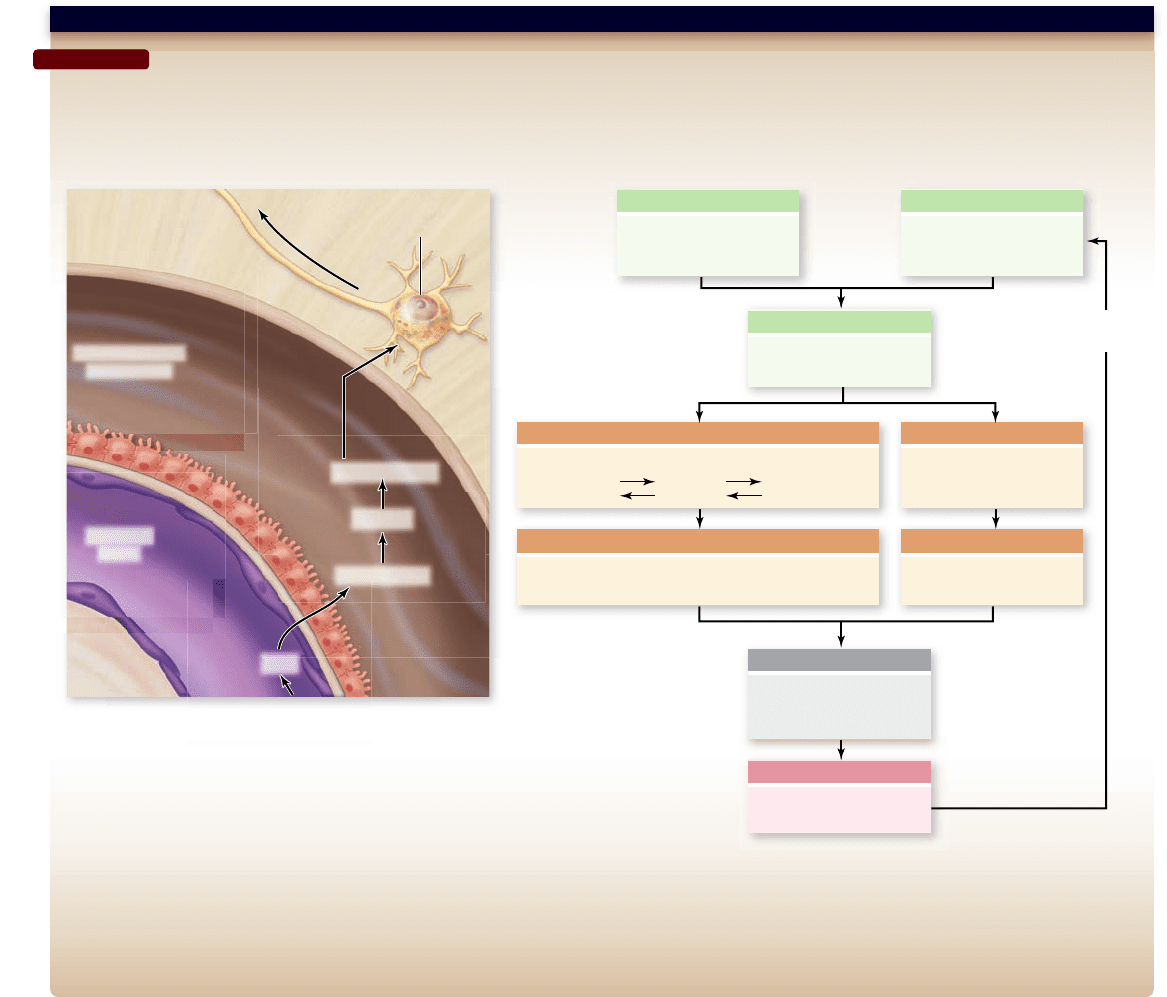
SCI ENTI FIC THINKING
Figure 49.12
Regulation of breathing by pH-sensitive chemoreceptors.
The increased breathing that occurs during moderate ex-
ertion is not necessarily hyperventilation because the faster and
more forceful breathing is matched to the higher metabolic rate,
and blood gas measurements remain normal. Next, we describe
how breathing is regulated to keep pace with metabolism.
Ventilation is under nervous system control
Each breath is initiated by neurons in a respiratory control center
located in the medulla oblongata. These neurons stimulate the
diaphragm and external intercostal muscles to contract, causing
inhalation. When these neurons stop producing impulses, the in-
spiratory muscles relax and exhalation occurs. Although the mus-
cles of breathing are skeletal muscles, they are usually controlled
automatically. This control can be voluntarily overridden, how-
ever, as in hypoventilation (breath holding) or hyperventilation.
Neurons of the medulla oblongata must be responsive to
changes in blood P
O
2
and P
CO
2
in order to maintain homeosta-
sis. You can demonstrate this mechanism by simply holding your
breath. Your blood carbon dioxide level immediately rises, and your
blood oxygen level falls. After a short time, the urge to breathe in-
duced by the changes in blood gases becomes overpowering. The
rise in blood carbon dioxide, as indicated by a rise in P
CO
2
, is the
primary initiator, rather than the fall in oxygen levels.
A rise in P
CO
2
causes an increased production of carbonic
acid (H
2
CO
3
), which lowers the blood pH. A fall in blood pH
stimulates chemosensitive neurons in the aortic and carotid
bodies, in the aorta and the carotid artery (figure 49.12b) . These
chapter
49
The Respiratory System
1011
rav32223_ch49_1001-1017.indd 1011rav32223_ch49_1001-1017.indd 1011 11/19/09 12:41:09 PM11/19/09 12:41:09 PM