
Raven P.H., Johnson G.B., Mason K.A. Biology (Ninth Edition)
Подождите немного. Документ загружается.

Apago PDF Enhancer
Lipophilic Hydrophilic
Endocrine gland A Endocrine gland B
1. Hormones
secreted into
extracellular
fluid and
diffuse into
bloodstream.
2. Hormones
distributed by
blood to all
cells. Diffuse
from blood to
extracellular
fluid.
3. Nontarget
cells lack
receptors,
and cell
stimulation
does not
occur.
4. Target cells
possess
receptors,
and are
activated by
hormones.
5. Unused,
deactivated
hormones
are removed
by the liver
and kidney.
Secretory
vesicles
Hormones
Hormones
Transport proteins
Membrane
receptors
Target cell
Target cell
Activated Activated
Nuclear
receptor
Nontarget
cells
Nontarget
cells
Extracellular
fluid
Extracellular
fluid
1 1
2
3
5
4
4
3
Blood
vessels
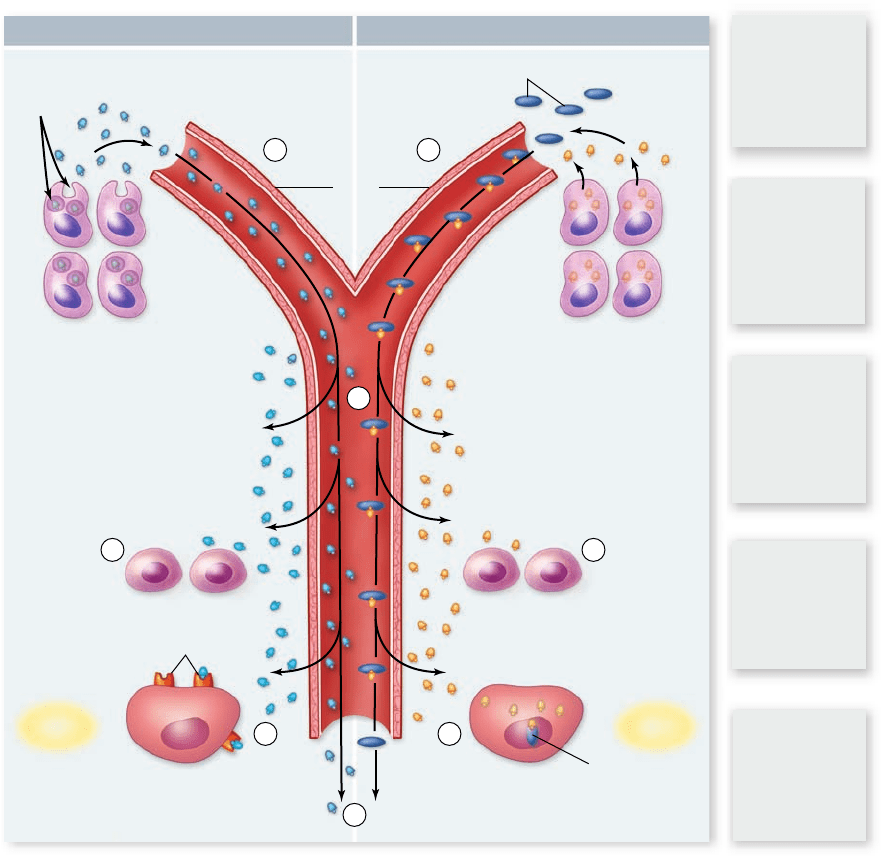
Figure 46.3
The
life of hormones.
Endocrine glands produce
both hydrophilic and
lipophilic hormones,
which are transported to
targets through the blood.
Lipophilic hormones bind
to transport proteins that
make them soluble in
blood. Target cells have
membrane receptors for
hydrophilic hormones,
and intracellular receptors
for lipophilic hormones.
Hormones are eventually
destroyed by their target
cells or cleared from
the blood by the liver
or the kidney.
connective tissue cells, whereas nerve growth factor stimulates the
growth and survival of neurons. Insulin-like growth factor stimulates
cell division in developing bone as well as protein synthesis in many
other tissues. Cytokines (described in chapter 52) are growth fac-
tors specialized to control cell division and differentiation in the
immune system, whereas neurotropins are growth factors that
regulate the nervous system.
The importance of growth factor function is underscored
by the observation that damage to the genes coding for growth
factors or their receptors can lead to the unregulated cell divi-
sion and development of tumors.
Paracrine regulation of blood vessels
The gas nitric oxide (NO), which can function as a neurotransmit-
ter (see chapter 44), is also produced by the endothelium of blood
vessels. In this context, it is a paracrine regulator because it diffuses
to the smooth muscle layer of the blood vessel and promotes vaso-
dilation. One of its major roles involves the control of blood pres-
sure by dilating arteries. The endothelium of blood vessels is a rich
source of paracrine regulators, including endothelin, which stimu-
lates vasoconstriction, and bradykinin, which promotes vasodilation.
Paracrine regulation supplements the regulation of blood vessels
target cells. They must therefore activate their receptors from out-
side the cell membrane. In contrast, lipophilic hormones travel in
the blood attached to transport proteins (figure 46.3). Their lipid
solubility enables them to cross cell membranes and bind to intra-
cellular receptors.
Both types of hormones are eventually destroyed or other-
wise deactivated after their use, eventually being excreted in
bile or urine. However, hydrophilic hormones are deactivated
more rapidly than lipophilic hormones. Hydrophilic hormones
tend to act over relatively brief periods of time (minutes to
hours), whereas lipophilic hormones generally are active over
prolonged periods, such as days to weeks.
Paracrine regulators exert powerful
e ects within tissues
Paracrine regulation occurs in most organs and among the cells
of the immune system. Growth factors, proteins that promote
growth and cell division in specific organs, are among the most
important paracrine regulators. Growth factors play a critical role
in regulating mitosis throughout life (see chapter 10). For example,
epidermal growth factor activates mitosis of skin and development of
942
part
VII
Animal Form and Function
rav32223_ch46_937-960.indd 942rav32223_ch46_937-960.indd 942 11/17/09 4:59:12 PM11/17/09 4:59:12 PM
Apago PDF Enhancer
ThyroxineCortisol (Hydrocortisone)
O
HO
OH
H
3
C
CH
2
OH
CO
J
J
J
J
J
J
J
J
J
HO O
II
II
NH
2
CH
2
J
CH
COOH
JJ
JJJJ
H
3
C
Testosterone
O
OH
J
J
J
J
J
H
3
C
H
3
C
a greater risk of heart attack and stroke was detected. Some
have remained in use, however, and others may be reintroduced
upon FDA approval. Aside from the possibly lessened gastro-
intestinal side effects, COX-2 inhibitors are not more effective
for pain than the older NSAIDs.
Learning Outcomes Review 46.1
Hormones coordinate the activity of specifi c target cells. The three chemical
classes of endocrine hormones are peptides and proteins, amino acid
derivatives, and steroids. Lipophilic hormones such as steroids can cross
membranes, but need carriers in the blood; hydrophilic hormones move
readily in the blood, but cannot cross membranes. Paracrine regulators act
within the organ in which they are produced.
■ How do hormones and neurotransmitters differ?
by autonomic nerves, enabling vessels to respond to local condi-
tions, such as increased pressure or reduced oxygen.
Prostaglandins
A particularly diverse group of paracrine regulators are the prosta-
glandins. A prostaglandin is a 20-carbon-long fatty acid that con-
tains a five-membered carbon ring. This molecule is derived from
the precursor molecule arachidonic acid, released from phospho-
lipids in the cell membrane under hormonal or other stimulation.
Prostaglandins are produced in almost every organ and participate
in a variety of regulatory functions. Some prostaglandins are active
in promoting smooth muscle contraction. Through this action,
they regulate reproductive functions such as gamete transport,
labor, and possibly ovulation. Excessive prostaglandin production
may be involved in premature labor, endometriosis, or dysmenor-
rhea (painful menstrual cramps). They also participate in lung and
kidney regulation through effects on smooth muscle.
In fish, prostaglandins have been found to function as
both a hormone and a paracrine regulator. Prostaglandins pro-
duced in the fish’s ovary during ovulation can travel to the brain
to synchronize associated spawning behavior.
Prostaglandins are produced at locations of tissue dam-
age, where they promote many aspects of inflammation, includ-
ing swelling, pain, and fever. This effect of prostaglandins has
been well studied. Drugs that inhibit prostaglandin synthesis,
such as aspirin, help alleviate these symptoms.
Aspirin is the most widely used of the nonsteroidal
anti-inflammatory drugs (NSAIDs), a class of drugs that also in-
cludes indomethacin and ibuprofen. These drugs act to inhibit
two related enzymes: cyclooxygenase-1 and 2 ( COX-1 and
COX-2). The anti-inflammatory effects are due to the inhibi-
tion of COX-2, which is necessary for the production of pros-
taglandins from arachidonic acid. This reduces inflammation
and associated pain from the action of prostaglandins. Unfor-
tunately, the inhibition of COX-1 produces unwanted side ef-
fects, including gastric bleeding and prolonged clotting time.
More recently developed pain relievers, called COX-2
inhibitors, selectively inhibit COX-2 but not COX-1. COX-2
inhibitors may be of potentially great benefit to arthritis suf-
ferers and others who must use pain relievers regularly, but
concerns have been raised that they may also affect other as-
pects of prostaglandin function in the cardiovascular system.
Some COX-2 inhibitors were removed from the market when
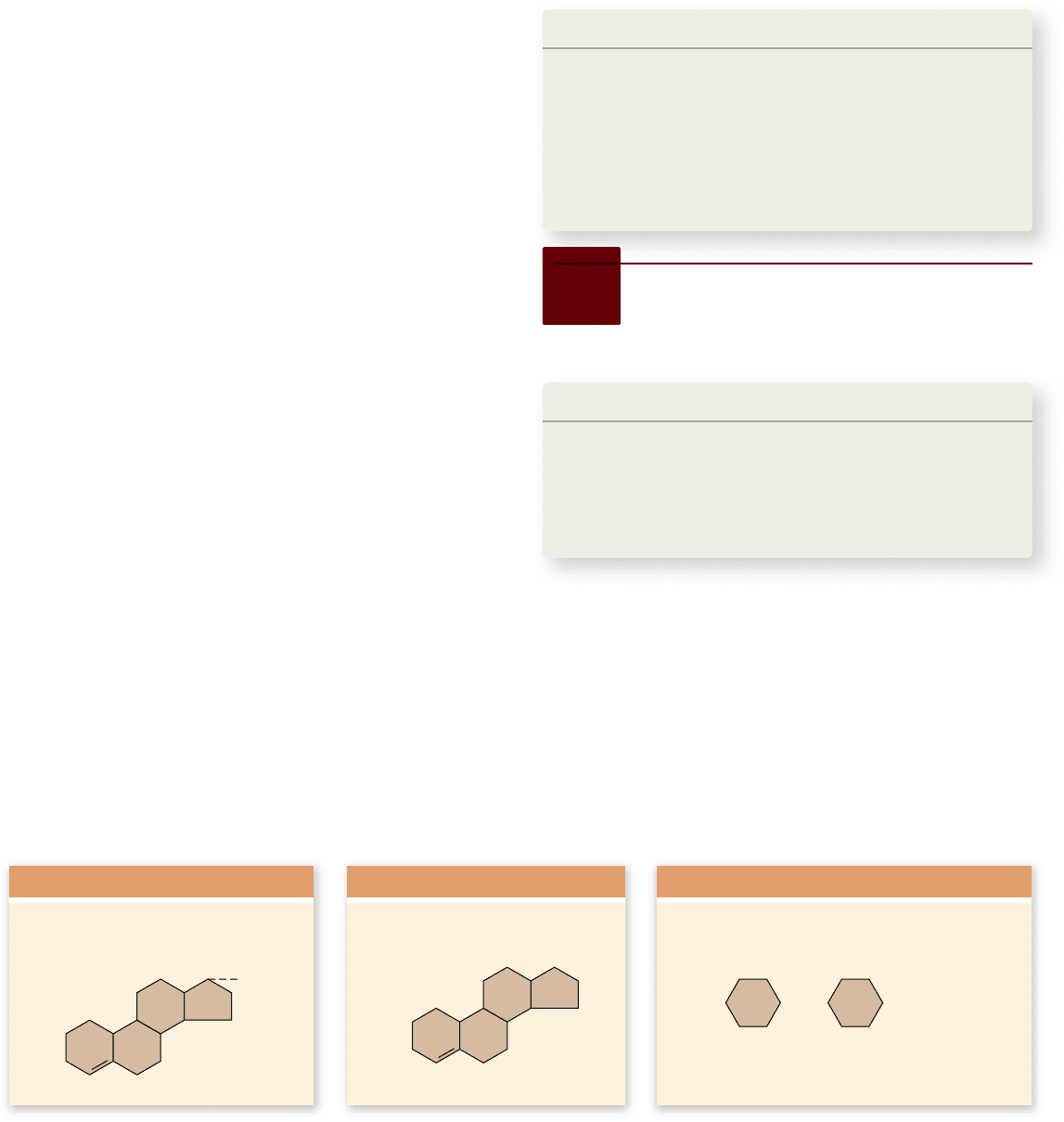
Figure 46.4
Chemical structures of lipophilic hormones. Steroid hormones are derived from cholesterol. The two steroid
hormones shown, cortisol and testosterone, differ slightly in chemical structure yet have widely different effects on the body. The thyroid
hormone, thyroxine, is formed by coupling iodine to the amino acid tyrosine.
46.2
Actions of Lipophilic Versus
Hydrophilic Hormones
Learning Outcomes
Explain how steroid hormone receptors activate 1.
transcription.
Explain how the signal carried by peptide hormones 2.
crosses the membrane.
Describe the different types of membrane receptors.3.
As mentioned previously, hormones can be divided into the lipo-
philic (lipid-soluble) and the hydrophilic (water-soluble). The
receptors and actions of these two broad categories have notable
differences, which we explore in this section.
Lipophilic hormones activate
intracellular receptors
The lipophilic hormones include all of the steroid hormones
and thyroid hormones (figure 46.4) as well as other lipophilic
regulatory molecules including the retinoids, or vitamin A.
www.ravenbiology.com
chapter
46
The Endocrine System
943
rav32223_ch46_937-960.indd 943rav32223_ch46_937-960.indd 943 11/17/09 4:59:13 PM11/17/09 4:59:13 PM
Apago PDF Enhancer
Receptor
Blood
plasma
Protein
Lipophilic hormones
mRNA
DNA
Hormone response element
1. Hormone passes
through plasma
membrane
2. Inside target cell
the hormone
binds to a receptor
protein in the
cytoplasm or
nucleus
3. Hormone-receptor
complex binds to
hormone response
element on DNA,
regulating gene
transcription
4. Protein synthesis
5. Change in protein
synthesis is cellular
response
Cytoplasm
Plasma membrane
Nucleus
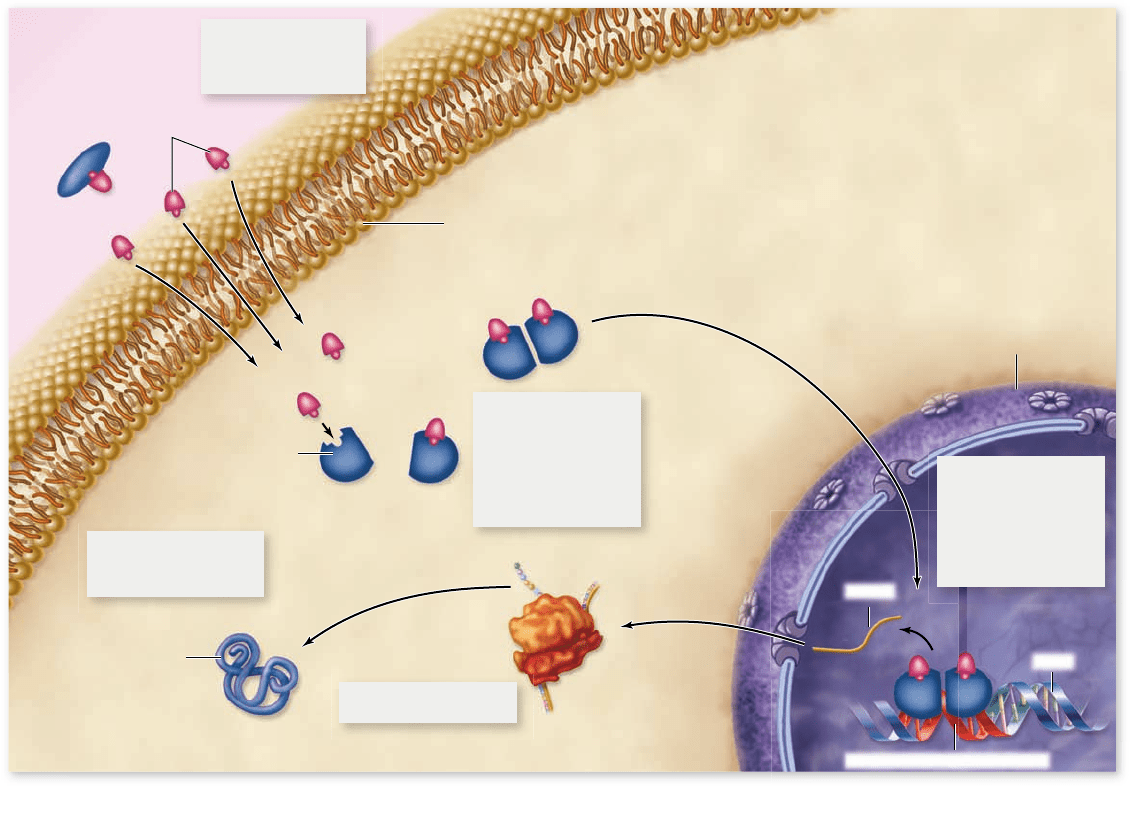
Figure 46.5
The mechanism of lipophilic hormone action. Lipophilic hormones diffuse through the plasma membrane of cells
and bind to intracellular receptor proteins. The hormone-receptor complex then binds to speci c regions of the DNA (hormone response
elements), regulating the production of messenger RNA (mRNA). Most receptors for these hormones reside in the nucleus; if the hormone is
one that binds to a receptor in the cytoplasm, the hormone-receptor complex moves together into the nucleus.
Lipophilic hormones can enter cells because the lipid por-
tion of the plasma membrane does not present a barrier. Once
inside the cell the lipophilic regulatory molecules all have a
similar mechanism of action.
Transport and receptor binding
These hormones circulate bound to transport proteins (see
figure 46.3), which make them soluble and prolong their sur-
vival in the blood. When the hormones arrive at their target
cells, they dissociate from their transport proteins and pass
through the plasma membrane of the cell (figure 46.5) . The
hormone then binds to an intracellular receptor protein.
Some steroid hormones bind to their receptors in the cy-
toplasm, and then move as a hormone-receptor complex into
the nucleus. Other steroids and the thyroid hormones travel
directly into the nucleus before encountering their receptor
proteins. Whether the hormone finds its receptor in the nu-
cleus or translocates with its receptor into the nucleus from the
cytoplasm, the rest of the story is similar.
Activation of transcription in the nucleus
The hormone receptor, activated by binding to the hormone,
is now also able to bind to specific regions of the DNA. These
DNA regions, located in the promoters of specific genes, are
known as hormone response elements. The binding of the
hormone-receptor complex has a direct effect on the level of
transcription at that site by activating, or in some cases deac-
tivating, gene transcription. Receptors therefore function as
hormone-activated transcription factors (see chapters 9 and 16).
The proteins that result from activation of these transcrip-
tion factors often have activity that changes the metabolism of
the target cell in a specific fashion; this change constitutes the
cell’s response to hormone stimulation. When estrogen binds
to its receptor in liver cells of chickens, for example, it acti-
vates the cell to produce the protein vitellogenin, which is then
transported to the ovary to form the yolk of eggs. In contrast,
when thyroid hormone binds to its receptor in the anterior pi-
tuitary of humans, it inhibits the expression of the gene for thy-
rotropin, a mechanism of negative feedback (described later).
944
part
VII
Animal Form and Function
rav32223_ch46_937-960.indd 944rav32223_ch46_937-960.indd 944 11/17/09 4:59:13 PM11/17/09 4:59:13 PM
Apago PDF Enhancer
C
C
C
Ce
Ce
Ce
e
e
e
e
e
l
lul
lul
lul
ar
a
ar
r
a
a
C
C
Ce
Cel
Cel
el
el
el
l
lul
ul
l
lul
ul
ul
lu
lu
lu
l
ar
ar
r
a
r
a
a
a
a
re
res
s
s
s
o
po
pon
n
n
n
n
n
s
re
res
es
es
s
s
s
re
es
re
re
pon
po
po
pon
pon
pon
pon
pon
n
s
s
se
se
se
s
e
e
ATP
Hormone
Inactive
Active kinase
domain
Receptor
Target
protein
P
P
P
P
Phosphorylated
protein
GPCR
Inactive G
protein
Active G
protein
Second messenger-
generating enzyme
Hormones
GTP GTP
GDP
GPCR
Inactive
protein kinase
Target
proteins
Active
protein kinase
Second
messenger
1. Receptors Function as Kinase Enzymes 2. Receptors Activate G Proteins
Cellular
response
g
a
b
ADP
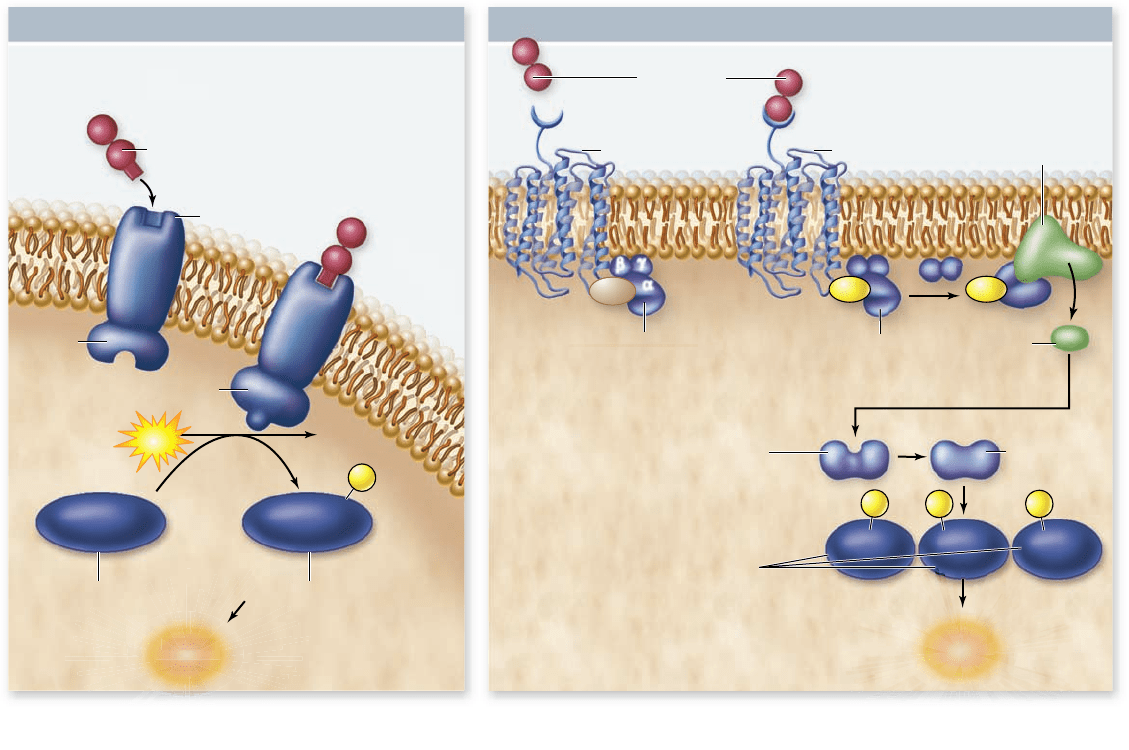
Figure 46.6
The action of hydrophilic hormones. Hydrophilic hormones cannot enter cells and must therefore work
extracellularly via activation of transmembrane receptor proteins. (1) These receptors can function as kinase enzymes, activating
phosphorylation of other proteins inside cells. (2) Alternatively, acting through intermediary G proteins, the hormone-bound receptor
activates production of a second messenger. The second messenger activates protein kinases that phosphorylate and thereby activate other
proteins. GPCR, G protein–coupled receptor.
Receptor kinases
For some hormones, such as insulin, the receptor itself is a ki-
nase (figure 46.6) , and it can directly phosphorylate intracellular
proteins that alter cellular activity. In the case of insulin, this ac-
tion results in the placement in the plasma membrane of glucose
transport proteins that enable glucose to enter cells. Other pep-
tide hormones, such as growth hormone, work through similar
mechanisms, although the receptor itself is not a kinase. Instead,
the hormone-bound receptor recruits and activates intracellular
kinases, which then initiate the cellular response.
Second-messenger systems
Many hydrophilic hormones, such as epinephrine, work through
second-messenger systems. A number of different molecules in
the cell can serve as second messengers, as you saw in chapter 9.
The interaction between the hormone and its receptor activates
mechanisms in the plasma membrane that increase the concentra-
tion of the second messengers within the target cell cytoplasm.
In the early 1960s, Earl Sutherland showed that activation
of the epinephrine receptor on liver cells increases intracellu-
lar cyclic adenosine monophosphate, or cyclic AMP (cAMP),
which then serves as an intracellular second messenger. The
Because this activation and transcription process requires
alterations in gene expression, it often takes several hours be-
fore the response to lipophilic hormone stimulation is apparent
in target cells.
Hydrophilic hormones activate receptors
on target cell membranes
Hormones that are too large or too polar to cross the plasma
membranes of their target cells include all of the peptide, pro-
tein, and glycoprotein hormones, as well as the catecholamine
hormones. These hormones bind to receptor proteins located
on the outer surface of the plasma membrane. This binding
must then activate the hormone response inside the cell, initi-
ating the process of signal transduction. The cellular response
is most often achieved through receptor-dependent activation
of the powerful intracellular enzymes called protein kinases. As
described in chapter 9, protein kinases are critical regulatory
enzymes that activate or deactivate intracellular proteins by
phosphorylation. By regulating protein kinases, hydrophilic
hormone receptors exert a powerful influence over the broad
range of intracellular functions.
www.ravenbiology.com
chapter
46
The Endocrine System
945
rav32223_ch46_937-960.indd 945rav32223_ch46_937-960.indd 945 11/17/09 4:59:17 PM11/17/09 4:59:17 PM

Apago PDF Enhancer
cAMP second-messenger system was the first such system to
be described. Since that time, another hormonally regulated
second-messenger system has been described that generates
two lipid messengers: inositol triphosphate (IP
3
) and diacyl
glycerol (DAG) . These systems were described in chapter 9.
The action of G proteins
Receptors that activate second messengers do not manufacture
the second messenger themselves. Rather, they are linked to a
second-messenger-generating enzyme via membrane proteins
called G proteins [that is, they are G protein–coupled receptors
(GPCR); see chapter 9]. The binding of the hormone to its re-
ceptor causes the G protein to shuttle within the plasma mem-
brane from the receptor to the second-messenger-generating
enzyme (see figure 46.6). When the G protein activates the en-
zyme, the result is an increase in second-messenger molecules
inside the cell.
In the case of epinephrine, the G protein activates an enzyme
called adenylyl cyclase, which catalyzes the formation of the second
messenger cAMP from ATP. The second messenger formed at the
inner surface of the plasma membrane then diffuses within the
cytoplasm, where it binds to and activates protein kinases.
The identities of the proteins that are subsequently phos-
phorylated by the protein kinases vary from one cell type to the
next and include enzymes, membrane transport proteins, and
transcription factors. This diversity provides hormones with dis-
tinct actions in different tissues. In liver cells, for example, cAMP-
dependent protein kinases activate enzymes that convert glycogen
into glucose. In contrast, cardiac muscle cells express a different set
of cellular proteins such that a cAMP increase activates an increase
in the rate and force of cardiac muscle contraction.
Activation versus inhibition
The cellular response to a hormone depends on the type of G
protein activated by the hormone’s receptor. Some receptors are
linked to G proteins that activate second-messenger-producing
enzymes, whereas other receptors are linked to G proteins that
inhibit their second-messenger-generating enzyme. As a result,
some hormones stimulate protein kinases in their target cells,
and others inhibit their targets. Furthermore, a single hormone
can have distinct actions in two different cell types if the recep-
tors in those cells are linked to different G proteins.
Epinephrine receptors in the liver, for example, produce
cAMP through the enzyme adenylyl cyclase, mentioned earlier.
The cAMP they generate activates protein kinases that promote
the production of glucose from glycogen. In smooth muscle, by
contrast, epinephrine receptors can be linked through a differ-
ent stimulatory G protein to the IP
3
-generating enzyme phos-
pholipase C. As a result, epinephrine stimulation of smooth
muscle results in IP
3
-regulated release of intracellular calcium,
causing muscle contraction.
Duration of hydrophilic hormone effects
The binding of a hydrophilic hormone to its receptor is reversible
and usually very brief; hormones soon dissociate from receptors or
are rapidly deactivated by their target cells after binding. Addition-
ally, target cells contain specific enzymes that rapidly deactivate
second messengers and protein kinases. As a result, hydrophilic
hormones are capable of stimulating immediate responses within
cells, but often have a brief duration of action (minutes to hours).
Learning Outcomes Review 46.2
Steroids, which are lipophilic, pass through a target cell’s membrane and
bind to intracellular receptor proteins. The hormone-receptor complex then
binds to the hormone response element of the promotor region of the target
gene. Hydrophilic hormones such as peptides bind externally to membrane
receptors that activate protein kinases directly or that operate through
second-messenger systems such as cAMP or IP
3
/DAG.
■ How can a single hormone, such as epinephrine, have
different effects in different tissues?
46.3
The Pituitary and
Hypothalamus: The Body’s
Control Centers
Learning Outcomes
Explain why the pituitary is considered a compound 1.
gland.
Describe the connections between the hypothalamus, 2.
posterior pituitary, and anterior pituitary.
Describe the roles of releasing and inhibiting hormones.3.
The pituitary gland, also known as the hypophysis, hangs by
a stalk from the hypothalamus at the base of the brain posterior
to the optic chiasm. The hypothalamus is a part of the central
nervous system (CNS) that has a major role in regulating body
processes. Both these structures were described in chapter 44 ;
here we discuss in detail how they work together to bring about
homeostasis and changes in body processes.
The pituitary is a compound endocrine gland
A microscopic view reveals that the gland consists of two parts,
one of which appears glandular and is called the anterior
pituitary, or adenohypophysis. The other portion appears
fibrous and is called the posterior pituitary, or neuro-
hypophysis. These two portions of the pituitary gland have
different embryonic origins, secrete different hormones, and
are regulated by different control systems. These two regions
are conserved in all vertebrate animals, suggesting an ancient
and important function of each.
The posterior pituitary stores and releases
two neurohormones
The posterior pituitary appears fibrous because it contains
axons that originate in cell bodies within the hypothalamus
and that extend along the stalk of the pituitary as a tract
of fibers. This anatomical relationship results from the way
the posterior pituitary is formed in embryonic development.
As the floor of the third ventricle of the brain forms the
hypothalamus, part of this neural tissue grows downward
946
part
VII
Animal Form and Function
rav32223_ch46_937-960.indd 946rav32223_ch46_937-960.indd 946 11/17/09 4:59:19 PM11/17/09 4:59:19 PM
Apago PDF Enhancer
• ADH increases
vasoconstriction
Effector
• ADH reduces
urine volume
Effector
ADH synthesized
by neurosecretory
cells in the
hypothalamus
is released
from neuro-
hypophysis into
blood
Integrating Center
Water returned to
blood
Response
Increases
blood pressure
Response
Osmotic
concentration of
blood increases
Stimulus
Dehydration
Stimulus
Lowers blood
volume and
pressure
Stimulus
Osmoreceptors
in CNS monitor
concentration
Sensor
Baroreceptors
in aorta
monitor pressure
Sensor
( – )
Negative
f
eedback
( – )
Negative
feedback
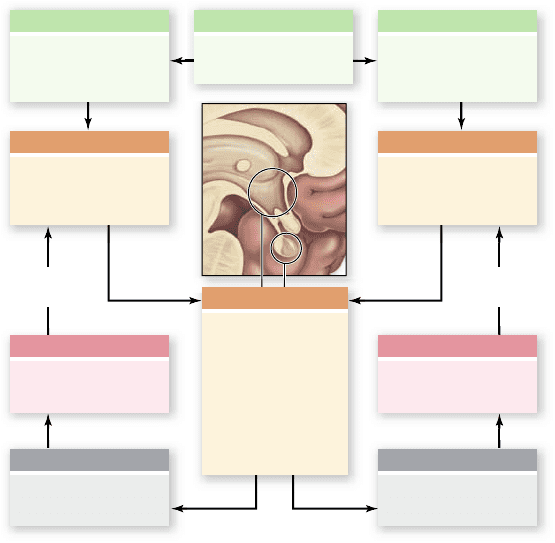
Figure 46.7
The e ects of antidiuretic hormone (ADH).
Dehydration increases the osmotic concentration of the blood and
lowers blood pressure, stimulating the neurohypophysis to secrete
ADH. ADH increases reabsorption of water by the kidneys and
causes vasoconstriction, increasing blood pressure. Decreased
blood osmolarity and increased blood pressure complete negative
feedback loops to maintain homeostasis.
Oxytocin is also needed to stimulate uterine contractions in
women during childbirth.
Oxytocin secretion continues after childbirth in a woman
who is breast-feeding; as a result, the uterus of a nursing mother
contracts and returns to its normal size after pregnancy more
quickly than the uterus of a mother who does not breast-feed.
A related posterior pituitary neurohormone, arginine
vasotocin, exerts similar effects in nonmammalian species. For
example, in chickens and sea turtles, arginine vasotocin acti-
vates oviduct contraction during egg laying.
More recently, oxytocin has been identified as an im-
portant regulator of reproductive behavior. In both men and
women, it is thought to be involved in promoting pair bond-
ing (leading to its being called the “cuddle hormone”) as well
as regulating sexual responses, including arousal and orgasm.
For these effects, it most likely functions in a paracrine fashion
inside the CNS, much like a neurotransmitter.
Hypothalamic production of the neurohormones
ADH and oxytocin are actually produced by neuron cell bodies
located in the hypothalamus. These two neurohormones are trans-
ported along the axon tract that runs from the hypothalamus to the
posterior pituitary, where they are stored. In response to the appro-
priate stimulation—increased blood plasma osmolality in the case
of ADH, the suckling of a baby in the case of oxytocin—the neuro-
hormones are released by the posterior pituitary into the blood.
Because this reflex control involves both the nervous and
the endocrine systems, ADH and oxytocin are said to be se-
creted by a neuroendocrine reflex.
The anterior pituitary produces
seven hormones
The anterior pituitary, unlike the posterior pituitary, does not
develop from growth of the brain; instead, it develops from a
pouch of epithelial tissue that pinches off from the roof of the
embryo’s mouth. In spite of its proximity to the brain, it is not
part of the nervous system.
Because it forms from epithelial tissue, the anterior pitu-
itary is an independent endocrine gland. It produces at least seven
essential hormones, many of which stimulate growth of their tar-
get organs, as well as production and secretion of other hormones
from additional endocrine glands. Therefore, several hormones
of the anterior pituitary are collectively termed tropic hormones, or
tropins. Tropic hormones act on other endocrine glands to stimu-
late secretion of hormones produced by the target gland.
The hormones produced and secreted by different cell
types in the anterior pituitary can be categorized into three
structurally similar families: the peptide hormones, the protein
hormones, and the glycoprotein hormones.
Peptide hormones
The peptide hormones of the anterior pituitary are cleaved
from a single precursor protein, and therefore they share some
common sequence. They are fewer than 40 amino acids in size.
Adrenocorticotropic hormone1. (ACTH, or
corticotropin) stimulates the adrenal cortex to produce
corticosteroid hormones, including cortisol (in humans)
to produce the posterior pituitary. The hypothalamus and
posterior pituitary thus remain directly interconnected by a
tract of axons.
Antidiuretic hormone
The endocrine role of the posterior pituitary first became evi-
dent in 1912, when a remarkable medical case was reported:
A man who had been shot in the head developed the need to
urinate every 30 minutes or so, 24 hours a day. The bullet had
lodged in his posterior pituitary. Subsequent research demon-
strated that removal of this portion of the pituitary produces
the same symptoms.
In the early 1950s investigators isolated a peptide from
the posterior pituitary, antidiuretic hormone (ADH). ADH
stimulates water reabsorption by the kidneys (figure 46.7) , and
in doing so inhibits diuresis (urine production). When ADH
is missing, as it was in the shooting victim, the kidneys do not
reabsorb as much water, and excessive quantities of urine are
produced. This is why the consumption of alcohol, which in-
hibits ADH secretion, leads to frequent urination. The role of
ADH in kidney function is covered in chapter 51.
Oxytocin
The posterior pituitary also secretes oxytocin, a second pep-
tide neurohormone that, like ADH, is composed of nine amino
acids. In mammals, oxytocin stimulates the milk ejection reflex.
During suckling, sensory receptors in the nipples send impulses
to the hypothalamus, which triggers the release of oxytocin.
www.ravenbiology.com
chapter
46
The Endocrine System
947
rav32223_ch46_937-960.indd 947rav32223_ch46_937-960.indd 947 11/17/09 4:59:20 PM11/17/09 4:59:20 PM
Apago PDF Enhancer
Portal veins
Hypothalamus
Adenohypophysis
Secondary capillaries
Neurohypophysis
Primary capillaries
Primary
capillaries
Axons to primary
capillaries
Neuron cell
bodies
Axons to primary
capillaries
Hormones
Portal veins
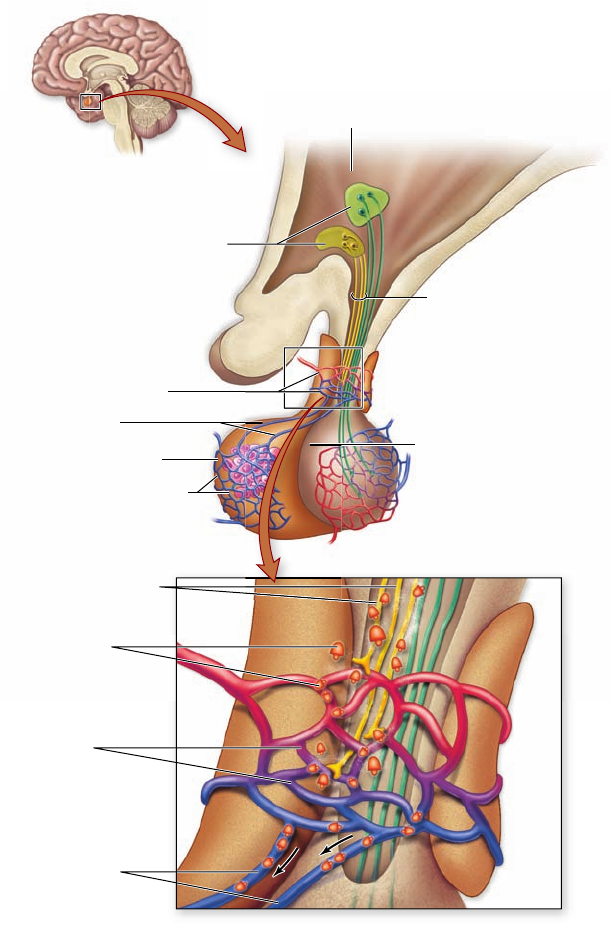
Figure 46.8
Hormonal control of the adenohypophysis
by the hypothalamus. Neurons in the hypothalamus secrete
hormones that are carried by portal blood vessels directly to
the adenohypophysis, where they either stimulate or inhibit the
secretion of hormones from the adenohypophysis.
that diffuse into blood capillaries at the base of the hypothala-
mus (figure 46.8) . These capillaries drain into small veins that
run within the stalk of the pituitary to a second bed of capil-
laries in the anterior pituitary. This unusual system of vessels
is known as the hypothalamohypophyseal portal system. In a portal
system, two capillary beds are linked by veins. In this case, the
hormone enters the first capillary bed, and the vein delivers
this to the second capillary bed where the hormone exits and
enters the anterior pituitary.
Releasers
Each neurohormone released by the hypothalamus into the
portal system regulates the secretion of a specific hormone in
and corticosterone (in many other vertebrates). These
hormones regulate glucose homeostasis and are important
in the response to stress.
Melanocyte-stimulating hormone (MSH) 2. stimulates
the synthesis and dispersion of melanin pigment, which
darkens the epidermis of some sh, amphibians, and
reptiles, and can control hair pigment color in mammals.
Protein hormones
The protein hormones each comprise a single chain of ap-
proximately 200 amino acids, and they share significant struc-
tural similarities.
Growth hormone1. (GH, or somatotropin) stimulates the
growth of muscle, bone (indirectly), and other tissues, and
it is also essential for proper metabolic regulation.
Prolactin (PRL)2. is best known for stimulating the
mammary glands to produce milk in mammals; however,
it has diverse effects on many other targets, including
regulation of ion and water transport across epithelia,
stimulation of a variety of organs that nourish young, and
activation of parental behaviors.
Glycoprotein hormones
The largest and most complex hormones known, the glyco-
protein hormones are dimers, containing alpha (α) and beta (β)
subunits, each around 100 amino acids in size, with covalently
linked sugar residues. The α subunit is common to all three
hormones. The β subunit differs, endowing each hormone with
a different target specificity.
Thyroid-stimulating hormone1. (TSH, or thyrotropin)
stimulates the thyroid gland to produce the hormone
thyroxine, which in turn regulates development and
metabolism by acting on nuclear receptors.
Luteinizing hormone (LH)2. stimulates the production of
estrogen and progesterone by the ovaries and is needed for
ovulation in female reproductive cycles (see chapter 53 ) .
In males, it stimulates the testes to produce testosterone,
which is needed for sperm production and for the
development of male secondary sexual characteristics.
Follicle-stimulating hormone (FSH)3. is required for the
development of ovarian follicles in females. In males, it is
required for the development of sperm. FSH stimulates
the conversion of testosterone into estrogen in females,
and into dihydroxytestosterone in males. FSH and LH
are collectively referred to as gonadotropins.
Hypothalamic neurohormones
regulate the anterior pituitary
The anterior pituitary, unlike the posterior pituitary, is not
derived from the brain and does not receive an axon tract
from the hypothalamus. Nevertheless, the hypothalamus
controls the production and secretion of its hormones. This
control is itself exerted hormonally rather than by means of
nerve axons.
Neurons in the hypothalamus secrete two types of neu-
rohormones, releasing hormones and inhibiting hormones,
948
part
VII
Animal Form and Function
rav32223_ch46_937-960.indd 948rav32223_ch46_937-960.indd 948 11/17/09 4:59:20 PM11/17/09 4:59:20 PM
Apago PDF Enhancer
Tropic hormones
(TSH, ACTH, FSH, LH)
Adenohypophysis
Thyroid, adrenal
cortex, gonads
Target Glands
Hormones
Releasing hormones
(TRH, CRH, GnRH)
Hypothalamus
( + )
( + )
( + )
Target
cells
( – )
( – )
Negative
f
eedback
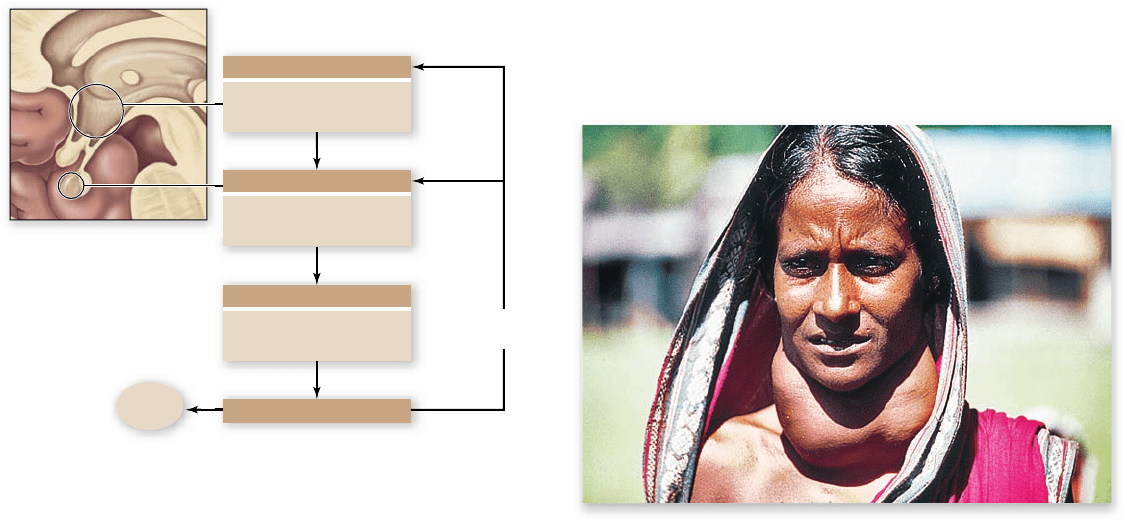
Figure 46.9
Negative feedback inhibition. The
hormones secreted by some endocrine glands feed back to
inhibit the secretion of hypothalamic releasing hormones and
adenohypophysis tropic hormones. ACTH, adrenocorticotropic
hormone; CRH, corticotropin-releasing hormone; FSH, follicle-
stimulating hormone; GnRH, gonadotropin-releasing hormone;
LH, luteinizing hormone; TRH, thyroid-releasing hormone; TSH,
thyroid-stimulating hormone
trolled by the very hormones whose secretion they stimulate. In
most cases, this control is inhibitory (figure 46.9) . This type of
control system is called negative feedback, and it acts to maintain
relatively constant levels of the target cell hormone.
An example of negative feedback:
Thyroid gland control
To illustrate how important the negative feedback mechanism
is, let’s consider the hormonal control of the thyroid gland. The
hypothalamus secretes TRH into the hypothalamohypophyseal
portal system, which stimulates the anterior pituitary to secrete
TSH. TSH in turn causes the thyroid gland to release thyroxine.
Thyroxine and other thyroid hormones affect metabolic rate, as
described in the following section.
Among thyroxine’s many target organs are the hypothala-
mus and the anterior pituitary themselves. Thyroxine acts on
these organs to inhibit their secretion of TRH and TSH, re-
spectively. This negative feedback inhibition is essential for ho-
meostasis because it keeps the thyroxine levels fairly constant.
The hormone thyroxine contains the element iodine;
without iodine, the thyroid gland cannot produce thyroxine.
Individuals living in iodine-poor areas (such as central prairies
distant from seacoasts and the fish that are the natural source
of iodine ) lack sufficient iodine to manufacture thyroxine, so
the hypothalamus and anterior pituitary receive far less nega-
tive feedback inhibition than is normal. This reduced inhibition
results in elevated secretion of TRH and TSH.
High levels of TSH stimulate the thyroid gland, whose
cells enlarge in a futile attempt to manufacture more thyrox-
ine. Because they cannot without iodine, the thyroid gland
keeps getting bigger and bigger—a condition known as a goiter
(figure 46.10) . Goiter size can be reduced by providing iodine
in the diet. In most countries, goiter is prevented through the
addition of iodine to table salt.
the anterior pituitary. Releasing hormones are peptide neuro-
hormones that stimulate release of other hormones; specifically,
thyrotropin-releasing hormone (TRH) stimulates the release of
TSH; corticotropin-releasing hormone (CRH) stimulates the re-
lease of ACTH; and gonadotropin-releasing hormone (GnRH)
stimulates the release of FSH and LH. A releasing hormone
for growth hormone, called growth hormone- releasing hormone
(GHRH), has also been discovered, and TRH, oxytocin and
vasoactive intestinal peptide all appear to act as releasing hor-
mones for prolactin.
Inhibitors
The hypothalamus also secretes neurohormones that inhibit
the release of certain anterior-pituitary hormones. To date,
three such neurohormones have been discovered: Somatostatin,
or growth hormone-inhibiting hormone (GHIH), which inhibits
the secretion of GH; prolactin-inhibiting factor (PIF), which
inhibits the secretion of prolactin and has been found to be
the neurotransmitter dopamine; and MSH-inhibiting hormone
(MIH), which inhibits the secretion of MSH.
Feedback from peripheral endocrine glands
regulates anterior-pituitary hormones
Because hypothalamic hormones control the secretions of
the anterior pituitary, and because the hormones of the an-
terior pituitary in turn control the secretions of other endo-
crine glands, it may seem that the hypothalamus is in charge
of hormonal secretion for the whole body. This however,
ignores a crucial aspect of endocrine control: The hypothal-
amus and the anterior pituitary are themselves partially con-
Figure 46.10
A woman with a goiter. This condition
is caused by a lack of iodine in the diet. As a result, thyroxine
secretion is low, so there is less negative feedback inhibition of
TSH. The elevated TSH secretion, in turn, stimulates the thyroid
to enlarge in an effort to produce additional thyroxine.
www.ravenbiology.com
chapter
46
The Endocrine System
949
rav32223_ch46_937-960.indd 949rav32223_ch46_937-960.indd 949 11/17/09 4:59:23 PM11/17/09 4:59:23 PM
Apago PDF Enhancer
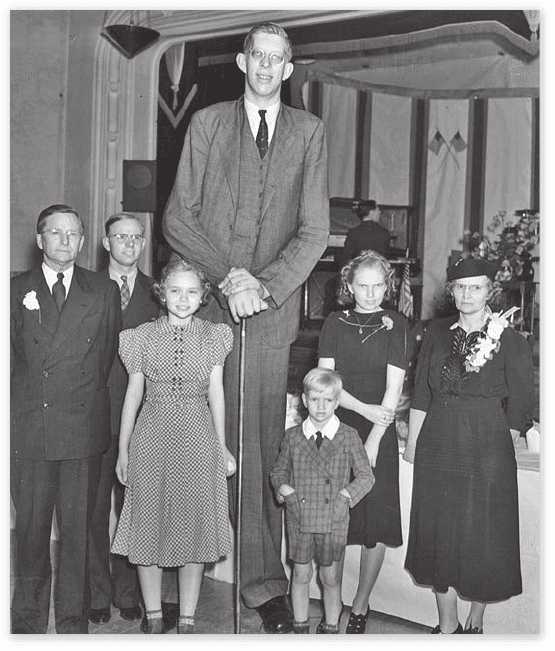
Figure 46.11
The Alton giant. This photograph of Robert
Wadlow of Alton, Illinois, taken on his 21st birthday, shows him at
home with his father and mother and four siblings. Born normal
size, he developed a growth-hormone-secreting pituitary tumor
as a young child and never stopped growing during his 22 years of
life, reaching a height of 8 ft 11 in.
to exert its effects on bone. We now know that GH stimulates
the production of insulin-like growth factors, which liver and
bone produce in response to stimulation by GH. The insulin-
like growth factors then stimulate cell division in the epiphyseal
growth plates, and thus the elongation of the bones.
Although GH exhibits its most dramatic effects on juvenile
growth, it also functions in adults to regulate protein, lipid, and
carbohydrate metabolism. Recently a peptide hormone named
ghrelin, produced by the stomach between meals, was identified
as a potent stimulator of GH release, establishing an important
linkage between nutrient intake and GH production.
Because human skeletal growth plates transform from
cartilage into bone at puberty, GH can no longer cause an in-
crease in height in adults. Excessive GH secretion in an adult
results in a form of gigantism called acromegaly, characterized
by bone and soft tissue deformities such as a protruding jaw,
elongated fingers, and thickening of skin and facial features.
Our knowledge of the regulation of GH has led to the devel-
opment of drugs that can control its secretion, for example
through activation of somatostatin, or by mimicking ghrelin.
As a result, gigantism is much less common today.
Animals that have been genetically engineered to express
additional copies of the GH gene grow to larger than normal
An example of positive feedback: Ovulation
Positive feedback in the control of the hypothalamus and ante-
rior pituitary by the target glands is uncommon because positive
feedback causes deviations from homeostasis. Positive feedback
accentuates change, driving the change in the same direction.
One example is the control of ovulation, the explosive release
of a mature egg (an oocyte) from the ovary.
As the oocyte grows, follicle cells surrounding it produce
increasing levels of the steroid hormone estrogen, resulting in
a progressive rise in estrogen in the blood. Peak estrogen levels
signal the hypothalamus that the oocyte is ready to be ovulated.
Estrogen then exerts positive feedback on the hypothalamus
and pituitary, resulting in a surge of LH from the anterior pi-
tuitary. This LH surge causes the follicle cells to rupture and
release the oocyte to the oviduct, where it can potentially be
fertilized. The positive feedback cycle is then terminated be-
cause the tissue remaining of the ovarian follicle forms the
corpus luteum, which secretes progesterone and estrogen that
feed back to inhibit secretion of FSH and LH. This process is
discussed in more detail in chapter 53.
Hormones of the anterior pituitary
work directly and indirectly
Early in the 20th century, experimental techniques were devel-
oped for surgical removal of the pituitary gland (a procedure
called hypophysectomy). Hypophysectomized animals exhibited
a number of deficits, including reduced growth and develop-
ment, diminished metabolism, and failure of reproduction.
These powerful and diverse effects earned the pituitary a rep-
utation as the “master gland.” Indeed, many of these are direct
effects, resulting from anterior-pituitary hormones activating
receptors in nonendocrine targets, such as liver, muscle, and
bone. The tropic hormones produced by the anterior pituitary
have indirect effects, however, through their ability to activate
other endocrine glands, such as the thyroid, adrenal glands,
and gonads. Of the seven anterior-pituitary hormones, growth
hormone, prolactin, and MSH work primarily through direct
effects, whereas the tropic hormones ACTH, TSH, LH, and
FSH have endocrine glands as their exclusive targets.
Effects of growth hormone
The importance of the anterior pituitary is illustrated by a con-
dition known as gigantism, characterized by excessive growth of
the entire body or any of its parts. The tallest human being ever
recorded, Robert Wadlow, had gigantism (figure 46.11). Born in
1928, he stood 8 feet 11 inches tall, weighed 485 pounds, and was
still growing before he died from an infection at the age of 22.
We now know that gigantism is caused by the exces-
sive secretion of GH in a growing child. By contrast, a defi-
ciency in GH secretion during childhood results in pituitary
dwarfism—a failure to achieve normal stature.
GH stimulates protein synthesis and growth of muscles and
connective tissues; it also indirectly promotes the elongation of
bones by stimulating cell division in the cartilaginous epiphyseal
growth plates of bones (see chapter 47). Researchers found that
this stimulation does not occur in the absence of blood plasma,
suggesting that GH must work in concert with another hormone
950
part
VII
Animal Form and Function
rav32223_ch46_937-960.indd 950rav32223_ch46_937-960.indd 950 11/17/09 4:59:24 PM11/17/09 4:59:24 PM

Apago PDF Enhancer
size (see figure 17.16 ), making agricultural applications of GH
manipulation an active area of investigation. Among other ac-
tions, GH has been found to increase milk yield in cows, promote
weight gain in pigs, and increase the length of fish. The growth-
promoting actions of GH thus appear to have been conserved
throughout the vertebrates.
Other hormones of the anterior pituitary
Like growth hormone, prolactin acts on organs that are not endo-
crine glands. In contrast to GH, however, the actions of prolactin
appear to be very diverse. In addition to stimulating production of
milk in mammals, prolactin has been implicated in the regulation
of tissues important in birds for the nourishment and incubation
of young, such as the crop (which produces “crop milk,” a nutri-
tional fluid fed to chicks by regurgitation) and the brood patch (a
vascular area on the abdomen of birds used to warm eggs).
In amphibians, prolactin promotes transformation of sala-
manders from terrestrial forms to aquatic breeding adults. Asso-
ciated with these reproductive actions is an ability of prolactin to
activate associated behaviors, such as parental care in mammals,
broodiness in birds, and “water drive” in amphibians.
Prolactin also has varied effects on electrolyte balance
through actions on the kidneys of mammals, the gills of fish,
and the salt glands of marine birds . This variation suggests that
although prolactin may have an ancient function in the regula-
tion of salt and water movement across membranes, its actions
have diversified with the appearance of new vertebrate spe-
cies. The field of comparative endocrinology studies questions
about hormone action across diverse species, with the objective
of understanding the mechanisms of hormone evolution.
Unlike growth hormone and prolactin, the other adeno-
hypophyseal hormones act on relatively few targets. TSH
stimulates the thyroid gland, and ACTH stimulates the ad-
renal cortex. The gonadotropins, FSH and LH, act on the
gonads. Although both FSH and LH act on the gonads, they
each target different cells in the gonads of both females and
males (see chapter 53 ). These hormones all share the common
characteristic of activating target endocrine glands.
The final pituitary hormone, MSH regulates the activity
of cells called melanophores, which contain the black pigment
melanin. In response to MSH, melanin is dispersed through-
out these cells, darkening the skin of reptiles, amphibians, or
fish. In mammals, which lack melanophores but have similar
cells called melanocytes, MSH can darken hair by increasing
melanin deposition in the developing hair shaft.
Learning Outcomes Review 46.3
The posterior pituitary develops from neural tissue; the anterior pituitary
develops from epithelial tissue. Axons from the hypothalamus extend into
the posterior pituitary and produce neurohormones; these neurons also
secrete factors that release or inhibit hormones of the anterior pituitary.
Releasers stimulate secretion of hormones; TRH causes TSH release.
Inhibitors suppress secretion; GHIH inhibits GH release.
■ Could someone with a pituitary tumor causing
gigantism be treated with GHIH? What outcome would
you predict?
46.4
The Major Peripheral
Endocrine Glands
Learning Outcomes
Identify the major peripheral endocrine glands.1.
Describe the components of Ca2.
2+
homeostasis.
Explain the action of pancreatic hormones on 3.
blood glucose.
Although the pituitary produces an impressive array of hormones,
many endocrine glands are found in other locations. Some of these
may be controlled by tropic hormones of the pituitary, but others,
such as the adrenal medulla and the pancreas, are independent
of pituitary control. Several endocrine glands develop from de-
rivatives of the primitive pharynx, which is the most anterior seg-
ment of the digestive tract (see chapter 48). These glands, which
include the thyroid and parathyroid glands, produce hormones that
regulate processes associated with nutrient uptake, such as carbo-
hydrate, lipid, protein, and mineral metabolism.
The thyroid gland regulates basal
metabolism and development
The thyroid gland varies in shape in different vertebrate spe-
cies, but is always found in the neck area, anterior to the heart.
In humans it is shaped like a bow tie and lies just below the
Adam’s apple in the front of the neck.
The thyroid gland secretes three hormones: primarily
thyroxine, smaller amounts of triiodothyronine (collectively
referred to as thyroid hormones), and calcitonin. As described
earlier, thyroid hormones are unique in being the only mol-
ecules in the body containing iodine (thyroxine contains four
iodine atoms, triiodothyronine contains three).
Thyroid-related disorders
Thyroid hormones work by binding to nuclear receptors lo-
cated in most cells in the body, influencing the production and
activity of a large number of cellular proteins. The importance
of thyroid hormones first became apparent from studies of hu-
man thyroid disorders. Adults with hypothyroidism have low
metabolism due to underproduction of thyroxine, including a
reduced ability to utilize carbohydrates and fats. As a result, they
are often fatigued, overweight, and feel cold. Hypothyroidism
is particularly concerning in infants and children, where it im-
pairs growth, brain development, and reproductive maturity.
Fortunately, because thyroid hormones are small, simple mol-
ecules, people with hypothyroidism can take thyroxine orally
as a pill.
People with hyperthyroidism, by contrast, often exhibit
opposite symptoms: weight loss, nervousness, high metabo-
lism, and overheating because of overproduction of thyroxine.
Drugs are available that block thyroid hormone synthesis in the
thyroid gland, but in some cases portions of the thyroid gland
must be removed surgically or by radiation treatment.
www.ravenbiology.com
chapter
46
The Endocrine System
951
rav32223_ch46_937-960.indd 951rav32223_ch46_937-960.indd 951 11/17/09 4:59:26 PM11/17/09 4:59:26 PM