
Raven P.H., Johnson G.B., Mason K.A. Biology (Ninth Edition)
Подождите немного. Документ загружается.

Apago PDF Enhancer
–35 –30 –25 –20 –15
Days from emergence of forelimb
–10 –5 0 +5 +10 +20
Thyroxine production
TSH stimulates thyroid to produce
thyroxine.
Forelimbs emerge.
Tail is reabsorbed.
Hypothalamus
stimulates
adenohypophysis to
secrete TSH.
Rapid growth
Reduced growth,
rapid differentiation
Rapid differentiation
Premetamorphosis Prometamorphosis Climax
Receptor stimulation
Hypothalamus stimulation
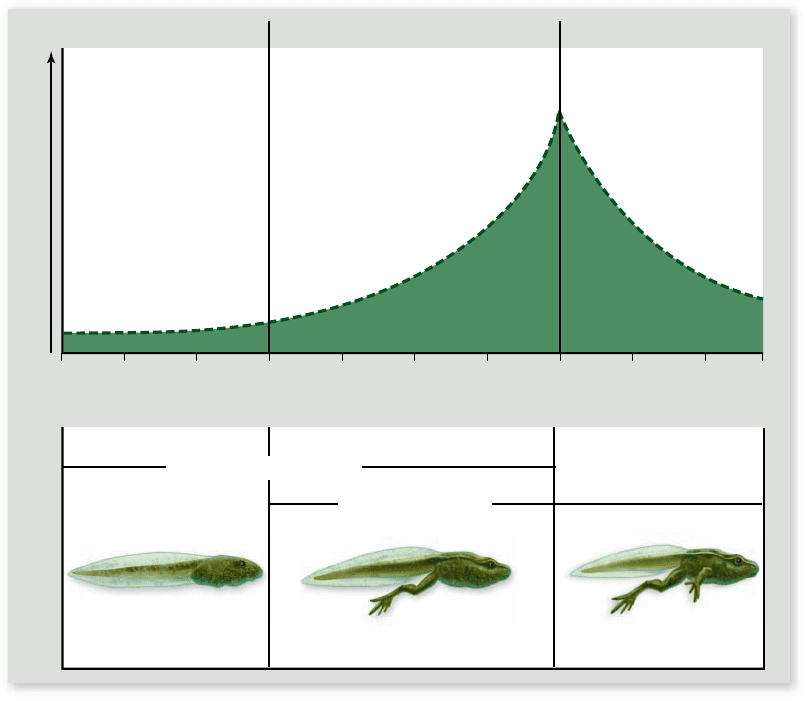
Figure 46.12
Thyroxine
triggers metamorphosis in
amphibians. In tadpoles at
the premetamorphic stage, the
hypothalamus stimulates the
adenohypophysis to secrete TSH
(thyroid-stimulating hormone). TSH
then stimulates the thyroid gland
to secrete thyroxine. Thyroxine
binds to its receptor and initiates
the changes in gene expression
necessary for metamorphosis. As
metamorphosis proceeds, thyroxine
reaches its maximal level, after which
the forelimbs begin to form and the
tail is reabsorbed.
The most impressive demonstration of the importance
of thyroid hormones in development is displayed in amphib-
ians. Thyroid hormones direct the metamorphosis of tadpoles
into frogs, a process that requires the transformation of an
aquatic, herbivorous larva into a terrestrial, carnivorous juvenile
(figure 46.12) . If the thyroid gland is removed from a tadpole,
it will not change into a frog. Conversely, if an immature tad-
pole is fed pieces of a thyroid gland, it will undergo premature
metamorphosis and become a miniature frog. This illustrates
the powerful actions thyroid hormones can elicit by regulating
the expression of multiple genes.
Calcium homeostasis is regulated
by several hormones
Calcium is a vital component of the vertebrate body both be-
cause of its being a structural component of bones and because
of its role in ion-mediated processes such as muscle contrac-
tion. The thyroid and parathyroid glands act with vitamin D to
regulate calcium homeostasis.
Calcitonin secretion by the thyroid
In addition to the thyroid hormones, the thyroid gland also
secretes calcitonin, a peptide hormone that plays a role in
maintaining proper levels of calcium (Ca
2+
) in the blood.
When the blood Ca
2+
concentration rises too high, calcitonin
stimulates the uptake of calcium into bones, thus lowering its
Actions of thyroid hormones
Thyroid hormones regulate enzymes controlling carbohydrate
and lipid metabolism in most cells, promoting the appropri-
ate use of these fuels for maintaining the body’s basal meta-
bolic rate. Thyroid hormones often function cooperatively,
or synergistically, with other hormones, promoting the activity
of growth hormone, epinephrine, and reproductive steroids.
Through these actions, thyroid hormones function to ensure
that adequate cellular energy is available to support metaboli-
cally demanding activities.
In humans, which exhibit a relatively high metabolic rate
at all times, thyroid hormones are maintained in the blood at
constantly elevated levels. In contrast, in reptiles, amphibians,
and fish, which undergo seasonal cycles of activity, thyroid hor-
mone levels in the blood increase during periods of metabolic
activation (such as growth, reproductive development, migra-
tion, or breeding) and diminish during periods of inactivity in
cold months.
Some of the most dramatic effects of thyroid hormones
are observed in their regulation of growth and development.
In developing humans, for example, thyroid hormones pro-
mote growth of neurons and stimulate maturation of the
CNS. Children born with hypothyroidism are stunted in
their growth and suffer severe mental retardation, a condition
called cretinism. Early detection through measurement of thy-
roid hormone levels allows this condition to be treated with
thyroid hormone administration.
952
part
VII
Animal Form and Function
rav32223_ch46_937-960.indd 952rav32223_ch46_937-960.indd 952 11/17/09 4:59:26 PM11/17/09 4:59:26 PM
Apago PDF Enhancer
Increased
blood Ca
2+
Response
Low blood Ca
2+
Stimulus
Parathyroid glands
Parathyroid
Secretes
PTH
( + ) ( + )
( + )
Negative feedback
( – )
Osteoclasts
dissolv
e Ca(PO
4
)
2
crystals in bone,
releasing Ca
2+
Effector
Reabsorption of
Ca
2+
, excretion
of PO
4
3
–
Effector
Increased
absorption of Ca
2+
from intestine (due
to PTH activation
of vitamin D)
Effector
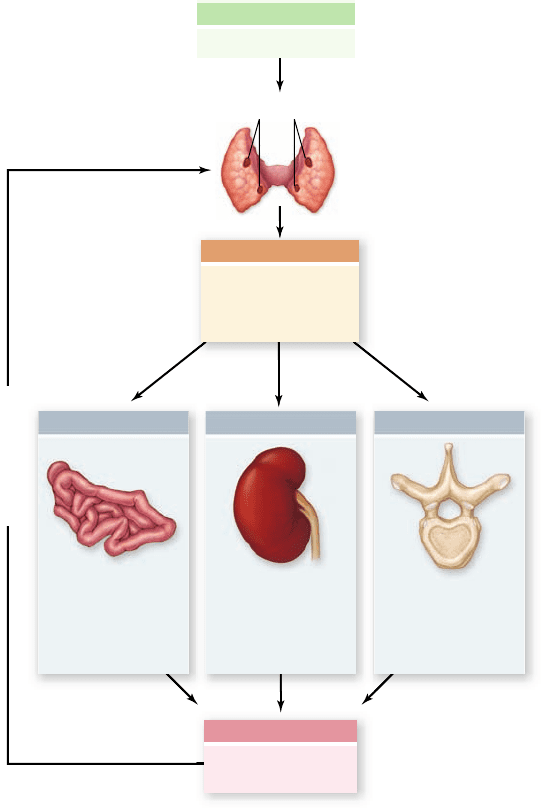
Figure 46.13
Regulation of blood Ca
2+
levels by
parathyroid hormone (PTH). When blood Ca
2+
levels are low,
PTH is released by the parathyroid glands. PTH directly stimulates
the dissolution of bone and the reabsorption of Ca
2+
by the kidneys.
PTH indirectly promotes the intestinal absorption of Ca
2+
by
stimulating the production of the active form of vitamin D.
The adrenal gland releases both
catecholamine and steroid hormones
The adrenal glands are located just above each kidney
(figure 46.14) . Each gland is composed of an inner portion, the
adrenal medulla, and an outer layer, the adrenal cortex.
The adrenal medulla
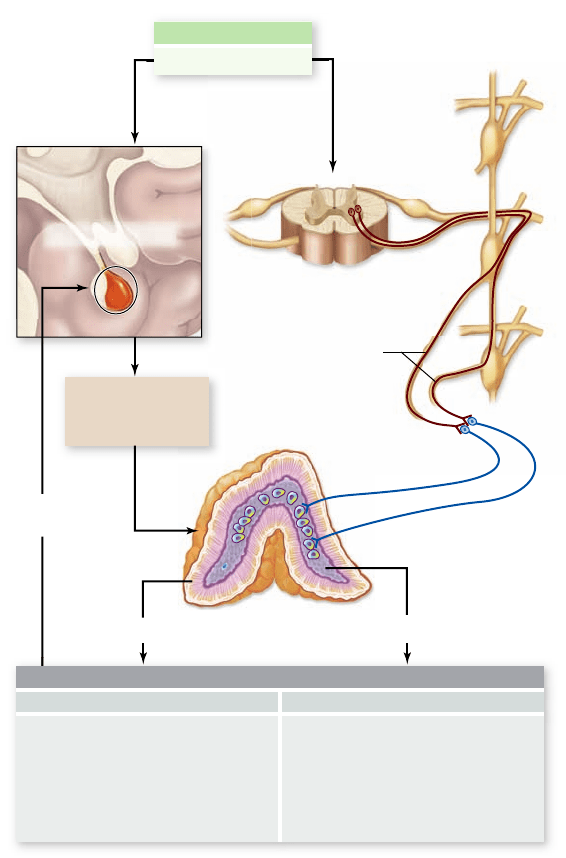
The adrenal medulla receives neural input from axons of the sym-
pathetic division of the autonomic nervous system, and it secretes
the catecholamines epinephrine and norepinephrine in response to
stimulation by these axons. The actions of these hormones trig-
ger “alarm” responses similar to those elicited by the sympathetic
division, helping to prepare the body for extreme efforts. Among
the effects of these hormones are an increased heart rate, increased
blood pressure, dilation of the bronchioles, elevation in blood
glucose, reduced blood flow to the skin and digestive organs, and
level in the blood. Although calcitonin may be important in
the physiology of some vertebrates, it appears less important
in the day-to-day regulation of Ca
2+
levels in adult humans. It
may, however, play an important role in bone remodeling in
rapidly growing children.
Parathyroid hormone (PTH)
The parathyroid glands are four small glands attached to the
thyroid. Because of their size, researchers ignored them un-
til well into the 20th century. The first suggestion that these
organs have an endocrine function came from experiments
on dogs: If their parathyroid glands were removed, the Ca
2+
concentration in the dogs’ blood plummeted to less than half
the normal value. The Ca
2+
concentration returned to normal
when an extract of parathyroid gland was administered. How-
ever, if too much of the extract was administered, the dogs’
Ca
2+
levels rose far above normal as the calcium phosphate
crystals in their bones were dissolved. It was clear that the
parathyroid glands produce a hormone that stimulates the re-
lease of calcium from bone.
The hormone produced by the parathyroid glands is a
peptide called parathyroid hormone (PTH). PTH is synthe-
sized and released in response to falling levels of Ca
2+
in the
blood. This decline cannot be allowed to continue uncorrected
because a significant fall in the blood Ca
2+
level can cause se-
vere muscle spasms. A normal blood Ca
2+
level is important for
the functioning of muscles, including the heart, and for proper
functioning of the nervous and endocrine systems.
PTH stimulates the osteoclasts (bone cells) in bone to
dissolve the calcium phosphate crystals of the bone matrix and
release Ca
2+
into the blood (figure 46.13) . PTH also stimulates
the kidneys to reabsorb Ca
2+
from the urine and leads to the
activation of vitamin D, needed for the absorption of calcium
from food in the intestine.
Vitamin D
Vitamin D is produced in the skin from a cholesterol deriva-
tive in response to ultraviolet light. It is called an essential
vitamin because in temperate regions of the world a dietary
source is needed to supplement the amount produced by the
skin. (In the tropics, people generally receive enough expo-
sure to sunlight to produce adequate vitamin D.) Diffusing
into the blood from the skin, vitamin D is actually an inac-
tive form of a hormone. In order to become activated, the
molecule must gain two hydroxyl groups (
—
OH); one of
these is added by an enzyme in the liver, the other by an
enzyme in the kidneys.
The enzyme needed for this final step is stimulated by
PTH, thereby producing the active form of vitamin D known
as 1,25-dihydroxyvitamin D. This hormone stimulates the in-
testinal absorption of Ca
2+
and thereby helps raise blood Ca
2+
levels so that bone can become properly mineralized. A diet
deficient in vitamin D thus leads to poor bone formation, a
condition called rickets.
To ensure adequate amounts of this essential hormone,
vitamin D is now added to commercially produced milk in the
United States and some other countries. This is certainly a
preferable alternative to the prior method of vitamin D admin-
istration, the dreaded dose of cod liver oil.
www.ravenbiology.com
chapter
46
The Endocrine System
953
rav32223_ch46_937-960.indd 953rav32223_ch46_937-960.indd 953 11/17/09 4:59:27 PM11/17/09 4:59:27 PM
Apago PDF Enhancer
Sympathetic nervous
system
Sympathetic
axons
Adrenal medullaAdrenal cortex
Adenohypophysis
EffectorEffector
Catecholamine HormonesGlucocorticoids
Negative
feedback
ACTH secreted
from the
adenohypophysis
• Longer-term stress response.
• Effects on lipid and carbo-
hydrate metabolism, immune
system, and damage repair.
• Short-term stress response.
• Effects on cardiovascular
system, carbohydrate and
lipid metabolism, central
nervous system.
( + )
Stress
Stimulus
( – )
Figure 46.14
The adrenal glands. The adrenal medulla
produces the catecholamines epinephrine and norepinephrine,
which initiate a response to acute stress. The adrenal cortex
produces steroid hormones, including the glucocorticoid cortisol.
In response to stress, cortisol secretion increases glucose
production and stimulates the immune response.
into glucose. Glucose synthesis from protein is particularly im-
portant during very long periods of fasting or exercise, when
blood glucose levels might otherwise become dangerously low.
Whereas glucocorticoids are important in the daily regu-
lation of glucose and protein, they, like the adrenal medulla hor-
mones, are also secreted in large amounts in response to stress.
It has been suggested that during stress they activate the pro-
duction of glucose at the expense of protein and fat synthesis.
In addition to regulating glucose metabolism, the gluco-
corticoids modulate some aspects of the immune response. The
physiological significance of this action is still unclear, and it
may be apparent only when glucocorticoids are maintained at
elevated levels for long periods of time (such as long-term stress).
Glucocorticoids are used to suppress the immune system in per-
sons with immune disorders (such as rheumatoid arthritis) and
to prevent the immune system from rejecting organ and tissue
transplants. Derivatives of cortisol, such as prednisone, have
widespread medical use as anti-inflam matory agents.
Aldosterone, the other major corticosteroid, is classified as
a mineralocorticoid because it helps regulate mineral balance.
The secretion of aldosterone from the adrenal cortex is acti-
vated by angiotensin II, a product of the renin–angiotensin system
described in chapter 51 , as well as high blood K
+
. Angiotensin II
activates aldosterone secretion when blood pressure falls.
A primary action of aldosterone is to stimulate the kidneys
to reabsorb Na
+
from the urine. (Blood levels of Na
+
decrease
if Na
+
is not reabsorbed from the urine.) Sodium is the major
extracellular solute; it is needed for the maintenance of normal
blood volume and pressure, as well as for the generation of action
potentials in neurons and muscles. Without aldosterone, the kid-
neys would lose excessive amounts of blood Na
+
in the urine.
Aldosterone-stimulated reabsorption of Na
+
also results
in kidney excretion of K
+
in the urine. Aldosterone thus pre-
vents K
+
from accumulating in the blood, which would lead
to malfunctions in electrical signaling in nerves and muscles.
Because of these essential functions performed by aldosterone,
removal of the adrenal glands, or diseases that prevent aldoster-
one secretion, are invariably fatal without hormone therapy.
Pancreatic hormones are primary regulators
of carbohydrate metabolism
The pancreas is located adjacent to the stomach and is con-
nected to the duodenum of the small intestine by the pancre-
atic duct. It secretes bicarbonate ions and a variety of diges-
tive enzymes into the small intestine through this duct (see
chapter 48), and for a long time the pancreas was thought to be
solely an exocrine gland.
Insulin
In 1869, however, a German medical student named Paul
Langerhans described some unusual clusters of cells scattered
throughout the pancreas; these clusters came to be called islets
of Langerhans. They are now more commonly called pancreatic
islets. Laboratory workers later observed that the surgical re-
moval of the pancreas caused glucose to appear in the urine, the
hallmark of the disease diabetes mellitus. This led to the dis-
covery that the pancreas, specifically the islets of Langerhans,
produced a hormone that prevents this disease.
increased blood flow to the heart and muscles. The actions of epi-
nephrine, released as a hormone, supplement those of neurotrans-
mitters released by the sympathetic nervous system.
The adrenal cortex
The hormones from the adrenal cortex are all steroids and
are referred to collectively as corticosteroids. Cortisol (also called
hydrocortisone) and related steroids secreted by the adrenal
cortex act on various cells in the body to maintain glucose
homeostasis. In mammals, these hormones are referred to as
glucocorticoids, and their secretion is primarily regulated by
ACTH from the anterior pituitary.
The glucocorticoids stimulate the breakdown of muscle
protein into amino acids, which are carried by the blood to
the liver. They also stimulate the liver to produce the enzymes
needed for gluconeogenesis, which can convert amino acids
954
part
VII
Animal Form and Function
rav32223_ch46_937-960.indd 954rav32223_ch46_937-960.indd 954 11/17/09 4:59:27 PM11/17/09 4:59:27 PM
Apago PDF Enhancer
( + )
( – ) ( – )
( + )
Negative feedback
Negative feedback
Blood glucose increased
Stimulus
Blood glucose decreased
Stimulus
After a Meal
Between Meals
Effector
Increased glucagon
production
by a cells
Effector
Increased insulin
production
by b cells
Response
Glycogen hydrolized to
glucose, then secreted into
blood, increasing blood glucose
Response
Glucose moves from
blood into cells,
reducing blood glucose
Sensor
Pancreatic
Islets
adipose tissue. As a result, glucose and fatty acids are released into
the blood and can be taken up by cells and used for energy.
Treatment of diabetes
Although many hormones favor the movement of glucose into
cells, insulin is the only hormone that promotes movement of
glucose from blood into cells. For this reason, disruptions in
insulin signaling can have serious consequences. People with
type I, or insulin-dependent, diabetes mellitus, lack the insulin-
secreting β cells and consequently produce no insulin. Treat-
ment for these patients consists of insulin injections. (Because
insulin is a peptide hormone, it would be digested if taken orally
and must instead be injected subcutaneously.)
In the past, only insulin extracted from the pancreas of
pigs or cattle was available, but today people with insulin-
dependent diabetes can inject themselves with human insulin
produced by genetically engineered bacteria. Active research
on the possibility of transplanting islets of Langerhans holds
much promise of a lasting treatment for these patients.
Most diabetic patients, however, have type II, or
noninsulin-dependent, diabetes mellitus. They generally have
normal or even above-normal levels of insulin in their blood,
but their cells have a reduced sensitivity to insulin. These people
may not require insulin injections and can often control their
diabetes through diet and exercise. It is estimated that over 90%
of the cases of diabetes in North America are type II. Worldwide
at least 171 million suffer from diabetes, and it is expected that
this number will grow. Type II diabetes is especially common in
developed countries, and it has been suggested that there is a
linkage between type II diabetes and obesity.
Learning Outcomes Review 46.4
The major peripheral endocrine glands are the thyroid and parathyroid
glands, the adrenal glands, and the pancreas. Calcium homeostasis results
from the action of calcitonin, parathyroid hormone, and vitamin D. The
adrenal glands produce stress hormones. Insulin and glucagon, antagonists
from the pancreas, help maintain blood glucose at a normal level.
■ Why does your body need two hormones to maintain
blood sugar at a constant level?
46.5
Other Hormones
and Their E ects
Learning Outcomes
Characterize the role of sex steroids in development.1.
List nonendrocrine sources of hormones.2.
Identify the insect hormones involved in molting 3.
and metamorphosis.
A variety of vertebrate and invertebrate processes are regulated
by hormones and other chemical messengers, and in this sec-
tion we review the most important ones.
That hormone is insulin, secreted by the beta (β) cells
of the islets. Insulin was not isolated until 1922 when Banting
and Best succeeded where many others had not. On Janu-
ary 11, 1922, they injected an extract purified from beef pan-
creas into a 13-year-old diabetic boy, whose weight had fallen to
65 pounds and who was not expected to survive. With that single
injection, the glucose level in the boy’s blood fell 25%. A more po-
tent extract soon brought the level down to near normal. The doc-
tors had achieved the first instance of successful insulin therapy.
Glucagon
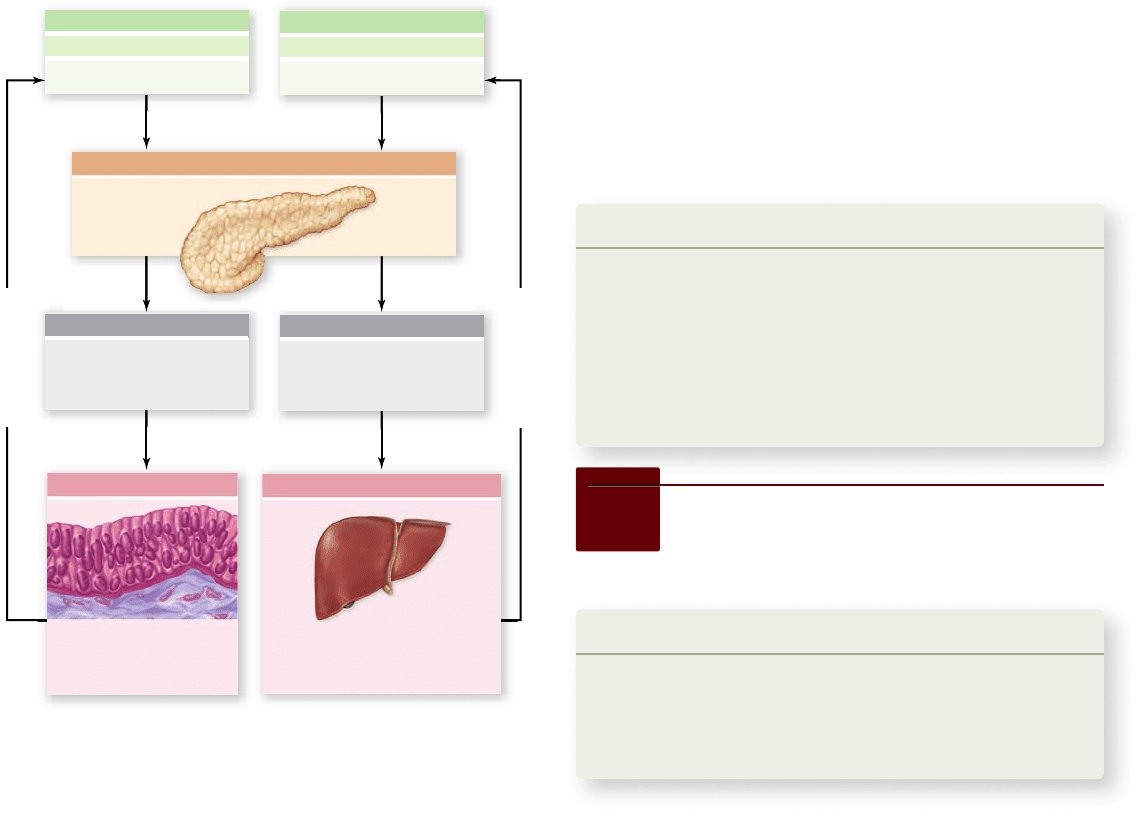
The islets of Langerhans produce another hormone; the alpha (α)
cells of the islets secrete glucagon, which acts antagonistically to
insulin (figure 46.15). When a person eats carbohydrates, the blood
glucose concentration rises. Blood glucose directly activates the se-
cretion of insulin by the β cells and inhibits the secretion of gluca-
gon by the α cells. Insulin promotes the cellular uptake of glucose
into the liver, muscle, and fat cells. It also activates the storage of
glucose as glycogen in liver and muscle or as fat in fat cells. Be-
tween meals, when the concentration of blood glucose falls, insulin
secretion decreases, and glucagon secretion increases. Glucagon
promotes the hydrolysis of stored glycogen in the liver and fat in
Figure 46.15
The antagonistic actions of insulin and
glucagon on blood glucose. Insulin stimulates the cellular
uptake of blood glucose into skeletal muscles, adipose cells, and
the liver after a meal. Glucagon stimulates the hydrolysis of liver
glycogen between meals, so that the liver can secrete glucose into
the blood. These antagonistic effects help to maintain homeostasis
of the blood glucose concentration.
www.ravenbiology.com
chapter
46
The Endocrine System
955
rav32223_ch46_937-960.indd 955rav32223_ch46_937-960.indd 955 11/18/09 4:21:18 PM11/18/09 4:21:18 PM
Apago PDF Enhancer
Neurosecretory cells
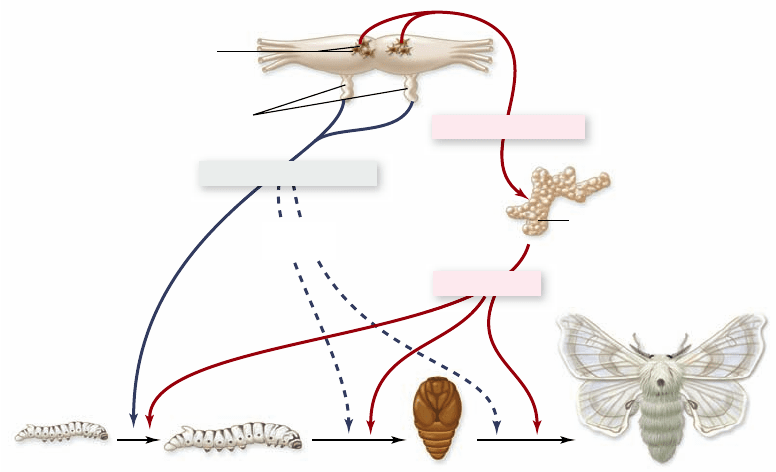
Larval molt Pupal molt Adult molt
Corpora allata
Prothoracic
gland
Brain hormone
Juvenile hormone
Ecdysone
Low
amounts
Sex steroids regulate
reproductive development
The ovaries and testes in vertebrates are important endocrine
glands, producing the sex steroid hormones, including estro-
gens, progesterone, and testosterone (to be described in detail
in chapter 53 ). Estrogen and progesterone are the primary “fe-
male” sex steroids, and testosterone and its immediate deriva-
tives are the primary “male” sex steroids, or androgens. Both
types of hormone can be found in both sexes, however.
During embryonic development, testosterone production
in the male embryo is critical for the development of male sex
organs. In mammals, sex steroids are responsible for the devel-
opment of secondary sexual characteristics at puberty. These
characteristics include breasts in females, body hair, and in-
creased muscle mass in males. Because of this latter effect, some
athletes have misused androgens to increase muscle mass. Use
of steroids for this purpose has been condemned by virtually all
major sports organizations, and it can cause liver disorders as
well as a number of other serious side effects.
In females, sex steroids are especially important in main-
taining the sexual cycle. Estrogen and progesterone produced in
the ovaries are critical regulators of the menstrual and ovarian
cycles. During pregnancy, estrogen production in the placenta
maintains the uterine lining, which protects and nourishes the
developing embryo.
Melatonin is crucial to circadian cycles
Another major endocrine gland is the pineal gland, located in
the roof of the third ventricle of the brain in most vertebrates
(see figure 44.22). It is about the size of a pea and is shaped like
a pinecone, which gives it its name.
The pineal gland evolved from a medial light-sensitive
eye (sometimes called a “third eye,” although it could not
form images) at the top of the skull in primitive vertebrates.
This pineal eye is still present in primitive fish (cyclostomes)
and some modern reptiles. In other vertebrates, however, the
pineal gland is buried deep in the brain, and it functions as an
endocrine gland by secreting the hormone melatonin.
Melatonin was named for its ability to cause blanching
of the skin of lower vertebrates by reducing the dispersal of
melanin granules. We now know, however, that it serves as an
important timing signal delivered through the blood. Mela-
tonin levels in the blood increase in darkness and fall during
the daytime.
The secretion of melatonin is regulated by activity of the
suprachiasmatic nucleus (SCN) of the hypothalamus. The SCN is
known to function as the major biological clock in vertebrates,
entraining (synchronizing) various body processes to a circadi-
an rhythm—one that repeats every 24 hr. Through regulation
by the SCN, the secretion of melatonin by the pineal gland is
activated in the dark.
This daily cycling of melatonin release regulates sleep/
wake and temperature cycles. Disruptions of these cycles, as
occurs with jet lag or night shift work, can sometimes be mini-
mized by melatonin administration. Melatonin also helps regu-
late reproductive cycles in some vertebrate species that have
distinct breeding seasons.
Some hormones are not produced
by endocrine glands
A variety of hormones are secreted by organs that are not ex-
clusively endocrine glands. The thymus is the site of T cell
production in many vertebrates and T cell maturation in mam-
mals. It also secretes a number of hormones that function in the
regulation of the immune system.
The right atrium of the heart secretes atrial natriuretic
hormone, which stimulates the kidneys to excrete salt and water
in the urine. This hormone acts antagonistically to aldosterone,
which promotes salt and water retention.
The kidneys secrete erythropoietin, a hormone that stimu-
lates the bone marrow to produce red blood cells. Other organs,
such as the liver, stomach, and small intestine, also secrete hor-
mones, and as mentioned earlier, the skin secretes vitamin D.
Figure 46.16
Hormonal control of
metamorphosis in the silkworm moth,
Bombyx mori. Molting hormone, ecdysone,
controls when molting occurs. Brain hormone
stimulates the prothoracic gland to produce
ecdysone. Juvenile hormone determines the
result of a particular molt. Juvenile hormone
is produced by bodies near the brain called the
corpora allata. High levels of juvenile hormone
inhibit the formation of the pupa. Low levels of
juvenile hormone are necessary for the pupal
molt and metamorphosis.
956
part
VII
Animal Form and Function
rav32223_ch46_937-960.indd 956rav32223_ch46_937-960.indd 956 11/17/09 4:59:30 PM11/17/09 4:59:30 PM
Apago PDF Enhancer
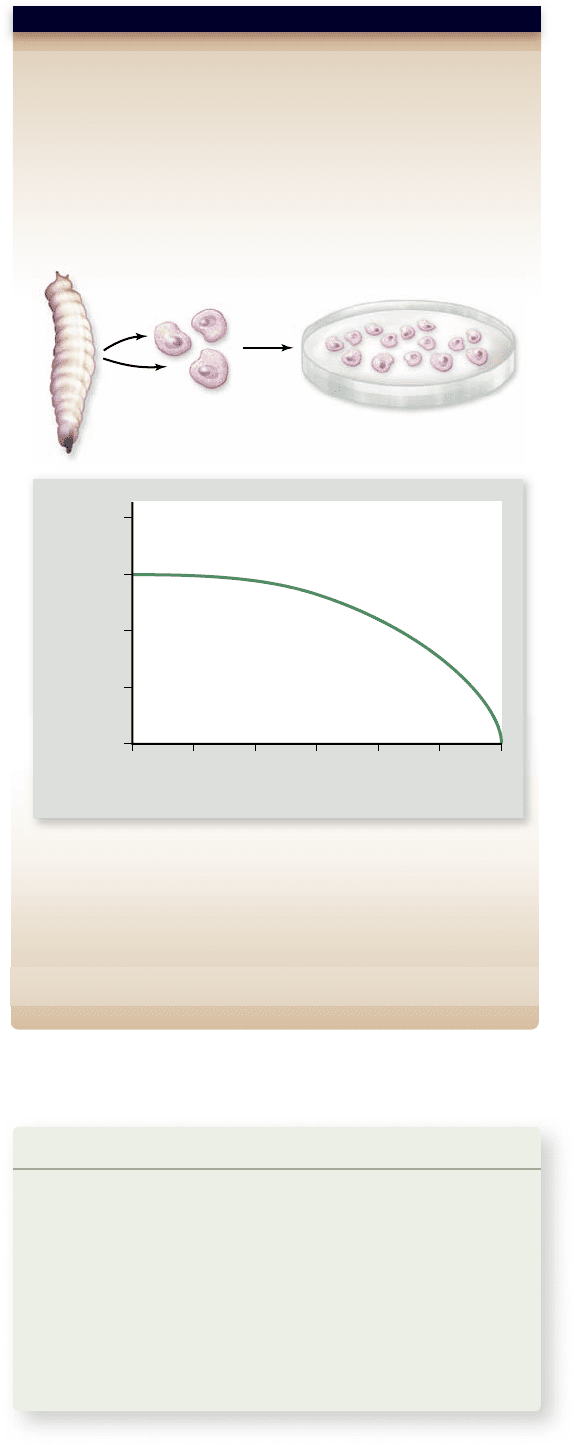
Isolate
imaginal
discs
Third instar
larvae
Culture discs in ecdysone
and JH
10 20 30 40 50 60
JH concentration (mg/mL)
3
H-UTP incorporation (cpm/mg RNA)
0
1,000
2,000
Hypothesis: Juvenile hormone blocks or inhibits the stimulation of gene
expression by ecdysone.
Prediction: Treatment of isolated imaginal discs with ecdysone plus
increasing amounts of JH should show a decrease in ecdysone
stimulated transcription.
Test: Discs dissected from late third instar Drosophila larvae are
incubated in the presence of ecdysone, with and without JH. Incorporation
of
3
H-UTP into RNA was used as a measure of gene expression.
Result: The graph shows a relatively high incorporation of
3
H-UTP in the
presence of ecdysone alone. The addition of JH causes dose-dependent
reduction of RNA synthesis.
Conclusion: JH inhibits the ecdysone-stimulated synthesis of RNA in
imaginal discs.
Further Experiments: How else can this system with isolated imaginal
discs be used to analyze metamorphosis?
SCIENTIFIC THINKING
Insect hormones control molting
and metamorphosis
Most invertebrate groups produce hormones as well; these
control reproduction, growth, and color change. A dramatic
action of hormones in insects is similar to the role of thyroid
hormones in amphibian metamorphosis.
As insects grow during postembryonic development,
their hardened exoskeletons do not expand. To overcome this
problem, insects undergo a series of molts wherein they shed
their old exoskeleton (figure 46.16 ) and secrete a new, larger
one. In some insects, a juvenile insect, or larva, undergoes a
radical transformation to the adult form during a single molt.
This process is called metamorphosis .
Hormonal secretions influence both molting and meta-
morphosis in insects. Prior to molting, neurosecretory cells on
the surface of the brain secrete a small peptide, prothoracico-
tropic hormone (PTTH), which in turn stimulates a gland
in the thorax called the prothoracic gland to produce molting
hormone, or ecdysone (see figure 46.16). High levels of ecdy-
sone bring about the biochemical and behavioral changes that
cause molting to occur.
Another pair of endocrine glands near the brain, called
the corpora allata, produce a hormone called juvenile hormone.
High levels of juvenile hormone prevent the transformation to
the adult and result in a larval-to-larval molt. If the level of
juvenile hormone is low, however, the molt will result in meta-
morphosis (figure 46.17) .
Cancer cells may alter hormone production
or have altered hormonal responses
Hormones and paracrine secretions actively regulate growth
and cell division. Normally, hormone production is kept un-
der precise control, but malfunctions in signaling systems can
sometimes occur. Unregulated hormone stimulation can then
lead to serious physical consequences.
Tumors that develop in endocrine glands, such as the an-
terior pituitary or the thyroid, can produce excessive amounts
of hormones, causing conditions such as gigantism or hyper-
thyroidism. Spontaneous mutations can damage receptors or
intracellular signaling proteins, with the result that target cell
responses are activated even in the absence of hormone stimu-
lation. Mutations in growth factor receptors, for example, can
activate excessive cell division, resulting in tumor formation.
Some tumors that develop in steroid-responsive tissues, such as
the breast and prostate, remain sensitive to hormone stimula-
tion. Blocking steroid hormone production can therefore di-
minish tumor growth.
The important effects of hormones on development and
differentiation are illustrated by the case of diethystilbestrol
(DES). DES is a synthetic estrogen that was given to pregnant
women from 1940 to 1970 to prevent miscarriage. It was sub-
sequently discovered that daughters who had been exposed to
DES as fetuses had an elevated probability of developing a rare
form of cervical cancer later in life. Developmental alterations
elicited by hormone treatment may thus take many years to
become apparent.
Figure 46.17
E ect of ecdysone and juvenile hormone
on RNA synthesis in isolated Drosophila imaginal discs.
Learning Outcomes Review 46.5
Testosterone causes an embryo to develop as a male; testosterone
and estrogen produced at puberty are responsible for secondary sex
characteristics. The female menstrual cycle is regulated by sex hormone
balance. The thymus, the right atrium of the heart, and the kidneys secrete
hormones although it is not their main function. In insects, molting
hormone elicits molting, and low levels of juvenile hormone
cause metamorphosis.
■ Atrial natriuretic hormone reduces blood volume; would
this affect blood pressure?
www.ravenbiology.com
chapter
46
The Endocrine System
957
rav32223_ch46_937-960.indd 957rav32223_ch46_937-960.indd 957 11/17/09 4:59:30 PM11/17/09 4:59:30 PM

Apago PDF Enhancer
46.1 Regulation of Body Processes
by Chemical Messengers
Hormones are signaling molecules carried by the blood and may
have distant targets. Paracrine regulators act locally, and pheromones
released into the environment communicate between individuals of
the same species.
Some molecules act as both circulating hormones and
neurotransmitters.
Norepinephrine is a neurotransmitter in the sympathetic nervous
system and also is a hormone that is released into the blood by the
adrenal glands.
Endocrine glands produce three chemical classes of hormones.
The three classes of endocrine hormones are peptides and proteins,
such as TSH; amino acid derivatives, such as thyroxine; and steroids,
such as estrogen and testosterone (see table 46.1).
Hormones can be categorized as lipophilic or hydrophilic.
Lipophilic hormones are fat-soluble and can cross the cell membrane;
hydrophilic hormones are water-soluble and cannot cross membranes.
Paracrine regulators exert powerful e ects within tissues.
Paracrine regulation occurs in most organs and among immune-
system cells. Prostaglandins are involved in in ammation, and they
are the target of NSAIDs.
46.2 Actions of Lipophilic Versus
Hydrophilic Hormones
Lipophilic hormones activate intracellular receptors.
Circulating lipophilic hormones are carried in the blood bound to
transport proteins (see gure 46.3). They pass through the plasma
membrane and activate intracellular receptors. The hormone-
receptor complex can bind to speci c gene promoter regions termed
hormone response elements to activate transcription.
Hydrophilic hormones activate receptors on target cell membranes.
Hydrophilic hormones bind to a membrane receptor to initiate a
signal transduction pathway (see gure 46.6). Many receptors are
kinases that phosphorylate proteins directly. Others are
G protein–coupled receptors that activate a second-messenger
system. Hydrophilic hormones tend to be short-lived, but lipophilic
hormones tend to have effects of longer duration.
46.3 The Pituitary and Hypothalamus:
The Body’s Control Centers
The pituitary is a compound endocrine gland.
The anterior pituitary (adenohypophysis) is composed of glandular
tissue derived from epithelial tissue; the posterior pituitary
(neurohypophysis) is brous and is derived from neural tissue.
The posterior pituitary stores and releases two neurohormones.
The posterior pituitary contains axons from the hypothalamus that
release neurohormones. One of these is ADH, involved in water
reabsorption; the other is oxytocin.
The anterior pituitary produces seven hormones.
The hormones produced by the anterior pituitary include peptide,
protein and glycoprotein hormones. These hormones tend to
stimulate growth, and many are tropic hormones that stimulate other
endocrine glands (see table 46.1).
Hypothalamic neurohormones regulate the anterior pituitary.
Releasing and inhibiting hormones produced in the hypothalamus
pass to the anterior pituitary through a portal system and regulate the
anterior pituitary’s hormone production (see gure 46.8).
Feedback from peripheral endocrine glands regulates anterior-
pituitary hormones.
The activity of the anterior pituitary is also regulated by negative
feedback; for example, thyroxine, produced by the thyroid in
response to TSH, inhibits further secretion of TSH (see gure 46.9).
Hormones of the anterior pituitary work directly and indirectly.
Three of the seven hormones, GH, prolactin, and MSH, work
directly on nonendocrine tissues; the other four, ACTH, TSH,
LH, and FSH, are tropic hormones that have endocrine glands as
their targets. Defects in GH production can lead to either pituitary
dwar sm (low), or gigantism (high).
46.4 The Major Peripheral Endocrine Glands
Some endocrine glands are controlled by tropic hormones
of the pituitary, others are independent of pituitary control.
The thyroid gland regulates basal metabolism and development.
The thyroid hormones thyroxine and triiodothyronine regulate basal
metabolism in vertebrates and trigger metamorphosis in amphibians
(see gure 46.12).
Calcium homeostasis is regulated by several hormones.
Blood calcium is regulated by calcitonin, which lowers blood calcium
levels, and parathyroid hormone, which raises blood calcium levels
(see gure 46.13).
The adrenal gland releases both catecholamine and steroid hormones.
Catecholamines, epinephrine and norepinephrine, trigger “alarm”
responses (see gure 46.14). Corticosteroids maintain glucose
homeostasis and modulate some aspects of the immune response.
Pancreatic hormones are primary regulators of carbohydrate
metabolism.
Blood glucose is controlled by antagonistic hormones. The pancreas
secretes insulin, which reduces blood glucose, and glucagon, which
raises blood glucose (see gure 46.15). Type I diabetes arises from
loss of insulin-producing cells, and type II is a result of insulin
insensitivity.
46.5 Other Hormones and Their E ects
Sex steroids regulate reproductive development.
Sex steroids regulate sexual development and reproduction. The
ovaries primarily produce estrogen and progesterone, which are
responsible for the menstrual cycle. The testes produce testosterone.
Melatonin is crucial to circadian cycles.
The pineal gland produces melatonin, which can control the
dispersion of pigment granules and the daily wake–sleep cycles.
Some hormones are not produced by endocrine glands.
The thymus secretes hormones that regulate the immune system.
The right atrium of the heart secretes atrial natriuretic hormone,
which acts antagonistically to aldosterone. The skin manufactures
and secretes vitamin D.
Chapter Review
958
part
VII
Animal Form and Function
rav32223_ch46_937-960.indd 958rav32223_ch46_937-960.indd 958 11/17/09 4:59:31 PM11/17/09 4:59:31 PM

Apago PDF Enhancer
UNDERSTAND
1. Which of the following best describes hormones?
a. Hormones are relatively unstable and work only in the area
adjacent to the gland that produced them.
b. Hormones are long-lasting chemicals released
from glands.
c. All hormones are lipid-soluble.
d. Hormones are chemical messengers that are released into
the environment.
2. Steroid hormones
a. can diffuse through the membrane without a carrier.
b. have a direct effect on gene expression.
c. bind to membrane receptors.
d. both a and b
3. Second messengers are activated in response to
a. steroid hormones. c. hydrophilic hormones.
b. thyroxine. d. all of these.
4. Which of the following is true about lipophilic hormones?
a. They are freely soluble in the blood.
b. They require a transport protein in the bloodstream.
c. They cannot enter their target cells.
d. They are rapidly deactivated after binding to
their receptors.
5. An organ is classi ed as part of the endocrine system if it
a. produces cholesterol.
b. is capable of converting amino acids into hormones.
c. has intracellular receptors for hormones.
d. secretes hormones into the circulatory system.
6. Hormones released from the pituitary gland have two different
sources. Those that are produced by the neurons of the
hypothalamus are released through the _____________,
and those produced within the pituitary are released
through the _____________.
a. thalamus; hippocampus
b. neurohypophysis; adenohypophysis
c. right pituitary; left pituitary
d. cortex; medulla
7. Which of the following conditions is unrelated to the
production of growth hormone?
a. Control of blood calcium
b. Pituitary dwar sm
c. Increased milk production in cows
d. Acromegaly
APPLY
1. You think one of your teammates is using anabolic steroids to
build muscle. You know that continued use of steroids can cause
profound changes in cell function. This is due in part to the fact
that these hormones act
a. to regulate gene expression.
b. by activating second messengers.
c. as protein kinases.
d. via G protein–coupled receptors.
2. Your Uncle Sal likes to party. When he goes out drinking, he
complains that he needs to urinate more often. You explain to
him that this is because alcohol suppresses the release of
the hormone
a. thyroxine, which increases water reabsorption from
the kidney.
b. thyroxine, which decreases water reabsorption from
the kidney.
c. ADH, which decreases water reabsorption from the kidney.
d. ADH, which increases water reabsorption from the kidney.
3. Your new research project is to design a pesticide that will
disrupt the endocrine systems of arthropods without harming
humans and other mammals. Which of the following substances
should be the target of your investigations?
a. Insulin c. Juvenile hormone
b. ADH d. Cortisol
4. Coat color in mammals is controlled by a hormone receptor
called the melanocortin receptor. When this receptor is
bound by the hormone MSH, pigment cells produce dark
eumelanin. When the receptor is bound by an MSH antagonist
that prevents MSH binding, pigment cells make yellow/red
pheomelanin. In the Irish Setter, the overall red coat color
could be due to a mutation in the
a. receptor that prevents the antagonist from binding.
b. receptor that prevents MSH from binding.
c. MSH protein such that it binds the receptor
more ef ciently.
d. antagonist such that it no longer binds to the receptor.
5. Tumors that affect the pituitary can lead to decreases in some,
but not all, hormones released by the pituitary. A patient with
such a tumor exhibits fatigue, weight loss, and low blood sugar.
This is probably due to lack of production of
a. GH, which leads to loss of muscle mass.
b. ACTH, which leads to loss of production
of glucocorticoids.
Insect hormones control molting and metamorphosis.
In insects the hormone ecdysone stimulates molting, and juvenile
hormone levels control the nature of the molt. Metamorphosis
requires high ecdysone and low juvenile hormone.
Cancer cells may alter hormone production or have altered
hormonal responses.
Cancer developing from cells targeted by hormones, such as in the
breast and prostate, may still be stimulated by those hormones.
Review Questions
www.ravenbiology.com
chapter
46
The Endocrine System
959
rav32223_ch46_937-960.indd 959rav32223_ch46_937-960.indd 959 11/17/09 4:59:31 PM11/17/09 4:59:31 PM

Apago PDF Enhancer
c. TSH, which leads to loss of production of thyroxin.
d. ADH, which leads to excess urine production.
6. You experience a longer period than normal between meals.
Your body’s response to this will be to produce
a. insulin to raise your blood sugar.
b. glucagon to raise your blood sugar.
c. insulin to lower your blood sugar.
d. glucagon to lower your blood sugar.
7. Mild vitamin D de ciency can lead to osteoporosis, or
reduced bone mineral density. This is thought to be due to an
association with increased levels of
a. calcitonin, which leads to an increase in serum Ca
2+
and
bone loss.
b. PTH, which leads to an increase in serum Ca
2+
and
bone loss.
c. ADH, which reduces blood pressure and leads to bone loss.
d. insulin, which leads to a decrease in blood glucose and
bone loss.
SYNTHESIZE
1. How can blocking hormone production decrease cancerous
tumor growth?
2. Suppose that two different organs, such as the liver and heart,
are sensitive to a particular hormone (such as epinephrine). The
cells in both organs have identical receptors for the hormone,
and hormone-receptor binding produces the same intracellular
second messenger in both organs. However, the hormone
produces different effects in the two organs. Explain how this
can happen.
3. Many physiological parameters, such as blood Ca
2+
concentration and blood glucose levels, are controlled by
two hormones that have opposite effects. What is the advantage
of achieving regulation in this manner instead of by using
a single hormone that changes the parameters in one
direction only?
ONLINE RESOURCE
www.ravenbiology.com
Understand, Apply, and Synthesize—enhance your study with
animations that bring concepts to life and practice tests to assess
your understanding. Your instructor may also recommend the
interactive eBook, individualized learning tools, and more.
960
part
VII
Animal Form and Function
rav32223_ch46_937-960.indd 960rav32223_ch46_937-960.indd 960 11/17/09 4:59:32 PM11/17/09 4:59:32 PM

Apago PDF Enhancer
T
Chapter
47
The Musculoskeletal
S yst em
Introduction
The ability to move is so much a part of our daily lives that we tend to take it for granted. It is made possible by the
combination of a semirigid skeletal system, joints that act as hinges, and a muscular system that can pull on this skeleton.
Animal locomotion can be thought of as muscular action that produces a change in body shape, which places a force on the
outside environment. When a race horse runs down the track, its legs move forward and backward. As its feet contact the
ground, the force they exert move its body forward at a considerable speed. In a similar way, when a bird takes off into flight,
its wings exert force on the air; a swimming fish’s movements push against the water. In this chapter, we will examine the
nature of the muscular and skeletal systems that allow animal movement.
Chapter Outline
47.1 Types of Skeletal Systems
47.2 A Closer Look at Bone
47.3 Joints and Skeletal Movement
47.4 Muscle Contraction
47.5 Modes of Animal Locomotion
CHAPTER
rav32223_ch47_961-980.indd 961rav32223_ch47_961-980.indd 961 11/18/09 10:50:39 AM11/18/09 10:50:39 AM