
Raven P.H., Johnson G.B., Mason K.A. Biology (Ninth Edition)
Подождите немного. Документ загружается.

Apago PDF Enhancer
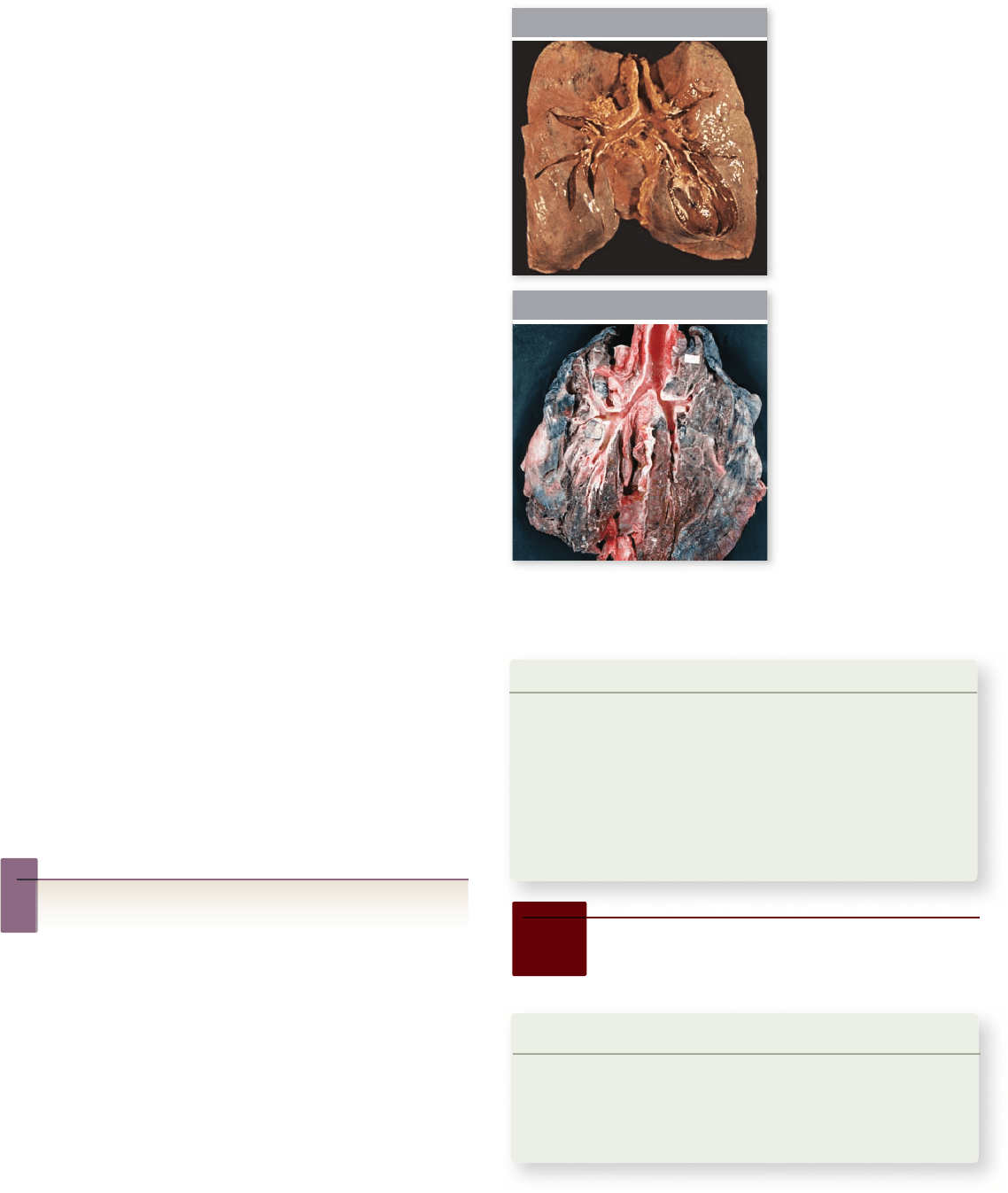
Healthy LungsHealthy Lungs
Cancerous LungsCancerous Lungs
Figure 49.13
Comparison of healthy
lung (a) and a lung with
cancer (b).
peripheral receptors send impulses to the respiratory control cen-
ter, which then stimulates increased breathing. The brain also con-
tains central chemoreceptors that are stimulated by a drop in the
pH of cerebrospinal fluid (CSF) (figure 49.12a).
A person cannot voluntarily hyperventilate for too long.
The decrease in plasma P
CO
2
and increase in pH of plasma
and CSF caused by hyperventilation suppress the reflex drive
to breathe. Deliberate hyperventilation allows people to hold
their breath longer—not because it increases oxygen in the
blood, but because the carbon dioxide level is lowered and takes
longer to build back up, postponing the need to breathe.
In people with normal lungs, P
O
2
becomes a significant stim-
ulus for increased breathing rates only at high altitudes, where the
P
O
2
of the atmosphere is low. The symptoms of low oxygen at high
altitude are known as mountain sickness, which may include feel-
ings of weakness, headache, nausea, vomiting, and reduced men-
tal function. All of these symptoms are related to the low P
O
2
, and
breathing supplemental oxygen often may remove all symptoms.
Respiratory diseases restrict gas exchange
Chronic obstructive pulmonary disease (COPD) refers to
any disorder that obstructs airflow on a long-term basis. The
major COPDs are asthma, chronic bronchitis, and emphysema.
In asthma, an allergen triggers the release of histamine and
other inflammatory chemicals that cause intense constriction
of the bronchi and sometimes suffocation. Other COPDs are
commonly caused by cigarette smoking but can also result from
air pollution or occupational exposure to airborne irritants.
Emphysema
In emphysema, alveolar walls break down and the lung ex-
hibits larger but fewer alveoli. The lungs also become fibrot-
ic and less elastic. The air passages open adequately during
inhalation bu t they tend to collapse and obstruct the outflow
of air. People with emphysema become exhausted because they
expend three to four times the normal amount of energy just
to breathe. Eighty to 90% of emphysema deaths are caused by
cigarette smoking.
Inquiry question
?
How does emphysema affect the diffusion of gases in and out
of the lung, based on Fick’s Law?
Lung cancer
Lung cancer accounts for more deaths than any other form of
cancer. The most important cause of lung cancer is cigarette
smoking, distantly followed by air pollution (figure 49.13).
Lung cancer follows or accompanies COPD.
Over 90% of lung tumors originate in the mucous mem-
branes of the large bronchi. As a tumor invades the bronchial
wall and grows around it, it compresses the airway and may
cause collapse of more distal parts of the lung. Growth of a
tumor often produces coughing, but coughing is such an every-
day occurrence for smokers, it seldom causes alarm. Often, the
first sign of serious trouble is the coughing up of blood.
Lung cancer metastasizes (spreads) so rapidly that it has
usually invaded other organs by the time it is diagnosed. The
chance of recovery from metastasized lung cancer is poor, with
only 3% of patients surviving for 5 years after diagnosis.
Learning Outcomes Review 49.4
In humans, each breath moves a tidal volume of about 500 mL in and
out of the lungs; 150 mL remains in the tubular passages where no gases
are exchanged (anatomical dead space). Depth and rate of ventilation is
regulated primarily by neurons in the medulla oblongata that detect CO
2
concentration. Diseases such as COPD limit gas exchange by obstructing
airfl ow. Lung cancer, associated with tobacco use, has a low survival rate.
■ How do mammals breathe differently from birds?
49.5 Transport of Gases
in Body Fluids
Learning Outcomes
Depict the structure of hemoglobin.1.
Describe how hemoglobin’s oxygen affinity changes 2.
depending on environmental conditions.
Explain how carbon dioxide is transported by the blood.3.
The amount of oxygen that can be dissolved in the blood plasma
depends directly on the P
O
2
of the air in the alveoli, as explained
earlier. When mammalian lungs are functioning normally,
1012 part
VII
Animal Form and Function
rav32223_ch49_1001-1017.indd 1012rav32223_ch49_1001-1017.indd 1012 11/19/09 2:30:25 PM11/19/09 2:30:25 PM
Apago PDF Enhancer
P
O
2
(mm Hg)
Percent saturation
0
20
40
60
80
Amount of O
2
unloaded
to tissues at rest
Arteries
V
eins
(at rest)
100
0 20
40 60 80 100
Amount of O
2
unloaded
to tissues during exercise
Veins
(e
xercised)
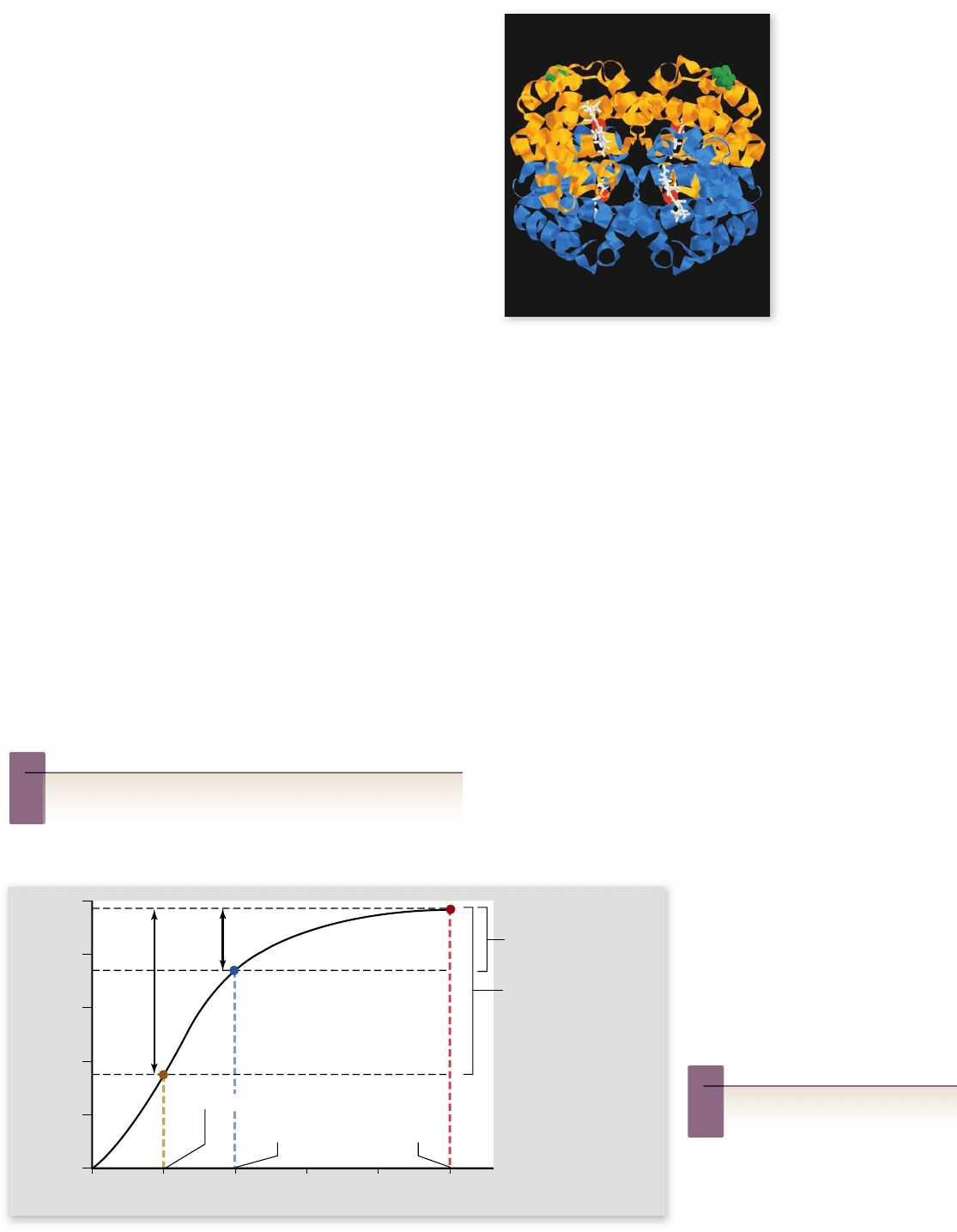
Figure 49.14
The structure of the
adult hemoglobin
protein. Hemoglobin
consists of four
polypeptide chains: two
α chains and two
β chains. Each chain is
associated with a heme
group (in white), and
each heme group has a
central iron atom (red
ball), which can bind to
a molecule of O
2
.
Hemoglobin and myoglobin provide
an oxygen reserve
At a blood P
O
2
of 100 mm Hg, the level found in blood leaving
the alveoli, approximately 97% of the hemoglobin within red
blood cells is in the form of oxyhemoglobin—indicated as a
percent oxyhemoglobin saturation of 97%.
In a person at rest, blood that returns to the heart in the
systemic veins has a P
O
2
that is decreased to about 40 mm Hg.
At this lower P
O
2
, the percent saturation of hemoglobin is only
75%. In a person at rest, therefore, 22% (97% minus 75%) of
the oxyhemoglobin has released its oxygen to the tissues. Put
another way, roughly one-fifth of the oxygen is unloaded in
the tissues, leaving four-fifths of the oxygen in the blood as a
reserve. A graphic representation of these changes is called an
oxyhemoglobin dissociation curve (figure 49.15).
This large reserve of oxygen serves an important func-
tion. It enables the blood to supply the body’s oxygen needs
during exertion as well as at rest. During exercise, for example,
the muscles’ accelerated metabolism uses more oxygen and
decreases the venous blood P
O
2
. The P
O
2
of the venous blood
the blood plasma leaving the lungs has almost as much dissolved
oxygen as is theoretically possible, given the P
O
2
of the air. Be-
cause of oxygen’s low solubility, however, blood plasma can con-
tain a maximum of only about 3 mL of O
2
per liter. But whole
blood normally carries almost 200 mL of O
2
per liter. Most of
the oxygen in the blood is bound to molecules of hemoglobin
inside red blood cells.
Respiratory pigments bind
oxygen for transport
Hemoglobin is a protein composed of four polypeptide chains
and four organic compounds called heme groups. At the cen-
ter of each heme group is an atom of iron, which can bind to
a molecule of oxygen (figure 49.14). Thus, each hemoglobin
molecule can carry up to four molecules of oxygen.
Hemoglobin loads up with oxygen in the alveolar capil-
laries of the pulmonary circulation, forming oxyhemoglobin.
This molecule has a bright red color. As blood passes through
capillaries in the systemic circulation, some of the oxyhemo-
globin releases oxygen, becoming deoxyhemoglobin. Deoxy-
hemoglobin has a darker red color; but it imparts a bluish tinge
to tissues. Illustrations of the cardiovascular system show ves-
sels carrying oxygenated blood with a red color and vessels that
carry oxygen-depleted blood with a blue color.
Hemoglobin is an ancient protein; it is not only the
oxygen-carrying molecule in all vertebrates, but is also used
as an oxygen carrier by many invertebrates, including anne-
lids, mollusks, echinoderms, flatworms, and even some pro-
tists. Many other invertebrates, however, employ different
oxygen carriers, such as hemocyanin. In hemocyanin, the
oxygen-binding atom is copper instead of iron. Hemocyanin
is not found associated with blood cells, but is instead one
of the free proteins in the circulating fluid (hemolymph) of
arthropods and some mollusks.
Inquiry question
?
If oxygen-depleted vessels have a bluish color, does this
mean that all veins in the body have a bluish color? Why or
why not?
Figure 49.15
The
oxyhemoglobin dissociation
curve. Hemoglobin combines with O
2
in the lungs, and this oxygenated blood
is carried by arteries to the body cells.
After O
2
is removed from the blood to
support cellular respiration, the blood
entering the veins contains less O
2
.
Inquiry question
?
How would you determine how
much oxygen was unloaded to
the tissues?
www.ravenbiology.com
chapter
49
The Respiratory System
1013
rav32223_ch49_1001-1017.indd 1013rav32223_ch49_1001-1017.indd 1013 11/19/09 12:41:23 PM11/19/09 12:41:23 PM
Apago PDF Enhancer
P
O
2
(mm Hg)
Percent oxyhemoglobin saturation
0
10
20
30
40
50
60
70
80
90
100
0 20 40 60 80 100 120 140
20°C
43°C
37°C
P
O
2
(mm Hg)
Percent oxyhemoglobin saturation
0
10
20
30
40
50
60
70
80
90
100
0 20 40 60 80 100 120 140
pH 7.60
pH 7.20
pH 7.40
a. pH shift b. Temperature shift
20% more O
2
delivered to the
tissues at the same pressure
20% more O
2
delivered to the
tissues at the same pressure
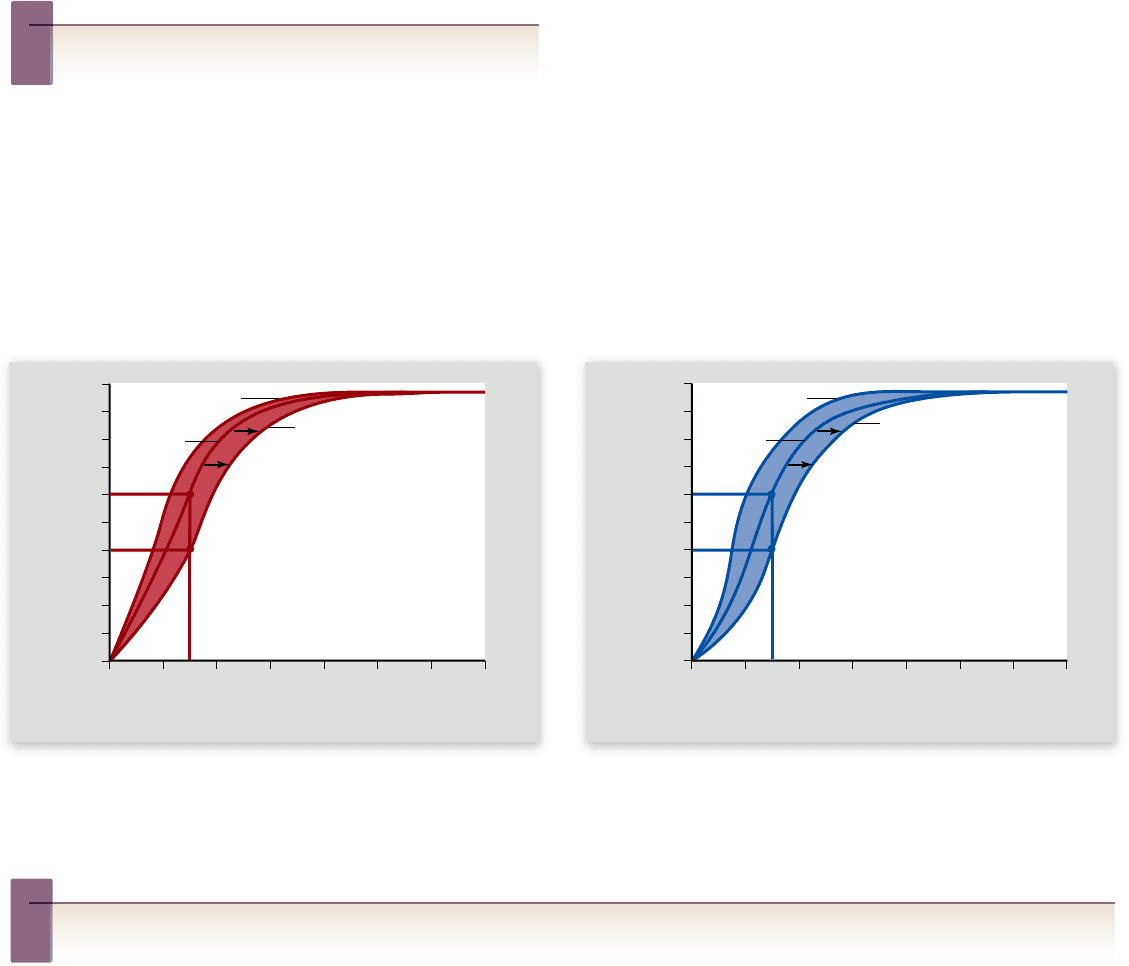
Figure 49.16
The e ect of pH and temperature on the oxyhemoglobin dissociation curve. a. Lower blood pH and (b) higher
blood temperatures shift the oxyhemoglobin dissociation curve to the right, facilitating O
2
unloading. In this example, this can be seen as a
lowering of the oxyhemoglobin percent saturation from 60% to 40%, indicating that the difference of 20% more O
2
is unloaded to the tissues.
Inquiry question
?
What effect does high blood pressure have on oxygen unloading to the tissues during exercise?
could drop to 20 mm Hg; in this case, the percent saturation
of hemoglobin would be only 35% (see figure 49.15). Because
arterial blood would still contain 97% oxyhemoglobin, the
amount of oxygen unloaded would now be 62% (97% minus
35%), instead of the 22% at rest.
In addition to this function, the oxygen reserve also ensures
that the blood contains enough oxygen to maintain life for 4 to
5 min if breathing is interrupted or if the heart stops pumping.
A second oxygen reserve is available in myoglobin, an
oxygen-binding molecule found in muscle cells. Myoglobin is
composed of a single polypeptide chain with an iron atom that
can bind to an O
2
molecule. Myoglobin has a higher affinity for
oxygen than hemoglobin, which means that when oxygen levels
fall in muscle cells, myoglobin will contain oxygen after the he-
moglobin supplies have been exhausted. Deep sea-diving mam-
mals, such as the elephant seal in figure 49.1, are able to stay
under water for long periods in part because of the high levels of
oxygen stored in the myoglobin in their muscles.
Inquiry question
?
Based on the preceding information, would an otherwise
healthy person benefit significantly from breathing 100%
oxygen following a bout of intense exercise such as a
400-m sprint?
Hemoglobin’s a nity for oxygen is a ected
by pH and temperature
Oxygen transport in the blood is affected by other conditions in-
cluding temperature and pH. The CO
2
produced by metaboliz-
ing tissues combines with H
2
O to form carbonic acid (H
2
CO
3
).
H
2
CO
3
dissociates into bicarbonate (HCO
3
–
) and H
+
, thereby
lowering blood pH. This reaction occurs primarily inside red
blood cells, where the lowered pH reduces hemoglobin’s affinity
for oxygen, causing it to release oxygen more readily.
The effect of pH on hemoglobin’s affinity for oxygen,
known as the Bohr effect or Bohr shift, is the result of H
+
binding to hemoglobin. It is shown graphically by a shift of the
oxyhemoglobin dissociation curve to the right (figure 49.16a).
Increasing temperature has a similar effect on hemo-
globin’s affinity for oxygen (figure 49.16b). Because skeletal
muscles produce carbon dioxide more rapidly during exercise,
and because active muscles produce heat, the blood unloads a
higher percentage of the oxygen it carries during exercise.
Carbon dioxide is primarily transported
as bicarbonate ion
About 8% of the CO
2
in blood is simply dissolved in plasma; an-
other 20% is bound to hemoglobin. Because CO
2
binds to the pro-
tein portion of hemoglobin, and not to the iron atoms of the heme
groups, it does not compete with oxygen; however, it does cause
hemoglobin’s shape to change, lowering its affinity for oxygen.
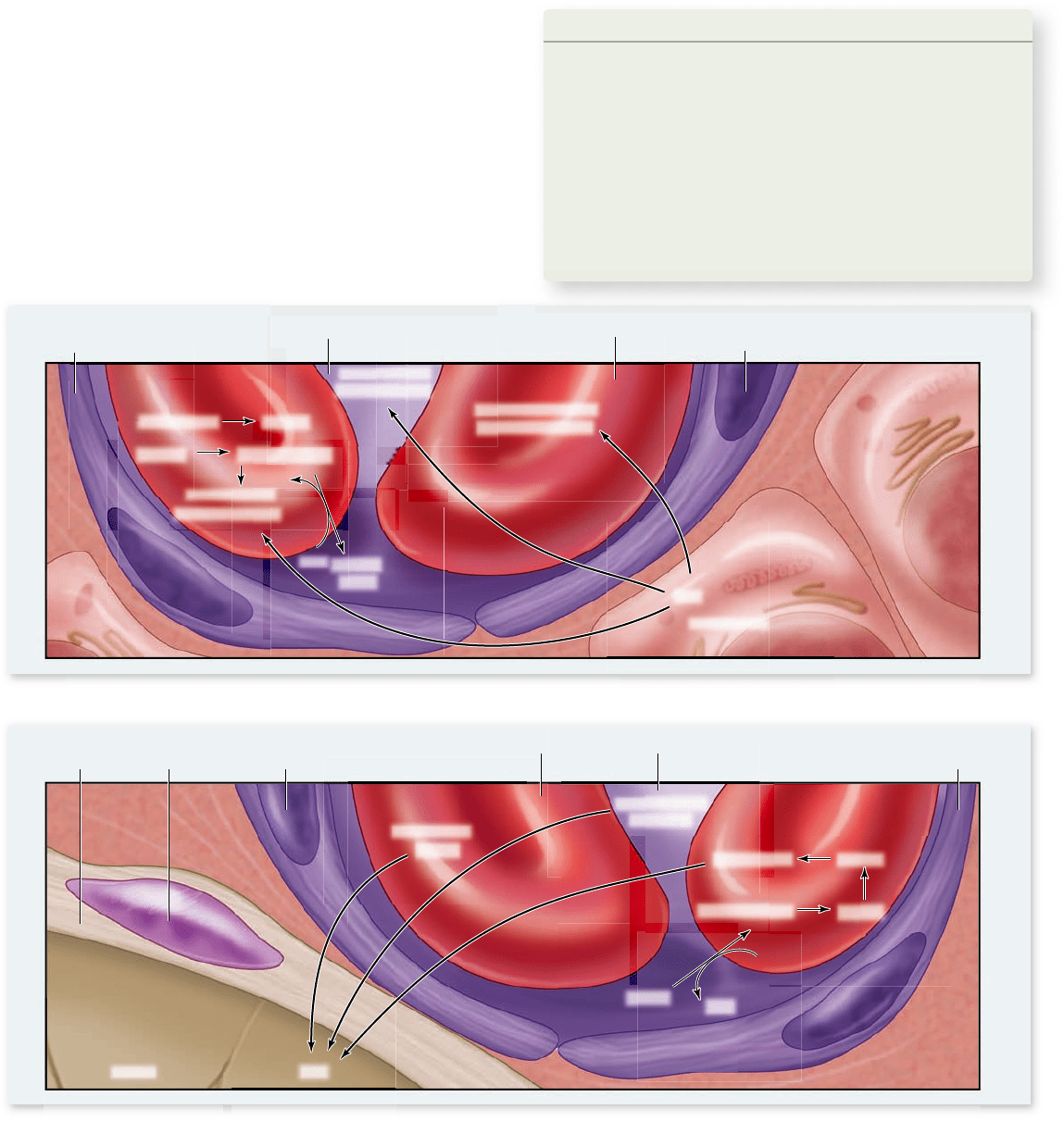
The remaining 72% of the CO
2
diffuses into the red blood
cells, where the enzyme carbonic anhydrase catalyzes the com-
bining of CO
2
with water to form H
2
CO
3
. H
2
CO
3
dissociates
into HCO
3
–
and H
+
ions. The H
+
binds to deoxyhemoglobin,
and the HCO
3
–
moves out of the erythrocyte into the plasma
via a transporter that exchanges one Cl
–
for a HCO
3
–
(this is
called the “chloride shift”).
1014 part
VII
Animal Form and Function
rav32223_ch49_1001-1017.indd 1014rav32223_ch49_1001-1017.indd 1014 11/19/09 12:41:25 PM11/19/09 12:41:25 PM
Apago PDF Enhancer
HCO
3
-
(72%)
Cl
-
H
2
CO
3
CO
2
+H
2
O
H
+
+HCO
3
-
H
2
CO
3
Tissue cells
H
+
combines
with hemoglobin
CO
2
CO
2
dissolved
in plasma (8%)
CO
2
combines with
hemoglobin (20%)
Capillary
endothelium
Capillary
Nucleus of capillary
endothelial cell
Erythrocyte
H
2
CO
3
CO
2
+H
2
O
H
2
CO
3
HCO
3
-
+H
+
HCO
3
-
Cl
-
Alveolar
epithelium
Alveoli
Nucleus of
alveolar cell
Nucleus of capillary
endothelial cell
Capillary
endothelium
Capillary
Hemoglobin
+CO
2
CO
2
CO
2
dissolved
in plasma
Erythrocyte
a.
b.
This reaction removes large amounts of CO
2
from the
plasma, maintaining a diffusion gradient that allows additional
CO
2
to move into the plasma from the surrounding tissues
(figure 49.17a). The formation of H
2
CO
3
is also important in
maintaining the acid–base balance of the blood; HCO
3
–
serves
as the major buffer of the blood plasma.
In the lungs, the lower P
CO
2
of the gas mixture inside the
alveoli causes the carbonic anhydrase reaction to proceed in
the reverse direction, converting H
2
CO
3
into H
2
O and CO
2
(figure 49.17b). The CO
2
diffuses out of the red blood cells and
into the alveoli, so that it can leave the body in the next exhalation.
Other dissolved gases are also transported by hemoglobin,
most notably nitric oxide (NO), which plays an important role in
vessel dilation. Carbon monoxide (CO) binds more strongly to he-
moglobin than does oxygen, which is why carbon monoxide poi-
soning can be deadly. Victims of carbon monoxide poisoning often
have bright red skin due to hemoglobin’s binding with CO.
Learning Outcomes Review 49.5
Hemoglobin consists of four polypeptide chains, each associated with
an iron-containing heme group that can bind O
2
. Hemoglobin’s affi nity
for oxygen is aff ected by pH and temperature; more O
2
is released
into tissues at lower pH and at higher temperature. Carbon dioxide is
transported in the blood in three ways: dissolved in the plasma, bound to
hemoglobin, and as bicarbonate in the plasma following a reaction with
carbonic anhydrase in the red blood cells.
■ What are the differences in the way that oxygen and
carbon dioxide are transported in blood?
Figure 49.17
The transport of carbon dioxide by the blood. a. Passage into bloodstream. CO
2
is transported in three ways:
dissolved in plasma, bound to the protein portion of hemoglobin, and as bicarbonate (HCO
3
—
), which forms in red blood cells. The reaction
of CO
2
with H
2
O to form H
2
CO
3
(carbonic acid) is catalyzed by the enzyme carbonic anhydrase in red blood cells. b. Removal from
bloodstream. When the blood passes through the pulmonary capillaries, these reactions are reversed so that CO
2
gas is formed, which
is exhaled.
www.ravenbiology.com
chapter
49
The Respiratory System
1015
rav32223_ch49_1001-1017.indd 1015rav32223_ch49_1001-1017.indd 1015 11/19/09 12:41:26 PM11/19/09 12:41:26 PM

Apago PDF Enhancer
49.1 Gas Exchange Across Respiratory Surfaces
Gas exchange involves di usion across membranes.
Diffusion is a passive process; the rate of diffusion (R) increases
with a higher concentration gradient and greater surface area, but
decreases with distance (Fick’s Law).
Evolutionary strategies have maximized gas di usion.
Most invertebrate phyla lack specialized respiratory organs, but have
evolved ways to increase oxygen concentration differences. Most
other animals possess respiratory organs.
49.2 Gills, Cutaneous Respiration,
and Tracheal Systems
External gills are found in sh and amphibian larvae.
Gills increase the respiratory surface area for gas exchange; however,
they require an aqueous environment.
Branchial chambers protect gills of some invertebrates.
Some aquatic invertebrates have branchial chambers in which
oxygenated water is pumped past stationary gills. Mollusks possess a
mantle in which water is drawn in and expelled.
Gills of bony shes are covered by the operculum.
In bony shes, diffusion of gases is maximized by countercurrent
exchange, in which blood in gills ows in a direction opposite the
ow of water over the gills (see gures 49.4 and 49.5).
Cutaneous respiration requires constant moisture.
Many amphibians and a few reptiles use cutaneous respiration for
gas exchange.
Tracheal systems are found in arthropods.
Tracheae and tracheoles are a series of small tubes, connected with
the outside environment by spiracles, that carry air directly to the
cells. The ability to open and close the spiracles allowed arthropods
to invade the land.
49.3 Lungs
Lungs minimize evaporation and contain supporting tissues to
prevent collapse of exchange membranes, and thus have become well
adapted to terrestrial living (see gure 49.8).
Breathing of air takes advantage of partial pressures of gases.
The partial pressure of gases refers to the proportion of atmospheric
pressure attributed to each gas. It is responsible for the pressure
gradient that brings about gas exchange.
Amphibians and reptiles breathe in di erent ways.
Amphibians force air into their lungs by positive pressure; reptiles
pull air in using negative pressure (see gure 49.7).
Mammalian lungs have greatly increased surface area.
The surface area of mammalian lungs is enormous due to numerous
alveoli, encased by an extensive capillary network (see gure 49.8).
The respiratory system of birds is a highly e cient ow-
through system.
The respiratory system of birds involves one-way direction of air
ow. Air moves through the respiratory system in a two-cycle process
so that fresh and used air never mix (see gure 49.9).
49.4 Structures and Mechanisms of Ventilation
in Mammals
Lung structure and function supports the respiratory cycle.
Gas exchange is driven by differences in partial pressures. Lungs
are lled by contraction of the diaphragm and external intercostal
muscles, creating negative pressure (see gure 49.11).
Ventilation e ciency depends on lung capacity and breathing rate.
Normal rates of breathing keep the partial pressure of oxygen and
carbon dioxide within a limited range of values. Hypoventilation
occurs when carbon dioxide levels are too high, and hyperventilation
when they are too low.
Ventilation is under nervous system control.
Each breath is initiated by neurons in the respiratory control center,
primarily those that detect CO
2
levels. Humans can voluntarily hypo-
or hyperventilate, but only for a limited time.
Respiratory diseases restrict gas exchange.
Emphysema occurs when alveolar walls break down, which makes
breathing very energetically expensive. Lung cancer is highly deadly
and caused primarily by smoking.
49.5 Transport of Gases in Body Fluids
Respiratory pigments bind oxygen for transport.
Hemoglobin increases the ability of the blood to transport oxygen
beyond what can dissolve in plasma (see gure 49.15).
Hemoglobin consists of four polypeptide chains, two α chains and
two β chains; each of these is associated with an iron-containing
heme group that can bind to O
2
(see gure 49.14).
Hemoglobin and myoglobin provide an oxygen reserve.
Most oxygen carried by hemoglobin remains in the blood and is
available when needed. In addition, myoglobin molecules in muscle
cells retain oxygen at lower partial pressures than hemoglobin and
thus serve as an additional oxygen reserve.
Hemoglobin’s a nity for oxygen is a ected by pH and temperature.
The af nity of hemoglobin for oxygen decreases as pH decreases and
as temperature increases (see gure 49.16). Therefore at lower pH
and higher temperature, more oxygen is released.
Carbon dioxide is primarily transported as bicarbonate ion.
Most carbon dioxide diffuses into red blood cells and combines
with water to form bicarbonate atoms in a reaction catalyzed by the
enzyme carbonic anhydrase.
Chapter Review
1016 part
VII
Animal Form and Function
rav32223_ch49_1001-1017.indd 1016rav32223_ch49_1001-1017.indd 1016 11/19/09 12:41:35 PM11/19/09 12:41:35 PM

Apago PDF Enhancer
Review Questions
2. Marine mammals are able to hold their breath for extended
periods underwater because
a. unlike humans, they don’t hypoventilate.
b. partial pressure of carbon dioxide does not
increase underwater.
c. myoglobin in muscle tissue provides an oxygen reserve.
d. the brains of marine mammals do not have receptors
that respond to impulses initiated in the aortic and
carotid bodies.
3. Countercurrent ow systems do not occur in lungs because they
a. require oxygen suspended in owing water.
b. are limited to sh.
c. only work in moving organisms.
d. cannot operate in the presence of carbon dioxide.
4. Respiratory organs of invertebrates and vertebrates are similar
in that
a. they use negative pressure breathing.
b. they take advantage of countercurrent ow systems.
c. they increase the surface area available for diffusion.
d. the air ows through the organ in one direction.
5. Mountain climbers may have dif culty at high
elevations because
a. the partial pressure of oxygen is lower at higher elevations.
b. more CO
2
occurs at higher altitudes.
c. the concentration of all elements of the air is lower at
higher elevations.
d. cooler temperatures restrict the metabolic activity of
oxygen at high elevations.
6. During exercise more oxygen is delivered to the
muscles because
a. active muscles produce more CO
2
, lowering the pH of
the blood.
b. active muscles produce heat.
c. both a and b
d. neither a nor b
S Y N THES IZE
1. Compare the operation and ef ciency of sh gills with
amphibian, bird, and mammal lungs.
2. What happens when, during exercise, the oxygen needs of the
peripheral tissues increase greatly?
3. Explain how bacteria, archaea, protists, and many phyla of
invertebrates can survive without respiratory organs.
U N DERS TAN D
1. If you hold your breath for a long time, body CO
2
levels
are likely to ____, and the pH of body uids is likely to ____.
a. increase; increase c. increase; decrease
b. decrease; increase d. decrease; decrease
2. Increased ef ciency of gas exchange in vertebrates has been
brought about by all of the following mechanisms except
a. cutaneous respiration.
b. unidirectional air ow.
c. crosscurrent blood ow.
d. cartilaginous rings in the trachea.
3. Which of the following is the primary method by which carbon
dioxide is transported to the lungs?
a. Dissolved in plasma c. As carbon monoxide
b. Bound to hemoglobin d. As bicarbonate
4. Gills are found in
a. sh. c. aquatic invertebrates.
b. amphibians. d. all of these.
5. Fick’s Law of Diffusion states the rate of diffusion is directly
proportional to
a. the area differences between the cross section of the blood
vessel and the tissue.
b. the pressure differences between the two sides of the
membrane and area over which the diffusion occurs.
c. the pressure differences between the inside of the organism
and the outside.
d. the temperature of the gas molecule.
6. Cutaneous respiration requires
a. moist and highly vascularized skin.
b. the absence of gills and lungs.
c. an environment rich in oxygen.
d. low temperatures.
7. Hyperventilation occurs
a. as a result of breathing rapidly.
b. when oxygen levels become low.
c. when tidal volumes are unusually low.
d. when the partial pressure of carbon dioxide is low.
8. Most carbon dioxide is
a. dissolved in the plasma.
b. bound to hemoglobin.
c. combined with water in red blood cells to form
carbonic acid.
d. stored in the lungs prior to exhalation.
APPLY
1. When you take a deep breath, your stomach moves out because
a. swallowing air increases the volume of the thoracic cavity.
b. your stomach shouldn’t move out when you take a deep
breath because you want the volume of your chest cavity
to increase, not your abdominal cavity.
c. contracting your abdominal muscles pushes your stomach
out, generating negative pressure in your lungs.
d. when your diaphragm contracts, it moves down, pressing
your abdominal cavity out.
O N LIN E RES OURCE
www.ravenbiology.com
Understand, Apply, and Synthesize—enhance your study with
animations that bring concepts to life and practice tests to assess
your understanding. Your instructor may also recommend the
interactive eBook, individualized learning tools, and more.
www.ravenbiology.com
chapter
49
The Respiratory System
1017
rav32223_ch49_1001-1017.indd 1017rav32223_ch49_1001-1017.indd 1017 11/19/09 12:41:36 PM11/19/09 12:41:36 PM
Apago PDF Enhancer
I
Chapter
50
The Circulatory System
Chapter Outline
50.1 The Components of Blood
50.2 Invertebrate Circulatory Systems
50.3 Vertebrate Circulatory Systems
50.4 The Four-Chambered Heart
and the Blood Vessels
50.5 Characteristics of Blood Vessels
50.6 Regulation of Blood Flow and Blood Pressure
Introduction
In multicellular organisms, oxygen obtained by the respiratory system and nutrients processed by the digestive system must be
transported to cells throughout the body. Conversely, carbon dioxide and other waste products produced within the cells must
be returned to the respiratory, digestive, and urinary systems for elimination from the body. These tasks are the responsibility of the
circulatory system. All multicellular organisms have a heart that pumps uids through the body. Many invertebrates have an open
system in which uids move through the body cavity. Vertebrates also have a system like this that moves lymph through
the body; however, the primary circulatory uid is blood, which means through a closed system of blood vessels.
platelets, although included in figure 50.1, are not complete
cells; rather, they are fragments of cells that are produced in the
bone marrow. (We describe the action of platelets in blood
clotting later in this section.)
Circulating blood has many functions:
Transportation.1. All of the substances essential for
cellular metabolism are transported by blood. Red blood
cells transport oxygen attached to hemoglobin; nutrient
molecules are carried in the plasma, sometimes bound to
carriers; and metabolic wastes are eliminated as blood
passes through the liver and kidneys.
Regulation.2. The cardiovascular system transports
regulatory hormones from the endocrine glands and also
50.1
The Components of Blood
Learning Outcomes
Describe the functions of circulating blood.1.
Distinguish between the types of formed elements.2.
Delineate the process of blood clotting.3.
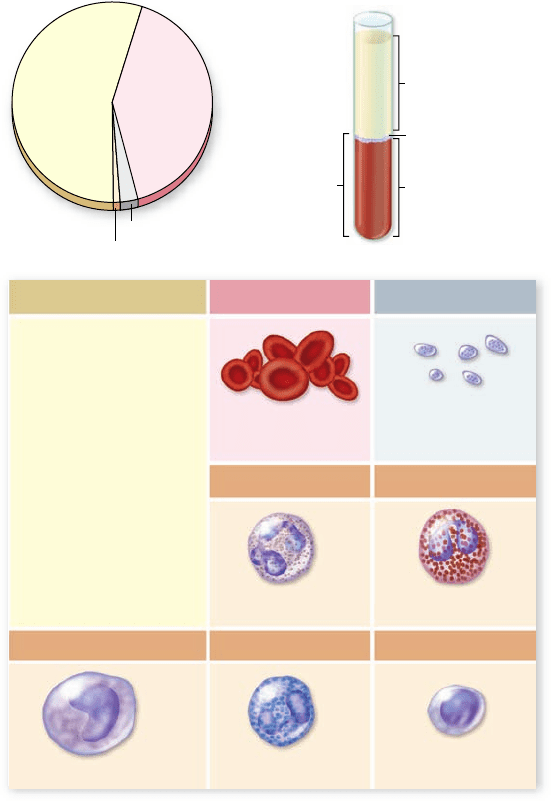
Blood is a connective tissue composed of a fluid matrix, called
plasma, and several different kinds of cells and other formed
elements that circulate within that fluid (figure 50.1) . Blood
CHAPTER
rav32223_ch50_1018-1037.indd 1018rav32223_ch50_1018-1037.indd 1018 11/19/09 11:44:28 AM11/19/09 11:44:28 AM
Apago PDF Enhancer
Plasma
(92% water, 55%
of whole blood)
Formed
elements
Platelets and
leukocytes (<1%)
Red blood cells
(erythrocytes)
(45% of whole
blood)
Nutrients
Electrolytes
Gases
Regulatory
substances
Waste products
Other solutes (1.5%)
Water (91.5%)
Plasma proteins (7%)
Blood Plasma Red Blood Cells
Albumin (54%)
Globulins (38%)
Fibrinogen (7%)
All others (1%)
Plasma
Red blood
cells
White blood cells
Platelets
Platelets
150,000–300,000/
mm
3
blood
4 million–6 million/
mm
3
blood
Neutrophils Eosinophils
2–4% 60–70%
Basophils Lymphocytes
20–25%
Monocytes
3–8% 0.5–1%
Figure 50.1
Composition of blood.
participates in temperature regulation. Contraction and
dilation of blood vessels near the surface of the body,
beneath the epidermis, helps to conserve or to dissipate
heat as needed.
Protection.3. The circulatory system protects against
injury and foreign microbes or toxins introduced into
the body. Blood clotting helps to prevent blood loss
when vessels are damaged. White blood cells, or
leukocytes, help to disarm or disable invaders such as
viruses and bacteria (see chapter 52).
Blood plasma is a uid matrix
Blood plasma is the matrix in which blood cells and platelets are
suspended. Interstitial (extracellular) fluids originate from the
fluid present in plasma.
Although plasma is 92% water, it also contains the follow-
ing solutes:
Nutrients, wastes, and hormones.1. Dissolved within
the plasma are all of the nutrients resulting from
digestive breakdown that can be used by cells, including
glucose, amino acids, and vitamins. Also dissolved in the
plasma are wastes such as nitrogen compounds and CO
2
produced by metabolizing cells. Endocrine hormones
released from glands are also carried through the blood
to their target cells.
Ions.2. Blood plasma is a dilute salt solution. The
predominant plasma ions are Na
+
, Cl
–
, and bicarbonate
ions (HCO
3
–
). In addition, plasma contains trace
amounts of other ions such as Ca
2+
, Mg
2+
, Cu
2+
, K
+
,
and Zn
2+
.
Proteins.3. As mentioned earlier, the liver produces most of
the plasma proteins, including albumin, which constitutes
most of the plasma protein; the alpha (α) and beta (β)
globulins, which serve as carriers of lipids and steroid
hormones; and brinogen, which is required for blood
clotting. Blood plasma with the brinogen removed is
called serum.
Formed elements include
circulating cells and platelets
The formed elements of blood cells and cell fragments include
red blood cells, white blood cells, and platelets. Each element
has a specific function in maintaining the body’s health
and homeostasis.
Erythrocytes
Each microliter of blood contains about 5 million red blood
cells, or erythrocytes. The fraction of the total blood volume
that is occupied by erythrocytes is called the blood’s hematocrit;
in humans, the hematocrit is typically around 45%.
Each erythrocyte resembles a doughnut-shaped disk with
a central depression that does not go all the way through. Ma-
ture mammalian erythrocytes lack nuclei. The erythrocytes of
vertebrates contain hemoglobin, a pigment that binds and
transports oxygen. (Hemoglobin was described more fully in
the previous chapter when we discussed respiration. ) In verte-
brates, hemoglobin is found only in erythrocytes. In inverte-
brates, the oxygen-binding pigment (not always hemoglobin) is
also present in plasma.
Leukocytes
Less than 1% of the cells in human blood are white blood
cells, or leukocytes; there are only 1 or 2 leukocytes for every
1000 erythrocytes. Leukocytes are larger than erythrocytes and
have nuclei. Furthermore, leukocytes are not confined to the
blood as erythrocytes are, but can migrate out of capillaries
through the intercellular spaces into the surrounding intersti-
tial (tissue) fluid.
Leukocytes come in several varieties, each of which plays
a specific role in defending against invading microorganisms
and other foreign substances, as described in chapter 52.
Granular leukocytes include neutrophils, eosinophils, and ba-
sophils, which are named according to the staining properties
of granules in their cytoplasm. Nongranular leukocytes in-
clude monocytes and lymphocytes. In humans, neutrophils are
the most numerous of the leukocytes, followed in order by lym-
phocytes, monocytes, eosinophils, and basophils.
chapter
50
The Circulatory System
1019www.ravenbiology.com
rav32223_ch50_1018-1037.indd 1019rav32223_ch50_1018-1037.indd 1019 11/19/09 11:44:33 AM11/19/09 11:44:33 AM
Apago PDF Enhancer
Pluripotent Stem Cell
Myeloid stem line Lymphoid stem line
Myeloid Stem Cell Lymphoid Stem Cell
Proerythroblast Megakaryoblast Myeloblast
Progenitor cell Progenitor cellProgenitor cell
Monoblast
Early erythroblast Promyelocytes
Promonocyte
Promegakaryocyte
B lymphoblast T lymphoblast
Late
erythroblast
Eosinophilic
myelocyte
Basophilic
myelocyte
Neutrophilic
myelocyte
Normoblast
Reticulocyte
Erythrocyte
Nucleus
ejected
Eosinophil Basophil Neutrophil Monocyte
Megakaryocyte
Platelets
B lymphocyte T lymphocyte
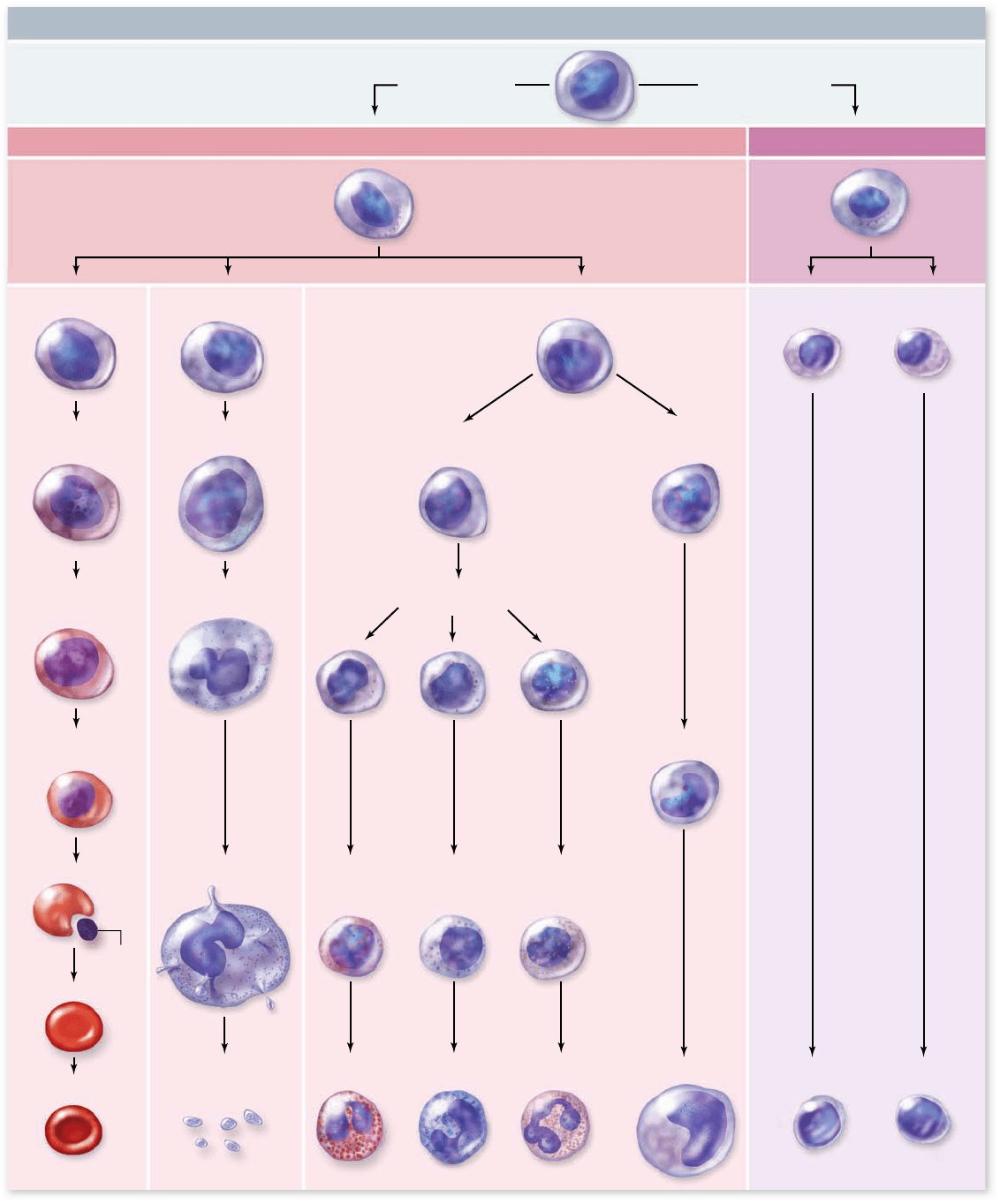
Figure 50.2
Stem cells and the production of formed elements.
1020
part
VII
Animal Form and Function
rav32223_ch50_1018-1037.indd 1020rav32223_ch50_1018-1037.indd 1020 11/19/09 11:44:33 AM11/19/09 11:44:33 AM
Apago PDF Enhancer
4. Threads of fibrin trap
erythrocytes and form
a clot.
1. Vessel is damaged,
exposing surrounding
tissue to blood.
5. Once tissue damage
is healed, the clot is
dissolved.
3. Cascade of enzymatic
reactions is triggered
by platelets, plasma
factors, and
damaged tissue.
2. Platelets adhere
and become sticky,
forming a plug.
Prothrombin
Thrombin
Thrombin
Fibrinogen
Fibrin
Platelets
Platelets are cell fragments that pinch off from larger cells in
the bone marrow. They are approximately 3 μm in diameter,
and following an injury to a blood vessel, the liver releases pro-
thrombin into the blood. In the presence of this clotting factor,
fibrinogen is converted into insoluble threads of fibrin. Fibrin
then aggregates to form the clot.
Formed elements arise from stem cells
The formed elements of blood each have a finite life span and
therefore must be constantly replaced. Many of the old cell
fragments are digested by phagocytic cells of the spleen; how-
ever, many products from the old cells, such as iron and amino
acids, are incorporated into new formed elements. The cre-
ation of new formed elements begins in the bone marrow (see
chapter 47).
All of the formed elements develop from pluripotent
stem cells (see chapter 19). The production of blood cells oc-
curs in the bone marrow and is called hematopoiesis. This
process generates two types of stem cells with a more restricted
fate: a lymphoid stem cell that gives rise to lymphocytes and a
myeloid stem cell that gives rise to the rest of the blood cells
(figure 50.2) .
When the oxygen available in the blood decreases, the
kidney converts a plasma protein into the hormone erythro-
poietin. Erythropoietin then stimulates the production of
erythrocytes from the myeloid stem cells through a process
called erythropoiesi s .
In mammals, maturing erythrocytes lose their nuclei prior
to release into circulation. In contrast, the mature erythrocytes
of all other vertebrates remain nucleated. Megakaryocytes are ex-
amples of committed cells formed in bone marrow from stem
cells. Pieces of cytoplasm are pinched off the megakaryocytes
to form the platelets.
Inquiry question
?
Why do you think the use of erythropoietin as a drug is
banned in the Olympics and in some other sports?
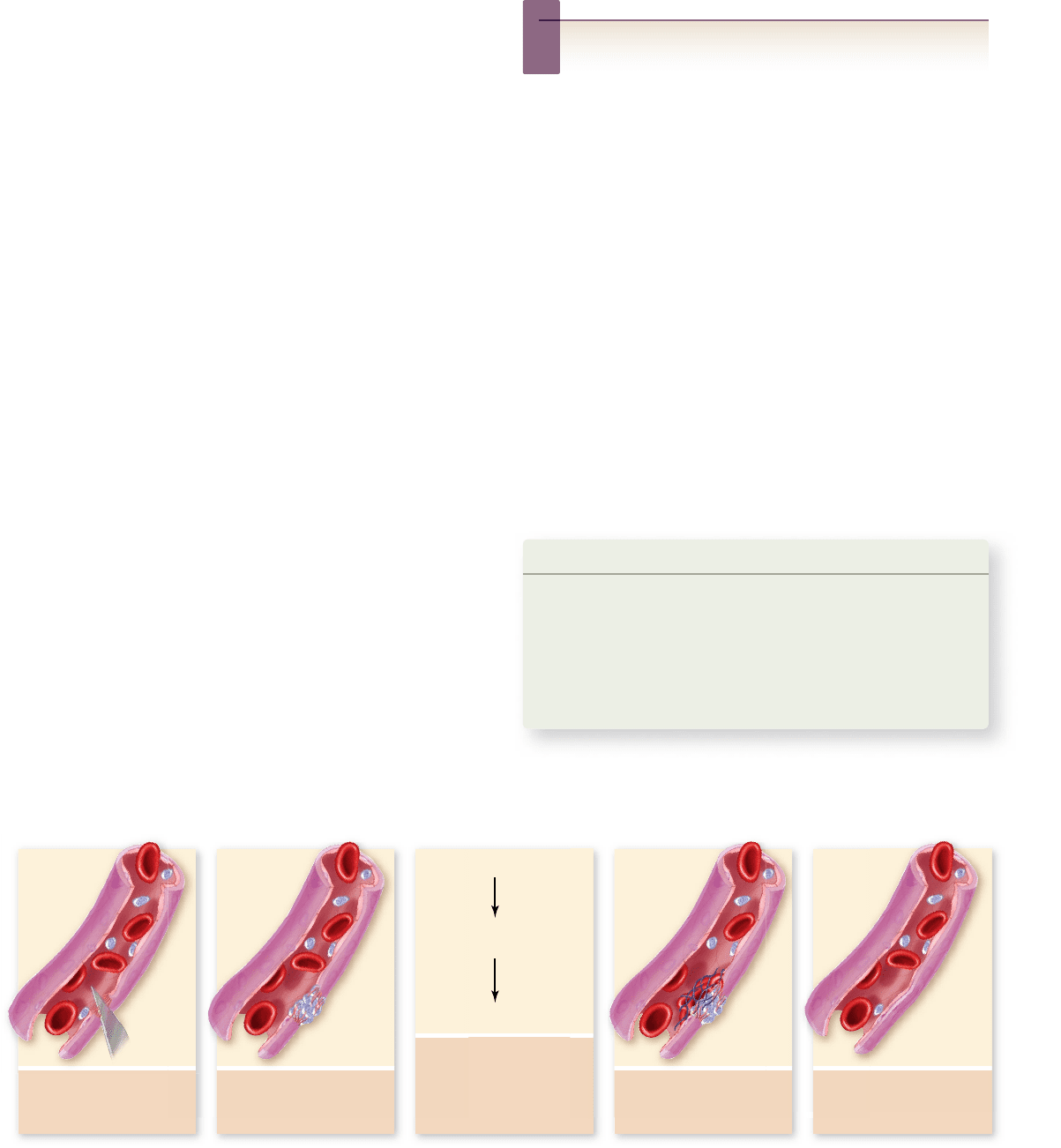
Blood clotting is an example
of an enzyme cascade
When a blood vessel is broken or cut, smooth muscle in the ves-
sel walls contracts, causing the vessel to constrict. Platelets then
accumulate at the injured site and form a plug by sticking to one
another and to the surrounding tissues (figure 50.3) . A cascade
of enzymatic reactions is triggered by the platelets, plasma fac-
tors, and molecules released from the damaged tissue.
One of the results of this cascade is that fibrinogen, nor-
mally dissolved in the plasma, comes out of solution in a reac-
tion that forms fibrin. The platelet plug is then reinforced by
fibrin threads, which contract to form a tighter mass. The tight-
ening plug of platelets, fibrin, and often trapped erythrocytes
constitutes a blood clot.
Once the tissue damage is healed, the careful process of
dissolving the blot clot begins. This process is significant be-
cause if a clot breaks loose and travels in the circulatory sys-
tem, it may end up blocking a blood vessel in the brain, causing
a stroke, or in the heart, causing a heart attack.
Learning Outcomes Review 50.1
The circulatory system functions in transport of materials, regulation of
temperature and body processes, and protection of the body. Formed
elements in blood include red blood cells, white blood cells, and platelets.
Blood clotting involves a cascade of enzymatic reactions triggered by
platelets and plasma factors to produce insoluble fi brin from fi brinogen.
■ How does a blood clot form?
Figure 50.3
Blood clotting. Fibrin is formed from a soluble protein, brinogen, in the plasma. This reaction is catalyzed by the
enzyme thrombin, which is formed from an inactive enzyme called prothrombin. The activation of thrombin is the last step in a cascade of
enzymatic reactions that produces a blood clot when a blood vessel is damaged.
chapter
50
The Circulatory System
1021www.ravenbiology.com
rav32223_ch50_1018-1037.indd 1021rav32223_ch50_1018-1037.indd 1021 11/19/09 11:44:34 AM11/19/09 11:44:34 AM