
Raven P.H., Johnson G.B., Mason K.A. Biology (Ninth Edition)
Подождите немного. Документ загружается.

Apago PDF Enhancer
Na
+
and
Cl
:
Na
+
and
Cl
:
Proximal arm
Distal arm
Glomerulus
Collecting duct
Intermediate
segment
(loop of Henle)
Amino acids
Glucose
Divalent ions
H
2
O
H
2
O
H
2
O
H
2
O
H
2
O
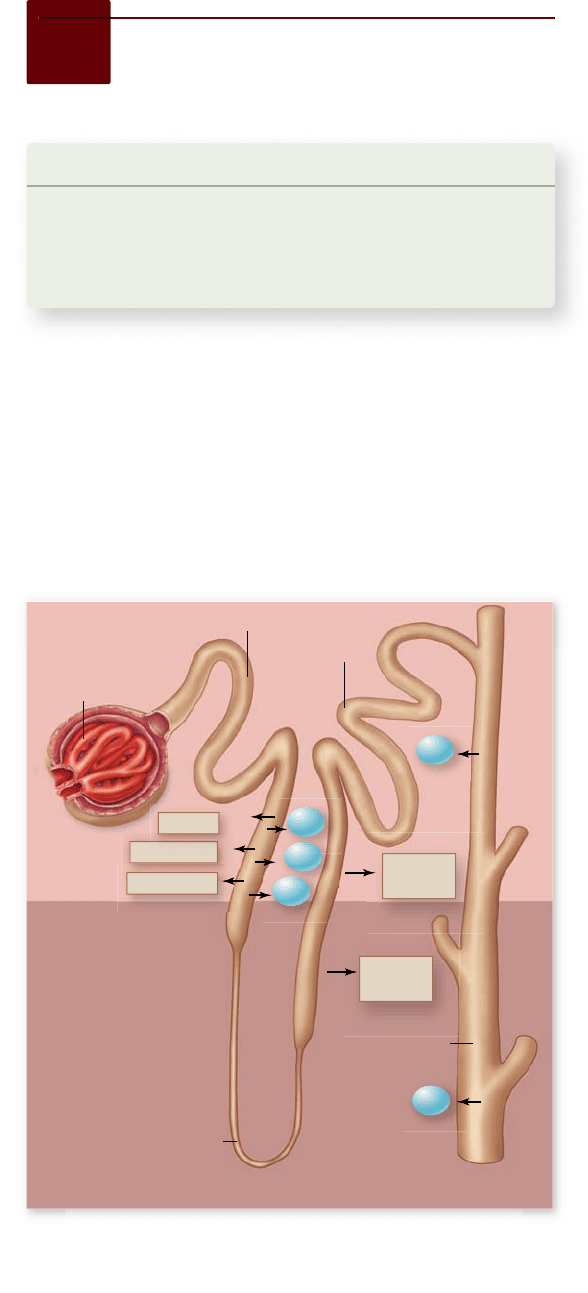
Figure 51.5
Organization of the vertebrate nephron.
The nephron tubule is a basic design that has been retained in
the kidneys of vertebrates. Sugars, amino acids, water, important
monovalent ions, and divalent ions are reabsorbed in the proximal
arm; water and monovalent ions such as Na
+
and Cl
–
are reabsorbed
in the loop of Henle; varying amounts of water and monovalent
ions (Na
+
and Cl
–
) can be reabsorbed in the distal arm and the
collecting duct, depending on hormonal in uences.
51.3
Evolution of the Vertebrate
Kidney
Learning Outcomes
Contrast osmotic adaptations of freshwater fish with 1.
those of marine fish.
Explain the significance of the loop of Henle in 2.
mammalian and avian kidneys.
The kidney is a complex organ made up of thousands of repeat-
ing units called nephrons, each with the structure of a loop
that penetrates deep into the medulla of the kidney (shown
schematically in figure 51.5) . Blood pressure forces the fluid
in blood out of a ball of capillaries called the glomerulus into
Bowman’s capsule, the beginning of the tubule system. This
process filters the blood forming the tubular filtrate that can
then be modified by the rest of the nephron. The glomerulus
retains blood cells, proteins, and other useful large molecules
in the blood, but it allows the water, and the small molecules
and wastes dissolved in it, to pass through and into the tubule
system of the nephron. As the filtered fluid passes through the
nephron tube, useful nutrients and ions are reabsorbed from it
by both active and passive transport mechanisms, leaving the
water and metabolic wastes behind in a fluid urine. (The details
of this process are described in a later section.)
Although the same basic design has been retained in all
vertebrate kidneys, a few modifications have occurred. Because
the original glomerular filtrate is isotonic to blood, all verte-
brates can produce a urine that is isotonic to blood by reabsorb-
ing ions and water in equal proportions. Or, they can produce a
urine that is hypotonic to blood—more dilute than the blood—
by reabsorbing relatively less water. Only birds and mammals
can reabsorb enough water from their glomerular filtrate to
produce a urine that is hypertonic to blood—more concentrated
than the blood—by reabsorbing relatively more water.
Freshwater shes must retain
electrolytes and keep water out
Kidneys are thought to have evolved among the freshwater tel-
e osts, or bony fishes. Because the body fluids of a freshwater
fish are hypertonic with respect to the surrounding water, these
animals face two serious problems: (1) Water tends to enter the
body from the environment; and (2) solutes tend to leave the
body and enter the environment.
Freshwater fish address the first problem by not drinking
water and by excreting a large volume of dilute urine, which is
hypotonic to their body fluids. They address the second prob-
lem by reabsorbing ions across the nephron tubules, from the
glomerular filtrate back into the blood. In addition, they actively
transport ions across their gill surfaces from the surrounding
water into the blood (figure 51.6, left).
Marine bony shes must excrete
electrolytes and keep water in
Although most groups of animals seem to have evolved first
in the sea, marine bony fish (teleosts) probably evolved from
freshwater ancestors. They faced significant new problems
in making the transition to the sea because their body fluids
were, and are, hypotonic to seawater. Consequently, water
tends to leave their bodies by osmosis across their gills, and
they also lose water in their urine. To compensate for this con-
tinuous water loss, marine fish drink large amounts of seawater
(figure 51.6, right).
Many of the divalent cations (principally, Ca
2+
and Mg
2+
)
in the seawater that a marine fish drinks remain in the digestive
tract and are eliminated through the anus. Some, however, are
absorbed into the blood, as are the monovalent ions K
+
, Na
+
,
and Cl
–
. Most of the monovalent ions are actively transported
out of the blood across the gill surfaces, whereas the divalent
ions that enter the blood are secreted into the nephron tubules
and excreted in the urine. In these two ways, marine bony fish
eliminate the ions they get from the seawater they drink. The
urine they excrete is isotonic to their body fluids. It is more
concentrated than the urine of freshwater fish, but not as con-
centrated as that of birds and mammals.
1042
part
VII
Animal Form and Function
rav32223_ch51_1038-1054.indd 1042rav32223_ch51_1038-1054.indd 1042 11/19/09 1:22:50 PM11/19/09 1:22:50 PM
Apago PDF Enhancer
Food
Urine
Intestinal
wastes
Marine Fish Freshwater Fish
Kidney tubule
Large glomerulus
Active tubular
reabsorption
of Na
+
and Cl
-
Kidney: Excretion
of dilute urine
Gills:
Active absorption
of Na
+
and Cl
:
, water
enters osmotically
Glomerulus
reduced or
absent
Stomach:
Passive reabsorption
of water,
Na
+
and Cl
:
Gills:
Active secretion of
Na
+
and Cl
-
,
water loss
Intestinal wastes:
Mg
2
+
and SO
4
2
:
voided with feces
Kidney:
Excretion of urea, little
water, Mg
2
+
and SO
4
2
:
Active tubular
secretion of
Mg
2
+
and SO
4
2
:
Food,
seawater
Mg
2
+
and
SO
4
2
:
Na
+
and Cl
-
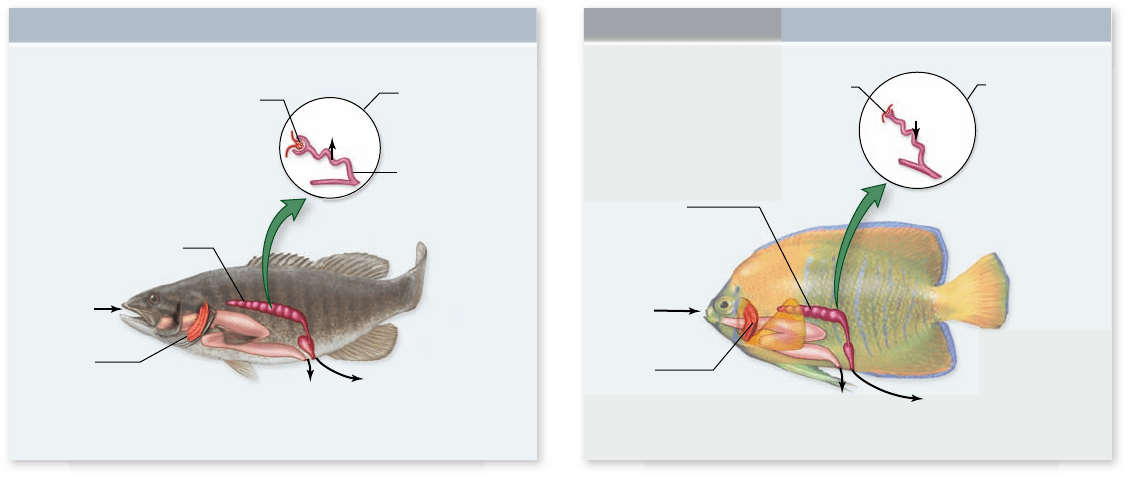
Figure 51.6
Freshwater and marine teleosts face di erent osmotic problems. Whereas the freshwater teleost is hypertonic to
its environment, the marine teleost is hypotonic to seawater. To compensate for its tendency to take in water and lose ions, a freshwater sh
excretes dilute urine, avoids drinking water, and reabsorbs ions across the nephron tubules. To compensate for its osmotic loss of water, the
marine teleost drinks seawater and eliminates the excess ions through active transport across epithelia in the gills and kidneys.
Reptiles, on the other hand, live in diverse habitats. Those
living mainly in fresh water occupy a habitat similar to that of
the freshwater fish and amphibians, and thus have similar kid-
neys. Marine reptiles, including some crocodilians, sea turtles,
sea snakes, and one lizard, possess kidneys similar to those of
their freshwater relatives, but they face opposite problems—
they tend to lose water and take in salts. Like marine bony fish,
they drink seawater and excrete an isotonic urine. Marine rep-
tiles eliminate excess salt through salt glands located near the
nose or the eye.
The kidneys of terrestrial reptiles also reabsorb much of
the salt and water in their nephron tubules, helping somewhat
to conserve blood volume in dry environments. Like fish and
amphibians, they cannot produce urine that is more concen-
trated than the blood plasma; however, they don’t really excrete
urine, but instead empty it into a cloaca (the common exit of
the digestive and urinary tracts), where additional water can be
reabsorbed and the wastes excreted with the feces.
Mammals and birds are able to excrete
concentrated urine and retain water
Mammals and birds are the only vertebrates able to produce
urine with a higher osmotic concentration than their body flu-
ids. These vertebrates are therefore able to excrete their waste
products in a small volume of water, so that more water can be
retained in the body.
Human kidneys can produce urine that is as much as
4.2 times as concentrated as blood plasma, but the kidneys of some
other mammals are even more efficient at conserving water. For
example, camels, gerbils, and pocket mice of the genus Perognathus
Cartilaginous shes pump out
electrolytes and retain urea
The elasmobranchs, including sharks and rays, are by far the
most common subclass in the class Chondrichthyes (cartilagi-
nous fish). Elasmobranchs have solved the osmotic problem
posed by their seawater environment in a different way. Instead
of having body fluids that are hypotonic to seawater, so that
they have to continuously drink seawater and actively pump
out ions, the elasmobranchs reabsorb urea from the nephron
tubules and maintain a blood urea concentration that is
100 times higher than that of mammals.
The added urea makes elasmobranchs’ blood approxi-
mately isotonic to the surrounding sea. Because no net water
movement occurs between isotonic solutions, water loss is
therefore prevented. As a result, these fishes do not need to
drink seawater for osmotic balance, and their kidneys and gills
do not have to remove large amounts of ions from their bodies.
The enzymes and tissues of the cartilaginous fish have evolved
to tolerate the high urea concentrations.
Amphibians and reptiles have osmotic
adaptations to their environments
The first terrestrial vertebrates were the amphibians, and the
amphibian kidney is identical to that of freshwater fish. This is
not surprising because amphibians spend a significant portion
of their time in fresh water, and when on land, they generally
stay in wet places. Amphibians produce a very dilute urine and
compensate for their loss of Na
+
by actively transporting Na
+
across their skin from the surrounding water.
chapter
51
Osmotic Regulation and the Urinary System
1043www.ravenbiology.com
rav32223_ch51_1038-1054.indd 1043rav32223_ch51_1038-1054.indd 1043 11/19/09 1:22:51 PM11/19/09 1:22:51 PM
Apago PDF Enhancer
Salt gland
Salt secretion
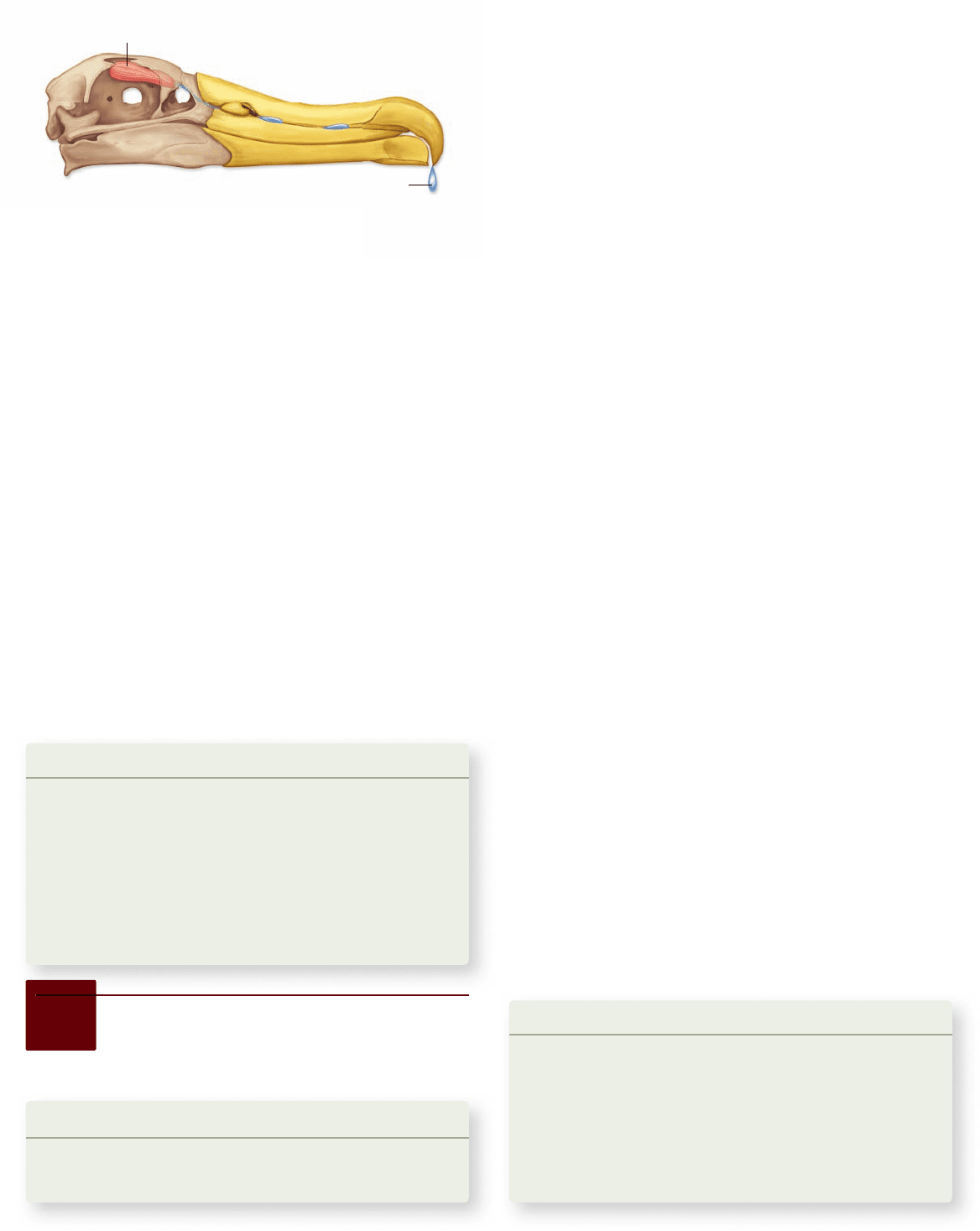
Figure 51.7
How marine birds cope with excess salt.
Marine birds drink seawater and then excrete the salt through salt
glands. The extremely salty uid excreted by these glands can then
dribble down the beak.
Amino acids and nucleic acids are nitrogen-containing mol-
ecules. When animals catabolize these molecules for energy
or convert them into carbohydrates or lipids, they produce
nitrogen-containing by-products called nitrogenous wastes
(figure 51.8) that must be eliminated from the body.
Ammonia is toxic and must be quickly removed
The first step in the metabolism of amino acids and nucleic ac-
ids is the deamination, that is, removal of the amino (
—
NH
2
)
group, and its combination with H
+
to form ammonia (NH
3
) in
the liver. Ammonia is quite toxic to cells and therefore is safe
only in very dilute concentrations. The excretion of ammonia
is not a problem for the bony fishes and amphibian tadpoles,
which eliminate most of it by diffusion through the gills and less
by excretion in very dilute urine.
Urea and uric acid are less toxic
but have di erent solubilities
In elasmobranchs, adult amphibians, and mammals, the nitrog-
enous wastes are eliminated in the far less toxic form of urea.
Urea is water-soluble and so can be excreted in large amounts
in the urine. It is carried in the bloodstream from its place of
synthesis in the liver to the kidneys where it is excreted.
Reptiles, birds, and insects excrete nitrogenous wastes in
the form of uric acid, which is only slightly soluble in water. As
a result of its low solubility, uric acid precipitates and thus can
be excreted using very little water. Uric acid forms the pasty
white material in bird droppings called guano. It costs the ani-
mal energy to synthesize uric acid, but this is offset by the con-
servation of water.
The ability to synthesize uric acid in these groups of ani-
mals is also important because their eggs are encased within
shells, and nitrogenous wastes build up as the embryo grows
within the egg. The formation of uric acid, although a lengthy
process that requires considerable energy, produces a com-
pound that crystallizes and precipitates. As a solid precipitate,
uric acid is unable to affect the embryo’s development even
though it is still inside the egg.
Mammals also produce some uric acid, but it is a waste
product of the degradation of purine nucleotides, not of amino
acids. Most mammals have an enzyme called uricase, which con-
verts uric acid into a more soluble derivative, allantoin. Only
humans, apes, and the Dalmatian dog lack this enzyme, and they
must excrete the uric acid. In humans, excessive accumulation of
uric acid in the joints produces a condition known as gout.
Learning Outcome Review 51.4
Metabolic breakdown of amino acids and nucleic acids produces ammonia
as a by-product. Bony fi shes and gilled amphibians excrete ammonia;
other vertebrates convert nitrogenous wastes into urea (reptiles and birds)
and uric acid (mammals and adult amphibians), which are less toxic. Most
mammals produce a small amount of uric acid that is broken down by uricase
except in humans, apes, and the Dalmatian dog.
■ Why is nitrogenous waste problematic?
can excrete urine that is 8, 14, and 22 times as concentrated as their
blood plasma, respectively. The kidneys of kangaroo rats (genus
Dipodomys) are so efficient that they never have to drink water; they
can obtain all the water they need from their food and from water
produced in aerobic cellular respiration.
The production of hypertonic urine is accomplished
by the loop of Henle portion of the nephron (see figures 51.5
and 51.11), found only in mammals and birds. The degree of
concentration depends on the length of the loop; most mam-
mals have some nephrons with short loops and other nephrons
with much longer loops. Birds, however, have relatively few or
no nephrons with long loops, so they cannot produce urine that
is as concentrated as that of mammals. At most, they can only
reabsorb enough water to produce a urine that is about twice
the concentration of their blood. Marine birds solve the prob-
lem of water loss by drinking salt water and then excreting the
excess salt from salt glands near the eyes (figure 51.7) .
The moderately hypertonic urine of a bird is delivered to
its cloaca, along with the fecal material from its digestive tract. If
needed, additional water can be absorbed across the wall of the clo-
aca to produce a semisolid white paste or pellet, which is excreted.
Learning Outcomes Review 51.3
The kidneys of freshwater fi shes must excrete copious amounts of very dilute
urine. Marine bony fi shes drink seawater and excrete an isotonic urine;
cartilaginous fi shes retain urea, which prevents water loss. In mammals and
birds, the loop of Henle allows reabsorption of water from the urine, making
it hypertonic to their body fl uids.
■ Mammals and birds have nephrons with a loop of
Henle, but reptiles do not. What are the possible
evolutionary explanations for this?
51.4
Nitrogenous Wastes:
Ammonia, Urea, and Uric Acid
Learning Outcome
Describe the different kinds of nitrogenous waste and 1.
their relative toxicity.
1044
part
VII
Animal Form and Function
rav32223_ch51_1038-1054.indd 1044rav32223_ch51_1038-1054.indd 1044 11/19/09 1:22:53 PM11/19/09 1:22:53 PM
Apago PDF Enhancer
HN
N
H
O
O
H
N
N
H
O
Ammonia
Most bon
y fish and
aquatic invertebrates
Mammals, amphibians,
and cartilagenous fish
Reptiles, birds,
and insects
Urea
Uric acid
NH
3
OC
NH
2
NH
2
Amino acids and nucleic acids
Ammonia
by-product
Eliminated
Directly
Converted
to Urea
Converted
to Uric Acid
Catabolism
Costs energy, saves water
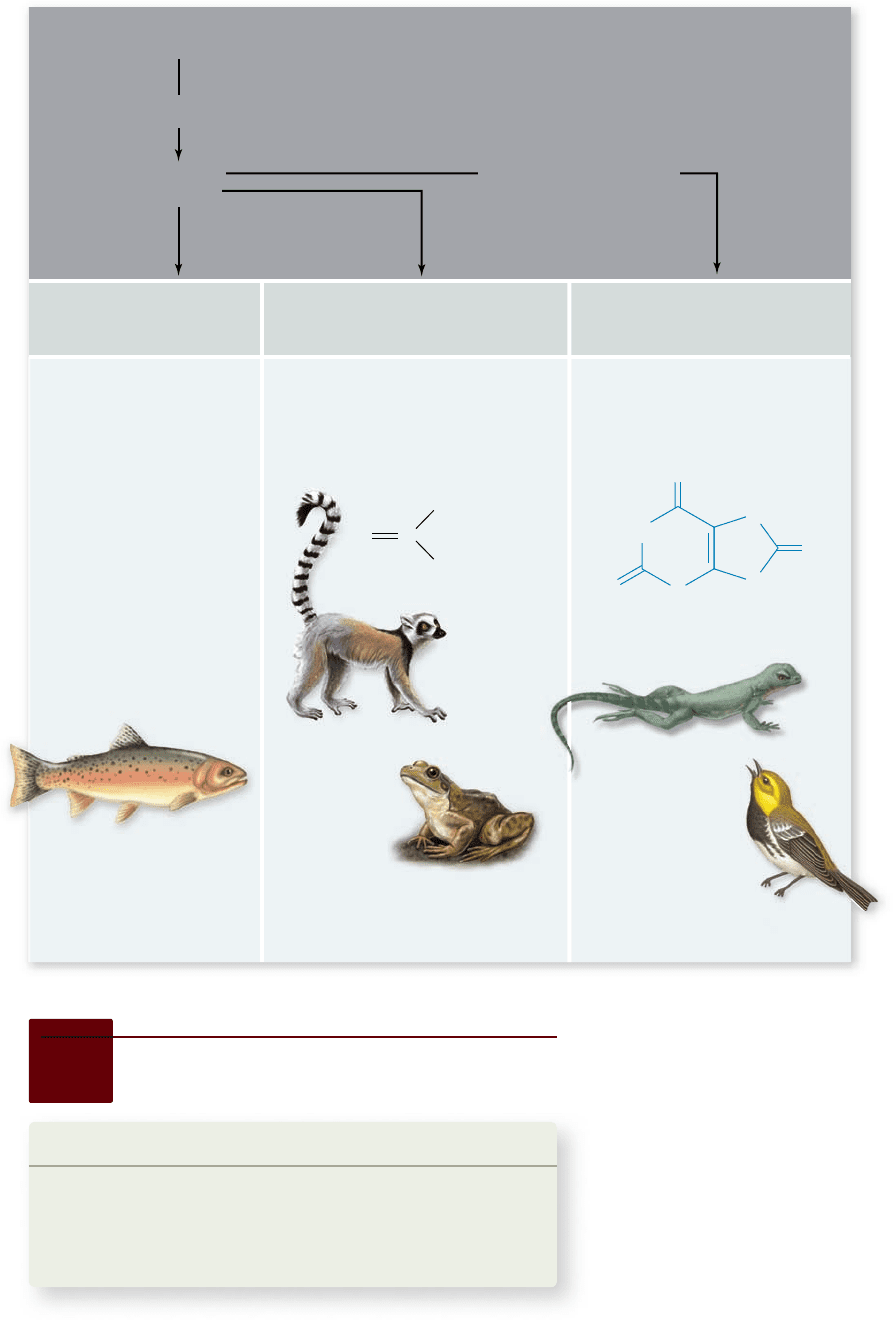
Figure 51.8
Nitrogenous wastes.
When amino acids and
nucleic acids are metabolized,
the immediate by-product
is ammonia, which is quite
toxic but can be eliminated
through the gills of teleost
sh. Mammals convert
ammonia into urea, which is
less toxic. Birds and terrestrial
reptiles convert it instead into
uric acid, which is insoluble
in water. Production of uric
acid is the most energetically
expensive of the three but also
saves the most water.
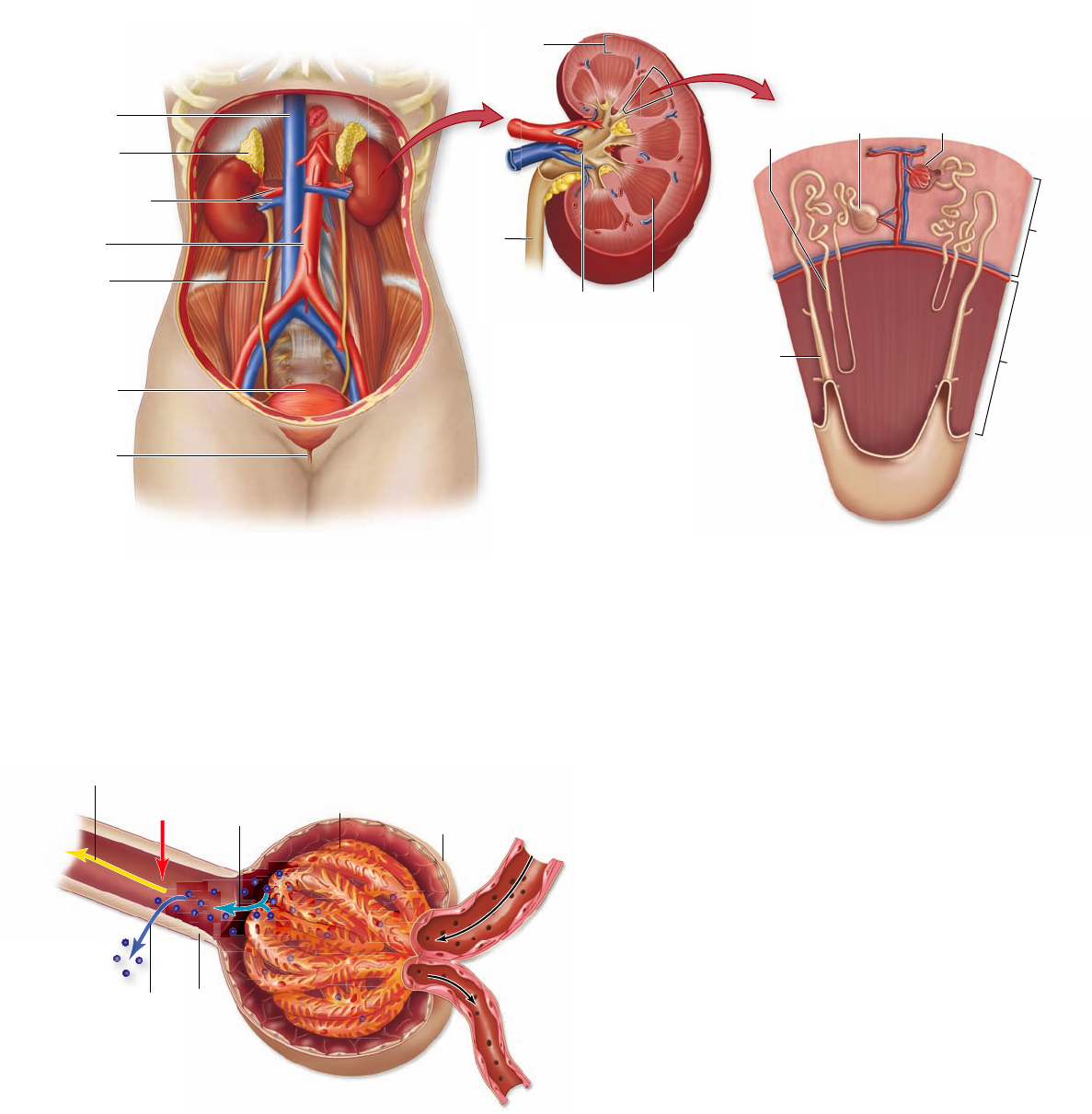
From the bladder, urine is passed out of the body through the
urethra (figure 51.9) .
Within the kidney, the mouth of the ureter flares open
to form a funnel-like structure, the renal pelvis. The renal pel-
vis, in turn, has cup-shaped extensions that receive urine from
the renal tissue. The renal tissue is divided into an outer renal
cortex and an inner renal medulla.
The kidney has three basic functions summarized in
figure 51.10 :
Filtration:1. Fluid in the blood is ltered into the tubule
system, leaving cells and large protein in the blood and
a ltrate composed of water and all of the blood solutes.
This ltrate is modi ed by the rest of the kidney to
produce urine for excretion.
51.5
The Mammalian Kidney
Learning Outcomes
Describe the actions of filtration, reabsorption, 1.
and secretion.
Name the primary components of the kidney.2.
Describe the main parts of a neprhon.3.
In humans, the kidneys are fist-sized organs located in the lower
back. Each kidney receives blood from a renal artery, and from
this blood, urine is produced. Urine drains from each kidney
through a ureter, which carries the urine to a urinary bladder.
chapter
51
Osmotic Regulation and the Urinary System
1045www.ravenbiology.com
rav32223_ch51_1038-1054.indd 1045rav32223_ch51_1038-1054.indd 1045 11/19/09 1:22:54 PM11/19/09 1:22:54 PM
Apago PDF Enhancer
Renal
cortex
Juxtamedullary
nephron
Renal
medulla
Collecting
duct
Cortical
nephron Nephron
tubule
a.
c.
b.
Adrenal
gland
Inferior
vena cava
Renal artery
and vein
Aorta
Ureter
Urinary
bladder
Urethra
Ureter
Renal
pelvis
Renal
medulla
Renal
cortex
Glomerulus
Renal
tubule
Afferent
arteriole
Efferent
arteriole
Bowman's
capsule
Excretion
Filtration
Reabsorption
to blood
Secretion
from blood
Figure 51.9
The human renal system. a. The positions of the organs of the urinary system. b. A sectioned kidney, revealing the
internal structure. c. The position of nephrons in the mammalian kidney. Cortical nephrons are located predominantly in the renal cortex;
juxtamedullary nephrons have long loops that extend deep into the renal medulla.
Reabsorption:2. Reabsorption is the selective movement
of important solutes such as glucose, amino acids, and
a variety of inorganic ions, out of the ltrate in the
tubule system to the extracellular uid, then back into
the bloodstream via peritubular capillaries. The process
of reabsorption can utilize active or passive processes
depending on the solute. Water is also reabsorbed, and this
can be controlled to regulate the amount of water loss.
Secretion:3. Secretion is the movement of substances from
the blood into the extracellular uid, then into the
ltrate in the tubule system. Unlike reabsorption, which
preserves substances in the body, this adds to what will be
expelled from the body and can be used to remove
toxic substances.
The nephron is the ltering unit of the kidney
On a microscopic level, each kidney contains about a million
functioning nephrons. Mammalian kidneys contain a mixture
of juxtamedullary nephrons, which have long loops that dip
deeply into the medulla, and cortical nephrons with shorter
loops. The significance of the length of the loops will be ex-
plained a little later.
The production of filtrate
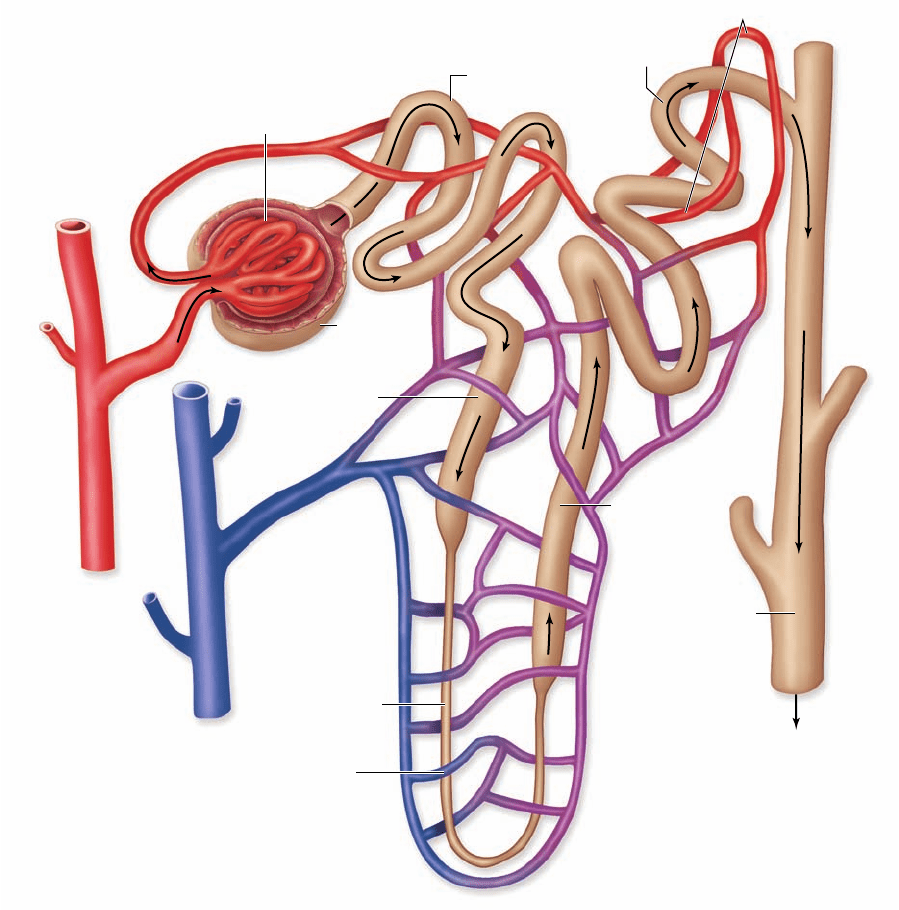
Each nephron consists of a long tubule and associated small
blood vessels (figure 51.11) . First, blood is carried by an af-
ferent arteriole to a tuft of capillaries in the renal cortex—the
glomerulus. Here the blood is filtered as the blood pressure
forces fluid through the porous capillary walls. Blood cells
Figure 51.10
Four functions of the kidney. Molecules
enter the urine by ltration out of the glomerulus and by secretion
into the tubules from surrounding peritubular capillaries.
Molecules that entered the ltrate can be returned to the blood
by reabsorption from the tubules into surrounding peritubular
capillaries. The uid exiting the kidney is eliminated from the
body by excretion through the tubule to a ureter and then to
the bladder.
1046
part
VII
Animal Form and Function
rav32223_ch51_1038-1054.indd 1046rav32223_ch51_1038-1054.indd 1046 11/19/09 1:22:55 PM11/19/09 1:22:55 PM
Apago PDF Enhancer
Bowman's
capsule
Glomerulus
Proximal
convoluted tubule
Descending limb
of loop of Henle
Loop of Henle
Distal
convoluted tubule
Ascending limb
of loop of Henle
Collecting duct
To ureter
Vasa recta
Renal
vein
Renal
artery
Peritubular
capillaries
Figure 51.11
A nephron in a
mammalian kidney.
The nephron tubule is
surrounded by peritubular
capillaries in the cortex, and
their vasa recta extensions
surround the loop of Henle
in the medulla. This capillary
bed carries away molecules
and ions that are reabsorbed
from the ltrate.
and plasma proteins are too large to enter this glomerular
filtrate, but large amounts of the plasma, consisting of wa-
ter and dissolved molecules, leave the vascular system at this
step. The filtrate immediately enters the first region of the
nephron tubules. This region, Bowman’s capsule, envelops
the glomerulus much as a large, soft balloon surrounds your
hand if you press your fist into it. The capsule has slit open-
ings so that the glomerular filtrate can enter the system of
nephron tubules.
Blood components that were not filtered out of the glo-
mer u lus drain into an efferent arteriole, which then empties into
a second bed of capillaries called peritubular capillaries that
surround the tubules. This is only one of several locations in
the body where two capillary beds occur in series. In juxtamed-
ullary nephrons, efferent arteriole and peritubular capillaries
also feed the vasa recta capillaries that surround the loop of
Henle. As described later, the peritubular capillaries are needed
for the processes of reabsorption and secretion.
After the filtrate enters Bowman’s capsule, it goes into a
portion of the nephron called the proximal convoluted tubule,
located in the cortex. In a cortical nephron, the fluid then flows
through the loop of Henle that dips only minimally into the
medulla before ascending back into the cortex. In juxtamed-
ullary nephrons, the loop of Henle extends much deeper into
the medulla before ascending back up into the cortex. More
water can be reabsorbed from juxtamedullary nephrons than
from cortical nephrons. The fluid then moves deeper into the
medulla and back up again into the cortex in a loop of Henle. As
mentioned earlier, only the kidneys of mammals and birds have
loops of Henle, and this is why only birds and mammals have
the ability to concentrate their urine.
Collection of urine
After leaving the loop, the fluid is delivered to a distal convoluted
tubule in the cortex that next drains into a collecting duct. The
collecting duct again descends into the medulla, where it merges
chapter
51
Osmotic Regulation and the Urinary System
1047www.ravenbiology.com
rav32223_ch51_1038-1054.indd 1047rav32223_ch51_1038-1054.indd 1047 11/19/09 1:22:59 PM11/19/09 1:22:59 PM
Apago PDF Enhancer
acids. Urine may also contain excess K
+
, H
+
, and other ions that
are removed from the blood.
Urine’s generally high H
+
concentration (pH 5 to 7) helps
maintain the acid–base balance of the blood within a narrow
range (pH 7.35 to 7.45). Moreover, the excretion of water in
urine contributes to the maintenance of blood volume and
pressure (see chapter 50); the larger the volume of urine ex-
creted, the lower the blood volume.
The purpose of kidney function is therefore homeosta-
sis; the kidneys are critically involved in maintaining the con-
stancy of the internal environment. When disease interferes
with kidney function, it causes a rise in the blood concentration
of nitrogenous waste products, disturbances in electrolyte and
acid–base balance, and a failure in blood pressure regulation.
Such potentially fatal changes highlight the central importance
of the kidneys in normal body physiology.
Each part of the mammalian nephron
performs a speci c transport function
As previously described, approximately 180 L of isotonic glo-
mer u lar filtrate enters the Bowman’s capsules of human kidneys
each day. After passing through the remainder of the nephron
tubules, this volume of fluid would be lost as urine if it were not
reabsorbed back into the blood. It is clearly impossible to pro-
duce this much urine, yet water is only able to pass through a
cell membrane by osmosis, and osmosis is not possible between
two isotonic solutions. Therefore, some mechanism is needed
to create an osmotic gradient between the glomerular filtrate
and the blood, to allow reabsorption of water.
Proximal convoluted tubule
Virtually all the nutrient molecules in the filtrate are reabsorbed
back into the systemic blood by the proximal convoluted tu-
bule. In addition, approximately two-thirds of the NaCl and
water filtered into Bowman’s capsule is immediately reabsorbed
across the walls of the proximal convoluted tubule.
This reabsorption is driven by the active transport of Na
+
out of the filtrate and into surrounding peritubular capillaries.
Cl
–
follows Na
+
passively because of electrical attraction, and
water follows them both because of osmosis. Because NaCl and
water are removed from the filtrate in proportionate amounts,
the filtrate that remains in the tubule is still isotonic to the
blood plasma.
Although only one-third of the initial volume of filtrate
remains in the nephron tubule after the initial reabsorption of
NaCl and water, it still represents a large volume (60 L out of
the original 180 L of filtrate). Obviously, no animal can afford
to excrete that much urine, so most of this water must also be
reabsorbed. It is reabsorbed primarily across the wall of the col-
lecting duct.
Loop of Henle
The function of the loop of Henle is to create a gradient of
increasing osmolarity from the cortex to the medulla. This al-
lows water to be reabsorbed by osmosis in the collecting duct
as it runs down into the medulla past the loop of Henle. The
with other collecting ducts to empty its contents, now called urine,
into the renal pelvis.
Water, some nutrients, and some ions are
reabsorbed; other molecules are secreted
Most of the water and dissolved solutes that enter the glomeru-
lar filtrate must be returned to the blood by reabsorption, or
the animal would literally urinate to death. In a human, for ex-
ample, approximately 2000 L of blood passes through the kid-
neys each day, and 180 L of water leaves the blood and enters
the glomerular filtrate.
Water
Because humans have a total blood volume of only about 5 L
and produce only 1 to 2 L of urine per day, it is obvious that each
liter of blood is filtered many times per day, and most of the
filtered water is reabsorbed. Water is reabsorbed from the fil-
trate by the proximal convoluted tubule, as it passes through the
descending loop of Henle and the collecting duct. The selective
reabsorption in the collecting duct is driven by an osmotic gra-
dient produced by the loop of Henle, as is described shortly.
Glucose and other nutrients
The reabsorption of glucose, amino acids, and many other
molecules needed by the body is driven by active transport
and secondary active transport (cotransport) carriers. As in all
carrier-mediated transport, a maximum rate of transport is
reached whenever the carriers are saturated (see chapter 5).
In the case of the renal glucose carriers in the proximal
convoluted tubule, saturation occurs when the concentration
of glucose in the blood (and thus in the glomerular filtrate) is
about 180 mg/100 mL of blood. If a person has a blood glucose
concentration in excess of this amount, as happens in untreated
diabetes mellitus, the glucose remaining in the filtrate is ex-
pelled in the urine. Indeed, the presence of glucose in the urine
is diagnostic of diabetes mellitus.
Secretion of wastes
The secretion of foreign molecules and particular waste prod-
ucts of the body involves the transport of these molecules across
the membranes of the blood capillaries and kidney tubules into
the filtrate. This process is similar to reabsorption, but it pro-
ceeds in the opposite direction.
Some secreted molecules are eliminated in the urine so
rapidly that they may be cleared from the blood in a single pass
through the kidneys. This rapid elimination explains why peni-
cillin, which is secreted by the nephrons, must be administered
in very high doses and several times per day.
Excretion of toxins and excess
ions maintains homeostasis
A major function of the kidney is the elimination of a variety
of potentially harmful substances that animals eat and drink. In
addition, urine contains nitrogenous wastes, described earlier,
that are products of the catabolism of amino acids and nucleic
1048
part
VII
Animal Form and Function
rav32223_ch51_1038-1054.indd 1048rav32223_ch51_1038-1054.indd 1048 11/19/09 1:23:00 PM11/19/09 1:23:00 PM
Apago PDF Enhancer
Cortex
Inner medulla
Outer medulla
300
600
1200
Total solute concentration (mOsm)
Glomerulus
Bowman's
capsule
Proximal tubule Distal tubule
Collecting
duct
loop of
Henle
H
2
O
H
2
O
H
2
O
H
2
O
H
2
O
Na
+
Na
+
Cl
-
Cl
-
Urea
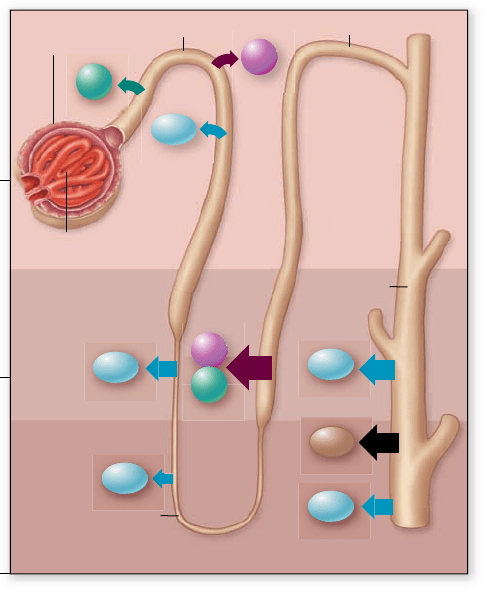
Figure 51.12
The reabsorption of salt and water in the
mammalian kidney. Active transport of Na
+
out of the proximal
tubules is followed by the passive movement of Cl
–
and water.
Active extrusion of NaCl from the ascending limb of the loop of
Henle creates the osmotic gradient required for the reabsorption
of water from the descending limb of the loop of Henle and the
collecting duct. The two limbs of the loop form a countercurrent
multiplier system that increases the osmotic gradient. The changes
in osmolarity from the cortex to the medulla are indicated to the
left of the gure.
The loss of water from the descending limb multiplies 3.
the concentration that can be achieved at each level of
the loop through the active extrusion of Na
+
(with Cl
–
following passively) by the ascending limb. The longer
the loop of Henle, the longer the region of interaction
between the descending and ascending limbs, and the
greater the total concentration that can be achieved. In a
human kidney, the concentration of ltrate entering the
loop is 300 milliosmolar (mOsm), and this concentration
is multiplied to more than 1200 mOsm at the bottom of
the longest loops of Henle in the renal medulla.
The NaCl pumped out of the ascending limb of the 4.
loop is reabsorbed from the surrounding interstitial
uid into the loops of the vasa recta, so that NaCl can
diffuse from the blood leaving the medulla to the blood
entering the medulla. Thus, the vasa recta also functions
in a countercurrent exchange, similar to that described
for the countercurrent ow of blood in the ns of large
aquatic vertebrates for heat exchange (see chapter 43),
and of wate r and blood through gills to enhance oxygen
exchange (see chapter 49). In the case of the vasa recta,
this exchange prevents the ow of blood through
the capillaries from destroying the osmotic gradient
established by the loop of Henle. Thus, blood can be
supplied to this region of the kidney without affecting the
ability of the collecting duct to selectively reabsorb water.
Because fluid flows in opposite directions in the two limbs
of the loop, the action of the loop of Henle in creating a hyper-
tonic renal medulla is known as the countercurrent multiplier
system. The osmotic gradient that is established is greater than
what would be produced by just active transport of salts out of
the tubule system.
The high solute concentration of the renal medulla is
primarily the result of NaCl accumulation by the counter-
current multiplier system, but urea also contributes to the total
osmolarity of the medulla. The descending limb of the loop
of Henle and the collecting duct are both permeable to urea,
which leaves these regions of the nephron by diffusion.
Distal convoluted tubule and collecting duct
Because NaCl was pumped out of the ascending limb, the filtrate
that arrives at the distal convoluted tubule and enters the collect-
ing duct in the renal cortex is hypotonic (with a concentration of
only 100 mOsm). The collecting duct carrying this dilute fluid now
plunges into the medulla. As a result of the hypertonic interstitial
fluid of the renal medulla, a strong osmotic gradient pulls water out
of the collecting duct and into the surrounding blood vessels.
The osmotic gradient is normally constant, but the per-
meability of the distal convoluted tubule and the collecting duct
to water is adjusted by a hormone, antidiuretic hormone (ADH),
mentioned in chapters 46 and 50. When an animal needs to
conserve water, the posterior pituitary gland secretes more
ADH, and this hormone increases the number of water chan-
nels in the plasma membranes of the collecting duct cells. This
increases the permeability of the collecting ducts to water so
that more water is reabsorbed and less is excreted in the urine.
The animal thus excretes a hypertonic urine.
descending and ascending limbs of the loop of Henle differ
structurally and in their permeability to ions and water. This
produces a gradient of increasing osmolarity from cortex to
medulla (figure 51.12) . The structure of the loop also forms
another example of a countercurrent system, this time acting
to increase the osmolarity of interstitial fluid. To understand
the functioning of the loop of Henle, it is easiest to start in the
ascending limb:
The entire ascending limb is impermeable to water. The 1.
thick portion of the ascending limb actively transports
Na
+
out of the tubule, with Cl
–
passively following. The
thin ascending limb is permeable to both Na
+
and Cl
–
,
which move out by diffusion.
The descending limb is thin and permeable to water 2.
but not to NaCl. Because of the Na
+
and Cl
–
lost by the
ascending limb, the osmolarity of the interstitial uid is
higher than in the descending limb, and water moves out
of the descending limb by osmosis. This also increases the
osmolarity of the uid in the tubule such that as it turns
at the bottom, it will lose NaCl by diffusion in the thin
ascending loop as described earlier.
chapter
51
Osmotic Regulation and the Urinary System
1049www.ravenbiology.com
rav32223_ch51_1038-1054.indd 1049rav32223_ch51_1038-1054.indd 1049 11/19/09 1:23:00 PM11/19/09 1:23:00 PM
Apago PDF Enhancer
Reabsorbed
Reabsorbed
Secreted Secreted
Distal
convoluted
tubule
Filtered
K
+
K
+
K
+
K
+
H
+
H
+
H
+
HCO
3
-
HCO
3
-
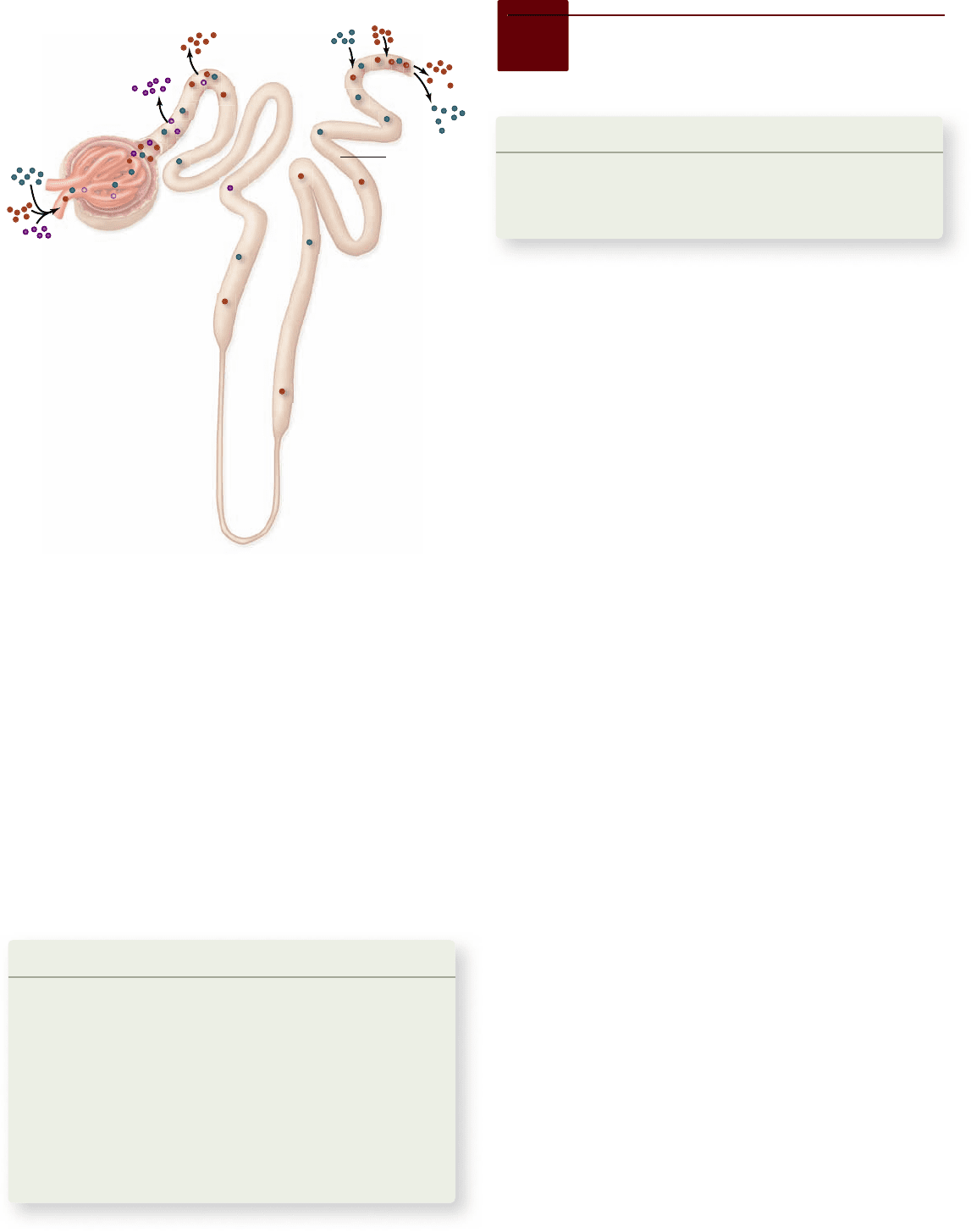
Figure 51.13
Controlling salt
balance. The nephron
controls the amounts of K
+
,
H
+
, and HCO
3
–
excreted in
the urine. K
+
is completely
reabsorbed in the proximal
tubule and then secreted
in hormonally regulated
amounts into the distal
tubule. HCO
3
–
is ltered
but normally completely
reabsorbed. H
+
is ltered
and also secreted into the
distal tubule, so that the
nal urine has an
acidic pH.
51.6
Hormonal Control of
Osmoregulatory Functions
Learning Outcomes
Explain the actions of ADH, aldosterone, and ANH.1.
Describe the relationship between control of blood 2.
osmolarity and blood pressure.
In mammals and birds, the amount of water excreted in the
urine, and thus the concentration of the urine, varies according
to the changing needs of the body. Acting through the mecha-
nisms described next, the kidneys excrete a hypertonic urine
when the body needs to conserve water. If an animal drinks
excess water, the kidneys excrete a hypotonic urine.
As a result, the volume of blood, the blood pressure, and
the osmolarity of blood plasma are maintained relatively con-
stant by the kidneys, no matter how much water you drink. The
kidneys also regulate the plasma K
+
and Na
+
concentrations and
blood pH within very narrow limits. These homeostatic func-
tions of the kidneys are coordinated primarily by hormones.
Antidiuretic hormone causes
water to be conserved
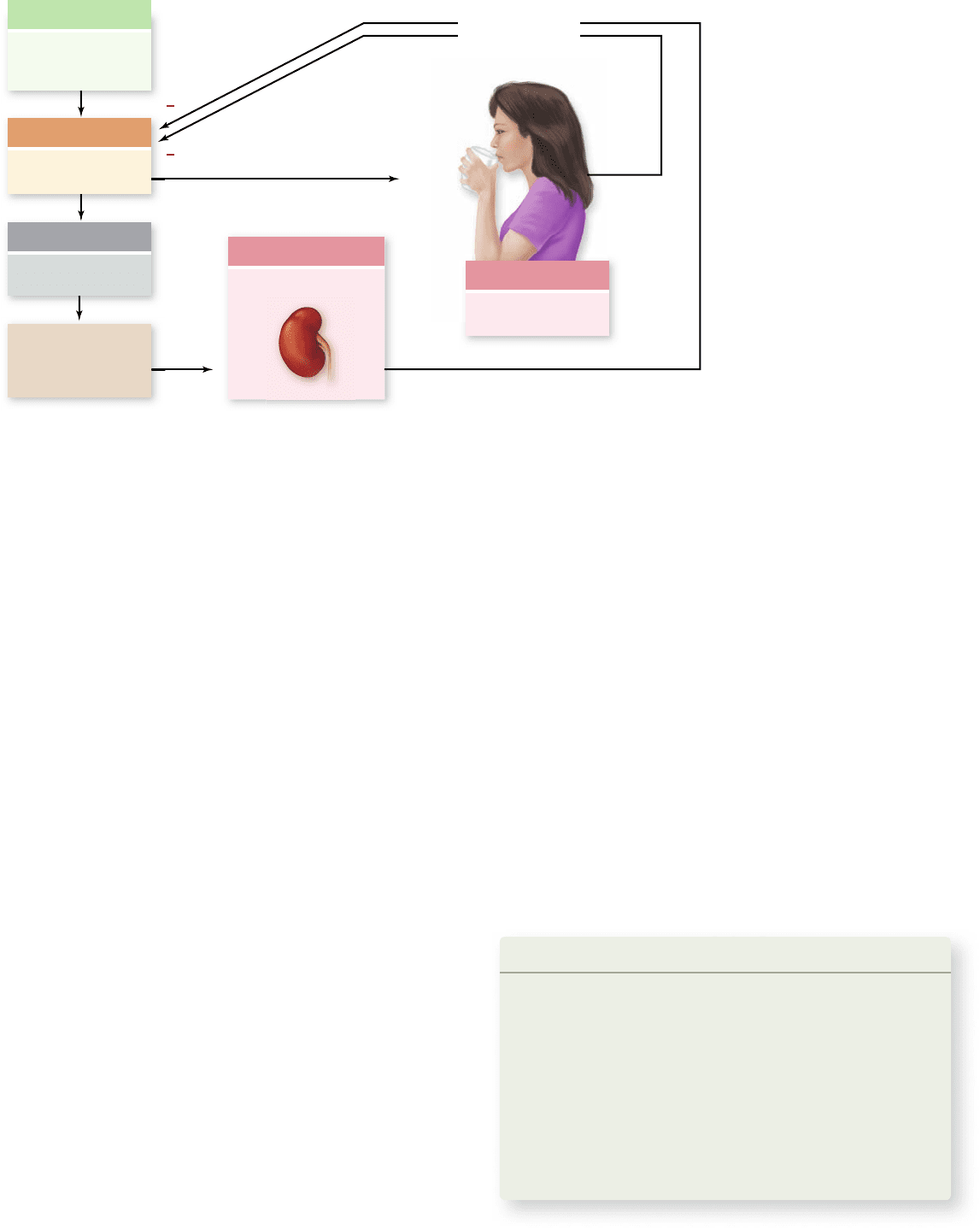
Antidiuretic hormone (ADH) is produced by the hypothalamus
and secreted by the posterior-pituitary gland. The primary
stimulus for ADH secretion is an increase in the osmolarity
of the blood plasma. When a person is dehydrated or eats
salty food, the osmolarity of plasma increases. Osmoreceptors
in the hypothalamus respond to the elevated blood osmolar-
ity by sending increasing action potentials to the integration
center (also in the hypothalamus). This, in turn, triggers a
sensation of thirst and an increase in the secretion of ADH
(figure 51.14) .
ADH causes the walls of the distal convoluted tubules
and collecting ducts in the kidney to become more permeable
to water. Water channels called aquaporins (see chapter 5) are
contained within the membranes of intracellular vesicles in
the epithelium of the distal convoluted tubules and collect-
ing ducts; ADH stimulates the fusion of the vesicle membrane
with the plasma membrane, similar to the process of exocyto-
sis. The aquaporins are now in place and allow water to flow
out of the tubules and ducts in response to the hypertonic
condition of the renal medulla. This water is reabsorbed into
the bloodstream.
When secretion of ADH is reduced, the plasma mem-
brane pinches in to form new vesicles that contain aquaporins.
This removes the aquaporins from the plasma membrane of the
distal convoluted tubule and collecting duct, making them less
permeable to water. Thus more water is excreted in urine.
Under conditions of maximal ADH secretion, a person
excretes only 600 mL of highly concentrated urine per day. A
person who lacks ADH due to pituitary damage has the disorder
known as diabetes insipidus and constantly excretes a large volume
In addition to regulating water balance, the kidneys regu-
late the balance of electrolytes in the blood by reabsorption and
secretion. For example, the kidneys reabsorb K
+
in the proximal
tubule and then secrete an amount of K
+
needed to maintain
homeostasis into the distal convoluted tubule (figure 51.13) .
The kidneys also maintain acid–base balance by excreting H
+
into the urine and reabsorbing HCO
3
–
.
The reabsorption of NaCl in the distal convoluted tubule
and collecting duct depends on the needs of the body and is under
the control of the hormone aldosterone. Both ADH and aldosterone
influence the distal convoluted tubule and collecting duct, although
aldosterone is more significant in terms of NaCl. We present more
about hormonal control of excretion in the next section.
Learning Outcomes Review 51.5
Fluid and certain solutes move out of the blood and into the tubular systems
of the kidneys through fi ltration (passive) and secretion (transported);
important solutes and water are returned to the blood through
reabsorption. The mammalian kidney is divided into a cortex and a medulla
and contains about a million nephrons. The parts of a nephron include the
glomerulus and Bowman’s capsule, proximal convoluted tubule, loop of
Henle, distal convoluted tubule, and collecting duct.
■ The compound mannitol is filtered but cannot be
reabsorbed. How would this affect the volume of
urine produced?
1050
part
VII
Animal Form and Function
rav32223_ch51_1038-1054.indd 1050rav32223_ch51_1038-1054.indd 1050 11/19/09 1:23:01 PM11/19/09 1:23:01 PM
Apago PDF Enhancer
(-)
(-)
Increased
water intake
Thirst
Negative feedback
Increased reabsorption
of water
Dehydration;
Increased osmolarity
of plasma
Posterior
pituitary gland
Increased
ADH secretion
Osmoreceptors
in hypothalamus
Response
Response
Effector
Sensor
Stimulus
Figure 51.14
Antidiuretic hormone stimulates the reabsorption of water by the
kidneys. This action completes a negative feedback loop and helps to maintain homeostasis of blood
volume and osmolarity.
and water. It thereby helps to
maintain blood volume, osmo-
larity, and pressure.
The secretion of al do ste-
rone in response to a decreased
blood level of Na
+
is indirect.
Because a fall in blood Na
+
is accompanied by decreased
blood volume, the flow of blood
past a group of cells called the
juxtaglomerular apparatus is re-
duced. The juxtaglomerular ap-
paratus is located in the region
of the kidney between the distal
convoluted tubule and the af-
ferent arteriole (figure 51.15) .
When blood flow is re-
duced, the juxtaglomerular ap-
paratus responds by secreting
the enzyme renin into the blood
(figure 51.16) . Renin catalyzes
the production of the poly-
peptide angiotensin I from the
protein angiotensinogen. An-
giotensin I is then converted by
another enzyme into angiotensin II, which stimulates blood ves-
sels to constrict and the adrenal cortex to secrete aldosterone.
Thus, homeostasis of blood volume and pressure can be main-
tained by the activation of this renin– angiotensin–aldosterone
system. In addition to stimulating Na
+
reabsorption, al do ste rone
also promotes the secretion of K
+
into the distal convoluted tu-
bules and collecting ducts. Consequently, aldosterone lowers the
blood K
+
concentration, helping to maintain constant blood K
+
levels in the face of changing amounts of K
+
in the diet. People
who lack the ability to produce aldosterone will die if untreated
because of the excessive loss of salt and water in the urine and
the buildup of K
+
in the blood.
The action of aldosterone in promoting salt and water re-
tention is opposed by another hormone, atrial natriuretic hormone
(ANH), mentioned in chapter 50. This hormone is secreted by
the right atrium of the heart in response to an increased blood
volume, which stretches the atrium. Under these conditions, al-
dosterone secretion from the adrenal cortex decreases, and ANH
secretion increases, thus promoting the excretion of salt and wa-
ter in the urine and lowering the blood volume.
Learning Outcomes Review 51.6
ADH stimulates the insertion of water channels into the cells of the distal
convoluted tubule and collecting duct, making them more permeable to
water and increasing its reabsorption. Aldosterone promotes reabsorption
of Na
+
, Cl
–
, and water across the distal convoluted tubule and collecting
duct, as well as the secretion of K
+
into the tubules. ANH decreases Na
+
and
Cl
–
reabsorption. When blood osmolarity increases, more water is retained
by the release of ADH, and blood pressure increases; if blood osmolarity falls,
ADH release is inhibited, less water is retained, and blood pressure drops.
■ What would be the effect of a compound that blocks
aquaporin water channels?
of dilute urine. Such a person is in danger of becoming severely
dehydrated and succumbing to dangerously low blood pressure.
Homeostasis via ADH action is also affected by the com-
mon drugs ethanol and caffeine, both of which inhibit secretion
of ADH. This is the basis for the dehydration that is the after
effect of drinking too much alcohol.
Aldosterone and atrial natriuretic hormone
control sodium ion concentration
Sodium ions are the major solute in the blood plasma. When
the blood concentration of Na
+
falls, therefore, the blood os-
molarity also falls. This drop in osmolarity inhibits ADH secre-
tion, causing more water to remain in the collecting duct for
excretion in the urine. As a result, the blood volume and blood
pressure decrease.
A decrease in extracellular Na
+
also causes more water
to be drawn into cells by osmosis, partially offsetting the drop
in plasma osmolarity, but further decreasing blood volume and
blood pressure. If Na
+
deprivation is severe, the blood volume
may fall so low that blood pressure is insufficient to sustain life.
For this reason, salt is necessary for life. Many animals have a
“salt hunger” and actively seek salt, such as when deer gather at
“salt licks.”
A drop in blood Na
+
concentration is normally compen-
sated for by the kidneys under the influence of the hormone
aldosterone , which is secreted by the adrenal cortex. Aldosterone
stimulates the distal convoluted tubules and collecting ducts to
reabsorb Na
+
, decreasing the excretion of Na
+
in the urine. In-
deed, under conditions of maximal aldosterone secretion, Na
+
may be completely absent from the urine. The reabsorption of
Na
+
is followed by reabsorption of Cl
–
and water, so al do ste-
rone has the net effect of promoting the retention of both salt
chapter
51
Osmotic Regulation and the Urinary System
1051www.ravenbiology.com
rav32223_ch51_1038-1054.indd 1051rav32223_ch51_1038-1054.indd 1051 11/19/09 1:23:02 PM11/19/09 1:23:02 PM