
Raven P.H., Johnson G.B., Mason K.A. Biology (Ninth Edition)
Подождите немного. Документ загружается.

Apago PDF Enhancer
1072
part
VII
Animal Form and Function
of soluble antigens (figure 52.15b). IgM bound to an antigen also
activates a complement protein cascade, triggered by the binding
of certain complement proteins to the exposed Fc ends.
IgD is also present, along with IgM, on mature naive
B cells. The B cells can be activated by cross-linking of two IgD
molecules, although under normal circumstances this class of
immunoglobulin is not secreted by the cells. On B-cell activa-
tion, IgD is no longer displayed on the cell surface. Other roles
for IgD remain elusive.
IgG is the major form of antibody in the blood plasma
and in most tissues, making up about 75% of plasma antibod-
ies. It is the most common form of antibody produced in a
secondary immune response (any response triggered on a sub-
sequent exposure to an antigen). IgG can bind to an antigen in
such quantity that the antigen—a virus, bacterium, or bacteri-
ally derived toxin—is said to be neutralized, meaning that it
can no longer bind to the host. Macrophages and neutrophils
have Fc receptors that bind to IgGs bound to antigens, and in
this way IgG binding or coating of antigens facilitates their
elimination by phagocytosis (figure 52.15c). IgG is also impor-
tant in providing passive immunity to a fetus; it readily crosses
the placenta from the mother. Finally, IgG can also activate
complement, although not as efficiently as IgM, leading to
pathogen elimination.
IgA is the major form of antibody in external secretions,
such as saliva, tears, and the mucus that coats the gastrointes-
tinal tract, bronchi, and genitourinary tract. IgA plays a major
role in protection of these surfaces; it is usually secreted as a
dimer. The many plasma cells present in the MALT, under the
mucosal surfaces, secrete IgA that crosses the epithelial cells
to the lumen of these tracts; here it can bind and neutralize
antigens. Additionally, any pathogen that passes through a mu-
cosal surface becomes bound to IgA because it is secreted by
cells in follicles under that surface. The bound IgA crosses the
epithelial cells into the lumen, taking the pathogen with it. The
pathogen can then be eliminated by innate defenses. IgA also
provides passive immunity to a nursing infant since it is present
in mother’s milk.
IgE is present at very low concentration in the plasma.
On secretion, most becomes bound to mast cells and basophils
that recognize the Fc portion of IgE. As described later, bind-
ing of certain normally harmless antigens to IgE molecules
bound to mast cells and basophils produces the symptoms of
allergy, such as the runny nose and itchy eyes of hay fever. IgE
is also often secreted in response to an infection by helminth
worms. In this instance, secreted IgE binds to epitopes on the
worms and is then recognized by Fc receptors on eosinophils.
The eosinophils generally kill the worms by secreting digestive
enzymes through perforin pores into the worms.
Immunoglobulin diversity is generated
through DNA rearrangement
The vertebrate immune system is capable of recognizing as
foreign virtually any nonself molecule presented to it. It is esti-
mated that human or mouse B cells can generate antibodies
with over 10
10
different antigen-binding sites. Although an
individual probably does not have antibodies specific to all
epitopes of an antigen, it is fairly certain that antibodies will
recognize some of the epitopes, which is all that is required
to generate an effective immune response. How do vertebrates
generate such diversity of antigen recognition?
The answer lies in the unusual genetics of the variable
region. This region in each chain of an immunoglobulin is not
encoded by one single stretch of DNA but rather is assembled
by joining two or three separate DNA segments together
to produce the variable region. This process is called DNA
rearrangement and is similar to the crossing over that occurs dur-
ing meiosis (see chapter 11) with two key differences: It occurs
between loci on the same chromosome and it is site-specific.
DNA rearrangement occurs as a progenitor B cell ma-
tures in the bone marrow. After DNA rearrangement, RNA
transcription produces an mRNA that can be translated into
either a heavy- or a light-chain immunoglobulin polypeptide,
depending on the locus transcribed.
Cells contain homologous pairs of chromosomes, but
DNA rearrangement occurs for the heavy-chain and light-
chain loci on only one homologue, a process referred to as al-
lelic exclusion. Thus, each B cell makes immunoglobulins of only
one specificity.
Variable region DNA rearrangements
Sequencing of human immunoglobulin heavy-chain gene loci
from several different individuals shows that the locus con-
tains a cluster of approximately 50 sequential DNA segments,
termed V segments, followed by a cluster of approximately 30
smaller segments, D segments, and finally by another cluster
of 6 smaller segments, J segments. Each V segment is approxi-
mately the same size as any other, but they are all of different
nucleo-tide sequence and thus encode different amino acids;
the situation is similar for the D and the J segments.
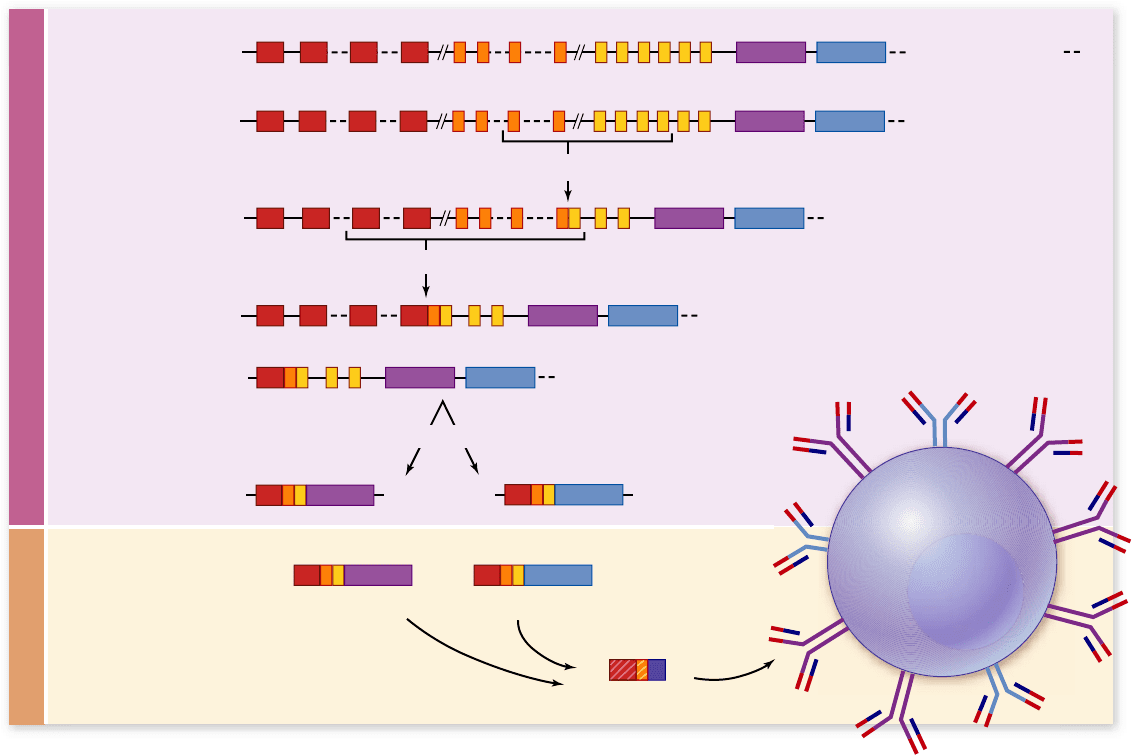
The first DNA rearrangement during B-cell matura-
tion is a site-specific recombination event joining one of the
D segments to one of the J segments (figure 52.16). Re-
combination between two sites on the same chromosome
results in the deletion of the intervening DNA, which is
subsequently degraded.
This is followed by another site-specific recombination
joining a V segment to the rearranged DJ, with the deletion of
all the intervening DNA. Which V, which D, and which J are
chosen by any cell appears to be completely random.
Because of the many combinations of V, D, and J that
can be formed, one can calculate the generation of about 9000
different heavy-chain variable-region sequences. A similar
situation occurs for light-chain variable region formation, ex-
cept that each light-chain variable region is encoded by only a
V segment and a J segment.
Other processes contribute even further to the diversity
of variable region sequence. As the DNA segments are joined
to each other, a few nucleotides may be added to or deleted
from the ends of each segment, and this is generally followed
by somewhat imprecise joining of the segments to each other,
resulting in a shift of the reading frame. B cells may end up ex-
pressing any heavy-chain variable region with any light-chain
variable region during its maturation. Lastly, these genes show
rav32223_ch52_1055-1083.indd 1072rav32223_ch52_1055-1083.indd 1072 11/19/09 1:45:28 PM11/19/09 1:45:28 PM
Apago PDF Enhancer
Germline DNA at
heavy-chain locus
D-J joining
V-DJ joining
Rearranged DNA at
heavy-chain locus
Pre-mRNA transcript
mRNA
Translation by
ribosomes on rough
endoplasmic reticulum
Joins with a light-chain protein in rough endoplasmic
reticulum and moves through Golgi apparatus and
onto surface of a mature naive B cell
V
H
1
V
H
2
V
H
50
D
H
1
D
H
30
J
H
6
C
m
C
d
Remaining constant
coding regions
3’
5’
D
H
19
J
H
4
V
H
22
J
H
1
V
H
1
V
H
2
V
H
50
D
H
1
D
H
30
J
H
6
C
m
C
d
5’
D
H
19
J
H
4
V
H
22
J
H
1
V
H
1
V
H
2
V
H
50
D
H
1
J
H
6
C
m
C
d
5’
D
H
18
V
H
22
V
H
1
V
H
2
J
H
5
C
m
C
d
5’
V
H
21
3’
3’
3’
Occurs in Nucleus
J
H
5
C
m
C
d
5’
3’
C
m
5’
3’
5’
3’
C
d
RNA processing with alternate splicing to C
m
or C
d
sequences
m heavy-chain protein
d
heavy-chain protein
light-chain protein
V + J + C
k
or C
l
C
m
C
d
Occurs in Cytosol
IgM
IgD
chapter
52
The Immune System
1073www.ravenbiology.com
polypeptide, which associates with a light-chain polypeptide
in the rough endoplasmic reticulum. Thus, the mature naive
B cell expresses both IgM and IgD on its surface, both having
the same antigen-binding specificity (see figure 52.16).
T-cell receptors
At this point, we must briefly return to T-cell receptors and
examine their similarity to the immunoglobulins of B cells. The
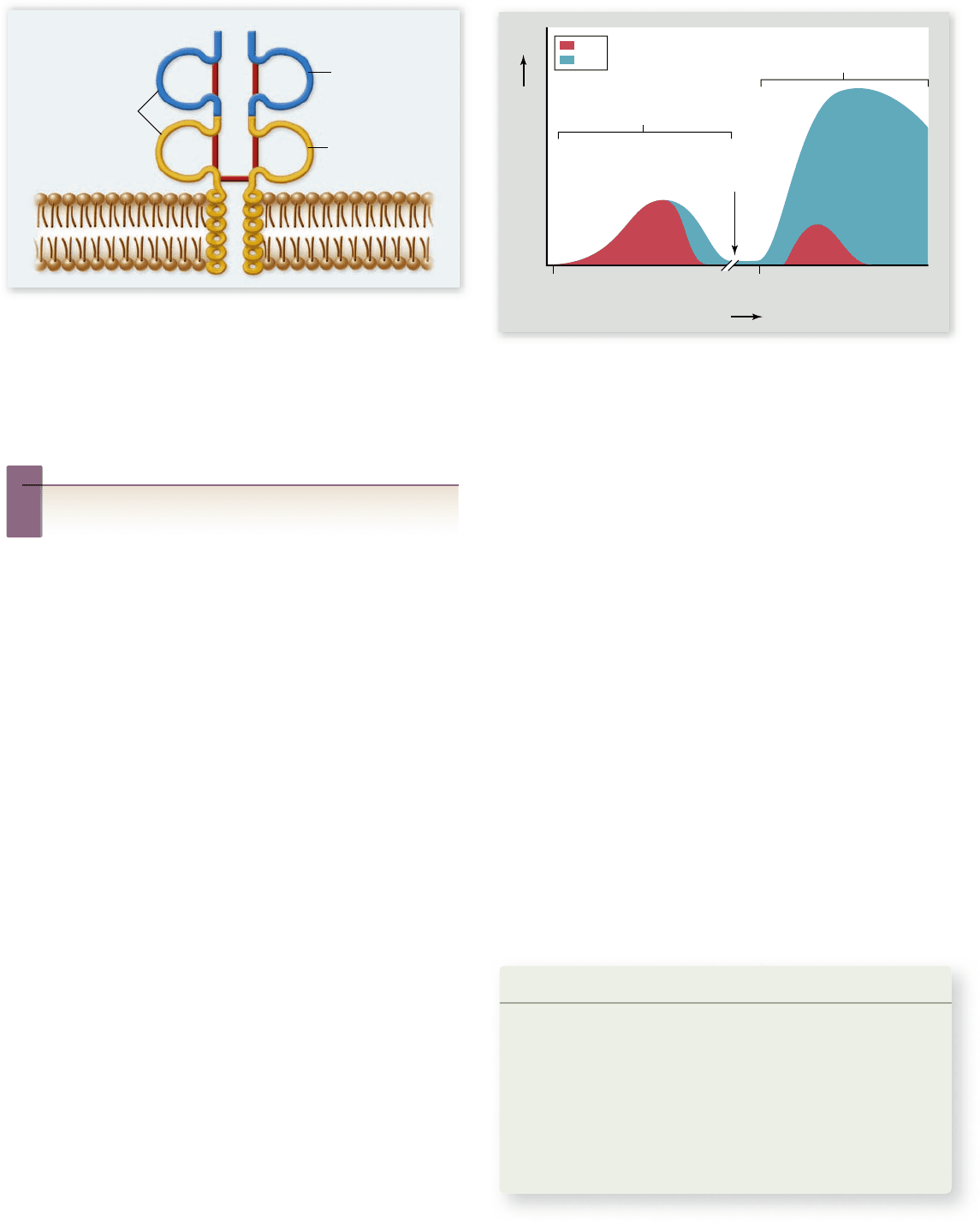
structure of a TCR is essentially like a single Fab region of an
immunoglobulin molecule (figure 52.17).
The TCR is a dimeric (two-chain) protein, with about
95% of TCRs composed of an α chain and a β chain . The
amino terminal halves of the two polypeptides are the vari-
able domains that bind to self-MHC plus peptide, and the
membrane-proximal halves are the constant domains of each
polypeptide. The TCR variable-region gene loci also contain
multiple DNA segments—V, D, and J, or only V and J—that
an elevated mutation rate, termed somatic hyper-mutation.
Taking all these processes into account has allowed the esti-
mate of more than 10
10
possible variable regions.
Transcription and translation
After the DNA rearrangements that encode the variable region
are complete, pre-mRNA transcripts are formed with 5 ends
that begin at the rearranged variable region-encoding segments
and continue through constant region exons. More specifically,
heavy-chain-encoding pre-mRNA transcripts start at the rear-
ranged VDJ and continue through exons encoding μ and δ con-
stant regions (see figure 52.16).
Alternative splicing of these RNA transcripts removes any
extra J segments that remain 3 to the rearranged VDJ, as well
as either δ or μ sequences, resulting in transcripts that all en-
code the same variable region but either μ or δ constant region
exons, respectively. Translation results in a μ or δ heavy-chain
Figure 52.16
Immunoglobulin diversity is generated by rearrangement of segments of DNA. An immunoglobulin (Ig)
protein is encoded by different segments of DNA: a V (variable), a D (diversity), and a J (joining) segment, plus a constant region. These are
joined by a precise sequence of DNA rearrangements during maturation in the bone marrow. This rst joins a D to a J segment, then this
combined DJ joins to a V segment. Other cells will select other V, D, and J segments, contributing to Ig diversity. Transcription starts at the
rearranged VDJ and continues through constant-region exons. PreRNA splicing joins the variable region to either a μ or a δ constant region.
These transcripts are translated by ribosomes on the RER to produce heavy-chain polypeptides that join with light chains (encoded by a V, a
J, and a C). These proteins are transported to the cell surface, resulting in a mature naive B cell that expresses both IgM (μ constant region)
and IgD (δ constant region), with the same variable region and thus the same antigen speci city.
rav32223_ch52_1055-1083.indd 1073rav32223_ch52_1055-1083.indd 1073 11/19/09 1:45:28 PM11/19/09 1:45:28 PM
Apago PDF Enhancer
a chain b chain
Variable region
Immunoglobulin
domains
Constant region
Amount of antibody
Exposure
to cowpox
Time
Exposure
to cowpox
IgM
IgG
This interval
may be years
Secondary response
Primary response
1074
part
VII
Animal Form and Function
Figure 52.17
The structure of a TCR is similar to an
immunoglobulin Fab. TCRs are composed of two chains—
generally α and β—joined by a disul de bond (red). Each also
includes two immunoglobulin domains as in an Ig Fab. The amino-
terminal domain of each chain is the variable region that binds to
an MHC–peptide complex, and the membrane-proximal domain is
the constant region . Unlike Igs, TCRs are not secreted.
Inquiry question
?
What does the common structure and mechanism of
formation of Igs and TCRs suggest about the evolution of B
and T lymphocytes and these proteins?
Figure 52.18
The development of active immunity.
Immunity to smallpox in Jenner’s patients occurred because
their inoculation with cowpox stimulated the development of
lymphocyte clones, including memory cells, with receptors that
could bind not only to cowpox but also to smallpox antigens. A
second exposure stimulates the memory cells to produce large
amounts of antibody of the same speci city and much more rapidly
than during the primary immunization. The rst antibodies
produced during the primary response are IgM in class (red),
although IgG (blue) is secreted near the end of the primary
response. The majority of the antibody secreted during a secondary
response is IgG, although IgA could be secreted if the antigen has
activated B cells in the MALT, or in some circumstances, such as
allergies, IgE is secreted.
It is advantageous for an individual to produce immuno-
globulins of different classes during an immune response because
each class has a different function. During a second exposure to
the same antigen, while memory cells are activated and secrete
isotypes other than IgM, other naive B cells also recognize the
antigen for the first time, become activated, and secrete IgM.
Memory cells can survive for several decades, which is why
people rarely contract chicken pox a second time after they have
had it once or been vaccinated against it. The vaccine triggers a
primary response, so that if the actual pathogen is encountered
later, a large and rapid secondary response occurs and stops the
infection before disease symptoms are even detected. The viruses
causing childhood diseases have surface antigens that change little
from year to year, so the same antibody is effective for decades.
Learning Outcomes Review 52.4
Antibodies have variable regions by which they recognize and bind to an
antigen. Variable regions are encoded by joining distinct DNA segments,
providing recognition diversity. Each antibody also has one of fi ve kinds of
constant region that determines its function; these fi ve classes are IgA, IgD,
IgE, IgG, and IgM. Vaccination artifi cially presents an antigen to elicit the
primary response; when encountered later, a pathogen with this antigen is
eliminated quickly by the secondary response.
■ How do Ig receptors differ from TLR innate receptors?
are joined by the same enzymes and in a similar fashion to the
immunoglobulin gene segments. This similarity in structure
and DNA rearrangements produces similar diversity of TCRs
as immunoglobulins.
The secondary response to an antigen is
more e ective than the primary response
When a particular antigen enters the body, it must, by chance,
encounter naive lymphocytes with the appropriate receptors to
provoke an immune response. The first time a pathogen invades
the body only a few B or T cells may exist with receptors able to
recognize the pathogen’s epitopes or, for infected or otherwise
abnormal cells, foreign peptides bound to self-MHC. Thus, in
this first encounter, a person develops symptoms of illness because
only a few cells are present that can mount an immune response.
Clonal expansion of T and B cells occurs, as well as secretion of
IgM antibodies, but this takes several days (figure 52.18) .
Because a clone of many memory cells develops during the
primary response, the next time the body is invaded by the same
pathogen, the immune system is ready. Memory cells are more
rapidly activated than are naive lymphocytes, so a secondary im-
mune response both initiates and peaks much more rapidly than
a primary response. Further clonal expansion takes place, along
with the secretion of large amounts of antibodies that are gener-
ally of the IgG class, although IgA and IgE are also possible (see
figure 52.18). The class of immunoglobulin produced is dictated
by the identity of the cytokines, derived from activated T
H
memo-
ry cells, that bind to the B cells during their secondary response.
rav32223_ch52_1055-1083.indd 1074rav32223_ch52_1055-1083.indd 1074 11/19/09 1:45:29 PM11/19/09 1:45:29 PM

Apago PDF Enhancer
chapter
52
The Immune System
1075www.ravenbiology.com
toimmune diseases. Immune suppression is generally accom-
plished by administering corticosteroids and nonsteroidal anti-
inflammatory drugs, including aspirin.
Allergies are caused by IgE secretion
in response to antigens
The most common form of allergy is known as immediate
hypersensitivity. It is the result of excessive IgE production
in response to antigens, generally referred to as allergens
in this context. Allergens that provoke immediate hyper-
sensitivity include various foods, the venom in insect stings,
molds, animal danders, and pollen grains. The most com-
mon allergy of this type is seasonal hay fever, which may
be provoked by the pollen from ragweed (Ambrosia spp.) or
other plants. Allergies have earned the designation “immedi-
ate” because a response to an allergen occurs within seconds
or minutes.
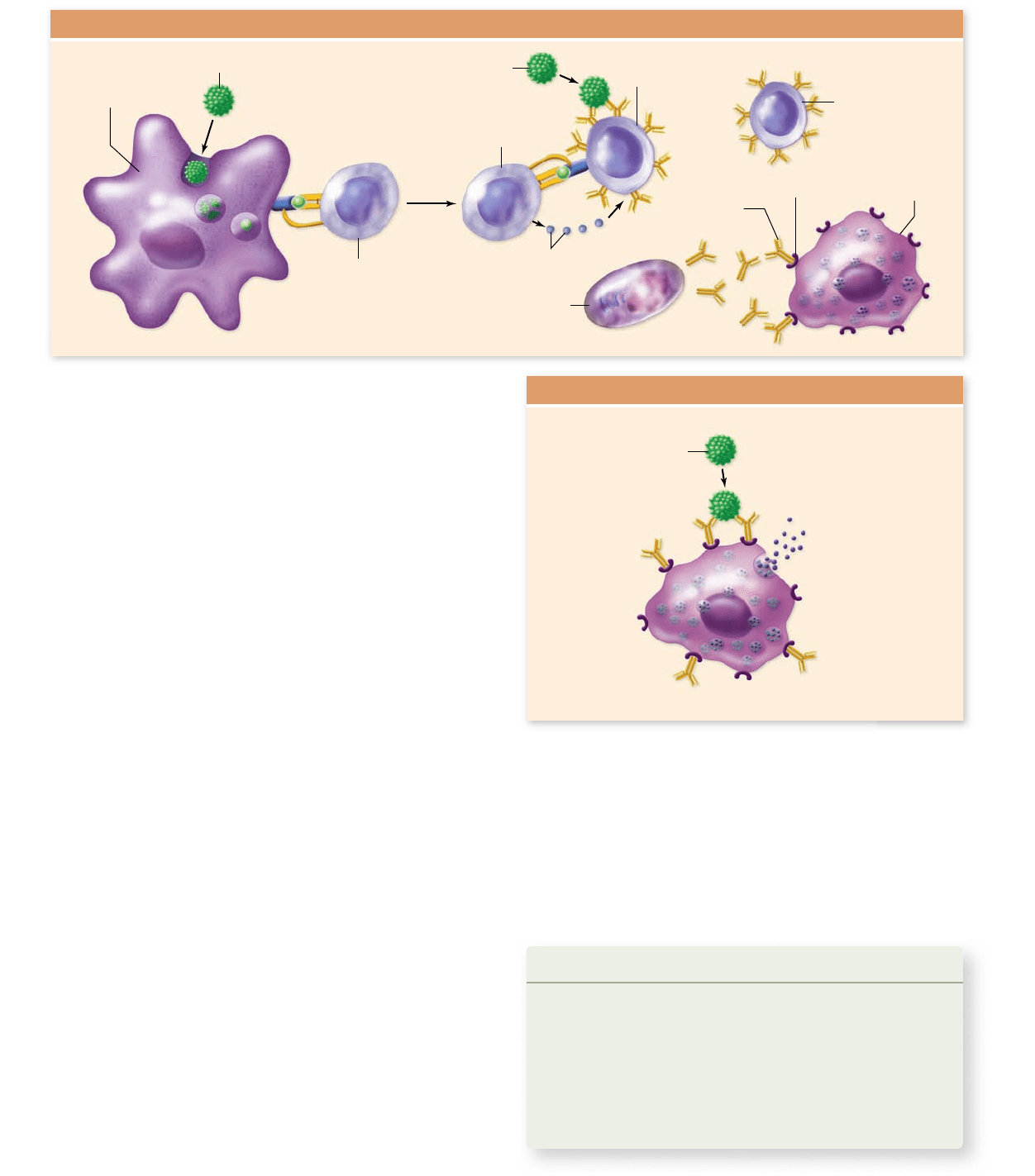
The first time or even the first few times that one en-
counters an allergen, the allergen binds to and activates B cells,
which start to secrete allergen-specific immunoglobulins. Acti-
vated T
H
cells release cytokines such as IL-4, which bind to the
B cells and dictate that the antibodies secreted should be IgE.
The B cells rapidly switch from the more common IgG secre-
tion to IgE secretion.
Unlike IgG, IgE rapidly binds to mast cells and basophils.
When the individual is again exposed to the same allergen, the
allergen now specifically binds to the exposed variable regions
of identical IgE molecules attached to mast cells and basophils.
This binding triggers these cells to secrete histamine, prosta-
glandins, and other chemical mediators, which produce the
symptoms of allergy (figure 52.19) .
In systemic anaphylaxis, the allergic reaction is severe
and potentially life-threatening because of the rapid inflam-
matory response and release of chemical mediators. The in-
dividual experiences a tremendous drop in blood pressure;
swelling of the epiglottis can block the trachea, and bron-
chial constriction can prevent the exit of air from the lungs.
This combination of effects is referred to as anaphylactic
shock. Death can result within 20 to 30 min without prompt
medical treatment.
Fortunately, most people with allergies only experience
local anaphylaxis, such as the itchy welts from hives, or the respi-
ratory constriction of mild asthma. Diarrhea from response to
food allergens is another form of local anaphylaxis.
Allergies have traditionally been treated with antihis-
tamines that prevent histamine released by mast cells from
binding to its receptor. More recently, a variety of drugs have
been developed that block the activation of mast cells and ba-
sophils, so that they do not release their mediators. Hyposen-
sitization treatment is another alternative; it consists of the
injection, over several months, of an increasing concentration
of the allergens to which one is allergic. In some individuals,
particularly those with allergic rhinitis (runny nose and eyes)
or asthma, this treatment seems to cause a preferential secre-
tion of IgG rather than IgE, and allergy symptoms diminish
over time.
52.5
Autoimmunity
and Hypersensitivity
Learning Outcomes
Define autoimmune diseases.1.
Explain the cellular basis of the allergic reaction.2.
Sometimes the immune system is the cause of disease rather
than the cure. Inappropriate responses to self-antigens may oc-
cur, as well as inappropriate or greatly heightened responses to
foreign antigens, which, in turn, causes tissue damage.
A mature animal’s immune system normally does not re-
spond to that animal’s own tissue. This acceptance of self cells
is known as immunological tolerance. The immune system of
a fetus undergoes the process of tolerance to lose the ability to
respond to self-molecules as its development proceeds.
We now know that not all self-reactive T and B lym-
phocytes undergo apoptosis during selection in primary
lymphoid organs. Normal healthy individuals are known to pos-
sess mature, potentially self-reactive lymphocytes. The activity
of these cells, however, is regulated or suppressed so that they
do not respond to the self-antigens they encounter. When this
regulation or suppression breaks down, then humoral or cell-
mediated responses can occur against self-antigens, causing se-
rious and sometimes fatal disease.
Additionally, an immune response against a foreign anti-
gen may be a greater one than is actually required to eliminate
the antigen, or the response may be seemingly inappropriate to
the antigen. Thus, instead of eliminating the antigen with only
a localized inflammatory response, extensive tissue damage and
occasionally death occurs.
Autoimmune diseases result from immune
system attack on the body’s own tissues
Autoimmune diseases are produced by the failure of immuno-
logical tolerance. Autoreactive T cells become activated, and
autoreactive B cells produce autoantibodies, causing inflam-
mation and organ damage. More than 40 known or suspected
autoimmune diseases exist, affecting 5 to 7% of the population.
For reasons that are not understood, two-thirds of the people
with autoimmune diseases are women.
Autoimmune diseases can result from a variety of mecha-
nisms. For example, the self-antigen may normally be hidden
from the immune system; if later it is exposed, the immune sys-
tem may treat it as foreign. This happens, for example, when a
protein normally trapped in the thyroid follicles triggers auto-
immune destruction of the thyroid (Hashimoto thyroiditis). It
also occurs in sympathetic ophthalmia in which antigens are
released from the eye.
Because the immune attack triggers inflammation, and
inflammation causes tissue and organ damage, the immune
system must be suppressed to alleviate the symptoms of au-
rav32223_ch52_1055-1083.indd 1075rav32223_ch52_1055-1083.indd 1075 11/19/09 1:45:29 PM11/19/09 1:45:29 PM
Apago PDF Enhancer
Allergen
Dendritic cell
Helper T cell
Allergen
Helper T cell
B cell
Cytokines (IL-4)
Plasma cell
Memory B cell
Allergen-
specific IgE
Receptor for IgE
Mast cell
Allergen
Histamine and
other mediators
of inflammation
are released
Initial Exposure
Subsequent Exposure
1076
part
VII
Animal Form and Function
Figure 52.19
An allergic response. On initial exposure
to an allergen, B cells are activated to secrete antibodies of the
IgE class. These antibodies are in very low levels in the plasma
but rapidly bind to Fc receptors on mast cells or basophils. On
subsequent exposure to allergen, the allergen cross-links variable
regions of two neighboring IgEs with the same epitope speci city
on mast cells and basophils. This induces the cells to release
histamine and other mediators of in ammation that will cause the
symptoms of allergy.
ingested the antigen, they release cytokines that activate the
macrophages. This induces the macrophages to release other
cytokines, and in the case of poison ivy, itchy welts on the skin
erupt. The time required for the activation of T
H
cells and
then of macrophages is the reason for the “delayed” response
to the antigens.
Learning Outcomes Review 52.5
Autoimmunity, allergies (immediate hypersensitivity), and delayed
hypersensitivity are all examples of inappropriate or heightened immune
responses. Autoimmunity results from a loss of self-tolerance. Allergies are
associated with a rapid response from mast cells when an allergen binds
to IgE on these cells’ membrane. Delayed hypersensitivity to pathogens or
irritants such as poison ivy is mediated by T
H
cells and macrophages.
■ How are allergies different from autoimmune diseases?
Delayed-type hypersensitivity is mediated
by T
H
cells and macrophages
Delayed-type hypersensitivity, which is mediated by T
H
cells
and macrophages, produces symptoms within about 48 hr af-
ter a second exposure to an antigen. (A first exposure causes a
much slower primary response, such as described earlier, fre-
quently without the manifestation of any symptoms.) A form
of delayed-type hypersensitivity is contact dermatitis, caused
by such varied materials as poison ivy, nickel in jewelry, and
some cosmetics. After contact with poison ivy, oils that en-
ter the skin complex with skin proteins, causing the proteins
to appear foreign. A delayed-type hypersensitivity response
requires that antigen entering the body travel to a second-
ary lymphoid organ, generally lymph nodes, where T
H
cells
can be activated. These activated T
H
cells then recirculate
around the body, and on encountering macrophages that have
rav32223_ch52_1055-1083.indd 1076rav32223_ch52_1055-1083.indd 1076 11/19/09 1:45:30 PM11/19/09 1:45:30 PM

Apago PDF Enhancer
chapter
52
The Immune System
1077www.ravenbiology.com
52.6
Antibodies in Medical
Treatment and Diagnosis
Learning Outcomes
Explain antigen–antibody reactions in the ABO blood 1.
group system.
Define monoclonal antibodies.2.
Describe the use of monoclonal antibodies in diagnosis.3.
The vertebrate immune system can have a range of effects on
medical treatment of disease. As two examples, we discuss blood
type and its effect on transfusion, as well as the use of monoclo-
nal antibodies for diagnosis and treatment.
Blood type indicates the antigens present
on an individual’s red blood cells
A person’s blood type is determined by certain antigens found
on the red blood cell surface. These antigens are clinically im-
portant because they must be matched between donor and re-
cipient during a blood transfusion.
ABO groups
In chapter 12, you learned about the genetic basis of the human
ABO blood groups. The protein–sugar complex on the surface of
the red blood cells acts as an antigen, and these antigens dif-
fer with regard to the sugar present (or absent, in the case of
type O). The immune system is tolerant to its own red blood
cell antigens but makes antibodies that bind to those that differ,
causing agglutination (clumping) and lysis of foreign red blood
cells. Apparently, IgM antibodies made in response to carbohy-
drates on bacteria that are part of our normal flora also recog-
nize the monosaccharide differences on red blood cells. Such
antibodies are not made against carbohydrate patterns that are
also present on our own cells.
Rh factor
Another important blood-borne antigen is the Rh antigen or
Rh factor. This protein is either present (Rh positive) or absent
(Rh negative) on the surface of red blood cells. An Rh-negative
person who receives an Rh-positive blood transfusion produces
antibodies to the foreign Rh protein on the transfused cells.
An additional complication occurs when Rh-negative
mothers carry Rh-positive fetuses, which may result in the
infant exhibiting a condition called hemolytic disease of new-
borns (HDN). A first child is usually not harmed; however, at
the time of the first birth, the Rh-negative mother’s immune
system may be exposed to fetal blood. As a result, the woman
may become sensitized and produce antibodies and memory
B cells against the Rh antigen. If any exposure to fetal blood oc-
curs during a subsequent pregnancy, IgG antibodies, secreted
on activation of these memory cells, can cross the placenta and
cause destruction of the red blood cells of the fetus.
Blood typing is done by taking advantage of the circulat-
ing IgM antibodies, which are produced against foreign blood
antigens but not against self. If type A blood is mixed with serum
from a person with type B or type O blood, the anti-A antibod-
ies in the serum cause the type A red blood cells to agglutinate.
This does not happen if type A blood is mixed with serum from
another type A individual or from a type AB individual.
Similarly, if serum from an Rh-negative individual
is added to red blood cells, agglutination of the red blood
cells indicates that they came from an Rh-positive individual.
This individual’s blood would not be an appropriate match
for transfusion.
Typing of blood prior to transfusions prevents destruc-
tion of mismatched cells by a transfusion recipient, as described
next. Over 20 blood groups, including the ABO and Rh groups,
have been identified; most variants of these other blood groups
are rare, but individuals at risk for mismatch may need to
“stockpile” their own blood before elective surgery—a practice
termed autologous blood donation.
Transfusion reactions result from
mismatched blood transfusions
Prior to the advent of blood typing in the early 20th century,
transfusion of blood was a last resort because of the danger of
death from transfusion reaction. An immediate transfusion reac-
tion occurs when an individual receives blood that is not cor-
rectly ABO matched. Typically, within 5 to 8 hr of the start of the
transfusion, tremendous intravascular hemolysis (rupture) of the
transfused red blood cells is detected. This rupture is a result of
IgM binding to foreign antigens and activating the complement
system. The result is the formation of MACs in the red blood cell
membranes and rapid osmotic lysis of the cells.
The hemoglobin released from the red blood cells is con-
verted to a molecule called bilirubin, which is particularly toxic
to cells and can cause severe organ damage, especially to the
kidneys. The major treatment in such situations is to stop the
transfusion immediately and to administer large amounts of in-
travenous fluids to “wash” the bilirubin from the body.
Monoclonal antibodies are a valuable
tool for diagnosis and treatment
Antibodies to a known antigen may be obtained by chemically
purifying an antigen and then injecting it into a laboratory animal
(vertebrate). Periodic bleeding of the animal after a few immuniza-
tions allows the isolation of serum antibodies against the antigen.
But because an antigen typically has many different epitopes, the
antibodies obtained by this method are polyclonal, that is, they are
secreted by B-cell clones with many different specificities. Their
polyclonal nature decreases their sensitivity to any one particular
epitope, and it may result in some degree of cross-reactivity with
closely related epitopes of different antigens.
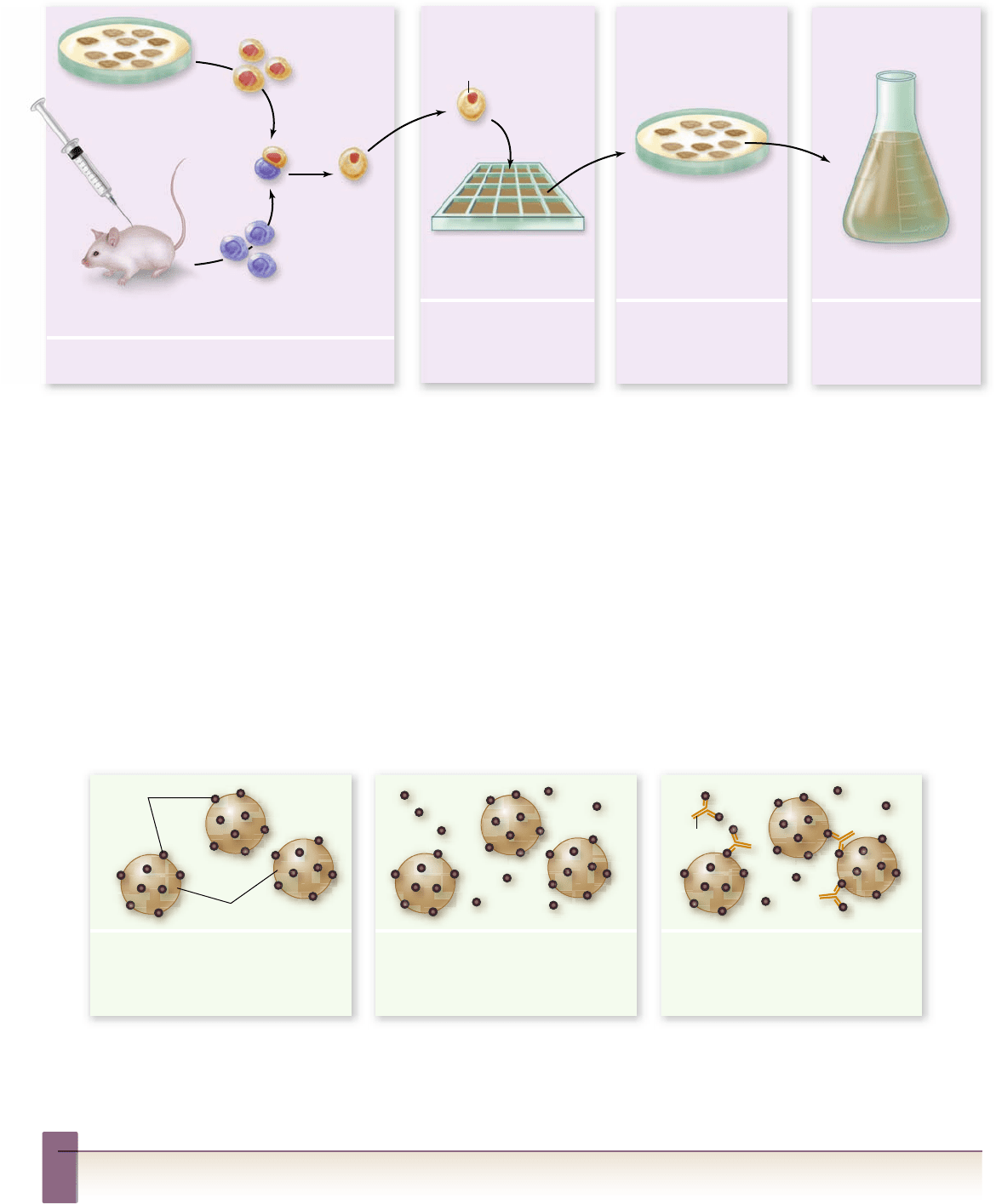
Monoclonal antibodies, by contrast, exhibit specificity for
one epitope only. In the preparation of monoclonal antibodies,
an animal, generally a mouse, is immunized several times with
an antigen and is subsequently killed. B lymphocytes, many of
rav32223_ch52_1055-1083.indd 1077rav32223_ch52_1055-1083.indd 1077 11/19/09 1:45:31 PM11/19/09 1:45:31 PM
Apago PDF Enhancer
Hybridoma
cell
Myeloma cells
B lymphocytes from spleen
Myeloma cell culture
Immunization
with specific
antigen
Hybridoma cell
1. Hybridoma cells are produced by fusing myeloma
cells with B lymphocytes.
2. Individual hybridoma
cells are grown and
the specificity of each
antibody is tested.
3. Selected clones are
grown, and antibody
specificity is checked
again.
4. Selected hybridoma
are grown in mass
culture: A portion is
frozen for future use.
Fusion
1. Latex particles are coated with a
specific antigen.
2. A sample to be tested for
presence of the same antigen
is added.
3. An antibody against the antigen is
added. Concentration of antigen in
the sample alters the degree of
agglutination of particles.
Latex particle
Antigen
Antibody
1078
part
VII
Animal Form and Function
Figure 52.20
The production of monoclonal antibodies. These antibodies are of a single speci city and are produced by
“hybridoma” cells. These result from the fusion of B cells, speci c for a particular antigenic determinant, with myeloma cells, a B-cell tumor
that no longer secretes Ig but provides immortality to the fusion. After hybridoma production, the antibody produced by each hybridoma is
tested to see whether it produces speci c antibodies against the desired antigen. Selected hybridomas are grown in mass culture for antibody
production and are frozen for future use.
Monoclonal antibodies and diagnostic testing
The availability of large quantities of pure monoclonal anti-
bodies has allowed the development of much more sensitive
clinical laboratory tests. Some pregnancy tests, for example, use
a monoclonal antibody produced against the hormone human
chorionic gonadotrophin (hCG, secreted early in pregnancy).
The test uses hCG-coated latex particles that are exposed to
a urine sample and anti-hCG antibody. If the urine contains
hCG, it will block binding of the antibody to the hCG-coated
particles and prevent their agglutination, indicating pregnancy
based on the presence of hCG (figure 52.21) .
which should now be specific for epitopes of the antigen, are
collected from the animal’s spleen. These B cells would soon
die in culture, but utilizing a technique first described in 1975,
they are fused with cancerous multiple myeloma cells. These
myeloma cells have all the characteristics of plasma cells, except
for the secretion of immunoglobulins—but more importantly,
they are immortal, meaning they will divide indefinitely. The
outcome of a B-cell/myeloma cell fusion is a hybridoma cell, that
can divide indefinitely and that continues to secrete a large
quantity of identical, monoclonal antibodies of the specificity
produced by a single B cell (figure 52.20) .
Figure 52.21
Using monoclonal antibodies to detect an antigen. Many clinical tests, such as pregnancy testing, use
monoclonal antibodies. A speci c antigen is attached to latex beads that are mixed with the test sample and a monoclonal antibody speci c
for the antigen. If no antigen is present in the sample, the antibody will cause agglutination of the beads. If the sample contains the antigen,
it will bind to the antibodies and prevent agglutination of the beads by the antibody.
Inquiry question
?
How would a high level of HCG present in a urine sample be indicated in this agglutination test?
rav32223_ch52_1055-1083.indd 1078rav32223_ch52_1055-1083.indd 1078 11/19/09 1:45:31 PM11/19/09 1:45:31 PM

Apago PDF Enhancer
chapter
52
The Immune System
1079www.ravenbiology.com
viral RNA polymerase that lacks proofreading ability. As a re-
sult, mutations are likely to accumulate over time, including
point mutations to the HA and NA genes. This is referred to
as antigen drift.
Even more dramatically but less frequently, the HA and
NA proteins may also undergo antigen shift, referring to the
sudden appearance of a new subtype of influenza virus in which
the expressed HA or NA proteins (or both) are completely dif-
ferent. Such a change makes the population particularly sus-
ceptible to infection. Immunization with a new vaccine created
every year using the most common strains of the virus attempts
to establish immunity in the population prior to infection by
the strains circulating.
Antigen shifting and the resulting lack of immunity is the
reason for the recent interest in “bird flu.” The subtype of in-
fluenza that causes bird flu is characterized as H5N1, a primar-
ily avian form of influenza to which people have no immunity.
There is no evidence as of this writing, however, that the H5N1
virus can infect people except through contact with infected
birds. This strain has been a source of concern due to the high
mortality rates seen in human infections. Even more recently,
a flu strain with the subtype H1N1 has jumped from pigs to
humans and is proving to be very infectious. Current evidence
is that the mortality rate is not higher than most strains of in-
fluenza, but the World Health Organization has now declared
that this particular strain has reached pandemic levels in the
population (see chapter 27).
Many other pathogens can alter or shift their surface an-
tigens in order to avoid immune system destruction. As another
example, every year, more than 1 million people, the vast ma-
jority of whom are African children under the age of 5, die from
malaria. This disease, as described in chapter 29, is caused by the
protozoan parasite Plasmodium and contracted when humans
are bitten by an infected Anopheles mosquito. These protozo-
ans have several life-cycle stages and are hidden from the im-
mune system alternately within host hepatocytes or red blood
cells. In addition, they can alter some of the proteins expressed
during certain life cycle stages. Continued use of certain anti-
Plasmodium drugs has also selected for the emergence of multi-
drug-resistant organisms. Work is ongoing to develop a vaccine
that would induce effective immunity to specific life cycle stag-
es and that would thus promote immune system elimination of
the Plasmodium.
Inquiry question
?
Why were we able to eliminate smallpox virus using a vaccine
but cannot eliminate influenza?
Many mechanisms have evolved in bacteria
to evade immune system attack
Salmonella typhimurium, a common cause of food poisoning, can
alternate between expression of two different flagellar proteins,
so that antibodies made to one protein do not recognize the
other protein and therefore cannot be used to promote phago-
cytosis of the bacteria.
Mycobacterium tuberculosis bacteria, once phagocytosed
into macrophages, inhibit fusion of the phagosome with
Acquired immunodeficiency syndrome (AIDS) is
characterized in part by destruction of T
H
cells. The progres-
sion of this disease can be monitored by examining the re-
activity of a patient’s leukocytes with a monoclonal antibody
against CD4, a marker of T
H
cells, to track a decrease in the
number of these cells.
Learning Outcomes Review 52.6
Blood group antibodies in plasma made blood transfusion risky and often
fatal in the past. Type O RBCs have no surface antigen, but serum from a
type O person has both anti-A and anti-B antibodies; someone with type A
produces anti-B, and someone with B produces anti-A. Type AB serum lacks A
or B antibodies, but RBCs have both surface antigens. Monoclonal antibodies
are specifi c for only a single epitope (antigenic determinant). Hybridoma
technology has allowed production of monoclonal antibodies for use in
diagnostic tests and elimination of tumors.
■ Why do diagnostic kits use monoclonal rather than
polyclonal antibodies?
52.7
Pathogens That Evade
the Immune System
Learning Outcomes
Explain how pathogens can change antigenic specificity.1.
Describe how the immune system has affected the 2.
evolution of pathogens.
For any pathogen to establish itself in a host and to cause a
productive infection in which the pathogen successfully repro-
duces, the pathogen must evade both the nonspecific and specific
immune systems. In response to the selective pressure caused by
the development of previous immunity against specific epitopes
on the pathogen, many pathogens can alter the structure of their
surface antigens so that they are no longer recognized. This is a
form of natural selection that allows pathogens with altered sur-
face antigens to survive and continue to cause infection. Other
pathogens have simply evolved ways to evade destruction. In-
fection by still other pathogens can actually cause the death of
cells of the immune system.
Many pathogens change surface antigens
to avoid immune system detection
Influenza virus is perhaps the most universally known example
of an organism or virus altering its surface antigens and thus
avoiding immune system recognition and destruction. Because
of this tendency of the virus to change, yearly immunizations
against influenza virus are recommended.
The two viral proteins expressed on the influenza virus’
envelope, as well as on the surface of cells infected by influ-
enza virus, are hemaglutinin (HA) and neuraminidase (NA).
Because this virus has an RNA genome, it is replicated by a
rav32223_ch52_1055-1083.indd 1079rav32223_ch52_1055-1083.indd 1079 11/19/09 1:45:32 PM11/19/09 1:45:32 PM
Apago PDF Enhancer
1080
part
VII
Animal Form and Function
ally affects the immunosuppressed, or of Kaposi’s sarcoma, a
rare form of cancer.
The human effect of HIV
Although HIV became a human disease only recently, AIDS
is already clearly one of the most serious diseases in human
history. The WHO estimates that for the year 2007 between
30 and 36 million people are living with AIDS, with the great-
est number in sub-Saharan Africa (about 22 million), followed
by south and southeast Asia (4.2 million). For 2007, the WHO
estimates there were 2.5 million people newly infected, and an
estimated 2.1 million deaths worldwide.
The fatality rate of untreated AIDS is close to 100%. No
patient exhibiting the symptoms of AIDS has been known to
survive more than a few years without treatment. The disease is
not highly contagious, however; it is transmitted from one in-
dividual to another through the transfer of internal body fluids,
typically semen and blood.
Learning Outcomes Review 52.7
Pathogens such as infl uenza virus frequently alter epitopes on their surfaces
and thus evade specifi c immune-system recognition. Other pathogens, such
as HIV, infect and destroy T
H
cells, simply disabling the immune system.
The diseases associated with AIDS often result from destruction of the
immune system.
■ Polio is a viral disease against which vaccines have been
very successful. How would you say this virus differs
from influenza virus?
lysosomes. These organisms can then multiply quite success-
fully within the macrophages.
Other bacteria that invade mucosal surfaces, such as Neis-
seria meningitidis or Neisseria gonorrhoeae, secrete proteases that
degrade the IgA antibodies that protect the mucosal surface.
External capsules on many particularly pathogenic strains of
bacteria block binding of the phagocytosis-inducing comple-
ment protein C3b, slowing the phagocytosis response. Because
bacteria utilizing any of these mechanisms are better able to
survive, the immune response acts as selective pressure favoring
the evolution of such mechanisms.
HIV infection kills T
H
cells and
causes immunosuppression
One mechanism for defeating vertebrate defenses is to attack
the adaptive immune system itself. CD4
+
T
H
cells play a central
role in the activity of the immune system: The cytokines they
secrete directly or indirectly affect the activity of all other cells
of the immune system.
HIV, human immunodeficiency virus, mounts a direct
attack on T
H
cells (see chapter 27). It binds to the CD4 proteins
present on these cells and utilizes these proteins to promote
endocytosis into the cells. (The virus infects monocytes as well
because they too express CD4.) HIV-infected cells die only
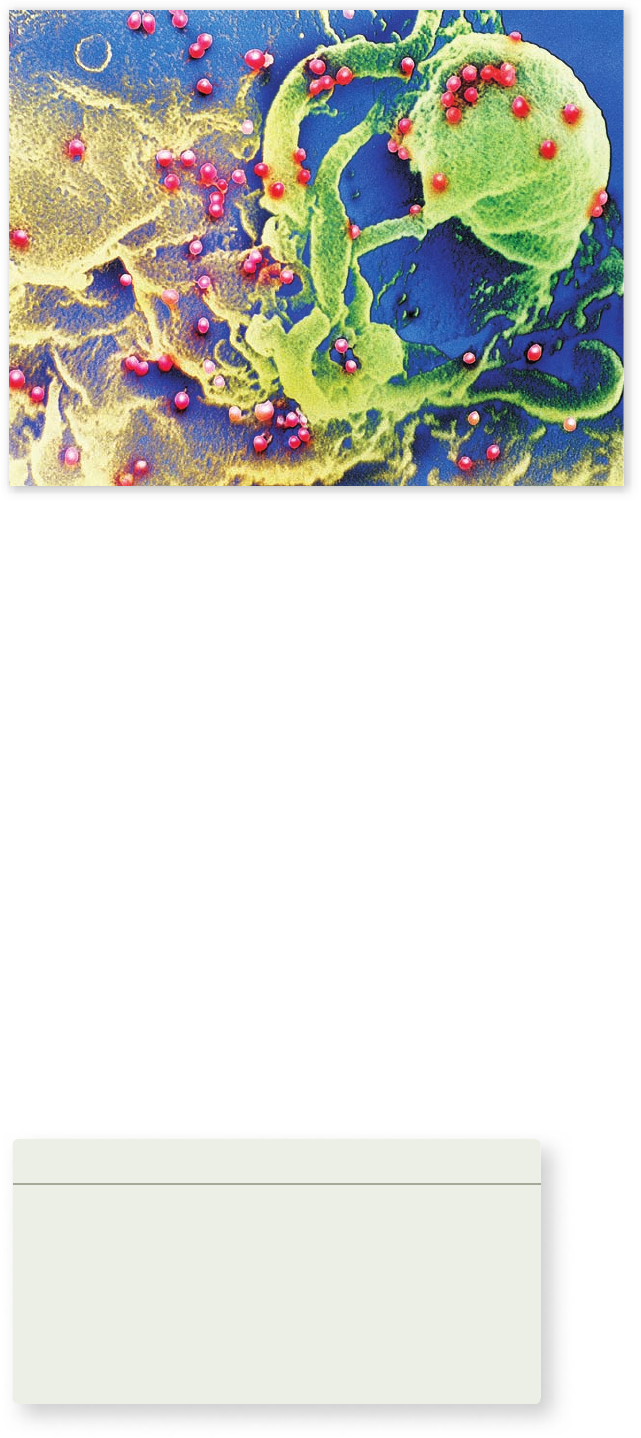
after releasing replicated viruses that infect other CD4
+
cells
(figure 52.22) . Over time, the number of T
H
cells in an infected
individual decreases.
An individual is considered to have AIDS when his or
her T
H
cell levels have dropped dramatically, leading to an
increase in infections due to opportunistic organisms as well
as other diseases.
The progression of HIV infection
The immune system initially controls an HIV infection by the
production of antibodies to the virus and by the elimination of
virally infected cells by cytotoxic T cells. For a time, the level
of HIV in the serum does not increase beyond a steady state,
and the number of T
H
cells does not significantly decrease.
As the virus reproduces in the T
H
cells, it rapidly kills
some of them, but many others continue to divide on antigen
stimulation. Eventually, however, HIV kills T
H
cells more rap-
idly than they can proliferate. HIV-encoded proteins also cause
a decrease in the expression of MHC class I on the infected
cells, so that these cells are less likely to be recognized and
killed by T
C
cells.
Finally, because HIV is a retrovirus (see chapter 27), it
can integrate itself into the genome of infected cells and hide
in a “latent” form. When any of these cells divides, the HIV
genome is present in the progeny cells and thus these progeny
can start to produce HIV at any point in time.
The combined effect of these responses to HIV infection
is to ravage the human immune system. With little defense
against infection, any of a variety of otherwise commonplace
infections may prove fatal. Death by cancer also becomes far
more likely. In fact, AIDS was first recognized as a disease
when a cluster of previously healthy young men all died of
Pneumocystis jiroveci–induced pneumonia, a disease that gener-
Figure 52.22
HIV, the virus that causes AIDS. Viruses
released from infected CD4
+
T
H
cells soon spread to neighboring
T
H
cells, infecting them in turn. The individual viruses, colored
red in this scanning electron micrograph, are extremely small; over
200 million would t on the period at the end of this sentence.
rav32223_ch52_1055-1083.indd 1080rav32223_ch52_1055-1083.indd 1080 11/19/09 1:45:33 PM11/19/09 1:45:33 PM

Apago PDF Enhancer
chapter
52
The Immune System
1081www.ravenbiology.com
52.1 Innate Immunity
The skin is a barrier to infection.
In addition to being a physical barrier, skin has a low surface pH,
lysozyme secreted in sweat, and a population of nonpathogenic
organisms, all of which deter pathogens.
Mucosal epithelial surfaces also prevent entry of pathogens.
The epithelia of the digestive, respiratory, and urogenital tracts
produce mucus to trap microorganisms.
Innate immunity recognizes molecular patterns.
Toll-like receptors have leucine-rich regions that recognize
molecules such as LPS and peptidoglycan.
Innate immunity leads to diverse responses to a pathogen.
Binding of pathogen-associated molecular patterns (PAMPs) leads to
production of antimicrobial peptides and cytokines, and activation of
complement, among other actions.
Phagocytic cells are associated with innate immunity.
Macrophages and neutrophils are associated with phagocytosis (see
gure 52.4). Natural killer (NK) cells induce apoptosis.
The in ammatory response is a nonspeci c response to infection or
tissue injury.
Histamines increase blood ow and permeability of capillaries (see
gure 52.5). Acute-phase fever promotes phagocytic activity and
impedes growth of microbes.
Complement can form a membrane attack complex.
Complement forms pores in invading cells, coats pathogens with C3b
proteins, and targets cells for destruction.
52.2 Adaptive Immunity
Immunity had long been observed, but the mechanisms have only
recently been understood.
Jenner’s and Pasteur’s work on cowpox and avian cholera indicated
that prior exposure to a disease prevented subsequent infections
Antigens stimulate speci c immune responses.
Surface receptors on lymphocytes recognize antigens and direct a
speci c immune response (see gure 52.8 ).
Hematopoiesis gives rise to the cells of the immune system
(see table 52.1).
Lymphocytes carry out the adaptive immune responses.
A naive lymphocyte binds to a foreign antigen and divides, producing
a clone of activated cells and memory cells.
Humoral immunity is the production of Ig by B cells. Cell-mediated
immunity involves T cells that regulate the immune responses of
other cells or directly attack cells.
Adaptive immunity can be active or passive.
The immune system is supported by two classes of organs.
Immune system organs include the primary lymphoid organs and
secondary lymphoid organs (see gure 52.9 ).
Two forms of adaptive immunity have evolved.
An immune system based on proteins with variable repeats has been
found in jawless shes, in contrast to the immunoglobulin system of
other vertebrates.
52.3 Cell-Mediated Immunity
The MHC carries self and nonself information.
Most cells exhibit glycoproteins encoded by the MHC. In humans these
proteins are called human leukocyte antigens (HLAs). MHC class I
proteins, found on every nucleated cell, present antigen brought into
the cell by phagocytosis; MHC class II proteins are found only on
antigen-presenting cells.
Cytotoxic T cells eliminate virally infected cells and tumor cells.
T
C
cells recognize virally infected cells and tumor cells. They destroy
cells in a fashion similar to NK cells (see gure 52.11 ).
Helper T cells secrete proteins that direct immune responses.
T
H
cells secrete cytokines in response to foreign antigens and
promote both cell-mediated and humoral immune responses.
Activated T
C
and T
H
produce both effector and memory cells.
T cells are the primary cells that mediate transplant rejection.
Cells of the innate immune system release cytokines.
Macrophages release interleukin-12 and tumor necrosis factor-α.
52.4 Humoral Immunity
and Antibody Production
Immunoglobulin structure reveals variable and constant regions.
B cells are activated by membrane Ig molecules binding to a speci c
epitope on an antigen. Activated B cells produce antibody secreting
plasma cells and memory cells.
Immunoglobulins consists of two light chain and two longer heavy-
chain polypeptides, with the binding site in the Fab region (see
gure 52.14 ) . Antibodies can agglutinate, precipitate, or neutralize
antigens (see gure 52.15 ).
The ve classes of immunoglobulins have di erent functions
(see table 52.3).
Immunoglobulin diversity is generated through DNA rearrangement.
Ig diversity is generated by DNA rearrangements (see gure 52.16 ).
T cell receptors (TCRs) are similar to a single Fab region of an Ig.
Their diversity also results from DNA rearrangements .
The secondary response to an antigen is more e ective than the
primary response.
On second exposure to a pathogen, a rapid secondary immune
response is launched due to memory cells (see gure 52.18 ).
52.5 Autoimmunity and Hypersensitivity
Autoimmune diseases result from immune system attack on the body’s
own tissues.
The acceptance of self-cells is called immunological tolerance.
Autoimmunity is a failure of immunological tolerance.
Allergies are caused by IgE secretion in response to antigens.
Immediate hypersensitivity is caused by allergens’ binding to IgE,
triggering the release of histamine (see gure 51.19 ). Anaphylaxis is a
severe reaction with rapid in ammation and release of
chemical mediators.
Delayed-type hypersensitivity is mediated by T
H
cells and
macrophages.
Symptoms appear about 48 hr after second exposure.
Chapter Review
rav32223_ch52_1055-1083.indd 1081rav32223_ch52_1055-1083.indd 1081 11/19/09 1:45:35 PM11/19/09 1:45:35 PM