
Raven P.H., Johnson G.B., Mason K.A. Biology (Ninth Edition)
Подождите немного. Документ загружается.

Apago PDF Enhancer
Nucleus
Centriole
Mitochondrion
Flagellum
(tail)
Body
a. b.
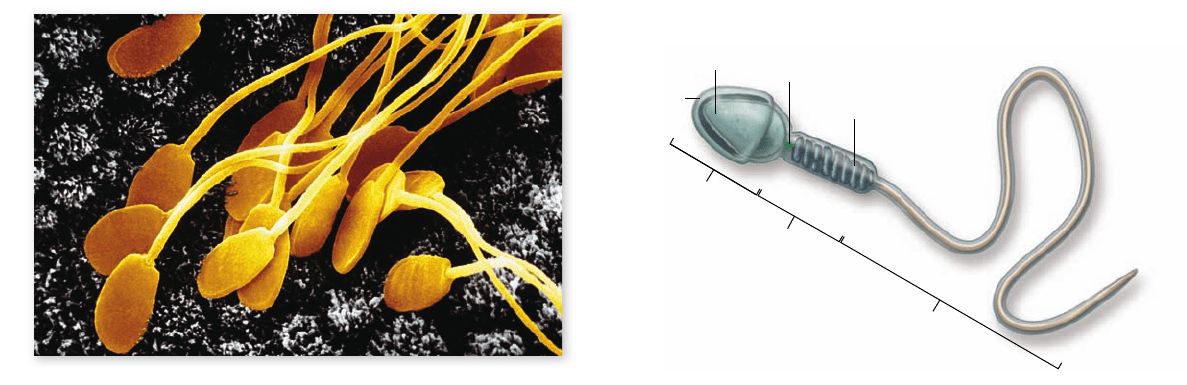
Acrosome
Head
Figure 53.12
Human sperm. a. A scanning electron micrograph with sperm digitally colored yellow. b. A diagram of the main
components of a sperm cell.
Sperm structure
Spermatozoa are relatively simple cells, consisting of a head, body,
and flagellum (tail) (figure 53.12) . The head encloses a compact
nucleus and is capped by a vesicle called an acrosome, which is de-
rived from the Golgi complex. The acrosome contains enzymes
that aid in the penetration of the protective layers surrounding
the egg. The body and tail provide a propulsive mechanism:
Within the tail is a flagellum, and inside the body are a centriole,
which acts as a basal body for the flagellum, and mitochondria,
which generate the energy needed for flagellar movement.
Male accessory sex organs
aid in sperm delivery
After the sperm are produced within the seminiferous tu-
bules, they are delivered into a long, coiled tube called the
epididymis . The sperm are not motile when they arrive
in the epididymis, and they must remain there for at least
18 hours before their motility develops. From the epididymis,
the sperm enter another long tube, the vas deferens, which
passes into the abdominal cavity via the inguinal canal.
Semen production
Semen is a complex mixture of fluids and sperm. The vas def-
erens from each testis joins with one of the ducts from a pair
of glands called the seminal vesicles (see figure 53.10), which
produce a fructose-rich fluid constituting about 60% of se-
men volume. From this point, the vas deferens continues as the
ejaculatory duct and enters the prostate gland at the base of the
urinary bladder.
In humans, the prostate gland is about the size of a golf ball
and is spongy in texture. It contributes up to 30% of the bulk of
the semen. Within the prostate gland, the ejaculatory duct merges
with the urethra from the urinary bladder. The urethra carries
the semen out of the body through the tip of the penis. A pair of
pea-sized bulbourethral glands add secretions to make up the last
10% of semen, also secreting a fluid that lines the urethra and
lubricates the tip of the penis prior to coitus (sexual intercourse).
Sperm cells are produced by the millions
The wall of the seminiferous tubule consists of spermatogonia,
or germ cells, and supporting Sertoli cells. The germ cells near
the outer surface of the seminiferous tubule are diploid and are
the only cells that will undergo meiosis to produce gametes (see
chapter 11). The developing gamete cells, located closer to the
lumen of the tubule, are haploid.
Cell divisions leading to sperm
A spermatogonium cell divides by mitosis to produce two dip-
loid cells. One of these two cells then undergoes meiotic divi-
sion to produce four haploid cells that will become sperm while
the other remains as a spermatogonium. In that way, the male
never runs out of spermatogonia to produce sperm. Adult males
produce an average of 100 to 200 million sperm each day and
can continue to do so throughout most of the rest of their lives.
The diploid daughter cell that begins meiosis is called a
primary spermatocyte. In humans it has 23 pairs of chromo-
somes (46 chromosomes total), and each chromosome is dupli-
cated, with two chromatids. The first meiotic division separates
the homologous chromosome pairs, producing two haploid
secondary spermatocytes. However, each chromosome still
consists of two duplicate chromatids.
Each of these cells then undergoes the second meiotic
division to separate the chromatids and produce two haploid
cells, the spermatids. Therefore, a total of four haploid sper-
matids are produced from each primary spermatocyte (see
figure 53.11, right). All of these cells constitute the germinal
epithelium of the seminiferous tubules because they “germi-
nate” the gametes.
Supporting tissues
In addition to the germinal epithelium, the walls of the seminif-
erous tubules contain nongerminal cells such as the Sertoli cells
mentioned earlier. These cells nurse the developing sperm and
secrete products required for spermatogenesis. They also help
convert the spermatids into spermatozoa (sperm) by engulf-
ing their extra cytoplasm.
1092
part
VII
Animal Form and Function
rav32223_ch53_1084-1104.indd 1092rav32223_ch53_1084-1104.indd 1092 11/19/09 2:19:35 PM11/19/09 2:19:35 PM
Apago PDF Enhancer
Dorsal veins
Artery
Deep
artery
Corpus
spongiosum
Corpora
cavernosa
Urethra
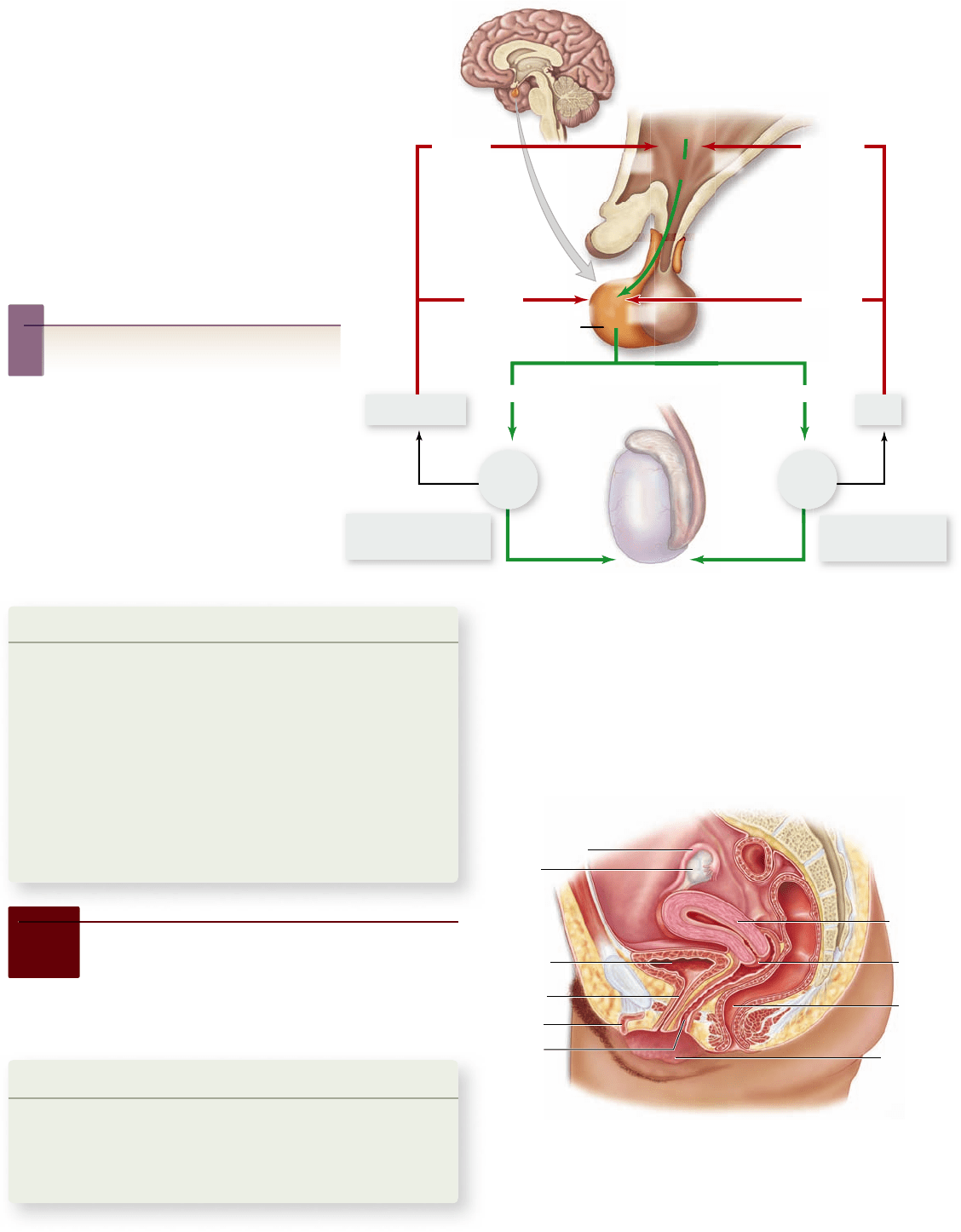
thalamic hormone gonadotropin-releasing hormone (GnRH)
stimulates the anterior pituitary gland to secrete both FSH and
LH. FSH causes the Sertoli cells to release a peptide hormone
called inhibin, which specifically inhibits FSH secretion. Simi-
larly, LH stimulates testosterone secretion, and testosterone
feeds back to inhibit the release of LH, both directly at the an-
terior pituitary gland and indirectly by reducing GnRH release
from the hypothalamus.
The importance of negative feedback inhibition can be
demonstrated by removing the testes; in the absence of testos-
terone and inhibin, the secretion of FSH and LH from the an-
terior pituitary is greatly increased.
Structure of the penis and erection
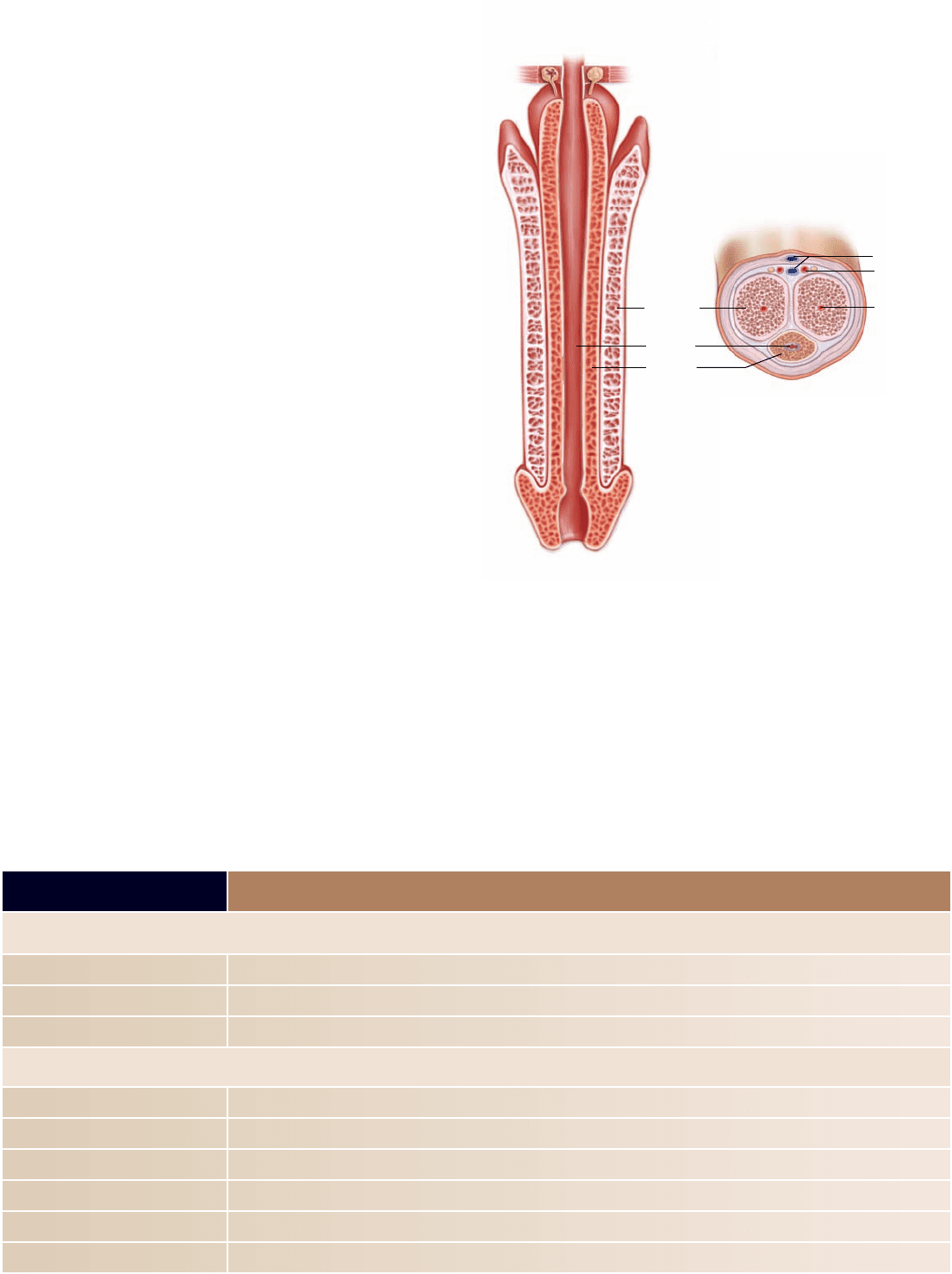
In addition to the urethra, the penis has two columns of erec-
tile tissue, the corpora cavernosa, along its dorsal side and
one column, the corpus spongiosum, along the ventral side
(figure 53.13) . Penile erection is produced by neurons in the
parasympathetic division of the autonomic nervous system,
which release nitric oxide (NO), causing arterioles in the penis
to dilate. The erectile tissue becomes turgid as it engorges with
blood. This increased pressure in the erectile tissue compresses
the veins, so blood flows into the penis but cannot flow out.
Most mammals have a bone in the penis, called a “baculum,”
that contributes to its stiffness during erection, but humans do not.
Ejaculation
The result of erection and continued sexual stimulation is ejacu-
lation, the ejection from the penis of about 2 to 5 mL of semen
containing an average of 300 million sperm. Successful fertiliza-
tion requires such a high sperm count because the odds against
any one sperm cell completing the journey to the egg and fer-
tilizing it are extraordinarily high, and the acrosomes of many
sperm need to interact with the egg before a single sperm can
penetrate the egg (fertilization is described in chapter 54). Males
with fewer than 20 million sperm per milliliter are generally
considered sterile. Despite their large numbers, sperm constitute
only about 1% of the volume of the semen ejaculated.
Hormones regulate male reproductive function
As you saw in chapter 46, the anterior pituitary gland secretes
two gonadotropic hormones: follicle-stimulating hormone
(FSH) and luteinizing hormone (LH). Although these hormones
are named for their actions in the female, they are also involved
in regulating male reproductive function (table 53.1) . In males,
FSH stimulates the Ser toli cells to facilitate sperm development,
and LH stimulates the Leydig cells to secrete testosterone.
The principle of negative feedback inhibition applies to
the control of FSH and LH secretion (figure 53.14) . The hypo-
TABLE 53.1
Mammalian Reproductive Hormones
MALE
Follicle-stimulating hormone (FSH) Stimulates spermatogenesis via Sertoli cells
Luteinizing hormone (LH) Stimulates secretion of testosterone by Leydig cells
Testosterone Stimulates development and maintenance of male secondary sexual characteristics, accessory sex organs, and spermatogenesis
FEMALE
Follicle-stimulating hormone (FSH) Stimulates growth of ovarian follicles and secretion of estradiol
Luteinizing hormone (LH) Stimulates ovulation, conversion of ovarian follicles into corpus luteum, and secretion of estradiol and progesterone by corpus luteum
Estradiol (estrogen) Stimulates development and maintenance of female secondary sexual characteristics; prompts monthly preparation of uterus for pregnancy
Progesterone Completes preparation of uterus for pregnancy; helps maintain female secondary sexual characteristics
Oxytocin Stimulates contraction of uterus and milk-ejection re ex
Prolactin Stimulates milk production
Figure 53.13
A penis in cross-
section (right) and longitudinal
section (left). During erection,
tissues of the corpora cavernosa ll with
blood enlarging the penis. The corpus
spongiosum prevents compression of the
urethra during erection.
www.ravenbiology.com
chapter
53
The Reproductive System
1093
rav32223_ch53_1084-1104.indd 1093rav32223_ch53_1084-1104.indd 1093 11/19/09 3:24:39 PM11/19/09 3:24:39 PM
Apago PDF Enhancer
( + )
( + ) ( + )
( + ) ( + )
( – )
( – )
(
(
(
+
)
)
)
(
(
–
)
)
( – )
( – )
Hypothalamus
Testi s
GnRH
Anterior pituitary gland
FSHLH
Inhibition
Sertoli
cells
Leydig
cells
Maintains secondary
sex characteristics
Spermatogenesis
InhibitionInhibition
Inhibition
Testosterone
Inhibin
Fallopian tube
Ovary
Bladder
Clitoris
Urethra
Vagina
Uterus
Cervix
Rectum
Labium
minora
Figure 53.14
Hormonal interactions
between the testes and anterior pituitary.
The hypothalamus secretes GnRH, which
stimulates the anterior pituitary to produce
LH and FSH. LH stimulates the Leydig cells
to secrete testosterone, which is involved in
development and maintenance of secondary
sexual characteristics, and stimulates
spermatogenesis. FSH stimulates the Sertoli
cells of the seminiferous tubules, which facilitate
spermatogenesis. FSH also stimulates Sertoli cells
to secrete inhibin. Testosterone and inhibin exert
negative feedback inhibition on the secretion of
LH and FSH, respectively.
Inquiry question
?
Why do you think the brain is affected when
the testes are surgically
removed (termed castration)?
Learning Outcomes Review 53.3
Each of the spermatogonia lining the seminiferous tubules of the testes
undergoes mitosis; one of the two daughter cells then undergoes meiosis
to produce four haploid sperm cells. Semen consists of sperm from the
testes and fl uid from the seminal vesicles and prostate gland. Sexual
stimulation causes erection of the penis, and continued stimulation
leads to ejaculation of semen. Production of sperm and secretion of
testosterone from the testes are controlled by FSH and LH from the
anterior pituitary.
■ Would natural selection favor those males that produce
more sperm? Explain your answer.
The structures of the reproductive system in a human female
are shown in figure 53.15 . In contrast to the testes, the ova-
ries develop much more slowly. In the absence of testoster-
one, the female embryo develops a clitoris and labia majora
from the same embryonic structures that produce a penis and
a scrotum in males. Thus, the clitoris and penis, and the labia
majora and scrotum, are said to be homologous structures.
Figure 53.15
Organization of the human female
reproductive system. The ovaries are the gonads, the Fallopian
tubes receive the ovulated ova, and the uterus is the womb, the site
of development of an embryo if the egg cell becomes fertilized.
53.4
Structure and Function
of the Human Female
Reproductive System
Learning Outcomes
Describe the sequence of events in production of an oocyte.1.
Explain ovulation and the female reproductive cycle.2.
Explain how hormones regulate female reproductive 3.
function.
1094
part
VII
Animal Form and Function
rav32223_ch53_1084-1104.indd 1094rav32223_ch53_1084-1104.indd 1094 11/19/09 2:19:40 PM11/19/09 2:19:40 PM
Apago PDF Enhancer
( – )(( – )
( – )
(
(
–
)
)
( – )
( + )
(
+
( + )
( + )
( – ) ( – )
( – ) ( – )
Hypothalamus
Ovary
GnRH
Inhibition
Endometrium
Uterine Cycle
Ovarian Cycle
Ovarian events Hormone levelsHormone levels
LH
FSH
031 5 7 9 11 13 15 17 19 21 25 27 28
Follicular phase Luteal phase
Corpus luteumDeveloping follicles
Luteal
regression
Ovulation
031 5 7 9 11 13 15 17 19 21 25 27 28
ProliferationMenstruation
Days
Secretory Menstruation
Estradiol
Progesterone
Ovulation
Inhibition
InhibitionInhibition
LHFSH
Estradiol Progesterone
Anterior
pituitary
gland
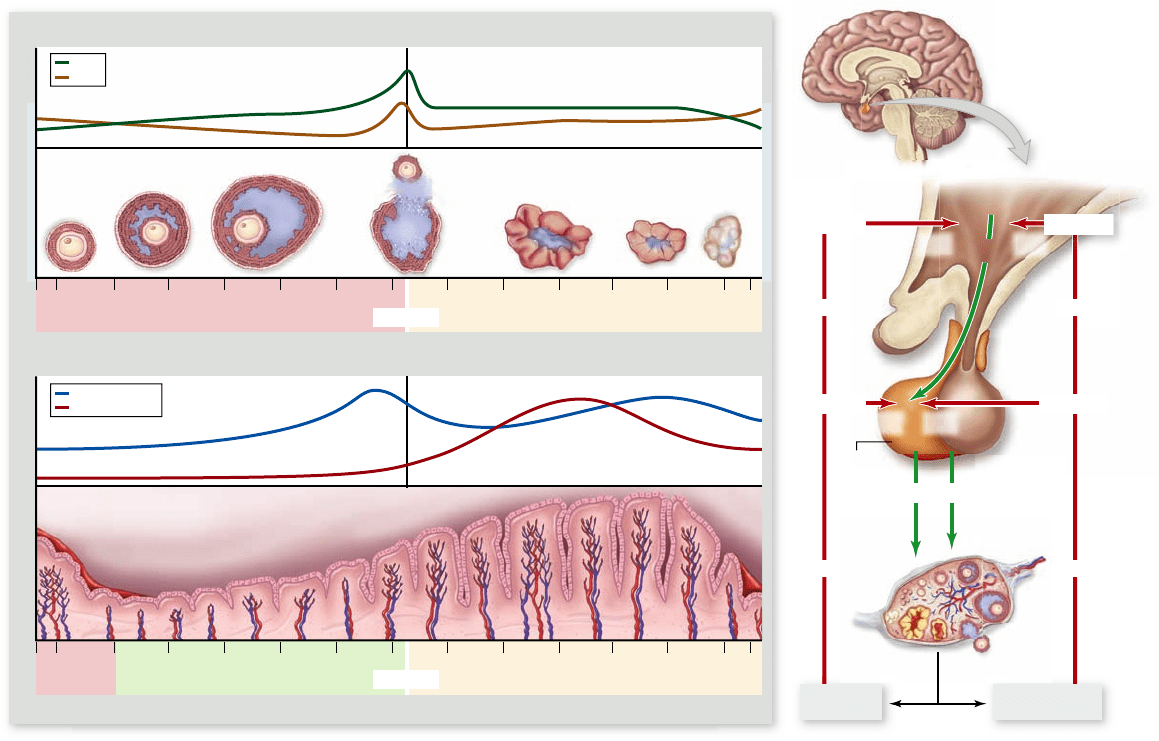
primary oocyte-containing follicles are stimulated to develop
during each cycle. The human menstrual cycle lasts approxi-
mately one month (28 days on the average) and can be divided
in terms of ovarian activity into a follicular phase and luteal
phase, with the two phases separated by the event of ovulation
(figure 53.16) .
Follicular phase
During each follicular phase, several follicles in the ovaries
are stimulated to grow under FSH stimulation, but only one
achieves full maturity as a tertiary, or Graafian, follicle by
ovulation. This follicle forms a thin-walled blister on the sur-
face of the ovary. The uterus is lined with a simple columnar
epithelial membrane called the endometrium, and during the
follicular phase estradiol causes growth of the endometrium.
This phase is therefore also known as the proliferative phase
of the endometrium (see figure 53.16).
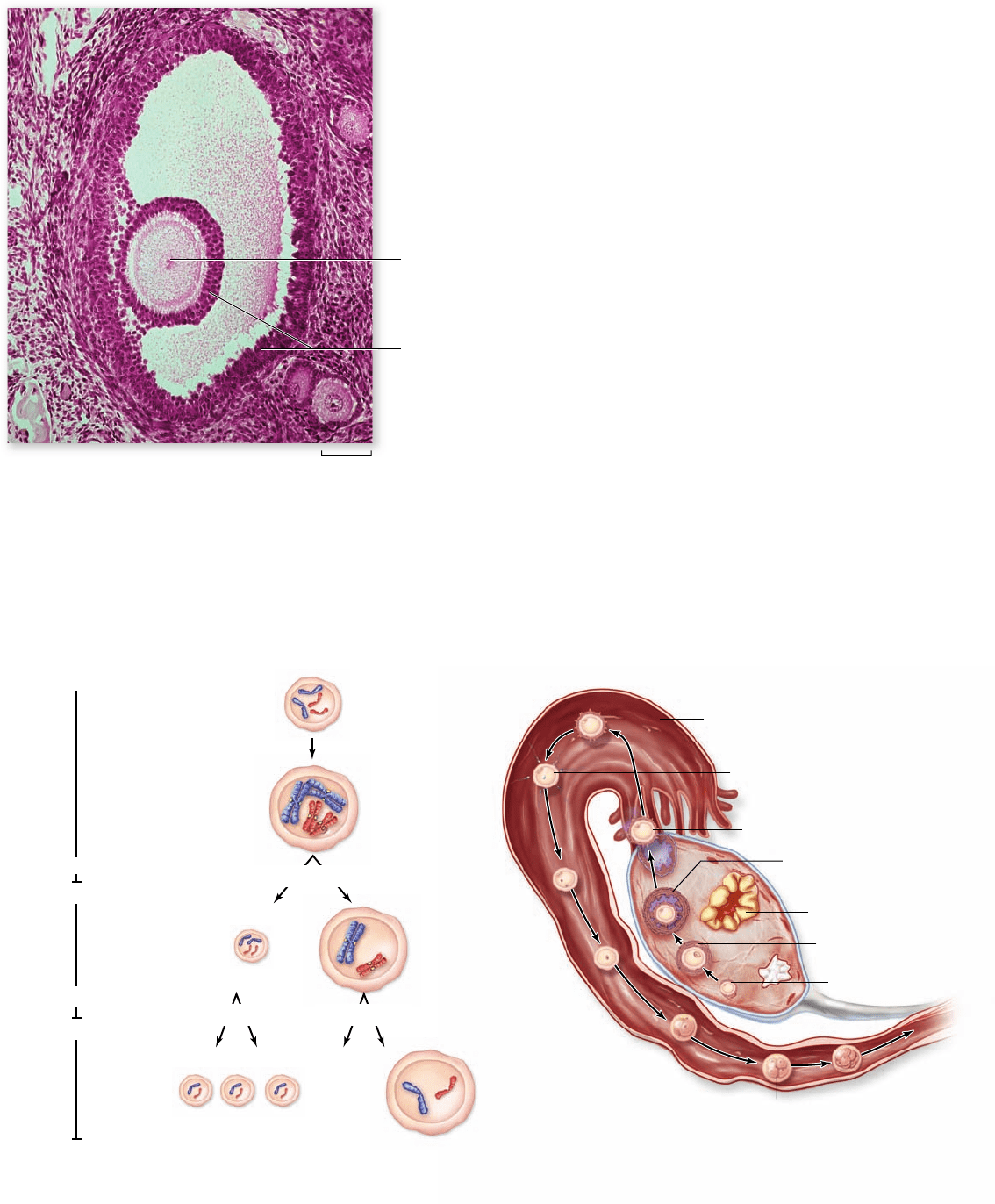
The primary oocyte within the Graafian follicle
completes the first meiotic division during the follicular
phase. Instead of forming two equally large daughter cells,
The clitoris, like the penis, contains corpora cavernosa and is
therefore erectile.
The ovaries contain microscopic structures called ovarian
follicles, which each contain a potential egg cell called a primary
oocyte and smaller granulosa cells.
At puberty, the granulosa cells begin to secrete the major
female sex hormone, estradiol (also called estrogen), triggering
menarche, the onset of menstrual cycling. Estradiol also stimu-
lates the formation of the female secondary sexual characteris-
tics, including breast development and the production of pubic
hair. In addition, estradiol and another steroid hormone, pro-
gesterone, help maintain the female accessory sex organs: the
fallopian tubes, uterus, and vagina.
Usually only one egg is produced
per menstrual cycle
At birth, a female’s ovaries contain about 1 million follicles,
each containing a primary oocyte that has begun meiosis but is
arrested in prophase of the first meiotic division. Some of these
Figure 53.16
The human menstrual cycle. Left: Hormone levels during the cycle are correlated with ovulation and the growth of
the endometrial lining of the uterus. Growth and thickening of the endometrium is stimulated by estradiol during the proliferative phase.
Estradiol and progesterone maintain and regulate the endometrium during the secretory phase. Decline in the levels of these two hormones
triggers menstruation. Right: Production of estradiol and progesterone by the anterior pituitary is controlled by negative feedback.
www.ravenbiology.com
chapter
53
The Reproductive System
1095
rav32223_ch53_1084-1104.indd 1095rav32223_ch53_1084-1104.indd 1095 11/19/09 2:19:43 PM11/19/09 2:19:43 PM
Apago PDF Enhancer
Granulosa
cells
Secondar
y
oocyte
200 µm
First
polar
body
Ovum
(haploid)
Cleavage
Secondary
oocyte
(haploid)
Primary
oocyte
(diploid)
Germinal cell
(diploid)
Fetal development
Primary follicle (oocyte)
Mature follicle with
secondary oocyte
Ruptured follicle (secondary oocyte)
Corpus luteum
Developing follicle
Fertilization and meiosis II
Fallopian tube
Second
polar body
MEIOSIS I
MEIOSIS II MEIOSIS II
Arrest at prophase I
Ovulation
Arrest at metaphase II
Fertilization
Figure 53.17
A mature Graa an follicle in a cat ovary.
Note the ring of granulosa cells that surrounds the secondary
oocyte. This ring will remain around the egg cell when it is
ovulated, and sperm must tunnel through the ring in order to reach
the plasma membrane of the secondary oocyte.
Figure 53.18
The meiotic events of oogenesis in humans. A primary oocyte is diploid. At the completion of the rst meiotic
division, one division product is eliminated as a polar body, and the other, the secondary oocyte, is released during ovulation. The secondary
oocyte does not complete the second meiotic division until after fertilization; that division yields a second polar body and a single haploid egg,
or ovum. Fusion of the haploid egg nucleus with a haploid sperm nucleus produces a diploid zygote.
however, it produces one large daughter cell, the second-
ary oocyte (figure 53.17) , and one tiny daughter cell, called a
polar body. Thus, the secondary oocyte acquires almost all
of the cytoplasm from the primary oocyte (unequal cytoki-
nesis), increasing its chances of sustaining the early embryo
should the oocyte be fertilized. The polar body, on the other
hand, disintegrates.
The secondary oocyte then begins the second meiotic di-
vision, but its progress is arrested at metaphase II. It is in this
form that the potential egg cell is discharged from the ovary at
ovulation, and it does not complete the second meiotic division
unless it becomes fertilized in the Fallopian tube.
Ovulation
The increasing level of estradiol in the blood during the follic-
ular phase stimulates the anterior pituitary gland to secrete LH
about midcycle. This sudden secretion of LH causes the fully
developed Graafian follicle to burst in the process of ovulation,
releasing its secondary oocyte.
The released oocyte enters the abdominal cavity near the
fimbriae, the feathery projections surrounding the opening to
the Fallopian tube. The ciliated epithelial cells lining the Fallo-
pian tube draw in the oocyte and propel it through the Fallopian
tube toward the uterus.
If it is not fertilized, the oocyte disintegrates within a day
following ovulation. If it is fertilized, the stimulus of fertiliza-
tion allows it to complete the second meiotic division, forming
a fully mature ovum and a second polar body (figure 53.18) .
Fusion of the nuclei from the ovum and the sperm produces a
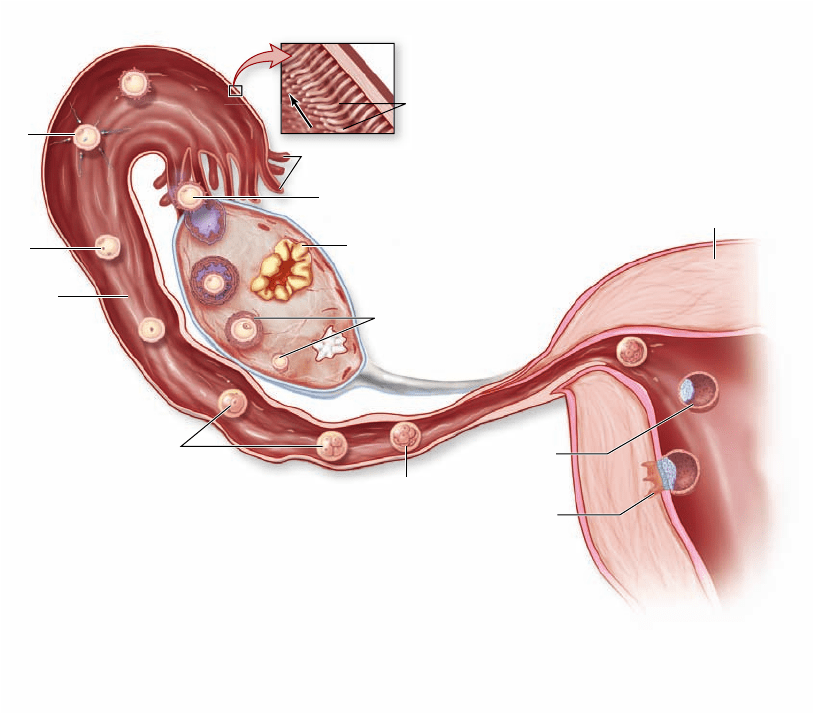
diploid zygote. Fertilization normally occurs in the upper one-
third of the Fallopian tube, and in humans the zygote takes
1096
part
VII
Animal Form and Function
rav32223_ch53_1084-1104.indd 1096rav32223_ch53_1084-1104.indd 1096 11/19/09 2:19:45 PM11/19/09 2:19:45 PM
Apago PDF Enhancer
Cleavage
Developing
follicles
Morula
Corpus
luteum
Ovulation
Implantation
Blastocyst
Uterus
First mitosis
Fertilization
Meiosis II
Fallopian tube
Fimbriae
Cilia
of estradiol and progesterone at the end of the luteal phase,
causing the built-up endometrium to be sloughed off with ac-
companying bleeding. This is menstruation; the portion of
the cycle in which it occurs is known as the menstrual phase of
the endometrium.
If the ovulated oocyte is fertilized, however, the tiny em-
bryo prevents regression of the corpus luteum and subsequent
menstruation by secreting human chorionic gonadotropin (hCG),
an LH-like hormone produced by the chorionic membrane of
the embryo. By maintaining the corpus luteum, hCG keeps the
levels of estradiol and progesterone high and thereby prevents
menstruation, which would terminate the pregnancy. Because
hCG comes from the embryonic chorion and not from the
mother, it is the hormone tested for in all pregnancy tests.
Mammals with estrous cycles
Menstruation is absent in mammals with an estrous cycle.
Although such mammals do cyclically shed cells from the
endometrium, they don’t bleed in the process. The estrous
cycle is divided into four phases: proestrus, estrus, metestrus,
and diestrus, which correspond to the proliferative, midcycle,
secretory, and menstrual phases of the endometrium in the
menstrual cycle.
Female accessory sex organs receive sperm
and provide nourishment and protection
to the embryo
The Fallopian tubes (also called uterine tubes or oviducts)
transport ova from the ovaries to the uterus. In humans, the
approximately 3 days to reach the uterus and then another 2 to
3 days to implant in the endometrium (figure 53.19) .
Luteal phase
After ovulation, LH stimulation completes the development of
the Graafian follicle into a structure called the corpus luteum.
For this reason, the second half of the menstrual cycle is re-
ferred to as the luteal phase. The corpus luteum secretes both
estradiol and another steroid hormone, progesterone. The high
blood levels of estradiol and progesterone during the luteal
phase now exert negative feedback inhibition of FSH and LH
secretion by the anterior pituitary gland (see figure 53.16). This
inhibition during the luteal phase is in contrast to the stimula-
tion exerted by estradiol on LH secretion at midcycle, which
caused ovulation. The inhibitory effect of estradiol and proges-
terone after ovulation acts as a natural contraceptive mecha-
nism, preventing both the development of additional follicles
and continued ovulation.
During the luteal phase of the cycle, the combination of
estradiol and progesterone cause the endometrium to become
more vascular, glandular, and enriched with glycogen deposits.
Because of the endometrium’s glandular appearance and func-
tion, this portion of the cycle is known as the secretory phase
of the endometrium. These changes prepare the uterine lining
for embryo implantation.
In the absence of fertilization, the corpus luteum degen-
erates due to the decreasing levels of LH and FSH near the
end of the luteal phase. Estradiol and progesterone, which the
corpus luteum produces, inhibit the secretion of LH, the hor-
mone needed for its survival. The disappearance of the corpus
luteum results in an abrupt decline in the blood concentration
Figure 53.19
The journey
of an egg. Produced within a
follicle and released at ovulation,
the secondary oocyte is swept
into a Fallopian tube and carried
along by waves of ciliary motion in
the tube walls. Sperm journeying
upward from the vagina penetrate
the secondary oocyte, meiosis is
completed and fertilization of the
resulting ovum occurs within the
Fallopian tube. The resulting zygote
undergoes several mitotic divisions
while still in the tube. By the time
it enters the uterus, it is a hollow
sphere of cells called a blastocyst.
The blastocyst implants within the
wall of the uterus, where it continues
its development. (The egg and its
subsequent stages have been enlarged
for clari cation.)
www.ravenbiology.com
chapter
53
The Reproductive System
1097
rav32223_ch53_1084-1104.indd 1097rav32223_ch53_1084-1104.indd 1097 11/19/09 2:19:47 PM11/19/09 2:19:47 PM
Apago PDF Enhancer
Uterus
Cervix
Ovary
Uterus
Vagina
Pseudo-
vaginal
birth canal
Vagina
Cervix
Vagina
Ovary
Uterine
horns
Ovary
Lateral
vagina
Lateral
vagina
Oviduct
Oviduct
OviductOviduct
a. b. c.
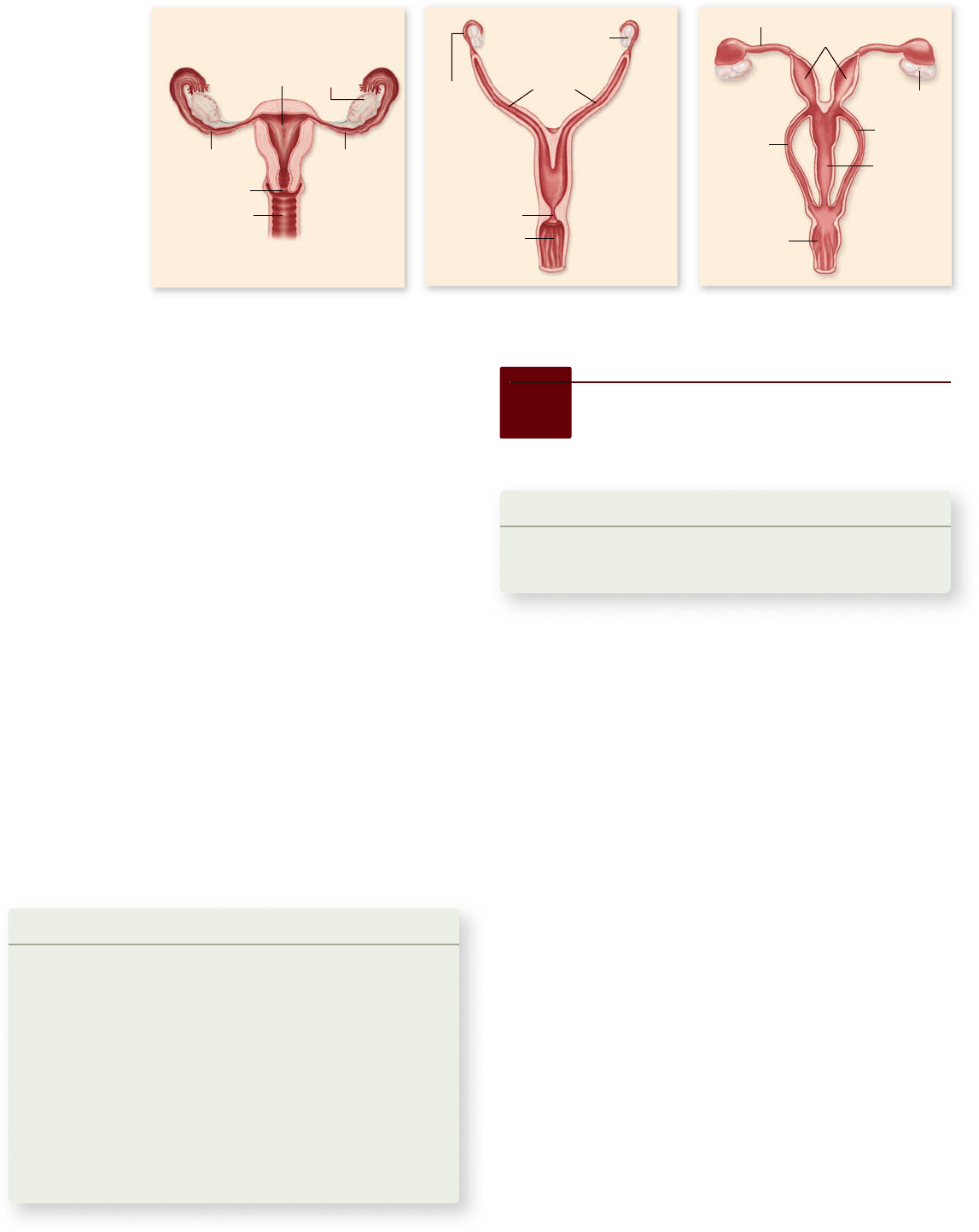
Figure 53.20
A comparison
of mammalian
uteruses.
a. Humans and
other primates;
(b) cats, dogs,
and cows; and
(c) marsupials.
53.5
Contraception and Infertility
Treatments
Learning Outcomes
Compare the different types of birth control.1.
Describe causes of infertility.2.
In most vertebrates, copulation is associated solely with repro-
duction. Reflexive behavior that is deeply ingrained in the female
limits sexual receptivity to those periods of the sexual cycle when
she is fertile. In humans and a few species of apes, the female
can be sexually receptive throughout her reproductive cycle, and
this extended receptivity to sexual intercourse serves a second
important function—it reinforces pair-bonding, the emotional
relationship between two individuals.
Sexual intercourse may be a necessary and important part of
humans’ emotional lives—and yet not all couples desire to initiate
a pregnancy every time they engage in sex. Throughout history,
people and cultures have attempted to control reproduction while
still being able to engage in sexual intercourse. The prevention of
pregnancy or giving birth is known as birth control. Physiolog-
ically, pregnancy begins not at fertilization but approximately a
week later with successful implantation. Methods of birth control
that act prior to implantation are usually termed contraception.
In contrast, some couples desire to have children, but
find for a variety of reasons that pregnancy is not occurring—a
condition termed infertility. Technologies have also been devel-
oped to assist these couples in having children.
Contraception is aimed at preventing
fertilization or implantation
A variety of approaches, differing in effectiveness and in their ac-
ceptability to different couples, religions, and cultures, are com-
monly taken to prevent pregnancy (figure 53.21 and table 53.2 ).
uterus is a muscular, pear-shaped organ that narrows to form a
neck, the cervix, which leads to the vagina (figure 53.20a) .
The entrance to the vagina is initially covered by a
membrane called the hymen. This will eventually be disrupted
by vigorous activity or actual sexual intercourse. In the latter
case, this can make the first experience painful when the hy-
men is ruptured.
During sexual arousal, the labia minora, clitoris, and
vagina all become engorged with blood, much like the male
erectile tissues. The clitoris has many sensory nerve endings
and is one of the most sensitive and responsive areas for fe-
male arousal. During sexual arousal, glands located near the
vaginal opening called Bartholin’s glands, secrete a lubricating
fluid that facilitates penetration by the penis. Ejaculation by
the male introduces sperm cells that must then make the long
swim out of the vagina and up the Fallopian tubes to encounter
a secondary oocyte for fertilization to occur.
Mammals other than primates have more complex female
reproductive tracts, in which part of the uterus divides to form
uterine “horns,” each of which leads to an oviduct (figure 53.20b, c).
Cats, dogs, and cows, for example, have one cervix but two uterine
horns separated by a septum, or wall. Marsupials, such as opossums,
carry the split even further, with two unconnected uterine horns,
two cervices, and two vaginas. A male marsupial has a forked penis
that can enter both vaginas simultaneously.
Learning Outcomes Review 53.4
Primary oocytes reside in follicles in the ovaries. At puberty, some
oocytes are triggered by FSH to develop with every menstrual cycle.
Unequal cytokinesis produces a single egg and three polar bodies from
each primary oocyte. During the follicular phase, one follicle matures;
ovulation is the release of this follicle’s secondary oocyte triggered by
LH. This oocyte completes division only if fertilization occurs. During
the luteal phase, development of additional oocytes is inhibited.
If fertilization does not occur, the endometrium is sloughed off as
menstrual bleeding.
■ Would more than one offspring per pregnancy be favored
by natural selection? Under what conditions?
1098
part
VII
Animal Form and Function
rav32223_ch53_1084-1104.indd 1098rav32223_ch53_1084-1104.indd 1098 11/19/09 2:19:47 PM11/19/09 2:19:47 PM
Apago PDF Enhancer
a. b.
c. d.
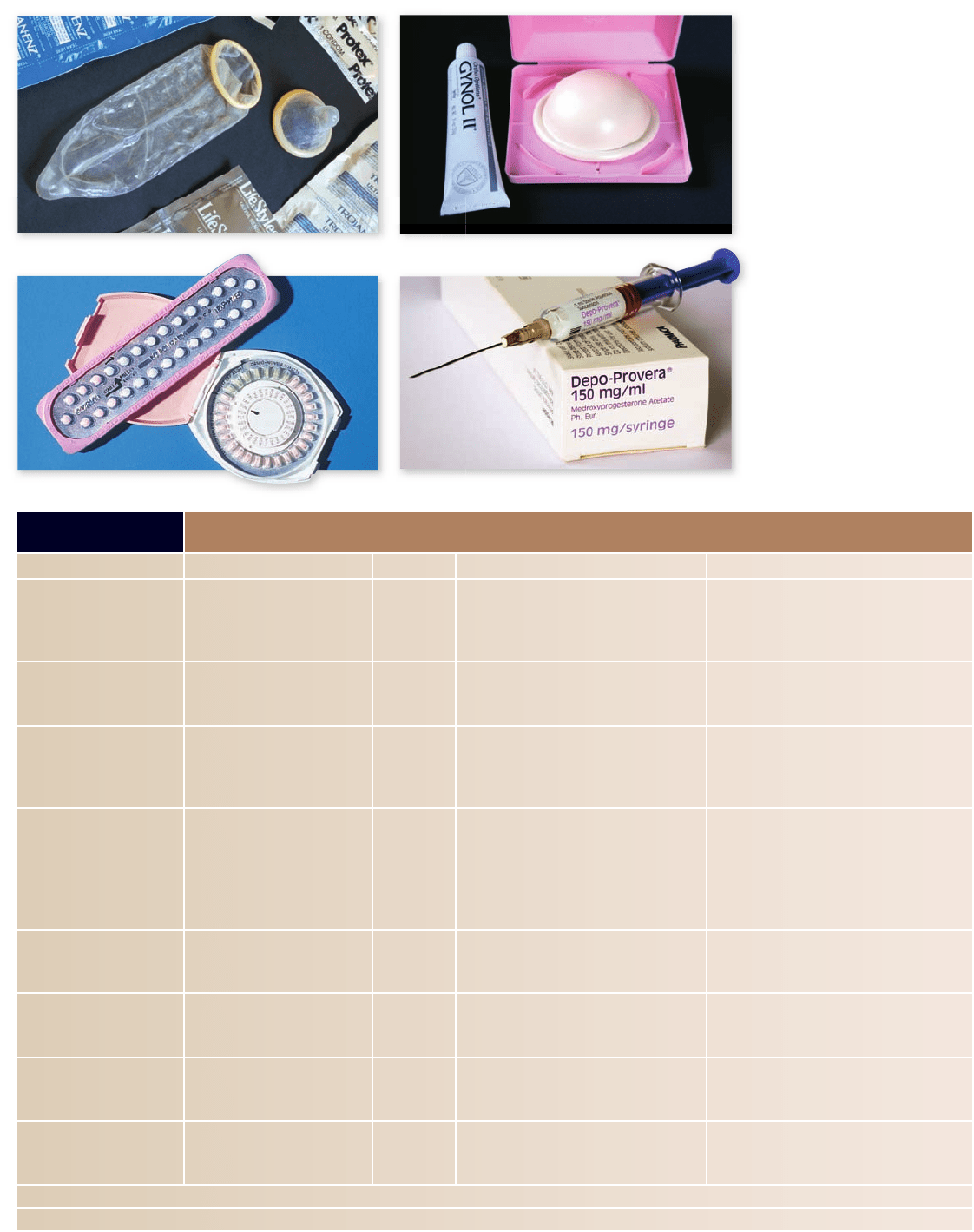
Figure 53.21
Four
common methods of
birth control. a. Condom;
(b) diaphragm and
spermicidal jelly;
(c) oral contraceptives;
(d) medroxy pro ges ter one
acetate (Depo-Provera).
TABLE 53.2
Methods of Birth Control
Device Action Failure Rate* Advantages Disadvantages
Oral contraceptive Hormones (progesterone analogue
alone or in combination with
other hormones) primarily prevent
ovulation
1–5,
depending on
type
Convenient; highly e ective; provides signi cant
noncontraceptive health bene ts such as
protection against ovarian and endometrial
cancers
Must be taken regularly; possible minor side
e ects, which new formulations have reduced;
not for women with cardiovascular risks (mostly
smokers over age 35)
Condom Thin sheath for penis collects
semen; “female condoms” sheath
vaginal walls
3–15 Easy to use, e ective, inexpensive, protects
against some sexually transmitted diseases
Requires male cooperation, may diminish
spontaneity, may deteriorate on the shelf
Diaphragm Soft rubber cup covers entrance
to uterus; prevents sperm from
reaching egg, holds spermicide
4–25 No dangerous side e ects; reliable if used
properly; provides some protection against
sexually transmitted diseases and cervical
cancer
Requires careful tting, some inconvenience
associated with insertion and removal; may be
dislodged during intercourse
Intrauterine device (IUD) Small plastic or metal device
placed in the uterus, prevents
implantation; some contain copper,
others release hormones
1–5 Convenient, highly e ective; infrequent
replacement
Can cause excess menstrual bleeding and pain;
risk of perforation, infection, expulsion, pelvic
in ammatory disease, and infertility; not
recommended for those who eventually intend to
conceive or are not monogamous; dangerous in
pregnancy
Cervical cap Miniature diaphragm covers cervix
closely, prevents sperm from
reaching egg, holds spermicide
Probably
similar to that
of diaphragm
No dangerous side e ects; fairly e ective; can
remain in place longer than diaphragm
Problems with tting and insertion; comes in
limited number of sizes
Foams, creams, jellies, vaginal
suppositories
Chemical spermicides inserted in
vagina before intercourse prevent
sperm from entering uterus
10–25 Can be used by anyone who is not allergic;
protect against some sexually transmitted
diseases; no known side e ects
Relatively unreliable; sometimes messy; must be
used 5–10 minutes before each act of intercourse
Implant (levonorgestrel;
Norplant)
Capsules surgically implanted
under skin slowly release hormone
that blocks ovulation
0.03 Very safe, convenient, and e ective; very long-
lasting (5 years); may have nonreproductive
health bene ts like those of oral contraceptives
Irregular or absent periods; minor surgical
procedure needed for insertion and removal; some
scarring may occur
Injectable contraceptive
(medroxyprogesterone; Depo-
Provera)
Injection every 3 months of a
hormone that is slowly released
and prevents ovulation
1 Convenient and highly e ective; no serious side
e ects other than occasional heavy menstrual
bleeding
Animal studies suggest it may cause cancer, though
new studies in humans are mostly encouraging;
occasional heavy menstrual bleeding
*Failure rate is expressed as pregnancies per 100 actual users per year.
Source: Data from American College of Obstetricians and Gynecologists: Contraception, Patient Education Pamphlet No. AP005. ACOG, Washington, D.C., 1990.
www.ravenbiology.com
chapter
53
The Reproductive System
1099
rav32223_ch53_1084-1104.indd 1099rav32223_ch53_1084-1104.indd 1099 11/19/09 2:19:49 PM11/19/09 2:19:49 PM
Apago PDF Enhancer
ovulation. They also cause a buildup of the endometrium. The
hormones in birth control pills have the same effects. Because the
pills block ovulation, no ovum is available to be fertilized.
A woman generally takes the hormone-containing pills
for 3 weeks; during the fourth week, she takes pills without hor-
mones, allowing the levels of those hormones in her blood to
fall, which causes menstruation.
Oral contraceptives provide a very effective means of
birth control, with a failure rate of only 1 to 5% per year. In a
variation of the oral contraceptive, hormone-containing cap-
sules are implanted beneath the skin. These implanted capsules
have failure rates below 1%.
A small number of women using birth control pills or im-
plants experience undesirable side effects, such as blood clotting
and nausea. These side effects have been reduced in newer gen-
erations of birth control pills, which contain less estrogen and
different analogues of progesterone. Moreover, these new oral
contraceptives provide a number of benefits, including reduced
risks of endometrial and ovarian cancer, cardiovascular disease,
and osteoporosis (for older women ). However, they may increase
the risk of developing breast cancer and cervical cancer.
The risks involved with birth control pills increase in women
who smoke and increase greatly in women over 35 who smoke. The
current consensus is that, for many women, the health benefits of
oral contraceptives outweigh their risks, although a physician must
help each woman determine the relative risks and benefits.
Prevention of embryo implantation
The insertion of an intrauterine device (IUD), such as a coil or
other irregularly shaped object, is an effective means of contra-
ception because the irritation it produces prevents the implanta-
tion of an embryo. IUDs have a failure rate of only 1 to 5%. Their
high degree of effectiveness probably reflects their convenience;
once they are inserted, they can be forgotten. The great disad-
vantage of this method is that almost a third of the women who
attempt to use IUDs experience cramps, pain, and sometimes
bleeding and therefore must discontinue using them. There is
also a risk of uterine infection with insertion of the IUD.
Another method of preventing embryo implantation is
the “morning-after pill,” or Plan B, which contains 50 times the
dose of estrogen present in birth control pills. The pill works
by temporarily stopping ovum development, by preventing fer-
tilization, or by stopping the implantation of a fertilized ovum.
Its failure rate is 1 to 10% per use.
Many women are uneasy about taking such high hormone
doses because side effects can be severe. This pill is not de-
signed as a regular method of pregnancy prevention, but rather
as a method of emergency contraception.
Sterilization
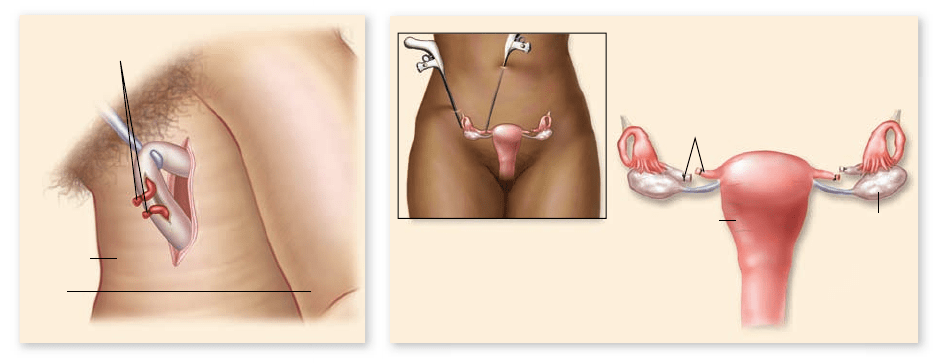
Sterilization is usually accomplished by the surgical removal
of portions of the tubes that transport the gametes from the
gonads (figure 53.22) . It is an almost 100% effective means
of contraception. Sterilization may be performed on either
males or females, preventing sperm from entering the semen
in males and preventing an ovulated oocyte from reaching the
uterus in females.
Abstinence
The most reliable way to avoid pregnancy is to not have sexual
intercourse at all, which is called abstinence. Of all the methods
of contraception, this is the most certain. It is also the most
limiting and the most difficult method to sustain. The drive to
engage in sexual intercourse is compelling, and many unwanted
pregnancies result when a couple who desire each other and are
attempting to adhere to abstinence fail in the attempt.
Sperm blockage
If sperm cannot reach the uterus, fertilization cannot occur.
One way to prevent the delivery of sperm is to encase the penis
within a thin sheath, or condom. Some males do not favor the
use of condoms, which tend to decrease males’ sensory pleasure
during intercourse. In principle, this method is easy to apply
and foolproof, but in practice it has a failure rate of 3 to 15%
per year because of incorrect or inconsistent use or condom
failure. Nevertheless, condom use is the most commonly em-
ployed form of contraception in the United States. Condoms
are also widely used to prevent the transmission of AIDS and
other sexually transmitted diseases (STDs). Over a billion con-
doms are sold in the United States each year.
A second way to prevent the entry of sperm into the uterus
is to place a cover over the cervix. The cover may be a relatively
tight-fitting cervical cap, which is worn for days at a time, or a
rubber dome called a diaphragm, which is inserted before in-
tercourse. Because the dimensions of individual cervices vary, a
cervical cap or diaphragm must be initially fitted by a physician.
Pregnancy rates average 4 to 25% per year for women using dia-
phragms. Failure rates for cervical caps are somewhat lower.
Sperm destruction
A third general approach to pregnancy prevention is to elimi-
nate the sperm after ejaculation. This can be achieved in prin-
ciple by washing out the vagina immediately after intercourse,
before the sperm have a chance to enter the uterus. Such a pro-
cedure is called a douche. The douche method is difficult to
apply well, because it involves a rapid dash to the bathroom
immediately after ejaculation and a very thorough washing.
Douching can , in fact, increase the possibility of conception
by forcing sperm farther up into the vagina and uterus, thereby
accounting for its high failure rate (40%).
Alternatively, sperm delivered to the vagina can be de-
stroyed there with spermicidal agents, jellies, or foams. These
treatments generally require application immediately before
intercourse. Their failure rates vary from 10 to 25%. The use
of a spermicide with a condom or diaphragm increases the ef-
fectiveness over each method used independently .
Prevention of ovulation
Since about 1960, a widespread form of contraception in the
United States has been the daily ingestion of birth control pills,
or oral contraceptives, by women. These pills contain analogues
of progesterone, sometimes in combination with estrogens. As de-
scribed earlier, progesterone and estradiol act by negative feedback
to inhibit the secretion of FSH and LH during the luteal phase
of the ovarian cycle, thereby preventing follicle development and
110 0
part
VII
Animal Form and Function
rav32223_ch53_1084-1104.indd 1100rav32223_ch53_1084-1104.indd 1100 11/19/09 2:19:55 PM11/19/09 2:19:55 PM
Apago PDF Enhancer
OvaryUterus
Vas deferens cut and tied
(within spermatic cord)
Scrotum
Fallopian tube
cut and tied
Penis
a. b.
In males, sterilization involves a vasectomy, the removal
and tying off of a portion of the vas deferens from each testis.
In females, the comparable operation, called tubal ligation, in-
volves the removal of a section of each Fallopian tube and tying
off the tube. In very rare cases, it is possible for the tubes to
grow back together, restoring fertility. This is more common
in vasectomy but does occur in both at a very low level. This
accounts for the less than 100% effectiveness statistically. Both
methods can also be reversed surgically, though for vasectomy
the surgery is both expensive and frequently unsuccessful.
Infertility occurs in both males and females
Infertility is defined as the inability to conceive after 12 months
of contraception-free sexual intercourse. In about 40% of cases,
the failure to conceive is due to problems on the male side with
about 45% due to problems on the female side, leaving another
15% unexplained (idiopathic infertility). Given these back-
ground statistics, it is clear that we still have a lot to learn about
human fertility, despite a significant amount of study.
Female infertility
Infertility in females can occur due to a failure at any stage from
the production of an oocyte, to the implantation of the zygote.
The most common problems arise from failure to ovulate, and
from some kind of mechanical blockage preventing either fer-
tilization or implantation.
The leading cause of infertility worldwide is pelvic in-
flammatory disease (PID). This can be caused by infection with
a number of different bacteria that all lead to blockage of the
Fallopian tubes. This blockage then causes problems in sperm
passage, and of transfer of fertilized eggs to the uterus.
Endometriosis, the presence of ectopic endometrial tis-
sue, can lead to infertility by a mechanism similar to PID. The
body responds to the ectopic tissue by trying to wall it off with
scar tissue. The buildup of scar tissue can then prevent the
transfer of eggs to the uterus.
Another common cause of infertility in females is age, or
premature ovarian failure (POF). Fertility declines significantly
in females with age, and the incidence of some genetic abnor-
malities caused by nondisjunction of chromosomes increases
(see chapter 13). If a women younger than 40 has a diminished
supply of eggs, this is considered diagnostic of POF.
Disruption of the normal hormonal control of ovula-
tion discussed earlier is also a common cause of infertility in
females. Decreased levels of GnRH will disrupt ovulation, a
condition referred to as hypogonadotropic hypogonadism.
This can arise from damage to the hypothalamus or pituitary,
or by any disorder that affects normal levels of hypothalamic
hormones. For example, diabetes, thyroid disease, and exces-
sive adrenal androgen production all affect hormonal feed-
back to the hypothalamus and can disrupt its normal function,
leading to decreased levels of GnRH and infertility. Excessive
exercise and anorexia can also lead to reduced GnRH levels
and produce infertility.
Hormonal imbalances can occur during the luteal phase
as well. Inadequate levels of progesterone during the luteal
phase reduce the thickening of the uterine wall. If the uterine
wall is inadequately prepared, implantation may not occur or
can lead to an increased likelihood of spontaneous abortion.
Male infertility
Infertility in males can be due to a reduced number, viability,
or motility of sperm in the ejaculate. These can be due to
a variety of factors from infection to hormonal imbalances.
Analysis on the male side is easier since sperm collection is
noninvasive. Sperm can be easily analyzed for number, viabil-
ity, morphology, and motility.
Infertility can arise from autoimmunity to sperm, leading
to sperm loss, as well as due to abnormalities of all of the glands
that contribute to the production of semen. Damage to the vas
deferens or to the seminiferous tubules can also result in infer-
tility. Anything that disrupts the maturation process of sperm
can result in possible infertility.
After all possible causes have been ruled out, up to 5% of
infertile men suffer from idiopathic, or unexplained, infertil-
ity. This may be due to genetic causes as the numbers seem
to be similar worldwide despite different environments. It has
been estimated in studies of Drosophila that up to 1500 recessive
genes contribute to male fertility. Work is ongoing to examine
the human genome for evidence of similar genes.
Figure 53.22
Birth control
through
sterilization.
a. Vasectomy;
(b) tubal ligation.
www.ravenbiology.com
chapter
53
The Reproductive System
1101
rav32223_ch53_1084-1104.indd 1101rav32223_ch53_1084-1104.indd 1101 11/19/09 2:19:55 PM11/19/09 2:19:55 PM