
Raven P.H., Johnson G.B., Mason K.A. Biology (Ninth Edition)
Подождите немного. Документ загружается.


Apago PDF Enhancer
Treatment of infertility often involves
assisted reproductive technologies
There are two basic possibilities for treating infertility: hor-
monal treatment and assisted reproductive technologies
(ART). The number and variety of assisted technologies avail-
able today is large and growing.
Hormone treatment
In the case of female infertility due to ovulatory defects, treat-
ment is designed to produce high levels of FSH and LH at
a single point during the normal menstrual cycle. Given the
complexity of the hormonal control of the cycle, it is not sur-
prising that this can be achieved in a number of ways. The most
common drug currently used is clomiphine (Clomid), which is
a competitive inhibitor of the estrogen receptor. This interferes
with the negative feedback loop controlling estradiol produc-
tion by the ovaries and consequently increases FSH and LH
levels. If this is not successful, gonadatropins can be injected to
stimulate ovulation.
Assistive reproductive technology
The simplest method to assist reproduction is to use artificial
insemination, a process by which sperm are introduced into
the female reproductive tract artificially. This is widely used in
reproduction of domestic animals and is also used in humans.
This has also been extended in cases of infertility in which both
sperm and egg are introduced artificially by a technique called
gametic intrafallopian transfer, or GIFT.
The birth of the first “test tube baby” in 1978 was her-
alded as the beginning of a new age of reproductive technol-
ogy. Even the early pioneers may not have envisioned how far
this technology would proceed. The basic technique of external
fertilization is called in vitro fertilization (IVF ), and transfer of
the developing embryo is called simply embryo transfer (ET ).
When the sperm are unable to successfully fertilize an egg in
vitro, they can be directly injected into an egg by intracytoplas-
mic sperm injection (ICSI ).
One of the downsides of much of this assisted technology
is multiple births. This is due to the common practice of trans-
ferring more than one embryo to ensure that at least one im-
plants and develops normally. With advances in understanding
of human development, it is possible to monitor early embryo
growth to select the “best” embryos for transfer and to there-
fore transfer fewer embryos to reduce multiple births.
It is also possible to freeze sperm, eggs, and even hu-
man embryos to reduce the number of invasive techniques
such as harvesting oocytes. Live births have been achieved
using all combinations of frozen eggs, sperm, and embryos.
This allows the transfer of a single embryo while freezing
others produced by in vitro fertilization. If the first embryo
transferred does not implant, then the others can be thawed
and transferred later.
Learning Outcomes Review 53.5
Pregnancy can be prevented by a variety of contraception methods,
including abstinence, barrier contraceptives, hormonal inhibition, and
sterilization surgery. Some methods are more susceptible to human error
than others and thus have a lower success rate. Infertility can be treated
by hormonal manipulation to induce ovulation or by the use of assisted
reproductive technologies. These assisted technologies include in vitro
fertilization and intracytoplasmic sperm injection.
■ Why isn’t there a male birth control pill?
53.1 Animal Reproductive Strategies
Some species have developed novel reproductive methods.
Sexual reproduction involves production by meiosis of haploid
gametes (eggs and sperm). These join at fertilization to produce a
diploid zygote.
Asexual reproduction produces offspring with the same genes as the
parent organism.
In budding, a part of an individual becomes separated and develops
into a new, identical individual. In parthenogenesis, females produce
offspring from unfertilized eggs. In hermaphroditism, an individual
has both testes and ovaries (simultaneous) or may change
sex (sequential).
Sex can be determined genetically or by environmental
conditions.
In some animals, the temperature an individual experiences as an
embryo determines its sex. In mammals, sex is genetically determined
by the presence of a Y chromosome (see gure 53.3).
53.2 Vertebrate Fertilization and Development
Internal fertilization has led to three strategies for development
of o spring.
Vertebrates with internal fertilization exhibit three strategies for
development: oviparity, ovoviviparity, and viviparity. Both internal
fertilization and live birth have evolved many times.
Most shes and amphibians have external fertilization.
Most sh and amphibians release eggs and sperm into the water, where
the gametes unite by chance. Few fertilized eggs grow to maturity.
Reptiles and birds have internal fertilization.
The embryos of reptiles and birds develop in a uid- lled cavity
surrounded by the amnion and extraembryonic membranes and a
shell to help prevent desiccation.
Mammals generally do not lay eggs, but give birth to their young.
Mammals are also amniotic, but most species are viviparous. Most
mammals have an estrus cycle, but primates have a menstrual cycle.
Chapter Review
1102
part
VII
Animal Form and Function
rav32223_ch53_1084-1104.indd 1102rav32223_ch53_1084-1104.indd 1102 11/19/09 2:19:56 PM11/19/09 2:19:56 PM

Apago PDF Enhancer
53.3 Structure and Function of the Human Male
Reproductive System
Sperm cells are produced by the millions.
Haploid sperm are produced by meiosis of spermatogonia with the
aid of Sertoli cells (see gure 53.11). Each spermatogonium produces
four sperm cells. A sperm cell has three parts: a head with an
acrosome, a body containing mitochondria, and a agellar tail.
Male accessory sex organs aid in sperm delivery.
Semen is a complex mixture of sperm and uids from the seminal
vesicles, prostate gland, and bulbourethral glands.
The urethra of the penis transports both sperm and urine and
contains two columns of erectile tissue, blood vessels, and nerves (see
gure 53.13). Ejaculation is the ejection of semen from the penis by
smooth muscle contraction.
Hormones regulate male reproductive function.
Male reproductive function is controlled by the hormones FSH and
LH and negative feedback loops (see gure 53.14, table 53.1).
53.4 Structure and Function of the Human
Female Reproductive System
Usually only one egg is produced per menstrual cycle.
The female clitoris and labial lips have the same embryonic origin
as the penis and scrotum. They develop in the absence
of testosterone.
In adult females, FSH stimulates follicular development, which in
turn produces estrogen. LH stimulates ovulation and corpus luteum
development, which produces progesterone and more estrogen.
Estrogen and progesterone are necessary to develop and maintain the
uterine lining (see gure 53.16).
The ovarian cycle has three phases: follicular phase, ovulation, and
luteal phase. The uterine cycle has three stages that mirror the
ovarian cycle: menstruation, proliferation, and secretion.
At birth, all primary oocytes are arrested in the rst meiotic
division. Each oocyte is capable of producing one ovum and three
polar bodies. Each month, one oocyte completes meiosis I. This
secondary oocyte begins the second meiotic division and arrests
until the egg is fertilized (see gure 53.18).
A fertilized egg, or zygote, develops into a blastocyst and implants
in the wall of the uterus. Here it produces hCG, which maintains
the corpus luteum and prevents menstruation.
If fertilization and implantation do not occur, the production of
hormones declines, causing the built-up endometrium in the uterus
to be sloughed off during menstruation.
Female accessory organs receive sperm and provide nourishment and
protection to the embryo.
The Fallopian tubes transport ova from the ovaries to the uterus.
The vagina receives sperm, which enters the uterus via the cervix (see
gure 53.20) . Other female organs are involved in sexual response.
53.5 Contraception and Infertility Treatments
Contraception is aimed at preventing fertilization or implantation.
Pregnancy can be avoided by abstinence, by blocking sperm from
reaching the ovum, by destroying sperm after ejaculation, by
preventing ovulation or embryo implantation, or by sterilization.
Some methods are more successful in practice than others.
Infertility occurs in both males and females.
Female infertility ranges from failure of oocyte production to failure
of zygote implantation. Male infertility is usually due to reduction in
sperm number, viability, or motility; hormonal imbalance; or damage
to the sperm delivery system.
Treatment of infertility often involves assisted reproductive
technologies.
Hormonal treatment may be used to correct ovulatory defects or
sperm production defects. Assistive reproduction technologies
involve arti cial insemination, in vitro fertilization and embryo
transfer, or intracytoplasmic sperm injection.
UNDERSTAND
1. You have discovered a new organism living in tide pools at your
favorite beach. Every so often, one of the creature’s appendages
will break off and gradually grow into a whole new organism,
identical to the rst. This is an example of
a. sexual reproduction. c. budding.
b. ssion. d. parthenogenesis.
2. If you decided that the organism you discovered in question 1 used
parthenogenesis, what would you also know about this species?
a. It is asexual.
b. All the individuals are female.
c. Each individual develops from an unfertilized egg.
d. All of these would be true.
3. Which of the following terms describes your rst stage
as a diploid organism?
a. Sperm c. Gamete
b. Egg d. Zygote
4. Which of the following structures is the site of spermatogenesis?
a. Prostate c. Urethra
b. Bulbourethral gland d. Seminiferous tubule
5. FSH and LH are produced by the
a. ovaries. c. anterior pituitary.
b. testes. d. adrenal glands.
6. Gametogenesis requires the conclusion of meiosis II. When
does this occur in females?
a. During fetal development
b. At the onset of puberty
c. After fertilization
d. After implantation
7. Mutations that affect proteins in the acrosome would impede
which of the following functions?
a. Fertilization c. Meiosis
b. Locomotion d. Semen production
Review Questions
www.ravenbiology.com
chapter
53
The Reproductive System
1103
rav32223_ch53_1084-1104.indd 1103rav32223_ch53_1084-1104.indd 1103 11/19/09 2:19:57 PM11/19/09 2:19:57 PM

Apago PDF Enhancer
8. In humans, fertilization occurs in the____, and implantation of
the zygote occurs in the____.
a. seminiferous tubules; uterus
b. vagina; oviduct
c. oviduct; uterus
d. urethra; uterus
9. The testicles of male mammals are suspended in the
scrotum because
a. the optimum temperature for sperm production is less than
the normal core body temperature of the organism.
b. the optimum temperature for sperm production is higher
than the normal core body temperature of the organism.
c. there is not enough room in the pelvic area for the testicles
to be housed internally.
d. it is easier for the body to expel sperm during ejaculation.
APPLY
1. The major difference between an estrous cycle and a menstrual
cycle is that
a. sexual receptivity occurs only around ovulation in the
estrous cycle, but it can occur during any time of the
menstrual cycle.
b. estrous cycles occur in reptiles, but menstrual cycles occur
in mammals.
c. estrous cycles are determined by FSH, but menstrual cycles
are determined by LH.
d. estrous cycles occur monthly, but menstrual cycles
occur sporadically.
2. Which of the following is a major difference between
spermatogenesis and oogenesis?
a. Spermatogenesis involves meiosis, and oogenesis
involves mitosis.
b. Spermatogenesis is continuous, but oogenesis is variable.
c. Spermatogenesis produces fewer gametes per precursor cell
than oogenesis.
d. All of these are signi cant differences between oogenesis
and spermatogenesis.
3. In species with environmental sex determination
a. sex is determined during development as an embryo.
b. environmental conditions determine the sex of an
individual.
c. hermaphroditism always occurs.
d. a and b are correct.
4. Internal and external fertilization differ in that all species that
a. produce an amniotic egg have internal fertilization.
b. do not produce an amniotic egg have external
fertilization.
c. produce live young have a penis or other intromittent
organ.
d. lay eggs are external fertilizers.
SYNTHESIZE
1. Suppose that the SRY gene mutated such that a male embryo
could not produce functional protein. What kinds of changes
would you expect to see in the embryo?
2. Why do you think that amphibians and many sh have external
fertilization, whereas lizards, birds, and mammals rely on
internal fertilization?
3. How are the functions of FSH and LH similar in male and
female mammals? How do they differ?
4. You are interested in developing a contraceptive that blocks
hCG receptors. Will it work? Why or why not?
5. Why are all parthenogenic parents female?
ONLINE RESOURCE
www.ravenbiology.com
Understand, Apply, and Synthesize—enhance your study with
animations that bring concepts to life and practice tests to assess
your understanding. Your instructor may also recommend the
interactive eBook, individualized learning tools, and more.
1104
part
VII
Animal Form and Function
rav32223_ch53_1084-1104.indd 1104rav32223_ch53_1084-1104.indd 1104 12/7/09 12:51:12 PM12/7/09 12:51:12 PM
Apago PDF Enhancer
Chapter
54
Animal Development
Chapter Outline
54.1 Fertilization
54.2 Cleavage and the Blastula Stage
54.3 Gastrulation
54.4 Organogenesis
54.5 Vertebrate Axis Formation
54.6 Human Development
CHAPTER
S
Introduction
Sexual reproduction in all but a few animals unites two haploid gametes to form a single diploid cell called a zygote . The
zygote develops by a process of cell division and differentiation into a complex multicellular organism, composed of many
different tissues and organs, as the picture illustrates. At the same time, a group of cells that constitute the germ line a r e s e t
aside to enable the developing organism to engage in sexual reproduction as an adult. In this chapter, we focus on the stages
that all coelomate animals pass through during embryogenesis: fertilization, cleavage, gastrulation, and organogenesis
(table 54.1). Development is a dynamic process, and so the boundaries between these stages are somewhat artificial.
Although differences can be found in the details, developmental genes and cellular pathways have been greatly conserved,
and they create similar structures in different organisms.
rav32223_ch54_1105-1131.indd 1105rav32223_ch54_1105-1131.indd 1105 11/19/09 4:17:20 PM11/19/09 4:17:20 PM
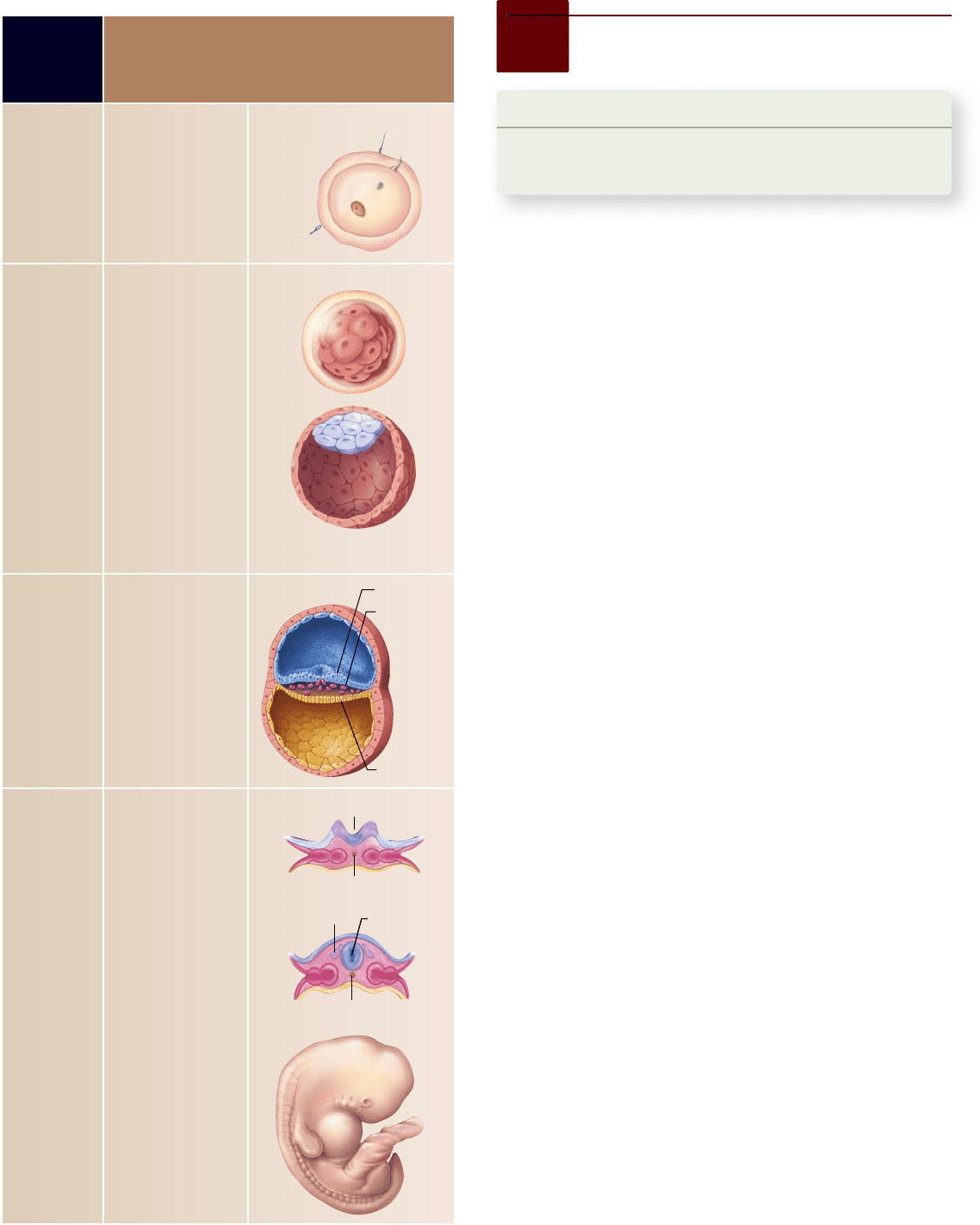
Apago PDF Enhancer
TABLE
54.1
Stages of Animal Development
(Using a Mammal as an Example)
Fertilization The haploid male and
female gametes fuse to
form a diploid zygote.
Cleavage The zygote rapidly divides
into many cells, with no
overall increase in size.
In many animals, these
divisions a ect future
development because
di erent cells receive
di erent portions of the
egg cytoplasm and, hence,
di erent cytoplasmic
determinants. Cleavage
ends with formation
of a blastula (called a
blastocyst in mammals),
which varies in structure
among animal embryos.
Gastrulation The cells of the embryo
move, forming the three
primary germ layers:
ectoderm, mesoderm, and
endoderm.
Organogenesis Cells from the three
primary germ layers
interact in various ways
to produce the organs of
the body. In chordates,
organogenesis begins
with formation of the
notochord and the hollow
dorsal nerve cord in the
process of neurulation.
54.1
Fertilization
Learning Outcomes
Describe the events necessary for fertilization to occur.1.
List different ways that polyspermy is blocked. 2.
In all sexually reproducing animals, the first step in develop-
ment is the union of male and female gametes, a process called
fertilization. As you learned in the preceding chapter, fertiliza-
tion is typically external in aquatic animals. In contrast, inter-
nal fertilization is used by most terrestrial animals to provide a
nondessicating environment for the gametes.
One physical challenge of sexual reproduction is for ga metes
to get together. Many elaborate strategies have evolved to enhance
the likelihood of such encounters. For example, most marine in-
vertebrates release hundreds of millions of eggs and sperm into
the surrounding sea water on spawning; others use lunar cycles
to time gamete release. Elaborate courtship behaviors are typical
of many animals that utilize internal fertilization (see chapter 53).
Fertilization itself consists of three events: sperm penetration and
membrane fusion, egg activation, and fusion of nuclei.
A sperm must penetrate to the plasma
membrane of the egg for membrane
fusion to occur
Embryonic development begins with the fusion of the sperm
and egg plasma membranes. But the unfertilized egg presents a
challenge to this process, since it is enveloped by one or more
protective coats. These protective coats include the chorion of
insect eggs, the jelly layer and vitelline envelope of sea urchin and
frog eggs, and the zona pellucida of mammalian eggs. Mamma-
lian oocytes are also surrounded by a layer of supporting granu-
losa cells (figure 54.1) . Thus, the first challenge of fertilization
is that sperm have to penetrate these external layers to reach
the plasma membrane of the egg.
A saclike organelle named the acrosome is positioned
between the plasma membrane and the nucleus of the sperm
head. The acrosome contains digestive enzymes, which are re-
leased by the process of exocytosis when a sperm reaches the
outer layers of the egg. These enzymes create a hole in the pro-
tective layers, enabling the sperm to tunnel its way through to
the egg’s plasma membrane.
In sea urchin sperm, actin monomers assemble into cyto-
skeletal filaments just under the plasma membrane to create
a long narrow offshoot —the acrosomal process. The acrosomal
process extends through the vitelline envelope to the egg’s plas-
ma membrane, and the sperm nucleus then passes through the
acrosomal process to enter the egg.
In mice, an acrosomal process is not formed, and the en-
tire sperm head burrows through the zona pellucida to the egg.
Membrane fusion of the sperm and egg then allows the sperm
nucleus to pass directly into the egg cytoplasm. In many spe-
cies, egg cytoplasm bulges out at membrane fusion to engulf
the head of the sperm (figure 54.2) .
Blastocyst
Ectoderm
Mesoderm
Endoderm
Neural groove
Notochord
Notochord
Neural crest
Neural tube
110 6
part
VII
Animal Form and Function
rav32223_ch54_1105-1131.indd 1106rav32223_ch54_1105-1131.indd 1106 11/19/09 4:17:24 PM11/19/09 4:17:24 PM
Apago PDF Enhancer
1.2 μm
3.3 μm
a.
d.
b.
c.
First
polar
body
Granulosa cell
Zona pellucida
Sperm
Cytoplasm
Plasma
membrane
Cortical granules
Cytoplasm
Jelly layer
Vitelline
envelope
Plasma
membrane
Nucleus
of egg
Cortical granules
Sperm
Oocyte
Granulosa
cell
7. Sperm and egg
pronuclei are
enclosed in a
nuclear envelope.
Granulosa
cells
Zona
pellucida
Plasma
membrane
Cortical
granules
1. Sperm penetrates
between granulosa
cells.
2. Some of the zona
pellucida is degraded
by acrosomal enzymes.
3. Sperm and egg
plasma membranes
fuse.
4. The sperm nucleus
dissociates and
enters cytoplasm.
5. Cortical granules
release enzymes that
harden zona pellucida
and strip it of sperm
receptors. Hyalin
attracts water by osmosis.
6. Additional sperm
can no longer penetrate
the zona pellucida.
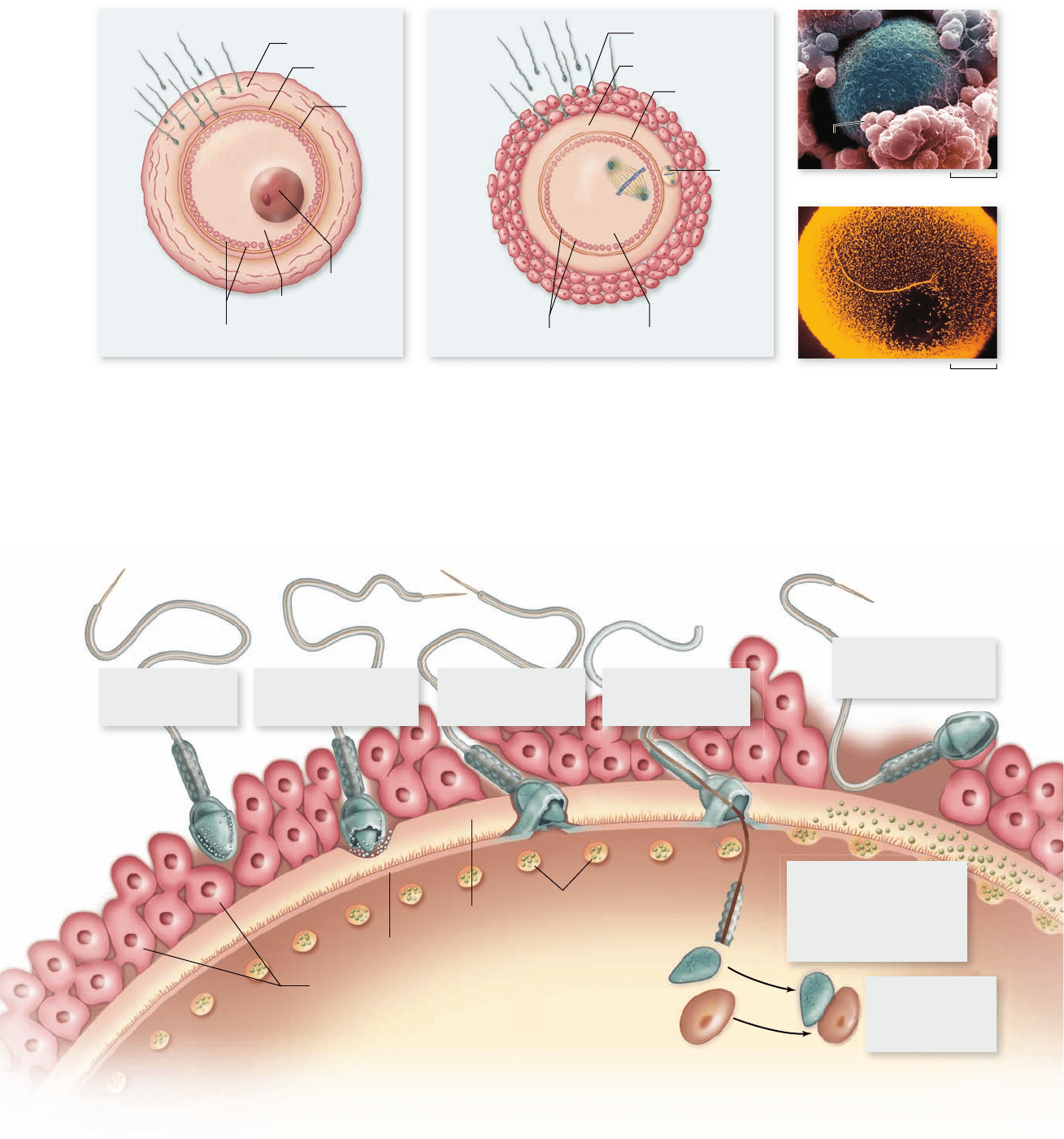
Figure 54.1
Animal reproductive cells. a. The structure of a sea urchin egg at fertilization. This diagram also shows the relative
sizes of the sperm and egg. b. A mammalian sperm must penetrate a layer of granulosa cells and then a glycoprotein layer called the zona
pellucida before it reaches the oocyte membrane. The scanning electron micrographs show (c) a human oocyte surrounded by numerous
granulosa cells and (d) a human sperm on an egg.
Figure 54.2
Sperm penetration and fusion. The sperm must penetrate the outer layers around the egg before fusion of sperm and
egg plasma membranes can occur. Fusion activates the egg and leads to a series of events that prevent polyspermy.
chapter
54
Animal Development
1107www.ravenbiology.com
rav32223_ch54_1105-1131.indd 1107rav32223_ch54_1105-1131.indd 1107 11/19/09 4:17:29 PM11/19/09 4:17:29 PM
Apago PDF Enhancer
Site of sperm contact
a.
b.
c.
d.
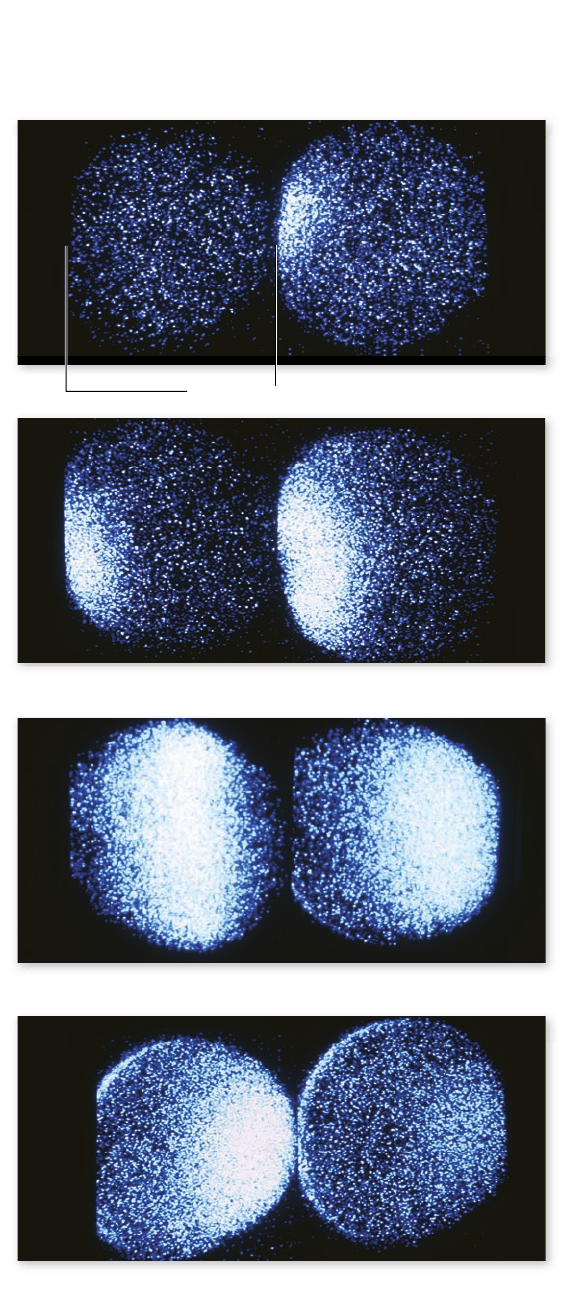
Figure 54.3
Calcium ions are released in a wave across
two sea urchin eggs following sperm contact. The bright
white dots are dye molecules that uoresce when they are bound
to Ca
2+
. The Ca
2+
wave moves from left to right in these two eggs
(a–d). The egg on the right was fertilized a few seconds before the
egg on the left. The wave takes about 30 sec to cross the entire egg.
Membrane fusion activates the egg
After ovulation, the egg remains in a quiescent state until fusion
of the sperm and egg membranes triggers reactivation of the
egg’s metabolism. In most species, there is a dramatic increase
in the levels of free intracellular Ca
2+
ions in the egg shortly
after the sperm makes contact with the egg’s plasma mem-
brane. This increase is due to release of Ca
2+
from internal,
membrane-bounded organelles, starting at the point of sperm
entry and traversing across the egg.
Scientists have been able to watch this wave of Ca
2+
release by preloading unfertilized eggs with a dye that fluo-
resces when bound to free Ca
2+
, and then fertilizing the eggs
(figure 54.3) . The released Ca
2+
act as second messengers in the
cytoplasm of the egg, to initiate a host of changes in protein
activity. These many events initiated by membrane fusion are
collectively called egg activation.
Blocking of additional fertilization events
Because large numbers of sperm are released during spawning or
ejaculation, many more than one sperm is likely to reach, and try to
fertilize, a single egg. Multiple fertilization would result in a zygote
that has three or more sets of chromosomes, a condition known as
polyploidy. Polyploidy is incompatible with animal development, al-
though it is frequently found in plants. As a result, an early response
to sperm fusion in many animal eggs is to prevent fusion of addi-
tional sperm—in other words, to initiate a block to polyspermy.
In sea urchins, membrane contact by the first sperm
results in a rapid, transient change in membrane potential of
the egg, which prevents other sperm from fusing to the egg’s
plasma membrane. The importance of this event was shown by
experiments where sea urchin eggs are fertilized in low-sodium,
artificial seawater. The change in membrane potential is mostly
due to an influx of Na
+
, so fertilization in low-sodium water
prevents this. Under these conditions polyspermy is much
more frequent than in normal seawater.
Many animals use additional mechanisms to permanent-
ly alter the composition of the exterior egg coats, preventing
any further sperm from penetrating through these layers. In
sea urchins and mammals, specialized vesicles called cortical
granules, located just beneath the plasma membrane of the
egg, release their contents by exocytosis into the space between
the plasma membrane and the vitelline envelope or zona pel-
lucida, respectively. In each case, cortical granule enzymes re-
move critical sperm receptors from the outer coat of the egg.
Finally, the vitelline envelopes in many sea urchin species
“lift off ” the surfaces of the eggs via the combined action of dif-
ferent cortical granule enzymes and hyalin release. The enzymes
digest connections between the vitelline envelope and the plasma
membrane to allow separation. Hyalin is a sugar-rich macromol-
ecule that attracts water by osmosis into the space between the
vitelline envelope and the egg surface, thus separating the two. Ad-
ditional sperm cannot penetrate through the hardened, elevated
vitelline envelope, which is now called a fertilization envelope.
Many animals do not utilize any specific mechanisms to
prevent multiple sperm from entering an egg. In these species,
all but one of the sperm nuclei is degraded or subsequently ex-
truded from the egg to prevent polyploidy.
110 8
part
VII
Animal Form and Function
rav32223_ch54_1105-1131.indd 1108rav32223_ch54_1105-1131.indd 1108 11/19/09 4:17:35 PM11/19/09 4:17:35 PM
Apago PDF Enhancer
Sperm
Gray
crescent
Movement of cortical cytoplasm
opposite sperm entry
Diploid nucleus
• Roundworms (Ascaris)
• Polychaete worms (Myzostoma)
• Clam worms (Nereis)
• Clams (Spisula)
• Nemertean worms (Cerebratulus)
• Polychaete worms (Chaetopterus)
• Mollusks (Dentalium)
• Many insects
• Sea stars
• Lancelets (Branchiostoma)
• Amphibians
• Mammals
• Fish
• Cnidarians
• Sea urchins
Primary Oocyte First Metaphase of Meiosis Second Metaphase of Meiosis Meiosis Complete
Polar
body
Polar
bodies
Female
pronucleus
(haploid)
Figure 54.4
Stage of egg maturation at time of sperm binding in representative animals.
Other effects of sperm penetration
In addition to the previously mentioned surface changes, sperm
penetration can have three other effects on the egg. First, in many
animals, the nucleus of the unfertilized egg is not yet haploid be-
cause it had not entered or completed meiosis prior to ovulation
(figure 54.4). Fusion of the sperm plasma membrane then triggers
the eggs of these animals to complete meiosis. In mammals, a single
large egg with a haploid nucleus and one or more small polar bod-
ies, which contain the other nuclei, are produced (see chapter 53).
Second, sperm penetration in many animals triggers
movements of the egg cytoplasm. In chapter 19, we discussed
the cytoplasmic rearrangements of newly fertilized tunicate
eggs, which result in the asymmetrical localization of pigment
granules that determine muscle development. In amphibian
embryos, the point of sperm entry is the focal point of cytoplas-
mic movements in the egg, and these movements ultimately
establish the bilateral symmetry of the developing animal.
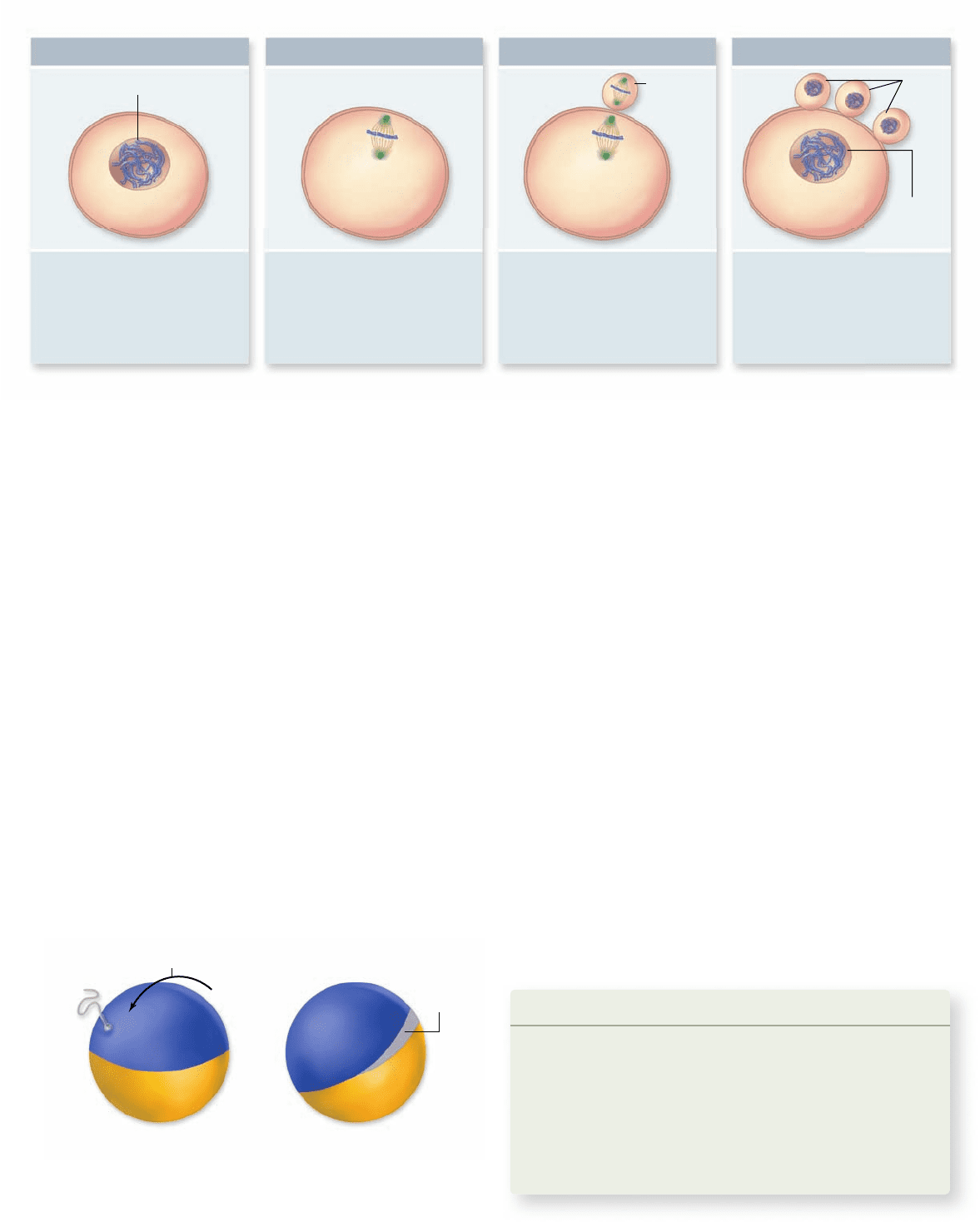
In some frogs, for example, sperm penetration causes an
outer pigmented cap of egg cytoplasm to rotate toward the point
of entry, uncovering a gray crescent of interior cytoplasm op-
posite the point of penetration (figure 54.5) . The position of this
gray crescent determines the orientation of the first cell division.
A line drawn between the point of sperm entry and the gray cres-
cent would bisect the right and left halves of the future adult.
Third, activation is characterized by a sharp increase in
protein synthesis and an increase in metabolic activity in general.
Experiments demonstrate that the burst of protein synthesis
in an activated egg uses mRNAs that were deposited into the
cytoplasm of the egg during oogenesis.
In some animals, it is possible to artificially activate an
egg without the entry of a sperm, simply by pricking the egg
membrane. An egg that is activated in this way may go on to
develop parthenogenetically. A few kinds of amphibians, fish,
and reptiles rely entirely on parthenogenetic reproduction in
nature, as we mentioned in chapter 53.
The fusion of nuclei restores the diploid state
In the third and final stage of fertilization, the haploid sperm
nucleus fuses with the haploid egg nucleus to form the diploid
nucleus of the zygote. The process involves migration of the
two nuclei toward each other along a microtubule-based aster.
A centriole that enters the egg cell with the sperm nucleus or-
ganizes the microtubule array, which is made from stored tubu-
lin proteins in the egg’s cytoplasm.
In mammals, including humans, the nuclei do not actually
fuse. Instead sperm and egg nuclear membranes each break down
prior to the formation of a new diploid nucleus. A new nuclear
membrane forms around the two sets of chromosomes.
Learning Outcomes Review 54.1
Following penetration, fusion of sperm with the egg membrane initiates
a series of events including egg activation, blocks to polyspermy, and
major rearrangements of cytoplasm. Polyspermy is blocked by changes in
membrane polarity, release of enzymes that remove sperm receptors, and
release of hyalin that lifts the vitelline envelope from the cell membrane.
Egg and sperm nuclei then fuse to create a diploid zygote.
■ What is the role of Ca
2+
in egg activation?
Figure 54.5
Gray crescent formation in frog eggs.
The gray crescent forms on the side of the egg opposite the point
of penetration by the sperm.
chapter
54
Animal Development
110 9www.ravenbiology.com
rav32223_ch54_1105-1131.indd 1109rav32223_ch54_1105-1131.indd 1109 11/19/09 4:17:42 PM11/19/09 4:17:42 PM
Apago PDF Enhancer
Nucleus
Yolk
Shell
Albumen
Sea Urchin Frog Chicken
Air
bubble
a. b. c.
Cytoplasm Nucleus
Animal pole
Vegetal pole Yolk
Cytoplasm
Nucleus
Yolk
Plasma
membrane
54.2
Cleavage and the
Blastula Stage
Learning Outcomes
Define the terms cleavage and blastula.1.
Describe the different patterns of cleavage.2.
Explain what is meant by regulative development.3.
Following fertilization, the second major event in animal de-
velopment is the rapid division of the zygote into a larger and
larger number of smaller and smaller cells (see table 54.1). This
period of division, called cleavage , is not accompanied by an in-
crease in the overall size of the embryo. Each individual cell
in the resulting tightly packed mass of cells is referred to as a
blastomere . In many animals, the two ends of the egg and subse-
quent embryo are traditionally referred to as the animal pole
and the vegetal pole. In general, the blastomeres of the animal
pole go on to form the external tissues of the body, and those of
the vegetal pole form the internal tissues.
The blastula is a hollow mass of cells
In many animal embryos, the outermost blastomeres in the ball
of cells produced during cleavage become joined to one an-
other by tight junctions, belts of protein that encircle a cell and
weld it to its neighbors (see chapter 4) . These tight junctions
create a seal that isolates the interior of the cell mass from the
surrounding medium.
Subsequently, cells in the interior of the mass begin to
pump Na
+
from their cytoplasm into the spaces between cells.
The resulting osmotic gradient causes water to be drawn into
the center of the embryo, enlarging the intercellular spaces.
Eventually, the spaces coalesce to form a single large cavity
within the embryo. The resulting hollow ball of cells is called
a blastula (or blastocyst in mammals), and the fluid-filled cavity
within the blastula is known as the blastocoel (see table 54.1).
Cleavage patterns are highly
diverse and distinctive
Cleavage divisions are quite rapid in most species, and
chapter 19 provides an overview of the conserved set of proteins
that control the cell cycle in animal embryos. Cleavage patterns are
quite diverse, and there are about as many ways to divide up the
cytoplasm of an animal egg during cleavage as there are phyla of
animals! Nonetheless, we can make some generalizations.
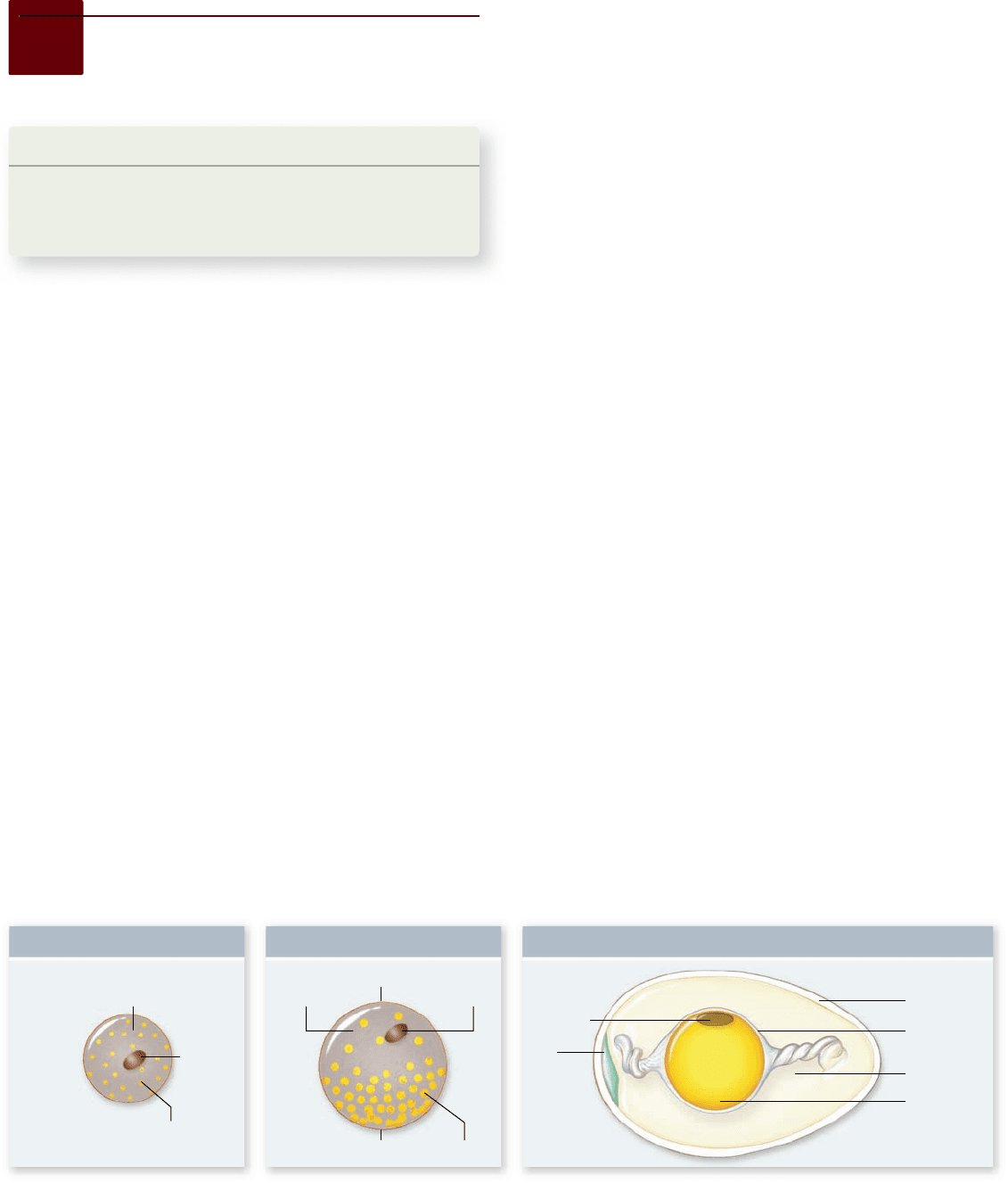
First, the relative amount of nutritive yolk in the egg is the
characteristic that most affects the cleavage pattern of an animal
embryo (figure 54.6) . Vertebrates exhibit a variety of develop-
mental strategies involving different patterns of yolk utilization.
Cleavage in insects
Insects have yolk-rich eggs, and in chapter 19 we discussed the
syncytial blastoderm of insects, in which multiple mitotic divi-
sions of the nucleus occur in the absence of cytokinesis. Be-
cause there are no membranes separating the early embryonic
nuclei of insects, gradients of diffusible proteins termed mor-
phogens within the egg’s cytoplasm can directly and differen-
tially affect the activity of these embryonic nuclei, and thus the
pattern of the early embryo. The nuclei eventually migrate to
the periphery of the egg, where cell membranes form around
each nucleus. The resulting cellular blastoderm of an insect has
a single layer of cells surrounding a central mass of yolk (see
figure 19.12 and table 54.2) .
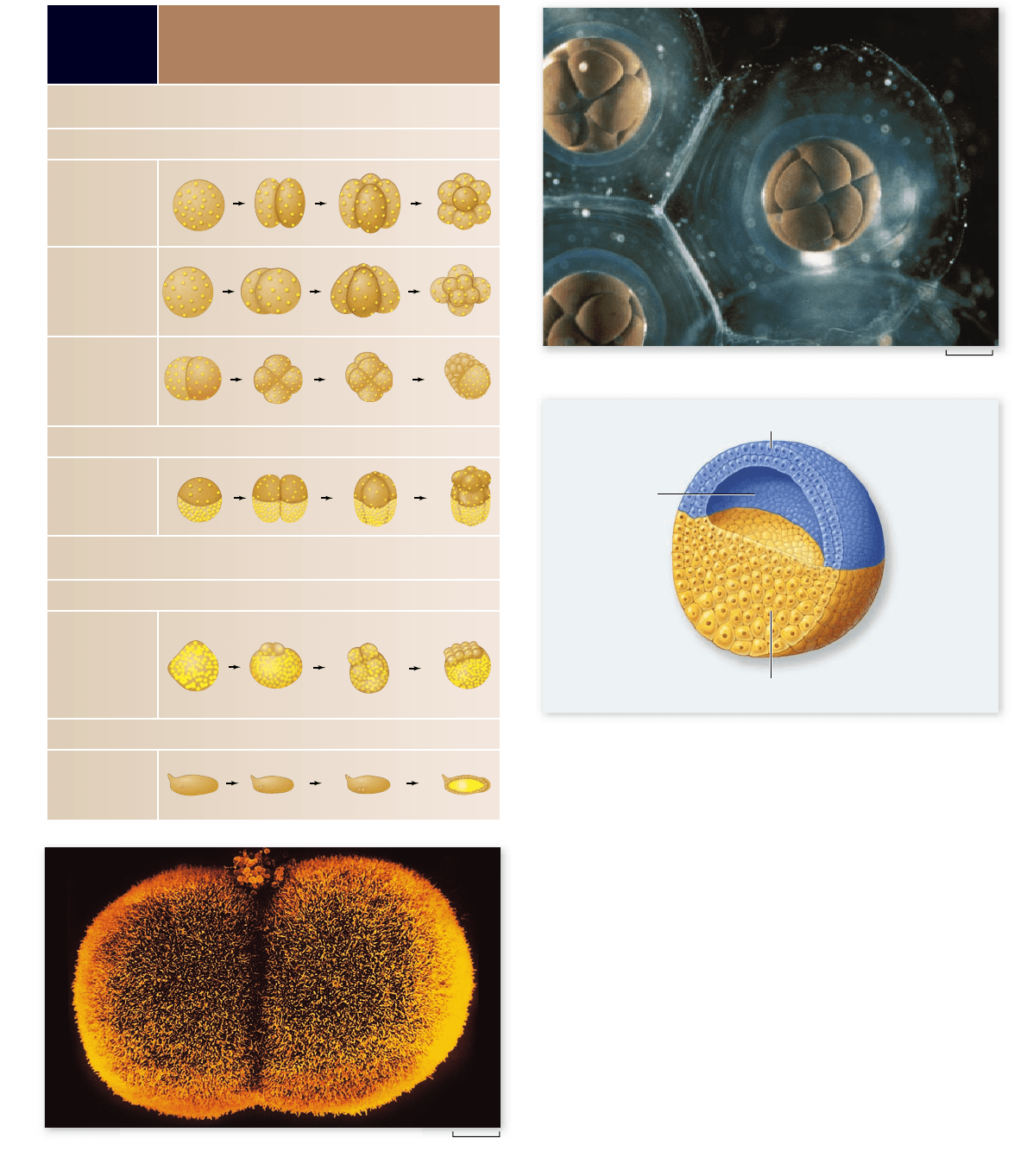
Cleavage of eggs with moderate or little yolk
In eggs that contain moderate to little yolk, cleavage occurs
throughout the whole egg, a pattern called holoblastic cleavage
(figure 54.7) . This pattern of cleavage is characteristic of inver-
tebrates such as mollusks, annelids, echinoderms, and tunicates,
and also of amphibians and mammals (described shortly).
In sea urchins, holoblastic cleavage results in the for-
mation of a symmetrical blastula composed of a single layer
of cells of approximately equal size surrounding a spherical
blastocoel. In contrast, amphibian eggs contain much more
cytoplasmic yolk in the vegetal hemisphere than in the ani-
mal hemisphere. Because yolk-rich regions divide much more
Figure 54.6
Yolk distribution in three kinds of eggs. a. In a sea urchin egg, the cytoplasm contains a small amount of evenly
distributed yolk and a centrally located nucleus. b. In a frog egg, there is much more yolk, and the nucleus is displaced toward one pole.
c. Bird eggs are complex, with the nucleus contained in a small disc of cytoplasm that sits on top of a large, central yolk mass.
1110
part
VII
Animal Form and Function
rav32223_ch54_1105-1131.indd 1110rav32223_ch54_1105-1131.indd 1110 11/19/09 4:17:43 PM11/19/09 4:17:43 PM
Apago PDF Enhancer
3.3 μm
Blastocoel
Animal pole
Vegetal pole
a.
b.
333.3 μm
slowly than areas with little yolk, horizontal cleavage furrows
are displaced toward the animal pole (figure 54.8a) . Thus, ho-
loblastic cleavage in frog eggs results in an asymmetrical blas-
tula, with a displaced blastocoel. The blastula consists of large
cells containing a lot of yolk at the vegetal pole, and smaller,
more numerous cells containing little yolk at the animal pole
(figure 54.8b).
Cleavage of eggs with large amounts of yolk
The eggs of reptiles, birds, and some fishes are composed almost
entirely of yolk, with a small amount of clear cytoplasm con-
centrated at one pole called the blastodisc. Cleavage in these
eggs is restricted to the blastodisc. The yolk is essentially an in-
ert mass. This type of cleavage pattern is called meroblastic
Figure 54.7
Holoblastic cleavage. In this type of cleavage,
which is characteristic of eggs with relatively small amounts of
yolk, cell division occurs throughout the entire egg.
Figure 54.8
Frog cleavage and blastula formation.
a. The closest cells in this photo (those near the animal pole) divide
faster and are smaller than those near the vegetal pole (below cells
of the animal pole). b. A cross-section of a frog blastula, showing an
eccentric blastocoel, larger yolk- lled cells at the vegetal pole, and
smaller cells with little yolk at the animal pole.
TABLE
54.2
The Major Cleavage
Patterns of Animal Embryos
HOLOBLASTIC
(COMPLETE) CLEAVAGE
Isolecithal (Sparse, evenly distributed yolk)
Radial cleavage
Echinoderms
Spiral cleavage
Annelids
Mollusks
Flatworms
Rotational
cleavage
Mammals
Nematodes
Mesolecithal (Moderate vegetal yolk disposition)
Displaced radial
cleavage
Amphibians
MEROBLASTIC
(INCOMPLETE) CLEAVAGE
Telolecithal (Dense yolk throughout most of cell)
Discoidal
cleavage
Fish
Reptiles
Birds
Centrolecithal (Yolk in center of egg)
Syncytial
cleavage
Most insects
chapter
54
Animal Development
1111www.ravenbiology.com
rav32223_ch54_1105-1131.indd 1111rav32223_ch54_1105-1131.indd 1111 11/19/09 4:17:44 PM11/19/09 4:17:44 PM