
Raven P.H., Johnson G.B., Mason K.A. Biology (Ninth Edition)
Подождите немного. Документ загружается.


Apago PDF Enhancer
1082
part
VII
Animal Form and Function
Review Questions
52.6 Antibodies in Medical Treatment
and Diagnosis
Blood type indicates the antigens present on an individual’s red
blood cells.
The ABO blood group antigens, Rh factor antigens, and many others
constitute the blood type.
HLA antigens can be used to match tissues between donors and
recipients in transplants.
Transfusion reactions result from mismatched blood transfusions.
Before blood type was understood, many died from mismatched
blood transfusions.
Monoclonal antibodies are a valuable tool for diagnosis
and treatment.
Monoclonal antibodies are speci c to a single epitope and can be
used in testing and manufacture of immunotoxins.
UNDERSTAND
1. Cells that target and kill body cells infected by viruses are
a. macrophages. c. monocytes.
b. natural killer cells. d. neutrophils.
2. Structures on invading cells recognized by the adaptive immune
system are known as
a. antigens. c. antibodies.
b. interleukins. d. lymphocytes.
3. Which one of the following acts as the “alarm signal” to activate
the body’s adaptive immune system by stimulating helper
T cells?
a. B cells c. Complement
b. Interleukin-1 d. Histamines
4. Cytotoxic T cells are called into action by the
a. presence of histamine.
b. presence of interleukin-1.
c. presence of interleukin-2.
d. interferon.
5. Receptors that trigger innate immune responses
a. are antibodies recognizing speci c antigens.
b. are T-cell receptors recognizing speci c antigens.
c. recognize pathogen-associated molecular
patterns.
d. are not speci c at all.
6. Diseases in which the person’s immune system no longer
recognizes its own MHC proteins are called
a. allergies.
b. autoimmune diseases.
c. immediate hypersensitivity.
d. delayed hypersensitivity.
52.7 Pathogens That Evade
the Immune System
Many pathogens change surface antigens to avoid immune
system detection.
Antigen drift and antigen shift, such as exhibited in in uenza viruses,
allow alteration of surface antigens to avoid immune detection.
Many mechanisms have evolved in bacteria to evade immune
system attack.
Some bacteria have evolved mechanisms to inhibit normal immune
system processes, such as slowing phagocytosis.
HIV infection kills T
H
cells and causes immunosuppression.
Destruction of T
H
cells lowers the body’s ability to fend off
infections, leading to the characteristic illnesses of AIDS.
7. Suppose that a new disease is discovered that suppresses the
immune system. Which of the following would indicate that the
disease speci cally affects the B cells rather than the helper
or cytotoxic T cells?
a. A decrease in the production of interleukin-2
b. A decrease in interferon production
c. A decrease in the number of plasma cells
d. A decrease in the production of interleukin-1
APPLY
1. You start a new job in a research lab. The lab protocols state
that you should check your hands for any breaks in the skin
before handling infectious agents. This is because the epidermis
ghts microbial infections by
a. making the surface of the skin acidic.
b. excreting lysozyme to attack bacteria.
c. producing mucus to trap microorganisms.
d. all of these.
2. In comparing T-cell receptors and immunoglobulins
a. the proteins have unrelated structures, but diversity is generated
by a similar mechanism.
b. the proteins have related structures, but diversity is
generated by different mechanisms.
c. the proteins have related structures, and diversity is
generated by a similar mechanism.
d. the proteins have unrelated structures, and diversity is
generated by different mechanisms.
3. If you have type AB blood, which of the following results would
be expected?
a. Your blood agglutinates with anti-A antibodies only.
b. Your blood agglutinates with anti-B antibodies only.
rav32223_ch52_1055-1083.indd 1082rav32223_ch52_1055-1083.indd 1082 11/19/09 1:45:36 PM11/19/09 1:45:36 PM

Apago PDF Enhancer
chapter
52
The Immune System
1083www.ravenbiology.com
c. Your blood agglutinates with both anti-A and anti-B
antibodies.
d. Your blood would not agglutinate with either anti-A
or anti-B antibodies.
4. Suppose that you get a paper cut while studying. Arrange the
following into the correct order in time.
a. Injured epidermal cells release histamine.
b. Bacteria enter the cut.
c. Helper T cells are activated.
d. Macrophages engulf bacteria.
5. If you wanted to cure allergies by bioengineering an
antibody that would bind and disable the antibody responsible
for allergic reactions, which of the following would
you target?
a. IgG c. IgE
b. IgA d. IgD
6. Why do we need to be repeatedly vaccinated for
in uenza viruses?
a. Because they attack only the helper T cells, thereby
suppressing the immune system
b. Because they alter their surface proteins and thus avoid
immune recognition
c. Because they don’t actually generate an immune response,
the “ u” is actually an in ammatory response
d. Because they are too small to serve as good antigens
7. If you wanted to design an arti cial cell that could safely carry
drugs inside the body, which of the following molecules would
you need to mimic to deter the immune system?
a. MHC-1 c. Antigen
b. Interleukin-1 d. Complement
SYNTHESIZE
1. Suppose you take a job in the marketing department of a cosmetics
company. Always seeking a competitive advantage, the vice
president of marketing has decided to advertise the new skin lotion
as having immune-enhancing effects. The lotion is produced from
secretions of a plant that releases extremely watery, alkaline uid.
Explain how you will market this product as an immune-enhancer.
2. Your new kitten scratches your roommate. Her skin is reddened
and feels warm and sore to the touch; she thinks she has
contracted some kind of fatal infection. In order to de ect her
anger (she is de nitely not a cat person!), you try telling her
about the activities of the innate defense system. Explain what is
actually happening to her skin.
3. Some people claim that they never catch colds. How could
you show that this is due to a difference in receptors on their
respective cell surfaces?
4. Toll-like receptors have been found in a wide variety of
organisms, including both protostomes and deuterostomes, and
now in cnidarians. In addition, parts of the signaling system
have been found in a wide variety of organisms as have parts of
the complement system. What does this say about the evolution
of innate immunity?
ONLINE RESOURCE
www.ravenbiology.com
Understand, Apply, and Synthesize—enhance your study with
animations that bring concepts to life and practice tests to assess
your understanding. Your instructor may also recommend the
interactive eBook, individualized learning tools, and more.
rav32223_ch52_1055-1083.indd 1083rav32223_ch52_1055-1083.indd 1083 11/19/09 1:45:36 PM11/19/09 1:45:36 PM
Apago PDF Enhancer
B
Chapter
53
The Reproductive
S yst em
Chapter Outline
53. 1 Animal Reproductive Strategies
53.2 Vertebrate Fertilization and Development
53.3 Structure and Function of the Human Male
Reproductive System
53.4 Structure and Function of the Human Female
Reproductive System
53.5 Contraception and Infertility Treatments
Introduction
Bird song in the spring,
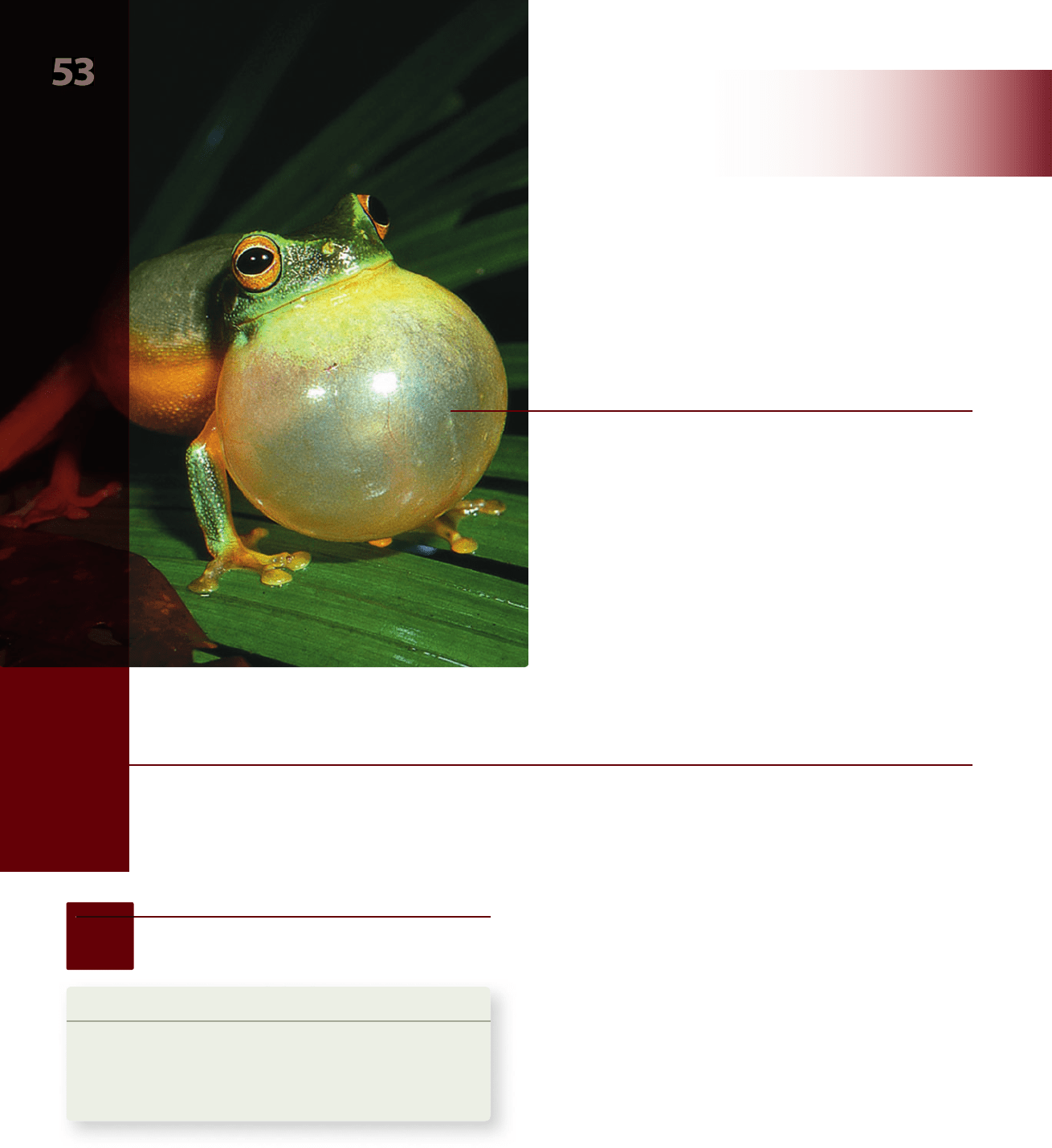
insects chirping outside the window, frogs croaking in swamps, and wolves howling in a frozen
northern forest are all sounds of evolution’s essential act, reproduction. These distinctive noises, as well as the bright
coloration of some animals, function to attract mates. Few subjects pervade our everyday thinking more than sex, and few
urges are more insistent. This chapter deals with sex and reproduction among the vertebrates, including humans.
53.1
Animal Reproductive Strategies
Learning Outcomes
Distinguish between sexual and asexual methods 1.
of reproduction.
Describe the different types of hermaphroditism.2.
Explain factors that influence sex determination.3.
Most animals, including humans, reproduce sexually. As de-
scribed in chapter 11, sexual reproduction requires a spe-
cialized form of cell division, meiosis, to produce haploid
gametes, each of which has a single complete set of chro-
mosomes. These gametes, including sperm and eggs (or ova;
singular ovum), are united by fertilization to restore the
diploid complement of chromosomes. The diploid fertil-
ized egg, or zygote , develops by mitotic division into a new
multicellular organism.
Bacteria, archaea, protists, and multicellular animals in-
cluding cnidarians and tunicates, as well as many other types
of animals, reproduce asexually. In asexual reproduction , ge-
netically identical cells are produced from a single parent
cell through mitosis. In single-celled organisms, an individ-
ual organism divides, a process called fission, and then each
part becomes a separate but identical organism. Cnidarians
CHAPTER
rav32223_ch53_1084-1104.indd 1084rav32223_ch53_1084-1104.indd 1084 11/19/09 3:27:08 PM11/19/09 3:27:08 PM
Apago PDF Enhancer
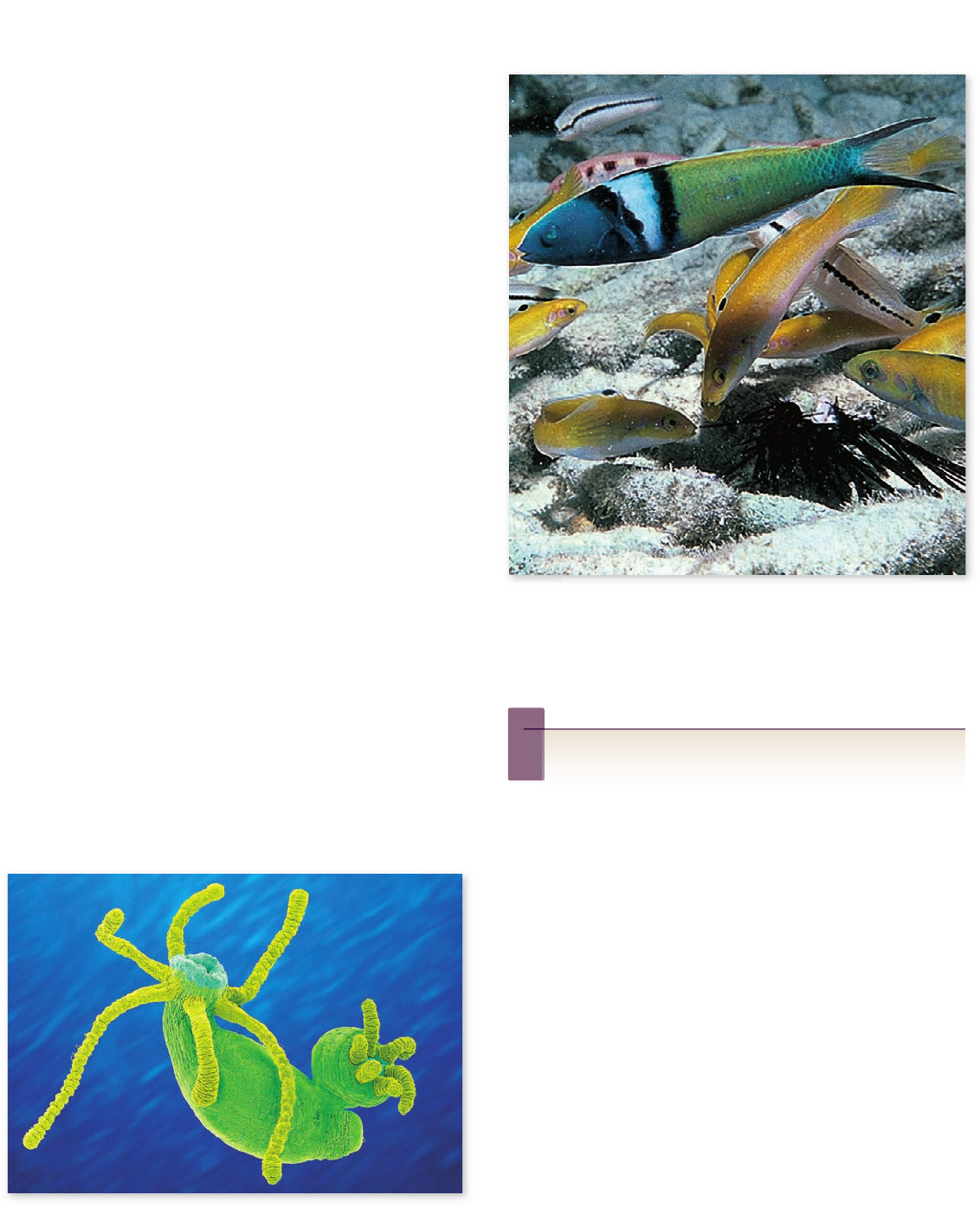
Figure 53.1
Cnidarian budding. This cnidarian reproduces
asexually by budding. The new individual can be seen in the lower right
of the micrograph.
Figure 53.2
Hermaphroditism and protogyny. The
bluehead wrasse, Thalassoma bifasciatium, is protogynous—females
sometimes turn into males. Here, a large male, which had been
a female before changing sex, is seen among females, which are
typically much smaller.
Inquiry question
?
Why might it be adaptive for an individual to be female at
small size and become male when very large? Under what
circumstances might the opposite condition, protandry, evolve?
worm is hermaphroditic and can fertilize itself, a useful
strategy because it is unlikely to encounter another tape-
worm. Most hermaphroditic animals, however, require an-
other individual in order to reproduce. Two earthworms, for
example, are required for reproduction—each functions as
both male and female during copulation, and each leaves the
encounter with fertilized eggs.
Numerous fish genera include species whose individuals
can change their sex, a process called sequential hermaphrodit-
ism. Among coral reef fish, for example, both protogyny (“first
female,” a change from female to male) and protandry (“first
male,” a change from male to female) occur. In fish that prac-
tice protogyny (figure 53.2) , the sex change appears to be un-
der social control. These fish commonly live in large groups,
or schools, where successful reproduction is typically limited
to one or a few large, dominant males. If those males are re-
moved, the largest female rapidly changes sex and becomes a
dominant male.
commonly reproduce by budding, whereby a part of the par-
ent’s body becomes separated from the rest and differentiates
into a new individual (figure 53.1) . The new individual may
become an independent animal or may remain attached to the
parent, forming a colony.
Some species have developed
novel reproductive methods
Another form of asexual reproduction, parthenogenesis, is
common in many species of arthropods. In parthenogenesis,
females produce offspring from unfertilized eggs. Some spe-
cies are exclusively parthenogenic (and all female), whereas
others switch between sexual reproduction and parthenogen-
esis, producing progeny that are both diploid and haploid, re-
spectively. In honeybees, for example, a queen bee mates only
once and stores the sperm. She then can control the release of
the sperm. If no sperm are released, the eggs develop parthe-
nogenetically into haploid drones, which are males. If sperm
are allowed to fertilize the eggs, the fertilized eggs develop
into diploid worker bees, which are female. However, when
fertilized eggs are exposed to the appropriate hormone, they
will develop into queens.
In 1958, the Russian biologist Ilya Darevsky reported
one of the first cases of unusual modes of reproduction among
vertebrates. He observed that some populations of small liz-
ards of the genus Lacerta were exclusively female, and he sug-
gested that these lizards could lay eggs that were viable even
if they were not fertilized. In other words, they were capable
of asexual reproduction in the absence of sperm, a type of
parthenogenesis. Further work has shown that parthenogen-
esis has evolved a number of times in lizards, as well as in fish
and salamanders.
Another variation in reproductive strategies is her-
maphroditism , in which one individual has both testes and
ovaries, and so can produce both sperm and eggs. A tape-
www.ravenbiology.com
chapter
53
The Reproductive System
1085
rav32223_ch53_1084-1104.indd 1085rav32223_ch53_1084-1104.indd 1085 11/19/09 2:19:09 PM11/19/09 2:19:09 PM
Apago PDF Enhancer
X
Y
Zygote Zygote
SpermOvumSperm Ovum
X
X
Indifferent
gonads
Ovary
Follicles do not
develop until
third trimester
Seminiferous
tubules and
Leydig cells
develop in
early embryo
XYXX
Testis
SRYNo SRY
Hy
Hy
y
po
po
p
th
th
es
es
is
is
:
:
Se
Se
x
x
in
in
m
m
am
am
ma
ma
ls
ls
i
i
s
s
de
de
te
te
rm
rm
in
in
ed
ed
b
b
y
y
y
a
a
ge
ge
g
ne
ne
o
o
n
n
th
th
e
e
Y
Y
ch
ch
ro
ro
mo
mo
so
so
me
me
.
Prediction 1: Individuals lacking a Y chromosome will develop as females.
Test: Compare individuals with unusual sets of sex chromosomes.
Results: Individuals with Turner’s Syndrome are XO (they only have a
single X chromosome) and develop as females; individuals with
Klinefelter’s Syndrome are XXY and develop as males.
Prediction 2: The SRY gene on the Y chromosome is responsible for the
development of male sexual characteristics.
Test: Breed transgenic mice that are XY but have a mutation of the SRY gene.
Results: These mice develop as females.
SCIENTIFIC THINKING
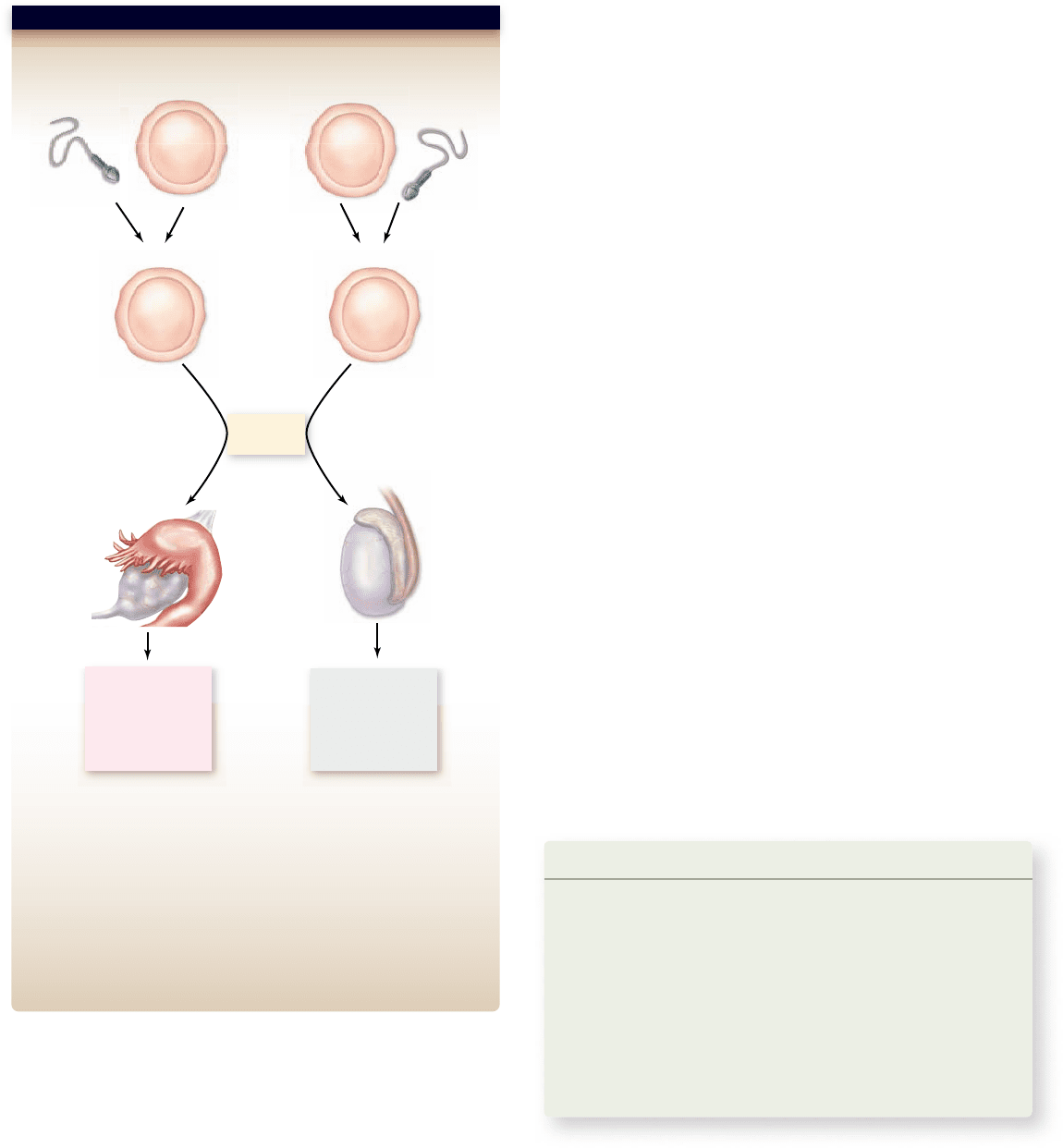
Figure 53.3
Sex determination in mammals. The sex-
determining region of the mammalian Y chromosome is designated
SRY. Testes are formed when the Y chromosome and SRY are
present; ovaries are formed when they are absent.
Temperature-sensitive sex determination
In many fish and reptiles, an individual’s sex is determined by
the temperature it experiences during development. In some
species, cold temperatures produce males and warm tempera-
tures produce females, but in others, the opposite occurs. In
still others, males are produced at both high and low tempera-
tures, and females at temperatures in-between.
Phylogenetic analyses indicate that temperature-sensitive
sex determination has evolved many times from ancestors
in which sex was genetically determined. The molecular mech-
anisms that determine sex in this species are now being dis-
covered, but why this trait has evolved so often is not well
understood. One possibility is that sometimes it may be ad-
vantageous for a female to be able to determine the sex of her
offspring by laying eggs in appropriate locations. Currently, the
jury is still out on this hypothesis.
Genetic sex determination
In all birds and mammals and many other vertebrates, the sex
is determined by an individual’s genes. In mammals and some
other animals, individuals with an X and a Y chromosome are
males, whereas individuals with two X chromosomes are fe-
males. However, in other animals, such as birds, it is females
that are the heterozygous sex.
Sexual differentiation in humans
The reproductive systems of human males and females appear
similar for the first 40 days after conception. During this time,
the cells that will give rise to ova or sperm migrate from the yolk
sac to the embryonic gonads, which have the potential to become
either ovaries in females or testes in males (figure 53.3) . For this
reason, the embryonic gonads are said to be “indifferent.”
If the embryo is a male, a gene on the Y chromosome con-
verts the indifferent gonads into testes. In females, which lack a
Y chromosome, this gene and the protein it encodes are absent,
and the gonads become ovaries. An important gene involved in
sex determination is known as SRY (for “sex-determining re-
gion of the Y chromosome”).
Once testes have formed in the embryo, the testes secrete
testosterone and other hormones that promote the development
of the male external genitalia and accessory reproductive organs.
If the embryo lacks the SRY gene, the embryo develops
female external genitalia and accessory organs. In other words,
all mammalian embryos will develop into females unless a func-
tional SRY gene is present.
Learning Outcomes Review 53.1
Sexual reproduction involves fusion of gametes derived from diff erent
individuals of a species. Asexual reproduction in some species may be
accomplished by fi ssion, budding, or parthenogenesis. In hermaphroditic
species, an individual may have both testes and ovaries; in sequential
hermaphroditism, an individual may change from one sex to the other.
Sex can be determined either by genes or by environmental conditions
such as temperature experienced while an embryo.
■ Why might natural selection favor genetic
sex determination?
Sex can be determined genetically
or by environmental conditions
An individual’s sex is determined during development as an em-
bryo, but the way in which it occurs varies among species.
1086
part
VII
Animal Form and Function
rav32223_ch53_1084-1104.indd 1086rav32223_ch53_1084-1104.indd 1086 11/19/09 2:19:11 PM11/19/09 2:19:11 PM

Apago PDF Enhancer
Figure 53.4
Viviparous sh carry live, mobile young
within their bodies. The young complete their development
within the body of the mother and are then released as small but
competent adults. Here, a lemon shark has just given birth to a
young shark, which is still attached by the umbilical cord.
the embryos still obtain all of their nourishment from the
egg yolk. The young are fully developed when they are
hatched and released from the mother.
3. Viviparity is found in most cartilaginous sh, some
amphibians, a few reptiles, and almost all mammals
( gure 53.4) . The young develop within the mother and
obtain nourishment directly from their mother’s blood,
rather than from the egg yolk. A placenta, the structure
through which blood and gas exchange occurs, has not
evolved only in mammals (see next chapter), but also
several times in shes and lizards.
Evolution of reproductive systems
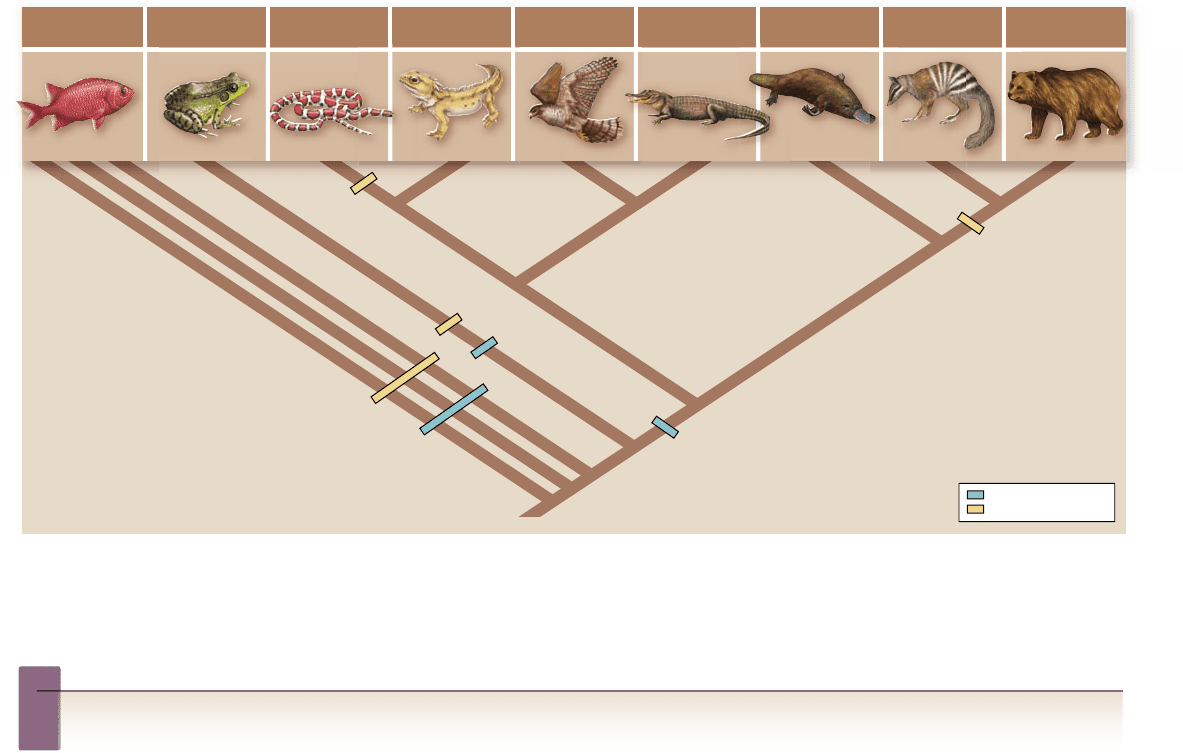
Live birth—either viviparity or ovoviviparity—has evolved
many times in vertebrates: once in mammals, but many times
independently in fishes, amphibians, and reptiles (figure 53.5).
The evolution of live birth appears to be a one-way evolution-
ary street: once it evolves, it is almost never lost. Live birth re-
quires internal fertilization so that the eggs can develop within
the body of the female; internal fertilization has evolved only
once in amniotes (the clade composed of reptiles, birds, and
mammals), but multiple times within fishes and amphibians.
Internal fertilization requires some means of transfer-
ring the sperm from the male to the female. Salamanders
evolved one way: males deposit their sperm on top of a mass
of eggs and then the female positions her cloaca above them
and then lowers her body, picking up the fertilized eggs. All
other vertebrates have taken a different approach, evolving an
intromittent organ that the male uses to transfer the sperm
directly into the female’s body. The variety of structures that
has evolved to accomplish this includes a modified pelvic fin
in cartilaginous fishes; a modification of the cloaca (the com-
mon opening through which waste and reproductive prod-
ucts exit the body) in some frogs, caecilians, and birds; penises
derived from different embryological structures in turtles,
crocodiles, and mammals; and a pair of hemipenises—one on
53.2
Vertebrate Fertilization
and Development
Learning Outcomes
Distinguish among viviparity, oviparity, 1.
and ovoviviparity.
Describe the advantages of internal fertilization.2.
Vertebrate sexual reproduction evolved in the ocean before
vertebrates colonized the land. The females of most species of
marine bony fish produce eggs in batches and release them into
the water. The males generally release their sperm into the wa-
ter containing the eggs, where the union of the free gametes
occurs. This process is known as external fertilization.
Although seawater is not a hostile environment for gam-
etes, it does cause the gametes to disperse rapidly, so their re-
lease by females and males must be almost simultaneous. Thus,
most marine fish restrict the release of their eggs and sperm to
a few brief and well-defined periods. Some reproduce just once
a year, but others do so more frequently. The ocean has few
seasonal clues that organisms can use as signals for synchroniz-
ing reproduction, but one all-pervasive signal is the cycle of the
Moon. Once each month, the Moon approaches closer to the
Earth than usual, and when it does, its increased gravitational
attraction causes somewhat higher tides. Many marine organ-
isms sense the tidal changes and link the production and release
of their gametes to the lunar cycle.
Once vertebrates began living on land, they encountered
a new danger—desiccation, a problem that can be especially
severe for the small and vulnerable gametes. On land, the gam-
etes could not simply be released near each other because they
would soon dry up and perish. Consequently, intense selective
pressure resulted in the evolution of internal fertilization in
terrestrial vertebrates (as well as some groups of fish)—that
is, the introduction of male gametes directly into the female
reproductive tract. By this means, fertilization still occurs in a
nondesiccating environment, even when the adult animals are
fully terrestrial.
Internal fertilization has led to three
strategies for development of o spring
The vertebrates that practice internal fertilization exhibit three
strategies for embryonic and fetal development, namely ovipar-
ity, ovoviviparity, and viviparity.
1. Oviparity is found in some bony sh, most reptiles,
some cartilaginous sh, some amphibians, a few mammals,
and all birds. The eggs, after being fertilized internally,
are deposited outside the mother’s body to complete
their development.
2. Ovoviviparity is found in some bony sh (including
mollies, guppies, and mosquito sh), some cartilaginous
sh, and many reptiles. The fertilized eggs are retained
within the mother to complete their development, but
www.ravenbiology.com
chapter
53
The Reproductive System
1087
rav32223_ch53_1084-1104.indd 1087rav32223_ch53_1084-1104.indd 1087 11/19/09 2:19:12 PM11/19/09 2:19:12 PM
Apago PDF Enhancer
live birth
internal fertilization
> 100
times
> 40 times
> 15 times
5 times
2 times
Once
Once
Fish Marsupials
Placental
mammals
Rhynocephalia BirdsAmphibians CrocodiliansSquamates Monotremes
each side—in snakes and lizards. Moreover, intromittent or-
gans have been lost entirely in birds and rhynchocephalians;
to achieve internal fertilization, males and females of these
species simply align their cloacae and pass the sperm from
male to female.
Most shes and amphibians have
external fertilization
Most fishes and amphibians, unlike other vertebrates, repro-
duce by means of external fertilization, although internal fertil-
ization has arisen many times.
Fishes
Fertilization in most species of bony fish (teleosts) is external,
and the eggs contain only enough yolk to sustain the develop-
ing embryo for a short time. After the initial supply of yolk
has been exhausted, the young fish must seek its food from the
waters around it. Development is speedy, and the young that
survive mature rapidly. Although thousands or even millions of
eggs are fertilized in a single mating, many of the resulting in-
dividuals succumb to microbial infection or predation, and few
grow to maturity.
In marked contrast to the bony fish, fertilization in most
cartilaginous fish is internal. Development of the young is gen-
erally viviparous, and the female usually gives birth to few, well-
developed offspring.
Amphibians
The life cycle of amphibians is still tied to the water. Fertiliza-
tion is external in most amphibians. Gametes from both males
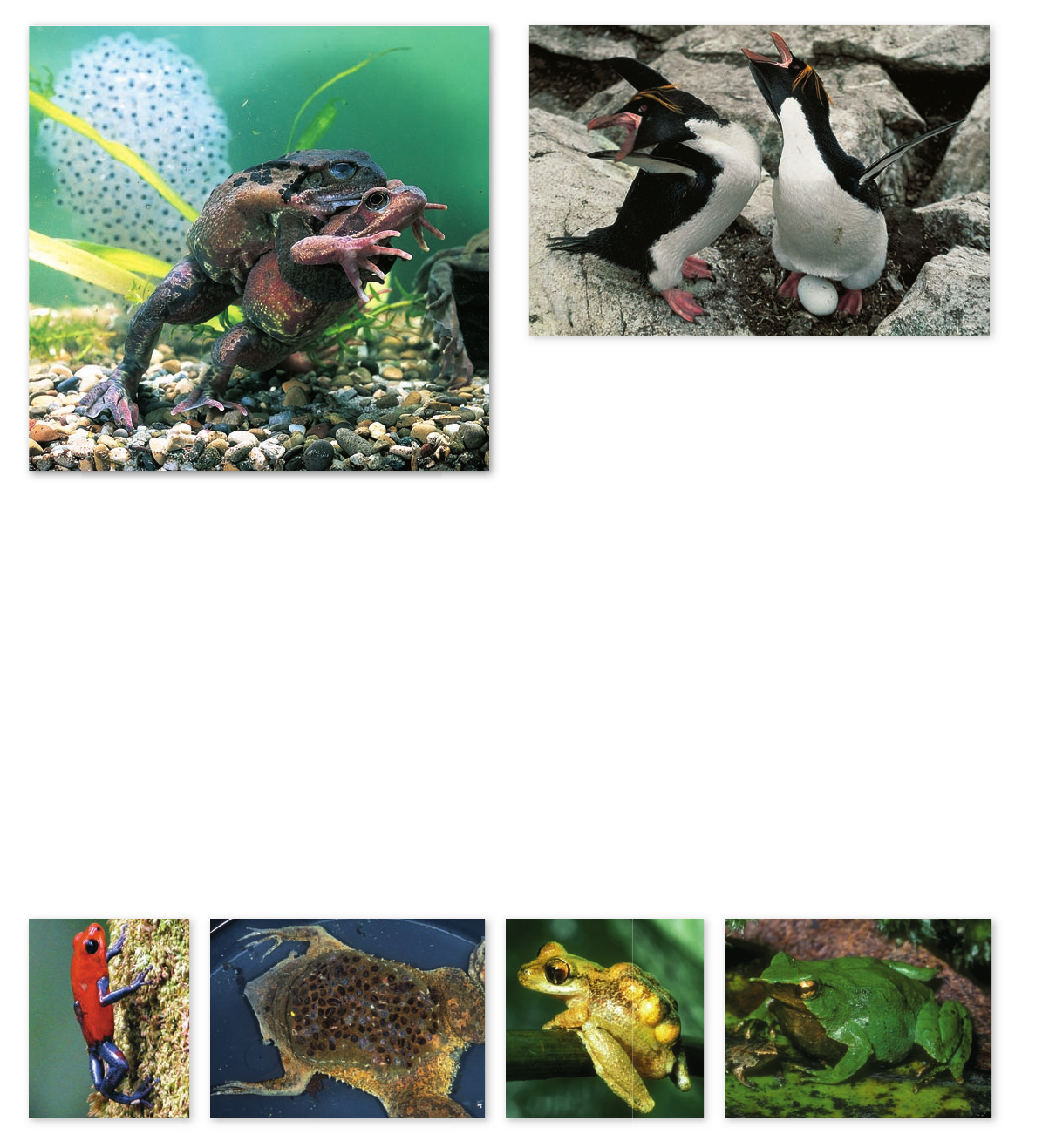
and females are released through the cloaca. Among the frogs
and toads, the male grasps the female and discharges fluid con-
taining the sperm onto the eggs as the female releases them
into the water (figure 53.6) .
Although the eggs of most amphibians develop in the wa-
ter, there are some interesting exceptions (figure 53.7) . In some
frogs, for example, the eggs develop in the back of the parents;
in others, males carry around the tadpoles in their vocal sacs,
and the young frogs leave through their parents’ mouths.
Reptiles and birds have internal fertilization
All birds and about 80% of reptile species are oviparous. After
the eggs are fertilized internally, they are deposited outside the
mother’s body to complete their development.
Figure 53.5
Evolution of internal fertilization and live birth in vertebrates. Although live birth has evolved many times in
shes and squamate reptiles, most species in both groups lay eggs. Evolutionary reversal from live birth to egg-laying has occurred very
rarely, if at all. Estimates of the number of origins in shes and squamates is based on detailed phylogenetic analyses within each group;
uncertainty in numbers is a result of incomplete information in some groups.
Inquiry question
?
Why do you think that egg-laying rarely evolves from live-bearing?
1088
part
VII
Animal Form and Function
rav32223_ch53_1084-1104.indd 1088rav32223_ch53_1084-1104.indd 1088 11/19/09 2:19:14 PM11/19/09 2:19:14 PM
Apago PDF Enhancer
a. b. c. d.
As the egg passes along the oviduct, glands secrete al-
bumin proteins (the egg white) and the hard, calcareous shell
that distinguishes bird eggs from reptilian eggs. Although
modern reptiles are ectotherms, birds are endotherms (see
chapter 43 ); therefore, most birds incubate their eggs after
laying them to keep them warm (figure 53.8) . The young that
hatch from the eggs of most bird species are unable to survive
unaided because their development is still incomplete. These
young birds are fed and nurtured by their parents, and they
grow to maturity gradually.
The shelled eggs of reptiles and birds constitute one of
the most important adaptations of these vertebrates to life on
land. As described in chapter 35, these eggs are known as am-
niotic eggs because the embryo develops within a fluid-filled
cavity surrounded by a membrane called the amnion. Other
extra embryonic membranes in amniotic eggs include the cho-
rion, which lines the inside of the eggshell, the yolk sac, and
the allantois. Together, these extraembryonic membranes in
combination with the external calcareous shell help form
a desiccation-resistant egg that can be laid in dry places. In
Reptiles
Most oviparous reptiles lay eggs and then abandon them. These
eggs are surrounded by a leathery shell that is deposited as the
egg passes through the oviduct, the part of the female reproduc-
tive tract leading from the ovary. Other species of reptiles are
ovoviviparous, forming eggs that develop into embryos within
the body of the mother, and some species are viviparous.
Birds
All birds practice internal fertilization, though most male
birds lack a penis (some, including swans, geese, and ostriches,
have modified the wall of the cloaca wall to serve as an intro-
mittent organ).
Figure 53.6
The eggs of frogs are fertilized externally.
When frogs mate, the clasp of the male induces the female to
release a large mass of mature eggs, over which the male discharges
his sperm.
Figure 53.7
Di erent ways young develop in frogs. a. In poison arrow frogs (family Dendrobatidae), the male carries the
tadpoles on his back. b. In the female Surinam toad (Pipa pipa), froglets develop from eggs in special brooding pouches on the back. c. In the
South American pygmy marsupial frog (Flectonotus pygmaeus), the female carries the developing larvae in a pouch on her back. d. Tadpoles of
the Darwin’s frog (Rhinoderma darwinii) develop into froglets in the vocal pouch of the male and emerge from the mouth.
Figure 53.8
Crested penguins incubating their egg.
This nesting pair is changing the parental guard in a
stylized ritual.
www.ravenbiology.com
chapter
53
The Reproductive System
1089
rav32223_ch53_1084-1104.indd 1089rav32223_ch53_1084-1104.indd 1089 11/19/09 2:19:14 PM11/19/09 2:19:14 PM
Apago PDF Enhancer
a. b. c.
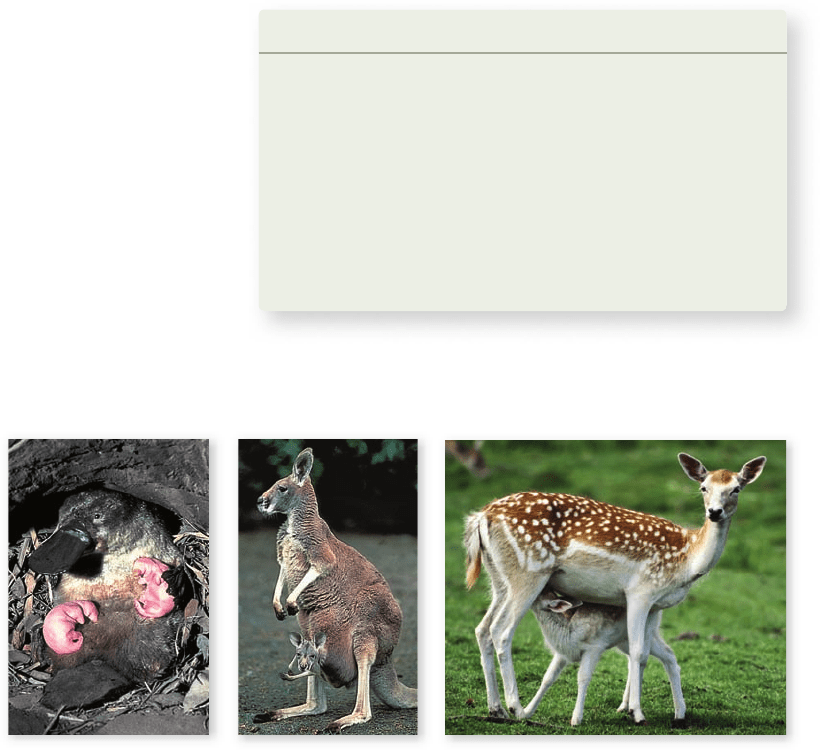
Figure 53.9
Reproduction
in mammals. a. Monotremes lay
eggs in a nest, such as the duck-billed
platypus (Ornithorhynchus anatinus)
shown here with newly hatched
offspring. b. Marsupials, such as this
red kangaroo (Macropus rufus), give
birth to small offspring that complete
their development in a pouch. c. In
placental mammals, such as this
spotted deer doe (Axis axis) nursing her
fawn, the young remain inside the
mother’s uterus for a longer period of
time and are born relatively more
developed.
Monotremes, marsupials, and placental mammals
The most primitive mammals, the monotremes (consisting
solely of the duck-billed platypus and the echidna), are ovip-
arous, like the reptiles from which they evolved. They incu-
bate their eggs in a nest (figure 53.9a) or specialized pouch,
and the young hatchlings obtain milk from their mother’s
mammary glands by licking her skin (because monotremes
lack nipples).
All other mammals are viviparous and are divided into
two subcategories based on how they nourish their young.
The marsupials, a group that includes opossums and kan-
garoos, give birth to small, fetuslike offspring that are in-
completely developed. The young complete their devel-
opment in a pouch of their mother’s skin, where they can
obtain nourishment from nipples of the mammary glands
(figure 53.9b).
The placental mammals (figure 53.9c) retain their young
for a much longer period of development within the mother’s
uterus. The fetuses are nourished by a structure known as the
placenta, which is derived from both an extraembryonic mem-
brane (the chorion) and the mother’s uterine lining. Because
the fetal and maternal blood vessels are in very close proxim-
ity in the placenta, the fetus can obtain nutrients by diffusion
from the mother’s blood. The functioning of the placenta is
discussed in more detail in chapter 54.
Learning Outcomes Review 53.2
Oviparous species lay eggs; the amniotic eggs of reptiles and birds
protect the embryo from dessication. Females of ovoviviparous species
retain fertilized eggs inside their bodies and release fully developed
young when eggs hatch. Most mammals are viviparous, giving birth
to young that have been nourished by the mother’s body. Internal
fertilization allows embryos to develop inside the female’s body, leading
to greater reproductive success.
■ Under what circumstances would an estrous cycle
be advantageous?
contrast, the eggs of fish and amphibians contain only one
extraembryonic membrane, the yolk sac, and must be depos-
ited in an aquatic habitat to keep from drying out.
The viviparous mammals, including humans, also have extra-
embryonic membranes, as described in the following chapter.
Mammals generally do not lay eggs,
but give birth to their young
Some mammals are seasonal breeders, reproducing only once
a year, while others have more frequent reproductive cycles.
Among the latter, the females generally undergo the repro-
ductive cycles, and the males are more constant in their re-
productive capability.
Female reproductive cycles
Cycling in females involves the periodic release of a mature
ovum from the ovary in a process known as ovulation. Most
female mammals are “in heat,” or sexually receptive to males,
only around the time of ovulation. This period of sexual re-
ceptivity is called estrus, and the reproductive cycle is there-
fore called an estrous cycle. Reproductive cycles continue in
females until they become pregnant.
In the estrous cycle of most mammals, changes in the se-
cretion by the anterior pituitary gland of follicle-stimulating
hormone (FSH) and luteinizing hormone (LH) cause changes
in egg cell development and hormone secretion in the ovaries
(see chapter 46). Humans and apes have menstrual cycles that
are similar to the estrous cycles of other mammals in their
pattern of hormone secretion and ovulation. Unlike mammals
with estrous cycles, however, human and ape females bleed
when they shed the inner lining of their uterus, a process
called menstruation, and they may engage in copulation at
any time during the cycle.
Rabbits and cats differ from most other mammals in
that they are induced ovulators. Instead of ovulating in a cy-
clic fashion regardless of sexual activity, the females ovulate
only after copulation, as a result of a reflex stimulation of
LH secretion.
1090
part
VII
Animal Form and Function
rav32223_ch53_1084-1104.indd 1090rav32223_ch53_1084-1104.indd 1090 11/19/09 2:19:28 PM11/19/09 2:19:28 PM
Apago PDF Enhancer
Bladder
Ureter
Urethra
Penis
Cowper's
(bulbourethral)
gland
Prostate
gland
Ejaculatory
duct
Seminal
vesicle
Vas
deferens
Testis
Scrotum
Epididymis
Epididymis
Testis
Coiled seminiferous tubules
Vas deferens
Spermatozoa
Spermatids
(haploid)
Secondary
spermatocytes
(haploid)
Primary
spermatocyte
(diploid)
Germ cell
(diploid)
Sertoli cell
MEIOSIS II
MEIOSIS II
MEIOSIS I
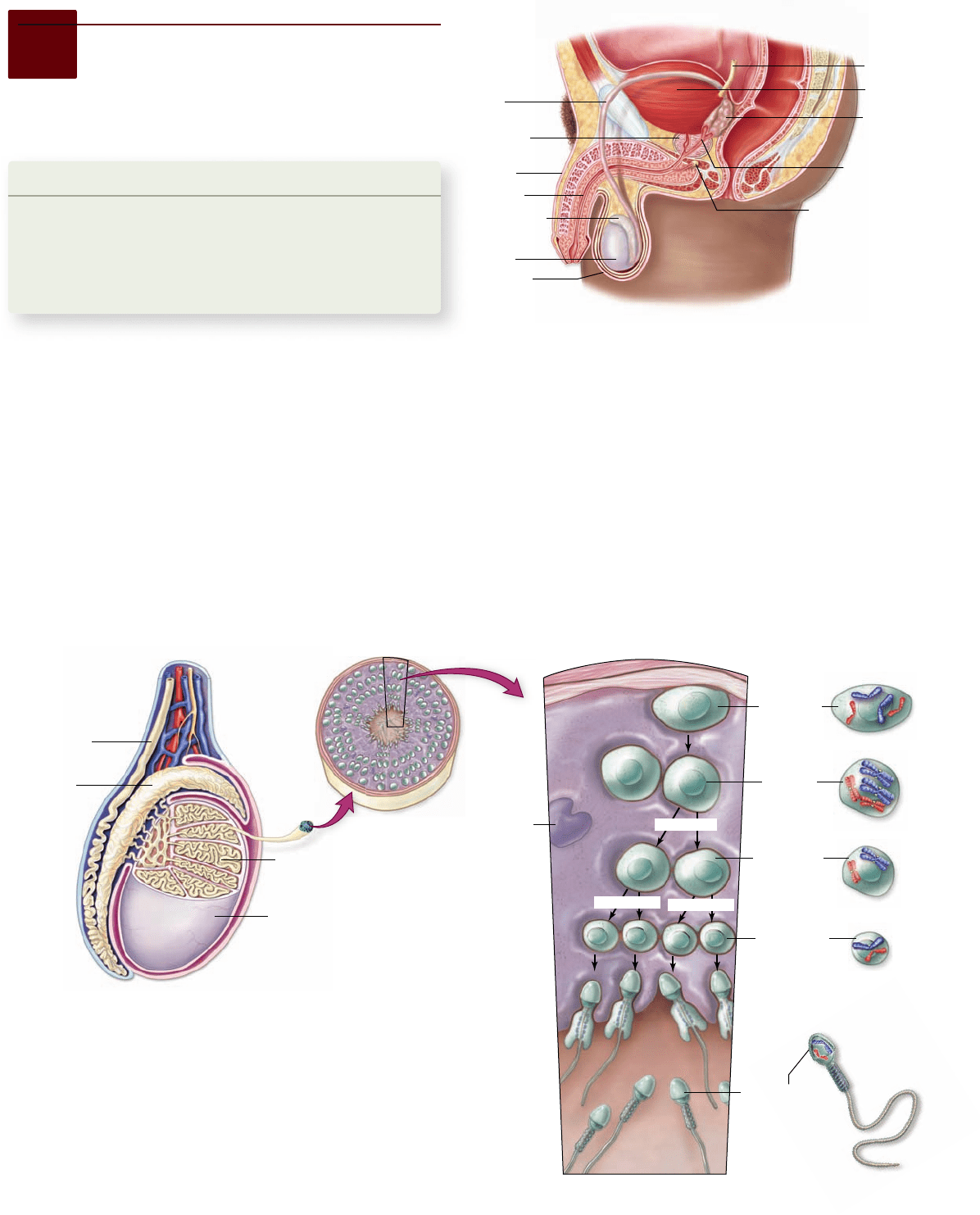
In an adult, each testis is composed primarily of the highly
convoluted seminiferous tubules (figure 53.11, left). Although
the testes are actually formed within the abdominal cavity,
shortly before birth they descend through an opening called
the inguinal canal into the scrotum, which suspends them out-
side the abdominal cavity. The scrotum maintains the testes at
around 34°C, slightly lower than the core body temperature
(37°C). This lower temperature is required for normal sperm
development in humans.
53.3
Structure and Function
of the Human Male
Reproductive System
Learning Outcomes
Describe the sequence of events in spermatogenesis.1.
Describe semen and explain how it is released 2.
during mating.
Explain how hormones regulate male reproductive 3.
function.
The structures of the human male reproductive system, typi-
cal of male mammals, are illustrated in figure 53.10 . When
testes form in the human embryo, they develop seminiferous
tubules, the sites of sperm production, beginning around 43 to
50 days after conception. At about 9 to 10 weeks, the Leydig
cells, located in the interstitial tissue between the seminifer-
ous tubules, begin to secrete testosterone (the major male sex
hormone, or androgen). Testosterone secretion during embry-
onic development converts indifferent structures into the male
external genitalia, the penis and the scrotum, the latter being a
sac that contains the testes. In the absence of testosterone, these
structures develop into the female external genitalia. Testoster-
one is also responsible at puberty for male secondary sex char-
acteristics, such as development of the beard, a deeper voice,
and body hair.
Figure 53.10
Organization of the human male
reproductive system. The penis and scrotum are the external
genitalia, the testes are the gonads, and the other organs are
accessory sex organs, aiding the production and ejaculation
of semen.
Figure 53.11
The testis and spermatogenesis. Spermatogenesis occurs
in the seminiferous tubules, shown on the left. Enlargements show the radial
arrangement of meiotic cells within the tubule, then the process of meiosis and
differentiation to produce spermatozoa. Sertoli cells are nongerminal cells within
the walls of the seminiferous tubules that assist spermatogenesis. Events begin on
the outside of the tubule progressing inward to release mature spermatozoa into the
tubule. The rst meiotic division separates homologous chromosomes, forming two
haploid secondary spermatocytes. The second meiotic division separates sister
chromatids to form four haploid spermatids, which are converted into spermatozoa.
www.ravenbiology.com
chapter
53
The Reproductive System
1091
rav32223_ch53_1084-1104.indd 1091rav32223_ch53_1084-1104.indd 1091 11/19/09 2:19:31 PM11/19/09 2:19:31 PM