
Raven P.H., Johnson G.B., Mason K.A. Biology (Ninth Edition)
Подождите немного. Документ загружается.

Apago PDF Enhancer
T
CHAPTER
Part
VIII
Ecology and Behavior
Chapter
55
Behavioral Biology
Chapter Outline
55.1 The Natural History of Behavior
55.2 Nerve Cells, Neurotransmitters, Hormones,
and Behavior
55.3 Behavioral Genetics
55.4 Learning
55.5 The Development of Behavior
55.6 Animal Cognition
55.7 Orientation and Migratory Behavior
55.8 Animal Communication
55.9 Behavioral Ecology
55.10 Reproductive Strategies and Sexual Selection
55.11 Altruism
55.12 The Evolution of Group Living
and Animal Societies
Introduction
The study of behavior is at the center of many disciplines of biology. Observing behavior provides important insights into the
workings of the brain and nervous system, the influences of genes and the environment, when and how animals reproduce,
and how they adapt to their environment. Behavior is shaped by natural selection and is controlled by internal mechanisms
involving genes, hormones, neurotransmitters, and neural circuits. In this chapter, we explore how behavioral biology
integrates approaches from several branches of biological science to provide a detailed understanding of the mechanisms
that underscore behavior and its evolution.
rav32223_ch55_1132-1161.indd 1132rav32223_ch55_1132-1161.indd 1132 11/20/09 1:49:26 PM11/20/09 1:49:26 PM
Apago PDF Enhancer
Fixed action
pattern
Sign
stimulus
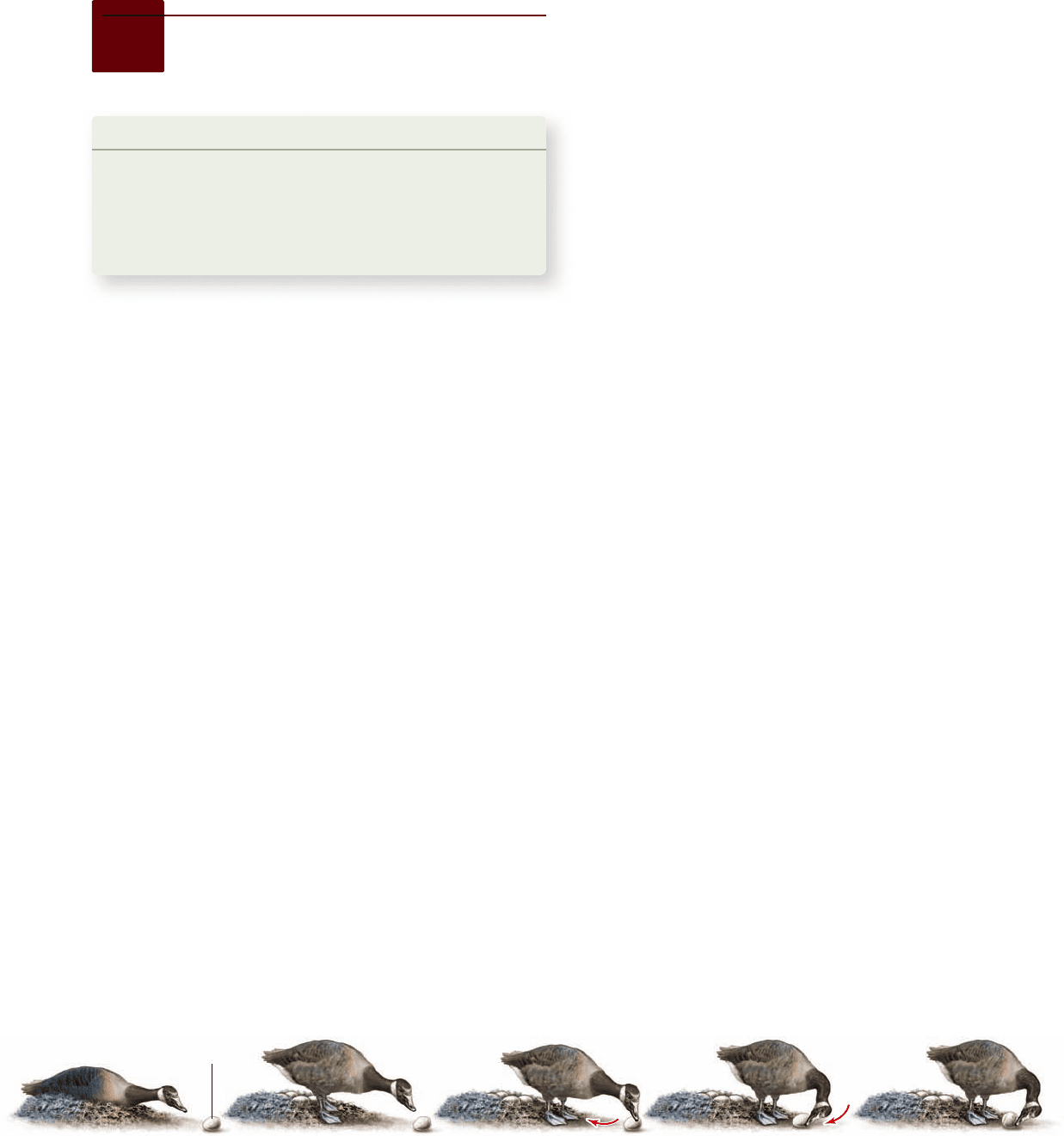
Figure 55.1
Innate egg-rolling response in geese. The series of movements used by a goose to retrieve an egg is a xed action
pattern. Once it detects the sign stimulus (in this case, an egg outside the nest), the goose goes through the entire set of movements: It will
extend its neck toward the egg, get up, and roll the egg back into the nest with a side-to-side motion of its neck while the egg is tucked
beneath its bill.
vocal organ) must develop to allow songs to be produced. These
explanations describe the proximate cause of bird song.
Asking about the function of a behavior (once again, bird
song) is to ask why it evolved. To answer this question, we would
determine how it influenced survival or reproductive success. A
male bird sings to defend a territory from other males and to at-
tract a female with which to reproduce. This is the ultimate, or
evolutionary, explanation for the male’s vocalization. Now we
can understand its ultimate causation, or adaptive value. Re-
searchers often study behavior from both perspectives to fully
appreciate its mechanisms and ecological function, and thus its
role in evolution. Behavior can be analyzed at four levels:
(1) physiology (how it is influenced by hormones, nerve cells, and
other internal factors); (2) ontogeny (how it develops in an indi-
vidual), (3) phylogeny (its origin in groups of related species), and
(4) adaptive significance (its role in survival and fitness). We’ll
begin by tracing the history of the study of mechanisms of be-
havior by focusing on the work of ethologists—biologists who
first began to study behavior at the turn of the 20th century.
Ethology emphasizes the study
of instinct and its origins
Ethology is the study of the natural history of behavior, with an
emphasis on behaviors that form an animal’s instincts, or pro-
grammed behaviors. Ethologists observed that individuals of a
given species behaved in stereotyped ways, showing the same
pattern of behavior in response to a particular stimulus. Because
their behavior seemed reflexive, they considered it to be instinc-
tive, or innate. Behaviors were thought to be programmed by
the nervous system, which in turn was designed by genes, and
responses would occur without experience. Ethologists based
their instinct model on observations and experiments of simple
behaviors such as egg retrieval by geese. Geese incubate their
eggs in a nest. If an egg falls out of the nest, the goose will roll
the egg back into the nest with a side-to-side motion of its neck
while the egg is tucked beneath its bill (figure 55.1) . Even if the
egg is removed during retrieval, the goose will still complete the
egg-retrieval sequence, as if driven by a program activated by
the initial sight of the egg outside the nest.
This example is one paradigm of instinct theory and il-
lustrates the way ethologists conceptualized the mechanisms of
behavior. Egg retrieval behavior is triggered by a key stimulus
(sometimes called a sign stimulus); this is the egg out of the nest.
Early ethologists thought the nervous system regulated behav-
ior via the innate releasing mechanism, a neural circuit involved
55.1
The Natural History
of Behavior
Learning Outcomes
Contrast the proximate and ultimate causation 1.
of behavior.
Explain instinct theory.2.
Describe the physiological factors that might be the basis 3.
for innate behaviors.
Observing animal behavior and making inferences about what
one sees is at once simple and profound. Behavior is what an
animal does. It is the most immediate way an animal responds
adaptively to its environment by tracking environmental cues
and signals such as odors, sounds, or visual signals associated
with food, predators, or mates. Behavior also concerns thinking
and cognition, monitoring one’s social environment, and mak-
ing decisions as to whether or not to cooperate or act altruisti-
cally. Behavior allows animals to survive and reproduce and is
thus critical to the evolutionary process. The work of behav-
ioral biologists has provided important insights into animal be-
havior, including the very meaning of human behavior.
Behavior can be analyzed in terms of
mechanisms (cause) and evolutionary
origin (adaptive nature)
Why does an animal behave in a particular way? Consider hear-
ing a bird sing. We could ask how it vocalizes or determine the
time of the year it sings most frequently. We could also ask
about the function of the song, that is, ask why it sings. Answers
to questions about how birds sing consider the role of internal
factors such as hormones and nerve cells and other physiologi-
cal processes. Such questions concern proximate causation: the
mechanisms that are the reason for behavior. To analyze the
proximate cause of bird song, we could measure hormone levels
or study the development of brain regions and neural circuits
associated with singing. For example, a male songbird may sing
during the breeding season because of an increased level of the
steroid sex hormone testosterone, which binds to receptors in
the brain and triggers the production of song. Additionally,
neural connections between the brain and the syrinx (the bird’s
chapter
55
Behavioral Biology
113 3www.ravenbiology.com
rav32223_ch55_1132-1161.indd 1133rav32223_ch55_1132-1161.indd 1133 11/20/09 1:49:31 PM11/20/09 1:49:31 PM

Apago PDF Enhancer
Figure 55.2
Functional Magnetic
Resonance Imaging
(fMRI). MRIs reveal
neural activity in
speci c regions of the
brain. In this case,
activity in part of the
brain called the nucleus
accumbens is associated
with viewing images
of food.
55.2
Nerve Cells, Neurotransmitters,
Hormones, and Behavior
Learning Outcomes
Relate the structure of neural circuits to their function.1.
Describe the role of hormones and neurotransmitters 2.
in behavior.
Although early ethologists had little understanding of neuro-
biology, they hypothesized elements of the nervous system
(the innate releasing mechanism) controlled behavior. Today,
neuroethologists—researchers who examine the neurobiology
of behavior—can describe in detail how information in the en-
vironment is processed by sensory cells and how nerve impulses
are transmitted to other neurons and muscles to form neural
circuits that regulate behaviors important to survival. Behavior
reflects the organization of the peripheral and central nervous
system, and studying behavior can help us understand how
neurons function individually and in combination with other
neurons in circuits (see chapters 44 and 45).
Behaviors that must occur rapidly, like those used to cap-
ture prey or flee predators, involve neural mechanisms that en-
able such functions. Some moths have an earlike sensory organ
equipped with sensory neurons designed to detect the ultra-
sonic cries of bats, the first step in evading predation. Special-
ized cells in the frog’s retina detect moving objects like insects
and release the tongue in fractions of a second once suitable
prey is sighted. Likewise, the jaws of a predatory ant snap shut
when prey trigger sensory hairs between the mandibles. Rapid
responses to predators or prey often involve large nerve cell
axons that can quickly transmit impulses to muscles. In the ex-
ample of “trap jaw” ants, large axons of the mandibular motor
neuron—the fastest neuron yet identified—fire nerve impulses
in the perception of the key stimulus and the triggering of a
motor program, the fixed action pattern, in this case the act of
guiding the egg back to the nest. Ethologists generalized that
the key stimulus is a cue or signal in the environment that initi-
ates neural events that cause behavior. The innate releasing
mechanism involves the sensory apparatus that detects the sig-
nal and the neural circuit controlling muscles to generate the
fixed action pattern.
Learning Outcomes Review 55.1
Proximate causation of behavior involves the immediate mechanisms that
bring about an action; ultimate causation refers to the adaptive value of
a behavior. Ethology is the study of the nature of behavior, emphasizing
instinct and the regulation of behavior by internal factors such as genes,
nerve cells, and hormones. Ethologists are also interested in the origins
of behavior.
■ Why is it important to understand the phylogeny
(evolutionary origins) of behavior?
that close the jaws in only 33 msec. Neural circuits that enable
quick responses often are made up of few sensory and motor
neurons, and their connecting nerve cells.
Behavioral biologists examine the relationship of hor-
mones to behavior to understand the endocrine mechanisms
that are the foundation of reproduction, parental care, aggres-
sion, and stress (see chapter 46). In this way, the effects of the
steroid sex hormones estrogen and testosterone on behavior
have been determined. Testosterone in the male, for example,
regulates territorial behavior and courtship, whereas estrogen
in the female controls her mating behavior. Glucocorticoid
hormones are involved in stress.
Neuroscientists may measure levels of neurotransmitters
such as serotonin and dopamine in the nervous system or blood
and associate these chemicals with behavior (see chapter 44).
These chemicals are released by nerve cells and can affect activ-
ity in different brain regions. Serotonin has been shown to in-
fluence aggression in an incredibly wide range of animals
including lobsters, mice, and humans. Researchers may inject a
neurotransmitter or pharmacologically change its level in the
brain to examine how it affects behavior.
The techniques of neuroethology include identifying and
mapping individual neurons, their dendrites and connections to
other neurons, and how their impulses and neurochemicals reg-
ulate behavior. Today, techniques such as functional magnetic
resonance imaging (fMRI) are generating exciting data on the
specialized functions of different regions of the human brain.
One striking example concerns how the brain responds to im-
ages of food (figure 55.2) . In contrast to expectation, the brain’s
response does not occur in the visual cortex, the region associat-
ed with object recognition, but in a circuit in the nucleus accum-
bens in the forebrain, normally involved in reward and pleasure.
Learning Outcomes Review 55.2
Instinctive behaviors appear to involve programmed circuits in the
nervous system that are likely to be genetically controlled. Research in
neuroethology supports the instinct concept of behavior by describing
the organization of neural circuits governing behavior. Chemical signals
provided by hormones and by neurotransmitters such as serotonin and
dopamine cause behaviors to occur.
■ If a male songbird is injected with testosterone two
weeks earlier than when these birds normally start to
sing in the spring, what would you expect to happen?
1134
part
VIII
Ecology and Behavior
rav32223_ch55_1132-1161.indd 1134rav32223_ch55_1132-1161.indd 1134 11/20/09 4:55:48 PM11/20/09 4:55:48 PM
Apago PDF Enhancer
Parental
Generation
First
Generation
Second
Generation
Fifth
Generation
Seventh
Generation
Total Number of Errors in Negotiating the Maze (Fourteen Trials)
9 39 64 114 214
Fast rat
population
Slow rat
population
a variety of animals demonstrated that hybrids showed behav-
iors involved in nest building and courtship that were interme-
diate between those of parents. These early efforts to define the
role of genes in behavior demonstrated that behavior can have
a heritable component, but fell short of identifying the genes
involved. With the development of molecular biology, far
greater precision was added to the analysis of the genetics
of behavior.
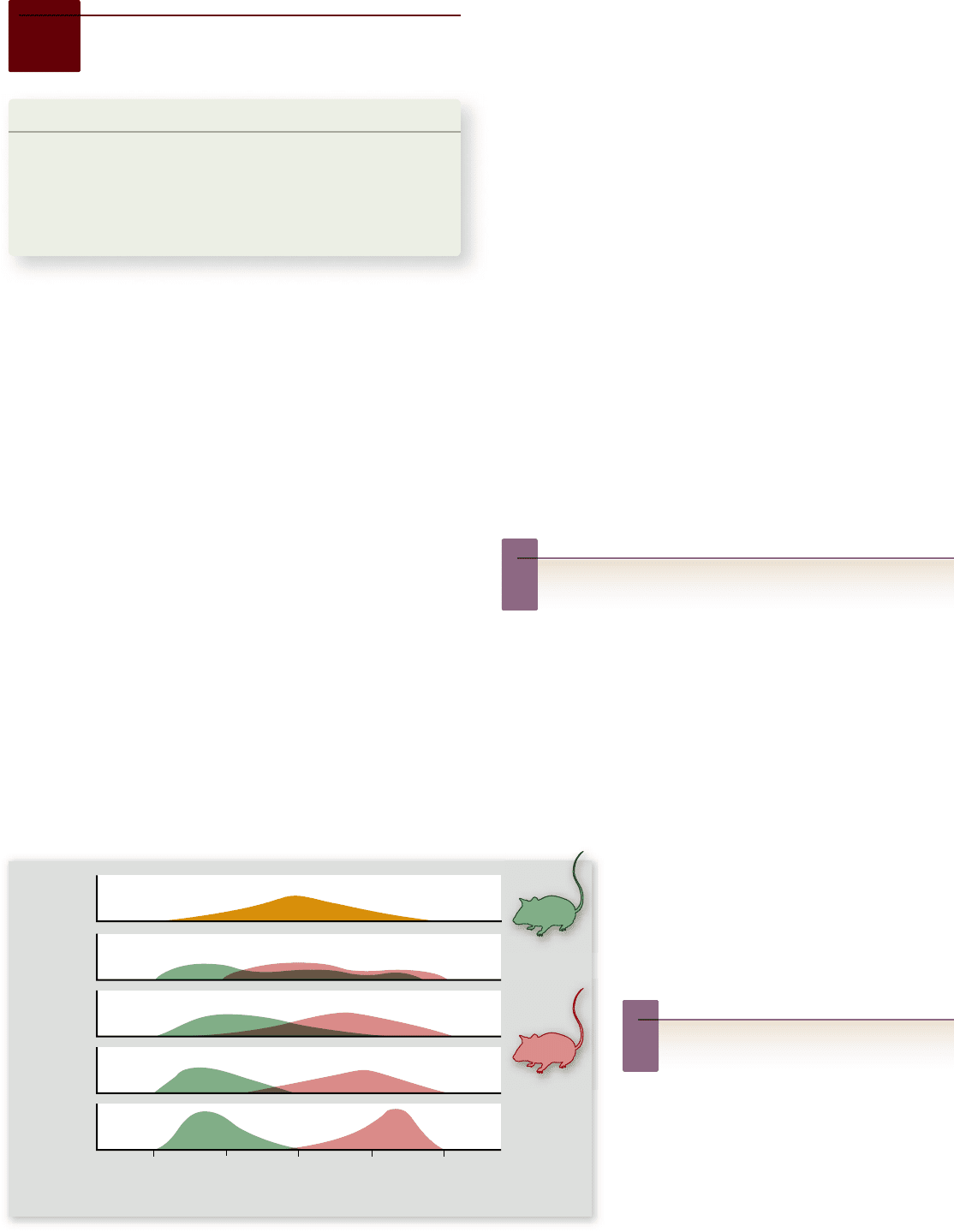
Learning itself can be influenced by genes. In one classic
study, rats had to find their way through a maze of blind alleys
and only one exit, where a reward of food awaited them. Some
rats quickly learned to zip through the maze to the food, mak-
ing few mistakes, but other rats made more errors in learning
the correct path. Researchers bred rats that made few errors
with one another to establish a “maze-bright” group, and error-
prone rats were interbred, forming a “maze-dull” group. Off-
spring in each group were then tested for their maze-learning
ability. The offspring of maze-bright rats learned to negotiate
the maze with fewer errors than their parents, while the off-
spring of maze-dull parents performed more poorly. Repeating
this artificial selection method for several generations led to
two behaviorally distinct types of rat with very different maze-
learning abilities (figure 55.3) . This type of study suggests the
ways in which natural selection could shape behavior over time,
making genes for certain abilities more prevalent.
Inquiry question
?
What would happen if, after the seventh generation, rats
were randomly assigned mates regardless of their ability to
learn the maze?
Some behaviors appear to be
controlled by a single gene
Artificial selection and hybrid studies only suggested a role for
genes in behavior. Subsequent research took advantage of ad-
vances in molecular biology and identified the genes involved.
Fruit flies, Drosophila, have traditionally provided a useful model
system in which the effect of single genes have been identified.
55.3
Behavioral Genetics
Learning Outcomes
Discuss the types of studies that have provided evidence 1.
to link genes and behavior.
Explain how single genes can influence behavior.2.
Describe the role of genes in complex behaviors such as 3.
aggression, parental care, and pair bonding.
Instinct theory assumed that genes play a role in behavior, but
ethologists did not conclusively demonstrate the role genes can
play. The study of genes and behavior has often been highly con-
troversial, as ethologists and social scientists engaged in a seem-
ingly endless debate over whether behavior is determined more by
an individual’s genes (nature) or by its learning and experience
(nurture). One problem with this nature/nurture controversy is
that the question is framed as an “either/or” proposition, which
fails to consider that both instinct and experience can have signifi-
cant roles, often interacting in complex ways to shape behavior.
Behavioral genetics deals with the contribution that he-
redity makes to behavior. It is obvious that genes, the units of
heredity, are passed from one generation to the next and guide
the development of the nervous system and potentially the be-
havioral responses it regulates. But animals may also develop in
a rich social environment and have experiences that guide be-
havior. The importance of “nature” and “nurture” to behavior
can be seen by first reviewing the history of studies in behav-
ioral genetics and next examining the importance of experience
and development. We’ll then consider their interaction.
Arti cial selection and hybrid
studies link genes and behavior
Pioneering research indicated that behavioral differences
among individuals result from genetic differences. Research on
Figure 55.3
The genetics of learning.
Rats that made the fewest errors in the parental
population were interbred to select for rats that
had improved maze-learning ability (green), and
rats that made the most errors were interbred to
select for rats that were error prone (red).
Inquiry question
?
What would happen if, after the seventh
generation, rats were randomly assigned
mates regardless of their ability to learn
the maze?
chapter
55
Behavioral Biology
113 5www.ravenbiology.com
rav32223_ch55_1132-1161.indd 1135rav32223_ch55_1132-1161.indd 1135 11/20/09 1:49:33 PM11/20/09 1:49:33 PM
Apago PDF Enhancer
fosB Alleles Present
fosB Alleles Inactivated
fosB
alleles
present
fosB
alleles in-
activated
14
12
10
8
6
4
2
0
0.8
0.6
0.4
0.2
0
a.
b.
c.
d.
Minutes Crouching
Over Offspring
Proportion of
Pups Retrieved
Single genes have also been shown to influence behavior in ani-
mals ranging from mice to humans.
In fruit flies, individuals that possess alternative alleles for a
particular gene differ greatly in their feeding behavior as larvae:
Larvae with one allele move around a great deal as they eat,
whereas individuals with the alternative allele move hardly at all.
A wide variety of experimentally induced mutations at other genes
affect courtship behavior in males and females. For example, fru is
a regulatory gene whose transcription products govern the design
of the courtship center of the fruit fly brain. This gene turns on
other genes involved in the neural circuitry of courtship.
Single genes in mice are associated with spatial memory
and parenting. For example, some mice with a particular muta-
tion have trouble remembering recently learned information
about where objects are located. This is apparently because
they lack the ability to produce the enzyme α-calcium-
calmodulin-dependent kinase II, which plays an important role
in the functioning of the hippocampus, a part of the brain im-
portant for spatial learning.
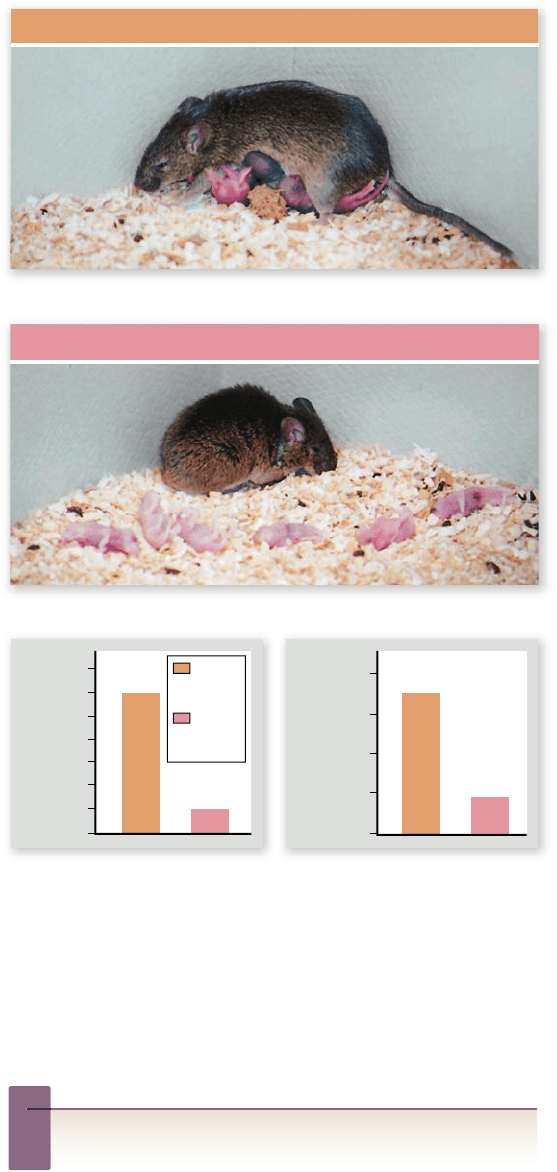
It is particularly interesting that genes are involved in be-
havior as complex as maternal care: The presence or absence of
fosB determines whether female mice nurture their young in
particular ways. Females with both fosB alleles disabled initially
investigate their newborn babies, but then ignore them, in stark
contrast to the caring and protective maternal behavior dis-
played by normal females (figure 55.4) . The cause of this inat-
tentiveness appears to result from a chain reaction. When
mothers of new babies initially inspect them, information from
their auditory, olfactory, and tactile senses is transmitted to the
hypothalamus, where fosB alleles are activated. The fosB alleles
produce a protein, which in turn activates other enzymes and
genes that affect the neural circuitry of the hypothalamus. These
modifications in the brain cause the female to behave mater-
nally. If mothers lack the fosB alleles, this process is stopped mid-
way. No protein is activated, the brain’s neural circuitry is not
rewired, and maternal behavior does not result. The “maternal
instincts” of mice can thus be defined genetically!
Another fascinating example of the genetic basis of be-
havior concerns prairie and montane voles, two closely related
species of North American rodents that differ profoundly in
their social behavior. Male and female prairie voles form mo-
nogamous pair bonds and share parental care, whereas mon-
tane voles are promiscuous (meaning they mate with multiple
partners and go their separate ways). The act of mating leads to
the release of the neuropeptides vasopressin and oxytocin, and
the response to these peptides differs dramatically in each spe-
cies. Injection of either peptide into prairie voles leads to pair
bonding even without mating. Conversely, injecting a chemical
that blocks the action of these neuropeptides causes prairie
voles not to form pair bonds after mating. By contrast, montane
voles are unaffected by either of these manipulations.
These different responses have been traced to interspe-
cific differences in brain structure (figure 55.5) . The prairie vole
has many receptors for these peptides in a particular part of the
brain, the nucleus accumbens, which seems to be involved in the
expression of pair-bonding behavior. By contrast, few such re-
ceptors occur in the same brain region in the montane vole. In
laboratory experiments with prairie voles, blocking these recep-
tors tends to prevent pair-bonding, whereas stimulating them
Figure 55.4
Genetically caused defect in maternal care.
a. In mice, normal mothers take very good care of their offspring,
retrieving them if they move away and crouching over them.
b. Mothers with the mutant fosB allele perform neither of these
behaviors, leaving their pups exposed. c. Amount of time female
mice were observed crouching in a nursing posture over offspring.
d. Proportion of pups retrieved when they were experimentally moved.
Inquiry question
?
Why does the lack of fosB alleles lead to maternal
inattentiveness?
leads to pair-bonding behavior. The gene that codes for the pep-
tide receptors has also been identified, and a difference in the
DNA structure between the species has been discovered. To test
the hypothesis that this genetic difference was responsible for
the differences in behavior, scientists created transgenic mice
with the prairie vole version of the gene, and sure enough, when
injected with vasopressin, the transgenic mice exhibited pair-
bonding behavior very similar to that of prairie voles, whereas
normal mice showed no response (see figure 55.5). The
1136
part
VIII
Ecology and Behavior
rav32223_ch55_1132-1161.indd 1136rav32223_ch55_1132-1161.indd 1136 11/20/09 1:49:34 PM11/20/09 1:49:34 PM

Apago PDF Enhancer
control
vasopressin
0
20
40
60
80
100
120
140
Pair-bonding Behavior
(Time Spent in seconds)
a. Prairie vole b. Montane vole
c.
Montane
Voles
Prairie
Voles
Wild-type
Mice
Transgenic
Mice
55.4
Learning
Learning Outcomes
Describe the mechanisms of learning.1.
Define learning preparedness.2.
Explain how instinct influences learning preparedness.3.
Instincts can guide an animal’s actions, but behavior can also
develop from previous experiences, a process termed learning.
Traditionally, psychologists studied the mechanisms of learning
using laboratory rodents, but today both proximate and ulti-
mate causes of learning are understood by integrating learning
into an ecological and evolutionary framework.
Learning mechanisms include
habituation and association
Habituation is a simple form of learning defined as a decrease in
response to a repeated stimulus that has no positive or negative
consequences. Initially, the stimulus may evoke a strong response,
but the response declines with repeated exposure. For example,
young birds see many types of objects moving overhead. At first,
they may respond by crouching and remaining still. But fre-
quently seen objects, such as falling leaves or members of their
own species flying overhead, have no positive or negative conse-
quence to the nestlings. Over time, the young birds may habitu-
ate to such stimuli and stop responding. Thus, habituation can be
thought of as learning not to respond to a stimulus.
One ecological context in which habituation has adaptive
value is prey defense. Birds that feed on insects search for suitable
prey in a visually complex environment. Insects that have camou-
flaged bodies appear to be twigs or leaves, which are commonly
encountered as birds search for prey. Because birds see these ob-
jects very frequently, they habituate to their appearance. Insects
that look like twigs or leaves are therefore protected because they
do not trigger an attack, and they survive to reproduce.
More complex forms of learning concern changes in be-
havior through an association between two stimuli or between
a stimulus and a response. In associative learning, for example,
(figure 55.6) a behavior is modified, or conditioned, through
the association. The two major types of associative learning—
classical conditioning and operant conditioning—differ in the
way the associations are established. In classical conditioning,
the paired presentation of two different kinds of stimuli causes
the animal to form an association between the stimuli. Classical
conditioning is also called Pavlovian conditioning, after the
Russian psychologist Ivan Pavlov, who first described it.
Pavlov presented meat powder, an unconditioned stimu-
lus, to a dog and noted that the dog responded by salivating, an
unconditioned response. If an unrelated stimulus, such as the
ringing of a bell, was repeatedly presented at the same time as
the meat powder, the dog would soon salivate in response to the
sound of the bell alone. The dog had learned to associate the
unrelated sound stimulus with the meat powder stimulus. Its
vasopressin receptor gene varies in structure among primate
species that vary in degree of pair bonding. In human males, the
gene has recently been found to be associated with the strength
of marital bonds and satisfaction in marriage.
The production of monoamine oxidases (MAOs), en-
zymes that degrade neurotransmitters such as serotonin and
dopamine, are controlled by single genes. Transgenic mice that
lack MAOA (monoamine oxidase-A) are highly aggressive. In
humans, a single point mutation results in the lack of the ability
to produce MAOA, resulting in antisocial behavior and vio-
lence. MAO abnormalities are also associated with mood disor-
ders in humans.
Learning Outcomes Review 55.3
A relationship between genes and behavior has been demonstrated in many
ways, including artifi cial selection experiments and studies on the eff ects of
single genes. Genes can regulate behavior by producing molecular factors
that infl uence the function of the nervous system; mutations altering these
factors have been found to aff ect behavior.
■ What would you infer about the role of genes in pair-
bonding in prairie voles if you learned that males
sometimes seek to copulate with females other than
their own mate?
Figure 55.5
Genetic basis of di erences in pair-
bonding behavior in two rodent species. a. and b. The
prairie (Microtus ochrogaster) and montane (M. montanus) voles differ
in the distribution of one type of vasopressin receptor in the brain.
c. Transgenic mice created with the prairie-vole version of the
receptor genes respond to injections of vasopressin by exhibiting
heightened levels of pair-bonding behavior in 5-min trials compared
with their response to a control injection. By contrast, normal
wild-type mice (control) show no increase in such behaviors.
chapter
55
Behavioral Biology
113 7www.ravenbiology.com
rav32223_ch55_1132-1161.indd 1137rav32223_ch55_1132-1161.indd 1137 11/20/09 1:49:35 PM11/20/09 1:49:35 PM
Apago PDF Enhancer
a. b. c.
response to the sound stimulus was, therefore, conditioned, and
the sound of the bell is referred to as a conditioned stimulus.
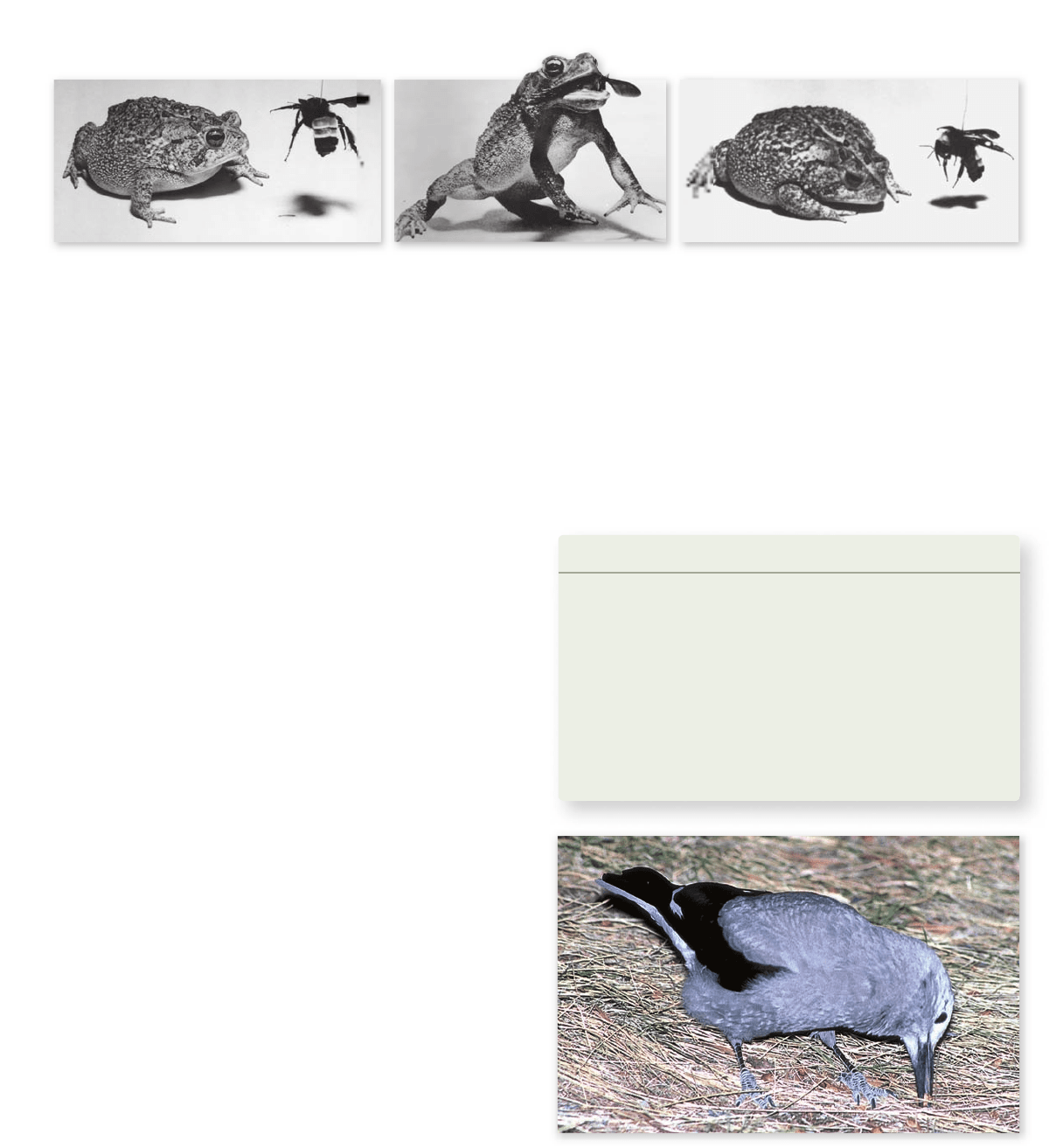
In operant conditioning, an animal learns to associate its
behavioral response with a reward or punishment. American psy-
chologist B. F. Skinner studied operant conditioning in rats by
placing them in an apparatus that came to be called a “Skinner
box.” As the rat explored the box, it would occasionally press a le-
ver by accident, causing a pellet of food to appear. Soon it learned
to associate pressing the lever (the behavioral response) with ob-
taining food (the reward). This sort of trial-and-error learning is of
major importance to most vertebrates. Learning provides flexibil-
ity that allows behavior to be fine-tuned to an environment.
Instinct governs learning preparedness
Psychologists once believed that any two stimuli could be linked
through learning and that animals could be conditioned to per-
form any learnable behavior. This view has changed. Today, re-
searchers believe that instinct guides learning by determining
what type of information can be learned. Animals may have in-
nate predispositions toward forming certain associations. For
example, if a rat is offered a food pellet at the same time it is ex-
posed to X-rays (which later produce nausea), the rat remembers
the taste of the food pellet but not its size, and in the future will
avoid food with that taste, but will readily eat pellets of the same
size if they have a different taste. Similarly, pigeons can learn to
associate food with colors, but not with sounds. In contrast, they
can associate danger with sounds, but not with colors.
These examples of learning preparedness demonstrate
that what an animal can learn is biologically influenced—that is,
learning is possible only within the boundaries set by evolution.
Innate programs for learning have evolved because they lead to
adaptive responses. In nature, food that is toxic to a rat is likely
to have a particular taste; thus, it is adaptive to be able to associ-
ate a taste with a feeling of sickness that may develop hours later.
The seed a pigeon eats may have a distinctive color that the pi-
geon can see, but it makes no sound the pigeon can hear.
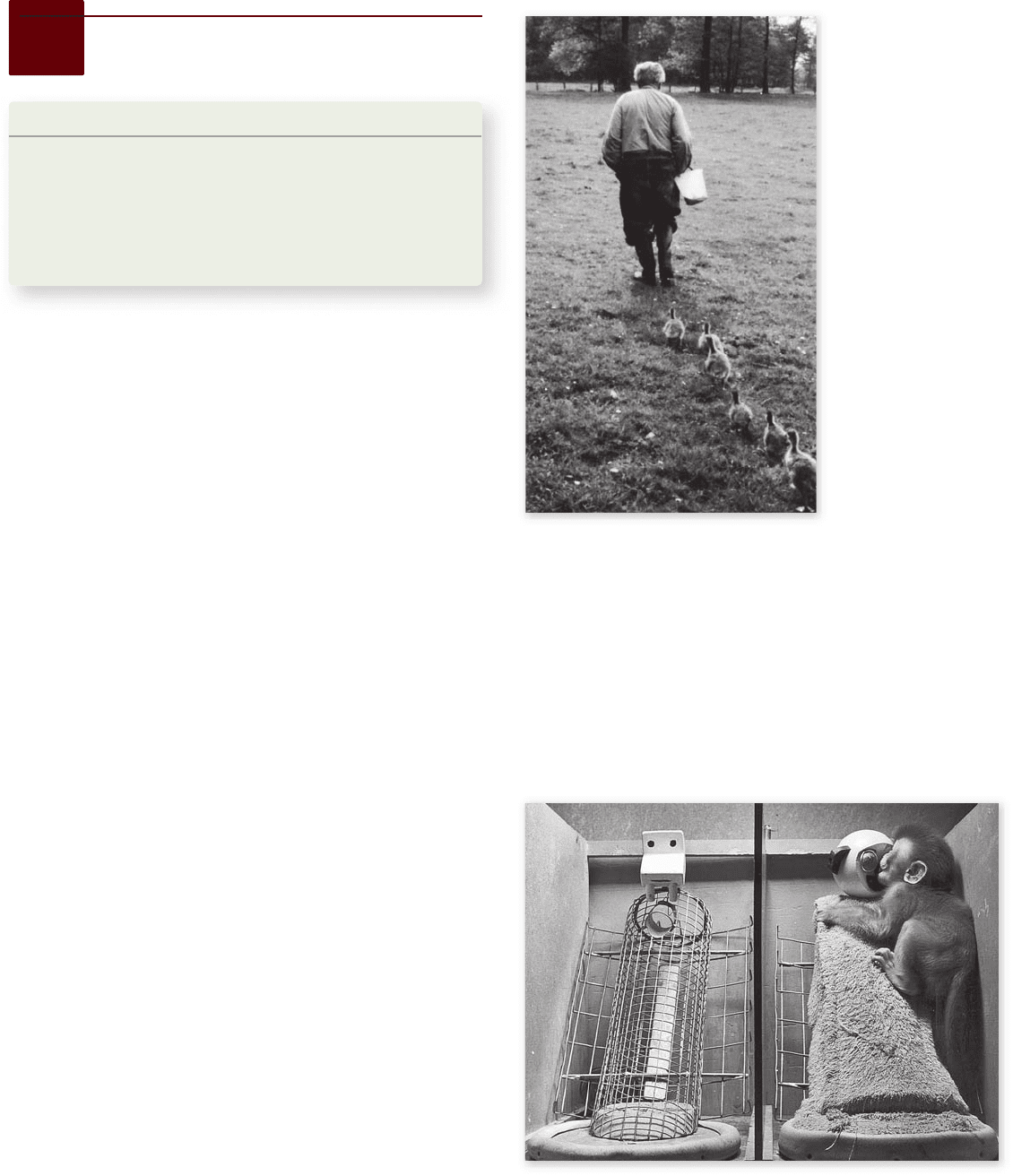
An animal’s ecology is key to understanding its learning
capabilities. Some species of birds, such as Clark’s nutcracker,
feed on seeds. When seeds are abundant, these birds store them
in buried caches so they will have food during the winter. Seed
caches (up to 2000!) may be buried and then recovered as long
as nine months later. One would expect these birds to have an
extraordinary spatial memory, and this is indeed what has been
found (figure 55.7) . Clark’s nutcracker, and other seed-
hoarding birds, have an unusually large hippocampus, the cen-
ter for memory storage in the brain. This illustrates how feeding
ecology (caching seeds to survive the winter) affects the evolu-
tion of brain anatomy (an enlarged hippocampus).
Learning Outcomes Review 55.4
Habituation is a diminishing response to a repeated stimulus that is neither
positive nor negative. Association may occur as either classical conditioning
or operant conditioning. Animals can change their behavior through
learning in a variety of ways. Although learning mechanisms may be similar
across species, animals also diff er in their learning abilities according to
their ecology.
■ In some rodents, males travel far while females remain
close to the nest. Do males or females have greater
spatial memory? What experiment could you conduct to
test your hypothesis?
Figure 55.6
Learning what is edible. Associative learning is involved in predator–prey interactions. a. A naive toad is offered a
bumblebee as food. b. The toad is stung, and (c) subsequently avoids feeding on bumblebees or any other insects having black-and-yellow
coloration. The toad has associated the appearance of the insect with pain and modi es its behavior.
Figure 55.7
The Clark’s nutcracker has an
extraordinary memory. A Clark’s nutcracker (Nucifraga
columbiana) can remember the locations of up to 2000 seed caches
months after hiding them. After conducting experiments, scientists
have concluded that the birds use features of the landscape and
other surrounding objects as spatial references to memorize the
locations of the caches.
1138
part
VIII
Ecology and Behavior
rav32223_ch55_1132-1161.indd 1138rav32223_ch55_1132-1161.indd 1138 11/20/09 1:49:37 PM11/20/09 1:49:37 PM
Apago PDF Enhancer
55.5
The Development of Behavior
Learning Outcomes
Discuss the role of the critical period in imprinting.1.
Explain how social contact can influence growth 2.
and development.
Explain how the study of song learning in white-3.
crowned sparrows illustrates the interaction of instinct
and learning.
Behavioral biologists recognize that behavior has both genetic
and learned components. Thus far in this chapter, we have dis-
cussed the influence of genes and learning separately. But as
you will see, these factors interact during development to
shape behavior.
Parent–o spring interactions inuence
how behavior develops
As an animal matures, it may form social attachments to other
individuals or develop preferences that will influence behavior
later in life. This process of behavioral development is called
imprinting. The success of imprinting is highest during a criti-
cal period (roughly 13 to 16 hours after hatching in geese).
During this time, information required for normal develop-
ment must be acquired. In filial imprinting, social attachments
form between parents and offspring. For example, young birds
like ducks and geese begin to follow their mother within a few
hours after hatching, and their following response results in a
social bond between mother and young. The young birds’ ini-
tial experience, through imprinting, can determine how social
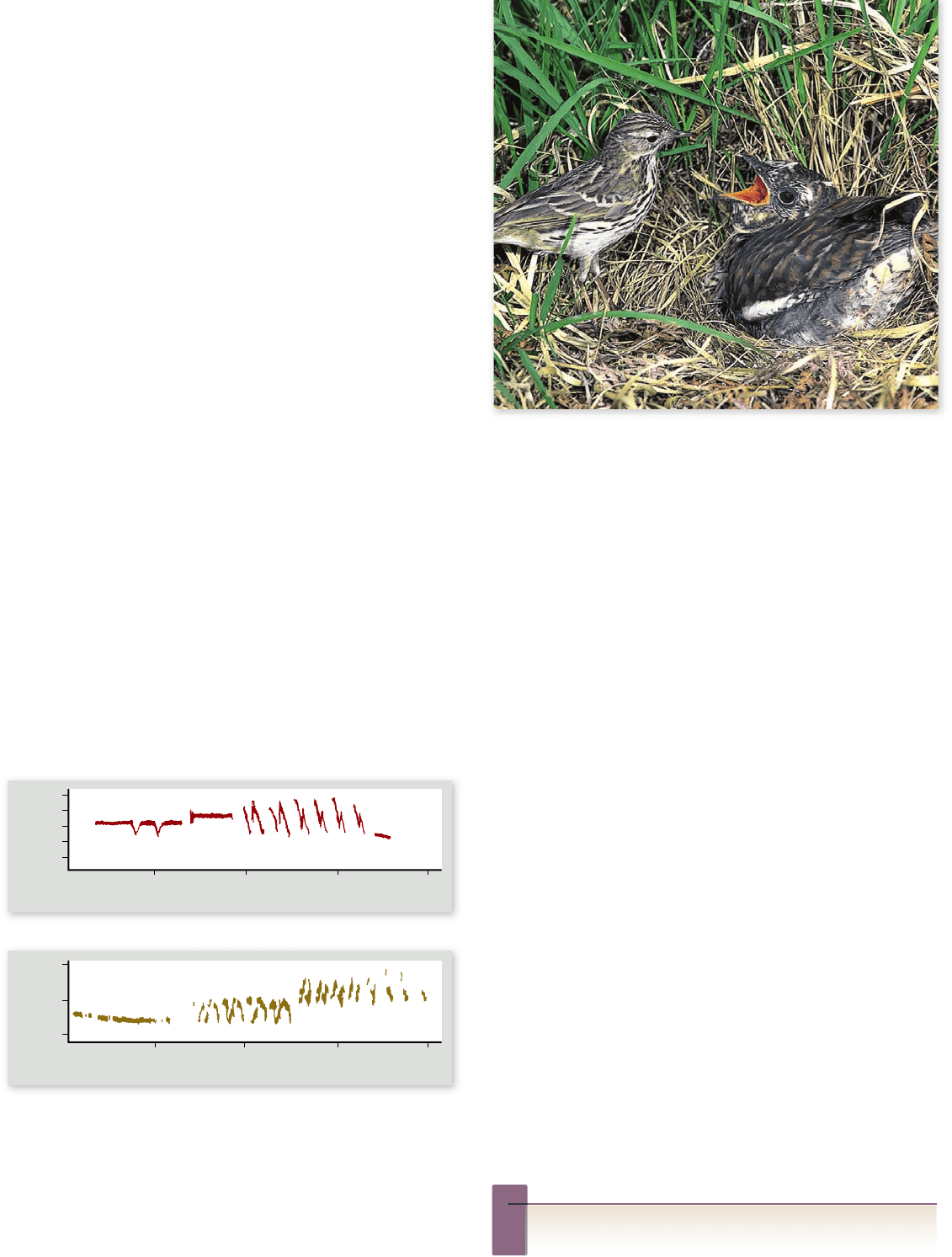
behavior develops later in life. The ethologist Konrad Lorenz
showed that geese will follow the first object they see after
hatching and direct their social behavior toward that object,
even if it is not their mother! Lorenz raised geese from eggs,
and when he offered himself as a model for imprinting, the
goslings treated him as if he were their parent, following him
dutifully (figure 55.8).
Interactions between parents and offspring are key to the
normal development of social behavior. The psychologist
Harry Harlow gave orphaned rhesus monkey infants the op-
portunity to form social attachments with two surrogate
“mothers,” one made of soft cloth covering a wire frame and
the other made only of wire (figure 55.9). The infants chose
to spend time with the cloth mother, even if only the wire
mother provided food, indicating that texture and tactile con-
tact, rather than provision of food, may be among the key
qualities in a mother that promote infant social attachment. If
infant monkeys are deprived of normal social contact, their
development is abnormal. Greater degrees of deprivation lead
to greater abnormalities in social behavior during childhood
and adulthood. Studies of orphaned human infants similarly
suggest that a constant “mother figure” is required for normal
growth and psychological development.
Recent research has revealed a biological need for the
stimulation that occurs during parent–offspring interactions
early in life. Female rats lick their pups after birth, and this
stimulation inhibits the release of a brain peptide that can
block normal growth. Pups that receive normal tactile stimula-
tion also have more brain receptors for glucocorticoid hor-
mones, thus a greater tolerance for stress, and longer-lived
brain cells. Premature human infants who are massaged gain
weight rapidly. These studies indicate that the need for normal
social interaction is based in the brain, and that touch and
Figure 55.8
An
unlikely parent.
The eager goslings
follow Konrad Lorenz
as if he were their
mother. He is the rst
object they saw when
they hatched, and they
have used him as a
model for imprinting.
Lorenz won the 1973
Nobel Prize in
medicine or physiology
for this work.
Figure 55.9
Choice trial on infant monkeys. Given a
choice between a wire frame that provided food and a similar frame
covered with cloth and given a monkey-like head, orphaned rhesus
monkeys (Macaca mulatta) chose the monkeylike gure over the food.
chapter
55
Behavioral Biology
113 9www.ravenbiology.com
rav32223_ch55_1132-1161.indd 1139rav32223_ch55_1132-1161.indd 1139 11/20/09 4:56:42 PM11/20/09 4:56:42 PM
Apago PDF Enhancer
5
4
3
2
1
6
4
2
0.5 1.0 1.5 2.0
0.5 1.0 1.5 2.0
Time (s)
Time (s)
Frequency
(kHz)
Frequency
(kHz)
a.
b.
other aspects of contact between parents and offspring are im-
portant for physical as well as behavioral development.
Instinct and learning may interact
as behavior develops
We began this chapter by considering the proximate and ulti-
mate causation of bird song. Let’s continue with the classic
studies by Peter Marler on song learning in white-crowned
sparrows to examine how innate programs and experience each
contribute to the development of behavior.
Mature male white-crowned sparrows sing a species-
specific courtship song during the mating season. Through a series
of elegant experiments, Peter Marler asked if the song was the re-
sult of an instinctive program, learning, or both. Marler reared
male birds in soundproof incubators equipped with speakers and
microphones to control what a bird heard as it matured, and then
recorded the song it produced as an adult. Males that heard no
song at all during development sang a poorly developed song as
adults (figure 55.10), indicating that instinct alone did not guide
song production. In a second study, males were played only the
song of a different species, the song sparrow. These males sang a
poorly structured song as well. This experiment showed that males
would not imitate any song they heard to learn to sing. But birds
that heard the song of their own species, or that heard the songs of
both the white-crowned sparrow and the song sparrow, sang a
fully developed, white-crowned sparrow song as adults.
These results suggest males have a selective genetic
template, or innate program, that guides them to learn the
appropriate song. During a critical period in development, the
template will accept the white-crowned sparrow song as a
model. Thus, song acquisition depends on learning, but only
the song of the correct species can be learned; the genetic tem-
plate limits what can be learned.
But learning plays a prominent role as well. If a young
male becomes deaf after it hears its species’ song during the
critical period, it will sing a poorly developed song as an adult.
Therefore, the bird must hear the correct song at the right
time, and then “practice” listening to himself sing, matching
what he hears to the model his genetic template has accepted.
Although this explanation of song development stood un-
challenged for many years, white-crowned sparrow males can
learn another species’ song under certain conditions. If a live
male strawberry finch is placed in a cage next to a young male
sparrow, the young sparrow will learn to sing the strawberry
finch’s song. This finding indicates that social stimuli—in this
case, being able to see, hear, and interact with another bird—is
more effective than a tape-recorded song in altering the innate
template that guides song development.
The males of some bird species may have no opportunity
to hear the song of their own species. In such cases, it appears
that the males instinctively “know” their own species’ song. For
example, cuckoos are brood parasites; females lay their eggs in
the nest of another species of bird, and the young that hatch are
reared by the foster parents (figure 55.11). When the cuckoos
become adults, they sing the song of their own species rather
than that of their foster parents. Because male brood parasites
would most likely hear the song of their host species during
development, it is adaptive for them to ignore such “incorrect”
stimuli. They hear no adult males of their own species singing,
so no correct song models are available. In these species, natu-
ral selection has produced a completely genetically guided
song. Other birds can also sing a correct species-typical song,
even if reared in isolation.
Inquiry question
?
Imagine there is only one bird species on an island. Do you
think instinct, learning, or both will guide song development?
Figure 55.10
Song development in birds. a. The
sonograms of songs produced by male white-crowned sparrows
(Zonotrichia leucophrys) that had been exposed to their own species’
song during development are different from (b) those of male
sparrows that heard no song during rearing. This difference
indicates that the genetic program itself is insuf cient to produce a
normal song.
Figure 55.11
Brood parasite. Cuckoos lay their eggs in the
nests of other species of birds. Because the young cuckoos (large
bird to the right) are raised by a different species (such as this
meadow pipit, smaller bird to the left), they have no opportunity to
learn the cuckoo song; the cuckoo song they later sing is innate.
114 0
part
VIII
Ecology and Behavior
rav32223_ch55_1132-1161.indd 1140rav32223_ch55_1132-1161.indd 1140 11/20/09 4:56:44 PM11/20/09 4:56:44 PM
Apago PDF Enhancer
a. b.
55.6
Animal Cognition
Learning Outcome
Explain why behavioral biologists today are more open to 1.
considering that animals can think.
For many decades, students of animal behavior flatly rejected the
notion that nonhuman animals can think. Now serious attention is
given to animal awareness. The central question of whether ani-
mals show cognitive behavior—that is, they process information
and respond in a manner that suggests thinking—is widely sup-
ported (figure 55.12) .
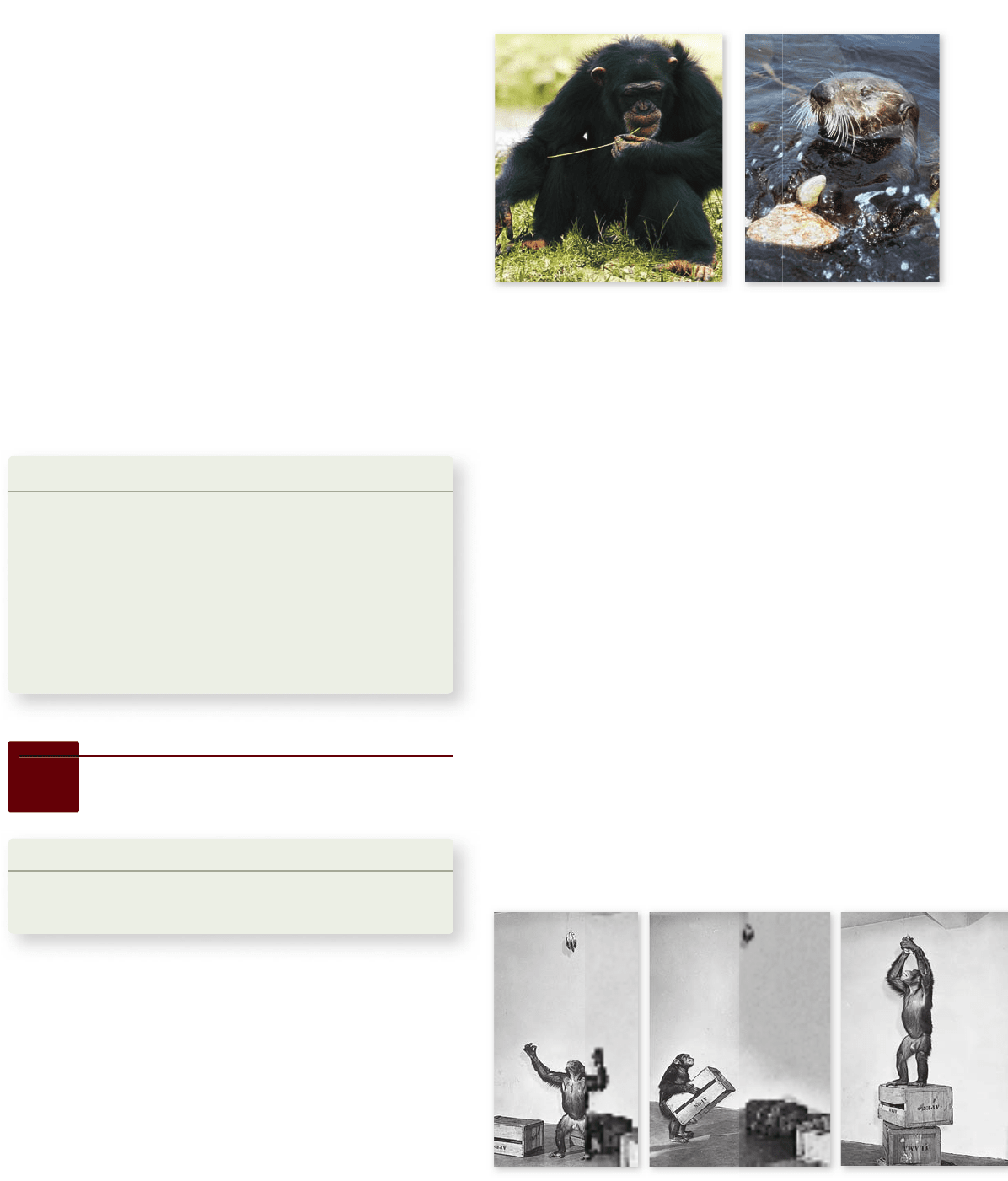
In a series of classic experiments conducted in the 1920s,
a chimpanzee was left in a room with bananas hanging from the
ceiling out of reach. Also in the room were several boxes lying
on the floor. After some unsuccessful attempts to jump up and
grab the bananas, the chimp stacked the boxes beneath the sus-
pended bananas, and climbed up to claim its prize (figure 55.13) .
Field researchers have observed that Japanese macaques learned
Studies on twins reveal a role for both genes
and environment in human behavior
The interaction of genes and the environment can be seen
in humans by comparing the behavior of identical twins
(which are genetically the same), raised in the same envi-
ronment or separated at birth and raised apart in different
environments. Data on human twins raised together or
raised apart allows researchers to determine whether simi-
larities in behavior result from their genetic similarity or
from shared environmental experiences. Twins studies indi-
cate many similarities in a wide range of personality traits
even though twins were raised in very different environ-
ments. Other studies show that antisocial behavior in hu-
mans, for which genetic factors such as MAOA deficiencies
are known in individuals in the study sample, results from a
combination of genes and experience during childhood.
These similarities indicate that genetics plays a role in be-
havior even in humans, although the relative importance of
genetics versus environment is still debated.
Learning Outcomes Review 55.5
During the critical period, off spring must engage in certain social
interactions for normal behavioral development. Parent–off spring contact
stimulates the release of physiological factors, such as hormones and brain
receptors, crucial to growth and brain development. In white-crowned
sparrows, young males must hear their species’ song to sing it correctly,
indicating that both instinct and learning aff ect song development.
■ Some researchers have tried to link IQ and genes
in humans. Why would this research be seen
as controversial?
Figure 55.12
Animal thinking? a. This chimpanzee is
stripping the leaves from a twig, which it will then use to probe a
termite nest. This behavior strongly suggests that the chimpanzee
is consciously planning ahead, with full knowledge of what it
intends to do. b. This sea otter is using a rock as an “anvil,” against
which it bashes a clam to break it open. A sea otter will often keep a
favorite rock for a long time, as though it has a clear idea of its
future use of the rock. Behaviors such as these suggest that animals
have cognitive abilities.
Figure 55.13
Problem solving by a chimpanzee. Unable
to get the bananas by jumping, the chimpanzee devises a solution.
to wash sand off potatoes and to float grain to separate it from
sand. Chimpanzees pull leaves off a tree branch and then stick
the branch into the entrance of a termite nest to “fish” for food.
Chimps also crack open nuts using pieces of wood in a “ham-
mer and anvil” technique. Even more remarkable is that par-
ents appear to teach nut cracking to their offspring!
Recent studies have found that chimpanzees and other
primates show amazing behaviors that provide strong evidence
of cognition. Chimpanzees will eat the leaves of medicinal
plants when infected with certain parasites. Chimps also coop-
erate with other chimps in ways that suggest an understanding
of past success. Cognitive ability is not limited to primates: Ra-
vens and other corvid birds also show extraordinary insight and
problem-solving ability (figure 55.14) .
chapter
55
Behavioral Biology
1141www.ravenbiology.com
rav32223_ch55_1132-1161.indd 1141rav32223_ch55_1132-1161.indd 1141 11/20/09 1:49:41 PM11/20/09 1:49:41 PM