
Raven P.H., Johnson G.B., Mason K.A. Biology (Ninth Edition)
Подождите немного. Документ загружается.

Apago PDF Enhancer
summer breeding ranges
overwintering aggregation
areas
a.
b. c.
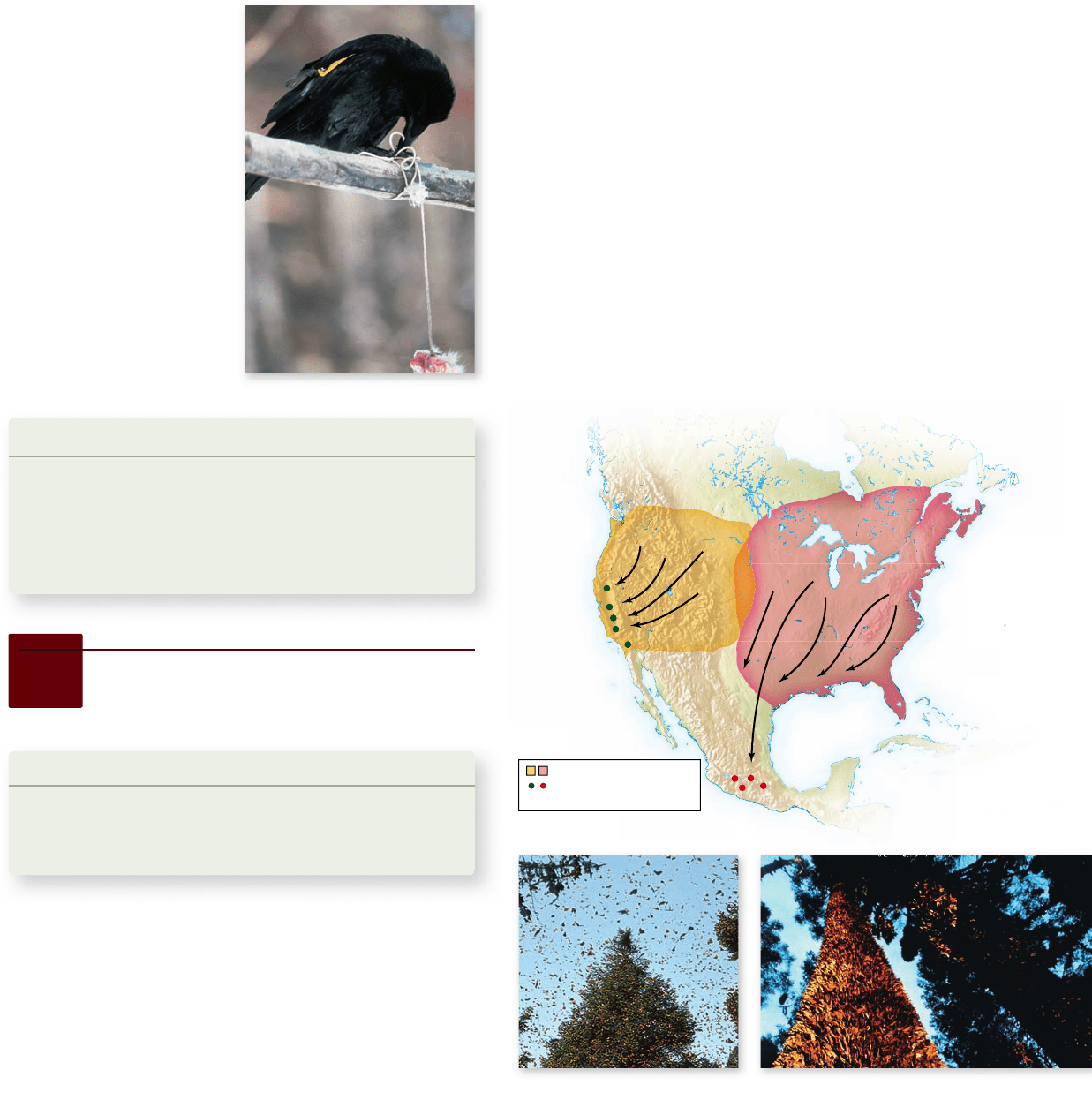
Figure 55.14
Problem
solving by a raven.
Confronted with a problem it
has never previously faced, the
raven gures out how to get the
meat at the end of the string by
repeatedly pulling up a bit of
string and stepping on it.
Monarch butterflies also migrate each fall from central and
eastern North America to their overwintering sites in several
small, geographically isolated areas of coniferous forest in the
mountains of central Mexico (figure 55.15) . Each August,
the butterflies begin a flight southward and at the end of winter,
the monarchs begin the return flight to their summer breeding
ranges. Two to five generations may be produced as the butter-
flies fly north: butterflies that migrate in the autumn to the pre-
cise locations in Mexico have never been there before!
Recent geographic range expansions by some migrating
birds have revealed how migratory patterns change. When colo-
nies of bobolinks became established in the western United
States, far from their normal range in the Midwest and East, they
did not migrate directly to their winter range in South America.
Instead, they migrated east to their ancestral range, and then
south along the original flyway (figure 55.16). Rather than chang-
ing the original migration pattern, they simply added a new seg-
ment. Scientists continue to study the western bobolinks to learn
whether, in time, a more efficient migration path will evolve or
Figure 55.15
Migration of monarch butter ies (Danaus
plexippus). a. Monarchs from western North America overwinter
in areas of mild climate along the Paci c coast. Those from eastern
North America migrate over 3000 kilometers to Mexico.
b. Monarch butter ies arrive at the remote forests of the
overwintering grounds in Mexico, where they (c) form aggregations
on the tree trunks.
55.7
Orientation and Migratory
Behavior
Learning Outcomes
Define migration.1.
Distinguish between orientation and navigation.2.
Describe different systems for navigation.3.
Monarch butterflies and many birds travel thousands of miles
over continents to overwintering sites in the tropics. Many ani-
mals travel away from a nest and then return. To do so, they
track cues in the environment, often showing exceptional skill
at orientation. Animals with a homing instinct, such as pigeons,
recognize complex features of the environment to return to
their home. Despite decades of study, our understanding of ani-
mal orientation is far from complete.
Migration often involves populations
moving large distances
Long-range, two-way movements are known as migrations.
Each fall, ducks, geese, and many other birds migrate south
along flyways from Canada across the United States, heading as
far as South America, and then returning each spring.
Learning Outcome Review 55.6
Research has provided compelling evidence that some nonhuman animals
are able solve problems and use reasoning, cognitive abilities once thought
uniquely human.
■ How could you determine whether a chimpanzee had
the ability to count objects?
1142
part
VIII
Ecology and Behavior
rav32223_ch55_1132-1161.indd 1142rav32223_ch55_1132-1161.indd 1142 11/20/09 1:49:45 PM11/20/09 1:49:45 PM
Apago PDF Enhancer
Summer
nesting
range
Winter
range
Bobolink
ancestral route
extended range
established range
alternative route
not taken
Wintering
range
Breeding
range
Holland
Switzerland
Spain
typical migratory
route of starlings
flight path of
inexperienced starlings
flight path of
experienced starlings
experimental relocation
of all starlings
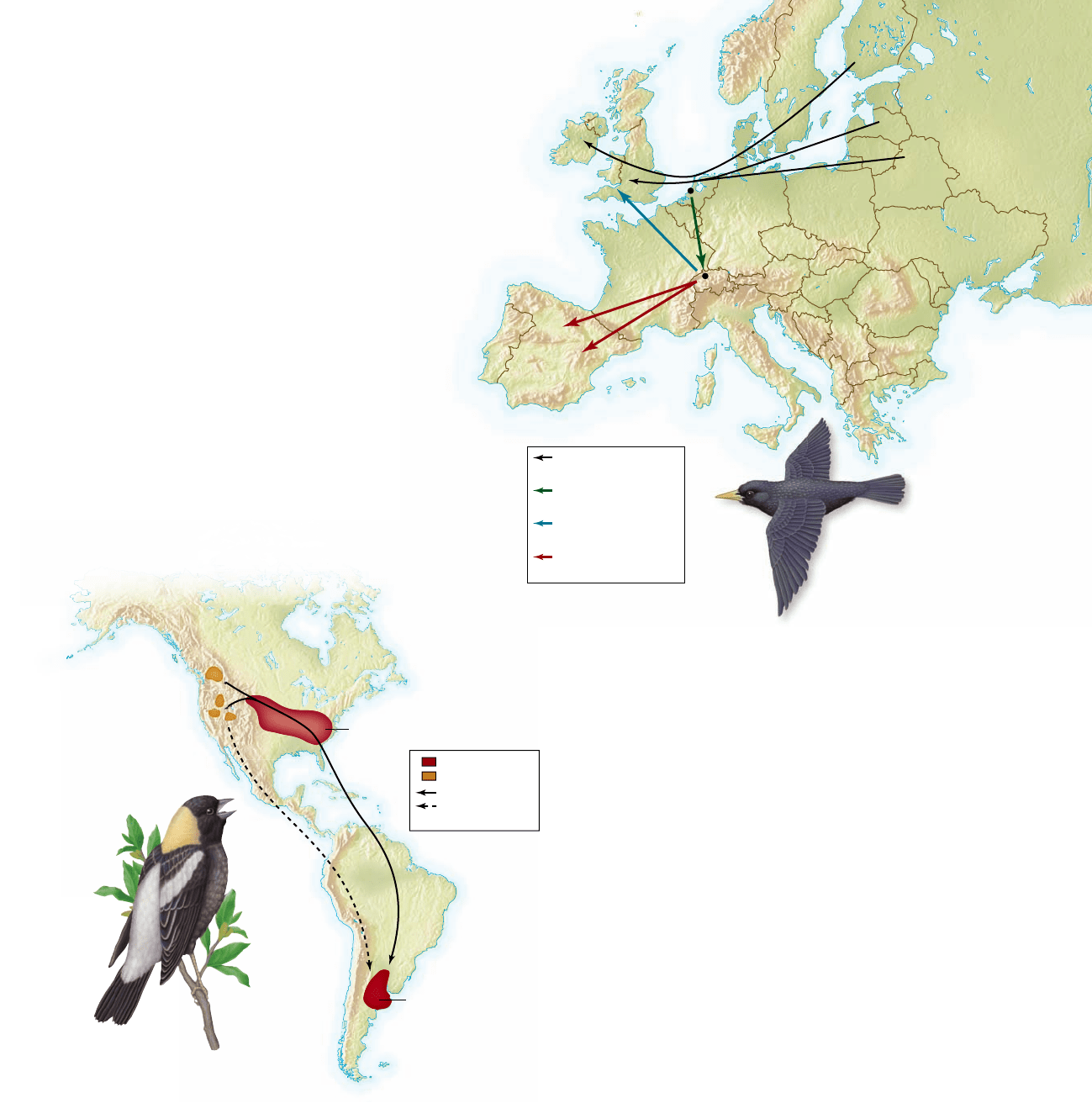
Figure 55.16
Birds on the move. The summer range of
bobolinks (Dolichonyx oryzivorus) recently extended to the far
western United States from their established range in the Midwest.
When birds in these newly established populations migrate to
South America in the winter, they do not y directly to the winter
range; instead, they rst y to the Midwest and then use the
ancestral yway, going much farther than if they ew directly to
their winter range.
Figure 55.17
Migratory behavior of starlings (Sturnus
vulgaris). The navigational abilities of inexperienced birds differ
from those of adults that have made the migratory journey before.
Starlings were captured in Holland, halfway along their full
migratory route from Baltic breeding grounds to wintering grounds
in the British Isles; these birds were transported to Switzerland and
released. Experienced older birds compensated for the displacement
and ew toward the normal wintering grounds (blue arrow).
Inexperienced young birds kept ying in the same direction, on a
course that took them toward Spain (red arrows). These
observations imply that inexperienced birds y by orientation, but
experienced birds learn true navigation.
whether the birds will always follow their ancestral course. The
behavior of butterflies and birds accentuate the mysteries of the
mechanism employed during migration.
Migrating animals must be capable
of orientation and navigation
To get from one place to another, animals must have a “map” (that
is, know where to go) and a “compass” (use environmental cues to
guide their journey). Orientation requires following a bear-
ing such as a source of light, but navigation is the ability to
set or adjust a bearing, and then follow it. The former is
analogous to using a compass, while the latter is like
using a compass in conjunction with a map. The nature
of the “map” animals use is unclear.
Birds and other animals navigate by looking at
the sun during the day and the stars at night. The indigo
bunting is a short-distance nocturnal migrant bird. It flies
during the day using the Sun as a guide, and compensates for
the movement of the Sun in the sky as the day progresses.
These birds use the positions of constellations around the
North Star in the night sky as a compass.
Many migrating birds also have the ability to detect
Earth’s magnetic field and to orient themselves with respect
to it when cues from the Sun or stars are not available. In an in-
door cage, they will attempt to move in the correct geographic
direction, even though there are no visible external cues. How-
ever, the placement of a magnet near the cage can alter the direc-
tion in which the birds attempt to move. Researchers have found
magnetite, a magnetized iron ore, in the eyes and upper beaks of
some birds, but how these sensory organs function is not known.
The first migration of a bird appears to be innately guided
by both celestial cues (the birds fly mainly at night) and Earth’s
magnetic field. When the two cues are experimentally manipu-
lated to give conflicting directions, the information provided by
the stars seems to override the magnetic information. Recent
studies, however, indicate that celestial cues indicate the general
direction for migration, whereas magnetic cues indicate the spe-
cific migratory path (perhaps a turn the bird must make mid-
route). Experiments on starlings indicate that inexperienced
birds migrate by orientation, but older birds that have migrated
previously use true navigation (figure 55.17).
chapter
55
Behavioral Biology
114 3www.ravenbiology.com
rav32223_ch55_1132-1161.indd 1143rav32223_ch55_1132-1161.indd 1143 11/20/09 1:49:55 PM11/20/09 1:49:55 PM
Apago PDF Enhancer
1. Female gives head-up
display to male
2. Male swims zigzag to female
and then leads her to nest
3. Male shows female
entrance to nest
5. Male enters nest and
fertilizes eggs
4. Female enters nest and spawns
while male stimulates tail
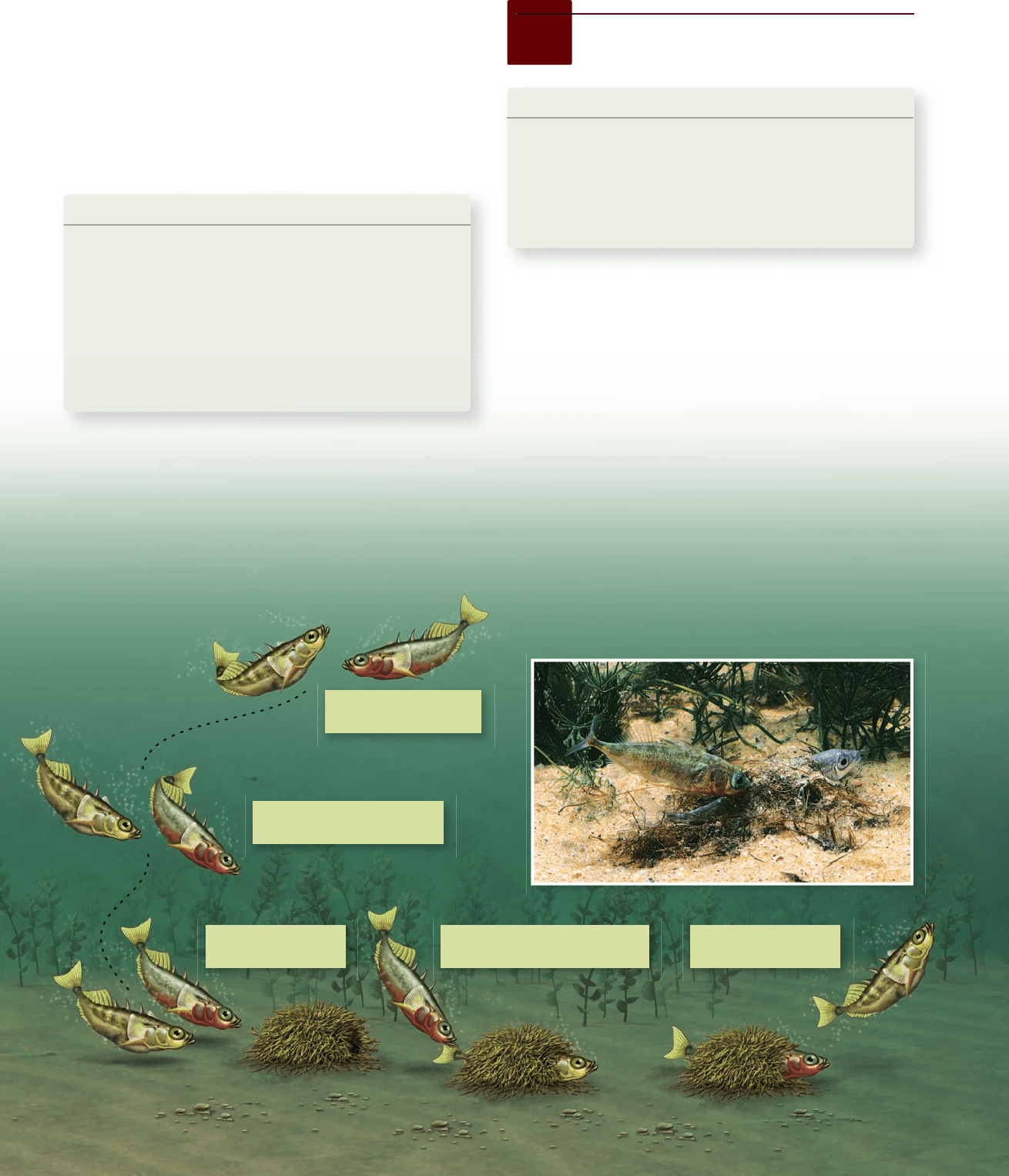
Figure 55.18
A stimulus–response chain. Stickleback
courtship involves a sequence of behaviors leading to the
fertilization of eggs.
We know relatively little about how other migrating animals
navigate. For instance, green sea turtles migrate from Brazil halfway
across the Atlantic Ocean to Ascension Island, where the females lay
their eggs. How do they find this tiny island in the middle of the
ocean, which they haven’t seen for perhaps 30 years? How do the
young that hatch on the island know how to find their way to Brazil?
Newly hatched turtles use wave action as a cue to head to sea. Some
sea turtles use the Earth’s magnetic field to maintain position in the
North Atlantic, but turtle migration is still largely a mystery.
Learning Outcomes Review 55.7
Migration is the long-distance movement of a population, often in a cyclic
way. Orientation refers to following a bearing or a direction; navigation
involves setting a bearing or direction based on some sort of map or
memory. Many species use celestial navigation; they may also be able to
detect magnetic fi elds when those cues are absent. The precision of animal
migration remains a mystery in many species.
■ Animals as diverse as butterflies and birds migrate over
long distances. Would you expect them to use different
navigation systems? Why or why not?
55.8
Animal Communication
Learning Outcomes
Explain the nature of signals used in mate 1.
attraction.
Explain the role of courtship signals in reproductive 2.
isolation.
Describe how honeybees communicate information 3.
about the location of new food sources.
Communication is central to species recognition and repro-
ductive isolation, and to the interactions that are essential to
social behavior. Much research in behavior analyzes the na-
ture of communication signals, determining how they are
produced and received, and identifies their ecological roles
and evolutionary origins. Communication involves several
signal modalities, including visual, acoustic, chemical, electric,
and vibrational signals.
rav32223_ch55_1132-1161.indd 1144rav32223_ch55_1132-1161.indd 1144 11/20/09 1:50:01 PM11/20/09 1:50:01 PM
Apago PDF Enhancer
1.
2.
3.
4.
5.
6.
7.
8.
9.
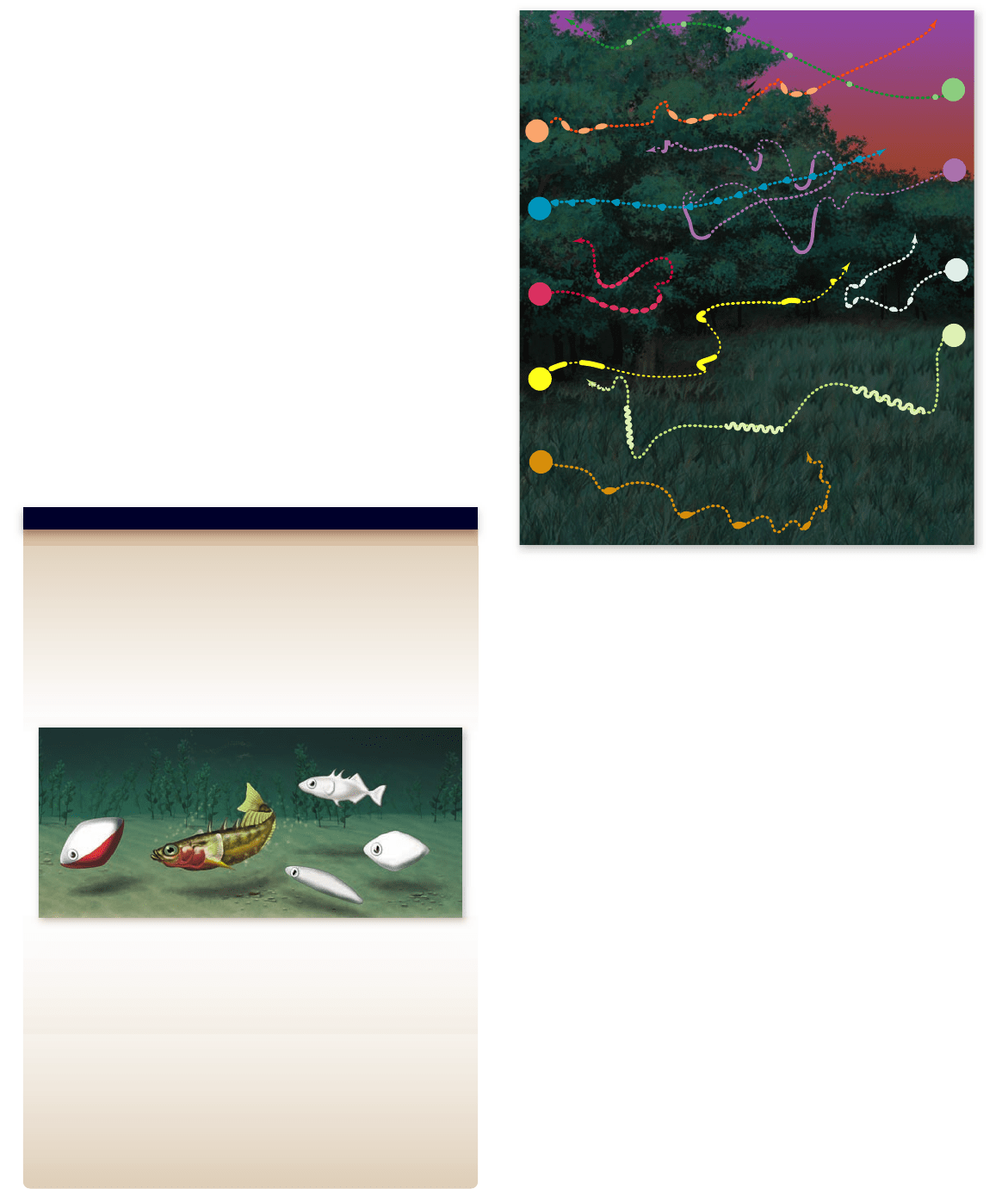
Hypothesis: The red underside of male stickleback is the key stimulus
that releases an aggressive response by a territory-holding male.
Prediction: Models with red coloration will trigger an attack by a
resident male.
Test: Construct plastic models, some of which accurately resemble a
stickleback male, but lack the red underside. Construct other models that
vary in their fishlike appearance, but have red-colored undersides. Expose a
territorial male to the models one at a time, and record the number of attacks.
Result: Realistic models lacking red elicit no response. Odd-shape
models trigger an attack if they have red undersides, even if they poorly
resemble fish.
Conclusion: The red underside of a male stickleback is the key stimulus
that triggers aggressive behavior.
Further Experiments: How would you determine if the color of a male
stickleback was a releaser of aggressive behavior? How would you know if
sound was important? Could you determine if stimuli have additive
effects? How? Why do you think the color red is important in territorial
defense? Might it also be a courtship signal? What information might the
color red encode for a female looking for a mate? (see also figure 55.18)
SCIENTIFIC THINKING
Male stickleback
Model with
red belly
White
model
White
model
A realistic
white model
Figure 55.20
Fire y reworks. The bioluminescent
displays of these lampyrid beetles are species-speci c and serve as
behavioral mechanisms of reproductive isolation. Each number
represents the ash pattern of a male of a different species.
males recognize conspecific females by their flash response.
This series of reciprocal responses provides a continuous
“check” on the species identity of potential mates.
Pheromones , chemical messengers used for communica-
tion between individuals of the same species, serve as sex at-
tractants in many animals. Female silk moths (Bombyx mori)
produce a sex pheromone called bombykol in a gland associated
with the reproductive system. The male’s antennae contain nu-
merous highly sensitive sensory receptors, and neurophysio-
logical studies show they specifically detect bombykol. In some
moth species, males can detect extremely low concentrations of
sex pheromone and locate females from as far as 7 km away!
Many insects, amphibians, and birds produce species-
specific acoustic signals to attract mates. Bullfrog males call by
inflating and discharging air from their vocal sacs, located be-
neath the lower jaw. Females can distinguish a conspecific
male’s call from those of other frogs that may be in the same
habitat and calling at the same time. As mentioned earlier, male
birds sing to advertise their presence and to attract females. In
many species, variations in the males’ songs identify individual
males in a population. In these species, the song is individually
specific as well as species-specific. Vibrations, like sound sig-
nals, are a form of mechanical communication used by insects,
amphibians, and other animals.
Courtship behaviors play a major role in sexual selection,
which we discuss later in this chapter.
Successful reproduction depends on
appropriate signals and responses
During courtship, animals produce signals to communicate
with potential mates and with other members of their own sex.
A stimulus–response chain sometimes occurs, in which the be-
havior of the male in turn releases a behavior in the female,
resulting in mating (figure 55.18). These signals are usually
highly species-specific. Many studies on communication in-
volve designing experiments to determine which key stimuli
associated with an animal’s visual appearance, sounds, or odors
convey information about the nature of the signals produced by
the sender. One classical study analyzed territorial defense and
courtship communication in stickleback fish (figure 55.19).
Finding a mate: Communicating
information about species identity
Courtship signals often restrict communication to members of
the same species and in doing so serve a key function in repro-
ductive isolation (see chapter 22). The flashes of fireflies (which
are actually beetles) are species-specific signals: females recog-
nize conspecific males by their flash pattern (figure 55.20) , and
Figure 55.19
Key stimulus in stickleback sh.
chapter
55
Behavioral Biology
114 5www.ravenbiology.com
rav32223_ch55_1132-1161.indd 1145rav32223_ch55_1132-1161.indd 1145 11/20/09 1:50:08 PM11/20/09 1:50:08 PM
Apago PDF Enhancer
30°
a. b.
30°
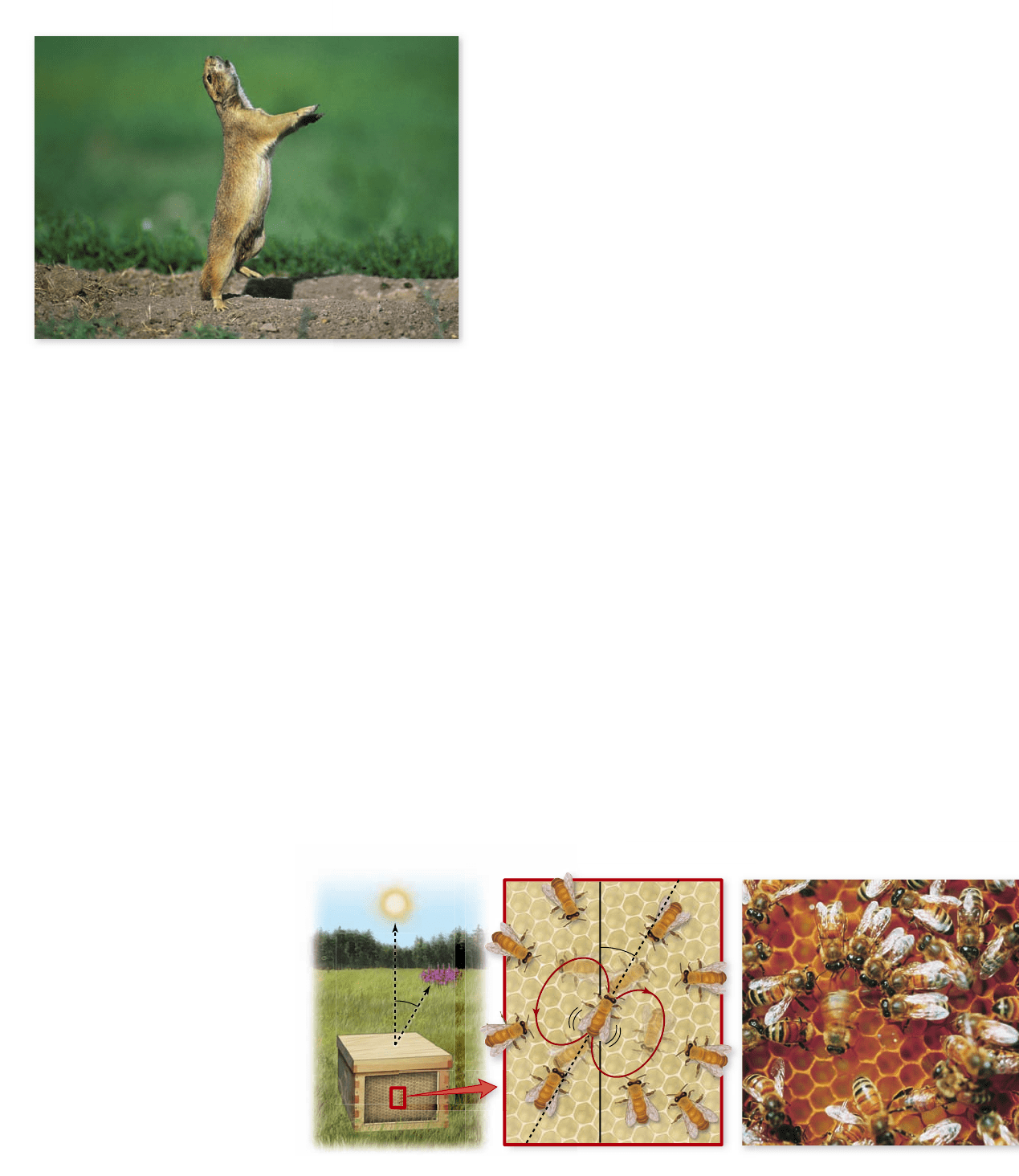
Figure 55.22
The waggle
dance of honeybees (Apis
mellifera). a. The angle between the
food source, the nest, and the Sun is
represented by a dancing bee as the
angle between the straight part of the
dance and vertical. The food is 30° to
the right of the Sun, and the straight
part of the bee’s dance on the hive is 30°
to the right of vertical. b. A scout bee
dances on a comb in the hive.
Communication enables information
exchange among group members
Many insects, fish, birds, and mammals live in social groups in
which information is communicated between group members.
For example, some individuals in mammalian societies serve as
sentinels, vigilantly on the lookout for danger. When a predator
appears, they give an alarm call, and group members respond
by seeking shelter (figure 55.21). Social insects such as ants and
honeybees produce alarm pheromones that trigger attack be-
havior. Ants also deposit trail pheromones between the nest and
a food source to lead other colony members to food. Honey-
bees have an extremely complex dance language that directs
hivemates to nectar sources.
The dance language of the honeybee
The European honeybee lives in colonies of tens of thousands
of individuals whose behaviors are integrated into a complex,
Figure 55.21
Alarm calling by a prairie dog (Cynomys
ludovicianus). When a prairie dog sees a predator, it stands on its
hind legs and gives an alarm call, which causes other prairie dogs to
rapidly return to their burrows.
cooperative society. Worker bees may forage miles from the
hive, collecting nectar and pollen from a variety of plants and
switching between plant species depending on their energetic
rewards. Food sources used by bees tend to occur in patches,
and each patch offers much more food than a single bee can
transport to the hive. A colony is able to exploit the resources of
a patch because of the behavior of scout bees, which locate
patches and communicate their location to hivemates through
a dance language. Over many years, Nobel laureate Karl von
Frisch (who shared the 1973 prize with Tinbergen and Lorenz),
together with generations of students and colleagues, was able
to unravel the details of dance language communication.
When a scout bee returns after finding a distant food
source, she performs a remarkable behavior pattern called a
waggle dance on a vertical comb in the darkness of the hive.
The path of the bee during the dance resembles a figure-eight.
On the straight part of the path (indicated with dashes in
figure 55.22) , the bee vibrates (“waggles”) her abdomen while
producing bursts of sound. The bee may stop periodically to
give her hivemates a sample of the nectar carried in her crop. As
she dances, she is followed closely by other bees, which soon
appear at the new food source to assist in collecting food.
Von Frisch and his colleagues performed experiments to
show that hivemates use information in the waggle dance to
locate new food sources. The scout bee indicates the direction
of the food source by representing the angle between the food
source, the hive, and the Sun as the deviation from vertical of
the straight run of the dance performed on the hive comb. Thus
if the bee danced with the straight run pointing directly up,
then the food source would be in the direction of the Sun. If the
food is at a 30° angle to the right of the Sun’s position, then
the straight run would be oriented upward at a 30° angle to the
right of vertical) (figure 55.22a). The distance to the food source
is indicated by the duration of the straight run. One ingenious
experiment designed to show that the bees actually use the in-
formation in the dance tricked bees that were unaware of the
location of food into misinterpreting the directions given by
the scout bee’s dance. Computer-controlled robot bees have
also been used to give hivemates incorrect information, again
demonstrating that bees use the directions coded in the dance!
114 6
part
VIII
Ecology and Behavior
rav32223_ch55_1132-1161.indd 1146rav32223_ch55_1132-1161.indd 1146 11/20/09 1:50:20 PM11/20/09 1:50:20 PM
Apago PDF Enhancer
0
0.33 seconds
Eagle Leopard Snake
0.22 seconds
8
10
12
4
6
2
1.26 seconds
Frequency (kHz)
a. b.
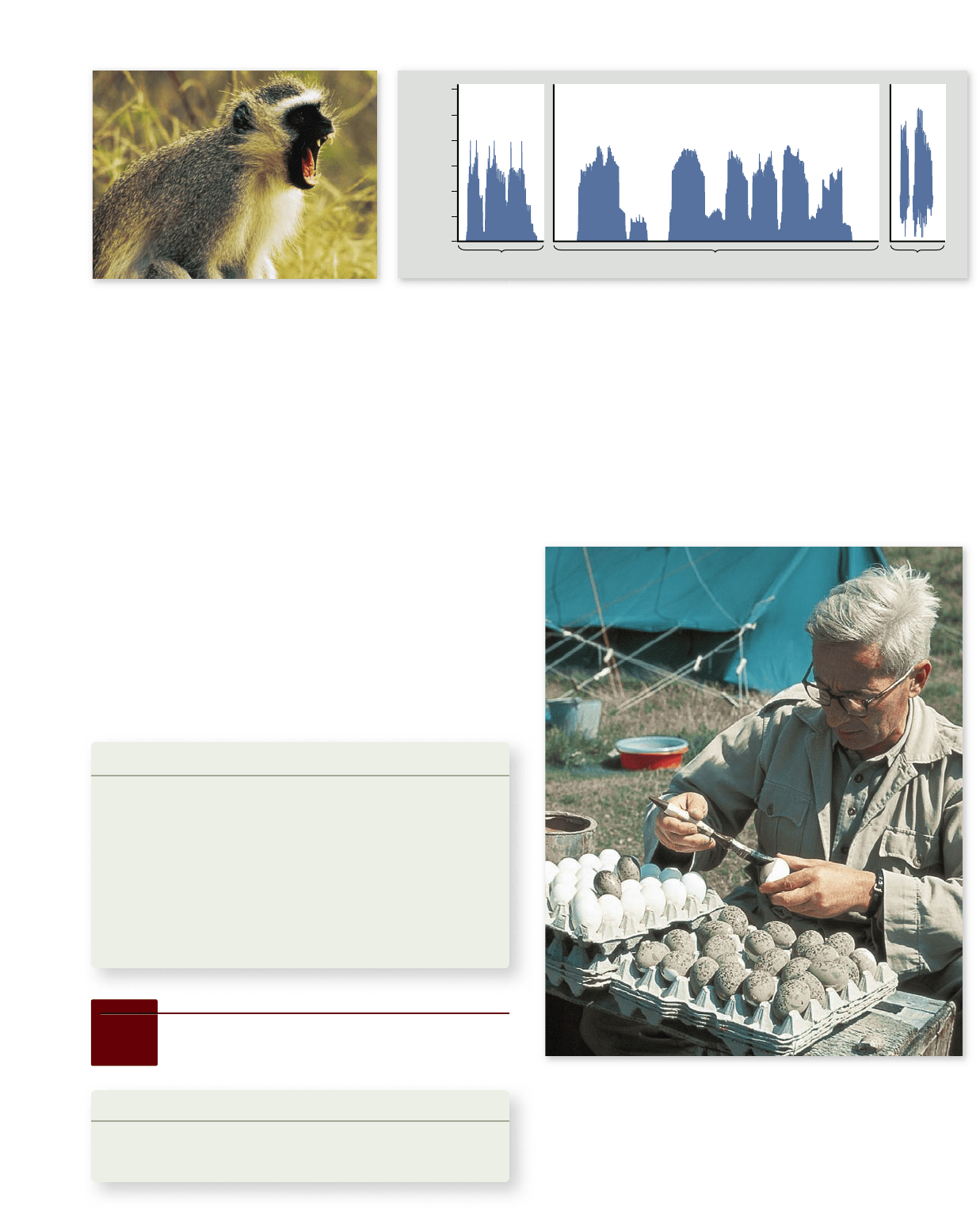
Figure 55.23
Primate semantics. Vervet monkeys (Cercopithecus aethiops) give different alarm calls (a) when troop members sight an
eagle, leopard, or snake. b. Each distinctive call elicits a different and adaptive escape behavior.
55.9
Behavioral Ecology
Learning Outcomes
Describe behavioral ecology.1.
Discuss the economic analysis of behaviors.2.
Language in nonhuman primates and humans
Evolutionary biologists have sought the origins of human lan-
guage in the communication systems of monkeys and apes.
Some nonhuman primates have a “vocabulary” that allows indi-
viduals to signal the identity of specific predators. Different
vocalizations of African vervet monkeys, for example, indicate
eagles, leopards, or snakes, among other threats (figure 55.23).
The complexity of human language would at first ap-
pear to defy biological explanation, but closer examination
suggests that the differences are in fact superficial—all lan-
guages share many basic similarities. All of the roughly 3000
languages draw from the same set of 40 consonant and vow-
el sounds (English uses two dozen of them), and humans of
all cultures can acquire and learn them. Researchers believe
these similarities reflect the way our brains handle abstract
information. The discovery of FoxP2, the so-called “lan-
guage gene,” supports the idea that human language has a
hereditary basis.
Learning Outcomes Review 55.8
Animal communication involves production and reception of signals, in
the form of sounds, chemicals, or movements, that primarily have an
ecological function. Courtship signals are highly species-specifi c and serve
as a mechanism of reproductive isolation. Animals living in social groups,
such as honeybees, may use complex systems of communication to exchange
information about food and predators.
■ Two species of moth use the same sex pheromone to
locate mates. Explain how these species could
nevertheless be reproductively isolated.
Niko Tinbergen pioneered the study of the adaptive function
of behavior. Stated simply, this is how behavior allows an ani-
mal to stay alive and keep its offspring alive. For example, Tin-
bergen observed that after gull nestlings hatch, the parents
remove the eggshells from the nest. To understand why (ulti-
mate causation), he painted chicken eggs to resemble gull eggs
(figure 55.24) , which had camouflage coloration to allow them
Figure 55.24
The adaptive value of egg coloration.
Niko Tinbergen, a winner of the 1973 Nobel Prize in physiology or
medicine, painted chicken eggs to resemble the mottled brown
camou age of gull eggs. The eggs were used to test the hypothesis
that camou aged eggs are more dif cult for predators to nd and
thus increase the young’s chances of survival.
chapter
55
Behavioral Biology
114 7www.ravenbiology.com
rav32223_ch55_1132-1161.indd 1147rav32223_ch55_1132-1161.indd 1147 11/20/09 1:50:54 PM11/20/09 1:50:54 PM
Apago PDF Enhancer
50 20 30 40
4.0
2.0
6
4
2
5
3
1
6.0
0
Energy Gain (J/s)
Number of Mussels Eaten per Day
Length of Mussel (mm)
10 0
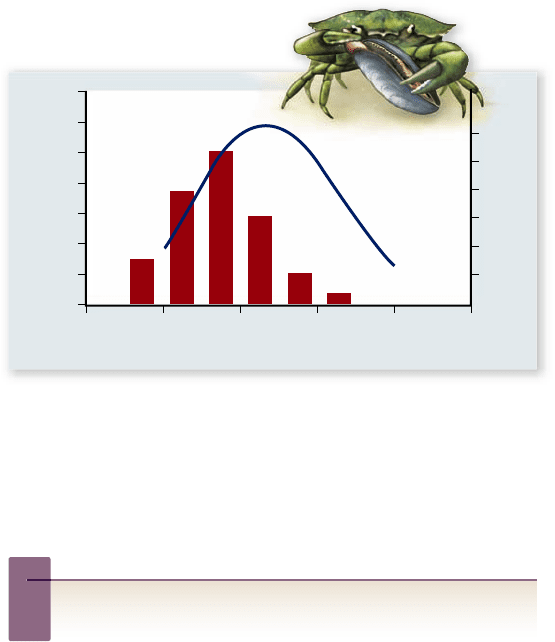
Figure 55.25
Optimal diet. The shore crab selects a diet of
energetically pro table prey. The curve describes the net energy
gain (equal to energy gained minus energy expended) derived from
feeding on different sizes of mussels. The bar graph shows the
numbers of mussels of each size in the diet. Shore crabs tend to feed
on those mussels that provide the most energy.
Inquiry question
?
What factors might be responsible for the slight difference in
peak prey length relative to the length optimal for maximum
energy gain?
optimal foraging theory, natural selection favors individuals
whose foraging behavior is as energetically efficient as possible.
In other words, animals tend to feed on prey that maximize their
net energy intake per unit of foraging time.
A number of studies have demonstrated that foragers do
prefer prey that maximize energy return. Shore crabs, for ex-
ample, tend to feed primarily on intermediate-sized mussels,
which provide the greatest energy return; larger mussels yield
more energy, but also take considerably more energy to crack
open (figure 55.25).
This optimal foraging approach assumes natural selection
will favor behavior that maximizes energy acquisition if the in-
creased energy reserves lead to increases in reproductive suc-
cess. In both Colombian ground squirrels and captive zebra
finches, a direct relationship exists between net energy intake
and the number of offspring raised; similarly, the reproductive
success of orb-weaving spiders is related to how much food
they can capture.
Animals have other needs besides energy, however, and
sometimes these needs conflict. One obvious need is the avoid-
ance of predators: Often, the behavior that maximizes energy
intake is not the one that minimizes predation risk. In this case,
the behavior that maximizes fitness often may reflect a trade-
off between obtaining the most energy at the least risk of being
eaten. Not surprisingly, many studies have shown that a wide
variety of animal species alter their foraging behavior—
becoming less active, spending more time watching for preda-
tors, or staying nearer to cover—when predators are present.
Compromises, in this case a trade-off between vigilance and
feeding, may thus be made during foraging.
to be inconspicuous against the natural background. He dis-
tributed them throughout the area in which the gulls were
nesting, placing broken eggshells with their prominent white
interiors next to some of the eggs. As a control, he left other
camouflaged eggs alone without eggshells. He then noted
which eggs were found more easily by crows. Because the crows
could use the white interior of a broken eggshell as a cue, they
ate more of the camouflaged eggs that were near eggshells.
Tinbergen concluded that eggshell removal behavior is adap-
tive: it reduces predation and thus increases the offspring’s
chances of survival.
Tinbergen is credited with being one of the founders of
behavioral ecology, the study of how natural selection shapes
behavior. This branch of ecology examines the adaptive
significance of behavior, or how behavior may increase survival
and reproduction. Current research in behavioral ecology fo-
cuses on how behavior contributes to an animal’s reproductive
success, or fitness. As we saw in section 55.3, differences in be-
havior among individuals often result from genetic differences.
Therefore, natural selection operating on behavior has the po-
tential to produce evolutionary change.
Consequently, the field of behavioral ecology is con-
cerned with two questions. First, is behavior adaptive? Although
it is tempting to assume that behavior must in some way repre-
sent an adaptive response to the environment, this need not be
the case. As you saw in chapter 20, traits can appear for many
reasons other than natural selection, such as genetic drift, gene
flow, or the correlated consequences of selection on other traits.
Moreover, traits may be present in a population because they
evolved as adaptations in the past, but are no longer useful.
These possibilities hold true for behavioral traits as much as for
any other kind of trait.
If behavior is adaptive, the next question is: How is it
adaptive? Although the ultimate criterion is reproductive suc-
cess, behavioral ecologists are interested in how behavior can
lead to greater reproductive success. Does a behavior enhance
energy intake, thus increasing the number of offspring pro-
duced? Does it increase mating success? Does it decrease the
chance of predation? The job of a behavioral ecologist is to
determine the effect of a behavioral trait—for example, forag-
ing efficiency—on each of these activities and then to discover
whether increases translate into increased fitness. Benefits and
costs of behaviors, estimated in terms of energy or offspring,
are often used to analyze the adaptive nature of behavior.
Foraging behavior can directly inuence
energy intake and individual tness
A useful way to understand the approach of behavioral ecology is
by focusing on foraging behavior. For many animals, food comes
in a variety of sizes. Larger foods may contain more energy but
may be harder to capture and less abundant. In addition, animals
may forage for some types of food that are farther away than
other types. For these animals foraging involves a trade-off be-
tween a food’s energy content and the cost of obtaining it. The
net energy (estimated in calories or joules) gained by feeding on
prey of each size is simply the energy content of the prey minus
the energy costs of pursuing and handling it. According to
114 8
part
VIII
Ecology and Behavior
rav32223_ch55_1132-1161.indd 1148rav32223_ch55_1132-1161.indd 1148 11/20/09 1:51:01 PM11/20/09 1:51:01 PM
Apago PDF Enhancer
100 m
9
9
10
10
R
R
R
R
R
R
7
7
8
8
5
5
6
6
3
3
4
4
1
1
2
2
N
N
N
N
removed
new
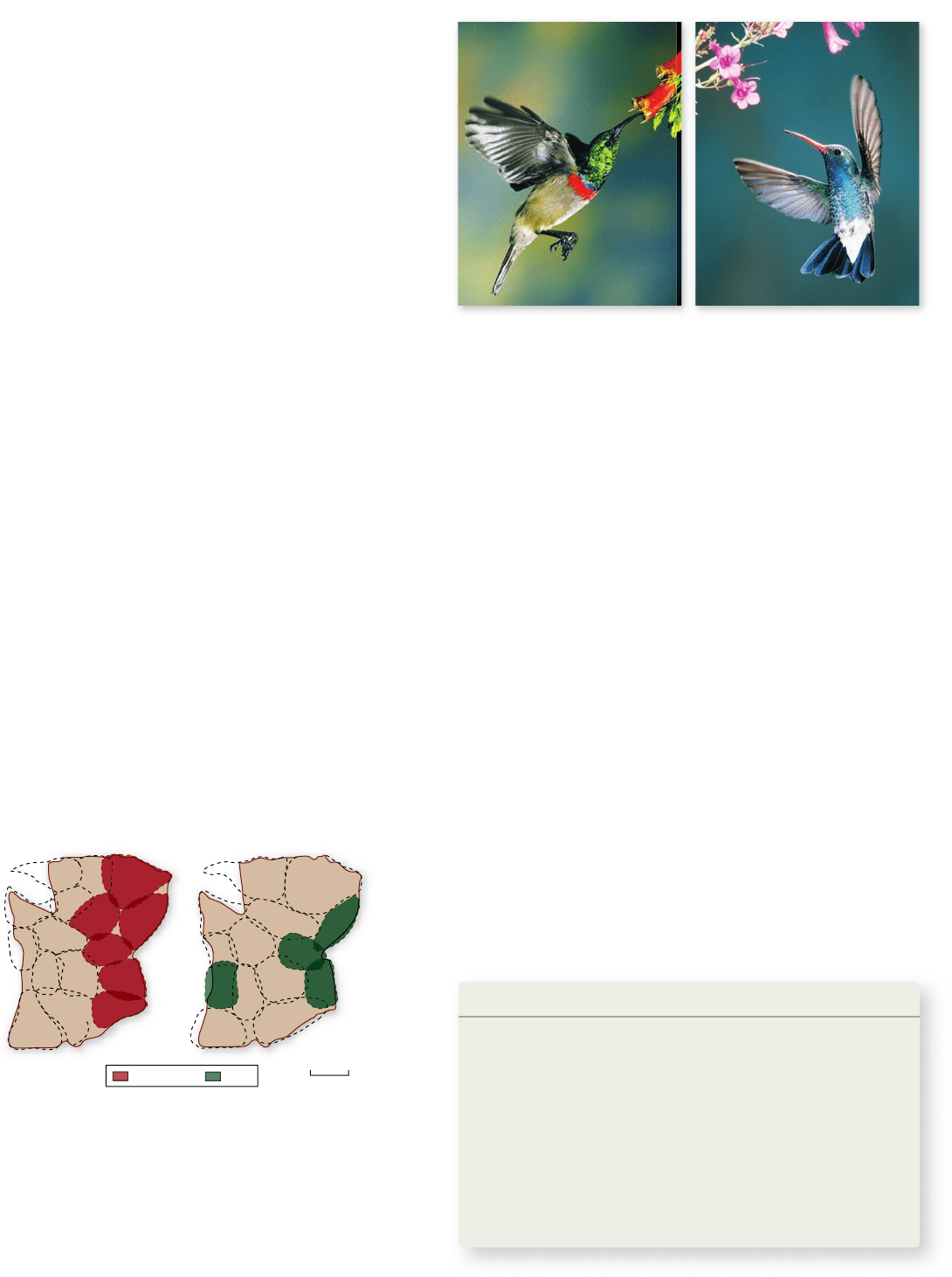
Figure 55.26
Competition for space. Territory size in
birds is adjusted according to the number of competitors. When six
pairs of great tits (Parus major) were removed from their territories
(indicated by R in the left gure), their territories were taken over
by other birds in the area and by four new pairs (indicated by N in
the right gure). Numbers correspond to the birds present before
and after.
Figure 55.27
The bene t of territoriality. Sunbirds (on
the left), found in Africa and ecologically similar to New World
hummingbirds (on the right), protect their food source by attacking
other sunbirds that approach owers in their territory.
must actively defend the patch. The benefits of exclusive use
outweigh the costs of defense only under certain conditions.
Sunbirds, for example, expend 3000 calories per hour chas-
ing intruders from a territory. Whether the benefit of defending
a territory will exceed this cost depends on the amount of nectar
in the flowers and how efficiently the bird can collect it. When
flowers are very scarce or nectar levels are very low, a nectar-
feeding bird may not gain enough energy to balance the energy
used in defense. Under these conditions, it is not energetically
advantageous to be territorial. Similarly, when flowers are very
abundant, a bird can efficiently meet its daily energy require-
ments without behaving territorially and adding the costs of de-
fense. Again, from an energetic standpoint, defending abundant
resources isn’t worth the cost, either. Territoriality therefore only
occurs at intermediate levels of flower availability and nectar
production, when the benefits of defense outweigh the costs.
In many species, access to females is a more important de-
terminant of territory size for males than is food availability. In
some lizards, for example, males maintain enormous territories
during the breeding season. These territories, which encompass
the territories of several females, are much larger than would be
required to supply enough food, and they are defended vigor-
ously. In the nonbreeding season, by contrast, male territory size
decreases dramatically, as does aggressive territorial behavior.
Learning Outcomes Review 55.9
Behavioral ecology is the study of the adaptive signifi cance of behavior—
that is, how it aff ects survival and reproductive success. An economic
approach estimates the energy benefi ts and costs of a behavior and assumes
that animals gain more from a behavior than they expend, obtaining a
fi tness advantage. Foraging behavior and defense of a territory can be
analyzed in this way. Apart from energy gains, considerations such as
avoiding predators are also important to fi tness.
■ The Hawaiian honeycreeper, a nectar-feeding bird, fails
to defend flowers that are either infrequently
encountered or very abundant. Why?
Optimal foraging theory assumes that energy-maximiz-
ing behavior has evolved by natural selection. Therefore, it
must have a genetic basis. For example, female zebra finches
particularly successful in maximizing net energy intake tend to
have similarly successful offspring. In this study, young birds
were removed from their mothers before they were able to
leave the nest, so this similarity indicates that foraging behavior
probably has a genetic component. Studies on other animals
show that age, experience, and learning are also important to
the development of efficient foraging.
Territorial behavior evolves if the bene ts
of holding a territory exceed the costs
Animals often move over a large area, or home range, during
their course of activity. In many species, the home range of
several individuals overlaps in time or in space, but each indi-
vidual defends a portion of its home range and uses it and its
resources exclusively. This behavior is called territoriality
(figure 55.26).
The defining characteristic of territorial behavior is de-
fense against intrusion and resource use by other individuals.
Territories are defended by displays advertising that territories
are occupied, and by overt aggression. A bird sings from its perch
within a territory to prevent take-over by a neighboring bird. If
a potential usurper is not deterred by the song, the territory
owner may attack and try to drive it away. But territorial defense
has its costs. Singing is energetically expensive, and attacks can
lead to injury. Using a signal (a song or visual display) to adver-
tise occupancy can reveal a bird’s position to a predator.
Why does an animal bear the costs of territorial defense?
Energetic benefits of territoriality may take the form of in-
creased food intake due to exclusive use of resources, access to
mates, or access to refuges from predators. Studies of nectar-
feeding birds such as hummingbirds and sunbirds provide an
example (figure 55.27) . A bird benefits from having the exclusive
use of a patch of flowers because it can efficiently harvest the
nectar the flowers produce. To maintain exclusive use, the bird
chapter
55
Behavioral Biology
114 9www.ravenbiology.com
rav32223_ch55_1132-1161.indd 1149rav32223_ch55_1132-1161.indd 1149 11/20/09 1:51:01 PM11/20/09 1:51:01 PM
Apago PDF Enhancer
a
.
b
.
c.
140 150 160
Number of Eyespots in Male Tail Feathers
Number of Mates
0
5
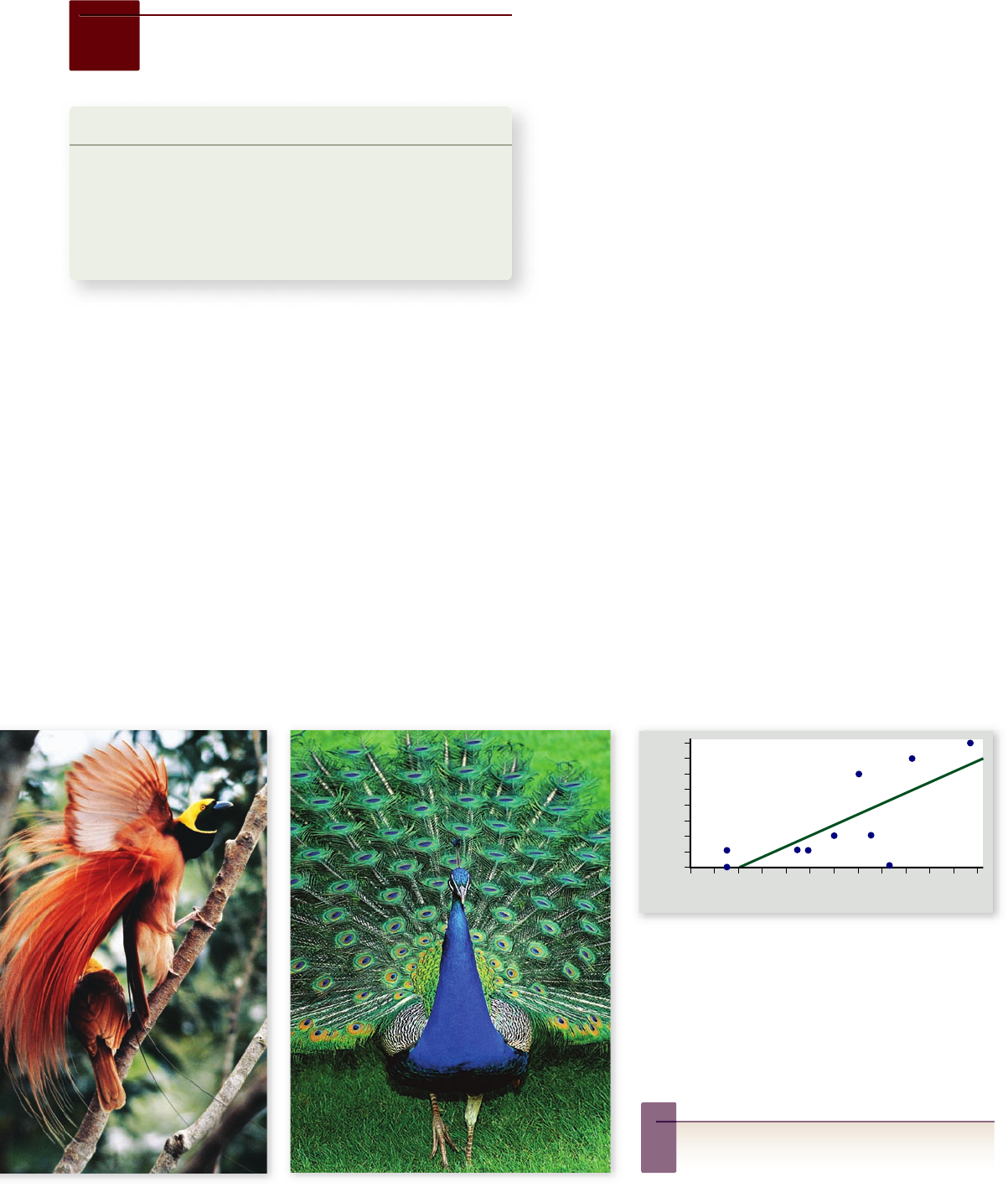
Figure 55.28
Products of sexual selection.
Attracting mates with long feathers is common in bird
species such as (a) the African paradise whydah (Vidua
paradisaea), and (b) the peacock (Pavo cristatus) which
show pronounced sexual dimorphism. c. Female
peahens prefer to mate with males having greater
numbers of eyespots in their tail feathers.
Inquiry question
?
Why do females prefer males with more spots?
differ in the way they attempt to maximize fitness. Such a dif-
ference in reproductive behavior is clearly seen in mate choice.
Darwin was the first to observe that females often do not mate
with the first male they encounter, but instead seem to evalu-
ate a male’s quality and then decide whether to mate. Peahens
prefer to mate with peacocks that have more eye spots on their
elaborate tail feathers (figure 55.28b, c) . Similarly, female frogs
prefer to mate with males having more acoustically complex,
and thus attractive, calls. This behavior, called mate choice, is
well known in many invertebrate and vertebrate species.
Males are selective in choosing a mate much less fre-
quently than females. Why should this be? Many of the differ-
ences in reproductive strategies between the sexes can be
understood by comparing the parental investment made by
males and females. Parental investment refers to the energy
and time each sex makes (“invests”) in producing and rearing
offspring; it is, in effect, an estimate of the energy expended by
males and females in each reproductive event.
Numerous studies have shown that females generally
have a higher parental investment. One reason is that eggs
are much larger than sperm—195,000 times larger in hu-
mans! Eggs contain proteins and lipids in the yolk and other
nutrients for the developing embryo, but sperm are little
more than mobile DNA packages. In some groups of ani-
mals (mammals, for example), females are responsible for
gestation and lactation, costly reproductive functions only
they can carry out.
The consequence of such inequalities in reproductive
investment is that the sexes face very different selective
pressures. Because any single reproductive event is relative-
ly inexpensive for males, they can best increase their fitness
by mating with as many females as possible. This is because
55.10
Reproductive Strategies
and Sexual Selection
Learning Outcomes
Explain parental investment and the prediction it makes 1.
about mate choice.
Describe how sexual selection leads to the evolution of 2.
secondary sexual characteristics.
Explain why some species are generally monogamous 3.
and other are polygynous.
During the breeding season, animals make several important life-
history “decisions” concerning their choice of mates, how many
mates to have, and how much time and energy to devote to rear-
ing offspring. These decisions are all aspects of an animal’s
reproductive strategy, a set of behaviors that presumably have
evolved to maximize reproductive success. Energetic costs of re-
production appear to have been critically important to behavioral
differences between females and males. Ecological factors such as
the way food resources, nest sites, and members of the opposite
sex are spatially distributed in the environment, as well as disease,
are important in the evolution of reproductive decisions.
The sexes often have di erent
reproductive strategies
Males and females have the common goal of improving the
quantity and quality of offspring they produce, but usually
115 0
part
VIII
Ecology and Behavior
rav32223_ch55_1132-1161.indd 1150rav32223_ch55_1132-1161.indd 1150 11/20/09 1:51:09 PM11/20/09 1:51:09 PM
Apago PDF Enhancer
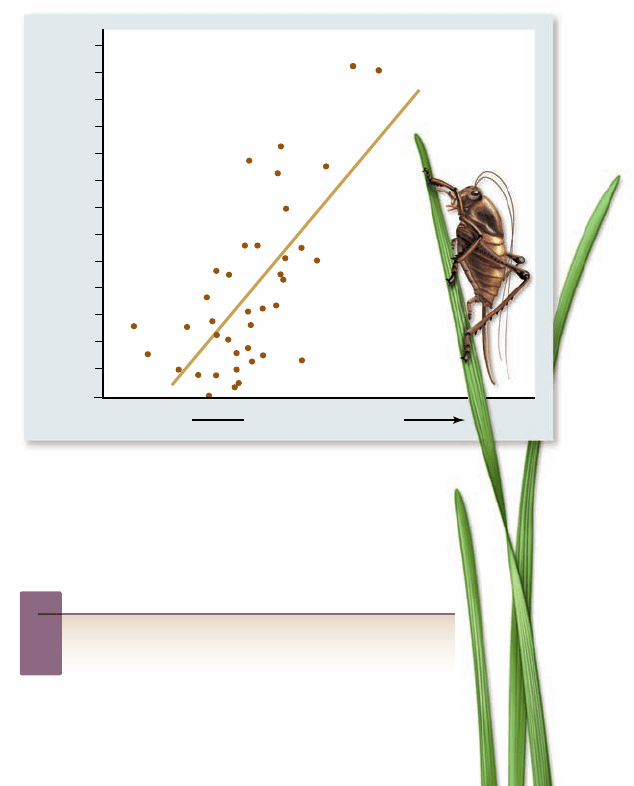
Female Body Weight
120
100
80
60
40
20
0
Number of Mature Eggs
Figure 55.29
The advantage of male mate
choice. Male Mormon crickets (Anabrus simplex)
choose heavier females as mates, and larger females
have more eggs. Thus, male mate selection
increases tness.
Inquiry question
?
Is there a benefit to females for mating with
large males?
Sexual selection occurs through mate
competition and mate choice
As discussed in chapter 20, the reproductive success of an indi-
vidual is determined by how long the individual lives, how fre-
quently it mates, and how many offspring it produces per
mating. The second of these factors, competition for mates, is
termed sexual selection. Some people consider sexual selec-
tion to be distinctive from natural selection, but others see it as
a subset of natural selection, just one of the many factors affect-
ing an organism’s fitness.
Sexual selection involves both intrasexual selection, or
competitive interactions between members of one sex (“the
power to conquer other males in battle,” as Darwin put it), and
intersexual selection, which is another name for mate choice
(“the power to charm”). Sexual selection leads to the evolution
of structures used in combat with other males, such as a deer’s
antlers and a ram’s horns, as well as ornaments used to “per-
suade” members of the opposite sex to mate, such as long tail
feathers and bright plumage (see figure 55.28a, b). These traits
are called secondary sexual characteristics.
Selection strongly favors any trait that confers greater
ability in mate competition. Larger body size is a great ad-
vantage if dominance is important, as it is in territorial spe-
cies. Males may thus be considerably larger than females.
Such differences between the sexes are referred to as sexual
dimorphism . In other species, structures used for fighting,
such as horns, antlers, and large canine teeth, have evolved to
be larger in males because of the advantage they give in intra-
sexual competition.
Sometimes sperm competition occurs between the
sperm of different males if females mate with multiple males.
This type of competition, which occurs after mating, has se-
lected for sperm-transfer organs designed to remove the sperm
of a prior mating, large testes to produce more sperm per mat-
ing, and sperm that hook themselves together to swim more
rapidly. These traits enhance the likelihood of fertilizing
an egg.
Intrasexual selection
In many species, individuals of one sex—usually males—
compete with one another for the opportunity to mate.
Competition can occur for a territory in which females feed
or bear young. Males may also directly compete for the fe-
males themselves. A few successful males may engage in an
inordinate number of matings, while most males do not mate
at all. For example, elephant seal males control territories on
breeding beaches and a few dominant males do most of the
breeding (figure 55.30) . On one beach, for example, eight
males impregnated 348 females, while the remaining males
mated rarely, if at all.
Intersexual selection
Intersexual selection concerns the active choice of a mate. Mate
choice has both direct and indirect benefits.
Direct bene ts of mate choice. In some cases, the bene ts
of mate choice are obvious. If males help raise offspring, fe-
males bene t by choosing the male that can provide the best
male fitness is likely limited by the amount of sperm they
can produce. By contrast, each reproductive event for fe-
males is much more costly, and the number of eggs that can
be produced often limits reproductive success. For this rea-
son, a female should be choosy, trying to pick the male that
can provide the greatest benefit to her offspring and thus
improve her fitness.
These conclusions hold only when female reproductive
investment is much greater than that of males. In species with
biparental care, males may contribute equally to the cost of
raising young; in this case, the degree of mate choice should be
more equal between the sexes.
In some cases, male investment exceeds that of females.
For example, male Mormon crickets transfer a protein-
containing packet (a spermatophore) to females during mating.
Almost 30% of a male’s body weight is made up by the sper-
matophore, which provides nutrition for the female and helps
her develop her eggs. As we might expect from our model of
mate choice, in this case it is the females that compete with one
another for access to males, which are the choosy sex. Indeed,
males are quite selective, favoring heavier females. Heavier fe-
males have more eggs; thus, males that choose larger females
leave more offspring (figure 55.29) .
Males care for eggs and developing young in many spe-
cies, including seahorses and a number of birds and insects. As
with Mormon crickets, these males are often choosy, and fe-
males compete for mates.
chapter
55
Behavioral Biology
1151www.ravenbiology.com
rav32223_ch55_1132-1161.indd 1151rav32223_ch55_1132-1161.indd 1151 11/20/09 1:51:13 PM11/20/09 1:51:13 PM