
Raven P.H., Johnson G.B., Mason K.A. Biology (Ninth Edition)
Подождите немного. Документ загружается.

Apago PDF Enhancer
E
CHAPTER
Chapter
56
Ecology of
Individuals
and Populations
Introduction
Ecology, the study of how organisms relate to one another and to their environments, is a complex and fascinating area
of biology that has important implications for each of us. In our exploration of ecological principles, we first consider
how organisms respond to the abiotic environment in which they exist and how these responses affect the properties
of populations, emphasizing population dynamics. In chapter 57, we discuss communities of coexisting species and the
interactions that occur among them . In subsequent chapters, we discuss the functioning of entire ecosystems and of the
biosphere, concluding with a consideration of the problems facing our planet and our fellow species.
Chapter Outline
56.1 The Environmental Challenges
56.2 Populations: Groups of a Single Species
in One Place
56.3 Population Demography and Dynamics
56.4 Life History and the Cost of Reproduction
56.5 Environmental Limits to Population Growth
56.6 Factors That Regulate Populations
56.7 Human Population Growth
56.1
The Environmental Challenges
Learning Outcomes
List some challenges that organisms face in 1.
their environments.
Describe ways in which individuals respond to 2.
environmental changes.
Explain how species adapt to environmental conditions.3.
The nature of the physical environment in large measure de-
termines which organisms live in a particular climate or region.
Key elements of the environment include:
Temperature. Most organisms are adapted to live within a
relatively narrow range of temperatures and will not
thrive if temperatures are colder or warmer. The growing
season of plants, for example, is importantly in uenced
by temperature.
Water. All organisms require water. On land, water is often
scarce, so patterns of rainfall have a major in uence
on life.
rav32223_ch56_1162-1184.indd 1162rav32223_ch56_1162-1184.indd 1162 11/20/09 1:46:43 PM11/20/09 1:46:43 PM
Apago PDF Enhancer
1.0
0.5
1.0
1.5
2.0 3.0
Thickness of Fur (mm)
Insulation (°C cal/m
2
/h)
4.0 5.0 6.0
winter
summer
wolf
polar bear
Figure 56.1
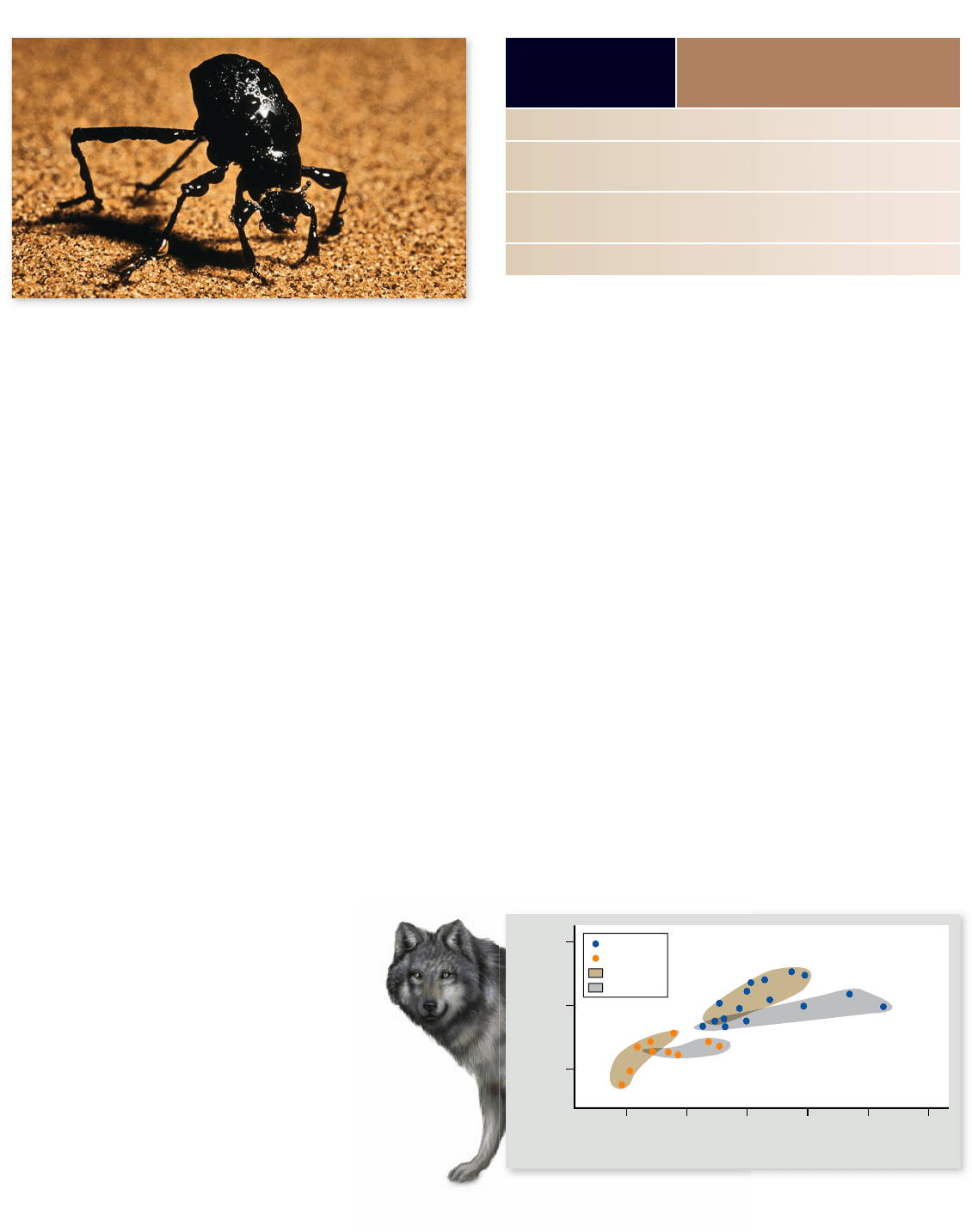
Meeting th e challenge of obtaining
moisture. On the dry sand dunes of the Namib Desert in
southwestern Africa, the fog-basking beetle (Onymacris
unguicularis) collects moisture from the fog by holding its
abdomen up at the crest of a dune to gather condensed water;
water condenses as droplets and trickles down to the
beetle’s mouth.
TABLE 56.1
Physiological Changes
at High Elevation
Increased rate of breathing
Increased erythrocyte production, raising the amount of hemoglobin
in the blood
Decreased binding capacity of hemoglobin, increasing the rate at which oxygen is
unloaded in body tissues
Increased density of mitochondria, capillaries, and muscle myoglobin
Physiological responses
Many organisms are able to adapt to environmental change by
making physiological adjustments. For example, you sweat
when it is hot, increasing evaporative heat loss and thus pre-
venting overheating. Similarly, people who visit high altitudes
may initially experience altitude sickness—the symptoms of
which include heart palpitations, nausea, fatigue, headache,
mental impairment, and in serious cases, pulmonary edema—
because of the lower atmospheric pressure and consequent
lower oxygen availability in the air. After several days, however,
the same people usually feel fine, because a number of physio-
logical changes have increased the delivery of oxygen to their
body tissues (table 56.1).
Some insects avoid freezing in the winter by adding glyc-
erol “antifreeze” to their blood; others tolerate freezing by con-
verting much of their glycogen reserves into alcohols that
protect their cell membranes from freeze damage.
Morphological capabilities
Animals that maintain a constant internal temperature (endo-
therms) in a cold environment have adaptations that tend to
minimize energy expenditure. For example, many mammals
grow thicker coats during the winter, their fur acting as insula-
tion to retain body heat. In general, the thicker the fur, the
greater the insulation (figure 56.2) . Thus, a wolf’s fur is about
three times thicker in winter than in summer and insulates
more than twice as well.
Sunlight. Almost all ecosystems rely on energy captured by
photosynthesis; the availability of sunlight in uences the
amount of life an ecosystem can support, particularly
below the surface in marine communities.
Soil. The physical consistency, pH, and mineral composition of
the soil often severely limit terrestrial plant growth,
particularly the availability of nitrogen and phosphorus.
An individual encountering environmental variation may
maintain a “steady-state” internal environment, a condition
known as homeostasis . Many animals and plants actively employ
physiological, morphological, or behavioral mechanisms to
maintain homeostasis. The beetle in figure 56.1 is using a be-
havioral mechanism to cope with drastic changes in water avail-
ability. Other animals and plants are known as conformers
because they conform to the environment in which they find
themselves, their bodies adopting the temperature, salinity, and
other physical aspects of their surroundings.
Responses to environmental variation can be seen over
both the short and the long term. In the short term, spanning
periods of a few minutes to an individual’s lifetime,
organisms have a variety of ways of coping with en-
vironmental change. Over longer periods, natural
selection can operate to make a population better
adapted to the environment.
Organisms are capable of responding
to environmental changes that occur
during their lifetime
During the course of a day, a season, or a lifetime, an individual
organism must cope with a range of living conditions. They do
so through the physiological, morphological, and behavioral
abilities they possess. These abilities are a product of natural
selection acting in a particular environmental setting over
time, which explains why an individual organism that is moved to
a different environment may not survive.
Figure 56.2
Morphological adaptation.
Fur thickness
in North American mammals has a major effect on the
degree of insulation the fur provides.
chapter
56
Ecology of Individuals and Populations
116 3www.ravenbiology.com
rav32223_ch56_1162-1184.indd 1163rav32223_ch56_1162-1184.indd 1163 11/20/09 1:46:49 PM11/20/09 1:46:49 PM
Apago PDF Enhancer
Body
Temperature (°C)
24
26
28
30
32
Air Temperature (°C)
24 26 28 30
open habitat
shaded forest
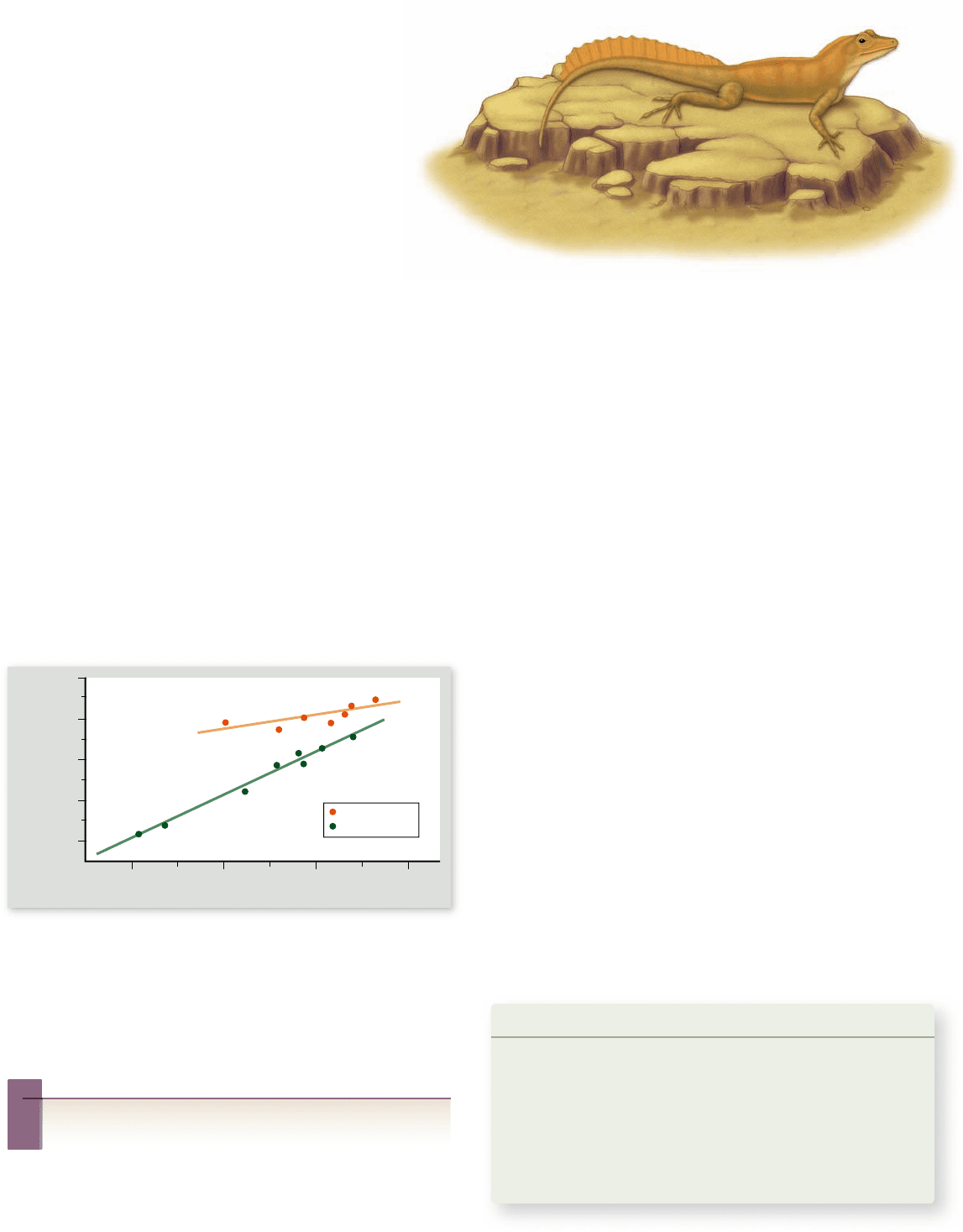
Figure 56.3
Behavioral adaptation. In open habitats,
the Puerto Rican crested l izard (Anolis cristatellus) maintains
a relatively constant temperature by seeking out and basking
in patches of sunlight; as a result, it can maintain a relatively
high temperature even when the air is cool. In contrast, in
shaded forests, this behavior is not possible, and the lizard’s
body temperature conforms to that of its surroundings.
Inquiry question
?
When given the opportunity, lizards regulate their body
temperature to maintain a temperature optimal for
physiological functioning. Would lizards in open habitats
exhibit different escape behaviors from lizards in
shaded forest?
For example, animals that live in different climates show
many differences. Mammals from colder climates tend to have
shorter ears and limbs—a phenomenon termed Allen’s rule—
which reduces the surface area across which animals lose heat.
Lizards that live in different climates exhibit physiological ad-
aptations for coping with life at different temperatures. Des-
ert lizards are unaffected by high temperatures that would kill
a lizard from northern Europe, but the northern lizards are
capable of running, capturing prey, and digesting food at
cooler temperatures at which desert lizards would be com-
pletely immobilized.
Many species also exhibit adaptations to living in areas
where water is scarce. Everyone knows of the camel and oth-
er desert animals that can go extended periods without drink-
ing water. Another example of desert adaptation is seen in
frogs. Most frogs have moist skins through which water per-
meates readily. Such animals could not survive in arid cli-
mates because they would rapidly dehydrate and die. However,
some frogs have solved this problem by evolving a greatly
reduced rate of water loss through the skin. One species, for
example, secretes a waxy substance from specialized glands
that waterproofs its skin and reduces rates of water loss
by 95%.
Adaptation to different environments can also be studied
experimentally. For example, when strains of E. coli were grown
at high temperatures (42°C), the speed at which the bacteria
utilized resources improved through time. After 2000 genera-
tions, this ability increased 30% over what it had been when the
experiment started. The means by which efficiency of resource
use increased is unknown and is the focus of current research.
Learning Outcomes Review 56.1
Environmental conditions include temperature, water and light availability,
and soil characteristics. When the environment changes, individual
organisms use a variety of physiological, morphological, and behavioral
mechanisms to adjust. Over time, adaptations to diff erent environments
may evolve in populations.
■ How might a species respond if its environment grew
steadily warmer over time?
Behavioral responses
Many animals deal with variation in the environment by
moving from one patch of habitat to another, avoiding areas
that are unsuitable. The tropical lizard in figure 56.3 man-
ages to maintain a fairly uniform body temperature in an
open habitat by basking in patches of sunlight and then
retreating to the shade when it becomes too hot. By
contrast, in shaded forests, the same lizard does not
have the opportunity to regulate its body temperature
through behavioral means. Thus, it becomes a conformer
and adopts the temperature of its surroundings.
Behavioral adaptations can be extreme. Spadefoot toads
(genus Scaphiophus), which live in the deserts of North America,
can burrow nearly a meter below the surface and remain there
for as long as nine months of each year, their metabolic rates
greatly reduced as they live on fat reserves. When moist, cool
conditions return, the toads emerge and breed. The young
toads mature rapidly and burrow underground.
Natural selection leads to evolutionary
adaptation to environmental conditions
The ability of an individual to alter its physiology, morphology,
or behavior is itself an evolutionary adaptation, the result of
natural selection. The results of natural selection can also be
detected by comparing closely related species that live in differ-
ent environments. In such cases, species often have evolved
striking adaptations to the particular environment in which
they live.
116 4
part
VIII
Ecology and Behavior
rav32223_ch56_1162-1184.indd 1164rav32223_ch56_1162-1184.indd 1164 11/20/09 1:46:51 PM11/20/09 1:46:51 PM
Apago PDF Enhancer
Woodlands
Grassland, chaparral,
and desert scrub
Alpine tundra
Spruce-fir forests
Mixed conifer forest
Woodlands
Alpine tundra
Spruce-fir forests
Mixed conifer forest
Grassland, chaparral,
and desert scrub
15,000 Years Ago
Present
Elevation (km)
0 km
2 km
3 km
1 km
Elevation (km)
0 km
2 km
3 km
1 km
Figure 56.4
The Devil’s Hole pup sh (Cyprinodon
diabolis).
This sh has the smallest range of any vertebrate
species in the world.
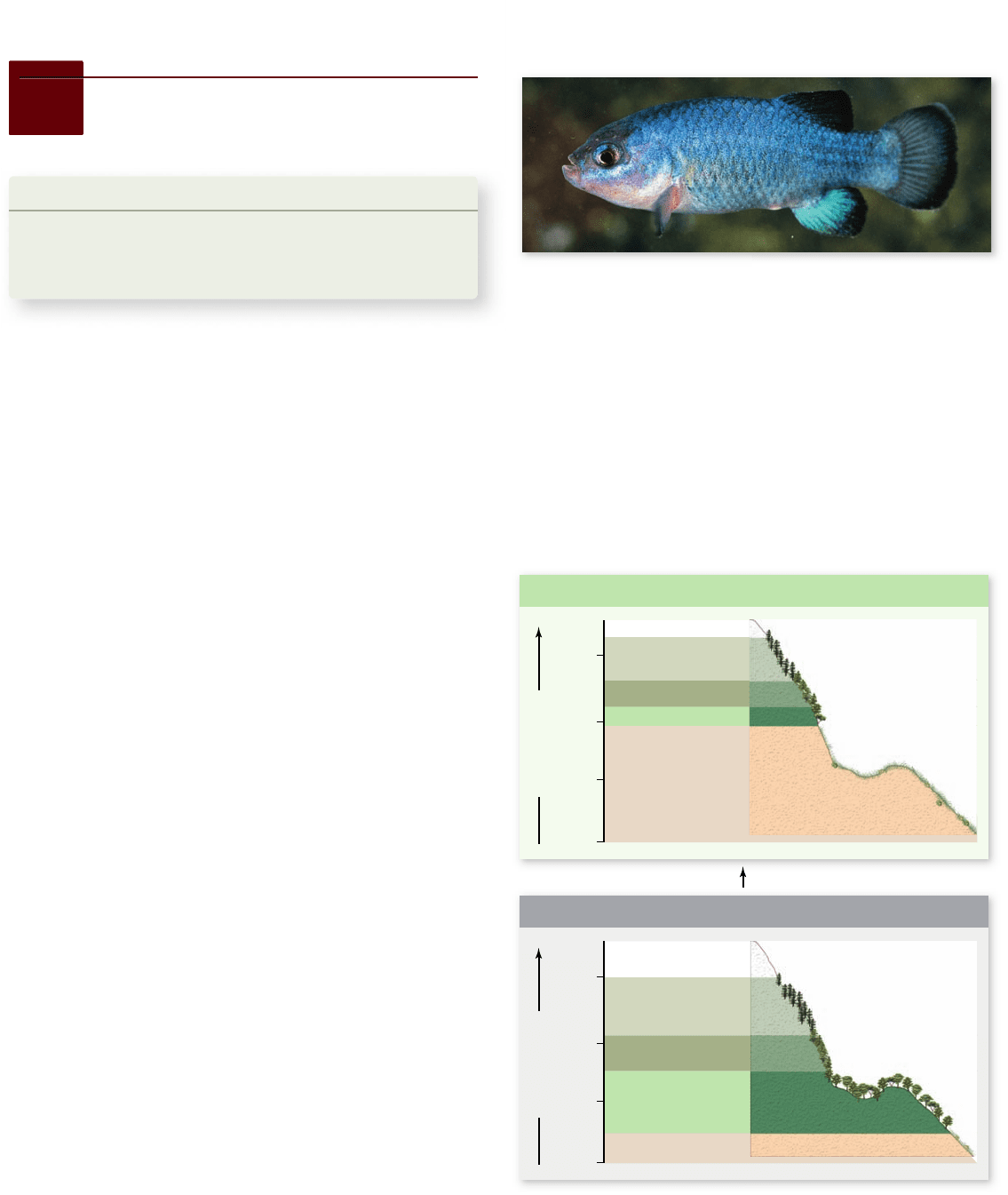
Figure 56.5
Altitude shifts in altitudinal distributions
of trees in the mountains of southwestern North America.
During the glacial period 15,000 years ago, conditions were cooler
than they are now. As the climate warmed, tree species that require
colder temperatures shifted their range upward in altitude so that
they live in the climatic conditions to which they are adapted.
Ranges undergo expansion and contraction
Population ranges are not static but change through time.
These changes occur for two reasons. In some cases, the envi-
ronment changes. As the glaciers retreated at the end of the last
ice age, approximately 10,000 years ago, many North American
plant and animal populations expanded northward. At the same
time, as climates warmed, species experienced shifts in the ele-
vation at which they could live (figure 56.5).
56.2
Populations: Groups of a
Single Species in One Place
Learning Outcomes
Distinguish between a population and a metapopulation.1.
Understand what causes a species’ geographic ranges to 2.
change through time.
Organisms live as members of populations , groups of individu-
als that occur together at one place and time. In the rest of this
chapter, we consider the properties of populations, focusing on
factors that influence whether a population grows or shrinks,
and at what rate. The explosive growth of the world’s human
population in the last few centuries provides a focus for
our inquiry.
The term population can be defined narrowly or broad-
ly. This flexibility allows us to speak in similar terms of the
world’s human population, the population of protists in the
gut of a termite, or the population of deer that inhabit a for-
est. Sometimes the boundaries defining a population are
sharp, such as the edge of an isolated mountain lake for
trout, and sometimes they are fuzzier, as when deer readily
move back and forth between two forests separated by
a cornfield.
Three characteristics of population ecology are particu-
larly important: (1) population range, the area throughout
which a population occurs; (2) the pattern of spacing of indi-
viduals within that range; and (3) how the population changes
in size through time.
A population’s geographic distribution
is termed its range
No population, not even one composed of humans, occurs in
all habitats throughout the world. Most species, in fact, have
relatively limited geographic ranges, and the range of some
species is miniscule. For example, the Devil’s Hole pupfish
lives in a single spring in southern Nevada (figure 56.4) , and
the Socorro isopod (Thermosphaeroma thermophilus) is known
from a single spring system in New Mexico. At the other ex-
treme, some species are widely distributed. The common dol-
phin (Delphinus delphis), for example, is found throughout all
the world’s oceans.
As discussed earlier, organisms must be adapted for the
environment in which they occur. Polar bears are exquisitely
adapted to survive the cold of the Arctic, but you won’t find
them in the tropical rain forest. Certain prokaryotes can live in
the near-boiling waters of Yellowstone’s geysers, but they do
not occur in cooler streams nearby. Each population has its own
requirements—temperature, humidity, certain types of food,
and a host of other factors—that determine where it can live
and reproduce and where it can’t. In addition, in places that are
otherwise suitable, the presence of predators, competitors, or
parasites may prevent a population from occupying an area, a
topic we will take up in chapter 57.
chapter
56
Ecology of Individuals and Populations
116 5www.ravenbiology.com
rav32223_ch56_1162-1184.indd 1165rav32223_ch56_1162-1184.indd 1165 11/20/09 1:46:55 PM11/20/09 1:46:55 PM
Apago PDF Enhancer
Equator
1943
1937
1951
1958
1961
1960
1965
1964
1966
1970
1970
1956
Immigration
from Africa
Solanum dulcamara
Juniperus chinensis
Rubus fruticosus
Windblown
Fruits
Adherent
Fruits
Fleshy
Fruits
Asclepias syriaca
Acer saccharum
Terminalia
calamansanai
Ranunculus muricatus
Bidens frondosa
Medicago polycarpa
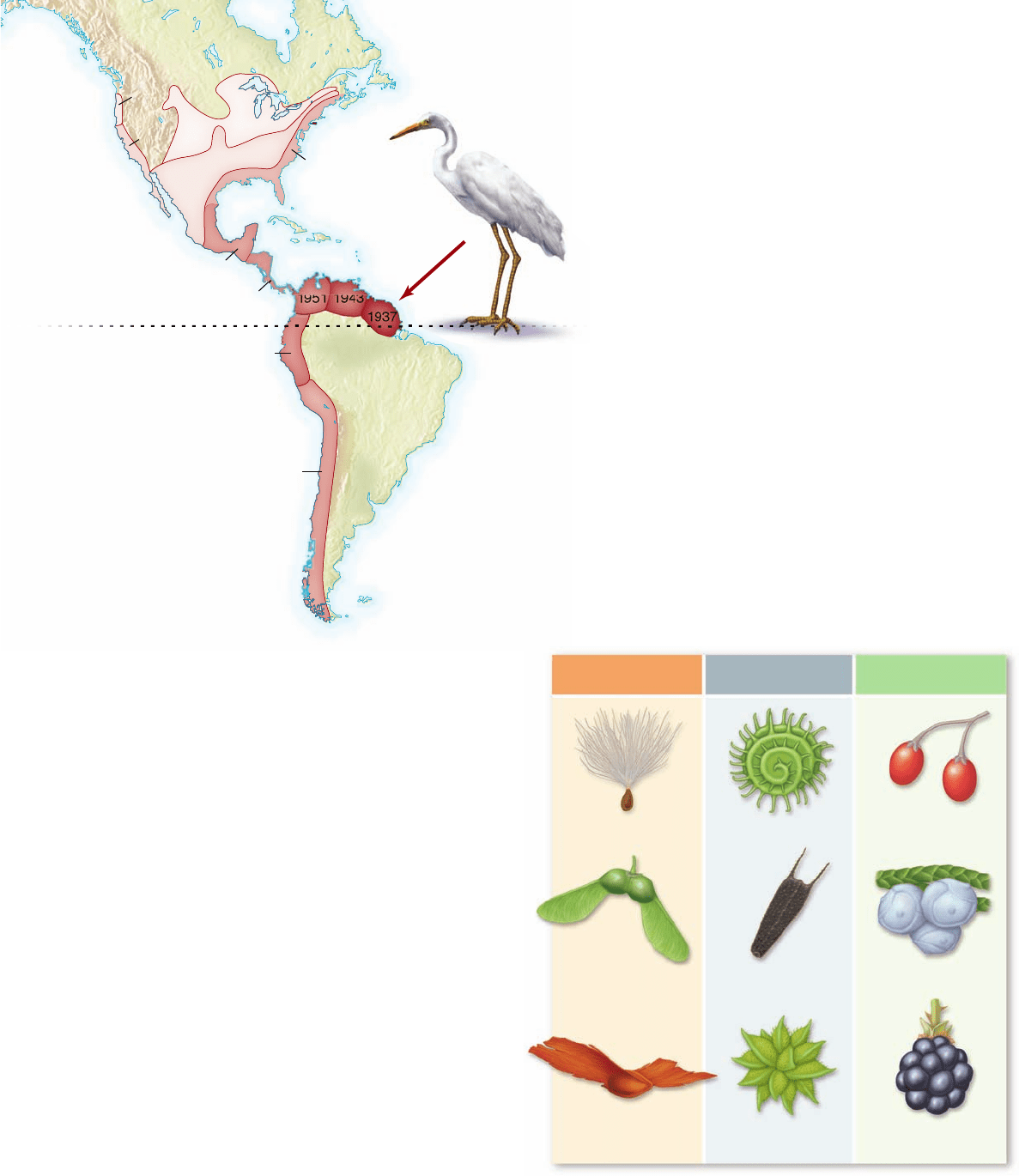
Figure 56.6
Range expansion of the cattle egret
(Bubulcus ibis).
The cattle egret—so named because it follows
cattle and other hoofe d animals, catching any insects or small
vertebrates it disturbs— rst arrived in South America from Africa
in the late 1800s. Since the 1930s, the range expansion of this
species has been well documented, as it has moved northward into
much of North America, as well as southward along the western side
of the Andes to near the southern tip of South America.
Figure 56.7
Some of the many adaptations of seeds.
Seeds have evolved a number of different means of facilitating
dispersal from their maternal plant. Some seeds can be transported
great distances by the wind, whereas seeds enclosed in adherent or
eshy fruits can be transported by animals.
that by 1980, they occurred throughout the United States.
Similar stories could be told for countless plants and ani-
mals, and the list increases every year. Unfortunately, the
success of these invaders often comes at the expense of na-
tive species.
Dispersal mechanisms
Dispersal to new areas can occur in many ways. Lizards
have colonized many distant islands, as one example, prob-
ably due to individuals or their eggs floating or drifting on
vegetation. Bats are the only mammals on many distant is-
lands because they can fly to them.
Seeds of plants are designed to disperse in many ways
(figure 56.7) . Some seeds are aerodynamically designed to
be blown long distances by the wind. Others have structures
that stick to the fur or feathers of animals, so that they are car-
ried long distances before falling to the ground. Still others
are enclosed in fleshy fruits. These seeds can pass through the
digestive systems of mammals or birds and then germinate
where they are defecated. Finally, seeds of mistletoes (Ar-
ceuthobium) are violently propelled from the base of the fruit
in an explosive discharge. Although the probability of long-
distance dispersal events leading to successful establishment
of new populations is low, over millions of years, many such
dispersals have occurred.
In addition, populations can expand their ranges when
they are able to circumvent inhospitable habitat to colonize
suitable, previously unoccupied areas. For example, the cattle
egret is native to Africa. Some time in the late 1800s, these
birds appeared in northern South America, having made the
nearly 3500-km transatlantic crossing, perhaps aided by strong
winds. Since then, they have steadily expanded their range
and now can be found throughout most of the United States
(figure 56.6).
The human effect
By altering the environment, humans have allowed some
species, such as coyotes, to expand their ranges and move
into areas they previously did not occupy. Moreover, hu-
mans have served as an agent of dispersal for many species.
Some of these transplants have been widely successful, as is
discussed in greater detail in chapter 60. For example, 100
starlings were introduced into New York City in 1896 in a
misguided attempt to establish every species of bird men-
tioned by Shakespeare. Their population steadily spread so
116 6
part
VIII
Ecology and Behavior
rav32223_ch56_1162-1184.indd 1166rav32223_ch56_1162-1184.indd 1166 11/20/09 1:46:59 PM11/20/09 1:46:59 PM
Apago PDF Enhancer
change, individuals are less well adapted, and thus densities de-
crease. Ultimately, the point is reached at which individuals can-
not persist at all; this marks the edge of a population’s range.
A metapopulation comprises distinct
populations that may exchange members
Species often exist as a network of distinct populations that in-
teract with one another by exchanging individuals. Such net-
works, termed metapopulations, usually occur in areas in
which suitable habitat is patchily distributed and is separated by
intervening stretches of unsuitable habitat.
Dispersal and habitat occupancy
The degree to which populations within a metapopulation inter-
act depends on the amount of dispersal; this interaction is often
not symmetrical: Populations increasing in size tend to send out
many dispersers, whereas populations at low levels tend to re-
ceive more immigrants than they send off. In addition, relatively
isolated populations tend to receive relatively few arrivals.
Not all suitable habitats within a metapopulation’s area
may be occupied at any one time. For a number of reasons,
some individual populations may become extinct, perhaps as a
result of an epidemic disease, a catastrophic fire, or the loss
of genetic variation following a population bottleneck (see
chapter 60). Dispersal from other populations, however, may
eventually recolonize such areas. In some cases, the number of
habitats occupied in a metapopulation may represent an equi-
librium in which the rate of extinction of existing populations is
balanced by the rate of colonization of empty habitats.
Source–sink metapopulations
A species may also exhibit a metapopulation structure in areas in
which some habitats are suitable for long-term population main-
tenance, but others are not. In these situations, termed source–
sink metapopulations, the populations in the better areas (the
sources) continually send out dispersers that bolster the popula-
tions in the poorer habitats (the sinks). In the absence of such
continual replenishment, sink populations would have a negative
growth rate and would eventually become extinct.
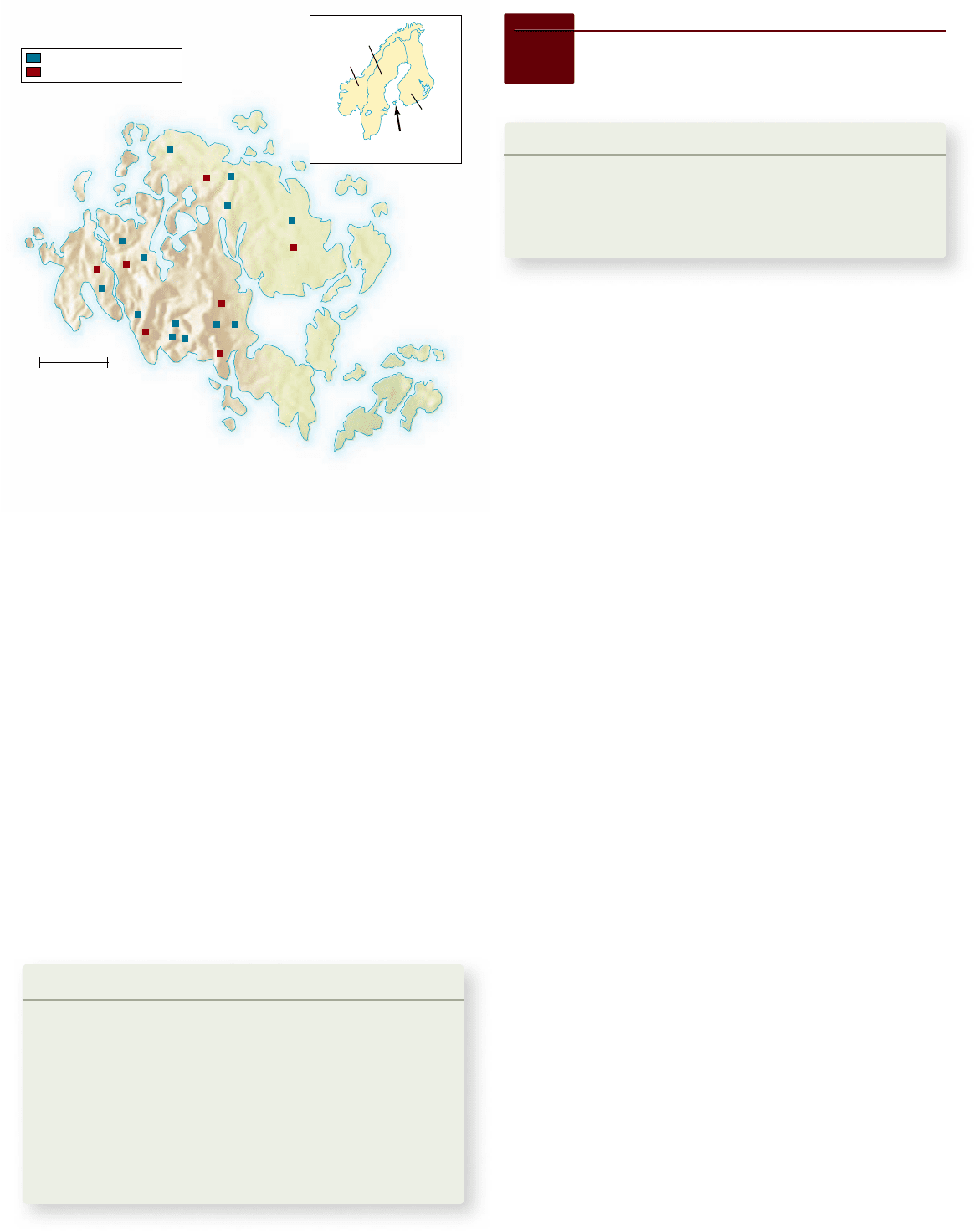
Metapopulations of butterflies have been studied particularly
intensively. In o ne study, researchers sampled populations of the
Glanville fritillary butterfly at 1600 meadows in south-
western Finland (figure 56.8) . On average,
every year, 200 populations became extinct,
but 114 empty meadows were colonized. A
variety of factors seemed to increase the
like li hood of a population’s extinction,
including small population size, isolation
from sources of immigrants, low resource
availability (as indicated by the number of flowers on
a meadow), and lack of genetic variation within the population.
The researchers attribute the greater number of extinc-
tions than colonizations to a string of very dry summers. Be-
cause none of the populations is large enough to survive on its
own, continued survival of the species in southwestern Finland
would appear to require the continued existence of a meta pop-
u la tion network in which new populations are continually
Individuals in populations exhibit
di erent spacing patterns
Another key characteristic of population structure is the way in
which individuals of a population are distributed. They may be
randomly spaced, uniformly spaced, or clumped.
Random spacing
Random spacing of individuals within populations occurs when
they do not interact strongly with one another and when they
are not affected by nonuniform aspects of their environment.
Random distributions are not common in nature. Some species
of trees, however, appear to exhibit random distributions in
Panamanian rain forests .
Uniform spacing
Uniform spacing within a population may often, but not al-
ways, result from competition for resources. This spacing is ac-
complished, however, in many different ways
In animals, uniform spacing often results from behavioral
interactions, as described in chapter 55. In many species, individu-
als of one or both sexes defend a territory from which other indi-
viduals are excluded. These territories provide the owner with
exclusive access to resources, such as food, water, hiding refuges, or
mates, and tend to space individuals evenly across the habitat. Even
in nonterritorial species, individuals often maintain a defended
space into which other animals are not allowed to intrude.
Among plants, uniform spacing is also a common result of
competition for resources. Closely spaced individual plants com-
pete for available sunlight, nutrients, or water. These contests
can be direct, as when one plant casts a shadow over another, or
indirect, as when two plants compete by extracting nutrients or
water from a shared area. In addition, some plants, such as the
creosote bush, produce chemicals in the surrounding soil that
are toxic to other members of their species. In all of these cases,
only plants that are spaced an adequate distance from each other
will be able to coexist, leading to uniform spacing.
Clumped spacing
Individuals clump into groups or clusters in response to uneven
distribution of resources in their immediate environments.
Clumped distributions are common in nature because individ-
ual animals, plants, and microorganisms tend to occur in habi-
tats defined by soil type, moisture, or other aspects of the
environment to which they are best adapted.
Social interactions also can lead to clumped distributions.
Many species live and move around in large groups, which go
by a variety of names (for example, flock, herd, pride). These
groupings can provide many advantages, including increased
awareness of and defense against predators, decreased energy
cost of moving through air and water, and access to the knowl-
edge of all group members.
On a broader scale, populations are often most densely
populated in the interior of their range and less densely distrib-
uted toward the edges. Such patterns usually result from the
manner in which the environment changes in different areas.
Populations are often best adapted to the conditions in
the interior of their distribution. As environmental conditions
chapter
56
Ecology of Individuals and Populations
116 7www.ravenbiology.com
rav32223_ch56_1162-1184.indd 1167rav32223_ch56_1162-1184.indd 1167 11/20/09 1:47:00 PM11/20/09 1:47:00 PM
Apago PDF Enhancer
10 km
Norway
Sweden
Finland
Åland
Islands
occupied habitat patch
unoccupied habitat patch
Figure 56.8
Metapopulations of butter ies.
The Glanville fritillary butter y (Melitaea cinxia) occurs in
metapopulations in southwestern Finland on the Åland Islands.
None of the populations is large enough to survive for long on its
own, but continual immigration of individuals from other
populations allows some populations to survive. In addition,
continual establishment of new populations tends to offset
extinction of established populations, although in recent years,
extinctions have outnumbered colonizations.
created and existing populations are supplemented by immi-
grants. Continued bad weather thus may doom the species, at
least in this part of its range.
Metapopulations, where they occur, can have two important
implications for the range of a species. First, through continuous
colonization of empty patches, metapopulations prevent long-
term extinction. If no such dispersal existed, then each population
might eventually perish, leading to disappearance of the species
from the entire area. Moreover, in source–sink metapopulations,
the species occupies a larger area than it otherwise might, includ-
ing marginal areas that could not support a population without a
continual influx of immigrants. For these reasons, the study of
metapopulations has become very important in conservation biol-
ogy as natural habitats become increasingly fragmented.
Learning Outcomes Review 56.2
A population is a group of individuals of a single species existing together
in an area. A population’s range, the area it occupies, changes over time.
Populations, in turn, may form a network, or metapopulation, connected
by individuals that move from one group to another. Within a population,
the distribution of individuals can be random, uniform, or clumped, and the
distribution is determined in part by the availability of resources.
■ How might the geographic range of a species change
if populations could not exchange individuals with
each other?
56.3
Population Demography
and Dynamics
Learning Outcomes
Define demography.1.
Describe the factors that influence a species’ 2.
demography.
Explain the significance of survivorship curves.3.
The dynamics of a population—how it changes through time—
are affected by many factors. One important factor is the age
distribution of individuals—that is, what proportion of indi-
viduals are adults, juveniles, and young.
Demography is the quantitative study of populations.
How the size of a population changes through time can be
studied at two levels: as a whole or broken down into parts. At
the most inclusive level, we can study the whole population to
determine whether it is increasing, decreasing, or remaining
constant. Put simply, populations grow if births outnumber
deaths and shrink if deaths outnumber births. Understanding
these trends is often easier, however, if we break the population
into smaller units composed of individuals of the same age (for
example, 1-year-olds) and study the factors affecting birth and
death rates for each unit separately.
Sex ratio and generation time a ect
population growth rates
Population growth can be influenced by the population’s sex
ratio. The number of births in a population is usually directly
related to the number of females; births may not be as closely
related to the number of males in species in which a single male
can mate with several females. In many species, males compete
for the opportunity to mate with females, as you learned in the
preceding chapter; consequently, a few males have many mat-
ings, and many males do not mate at all. In such species, the sex
ratio is female-biased and does not affect population growth
rates ; reduction in the number of males simply changes the
identities of the reproductive males without reducing the num-
ber of births. By contrast, among monogamous species, pairs
may form long-lasting reproductive relationships, and a reduc-
tion in the number of males can then directly reduce the num-
ber of births.
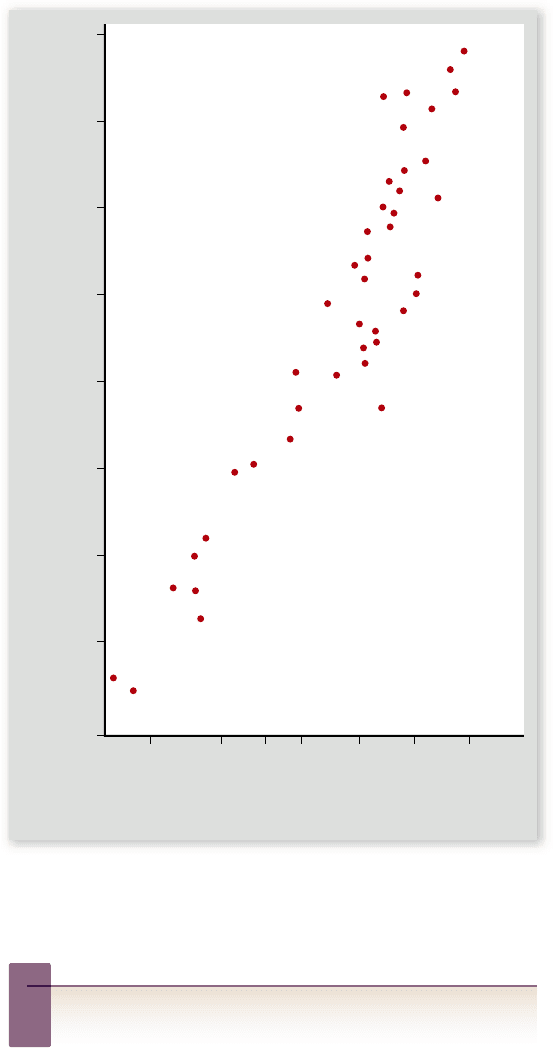
Generation time is the average interval between the birth
of an individual and the birth of its offspring. This factor can
also affect population growth rates. Species differ greatly in gen-
eration time. Differences in body size can explain much of this
variation—mice go through approximately 100 generations
during the course of one elephant generation (figure 56.9) . But
small size does not always mean short generation time. Newts,
for example, are smaller than mice, but have considerably longer
generation times.
In general, populations with short generations can in-
crease in size more quickly than populations with long genera-
tions. Conversely, because generation time and life span are
116 8
part
VIII
Ecology and Behavior
rav32223_ch56_1162-1184.indd 1168rav32223_ch56_1162-1184.indd 1168 11/20/09 1:47:00 PM11/20/09 1:47:00 PM
Apago PDF Enhancer
1 μm
10 μm
100 μm
1 mm
1 cm
10 cm
1 m
10 m
100 m
Generation Time
1 hour
1 day
1 week
1 month
1 year
10 years
100 years
Pseudomonas
E. coli
Spirochaeta
Euglena
Tetrahymena
Didinium
Paramecium
Stentor
Daphnia
Drosophila
Housefly
Clam
Horsefly
Bee
Oyster
Snail
Chameleon
Scallop
Frog
Mouse
Newt
Turtle
Horseshoe crab
Crab
Rat
Salamander
Fox
Beaver
Snake
Human
Deer
Elk
Bear
Elephant
Rhino
Dogwood
Balsam
Birch
Kelp
Whale
Fir
Sequoia
Body Size (length)
Figure 56.9
The relationship between body size and
generation time.
In general, larger organisms have longer
generation times, although there are exceptions.
Inquiry question
?
If resources became more abundant, would you expect
smaller or larger species to increase in population size
more quickly?
usually closely correlated, populations with short generation
times may also diminish in size more rapidly if birth rates sud-
denly decrease.
Age structure is determined
by the numbers of individuals
in di erent age groups
A group of individuals of the same age is referred to as a
cohort. In most species, the probability that an individual will
reproduce or die varies through its life span. As a result, within
a population, every cohort has a characteristic birth rate, or
fecundity, defined as the number of offspring produced in a
standard time (for example, per year), and death rate, or
mortality, the number of individuals that die in that period.
The relative number of individuals in each cohort de-
fines a population’s age structure. Because different co-
horts have different fecundity and death rates, age structure
has a critical influence on a population’s growth rate. Popu-
lations with a large proportion of young individuals, for ex-
ample, tend to grow rapidly because an increasing proportion
of their individuals are reproductive. Human populations in
many developing countries are an example, as will be dis-
cussed later in this chapter. Conversely, if a large proportion
of a population is relatively old, populations may decline.
This phenomenon now characterizes Japan and some coun-
tries in Europe.
Life tables show probability
of survival and reproduction
through a cohort’s life span
To assess how populations in nature are changing, ecolo-
gists use a life table, which tabulates the fate of a cohort
from birth until death, showing the number of offspring
produced and the number of individuals that die each year.
Table 56.2 shows an example of a life table analysis from a
study of the meadow grass Poa annua. This study follows the
fate of 843 individuals through time, charting how many
survive in each interval and how many offspring each survi-
vor produces.
In table 56.2, the first column indicates the age of the
cohort (that is, the number of 3-month intervals from the start
of the study). The second and third columns indicate the num-
ber of survivors and the proportion of the original cohort still
alive at the beginning of that interval. The fifth column pre-
sents the mortality rate, the proportion of individuals that
started that interval alive but died by the end of it. The seventh
column indicates the average number of seeds produced by
each surviving individual in that interval, and the last column
shows the number of seeds produced relative to the size of the
original cohort.
Much can be learned by examining life tables. In the case
of P. annua, we see that both the probability of dying and the
number of offspring produced per surviving individual steadily
increases with age. By adding up the numbers in the last col-
umn, we get the total number of offspring produced per indi-
vidual in the initial cohort. This number is almost 2, which
means that for every original member of the cohort, on average
two new individuals have been produced. A figure of 1.0 would
be the break-even number, the point at which the population
was neither growing nor shrinking. In this case, the population
appears to be growing rapidly.
In most cases, life table analysis is more complicated than
this. First, except for organisms with short life spans, it is dif-
ficult to track the fate of a cohort until the death of the last
individual. An alternative approach is to construct a cross-
sectional study, examining the fate of cohorts of different ages
in a single period. In addition, many factors—such as offspring
chapter
56
Ecology of Individuals and Populations
116 9www.ravenbiology.com
rav32223_ch56_1162-1184.indd 1169rav32223_ch56_1162-1184.indd 1169 11/20/09 1:47:01 PM11/20/09 1:47:01 PM
Apago PDF Enhancer
0 25
Proportion Surviving
1.0
0.1
Human (type I)
Hydra (type II)
Oyster (type III)
0.01
0.001
50
Percent of Maximum Life Span
100 75
TABLE 56.2
Life Table of the Meadow Grass (Poa annua) for a Cohort Containing 843 Seedlings
Age (in 3-month
intervals)
Number Alive
at Beginning
of Time
Interval
Proportion of
Cohort Alive at
Beginning of
Time Interval
(survivorship)
Deaths
During Time
Interval
Mortality Rate
During Time
Interval
Seeds Produced
During Time
Interval
Seeds
Produced per
Surviving
Individual
(fecundity)
Seeds Produced
per Member
of Cohort
(fecundity ×
survivorship)
0 843 1.000 121 0.143 0 0.00 0.00
1 722 0.857 195 0.271 303 0.42 0.36
2 527 0.625 211 0.400 622 1.18 0.74
3 316 0.375 172 0.544 430 1.36 0.51
41440.171900.6262101.460.25
5 54 0.064 39 0.722 60 1.11 0.07
6 15 0.018 12 0.800 30 2.00 0.04
7 3 0.004 3 1.000 10 3.33 0.01
8 0 0.000 — Total = 1665 Total = 1.98
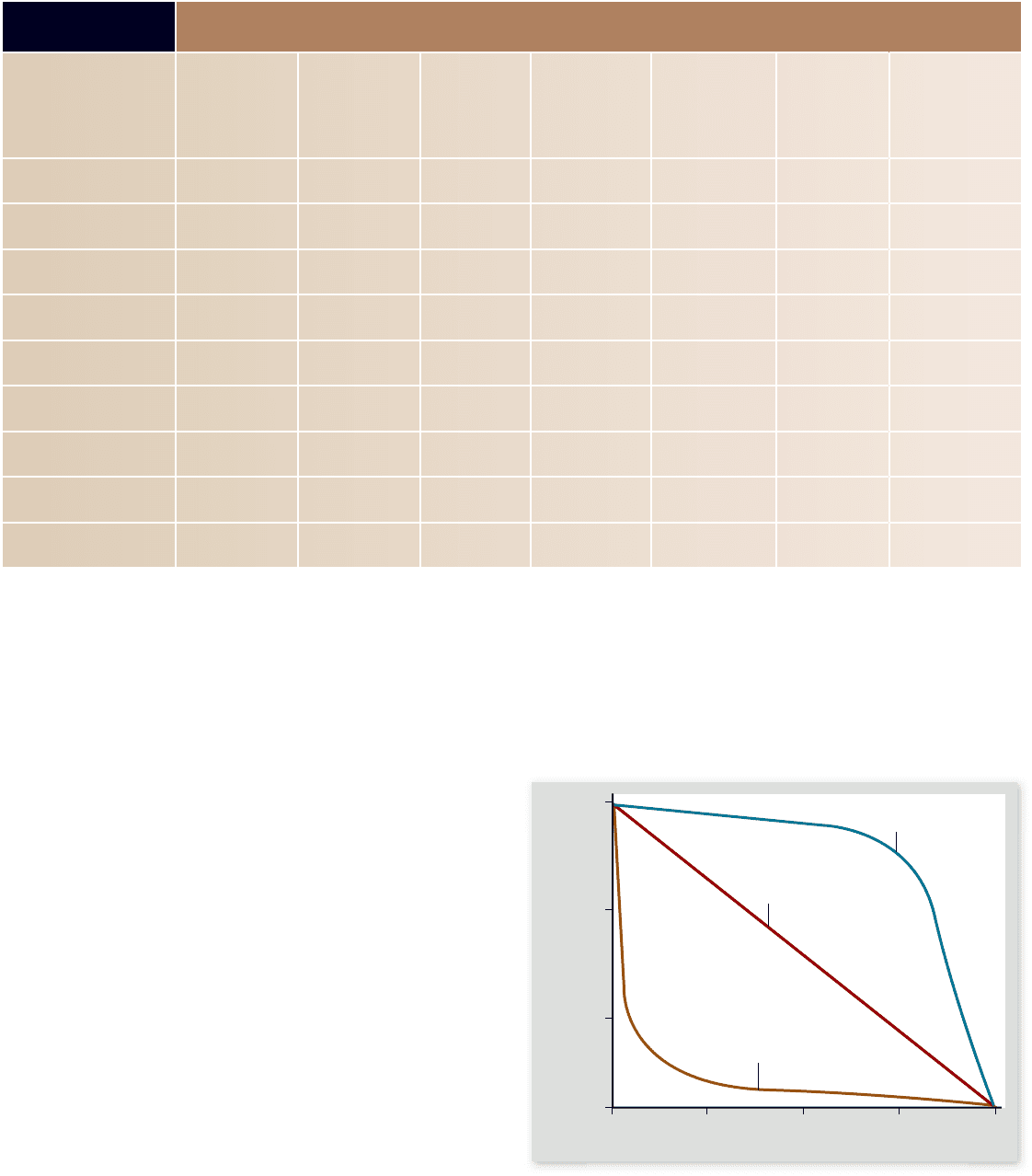
Figure 56.10
Survivorship curves.
By convention,
survival (the vertical axis) is plotted on a log scale. Humans have a
type I life cycle, hydra (an animal related to jelly sh) type II, and
oysters type III.
reproducing before all members of their parents’ cohort have
died—complicate the interpre tation of whether populations
are growing or shrinking.
Survivorship curves demonstrate
how survival probability
changes with age
The percentage of an original population that survives to a
given age is called its survivorship. One way to express some
aspects of the age distribution of populations is through a
survivorship curve. Examples of different survivorship curves
are shown in figure 56.10. Oysters produce vast numbers of
offspring, only a few of which live to reproduce. However,
once they become established and grow into reproductive in-
dividuals, their mortality rate is extremely low (type III survi-
vorship curve). Note that in this type of curve, survival and
mortality rates are inversely related. Thus, the rapid decrease
in the proportion of oysters surviving indicates that few indi-
viduals survive, thus producing a high mortality rate. In con-
trast, the relatively flat line at older ages indicates high
survival and low mortality.
In hydra, animals related to jellyfish, individuals are
equally likely to die at any age. The result is a straight survivor-
ship curve (type II).
Finally, mortality rates in humans, as in many other animals
and in protists, rise steeply later in life (type I survivorship curve).
Of course, these descriptions are just generalizations, and
many organisms show more complicated patterns. Examina-
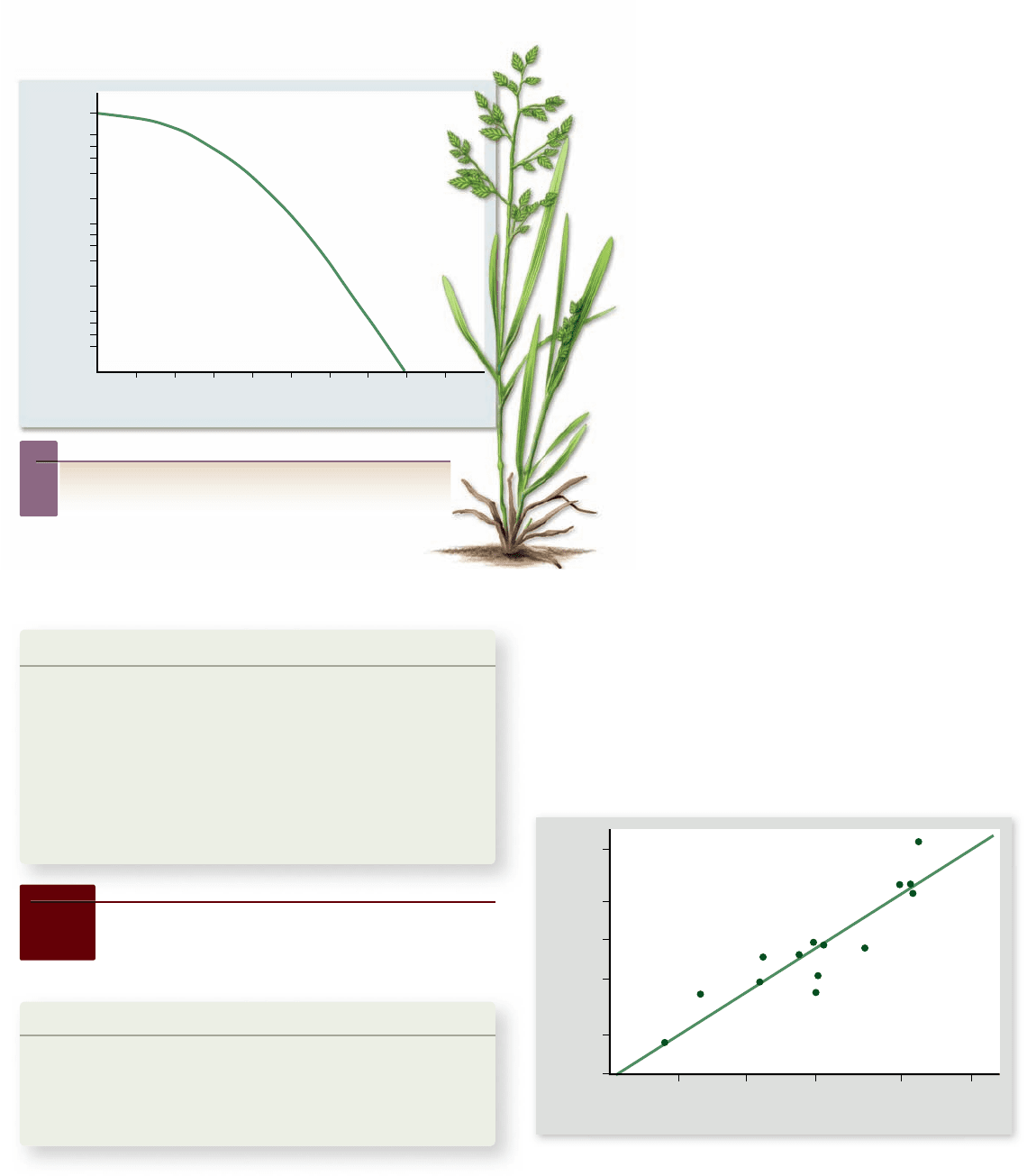
tion of the data for P. annua, for example, reveals that it is most
similar to a type II survivorship curve (figure 56.11) .
117 0
part
VIII
Ecology and Behavior
rav32223_ch56_1162-1184.indd 1170rav32223_ch56_1162-1184.indd 1170 11/20/09 1:47:01 PM11/20/09 1:47:01 PM
Apago PDF Enhancer
3 6
9
12
15
18 21
24
27
0.002
0.003
0.004
0.005
0.01
0.02
0.03
0.04
0.05
0.1
0.2
0.3
0.4
0.5
1.0
Age (months)
Proportion Surviving
1.0 0.5 0.2
Adult Mortality Rate per Year
Number of Offspring per Year
0.1 0.05
5
2
1
0.5
0.2
0.1
Figure 56.11
Survivorship curve for a cohort of the
meadow grass. After several months of age, mortality increases
at a constant rate through time.
Figure 56.12
Reproduction has a price.
Data from many
bird species indicate that increased fecundity in birds correlates
with higher mortality, ranging from the albatross (lowest) to the
sparrow (highest). Birds that raise more offspring per year have a
higher probability of dying during that year.
Learning Outcomes Review 56.3
Demography is the quantitative study of populations. Demographic
characteristics include age structure, life span, sex ratio, generation time,
and birth and mortality rates. The age structure of a population and the
manner in which mortality and birth rates vary among diff erent age cohorts,
determine whether a population will increase or decrease in size.
■ Will populations with higher survivorship rates always
have higher population growth rates than populations
with lower survivorship rates?
Inquiry question
?
Suppose you wanted to keep meadow grass in your
room as a houseplant. Suppose, too, that you wanted
to buy an individual plant that was likely to live as long
as possible. What age plant would you buy? How
might the shape of the survivorship curve affect
your answer?
56.4
Life History and the Cost
of Reproduction
Learning Outcomes
Describe reproductive trade-offs in an organism’s 1.
life history.
Compare the costs and benefits of allocating resources 2.
to reproduction.
Natural selection favors traits that maximize the number of
surviving offspring left in the next generation by an individual
organism. Two factors affect this quantity: how long an indi-
vidual lives, and how many young it produces each year.
Why doesn’t every organism reproduce immediately after
its own birth, produce large families of offspring, care for
them intensively, and perform these functions repeatedly
throughout a long life, while outcompeting others, escap-
ing predators, and capturing food with ease? The answer
is that no one organism can do all of this, simply because
not enough resources are available. Consequently, or-
ganisms allocate resources either to current reproduc-
tion or to increasing their prospects of surviving and
reproducing at later life stages.
The complete life cycle of an organism consti-
tutes its life history. All life histories involve signifi-
cant trade-offs. Because resources are limited, a
change that increases reproduction may decrease
survival and reduce future reproduction. As one ex-
ample, a Douglas fir tree that produces more cones
increases its current reproductive success—but it also
grows more slowly. Because the number of cones pro-
duced is a function of how large a tree is, this dimin-
ished growth will decrease the number of cones it can
produce in the future. Similarly, birds that have more
offspring each year have a higher probability of dying
during that year or of producing smaller clutches the
following year (figure 56.12) . Conversely, individuals
that delay reproduction may grow faster and larger,
enhancing future reproduction.
In one elegant experiment, researchers changed the
number of eggs in the nests of a bird, the collared fly-
catcher (figure 56.13) . Birds whose clutch size (the number of
eggs produced in one breeding event) was decreased expended
less energy raising their young and thus were able to lay more
eggs the next year, whereas those given more eggs worked
harder and conse quently produced fewer eggs the following
year. Ecologists refer to the reduction in future reproductive
potential resulting from current reproductive efforts as the cost
of reproduction.
chapter
56
Ecology of Individuals and Populations
1171www.ravenbiology.com
rav32223_ch56_1162-1184.indd 1171rav32223_ch56_1162-1184.indd 1171 11/20/09 1:47:01 PM11/20/09 1:47:01 PM