
Raven P.H., Johnson G.B., Mason K.A. Biology (Ninth Edition)
Подождите немного. Документ загружается.

Apago PDF Enhancer
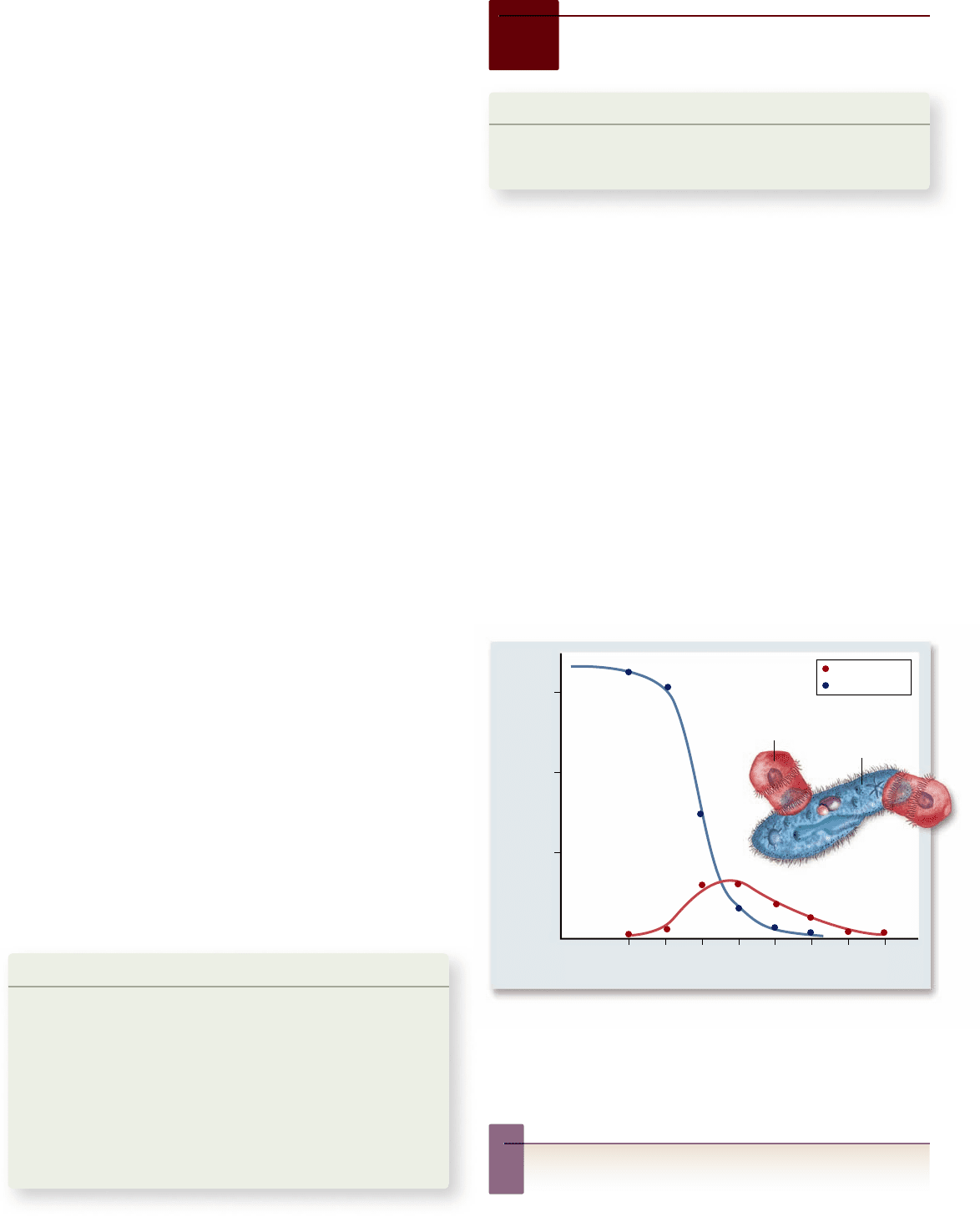
Didinium
Paramecium
Didinium
Paramecium
Number of Individuals
1200
800
400
0 1 2 3 4 5 6 7
Days
Figure 57.9
Predator–prey in the microscopic world.
When the predatory Didinium is added to a Paramecium population,
the numbers of Didinium initially rise, and the numbers of
Paramecium steadily fall. When the P aramecium population is
depleted, however, the Didinium individuals also die.
Inquiry question
?
Can you think of any ways this experiment could be changed
so that Paramecium might not go extinct?
57.3
Predator–Prey Relationships
Learning Outcomes
Define predation.1.
Describe the effects predation can have on a population.2.
Predation is the consuming of one organism by another. In this
sense, predation includes everything from a leopard capturing
and eating an antelope, to a deer grazing on spring grass.
When experimental populations are set up under simple
laboratory conditions, as illustrated in figure 57.9 with the
predatory protist Didinium and its prey Paramecium, the preda-
tor often exterminates its prey and then becomes extinct itself,
having nothing left to eat. If refuges are provided for the Para-
mecium, however, its population drops to low levels but not to
extinction. Low prey population levels then provide inadequate
food for the Didinium, causing the predator population to de-
crease. When this occurs, the prey population can recover.
Predation strongly in uences prey populations
In nature, predators often have large effects on prey popula-
tions. As the previous example indicates, however, the interac-
tion is a two-way street: prey can also affect the dynamics of
predator populations. The outcomes of such interactions are
complex and depend on a variety of factors.
as behavior and individual growth rates. For example, two spe-
cies of Anolis lizards occur on the Caribbean island of St.
Maarten. When one of the species, A. gingivinus, is placed in
12-m × 12-m enclosures without the other species, individual
lizards grow faster and perch lower than do lizards of the same
species when placed in enclosures in which A. pogus, a species
normally found near the ground, is also present.
Limitations of experimental studies
Experimental studies are a powerful means of understand-
ing interactions between coexisting species and are now
commonly conducted by ecologists. Nonetheless, they have
their limitations.
First, care is necessary in interpreting the results of field
experiments. Negative effects of one species on another do
not automatically indicate the existence of competition. For
example, many similarly sized fish have a negative effect on
one another, but it results not from competition, but from
the fact that adults of each species prey on juveniles of the
other species.
In addition, the presence of one species may attract
predators or parasites, which then also prey on the second
species. In this case, even if the two species are not compet-
ing, the second species may have a lower population size in
the presence of the first species due to predators or parasites.
Indeed, we can’t rule out this possibility with the results of
the kangaroo rat exclusion study just mentioned, although
the close proximity of the enclosures (they were adjacent)
would suggest that the same predators and parasites were
present in all of them. Thus, experimental studies are most
effective when combined with detailed examination of the
ecological mechanisms causing the observed effect of one
species on another.
Second, experimental studies are not always feasible. For
example, the coyote population has increased in the United
States in recent years concurrently with the decline of the grey
wolf. Is this trend an indication that the species compete? Be-
cause of the size of the animals and the large geographic areas
occupied by each individual, manipulative experiments involv-
ing fenced areas with only one or both species—with each ex-
perimental treatment replicated several times for statistical
analysis—are not practical. Similarly, studies of slow-growing
trees might require many centuries to detect competition
between adult trees. In such cases, detailed studies of the eco-
logical requirements of each species are our best bet for under-
standing interspecific interactions.
Learning Outcomes Review 57.2
A niche comprises the total number of ways in which an organism utilizes
resources in its environment. A fundamental niche is the entire niche
possible to a species; a realized niche is the niche a species actually utilizes.
If resources are limiting, two species cannot occupy the same niche
indefi nitely without competition driving one to local extinction. Resource
partitioning allows two sympatric species to occupy a niche, reducing
competition between them and also lessening the size of the realized niche.
■ Under what circumstances can two species with
identical niches coexist indefinitely?
1192
part
VIII
Ecology and Behavior
rav32223_ch57_1185-1206.indd 1192rav32223_ch57_1185-1206.indd 1192 11/20/09 2:08:36 PM11/20/09 2:08:36 PM
Apago PDF Enhancer
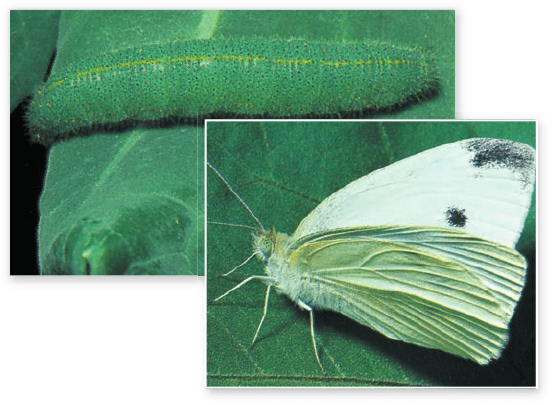
a.
b.
Figure 57.10
Insect herbivores
well suited to their
plant hosts. a. The
green caterpillars of the cabbage white butter y (Pieris rapae) are
camou aged on the leaves of cabbage and other plants on which
they feed. Although mustard oils protect these plants against most
herbivores, the cabbage white butter y caterpillars are able to break
down the mustard oil compounds. b. An adult cabbage white
butter y.
that when attacked by caterpillars, wild tobacco plants emit a
chemical into the air that attracts a species of bug that feeds on
that caterpillar (discussed in greater detail in chapter 40).
The best known and perhaps most important of the
chemical defenses of plants against herbivores are secondary
chemical compounds. These chemicals are distinguished from pri-
mary compounds, which are the components of a major meta-
bolic pathway, such as respiration. Many plants, and apparently
many algae as well, contain structurally diverse secondary com-
pounds that are either toxic to most herbivores or disturb their
metabolism greatly, preventing, for example, the normal devel-
opment of larval insects. Consequently, most herbivores tend to
avoid the plants that possess these compounds.
The mustard family (Brassicaceae) produces a group of
chemicals known as mustard oils. These substances give the pun-
gent aromas and tastes to plants such as mustard, cabbage, water-
cress, radish, and horseradish. The flavors we enjoy indicate the
presence of chemicals that are toxic to many groups of insects.
Similarly, plants of the milkweed family (Asclepiadaceae) and the
related dogbane family (Apocynaceae) produce a milky sap that
deters herbivores from eating them. In addition, these plants
usually contain cardiac glycosides, molecules that can produce
drastic deleterious effects on the heart function of vertebrates.
The coevolutionary response of herbivores
Certain groups of herbivores are associated with each family or
group of plants protected by a particular kind of secondary
compound. These herbivores are able to feed on these plants
without harm, often as their exclusive food source.
For example, cabbage butterfly caterpillars (subfamily Pier-
inae) feed almost exclusively on plants of the mustard and caper
families, as well as on a few other small families of plants that also
contain mustard oils (figure 57.10). Similarly, caterpillars of
Prey population explosions and crashes
Some of the most dramatic examples of the interconnection be-
tween predators and their prey involve situations in which hu-
mans have either added or eliminated predators from an area.
For example, the elimination of large carnivores from much of
the eastern United States has led to population explosions of
white-tailed deer, which strip the habitat of all edible plant life
within their reach. Similarly, when sea otters were hunted to near
extinction on the western coast of the United States, populations
of sea urchins, a principal prey item of the otters, exploded.
Conversely, the introduction of rats, dogs, and cats to
many islands around the world has led to the decimation of na-
tive fauna. Populations of Galápagos tortoises on several islands
are endangered by introduced rats, pigs, dogs, and cats, which
eat the eggs and the young tortoises. Similarly, in New Zealand,
several species of birds and reptiles have been eradicated by rat
predation and now only occur on a few offshore islands that the
rats have not reached. On Stephens Island, near New Zealand,
every individual of the now-extinct Stephens Island wren was
killed by a single lighthouse keeper’s cat.
A classic example of the role predation can play in a com-
munity involves the introduction of prickly pear cactus to Aus-
tralia in the 19th century. In the absence of predators, the cactus
spread rapidly, so that by 1925 it occupied 12 million hectares of
rangeland in an impenetrable morass of spines that made cattle
ranching difficult. To control the cactus, a predator from its natu-
ral habitat in Argentina, the moth Cactoblastis cactorum, was intro-
duced, beginning in 1926. By 1940, cactus populations had been
greatly reduced and it now usually occurs in small populations.
Predation and coevolution
Predation provides strong selective pressures on prey popula-
tions. Any feature that would decrease the probability of capture
should be strongly favored. In turn, the evolution of such features
causes natural selection to favor counteradaptations in predator
populations. The process by which these adaptations are selected
in lockstep fashion in two or more interacting species is termed
coevolution. A coevolutionary “arms race” may ensue in which
predators and prey are constantly evolving better defenses and
better means of circumventing these defenses. In the sections that
follow, you’ll learn more about these defenses and responses.
Plant adaptations defend against herbivores
Plants have evolved many mechanisms to defend themselves
from herbivores. The most obvious are morphological defenses:
Thorns, spines, and prickles play an important role in discour-
aging large plant eaters, and plant hairs, especially those that
have a glandular, sticky tip, deter insect herbivores. Some plants,
such as grasses, deposit silica in their leaves, both strengthening
and protecting themselves. If enough silica is present, these
plants are simply too tough to eat.
Chemical defenses
As significant as morphological adaptations are, the chemical
defenses that occur so widely in plants are even more wide-
spread. Plants exhibit some amazing chemical adaptations to
combat herbivores. For example, recent work demonstrates
chapter
57
Interspeci c Interactions and the Ecology of Communities
119 3www.ravenbiology.com
rav32223_ch57_1185-1206.indd 1193rav32223_ch57_1185-1206.indd 1193 11/20/09 2:08:37 PM11/20/09 2:08:37 PM
Apago PDF Enhancer
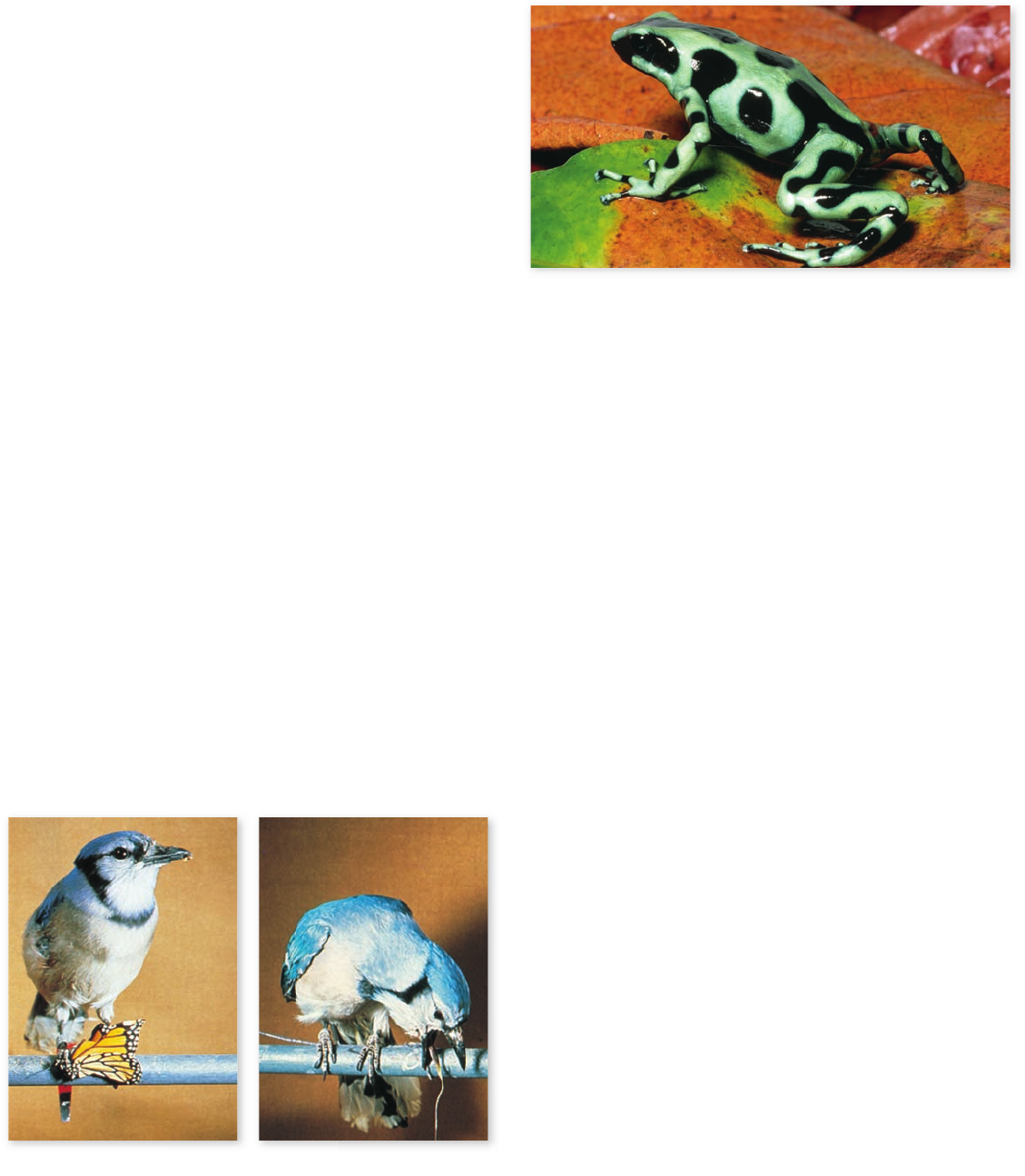
a. b.
Figure 57.12
Vertebrate chemical defenses. Frogs of the
family Dendrobatidae, abundant in the forests of Central and South
America, are extremely poisonous to vertebrates; 80 different toxic
alkaloids have been identi ed from different species in this genus.
Dendrobatids advertise their toxicity with bright coloration. As a
result of either instinct or learning, predators avoid such brightly
colored species that might otherwise be suitable prey.
Figure 57.11
A blue jay learns not to eat monarch
butter ies. a. This cage-reared jay had never seen a monarch
butter y before it tried eating one. b. The same jay regurgitated the
butter y a few minutes later. This bird will probably avoid trying to
capture all orange-and-black insects in the future.
evolved the ability to tolerate the protective chemicals; these
birds eat the monarchs.
Chemical defenses
Animals also manufacture and use a startling array of defensive
substances. Bees, wasps, predatory bugs, scorpions, spiders, and
many other arthropods use chemicals to defend themselves and
to kill their own prey. In addition, various chemical defenses
have evolved among many marine invertebrates, as well as a
variety of vertebrates, including frogs, snakes, lizards, fishes,
and some birds.
The poison-dart frogs of the family Dendrobatidae pro-
duce toxic alkaloids in the mucus that covers their brightly col-
ored skin; these alkaloids are distasteful and sometimes deadly
to animals that try to eat the frogs (figure 57.12) . Some of these
toxins are so powerful that a few micrograms will kill a person
if injected into the bloodstream. More than 200 different alka-
loids have been isolated from these frogs, and some are playing
important roles in neuromuscular research. Similarly intensive
investigations of marine animals, venomous reptiles, algae, and
flowering plants are underway in search of new drugs to fight
cancer and other diseases, or to use as sources of antibiotics.
Defensive coloration
Many insects that feed on milkweed plants are brightly colored;
they advertise their poisonous nature using an ecological strat-
egy known as warning coloration.
Showy coloration is characteristic of animals that use poi-
sons and stings to repel predators; organisms that lack specific
chemical defenses are seldom brightly colored. In fact, many
have cryptic coloration—color that blends with the surround-
ings and thus hides the individual from predators (figure 57.13) .
Camouflaged animals usually do not live together in groups
because a predator that discovers one individual gains a valu-
able clue to the presence of others.
monarch butterflies and their relatives (subfamily Danainae) feed
on plants of the milkweed and dogbane families. How do these
animals manage to avoid the chemical defenses of the plants, and
what are the evolutionary precursors and ecological consequences
of such patterns of specialization?
We can offer a potential explanation for the evolution of
these particular patterns. Once the ability to manufacture mus-
tard oils evolved in the ancestors of the caper and mustard fam-
ilies, the plants were protected for a time against most or all
herbivores that were feeding on other plants in their area. At
some point, certain groups of insects—for example, the cab-
bage butterflies—evolved the ability to break down mustard
oils and thus feed on these plants without harming themselves.
Having developed this new capability, the butterflies were able
to use a new resource without competing with other herbivores
for it. As we saw in chapter 22, exposure to an underutilized
resource often leads to evolutionary diversification and adap-
tive radiation.
Animal adaptations defend against predators
Some animals that feed on plants rich in secondary compounds
receive an extra benefit. For example, when the caterpillars of
monarch butterflies feed on plants of the milkweed family, they
do not break down the cardiac glycosides that protect these
plants from herbivores. Instead, the caterpillars concentrate
and store the cardiac glycosides in fat bodies; they then pass
them through the chrysalis stage to the adult and even to the
eggs of the next generation.
The incorporation of cardiac glycosides protects all stages
of the monarch life cycle from predators. A bird that eats a
monarch butterfly quickly regurgitates it (figure 57.11) and in
the future avoids the conspicuous orange-and-black pattern
that characterizes the adult monarch. Some bird species have
119 4
part
VIII
Ecology and Behavior
rav32223_ch57_1185-1206.indd 1194rav32223_ch57_1185-1206.indd 1194 11/20/09 2:08:39 PM11/20/09 2:08:39 PM
Apago PDF Enhancer
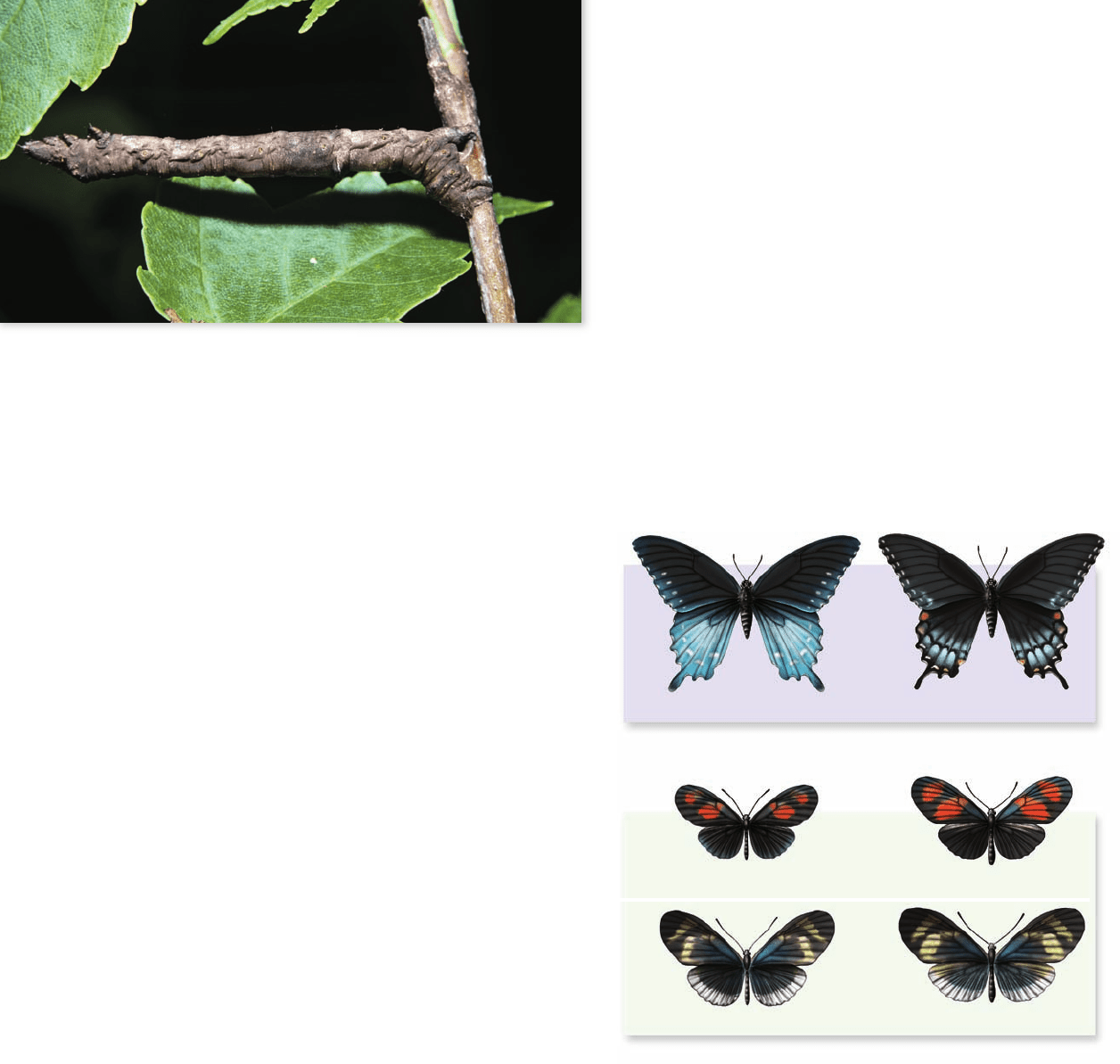
Heliconius erato Heliconius melpomene
Battus philenor Papilio glaucus
Heliconius sapho Heliconius cydno
a. Batesian mimicry: Pipevine swallowtail butterfly (Battus philenor) is
poisonous; Tiger swallowtail (Papilio glaucus) is a palatable mimic.
b. Müllerian mimicry: Two pairs of mimics; all are distasteful.
Figure 57.14
Mimicry. a. Batesian mimicry. Pipevine
swallowtail butter ies (Battus philenor) are protected from birds and
other predators by the poisonous compounds they derive from the
food they ea t as caterpillars and store in their bodies. Adult pipevine
swallowtails advertise their poisonous nature with warning
coloration. Tiger swallowtails (Papilio glaucus ) are Batesian mimics
of the poisonous pipevine swallowtail and are not chemically
protected. b. Pairs of Müllerian mimics. Heliconius erato and
H. melpomene are sympatric, and H. sapho and H. cydno are
sympatric. All of these butter ies are distasteful. They have evolved
similar coloration patterns in sympatry to minimize predation;
predators need only learn one pattern to avoid.
Figure 57.13
Cryptic coloration and form. An inchworm
caterpillar (Nacophora quernaria) closely resembles the twig on
which it is hanging..
The caterpillars of the tiger swallowtail feed on a variety
of trees, including tulip, aspen, and cherry, and neither caterpil-
lars nor adults are distasteful to birds. Interestingly, the Batesian
mimicry seen in the adult tiger swallowtail butterfly does not
extend to the caterpillars: Tiger swallowtail caterpillars are cam-
ouflaged on leaves, resembling bird droppings, but the pipevine
swallowtail’s distasteful caterpillars are very conspicuous.
Müllerian mimicry
Another kind of mimicry, Müllerian mimicry, was named for
the German biologist Fritz Müller, who first described it in
1878. In Müllerian mimicry, several unrelated but protected
animal species come to resemble one another (figure 57.14b). If
animals that resemble one another are all poisonous or danger-
ous, they gain an advantage because a predator will learn more
quickly to avoid them. In some cases, predator populations even
evolve an innate avoidance of species; such evolution may occur
more quickly when multiple dangerous prey look alike.
Mimicry allows one species to capitalize
on defensive strategies of another
During the course of their evolution, many species have come
to resemble distasteful ones that exhibit warning coloration.
The mimic gains an advantage by looking like the distasteful
model. Two types of mimicry have been identified: Batesian
mimicry and Müllerian mimicry.
Batesian mimicry
Batesian mimicry is named for Henry Bates, the British natu-
ralist who first brought this type of mimicry to general atten-
tion in 1857. In his journeys to the Amazon region of South
America, Bates discovered many instances of palatable insects
that resembled brightly colored, distasteful species. He rea-
soned that the mimics would be avoided by predators, who
would be fooled by the disguise into thinking the mimic was
the distasteful species.
Many of the best-known examples of Batesian mimicry
occur among butterflies and moths. Predators of these insects
must use visual cues to hunt for their prey; otherwise, similar
color patterns would not matter to potential predators. Increas-
ing evidence indicates that Batesian mimicry can involve non-
visual cues, such as olfaction, although such examples are less
obvious to humans.
The kinds of butterflies that provide the models in Bates-
ian mimicry are, not surprisingly, members of groups whose
caterpillars feed on only one or a few closely related plant fami-
lies. The plant families on which they feed are strongly protected
by toxic chemicals. The model butterflies incorporate the poi-
sonous molecules from these plants into their bodies. The
mimic butterflies, in contrast, belong to groups in which the
feeding habits of the caterpillars are not so restricted. As cater-
pillars, these butterflies feed on a number of different plant
families that are unprotected by toxic chemicals.
One often-studied mimic among North American but-
terflies is the tiger swallowtail, whose range occurs throughout
the eastern United States and into Canada (figure 57.14a). In
areas in which the poisonous pipevine swallowtail occurs, fe-
male tiger swallowtails are polymorphic and one color form is
extremely similar in appearance to the pipevine swallowtail.
chapter
57
Interspeci c Interactions and the Ecology of Communities
119 5www.ravenbiology.com
rav32223_ch57_1185-1206.indd 1195rav32223_ch57_1185-1206.indd 1195 11/20/09 2:08:45 PM11/20/09 2:08:45 PM
Apago PDF Enhancer
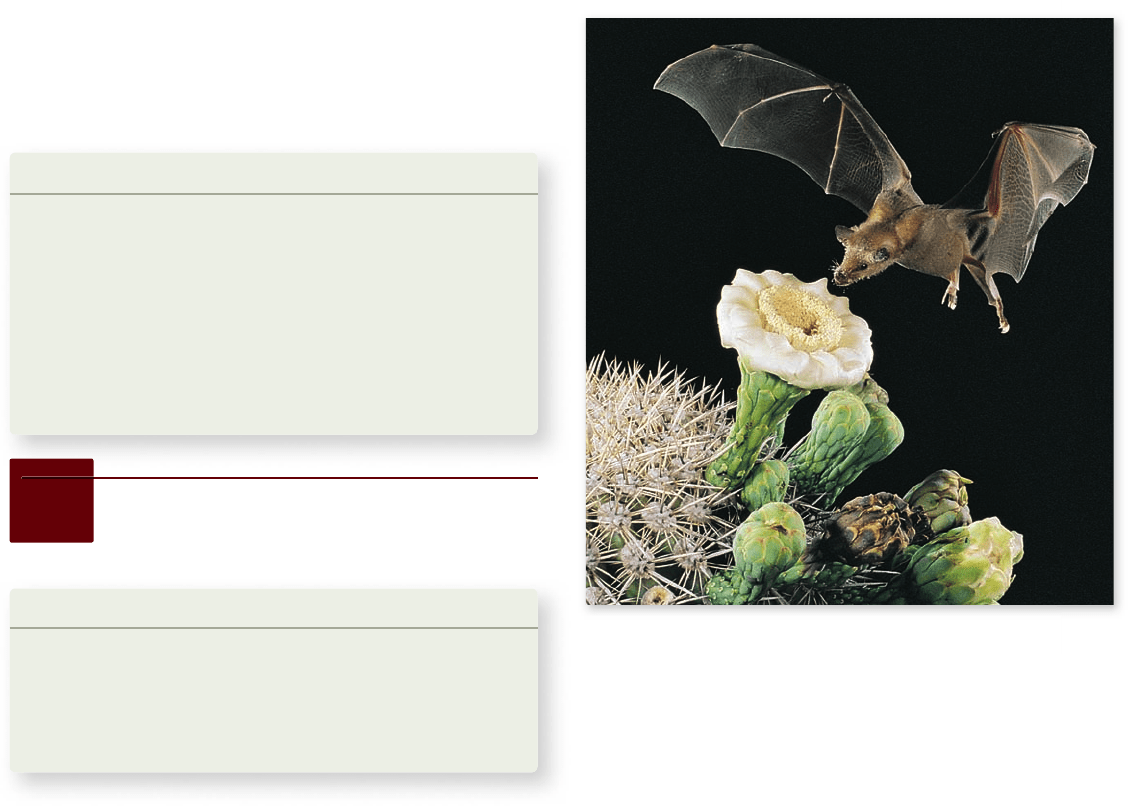
Figure 57.15
Pollination by a bat. Many owers have
coevolved with other species to facil itate pollen transfer. Insects are
widely known as pollinators, but they’re not the only ones: birds,
bats, and even small marsupials and lizards serve as pollinators for
some species. Notice the cargo of pollen on the bat’s snout.
57.4
The Many Types of Species
Interactions
Learning Outcomes
Explain the different forms of symbiosis.1.
Describe how coevolution occurs between mutualistic 2.
partners.
Explain how the occurrence of one ecological process may 3.
affect the outcome of another occurring at the same time.
The plants, animals, protists, fungi, and prokaryotes that live
together in communities have changed and adjusted to one an-
other continually over millions of years. We have already dis-
cussed competition and predation, but other types of ecological
interactions commonly occur. For example, many features of
flowering plants have evolved in relation to the dispersal of the
plant’s gametes by animals (figure 57.15). These animals, in
turn, have evolved a number of special traits that enable them
to obtain food or other resources efficiently from the plants
they visit, often from their flowers. While doing so, the animals
pick up pollen, which they may deposit on the next plant they
visit, or seeds, which may be left elsewhere in the environment,
sometimes a great distance from the parent plant.
Symbiosis involves long-term interactions
In symbiosis, two or more kinds of organisms interact in often
elaborate and more-or-less permanent relationships. All symbi-
otic relationships carry the potential for coevolution between
the organisms involved, and in many instances the results of
this coevolution are fascinatingly complex.
Examples of symbiosis include lichens, which are associa-
tions of certain fungi with green algae or cyanobacteria. An-
other important example are mycorrhizae, associations between
fungi and the roots of most kinds of plants. The fungi expedite
the plant’s absorption of certain nutrients, and the plants in
In both Batesian and Müllerian mimicry, mimic and
model must not only look alike but also act alike. For example,
the members of several families of insects that closely resemble
wasps behave surprisingly like the wasps they mimic, flying of-
ten and actively from place to place.
Learnings Outcomes Review 57.3
Predation is the consuming of one organism by another. High predation can
drive prey populations to extinction; conversely, in the absence of predators,
prey populations often explode and exhaust their resources. Defensive
adaptations may evolve in prey species, such as becoming distasteful or
poisonous, or having defensive structures, appearance, or capabilities.
■ A nonpoisonous scarlet king snake has red, black, and
yellow bands of color similar to that of the poisonous
eastern coral snake. What type of mimicry is
being exhibited?
turn provide the fungi with carbohydrates (both mycorrhizae
and lichens are discussed in greater detail in chapter 31). Simi-
larly, root nodules that occur in legumes and certain other kinds
of plants contain bacteria that fix atmospheric nitrogen and
make it available to their host plants.
In the tropics, leaf-cutter ants are often so abundant that
they can remove a quarter or more of the total leaf surface of
the plants in a given area in a single year (see figure 31.18 ).
They do not eat these leaves directly; rather, they take them to
underground nests, where they chew them up and inoculate
them with the spores of particular fungi. These fungi are culti-
vated by the ants and brought from one specially prepared bed
to another, where they grow and reproduce. In turn, the fungi
constitute the primary food of the ants and their larvae. The
relationship between leaf-cutter ants and these fungi is an ex-
cellent example of symbiosis. Recent phylogenetic studies us-
ing DNA and assuming a molecular clock (see chapter 23)
suggest that these symbioses are ancient, perhaps originating
more than 50 mya.
The major kinds of symbiotic relationships include
(1) commensalism , in which one species benefits and the other
neither benefits nor is harmed; (2) mutualism , in which both
participating species benefit; and (3) parasitism, in which one
species benefits but the other is harmed. Parasitism can also be
viewed as a form of predation, although the organism that is
preyed on does not necessarily die.
119 6
part
VIII
Ecology and Behavior
rav32223_ch57_1185-1206.indd 1196rav32223_ch57_1185-1206.indd 1196 11/20/09 2:08:46 PM11/20/09 2:08:46 PM
Apago PDF Enhancer
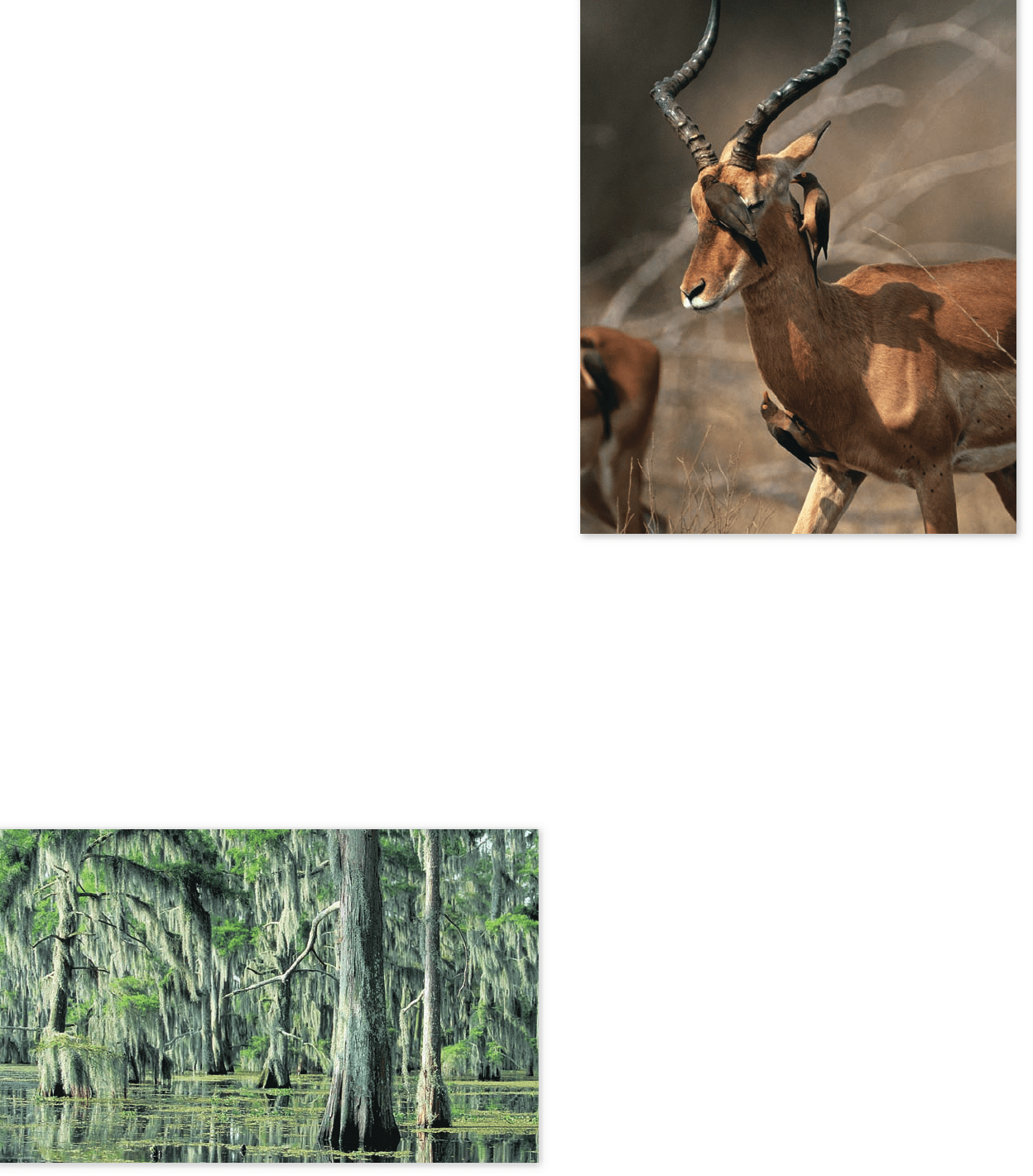
Figure 57.16
An example of commensalism. Spanish
mos s (Tillandsia usneoides) bene ts from using trees as a substrate,
but the trees generally are not affected positively or negatively.
Figure 57.17
Commensalism, mutualism, or parasitism?
In this symbiotic relationship, oxpeckers de nitely receive a bene t
in the form of nutrition from the ticks and other parasites they pick
off their host (in this case, an impala, Aepyceros melampus). But the
effect on t he host is not always clear. If the ticks are harmful, their
removal bene ts the host, and the relationship is mutually
bene cial. If the oxpeckers also pick at scabs, causing blood loss and
possible infection, the relationship may be parasitic. If the hosts are
unharmed by either the ticks or the oxpeckers, the relationship may
be an example of commensalism.
lopes (figure 57.17). The birds spend most of their time cling-
ing to the animals, picking off parasites and other insects,
carrying out their entire life cycles in close association with the
host animals.
No clear-cut boundary exists between commensalism
and mutualism; in each of these casees, it is difficult to be
certain whether the second partner receives a benefit or not.
A sea anemone may benefit by having particles of food re-
moved from its tentacles because it may then be better able
to catch other prey. Similarly, although often thought of as
commensalism, the association of grazing mammals and
gleaning birds is actually an example of mutualism. The
mammal benefits by having parasites and other insects re-
moved from its body, but the birds also benefit by gaining a
dependable source of food.
On the other hand, commensalism can easily transform
itself into parasitism. Oxpeckers are also known to pick not
only parasites, but also scabs off their grazing hosts. Once the
scab is picked, the birds drink the blood that flows from the
wound. Occasionally, the cumulative effect of persistent attacks
can greatly weaken the herbivore, particularly when conditions
are not favorable, such as during droughts.
Commensalism bene ts one species
and is neutral to the other
In commensalism, one species benefits and the other is neither
hurt nor helped by the interaction. In nature, individuals of one
species are often physically attached to members of another.
For example, epiphytes are plants that grow on the branches of
other plants. In general, the host plant is unharmed, and the
epiphyte that grows on it benefits. An example is Spanish moss,
which hangs on trees in the southern United States. This plant
and other members of its genus, which is in the pineapple fam-
ily, grow on trees to gain access to sunlight; they generally do
not harm the trees (figure 57.16).
Similarly, various marine animals, such as barnacles, grow
on other, often actively moving sea animals, such as whales, and
thus are carried passively from place to place. These “passen-
gers” presumably gain more protection from predation than
they would if they were fixed in one place, and they also reach
new sources of food. The increased water circulation that these
animals receive as their host moves around may also be of great
importance, particularly if the passengers are filter feeders. Un-
less the number of these passengers gets too large, the host spe-
cies is usually unaffected.
When commensalism may not be commensalism
One of the best known examples of symbiosis involves the rela-
tionships between certain small tropical fishes (clownfish) and
sea anemones, shown in the first figure of this chapter. The fish
have evolved the ability to live among the stinging tentacles of
sea anemones, even though these tentacles would quickly para-
lyze other fishes that touched them. The clownfish feed on
food particles left from the meals of the host anemone, remain-
ing uninjured under remarkable circumstances.
On land, an analogous relationship exists between birds
called oxpeckers and grazing animals such as cattle or ante-
chapter
57
Interspeci c Interactions and the Ecology of Communities
119 7www.ravenbiology.com
rav32223_ch57_1185-1206.indd 1197rav32223_ch57_1185-1206.indd 1197 11/20/09 2:08:50 PM11/20/09 2:08:50 PM
Apago PDF Enhancer
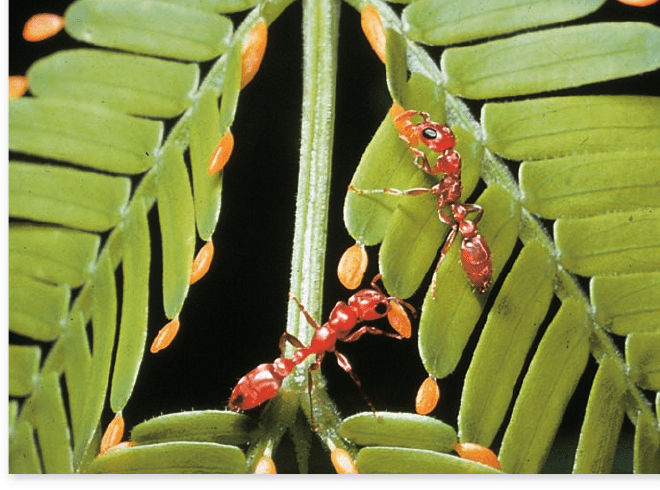
Figure 57.18
Mutualism: Ants and acacias. Ants of the
genus Pseudomyrmex live within the hollow thorns of certain species
of acacia trees in Latin America. The nectaries at the bases of the
leaves and the Beltian bodies at the ends o f the lea ets provide food
for the ants. The ants, in turn, supply the acacias with organic
nutrients and protect the acacias from herbivores and shading from
other plants.
from a tree, the acacia is unable to compete successfully in this
habitat. Finally, the ants bring organic material into their nests.
The parts they do not consume, together with their excretions,
provide the acacias with an abundant source of nitrogen.
When mutualism may not be mutualism
As with commensalism, however, things are not always as
they seem. Ant–acacia associations also occur in Africa; in
Kenya, several species of acacia ants occur, but only a single
species is found on any one tree. One species, Crematogaster
nigriceps, is competitively inferior to two of the other species.
To prevent invasion by these other ant species, C. nigriceps
prunes the branches of the acacia, preventing it from coming
into contact with branches of other trees, which would serve
as a bridge for invaders.
Although this behavior is beneficial to the ant, it is detri-
mental to the tree because it destroys the tissue from which
flowers are produced, essentially sterilizing the tree. In this
case, what initially evolved as a mutualistic interaction has in-
stead become a parasitic one.
Parasitism bene ts one species
at the expense of another
Parasitism is harmful to the prey organism and beneficial to the
parasite. In many cases, the parasite kills its host, and thus the
ecological effects of parasitism can be similar to those of preda-
tion. In the past parasitism was studied mostly in terms of its
effects on individuals and the populations in which they live,
but in recent years researchers have realized that parasitism can
be an important factor affecting community structure.
Mutualism bene ts both species
Mutualism is a symbiotic relationship between organisms in
which both species benefit. Mutualistic relationships are of
fundamental importance in determining the structure of bio-
logical communities.
Mutualism and coevolution
Some of the most spectacular examples of mutualism occur
among flowering plants and their animal visitors, including in-
sects, birds, and bats. During the course of flowering-plant evo-
lution, the characteristics of flowers evolved in relation to the
characteristics of the animals that visit them for food and, in the
process, spread their pollen from individual to individual. At
the same time, characteristics of the animals have changed, in-
creasing their specialization for obtaining food or other sub-
stances from particular kinds of flowers.
Another example of mutualism involves ants and
aphids. Aphids are small insects that suck fluids from the
phloem of living plants with their piercing mouthparts. They
extract a certain amount of the sucrose and other nutrients
from this fluid, but they excrete much of it in an altered form
through their anus. Certain ants have taken advantage of
this—in effect, domesticating the aphids. Like ranchers tak-
ing cattle to fresh fields to graze, the ants carry the aphids to
new plants and then consume as food the “honeydew” that
the aphids excrete.
Ants and acacias: A prime example of mutualism
A particularly striking example of mutualism involves ants and
certain Latin American tree species of the genus Acacia. In these
species, certain leaf parts, called stipules, are modified as paired,
hollow thorns. The thorns are inhabited by stinging ants of
the genus Pseudomyrmex, which do not nest anywhere else
(figure 57.18). Like all thorns that occur on plants, the acacia
thorns serve to deter herbivores.
At the tip of the leaflets of these acacias are unique,
protein-rich bodies called Beltian bodies, named after the
19th-century British naturalist Thomas Belt. Beltian bodies do
not occur in species of Acacia that are not inhabited by ants, and
their role is clear: they serve as a primary food for the ants. In
addition, the plants secrete nectar from glands near the bases of
their leaves. The ants consume this nectar as well, feeding it
and the Beltian bodies to their larvae.
Obviously, this association is beneficial to the ants, and
one can readily see why they inhabit acacias of this group. The
ants and their larvae are protected within the swollen thorns,
and the trees provide a balanced diet, including the sugar-rich
nectar and the protein-rich Beltian bodies. What, if anything,
do the ants do for the plants?
Whenever any herbivore lands on the branches or leaves
of an acacia inhabited by ants, the ants, which continually pa-
trol the acacia’s branches, immediately attack and devour the
herbivore. The ants that live in the acacias also help their hosts
compete with other plants by cutting away any encroaching
branches that touch the acacia in which they are living. They
create, in effect, a tunnel of light through which the acacia can
grow, even in the lush tropical rain forests of lowland Central
America. In fact, when an ant colony is experimentally removed
119 8
part
VIII
Ecology and Behavior
rav32223_ch57_1185-1206.indd 1198rav32223_ch57_1185-1206.indd 1198 11/20/09 2:08:53 PM11/20/09 2:08:53 PM
Apago PDF Enhancer
Infected ant
Figure 57.19
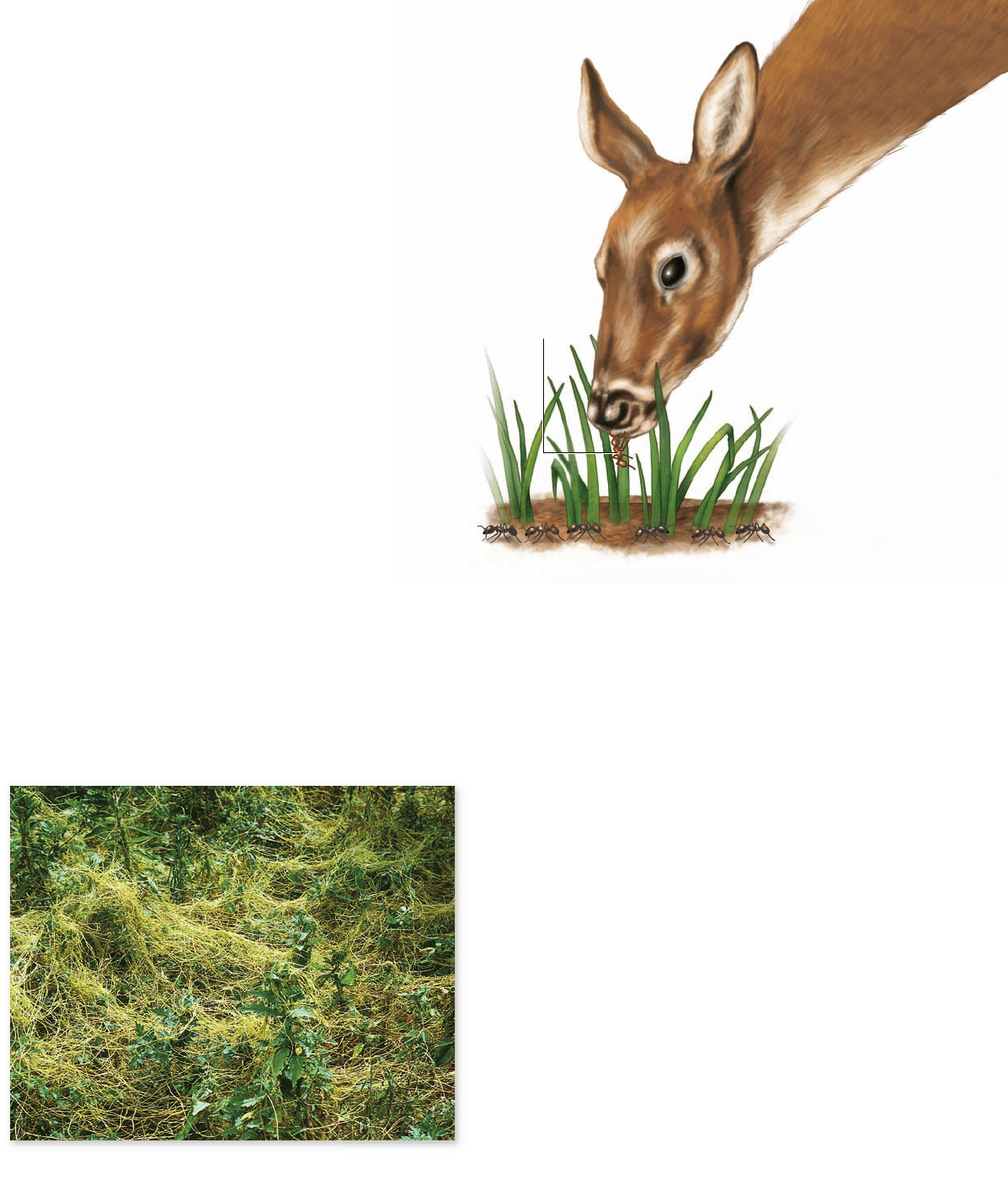
An external parasite. The yellow vines are
the owering plant dodder (Cuscuta), a parasite that has lost its
chlorophyll and its leaves in the course of its evolution. Because it is
heterotrophic (unable to manufacture its own food), dodder obtains
its food from the host plants it grows on.
Figure 57.20
Parasitic
manipulation of
host behavior.
Due to a parasite in its
brain, an ant climbs to
the top of a grass
blade, where it may be
eaten by a grazing
herbivore, thus
passing the parasite
from insect to
mammal.
One of the most famous examples involves a parasitic flat-
worm, Dicrocoelium dendriticum, which lives in ants as an interme-
diate host, but reaches adulthood in large herbivorous mammals
such as cattle and deer. Transmission from an ant to a cow might
seem difficult because cows do not normally eat insects. The flat-
worm, however, has evolved a remarkable adaptation. When an
ant is infected, one of the flatworms migrates to the brain and
causes the ant to climb to the top of vegetation and lock its man-
dibles onto a grass blade at the end of the day, just when herbi-
vores are grazing (figure 57.20). The result is that the ant is eaten
along with the grass, leading to infection of the grazer.
Ecological processes have interactive e ects
We have seen the different ways in which species can interact
with one another. In nature, however, more than one type of
interaction often occurs at the same time. In many cases, the
outcome of one type of interaction is modified or even reversed
when another type of interaction is also occurring.
Predation reduces competition
When resources are limiting, a superior competitor can elimi-
nate other species from a community through competitive exclu-
sion. However, predators can prevent or greatly reduce exclusion
by lowering the numbers of individuals of competing species.
A given predator may often feed on two, three, or more
kinds of plants or animals in a given community. The predator’s
choice depends partly on the relative abundance of the prey
options. In other words, a predator may feed on species A when
it is abundant and then switch to species B when A is rare. Simi-
larly, a given prey species may become a primary source of food
for increasing numbers of species as it becomes more abundant.
In this way, superior competitors may be prevented from com-
petitively excluding other species.
External parasites
Parasites that feed on the exterior surface of an organism are
external parasites, or ectoparasites (figure 57.19). Many in-
stances of external parasitism are known in both plants and ani-
mals. Parasitoids are insects that lay eggs in or on living hosts.
This behavior is common among wasps, whose larvae feed on
the body of the unfortunate host, often killing it.
Internal parasites
Parasites that live within the body of their hosts, termed
endoparasites, occur in many different phyla of animals and
protists. Internal parasitism is generally marked by much more
extreme specialization than external parasitism, as shown by the
many protist and invertebrate parasites that infect humans.
The more closely the life of the parasite is linked with
that of its host, the more its morphology and behavior are likely
to have been modified during the course of its evolution (the
same is true of symbiotic relationships of all sorts). Conditions
within the body of an organism are different from those en-
countered outside and are apt to be much more constant. Con-
sequently, the structure of an internal parasite is often simplified,
and unnecessary armaments and structures are lost as it evolves
(for example, see descriptions of tapeworms in chapter 33).
Parasites and host behaviors
Many parasites have complex life cycles that require several dif-
ferent hosts for growth to adulthood and reproduction. Recent
research has revealed the remarkable adaptations of certain
parasites that alter the behavior of the host and thus facilitate
transmission from one host to the next. For example, many
parasites cause their hosts to behave in ways that make them
more vulnerable to their predators; when the host is ingested,
the parasite is able to infect the predator.
chapter
57
Interspeci c Interactions and the Ecology of Communities
119 9www.ravenbiology.com
rav32223_ch57_1185-1206.indd 1199rav32223_ch57_1185-1206.indd 1199 11/20/09 2:08:55 PM11/20/09 2:08:55 PM
Apago PDF Enhancer
Question: Does predation affect the outcome of interspecific competitive interactions?
Hypothesis: In the absence of predators, prey populations will increase until resources are limiting, and some species will be competitively excluded.
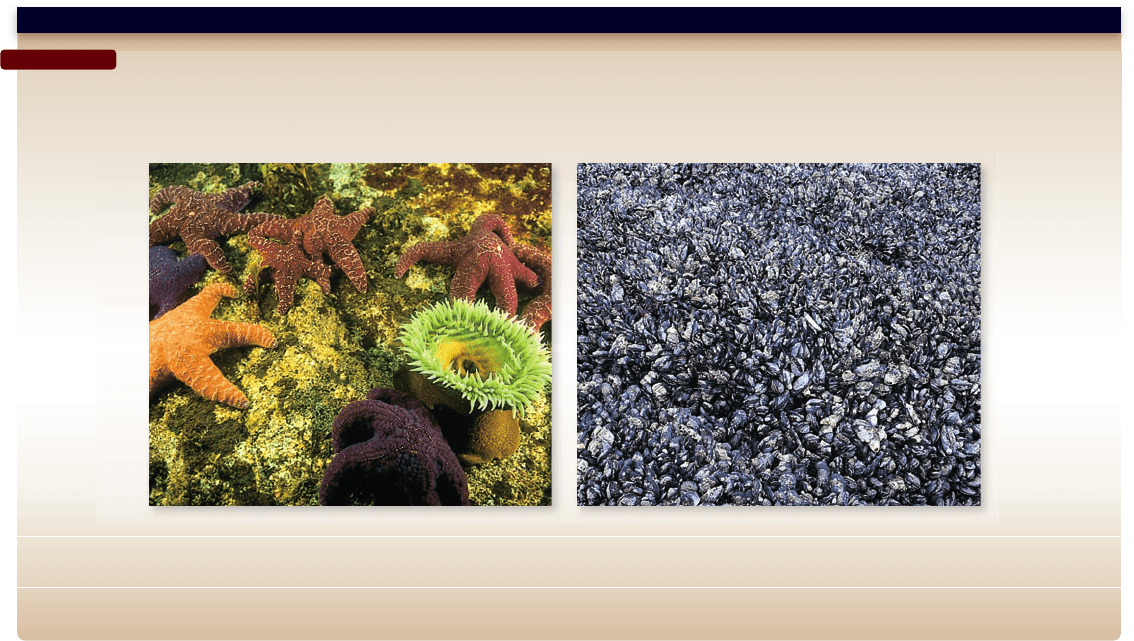
Experiment: Remove predatory sea stars (Pisaster ochraceus) from some areas of rocky intertidal shoreline and monitor populations of species the sea stars
prey upon. In control areas, pick up sea stars, but replace them where they were found.
Result: In the absence of sea stars, the population of the mussel Mytilus californianus exploded, occupying all available space and eliminating many other
species from the community.
Interpretation: What would happen if sea stars were returned to the experimental plots?
SCIENTIFIC THINKING
a.
b.
Figure 57.21
Predation reduces competition. a. In a controlled experiment in a coastal ecosystem, Robert Pain e of the University
of Washington removed a key predator, sea stars (Pisaster). b. In response, ercely competitive mussels, a type of bivalve mollusk, exploded in
population growth, effectively crowding out seven other indigenous species.
malaria), whereas the other species is highly susceptible. In
places where the parasite occurs, the competitively inferior spe-
cies can hold its own and the two species coexist; elsewhere, the
competitively dominant species outcompetes and eliminates it.
Indirect effects
In some cases, species may not directly interact, yet the pres-
ence of one species may affect a second by way of interactions
with a third. Such effects are termed indirect effects.
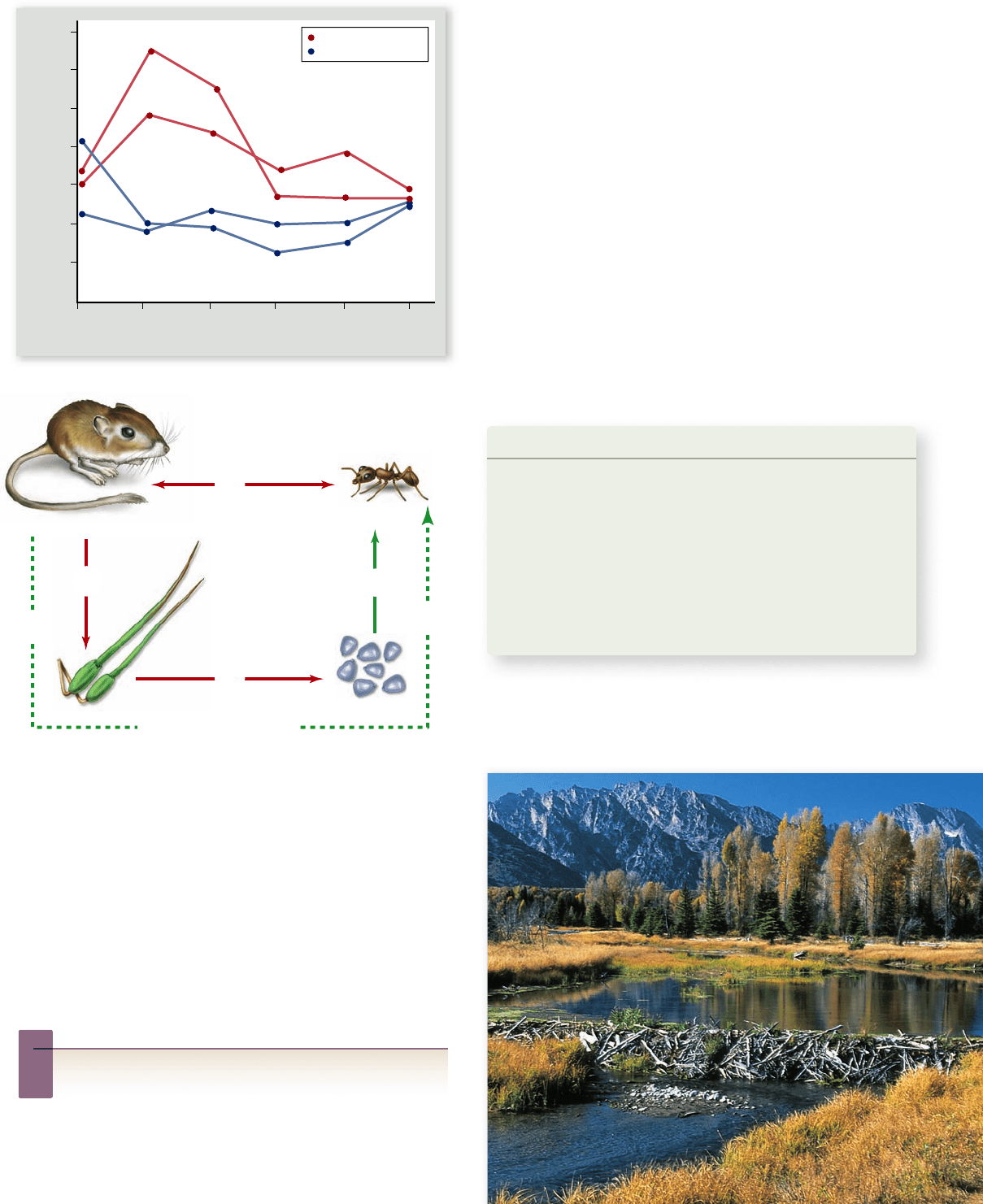
The desert rodents described earlier in the experiment
with kangaroo rats eat seeds, and so do the ants in their com-
munity; thus, we might expect them to compete with each
other. But when all rodents were removed from experimental
enclosures and not allowed back in (unlike the previous ex-
periment, no holes were placed in the enclosure walls), ant
populations first increased but then declined (figure 57.22).
The initial increase was the expected result of removing
a competitor. Why did it then reverse? The answer reveals the
intricacies of natural ecosystems. Rodents prefer large seeds,
whereas ants prefer smaller ones. Furthermore, in this system,
plants with large seeds are competitively superior to plants
with small seeds. The removal of rodents therefore led to an
increase in the number of plants with large seeds, which re-
duced the number of small seeds available to ants, which in
turn led to a decline in ant populations. In summary, the effect
Such patterns are often characteristic of communities in
marine intertidal habitats. For example, in preying selectively
on bivalves, sea stars prevent bivalves from monopolizing a hab-
itat, opening up space for many other organisms (figure 57.21) .
When sea stars are removed from a habitat, species diversity
falls precipitously, and the seafloor community comes to be
dominated by a few species of bivalves.
Predation tends to reduce competition in natural com-
munities, so it is usually a mistake to attempt to eliminate a
major predator, such as wolves or mountain lions, from a com-
munity. The result may be a decrease in biological diversity.
Parasitism may counter competition
Parasites may affect sympatric species differently and thus in-
fluence the outcome of interspecific interactions. One classic
experiment investigated interactions between two sympatric
flour beetles, Tribolium castaneum and T. confusum, with and
without a parasite, Adelina. In the absence of the parasite,
T. castaneum is dominant, and T. confusum normally becomes
extinct. When the parasite is present, however, the outcome is
reversed, and T. castaneum perishes.
Similar effects of parasites in natural systems have been
observed in many species. For example, in the Anolis lizards of
St. Maarten mentioned previously, the competitively inferior
species is resistant to lizard malaria (a disease related to human
1200
part
VIII
Ecology and Behavior
rav32223_ch57_1185-1206.indd 1200rav32223_ch57_1185-1206.indd 1200 11/20/09 2:08:58 PM11/20/09 2:08:58 PM
Apago PDF Enhancer
b.
a.
60
40
20
Sampling Periods
Number of Ant Colonies
Oct 74 May 75 Sep 75 May 76 Aug 76 Jul 77
rodents removed
rodents not removed
Rodents
Large seeds Small seeds
Ants
Indirect positive effect
( – )
( – )
( – )
( + )
( + )
( + )
( + )
Figure 57.22
Direct and indirect e ects in an ecological
community. a. In the enclosures i n which kangaroo rats had been
removed, ants initially increased in population size relative to the
ants in the control enclosures, but then these ant populations
declined. b. Rodents and ants both eat seeds, so the presence of
rodents has a direct negative effect on ants, and vice versa. However,
the presence of rodents has a negative effect on large seeds. In turn,
the number of plants with large seeds has a negative effect on plants
that produce small seeds, which the ants eat. Hence, the presence of
rodents should increase the number of small seeds. In turn, the
number of small seeds has a positive effect on ant populations.
Thus, indirectly, the presence of rodents has a positive effect on ant
population size.
Inquiry question
?
How would you test the hypothesis that plant competition
mediates the positive effect of kangaroo rats on ants?
Figure 57.23
Example of a keystone species. Beavers, by
constructing dam s and transforming owing streams into ponds,
create new habitats for many plant and animal species.
of rodents on ants is complicated: a direct, negative effect of
resource competition and an indirect, positive effect mediated
by plant competition.
Keystone species have major
e ects on communities
Species whose effects on the composition of communities are
greater than one might expect based on their abundance are
termed keystone species. Predators, such as the sea star de-
scribed earlier, can often serve as keystone species by prevent-
ing one species from outcompeting others, thus maintaining
high levels of species richness in a community.
A wide variety of other types of keystone species also ex-
ist. Some species manipulate the environment in ways that cre-
ate new habitats for others. Beavers, for example, change
running streams into small impoundments, altering the flow of
water and flooding areas (figure 57.23) . Similarly, alligators ex-
cavate deep holes at the bottoms of lakes. In times of drought,
these holes are the only areas where water remains, thus allow-
ing aquatic species that otherwise would perish to persist until
the drought ends and the lake refills.
Learning Outcomes Review 57.4
The types of symbiosis include mutualism, in which both participants
benefi t; commensalism, in which one benefi ts and the other is neutrally
aff ected; and parasitism, in which one benefi ts at the expense of the other.
Mutualistic species often undergo coevolution, such as the shape of fl owers
and the features of animals that feed on and pollinate them. Ecological
interactions can aff ect many processes in a community; for example,
predation and parasitism may lessen resource competition.
■ How could the presence of a predator positively affect
populations of a species on which it preys?
www.ravenbiology.com
rav32223_ch57_1185-1206.indd 1201rav32223_ch57_1185-1206.indd 1201 11/20/09 2:09:01 PM11/20/09 2:09:01 PM