
Raven P.H., Johnson G.B., Mason K.A. Biology (Ninth Edition)
Подождите немного. Документ загружается.

Apago PDF Enhancer
Primary Productivity
Low
High
Biomass of
Primary Producers
Low
High
Biomass of
Herbivores
Low
High
Biomass of
Carnivores
Low
High
Intensity of Illumination (μmol of photons of light/m
2
/s)
Carnivore Biomass (g/m
2
)Herbivore Biomass (g/m
2
)
Primary Producer Biomass
(g algae/m
2
)
12
10
8
6
4
2
0
0 300 600 900 1200 1500
8
6
4
2
0
1.2
1.0
0.8
0.6
0.4
0.2
0
0
300 600 900 1200 1500
0 300 600 900 1200 1500
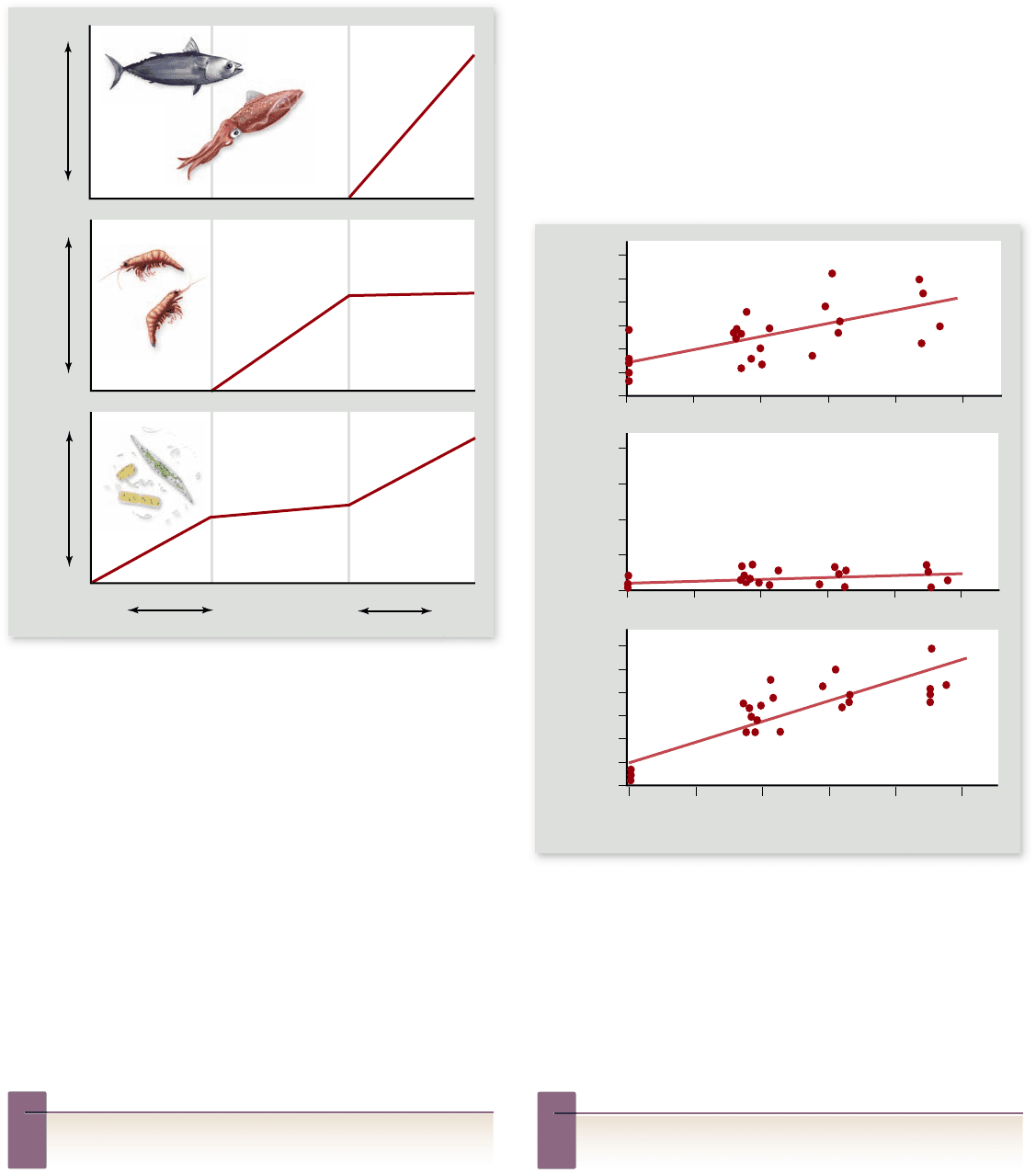
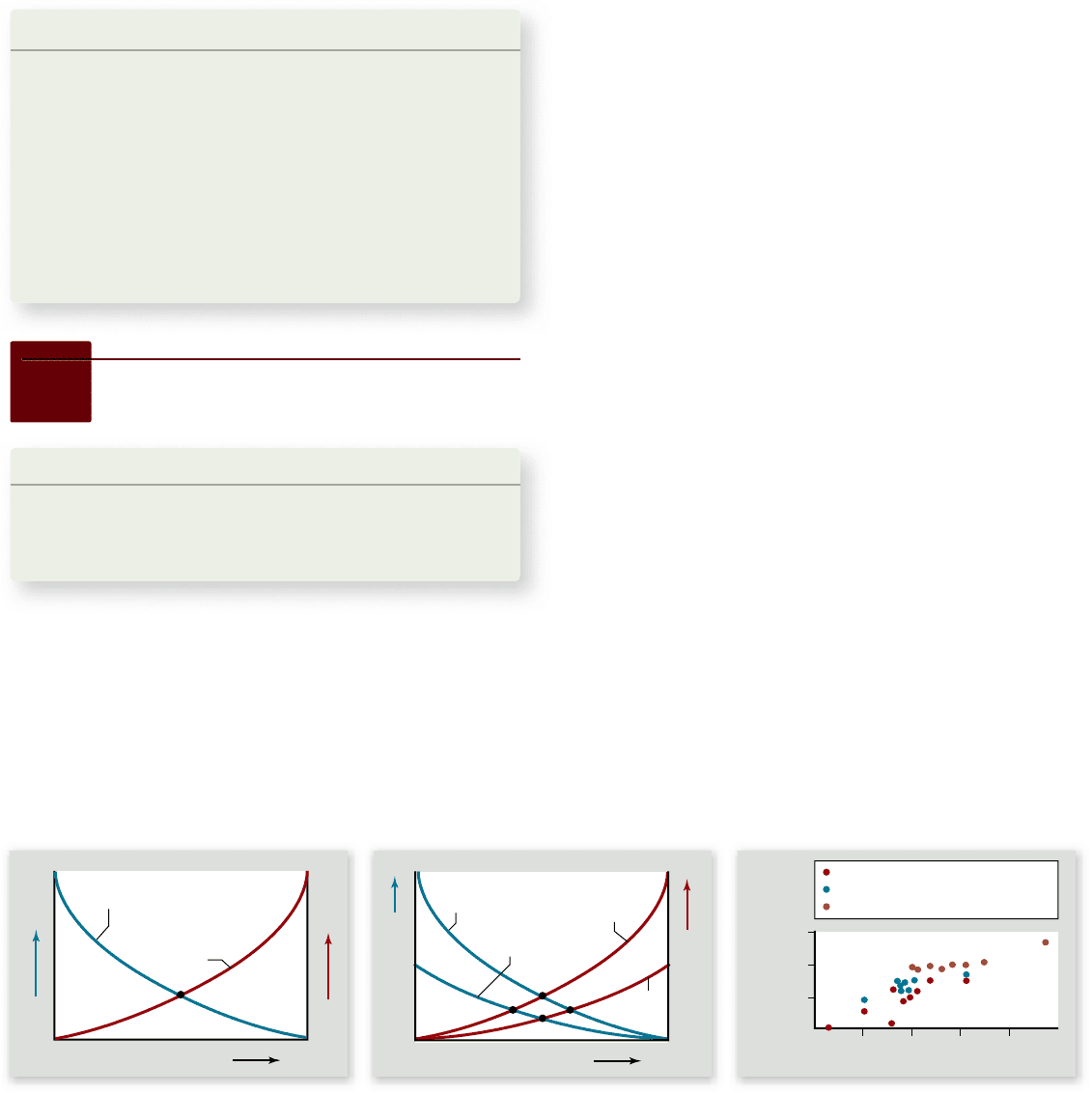
Figure 58.17
A model of bottom-up e ects. At low levels
of primary productivity, herbivore populations cannot obtain
enough food to be maintained; without herbivory, the standing crop
biomass of the primary producers such as these diatoms increases as
their productivity increases. Above some threshold, increases in
primary productivity lead to increases in herbivore populations and
herbivore biomass; the biomass of the primary producers then does
not increase as primary productivity increases because the
increasing productivity is cropped by the herbivores. Above another
threshold, populations of primary carnivores can be sustained. As
primary productivity increases above this threshold, the carnivores
consume the increasing productivity of the herbivores, so the
biomass of the herbivore populations remains relatively constant
while the biomass of the carnivore populations increases. The
biomass of the primary producers is no longer constrained by
increases in the herbivore populations and thus also increases with
increasing primary productivity. A key to understanding the model
is to maintain a distinction between the concepts of productivity
and standing crop biomass.
Inquiry question
?
How is it possible for the biomass of the primary producers to
stay relatively constant as the primary productivity increases?
Figure 58.18
An experimental study of bottom-up
e ects in a river ecosystem. This system, studied on the Eel
River in northern California, exhibited the patterns modeled by the
red graphs of gure 58.17. Increases in the intensity of illumination
led to increases in primary productivity and in the biomass of the
primary producers. The biomass of the carnivore populations also
increased. However, herbivore biomass did not increase much with
increasing primary productivity because increases in herbivore
productivity were consumed by the carnivores.
Inquiry question
?
Why is the amount of light an important determinant of
carnivore biomass?
the populations of which increase in size while keeping the
populations of primary producers from increasing.
As primary productivity becomes still higher, herbivore
populations become large enough that primary carnivores can
be supported. Further increases in primary productivity then
does not lead to increases in herbivore populations, but rather
to increases in carnivore populations.
Experimental evidence for the bottom-up effects pre-
dicted by the model was provided by a study conducted in en-
closures on a river (figure 58.18) . The enclosures excluded
large fish (secondary carnivores). A roof was placed above each
enclosure. Some roofs were clear, whereas others were tinted
to various degrees, so that the enclosures differed in the amount
of sunlight entering them.
According to the model, when primary productivity is
low, producer populations cannot support significant herbivore
populations. As primary productivity increases, herbivore pop-
ulations become a feature of the ecosystem. Increases in pri-
mary productivity are then entirely devoured by the herbivores,
1222
part
VIII
Ecology and Behavior
rav32223_ch58_1207-1229.indd 1222rav32223_ch58_1207-1229.indd 1222 11/20/09 2:22:39 PM11/20/09 2:22:39 PM
Apago PDF Enhancer
0 5 10 15
1
10
100
20 25
Number of Invading Species
Number of Species on Plots
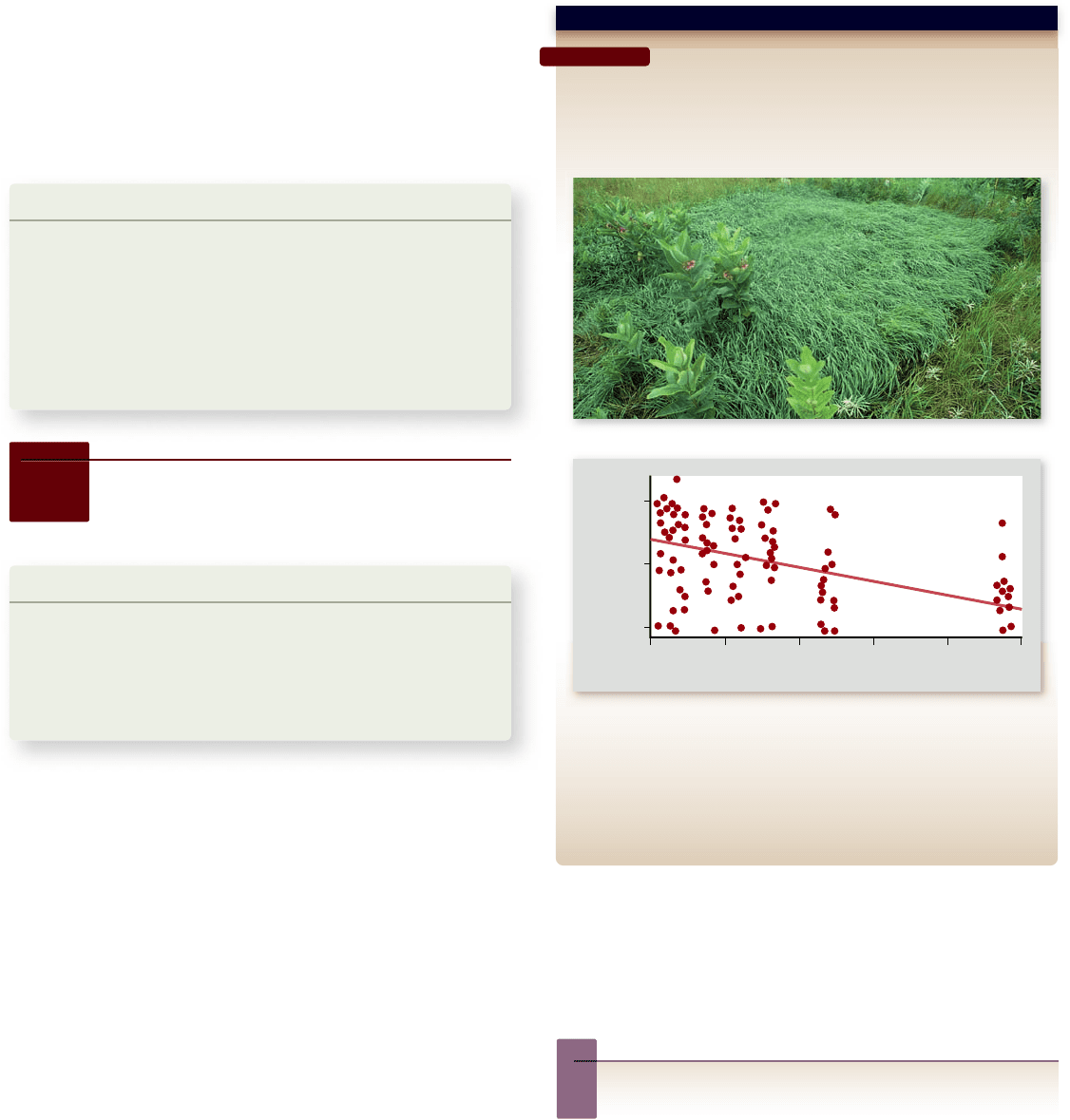
Result: Although the number of successful invasive species is highly
variable, more species-rich plots on average are invaded by fewer species.
Interpretation: What might explain why so much variation exists in the
number of successful invading species in communities with the same
species richness?
SCIENTIFIC THINKING
Question: Does species richness affect the invasibility of a community?
Hypothesis: The rate of successful invasion will be lower in communities
with greater richness.
Experiment: Add seeds from the same number of non-native plants to
experimental plots that differ in the number of plant species.
a.
b.
Figure 58.19
E ect of species richness on ecosyste m
stability. a. One of the Cedar Creek experimental plots.
b. Community stability can be assessed by looking at the effect of
species richness on community invasibility. Each dot represents data
from one experimental plot in the Cedar Creek experimental elds.
Plots with more species are harder to invade by nonnative species.
Inquiry question
?
How could you devise an experiment on invasibility that
didn’t rely on species from surrounding areas?
species. Again, more species-rich plots had greater year-to-year
stability in biomass over a 10-year period.
In a related experiment, when seeds of other plant species
were added to different plots, the ability of these species to
become established was negatively related to species richness
(figure 58.19b). More diverse communities, in other words, are
more resistant to invasion by new species, which is another
measure of community stability.
The primary productivity was highest in the enclosures
with clear roofs and lowest in the ones with darkly tinted roofs.
As primary productivity increased in parallel with illumination,
the biomass of the primary producers increased, as did the bio-
mass of the carnivores. However, the biomass of the trophic level
sandwiched in between, the herbivores, did not increase much, as
predicted by the model in figure 58.17 (see red graph lines).
Learning Outcomes Review 58.3
Populations of species at diff erent trophic levels aff ect one another, and
these eff ects can propagate through the levels. Top-down eff ects, termed
trophic cascades, are observed when changes in carnivore populations
aff ect lower trophic levels. Bottom-up eff ects are observed when changes in
primary productivity aff ect the higher trophic levels.
■ Could top-down and bottom-up effects occur
simultaneously?
58.4
Biodiv ersity and Ec osyst em
Stability
Learning Outcomes
Define ecosystem stability.1.
Describe the effects of species richness on ecosystem 2.
function.
Name possible factors that contribute to species richness 3.
in the tropics.
In the preceding chapter, we discussed species richness—the
number of species present in a community. Ecologists have
long debated the consequences of differences in species rich-
ness between communities. One theory is that species-rich
communities are more stable—that is, more constant in com-
position and better able to resist disturbance. This hypothesis
has been elegantly studied by David Tilman and colleagues at
the University of Minnesota’s Cedar Creek Natural History
Area.
Species richness ma y increase sta bility:
The Cedar Creek studies
Workers monitored 207 small rectangular plots of land
(8–16 m
2
) for 11 years (figure 58.19a) . In each plot, they
counted the number of prairie plant species and measured the
total amount of plant biomass (that is, the mass of all plants on
the plot). Over the course of the study, plant species richness
was related to community stability—plots with more species
showed less year-to-year variation in biomass. Moreover, in
two drought years, the decline in biomass was negatively re-
lated to species richness—that is, plots with more species were
less affected by drought.
These findings were subsequently confirmed by an ex-
periment in which plots were seeded with different numbers of
chapter
58
Dynamics of Ecosystems
1223www.ravenbiology.com
rav32223_ch58_1207-1229.indd 1223rav32223_ch58_1207-1229.indd 1223 11/23/09 10:37:32 AM11/23/09 10:37:32 AM
Apago PDF Enhancer
a.
Primary Productivity
Plant Species
Richness
Plant Structural Complexity
Number of
Lizard Species
Temperature Range (
O
C)
Number of
Mammal Species
b. c.
0 100 200 300 400 0 0.2 0.4 0.6 0.8 5 0 10 15 20 25
50
100
150
4
5
6
7
8
9
10
30
20
10
0
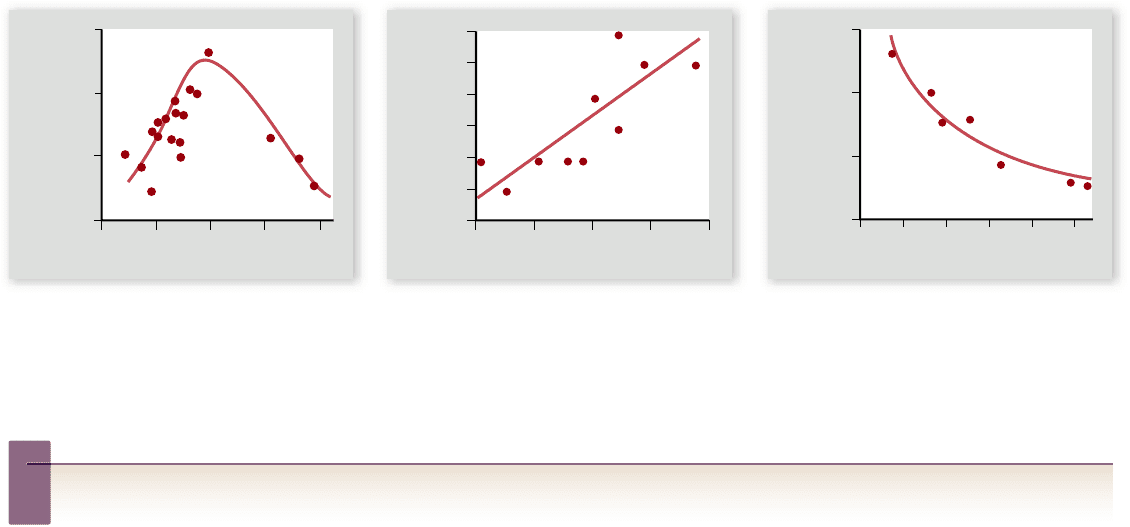
Figure 58.20
Factors that a ect species richness. a. Productivity: In plant communities of mountainous areas of South Africa,
species richness of plants peaks at intermediate levels of productivity (biomass). b. Spatial heterogeneity: The species richness of desert lizards is
positively correlated with the structural complexity of the plant cover in desert sites in the American Southwest. c. Climate: The species
richness of mammals is inversely correlated with monthly mean temperature range along the West Coast of North America.
Inquiry question
?
(a.) Why is species richness greatest at intermediate levels of productivity? (b.) Why do more structurally complex areas have more
species? (c.) Why do areas with less variation in temperature have more species?
Species richness may also affect other ecosystem pro-
cesses. Tilman and colleagues monitored 147 experimental
plots that varied in number of species to estimate how much
growth was occurring and how much nitrogen the growing
plants were taking up from the soil. They found that the more
species a plot had, the greater the nitrogen uptake and total
amount of biomass produced. In his study, increased biodiver-
sity clearly appeared to lead to greater productivity.
Laboratory studies on artificial ecosystems have provided
similar results. In one elaborate study, ecosystems covering
1 m
2
were constructed in growth chambers that controlled
temperature, light levels, air currents, and atmospheric gas con-
centrations. A variety of plants, insects, and other animals were
introduced to construct ecosystems composed of 9, 15, or 31
species, with the lower diversity treatments containing a subset
of the species in the higher diversity enclosures. As with Tilman’s
experiments, the amount of biomass produced was related to
species richness, as was the amount of carbon dioxide con-
sumed, another measure of the productivity of the ecosystem.
Tilman’s conclusion that healthy ecosystems depend on
diversity is not accepted by all ecologists, however. Critics
question the validity and relevance of these biodiversity stud-
ies, arguing that the more species are added to a plot, the
greater the probability that one species will be highly produc-
tive. To show that high productivity results from high species
richness per se, rather than from the presence of particular
highly productive species, experimental plots have to exhibit
“overyielding”; in other words, plot productivity has to be
greater than that of the single most productive species grown
in isolation.
Although this point is still debated, recent work at Cedar
Creek and elsewhere has provided evidence of overyielding,
supporting the claim that species richness of communities en-
hances community productivity and stability.
Species richness is in uenced
by ecosystem characteristics
A number of factors are known or hypothesized to affect spe-
cies richness in a community. We discussed some in chapter 57,
such as loss of keystone species and moderate physical distur-
bance. Here we discuss three more: primary productivity, habi-
tat heterogeneity, and climatic factors.
Primary productivity
Ecosystems differ substantially in primary productivity (see
figure 58.11). Some evidence indicates that species richness is
related to primary productivity, but the relationship between
them is not linear. In a number of cases, for example, ecosys-
tems with intermediate levels of productivity tend to have the
greatest number of species (figure 58.20a) .
Why this is so is debated. One possibility is that levels of
productivity are linked with numbers of consumers. Applying
this concept to plant species richness, the argument is that at
low productivity, there are few herbivores, and superior com-
petitors among the plants are able to eliminate most other plant
species. In contrast, at high productivity so many herbivores are
present that only the plant species most resistant to grazing
survive, reducing species diversity. As a result, the greatest num-
bers of plant species coexist at intermediate levels of productiv-
ity and herbivory.
Habitat heterogeneity
Spatially heterogeneous abiotic environments are those that
consist of many habitat types—such as soil types, for example.
These heterogeneous environments can be expected to accom-
modate more species of plants than spatially homogeneous en-
vironments. What’s more, the species richness of animals can
be expected to reflect the species richness of plants present. An
1224
part
VIII
Ecology and Behavior
rav32223_ch58_1207-1229.indd 1224rav32223_ch58_1207-1229.indd 1224 11/20/09 2:22:43 PM11/20/09 2:22:43 PM
Apago PDF Enhancer
Number
of species
0–50
50–100
100–150
150–200
200–250
250–300
300–350
350–400
400–450
450–500
500–550
550–600
600–650
650–700
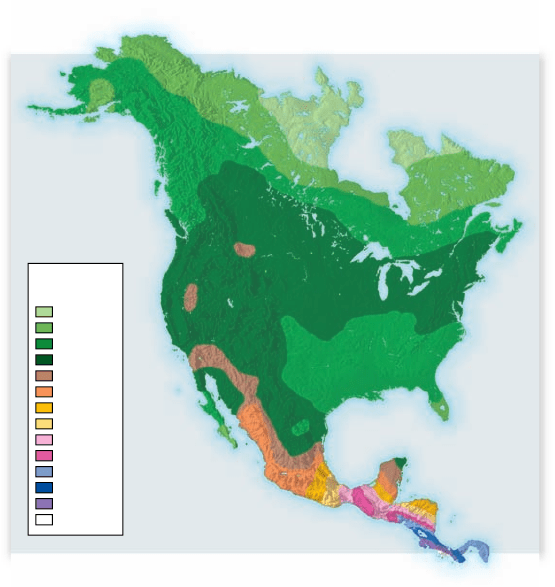
Figure 58.21
A latitudinal cline in species
richness. Among North and Central American birds, a marked
increase in the number of species occurs moving toward the tropics.
Fewer than 100 species are found at arctic latitudes, but more than
600 species live in southern Central America.
example of this latter effect is seen in figure 58.20b: The num-
ber of lizard species at various sites in the American Southwest
mirrors the local structural diversity of the plants.
Climatic factors
The role of climatic factors is more difficult to predict. On the
one hand, more species might be expected to coexist in a sea-
sonal environment than in a constant one because a changing
climate may favor different species at different times of the
year. On the other hand, stable environments are able to sup-
port specialized species that would be unable to survive where
conditions fluctuate. The number of mammal species at loca-
tions along the West Coast of North America is inversely cor-
related with the amount of local temperature variation—the
wider the variation, the fewer mammalian species—supporting
the latter line of argument (figure 58.20c).
Tropical regions have the highest diversity,
although reasons are unclear
Since before Darwin, biologists have recognized that more dif-
ferent kinds of animals and plants inhabit the tropics than the
temperate regions. For many types of organisms, there is a
steady increase in species richness from the arctic to the tropics.
Called a species diversity cline, this biogeographic gradient in
numbers of species correlated with latitude has been reported
for plants and animals, including birds (figure 58.21), mammals,
and reptiles.
For the better part of a century, ecologists have puzzled
over the species diversity cline from the arctic to the tropics.
The difficulty has not been in forming a reasonable hypothesis
of why more species exist in the tropics, but rather in sorting
through these many reasonable hypotheses. Here, we consider
five of the most commonly discussed suggestions.
Evolutionary age of tropical regions
Scientists have frequently proposed that the tropics have more
species than temperate regions because the tropics have existed
over long, uninterrupted periods of evolutionary time, whereas
temperate regions have been subject to repeated glaciations.
The greater age of tropical communities would have allowed
complex population interactions to coevolve within them, fos-
tering a greater variety of plants and animals.
Recent work suggests that the long-term stability of trop-
ical communities has been greatly exaggerated, however. An
examination of pollen within undisturbed soil cores reveals that
during glaciations, the tropical forests contracted to a few small
refuges surrounded by grassland. This suggests that the tropics
have not had a continuous record of species richness over long
periods of evolutionary time.
Increased productivity
A second often-advanced hypothesis is that the tropics con-
tain more species because this part of the Earth receives more
solar radiation than do temperate regions. The argument is
that more solar energy, coupled to a year-round growing sea-
son, greatly increases the overall photosynthetic activity of
tropical plants.
If we visualize the tropical forest’s total resources as a
pie, and its species niches as slices of the pie, we can see that a
larger pie accommodates more slices. But as noted earlier,
many field studies have indicated that species richness is high-
est at intermediate levels of productivity. Accordingly, increas-
ing productivity would be expected to lead to lower, not
higher, species richness.
Stability/constancy of conditions
Seasonal variation, though it does exist in the tropics, is gener-
ally substantially less than in temperate areas. This reduced sea-
sonality might encourage specialization, with niches subdivided
to partition resources and so avoid competition. The expected
result would be a larger number of more specialized species in
the tropics, which is what we see. Many field tests of this hy-
pothesis have been carried out, and almost all support it, re-
porting larger numbers of narrower niches in tropical
communities than in temperate areas.
Predation
Many reports indicate that predation may be more intense in
the tropics. In theory, more intense predation could reduce the
importance of competition, permitting greater niche overlap
and thus promoting greater species richness.
Spatial heterogeneity
As noted earlier, spatial heterogeneity promotes species rich-
ness. Tropical forests, by virtue of their complexity, create a va-
riety of microhabitats and so may foster larger numbers of
species. Perhaps the long vertical column of vegetation through
chapter
58
Dynamics of Ecosystems
1225www.ravenbiology.com
rav32223_ch58_1207-1229.indd 1225rav32223_ch58_1207-1229.indd 1225 11/20/09 2:22:43 PM11/20/09 2:22:43 PM
Apago PDF Enhancer
a. b. c.
Rate
Rate
Colonization rate
of new species
Extinction
rate of island
species
Number of Species
Colonization Rate
Extinction Rate
Island far
from mainland
Small
island
Large
island
Number of Bird Species
Island Size (km
2
)
Number of Species
Island near
mainland
100 10 1000 10,000 100,000
10
100
1000
More than 3200 km from New Guinea
800–3200 km from New Guinea
Less than 800 km from New Guinea
Figure 58.22
The equilibrium model of island biogeography. a. Island species richness reaches an equilibrium (black dot) when
the colonization rate of new species equals the extinction rate of species on the island. b. The equilibrium shifts depending on the rate of
colonization, the size of an island, and its distance to sources of colonists. Species richness is positively correlated with island size and inversely
correlated with distance from the mainland. Smaller islands have higher extinction rates, shifting the equilibrium point to the left. Similarly,
more distant islands have lower colonization rates, again shifting the equilibrium point leftward. c. The effect of distance from a larger island,
which can be the source of colonizing species, is readily apparent. More distant islands have fewer Asian Paci c bird species than do nearer
islands of the same size.
The equilibrium model proposes that
extinction and colonization reach
a balance point
MacArthur and Wilson reasoned that species are constantly be-
ing dispersed to islands, so islands have a tendency to accumu-
late more and more species. At the same time that new species
are added, however, other species are lost by extinction. As the
number of species on an initially empty island increases, the
rate of colonization must decrease as the pool of potential colo-
nizing species not already present on the island becomes de-
pleted. At the same time, the rate of extinction should
increase—the more species on an island, the greater the likeli-
hood that any given species will perish.
As a result, at some point, the number of extinctions and
colonizations should be equal, and the number of species should
then remain constant. Every island of a given size, then, has a
characteristic equilibrium number of species that tends to per-
sist through time (the intersection point in figure 58.22a) —
though the species composition will change as some species
become extinct and new species colonize.
MacArthur and Wilson’s equilibrium model proposes
that island species richness is a dynamic equilibrium between
colonization and extinction. Both island size and distance from
the mainland would affect colonization and extinction. We
would expect smaller islands to have higher rates of extinction
because their population sizes would, on average, be smaller.
Also, we would expect fewer colonizers to reach islands that lie
farther from the mainland. Thus, small islands far from the
mainland would have the fewest species; large islands near the
mainland would have the most (figure 58.22b).
The predictions of this simple model bear out well in
field data. Asian Pacific bird species (figure 58.22c) exhibit a
positive correlation of species richness with island size, but a
negative correlation of species richness with distance from the
source of colonists.
which light passes in a tropical forest produces a wide range of
light frequencies and intensities, creating a greater variety of
light environments and so promoting species diversity.
Learning Outcomes Review 58.4
An ecosystem is stable if it remains relatively constant in composition and is
able to resist disturbance. Experimental fi eld studies support the conclusion
that species-rich communities are better able to resist invasion by new
species, as well as have increased biomass production at the primary level,
although not all ecologists agree with these conclusions. Species richness
is greatest in the tropics, and the reasons may include habitat variation,
increased sunlight, and long-term climate and seasonal stability.
■ What might be the effects on primary productivity if air
pollution decreased the amount of sunlight reaching
Earth’s surface?
58.5
Island Biogeography
Learning Outcomes
Describe the species–area relationship.1.
Explain how area and isolation affect rates of 2.
colonization and extinction.
One of the most reliable patterns in ecology is the observation
that larger islands contain more species than do smaller is-
lands. In 1967, Robert MacArthur of Princeton University and
Edward O. Wilson of Harvard University proposed that this
species–area relationship was a result of the effect of geo-
graphic area and isolation on the likelihood of species extinc-
tion and colonization.
1226
part
VIII
Ecology and Behavior
rav32223_ch58_1207-1229.indd 1226rav32223_ch58_1207-1229.indd 1226 11/20/09 2:22:43 PM11/20/09 2:22:43 PM

Apago PDF Enhancer
The equilibrium model is still being tested
Wilson and Dan Simberloff, then a graduate student, performed
initial studies in the mid-1960s on small mangrove islands in the
Florida keys. These islands were censused, cleared of animal life
by fumigation, and then allowed to recolonize, with censuses
being performed at regular intervals. These and other such field
studies have tended to support the equilibrium model.
Long-term experimental field studies, however, are sug-
gesting that the situation is more complicated than MacArthur
and Wilson envisioned. Their model predicts a high level of
species turnover as some species perish and others arrive. But
studies of island birds and spiders indicate that very little turn-
over occurs from year to year. Those species that do come and
go, moreover, comprise a subset of species that never attain
high populations. A substantial proportion of the species ap-
pear to maintain high populations and rarely go extinct.
These studies have been going on for a relatively short
period of time. It is possible that over periods of centuries, the
equilibrium model is a good description of what determines
island species richness.
Learning Outcomes Review 58.5
The species–area relationship is an observation that an island of larger area
contains more species. Species richness on islands appears to be a dynamic
equilibrium between colonization and extinction. Distance from a mainland
also aff ects the rates of colonization and extinction, and therefore fewer
species would be found on small, isolated islands far from a mainland.
■ Under what circumstances would a smaller island be
expected to have more species than a larger island?
58.1 Biogeochemical Cycles
The atomic constituents of matter cycle within ecosystems.
The atoms of chemical elements move through ecosystems in
biogeochemical cycles.
Carbon, the basis of organic compounds, cycles through
most ecosystems.
The carbon cycle usually involves carbon dioxide, which is xed
through photosynthesis and released by respiration. Carbon is also
present as bicarbonate ions and as methane. Burning of fossil fuels
has created an imbalance in the carbon cycle (see gure 58.1).
The availability of water is fundamental to terrestrial ecosystems.
Water enters the atmosphere via evaporation and transpiration and
returns to the Earth’s surface as precipitation. It is broken down
during photosynthesis and also produced during cellular respiration.
Much of the Earth’s water, including the groundwater in aquifers, is
polluted, and human activities alter the water supply of ecosystems
(see gure 58.2).
The nitrogen cycle depends on nitrogen xation by microbes.
Nitrogen is usually the element in shortest supply even though N
2
makes up 78% of the atmosphere. Nitrogen must be converted into
usable forms by nitrogen- xing microorganisms. Human use of nitrates
in fertilizers has doubled the available nitrogen (see gure 58.4).
Phosphorus cycles through terrestrial and aquatic ecosystems, but not
the atmosphere.
Phosphorus, another limiting nutrient, is released by weathering
of rocks; it ows into the oceans where it is deposited in deep-sea
sediments. Humans also use phosphates as fertilizers (see gure 58.5).
Limiting nutrients in ecosystems are those in short supply relative
to need.
The cycle of a limiting nutrient, such as nitrogen, determines the rate
at which the nutrient is made available for use.
Biogeochemical cycling in a forest ecosystem has been
studied experimentally.
Ongoing experiments indicate that severe disturbance of an
ecosystem results in mineral depletion and runoff of water.
58.2 The Flow of Energy in Ecosystems
Energy can neither be created nor destroyed, but changes form.
Energy exists in forms such as light, stored chemical-bond energy,
motion, and heat. In any conversion, some energy is lost.
Living organisms can use many forms of energy, but not heat.
The Second Law of Thermodynamics states that whenever
organisms use chemical-bond or light energy, some of it is inevitably
converted to heat and cannot be retrieved.
Energy ows through trophic levels of ecosystems.
Organic compounds are synthesized by autotrophs and are utilized
by both autotrophs and heterotrophs. As energy passes from
organism to organism, each level is termed a trophic level, and the
sequence through progressive trophic levels is called a food chain
(see gure 58.8).
The base trophic level includes the primary producers; herbivores
that consume primary producers are the next level. They in turn
are eaten by primarily carnivores, which may be consumed by
secondary carnivores. Detritivores feed on waste and the remains
of dead organisms.
Only about 1% of the solar energy that impinges on the Earth is
captured by photosynthesis. As energy moves through each trophic
level, very little (approximately 10%) remains from the preceding
trophic level (see gure 58.10).
The number of trophic levels is limited by energy availability.
The exponential decline of energy between trophic levels limits the
length of food chains and the numbers of top carnivores that can
be supported.
Chapter Review
chapter
58
Dynamics of Ecosystems
1227www.ravenbiology.com
rav32223_ch58_1207-1229.indd 1227rav32223_ch58_1207-1229.indd 1227 11/20/09 2:22:44 PM11/20/09 2:22:44 PM

Apago PDF Enhancer
UNDERSTAND
1. Which of the statements about groundwater is not accurate?
a. In the United States, groundwater provides 50% of the
population with drinking water.
b. Groundwaters are being depleted faster than they can
be recharged.
c. Groundwaters are becoming increasingly polluted.
d. Removal of pollutants from groundwaters is easily achieved.
2. Photosynthetic organisms
a. x carbon dioxide.
b. release carbon dioxide.
c. x oxygen.
d. (a) and (b)
e. (a) and (c)
3. Some bacteria have the ability to “ x” nitrogen. This means
a. they convert ammonia into nitrites and nitrates.
b. they convert atmospheric nitrogen gas into biologically
useful forms of nitrogen.
c. they break down nitrogen-rich compounds and release
ammonium ions.
d. they convert nitrate into nitrogen gas.
4. Which of the following statements about the phosphorus cycle
is correct?
a. Phosphorus is xed by plants and algae.
b. Most phosphorus released from rocks is carried to the
oceans by rivers.
c. Animals cannot get their phosphorus from eating plants
and algae.
d. Fertilizer use has not affected the global phosphorus budget.
5. As a general rule, how much energy is lost in the transmission of
energy from one trophic level to the one immediately above it?
a. 1% c. 90%
b. 10% d. 50%
6. Inverted ecological pyramids of real systems usually involve
a. energy ow.
b. biomass.
c. energy ow and biomass.
d. None of the above
7. Bottom-up effects on trophic structure result from
a. a limitation of energy owing to the next higher trophic level.
b. actions of top predators on lower trophic levels.
Review Questions
Ecological pyramids illustrate the relationship of trophic levels.
Ecological pyramids based on energy ow, biomass, or numbers
of organisms are usually upright. Inverted pyramids of biomass
or numbers are possible if at least one trophic level has a greater
biomass or more organisms than the level below it (see gure 58.13).
58.3 Trophic-Level Interactions
Top-down e ects occur when changes in the top trophic level a ect
primary producers.
A trophic cascade, or top-down effect, occurs when a change exerted
at an upper trophic level affects a lower level (see gure 58.15).
Human removal of carnivores produces top-down e ects.
Removal of carnivores causes an increase in the abundance of species
in lower trophic levels, such as an increase in deer populations when
wolves or other predators are destroyed.
Bottom-up e ects occur when changes to primary producers a ect
higher trophic levels.
An increase of producers may lead to the appearance or increase of
herbivores; however, further increase in producers may then lead to
increase in carnivores, without a comparable increase in herbivores
(see gure 58.17).
58.4 Biodiversity and Ecosystem Stability
Species richness may increase stability: The Cedar Creek studies.
The Cedar Creek studies indicate that higher species richness results
in less year-to-year variation in biomass and in greater resistance to
drought and invasion by non-native species.
Species richness is in uenced by ecosystem characteristics.
Primary production, habitat heterogeneity, and climatic factors all
affect the number of species in an ecosystem (see gure 58.20).
Tropical regions have the highest diversity, although the reasons
are unclear.
The higher diversity of tropical regions may re ect long evolutionary
time, higher productivity from increased sunlight, less seasonal
variation, greater predation that reduces competition, or spatial
heterogeneity (see gure 58.21).
58.5 Island Biogeography
The species–area relationship re ects that larger islands contain
more species than do smaller ones.
The equilibrium model proposes that extinction and colonization
reach a balance point (see gure 58.22).
Smaller islands have fewer species because of higher rates of
extinction. Islands near a mainland have more species than distant
islands because of higher rates of colonization. An equilibrium is
reached when the extinction rate balances the colonization rate.
The equilibrium model is still being tested.
Long-term studies are needed to clarify all the factors involved.
1228
part
VIII
Ecology and Behavior
rav32223_ch58_1207-1229.indd 1228rav32223_ch58_1207-1229.indd 1228 11/20/09 2:22:45 PM11/20/09 2:22:45 PM

Apago PDF Enhancer
c. climatic disruptions on top consumers.
d. stability of detritivores in ecosystems.
8. Species diversity
a. increases with latitude as you move away from the equator
to the arctic.
b. decreases with latitude as you move away from the equator
to the arctic.
c. stays the same as you move away from the equator
to the arctic.
d. increases with latitude as you move north of the equator and
decreases with latitude as you move south of the equator.
9. The equilibrium model of island biogeography suggests all
of the following except
a. larger islands have more species than smaller islands.
b. the species richness of an island is determined by
colonization and extinction.
c. smaller islands have lower rates of extinction.
d. islands closer to the mainland will have higher
colonization rates.
APPLY
1. Nitrogen is often a limiting nutrient in many ecosystems because
a. there is much less nitrogen in the atmosphere than carbon.
b. elemental nitrogen is very rapidly used by most organisms.
c. nitrogen availability is being reduced by pollution due to
fertilizer use.
d. most organisms cannot use nitrogen in its elemental form.
2. Based on results from studies at Hubbard Brook Experimental
Forest, what would be the predicted effect of clearing trees
from a watershed?
a. Increased loss of water and nutrients from a watershed
b. Decreased loss of water and nutrients from a watershed
c. Increased availability of phosphorus
d. Increased availability of nitrate
3. According to the trophic cascade hypothesis, the removal
of carnivores from an ecosystem may result in
a. a decline in the number of herbivores and a decline
in the amount of vegetation.
b. a decline in the number of herbivores and an increase
in the amount of vegetation.
c. an increase in the number of herbivores and an increase
in the amount of vegetation.
d. an increase in the number of herbivores and a decrease
in the amount of vegetation.
4. At Cedar Creek Natural History Area, experimental plots
showed reduced numbers of invaders as species diversity
of plots increased
a. suggesting that low species diversity increases stability
of ecosystems.
b. suggesting that ecosystem stability is a function of primary
productivity only.
c. consistent with the theory that intermediate disturbance
results in the highest stability.
d. None of the above
SYNTHESIZE
1. Given that ectotherms do not utilize a large fraction of ingested
food energy to maintain a high and constant body temperature
(generate heat), how would you expect the food chains of
systems dominated by ectothermic herbivores and carnivores to
compare with systems dominated by endothermic herbivores
and carnivores?
2. Given that, in general, energy input is greatest at the bottom
trophic level (primary producers) and decreases with increasing
transfers across trophic levels, how is it possible for many lakes
to show much greater standing biomass in herbivorous
zooplankton than in the phytoplankton they consume?
3. Ecologists often worry about the potential effects of the loss of
species (e.g., due to pollution, habitat degradation, or other
human-induced factors) on an ecosystem for reasons other than
just the direct loss of the species. Using gure 58.17 explain why.
4. Explain several detailed ways in which increasing plant structural
complexity could lead to greater species richness of lizards
( gure 58.20b). Could any of these ideas be tested? How?
ONLINE RESOURCE
www.ravenbiology.com
Understand, Apply, and Synthesize—enhance your study with
animations that bring concepts to life and practice tests to assess
your understanding. Your instructor may also recommend the
interactive eBook, individualized learning tools, and more.
chapter
58
Dynamics of Ecosystems
1229www.ravenbiology.com
rav32223_ch58_1207-1229.indd 1229rav32223_ch58_1207-1229.indd 1229 11/20/09 2:22:45 PM11/20/09 2:22:45 PM
Apago PDF Enhancer
T
Chapter
59
The Biosphere
Chapter Outline
59.1 Ecosystem Effects of Sun, Wind, and Water
59.2 Earth’s Biomes
59.3 Freshwater Habitats
59.4 Marine Habitats
59.5 Human Impacts on the Biosphere: Pollution and
Resource Depletion
59.6 Human Impacts on the Biosphere:
Climate Change
Introduction
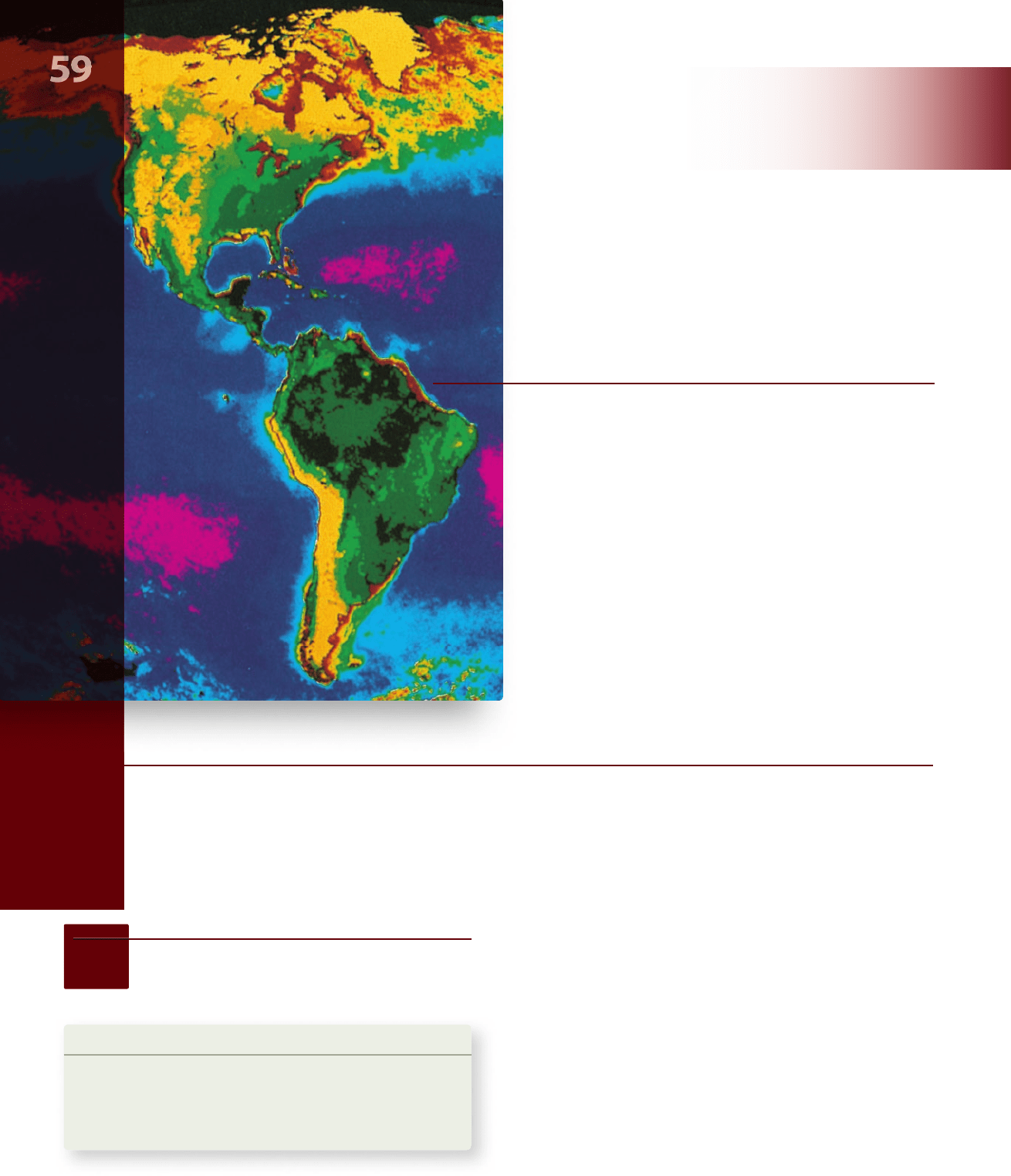
The biosphere includes all living communities on Earth, from the profusion of life in the tropical rain forests to the planktonic
communities in the world’s oceans. In a very general sense, the distribution of life on Earth reflects variations in the world’s
abiotic environments, such as the variations in temperature and availability of water from one terrestrial environment to
another. The figure on this page is a satellite image of the Americas, based on data collected over 8 years. The colors are
keyed to the relative abundance of chlorophyll, an indicator of the richness of biological communities. Green and dark green
areas on land are areas with high primary productivity (such as thriving forests), whereas yellow areas include the deserts of
the Americas and the tundra of the far north, which have lower productivity.
59.1
Ecosystem E ects of Sun,
Wind, and Water
Learning Outcomes
Describe changes in wind and current direction with latitude.1.
Explain the Coriolis effect.2.
Describe how temperature changes with altitude 3.
and latitude.
The great global patterns of life on Earth are heavily influ-
enced by (1) the amount of solar radiation that reaches differ-
ent parts of the Earth and seasonal variations in that radiation;
and (2) the patterns of global atmospheric circulation and the
resulting patterns of oceanic circulation. Local characteristics,
such as soil types and the altitude of the land, interact with the
global patterns in sunlight, winds, and water currents to deter-
mine the conditions under which life exists and thus the distri-
butions of ecosystems.
CHAPTER
rav32223_ch59_1230-1255.indd 1230rav32223_ch59_1230-1255.indd 1230 11/20/09 2:44:13 PM11/20/09 2:44:13 PM
Apago PDF Enhancer
60°
N
Variation
in monthly
means
Annual mean
Latitude
Temperature (°C)
–10
0
10
20
30
30°
0°
30° 60°
S
b.
Sun
Vernal equinox
(Sun aims
directly at
equator)
Winter solstice
(northern
hemisphere
tilts away from
the Sun)
Autumnal equinox
(Sun aims directly
at equator)
a.
Sunlight
60
Equator
30
30
60
Equator
30
Sunlight
Equator
30
60
Equator
30
30
60
Equator
30
30
23.5°
Summer
solstice
(northern
hemisphere tilts
toward the Sun)
Equator
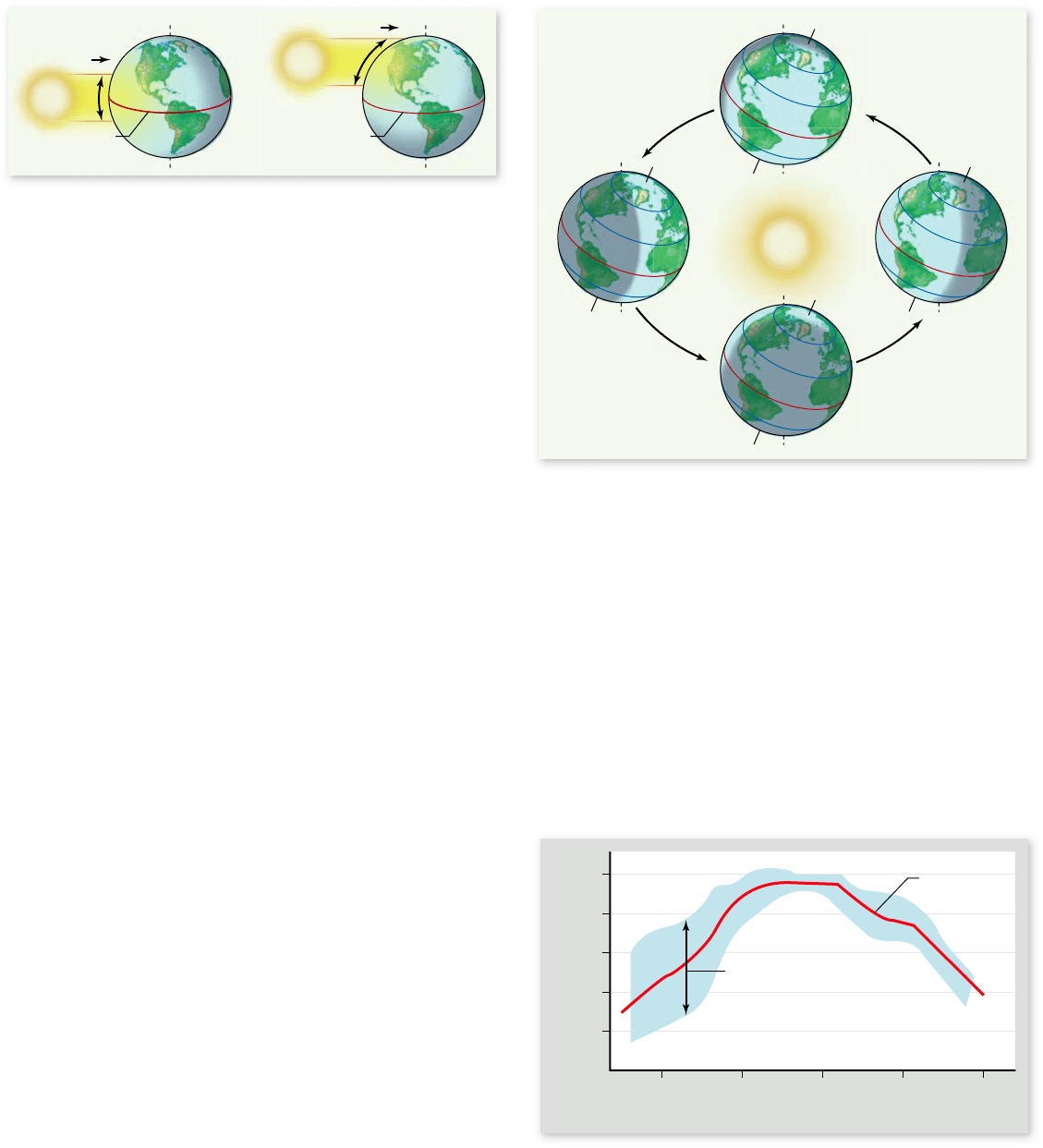
Figure 59.1
Relationships between the Earth and the
Sun are critical in determining the nature and distribution
of life on Earth. a. A beam of solar energy striking the Earth in
the middle latitudes of the northern hemisphere (or the southern)
spreads over a wider area of the Earth’s surface than an equivalent
beam striking the Earth at the equator. b. The fact that the Earth
orbits the Sun each year has a profound effect on climate. In the
northern and southern hemispheres, temperature changes in an
annual cycle because the Earth’s axis is not perpendicular to its
orbital plane and, consequently, each hemisphere tilts toward the
Sun in some months but away from the Sun in others.
Solar energy and the Earth’s rotation
a ect atmospheric circulation
The Earth receives energy from the Sun at a high rate in the
form of electromagnetic radiation at visible and near-visible
wavelengths. Each square meter of the upper atmosphere
receives about 1400 joules per second (J/sec), which is equiva-
lent to the output of fourteen 100-watt (W) lightbulbs.
As the solar radiant energy passes through the atmo-
sphere, its intensity and wavelength composition are modified.
About half of the energy is absorbed within the atmosphere,
and half reaches the Earth’s surface. The gases in the atmo-
sphere absorb some wavelengths strongly while allowing other
wavelengths to pass freely through. As a result, the wavelength
composition of the solar energy that reaches the Earth’s sur-
face is different from that emitted by the Sun. For example, the
band of ultraviolet wavelengths known as UV-B is strongly ab-
sorbed by ozone (O
3
) in the atmosphere, and thus this wave-
length is greatly reduced in the solar energy that reaches the
Earth’s surface.
How solar radiation affects climate
Some parts of the Earth’s surface receive more energy from the
Sun than others. These differences have a great effect on climate.
A major reason for differences in solar radiation from place
to place is the fact that Earth is a sphere, or nearly so (figure 59.1a).
The tropics are particularly warm because the Sun’s rays arrive al-
most perpendicular to the surface of the Earth in regions near the
equator. Closer to the poles, the angle at which the Sun’s rays strike,
called the angle of incidence, spreads the solar energy out over more
of the Earth’s surface, providing less energy per unit of surface area.
As figure 59.2 shows, the highest annual mean temperatures occur
near the equator (0° latitude).
The Earth’s annual orbit around the Sun and its daily rota-
tion on its own axis are also important in determining patterns of
Figure 59.2
Annual mean temperature varies with
latitude. The red line represents the annual mean temperature at
various latitudes, ranging from near the North Pole at the left to
near Antarctica at the right; the equator is at 0° latitude. At each
latitude, the upper edge of the blue zone is the highest mean
monthly temperature observed in all the months of the year, and
the lower edge is the lowest mean monthly temperature.
solar radiation and their effects on climate (figure 59.1b). The axis
of rotation of the Earth is not perpendicular to the plane in which
the earth orbits the Sun. Because the axis is tilted by approximately
23.5°, a progression of seasons occurs on all parts of the Earth,
especially at latitudes far from the equator. The northern hemi-
sphere, for example, tilts toward the Sun during some months but
away during others, giving rise to summer and winter.
Global circulation patterns in the atmosphere
Hot air tends to rise relative to cooler air because the motion of
molecules in the air increases as temperature increases, making
it less dense. Accordingly, the intense solar heating of the Earth’s
chapter
59
The Biosphere
1231www.ravenbiology.com
rav32223_ch59_1230-1255.indd 1231rav32223_ch59_1230-1255.indd 1231 11/20/09 2:44:18 PM11/20/09 2:44:18 PM