
Raven P.H., Johnson G.B., Mason K.A. Biology (Ninth Edition)
Подождите немного. Документ загружается.

Apago PDF Enhancer
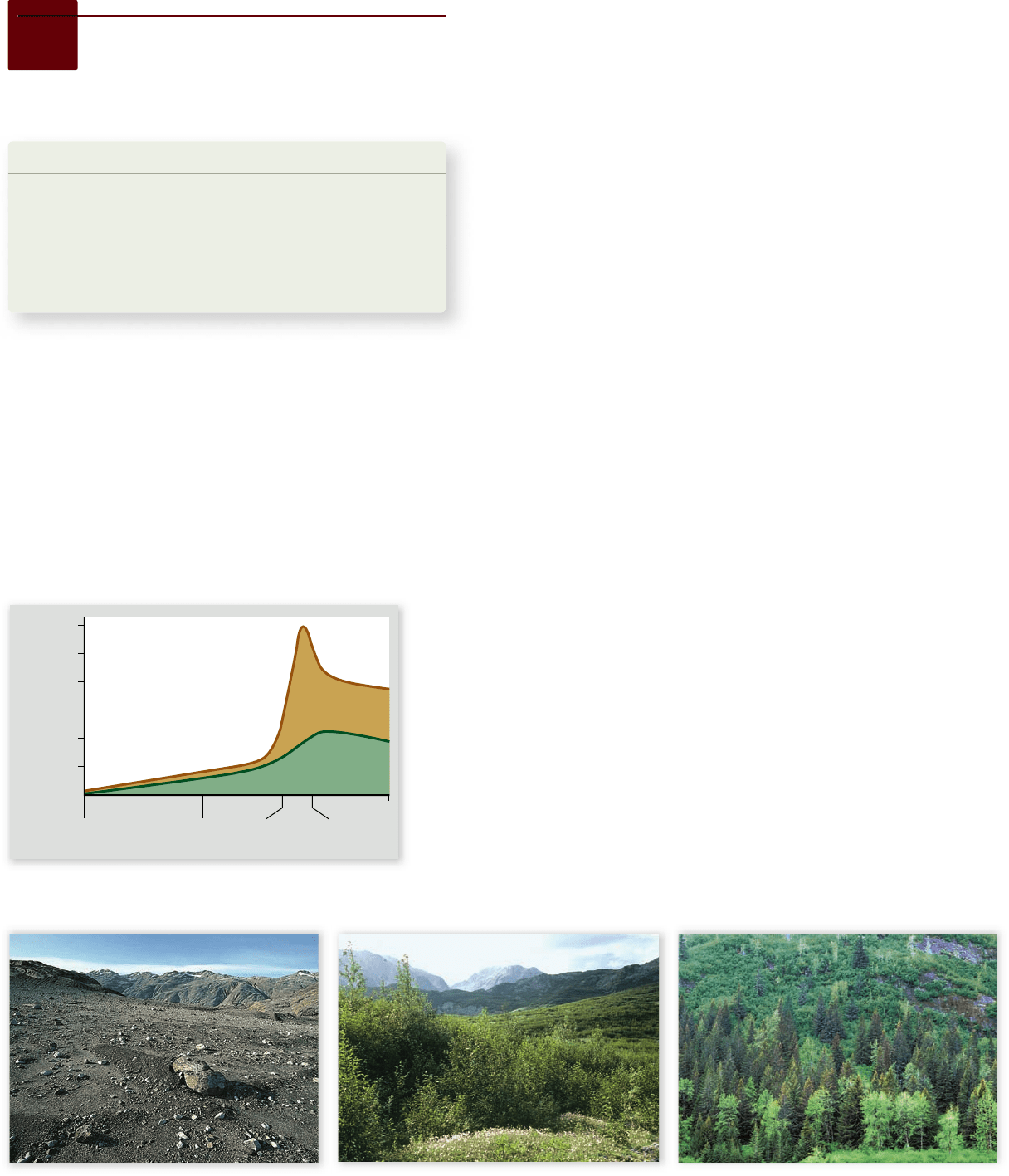
Pioneer
Mosses
Invading
Alders
Alder
Thickets
Spruce
Forest
Year 1 Year 100 Year 200
50
100
150
200
250
300
Nitrogen Concentration
(g/m
2
of surface)
b
c
Nitrogen
in mineral soil
Nitrogen
in forest floor
a.
b. c. d.
Figure 57.24
Primary succession at Alaska’s Glacier Bay.
a. Initially, the glacial moraine at Glacier Bay, Alaska, had little soil
nitrogen b. The rst invaders of these exposed sites are pioneer moss
species with nitrogen- xing, mutualistic microbes . c. Within 20 years,
young alder shrubs take hold. Rapidly xing nitrogen, they soon form
dense thickets. d. Eventually spruce overgrow the mature alders, forming
a forest.
57.5
Ecological Succession,
Disturbance, and Species
Richness
Learning Outcomes
Define succession and distinguish primary versus 1.
secondary.
Describe how early colonizers may affect subsequent 2.
occurrence of other species.
Explain how disturbance can either positively or 3.
negatively affect species richness.
Even when the climate of an area remains stable year after year,
communities have a tendency to change from simple to com-
plex in a process known as succession. This process is familiar
to anyone who has seen a vacant lot or cleared woods slowly
become occupied by an increasing number of species.
Succession produces a change
in species composition
If a wooded area is cleared or burned and left alone, plants
will slowly reclaim the area. Eventually, all traces of the clear-
ing will disappear, and the area will again be woods. This kind
of succession, which occurs in areas where an existing com-
munity has been disturbed but organisms still remain, is called
secondary succession.
In contrast, primary succession occurs on bare, lifeless
substrate, such as rocks, or in open water, where organisms
gradually move into an area and change its nature. Primary suc-
cession occurs in lakes and on land exposed after the retreat
of glaciers, and on volcanic islands that rise from the sea
(figure 57.24).
Primary succession on glacial moraines provides an ex-
ample (see figure 57.24). On the bare, mineral-poor ground
exposed when glaciers recede, soil pH is basic as a result of
carbonates in the rocks, and nitrogen levels are low. Lichens
are the first vegetation able to grow under such conditions.
Acidic secretions from the lichens help break down the sub-
strate and reduce the pH, as well as adding to the accumulation
of soil. Mosses then colonize these pockets of soil, eventually
building up enough nutrients in the soil for alder shrubs
to take hold. Over a hundred years, the alders, which have
symbiotic bacteria that fix atmospheric nitrogen (described in
chapter 28), increase soil nitrogen levels, and their acidic leaves
further lower soil pH. Eventually, spruce trees grow above the
alders and shade them, crowding them out entirely and form-
ing a dense spruce forest.
In a similar example, an oligotrophic lake—one poor in
nutrients—may gradually, by the accumulation of organic
matter, become eutrophic—rich in nutrients. As this occurs, the
composition of communities will change, first increasing in
species richness and then declining.
Why succession happens
Succession happens because species alter the habitat and the
resources available in it in ways that favor other species. Three
dynamic concepts are of critical importance in the process: es-
tablishment, facilitation, and inhibition.
1202
part
VIII
Ecology and Behavior
rav32223_ch57_1185-1206.indd 1202rav32223_ch57_1185-1206.indd 1202 11/20/09 2:09:04 PM11/20/09 2:09:04 PM
Apago PDF Enhancer
a.
b.a.
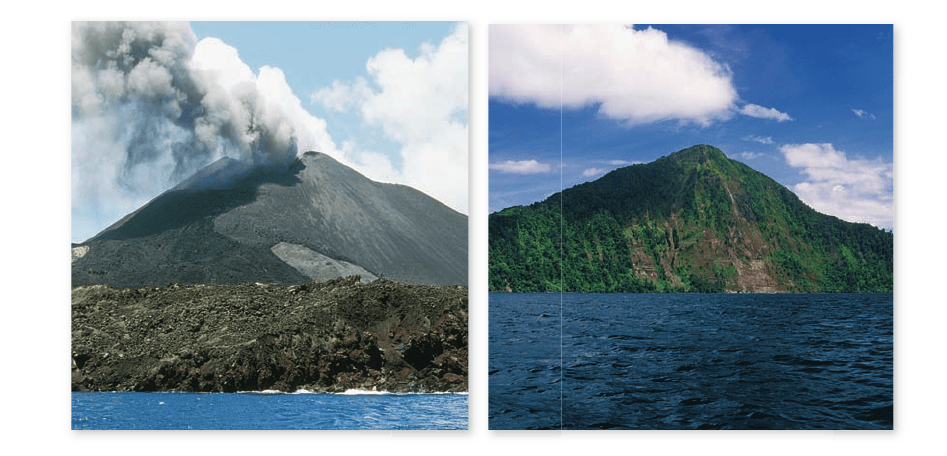
Figure 57.25
Succession
after a volcanic eruption.
A major volcanic explosion in
1883 on the island of Krakatau
destroyed all life on the island.
a. This photo shows a later, much
less destruct ive eruption of the
volcano. b. Krakatau, forested
and populated by animals.
Establishment.1. Early successional stages are characterized
by weedy, r-selected species that are tolerant of the harsh,
abiotic conditions in barren areas (the preceding chapter
discussed r-selected and K-selected species).
Facilitation.2. The weedy early successional stages
introduce local changes in the habitat that favor other,
less weedy species. Thus, the mosses in the Glacier Bay
succession convert nitrogen to a form that allows alders
to invade (see gure 57.24). Similarly, the nitrogen
build-up produced by the alders, though not necessary
for spruce establishment, leads to more robust forests of
spruce better able to resist attack by insects.
Inhibition.3. Sometimes the changes in the habitat
caused by one species, while favoring other species, also
inhibit the growth of the original species that caused
the changes. Alders, for example, do not grow as well in
acidic soil as the spruce and hemlock that replace them.
Over the course of succession, the number of species
typically increases as the environment becomes more hospita-
ble. In some cases, however, as ecosystems mature, more
K-selected species replace r-selected ones, and superior com-
petitors force out other species, leading ultimately to a decline
in species richness.
Succession in animal communities
The species of animals present in a community also change
through time in a successional pattern. As the vegetation changes
during succession, habitat disappears for some species and ap-
pears for others.
A particularly striking example occurred on the Krakatau
islands, which were devastated by an enormous volcanic erup-
tion in 1883. Initially composed of nothing but barren ash-
fields, the three islands of the group experienced rapid
successional change as vegetation became reestablished. A few
blades of grass appeared the next year, and within 15 years the
coastal vegetation was well established and the interior was
covered with dense grasslands. By 1930, the islands were almost
entirely forested (figure 57.25).
The fauna of Krakatau changed in synchrony with the
vegetation. Nine months after the eruption, the only animal
found was a single spider, but by 1908, 200 animal species were
found in a 3-day exploration. For the most part, the first ani-
mals were grassland inhabitants, but as trees became estab-
lished, some of these early colonists, such as the zebra dove and
the long-tailed shrike (a type of predatory bird), disappeared
and were replaced by forest-inhabiting species, such as fruit
bats and fruit-eating birds.
Although patterns of succession of animal species have
typically been caused by vegetational succession, changes in the
composition of the animal community in turn have affected
plant occurrences. In particular, many plant species that are
animal-dispersed or pollinated could not colonize Krakatau un-
til their dispersers or pollinators had become established. For
example, fruit bats were slow to colonize Krakatau, and until
they appeared, few bat-dispersed plant species were present.
Disturbances can play an important
role in structuring communities
Traditionally, many ecologists considered biological communi-
ties to be in a state of equilibrium, a stable condition that re-
sisted change and fairly quickly returned to its original state if
disturbed by humans or natural events. Such stability was usu-
ally attributed to the process of interspecific competition.
In recent years, this viewpoint has been reevaluated. Increas-
ingly, scientists are recognizing that communities are constantly
changing as a result of climatic changes, species invasions, and dis-
turbance events. As a result, many ecologists now invoke nonequi-
librium models that emphasize change, rather than stability. A
particular focus of ecological research concerns the role that dis-
turbances play in determining the structure of communities.
Disturbances can be widespread or local. Severe distur-
bances, such as forest fires, drought, and floods, may affect large
areas. Animals may also cause severe disruptions. Gypsy moths
can devastate a forest by consuming all of the leaves on its trees.
Unregulated deer populations may grow explosively, the deer
chapter
57
Interspeci c Interactions and the Ecology of Communities
1203www.ravenbiology.com
rav32223_ch57_1185-1206.indd 1203rav32223_ch57_1185-1206.indd 1203 11/20/09 2:09:07 PM11/20/09 2:09:07 PM
Apago PDF Enhancer
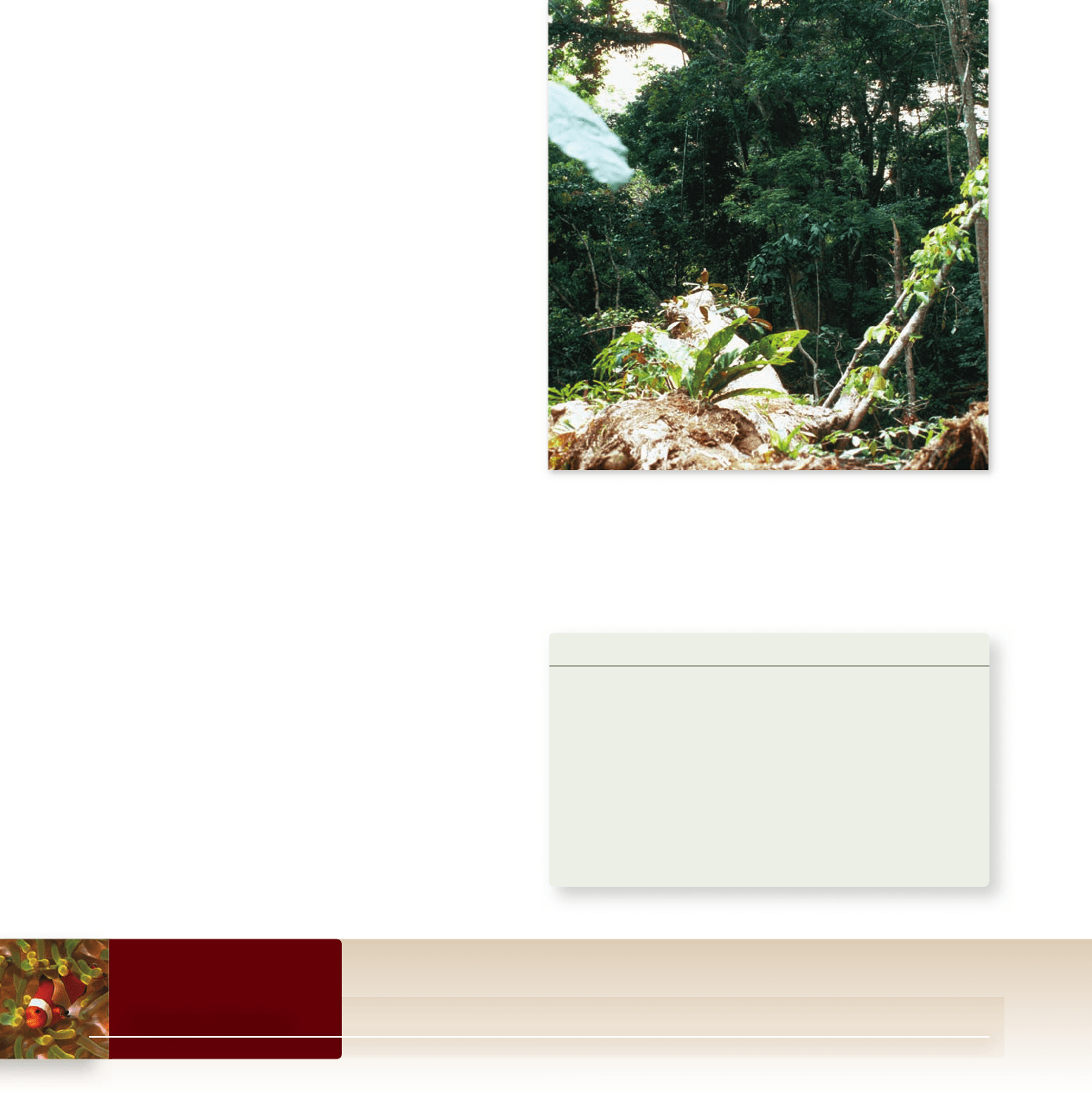
Figure 57.26
Intermediate disturbance. A sin gle fallen
tree created a small light gap in the tropical rain forest of Panama.
Such gaps play a key role in maintaining the high species diversity
of the rain forest. In this case, a sunlight-loving plant is able to
sprout up among the dense foliage of trees in the forest.
Learning Outcomes Review 57.5
Communities change through time by a process termed succession. Primary
succession occurs on bare, lifeless substrate; secondary succession occurs
where an existing community has been disturbed. Early-arriving species
alter the environment in ways that allow other species to colonize, and new
colonizers may have negative eff ects on species already present. Sometimes,
moderate levels of disturbance can lead to increased species richness
because species characteristic of all levels of succession may be present.
■ From a community point of view, would clear-cutting a
forest be better than selective harvest of individual
trees? Why or why not?
overgrazing and so destroying the forest in which they live. On
the other hand, local disturbances may affect only a small area,
as when a tree falls in a forest or an animal digs a hole and up-
roots vegetation.
Intermediate disturbance hypothesis
In some cases, disturbance may act to increase the species rich-
ness of an area. According to the intermediate disturbance hypoth-
esis, communities experiencing moderate amounts of disturbance
will have higher levels of species richness than communities
experiencing either little or great amounts of disturbance.
Two factors could account for this pattern. First, in com-
munities where moderate amounts of disturbance occur,
patches of habitat exist at different successional stages. Within
the area as a whole, then, species diversity is greatest because
the full range of species—those characteristic of all stages of
succession—are present. For example, a pattern of intermit-
tent episodic disturbance that produces gaps in the rain forest
(as when a tree falls) allows invasion of the gap by other spe-
cies (figure 57.26) . Eventually, the species inhabiting the gap
will go through a successional sequence, one tree replacing
another, until a canopy tree species comes again to occupy the
gap. But if there are many gaps of different ages in the forest,
many different species will be coexisting, some in young gaps
and others in older ones.
Second, moderate levels of disturbance may prevent com-
munities from reaching the final stages of succession, in which
a few dominant competitors eliminate most of the other spe-
cies. In contrast, too much disturbance might leave the com-
munity continually in the earliest stages of succession, when
species richness is relatively low.
Ecologists are increasingly realizing that disturbance is
common, rather than exceptional, in many communities. As a
result, the idea that communities inexorably move along a suc-
cessional trajectory culminating in the development of a pre-
dictable end-state, or “climax,” community is no longer widely
accepted. Rather, predicting the state of a community in the fu-
ture may be difficult because the unpredictable occurrence of
disturbances will often counter successional changes. Under-
standing the role that disturbances play in structuring commu-
nities is currently an important area of investigation in ecology.
Chapter Review
57.1 Biological Communities:
Species Living Together
A community is a group of different species that occupy a
given location.
Communities have been viewed in di erent ways.
The individualistic concept of a community is a random assemblage
of species that happen to occur in a given place. The holistic concept
of a community is an integrated unit composed of species that work
together as part of a functional whole.
Communities change over space and time.
In accordance with the individualistic view, species generally
respond independently to environmental conditions, and community
composition gradually changes over space and time. However, in
locations where conditions rapidly change, species composition may
change greatly over short distances.
1204
part
VIII
Ecology and Behavior
rav32223_ch57_1185-1206.indd 1204rav32223_ch57_1185-1206.indd 1204 11/20/09 2:09:12 PM11/20/09 2:09:12 PM

Apago PDF Enhancer
57.2 The Ecological Niche Concept
Fundamental niches are potential; realized niches are actual.
A niche is the total of all the ways a species uses environmental
resources. The fundamental niche is the entire niche a species is
capable of using if there are no intervening factors. The realized
niche is the set of actual environmental conditions that allow
establishment of a stable population.
Realized niches are usually smaller than fundamental niches because
interspeci c interactions limit a species’ use of some resources.
Competitive exclusion can occur when species compete for
limited resources.
The principle of competitive exclusion states that if resources are
limiting, two species cannot simultaneously occupy the same niche;
rather, one species will be eliminated.
Competition may lead to resource partitioning.
By using different resources (partitioning), sympatric species can avoid
competing with each other and can coexist with reduced realized niches.
Detecting interspeci c competition can be di cult.
Although experimentation is a powerful means of testing the
hypothesis that species compete, practical limitations exist. Detailed
knowledge of the ecology of species is important to evaluate the
results of experiments and possible interactions.
57.3 Predator–Prey Relationships
Predation strongly in uences prey populations.
Predation is the consuming of one organism by another, and includes
not only one animal eating another, but also an animal eating a plant.
Natural selection strongly favors adaptations of prey species to
prevent predation. In turn, sometimes predators evolve counter-
adaptations, leading to an evolutionary “arms race.”
Plant adaptations defend against herbivores.
Plants produce secondary chemical compounds that deter herbivores.
Sometimes the herbivores evolve an ability to ingest the compounds
and use them for their own defense.
Animal adaptations defend against predators.
Animal adaptations include chemical defenses and defensive
coloration such as warning coloration or camou age.
Mimicry allows one species to capitalize on defensive strategies
of another.
In Batesian mimicry, a species that is edible or nontoxic evolves
warning coloration similar to that of an inedible or poisonous species.
In Müllerian mimicry, two species that are both toxic evolve similar
warning coloration.
57.4 The Many Types of Species Interactions
Symbiosis involves long-term interactions.
Many symbiotic species have coevolved and have permanent
relationships.
Commensalism bene ts one species and is neutral to the other.
Examples of commensal relationships include epiphytes growing on
large plants and barnacles growing on sea animals.
Mutualism bene ts both species.
One example is the case of ants and acacias, in which Acacia plants
provide a home and food for a species of stinging ants that protect
them from herbivores.
Parasitism bene ts one species at the expense of another.
Many organisms have parasitic lifestyles, living on or inside one or
more host species and causing damage or disease as a result.
Ecological processes have interactive e ects.
Because many processes may occur simultaneously, species may affect
one another not only through direct interactions but also through
their effects on other species in the community.
Keystone species have major e ects on communities.
Keystone species are those that maintain a more diverse community
by reducing competition between species or by altering the
environment to create new habitats.
57.5 Ecological Succession, Disturbance,
and Species Richness
Succession produces a change in species composition.
Primary succession begins with a barren, lifeless substrate, whereas
secondary succession occurs after an existing community is disrupted
by re, clearing, or other events.
Disturbances can play an important role in structuring communities.
Community composition changes as a result of local and global
disturbances that “reset” succession.
Intermediate levels of such disturbance may maximize species
richness in two ways: by creating a patchwork of different habitats
harboring different species, and by preventing communities from
reaching the nal stage of succession, which may be dominated by
only a few, competitively superior species.
Review Questions
UNDERSTAND
1. Studies that demonstrate that species living in an ecological
community change independently of one another in space and time
a. support the individualistic concept of ecological
communities.
b. support the holistic concept of ecological communities.
c. suggest species interactions are the sole determinant
of which species coexist in a community.
d. None of the above
2. If two species have very similar realized niches and are forced
to coexist and share a limiting resource inde nitely,
a. both species would be expected to coexist.
b. both species would be expected to go extinct.
c. the species that uses the limiting resource most ef ciently
should drive the other species extinct.
d. both species would be expected to become more similar
to one another.
chapter
57
Interspeci c Interactions and the Ecology of Communities
1205www.ravenbiology.com
rav32223_ch57_1185-1206.indd 1205rav32223_ch57_1185-1206.indd 1205 11/20/09 2:09:16 PM11/20/09 2:09:16 PM

Apago PDF Enhancer
3. According to the idea of coevolution between predator and
prey, when a prey species evolves a novel defense against
a predator
a. the predator is expected to always go extinct.
b. the prey population should increase irreversibly
out of control of the predator.
c. the predator population should increase.
d. evolution of a predator response should be favored
by natural selection.
4. In order for mimicry to be effective in protecting a species from
predation, it must
a. occur in a palatable species that looks like a distasteful
species.
b. have cryptic coloration.
c. occur such that mimics look and act like models.
d. occur in only poisonous or dangerous species.
5. Which of the following is an example of commensalism?
a. A tapeworm living in the gut of its host
b. A clown sh living among the tentacles of a sea anemone
c. An acacia tree and acacia ants
d. Bees feeding on nectar from a ower
6. A species whose effect on the composition of a community
is greater than expected based on its abundance can be called a
a. predator.
b. primary succession species.
c. secondary succession species.
d. keystone species.
7. When a predator preferentially eats the superior competitor
in a pair of competing species
a. the inferior competitor is more likely to go extinct.
b. the superior competitor is more likely to persist.
c. coexistence of the competing species is more likely.
d. None of the above
8. Species that are the rst colonists in a habitat undergoing
primary succession
a. are usually the ercest competitors.
b. help maintain their habitat constant so their persistence
is ensured.
c. may change their habitat in a way that favors the invasion
of other species.
d. must rst be successful secondary succession specialists.
APPLY
1. Which of the following can cause the realized niche of a species
to be smaller than its fundamental niche?
a. Predation c. Parasitism
b. Competition d. All of the above
2. The presence of a predatory species
a. always drives a prey species to extinction.
b. can positively affect a prey species by having a detrimental
effect on competing species.
c. indicates that the climax stage of succession has
been reached.
d. None of the above
3. Resource partitioning by sympatric species
a. always occurs when species have identical niches.
b. may not occur in the presence of a predator, which reduces
prey population sizes.
c. results in the fundamental and realized niches being
the same.
d. is more common in herbivores than carnivores.
4. Parasitism differs from predation because
a. the presence of parasitism doesn’t lead to selection for
defensive adaptations in parasitized species.
b. parasites and the species they parasitize never engage in an
evolutionary “arms race.”
c. parasites don’t have strong effects on the populations of the
species they parasitize.
d. None of the above
5. The presence of one species (A) in a community may bene t
another species (B) if
a. a commensualistic relationship exists between the two.
b. The rst species (A) preys on a predator of the second
species (B).
c. The rst species (A) preys on a species that competes with
a species that is eaten by the second species (B).
d. All of the above
SYNTHESIZE
1. Competition is traditionally indicated by documenting the
effect of one species on the population of another. Are there
alternative ways to study the potential effects of competition on
organisms that are impractical to study with experimental
manipulations because they are too big or live too long?
2. Refer to gure 57.9. If the single prey species of Paramecium
was replaced by several different potential prey species that
varied in their palatability or ease of subduing by the
predator (leading to different levels of preference by the
predator) what would you expect the dynamics of the system
to look like; that is, would the system be more or less likely
to go to extinction?
3. Refer to gure 57.22. Are there alternative hypotheses that
might explain the increase followed by the decrease in ant
colony numbers subsequent to rodent removal in the
experiment described in gure 57.22? If so, how would you test
the mechanism hypothesized in the gure?
4. Refer to gure 57.7. Examine the pattern of beak size
distributions of two species of nches on the Galápagos Islands.
One hypothesis that can be drawn from this pattern is that
character displacement has taken place. Are there other
hypotheses? If so, how would you test them?
5. Is it possible that some species function together as an
integrated, holistic community, whereas other species at the
same locality behave more individualistically? If so, what factors
might determine which species function in which way?
ONLINE RESOURCE
www.ravenbiology.com
Understand, Apply, and Synthesize—enhance your study with
animations that bring concepts to life and practice tests to assess
your understanding. Your instructor may also recommend the
interactive eBook, individualized learning tools, and more.
1206
part
VIII
Ecology and Behavior
rav32223_ch57_1185-1206.indd 1206rav32223_ch57_1185-1206.indd 1206 11/20/09 2:09:17 PM11/20/09 2:09:17 PM
Apago PDF Enhancer
T
Chapter
58
Dynamics
of Ecosystems
Introduction
The Earth is a relatively closed system with respect to chemicals. It is an open system in terms of energy, however, because
it receives energy at visible and near-visible wavelengths from the Sun and steadily emits thermal energy to outer space in
the form of infrared radiation. The organisms in ecosystems interact in complex ways as they participate in the cycling of
chemicals and as they capture and expend energy. All organisms, including humans, depend on the specialized abilities
of other organisms—plants, algae, animals, fungi, and prokaryotes—to acquire the essentials of life, as explained in this
chapter. In chapters 58 and 59, we consider the many different types of ecosystems that constitute the biosphere and discuss
the threats to the biosphere and the species it contains.
Chapter Outline
58.1 Biogeochemical Cycles
58.2 The Flow of Energy in Ecosystems
58.3 Trophic-Level Interactions
58.4 Biodiversity and Ecosystem Stability
58.5 Island Biogeography
CHAPTER
rav32223_ch58_1207-1229.indd 1207rav32223_ch58_1207-1229.indd 1207 11/20/09 2:21:59 PM11/20/09 2:21:59 PM
Apago PDF Enhancer
CO
2
in atmosphere
Dissolved CO
2
and
HCO
3
-
Carbon in algae
and plants
Carbon in
animals
Exchange
between
water and
atmosphere
Carbon in dead
organic matter
Carbon in
fossil fuels
(coal, petroleum)
Carbon in
animals
Carbon in
plants
Release
of methane
Oxidation
of methane
Microbial
Respiration
Animal
Respiration
Plant
Respiration
Photosynthesis
Combustion of fuels in
industry, homes, and cars
Food
c
hains
Photosynthesis
Respiration
Conversion
by geological
processes
Food
chains
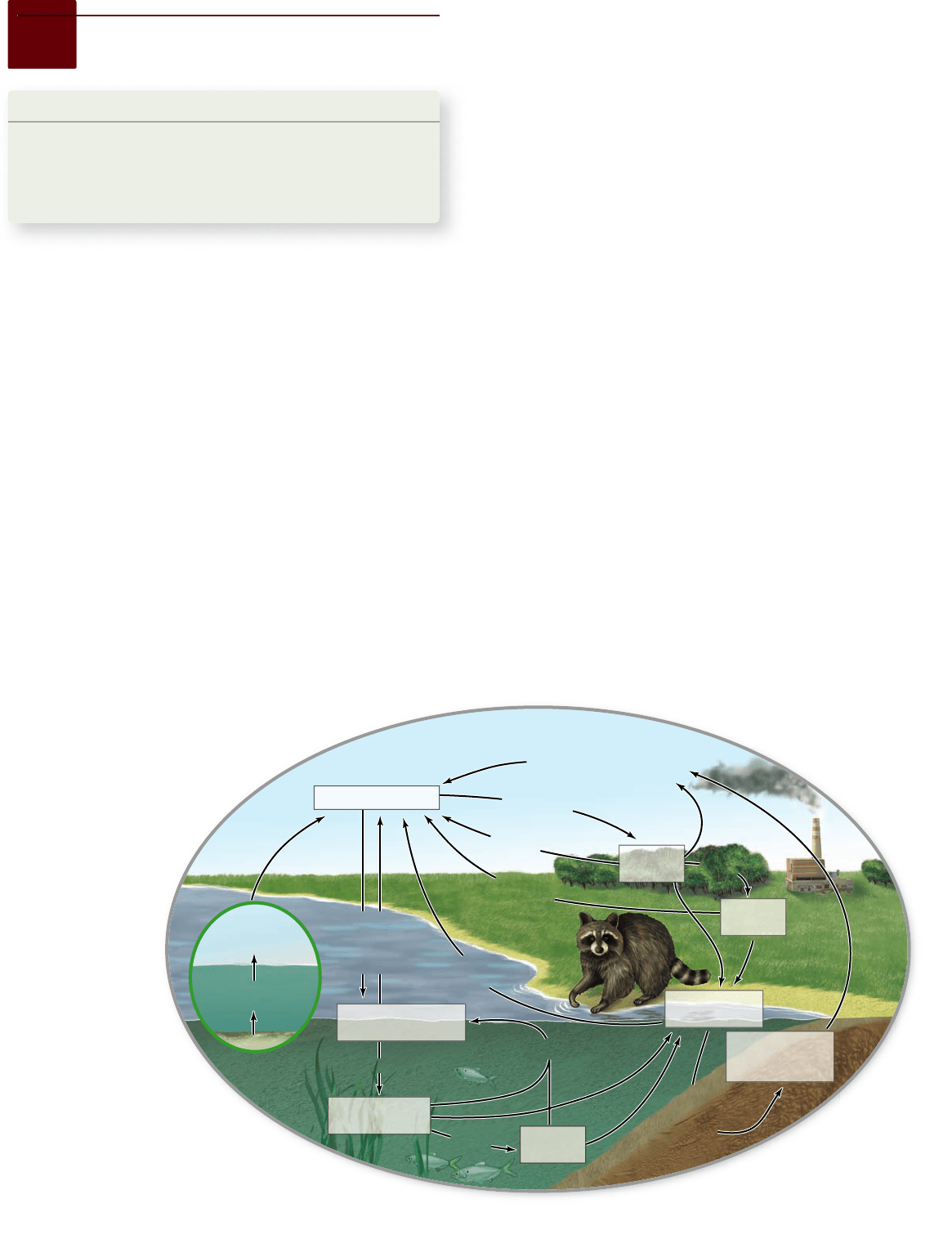
Figure 58.1
The carbon cycle. Photosynthesis
by plants and algae captures carbon in the form
of organic chemical compounds. Aerobic
respiration by organisms and fuel
combustion by humans return
carbon to the form of carbon
dioxide (CO
2
) or
bicarbonate (HCO
3
2
).
Microbial methanogens
living in oxygen-free
microhabitats, such as
the mud at the
bottom of the pond,
might produce
methane (CH
4
), a gas
that would enter the
atmosphere and then
gradually be oxidized
abiotically to carbon
dioxide (shown in green
circled inset).
your life to contain a carbon or oxygen atom that once was part
of Julius Caesar’s body or Cleopatra’s.
The atoms of the various chemical elements are said to
move through ecosystems in biogeochemical cycles, a term em-
phasizing that the cycles of chemical elements involve not only
biological organisms and processes, but also geological (abiotic)
systems and processes. Biogeochemical cycles include processes
that occur on many spatial scales, from cellular to planetary,
and they also include processes that occur on multiple time-
scales, from seconds (biochemical reactions) to millennia
(weathering of rocks).
Biogeochemical cycles usually cross the boundaries of
ecosystems to some extent, rather than being self-contained
within individual ecosystems. For example, one ecosystem
might import or export carbon to others.
In this section, we consider the cycles of some major ele-
ments along with the compound water. We also present an ex-
ample of biogeochemical cycles in a forest ecosystem.
Carbon, the basis of organic compounds,
cycles through most ecosystems
Carbon is a major constituent of the bodies of organisms
because carbon atoms help form the framework of all or-
ganic compounds (see chapter 3); almost 20% of the weight
of the human body is carbon. From the viewpoint of the day-
to-day dynamics of ecosystems, carbon dioxide (CO
2
) is the
most significant carbon-containing compound in the abiotic
environments of organisms. It makes up 0.03% of the vol-
ume of the atmosphere, meaning the atmosphere contains
about 750 billion metric tons of carbon. In aquatic ecosys-
tems, CO
2
reacts spontaneously with the water to form bi-
carbonate ions (HCO
3
–
).
58.1
Biogeochemical Cycles
Learning Outcomes
Define ecosystem.1.
List four chemicals whose cyclic interactions are critical 2.
to organisms.
Describe how human activities disrupt these cycles.3.
An ecosystem includes all the organisms that live in a particular
place, plus the abiotic (nonliving) environment in which they
live—and with which they interact—at that location. Ecosys-
tems are intrinsically dynamic in a number of ways, including
their processing of matter and energy. We start with matter.
The atomic constituents of matter
cycle within ecosystems
During the biological processing of matter, the atoms of which
it is composed, such as the atoms of carbon or oxygen, maintain
their integrity even as they are assembled into new compounds
and the compounds are later broken down. The Earth has an
essentially fixed number of each of the types of atoms of bio-
logical importance, and the atoms are recycled.
Each organism assembles its body from atoms that previ-
ously were in the soil, the atmosphere, other parts of the abiotic
environment, or other organisms. When the organism dies, its
atoms are released unaltered to be used by other organisms or
returned to the abiotic environment. Because of the cycling of
the atomic constituents of matter, your body is likely during
1208
part
VIII
Ecology and Behavior
rav32223_ch58_1207-1229.indd 1208rav32223_ch58_1207-1229.indd 1208 11/20/09 2:22:05 PM11/20/09 2:22:05 PM
Apago PDF Enhancer
Gaseous water
(water vapor)
in the
atmosphere
Percolation through soil
Water in
the oceans
Groundwater
Water in lakes
and rivers
Droplet
water
Evaporation
Evaporation
Flow of rivers
to the sea
Precipitation
Condensation
Transpiration
Precipitation
Precipitation
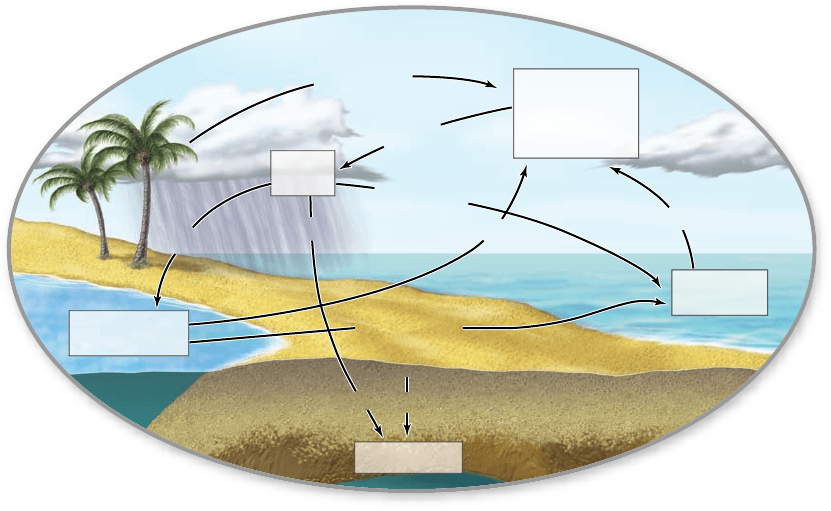
Figure 58.2
The water cycle. Water circulates from
the atmosphere to the surface of the Earth and back
again. The Sun provides much of the energy
required for evaporation.
rapidly than others. These differences
in rate have ordinarily been relatively mi-
nor on a year-to-year basis; in any one year,
the amount of CO
2
made by breakdown of organic
compounds almost matches the amount of CO
2
used to
synthesize new organic compounds.
Small mismatches, however, can have large consequences
if continued for many years. The Earth’s present reserves of
coal were built up over geologic time. Organic compounds
such as cellulose accumulated by being synthesized faster than
they were broken down, and then they were transformed by
geological processes into the fossil fuels. Most scientists be-
lieve that the world’s petroleum reserves were created in the
same way.
Human burning of fossil fuels today is creating large con-
temporary imbalances in the carbon cycle. Carbon that took
millions of years to accumulate in the reserves of fossil fuels is
being rapidly returned to the atmosphere, driving the concen-
tration of CO
2
in the atmosphere upward year by year and
helping to spur fears of global warming (see chapter 59).
The availability of water is fundamental
to terrestrial ecosystems
The water cycle, seen in figure 58.2 , is probably the most famil-
iar of all biogeochemical cycles. All life depends on the pres-
ence of water; even organisms that can survive without water in
resting states require water to regain activity. The bodies of
most organisms consist mainly of water. The adult human body,
for example, is about 60% water by weight. The amount of wa-
ter available in an ecosystem often determines the nature and
abundance of the organisms present, as illustrated by the differ-
ence between forests and deserts (see chapter 59).
Each type of biogeochemical cycle has distinctive fea-
tures. A distinctive feature of the water cycle is that water is a
compound, not an element, and thus it can be synthesized and
broken down. It is synthesized during aerobic cellular respira-
tion (see chapter 7) and chemically split during photosynthesis
(see chapter 8). The rates of these processes are ordinarily about
equal, and therefore a relatively constant amount of water cy-
cles through the biosphere.
The basic carbon cycle
The carbon cycle is straightforward, as shown in figure 58.1 . In
terrestrial ecosystems, plants and other photosynthetic organ-
isms take in CO
2
from the atmosphere and use it in photosynthesis
to synthesize the carbon-containing organic compounds of
which they are composed (see chapter 8). The process is some-
times called carbon fixation ; fixation refers to metabolic reactions
that make nongaseous compounds from gaseous ones.
Animals eat the photosynthetic organisms and build their
own tissues by making use of the carbon atoms in the organic
compounds they ingest. Both the photosynthetic organisms and
the animals obtain energy during their lives by breaking down
some of the organic compounds available to them, through aero-
bic cellular respiration (see chapter 7). When they do this, they
produce CO
2
. Decaying organisms also produce CO
2
. Carbon
atoms returned to the form of CO
2
are available once more to be
used in photosynthesis to synthesize new organic compounds.
In aquatic ecosystems, the carbon cycle is fundamentally
similar, except that inorganic carbon is present in the water
not only as dissolved CO
2
, but also as HCO
3
–
ions, both of
which act as sources of carbon for photosynthesis by algae and
aquatic plants.
Methane producers
Microbes that break down organic compounds by anaerobic
cellular respiration (see chapter 7) provide an additional dimen-
sion to the global carbon cycle. Methanogens, for example, are
microbes that produce methane (CH
4
) instead of CO
2
. One ma-
jor source of CH
4
is wetland ecosystems, where methanogens
live in the oxygen-free sediments. Methane that enters the at-
mosphere is oxidized abiotically to CO
2
, but CH
4
that remains
isolated from oxygen can persist for great lengths of time.
The rise of atmospheric carbon dioxide
Another dimension of the global carbon cycle is that over long
stretches of time, some parts of the cycle may proceed more
chapter
58
Dynamics of Ecosystems
1209www.ravenbiology.com
rav32223_ch58_1207-1229.indd 1209rav32223_ch58_1207-1229.indd 1209 11/20/09 2:22:07 PM11/20/09 2:22:07 PM
Apago PDF Enhancer
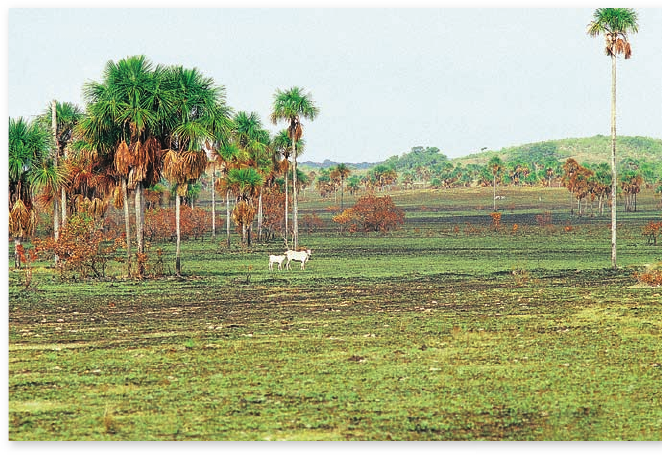
Figure 58.3
Deforestation disrupts the local water
cycle. Tropical deforestation can have severe consequences, such
as the extensive erosion in this area in the Amazon region of Brazil.
25 mya. Starting at about that time, mountains such as Mount
Kilimanjaro rose up between the rain forests and the Indian
Ocean, their source of moisture. The presence of the moun-
tains forced winds from the Indian Ocean upward, cooling the
air and causing much of its moisture to precipitate before the
air reached the rain forests. The land became much drier, and
the forests turned to grasslands.
Today, human activities can alter the water cycle so pro-
foundly that major changes occur in ecosystems. Changes in
rain forests caused by deforestation provide an example. In
healthy tropical rain forests, more than 90% of the moisture
that falls as rain is taken up by plants and returned to the air
by transpiration. Plants, in a very real sense, create their own
rain: The moisture returned to the atmosphere falls back on
the forests.
When human populations cut down or burn the rain for-
ests in an area, the local water cycle is broken. Water that falls as
rain thereafter drains away in rivers instead of rising to form
clouds and fall again on the forests. Just such a transformation is
occurring today in many tropical rain forests (figure 58.3). Large
areas in Brazil, for example, were transformed in the 20th cen-
tury from lush tropical forest to semiarid desert, depriving many
unique plant and animal species of their native habitat.
The nitrogen cycle depends on nitrogen
xation by microbes
Nitrogen is a component of all proteins and nucleic acids and
is required in substantial amounts by all organisms; proteins
are 16% nitrogen by weight. In many ecosystems, nitrogen is
the chemical element in shortest supply relative to the needs of
organisms. A paradox is that the atmosphere is 78% nitrogen
by volume.
The basic water cycle
One key part of the water cycle is that liquid water from the
Earth’s surface evaporates into the atmosphere. The change of
water from a liquid to a gas requires a considerable addition of
thermal energy, explaining why evaporation occurs more rap-
idly when solar radiation beats down on a surface.
Evaporation occurs directly from the surfaces of oceans,
lakes, and rivers. In terrestrial ecosystems, however, approxi-
mately 90% of the water that reaches the atmosphere passes
through plants. Trees, grasses, and other plants take up water
from soil via their roots, and then the water evaporates from
their leaves and other surfaces through a process called transpi-
ration (see chapter 38).
Evaporated water exists in the atmosphere as a gas, just
like any other atmospheric gas. The water can condense back
into liquid form, however, mostly because of cooling of the air.
Condensation of gaseous water (water vapor) into droplets or
crystals causes the formation of clouds, and if the droplets or
crystals are large enough, they fall to the surface of the Earth as
precipitation (rain or snow).
Groundwater
Less obvious than surface water, which we see in rivers and
lakes, is water under ground—termed groundwater. Ground-
water occurs in aquifers, which are permeable, underground
layers of rock, sand, and gravel that are often saturated with
water. Groundwater is the most important reservoir of water
on land in many parts of the world, representing over 95% of
all fresh water in the United States, for example.
Goundwater consists of two subparts. The upper layers of
the groundwater constitute the water table, which is unconfined
in the sense that it flows into streams and is partly accessible to
the roots of plants. The lower, confined layers of the ground-
water are generally out of reach to streams and plants, but can
be tapped by wells. Groundwater is recharged by water that per-
colates downward from above, such as from precipitation. Water
in an aquifer flows much more slowly than surface water, any-
where from a few millimeters to a meter or so per day.
In the United States, groundwater provides about 25% of
the water used by humans for all purposes, and it supplies about
50% of the population with drinking water. In the Great Plains
states, the deep Ogallala Aquifer is tapped extensively as a water
source for agricultural and domestic needs. The aquifer is being
depleted faster than it is recharged—a local imbalance in the
water cycle—posing an ominous threat to the agricultural pro-
duction of the area. Similar threats exist in many of the drier
portions of the globe.
Changes in ecosystems brought about
by changes in the water cycle
Water is so crucial for life that changes in its supply in an
ecosystem can radically alter the nature of the ecosystem.
Such changes have occurred often during the Earth’s geologi-
cal history.
Consider, for example, the ecosystem of the Serengeti
Plain in Tanzania, famous for its seemingly endless grasslands
occupied by vast herds of antelopes and other grazing animals.
The semiarid grasslands of today’s Serengeti were rain forests
1210
part
VIII
Ecology and Behavior
rav32223_ch58_1207-1229.indd 1210rav32223_ch58_1207-1229.indd 1210 11/20/09 2:22:10 PM11/20/09 2:22:10 PM
Apago PDF Enhancer
N
2
in
atmosphere
Nitrogen in
animal tissues
Release
of ammonia
by soil
Nitrogen in
plant tissues
Soil NH
3
and NO
3
:
Urea
Nitrogen in
tissues of algae
and plants
Nitrogen in
animal tissues
Dissolved NH
3
and NO
3
:
Uptake
by roots
Nitrogen fixation by
soil microbes
Food
chains
Excretion
Decomposition
Decomposition
Microbial metabolism
Nitrogen fixation
by aquatic
c
yanobacteria
Activity of
denitrifying microbes
Animal excretion
of NH
3
Growth
Food chains
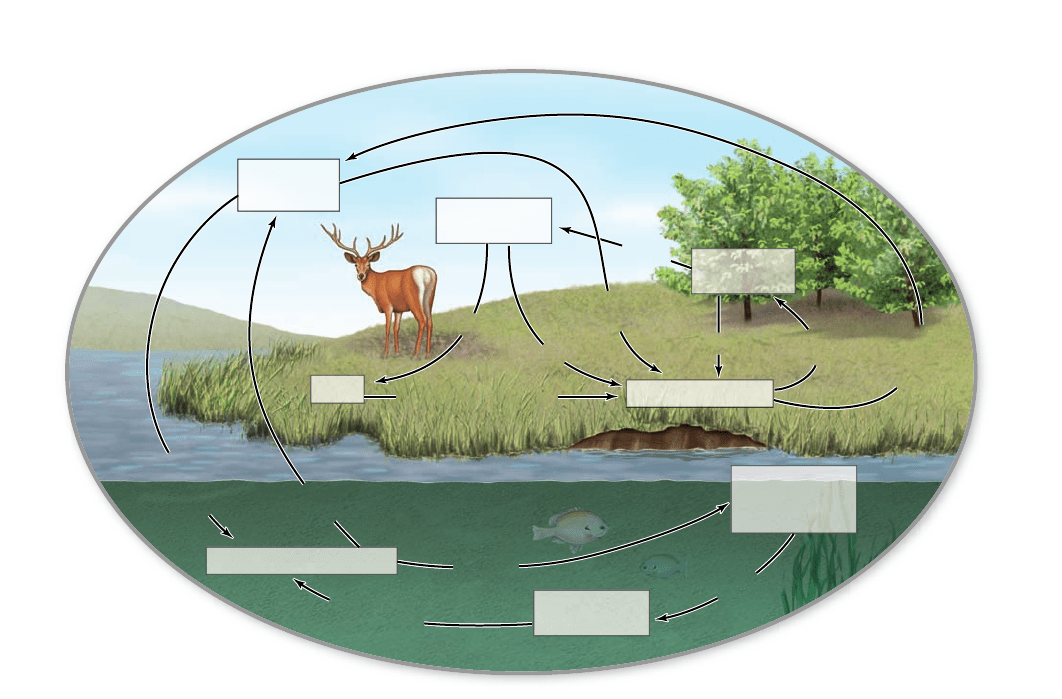
Figure 58.4
The nitrogen cycle. The
nitrogen cycle is complicated because it
involves multiple changes in the chemical
form of nitrogen. Certain
prokaryotes x atmospheric
nitrogen (N
2
), converting it to
forms such as ammonia
(NH
3
) and nitrate (NO
3
–
)
that plants and algae can
use. Other prokaryotes
return nitrogen to the
atmosphere as N
2
by
breaking down
NH
3
or other
nitrogen-containing
compounds. Ammonia,
a gas, can enter the
atmosphere directly
from soils.
term nitrogen fixation to refer specifically to this step. After NH
3
has been synthesized, other prokaryotic microbes oxidize part
of it to form NO
3
–
, a process called nitrification.
Certain genera of prokaryotes have the ability to accom-
plish nitrogen fixation using a system of enzymes known as the
nitrogenase complex (the nif gene complex; see chapter 28).
Most of the microbes are free-living, but on land some are found
in symbiotic relationships with the roots of legumes (plants of
the pea family, Fabaceae), alders, myrtles, and other plants.
Additional prokaryotic microbes (including both bacteria
and archaea) are able to convert the nitrogen in NO
3
–
into N
2
(or other nitrogen gases such as N
2
O), a process termed
denitrification. Ammonia can be subjected to denitrification
indirectly by being converted first to NO
3
–
and then to N
2
.
Nitrogenous wastes and fertilizer use
Most animals, when they break down proteins in their metabo-
lism, excrete the nitrogen from the proteins as NH
3
. Humans
and other mammals excrete nitrogen as urea in their urine (see
chapter 51); a number of types of microbes convert the urea to
NH
3
. The NH
3
from animal excretion can be picked up by
plants and algae as a source of nitrogen.
Human populations are radically altering the global ni-
trogen cycle by the use of fertilizers on lawns and agricultural
fields. The fertilizers contain forms of fixed nitrogen that crops
can use, such as ammonium (NH
4
) salts manufactured industri-
ally from atmospheric N
2
. Partly because of the production of
fertilizers, humans have already doubled the rate of transfer of
N
2
in usable forms into soils and waters.
Nitrogen availability
How can nitrogen be in short supply if the atmosphere is so
rich with it? The answer is that the nitrogen in the atmosphere
is in its elemental form—molecules of nitrogen gas (N
2
)—and
the vast majority of organisms, including all plants and animals,
have no way to use nitrogen in this chemical form.
For animals, the ultimate source of nitrogen is nitrogen-
containing organic compounds synthesized by plants or by al-
gae or other microbes. Herbivorous animals, for example, eat
plant or algal proteins and use the nitrogen-containing amino
acids in them to synthesize their own proteins.
Plants and algae use a number of simple nitrogen-
containing compounds as their sources of nitrogen to synthe-
size proteins and other nitrogen-containing organic compounds
in their tissues. Two commonly used nitrogen sources are am-
monia (NH
3
) and nitrate ions (NO
3
–
). As described in chapter
39, certain prokaryotic microbes can synthesize ammonia and
nitrate from N
2
in the atmosphere, thereby constituting a part
of the nitrogen cycle that makes atmospheric nitrogen accessi-
ble to plants and algae (figure 58.4) . Other prokaryotes turn
NH
3
and NO
3
–
into N
2
, making the nitrogen inaccessible. The
balance of the activities of these two sets of microbes deter-
mines the accessibility of nitrogen to plants and algae.
Microbial nitrogen fixation, nitrification,
and denitrification
The synthesis of nitrogen-containing compounds from N
2
is
known as nitrogen fixation. The first step in this process is the
synthesis of NH
3
from N
2
, and biochemists sometimes use the
chapter
58
Dynamics of Ecosystems
1211www.ravenbiology.com
rav32223_ch58_1207-1229.indd 1211rav32223_ch58_1207-1229.indd 1211 11/20/09 2:22:11 PM11/20/09 2:22:11 PM