
Raven P.H., Johnson G.B., Mason K.A. Biology (Ninth Edition)
Подождите немного. Документ загружается.

Apago PDF Enhancer
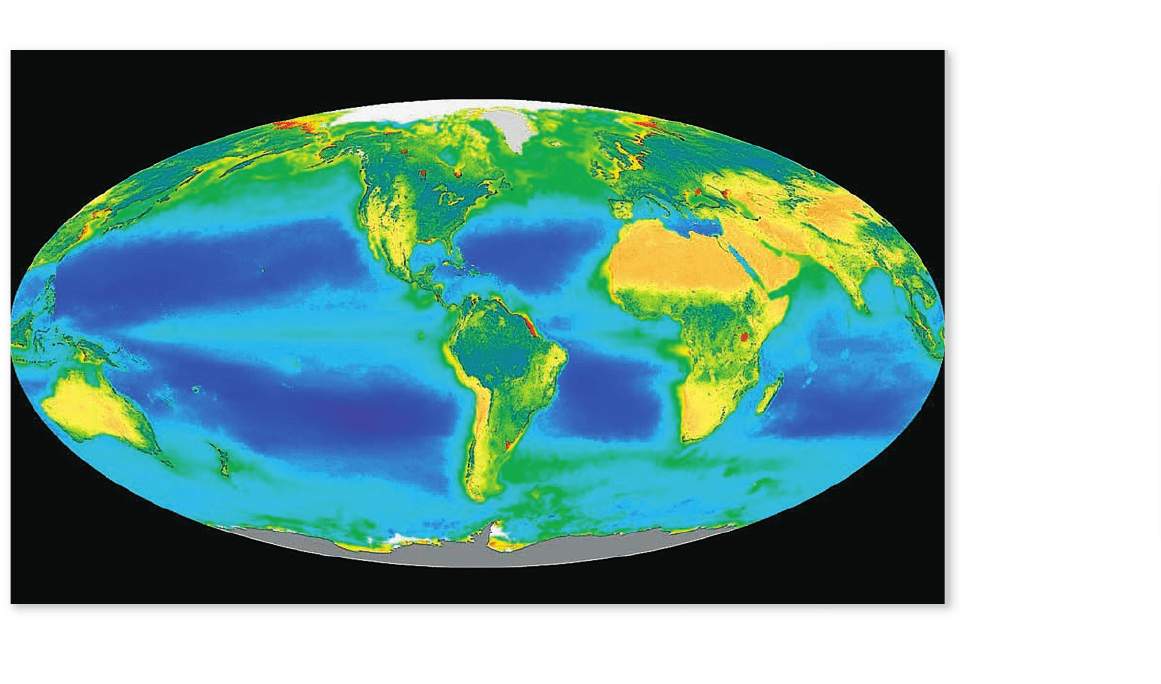
Figure 59.16
Major functional regions of the ocean. The regions classed as oligotrophic ocean ( colored dark blue) are “biological
deserts” with low productivity per unit area. Continental shelf ecosystems (green at the edge of continents) are typically medium to high in
productivity. Upwelling regions (yellow at the edge of continents) are the highest in productivity per unit area and rank with the most productive
of all ecosystems on Earth.
Open oceans have low primary productivity
In speaking of the open oceans, we mean the waters far from
land (beyond the continental shelves) that are near enough to
the surface to receive sunlight or to interact on a daily or
weekly basis with those waters. We will discuss the deep sea
separately later on.
The intensity of solar illumination in the open oceans
drops from being high at the surface to being essentially zero at
200 m of depth; photosynthesis is limited to this level of the
ocean. However, nutrients for phytoplankton, such as nitrate,
tend to be present at low concentrations in the photic zone
because over eons of time in the past, ecological processes have
exported nitrate and other nutrients from the upper waters to
the deep waters, and no vigorous forces exist in the open ocean
to return the nutrients to the sunlit waters.
Because of the low concentrations of nutrients in the
photic zone, large parts of the open oceans are low in primary
productivity per unit area (see figure 58.11) and aptly called a
“biological desert.” These parts—which correspond to the cen-
ters of the great midocean gyres (see figure 59.4)—are often
collectively termed the oligotrophic ocean (figure 59.16) in refer-
ence to their low nutrient levels and low productivity.
People fish the open oceans today for only a few species,
such as tunas and some species of squids and whales. Fishing in
the open oceans is limited to relatively few species for two rea-
sons. First, because of the low primary productivity per unit of
area, animals tend to be thinly distributed in the open oceans.
The only ones that are commercially profitable to catch are
those that are individually large or tend to gather together in
tight schools. Second, costs for travelling far from land are high.
All authorities agree that as we turn to the sea to help feed the
burgeoning human population, we cannot expect the open
ocean regions to supply great quantities of food.
Continental shelf ecosystems
provide abundant resources
Many of the ecosystems on the continental shelves are rela-
tively high in productivity per unit area. An important reason is
that the waters over the shelves—termed the neritic waters
(see figure 59.15)—tend to have relatively high concentrations
of nitrate and other nutrients, averaged over the year.
Because the waters over the shelves are shallow, they have
not been subject, over the eons of time, to the loss of nutrients
into the deep sea, as the open oceans have. Over the shelves,
nutrient-rich materials that sink hit the shallow bottom, and
the nutrients they contain are stirred back into the water col-
umn by stormy weather. In addition, nutrients are continually
replenished by run-off from nearby land.
Around 99% of the food people harvest from the ocean
comes from continental shelf ecosystems or nearby upwelling
regions. The shelf ecosystems are also particularly important to
humankind in other ways. Mineral resources taken from the
ocean, such as petroleum, come almost exclusively from the
shelves. In addition, almost all recreational uses of the ocean,
from sailing to scuba diving, take place on the shelves. The
1242
part
VIII
Ecology and Behavior
rav32223_ch59_1230-1255.indd 1242rav32223_ch59_1230-1255.indd 1242 11/20/09 2:44:43 PM11/20/09 2:44:43 PM
Apago PDF Enhancer
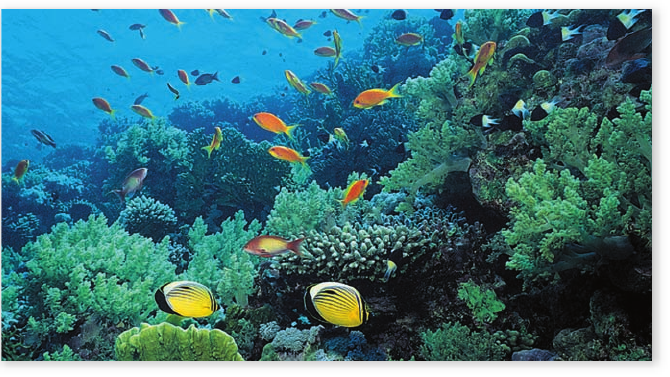
Figure 59.17
A coral reef ecosystem. Reef-building
corals, which consist of symbioses between cnidarians and algae,
construct the three-dimensional structure of the reef and carry out
considerable primary production. Fish and many other kinds of
animals nd food and shelter, making these ecosystems among the
most diverse. About 20% of all sh species occur speci cally in
coral reef ecosystems.
All the 700 or so species of reef-building corals are
animal–algal symbioses; the animals are cnidarians, and dino-
flagellate symbionts live within the cells of their inner cell layer
(the gastrodermis). These corals depend on photosynthesis by
the algal symbionts, and thus require clear waters through
which sunlight can readily penetrate. Reef-building corals are
threatened worldwide, as described later in this chapter.
Upwelling regions experience mixing
of nutrients and oxygen
The upwelling regions of the ocean are localized places where
deep water is drawn consistently to the surface because of the
action of local forces such as local winds. The deep water is of-
ten rich in nitrate and other nutrients. Upwelling therefore
steadily brings nutrients into the well-lit surface layers. Phyto-
plankton respond to the abundance of nutrients and light with
prolific growth and reproduction. Upwelling regions have the
highest primary productivity per unit area in the world’s ocean.
The most famous upwelling region (see figure 59.16) is
found along the coast of Peru and Ecuador, where upwelling
occurs year-round. Another important upwelling region is the
coastline of California, along which upwelling occurs during
about half the year in the summer, explaining why swimmers
find cold water at the beaches even in July and August.
Upwelling regions support prolific but vulnerable fisher-
ies. Sardine fishing in the California upwelling region crashed a
few decades ago, but previously was enormously important to
the region, as Nobel Prize–winning author John Steinbeck
chronicled in a number of his books, most notably Cannery Row.
El Niño Southern Oscillation (ENSO)
The phenomenon named El Niño first came to the attention of
science in studies of the Peru–Ecuador upwelling region. In
that region, every 2 to 7 years on an irregular and relatively
unpredictable basis, the water along the coastline becomes pro-
foundly warm, and simultaneously the primary productivity
becomes unusually low.
Because of the low primary productivity, the ordinarily
prolific fish populations weaken, and populations of seabirds and
sea mammals that depend on the fish are stressed or plummet.
The local people had named a mild annual warming event, which
occurred around Christmas each year, “El Niño” (literally, “the
child,” after the Christ Child). Scientists adopted the term El
Niño Southern Oscillation (ENSO) to refer to those dramatic
warming events .
The immediate cause of El Niño took several decades to
figure out, but research ultimately showed that the cause is a
weakening of the east-to-west Trade Winds in the region. The
Trade Winds ordinarily blow warm surface water to the west,
away from the Peru–Ecuador coast. This thins the warm sur-
face layer of water along the coast, so that deep water—cold but
highly rich in nutrients—is drawn to the surface, leading to
high primary production.
Weakening of the Trade Winds allows the warm surface
layer to become thicker. Upwelling continues, but under such
circumstances it merely recirculates the thick warm surface
layer, which is nutrient-depleted.
shelves feature prominently in these ways because they are
close to coastlines and relatively shallow.
Estuaries
Estuaries are one of the types of shelf ecosystems. An estuary is a
place along a coastline, such as a bay, that is partially surrounded
by land and in which fresh water from streams or rivers mixes
with ocean water, creating intermediate (brackish) salinities.
Estuaries, besides being bodies of water, include intertidal
marshes or swamps. An intertidal habitat is an area that is ex-
posed to air at low tide but under water at high tide. The marshes
of the intertidal zone are called salt marshes. Intertidal swamps
called mangrove swamps (dominated by trees and bushes) occur
in tropical and subtropical parts of the world.
Estuaries are a vital and highly productive ecosystem—
they provide shelter and food for many aquatic animals, espe-
cially the larvae and young, that people harvest for food.
Estuaries are also important to a very large number of other
animal species, such as migrating birds.
Banks and coral reefs
Other types of shelf ecosystems include banks and coral reefs.
Banks are local shallow areas on the shelves, often extremely
important as fishing grounds; Georges Bank, 100 km off the
shore of Massachusetts, was formerly one of the most produc-
tive and famous; much of this area has been closed to fishing
since the mid-1990s because of overexploitation.
Coral reef ecosystems occur in subtropical and tropical
latitudes. Their defining feature is that in them, stony corals—
corals that secrete a solid, calcified type of skeleton—build
three-dimensional frameworks that form a unique habitat in
which many other distinctive organisms live, including reef fish
and soft corals (figure 59.17).
chapter
59
The Biosphere
1243www.ravenbiology.com
rav32223_ch59_1230-1255.indd 1243rav32223_ch59_1230-1255.indd 1243 11/20/09 2:44:46 PM11/20/09 2:44:46 PM
Apago PDF Enhancer
Drier
Warmer
Wetter and warmer
Wetter and
cooler
Warmer
Warmer
Warmer
Wetter and
warmer
El Nino
Sea temperature
higher than normal
~
Wetter
Drier
Warmer
a.
b.
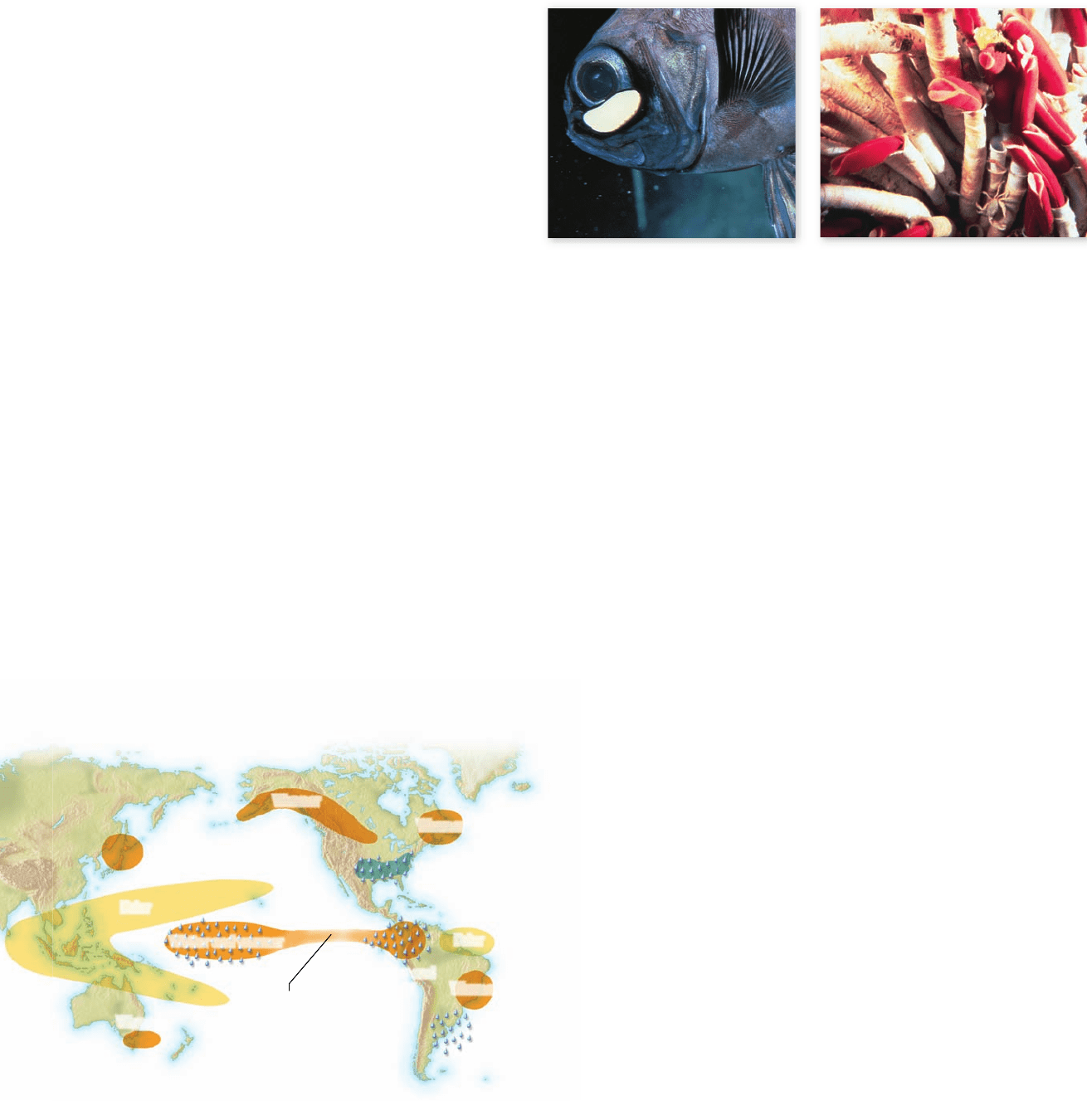
Figure 59.18
An El Niño winter. This diagram shows just
some of the worldwide alterations of weather that are often
associated with the El Niño phenomenon.
Figure 59.19
Life in the deep sea. a. The luminous spot
below the eye of this deep-sea sh results from the presence of a
symbiotic colony of bioluminescent bacteria. Bioluminescence is a
fairly common feature of mobile animals in the parts of the ocean
that are so deep as to be dark. It is more common among species
living part way down to the bottom than in ones living at the
bottom. b. These large worms live along vents where hot water
containing hydrogen sul de rises through cracks in the sea oor
crust. Much of the body of each worm is devoted to a colony of
symbiotic sulfur-oxidizing bacteria. The worms transport sul de
and oxygen to the bacteria, which oxidize the sulfur and use the
energy thereby obtained for primary production of new organic
compounds, which they share with their worm hosts.
After these fundamentals had been discovered, research-
ers in the 1980s realized that the weakening of the Trade Winds
is actually part of a change in wind circulation patterns that
recurs irregularly. One reason the Trade Winds blow east-to-
west in ordinary times is that the surface waters in the western
equatorial Pacific are warmer than those in the eastern equato-
rial Pacific; air rises from the warm western areas, creating low
pressure at the surface there, and air blows out of the east into
the low pressure. During an El Niño, the warmer the eastern
ocean gets, the more similar it becomes to the western ocean,
reducing the difference in pressure across the ocean. Thus,
once the Trade Winds weaken a bit, the pressure difference that
makes them blow is lessened, weakening the Trade Winds fur-
ther. Warm water ordinarily kept in the west by the Trade
Winds creeps progressively eastward at equatorial latitudes be-
cause of this self-reinforcing series of events. Ultimately, effects
of El Niño occur across large parts of the world’s weather sys-
tems, affecting sea temperatures in California, rainfall in the
southwestern United States, and even systems as far distant
as Africa.
One specific result is to shift the weather systems of the
western Pacific Ocean 6000 km eastward. The tropical rainstorms
that usually drench Indonesia and the Philippines occur when
warm seawater abutting these islands causes the air above it to
rise, cool, and condense its moisture into clouds. When the warm
water moves east, so do the clouds, leaving the previously rainy
areas in drought. Conversely, the western edge of Peru and Ecua-
dor, which usually receives little precipitation, gets a soaking.
El Niño can wreak havoc on ecosystems. During an El
Niño event, plankton can drop to 1/20 of their normal abun-
dance in the waters of Peru and Ecuador, and because of the
drop in plankton productivity, commercial fish stocks virtually
disappear (figure 59.18) . In the Galápagos Islands, for example,
seabird and sea lion populations crash as animals starve due to
the lack of fish. By contrast, on land, the heavy rains produce a
bumper crop of seeds, and land birds flourish. In Chile, similar
effects on seed abundance propagate up the food chain, leading
first to increased rodent populations and then to increased
predator populations, a nice example of a bottom-up trophic
cascade, as was discussed in chapter 58.
The deep sea is a cold, dark place with some
fascinating communities
The deep sea is by far the single largest habitat on Earth, in the
sense that it is a huge region characterized by relatively uniform
conditions throughout the globe. The deep sea is seasonless, cold
(2–5°C), totally dark, and under high pressure (400–500 atmo-
spheres where the bottom is 4000–5000 m deep).
In most regions of the deep sea, food originates from pho-
tosynthesis in the sunlit waters far above. Such food—in the form
of carcasses, fecal pellets, and mucus—can take as much as a
month to drift down from the surface to the bottom, and along
the way about 99% of it is eaten by animals living in the water
column. Thus, the bottom communities receive only about 1%
of the primary production and are food-poor. Nonetheless, a
great many species of animals—most of them small-bodied and
thinly distributed—are now known to live in the deep sea. Some
of the animals are bioluminescent (figure 59.19a) and thereby
able to communicate or attract prey by use of light.
Hydrothermal vent communities
The most astounding communities in the deep sea are the
hydrothermal vent communities. Unlike most parts of the deep
1244
part
VIII
Ecology and Behavior
rav32223_ch59_1230-1255.indd 1244rav32223_ch59_1230-1255.indd 1244 11/20/09 2:44:47 PM11/20/09 2:44:47 PM
Apago PDF Enhancer
DDT Concentration
25 ppm in
predatory birds
2 ppm in
large fish
0.5 ppm in
small fish
0.04 ppm in
zooplankton
0.000003 ppm
in water
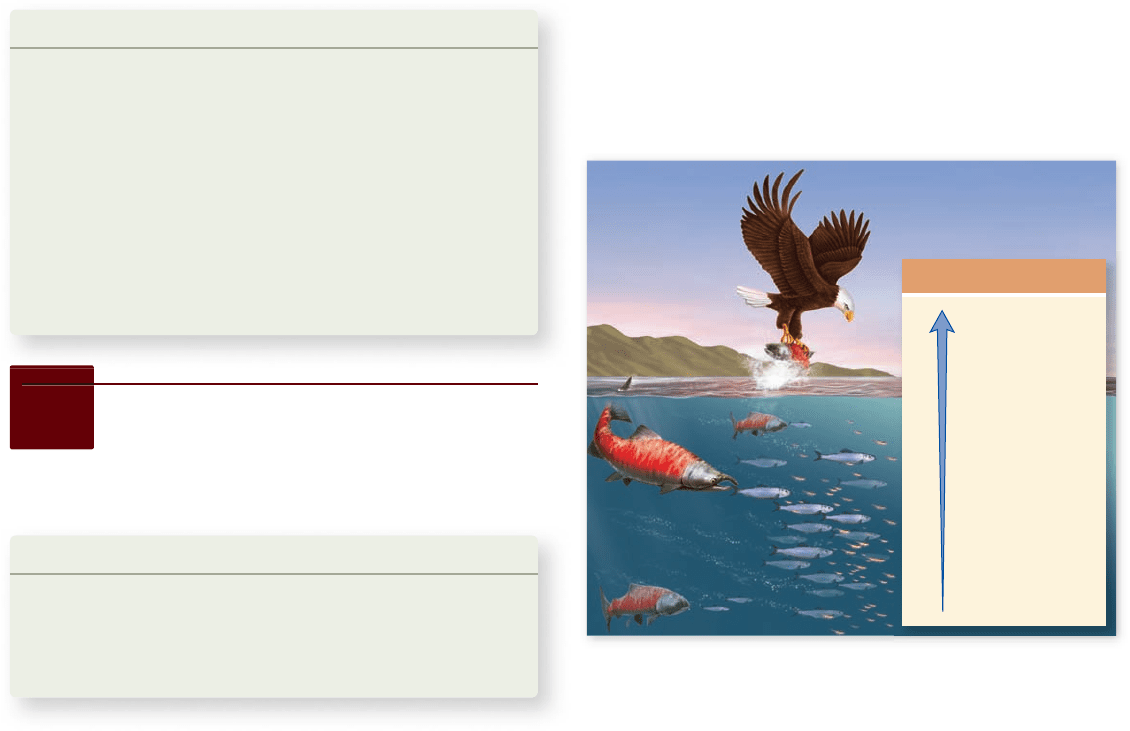
Figure 59.20
Biological magni cation of DDT
concentration. Because all the DDT an animal eats in its food
tends to accumulate in its fatty tissues, DDT becomes increasingly
concentrated in animals at higher levels of the food chain. The
concentrations at the right are in parts per million (ppm). Before
DDT was banned in the United States, bird species that eat large
sh underwent drastic population declines because metabolic
products of DDT made their eggshells so thin that the shells broke
during incubation.
sea, these communities are thick with life (figure 59.19b), in-
cluding large-bodied animals such as worms the size of baseball
bats. The reason such a profusion of life can be supported is
that these communities live on vigorous, local primary produc-
tion rather than depending on the photic zone far above.
The hydrothermal vent communities occur at places where
tectonic plates are moving apart, and seawater—circulating
through porous rock—is able to come into contact with very
hot rock under the seafloor. This water is heated to tempera-
tures in excess of 350°C and, in the process, becomes rich in
hydrogen sulfide.
As the water rises up out of the porous rock, free-living
and symbiotic bacteria oxidize the sulfide, and from this reac-
tion they obtain energy, which, in a manner analogous to pho-
tosynthesis, they use to synthesize their own cellular substance,
grow, and reproduce. These sulfur-oxidizing bacteria are
chemoautotrophs (see chapter 58). Animals in the communities
either survive on the bacteria or eat other animals that do. The
hydrothermal vent communities are among the few communi-
ties on Earth that do not depend on the Sun’s energy for pri-
mary production.
Learning Outcomes Review 59.4
The oligotrophic ocean includes the open ocean and the deep sea, where
little primary productivity occurs. Continental shelf ecosystems tend to
be moderate to high in productivity; they include estuaries, salt marshes,
fi shing banks, and coral reefs. The highest levels of productivity are found in
upwelling regions, such as those along the west coasts of North and South
America, where prolifi c but vulnerable fi sheries can be found. Periodic
weakening of the Trade Winds in this region can prevent the upwelling of
cold water and subsequently cause weather changes in an event termed
El Niño.
■ What sort of population cycles would you expect to see
in regions that are affected by the ENSO?
59.5
Human Impacts on the
Biosphere: Pollution and
Resource Depletion
Learning Outcomes
Name the major human threats to ecosystems.1.
Differentiate between point-source pollution and 2.
diffuse pollution.
Explain the effect of deforestation.3.
We all know that human activities can cause adverse changes in
ecosystems. In discussing these, it is important to recognize
that creative people can often come up with rational solutions
to such problems.
An outstanding example is provided by the history of
DDT in the United States. DDT is a highly effective insecti-
cide that was sprayed widely in the decades following World
War II, often on wetlands to control mosquitoes. During
the years of heavy DDT use, populations of ospreys, bald ea-
gles, and brown pelicans—all birds that catch large fish—
plummeted. Ultimately, the use of DDT was connected with
the demise of these birds.
Scientists established that DDT and its metabolic prod-
ucts became more and more concentrated in the tissues of ani-
mals as the compounds were passed along food chains
(figure 59.20) . Animals at the bottom of food chains accumu-
lated relatively low concentrations in their fatty tissues. But the
primary carnivores that preyed on them accumulated higher
concentrations from eating great numbers, and the secondary
carnivores accumulated higher concentrations yet. Top-level
carnivores, such as the birds that eat large fish, were dramati-
cally affected by the DDT. In these birds, scientists found that
metabolic products of DDT disrupted the formation of egg-
shells. The birds laid eggs with such thin shells that they often
cracked before the young could hatch.
Researchers concluded that the demise of the fish-eating
birds could be reversed by a rational plan to clean ecosystems of
DDT, and laws were passed banning its use. Now, three de-
cades later, populations of ospreys, eagles, and pelicans are re-
bounding dramatically. For some people, a major reason to
study science is the opportunity to be part of success stories of
this sort.
chapter
59
The Biosphere
1245www.ravenbiology.com
rav32223_ch59_1230-1255.indd 1245rav32223_ch59_1230-1255.indd 1245 11/20/09 2:44:54 PM11/20/09 2:44:54 PM
Apago PDF Enhancer
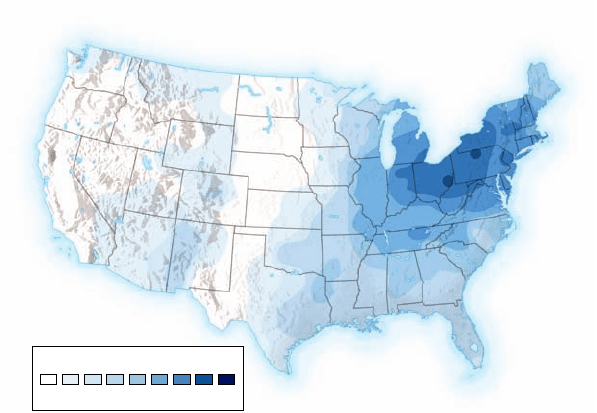
Precipitation pH
⬍4.3 ⬎5.3
Figure 59.21
pH values of rainwater in the United
States. pH values of less than 7 represent acid conditions; the
lower the values, the greater the acidity. Precipitation in parts of the
United States, especially in the Northeast, is commonly more acidic
than natural rainwater, which has a pH of 5.6 or higher.
Freshwater habitats are threatened
by pollution and resource depletion
Fresh water is not just the smallest of the major habitats, but
also the most threatened. One of the simplest yet most omi-
nous threats to fresh water is that burgeoning human popula-
tions often extract excessive amounts of water from rivers, lakes,
or streams. The Colorado River, for example, is one of the
greatest rivers in North America, originating with snow melt in
the Rocky Mountains and flowing through Utah, Arizona, Ne-
vada, California, and northern Mexico before emptying into
the ocean. Today, water is pumped out of the river all along its
way to meet the water needs of cities (even ones as distant as
Los Angeles) and to irrigate crops. The river now frequently
runs out of water and dries up in the desert, never reaching the
sea. Worldwide, many crises in the supply of fresh water loom
on the horizon.
Pollution: Point source versus diffuse
Pollution of fresh water is a global problem. Point-source
pollution comes from an identifiable location—such as easily
identified factories or other facilities that add pollutants at de-
fined locations, such as an outfall pipe. Examples include
sewage-treatment plants, which discharge treated effluents at
specific spots on rivers, and factories that sometimes discharge
water contaminated with heavy metals or chemicals. Laws and
technologies can readily be brought to bear to moderate point-
source pollution because the exact locations and types of pollu-
tion are well defined. In many countries, great progress has
been made, but in other countries, often in the developing
world, water pollution is still a major problem.
Diffuse pollution is exemplified by eutrophication caused
by excessive run-off of nitrates and phosphates from lawn and
agricultural field fertilization. When excessive nitrates and
phosphates enter rivers and lakes, the character of the bodies of
water is changed for the worse; the concentration of dissolved
oxygen declines, and fish species such as carp take the place of
more desirable species. The problem is exacerbated when rivers
empty into the ocean. The eutrophication caused by the accu-
mulation of chemicals can lead to enormous areas of water with
no oxygen, causing massive die-offs of fish and other animals.
The most famous such area, covering approximately 20,000
km
2
in 2008, occurs where the Mississippi River empties into
the Gulf of Mexico, but other “dead zones” occur in places
around the world.
The nitrates and phosphates that cause these problems
originate on thousands of farms and lawns spread over whole
watersheds, and they often enter fresh waters at virtually count-
less locations. The diffuseness of this sort of pollution renders
it difficult to modify by simple technical fixes. Instead, solutions
often depend on public education and political action.
Pollution from coal burning: Acid precipitation
A type of pollution that has properties intermediate between
the point-source and diffuse types is the pollution that can arise
from burning of coal for power generation. Although each
smokestack is a point source, there are many stacks, and the
smoke and gases from these stacks spread over wide areas.
Acid precipitation is one aspect of this problem. When
coal is burned, sulfur in the coal is oxidized. The sulfur oxides,
unless controlled, are spewed into the atmosphere in the stack
smoke, and there they combine with water vapor to produce
sulfuric acid. Falling rain or snow picks up the acid and is
excessively acidic when it reaches the surface of the Earth
(figure 59.21) .
Mercury emitted in stack smoke is a second potential
problem. Burning of coal can be one of the major sources of
environmental mercury, a serious public health issue because
just small amounts of mercury can interfere with brain develop-
ment in human fetuses and infants.
Acid precipitation and mercury pollution affect fresh-
water ecosystems. At pH levels below 5.0, many fish species and
other aquatic animals die, unable to reproduce. Thousands of
lakes and ponds around the world no longer support fish be-
cause of pH shifts induced by acid precipitation. Mercury that
falls from atmospheric emissions into lakes and ponds accumu-
lates in the tissues of food fish. In the Great Lakes region of the
United States, people—especially pregnant women—are ad-
vised to eat little or no locally caught fish because of its mer-
cury content.
Forest ecosystems are threatened
in tropical and temperate regions
Probably the single greatest problem for terrestrial habitats
worldwide is deforestation by cutting or burning. There are
many reasons for deforestation. In poverty-stricken countries,
deforestation is often carried out diffusely by the general popu-
lation; people burn wood to cook or stay warm, and they collect
it from the local forests.
1246
part
VIII
Ecology and Behavior
rav32223_ch59_1230-1255.indd 1246rav32223_ch59_1230-1255.indd 1246 11/20/09 2:44:57 PM11/20/09 2:44:57 PM
Apago PDF Enhancer
a.
b.
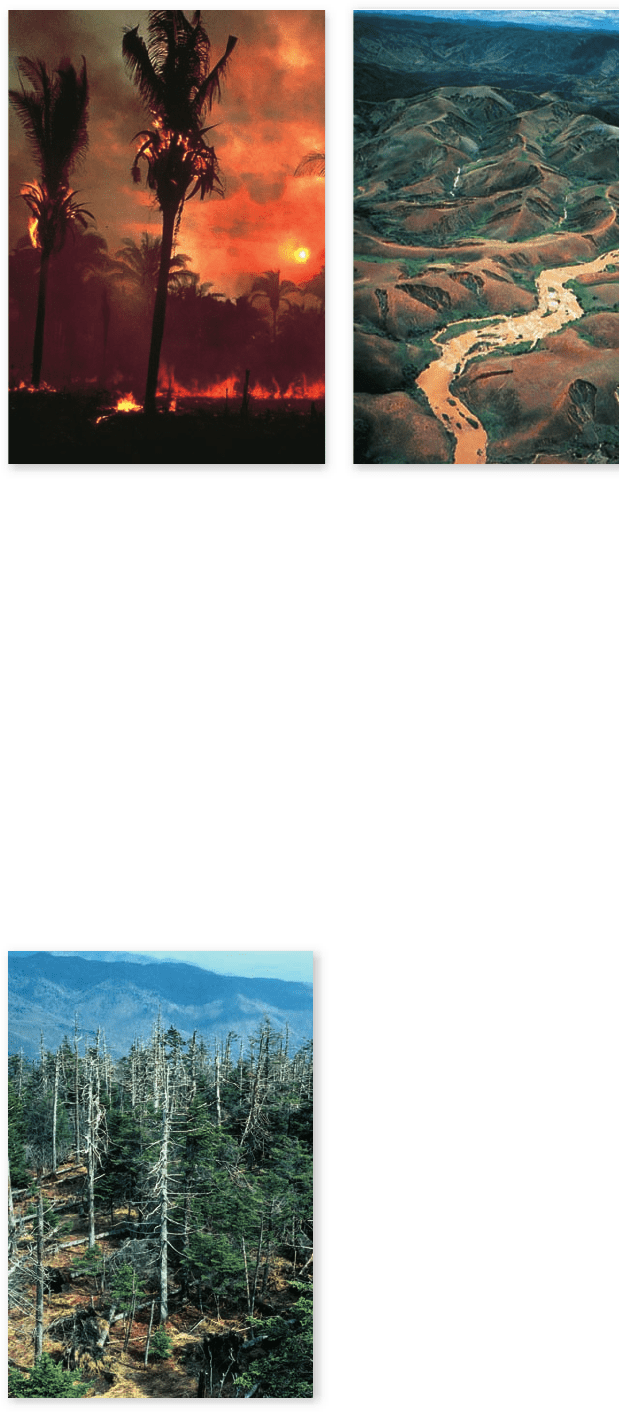
Figure 59.22
Destroying the tropical rain forests.
a. These res are destroying a tropical rain forest in Brazil to clear
it for cattle pasture. b. The consequences of deforestation can be
seen on these middle-elevation slopes in Madagascar, which once
supported tropical rain forest, but now support only low-grade
pastures and permit topsoil to erode into the rivers (note the color
of the water, stained brown by high levels of soil erosion). This sort
of picture is seen in a number of places around the world, including
Ecuador and Haiti as well as Madagascar.
Figure 59.23
Damage to trees by
acid precipitation at
Clingman’s Dome,
Tennessee. Acid
precipitation weakens
trees and makes them
more susceptible to
pests and predators.
fish stocks are presently officially rated as being overexploited,
depleted, or in recovery; another 40% to 50% are rated as be-
ing maximally exploited.
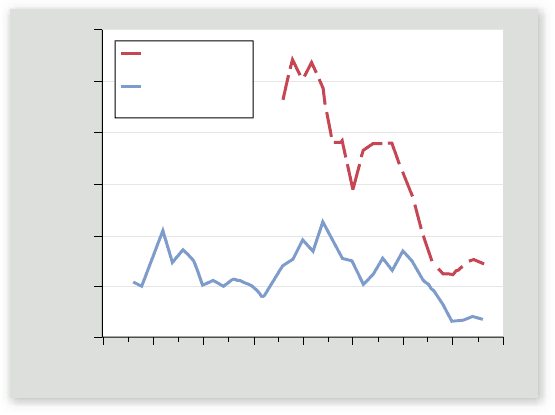
Major cod fisheries in waters off of Nova Scotia, Massa-
chusetts, and Great Britain have been closed to fishing in the
past 15 years because of collapse (figure 59.24) . Overfishing can
At the other extreme, corporations still cut large tracts of
virgin forests in an industrialized fashion, often shipping the
wood halfway around the world to buyers. Tropical hardwoods,
such as mahogany, from Southeast Asian rain forests are shipped
to the United States for use in furniture, and softwood logs are
shipped from Alaska to East Asia for pulping and paper produc-
tion. Forests are sometimes simply burned to open up land for
farming or ranching (figure 59.22a).
Loss of habitat
The loss of forest habitat can have dire consequences. Partic-
ularly diverse sets of species depend on tropical rain forests
for their habitat, for example. Thus, when rain forests are
cleared, the loss of biodiversity can be extreme. Many tropical
forest regions have been severely degraded, and recent esti-
mates suggest that less than half of the world’s tropical rain
forests remain in pristine condition. All of the world’s tropical
rain forests will be degraded or gone in about 30 years at pres-
ent rates of destruction.
Besides loss of habitat, deforestation can have numerous
secondary consequences, depending on local contexts. In the Sa-
hel region, South of the Sahara Desert in Africa, deforestation
has been a major contributing factor in increased desertification.
In the forests of the northeastern United States, as the Hubbard
Brook experiment shows (see figure 58.7), deforestation can lead
to both a loss of nutrients from forest soils and a simultaneous
nutrient enrichment of bodies of water downstream.
Disruption of the water cycle
As discussed in chapter 58, cutting of a tropical rain forest often
interrupts the local water cycle in ways that permanently alter
the landscape. After an area of tropical rain forest is cleared,
rain water often runs off the land to distant places, rather than
being returned to the atmosphere immediately above by tran-
spiration. This change may render conditions unsuitable for
the rain forest trees that originally lived there. Then the poorly
vegetated land—exposed and no longer stabilized by thick root
systems—may be ravaged by erosion (figure 59.22b).
Acid rain
Deforestation can be a problem in temperate regions, as well as
in the tropics. In addition, acid rain affects forests as well as
lakes and streams; large tracts of trees in temperate regions
have been adversely affected by acid rain. By changing the acid-
ity of the soil, acid rain can lead to widespread tree mortality
(figure 59.23).
Marine habitats are being depleted
of sh and other species
Overfishing of the ocean has risen to crisis proportions in re-
cent decades and probably represents the single greatest cur-
rent problem in the ocean realm. The ocean is so huge that it
has tended to be more immune than fresh water or terrestrial
ecosystems to global human alteration. Nonetheless, the total
world fish catch has been pushed to its maximum for over two
decades, even as demand for fish has continued to rise. Fishing
pressure is so excessive that 25% to 30% of the world’s ocean
chapter
59
The Biosphere
1247www.ravenbiology.com
rav32223_ch59_1230-1255.indd 1247rav32223_ch59_1230-1255.indd 1247 11/20/09 2:44:58 PM11/20/09 2:44:58 PM
Apago PDF Enhancer
Year
0
1960 1965 1970 1975 1980 1985 1990 1995 2000
50
100
150
Weight of Fish (thousands of metric tons)
total biomass in
the ecosystem
biomass taken
by fishing
and a flame-retardant chemical often used in carpets. Nonethe-
less, because of the ocean’s vastness, concentrations of pollut-
ants are not at crisis levels in the ocean at large.
Destruction of coastal ecosystems
Second to overfishing, the greatest problem in the ocean
realm is deterioration of coastal ecosystems. Estuaries along
coastlines are often subject to severe eutrophication; since
about 1970, for example, the bottom waters of the Chesa-
peake Bay near Washington, DC, have become oxygen-free
each summer because of the decay of excessive amounts of
organic matter.
Another coastal problem is destruction of salt marshes,
which (like freshwater wetlands) are often perceived as dispos-
able. Most authorities believe that the loss of salt marshes in the
20th century was a major contributing factor to the destruction
of New Orleans by Hurricane Katrina in 2005; had the salt
marshes and cypress swamps been present at their full extent,
they would have absorbed a great deal of the flooding water and
buffered the city from some of the storm’s violence.
Stratospheric ozone depletion
has led to an ozone “hole”
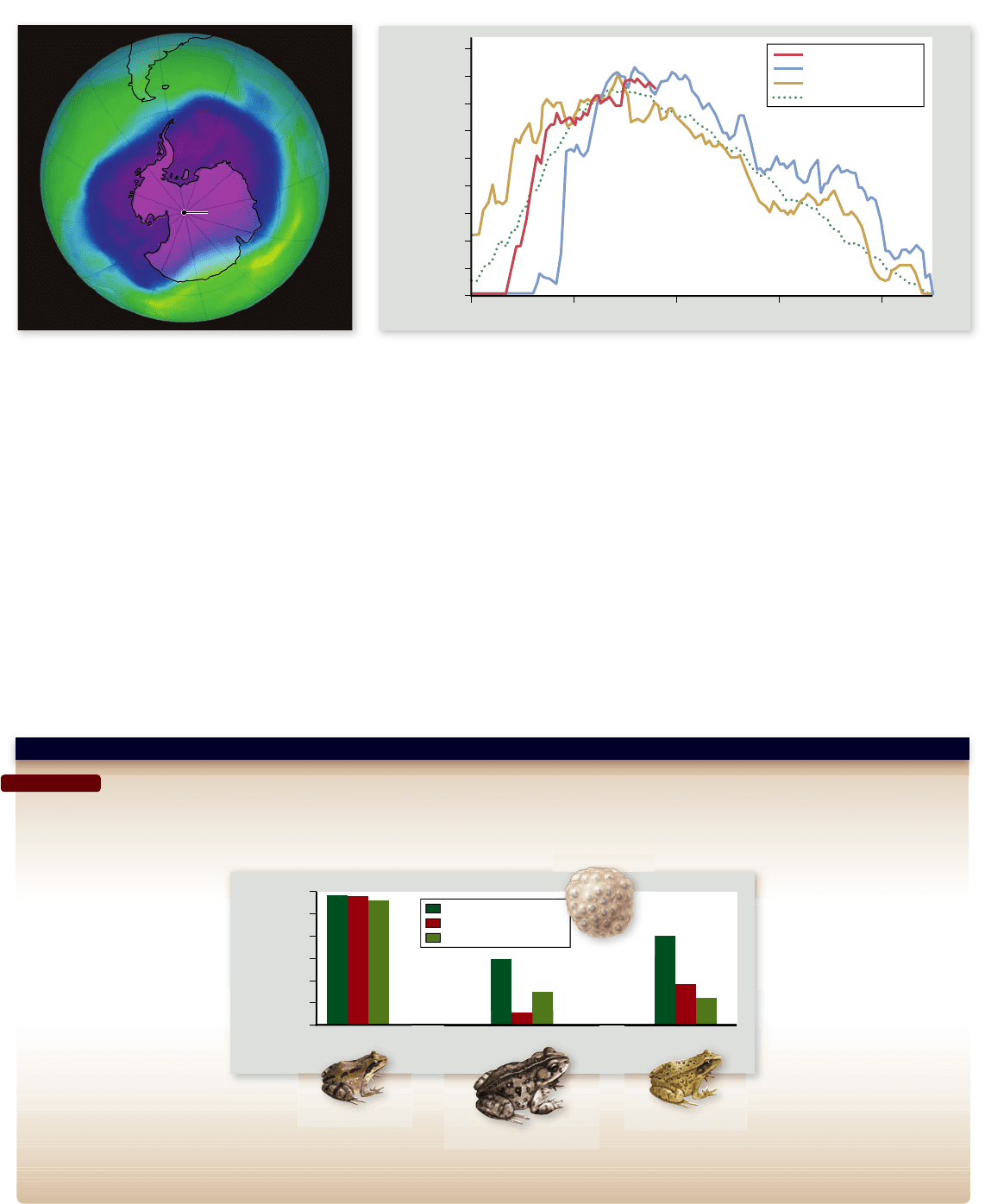
The colors of the satellite photo in figure 59.25a represent dif-
ferent concentrations of ozone (O
3
) located 20 to 25 km above
the Earth’s surface in the stratosphere. Stratospheric ozone is
depleted over Antarctica (purple region in the figure) to be-
tween one-half and one-third of its historically normal concen-
tration, a phenomenon called the ozone hole.
Although depletion of stratospheric ozone is most dramatic
over Antarctica, it is a worldwide phenomenon. Over the United
States, the ozone concentration has been reduced by about 4%,
according to the U.S. Environmental Protection Agency.
Stratospheric ozone and UV-B
Stratospheric ozone is important because it absorbs ultraviolet
(UV) radiation—specifically the wavelengths called UV-B—
from incoming solar radiation. UV-B is damaging to living or-
ganisms in a number of ways; for instance, it increases risks of
cataracts and skin cancer in people. Depletion of stratospheric
ozone permits more UV-B to reach the Earth’s surface and
therefore increases the risks of UV-B damage. Every 1% drop
in stratospheric ozone is estimated to lead to a 6% increase in
the incidence of skin cancer, for example. UV exposure also
may be detrimental to many types of animals, such as amphib-
ians (figure 59.26)
Ozone depletion and CFCs
The major cause of the depletion of stratospheric ozone is the
addition of industrially produced chlorine- and bromine-
containing compounds to the atmosphere. Of particular con-
cern are chlorofluorocarbons (CFCs), used until recently as
refrigerants in air conditioners and refrigerators, and in manu-
facturing. CFCs released into the atmosphere can ultimately
liberate free chlorine atoms, which in the stratosphere catalyze
the breakdown of ozone molecules (O
3
) to form ordinary oxy-
gen (O
2
). Ozone is continually being made and broken down,
have disturbing indirect effects. In impoverished parts of Africa,
poaching on primates and other wild mammals in national
parks increases when fish catches decline.
Aquaculture: At present only a quick fix
Production of fish by aquaculture has grown steadily in the last
two decades, and it is often viewed as a straightforward solution
to the fisheries problem. But the dietary protein needs of many
aquacultured fish, such as salmon, are met largely with wild-
caught fish. In this case, exploitation has simply shifted to dif-
ferent species.
In addition, current aquaculture practices often damage
natural ocean ecosystems. One example is the clearing of man-
grove swamps along coasts to create shrimp and fish ponds,
which are abandoned when their productivity declines. Re-
search is needed to ameliorate these problems.
Pollution effects
As large as the ocean is, enough pollutants are being added that
at the start of the 21st century, polluting materials are easily
detectable on a global basis. An expedition to some of the most
remote, uninhabited islands in the vast Pacific Ocean recently
reported, for example, that considerable amounts of plastic
could be found washed up on the beaches. Similarly, even the
waters of the Arctic are laced with toxic chemicals; biopsy sam-
ples of tissue from Arctic killer whales (Orcinus orca) revealed
extremely high levels of many chemicals, including pesticides
Figure 59.24
The collapse of a shery. The red line
shows the biomass of cod (Gadus morhua) in the Georges Bank
ecosystem as estimated by the U.S. National Marine Fisheries
Service based on data collected by scienti c sampling. The biomass
declined steeply between the 1970s and 1990s because of shing
pressure. As the years passed, commercial landings of cod (blue line)
remained fairly constant, in part because ships worked harder and
harder to catch cod, until catches fell precipitously toward zero and
the shery collapsed in the mid-1990s. Regulatory agencies closed
the shery in the mid-1990s to permit the cod to recover, but even
in 2009 recovery of cod was weak at best, and production from the
shery was far below historical norms.
1248
part
VIII
Ecology and Behavior
rav32223_ch59_1230-1255.indd 1248rav32223_ch59_1230-1255.indd 1248 11/20/09 2:45:02 PM11/20/09 2:45:02 PM
Apago PDF Enhancer
August
2009
2008
2007
1999–2008 average
September October November December
0
27
24
21
18
15
12
9
6
3
Southern Hemisphere Ozone Hole Area
(millions of square kilometers)
South
Pole
a. b.
0.4
0.5
0.6
0.7
0.8
0.9
Mean Proportion
Surviving to Hatching
1.0
Hyla regilla Bufo boreas Rana cascadae
UV-B blocking filter
UV-B transmitting filter
No filter
SCIENTIFIC THINKING
Question: Does exposure to UV radiation affect the survival of amphibian eggs?
Hypothesis: Direct UV exposure is detrimental to eggs.
Experiment: Fertilized eggs from several frog species are placed into enclosures in full sunlight. All enclosures have screens, some of which filter out UV
radiation, whereas others do not affect UV transmission. Eggs are monitored to see whether they survive to hatching or whether they die.
Result: Egg survival was greatly decreased in two of three species in the enclosures where UV radiation was not filtered out, as compared to survival in the
filtered enclosures. Therefore, the hypothesis is confirmed: UV exposure is detrimental to amphibian eggs.
Further Questions: What factors might explain why some species are affected by UV exposure and others are not? How could your hypotheses be tested?
Figure 59.25
The ozone hole over Antarctica. NASA satellites currently track the extent of ozone depletion in the stratosphere
over Antarctica each year. Every year since about 1980, an area of profound ozone depletion, called the ozone hole, has appeared in August
(early spring in the southern hemisphere) when sunlight triggers chemical reactions in cold air trapped over the South Pole during the
Antarctic winter. The hole intensi es during September before tailing off as temperature rises in November–December. a. In September,
2006, the 11.4 million-square-mile hole (purple in the satellite image shown) covered an area larger than the United States, Canada, and
Mexico combined, the largest hole ever recorded. b. Concentrations of ozone-depleting chemical compounds in the atmosphere have probably
peaked in the last few years and are expected to decline slowly over the decades ahead.
The Antarctic stratosphere stays extremely cold (–80°C
or lower) for many weeks as a consequence, permitting unique
types of ice clouds to form. Reactions associated with the par-
ticles in these clouds lead to accumulation of diatomic chlorine,
Cl
2
. When sunlight returns in the early Antarctic spring, the
diatomic chlorine is photochemically broken up to form free
chlorine atoms in great abundance, and the ozone-depleting
reactions ensue.
and free chlorine atoms tilt the balance toward a faster rate
of breakdown.
The extreme depletion of ozone seen in the ozone hole is
a consequence of the unique weather conditions that exist over
Antarctica. During the continuous dark of the Antarctic winter,
a strong stratospheric wind, the polar-night jet, develops and,
blowing around the full circumference of the Earth, isolates the
stratosphere over Antarctica from the rest of the atmosphere.
Figure 59.26
The effect of UV radiation on amphibian eggs.
chapter
59
The Biosphere
1249www.ravenbiology.com
rav32223_ch59_1230-1255.indd 1249rav32223_ch59_1230-1255.indd 1249 11/20/09 2:45:03 PM11/20/09 2:45:03 PM
Apago PDF Enhancer
−3.5 −2.5 −1.5 −1
2008 Surface Temperature Anomalies (°C)
−0.6 −0.2 0.2 0.6 1 1.5 2.5 3.5
Phase-out of CFCs
After research revealed the causes of stratospheric ozone deple-
tion, worldwide agreements were reached to phase out the pro-
duction of CFCs and other compounds that lead to ozone
depletion. Manufacture of such compounds ceased in the United
States in 1996, and there is now a great deal of public
awareness about the importance of using “ozone-safe” alterna-
tive chemicals. The atmosphere will cleanse itself of ozone-
depleting compounds only slowly because the substances are
chemically stable. Nonetheless, the problem of ozone depletion
is diminishing and is expected to be substantially corrected by
the second half of the 21st century.
The CFC story is an excellent example of how environ-
mental problems arise and can be solved. Initially, CFCs were
heralded as an efficient and cost-effective way to provide cool-
ing, a clear improvement over previous technologies. At that
time, their harmful consequences were unknown. Once the
problems were identified, international agreements led to an
effective solution, and creative technological advances led to
replacements that solved the problem at little cost.
Learning Outcomes Review 59.5
Pollution and resource depletion are the major human eff ects on the
environment, with freshwater habitats being most threatened. Point-source
pollution comes from identifi able locations, such as factories, whereas
diff use pollution comes from numerous sources, such as fertilized lawns.
Deforestation is a major problem in that it destroys habitat, disrupts
communities, depletes resources, and changes the local water cycle and
weather patterns. Overfi shing is the greatest problem in the oceans.
■ Were CFCs an example of point-source or diffuse
pollution? In general, how do efforts to combat
pollution depend on their source?
59.6
Human Impacts on the
Biosphere: Climate Change
Learning Outcomes
Explain the link between atmospheric carbon dioxide and 1.
global warming.
Describe the consequences of global warming on 2.
ecosystems and human health.
By studying the Earth’s history and making comparisons
with other planets, scientists have determined that concen-
trations of gases in our atmosphere, particularly CO
2
, main-
tain the average temperature on Earth about 25°C higher
than it would be if these gases were absent. This fact empha-
sizes that the composition of our atmosphere is a key consid-
eration for life on Earth. Unfortunately, human activities are
now changing the composition of the atmosphere in ways
that most authorities conclude will be damaging or, in the
long run, disastrous.
Figure 59.27
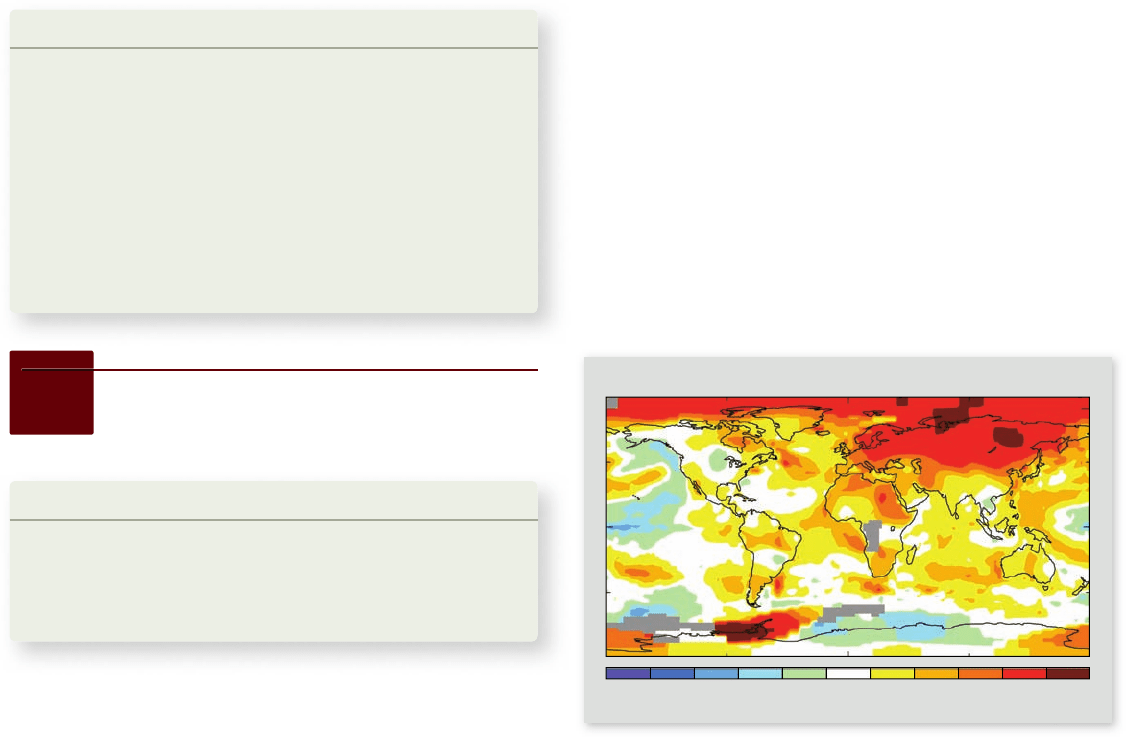
Geographic variation in global warming.
The 10 warmest years since record keeping began in 1880 all occur
within the 12-year period 1997–2008, but some areas of the globe
heated up more than others. Colors indicate how much warming
occurred in 2008 relative to the mean temperature during a
reference period (1951–1980) prior to full onset of the modern
greenhouse effect.
Because of changes in atmospheric composition, the av-
erage temperature of the Earth’s surface is increasing, a phe-
nomenon called global warming. As you might imagine from
what we said at the beginning of this chapter, changes in tem-
perature alter global wind and water-current patterns in com-
plicated ways. This means that as the average global temperature
increases, some particular regions of the world warm to a lesser
extent, whereas other regions heat up to a greater extent
(figure 59.27). It also means that rainfall patterns are altered
because global precipitation patterns depend on global wind
patterns. Enormous computer models are used to calculate the
effects predicted in all parts of the world.
Independent computer models
predict global changes
The Intergovernmental Panel on Climate Change, which
shared the 2007 Nobel Peace Prize with Al Gore for their work
on global climate change, recently released its fourth assess-
ment report. Based on a variety of different scenarios, computer
models predicted that global temperatures would increase
1.1°C to 6.4°C (2.0–11.5°F) by the end of this century.
More ominous perhaps than temperature are some of the
predictions for precipitation. For example, although northern
Europe is expected to receive more precipitation than today,
another recent studied predicted that parts of southern Europe
will receive about 20% less, disrupting natural ecosystems, ag-
riculture, and human water supplies. Some European countries
may come out ahead economically, but others will come out
behind, and political relationships among countries will likely
change as some shift from being food exporters to the more
tenuous role of requiring food imports.
1250
part
VIII
Ecology and Behavior
rav32223_ch59_1230-1255.indd 1250rav32223_ch59_1230-1255.indd 1250 11/20/09 2:45:03 PM11/20/09 2:45:03 PM
Apago PDF Enhancer
’60 ’70 ’80 ’90 ’00 ’10
310
320
330
340
350
60.0
59.8
58.8
58.6
59.0
59.2
59.4
59.6
360
370
380
390
Year
Global Temperature (°F)
Carbon Dioxide Concentration (ppmv)
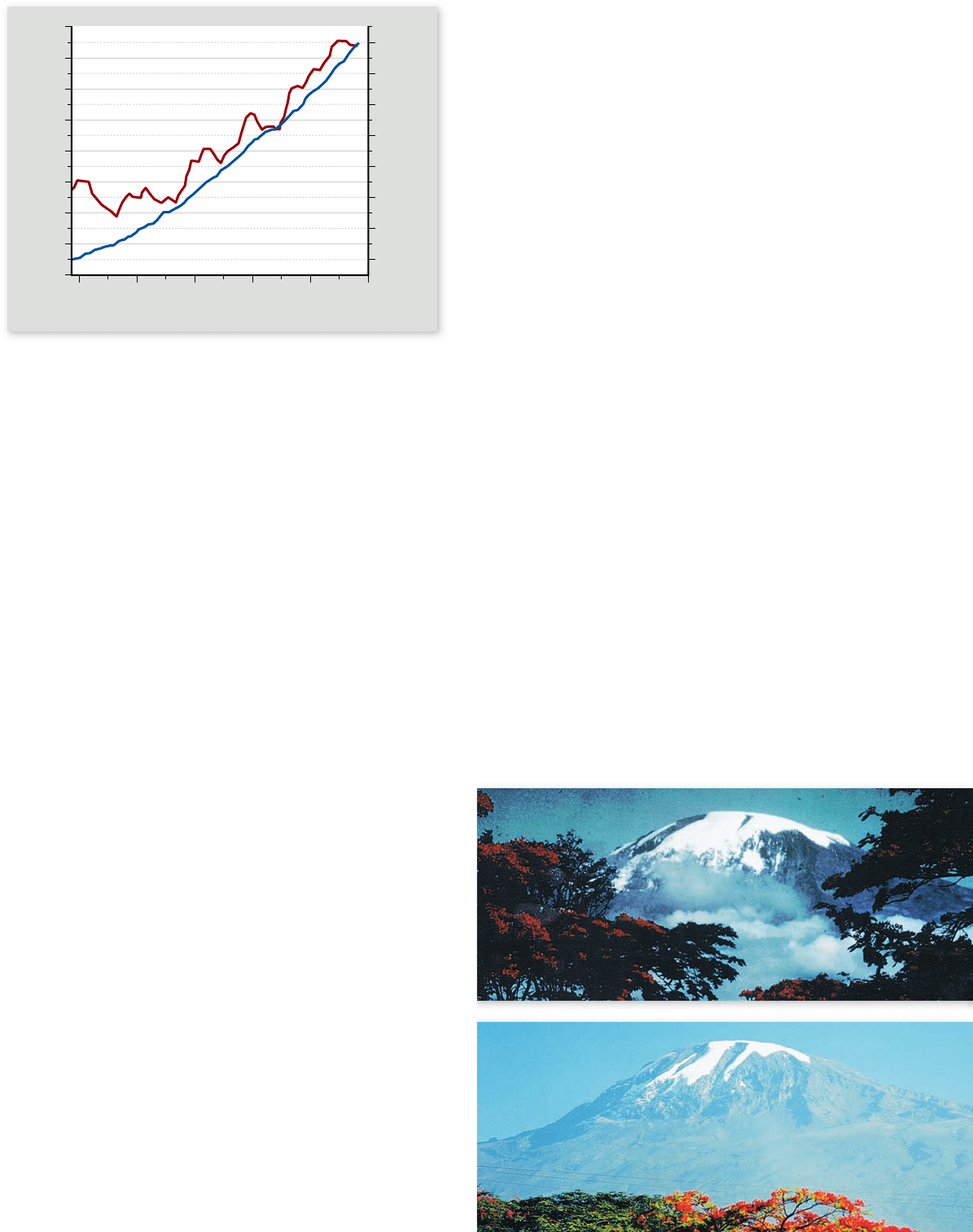
Figure 59.28
The greenhouse e ect. The concentration
of carbon dioxide in the atmosphere has increased steadily since the
1950s, as shown by the blue line. The red line shows the change in
average global temperature over the same period.
Figure 59.29
Disappearing glaciers. Mount Kilimanjaro
in Tanzania in 1970 (top) and 2000 (bottom). Note the decrease in
glacier coverage over three decades.
that a glass greenhouse gets warm inside is that window glass is
transparent to light but only slightly transparent to long-wave
infrared radiation. Energy that strikes a greenhouse as light en-
ters the greenhouse freely. Once inside, the energy is absorbed
as heat and then re-radiated as long-wave infrared radiation.
The infrared radiation cannot easily get out through the glass,
and therefore energy accumulates inside.
Other greenhouse gases
Carbon dioxide is not the only greenhouse gas. Others include
methane and nitrous oxide. The effect of any particular green-
house gas depends on its molecular properties and concentra-
tion. For example, molecule-for-molecule, methane has about
20 times the heat-trapping effect of carbon dioxide; on the other
hand, methane is less concentrated and less long-lived in the
atmosphere than carbon dioxide.
Methane is produced in globally significant quantities in
anaerobic soils and in the fermentation reactions of ruminant
mammals, such as cows. Huge amounts of methane are pres-
ently locked up in Arctic permafrost. Melting of the permafrost
could cause a sudden and large perturbation in global tempera-
ture by releasing methane rapidly.
Agricultural use of fertilizers is the largest source of ni-
trous oxide emissions, with energy consumption second and
industrial use third.
Global temperature change has a ected
ecosystems in the past and is doing so now
Evidence for warming can be seen in many ways. For example,
on a worldwide statistical basis, ice on lakes and rivers forms later
and melts sooner than it used to; on average, ice-free seasons are
now 2.5 weeks longer than they were a century ago. Also, the
extent of ice at the North Pole has decreased substantially, and
glaciers are retreating around the world (figure 59.29) .
Carbon dioxide is a major greenhouse gas
Carbon dioxide is the gas usually emphasized in discussing the
cause of global warming (figure 59.28) , although other atmo-
spheric gases are also involved. A monitoring station on the top
of the 13,700-foot (4200-m) Mauna Loa volcano on the island
of Hawaii has monitored the concentration of atmospheric
CO
2
since the 1950s. This station is particularly important be-
cause it is in the middle of the Pacific Ocean, far from the great
continental landmasses where most people live, and it is there-
fore able to monitor the state of the global atmosphere without
confounding influences of local events.
In 1958, the atmosphere was 0.031% CO
2
. By 2004, the
concentration had risen to 0.038%. All authorities agree that
the cause of this steady rise in atmospheric CO
2
is the burning
of coal and petroleum products by the increasing (and increas-
ingly energy-demanding) human population.
How carbon dioxide affects temperature
The atmospheric concentration of CO
2
affects global tempera-
ture because carbon dioxide strongly absorbs electromagnetic
radiant energy at some of the wavelengths that are critical for
the global heat budget. As stressed in chapter 58, the Earth not
only receives radiant energy from the Sun, but also emits radi-
ant energy into outer space. The Earth’s temperature will be
constant only if the rates of these two processes are equal.
The incoming solar energy is at relatively short wavelengths
of the electromagnetic spectrum: Wavelengths that are visible or
near-visible. The outgoing energy from the Earth is at different,
longer wavelengths. Carbon dioxide absorbs energy at certain of
the important long-wave infrared wavelengths. This means that
although carbon dioxide does not interfere with the arrival of radi-
ant energy at short wavelengths, it retards the rate at which energy
travels away from the Earth at long wavelengths into outer space.
Carbon dioxide is often called a greenhouse gas because
its effects are analogous to those of a greenhouse. The reason
www.ravenbiology.com
rav32223_ch59_1230-1255.indd 1251rav32223_ch59_1230-1255.indd 1251 11/20/09 2:45:05 PM11/20/09 2:45:05 PM