
Raven P.H., Johnson G.B., Mason K.A. Biology (Ninth Edition)
Подождите немного. Документ загружается.

Apago PDF Enhancer
a.
b.
Adenine
Ribose
AMP CORE
ADP
ATP
O
K
P
J
O
:
O
:
J
O
O
K
P
J
O
:
O
O
K
P
J
O
:
Triphosphate
group
High-energy
bonds
O
CH
2
H
H H
H
OH OH
O
J
NH
2
C
C
N
N
N
C
N
C
C H
H
J
removing dirt from below the ball will never cause the ball to
roll up the hill. Removing the lip of dirt simply allows the ball
to move freely; gravity determines the direction it then travels.
Similarly, the direction in which a chemical reaction pro-
ceeds is determined solely by the difference in free energy be-
tween reactants and products. Like digging away the soil below
the bowling ball on the hill, catalysts reduce the energy barrier
that is preventing the reaction from proceeding. Only exergonic
reactions can proceed spontaneously, and catalysts cannot
change that. What catalysts can do is make a reaction proceed
much faster. In living systems, enzymes act as catalysts.
Learning Outcomes Review 6.2
The First Law of Thermodynamics states that energy cannot be created or
destroyed. The Second Law states that the loss of energy results in greater
disorder, or entropy. Free-energy changes (ΔG) can predict whether
chemical reactions take place. Reactions with a negative ΔG occur
spontaneously, and those with a positive ΔG do not. Energy needed to
initiate a reaction is termed activation energy. Catalysts, such as enzymes in
living systems, lower this activation energy to speed up reactions.
■ Can an enzyme make an endergonic reaction
exergonic?
Figure 6.6
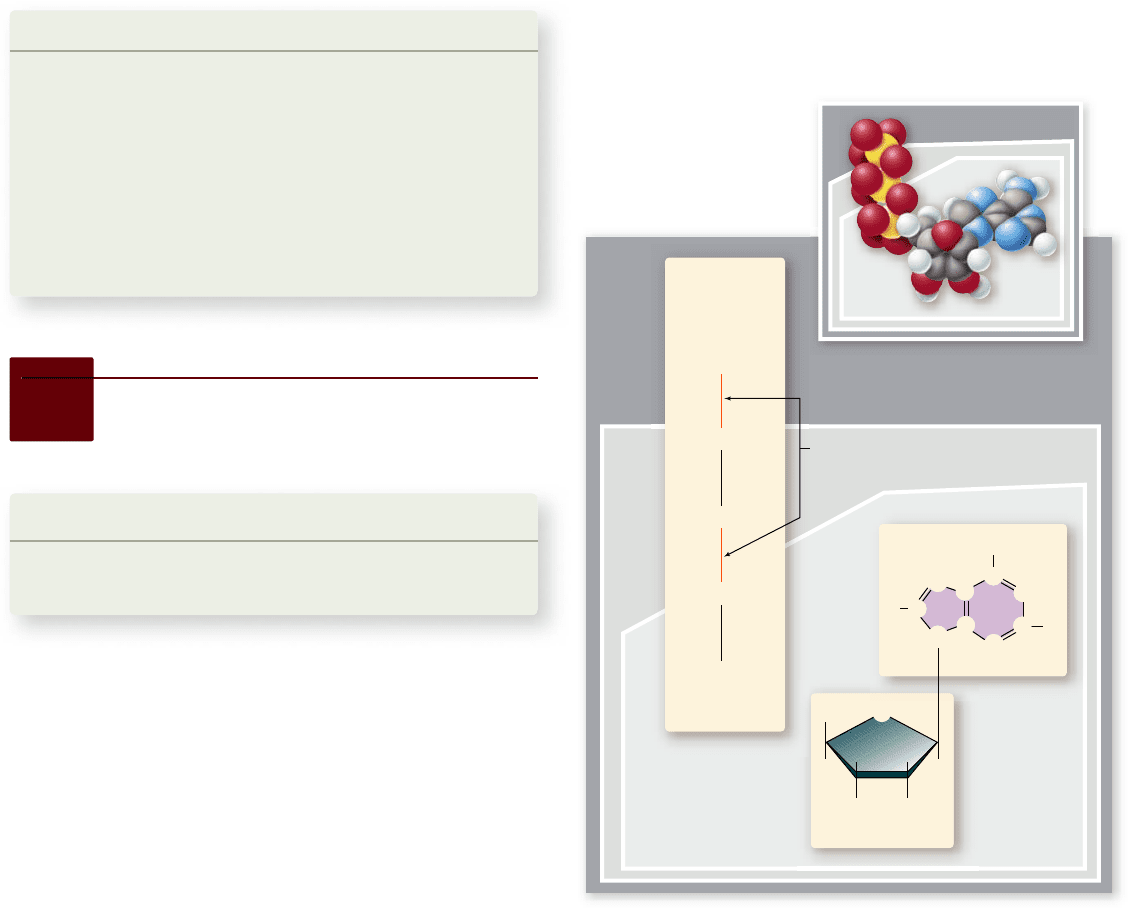
The ATP molecule. The model (a) and the
structural diagram (b) both show that ATP has a core of AMP.
Addition of one phosphate to AMP yields ADP, and addition of a
second phosphate yields ATP. These two terminal phosphates are
attached by high-energy bonds so that removing either by
hydrolysis is an exergonic reaction that releases energy. ADP,
adenosine diphosphate; AMP, adenosine monophosphate; ATP,
adenosine triphosphate.
subunits are attached. The second component is adenine, an
organic molecule composed of two carbon–nitrogen rings.
Each of the nitrogen atoms in the ring has an unshared pair of
electrons and weakly attracts hydrogen ions, making adenine
chemically a weak base. The third component of ATP is a chain
of three phosphates.
How ATP stores energy
The key to how ATP stores energy lies in its triphosphate
group. Phosphate groups are highly negatively charged, and
thus they strongly repel one another. This electrostatic repul-
sion makes the covalent bonds joining the phosphates unstable.
The molecule is often referred to as a “coiled spring,” with the
phosphates straining away from one another.
6.3
ATP: The Energy
Currency of Cells
Learning Outcomes
Describe the role of ATP in short-term energy storage.1.
Explain what “high-energy” bonds are in ATP.2.
The chief “currency” all cells use for their energy transactions
is the nucleotide adenosine triphosphate (ATP) . ATP powers al-
most every energy-requiring process in cells, from making sug-
ars, to supplying activation energy for chemical reactions, to
actively transporting substances across membranes, to moving
through the environment and growing.
Cells store and release energy
in the bonds of ATP
You saw in chapter 3 that nucleotides serve as the building
blocks for nucleic acids, but they play other cellular roles as
well. ATP is used as a building block for RNA molecules, and it
also has a critical function as a portable source of energy on
demand for endergonic cellular processes.
The structure of ATP
Like all nucleotides, ATP is composed of three smaller compo-
nents ( figure 6.6). The first component is a five-carbon sugar,
ribose, which serves as the framework to which the other two
112
part
II
Biology of the Cell
rav32223_ch06_107-121.indd 112rav32223_ch06_107-121.indd 112 11/6/09 12:29:06 PM11/6/09 12:29:06 PM
Apago PDF Enhancer
Energy for
endergonic
cellular
processes
Energy from
exergonic
cellular
reactions
ATP
ADP
H
2
O
+
+
P
i
Figure 6.7
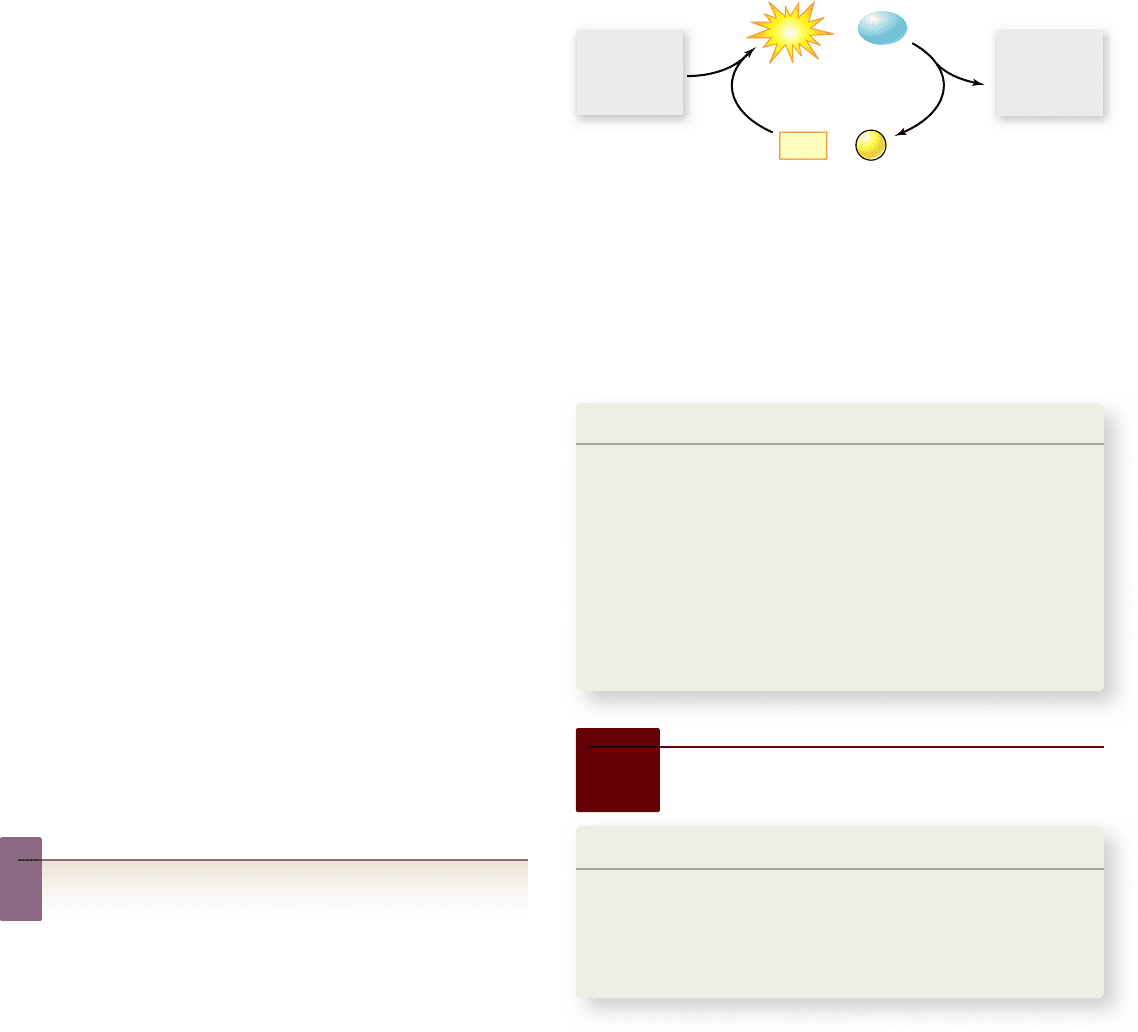
The ATP cycle. ATP is synthesized and
hydrolyzed in a cyclic fashion. The synthesis of ATP from ADP + P
i
is endergonic and is powered by exergonic cellular reactions. The
hydrolysis of ATP to ADP + P
i
is exergonic, and the energy released
is used to power endergonic cellular functions such as muscle
contraction. ADP, adenosine diphosphate; ATP, adenosine
triphosphate; P
i
, inorganic phosphate.
Learning Outcomes Review 6.3
ATP is a nucleotide with three phosphate groups. Endergonic cellular
processes can be driven by coupling to the exergonic hydrolysis of the two
terminal phosphates. The bonds holding the terminal phosphate groups
together are easily broken, releasing energy like a coiled spring. The cell is
constantly building ATP using exergonic reactions and breaking it down to
drive endergonic reactions.
■ If the molecular weight of ATP is 507.18 g/mol, and the
ΔG for hydrolysis is –7.3 kcal/mol how much energy is
released over the course of the day by a 100-kg man?
The unstable bonds holding the phosphates together in the
ATP molecule have a low activation energy and are easily broken
by hydrolysis. When they break, they can transfer a considerable
amount of energy. In other words, the hydrolysis of ATP has a neg-
ative ΔG, and the energy it releases can be used to perform work.
In most reactions involving ATP, only the outermost high-
energy phosphate bond is hydrolyzed, cleaving off the phosphate
group on the end. When this happens, ATP becomes aden o sine
diphosphate (ADP) plus an inorganic phosphate (P
i
), and energy
equal to 7.3 kcal/mol is released under standard conditions. The
liberated phosphate group usually attaches temporarily to some
intermediate molecule. When that molecule is dephosphory-
lated, the phosphate group is released as P
i
.
Both of the two terminal phosphates can be hydrolyzed to
release energy, leaving adenosine monophosphate (AMP), but the
third phosphate is not attached by a high-energy bond. With
only one phosphate group, AMP has no other phosphates to
provide the electrostatic repulsion that makes the bonds holding
the two terminal phosphate groups high-energy bonds.
ATP hydrolysis drives endergonic reactions
Cells use ATP to drive endergonic reactions. These reactions
do not proceed spontaneously because their products possess
more free energy than their reactants. However, if the cleavage
of ATP’s terminal high-energy bond releases more energy than
the other reaction consumes, the two reactions can be coupled
so that the energy released by the hydrolysis of ATP can be
used to supply the endergonic reaction with the energy it needs.
Coupled together, these reactions result in a net release of en-
ergy (–ΔG) and are therefore exergonic and proceed spontane-
ously. Because almost all the endergonic reactions in cells
require less energy than is released by the cleavage of ATP, ATP
can provide most of the energy a cell needs.
Inquiry question
?
When ATP hydrolysis is coupled with an endergonic reaction
and supplies more than enough energy, is the overall process
endergonic or exergonic? Would the
ΔG for the overall
process be negative or positive?
ATP cycles continuously
The same feature that makes ATP an effective energy donor—
the instability of its phosphate bonds—prevents it from being a
good long-term energy-storage molecule. Fats and carbohy-
drates serve that function better.
The use of ATP can be thought of as a cycle: Cells use exer-
gonic reactions to provide the energy needed to synthesize ATP
from ADP + P
i
; they then use the hydrolysis of ATP to provide
energy to drive the endergonic reactions they need (figure 6.7).
Most cells do not maintain large stockpiles of ATP. In-
stead, they typically have only a few seconds’ supply of ATP at
any given time, and they continually produce more from ADP
and P
i
. It is estimated that even a sedentary individual turns
over an amount of ATP in one day roughly equal to his body
weight. This statistic makes clear the importance of ATP syn-
thesis. In the next two chapters we will explore in detail the
cellular mechanisms for synthesizing ATP.
6.4
Enzymes: Biological Catalysts
Learning Outcomes
Discuss the specificity of enzymes.1.
Explain how enzymes bind to their substrates.2.
List the factors that influence the rate of enzyme-3.
catalyzed reactions.
The chemical reactions within living organisms are regulated
by controlling the points at which catalysis takes place. Life it-
self, therefore, can be seen as regulated by catalysts. The agents
that carry out most of the catalysis in living organisms are called
enzymes. Most enzymes are proteins, although increasing evi-
dence indicates that some enzymes are actually RNA molecules,
as discussed later in this chapter.
An enzyme alters the activation
energy of a reaction
The unique three-dimensional shape of an enzyme enables it
to stabilize a temporary association between substrates—the
molecules that will undergo the reaction. By bringing two sub-
strates together in the correct orientation or by stressing par-
ticular chemical bonds of a substrate, an enzyme lowers the
chapter
6
Energy and Metabolism
113www.ravenbiology.com
rav32223_ch06_107-121.indd 113rav32223_ch06_107-121.indd 113 11/6/09 12:29:07 PM11/6/09 12:29:07 PM
Apago PDF Enhancer
Active site
Substrate
a. b.
Enzyme Enzyme–substrate complex
Hypothesis: Protein structure is flexible not rigid.
Prediction: Antibody–antigen binding can involve a change in
protein structure.
Test: Determine crystal structure of a fragment of a specific antibody
with no antigen bound, and with antigen bound for comparison.
Result: After binding, the antibody folds around the antigen forming
a pocket.
Conclusion: In this case, binding involves an induced-fit kind of change
in conformation.
Further Experiments: Why is this experiment easier to do with an
antibody than with an enzyme? Can this experiment be done with an enzyme?
SCIENTIFIC THINKING
No antigen Bound antigen
activation energy required for new bonds to form. The reac-
tion thus proceeds much more quickly than it would without
the enzyme.
The enzyme itself is not changed or consumed in the re-
action, so only a small amount of an enzyme is needed, and it
can be used over and over.
As an example of how an enzyme works, let’s consider the
reaction of carbon dioxide and water to form carbonic acid.
This important enzyme-catalyzed reaction occurs in vertebrate
red blood cells:
CO
2
+ H
2
O
H
2
CO
3
carbon water carbonic
dioxide acid
This reaction may proceed in either direction, but be-
cause it has a large activation energy, the reaction is very slow
in the absence of an enzyme: Perhaps 200 molecules of car-
bonic acid form in an hour in a cell in the absence of any en-
zyme. Reactions that proceed this slowly are of little use to a
cell. Vertebrate red blood cells overcome this problem by em-
ploying an enzyme within their cytoplasm called carbonic anhy-
drase (enzyme names usually end in “–ase”). Under the same
conditions, but in the presence of carbonic anhydrase, an esti-
mated 600,000 molecules of carbonic acid form every second!
Thus, the enzyme increases the reaction rate by more than one
million times.
Thousands of different kinds of enzymes are known, each
catalyzing one or a few specific chemical reactions. By facilitat-
ing particular chemical reactions, the enzymes in a cell deter-
mine the course of metabolism—the collection of all chemical
reactions—in that cell.
Different types of cells contain different sets of enzymes,
and this difference contributes to structural and functional
variations among cell types. For example, the chemical reac-
tions taking place within a red blood cell differ from those that
occur within a nerve cell, in part because different cell types
contain different arrays of enzymes.
Active sites of enzymes conform
to t the shape of substrates
Most enzymes are globular proteins with one or more pockets
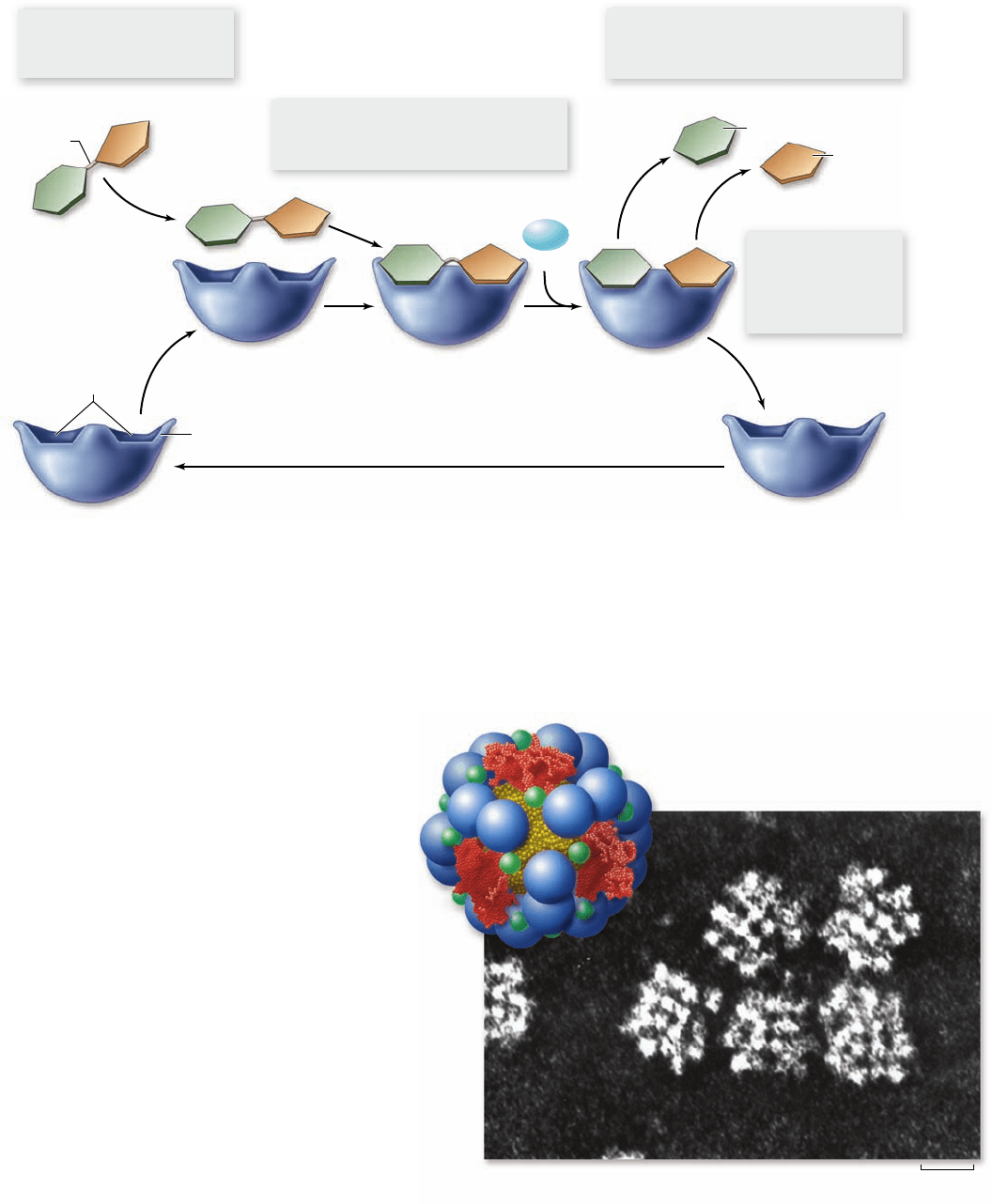
or clefts, called active sites, on their surface (figure 6.8). Sub-
strates bind to the enzyme at these active sites, forming an
enzyme–substrate complex (figure 6.10). For catalysis to oc-
cur within the complex, a substrate molecule must fit precisely
into an active site. When that happens, amino acid side groups
of the enzyme end up very close to certain bonds of the sub-
strate. These side groups interact chemically with the substrate,
usually stressing or distorting a particular bond and consequently
lowering the activation energy needed to break the bond. After
the bonds of the substrates are broken, or new bonds are formed,
the substrates have been converted to products. These products
then dissociate from the enzyme, leaving the enzyme ready to
bind its next substrate and begin the cycle again.
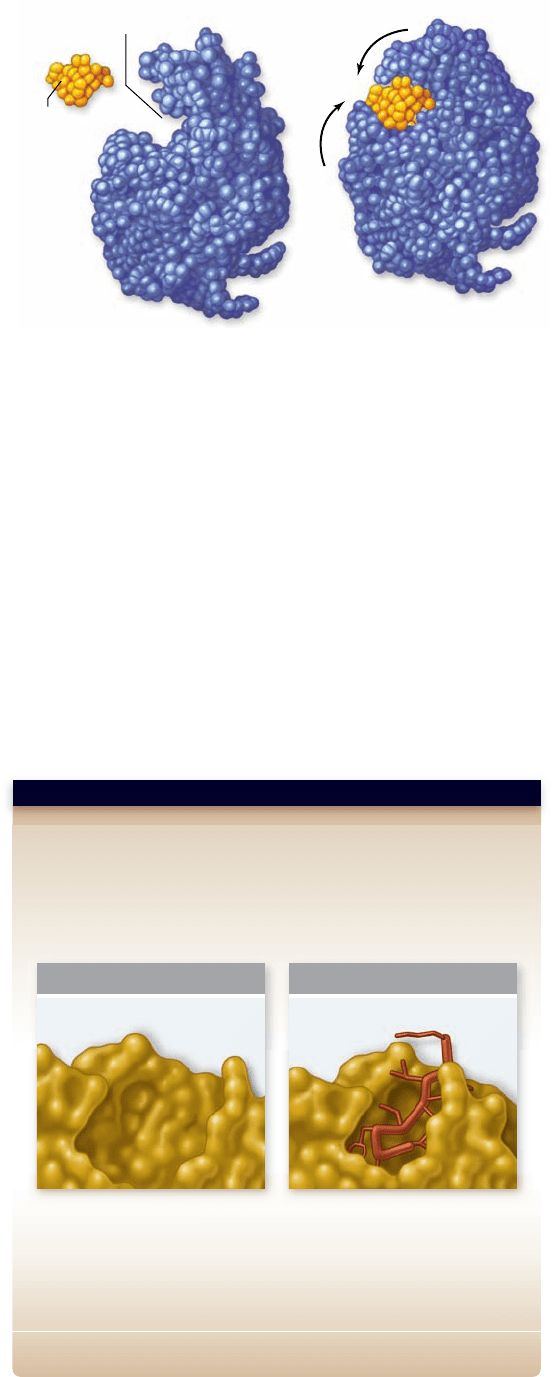
Proteins are not rigid. The binding of a substrate induces
the enzyme to adjust its shape slightly, leading to a better
induced fit between enzyme and substrate (see figure 6.9).
This interaction may also facilitate the binding of other sub-
strates; in such cases, one substrate “activates” the enzyme to
receive other substrates.
Enzymes occur in many forms
Although many enzymes are suspended in the cytoplasm of
cells, not attached to any structure, other enzymes function as
Figure 6.8
Enzyme binding its substrate. a. The active
site of the enzyme lysozyme ts the shape of its substrate, a
peptidoglycan that makes up bacterial cell walls. b. When the
substrate, indicated in yellow, slides into the groove of the active
site, the protein is induced to alter its shape slightly and bind the
substrate more tightly. This alteration of the shape of the enzyme to
better t the substrate is called induced t.
Figure 6.9
Induced- t binding of antibody to antigen.
114
part
II
Biology of the Cell
rav32223_ch06_107-121.indd 114rav32223_ch06_107-121.indd 114 11/6/09 12:29:08 PM11/6/09 12:29:08 PM
Apago PDF Enhancer
1. The substrate, sucrose,
consists of glucose and
fructose bonded together.
3. The binding of the substrate and
enzyme places stress on the glucose–
fructose bond, and the bond breaks.
2. The substrate binds to the active site
of the enzyme, forming an enzyme–
substrate complex.
4. Products are
released, and
the enzyme is
free to bind other
substrates.
Glucose
Fructose
Bond
Enzyme
sucrase
Active site
H
2
O
a.
b.
0.050 µm
integral parts of cell membranes and organelles. Enzymes may
also form associations called multienzyme complexes to carry
out reaction sequences. And, as mentioned earlier, evidence
exists that some enzymes may consist of RNA rather than
being only protein.
Multienzyme complexes
Often several enzymes catalyzing different steps of a se-
quence of reactions are associated with one another in
noncovalently bonded assemblies called multienzyme
complexes. The bacterial pyruvate dehydrogenase multi-
enzyme complex, shown in figure 6.11, contains enzymes
that carry out three sequential reactions in oxidative metabo-
lism. Each complex has multiple copies of each of the three
enzymes—60 protein subunits in all. The many subunits
work together to form a molecular machine that performs
multiple functions.
Multienzyme complexes offer the following significant
advantages in catalytic efficiency:
The rate of any enzyme reaction is limited by how often 1.
the enzyme collides with its substrate. If a series of
sequential reactions occurs within a multienzyme
complex, the product of one reaction can be delivered to
the next enzyme without releasing it to diffuse away.
Because the reacting substrate doesn’t leave the complex 2.
while it goes through the series of reactions, unwanted
side reactions are prevented.
All of the reactions that take place within the 3.
multienzyme complex can be controlled as a unit.
Figure 6.10
The catalytic cycle of an enzyme. Enzymes increase the speed at which chemical reactions occur, but they are not
altered permanently themselves as they do so. In the reaction illustrated here, the enzyme sucrase is splitting the sugar sucrose into two
simpler sugars: glucose and fructose.
Figure 6.11
A complex enzyme: pyruvate
dehydrogenase. Pyruvate dehydrogenase, which catalyzes the
oxidation of pyruvate, is one of the most complex enzymes known.
a. A model of the enzyme showing the arrangement of the
60 protein subunits. b. Many of the protein subunits are clearly
visible in the electron micrograph.
chapter
6
Energy and Metabolism
115www.ravenbiology.com
rav32223_ch06_107-121.indd 115rav32223_ch06_107-121.indd 115 11/6/09 12:29:09 PM11/6/09 12:29:09 PM
Apago PDF Enhancer
a.
b.
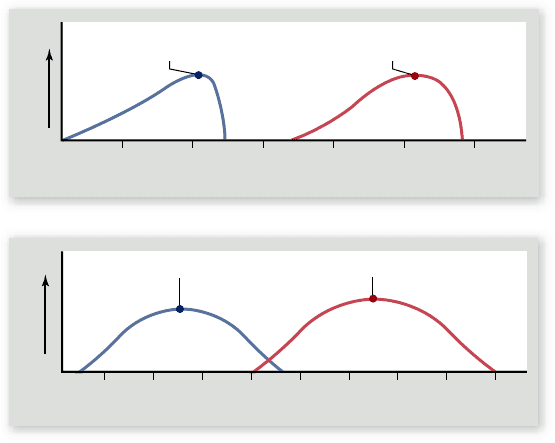
Optimum temperature for
human enzyme
Optimum temperature for enzyme
from hotsprings prokaryote
Temperature of Reaction (C)
Rate of Reaction
Optimum pH for pepsin
Rate of Reaction
pH of Reaction
Optimum pH for trypsin
1 2 3 4 5 6 7 8 9
30 40 50 60 70 80
In addition to pyruvate dehydrogenase, which controls en-
try to the Krebs cycle during aerobic respiration (see chapter 7 ) ,
several other key processes in the cell are catalyzed by
multienzyme complexes. One well-studied system is the fatty
acid synthetase complex that catalyzes the synthesis of fatty ac-
ids from two-carbon precursors. Seven different enzymes make
up this multienzyme complex, and the intermediate reaction
products remain associated with the complex for the entire se-
ries of reactions.
Nonprotein enzymes
Until a few years ago, most biology textbooks contained state-
ments such as “Proteins called enzymes are the catalysts of
biological systems.” We can no longer make that statement
without qualification.
Thomas J. Cech and colleagues at the University of Colo-
rado reported in 1981 that certain reactions involving RNA
molecules appear to be catalyzed in cells by RNA itself, rather
than by enzymes. This initial observation has been corrobo-
rated by additional examples of RNA catalysis. Like enzymes,
these RNA catalysts, which are loosely called “ribozymes,”
greatly accelerate the rate of particular biochemical reactions
and show extraordinary substrate specificity.
Research has revealed at least two sorts of ribozymes.
Some ribozymes have folded structures and catalyze reactions
on themselves, a process called intramolecular catalysis. Other
ribozymes act on other molecules without being changed them-
selves, a process called intermolecular catalysis.
The most striking example of the role of RNA as enzyme
is emerging from recent work on the structure and function of
the ribosome. For many years it was thought that RNA was a
structural framework for this vital organelle, but it is now clear
that ribosomal RNA plays a key role in ribosome function. The
ribosome itself is a ribozyme.
The ability of RNA, an informational molecule, to act
as a catalyst has stirred great excitement because it seems to
answer the question—Which came first, the protein or the
nucleic acid? It now seems at least possible that RNA
evolved first and may have catalyzed the formation of the
first proteins.
Environmental and other factors
a ect enzyme function
The rate of an enzyme-catalyzed reaction is affected by the
concentrations of both the substrate and the enzyme that works
on it. In addition, any chemical or physical factor that alters the
enzyme’s three-dimensional shape—such as temperature, pH,
and the binding of regulatory molecules—can affect the en-
zyme’s ability to catalyze the reaction.
Temperature
Increasing the temperature of an uncatalyzed reaction increases
its rate because the additional heat increases random molecular
movement. This motion can add stress to molecular bonds and
affect the activation energy of a reaction.
The rate of an enzyme-catalyzed reaction also increases
with temperature, but only up to a point called the optimum
temperature (figure 6.12a). Below this temperature, the hydro-
gen bonds and hydrophobic interactions that determine the
enzyme’s shape are not flexible enough to permit the induced
fit that is optimum for catalysis. Above the optimum tempera-
ture, these forces are too weak to maintain the enzyme’s shape
against the increased random movement of the atoms in the
enzyme. At higher temperatures, the enzyme denatures, as de-
scribed in chapter 3 .
Most human enzymes have an optimum temperature
between 35°C and 40°C—a range that includes normal body
temperature. Prokaryotes that live in hot springs have more
stable enzymes (that is, enzymes held together more strongly),
so the optimum temperature for those enzymes can be 70°C
or higher. In each case the optimal temperature for the en-
zyme corresponds to the “normal” temperature usually en-
countered in the body or the environment, depending on the
type of organism.
pH
Ionic interactions between oppositely charged amino acid resi-
dues, such as glutamic acid (–) and lysine (+), also hold enzymes
together. These interactions are sensitive to the hydrogen ion
concentration of the fluid in which the enzyme is dissolved,
because changing that concentration shifts the balance between
positively and negatively charged amino acid residues. For this
reason, most enzymes have an optimum pH that usually ranges
from pH 6 to 8.
Enzymes able to function in very acidic environments are
proteins that maintain their three-dimensional shape even in
Figure 6.12
Enzyme sensitivity to the environment.
The activity of an enzyme is in uenced by both (a) temperature and
(b) pH. Most human enzymes, such as the protein-degrading
enzyme trypsin, work best at temperatures of about 40°C and
within a pH range of 6 to 8. The hot springs prokaryote tolerates a
higher environmental temperature and a correspondingly higher
temperature optimum for enzymes. Pepsin works in the acidic
environment of the stomach and has a lower optimum pH.
116
part
II
Biology of the Cell
rav32223_ch06_107-121.indd 116rav32223_ch06_107-121.indd 116 11/6/09 12:29:10 PM11/6/09 12:29:10 PM

Apago PDF Enhancer
a. Competitive inhibition b. Noncompetitive inhibition
Competitive inhibitor interferes
with active site of enzyme so
substrate cannot bind
Allosteric inhibitor changes
shape of enzyme so it cannot
bind to substrate
Enzyme
Substrate
Enzyme
Inhibitor
Active
site
Active
site
Allosteric site
Substrate
Inhibitor
the presence of high hydrogen ion concentrations. The enzyme
pepsin, for example, digests proteins in the stomach at pH 2, a
very acidic level (figure 6.12b).
Inhibitors and activators
Enzyme activity is also sensitive to the presence of specific sub-
stances that can bind to the enzyme and cause changes in its
shape. Through these substances, a cell is able to regulate which
of its enzymes are active and which are inactive at a particular
time. This ability allows the cell to increase its efficiency and to
control changes in its characteristics during development. A sub-
stance that binds to an enzyme and decreases its activity is called
an inhibitor. Very often, the end product of a biochemical path-
way acts as an inhibitor of an early reaction in the pathway, a
process called feedback inhibition (discussed later in this chapter).
Enzyme inhibition occurs in two ways: Competitive
inhibitors compete with the substrate for the same active site, oc-
cupying the active site and thus preventing substrates from binding;
noncompetitive inhibitors bind to the enzyme in a location
other than the active site, changing the shape of the enzyme and
making it unable to bind to the substrate (figure 6.13).
Many enzymes can exist in either an active or inactive
conformation; such enzymes are called allosteric enzymes. Most
noncompetitive inhibitors bind to a specific portion of the en-
zyme called an allosteric site. These sites serve as chemical on/
off switches; the binding of a substance to the site can switch
the enzyme between its active and inactive configurations. A
substance that binds to an allosteric site and reduces enzyme
activity is called an allosteric inhibitor (figure 6.13b).
This kind of control is also used to activate enzymes. An
allosteric activator binds to allosteric sites to keep an enzyme in
its active configuration, thereby increasing enzyme activity.
Enzyme cofactors
Enzyme function is often assisted by additional chemical
components known as cofactors. These can be metal ions
Figure 6.13
How enzymes can be inhibited. a. In competitive
inhibition, the inhibitor has a shape similar to the substrate and
competes for the active site of the enzyme. b. In noncompetitive
inhibition, the inhibitor binds to the enzyme at the allosteric site, a place
away from the active site, effecting a conformational change in the
enzyme, making it unable to bind to its substrate.
that are often found in the active site participating directly in
catalysis. For example, the metallic ion zinc is used by some
enzymes, such as protein-digesting carboxypeptidase, to draw
electrons away from their position in covalent bonds, making
the bonds less stable and easier to break. Other metallic ele-
ments, such as molybdenum and manganese, are also used as
cofactors. Like zinc, these substances are required in the diet
in small amounts.
When the cofactor is a nonprotein organic molecule, it is
called a coenzyme. Many of the small organic molecules es-
sential in our diets that we call vitamins function as coenzymes.
For example the B vitamins B
6
and B
12
, both function as coen-
zymes for a number of different enzymes. Modified nucleotides
are also used as coenzymes.
In numerous oxidation–reduction reactions that are cata-
lyzed by enzymes, the electrons pass in pairs from the active site
of the enzyme to a coenzyme that serves as the electron acceptor.
The coenzyme then transfers the electrons to a different enzyme,
which releases them (and the energy they bear) to the substrates
in another reaction. Often, the electrons combine with protons
(H
+
) to form hydrogen atoms. In this way, coenzymes shuttle
energy in the form of hydrogen atoms from one enzyme to an-
other in a cell. The role of coenzymes and the specifics of their
action will be explored in detail in the following two chapters.
Learning Outcomes Review 6.4
Enzymes are biological catalysts that accelerate chemical reactions inside
the cell. Enzymes bind to their substrates based on molecular shape, which
allows them to be highly specifi c. Enzyme activity is aff ected by conditions
such as temperature and pH and the presence of inhibitors or activators.
Some enzymes also require an inorganic cofactor or an organic coenzyme.
■ Why do proteins and RNA function as enzymes but DNA
does not?
6.5
Metabolism: The Chemical
Description of Cell Function
Learning Outcomes
Explain the kinds of reactions that make up metabolism.1.
Discuss what is meant by a metabolic pathway.2.
Recognize that metabolism is a product of evolution.3.
Living chemistry, the total of all chemical reactions carried out
by an organism, is called metabolism. Those chemical reac-
tions that expend energy to build up molecules are called ana-
bolic reactions, or anabolism. Reactions that harvest energy by
breaking down molecules are called catabolic reactions, or
catabolism. This section presents a general overview of meta-
bolic processes that will be described in much greater detail in
later chapters.
chapter
6
Energy and Metabolism
117www.ravenbiology.com
rav32223_ch06_107-121.indd 117rav32223_ch06_107-121.indd 117 11/6/09 12:29:10 PM11/6/09 12:29:10 PM
Apago PDF Enhancer
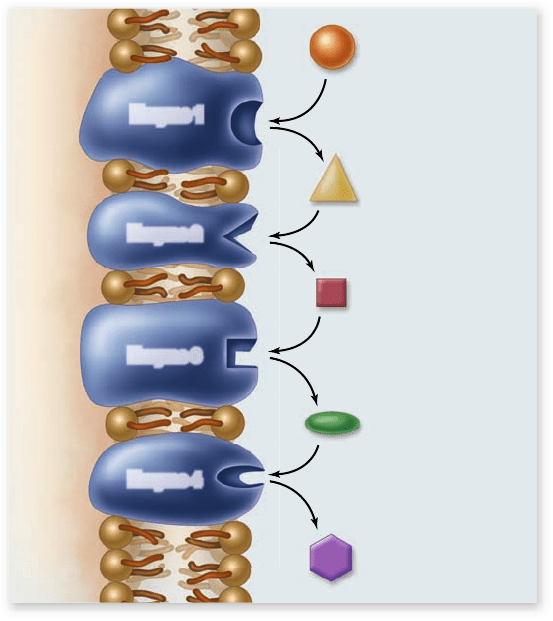
Enzyme 1
Enzyme 2
Enzyme 3
Enzyme 4
Initial substrate
Intermediate
substrate A
Intermediate
substrate B
Intermediate
substrate C
End product
Biochemical pathways organize
chemical reactions in cells
Organisms contain thousands of different kinds of enzymes that
catalyze a bewildering variety of reactions. Many of these reac-
tions in a cell occur in sequences called biochemical pathways.
In such pathways, the product of one reaction becomes the sub-
strate for the next (figure 6.14). Biochemical pathways are the
organizational units of metabolism—the elements an organism
controls to achieve coherent metabolic activity.
Many sequential enzyme steps in biochemical pathways
take place in specific compartments of the cell; for example, the
steps of the Krebs cycle (see chapter 7 ) occur in the matrix in-
side mitochondria in eukaryotes. By determining where many
of the enzymes that catalyze these steps are located, we can
“map out” a model of metabolic processes in the cell.
Biochemical pathways may have
evolved in stepwise fashion
In the earliest cells, the first biochemical processes probably
involved energy-rich molecules scavenged from the environ-
ment. Most of the molecules necessary for these processes are
thought to have existed independently in the “organic soup” of
the early oceans.
The first catalyzed reactions were probably simple, one-
step reactions that brought these molecules together in various
combinations. Eventually, the energy-rich molecules became
depleted in the external environment, and only organisms that
had evolved some means of making those molecules from other
substances could survive. Thus, a hypothetical reaction,
F
+
→
H
G
where two energy-rich molecules (F and G) react to produce
compound H and release energy, became more complex when
the supply of F in the environment ran out.
A new reaction was added in which the depleted mole-
cule, F, is made from another molecule, E, which was also pres-
ent in the environment:
E
→
F
+
→
H
G
When the supply of E was in turn exhausted, organisms
that were able to make E from some other available precursor,
D, survived. When D was depleted, those organisms in turn
were replaced by ones able to synthesize D from another mole-
cule, C:
C
→
D
→
E
→
F
+
→
H
G
This hypothetical biochemical pathway would have
evolved slowly through time, with the final reactions in the
pathway evolving first and earlier reactions evolving later.
Looking at the pathway now, we would say that the “ad-
vanced” organism, starting with compound C, is able to synthe-
size H by means of a series of steps. This is how the biochemical
pathways within organisms are thought to have evolved—not
all at once, but one step at a time, backwards.
Feedback inhibition regulates
some biochemical pathways
For a biochemical pathway to operate efficiently, its activity
must be coordinated and regulated by the cell. Not only is it
unnecessary to synthesize a compound when plenty is already
present, but doing so would waste energy and raw materials
that could be put to use elsewhere. It is to the cell’s advantage,
therefore, to temporarily shut down biochemical pathways
when their products are not needed.
The regulation of simple biochemical pathways often de-
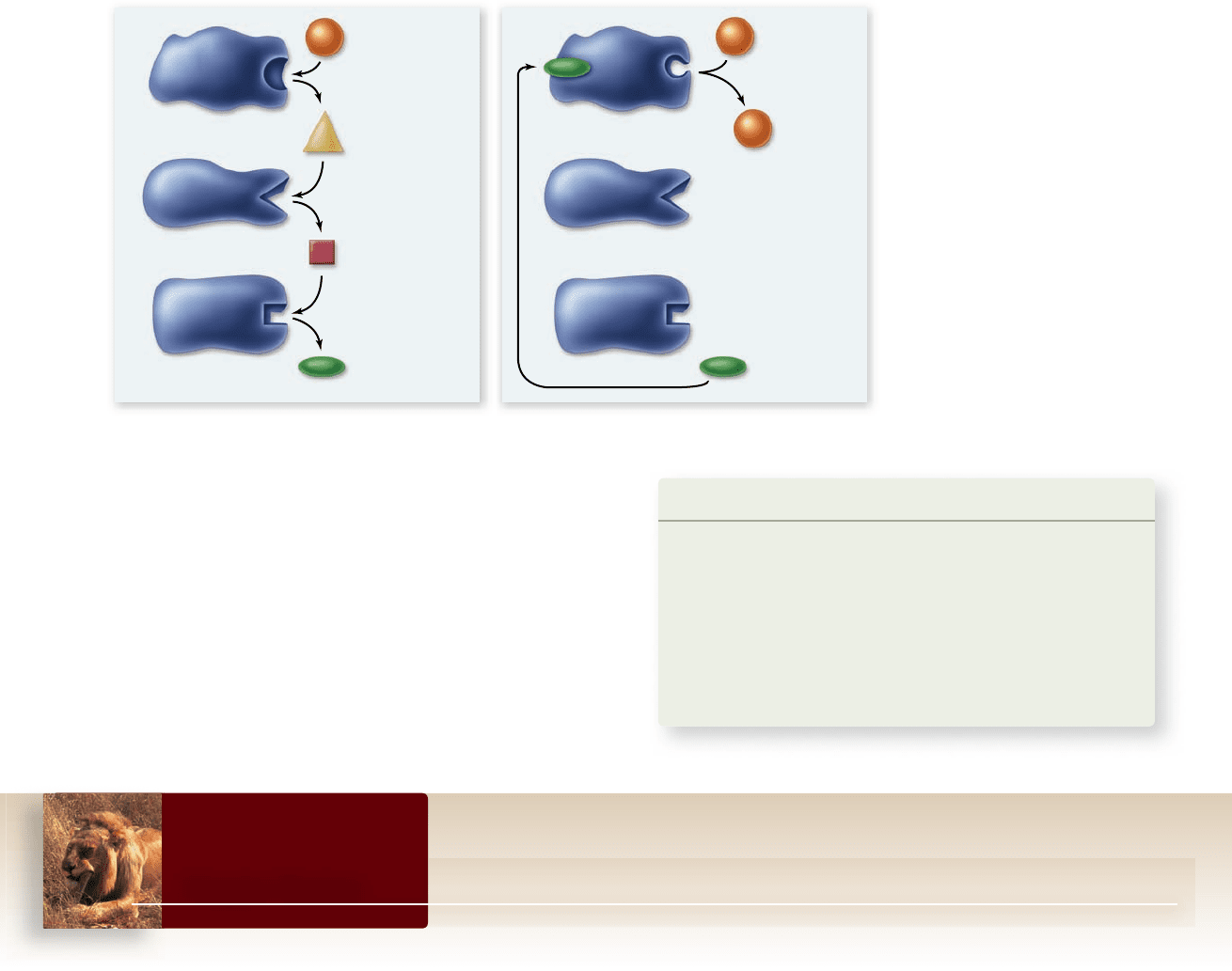
pends on an elegant feedback mechanism: The end-product of
the pathway binds to an allosteric site on the enzyme that cata-
lyzes the first reaction in the pathway. This mode of regulation
is called feedback inhibition (figure 6.15).
In the hypothetical pathway we just described, the enzyme
catalyzing the reaction C
→
D would possess an allosteric site
for H, the end-product of the pathway. As the pathway churned
out its product and the amount of H in the cell increased, it
would become more likely that an H molecule would encounter
Figure 6.14
A biochemical pathway. The original
substrate is acted on by enzyme 1, changing the substrate to a new
intermediate, substrate A, recognized as a substrate by enzyme 2.
Each enzyme in the pathway acts on the product of the previous
stage. These enzymes may be either soluble or arranged in a
membrane as shown.
118
part
II
Biology of the Cell
rav32223_ch06_107-121.indd 118rav32223_ch06_107-121.indd 118 11/6/09 12:29:11 PM11/6/09 12:29:11 PM
Apago PDF Enhancer
a.
b.
Enzyme 1
Enzyme 2
Enzyme 3
Enzyme 1
Enzyme 2
Enzyme 3
Initial
substrate
Initial
substrate
Intermediate
substrate A
Intermediate
substrate B
End product End product
Figure 6.15
Feedback
inhibition. a. A biochemical
pathway with no feedback
inhibi tion. b. A biochemical
pathway in which the nal
end-product becomes the
allosteric inhibitor for the rst
enzyme in the pathway. In other
words, the formation of the
pathway’s nal end-product stops
the pathway. The pathway could
be the synthesis of an amino
acid, a nucleotide, or another
important cellular molecule.
the allosteric site on the C
→
D enzyme. Binding to the al-
losteric site would essentially shut down the reaction C
→
D
and in turn effectively shut down the whole pathway.
In this chapter we have reviewed the basics of energy and
its transformations as carried out in living systems. Chemical
bonds are the primary location of energy storage and release,
and cells have developed elegant methods of making and break-
ing chemical bonds to create the molecules they need. Enzymes
facilitate these reactions by serving as catalysts. In the following
chapters you will learn the details of the mechanisms by which
organisms harvest, store, and utilize energy.
Learning Outcomes Review 6.5
Metabolism is the sum of all chemical reactions in a cell. Anabolic reactions use
energy to build up molecules. Catabolic reactions release energy by breaking
down molecules. In a metabolic pathway, the end-product of one reaction is
the substrate for the next reaction. Evolution may have favored organisms
that could use precursor molecules to synthesize a nutrient. Over time, more
reactions would be linked together as novel enzymes arose by mutation.
■ Is a catabolic pathway likely to be subject to
feedback inhibition?
Chapter Review
6.1 The Flow of Energy in Living Systems
Thermodynamics is the study of energy changes.
Energy can take many forms.
Energy is the capacity to do work. Potential energy is stored energy,
and kinetic energy is the energy of motion. Energy can take many
forms: mechanical, heat, sound, electric current, light, or radioactive
radiation. Energy is measured in units of heat known as kilocalories.
The Sun provides energy for living systems.
Photosynthesis stores light energy from the Sun as potential energy
in the covalent bonds of sugar molecules. Breaking these bonds in
living cells releases energy for use in other reactions.
Oxidation–reduction reactions transfer electrons while bonds are
made or broken.
Oxidation is a reaction involving the loss of electrons. Reduction is
the gain of electrons (see gure 6.2). These two reactions take place
together and are therefore termed redox reactions.
6.2 The Laws of Thermodynamics
and Free Energy
The First Law states that energy cannot be created or destroyed.
Virtually all activities of living organisms require energy. Energy
changes form as it moves through organisms and their biochemical
systems, but it is not created or destroyed.
The Second Law states that some energy is lost as disorder increases.
The disorder, or entropy, of the universe is continuously increasing. In
an open system like the Earth, which is receiving energy from the Sun,
this may not be the case. To increase order however, energy must be
expended. In energy conversions, some energy is always lost as heat.
Chemical reactions can be predicted based on changes in free energy.
Free energy (G) is the energy available to do work in any system.
Changes in free energy (ΔG) predict the direction of reactions.
Reactions with a negative ΔG are spontaneous (exergonic) reactions,
and reactions with a positive ΔG are not spontaneous (endergonic).
chapter
6
Energy and Metabolism
119www.ravenbiology.com
rav32223_ch06_107-121.indd 119rav32223_ch06_107-121.indd 119 11/6/09 12:29:13 PM11/6/09 12:29:13 PM

Apago PDF Enhancer
Review Questions
UNDERSTAND
1. A covalent bond between two atoms represents what kind of energy?
a. Kinetic energy
b. Potential energy
c. Mechanical energy
d. Solar energy
2. During a redox reaction the molecule that gains an electron
has been
a. reduced and now has a higher energy level.
b. oxidized and now has a lower energy level.
c. reduced and now has a lower energy level.
d. oxidized and now has a higher energy level.
3. An endergonic reaction has the following properties
a. +ΔG and the reaction is spontaneous.
b. +ΔG and the reaction is not spontaneous.
c. –ΔG and the reaction is spontaneous.
d. –ΔG and the reaction is not spontaneous.
4. A spontaneous reaction is one in which
a. the reactants have a higher free energy than the products.
b. the products have a higher free energy than the reactants.
c. an input of energy is required.
d. entropy is decreased.
Endergonic chemical reactions absorb energy from the surroundings,
whereas exergonic reactions release energy to the surroundings.
Spontaneous chemical reactions require activation energy.
Activation energy is the energy required to destabilize chemical
bonds and initiate chemical reactions (see gure 6.5). Even exergonic
reactions require this activation energy. Catalysts speed up chemical
reactions by lowering the activation energy.
6.3 ATP: The Energy Currency of Cells
Adenosine triphosphate (ATP) is the molecular currency used
for cellular energy transactions.
Cells store and release energy in the bonds of ATP.
The energy of ATP is stored in the bonds between its terminal
phosphate groups. These groups repel each other due to their
negative charge and therefore the covalent bonds joining these
phosphates are unstable.
ATP hydrolysis drives endergonic reactions.
Enzymes hydrolyze the terminal phosphate group of ATP to release
energy for reactions. If ATP hydrolysis is coupled to an endergonic
reaction with a positive ΔG with magnitude less than that for ATP
hydrolysis, the two reactions together will be exergonic.
ATP cycles continuously.
ATP hydrolysis releases energy to drive endergonic reactions, and it
is synthesized with energy from exergonic reactions (see gure 6.7).
6.4 Enzymes: Biological Catalysts
An enzyme alters the activation energy of a reaction.
Enzymes lower the activation energy needed to initiate a
chemical reaction.
Active sites of enzymes conform to t the shape of substrates.
Substrates bind to the active site of an enzyme. Enzymes adjust their
shape to the substrate so there is a better t (see gure 6.8).
Enzymes occur in many forms.
Enzymes can be free in the cytosol or exist as components bound
to membranes and organelles. Enzymes involved in a biochemical
pathway can form multienzyme complexes. While most enzymes are
proteins, some are actually RNA molecules, called ribozymes.
Environmental and other factors a ect enzyme function.
An enzyme’s functionality depends on its ability to maintain its
three-dimensional shape, which can be affected by temperature
and pH. The activity of enzymes can be affected by inhibitors.
Competitive inhibitors compete for the enzyme’s active site, which
leads to decreased enzyme activity (see gure 6.13 ) . Enzyme activity
can be controlled by effectors. Allosteric enzymes have a second site,
located away from the active site, that binds effectors to activate or
inhibit the enzyme. Noncompetitive inhibitors and activators bind
to the allosteric site, changing the structure of the enzyme to inhibit
or activate it. Cofactors are nonorganic metals necessary for enzyme
function. Coenzymes are nonprotein organic molecules, such as
certain vitamins, needed for enzyme function. Often coenzymes serve
as electron acceptors.
6.5 Metabolism: The Chemical
Description of Cell Function
Metabolism is the sum of all biochemical reactions in a cell. Anabolic
reactions require energy to build up molecules, and catabolic
reactions break down molecules and release energy.
Biochemical pathways organize chemical reactions in cells.
Chemical reactions in biochemical pathways use the product of one
reaction as the substrate for the next.
Biochemical pathways may have evolved in stepwise fashion.
In the primordial “soup” of the early oceans, many reactions were
probably single-step reactions combining two molecules. As one of
the substrate molecules was depleted, organisms having an enzyme
that could synthesize the substrate would have a selective advantage.
In this manner, biochemical pathways are thought to have evolved
“backward” with new reactions producing limiting substrates for
existing reactions.
Feedback inhibition regulates some biochemical pathways.
Biosynthetic pathways are often regulated by the end product of
the pathway. Feedback inhibition occurs when the end-product of a
reaction combines with an enzyme’s allosteric site to shut down the
enzyme’s activity (see gure 6.15 ).
120
part
II
Biology of the Cell
rav32223_ch06_107-121.indd 120rav32223_ch06_107-121.indd 120 11/6/09 12:29:14 PM11/6/09 12:29:14 PM
Apago PDF Enhancer
5. What is activation energy?
a. The thermal energy associated with random movements
of molecules
b. The energy released through breaking chemical bonds
c. The difference in free energy between reactants and products
d. The energy required to initiate a chemical reaction
6. Which of the following is NOT a property of a catalyst?
a. A catalyst reduces the activation energy of a reaction.
b. A catalyst lowers the free energy of the reactants.
c. A catalyst does not change as a result of the reaction.
d. A catalyst works in both the forward and reverse directions
of a reaction.
7. Where is the energy stored in a molecule of ATP?
a. Within the bonds between nitrogen and carbon
b. In the carbon-to-carbon bonds found in the ribose
c. In the phosphorus-to-oxygen double bond
d. In the bonds connecting the two terminal phosphate groups
APPLY
1. Cells use ATP to drive endergonic reactions because
a. ATP is the universal catalyst.
b. energy released by ATP hydrolysis makes ΔG for coupled
reactions more negative.
c. energy released by ATP hydrolysis makes ΔG for coupled
reactions more positive.
d. the conversion of ATP to ADP is also endergonic.
2. Which of the following statements is NOT true about enzymes?
a. Enzymes use the three-dimensional shape of their active
site to bind reactants.
b. Enzymes lower the activation energy for a reaction.
c. Enzymes make ΔG for a reaction more negative.
d. Enzymes can catalyze the forward and reverse directions
of a reaction.
3. What is the function of the active site of an enzyme?
a. Bind the substrate, forming an enzyme–substrate complex
b. Side groups within the active site interact with the substrate
c. Bind to regulatory molecules, thereby altering the enzymes
conformation
d. Both a and b
4. The discovery of ribozymes meant that
a. only proteins have catalytic function.
b. only nucleic acids have catalytic function.
c. RNAs can act as enzymes.
d. RNA has the same function as protein.
5. Enzymes have similar responses to both changes in temperature
and pH. The effect of both is on the
a. rate of movement of the substrate molecules.
b. strength of the chemical bonds within the substrate.
c. three-dimensional shape of the enzyme.
d. rate of movement of the enzyme.
6. In feedback inhibition, the
a. rst enzyme in a pathway is inhibited by its own product.
b. last enzyme in a pathway is inhibited by its own product.
c. rst enzyme in a pathway is inhibited by the end-product
of the pathway.
d. last enzyme in a pathway is inhibited by the end-product of
the pathway.
SYNTHESIZE
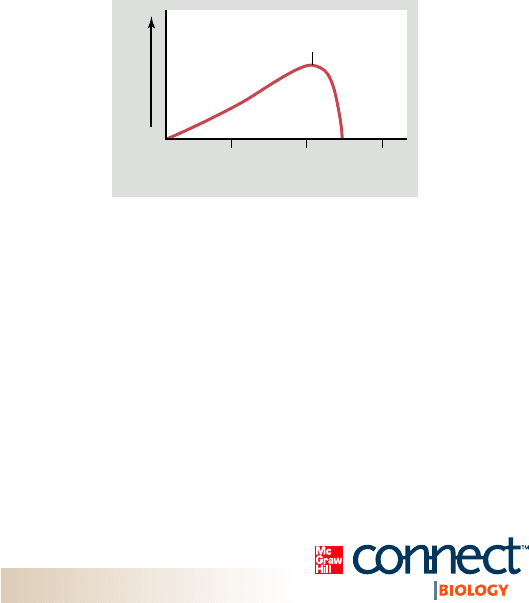
1. Examine the graph showing the rate of reaction versus
temperature for an enzyme–catalyzed reaction in a human.
a. Describe what is happening to the enzyme at around 40°C.
b. Explain why the line touches the x-axis at approximately
20°C and 45°C.
c. Average body temperature for humans is 37°C. Suggest
a reason why the temperature optimum of this enzyme
is greater than 37°C.
30 40 50
Rate of reaction
Temperature of reaction
Optimum temperature
for human enzyme
2. Phosphofructokinase functions to add a phosphate group
to a molecule of fructose-6-phosphate. This enzyme functions
early in glycolysis, an energy-yielding biochemical pathway
discussed in chapter 7 . The enzyme has an active site that binds
fructose and ATP. An allosteric inhibitory site also binds ATP
when cellular levels of ATP are very high.
a. Predict the rate of the reaction if the levels of cellular ATP
are low.
b. Predict the rate of the reaction if levels of cellular ATP
are very high.
c. Describe what is happening to the enzyme when levels
of ATP are very high.
ONLINE RESOURCE
www.ravenbiology.com
Understand, Apply, and Synthesize—enhance your study with
animations that bring concepts to life and practice tests to assess
your understanding. Your instructor may also recommend the
interactive eBook, individualized learning tools, and more.
chapter
6
Energy and Metabolism
121www.ravenbiology.com
rav32223_ch06_107-121.indd 121rav32223_ch06_107-121.indd 121 11/6/09 12:29:15 PM11/6/09 12:29:15 PM