
Raven P.H., Johnson G.B., Mason K.A. Biology (Ninth Edition)
Подождите немного. Документ загружается.


Apago PDF Enhancer
molecule of NAD
+
to NADH. Oxaloacetate, the molecule that
began the cycle, is now free to combine with another 2-carbon
acetyl group from acetyl-CoA and begin the cycle again.
Glucose becomes CO
2
and potential energy
In the process of aerobic respiration, glucose is entirely con-
sumed. The 6-carbon glucose molecule is cleaved into a pair of
3-carbon pyruvate molecules during glycolysis. One of the car-
bons of each pyruvate is then lost as CO
2
in the conversion of
pyruvate to acetyl-CoA. The two other carbons from acetyl-
CoA are lost as CO
2
during the oxidations of the Krebs cycle.
All that is left to mark the passing of a glucose molecule
into six CO
2
molecules is its energy, some of which is preserved
in four ATP molecules and in the reduced state of 12 electron
carriers. Ten of these carriers are NADH molecules; the other
two are FADH
2
.
Following the electrons in the reactions
reveals the direction of transfer
As you examine the changes in electrical charge in the reactions
that oxidize glucose, a good strategy for keeping the transfers
clear is always to follow the electrons. For example, in glycolysis,
an enzyme extracts two hydrogens—that is, two electrons and
two protons—from glucose and transfers both electrons and
one of the protons to NAD
+
. The other proton is released as a
hydrogen ion, H
+
, into the surrounding solution. This transfer
converts NAD
+
into NADH; that is, two negative electrons
(2e
–
) and one positive proton (H
+
) are added to one positively
charged NAD
+
to form NADH, which is electrically neutral.
As mentioned earlier, energy captured by NADH is not
harvested all at once. The two electrons carried by NADH are
passed along the electron transport chain, which consists of a
series of electron carriers, mostly proteins, embedded within
the inner membranes of mitochondria.
NADH delivers electrons to the beginning of the elec-
tron transport chain, and oxygen captures them at the end. The
oxygen then joins with hydrogen ions to form water. At each
step in the chain, the electrons move to a slightly more electro-
negative carrier, and their positions shift slightly. Thus, the
electrons move down an energy gradient.
The entire process of electron transfer releases a total of
53 kcal/mol (222 kJ/mol) under standard conditions. The trans-
fer of electrons along this chain allows the energy to be ex-
tracted gradually. Next, we will discuss how this energy is put to
work to drive the production of ATP.
Learning Outcomes Review 7.4
The Krebs cycle completes the oxidation of glucose begun with glycolysis. In
the fi rst segment, acetyl-CoA is added to oxaloacetate to produce citrate. In
the next segment, fi ve reactions produce succinate, two NADH from NAD
+
,
and one ATP. Finally, succinate undergoes three more reactions to regenerate
oxaloacetate, producing one more NADH and one FADH
2
from FAD.
■ What happens to the electrons removed from glucose at
this point?
The Krebs cycle extracts electrons
and synthesizes one ATP
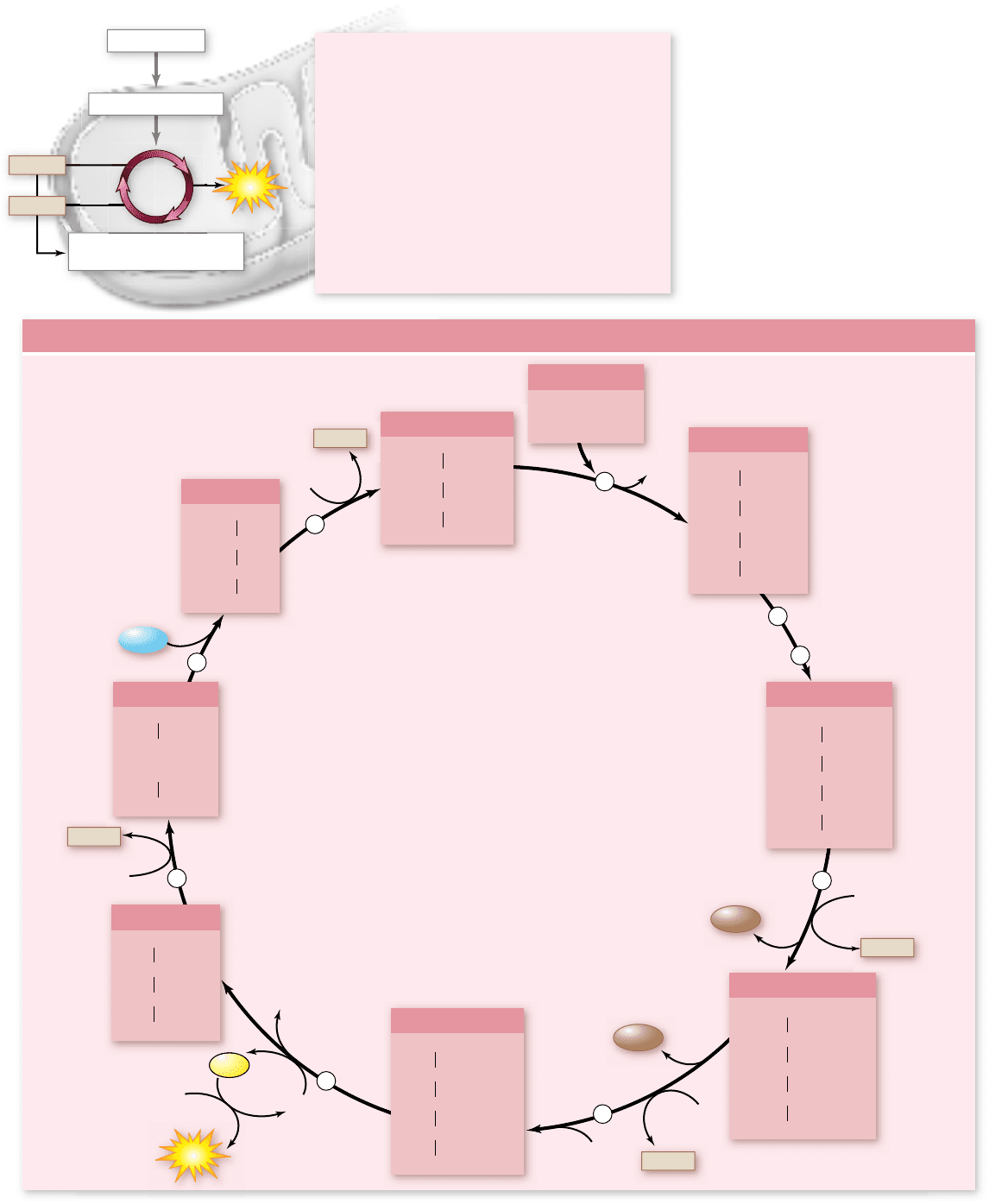
Figure 7.11 summarizes the sequence of the Krebs cycle reac-
tions. A 2-carbon group from acetyl-CoA enters the cycle at the
beginning, and two CO
2
molecules, one ATP, and four pairs of
electrons are produced.
Reaction 1: Condensation
Citrate is formed from acetyl-
CoA and oxaloacetate. This condensation reaction is irrevers-
ible, committing the 2-carbon acetyl group to the Krebs cycle.
The reaction is inhibited when the cell’s ATP concentration is
high and stimulated when it is low. The result is that when the
cell possesses ample amounts of ATP, the Krebs cycle shuts
down, and acetyl-CoA is channeled into fat synthesis.
Reactions 2 and 3: Isomerization
Before the oxidation reac-
tions can begin, the hydroxyl (
–
OH) group of citrate must be
repositioned. This rearrangement is done in two steps: First, a wa-
ter molecule is removed from one carbon; then water is added to a
different carbon. As a result, an
–
H group and an
–
OH group
change positions. The product is an isomer of citrate called isocit-
rate. This rearrangement facilitates the subsequent reactions.
Reaction 4: The First Oxidation
In the rst energy-
yielding step of the cycle, isocitrate undergoes an oxidative
decarboxylation reaction. First, isocitrate is oxidized, yielding
a pair of electrons that reduce a molecule of NAD
+
to NADH.
Then the oxidized intermediate is decarboxylated; the central
carboxyl group splits off to form CO
2
, yielding a 5-carbon
molecule called α-ketoglutarate.
Reaction 5: The Second Oxidation
Next, α-ketoglutarate
is decarboxylated by a multienzyme complex similar to pyru-
vate dehydrogenase. The succinyl group left after the removal
of CO
2
joins to coenzyme A, forming succinyl-CoA. In the pro-
cess, two electrons are extracted, and they reduce another
molecule of NAD
+
to NADH.
Reaction 6: Substrate-Level Phosphorylation
The link-
age between the 4-carbon succinyl group and CoA is a high-
energy bond. In a coupled reaction similar to those that take
place in glycolysis, this bond is cleaved, and the energy released
drives the phosphorylation of guanosine diphosphate (GDP),
forming guanosine triphosphate (GTP). GTP can transfer a
phosphate to ADP converting it into ATP. The 4-carbon mol-
ecule that remains is called succinate.
Reaction 7: The Third Oxidation
Next, succinate is oxi-
dized to fumarate by an enzyme located in the inner mitochon-
drial membrane. The free-energy change in this reaction is
not large enough to reduce NAD
+
. Instead, FAD is the elec-
tron acceptor. Unlike NAD
+
, FAD is not free to diffuse within
the mitochondrion; it is tightly associated with its enzyme in
the inner mitochondrial membrane. Its reduced form, FADH
2
,
can only contribute electrons to the electron transport chain
in the membrane.
Reactions 8 and 9: Regeneration of Oxaloacetate
In the
nal two reactions of the cycle, a water molecule is added to fu-
marate, forming malate. Malate is then oxidized, yielding a
4-carbon molecule of oxaloacetate and two electrons that reduce a
132
part
II
Biology of the Cell
rav32223_ch07_122-146.indd 132rav32223_ch07_122-146.indd 132 11/6/09 12:40:47 PM11/6/09 12:40:47 PM
Apago PDF Enhancer
Glycolysis
Electron Transport Chain
Chemiosmosis
NADH
FADH
2
Krebs
Cycle
Pyruvate Oxidation
ATP
Krebs Cycle: The Reactions
1. Reaction 1: Condensation
2–3. Reactions 2 and 3: Isomerization
4. Reaction 4: The first oxidation
5. Reaction 5: The second oxidation
6. Reaction 6: Substrate-level phosphorylation
7. Reaction 7: The third oxidation
8–9. Reactions 8 and 9: Regeneration of oxaloacetate
and the fourth oxidation
Citrate
synthetase
NAD
+
NADH
H
2
O
NAD
+
NADH
CO
2
Acetyl-CoA
FADH
2
FAD
Isocitrate
dehydrogenase
Malate
dehydrogenase
Succinate
dehydrogenase
Fumarase
α-Ketoglutarate
dehydrogenase
Succinyl-CoA
synthetase
CoA-SH
1
2
Aconitase
3
4
8
9
7
CoA-SH
NAD
+
CO
2
5
6
NADH
ATP
CoA-SH
GDP+P
i
ADP
GTP
Fumarate (4C)
Succinyl-CoA (4C)
CH
2
COO
−
S
J
CoA
CH
2
CKO
Malate (4C)
Citrate (6C)
HO
J
C
J
COO
−
COO
−
COO
−
CH
2
CH
2
Isocitrate (6C)
HC
J
COO
−
COO
−
COO
−
CH
2
HO
J
CH
α
α
-Ketoglutarate (5C)
CH
2
COO
−
COO
−
CH
2
CKO
Succinate (4C)
CH
2
COO
−
CH
2
COO
−
Oxaloacetate (4C)
CH
2
COO
−
OKC
COO
−
CH
2
COO
−
HO
J
CH
COO
−
HC
COO
−
CH
COO
−
K
K
CH
3
JCJS
O CoA
J
Figure 7.11
The Krebs cycle. This
series of reactions takes place within the
matrix of the mitochondrion. For the
complete breakdown of a molecule of
glucose, the two molecules of acetyl-CoA
produced by glycolysis and pyruvate
oxidation each have to make a trip around
the Krebs cycle. Follow the different
carbons through the cycle, and notice the
changes that occur in the carbon
skeletons of the molecules and where
oxidation reactions take place as they
proceed through the cycle.
chapter
7
How Cells Harvest Energy
133www.ravenbiology.com
rav32223_ch07_122-146.indd 133rav32223_ch07_122-146.indd 133 11/6/09 12:40:48 PM11/6/09 12:40:48 PM
Apago PDF Enhancer
a. The electron transport chain b. Chemiosmosis
Intermembrane space
Mitochondrial matrix
Inner
mitochondrial
membrane
NAD
;
NADH+H
;
NADH dehydrogenase
bc
1
complex
Cytochrome
oxidase complex
ADP+P
i
ATP
synthase
H
2
O
H
;
H
;
H
;
2H
;
+
1
/
2
O
2
ATP
e
:
e
:
Glycolysis
Electron Transport Chain
Chemiosmosis
Krebs
Cycle
ATP
Pyruvate Oxidation
H
;
H
;
dil
2
e
e
e
e
e
e
e
e
e
e
e
e
e
e
:
:
:
:
:
:
2
e
:
N
AD
;
e
e
e
e
e
e
e
e
e
e
e
e
e
e
:
:
:
:
:
2
2
2
2
2
2
2
2
e
e
e
e
e
e
e
e
e
e
e
e
e
e
:
:
:
:
:
:
2
2
2
2
FADH
2
FAD
Q
C
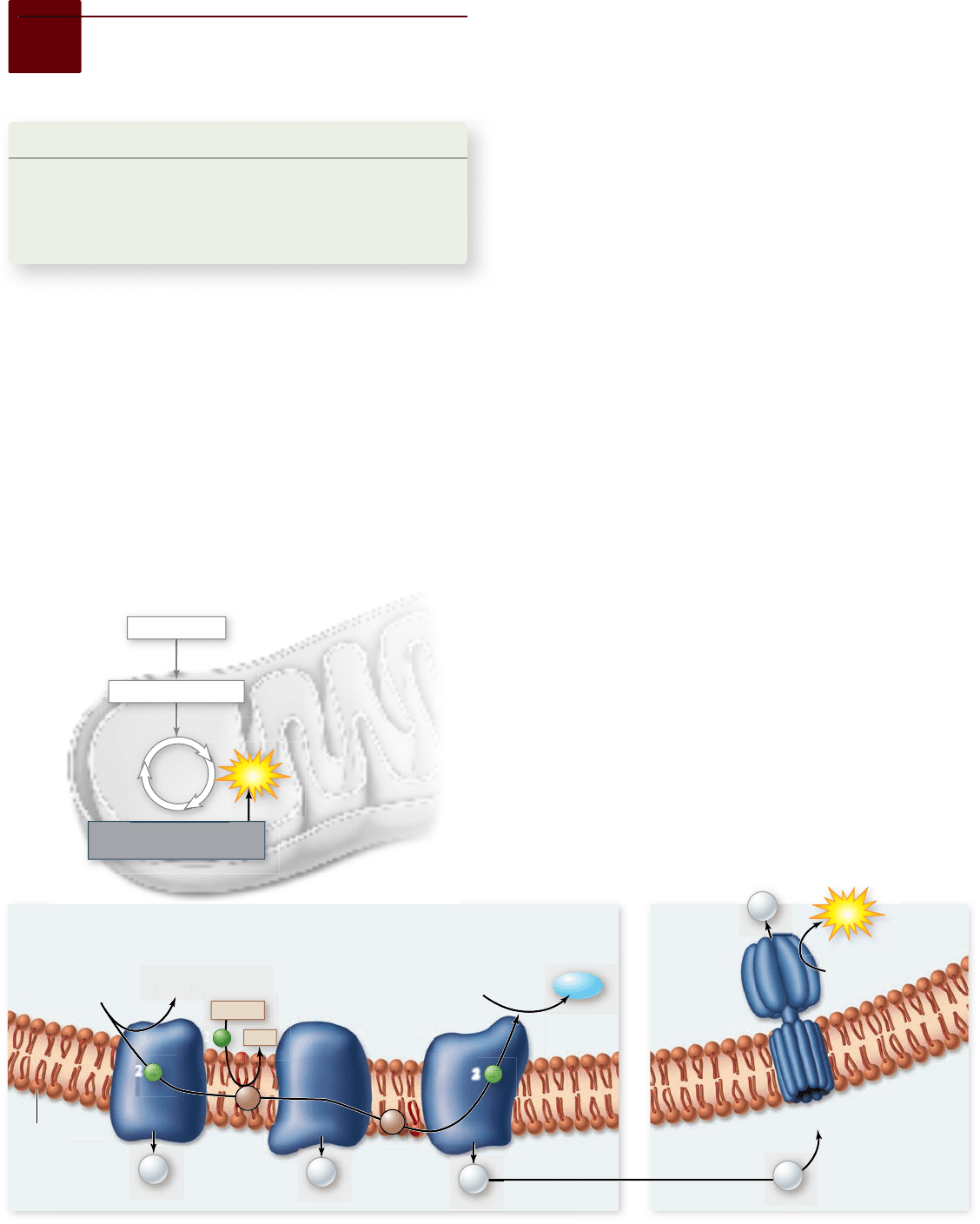
Figure 7.12
The electron transport chain and
chemiosmosis. a. High-energy electrons harvested from
catabolized molecules are transported by mobile electron carriers
(ubiquinone, marked Q, and cytochrome c, marked C) between
three complexes of membrane proteins. These three complexes use
portions of the electrons’ energy to pump protons out of the matrix
and into the intermembrane space. The electrons are nally used to
reduce oxygen, forming water. b. This creates a concentration
gradient of protons across the inner membrane. This
electrochemical gradient is a form of potential energy that can be
used by ATP synthase. This enzyme couples the reentry of protons
to the phosphorylation of ADP to form ATP.
chain operates as a proton pump, driving a proton out across the
membrane into the intermembrane space (figure 7.12a).
The electrons are then carried by another carrier, cyto-
chrome c, to the cytochrome oxidase complex. This complex
uses four electrons to reduce a molecule of oxygen. Each oxy-
gen then combines with two protons to form water:
O
2
+ 4 H
+
+ 4 e
–
→
2 H
2
O
In contrast to NADH, which contributes its electrons to
NADH dehydrogenase, FADH
2
, which is located in the inner
mitochondrial membrane, feeds its electrons to ubiquinone,
which is also in the membrane. Electrons from FADH
2
thus
“skip” the first step in the electron transport chain.
The plentiful availability of a strong electron acceptor,
oxygen, is what makes oxidative respiration possible. As you’ll
see in chapter 8, the electron transport chain used in aerobic
respiration is similar to, and may well have evolved from, the
chain employed in photosynthesis.
The gradient forms as electrons
move through electron carriers
Respiration takes place within the mitochondria present in virtually
all eukaryotic cells. The internal compartment, or matrix, of a mito-
chondrion contains the enzymes that carry out the reactions of the
Krebs cycle. As mentioned earlier, protons (H
+
) are produced when
electrons are transferred to NAD
+
. As the electrons harvested
7.5
The Electron Transport Chain
and Chemiosmosis
Learning Outcomes
Describe the structure and function of the electron 1.
transport chain.
Understand how the proton gradient connects electron 2.
transport with ATP synthesis.
The NADH and FADH
2
molecules formed during aerobic res-
piration each contain a pair of electrons that were gained when
NAD
+
and FAD were reduced. The NADH molecules carry
their electrons to the inner mitochondrial membrane, where
they transfer the electrons to a series of membrane-associated
proteins collectively called the electron transport chain .
The electron transport chain
produces a proton gradient
The first of the proteins to receive the electrons is a complex,
membrane-embedded enzyme called NADH dehydrogenase.
A carrier called ubiquinone then passes the electrons to a protein–
cytochrome complex called the bc
1
complex. Each complex in the
134
part
II
Biology of the Cell
rav32223_ch07_122-146.indd 134rav32223_ch07_122-146.indd 134 11/6/09 12:40:48 PM11/6/09 12:40:48 PM
Apago PDF Enhancer
Hypothesis: ATP synthase enzyme uses a proton gradient to provide energy for phosphorylation reaction.
Prediction: The source of the proton gradient should not matter. A proton gradient formed by the light-driven pump bacteriorhodopsin should power
phosphorylation in the light but not in the dark.
Test: Artificial vesicles are made with bacteriorhodopsin and ATP synthase, and ATP synthase alone. These are illuminated with light and assessed
for ATP production.
Result: The vesicle with both bacteriorhodopsin and ATP synthase can form ATP in the light but not in the dark. The vesicle with ATP synthase alone cannot
form ATP in the light.
Conclusion: ATP synthase is able to utilize a proton gradient for energy to form ATP.
Further Experiments: What other controls would be appropriate for this type of experiment? Why is this experiment a better test of the chemiosmotic
hypothesis than the acid bath experiment in Jangendorf/chapter 8 (see figure 8.16)?
SCIENTIFIC THINKING
Vesicles
Conditions
Bacteriorhodopsin
ATP synthase
Bacteriorhodopsin
ATP synthase
Light Dark Light
ATP synthase
alone
No ATP formedNo ATP formed
ADP+P
i
H
;
H
;
H
;
H
;
H
;
H
;
H
;
H
;
H
;
ATP
by oxidative respiration are passed along the electron transport
chain, the energy they release transports protons out of the matrix
and into the outer compartment called the intermembrane space.
Three transmembrane complexes of the electron transport
chain in the inner mitochondrial membrane actually accomplish
the proton transport (see figure 7.12a). The flow of highly ener-
getic electrons induces a change in the shape of pump proteins,
which causes them to transport protons across the membrane. The
electrons contributed by NADH activate all three of these proton
pumps, whereas those contributed by FADH
2
activate only two be-
cause of where they enter the chain. In this way a proton gradient
is formed between the intermembrane space and the matrix.
Chemiosmosis utilizes the electrochemical
gradient to produce ATP
Because the mitochondrial matrix is negative compared with
the intermembrane space, positively charged protons are at-
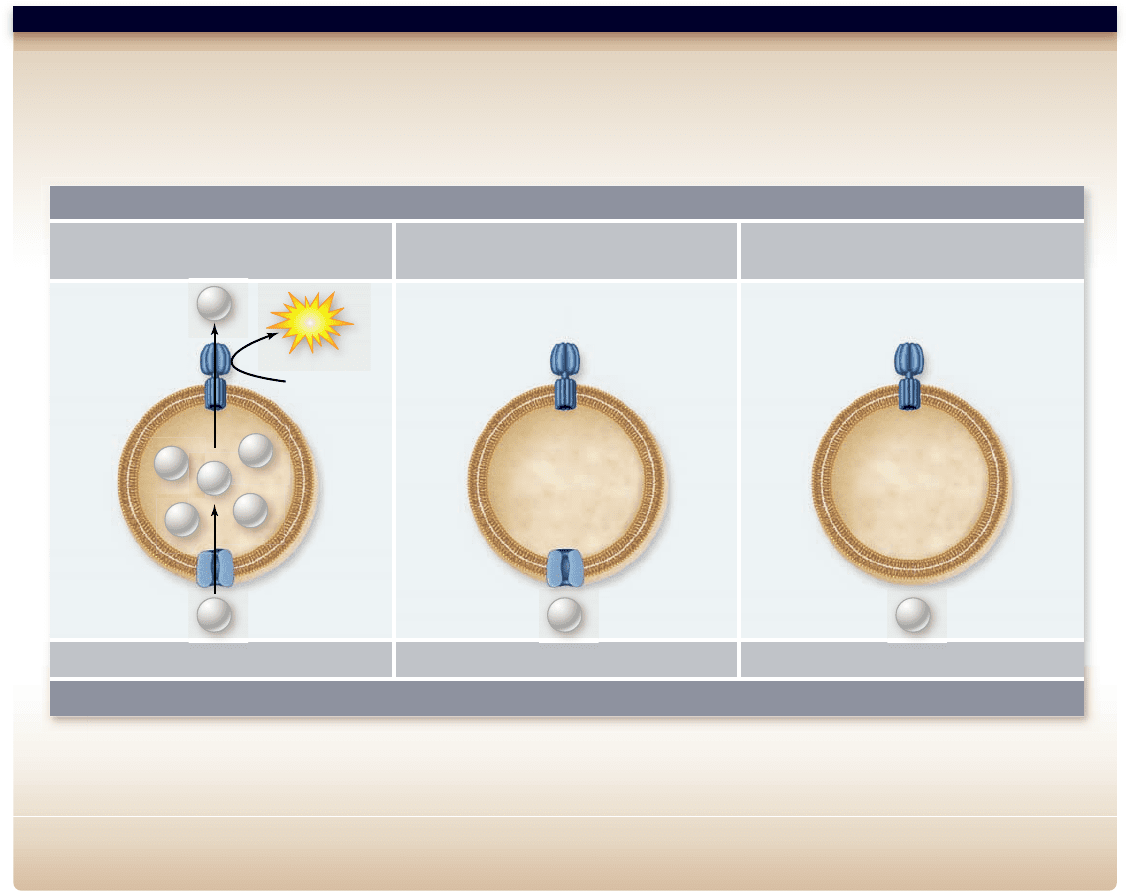
Figure 7.13
Evidence for the chemiosmotic synthesis of ATP by ATP synthase.
tracted to the matrix. The higher outer concentration of pro-
tons also tends to drive protons back in by diffusion, but
because membranes are relatively impermeable to ions, this
process occurs only very slowly. Most of the protons that re-
enter the matrix instead pass through ATP synthase, an en-
zyme that uses the energy of the gradient to catalyze the
synthesis of ATP from ADP and P
i
. Because the chemical for-
mation of ATP is driven by a diffusion force similar to osmo-
sis, this process is referred to as chemiosmosis (figure 7.12b).
The newly formed ATP is transported by facilitated diffusion
to the many places in the cell where enzymes require energy
to drive endergonic reactions. This chemiosmotic mecha-
nism for the coupling of electron transport and ATP synthe-
sis was controversial when it was proposed. Over the years,
experimental evidence accumulated to support this hypo-
thesis (figure 7.13).
The energy released by the reactions of cellular respi-
ration ultimately drives the proton pumps that produce the
chapter
7
How Cells Harvest Energy
135www.ravenbiology.com
rav32223_ch07_122-146.indd 135rav32223_ch07_122-146.indd 135 11/6/09 12:40:50 PM11/6/09 12:40:50 PM
Apago PDF Enhancer
H
2
O
CO
2
CO
2
H
;
H
;
2H
;
+
1
/
2
O
2
H
;
e
:
2 ATP
C
Q
e
:
NADH
NADH
Pyruvate
Oxidation
Acetyl-CoA
Glycolysis
Glucose
Pyruvate
H
;
e
:
NADH
32 ATP
Krebs
Cycle
FADH
2
ADP+P
i
Catalytic head
Intermembrane
space
Mitochondrial
matrix
Stalk
Rotor
H
;
H
;
H
;
H
;
H
;
H
;
H
;
ATP
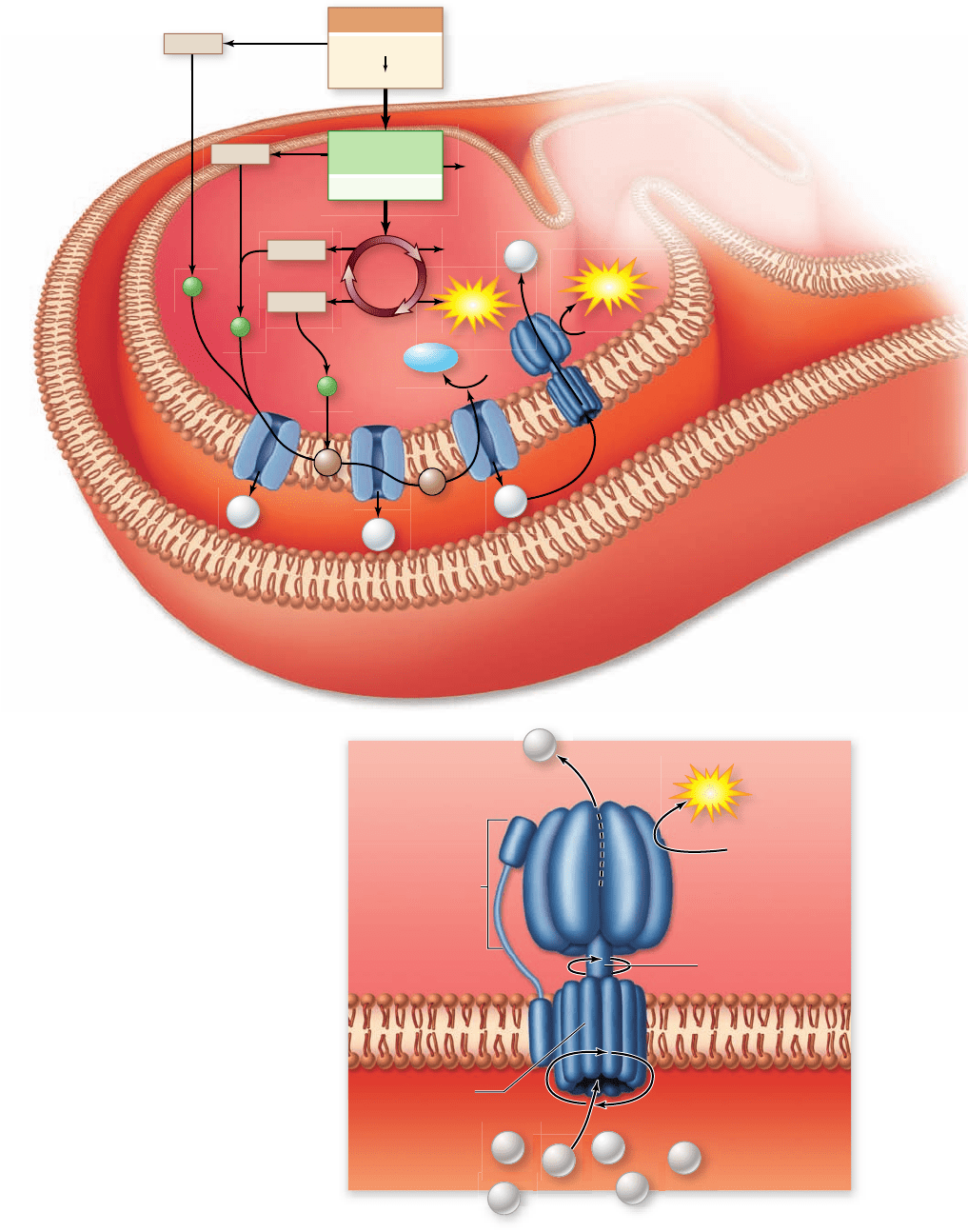
proton gradient. The proton gradient provides the energy
required for the synthesis of ATP. Figure 7.14 summarizes
the overall process.
ATP synthase is a molecular rotary motor
ATP synthase uses a fascinating molecular mechanism to per-
form ATP synthesis (figure 7.15). Structurally, the enzyme has
a membrane-bound portion and a narrow stalk that connects
the membrane portion to a knoblike catalytic portion. This
complex can be dissociated into two subportions: the F
0
membrane-bound complex, and the F
1
complex composed of
the stalk and a knob, or head domain.
The F
1
complex has enzymatic activity. The F
0
complex con-
tains a channel through which protons move across the membrane
down their concentration gradient. As they do so, their movement
causes part of the F
0
complex and the stalk to rotate relative to the
knob. The mechanical energy of this rotation is used to change the
conformation of the catalytic domain in the F
1
complex.
Thus, the synthesis of ATP is achieved by a tiny rotary
motor, the rotation of which is driven directly by a gradient of
protons. The flow of protons is like that of water in a hydro-
electric power plant. Like the flow of water driven by gravity
causes a turbine to rotate and generate electrical current, the
proton gradient produces the energy that drives the rotation of
the ATP synthase generator.
Figure 7.14
Aerobic
respiration in the
mitochondria. The entire
process of aerobic respiration is
shown in cellular context.
Glycolysis occurs in the
cytoplasm with the pyruvate
and NADH produced entering
the mitochondria. Here,
pyruvate is oxidized and fed
into the Krebs cycle to
complete the oxidation
process. All the energetic
electrons harvested by
oxidations in the overall
process are transferred by
NADH and FADH
2
to the
electron transport chain. The
electron transport chain uses
the energy released during
electron transport to pump
protons across the inner
membrane. This creates an
electrochemical gradient that
contains potential energy. The
enzyme ATP synthase uses this
gradient to phosphorylate ADP
to form ATP.
Figure 7.15
The ATP rotary engine. Protons move across
the membrane down their concentration gradient. The energy
released causes the rotor and stalk structures to rotate. This
mechanical energy alters the conformation of the ATP synthase
enzyme to catalyze the formation of ATP.
136
part
II
Biology of the Cell
rav32223_ch07_122-146.indd 136rav32223_ch07_122-146.indd 136 11/6/09 12:40:51 PM11/6/09 12:40:51 PM
Apago PDF Enhancer
Total net ATP yield = 38
(36 in eukaryotes)
Pyruvate oxidation
Glycolysis
Chemiosmosis
Chemiosmosis
2
2
6
2
4
6
18
2
2
2
6
ATP
ATP
ATP
ATP
ATP
ATP
ATP
Krebs
Cycle
NADH
NADH
NADH
FADH
2
Glucose
Pyruvate
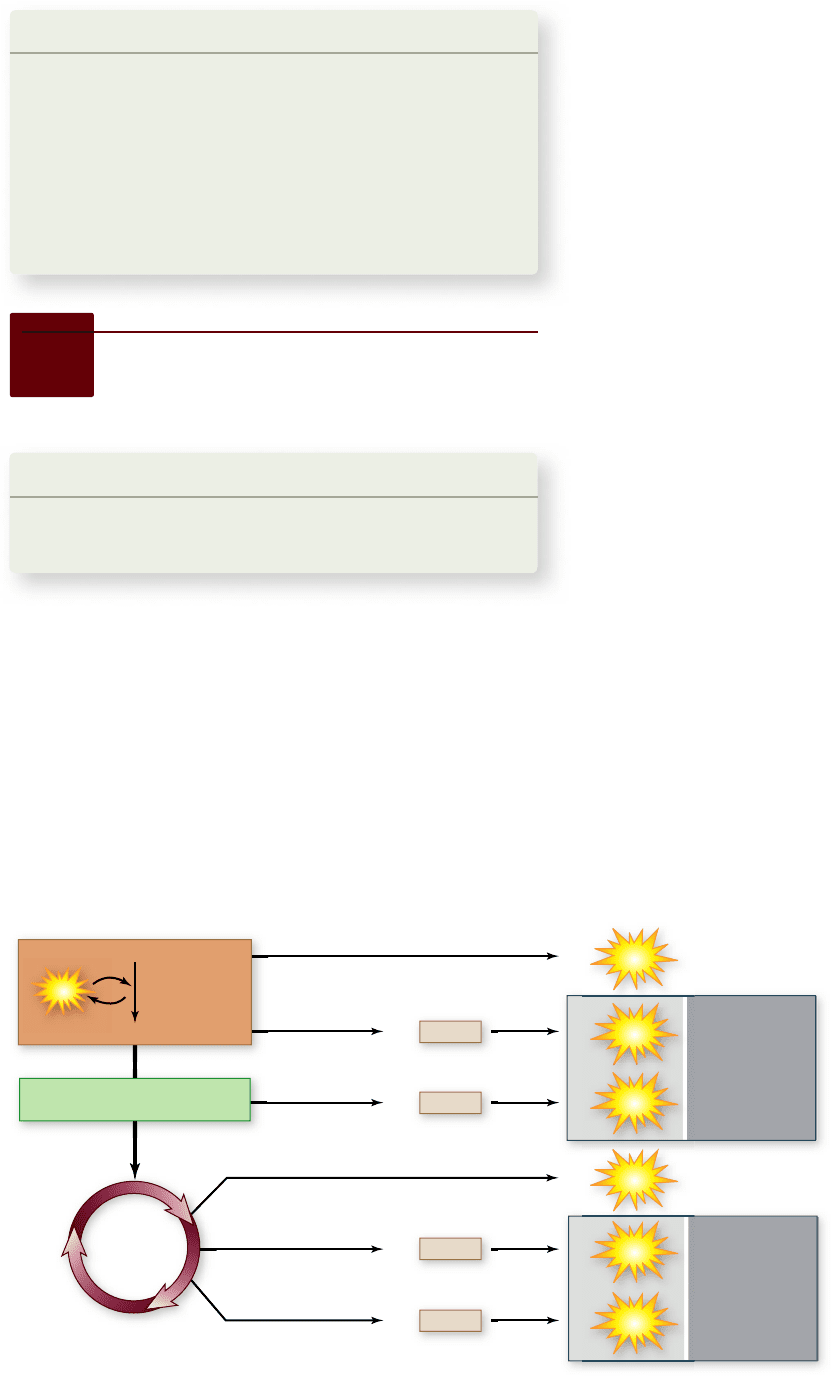
F i g u r e 7. 1 6
Theoretical
ATP yield. The theoretical yield
of ATP harvested from glucose
by aerobic respiration totals 38
molecules. In eukaryotes this is
reduced to 36 because it takes 1
ATP to transport each molecule
of NADH that is generated by
glycolysis in the cytoplasm into
the mitochondria .
Learning Outcomes Review 7.5
The electron transport chain receives electrons from NADH and FADH
2
and passes them down the chain to oxygen. The protein complexes of the
electron transport chain, in the inner membrane of mitochondria, use
the energy from electron transfer to pump protons across the membrane,
creating an electrochemical gradient. The enzyme ATP synthase uses this
gradient to drive the endergonic reaction of phosphorylating ADP to ATP.
■ How would poking a small hole in the outer membrane
affect ATP synthesis?
three pumps and those from FADH
2
activate two, we would
expect each molecule of NADH and FADH
2
to generate three
and two ATP molecules, respectively.
In doing this accounting, remember that everything
downstream of glycolysis must be multiplied by 2 because two
pyruvates are produced per molecule of glucose. A total of 10
NADH molecules is generated by respiration: 2 from glycolysis,
2 from the oxidation of pyruvate (1 × 2), and another 6 from
the Krebs cycle (3 × 2). Also, two FADH
2
are produced (1 × 2).
Finally, two ATP are generated directly by glycolysis and an-
other two ATP from the Krebs cycle (1 × 2). This gives a total
of 10 × 3 = 30 ATP from NADH, plus 2 × 2 = 4 ATP from
FADH
2
, plus 4 ATP, for a total of 38 ATP (figure 7.16).
This number is accurate for bacteria, but it does not
hold for eukaryotes because the NADH produced in the cy-
toplasm by glycolysis needs to be transported into the mito-
chondria by active transport, which costs one ATP per
NADH transported. This reduces the predicted yield for
eukaryotes to 36 ATP.
The actual yield for eukaryotes is
30 molecules of ATP per glucose molecule
The amount of ATP actually produced in a eukaryotic cell dur-
ing aerobic respiration is somewhat lower than 36, for two rea-
sons. First, the inner mitochondrial membrane is somewhat
“leaky” to protons, allowing some of them to reenter the matrix
without passing through ATP synthase. Second, mitochondria
often use the proton gradient generated by chemiosmosis for
purposes other than ATP synthesis (such as transporting pyru-
vate into the matrix).
Consequently, the actual measured values of ATP
generated by NADH and FADH
2
are closer to 2.5 for each
NADH, and 1.5 for each FADH
2
. With these corrections,
the overall harvest of ATP from a molecule of glucose in a
eukaryotic cell is calculated as: 4 ATP from substrate-level
7. 6
Energy Yield of Aerobic
Respiration
Learning Outcome
Calculate the number of ATP molecules produced by 1.
aerobic respiration.
How much metabolic energy in the form of ATP does a cell
gain from aerobic breakdown of glucose? Knowing the steps
involved in the process, we can calculate the theoretical yield of
ATP and compare it with the actual yield.
The theoretical yield for eukaryotes is
36 molecules of ATP per glucose molecule
The chemiosmotic model suggests that one ATP molecule is
generated for each proton pump activated by the electron
transport chain. Because the electrons from NADH activate
chapter
7
How Cells Harvest Energy
137www.ravenbiology.com
rav32223_ch07_122-146.indd 137rav32223_ch07_122-146.indd 137 11/6/09 12:40:54 PM11/6/09 12:40:54 PM
Apago PDF Enhancer
Pyruvate Oxidation
Glycolysis
Inhibits
Citrate
Glucose
ADP
Electron Transport Chain
and
Chemiosmosis
Fructose 6-phosphate
Fructose 1,6-bisphosphate
Pyruvate
Acetyl-CoA
ATP
Krebs
Cycle
NADH
Pyruvate dehydrogenase
Phosphofructokinase
Inhibits
Activ
ates
Inhibits
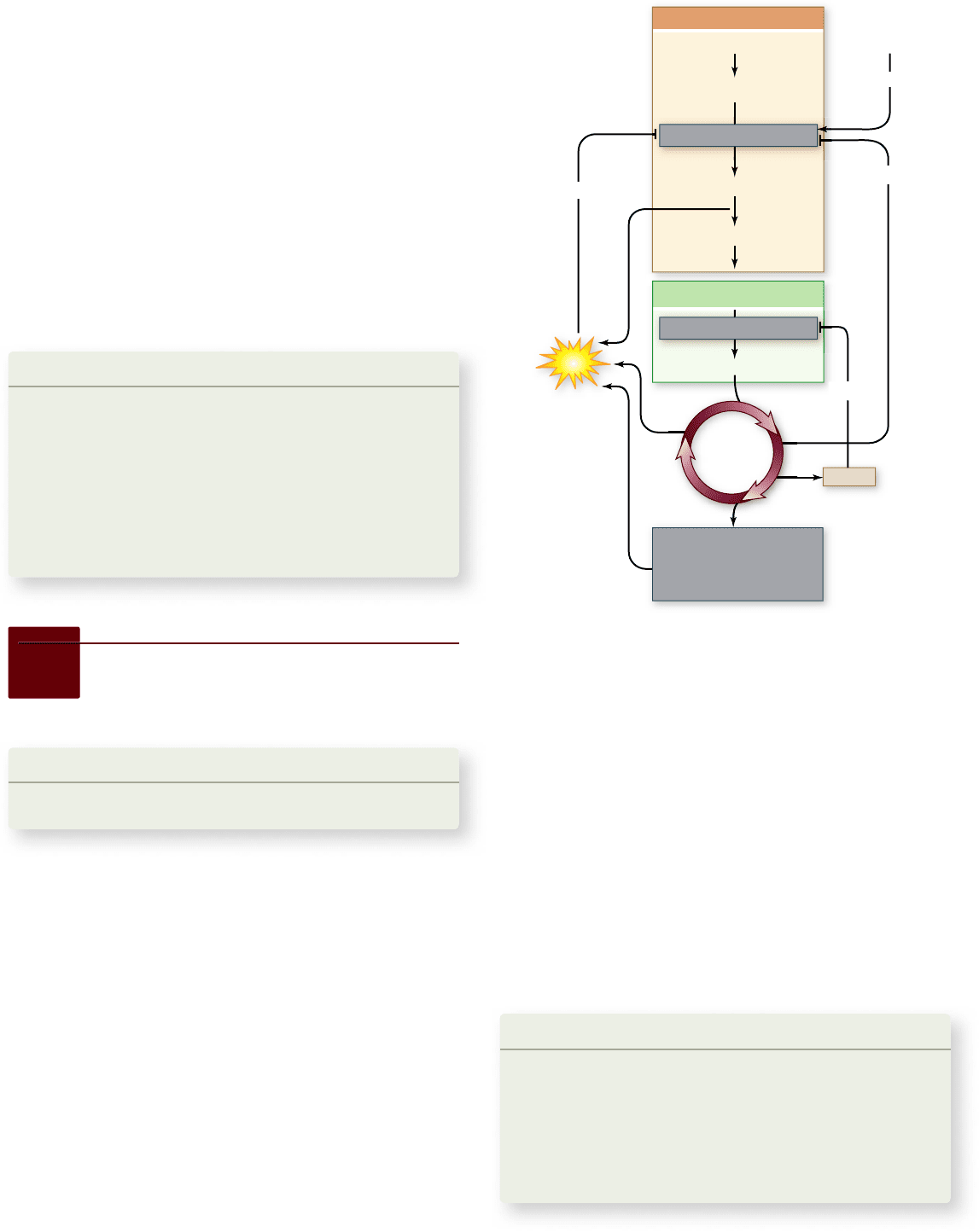
ATP is in excess, or when the Krebs cycle is producing citrate
faster than it is being consumed, glycolysis is slowed.
The main control point in the oxidation of pyruvate oc-
curs at the committing step in the Krebs cycle with the enzyme
pyruvate dehydrogenase, which converts pyruvate to acetyl-
CoA. This enzyme is inhibited by high levels of NADH, a key
product of the Krebs cycle.
Another control point in the Krebs cycle is the enzyme
citrate synthetase, which catalyzes the first reaction, the con-
version of oxaloacetate and acetyl-CoA into citrate. High levels
of ATP inhibit citrate synthetase (as well as phosphofructo-
kinase, pyruvate dehydrogenase, and two other Krebs cycle en-
zymes), slowing down the entire catabolic pathway.
Learning Outcome Review 7.7
Respiration is controlled by levels of ATP in the cell and levels of key intermediates
in the process. The control point for glycolysis is the enzyme phosphofructokinase,
which is inhibited by ATP or citrate (or both). The main control point in oxidation of
pyruvate is the enzyme pyruvate dehydrogenase, inhibited by NADH.
■ How does feedback inhibition ensure economic
production of ATP?
phosphorylation + 25 ATP from NADH (2.5 × 10) + 3
ATP from FADH
2
(1.5 × 2) – 2 ATP for transport of glyco-
lytic NADH = 30 molecules of ATP.
We mentioned earlier that the catabolism of glucose by
aerobic respiration, in contrast to that by glycolysis alone, has a
large energy yield. Aerobic respiration in a eukaryotic cell har-
vests about (7.3 × 30)/686 = 32% of the energy available in
glucose. (By comparison, a typical car converts only about 25%
of the energy in gasoline into useful energy.)
The higher yield of aerobic respiration was one of the key
factors that fostered the evolution of heterotrophs. As this
mechanism for producing ATP evolved, nonphotosynthetic or-
ganisms could more successfully base their metabolism on the
exclusive use of molecules derived from other organisms. As
long as some organisms captured energy by photosynthesis,
others could exist solely by feeding on them.
Learning Outcome Review 7.6
Passage of electrons down the electron transport chain produces roughly
three ATP per NADH (two ATP per FADH
2
). This process plus the ATP generated
by substrate-level phosphorylation could yield a maximum of 38 ATP for the
complete oxidation of glucose. But NADH generated in the cytoplasm yields
only two ATP/NADH because transporting the NADH into the mitochondria uses
ATP. Therefore the theoretical total is 36 ATP per glucose in eukaryotes.
■ Why is the expected yield not necessarily the same as
the actual yield in a cell?
Figure 7.17
Control of glucose catabolism. The relative
levels of ADP and ATP and key intermediates NADH and citrate
control the catabolic pathway at two key points: the committing
reactions of glycolysis and the Krebs cycle.
7. 7
Regulation of Aerobic
Respiration
Learning Outcome
Understand the control points for cellular respiration.1.
When cells possess plentiful amounts of ATP, the key reactions of
glycolysis, the Krebs cycle, and fatty acid breakdown are inhibited,
slowing ATP production. The regulation of these biochemical
pathways by the level of ATP is an example of feedback inhibition.
Conversely, when ATP levels in the cell are low, ADP levels are
high, and ADP activates enzymes in the pathways of carbohydrate
catabolism to stimulate the production of more ATP.
Control of glucose catabolism occurs at two key points in
the catabolic pathway, namely at a point in glycolysis and at the
beginning of the Krebs cycle (figure 7.17). The control point in
glycolysis is the enzyme phosphofructokinase, which catalyzes the
conversion of fructose phosphate to fructose bisphosphate. This is
the first reaction of glycolysis that is not readily reversible, com-
mitting the substrate to the glycolytic sequence. ATP itself is an
allosteric inhibitor (see chapter 6 ) of phosphofructokinase, as is the
Krebs cycle intermediate citrate. High levels of both ATP and cit-
rate inhibit phosphofructokinase. Thus, under conditions when
138
part
II
Biology of the Cell
rav32223_ch07_122-146.indd 138rav32223_ch07_122-146.indd 138 11/6/09 12:40:55 PM11/6/09 12:40:55 PM
Apago PDF Enhancer
0.625 μm
a. b.
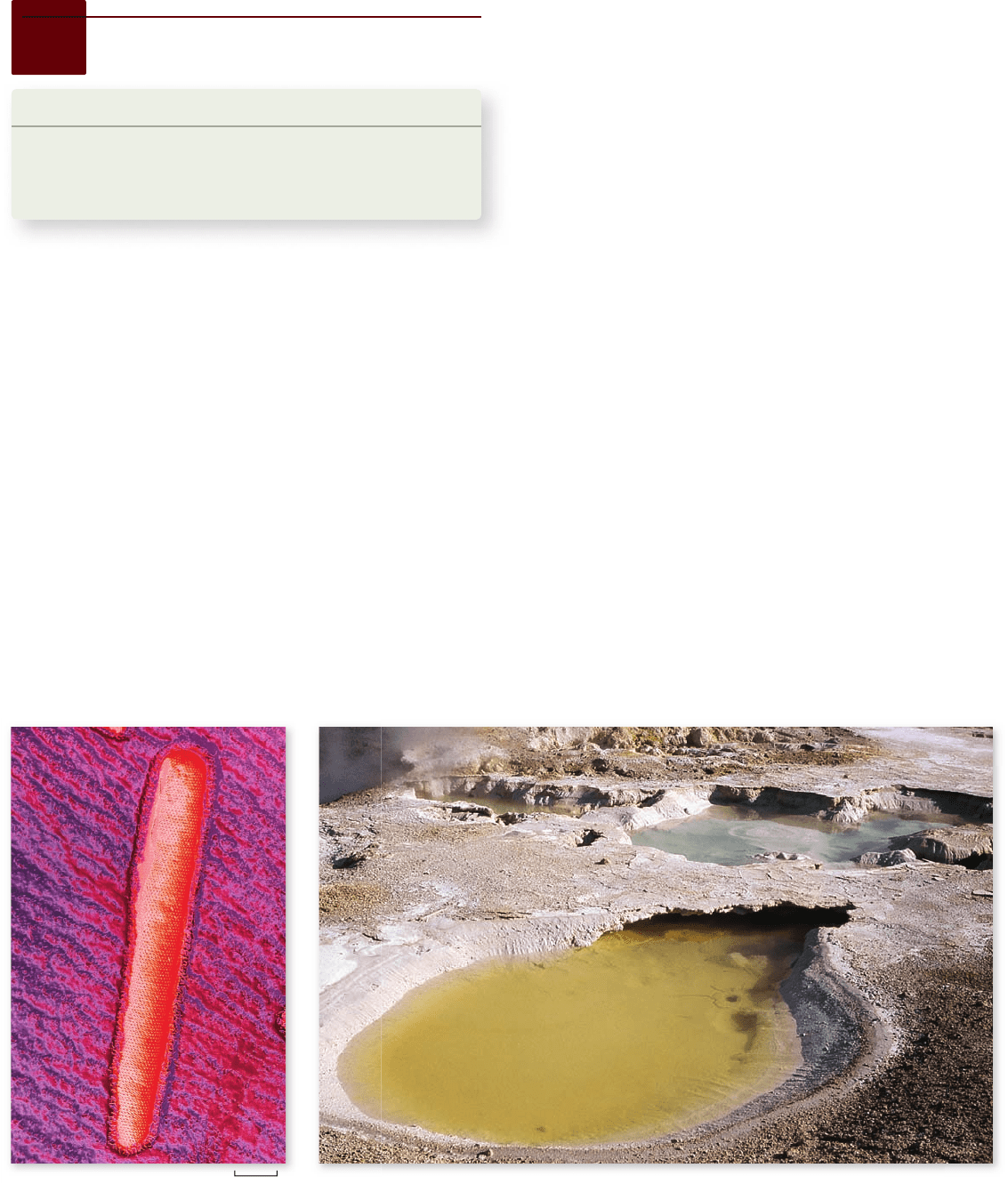
Figure 7.18
Sulfur-respiring prokaryote. a. The micrograph shows the archaeal species Thermoproteus tenax. This organism can use
elemental sulfur as a nal electron acceptor for anaerobic respiration. b. Thermoproteus is often found in sulfur-containing hot springs such as
the Norris Geyser Basin in Yellowstone National Park shown here.
7.8
Oxidation Without O
2
Learning Outcomes
Compare anaerobic and aerobic respiration.1.
Distinguish the role of fermentation in anaerobic 2.
metabolism.
In the presence of oxygen, cells can use oxygen to produce a
large amount of ATP. But even when no oxygen is present to
accept electrons, some organisms can still respire anaerobically,
using inorganic molecules as final electron acceptors for an
electron transport chain.
For example, many prokaryotes use sulfur, nitrate, carbon
dioxide, or even inorganic metals as the final electron acceptor
in place of oxygen (figure 7.18). The free energy released by
using these other molecules as final electron acceptors is not as
great as that using oxygen because they have a lower affinity for
electrons. The amount of ATP produced is less, but the process
is still respiration and not fermentation.
Methanogens use carbon dioxide
Among the heterotrophs that practice anaerobic respiration
are Archaea such as thermophiles and methanogens. Metha-
nogens use carbon dioxide (CO
2
) as the electron acceptor,
reducing CO
2
to CH
4
(methane). The hydrogens are de-
rived from organic molecules produced by other organisms.
Methanogens are found in diverse environments, including
soil and the digestive systems of ruminants like cows.
Sulfur bacteria use sulfate
Evidence of a second anaerobic respiratory process among prim-
itive bacteria is seen in a group of rocks about 2.7 bya, known as
the Woman River iron formation. Organic material in these
rocks is enriched for the light isotope of sulfur,
32
S, relative to the
heavier isotope,
34
S. No known geochemical process produces
such enrichment, but biological sulfur reduction does, in a pro-
cess still carried out today by certain prokaryotes.
In this sulfate respiration, the prokaryotes derive energy
from the reduction of inorganic sulfates (SO
4
) to hydrogen sul-
fide (H
2
S). The hydrogen atoms are obtained from organic
molecules other organisms produce. These prokaryotes thus
are similar to methanogens, but they use SO
4
as the oxidizing
(that is, electron-accepting) agent in place of CO
2
.
The early sulfate reducers set the stage for the evolution
of photosynthesis, creating an environment rich in H
2
S. As dis-
cussed in chapter 8, the first form of photosynthesis obtained
hydrogens from H
2
S using the energy of sunlight.
Fermentation uses organic compounds
as electron acceptors
In the absence of oxygen, cells that cannot utilize an alternative
electron acceptor for respiration must rely exclusively on
chapter
7
How Cells Harvest Energy
139www.ravenbiology.com
rav32223_ch07_122-146.indd 139rav32223_ch07_122-146.indd 139 11/6/09 12:40:56 PM11/6/09 12:40:56 PM
Apago PDF Enhancer
Glucose
2 Pyruvate
Alcohol Fermentation in Yeast
G
L
Y
C
O
L
Y
S
I
S
G
L
Y
C
O
L
Y
S
I
S
Glucose
2 Pyruvate
Lactic Acid Fermentation in Muscle Cells
H
C
K
O
C
K
O
CH
3
O
:
C
K
O
C
K
O
CH
3
O
:
2 ADP
2 ATP
CO
2
2 Ethanol
2 Acetaldehyde
2 NAD
;
C
K
O
H
CH
3
H
J
C
J
OH
CH
3
2 NADH
2 ADP
2 ATP
2 Lactate
CH
3
H
J
C
J
OH
O
:
C
K
O
2 NAD
;
2 NADH
glycolysis to produce ATP. Under these conditions, the
electrons generated by glycolysis are donated to organic
molecules in a process called fermentation. This process re-
cycles NAD
+
, the electron acceptor that allows glycolysis
to proceed.
Bacteria carry out more than a dozen kinds of fermenta-
tion reactions, often using pyruvate or a derivative of pyruvate
to accept the electrons from NADH. Organic molecules other
than pyruvate and its derivatives can be used as well; the impor-
tant point is that the process regenerates NAD
+
:
organic molecule + NADH
→
reduced organic
molecule + NAD
+
Often the reduced organic compound is an organic acid—
such as acetic acid, butyric acid, propionic acid, or lactic
acid—or an alcohol.
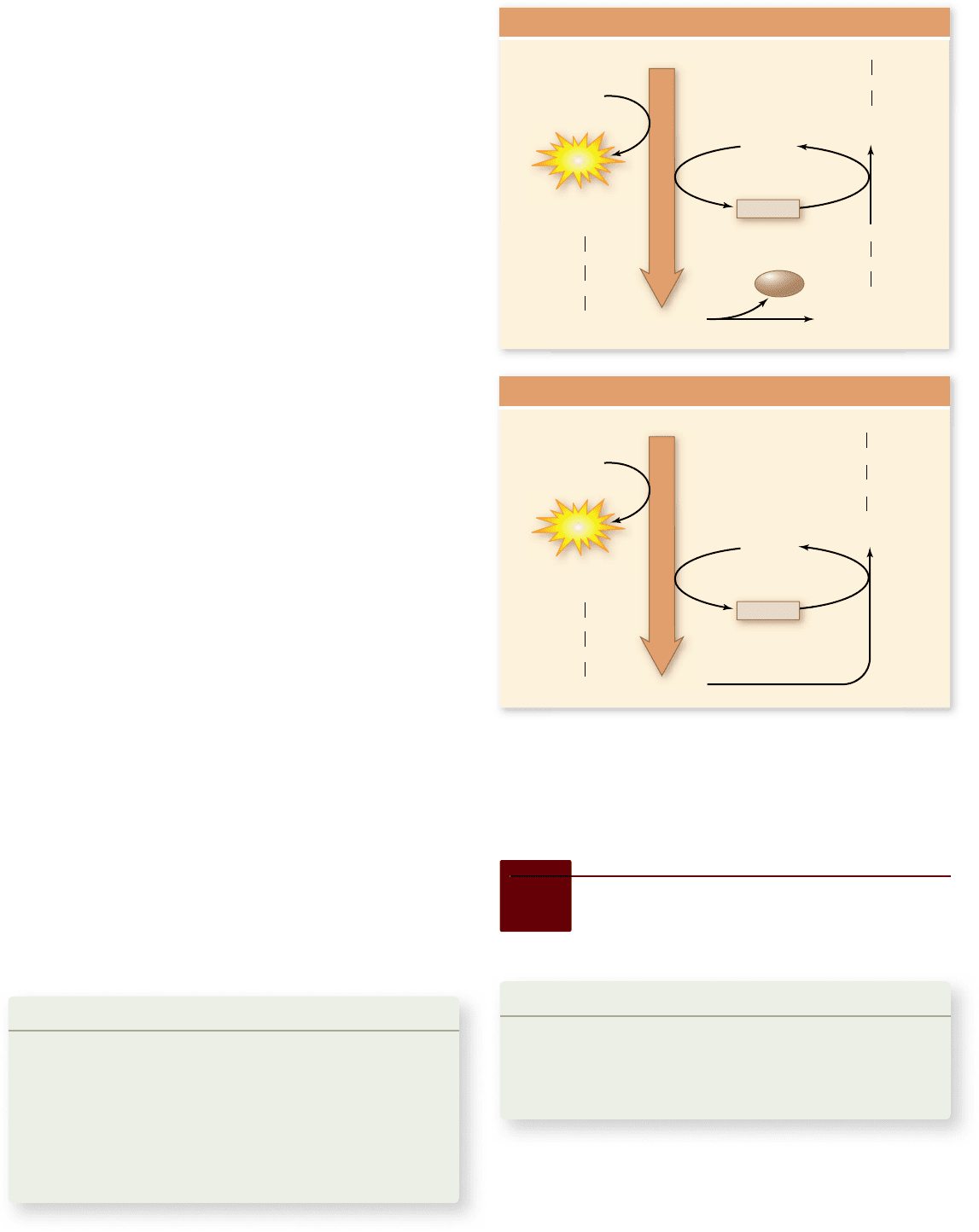
Ethanol fermentation
Eukaryotic cells are capable of only a few types of fermentation.
In one type, which occurs in yeast, the molecule that accepts elec-
trons from NADH is derived from pyruvate, the end-product
of glycolysis.
Yeast enzymes remove a terminal CO
2
group from pyru-
vate through decarboxylation, producing a 2-carbon molecule
called acetaldehyde. The CO
2
released causes bread made
with yeast to rise. The acetaldehyde accepts a pair of electrons
from NADH, producing NAD
+
and ethanol (ethyl alcohol)
(figure 7.19).
This particular type of fermentation is of great interest to
humans, because it is the source of the ethanol in wine and beer.
Ethanol is a by-product of fermentation that is actually toxic to
yeast; as it approaches a concentration of about 12%, it begins
to kill the yeast. That explains why naturally fermented wine
contains only about 12% ethanol.
Lactic acid fermentation
Most animal cells regenerate NAD
+
without decarboxyla-
tion. Muscle cells, for example, use the enzyme lactate
dehydrogenase to transfer electrons from NADH back to the
pyruvate that is produced by glycolysis. This reaction con-
verts pyruvate into lactic acid and regenerates NAD
+
from
NADH (see figure 7.19). It therefore closes the metabolic
circle, allowing glycolysis to continue as long as glucose
is available.
Circulating blood removes excess lactate, the ionized
form of lactic acid, from muscles, but when removal cannot
keep pace with production, the accumulating lactic acid inter-
feres with muscle function and contributes to muscle fatigue.
Learning Outcomes Review 7.8
Nitrate, sulfur, and CO
2
are all used as terminal electron acceptors in
anaerobic respiration of diff erent organisms. Organic molecules can
also accept electrons in fermentation reactions that regenerate NAD
+
.
Fermentation reactions produce a variety of compounds, including ethanol
in yeast and lactic acid in humans.
■ In what kinds of ecosystems would you expect to find
anaerobic respiration?
7. 9
Catabolism of Proteins
and Fats
Learning Outcomes
Identify the points at which proteins and fats enter 1.
energy metabolism.
Describe the linkages between catabolic and 2.
anabolic pathways.
Thus far we have focused on the aerobic respiration of glucose,
which organisms obtain from the digestion of carbohydrates or
from photosynthesis. Organic molecules other than glucose,
Figure 7.19
Fermentation. Yeasts carry out the conversion
of pyruvate to ethanol. Muscle cells convert pyruvate into lactate,
which is less toxic than ethanol. In each case, the reduction of a
metabolite of glucose has oxidized NADH back to NAD
+
to allow
glycolysis to continue under anaerobic conditions.
140
part
II
Biology of the Cell
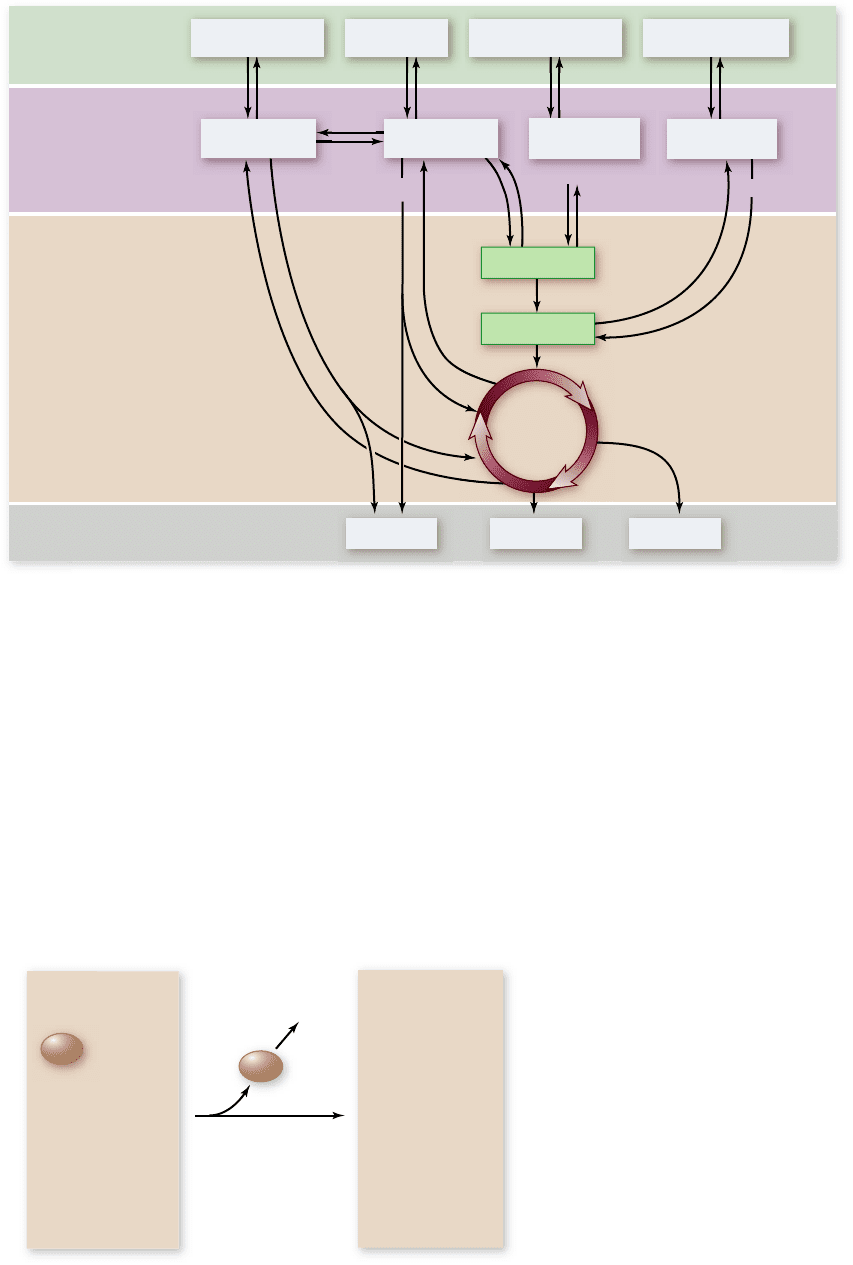
rav32223_ch07_122-146.indd 140rav32223_ch07_122-146.indd 140 11/6/09 12:41:04 PM11/6/09 12:41:04 PM
Apago PDF Enhancer
Macromolecule
degradation
Cell building blocks
Nucleic acids Proteins Lipids and fats Polysaccharides
Nucleotides Amino acids Fatty acids Sugars
NH
3
H
2
O CO
2
Deamination
b-oxidation
Glycolysis
Oxidative respiration
Ultimate metabolic products
Acetyl-CoA
Pyruvate
Krebs
Cycle
J J J
C
HO
C
KO
H
JCJH
HJCJH
O
HO O
J
C
J J J
C
HO
H
2
NJCJH
H
JCJH
H
JCJH
O
HO O
Urea
NH
3
␣
␣
-Ketoglutarate
J
K
J
K
J
K
J
K
J
C
Glutamate
Figure 7.21
Deamination. After proteins are broken down
into their amino acid constituents, the amino groups are removed
from the amino acids to form molecules that participate in
glycolysis and the Krebs cycle. For example, the amino acid
glutamate becomes α- ketoglutarate, a Krebs cycle intermediate,
when it loses its amino group.
Figure 7.20
How cells
extract chemical energy.
All eukaryotes and many
prokaryotes extract energy
from organic molecules by
oxidizing them. The rst stage
of this process, breaking down
macromolecules into their
constituent parts, yields little
energy. The second stage,
oxidative or aerobic
respiration, extracts energy,
primarily in the form of
high-energy electrons, and
produces water and carbon
dioxide. Key intermediates in
these energy pathways are also
used for biosynthetic pathways,
shown by reverse arrows.
particularly proteins and fats, are also important sources of en-
ergy (figure 7.20).
Catabolism of proteins removes amino groups
Proteins are first broken down into their individual amino acids.
The nitrogen-containing side group (the amino group) is then re-
moved from each amino acid in a process called deamination. A
series of reactions converts the carbon chain that remains into a
molecule that enters glycolysis or the Krebs cycle. For example, ala-
nine is converted into pyruvate, glutamate into α-ketoglutarate
(figure 7.21), and aspartate into oxaloacetate. The reactions of gly-
colysis and the Krebs cycle then extract the high-energy electrons
from these molecules and put them to work making ATP.
Catabolism of fatty acids
produces acetyl groups
Fats are broken down into fatty acids plus glycerol. Long-chain
fatty acids typically have an even number of carbons, and the
many C
–
H bonds provide a rich harvest of energy. Fatty acids
are oxidized in the matrix of the mitochondrion. Enzymes re-
move the 2-carbon acetyl groups from the end of each fatty
acid until the entire fatty acid is converted into acetyl groups
(figure 7.22). Each acetyl group is combined with coenzyme A
to form acetyl-CoA. This process is known as β oxidation.
This process is oxygen-dependent, which explains why aerobic
exercise burns fat, but anaerobic exercise does not.
How much ATP does the catabolism of fatty acids pro-
duce? Let’s compare a hypothetical 6-carbon fatty acid with the
6-carbon glucose molecule, which we’ve said yields about
30 molecules of ATP in a eukaryotic cell. Two rounds of β oxida-
tion would convert the fatty acid into three molecules of acetyl-
CoA. Each round requires one molecule of ATP to prime the
process, but it also produces one molecule of NADH and one of
FADH
2
. These molecules together yield four molecules of ATP
(assuming 2.5 ATPs per NADH, and 1.5 ATPs per FADH
2
).
The oxidation of each acetyl-CoA in the Krebs cycle ulti-
mately produces an additional 10 molecules of ATP. Overall,
then, the ATP yield of a 6-carbon fatty acid is approximately:
8 (from two rounds of β oxidation) – 2 (for priming those two
rounds) + 30 (from oxidizing the three acetyl-CoAs) = 36 mol-
ecules of ATP. Therefore, the respiration of a 6-carbon fatty
acid yields 20% more ATP than the respiration of glucose.
Moreover, a fatty acid of that size would weigh less than
two thirds as much as glucose, so a gram of fatty acid contains
more than twice as many kilocalories as a gram of glucose. You
can see from this fact why fat is a storage molecule for excess
chapter
7
How Cells Harvest Energy
141www.ravenbiology.com
rav32223_ch07_122-146.indd 141rav32223_ch07_122-146.indd 141 11/6/09 12:41:04 PM11/6/09 12:41:04 PM