
Raven P.H., Johnson G.B., Mason K.A. Biology (Ninth Edition)
Подождите немного. Документ загружается.

Apago PDF Enhancer
L
CHAPTER
Introduction
Life is driven by energy. All the activities organisms carry out—the swimming of bacteria, the purring of a cat, your thinking
about these words—use energy. In this chapter, we discuss the processes all cells use to derive chemical energy from organic
molecules and to convert that energy to ATP. Then, in chapter 8, we will examine photosynthesis, which uses light energy
to make chemical energy. We consider the conversion of chemical energy to ATP first because all organisms, both the plant,
a photosynthesizer, and the caterpillar feeding on the plant, pictured in the photo are capable of harvesting energy from
chemical bonds. Energy harvest via respiration is a universal process.
Chapter
7
How Cells
Harvest Energy
Chapter Outline
7.1 Overview of Respiration
7.2 Glycolysis: Splitting Glucose
7.3 The Oxidation of Pyruvate to Produce
Acetyl-CoA
7.4 The Krebs Cycle
7.5 The Electron Transport Chain
and Chemiosmosis
7.6 Energy Yield of Aerobic Respiration
7.7 Regulation of Aerobic Respiration
7.8 Oxidation Without O
2
7.9 Catabolism of Proteins and Fats
7.10 Evolution of Metabolism
rav32223_ch07_122-146.indd 122rav32223_ch07_122-146.indd 122 11/6/09 12:40:27 PM11/6/09 12:40:27 PM
Apago PDF Enhancer
Product
Energy-rich
molecule
Enzyme
1. Enzymes that use NAD
;
as a cofactor for oxidation
reactions bind NAD
;
and the
substrate.
2. In an oxidation–reduction
reaction, 2 electrons and
a proton are transferred
to NAD
;
, forming NADH.
A second proton is
donated to the solution.
3. NADH diffuses away
and can then donate
electrons to other
molecules.
NAD
;
NAD
;
NAD
;
NAD
NAD
H
H
H
H
H
H
H
H
Reduction
Oxidation
2e
:
H
;
+H
;
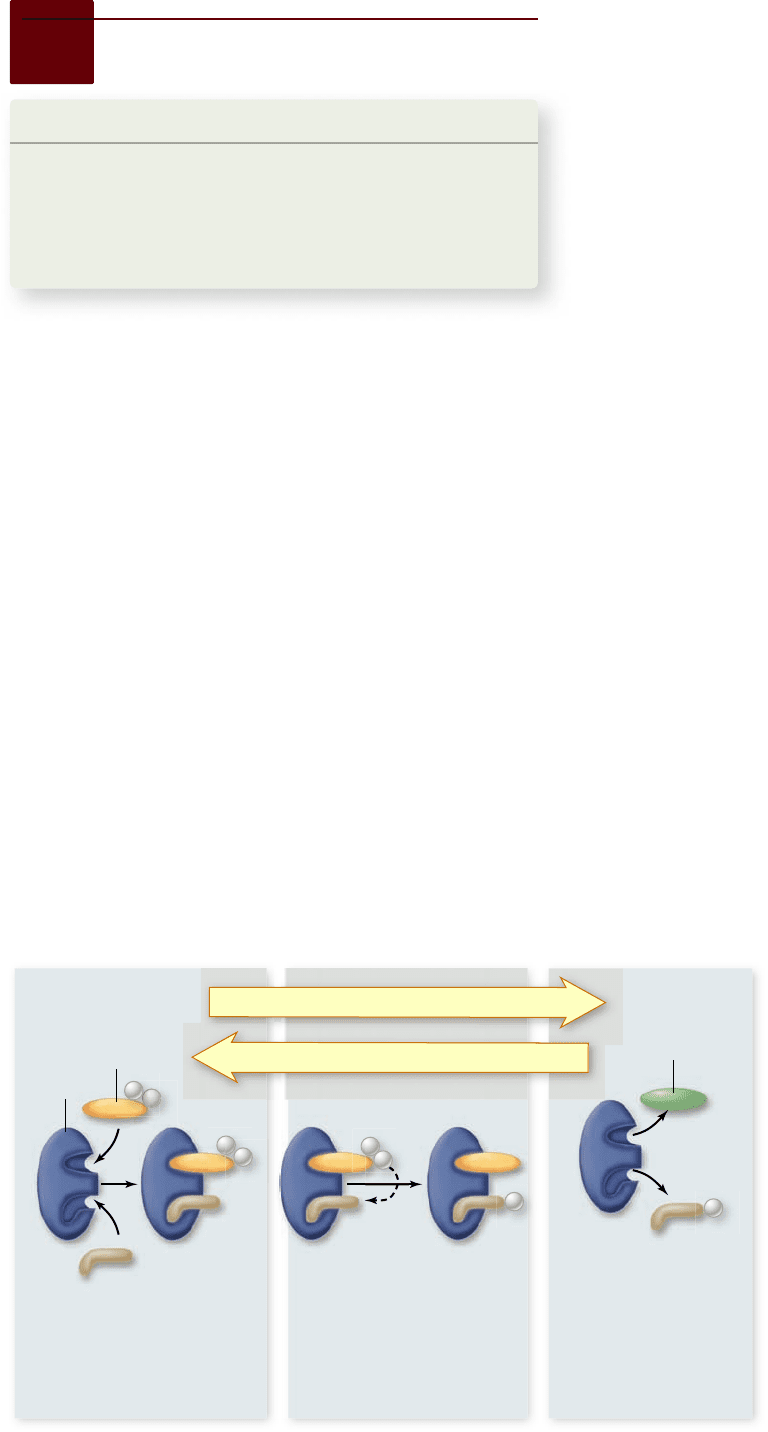
Figure 7.1
Oxidation–reduction
reactions often employ cofactors.
Cells use a chemical cofactor called
nicotinamide adenosine dinucleotide
(NAD
+
) to carry out many oxidation–
reduction reactions. Two electrons and a
proton are transferred to NAD
+
with
another proton donated to the solution.
Molecules that gain electrons are said to
be reduced, and ones that lose energetic
electrons are said to be oxidized. NAD
+
oxidizes energy-rich molecules by
acquiring their electrons (in the gure,
this proceeds 1
→
2
→
3) and then
reduces other molecules by giving the
electrons to them (in the gure, this
proceeds 3
→
2
→
1). NADH is the
reduced form of NAD
+
.
7.1
Overview of Respiration
Learning Outcomes
Characterize oxidation–dehydrogenation reactions in 1.
biological systems.
Understand the role of electron carriers in energy 2.
metabolism.
Describe the role of ATP in biological systems.3.
Plants, algae, and some bacteria harvest the energy of sunlight
through photosynthesis, converting radiant energy into chemi-
cal energy. These organisms, along with a few others that use
chemical energy in a similar way, are called autotrophs (“self-
feeders”). All other organisms live on the organic compounds
autotrophs produce, using them as food, and are called
heterotrophs (“fed by others”). At least 95% of the kinds of
organisms on Earth—all animals and fungi, and most protists
and prokaryotes—are heterotrophs. Autotrophs also extract en-
ergy from organic compounds—they just have the additional
capacity to use the energy from sunlight to synthesize these
compounds. The process by which energy is harvested is
cellular respiration—the oxidation of organic compounds to
extract energy from chemical bonds.
Cells oxidize organic compounds
to drive metabolism
Most foods contain a variety of carbohydrates, proteins, and fats,
all rich in energy-laden chemical bonds. Carbohydrates and fats,
as you recall from chapter 3, possess many carbon–hydrogen
(C
–
H) bonds, as well as carbon–oxygen (C
–
O) bonds.
The job of extracting energy from the complex organic
mixture in most foods is tackled in stages. First, enzymes break
down the large molecules into smaller ones, a process called
digestion (see chapter 48 ) . Then, other enzymes dismantle
these fragments a bit at a time, harvesting energy from C
–
H
and other chemical bonds at each stage.
The reactions that break down these molecules share a com-
mon feature: They are oxidations. Energy metabolism is therefore
concerned with redox reactions, and to understand the process we
must follow the fate of the electrons lost from the food molecules.
These reactions are not the simple transfer of electrons,
however; they are also dehydrogenations. That is, the elec-
trons lost are accompanied by protons, so that what is really
lost is a hydrogen atom, not just an electron.
Cellular respiration is the complete
oxidation of glucose
In chapter 6 , you learned that an atom that loses electrons is
said to be oxidized, and an atom accepting electrons is said to be
reduced. Oxidation reactions are often coupled with reduction
reactions in living systems, and these paired reactions are called
redox reactions. Cells utilize enzyme-facilitated redox reactions
to take energy from food sources and convert it to ATP.
Redox reactions
Oxidation–reduction reactions play a key role in the flow of
energy through biological systems because the electrons that
pass from one atom to another carry energy with them. The
amount of energy an electron possesses depends on its orbital
position, or energy level, around the atom’s nucleus. When this
electron departs from one atom and moves to another in a re-
dox reaction, the electron’s energy is transferred with it.
Figure 7.1 shows how an enzyme catalyzes a redox reac-
tion involving an energy-rich substrate molecule, with the help
of a cofactor, nicotinamide adenosine dinucleotide ( NAD
+
) .
In this reaction, NAD
+
accepts a pair of electrons from the
substrate, along with a proton, to form NADH (this process is
described in more detail shortly). The oxidized product is now
released from the enzyme’s active site, as is NADH.
chapter
7
How Cells Harvest Energy
123www.ravenbiology.com
rav32223_ch07_122-146.indd 123rav32223_ch07_122-146.indd 123 11/6/09 12:40:32 PM11/6/09 12:40:32 PM
Apago PDF Enhancer
2e
:
Electrons from food
High energy
Low energy
Energy released
for ATP synthesis
2H
; 1
/
2
O
2
H
2
O
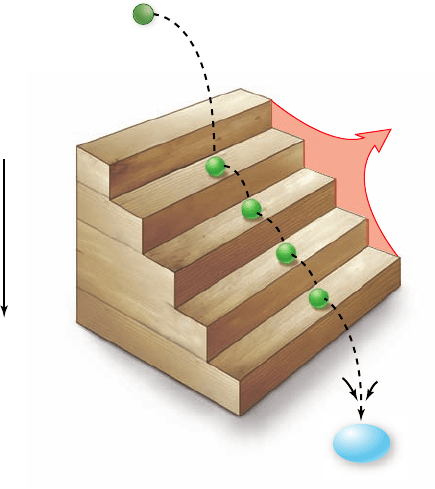
Figure 7.2
How electron transport works. This diagram
shows how ATP is generated when electrons transfer from one
energy level to another. Rather than releasing a single explosive
burst of energy, electrons “fall” to lower and lower energy levels in
steps, releasing stored energy with each fall as they tumble to the
lowest (most electronegative) electron acceptor, O
2
.
The same amount of energy is released whether glucose
is catabolized or burned, but when it is burned, most of the
energy is released as heat. Cells harvest useful energy from the
catabolism of glucose by using a portion of the energy to drive
the production of ATP.
Electron carriers play a critical role
in energy metabolism
During respiration, glucose is oxidized to CO
2
. If the electrons
were given directly to O
2
, the reaction would be combustion,
and cells would burst into flames. Instead, as you have just seen,
the cell transfers the electrons to intermediate electron carriers,
then eventually to O
2
.
Many forms of electron carriers are used in this process:
(1) soluble carriers that move electrons from one molecule to
another, (2) membrane-bound carriers that form a redox chain,
and (3) carriers that move within the membrane . The common
feature of all of these carriers is that they can be reversibly oxi-
dized and reduced. Some of these carriers, such as the iron-
containing cytochromes, can carry just electrons, and some
carry both electrons and protons.
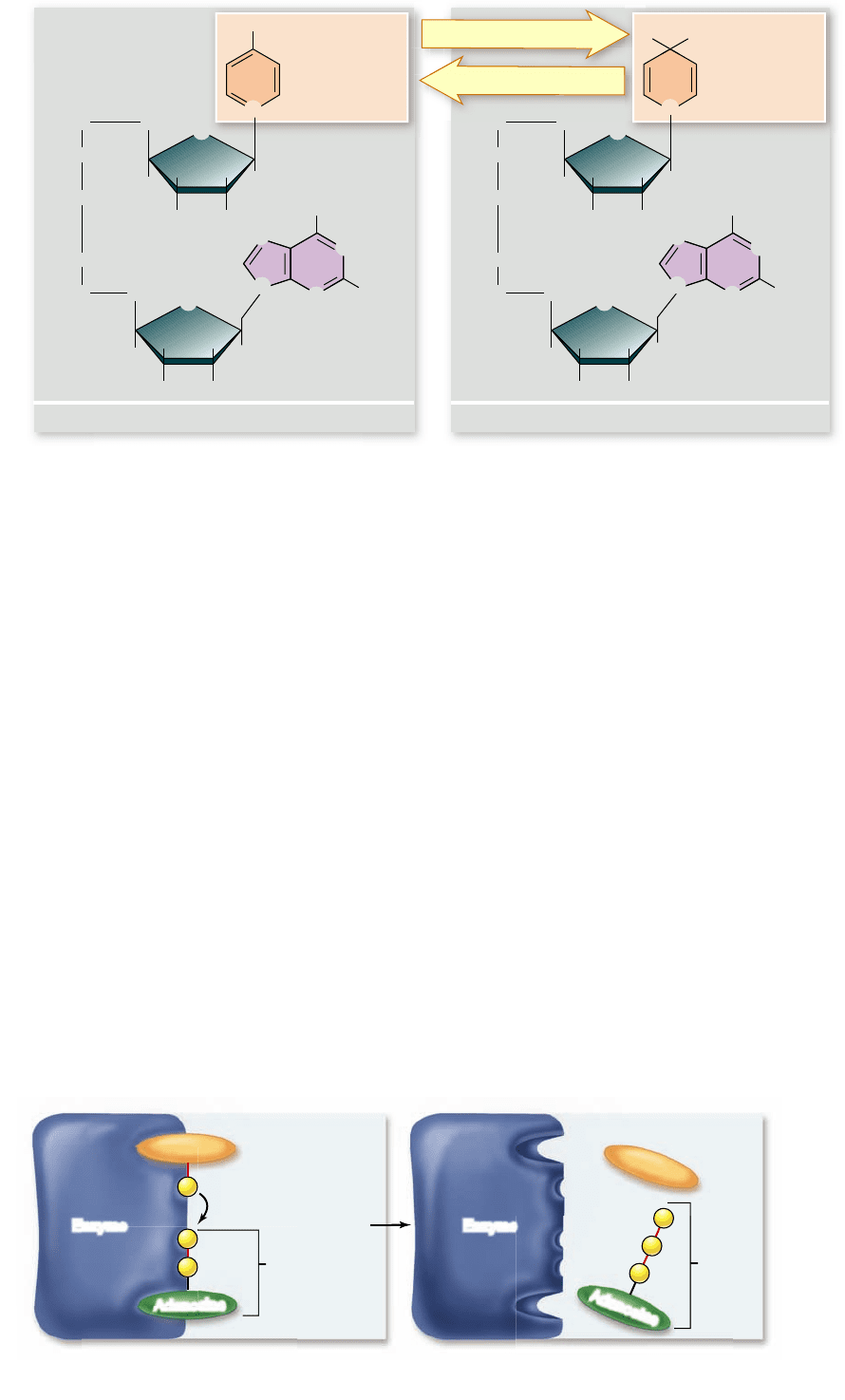
NAD
+
is one of the most important electron (and pro-
ton) carriers. As shown on the left in figure 7.3, the NAD
+
mol-
ecule is composed of two nucleotides bound together. The two
nucleotides that make up NAD
+
, nicotinamide monophosphate
(NMP) and adenosine monophosphate (AMP), are joined head-
to-head by their phosphate groups. The two nucleotides serve
different functions in the NAD
+
molecule: AMP acts as the
core, providing a shape recognized by many enzymes; NMP is
the active part of the molecule, because it is readily reduced,
that is, it easily accepts electrons.
When NAD
+
acquires two electrons and a proton from
the active site of an enzyme, it is reduced to NADH, shown on
the right in figure 7.3. The NADH molecule now carries the
two energetic electrons and can supply them to other molecules
and reduce them.
This ability to supply high-energy electrons is critical to both
energy metabolism and to the biosynthesis of many organic mole-
cules, including fats and sugars. In animals, when ATP is plentiful,
the reducing power of the accumulated NADH is diverted to sup-
plying fatty acid precursors with high-energy electrons, reducing
them to form fats and storing the energy of the electrons.
Metabolism harvests energy in stages
It is generally true that the larger the release of energy in any
single step, the more of that energy is released as heat, and the
less is available to be channeled into more useful paths. In the
combustion of gasoline, the same amount of energy is released
whether all of the gasoline in a car’s gas tank explodes at once,
or burns in a series of very small explosions inside the cylinders.
By releasing the energy in gasoline a little at a time, the harvest-
ing efficiency is greater, and more of the energy can be used to
push the pistons and move the car.
The same principle applies to the oxidation of glucose in-
side a cell. If all of the electrons were transferred to oxygen in
one explosive step, releasing all of the free energy at once, the cell
In the overall process of cellular energy harvest dozens of
redox reactions take place, and a number of molecules, includ-
ing NAD
+
, act as electron acceptors. During each transfer of
electrons energy is released. This energy may be captured and
used to make ATP or to form other chemical bonds; the rest is
lost as heat.
At the end of this process, high-energy electrons from the
initial chemical bonds have lost much of their energy, and these
depleted electrons are transferred to a final electron acceptor
(figure 7.2). When this acceptor is oxygen, the process is called
aerobic respiration. When the final electron acceptor is an
inorganic molecule other than oxygen, the process is called an-
aerobic respiration, and when it is an organic molecule, the
process is called fermentation.
“Burning” carbohydrates
Chemically, there is little difference between the catabolism of
carbohydrates in a cell and the burning of wood in a fireplace.
In both instances, the reactants are carbohydrates and oxygen,
and the products are carbon dioxide, water, and energy:
C
6
H
12
O
6
+ 6 O
2
→
6 CO
2
+ 6 H
2
O
+ energy (heat and ATP)
glucose oxygen carbon water
dioxide
The change in free energy in this reaction is –686 kcal/mol (or
–2870 kJ/mol) under standard conditions (that is, at room tem-
perature, 1 atm pressure, and so forth). In the conditions
that exist inside a cell, the energy released can be as high as
–720 kcal/mol (–3012 kJ/mol) of glucose. This means that un-
der actual cellular conditions, more energy is released than un-
der standard conditions.
124
part
II
Biology of the Cell
rav32223_ch07_122-146.indd 124rav32223_ch07_122-146.indd 124 11/6/09 12:40:33 PM11/6/09 12:40:33 PM
Apago PDF Enhancer
N
N
NAD
;
: Oxidized form of nicotinamide NADH: Reduced form of nicotinamide
H H
O
Reduction
Oxidation
JCJNH
2
+2H
CH
2
O
O
O
CH
2
H
J
H
NH
2
Adenine
O
KPJO
:
OKPJO
:
H
OH OH
O
H
OH OH
O
N
N
N
CH
2
O
O
O
CH
2
H
J
H
NH
2
Adenine
O
KPJO
:
OKPJO
:
H
OH OH
O
H
OH OH
O
N
N
N
K
H H
O
JCJNH
2
+H
;
K
N
N
;
H H
H
PEP
Adenosine
Enzyme Enzyme
ADP
Adenosine
Pyruvate
ATP
P
P
P
P
P
P
Figure 7.3
NAD
+
and
NADH. This dinucleotide
serves as an “electron
shuttle” during cellular
respiration. NAD
+
accepts a
pair of electrons and a proton
from catabolized
macromolecules and is
reduced to NADH.
How does ATP drive an endergonic reaction? The en-
zyme that catalyzes a particular reaction has two binding sites
on its surface: one for the reactant and another for ATP. The
ATP site splits the ATP molecule, liberating over 7 kcal (ΔG =
–7.3 kcal/mol) of chemical energy. This energy pushes the re-
actant at the second site “uphill,” reaching the activation energy
and driving the endergonic reaction. Thus endergonic reac-
tions coupled to ATP hydrolysis become favorable.
The many steps of cellular respiration have as their ulti-
mate goal the production of ATP. ATP synthesis is itself an
endergonic reaction, which requires cells to perform exergonic
reactions to drive this synthesis.
Cells make ATP by two fundamentally
di erent mechanisms
The synthesis of ATP can be accomplished by two distinct
mechanisms: one that involves chemical coupling with an inter-
mediate bound to phosphate, and another that relies on an
electrochemical gradient of protons for the potential energy to
phosphorylate ADP.
In 1. substrate-level phosphorylation, ATP is formed by
transferring a phosphate group directly to ADP from a
phosphate-bearing intermediate, or substrate ( gure 7.4).
During glycolysis, the initial breakdown of glucose
(discussed later), the chemical bonds of glucose are shifted
would recover very little of that energy in a useful form. Instead,
cells burn their fuel much as a car does, a little at a time.
The electrons in the C
–
H bonds of glucose are stripped
off in stages in the series of enzyme-catalyzed reactions collec-
tively referred to as glycolysis and the Krebs cycle. The elec-
trons are removed by transferring them to NAD
+
, as described
earlier, or to other electron carriers.
The energy released by all of these oxidation reactions is
also not all released at once (see figure 7.2). The electrons are
passed to another set of electron carriers called the electron
transport chain, which is located in the mitochondrial inner
membrane. Movement of electrons through this chain produces
potential energy in the form of an electrochemical gradient.
We examine this process in more detail later in this chapter.
ATP plays a central role in metabolism
The previous chapter introduced ATP as the energy currency of
the cell. Cells use ATP to power most of those activities that re-
quire work—one of the most obvious of which is movement. Tiny
fibers within muscle cells pull against one another when muscles
contract. Mitochondria can move a meter or more along the nar-
row nerve cells that extend from your spine to your feet. Chromo-
somes are pulled apart by microtubules during cell division. All of
these movements require the expenditure of energy by ATP hy-
drolysis. Cells also use ATP to drive endergonic reactions that
would otherwise not occur spontaneously (see chapter 6).
Figure 7.4
Substrate-level
phosphorylation. Some molecules,
such as phosphoenolpyruvate (PEP),
possess a high-energy phosphate (P)
bond similar to the bonds in ATP.
When PEP’s phosphate group is
transferred enzymatically to ADP, the
energy in the bond is conserved, and
ATP is created.
chapter
7
How Cells Harvest Energy
125www.ravenbiology.com
rav32223_ch07_122-146.indd 125rav32223_ch07_122-146.indd 125 11/6/09 12:40:34 PM11/6/09 12:40:34 PM
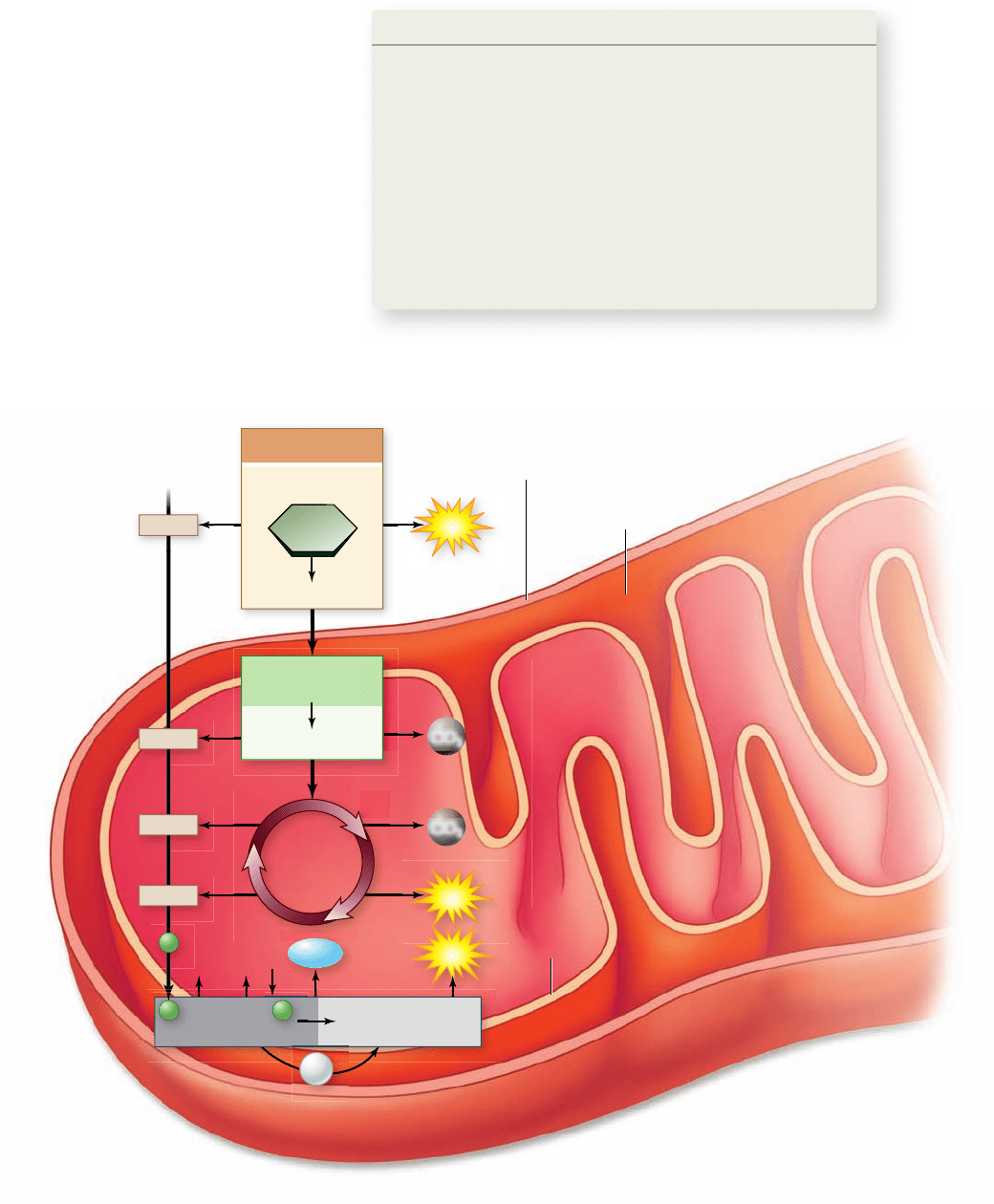
Apago PDF Enhancer
Krebs
Cycle
ATP
ATP
ATP
FAD
O
2
NAD
;
H
2
O
Intermembrane
space
Mitochondrial
matrix
Inner
mitochondrial
membrane
Pyruvate
Oxidation
Acetyl-CoA
Glycolysis
Glucose
Pyruvate
Electron
Transport Chain
Chemiosmosis
ATP Synthase
H
;
NADH
NADH
FADH
2
e
:
NADH
Outer
mitochondrial
membrane
Tra
n
e
:
ain
e
:
CO
2
CO
2
Figure 7.5
An overview of
aerobic respiration.
passes the electrons down a series of carriers while translocating
protons into the intermembrane space. The final electron accep-
tor in aerobic respiration is oxygen, and the resulting proton gra-
dient provides energy for the enzyme ATP synthase to
phosphorylate ADP to ATP (figure 7.5). The details of this com-
plex process will be covered in the remainder of this chapter.
Learning Outcomes Review 7.1
Cells acquire energy from the complete oxidation of glucose. In these
redox reactions, protons as well as electrons are transferred, and
thus they are dehydrogenation reactions. Electron carriers aid in the
gradual, stepwise release of the energy from oxidation, rather than
rapid combustion. The result is the synthesis of ATP, a portable source
of energy. ATP synthesis can occur by two mechanisms: substrate level
phosphorylation and oxidative phosphorylation.
■ Why don’t cells just link the oxidation of glucose
directly to cellular functions that require
the energy?
around in reactions that provide the energy required to
form ATP by substrate-level phosphorylation.
In 2. oxidative phosphorylation, ATP is synthesized by
the enzyme ATP synthase, using energy from a proton
(H
+
) gradient. This gradient is formed by high-energy
electrons from the oxidation of glucose passing down an
electron transport chain (described later). These
electrons, with their energy depleted, are then donated
to oxygen, hence the term oxidative phosphorylation. ATP
synthase uses the energy from the proton gradient to
catalyze the reaction:
ADP + P
i
→
ATP
Eukaryotes and aerobic prokaryotes produce the vast majority
of their ATP this way.
In most organisms, these two processes are combined. To
harvest energy to make ATP from glucose in the presence of oxy-
gen, the cell carries out a complex series of enzyme-catalyzed
reactions that remove energetic electrons via oxidation reactions.
These electrons are then used in an electron transport chain that
126
part
II
Biology of the Cell
rav32223_ch07_122-146.indd 126rav32223_ch07_122-146.indd 126 11/6/09 12:40:35 PM11/6/09 12:40:35 PM
Apago PDF Enhancer
6-carbon glucose
(Starting material)
ATP ATP
ADP ADP
3-carbon sugar
phosphate
3-carbon sugar
phosphate
6-carbon sugar diphosphate
3-carbon
pyruvate
3-carbon
pyruvate
ATP
ADP
ATP
ADP
ATP
ADP
ATP
ADP
NAD
;
NAD
;
Priming Reactions Cleavage
Oxidation and ATP Formation
STEP A
Glycolysis begins
with the addition of
energy. Two high-
energy phosphates
(P) from two
molecules of ATP
are added to the
6-carbon molecule
glucose, producing
a 6-carbon
molecule with two
phosphates.
STEP B
Then, the 6-carbon
molecule with two
phosphates is split in
two, forming two
3-carbon sugar
phosphates.
STEPS C and D
An additional
inorganic phosphate
(P
i
) is incorporated
into each 3-carbon
sugar phosphate. An
oxidation reaction
converts the two
sugar phosphates
into intermediates
that can transfer a
phosphate to ADP to
form ATP. The
oxidation reactions
also yield NADH
giving a net energy
yield of 2 ATP and 2
NADH.
Glycolysis
Electron Transport Chain
Chemiosmosis
NADH
Krebs
Cycle
NADH NADH
ATP
Pyruvate Oxidation
P P
P
P
i
P
i
P
7.2
Glycolysis: Splitting Glucose
Learning Outcomes
Describe the process of glycolysis.1.
Calculate the energy yield from glycolysis.2.
Distinguish between aerobic respiration and 3.
fermentation.
Glucose molecules can be dismantled in many ways, but
primitive organisms evolved a glucose-catabolizing process
that releases enough free energy to drive the synthesis of
ATP in enzyme-coupled reactions. Glycolysis occurs in the
cytoplasm and converts glucose into two 3-carbon mole-
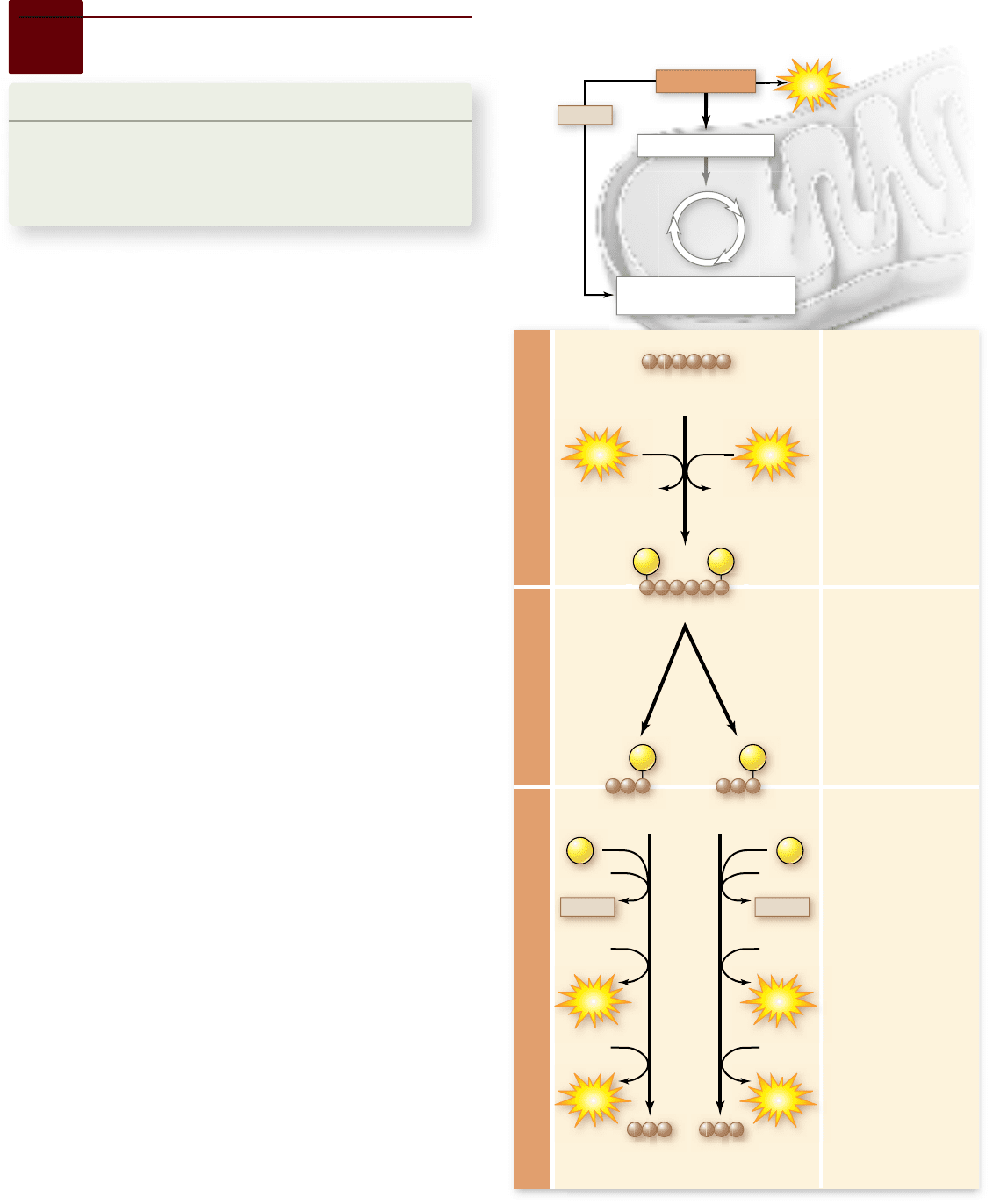
cules of pyruvate (figure 7.6). For each molecule of glucose
that passes through this transformation, the cell nets two
ATP molecules.
Priming changes glucose into
an easily cleaved form
The first half of glycolysis consists of five sequential reactions
that convert one molecule of glucose into two molecules of the
3-carbon compound glyceraldehyde 3-phosphate (G3P). These re-
actions require the expenditure of ATP, so they are an ender-
gonic process.
Step A: Glucose priming
Three reactions “prime” glu-
cose by changing it into a compound that can be cleaved
readily into two 3-carbon phosphorylated molecules. Two
of these reactions transfer a phosphate from ATP, so this
step requires the cell to use two ATP molecules.
Step B: Cleavage and rearrangement
In the first of
the remaining pair of reactions, the 6-carbon product of
step A is split into two 3-carbon molecules. One is G3P,
and the other is then converted to G3P by the second reac-
tion (figure 7.7).
ATP is synthesized by substrate-level
phosphorylation
In the second half of glycolysis, five more reactions convert
G3P into pyruvate in an energy-yielding process that gener-
ates ATP.
Step C: Oxidation
Two electrons (and one proton) are trans-
ferred from G3P to NAD
+
, forming NADH. A molecule of P
i
is also added to G3P to produce 1,3-bisphosphoglycerate
(BPG) . The phosphate incorporated will later be transferred
to ADP by substrate-level phosphorylation to allow a net yield
of ATP.
Step D: ATP generation
Four reactions convert BPG into
pyruvate. This process generates two ATP molecules per G3P
(see gures 7.4 and 7.7) produced in Step B.
Figure 7.6
How glycolysis works.
chapter
7
How Cells Harvest Energy
127www.ravenbiology.com
rav32223_ch07_122-146.indd 127rav32223_ch07_122-146.indd 127 11/6/09 12:40:40 PM11/6/09 12:40:40 PM
Apago PDF Enhancer
1. Phosphorylation of glucose
by ATP.
2–3. Rearrangement, followed
by a second ATP
phosphorylation.
4–5. The 6-carbon molecule is
split into two 3-carbon
molecules—one G3P,
another that is converted
into G3P in another reaction.
6. Oxidation followed by
phosphorylation produces
two NADH molecules and
two molecules of BPG, each
with one high-energy
phosphate bond.
7. Removal of high-energy
phosphate b
y two ADP
molecules produces two
ATP molecules and leaves
two 3PG molecules.
8–9. Removal of water yields
two PEP molecules, each
with a high-energy
phosphate bond.
10. Removal of high-energy
phosphate by two ADP
molecules produces two
ATP molecules and two
pyruvate molecules.
NADH
NAD
;
NADH
P
i
P
i
NAD
;
Glucose
Hexokinase
Phosphoglucose
isomerase
Phosphofructokinase
Glyceraldehyde 3-
phosphate (G3P)
Dihydroxyacetone
phosphate
Glucose 6-phosphate
Fructose 6-phosphate
Fructose 1,6-bisphosphate
Isomerase
Glyceraldehyde
3-phosphate
dehydrogenase
Aldolase
1,3-Bisphosphoglycerate
(BPG)
1,3-Bisphosphoglycerate
(BPG)
3-Phosphoglycerate
(3PG)
3-Phosphoglycerate
(3PG)
2-Phosphoglycerate
(2PG)
2-Phosphoglycerate
(2PG)
Phosphoenolpyruvate
(PEP)
Phosphoenolpyruvate
(PEP)
Pyruvate Pyruvate
Phosphoglycerate
kinase
Phosphoglyceromutase
Enolase
Pyruvate kinase
ATP
ADP
1
2
ATP
ADP
3
4
5
6
7
8
9
10
Glucose
Glucose
6-phosphate
Fructose
6-phosphate
Fructose
1,6-bisphosphate
Dihydroxyacetone
Phosphate
1,3-Bisphospho-
glycerate
Glyceraldehyde
3-phosphate
3-Phospho-
glycerate
2-Phospho-
glycerate
Phosphoenol-
pyruvate
Pyruvate
Glycolysis: The Reactions
Glycolysis
Electron Transport Chain
Chemiosmosis
NADH
Krebs
Cycle
ATP
Pyruvate Oxidation
H
2
O H
2
O
ATP
ADP
ATP
ADP
ATP
ADP
ATP
ADP
CH
2
JOJ
CH
2
OH
O
JOJ
CH
2
CH
2
JOJ
O
CH
2
OH
O
CH
2
JOJ
O
CHOH
H
C
KO
CH
2
JOJ
CHOH
O
:
CKO
CH
2
JOJ
H
JCJOJ
O
:
CKO
CH
2
OH
C
KO
O
:
CKO
CH
3
CJOJ
O
:
CKO
CH
2
CHOH
JOJCKO
CH
2
JOJ
CH
2
OH
C
KO
JOJ
CH
2
P
P
P P
P
P
P
P
P
P
P
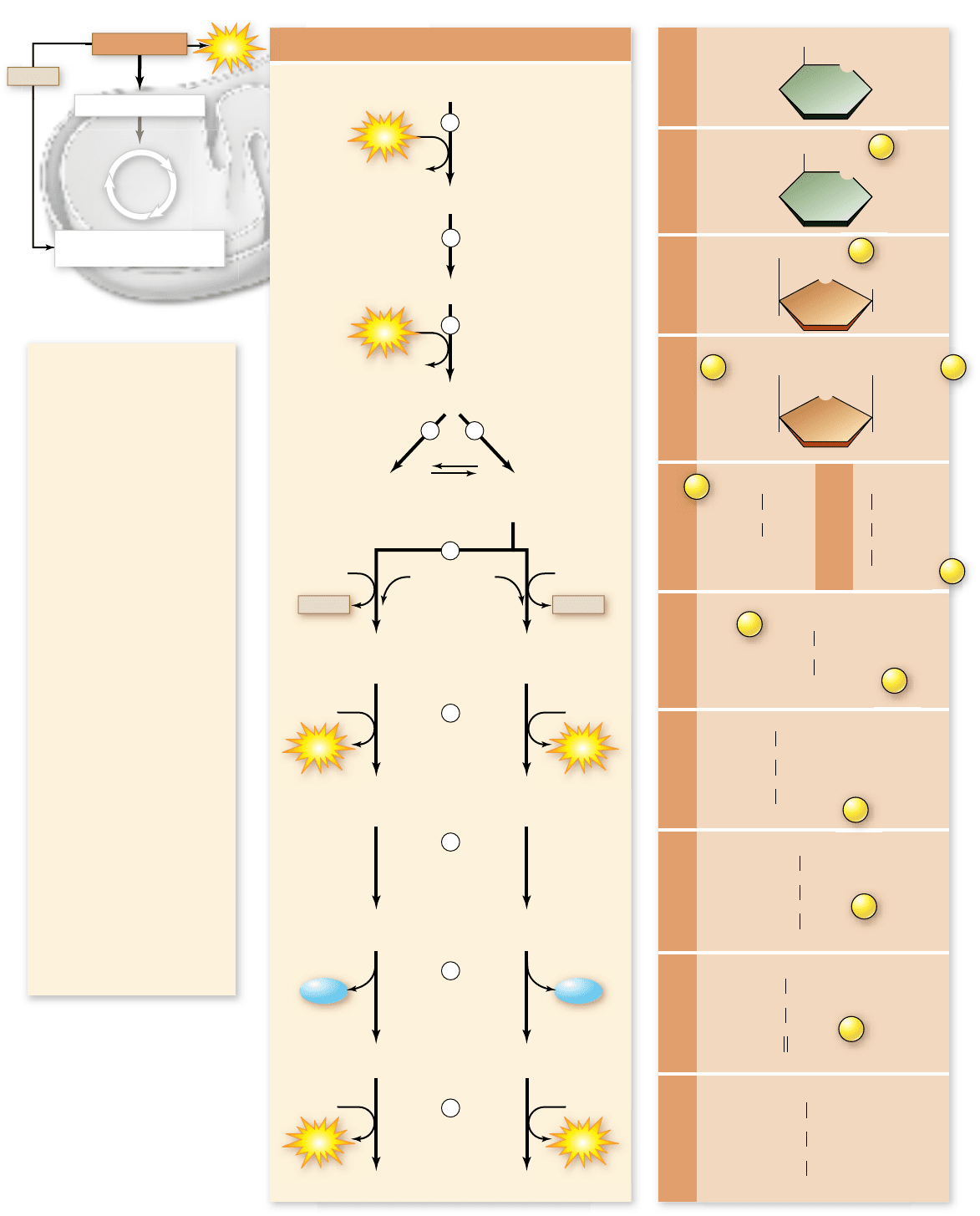
Figure 7.7
The glycolytic pathway.
The rst ve reactions
convert a molecule of glucose
into two molecules of G3P.
The second ve reactions
convert G3P into pyruvate.
128
part
II
Biology of the Cell
rav32223_ch07_122-146.indd 128rav32223_ch07_122-146.indd 128 11/6/09 12:40:43 PM11/6/09 12:40:43 PM
Apago PDF Enhancer
Acetaldehyde
Acetyl-CoA
H
2
O
Pyruvate
ETC in mitochondria
CO
2
NAD
;
NAD
;
Ethanol
NAD
;
O
2
Krebs
Cycle
NADH
NADH
NADH
Lactate
With oxygen
Without oxygen
Figure 7.8
The fate of pyruvate and
NADH produced by glycolysis. In the
presence of oxygen, NADH is oxidized by
the electron transport chain (ETC) in
mitochondria using oxygen as the nal
electron acceptor. This regenerates NAD
+
,
allowing glycolysis to continue. The
pyruvate produced by glycolysis is oxidized
to acetyl-CoA, which enters the Krebs
cycle. In the absence of oxygen, pyruvate is
instead reduced, oxidizing NADH and
regenerating NAD
+
thus allowing glycolysis
to continue. Direct reduction of pyruvate,
as in muscle cells, produces lactate. In yeast,
carbon dioxide is rst removed from
pyruvate, producing acetaldehyde, which is
then reduced to ethanol.
Because each glucose molecule is split into two G3P mole-
cules, the overall reaction sequence has a net yield of two molecules
of ATP, as well as two molecules of NADH and two of pyruvate:
4 ATP (2 ATP for each of the 2 G3P molecules in step D)
– 2 ATP (used in the two reactions in step A)
2 ATP (net yield for entire process)
The hydrolysis of one molecule of ATP yields a ΔG of – 7.3 kcal/
mol under standard conditions. Thus cells harvest a maximum of
14.6 kcal of energy per mole of glucose from glycolysis.
A brief history of glycolysis
Although far from ideal in terms of the amount of energy it
releases, glycolysis does generate ATP. For more than a billion
years during the anaerobic first stages of life on Earth, glycoly-
sis was the primary way heterotrophic organisms generated
ATP from organic molecules.
Like many biochemical pathways, glycolysis is believed to
have evolved backward, with the last steps in the process being
the most ancient. Thus, the second half of glycol ysis, the ATP-
yielding breakdown of G3P, may have been the original pro-
cess. The synthesis of G3P from glucose would have appeared
later, perhaps when alternative sources of G3P were depleted.
Why does glycolysis take place in modern organisms,
since its energy yield in the absence of oxygen is comparatively
little? The answer is that evolution is an incremental process:
Change occurs by improving on past successes. In catabolic
metabolism, glycolysis satisfied the one essential evolutionary
criterion—it was an improvement. Cells that could not carry
out glycolysis were at a competitive disadvantage, and only cells
capable of glycolysis survived. Later improvements in catabolic
metabolism built on this success. Metabolism evolved as one
layer of reactions added to another. Nearly every present-day
organism carries out glycolysis, as a metabolic memory of its
evolutionary past.
The last section of this chapter discusses the evolution of
metabolism in more detail.
NADH must be recycled
to continue respiration
Inspect for a moment the net reaction of the glycolytic sequence:
glucose + 2 ADP + 2 P
i
+ 2 NAD
+
→
2 pyruvate +
2 ATP + 2 NADH + 2 H
+
+ 2 H
2
O
You can see that three changes occur in glycolysis: (1) Glucose
is converted into two molecules of pyruvate; (2) two molecules
of ADP are converted into ATP via substrate-level phosphory-
lation; and (3) two molecules of NAD
+
are reduced to NADH.
This leaves the cell with two problems: extracting the energy
that remains in the two pyruvate molecules, and regenerating
NAD
+
to be able to continue glycolysis.
Recycling NADH
As long as food molecules that can be converted into glucose
are available, a cell can continually churn out ATP to drive its
activities. In doing so, however, it accumulates NADH and
depletes the pool of NAD
+
molecules. A cell does not contain
a large amount of NAD
+
, and for glycolysis to continue,
NADH must be recycled into NAD
+
. Some molecule other
than NAD
+
must ultimately accept the electrons taken from
G3P and be reduced. Two processes can carry out this key task
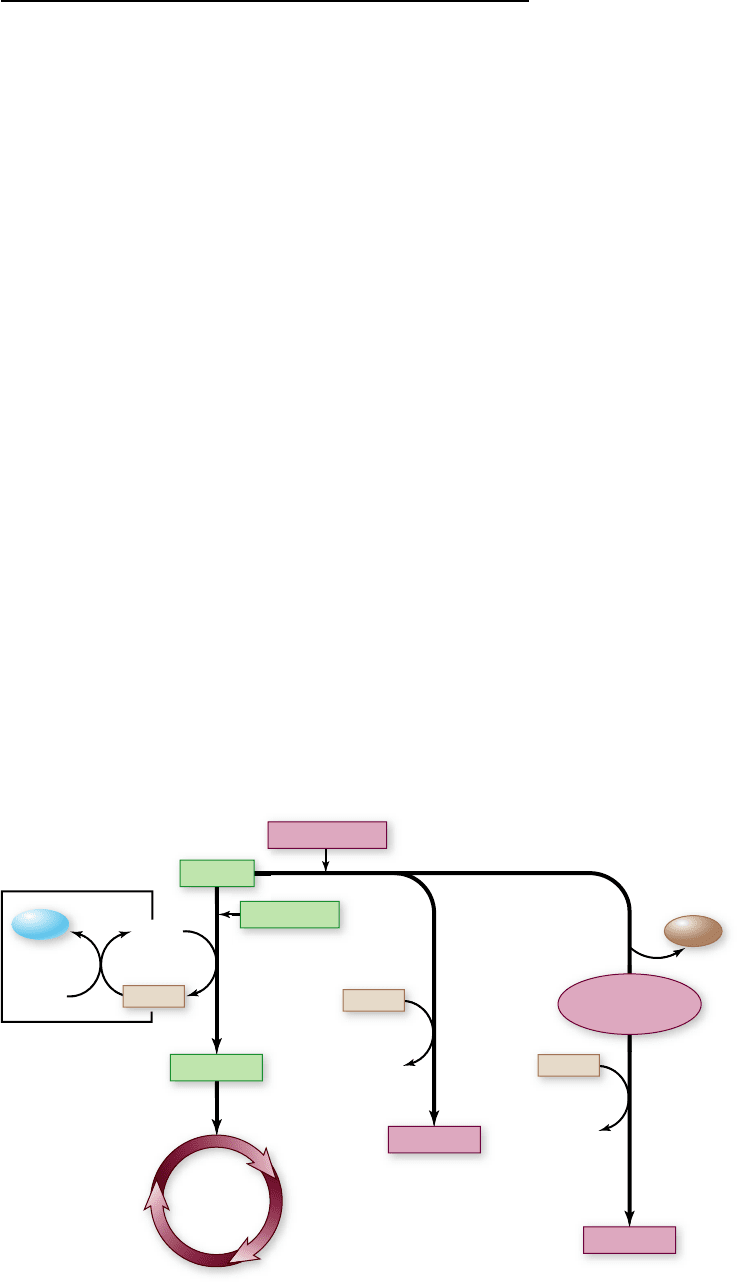
(figure 7.8):
Aerobic respiration.1. Oxygen is an excellent electron
acceptor. Through a series of electron transfers, electrons
taken from G3P can be donated to oxygen, forming water.
This process occurs in the mitochondria of eukaryotic
cells in the presence of oxygen. Because air is rich in
oxygen, this process is also referred to as aerobic
metabolism. A signi cant amount of ATP is also produced.
Fermentation.2. When oxygen is unavailable, an organic
molecule, such as acetaldehyde in wine fermentation, can
accept electrons instead. This reaction plays an important
role in the metabolism of most organisms, even those
capable of aerobic respiration.
chapter
7
How Cells Harvest Energy
129www.ravenbiology.com
rav32223_ch07_122-146.indd 129rav32223_ch07_122-146.indd 129 11/6/09 12:40:44 PM11/6/09 12:40:44 PM
Apago PDF Enhancer
Pyruvate
Acetyl Coenzyme A
CO
2
Pyruvate Acetyl Coenzyme A
CKO
O
:
CKO
CH
3
CKO
S
J
CoA
CoA
CH
3
Pyruvate Oxidation: The Reaction
NAD
;
NADH
Glycolysis
Electron Transport Chain
Chemiosmosis
NADH
Krebs
Cycle
Pyruvate Oxidation
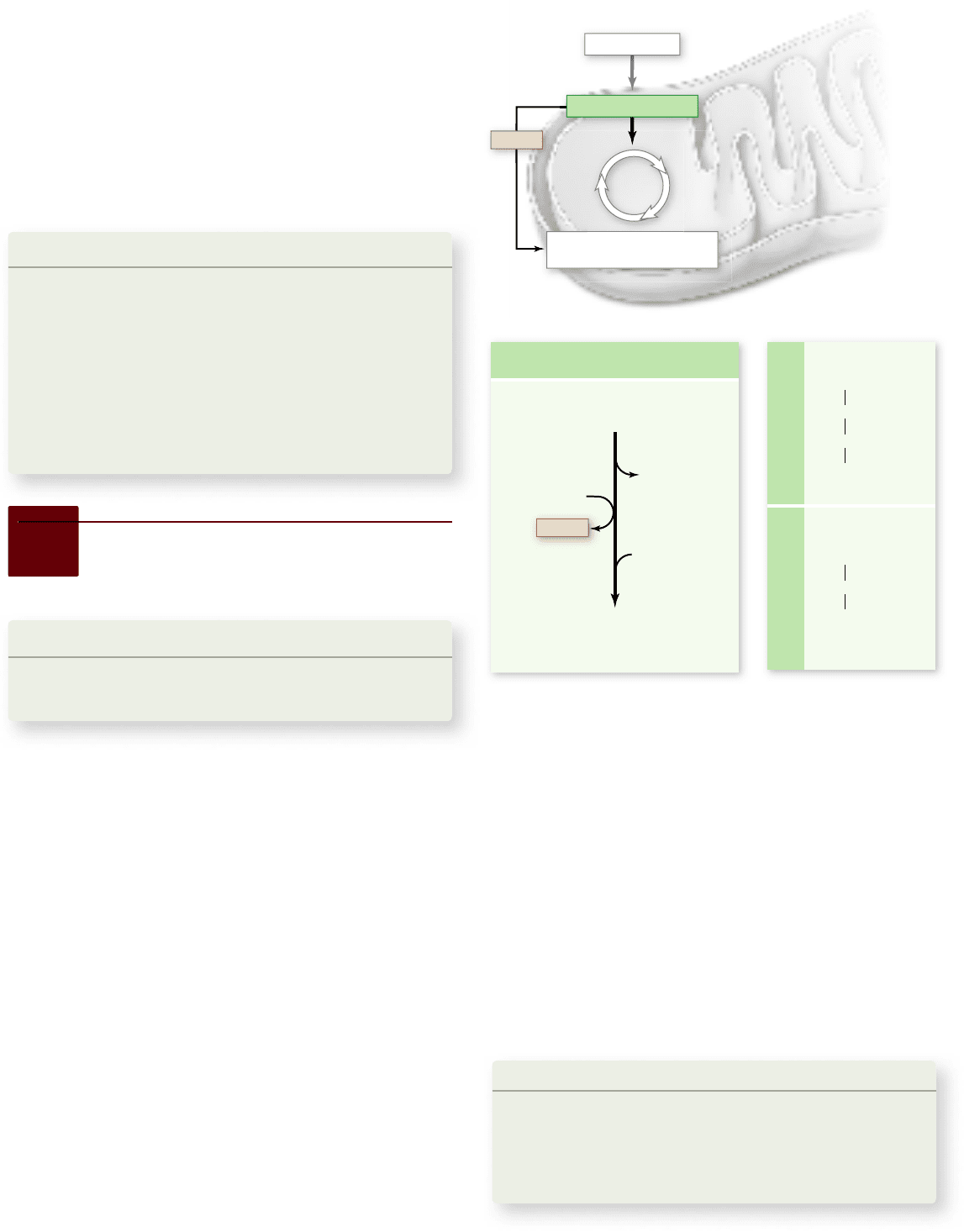
Figure 7.9
The oxidation of pyruvate. This complex
reaction uses NAD
+
to accept electrons, reducing it to NADH. The
product, acetyl coenzyme A (acetyl-CoA), feeds the acetyl unit into the
Krebs cycle, and the CoA is recycled for another oxidation of pyruvate.
NADH provides energetic electrons for the electron transport chain.
The fate of pyruvate
The fate of the pyruvate that is produced by glycolysis depends
on which of these two processes takes place. The aerobic respi-
ration path starts with the oxidation of pyruvate to produce
acetyl coenzyme A (acetyl-CoA), which is then further oxidized
in a series of reactions called the Krebs cycle. The fermentation
path, by contrast, uses the reduction of all or part of pyruvate to
oxidize NADH back to NAD
+
. We examine aerobic respiration
next; fermentation is described in detail in a later section.
Learning Outcomes Review 7.2
Glycolysis splits the 6-carbon molecule glucose into two 3-carbon molecules
of pyruvate. This process uses two ATP molecules in “priming” reactions and
eventually produces four molecules of ATP per glucose for a net yield of two
ATP. The oxidation reactions of glycolysis require NAD
+
and produce NADH.
When oxygen is abundant, NAD
+
is regenerated in the electron transport
chain using O
2
as an acceptor. When oxygen is absent, NAD
+
is regenerated in
a fermentation reaction using an organic molecule as an electron receptor.
■ Does glycolysis taking place in the cytoplasm argue for or
against the endosymbiotic origin of mitochondria?
the substrates from one enzyme to the next without releasing them.
Pyruvate dehydrogenase, the complex of enzymes that removes CO
2
from pyruvate, is one of the largest enzymes known; it contains
60 subunits! The reaction can be summarized as:
pyruvate + NAD
+
+ CoA
→
acetyl-CoA +
NADH + CO
2
+ H
+
The molecule of NADH produced is used later to produce
ATP. The acetyl group is fed into the Krebs cycle, with the CoA
being recycled for another oxidation of pyruvate. The Krebs cycle
then completes the oxidation of the original carbons from glucose.
Learning Outcome Review 7.3
Pyruvate is oxidized in the mitochondria to produce acetyl-CoA and CO
2
. Acetyl-
CoA is the molecule that links glycolysis and the reactions of the Krebs cycle.
■ What are the advantages and disadvantages of a
multienzyme complex?
7.3
The Oxidation of Pyruvate
to Produce Acetyl-CoA
Learning Outcome
Explain how the oxidation of pyruvate joins glycolysis 1.
with the Krebs cycle.
In the presence of oxygen, the oxidation of glucose that begins
in glycolysis continues where glycolysis leaves off—with pyru-
vate. In eukaryotic organisms, the extraction of additional en-
ergy from pyruvate takes place exclusively inside mitochondria.
In prokaryotes similar reactions take place in the cytoplasm and
at the plasma membrane.
The cell harvests pyruvate’s considerable energy in two
steps. First, pyruvate is oxidized to produce a two-carbon com-
pound and CO
2
, with the electrons transferred to NAD
+
to
produce NADH. Next, the two-carbon compound is oxidized
to CO
2
by the reactions of the Krebs cycle.
Pyruvate is oxidized in a “decarboxylation” reaction that
cleaves off one of pyruvate’s three carbons. This carbon departs
as CO
2
(figure 7.9). The remaining 2-carbon compound, called
an acetyl group, is then attached to coenzyme A; this entire mol-
ecule is called acetyl-CoA. A pair of electrons and one associated
proton is transferred to the electron carrier NAD
+
, reducing it
to NADH, with a second proton donated to the solution.
The reaction involves three intermediate stages, and it is cata-
lyzed within mitochondria by a multienzyme complex. As chapter 6
noted, a multienzyme complex organizes a series of enzymatic steps
so that the chemical intermediates do not diffuse away or undergo
other reactions. Within the complex, component polypeptides pass
130
part
II
Biology of the Cell
rav32223_ch07_122-146.indd 130rav32223_ch07_122-146.indd 130 11/6/09 12:40:44 PM11/6/09 12:40:44 PM
Apago PDF Enhancer
Krebs Cycle
SEGMENT A
Pyruvate from glycolysis is oxidized
into an acetyl group that feeds into
the citrate cycle. 2-C acetyl group
combines with 4-C oxaloacetate to
produce the 6-C compound citrate.
SEGMENT B
Oxidation reactions produce
NADH. The loss of two CO
2
's
leaves a new 4-C compound. 1
ATP is directly generated for each
acetyl group fed in.
SEGMENT C
Two additional oxidations
generate another NADH and an
FADH
2
and regenerate the
original 4-C oxaloacetate.
S
E
G
M
E
N
T
C
S
E
G
M
E
N
T
B
S
E
G
M
E
N
T
A
4-carbon
molecule
4-carbon
molecule
Glycolysis
Electron Transport Chain
Chemiosmosis
NADH
FADH
2
Krebs
Cycle
Pyruvate Oxidation
ATP
(Acetyl-CoA)
CoA-
CoA
4-carbon
molecule
(oxaloacetate)
6-carbon molecule
(citrate)
5-carbon
molecule
4-carbon
molecule
ATP
ADP+
P
CO
2
CO
2
NADH
FAD
NAD
;
FADH
2
NAD
;
NADH
NAD
;
NADH
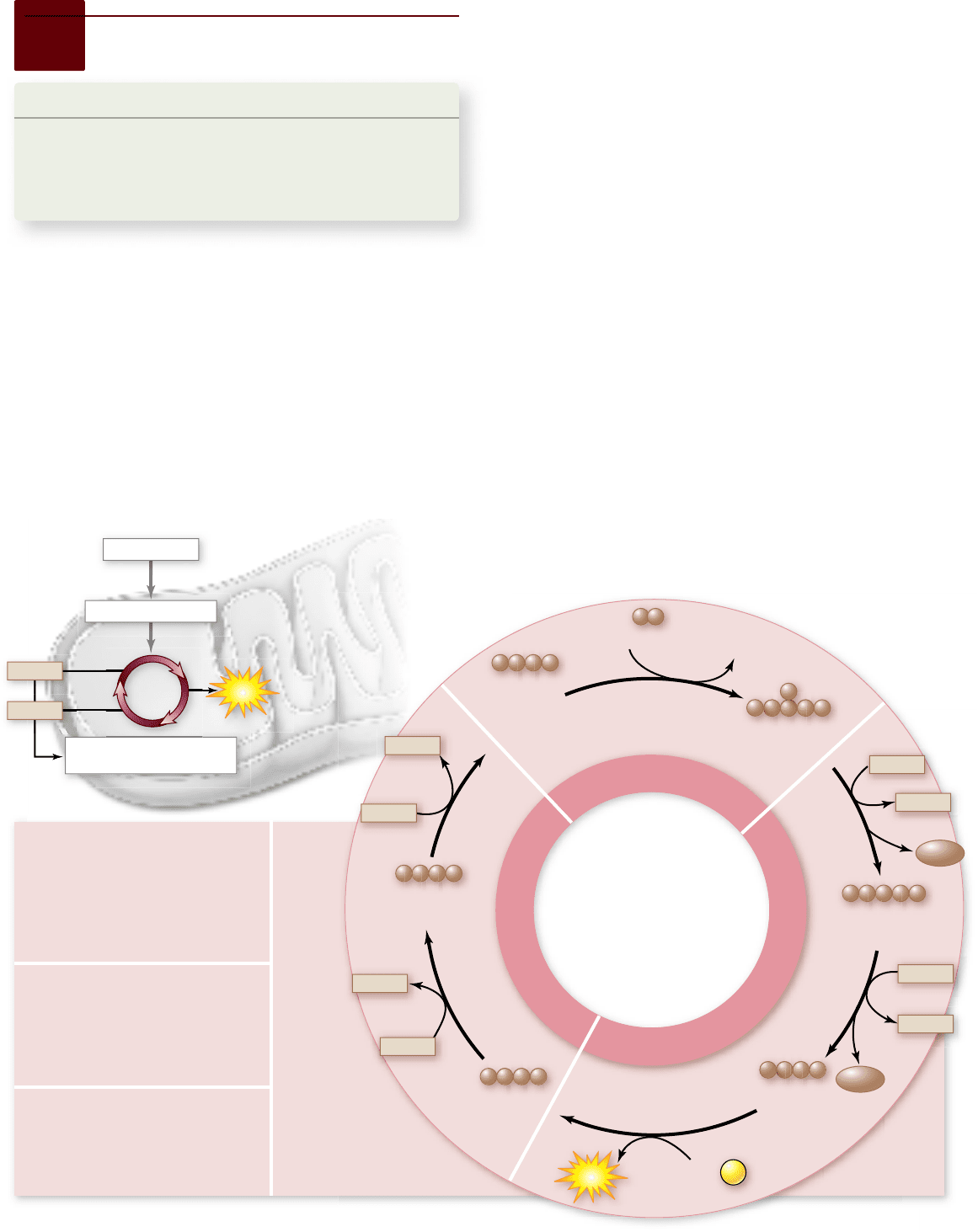
Figure 7.10
How the Krebs cycle works.
used by the electron transport chain to drive proton pumps that
generate ATP.
The Krebs cycle has three segments:
An overview
The nine reactions of the Krebs cycle can be grouped into three
overall segments. These are described in the following sections
and summarized in figure 7.10.
Segment A: Acetyl-CoA plus oxaloacetate
This reaction
produces the 6-carbon citrate molecule.
Segment B: Citrate rearrangement and decarboxylation
Five more steps, which have been simpli ed in gure 7.10, re-
duce citrate to a 5-carbon intermediate and then to 4-carbon
succinate. During these reactions, two NADH and one ATP
are produced.
Segment C: Regeneration of oxaloacetate
Succinate un-
dergoes three additional reactions, also simpli ed in the gure,
to become oxaloacetate. During these reactions, one NADH is
produced; in addition, a molecule of avin adenine dinucleotide
(FAD), another cofactor, becomes reduced to FADH
2
.
The specifics of each reaction are described next.
7.4
The Krebs Cycle
Learning Outcomes
Describe the three segments and nine reactions of the 1.
Krebs cycle.
Explain the fate of the electrons produced by the 2.
Krebs cycle.
In this third stage, the acetyl group from pyruvate is oxidized in
a series of nine reactions called the Krebs cycle. These reactions
occur in the matrix of mitochondria.
In this cycle, the 2-carbon acetyl group of acetyl-CoA
combines with a 4-carbon molecule called oxaloacetate. The
resulting 6-carbon molecule, citrate, then goes through a
several-step sequence of electron-yielding oxidation reactions,
during which two CO
2
molecules split off, restoring oxaloace-
tate. The regenerated oxaloacetate is used to bind to another
acetyl group for the next round of the cycle.
In each turn of the cycle, a new acetyl group is added and
two carbons are lost as two CO
2
molecules, and more electrons
are transferred to electron carriers. These electrons are then
chapter
7
How Cells Harvest Energy
131www.ravenbiology.com
rav32223_ch07_122-146.indd 131rav32223_ch07_122-146.indd 131 11/6/09 12:40:46 PM11/6/09 12:40:46 PM