
Raven P.H., Johnson G.B., Mason K.A. Biology (Ninth Edition)
Подождите немного. Документ загружается.

Apago PDF Enhancer
a.
c.
b.
Ions
Ions
Ligand
(signal)
Ligand (signal)
Inactive
Active
g
b
g
a
a
a
b
GDP
GTP GTP
G protein activates
either enzyme or ion channel
Ions
Ligand
(signal)
G protein
Enzyme Ion channel
GPCR
Cellular
response
The channel is said to be chemically gated because it
opens only when a chemical (the neurotransmitter) binds to it.
The type of ion that flows across the membrane when a chemi-
cally gated ion channel opens depends on the shape and charge
structure of the channel. Sodium, potassium, calcium, and chlo-
ride ions all have specific ion channels.
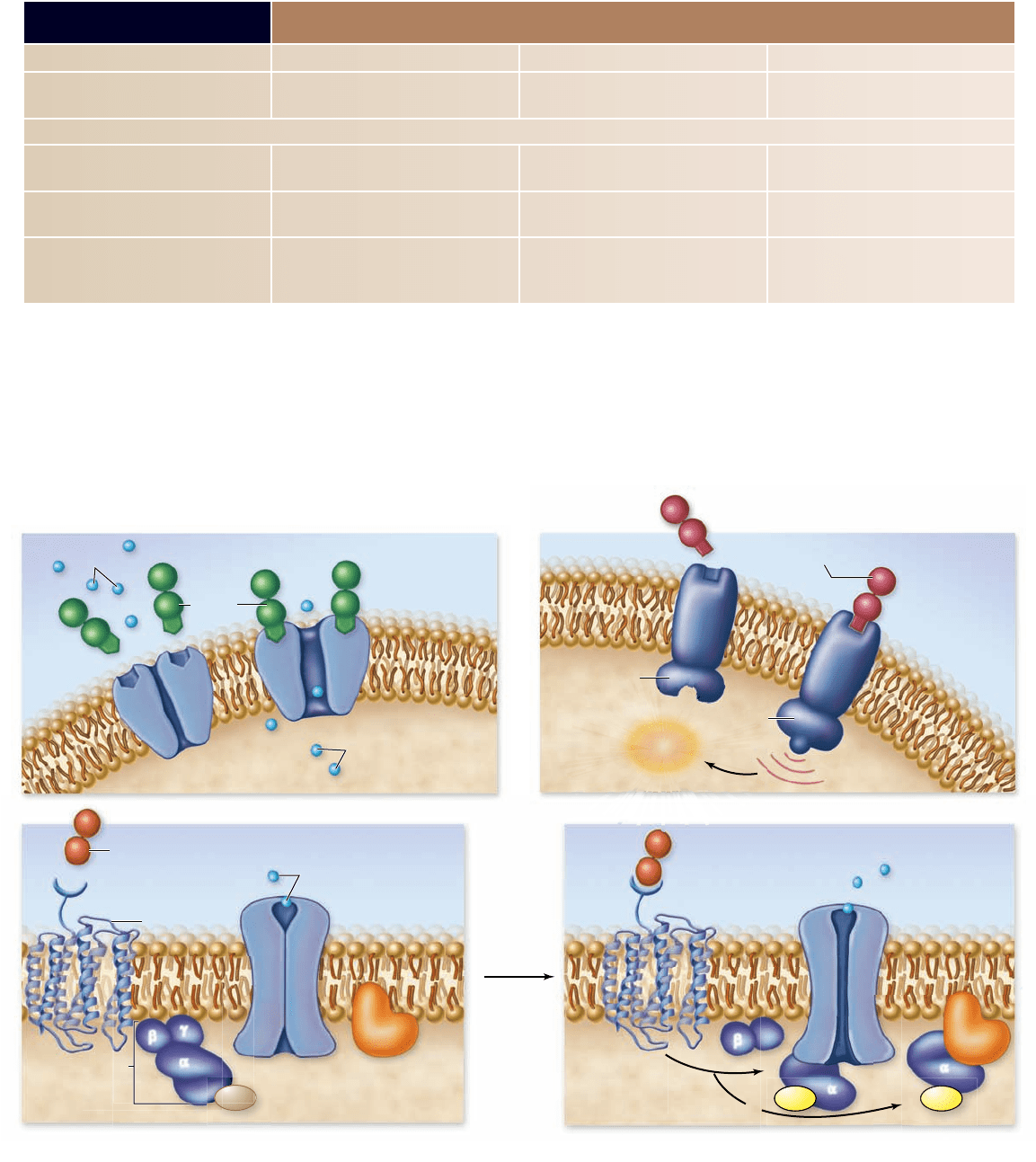
The acetylcholine receptor found in muscle cell membranes
functions as an Na
+
channel. When the receptor binds to its ligand,
TABLE 9.1
Receptors Involved in Cell Signaling
Receptor Type Structure Function Example
Intracellular Receptors No extracellular signal-binding site Receives signals from lipid-soluble or
noncharged, nonpolar small molecules
Receptors for NO, steroid hormone, vitamin D,
and thyroid hormone
Cell Surface Receptors
Chemically gated ion channels Multipass transmembrane protein forming a
central pore
Molecular “gates” triggered chemically to
open or close
Neurons
Enzymatic receptors Single-pass transmembrane protein Binds signal extracellularly; catalyzes
response intracellularly
Phosphorylation of protein kinases
G protein-coupled receptors Seven-pass transmembrane protein with
cytoplasmic binding site for G protein
Binding of signal to receptor causes GTP to
bind a G protein; G protein, with attached GTP,
detaches to deliver the signal inside the cell
Peptide hormones, rod cells in the eyes
the neurotransmitter acetylcholine, the channel opens allowing Na
+
to flow into the muscle cell. This is a critical step linking the signal
from a motor neuron to muscle cell contraction (chapter 44) .
Enzymatic receptors
Many cell surface receptors either act as enzymes or are di-
rectly linked to enzymes (figure 9.4b). When a signal molecule
binds to the receptor, it activates the enzyme. In almost all
Figure 9.4
Cell surface receptors. a. Chemically gated ion channels form a pore in the plasma membrane that can be opened or
closed by chemical signals. They are usually selective, allowing the passage of only one type of ion. b. Enzymatic receptors bind to ligands on
the extracellular surface. A catalytic region on their cytoplasmic portion transmits the signal across the membrane by acting as an enzyme in
the cytoplasm. c. G protein-coupled receptors (GPCR) bind to ligands outside the cell and to G proteins inside the cell. The G protein then
activates an enzyme or ion channel, transmitting signals from the cell’s surface to its interior.
172
part
II
Biology of the Cell
rav32223_ch09_168-185.indd 172rav32223_ch09_168-185.indd 172 11/6/09 2:32:52 PM11/6/09 2:32:52 PM
Apago PDF Enhancer
Hormone
Inhibitor
Inhibitor
DNA-binding
site blocked
DNA-binding
site exposed
Signal molecule-
binding domain
Transcription-activating domain
1. Hormones cross
plasma membrane
and bind to
cytoplasmic
receptors.
2. Hormone binding
alters receptor
conformation so it no
longer binds inhibitor.
3. Hormone–receptor
complex translocates
to nucleus.
4. Hormone–receptor
complex binds to DNA.
This usually turns on
transcription, but can
also turn it off.
5. Cellular
response is
a change in
gene
expression.
Gene
transcription
cases, these enzymes are protein kinases, enzymes that add
phosphate groups to proteins. We discuss these receptors in de-
tail in a later section of this chapter.
G Protein-coupled receptors
A third class of cell surface receptors acts indirectly on enzymes
or ion channels in the plasma membrane with the aid of an
assisting protein, called a G protein. The G protein, which is
so named because it binds the nucleotide guanosine triphosphate
(GTP), can be thought of as being inserted between the recep-
tors and the enzyme (effector). That is, the ligand binds to the
receptor, activating it, which activates the G protein, which in
turn activates the effector protein (figure 9.4c). These receptors
are also discussed in detail later on.
Membrane receptors can generate
second messengers
Some enzymatic receptors and most G protein-coupled receptors
utilize other substances to relay the message within the cytoplasm.
These other substances, small molecules or ions called second
messengers, alter the behavior of cellular proteins by binding
to them and changing their shape. (The original signal molecule
is considered the “first messenger.”) Two common second mes-
sengers are cyclic adenosine monophosphate (cyclic-AMP, or
cAMP) and calcium ions. The role of these second messengers
will be explored in more detail in a later section.
Learning Outcome Review 9.2
Receptors may be internal (intracellular receptors) or external
(membrane receptors). Membrane receptors include channel-linked
receptors, enzymatic receptors, and G protein-coupled receptors. Signal
transduction through membrane receptors often involves the production
of a second signaling molecule, or second messenger, inside the cell.
■ Would a hydrophobic molecule be expected to have an
internal or membrane receptor?
9.3
Intracellular Receptors
Learning Outcomes
Identify the chemical nature of ligands for intracellular 1.
receptors.
Describe the action of intracellular receptors. 2.
Many cell signals are lipid-soluble or very small molecules that
can readily pass through the plasma membrane of the target
cell and into the cell, where they interact with an intracellular
receptor. Some of these ligands bind to protein receptors located
in the cytoplasm, others pass across the nuclear membrane as
well and bind to receptors within the nucleus.
Steroid hormone receptors a ect
gene expression
Of all of the receptor types discussed in this chapter, the action of
the steroid hormone receptors is the simplest and most direct.
Steroid hormones form a large class of compounds, in-
cluding cortisol, estrogen, progesterone, and testosterone, that
share a common nonpolar structure. Estrogen, progesterone,
and testosterone are involved in sexual development and be-
havior (chapter 53) . Other steroid hormones, such as cortisol,
also have varied effects depending on the target tissue, rang-
ing from the mobilization of glucose to the inhibition of white
blood cells to control inflammation. Their anti-inflammatory
action is the basis of their use in medicine.
The nonpolar structure allows these hormones to cross
the membrane and bind to intracellular receptors. The loca-
tion of steroid hormone receptors prior to hormone binding is
cytoplasmic, but their primary site of action is in the nucleus.
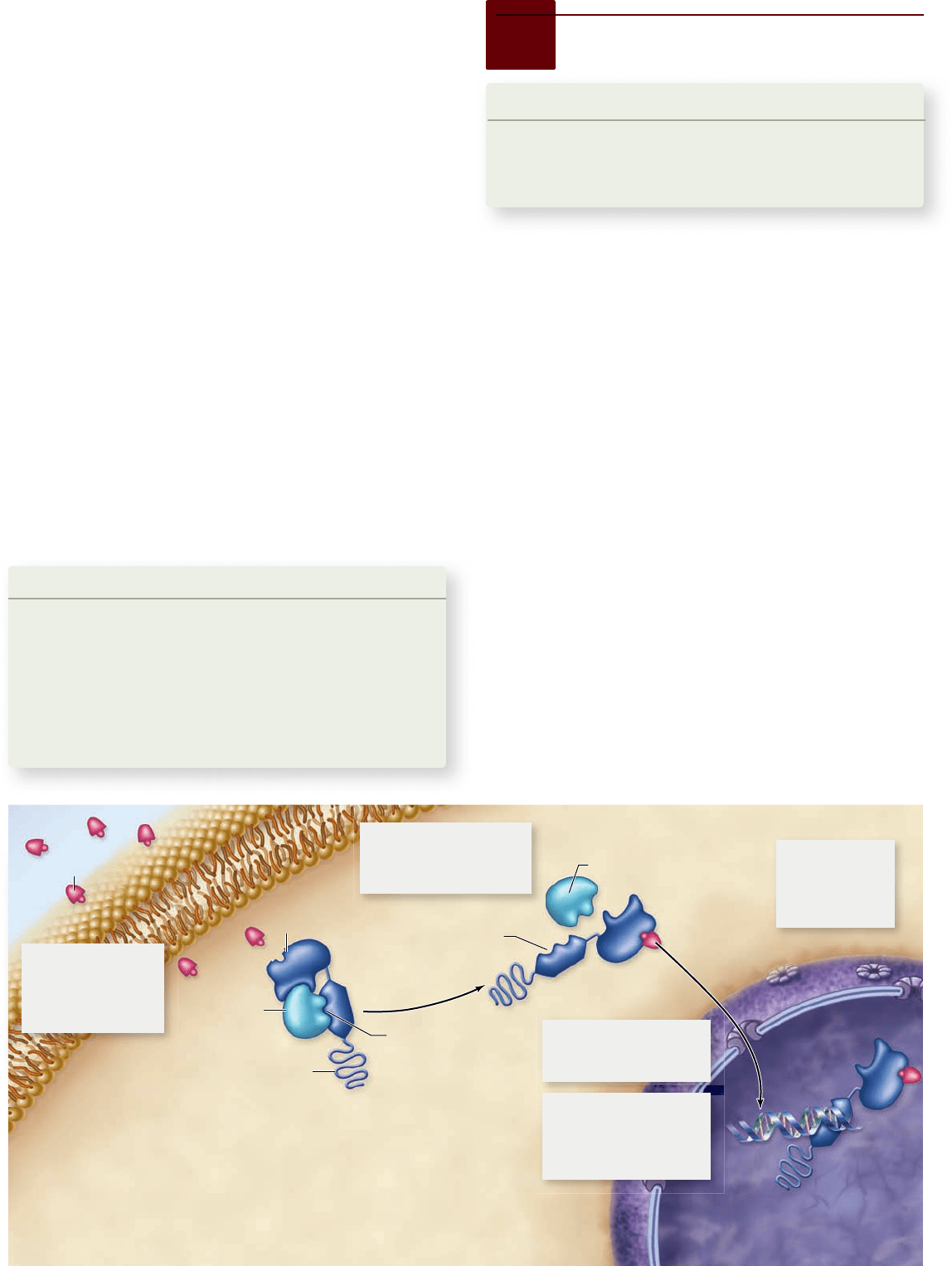
Binding of the hormone to the receptor causes the complex
to shift from the cytoplasm to the nucleus (figure 9.5). As the
Figure 9.5
Intracellular receptors regulate gene
transcription. Hydrophobic signaling molecules can cross the plasma
membrane and bind to intracellular receptors. This starts a signal
transduction pathway that produces changes in gene expression.
www.ravenbiology.com
chapter
9
Cell Communication
173
rav32223_ch09_168-185.indd 173rav32223_ch09_168-185.indd 173 11/6/09 2:32:55 PM11/6/09 2:32:55 PM

Apago PDF Enhancer
Other intracellular receptors act as enzymes
A very interesting example of a receptor acting as an enzyme is
found in the receptor for nitric oxide (NO). This small gas mol-
ecule diffuses readily out of the cells where it is produced and
passes directly into neighboring cells, where it binds to the enzyme
guanylyl cyclase. Binding of NO activates this enzyme, enabling it
to catalyze the synthesis of cyclic guanosine monophosphate (cGMP),
an intracellular messenger molecule that produces cell-specific re-
sponses such as the relaxation of smooth muscle cells.
When the brain sends a nerve signal to relax the smooth
muscle cells lining the walls of vertebrate blood vessels, acetyl-
choline released by the nerve cell binds to receptors on epithelial
cells. This causes an increase in intracellular Ca
2+
in the epithe-
lial cell that stimulates nitric oxide synthase to produce NO. The
NO diffuses into the smooth muscle, where it increases the level
of cGMP, leading to relaxation. This relaxation allows the vessel
to expand and thereby increases blood flow. This explains the use
of nitroglycerin to treat the pain of angina caused by constricted
blood vessels to the heart. The nitroglycerin is converted by cells
to NO, which then acts to relax the blood vessels.
The drug sildenafil (better known as Viagra) also func-
tions via this signal transduction pathway by binding to and
inhibiting the enzyme cGMP phosphodiesterase, which breaks
down cGMP. This keeps levels of cGMP high, thereby stimu-
lating production of NO. The reason for Viagra’s selective ef-
fect is that it binds to a form of cGMP phosphodiesterase found
in cells in the penis. This allows relaxation of smooth muscle in
erectile tissue, thereby increasing blood flow.
Learning Outcomes Review 9.3
Hydrophobic signaling molecules can cross the membrane and bind to
intracellular receptors. The steroid hormone receptors act by directly
infl uencing gene expression. On binding hormone, the hormone–
receptor moves into the nucleus to turn on (or sometimes turn off ) gene
expression. This also requires another protein called a coactivator that
functions with the hormone–receptor. Thus, the cell’s response to a
hormone depends on the presence of a receptor and coactivators as well.
■ Would these types of intracellular receptors be fast
acting, or have effects of longer duration?
ligand–receptor complex makes it all the way to the nucleus of
the cell, these receptors are often called nuclear receptors.
Steroid receptor action
The primary function of steroid hormone receptors, as well
as receptors for a number of other small, lipid-soluble signal
molecules such as vitamin D and thyroid hormone, is to act as
regulators of gene expression (see chapter 16).
All of these receptors have similar structures; the genes
that code for them appear to be the evolutionary descendants
of a single ancestral gene. Because of their structural similari-
ties, they are all part of the nuclear receptor superfamily.
Each of these receptors has three functional domains—
1. a hormone-binding domain,
2. a DNA-binding domain, and
3. a domain that can interact with coactivators to affect
the level of gene transcription.
In its inactive state, the receptor typically cannot
bind to DNA because an inhibitor protein occupies the
DNA-binding site. When the signal molecule binds to the
hormone-binding site, the conformation of the receptor
changes, releasing the inhibitor and exposing the DNA-
binding site, allowing the receptor to attach to specific nu-
cleotide sequences on the DNA (see figure 9.5). This binding
activates (or, in a few instances, suppresses) particular genes,
usually located adjacent to the hormone-binding sequences.
In the case of cortisol, which is a glucocorticoid hormone
that can increase levels of glucose in cells, a number of dif-
ferent genes involved in the synthesis of glucose have bind-
ing sites for the hormone receptor complex.
The lipid-soluble ligands that intracellular receptors rec-
ognize tend to persist in the blood far longer than water-soluble
signals. Most water-soluble hormones break down within min-
utes, and neurotransmitters break down within seconds or even
milliseconds. In contrast, a steroid hormone such as cortisol or
estrogen persists for hours.
Specificity and the role
of coactivators
The target cell’s response to a lipid-soluble cell signal can vary
enormously, depending on the nature of the cell. This charac-
teristic is true even when different target cells have the same
intracellular receptor. Given that the receptor proteins bind to
specific DNA sequences, which are the same in all cells, this
may seem puzzling. It is explained in part by the fact that the
receptors act in concert with coactivators, and the number and
nature of these molecules can differ from cell to cell. Thus, a
cell’s response depends on not only the receptors but also the
coactivators present.
The hormone estrogen has different effects in uterine
tissue than in mammary tissue. This differential response is
mediated by coactivators and not by the presence or absence
of a receptor in the two tissues. In mammary tissue, a criti-
cal coactivator is lacking and the hormone–receptor complex
instead interacts with another protein that acts to reduce gene
expression. In uterine tissue, the coactivator is present, and the
expression of genes that encode proteins involved in preparing
the uterus for pregnancy are turned on.
9.4
Signal Transduction Through
Receptor Kinases
Learning Outcomes
Compare the function of RTKs to steroid hormone receptors.1.
Describe how information crosses the membrane in RTKs. 2.
Explain the significance of kinase cascades.3.
Earlier you read that protein kinases phosphorylate proteins to
alter protein function and that the most common kinases act on
the amino acids serine, threonine, and tyrosine. The receptor
174
part
II
Biology of the Cell
rav32223_ch09_168-185.indd 174rav32223_ch09_168-185.indd 174 11/6/09 2:32:57 PM11/6/09 2:32:57 PM
Apago PDF Enhancer
1. Ligand binds to the receptor.
2. Two receptors associate (dimerize)
and phosphorylate each other
(autophosphorylation).
3. Response proteins bind to phospho-
tyrosine on receptor. Receptor can
phosphorylate other response proteins.
Ligands
Transmembrane RTK proteins
Phosphate
groups
Phosphorylated protein
Cellular
response
Dimerization and
autophosphorylation
Intracellular kinase domain
Extracellular ligand-binding domain
P
P
P
P
P
P
P
P
P
P
P
P
P
P
P
P
P
P
P
P
P
P
P
P
P
P
P
P
P
P
P
P
P
P
P
tyrosine kinases (RTK) influence the cell cycle, cell migration,
cell metabolism, and cell proliferation—virtually all aspects of
the cell are affected by signaling through these receptors. Altera-
tions to the function of these receptors and their signaling path-
ways can lead to cancers in humans and other animals.
Some of the earliest examples of cancer-causing genes, or
oncogenes, involve RTK function (discussed in chapter 10). The
cancer-causing simian sarcoma virus carries a gene for platelet-
derived growth factor. When the virus infects a cell, the cell over-
produces and secretes platelet-derived growth factor, causing
overgrowth of the surrounding cells. Another virus, avian eryth-
roblastosis virus, carries an altered form of the epidermal growth
factor receptor that lacks most of its extracellular domain. When
this virus infects a cell the altered receptors produced are stuck in
the “on” state. The continuous signaling from this receptor leads
to cells that have lost the normal controls over growth.
Receptor tyrosine kinases recognize hydrophilic ligands
and form a large class of membrane receptors in animal cells.
Plants possess receptors with a similar overall structure and
function, but they are serine–threonine kinases. These plant
receptors have been named plant receptor kinases.
Because these receptors are performing similar functions in
plant and animal cells but differ in their substrates, the duplication
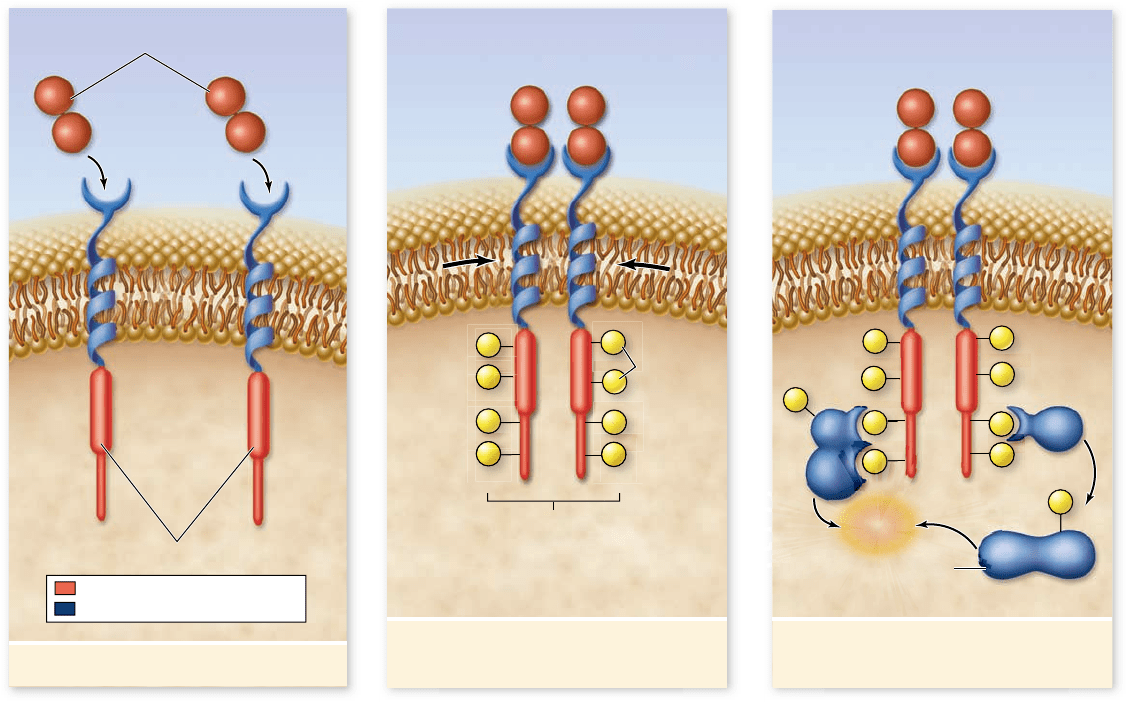
Figure 9.6
Activation of a receptor tyrosine kinase (RTK). These membrane receptors bind hormones or growth factors that are
hydrophilic and cannot cross the membrane. The receptor is a transmembrane protein with an extracellular ligand binding domain and an
intracellular kinase domain. Signal transduction pathways begin with response proteins binding to phosphotyrosine on receptor, and by
receptor phosphorylation of response proteins.
and divergence of each kind of receptor kinase probably occurred
after the plant–animal divergence. The proliferation of these types
of signaling molecules is thought to be coincident with the inde-
pendent evolution of multicellularity in each group.
In this section, we will concentrate on the RTK family
of receptors that has been extensively studied in a variety of
animal cells.
RTKs are activated by autophosphorylation
Receptor tyrosine kinases have a relatively simple structure
consisting of a single transmembrane domain that anchors
them in the membrane, an extracellular ligand-binding do-
main, and an intracellular kinase domain. This kinase domain
contains the catalytic site of the receptor, which acts as a pro-
tein kinase that adds phosphate groups to tyrosines. On ligand
binding to a specific receptor, two of these receptor–ligand
complexes associate together (often referred to as dimeriza-
tion) and phosphorylate each other, a process called autophos-
phorylation (figure 9.6).
The autophosphorylation event transmits across the
membrane the signal that began with the binding of the ligand
to the receptor. The next step, propagation of the signal in the
www.ravenbiology.com
chapter
9
Cell Communication
175
rav32223_ch09_168-185.indd 175rav32223_ch09_168-185.indd 175 11/6/09 2:32:58 PM11/6/09 2:32:58 PM
Apago PDF Enhancer
P
P
P
P
Glycogen
Glycogen synthase
Glycogen
synthase
Insulin receptor
Disulfide bridge
Insulin
Insulin
response
protein
Glucose
a a
b b
P
1. Insulin binds to the
extracellular domain of
the a-subunit of the
insulin receptor.
2. The b-subunit of one
insulin receptor
phosphorylates the other,
allowing the insulin response
proteins to be activated.
3.
Phosphorylated insulin
response proteins activate
glycogen synthase.
4.
Glycogen synthase
converts glucose
into glycogen.
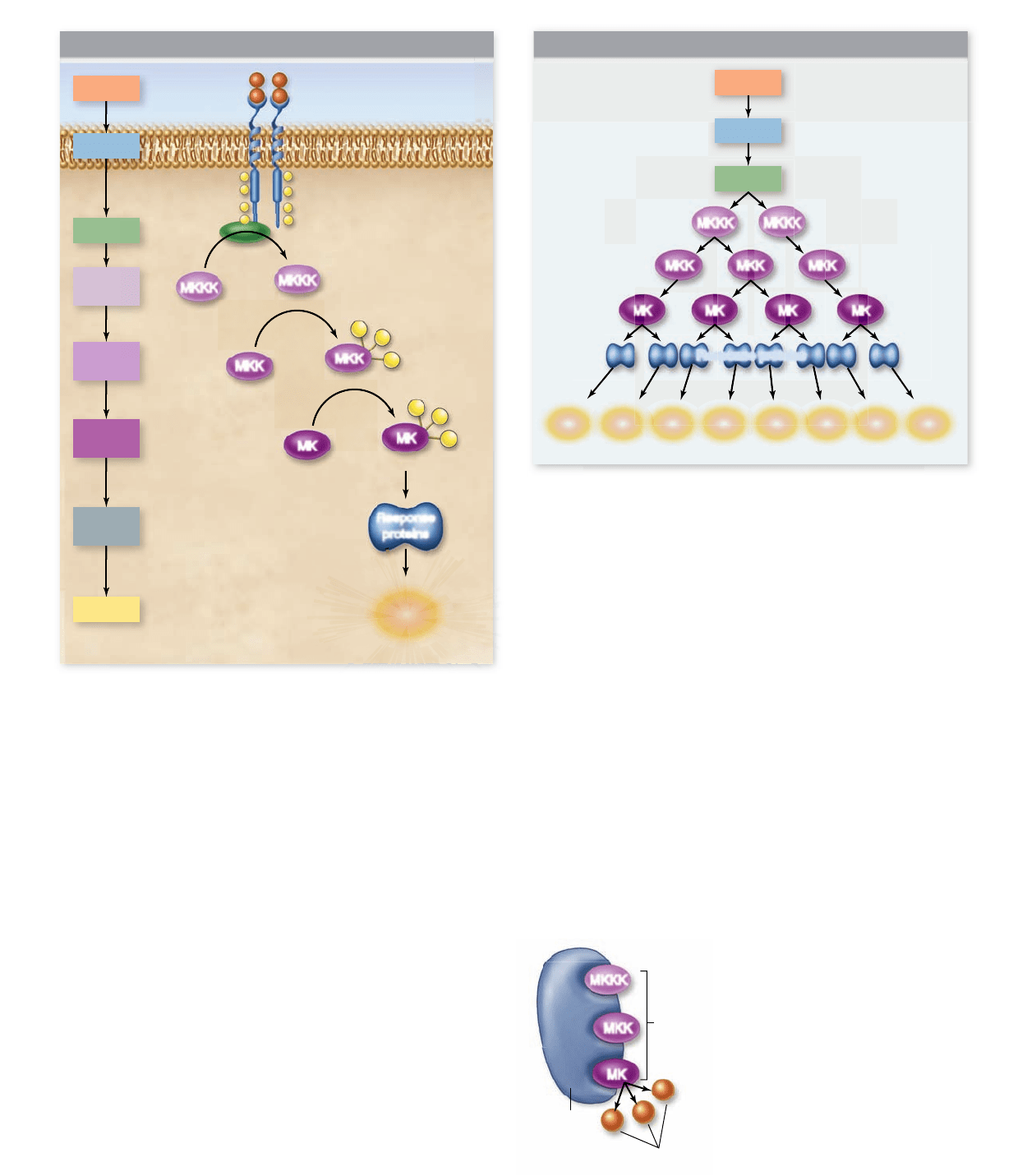
One function of a kinase cascade is to amplify the original
signal. Because each step in the cascade is an enzyme, it can act
on a number of substrate molecules. With each enzyme in the
cascade acting on many substrates this produces a large amount
of the final product (see figure 9.8). This allows a small number
of initial signaling molecules to produce a large response.
The cellular response to this cascade in any particular cell
depends on the targets of the MAP kinase, but usually involves
phosphorylating transcription factors that then activate gene
expression (chapter 16). An example of this kind of signaling
cytoplasm, can take a variety of different forms. These forms
include activation of the tyrosine kinase domain to phosphory-
late other intracellular targets or interaction of other proteins
with the phosphorylated receptor.
The cellular response after activation depends on the pos-
sible response proteins in the cell. Two different cells can have
the same receptor yet a different response, depending on what
response proteins are present in the cytoplasm. For example
fibroblast growth factor stimulates cell division in fibroblasts
but stimulates nerve cells to differentiate rather than to divide.
Phosphotyrosine domains mediate
protein–protein interactions
One way that the signal from the receptor can be propagated
in the cytoplasm is via proteins that bind specifically to phos-
phorylated tyrosines in the receptor. When the receptor is
activated, regions of the protein outside of the catalytic site
are phosphorylated. This creates “docking” sites for proteins
that bind specifically to phosphotyrosine. The proteins that
bind to these phosphorylated tyrosines can initiate intracellu-
lar events to convert the signal from the ligand into a response
(see figure 9.6).
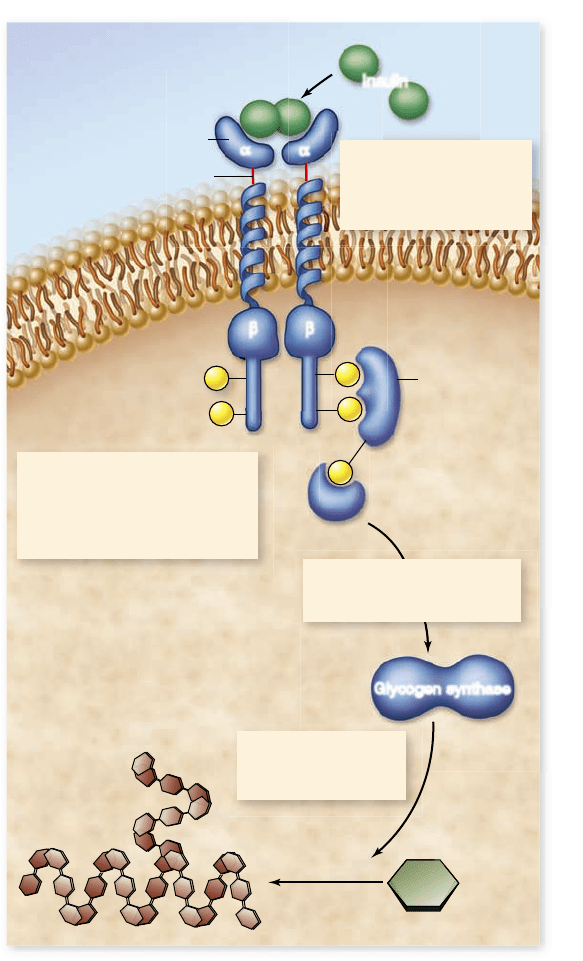
The insulin receptor
The use of docking proteins is illustrated by the insulin recep-
tor. The hormone insulin is part of the body’s control system to
maintain a constant level of blood glucose. The role of insulin is
to lower blood glucose, acting by binding to an RTK. Another
protein called the insulin response protein binds to the phospho-
rylated receptor and is itself phosphorylated. The insulin re-
sponse protein passes the signal on by binding to additional
proteins that lead to the activation of the enzyme glycogen syn-
thase, which converts glucose to glycogen (figure 9.7), thereby
lowering blood glucose. Other proteins activated by the insu-
lin receptor act to inhibit the synthesis of enzymes involved in
making glucose, and to increase the number of glucose trans-
porter proteins in the plasma membrane.
Adapter proteins
Another class of proteins, adapter proteins, can also bind to
phosphotyrosines. These proteins themselves do not partici-
pate in signal transduction but act as a link between the recep-
tor and proteins that initiate downstream signaling events. For
example, the Ras protein discussed later, is activated by adapter
proteins binding to a receptor.
Protein kinase cascades can amplify a signal
One important class of cytoplasmic kinases are mitogen-
activated protein (MAP) kinases. A mitogen is a chemical
that stimulates cell division by activating the normal path-
ways that control division. The MAP kinases are activated
by a signaling module called a phosphorylation cascade or a
kinase cascade. This module is a series of protein kinases
that phosphorylate each other in succession. The final step
in the cascade is the activation by phosphorylation of MAP
kinase itself (figure 9.8).
Figure 9.7
The insulin receptor. The insulin receptor is a
receptor tyrosine kinase that initiates a variety of cellular responses
related to glucose metabolism. One signal transduction pathway
that this receptor mediates leads to the activation of the enzyme
glycogen synthase. This enzyme converts glucose to glycogen.
176
part
II
Biology of the Cell
rav32223_ch09_168-185.indd 176rav32223_ch09_168-185.indd 176 11/6/09 2:33:03 PM11/6/09 2:33:03 PM
Apago PDF Enhancer
Kinase
cascade
Scaffold
protein
Response
proteins
MKKK
MKK
MK
Signal amplification
Signal
Response
Receptor
Response
proteins
Response
proteins
Signal
First
kinase
Receptor
Activator
Second
kinase
Activator
Cellular responses
MAP
kinase
MKK MKK MKK
MK MK MK MK
Active
Inactive
MAP kinase cascade
Inactive
Inactive
Active
Active
MKKK MKKK
MKK
MKK
MK
MK
MKKK
MKKK
Response proteins
a.
b.
Ras
Cellular
response
P
P
P
P
P
P
The best studied example of a scaffold protein comes
from mating behavior in budding yeast. Yeast cells respond to
mating pheromones with changes in cell morphology and gene
expression, mediated by a protein kinase cascade. A protein
called Ste5 was originally identified as a protein required for
mating behavior, but no enzymatic activity could be detected
for this protein. It has now been shown that this protein inter-
acts with all of the members of the kinase cascade and acts as a
scaffold protein that organizes the cascade and insulates it from
other signaling pathways.
through growth factor receptors is provided in chapter 10 and
illustrates how signal transduction initiated by a growth factor
can control the process of cell division through a kinase cascade.
Sca old proteins organize kinase cascades
The proteins in a kinase cascade need to act sequentially to
be effective. One way the efficiency of this process can be in-
creased is to organize them in the cytoplasm. Proteins called
scaffold proteins are thought to organize the components of a
kinase cascade into a single protein complex, the ultimate in a
signaling module. The scaffold protein binds to each individual
kinase such that they are spatially organized for optimal func-
tion (figure 9.9).
The advantages of this kind of organization are many. A
physically arranged sequence is clearly more efficient than one
that depends on diffusion to produce the appropriate order of
events. This organization also allows the segregation of signal-
ing modules in different cytoplasmic locations.
The disadvantage of this kind of organization is that it
reduces the amplification effect of the kinase cascade. Enzymes
held in one place are not free to find new substrate molecules,
but must rely on substrates being nearby.
Figure 9.8
MAP kinase cascade leads to signal
ampli cation. a. Phosphorylation cascade is shown as a
owchart on the left. The corresponding cellular events are shown
on the right, beginning with the receptor in the plasma membrane.
Each kinase is named starting with the last, the MAP kinase (MK),
which is phosphorylated by a MAP kinase kinase (MKK), which is
in turn phosphorylated by a MAP kinase kinase kinase (MKKK).
The cascade is linked to the receptor protein by an activator
protein. b. At each step the enzymatic action of the kinase on
multiple substrates leads to ampli cation of the signal.
Figure 9.9
Kinase cascade
can be organized by sca old
proteins. The scaffold protein
binds to each kinase in the
cascade, organizing them so each
substrate is next to its enzyme.
This organization also sequesters
the kinases from other signaling
pathways in the cytoplasm.
www.ravenbiology.com
chapter
9
Cell Communication
177
rav32223_ch09_168-185.indd 177rav32223_ch09_168-185.indd 177 11/6/09 2:33:06 PM11/6/09 2:33:06 PM
Apago PDF Enhancer
Response
protein
Response
protein
Response
protein
GDP
Nuclear
membrane
Activates
transcription
factors
1. Proteins bound to
receptor activate
Ras by exchanging
GDP for GTP.
2. Ras activates
the first
kinase (Raf)
3. Raf activates
the second
kinase (MEK)
4. MEK activates
MAP kinases (ERK)
5. MAP kinase (ERK) activates
proteins to produce cellular
responses, including transcription
factors that alter gene expression
Ras
Raf
MEK
ERK
Ras
Raf
GTP
MEK
ERK
P
P
P
P
P
P
P
P
P
P
P
P
P
P
P
P
Cellular
response
unable to respond to other signals or to respond inappro-
priately to a signal that is no longer relevant. Consequently,
inactivation is as important for the control of signaling as ac-
tivation. Receptor tyrosine kinases can be inactivated by two
basic mechanisms—dephosphorylation and internalization.
Internalization is by endocytosis, in which the receptor is
taken up into the cytoplasm in a vesicle where it can be de-
graded or recycled.
The enzymes in the kinase cascade are all controlled by
dephosphorylation by phosphatase enzymes. This leads to ter-
mination of the response at both the level of the receptor and
the response proteins.
Learning Outcomes Review 9.4
Receptor tyrosine kinases (RTK) are membrane receptors that can
phosphorylate tyrosine. When activated, they autophosphorylate,
creating binding domains for other proteins. These proteins transmit
the signal inside the cell. One form of signaling pathway involves the
MAP kinase cascade, a series of kinases that each activate the next in the
series. This ends with a MAP kinase that activates transcription factors to
alter gene expression.
■ Ras protein is mutated in many human cancers. What
are possible reasons for this?
Ras proteins link receptors
with kinase cascades
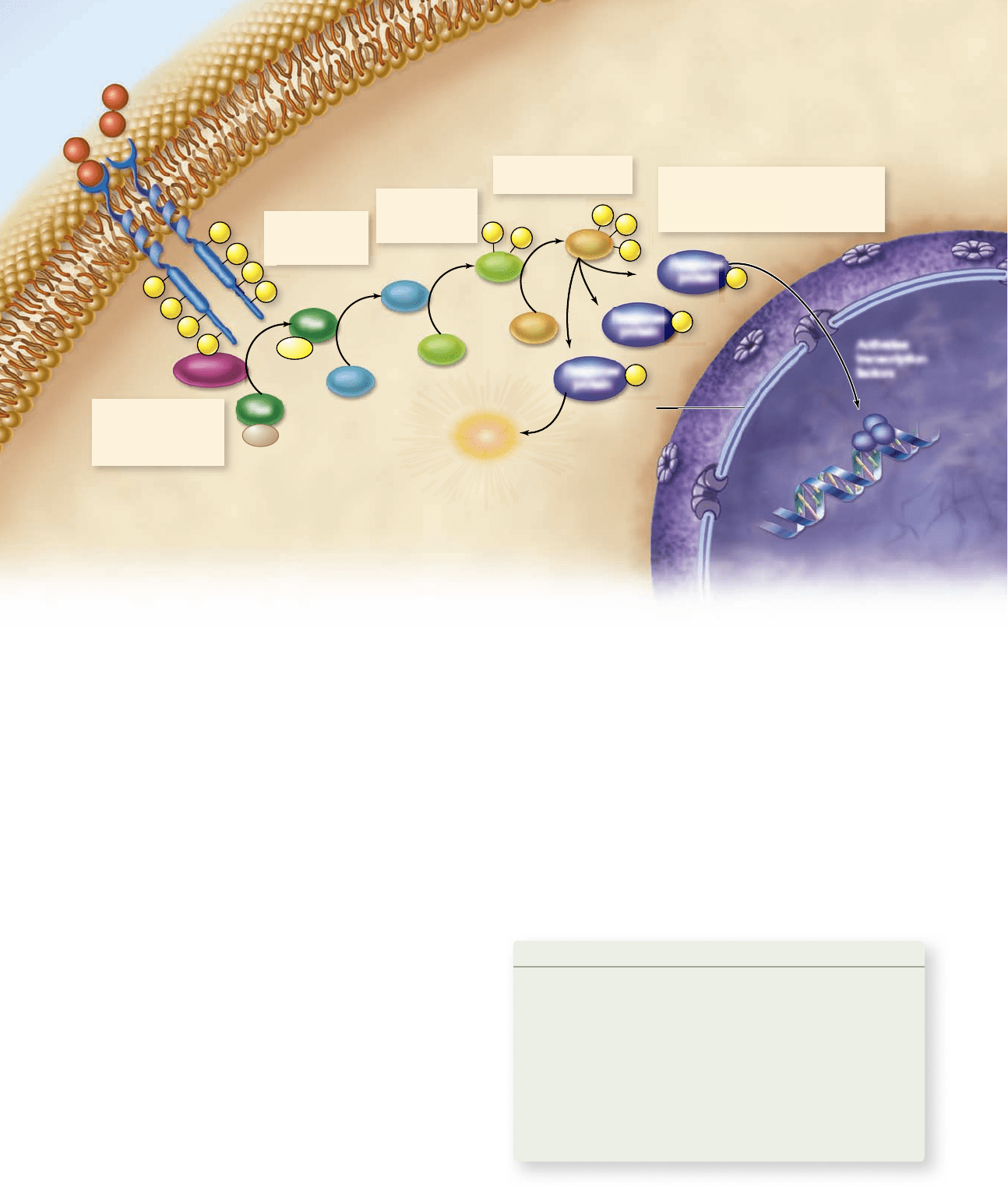
The link between the RTK and the MAP kinase cascade is a small
GTP-binding protein (G protein) called Ras. The Ras protein is
mutated in many human tumors, indicative of its central role in
linking growth factor receptors to their cellular response.
The Ras protein is active when bound to GTP and inac-
tive when bound to GDP. When an RTK, such as a growth
factor receptor, is activated, it binds to adapter proteins that
then act on Ras to stimulate the exchange of GDP for GTP,
activating Ras. The Ras protein then activates the first kinase in
the MAP kinase cascade (figure 9.10).
One key to signaling through this pathway is that Ras can
regulate itself. The Ras protein has intrinsic GTPase activity,
hydrolyzing GTP to GDP and P
i
, leaving the GDP bound to
Ras, which is now inactivated. The action of the RTK turns on
Ras, which can be thought of as a switch that can turn itself off.
This is one reason that stimulation of cell division by growth
factors is short-lived.
RTKs are inactivated by internalization
It is important to cells that signaling pathways are only acti-
vated transiently. Continued activation could render the cell
Figure 9.10
Ras protein links receptor tyrosine kinases to MAP kinase cascade. Growth factor receptors often are linked to
a MAP kinase cascade by the Ras protein. The gure shows the activation of the MAP kinase called extracellular regulated kinase (ERK).
Activated ERK phosphorylates a number of response proteins that can act in the cytoplasm and transcription factors that move into the
nucleus to turn on the genes needed for cell cycle progression.
178
part
II
Biology of the Cell
rav32223_ch09_168-185.indd 178rav32223_ch09_168-185.indd 178 11/6/09 2:33:09 PM11/6/09 2:33:09 PM
Apago PDF Enhancer
GPCR
Inactive G
protein
Active G
protein
Effector protein
Ligand
Cellular
response
P
i
GPCR
GTP
GTP
GTP
R
e
a
s
s
o
c
i
a
t
i
o
n
GDP
a
b
g
a
b
g
b
g
a
GDP
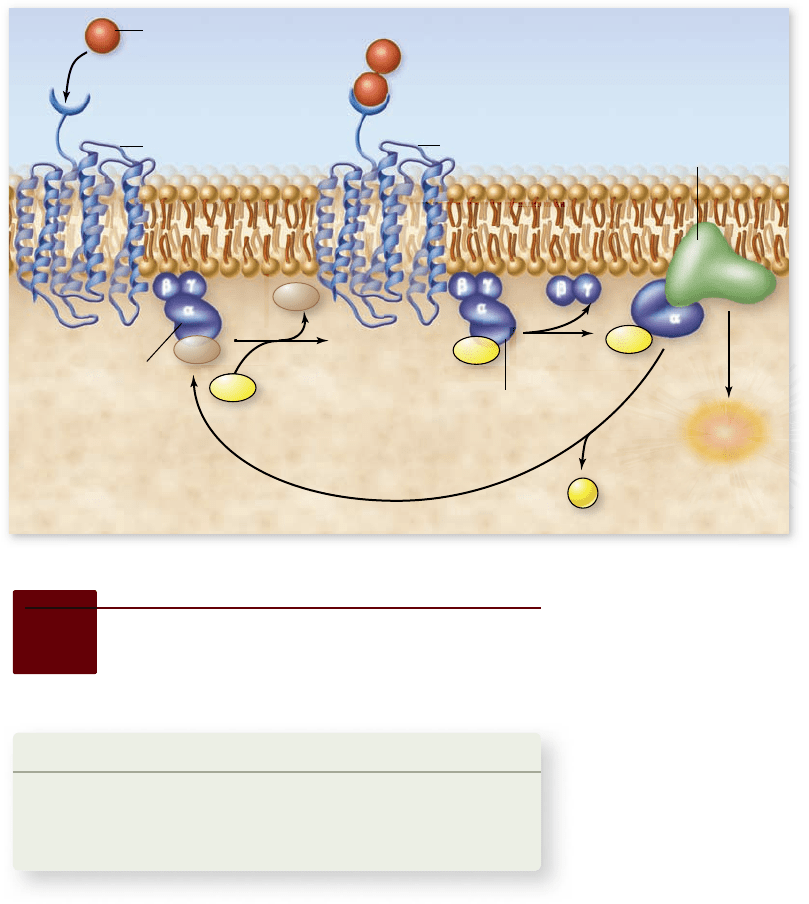
fector proteins that produce cellular responses. The G protein
functions as a switch that is turned on by the receptor. In its
“on” state, the G protein activates effector proteins to cause a
cellular response.
All G proteins are active when bound to GTP and inac-
tive when bound to GDP. The main difference between the G
proteins in GPCRs and the Ras protein described earlier is that
these G proteins are composed of three subunits, called α, β, and
γ. As a result, they are often called heterotrimeric G proteins. When
a ligand binds to a GPCR and activates its associated G protein,
the G protein exchanges GDP for GTP and dissociates into two
parts consisting of the G
α
subunit bound to GTP, and the G
β
and G
γ
subunits together (G
βγ
). The signal can then be propa-
gated by either the G
α
or the G
βγ
components, thereby acting to
turn on effector proteins. The hydrolysis of bound GTP to GDP
by G
α
causes reassociation of the heterotrimer and restores the
“off” state of the system (figure 9.11).
The effector proteins are usually enzymes. An effector
protein might be a protein kinase that phosphorylates proteins
to directly propagate the signal, or it may produce a second
messenger to initiate a signal transduction pathway.
E ector proteins produce multiple
second messengers
Often, the effector proteins activated by G proteins produce a
second messenger. Two of the most common effectors are ad-
enylyl cyclase and phospholipase C, which produce cAMP and IP
3
plus DAG, respectively.
Cyclic-AMP
All animal cells studied thus far use cAMP as a second messenger
(chapter 46) . When a signaling molecule binds to a GPCR that
uses the enzyme adenylyl cyclase as an effector, a large amount of
9.5
Signal Transduction Through
G Protein-Coupled Receptors
Learning Outcomes
Contrast signaling through GPCRs and RTKs.1.
Relate the function of second messengers to signal 2.
transduction pathways.
The single largest category of receptor type in animal cells is
G protein-coupled receptors (GPCRs), so named because the
receptors act by coupling with a G protein. G proteins are proteins
that bind guanosine nucleotides, such as Ras discussed previously.
The latest count of genes encoding GPCRs in the human
genome is 799 with about half of these encoding odorant recep-
tors involved in the sense of taste and smell. In the mouse, over
1000 different odorant receptors are involved in the sense of
smell. The family of GPCRs has been subdivided into 5 groups:
Rhodopsin, Secretin, Adhesion, Glutamate, and Frizzled/
Taste 2 based on structure and function. The names refer to the
first discovered member of each group; for example, Rhodop-
sin is the GPCR involved in light sensing in mammals. In this
section, we will concentrate on the basic mechanism of activa-
tion and some of the possible signal transduction pathways.
G proteins link receptors
with e ector proteins
The function of the G protein in signaling by GPCRs is to
provide a link between a receptor that receives signals and ef-
Figure 9.11
The action of
G protein-coupled receptors.
G protein-coupled receptors act
through a heterotrimeric G protein
that links the receptor to an effector
protein. When ligand binds to the
receptor, it activates an associated
G protein, exchanging GDP for
GTP. The active G protein complex
dissociates into G
α
and G
βγ
. The G
α
subunit (bound to GTP) is shown
activating an effector protein. The
effector protein may act directly
on cellular proteins or produce
a second messenger to cause a
cellular response. G
α
can hydrolyze
GTP inactivating the system, then
reassociate with G
βγ
.
www.ravenbiology.com
chapter
9
Cell Communication
179
rav32223_ch09_168-185.indd 179rav32223_ch09_168-185.indd 179 11/6/09 2:33:13 PM11/6/09 2:33:13 PM
Apago PDF Enhancer
Cellular
response
GPCR
Response
protein
Activates PKA
cAMP
Cytoplasm
Adenylyl cyclase
Ligand
Nucleus
ATP
GDP GTP
b
g
b
g
a
ATP
J
J
P
J
:
O
:
O
JJ
O
O
J
J
P
J
:
O
:
O
JJ
O
O
J
J
P
J
JJ
O
J
CH
2
O
O
a.
cAMP+ PP
i
b.
Plasma
membrane
Extracellular space
Cytoplasm
Phospholipase C
PIP
2
J
J
J
J
O
C
O
C
J
J
J
J
J
J
O
CC
O
C
O
JJ
P
J
O
O
J
:
O
J
J
J
P
J
O
O
J
O
:
O
:
J
J
J
P
J
O
:
O
J
O
:
O
J
J
OHOH
OH
DAG+IP
3
J
J
J
J
O
C
O
C
J
J
J
J
J
J
O
CC
O
C
OH
J
J
P
J
O
O
O
J
O
:
J
J
J
P
J
O
O
J
O
:
O
:
J
J
J
P
J
O
:
O
J
O
:
O
J
J
OHOH
OH
Cleaved by
phospholipase C
J
J
P
J
:
O
O
J
O
O
J
O
CH
2
J
J
DAG
IP
3
J
P
J
J
J
O
:
:
O
J
O
O
JJ
J
J
P
J
O
:
J
O
:
O
J
PP
i
cAMP
Adenylyl cyclase
NH
2
N
NH
2
N
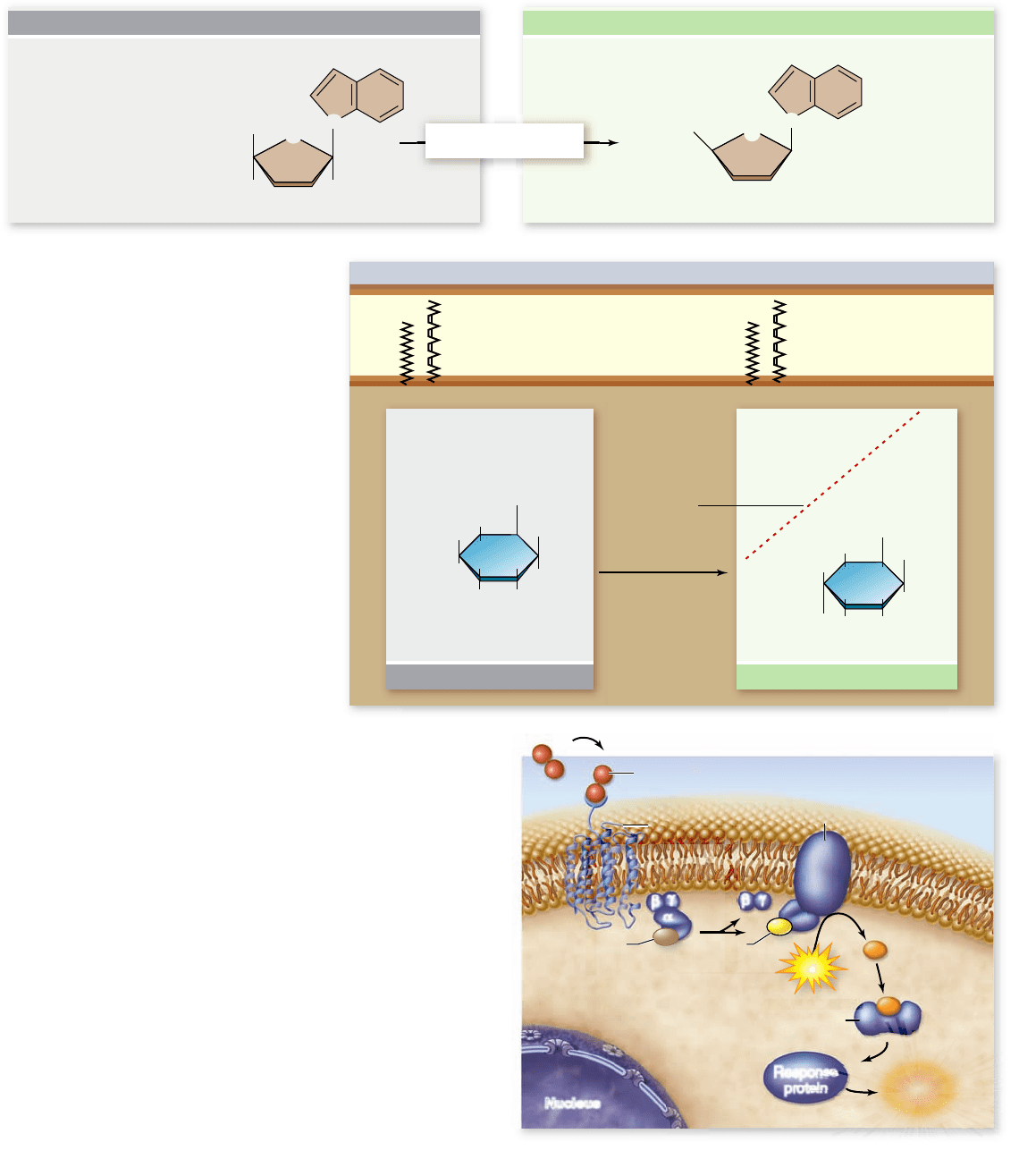
cAMP is produced within the cell (figure 9.12a). The cAMP then
binds to and activates the enzyme protein kinase A (PKA), which
adds phosphates to specific proteins in the cell (figure 9.13).
The effect of this phosphorylation on cell function depends
on the identity of the cell and the proteins that are phospho-
rylated. In muscle cells, for example, PKA activates an enzyme
necessary to break down glycogen and inhibits another enzyme
necessary to synthesize glycogen. This leads to an increase in
glucose available to the muscle. By contrast, in the kidney the
action of PKA leads to the production of water channels that
can increase the permeability of tubule cells to water.
Disruption of cAMP signaling can have a variety of ef-
fects. The symptoms of the disease cholera are due to altered
cAMP levels in cells in the gut. The bacterium Vibrio chol-
erae produces a toxin that binds to a GPCR in the epithelium
of the gut, causing it to be locked into an “on” state. This
causes a large increase in intracellular cAMP that, in these
cells, causes Cl
–
ions to be transported out of the cell. Water
follows the Cl
–
, leading to diarrhea and dehydration charac-
teristic of the disease.
The molecule cAMP is also an extracellular signal. In
the slime mold Dictyostelium discoideum, secreted cAMP acts
as a signal for aggregation under conditions of starvation.
Figure 9.12
Production of
second messengers. Second
messengers are signaling molecules
produced within the cell. a. The
nucleotide ATP is converted by the
enzyme adenylyl cyclase into cyclic
AMP, or cAMP, and pyrophosphate
(PP
i
) . b. The inositol phospholipid
PIP
2
is composed of two lipids and a
phosphate attached to glycerol. The
phosphate is also attached to the
sugar inositol. This molecule can be
cleaved by the enzyme phospholipase
C to produce two different second
messengers: DAG, made up of the
glycerol with the two lipids, and IP
3
,
inositol triphosphate.
Figure 9.13
cAMP signaling pathway. Extracellular signal
binds to a GPCR, activating a G protein. The G protein then
activates the effector protein adenylyl cyclase, which catalyzes the
conversion of ATP to cAMP. The cAMP then activates protein
kinase A (PKA), which phosphorylates target proteins to cause a
cellular response.
180
part
II
Biology of the Cell
rav32223_ch09_168-185.indd 180rav32223_ch09_168-185.indd 180 11/6/09 2:33:16 PM11/6/09 2:33:16 PM
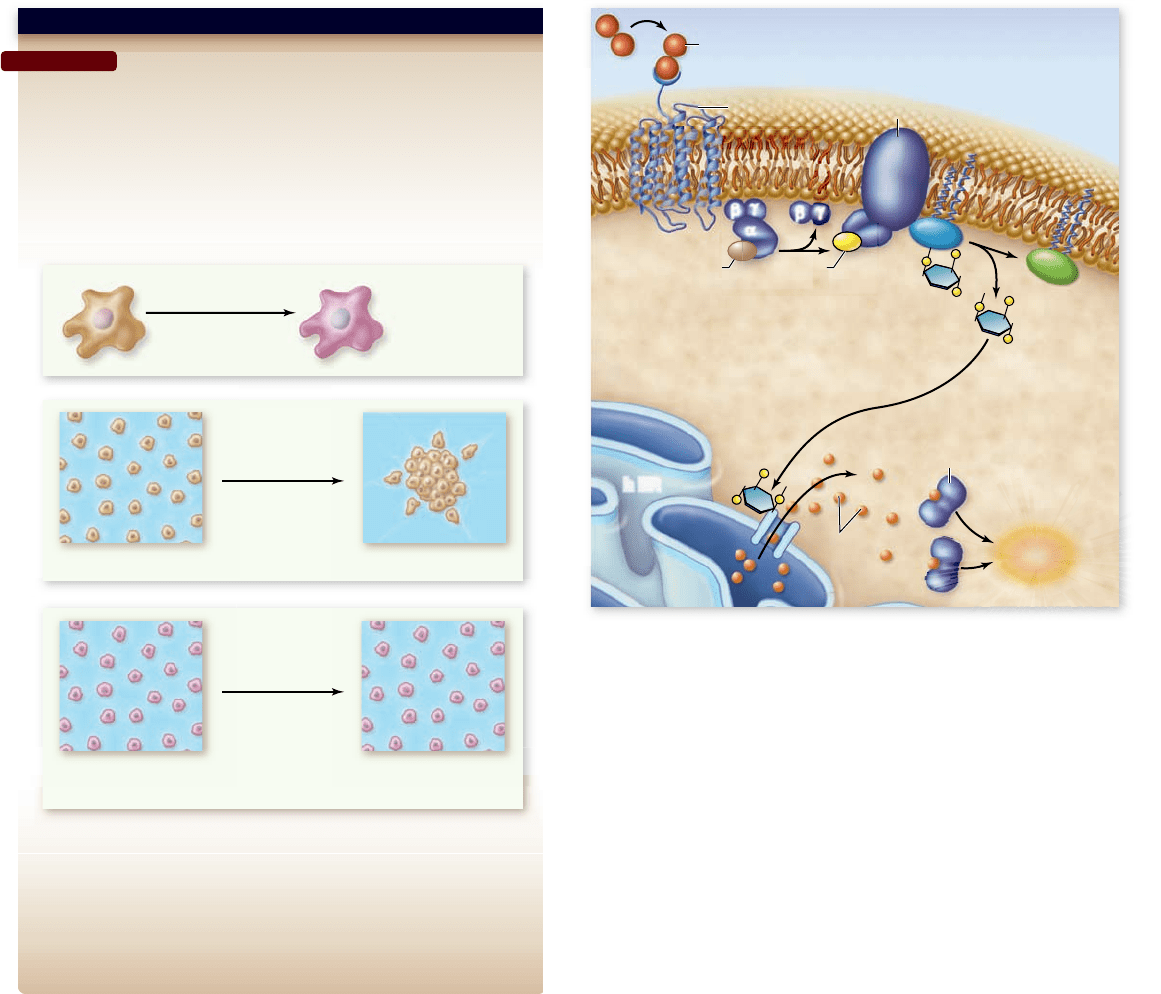
Apago PDF Enhancer
Question: What is the receptor for cAMP?
Hypothesis: A previously identified G protein-coupled receptor is the
cAMP receptor.
Prediction: If the function of the cAMP receptor is removed, then cells will
not respond to starvation by aggregating.
Test: Use G protein-coupled receptor gene to direct synthesis of
antisense RNA complementary to the normal mRNA. This will eliminate
gene expression by the cellular copy of the G protein-coupled receptor.
Result: Cells transformed with the antisense construct do not
aggregate normally.
Conclusion: Previously identified G protein-coupled receptor is the cAMP
receptor, which controls the aggregation response.
Further Experiments: How can this kind of experiment be used to
unravel other aspects of this signaling system?
SCIENTIFIC THINKING
Transform with
Starve
Cell carrying
cAMP receptor
antisense
construct
Aggregated cellsWild-type
cAMP receptor
antisense cells
No aggregation
observed
Starve
antisense cAMP
receptor
Ca
2;
Ca
2;
-
binding
protein
Ligand
ER
Cytoplasm
Phospholipase C
Cellular
response
GPCR
GDP GTP
DAG
PIP
2
IP
3
b
g
b
g
a
Both of these compounds then act as second messengers
with a variety of cellular effects. DAG, like cAMP, can activate
a protein kinase, in this case protein kinase C (PKC).
Calcium
Calcium ions (Ca
2+
) serve widely as second messengers. Ca
2+
levels inside the cytoplasm are normally very low (less than
10
–7
M), whereas outside the cell and in the endoplasmic re-
ticulum, Ca
2+
levels are quite high (about 10
–3
M). The endo-
plasmic reticulum has receptor proteins that act as ion channels
to release Ca
2+
. One of the most common of these receptors
can bind the second messenger IP
3
to release Ca
2+
, linking
signaling through inositol phosphates with signaling by Ca
2+
(figure 9.15).
The result of the outflow of Ca
2+
from the endoplasmic
reticulum depends on the cell type. For example, in skeletal
muscle cells Ca
2+
stimulates muscle contraction but in endo-
crine cells it stimulates the secretion of hormones.
Ca
2+
initiates some cellular responses by binding to cal-
mod u lin, a 148-amino-acid cytoplasmic protein that contains
four binding sites for Ca
2+
(figure 9.16). When four Ca
2+
ions
are bound to calmodulin, the calmodulin/Ca
2+
complex is able to
bind to other proteins to activate them. These proteins include
Experiments have shown that the receptor for this signal is also
a GPCR (figure 9.14).
Inositol phosphates
A common second messenger is produced from the molecules
called inositol phospholipids. These are inserted into the
plasma membrane by their lipid ends and have the inositol phos-
phate portion protruding into the cytoplasm. The most common
inositol phospholipid is phosphatidylinositol-4,5-bisphosphate
(PIP
2
). This molecule is a substrate of the effector protein phos-
pholipase C, which cleaves PIP
2
to yield diacylglycerol (DAG)
and inositol-1,4,5-trisphosphate (IP
3
) (see figure 9.12b).
Figure 9.14
The receptor for cAMP in D. discoideum is
a GPCR.
Figure 9.15
Inositol phospholipid and Ca
2+
signaling.
Extracellular signal binds to a GPCR activating a G protein. The
G protein activates the effector protein phospholipase C, which
converts PIP
2
to DAG and IP
3
. IP
3
is then bound to a channel-
linked receptor on the endoplasmic reticular (ER) membrane,
causing the ER to release stored Ca
2+
into the cytoplasm. The Ca
2+
then binds to Ca
2+
-binding proteins such as calmodulin and PKC
to cause a cellular response.
www.ravenbiology.com
chapter
9
Cell Communication
181
rav32223_ch09_168-185.indd 181rav32223_ch09_168-185.indd 181 11/6/09 2:33:19 PM11/6/09 2:33:19 PM