
Raven P.H., Johnson G.B., Mason K.A. Biology (Ninth Edition)
Подождите немного. Документ загружается.

Apago PDF Enhancer
George III
Edward
Duke of Kent
Louis II
Grand Duke of Hesse
King
Edward VII
Duke of
Windsor
Queen
Elizabeth II
Prince
Philip
Margaret
Princess
Diana
Prince
Charles
Anne Andrew Edward
William Henry
King
George VI
King
George V
Earl of
Mountbatten
Viscount
Tremation
Alfonso Jamie Gonzalo Prince
Sigismond
Prussian
Royal
House
British Royal House
Spanish Royal House
Russian
Royal
House
Henry Anastasia Alexis
?
Waldemar
Queen Victoria Prince Albert
Frederick
III
I
II
III
IV
V
VI
VII
Generation
Victoria
Alice Alfred Arthur Leopold Beatrice Prince
Henry
Helena Duke of
Hesse
No hemophilia No hemophilia
German
Royal
House
Juan
King Juan
Carlos
No evidence
of hemophilia
No evidence
of hemophilia
Irene Czar
Nicholas II
Czarina
Alexandra
Earl of
Athlone
Princess
Alice
Queen
Eugenie
Alfonso
King of
Spain
Maurice Leopold
The Royal Hemophilia Pedigree
?
? ?
?
?
?
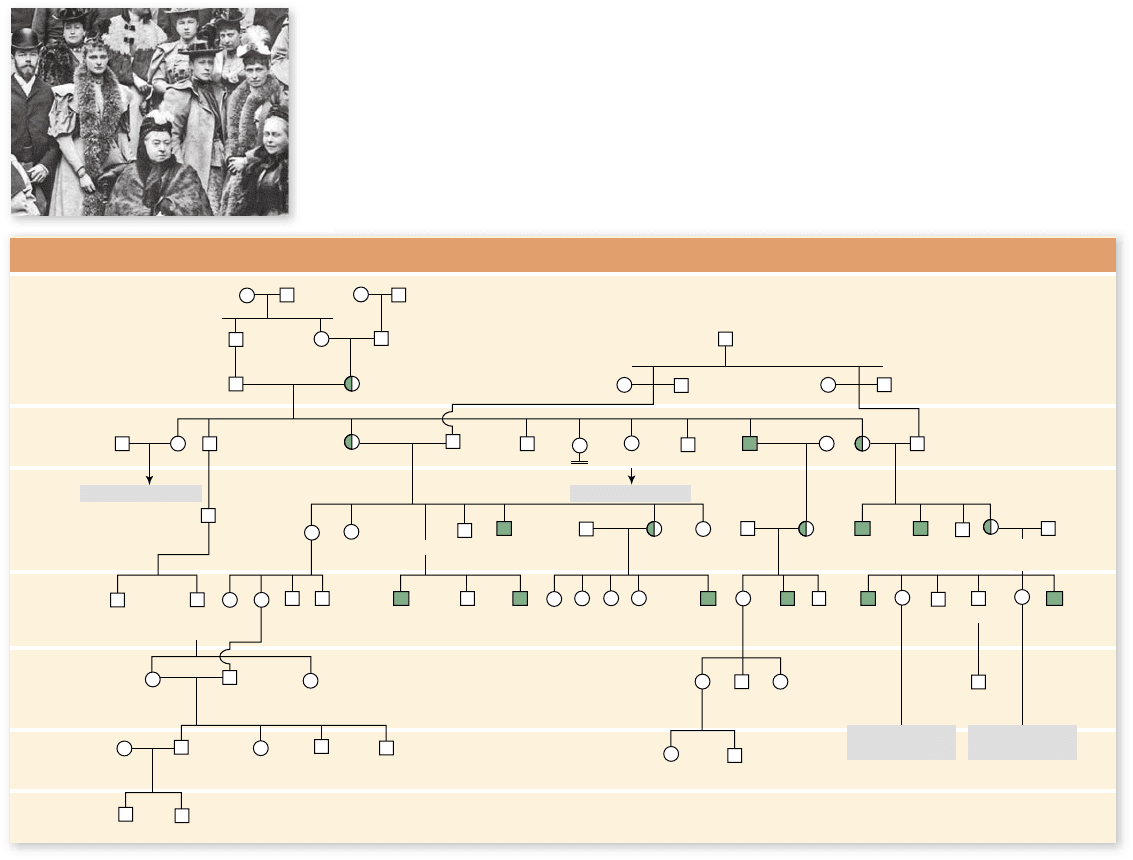
Figure 13.3
The royal hemophilia pedigree. Queen Victoria, shown at the bottom center of
the photo, was a carrier for hemophilia. Two of Victoria’s four daughters, Alice and Beatrice, inherited
the hemophilia allele from Victoria. Two of Alice’s daughters are standing behind Victoria (wearing
feathered boas): Princess Irene of Prussia (right) and Alexandra (left), who would soon become czarina
of Russia. Both Irene and Alexandra were also carriers of hemophilia. From the pedigree, it is clear
that Alice introduced hemophilia into the Russian and Prussian royal houses, and Victoria’s daughter
Beatrice introduced it into the Spanish royal house. Victoria’s son Leopold, himself a victim, also
transmitted the disorder in a third line of descent. Half-shaded symbols represent carriers with one
normal allele and one defective allele; fully shaded symbols represent affected individuals.
Some human genetic disorders
display sex linkage
From ancient times, people have noted conditions that seem
to affect males to a greater degree than females. Red-green
color blindness is one well-known condition that is more
common in males because the gene affected is carried on the
X chromosome.
Another example is hemophilia, a disease that affects a
single protein in a cascade of proteins involved in the formation
of blood clots. Thus, in an untreated hemophiliac, even minor
cuts will not stop bleeding. This form of hemophilia is caused
by an X-linked recessive allele; women who are heterozygous
for the allele are asymptomatic carriers, and men who receive
an X chromosome with the recessive allele exhibit the disease.
The allele for hemophilia was introduced into a number
of different European royal families by Queen Victoria of
En gland. Because these families kept careful genealogical rec-
ords, we have an extensive pedigree for this condition. In the
five generations after Victoria, ten of her male descendants have
had hemophilia as shown in the pedigree in figure 13.3 .
The Russian house of Romanov inherited this condition
through Alexandra Feodorovna, a granddaughter of Queen
The Y chromosome in males is highly condensed. Be-
cause few genes on the Y chromosome are expressed, recessive
alleles on a male’s single X chromosome have no active counter-
part on the Y chromosome.
The “default” setting in human embryonic development is
for production of a female. Some of the active genes on the Y
chromosome, notably the SRY gene, are responsible for the mas-
culinization of genitalia and secondary sex organs, producing
features associated with “maleness” in humans. Consequently,
any individual with at least one Y chromosome is normally a male.
The exceptions to this rule actually provide support for
this mechanism of sex determination. For example, movement
of part of the Y chromosome to the X chromosome can cause
otherwise XX individuals to develop as male. There is also a
genetic disorder that causes a failure to respond to the andro-
gen hormones (androgen insensitivity syndrome) that causes
XY individuals to develop as female. Lastly, mutations in SRY
itself can cause XY individuals to develop as females.
This form of sex determination seen in humans is shared
among mammals, but is not universal in vertebrates. Among
fishes and some species of reptiles, environmental factors can
cause changes in the expression of this sex-determining gene,
and thus in the sex of the adult individual.
242
part
III
Genetic and Molecular Biology
rav32223_ch13_239-255.indd 242rav32223_ch13_239-255.indd 242 11/6/09 3:28:26 PM11/6/09 3:28:26 PM
Apago PDF Enhancer
4 µm
Nucleus
X chromosome
allele for
orange fur
Inactivated X
chromosome
becomes Barr body
Nucleus
X chromosome
allele for
black fur
Second gene causes patchy distribution of pigment:
white fur = no pigment, orange or black fur = pigment
Inactivated X
chromosome
becomes Barr body
Allele for black
fur is inactivated
Allele for orange
fur is inactivated
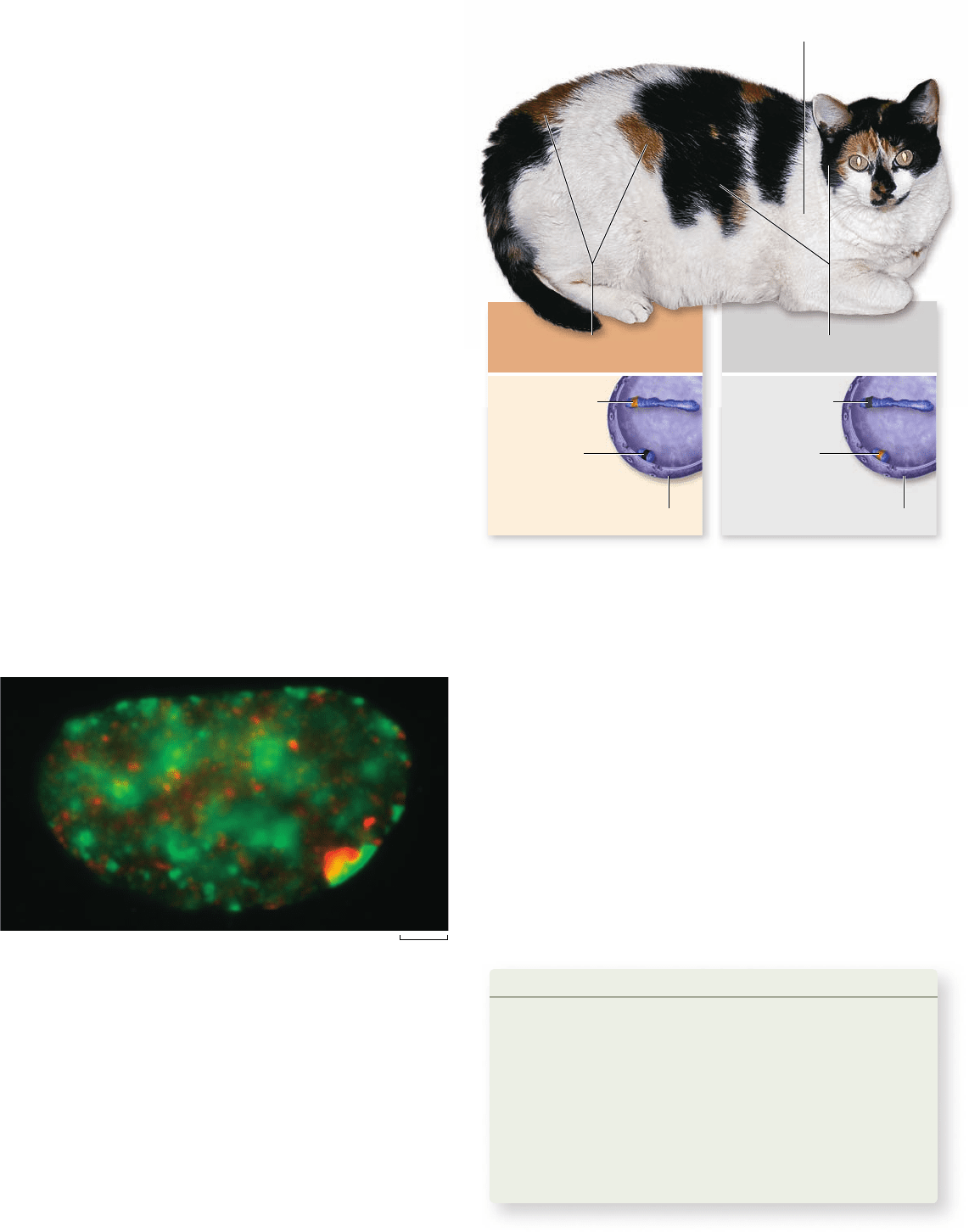
Figure 13.4
A calico cat. The cat is heterozygous for alleles
of a coat color gene that produce either black fur or orange fur. This
gene is on the X chromosome, so the different-colored fur is due to
inactivation of one X chromosome. The patchy distribution and
white color is due to a second gene that is epistatic to the coat color
gene and thus masks its effects.
X chromosome that determines pigment color. One allele results
in dark fur, and another allele results in orange fur. Which of these
colors is observed in any particular patch is due to inactivation of
one X chromosome: If the chromosome containing the orange
allele is inactivated, then the fur will be dark, and vice versa.
The patchy distribution of color, and the presence of white
fur, is due to a second gene that is epistatic to the fur color gene
(see chapter 12). That is, the presence of this second gene pro-
duces a patchy distribution of pigment, with some areas totally
lacking pigment. In the areas that lack pigment, the effect of
either fur color allele is masked. Thus, in this one animal we can
see an excellent example of both epistasis and X inactivation.
Learning Outcomes Review 13.2
Sex determination begins with the presence or absence of certain
chromosomes termed the sex chromosomes. Additional factors may
infl uence sex determination in diff erent species. In humans, males are XY,
and therefore they exhibit recessive traits for alleles on the X chromosome.
In mammalian females, one X chromosome in each cell becomes inactivated
to balance the levels of gene expression. This random inactivation can lead
to genetic mosaics.
■ Would you expect an XXX individual to be viable? If so,
would that individual be male or female?
X chromosome inactivation can lead
to genetic mosaics
X chromosome inactivation to produce dosage compensation is
not unique to humans but is true of all mammals. Females that
are heterozygous for X chromosome alleles are genetic mosa-
ics: Their individual cells may express different alleles, depend-
ing on which chromosome is inactivated.
One example is the calico cat, a female that has a patchy
distribution of dark fur, orange fur, and white fur (figure 13.4) . The
dark fur and orange fur are due to heterozygosity for a gene on the
Victoria. She married Czar Nicholas II, and their only son,
Alexis, was afflicted with the disease. The entire family was ex-
ecuted during the Russian revolution. (Recently, a woman who
had long claimed to be Anastasia, a surviving daughter, was
shown not to be a Romanov using modern genetic techniques
to test her remains.)
Ironically, this condition has not affected the current
British royal family, because Victoria’s son Edward, who be-
came King Edward VII, did not receive the hemophilia allele.
All of the subsequent rulers of England are his descendants.
Dosage compensation prevents doubling
of sex-linked gene products
Although males have only one copy of the X chromosome and
females have two, female cells do not produce twice as much of
the proteins encoded by genes on the X chromosome. Instead,
one of the X chromosomes in females is inactivated early in em-
bryonic development, shortly after the embryo’s sex is deter-
mined. This inactivation is an example of dosage compensation,
which ensures an equal level of expression from the sex chromo-
somes despite a differing number of sex chromosomes in males
and females. (In Drosophila, by contrast, dosage compensation is
achieved by increasing the level of expression on the male
X chromosome.)
Which X chromosome is inactivated in females varies
randomly from cell to cell. If a woman is heterozygous for a
sex-linked trait, some of her cells will express one allele and
some the other. The inactivated X chromosome is highly con-
densed, making it visible as an intensely staining Barr body,
seen below, attached to the nuclear membrane.
chapter
13
Chromosomes, Mapping, and the Meiosis–Inheritance Connection
243www.ravenbiology.com
rav32223_ch13_239-255.indd 243rav32223_ch13_239-255.indd 243 11/6/09 3:28:27 PM11/6/09 3:28:27 PM

Apago PDF Enhancer
(mixed green and white leaves) in the plant commonly known as the
four o’clock (Mirabilis jalapa). The offspring exhibited the pheno-
type of the female parent, regardless of the male’s phenotype.
In Sager’s work on Chlamydomonas, resistance to the anti-
biotic streptomycin was shown to be transmitted via the chlo-
roplast DNA from only the mt
+
mating type. The mt
–
mating
type does not contribute chloroplast DNA to the zygote formed
by fusion of mt
+
and mt
–
gametes.
Learning Outcomes Review 13.3
The genomes of mitochondria and chloroplasts divide independently of the
nucleus. These organelles are carried in the cytoplasm of the egg cell, so any
traits determined by these genomes are maternally inherited and thus do
not follow Mendelian rules. In some species, however, chloroplasts may be
passed on paternally or biparentally.
■ How can you explain the lack of mt
–
chloroplast DNA in
Chlamydomonas zygotes from mt
–
by mt
+
crosses?
13.3
Exceptions to the
Chromosomal Theory
of Inheritance
Learning Outcomes
Explain why the presence of DNA in organelles leads to 1.
non-Mendelian inheritance.
Describe the inheritance pattern of organelle DNA.2.
Although the chromosomal theory explains most inheritance,
there are exceptions. Primarily, these are due to the presence of
DNA in organelle genomes, specifically in mitochondria and
chloroplasts. Non-Mendelian inheritance via organelles was
studied in depth by Ruth Sager, who in the face of universal skep-
ticism constructed the first map of chloroplast genes in Chlamydo-
monas, a unicellular green alga, in the 1960s and 1970s.
Mitochondria and chloroplasts are not partitioned with
the nuclear genome by the process of meiosis. Thus any trait
that is due to the action of genes in these organelles will not
show Mendelian inheritance.
Mitochondrial genes are inherited
from the female parent
Organelles are usually inherited from only one parent, generally
the mother. When a zygote is formed, it receives an equal contribu-
tion of the nuclear genome from each parent, but it gets all of its
mitochondria from the egg cell, which contains a great deal more
cytoplasm (and thus organelles). As the zygote divides, these origi-
nal mitochondria divide as well and are partitioned randomly.
As a result, the mitochondria in every cell of an adult or-
ganism can be traced back to the original maternal mitochon-
dria present in the egg. This mode of uniparental (one-parent)
inheritance from the mother is called maternal inheritance.
In humans, the disease Leber’s hereditary optic neuropa-
thy (LHON) shows maternal inheritance. The genetic basis of
this disease is a mutant allele for a subunit of NADH dehydro-
genase. The mutant allele reduces the efficiency of electron
flow in the electron transport chain in mitochondria (see chap-
ter 7), in turn reducing overall ATP production. Some nerve
cells in the optic system are particularly sensitive to reduction
in ATP production, resulting in neural degeneration.
A mother with this disease will pass it on to all of her prog-
eny, whereas a father with the disease will not pass it on to any
of his progeny. Note that this condition differs from sex-linked
inheritance because males and females are equally affected.
Chloroplast genes may also be
passed on uniparentally
The inheritance pattern of chloroplasts is also usually maternal, al-
though both paternal and biparental inheritance of chloroplasts may
be observed in some species. Carl Correns first hypothesized in 1909
that chloroplasts were responsible for inheritance of variegation
13.4
Genetic Mapping
Learning Outcomes
Recognize that genes on the same chromosome may not 1.
assort independently.
Explain how recombination frequency is related to 2.
genetic distance.
Review how data from testcrosses is used to construct 3.
genetic maps.
We have seen that Mendelian traits are determined by genes lo-
cated on chromosomes and that the independent assortment of
Mendelian traits reflects the independent assortment of chromo-
somes in meiosis. This is fine as far as it goes, but it is still incom-
plete. Of Mendel’s seven traits in figure 12.4, six are on different
chromosomes and two are on the same chromosome, yet all show
independent assortment with one another. The two on the same
chromosome should not behave the same as those that are on dif-
ferent chromosomes. In fact, organisms generally have many more
genes that assort independently than the number of chromosomes.
This means that independent assortment cannot be due only to
the random alignment of chromosomes during meiosis.
Inquiry question
?
Mendel did not examine plant height and pod shape in his
dihybrid crosses. The genes for these traits are very close
together on the same chromosome. How would this have
changed Mendel’s results?
The solution to this problem is found in an observation that
was introduced in chapter 11 : the crossing over of homologues
during meiosis. In prophase I of meiosis, homologues appear to
physically exchange material by crossing over (figure 13.5) . In
chapter 11, you saw how this was part of the mechanism that allows
homologues, and not sister chromatids, to disjoin at anaphase I.
244
part
III
Genetic and Molecular Biology
rav32223_ch13_239-255.indd 244rav32223_ch13_239-255.indd 244 11/6/09 3:28:29 PM11/6/09 3:28:29 PM
Apago PDF Enhancer
B
A
B
A
b
a
b
a
Parent
generation
b
a
b
a
b
a
B
A
B
A
B
A
B
A
b
a
B
a
b
A
B
A
b
a
b
a
b
a
b
a
b
a
B
A
B
A
B
A
b
a
b
a
B
A
B
A
B
A
B
A
b
a
b
a
b
a
B
a
B
A
b
A
B
A
Parental
All parentalRecombinant
Crossing
over during
prophase I
Meiosis II
Meiosis with
Crossing over
No recombinant
No crossing
over during
prophase I
Meiosis II
Meiosis without
Crossing over
F
1
generation
wx
C
Wx
c
Wx
c
wx
c
Wx
C
wx
C
Parental
gametes
Colored
starchy
Recombinant
gametes
Wx
c
wx
c
Wx
C
wx
C
wx
Wx
Cc
c
colorless
C
colored
wx
waxy
Wx
starchy
Testcross
wx
c
wx
c
Wx
C
cc wxwx cC wxWx
Progeny with recombinant
phenotypes carry physically
recombinant chromosomes.
Colorless
waxy
Colored
starchy
Meiosis
chromosome
extension
marker
knob marker
Hypothesis: Crossing over, or
recombination, involves a physical
exchange of genetic material.
Prediction: Recombination of
visible differences in a chromosome
should correlate with genetic
recombination of alleles.
Test: In the cross shown, two
visible chromosome markers
(yellow extension marker, and
green knob marker) have been
combined with two genetic
markers (kernel color
and texture).
Result: Genetically recombinant progeny also have physically
recombinant chromosomes.
Conclusion: A physical exchange of genetic material accompanied
genetic recombination.
Further Experiments: This experiment was performed using maize.
What other genetic model system would you use to test this?
SCIENTIFIC THINKING
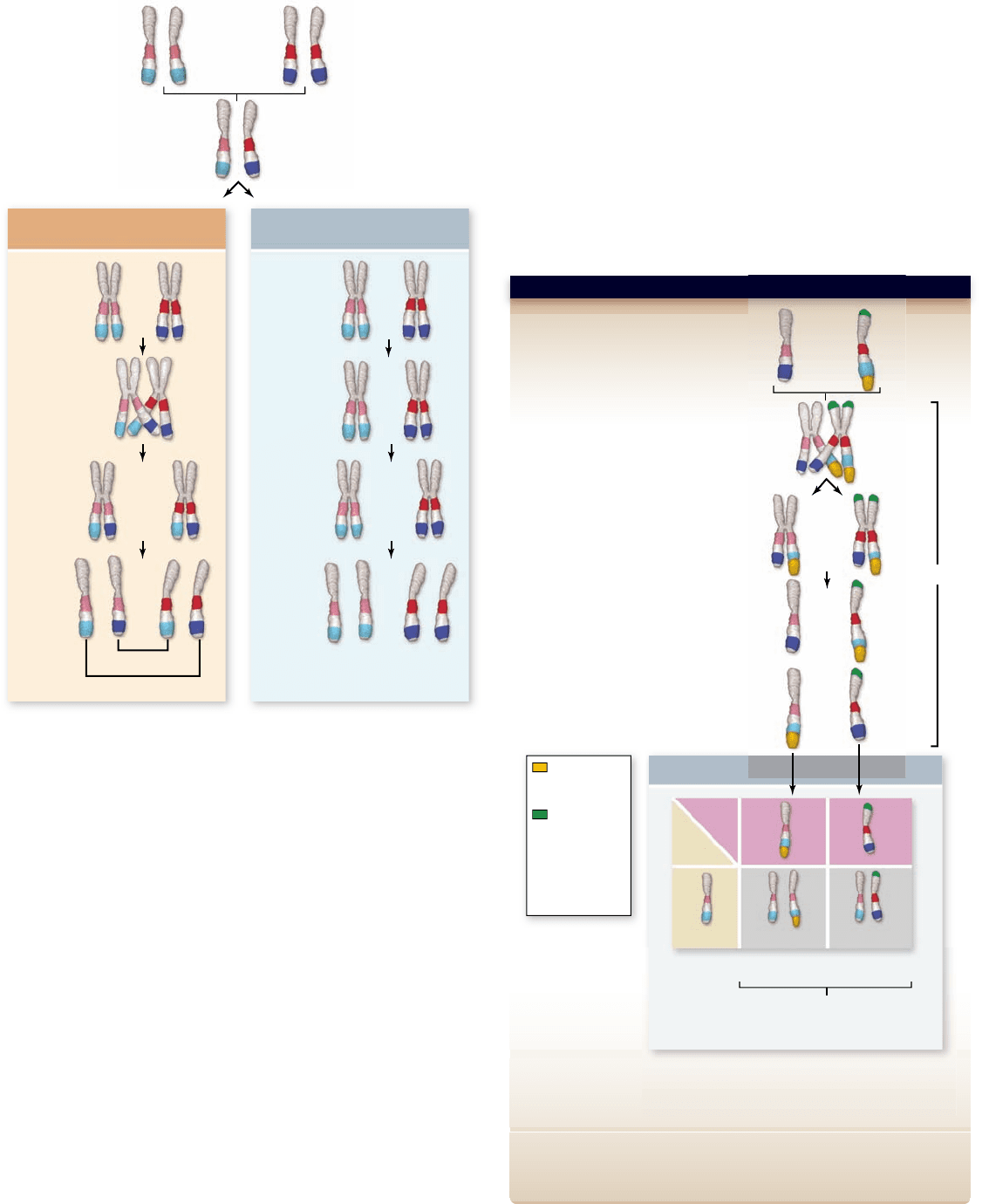
Figure 13.5
Crossing over exchanges alleles on
homologues. When a crossover occurs between two loci, it leads to
the production of recombinant chromosomes. If no crossover occurs,
then the chromosomes will carry the parental combination of alleles.
Figure 13.6
The Creighton and McClintock experiment.
Genetic recombination exchanges
alleles on homologues
Consider a dihybrid cross performed using the Mendelian frame-
work. Two true-breeding parents that each differ with respect to
two traits are crossed, producing doubly heterozygous F
1
progeny.
If the genes for the two traits are on a single chromosome, then
during meiosis we would expect alleles for both loci to segregate
together and produce only gametes that resemble the two parental
types. But if a crossover occurs between the two loci, then each
homologue would carry one allele from each parent and produce
gametes that combine these parental traits (see figure 13.5). We
call gametes with this new combination of alleles recombinant gam-
etes as they are formed by recombining the parental alleles.
The first investigator to provide evidence for this was
Morgan, who studied three genes on the X chromosome of
Drosophila. He found an excess of parental types, which he ex-
plained as due to the genes all being on the X chromosome and
therefore coinherited (inherited together). He went further,
suggesting that the recombinant genotypes were due to cross-
ing over between homologues during meiosis.
Experiments performed independently by Barbara McClin-
tock and Harriet Creighton in maize and by Curt Stern in Droso-
phila provided evidence for this physical exchange of genetic
material. The experiment done by Creighton and McClintock is
detailed in figure 13.6 . In this experiment, they used a chromosome
with two alterations visible under a microscope: a knob on one end
of the chromosome and an extension of the other end making it
longer. In addition to these visible markers, this chromosome also
carried a gene that determines kernel color (colored or colorless)
and a gene that determines kernel texture (waxy or starchy).
chapter
13
Chromosomes, Mapping, and the Meiosis–Inheritance Connection
245www.ravenbiology.com
rav32223_ch13_239-255.indd 245rav32223_ch13_239-255.indd 245 11/6/09 3:28:30 PM11/6/09 3:28:30 PM
Apago PDF Enhancer
Testcross male
gamete
415 parental
wild type
(gray body,
long wing)
F
1
generation
female
possible
gametes
b
+
vg
+
b
+
b vg
+
vg
92 recombinant
(gray body,
vestigial wing)
b
+
b vgvg
88 recombinant
(black body,
long wing)
bb vg
+
vg
405 parental
mutant type
(black body,
vestigial wing)
180∏1000=0.18 total recombinant offspring
18% recombinant frequency
18 cM between the two loci
bb vgvg
b
+
vg
b vg
+
b vg
b vg
b
+
b vg
+
vg
F
1
generation
Parental
generation
Cross-fertilization
Testcross
b
+
b
+
vg
+
vg
+
bb vgvg
recessive allele (vestigial wings)
vg
recessive allele (black body)
b
dominant allele (gray body)
b
+
dominant allele (normal wings)
vg
+
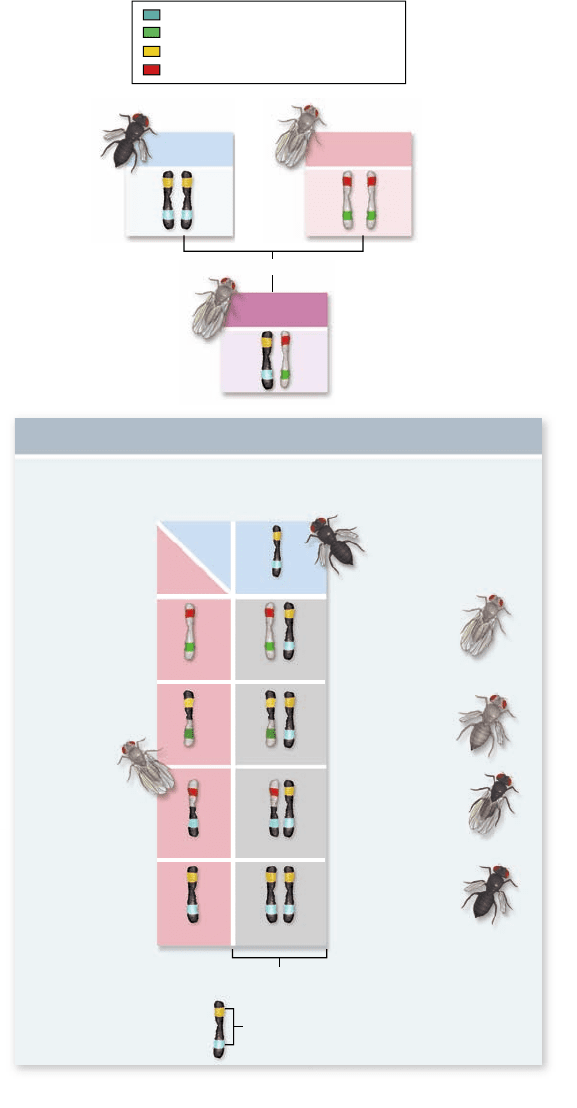
Figure 13.7
Two-point cross to map genes. Flies
homozygous for long wings (vg
+
) and gray bodies (b
+
) are crossed to
ies homozygous for vestigial wings (vg) and black bodies (b). Both
vestigial wing and black body are recessive to the normal (wild-
type) long wing and grey body. The F
1
progeny are then testcrossed
to homozygous vestigial black to produce the progeny for mapping.
Data are analyzed in the text.
and counting progeny to determine percent recombination.
This is best shown with an example using a two-point cross.
Drosophila homozygous for two mutations, vestigial wings
(vg) and black body (b), are crossed to flies homozygous for the
wild type, or normal alleles, of these genes (vg
+
b
+
). The doubly
The long chromosome, which also had the knob, carried
the dominant colored allele for kernel color (C) and the reces-
sive waxy allele for kernel texture (wx). Heterozygotes were
constructed with this chromosome paired with a visibly normal
chromosome carrying the recessive colorless allele for kernel
color (c) and the dominant starchy allele for kernel texture (Wx)
(see figure 13.6). These plants appeared colored and starchy be-
cause they were heterozygous for both loci, and they were also
heterozygous for the two visibly distinct chromosomes.
These plants, heterozygous for both chromosomal and
genetic markers, were test crossed to colorless waxy plants with
normal appearing chromosomes. The progeny were analyzed
for both physical recombination (using a microscope to observe
chromosome appearance) and genetic recombination (by ex-
amining the phenotype of progeny). The results were striking:
All of the progeny that were genetically recombinant (appear
colored starchy or colorless waxy) also now had only one of the
chromosomal markers. That is, genetic recombination was ac-
companied by physical exchange of chromosomal material.
Recombination is the basis for genetic maps
The ability to map the location of genes on chromosomes us-
ing data from genetic crosses is one of the most powerful tools
of genetics. The insight that allowed this technique, like many
great insights, is so simple as to seem obvious in retrospect.
Morgan had already suggested that the frequency with
which a particular group of recombinant progeny appeared was
a reflection of the relative location of genes on the chromosome.
An undergraduate in Morgan’s laboratory, Alfred Sturtevant put
this observation on a quantitative basis. Sturtevant reasoned that
the frequency of recombination observed in crosses could be
used as a measure of genetic distance. That is, as physical dis-
tance on a chromosome increases, so does the probability of re-
combination (crossover) occurring between the gene loci. Using
this logic, the frequency of recombinant gametes produced is a
measure of their distance apart on a chromosome.
Linkage data
To be able to measure recombination frequency easily, investi-
gators used a testcross instead of intercrossing the F
1
progeny
to produce an F
2
generation. In a testcross, as described earlier,
the phenotypes of the progeny reflect the gametes produced by
the doubly heterozygous F
1
individual. In the case of recombi-
nation, progeny that appear parental have not undergone cross-
over, and progeny that appear recombinant have experienced a
crossover between the two loci in question (see figure 13.5).
When genes are close together, the number of recombinant
progeny is much lower than the number of parental progeny, and
the genes are defined on this basis as being linked. The number of
recombinant progeny divided by total progeny gives a value de-
fined as the recombination frequency. This value is converted to
a percentage, and each 1% of recombination is termed a map unit.
This unit has been named the centimorgan (cM) for T. H. Morgan,
although it is also called simply a map unit (m.u.) as well.
Constructing maps
Constructing genetic maps then becomes a simple process of
performing testcrosses with doubly heterozygous individuals
246
part
III
Genetic and Molecular Biology
rav32223_ch13_239-255.indd 246rav32223_ch13_239-255.indd 246 11/6/09 3:28:31 PM11/6/09 3:28:31 PM
Apago PDF Enhancer
Recombination Frequency
0.5
0
Physical Distance on a Chromosome
Parental Parental Recombinant
A
a
B
b
C
c
a c
b A
B
C
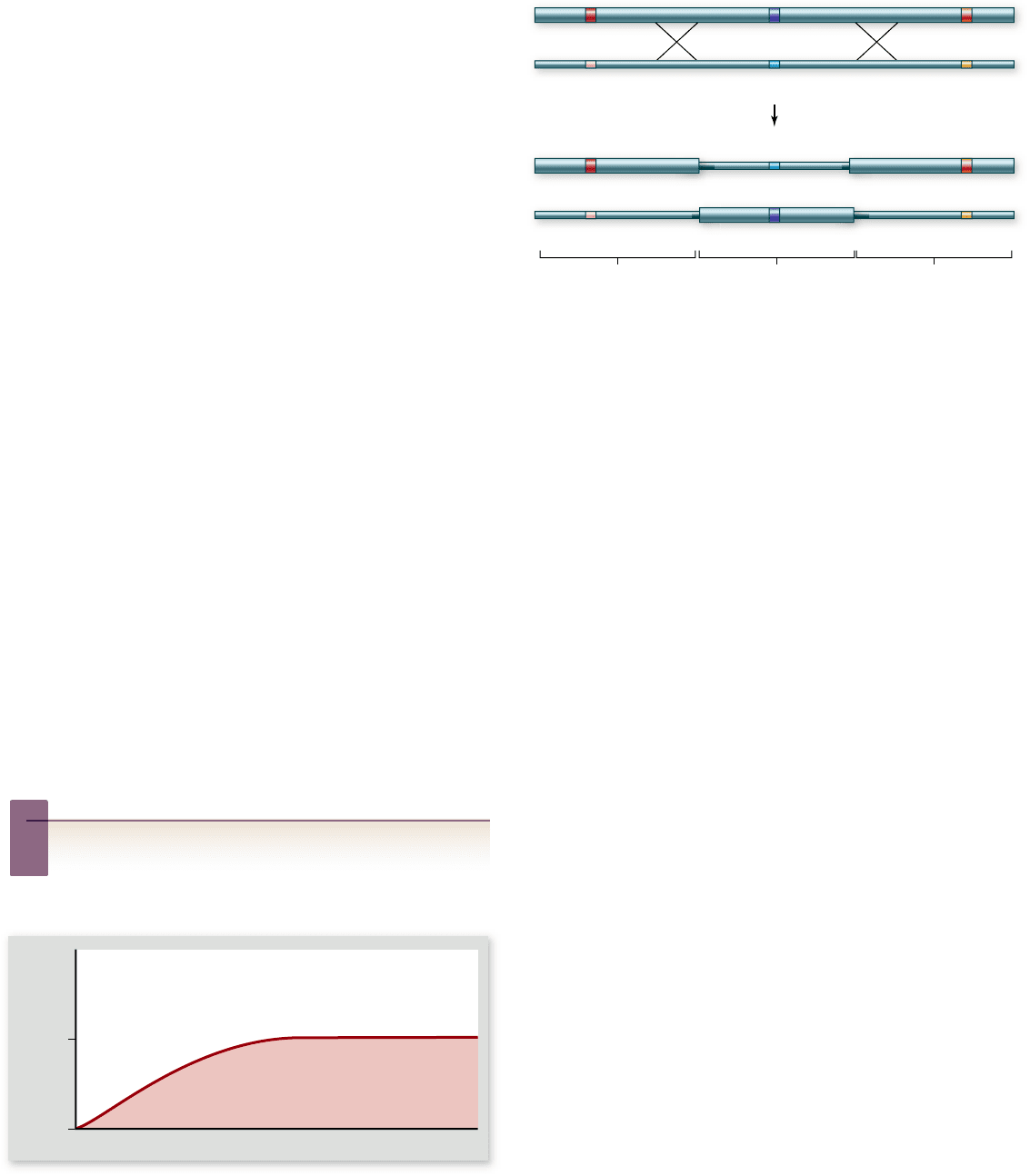
Figure 13.8
Relationship between true distance and
recombination frequency. As distance on a chromosome
increases, the recombinants are not all detected due to double
crossovers. This leads to a curve that levels off at 0.5.
Figure 13.9
Use of a three-point cross to order genes.
In a two-point cross, the outside loci appear parental for double
crossovers. With the addition of a third locus, the two crossovers
can still be detected because the middle locus will be recombinant.
This double crossover class should be the least frequent, so whatever
locus has recombinant alleles in this class must be in the middle.
heterozygous F
1
progeny are then testcrossed to homozygous
recessive individuals (vg b/vg b), and progeny are counted
( figure 13.7). The data are shown here:
vestigial wings, black body (vg b) 405 (parental)
long wings, gray body (vg
+
b
+
) 415 (parental)
vestigial wings, gray body (vg b
+
) 92 (recombinant)
long wings, black body (vg
+
b) 88 (recombinant)
Total Progeny 1000
The numbers of recombinant progeny are added together,
and this sum is divided by total progeny to produce the recom-
bination frequency. The recombination frequency is 92 + 88
divided by 1000, or 0.18. Converting this number to a percent-
age yields 18 cM as the map distance between these two loci.
Multiple crossovers can yield independent
assortment results
As the distance separating loci increases, the probability of recom-
bination occurring between them during meiosis also increases.
What happens when more than one recombination event occurs?
If homologues undergo two crossovers between loci, then
the parental combination is restored. This leads to an under-
estimate of the true genetic distance because not all events can
be noted. As a result, the relationship between true distance on
a chromosome and the recombination frequency is not linear.
It begins as a straight line, but the slope decreases; the curve
levels off at a recombination frequency of 0.5 (figure 13.8) .
At long distances, multiple events between loci become
frequent. In this case, odd numbers of crossovers (1, 3, 5) pro-
duce recombinant gametes, and no crossover or even numbers
of crossovers (0, 2, 4) produce parental gametes. At large enough
distances, these frequencies are about equal, leading to the
number of recombinant gametes being equal to the number of
parental gametes, and the loci exhibit independent assortment !
This is how Mendel could use two loci on the same chromo-
some and have them assort independently.
Inquiry question
?
What would Mendel have observed in a dihybrid cross if the
two loci were 10 cM apart on the same chromosome? Is this
likely to have led him to the idea of independent assortment?
Three-point crosses can be
used to put genes in order
Because multiple crossovers reduce the number of observed recombi-
nant progeny, longer map distances are not accurate. As a result, when
geneticists try to construct maps from a series of two-point crosses,
determining the order of genes is problematic. Using three loci in-
stead of two, or a three-point cross, can help solve the problem.
In a three-point cross, the gene in the middle allows us to
see recombination events on either side. For example, a double
crossover for the two outside loci is actually a single crossover
between the middle locus and each outside locus (figure 13.9) .
The probability of two crossovers is equal to the product of
the probability of each individual crossover, each of which is rela-
tively low. Therefore, in any three-point cross, the class of offspring
with two crossovers is the least frequent class. Analyzing these indi-
viduals to see which locus is recombinant identifies the locus that
lies in the middle of the three loci in the cross (see figure 13.9).
In practice, geneticists use three-point crosses to deter-
mine the order of genes, then use data from the closest two-point
crosses to determine distances. Longer distances are generated
by simple addition of shorter distances. This avoids using inac-
curate measures from two-point crosses between distant loci.
Genetic maps can be constructed
for the human genome
Human genes can be mapped, but the data must be derived
from historical pedigrees, such as those of the royal families of
Europe mentioned earlier. The principle is the same—genetic
distance is still proportional to recombination frequency—but
the analysis requires the use of complex statistics and summing
data from many families.
The difficulty of mapping in humans
Looking at nonhuman animals with extensive genetic maps, the
majority of genetic markers have been found at loci where alleles
chapter
13
Chromosomes, Mapping, and the Meiosis–Inheritance Connection
247www.ravenbiology.com
rav32223_ch13_239-255.indd 247rav32223_ch13_239-255.indd 247 11/6/09 3:28:32 PM11/6/09 3:28:32 PM
Apago PDF Enhancer
Duchenne muscular dystrophy
Becker muscular dystrophy
Ichthyosis, X-linked
Placental steroid sulfatase deficiency
Kallmann syndrome
Chondrodysplasia punctata, X-linked recessive
Hypophosphatemia
Aicardi syndrome
Hypomagnesemia, X-linked
Ocular albinism
Retinoschisis
Adrenal hypoplasia
Glycerol kinase deficiency
Incontinentia pigmenti
Wiskott–Aldrich syndrome
Menkes syndrome
Charcot–Marie–Tooth neuropathy
Choroideremia
Cleft palate, X-linked
Spastic paraplegia, X-linked, uncomplicated
Deafness with stapes fixation
PRPS-related gout
Lowe syndrome
Lesch–Nyhan syndrome
HPRT-related gout
Hemophilia A
G6PD deficiency: favism
Drug-sensitive anemia
Chronic hemolytic anemia
Manic–depressive illness, X-linked
Colorblindness, (several forms)
Dyskeratosis congenita
TKCR syndrome
Adrenoleukodystrophy
Adrenomyeloneuropathy
Emery–Dreifuss muscular dystrophy
Diabetes insipidus, renal
Myotubular myopathy, X-linked
Androgen insensitivity
Chronic granulomatous disease
Retinitis pigmentosa-3
Norrie disease
Retinitis pigmentosa-2
Sideroblastic anemia
Aarskog–Scott syndrome
PGK deficiency hemolytic anemia
Anhidrotic ectodermal dysplasia
Agammaglobulinemia
Kennedy disease
Pelizaeus–Merzbacher disease
Alport syndrome
Fabry disease
Lymphoproliferative syndrome
Albinism–deafness syndrome
Fragile-X syndrome
Immunodeficiency, X-linked, with hyper IgM
Ornithine transcarbamylase deficiency
Hunter syndrome
Hemophilia B
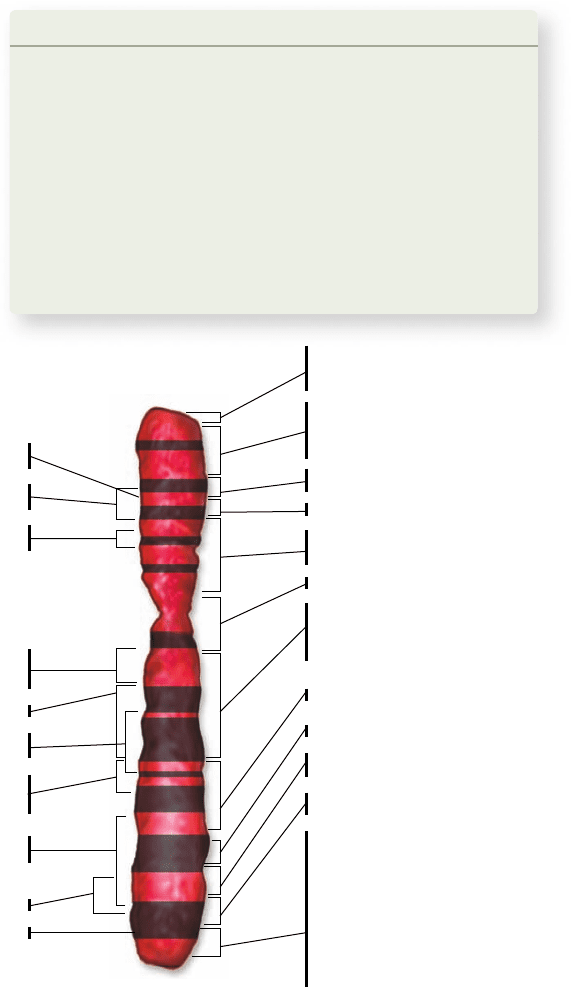
Figure 13.10
The human X
chromosome gene map. Only a
partial map for the human X
chromosome is presented here, a more
detailed map would require a much larger
gure. The black bands represent
staining patterns that can be seen under
the microscope, and the constriction
represents the centromere. Analysis of
the sequence of the X chromosome
indicates 1098 genes on the X
chromosome. Many of these may have
mutant alleles that can affect disease
states. By analyzing inheritance patterns
of affected and unaffected individuals,
the 59 diseases shown have been traced to
speci c segments of the X chromosome,
indicated by brackets.
cause morphological changes, such as variant eye color, body col-
or, or wing morphology in flies. In humans, such alleles generally,
but not always, correspond to what we consider disease states. As
recently as the early 1980s, the number of markers for the human
genome numbered in the hundreds. Because the human genome
is so large, however, this low number of markers would never
provide dense enough coverage to use for mapping.
Another consideration is that the disease-causing alleles
are those that we wish to map, but they occur at low frequencies
in the population. Any one family would be highly unlikely to
carry multiple disease alleles, the segregation of which would
allow for mapping.
Anonymous markers
This situation changed with the development of anonymous
markers, genetic markers that can be detected using molecular
techniques, but that do not cause a detectable phenotype. The na-
ture of these markers has evolved with technology, leading to a stan-
dardized set of markers scattered throughout the genome. These
markers, which have a relatively high density, can be detected using
techniques that are easy to automate. As a result of analysis, geneti-
cists now have several thousand markers to work with, instead of
hundreds, and have produced a human genetic map that would
have been unthinkable 25 years ago (figure 13.10). (In the following
chapters of this unit, you’ll learn about some of the molecular tech-
niques that have been developed for use with genomes.)
Single-nucleotide polymorphisms (SNPs)
The information developed from sequencing the human ge-
nome can then be used to identify and map single bases that
differ between individuals. Any differences between individuals
in populations are termed polymorphisms; polymorphisms affect-
ing a single base of a gene locus are called single-nucleotide
polymorphisms (SNPs). Over 2 million such differences have
been identified and are being placed on both the genetic map
and the human genome sequence. This confluence of techniques
will enable the ultimate resolution of genetic analysis.
The recent progress in gene mapping applies to more
than just the relatively small number of genes that show simple
Mendelian inheritance. The development of a high-resolution
genetic map, and the characterization of millions of SNPs,
opens up the possibility of being able to characterize complex
quantitative traits in humans as well.
On a more practical level, the types of molecular markers de-
scribed earlier are used in forensic analysis. Although not quite as
rapid as some television programs would have you believe, this does
allow rapid DNA testing of crime scene samples to help eliminate
or confirm crime suspects and for paternity testing.
Learning Outcomes Review 13.4
Crossing over during meiosis exchanges alleles on homologues. This
recombination of alleles can be used to map the location of genes.
Genes that are close together are said to be linked, and exhibit an excess
of parental versus recombinant types in a test cross. The frequency of
recombination in testcrosses is used as a measure of genetic distance. Loci
separated by large distances have multiple crossovers between them, which
can lead to independent assortment.
■ If two genes assort independently, can you tell if they
are on a single chromosome and far apart or on two
different chromosomes?
248
part
III
Genetic and Molecular Biology
rav32223_ch13_239-255.indd 248rav32223_ch13_239-255.indd 248 11/6/09 3:28:32 PM11/6/09 3:28:32 PM
Apago PDF Enhancer
1 µm
TABLE 13.2
Some Important Genetic Disorders
Disorder Symptom Defect Dominant/Recessive
Frequency Among Human
Births
Cystic brosis Mucus clogs lungs, liver, and
pancreas
Failure of chloride ion transport
mechanism
Recessive 1/2500 (Caucasians)
Sickle cell anemia Blood circulation is poor Abnormal hemoglobin molecules Recessive 1/600 (African Americans)
Tay–Sachs disease Central nervous system
deteriorates in infancy
Defective enzyme (hexosaminidase A) Recessive 1/3500 (Ashkenazi Jews)
Phenylketonuria Brain fails to develop in infancy,
treatable with dietary restriction
Defective enzyme (phenylalanine
hydroxylase)
Recessive 1/12,000
Hemophilia Blood fails to clot Defective blood-clotting factor VIII X-linked recessive 1/10,000 (Caucasian males)
Huntington disease Brain tissue gradually
deteriorates in middle age
Production of an inhibitor of brain cell
metabolism
Dominant 1/24,000
Muscular dystrophy (Duchenne) Muscles waste away Degradation of myelin coating of
nerves stimulating muscles
X-linked recessive 1/3700 (males)
Hypercholesterolemia Excessive cholesterol levels in
blood lead to heart disease
Abnormal form of cholesterol cell
surface receptor
Dominant 1/500
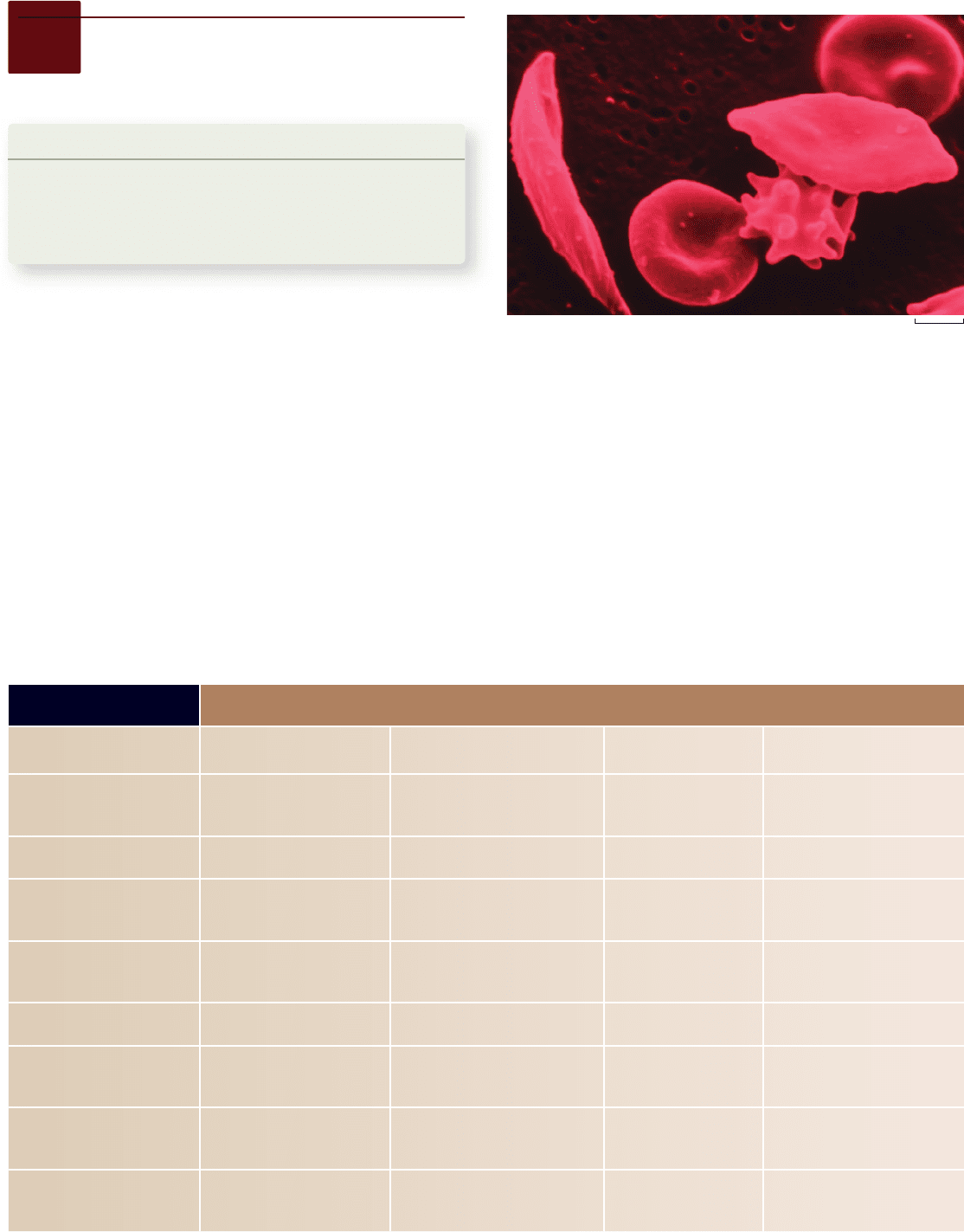
Figure 13.11
Sickle cell anemia. In individuals homozygous
for the sickle cell trait, many of the red blood cells have sickled or
irregular shapes, such as the cell on the far left.
Individuals homozygous for the sickle cell allele exhibit
intermittent illness and reduced life span. Individuals heterozy-
gous for the sickle cell allele are indistinguishable from normal
individuals in a normal oxygen environment, although their red
cells do exhibit reduced ability to carry oxygen.
The sickle cell allele is particularly prevalent in people of
African descent. In some regions of Africa, up to 45% of the
population is heterozygous for the trait, and 6% are homozy-
gous. This proportion of heterozygotes is higher than would be
expected on the basis of chance alone. It turns out that heterozy-
gosity confers a greater resistance to the blood-borne parasite
13.5
Selected Human
Genetic Disorders
Learning Outcomes
Explain how mutations can cause disease.1.
Describe the consequences of nondisjunction in humans.2.
Recognize how genomic imprinting can lead to non-3.
Mendelian inheritance.
Diseases that run in families have been known for many years.
These can be nonlife-threatening like albinism, or may result in
premature death like Huntington’s, which were used as examples
of recessive and dominant traits in humans previously. A small
sample of diseases due to alterations of alleles of a single gene is
provided in table 13.2. We will discuss the nature of these genetic
changes later in chapter 15. In this section we discuss some of the
genetic disorders that have been found in human populations.
Sickle cell anemia is due to altered hemoglobin
The first human disease shown to be the result of a mutation in
a protein was sickle cell anemia. It is caused by a defect in the
oxygen carrier molecule, hemoglobin, that leads to impaired
oxygen delivery to tissues. The defective hemoglobin molecules
stick to one another, leading to stiff, rodlike structures that alter
the shape of the red blood cells that carry them. These red
blood cells take on a characteristic shape that led to the name
“sickle cell” (figure 13.11) .
chapter
13
Chromosomes, Mapping, and the Meiosis–Inheritance Connection
249www.ravenbiology.com
rav32223_ch13_239-255.indd 249rav32223_ch13_239-255.indd 249 11/6/09 3:28:33 PM11/6/09 3:28:33 PM
Apago PDF Enhancer
12 345
67 89101112
13 14 15 16 17 18
19 20 21 22 X Y
20 25 30 35 40 45
25
20
Incidence of Down Syndrome
per 1000 Live Births
15
10
5
0
Age of Mother
that causes malaria. In regions of central Africa where malaria is
endemic, the sickle cell allele also occurs at a high frequency.
The sickle cell allele is not the end of the story for the
β-globin gene; a large number of other alterations of this gene
have been observed that lead to anemias. In fact, for hemoglo-
bin, which is composed of two α-globins and two β-globins,
over 700 structural variants have been cataloged. It is estimated
that 7% of the human population worldwide are carriers for
different inherited hemoglobin disorders.
The Human Gene Mutation Database has cataloged the
nature of many disease alleles, including the sickle cell allele.
The majority of alleles seem to be simple changes. Almost 60%
of the close to 28,000 alleles in the Human Gene Mutation
Database are single-base substitutions. Another 23% are due to
small insertions or deletions of less than 20 bases. The rest of
the alleles are made of more complex alterations. It is clear that
simple changes in genes can have profound effects.
Nondisjunction of chromosomes
changes chromosome number
The failure of homologues or sister chromatids to separate
properly during meiosis is called nondisjunction. This failure
leads to the gain or loss of a chromosome, a condition called
aneuploidy. The frequency of aneuploidy in humans is surpris-
ingly high, being estimated to occur in 5% of conceptions.
Nondisjunction of autosomes
Humans who have lost even one copy of an autosome are called
monosomics, and generally do not survive embryonic devel-
opment. In all but a few cases, humans who have gained an ex-
tra autosome (called trisomics) also do not survive. Data from
clinically recognized spontaneous abortions indicate levels of
aneuploidy as high as 35%.
Five of the smallest human autosomes—those numbered
13, 15, 18, 21, and 22—can be present as three copies and still
allow the individual to survive, at least for a time. The presence
of an extra chromosome 13, 15, or 18 causes severe develop-
mental defects, and infants with such a genetic makeup die
within a few months. In contrast, individuals who have an extra
copy of chromosome 21 or, more rarely, chromosome 22, usu-
ally survive to adulthood. In these people, the maturation of the
skeletal system is delayed, so they generally are short and have
poor muscle tone. Their mental development is also affected,
and children with trisomy 21 are always mentally retarded to
some degree.
The developmental defect produced by trisomy 21
( figure 13.12) was first described in 1866 by J. Langdon Down;
for this reason, it is called Down syndrome. About 1 in every
750 children exhibits Down syndrome, and the frequency is
comparable in all racial groups. Similar conditions also occur in
chimpanzees and other related primates.
In humans, the defect occurs when a particular small por-
tion of chromosome 21 is present in three copies instead of two.
In 97% of the cases examined, all of chromosome 21 is present
in three copies. In the other 3%, a small portion of chromosome
21 containing the critical segment has been added to another
chromosome by a process called translocation (see chapter 15);
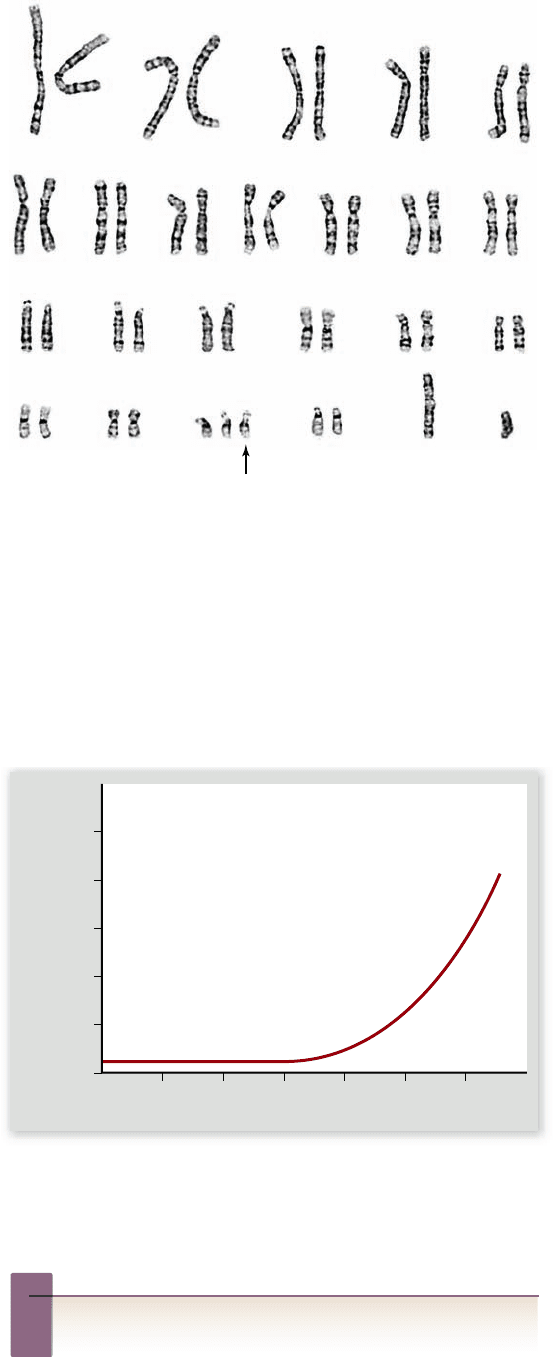
Figure 13.12
Down syndrome. As shown in this male
karyotype, Down syndrome is associated with trisomy of
chromosome 21 (arrow shows third copy of chromosome 21).
i t exists along with the normal two copies of chromosome 21.
This latter condition is known as translocation Down syndrome.
In mothers younger than 20 years of age, the risk of giv-
ing birth to a child with Down syndrome is about 1 in 1700; in
mothers 20 to 30 years old, the risk is only about 1 in 1400.
However, in mothers 30 to 35 years old, the risk rises to 1 in
750, and by age 45, the risk is as high as 1 in 16 (figure 13.13) .
Figure 13.13
Correlation between maternal age and the
incidence of Down syndrome. As women age, the chances they
will bear a child with Down syndrome increase. After a woman
reaches 35, the frequency of Down syndrome rises rapidly.
Inquiry question
?
Over a five-year period between ages 20 and 25, the
incidence of Down syndrome increases 0.1 per thousand;
over a five-year period between ages 35 and 40, the incidence
increases to 8.0 per thousand, 80 times as great. The period of
time is the same in both instances. What has changed?
250
part
III
Genetic and Molecular Biology
rav32223_ch13_239-255.indd 250rav32223_ch13_239-255.indd 250 11/6/09 3:28:34 PM11/6/09 3:28:34 PM
Apago PDF Enhancer
Normal male
Female
gametes
undergo
nondisjunction
Triple X syndrome
X
XX
XXX
Y
O
XXY
Turner
syndrome
Nonviable
Klinefelter
syndrome
XO OY
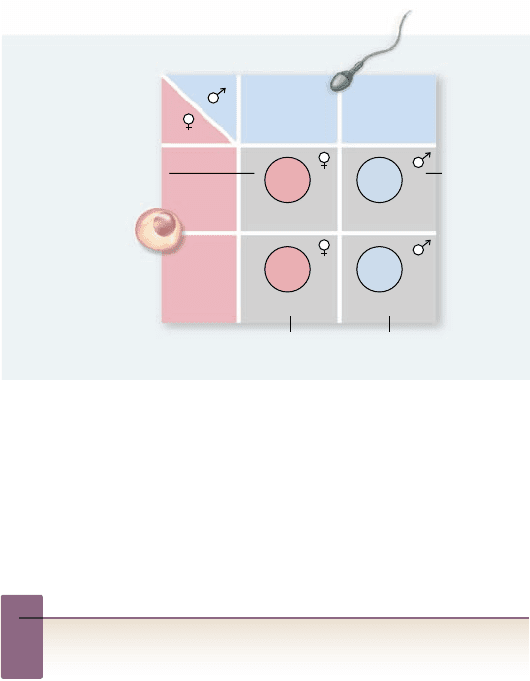
Primary nondisjunctions are far more common in women
than in men because all of the eggs a woman will ever produce
have developed to the point of prophase in meiosis I by the
time she is born. By the time a woman has children, her eggs
are as old as she is. Therefore, there is a much greater chance
for cell-division problems of various kinds, including those that
cause primary nondisjunction, to accumulate over time in fe-
male gametes. In contrast, men produce new sperm daily. For
this reason, the age of the mother is more critical than that of
the father for couples contemplating childbearing.
Nondisjunction of sex chromosomes
Individuals who gain or lose a sex chromosome do not gener-
ally experience the severe developmental abnormalities caused
by similar changes in autosomes. Although such individuals
have somewhat abnormal features, they often reach maturity
and in some cases may be fertile.
X chromosome nondisjunction.
When X chromosomes fail
to separate during meiosis, some of the gametes produced possess
both X chromosomes, and so are XX gametes; the other gametes
have no sex chromosome and are designated “O” ( gure 13.14).
If an XX gamete combines with an X gamete, the result-
ing XXX zygote develops into a female with one functional X
chromosome and two Barr bodies. She may be taller in stature
but is otherwise normal in appearance.
If an XX gamete instead combines with a Y gamete, the ef-
fects are more serious. The resulting XXY zygote develops into a
male who has many female body characteristics and, in some cases
but not all, diminished mental capacity. This condition, called
Klinefelter syndrome, occurs in about 1 out of every 500 male births.
Figure 13.14
How nondisjunction can produce
abnormalities in the number of sex chromosomes. When
nondisjunction occurs in the production of female gametes, the
gamete with two X chromosomes (XX) produces Klinefelter males
(XXY) and triple-X females (XXX). The gamete with no X
chromosome (O) produces Turner females (XO) and nonviable OY
males lacking any X chromosome.
Inquiry question
?
Can you think of two nondisjunction scenarios that would
produce an XXY male?
If an O gamete fuses with a Y gamete, the resulting OY
zygote is nonviable and fails to develop further; humans cannot
survive when they lack the genes on the X chromosome. But if
an O gamete fuses with an X gamete, the XO zygote develops
into a sterile female of short stature, with a webbed neck and
sex organs that never fully mature during puberty. The mental
abilities of an XO individual are in the low-normal range. This
condition, called Turner syndrome, occurs roughly once in every
5000 female births.
Y chromosome nondisjunction.
The Y chromosome can
also fail to separate in meiosis, leading to the formation of YY
ga metes. When these gametes combine with X gametes, the
XYY zygotes develop into fertile males of normal appearance.
The frequency of the XYY genotype (Jacob syndrome) is about
1 per 1000 newborn males.
Genomic imprinting depends
on the parental origin of alleles
By the late 20th century, geneticists were confident that they
understood the basic mechanisms governing inheritance. It
came as quite a surprise when mouse geneticists found an im-
portant exception to classical Mendelian genetics that appears
to be unique to mammals. In genomic imprinting, the pheno-
type caused by a specific allele is exhibited when the allele
comes from one parent, but not from the other.
The basis for genomic imprinting is the expression of a
gene depending on passage through maternal or paternal germ
lines. Some genes are inactivated in the paternal germ line and
therefore are not expressed in the zygote. Other genes are inac-
tivated in the maternal germ line, with the same result. This
condition makes the zygote effectively haploid for an imprinted
gene. The expression of variant alleles of imprinted genes de-
pends on the parent of origin. Furthermore, imprinted genes
seem to be concentrated in particular regions of the genome.
These regions include genes that are both maternally and pa-
ternally imprinted.
Prader–Willi and Angelman syndromes
An example of genomic imprinting in humans involves the two
diseases Prader–Willi syndrome (PWS) and Angelman syn-
drome (AS). The effects of PWS include respiratory distress,
obesity, short stature, mild mental retardation, and obsessive–
compulsive behavior. The effects of AS include developmental
delay, severe mental retardation, hyperactivity, aggressive be-
havior, and inappropriate laughter.
Genetic studies have implicated genes on chromosome
15 for both disorders, but the pattern of inheritance is comple-
mentary. The most common cause of both syndromes is a dele-
tion of material on chromosome 15 and, in fact, the same
deletion can cause either syndrome. The determining factor is
the parental origin of the normal and deleted chromosomes. If
the chromosome with the deletion is paternally inherited it
causes PWS, if the chromosome with the deletion is maternally
inherited it causes AS.
The region of chromosome 15 that is lost is subject to
imprinting, with some genes being inactivated in the maternal
germ line, and others in the paternal germ line. In PWS, genes
chapter
13
Chromosomes, Mapping, and the Meiosis–Inheritance Connection
251www.ravenbiology.com
rav32223_ch13_239-255.indd 251rav32223_ch13_239-255.indd 251 11/6/09 3:28:35 PM11/6/09 3:28:35 PM