
Raven P.H., Johnson G.B., Mason K.A. Biology (Ninth Edition)
Подождите немного. Документ загружается.

Apago PDF Enhancer
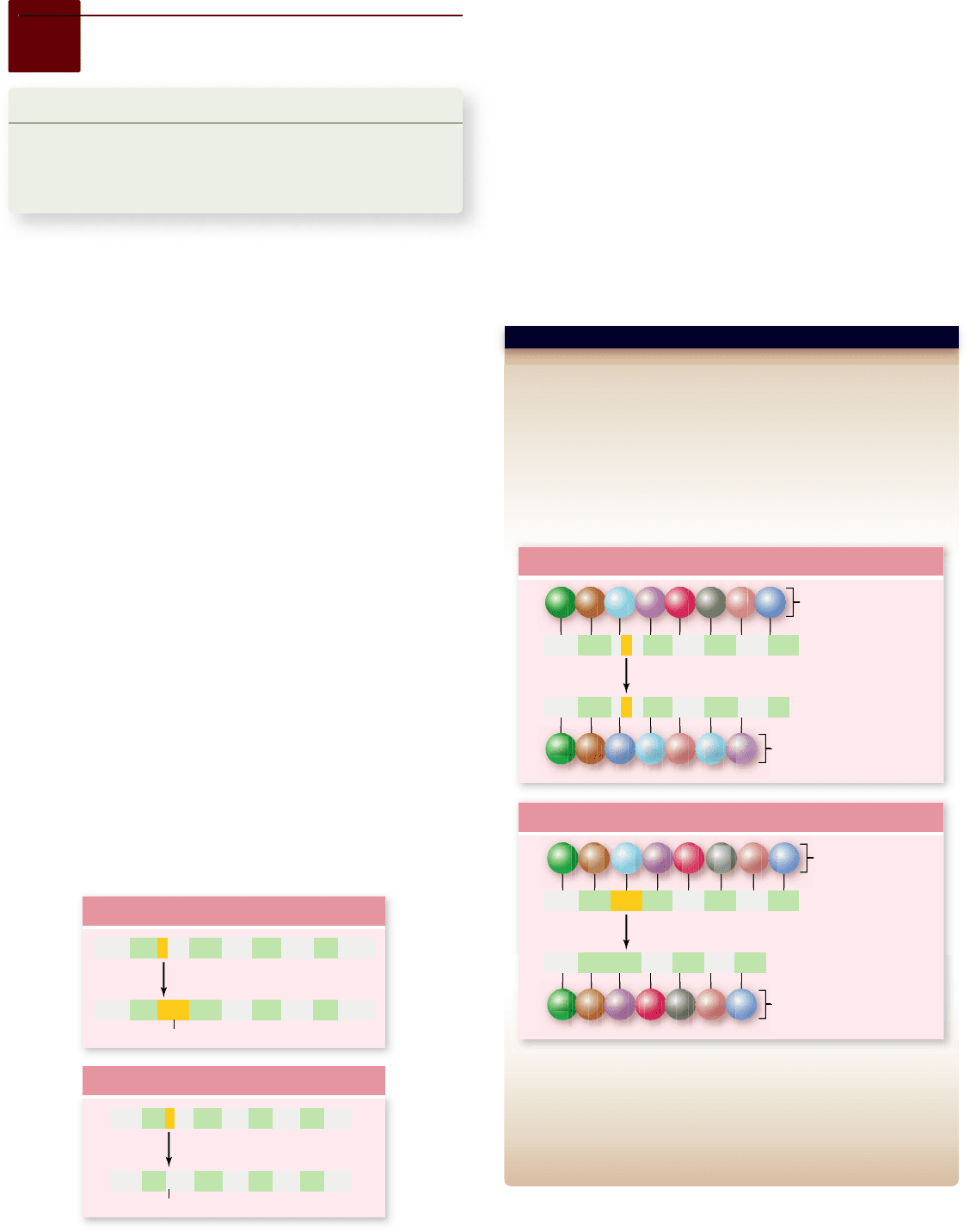
Hypothesis: The genetic code is read in groups of three bases.
Prediction: If the genetic code is read in groups of three, then deletion
of one or two bases would shift the reading frame after the deletion.
Deletion of three bases, however, would produce a protein with a single
amino acid deleted but no change downstream.
Test: Single-base deletion mutants are collected, each of which exhibits
a mutant phenotype. Three of these deletions in a single region are
combined to assess the eect of deletion of three bases.
Result: The combination of three deletions does not have the same
drastic eect as the loss of one or two bases.
Conclusion: The genetic code is read in groups of three.
Further Experiments: If you also had mutants with one base additions,
what would be the eect of combining a deletion and an addition?
SCIENTIFIC THINKING
Delete one base
All amino acids changed
after deletion
Amino acids
Delete three bases
Amino acids do not
change after third deletion
Amino acids
AUGCCUACGCACCGCGACGCAUCA
AUGCCUAGCACCGCGACGCAUCA
AUGCCUCACCGCGACGCAUCA
One Base Deleted
Three Bases Deleted
Met Pro Thr His Arg Asp Ala Ser
Met
t
Pro Ser Thr Ala Thr His
Met Pro Thr His Arg Asp Ala Ser
Met
t
Pro His Arg
g
Asp Ala Ser
AUGCCUACGCACCGCGACGCAUCA
Delete one letter
Only one word changed
WHY DID THE RED BAT EAT THE FAT RAT
WHY DID HE RED BAT EAT THE FAT RAT
Delete one letter
All words after deletion changed
WHYDIDTHEREDBATEATTHEFATRAT
WHYDIDHEREDBATEATTHEFATRAT
Sentence with Spaces
Sentence with No Spaces
Determining that codons are unspaced
To choose between these alternative mechanisms, Crick and his
colleagues used a chemical to create mutations that caused single-
base insertions or deletions from a viral DNA molecule. They
then showed that combining an insertion with a deletion restored
function even though either one individually displayed loss of
function. In this case, only the region between the insertion or
deletion would be altered. By choosing a region of the gene that
encoded a part of the protein not critical to function, this small
change did not cause a change in phenotype.
When they combined a single deletion or two deletions
near each other, the genetic message shifted, altering all of the
amino acids after the deletion. When they made three deletions,
15.2
The Genetic Code
Learning Outcomes
Summarize the experiments that revealed the genetic code.1.
Describe the characteristics of the genetic code.2.
Identify the relationship between codons and amino acids.3.
How does the order of nucleotides in a DNA molecule encode
the information that specifies the order of amino acids in a poly-
peptide? The answer to this essential question came in 1961,
through an experiment led by Francis Crick and Sydney Brenner.
That experiment was so elegant and the result so critical to un-
derstanding the genetic code that we describe it here in detail.
The code is read in groups of three
Crick and Brenner reasoned that the genetic code most likely
consisted of a series of blocks of information called codons,
each corresponding to an amino acid in the encoded protein.
They further hypothesized that the information within one
codon was probably a sequence of three nucleotides. With four
DNA nucleotides (G, C, T, and A), using two in each codon can
produce only 4
2
, or 16, different codons—not enough to code
for 20 amino acids. However, three nucleotides results in 4
3
, or
64, different combinations of three, more than enough.
Spaced or unspaced codons?
In theory, the sequence of codons in a gene could be punctu-
ated with nucleotides between the codons that are not used,
like the spaces that separate the words in this sentence. Alterna-
tively, the codons could lie immediately adjacent to each other,
forming a continuous sequence of nucleotides.
If the information in the genetic message is separated by
spaces, then altering any single word would not affect the entire
sentence. In contrast, if all of the words are run together but
read in groups of three, then any alteration that is not in groups
of three would alter the entire sentence. These two ways of us-
ing information in DNA imply different methods of translating
the information into protein.
F i g u r e 1 5 . 4
The genetic code is triplet.
282
part
III
Genetic and Molecular Biology
rav32223_ch15_278-303.indd 282rav32223_ch15_278-303.indd 282 11/9/09 2:42:39 PM11/9/09 2:42:39 PM
Apago PDF Enhancer
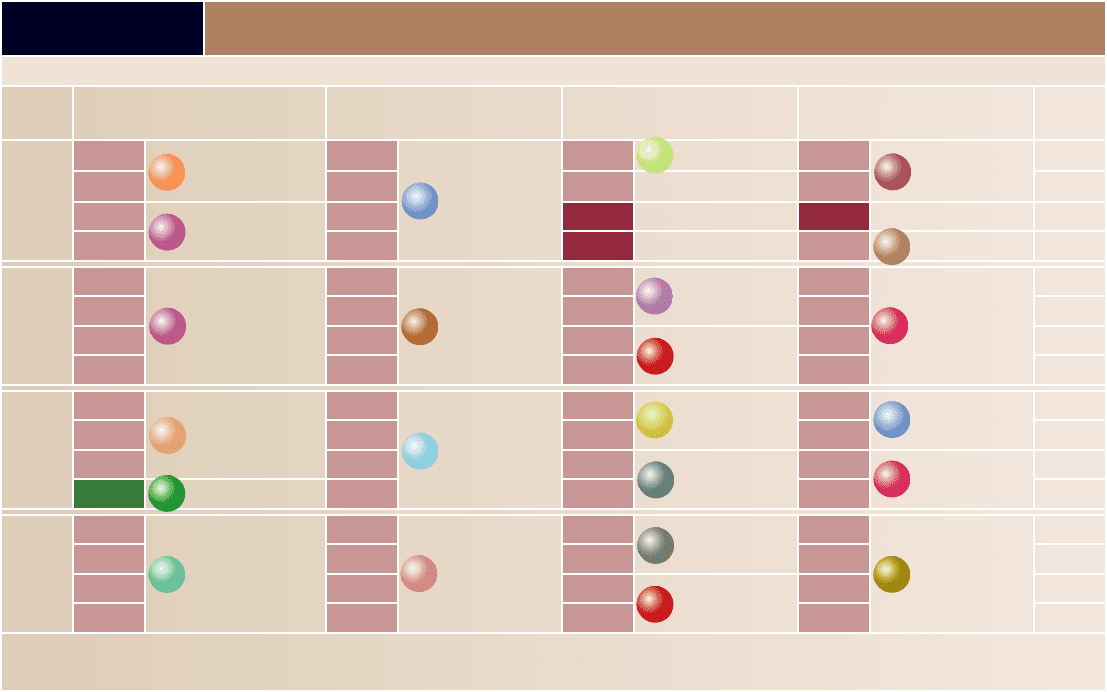
TABLE 15.1
The Genetic Code
SECOND LETTER
First
Letter U C A G
Third
Letter
U UUU
Phenylalanine
UCU
Serine
UAU Tyrosine UGU
Cysteine
U
UUC UCC UAC UGC C
UUA
Leucine
UCA UAA “Stop” UGA “Stop” A
UUG UCG UAG “Stop” UGG Tryptophan G
CCUU
Leucine
CCU
Proline
CAU
Histidine
CGU
Arginine
U
CUC CCC CAC CGC C
CUA CCA CAA
Glutamine
CGA A
CUG CCG CAG CGG G
AAUU
Isoleucine
ACU
Threonine
AAU
Asparagine
AGU
Serine
U
AUC ACC AAC AGC C
AUA ACA AAA
Lysine
AGA
Arginine
A
AUG
Methionine; “Start”
ACG AAG AGG G
GGUU
Valine
GCU
Alanine
GAU
Aspartate
GGU
Glycine
U
GUC GCC GAC GGC C
GUA GCA GAA
Glutamate
GGA A
GUG GCG GAG GGG G
A codon consists of three nucleotides read in the sequence shown. For example, ACU codes for threonine. The rst letter, A, is in the First Letter column; the second letter, C, is in the Second Letter column; and the third letter, U, is in the Third Letter
column. Each of the mRNA codons is recognized by a corresponding anticodon sequence on a tRNA molecule. Many amino acids are speci ed by more than one codon. For example, threonine is speci ed by four codons, which di er only in the third
nucleotide (ACU, ACC, ACA, and ACG).
produced the polypeptide polyphenylalanine (a string of phenylala-
nine amino acids). Therefore, UUU encodes phenylalanine.
Next they used enzymes to produce RNA polymers with
more than one nucleotide. These polymers allowed them to
infer the composition of many of the possible codons, but not
the order of bases in each codon.
The researchers then were able to use enzymes to synthe-
size defined 3-base sequences that could be tested for binding to
the protein-synthesis machinery. This so-called triplet-binding
assay allowed them to identify 54 of the 64 possible triplets.
The organic chemist H. Gobind Khorana provided the
final piece of the puzzle by using organic synthesis to produce
artificial RNA molecules of defined sequence, and then exam-
ining what polypeptides they directed in cell-free systems. The
combination of all of these methods allowed the determination
of all 64 possible 3-nt sequences, and the full genetic code was
determined (table 15.1).
The code is degenerate but speci c
Some obvious features of the code jump out of table 15.1. First,
61 of the 64 possible codons are used to specify amino acids.
Three codons, UAA, UGA, and UAG, are reserved for another
function: they signal “stop” and are known as stop codons.
The only other form of “punctuation” in the code is that AUG
is used to signal “start” and is therefore the start codon. In this
case the codon has a dual function because it also encodes the
amino acid methionine (Met).
however, the protein after the deletions was normal. They ob-
tained the same results when they made additions to the DNA
consisting of 1, 2, or 3 nt (nucleotides).
Thus, Crick and Brenner concluded that the genetic code
is read in increments of three nucleotides (in other words, it is
a triplet code), and that reading occurs continuously without
punctuation between the 3-nt units (figure 15.4).
These experiments indicate the importance of the reading
frame for the genetic message. Because there is no punctuation, the
reading frame established by the first codon in the sequence deter-
mines how all subsequent codons are read. We now call the kinds
of mutations that Crick and Brenner used frameshift mutations
because they alter the reading frame of the genetic message.
Nirenberg and others deciphered the code
The determination of which of the 64 possible codons encoded
each particular amino acids was one of the greatest triumphs of
20th-century biochemistry. Accomplishing this decryption re-
quired two main developments to succeed: (1) cell-free bio-
chemical systems that would support protein synthesis from a
defined RNA and (2) the ability to produce synthetic, defined
RNAs that could be used in the cell-free system.
During a five-year period from 1961 to 1966, work per-
formed primarily in Marshall Nirenberg’s laboratory led to the elu-
cidation of the genetic code. Nirenberg’s group first showed that
adding the synthetic RNA molecule polyU (an RNA molecule
consisting of a string of uracil nucleotides) to their cell-free systems
Leu
Thr
His
Arg
Pro
Met
Ala
Tyr
Phe
Asp
Ile
Cys
Gly
Trp
Glu
Lys
Ser
Val
Leu
Gln
Asn
Arg
Ser
chapter
15
Genes and How They Work
283www.ravenbiology.com
rav32223_ch15_278-303.indd 283rav32223_ch15_278-303.indd 283 11/9/09 2:42:39 PM11/9/09 2:42:39 PM
Apago PDF Enhancer
Prokaryotic RNA polymerase
Holoenzyme
Core
enzyme
a
a
b
b„
s
a.
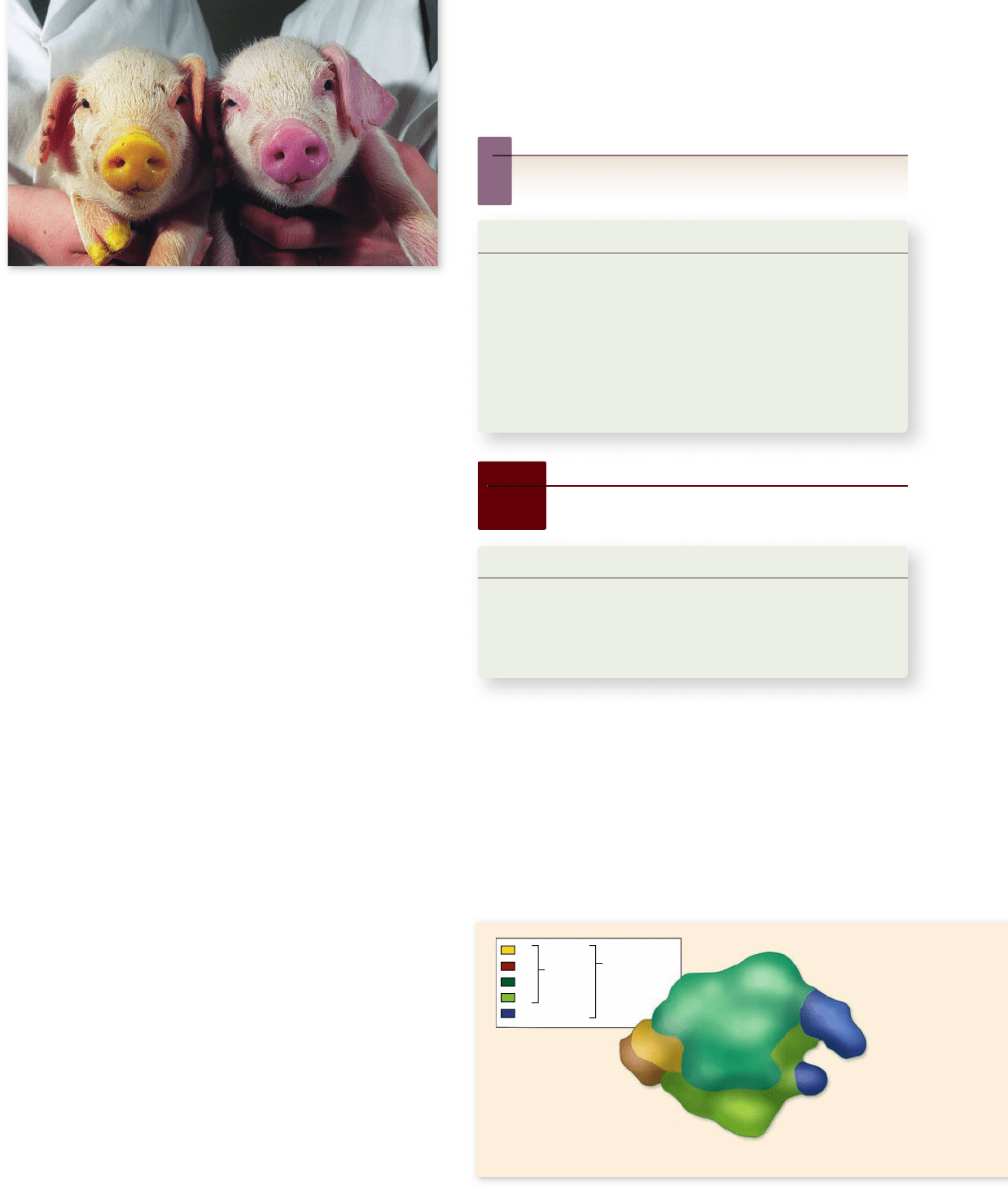
Figure 15.5
Transgenic pig. The piglet on the right is a
conventional piglet. The piglet on the left was engineered to express a
gene from jelly sh that encodes green uorescent protein. The color
of this piglet’s nose is due to expression of this introduced gene. Such
transgenic animals indicate the universal nature of the genetic code.
You can see that 61 codons are more than enough to en-
code 20 amino acids. That leaves lots of extra codons. One way
to deal with this abundance would be to use only 20 of the
61 codons, but this is not what cells do. In reality, all 61 codons
are used, making the code degenerate, which means that some
amino acids are specified by more than one codon. The reverse,
however, in which a single codon would specify more than one
amino acid, is never found.
This degeneracy is not uniform. Some amino acids have
only one codon, and some have up to six. In addition, the de-
generate base usually occurs in position 3 of a codon, such that
the first two positions are the same, and two or four of the pos-
sible nucleotides at position 3 encode the same amino acid.
(The nature of protein synthesis on ribosomes explains how
this codon usage works, and it is discussed later.)
The code is practically universal, but not quite
The genetic code is the same in almost all organisms. The uni-
versality of the genetic code is among the strongest evidence
that all living things share a common evolutionary heritage. Be-
cause the code is universal, genes can be transferred from one
organism to another and can be successfully expressed in their
new host (figure 15.5). This universality of gene expression is
central to many of the advances of genetic engineering dis-
cussed in chapter 17.
In 1979, investigators began to determine the complete
nucleotide sequences of the mitochondrial genomes in humans,
cattle, and mice. It came as something of a shock when these
investigators learned that the genetic code used by these mam-
malian mitochondria was not quite the same as the “universal
code” that has become so familiar to biologists.
In the mitochondrial genomes, what should have been a
stop codon, UGA, was instead read as the amino acid trypto-
phan; AUA was read as methionine rather than as isoleucine;
and AGA and AGG were read as stop codons rather than as
arginine. Furthermore, minor differences from the universal
code have also been found in the genomes of chloroplasts and
in ciliates (certain types of protists).
Thus, it appears that the genetic code is not quite univer-
sal. Some time ago, presumably after they began their endo-
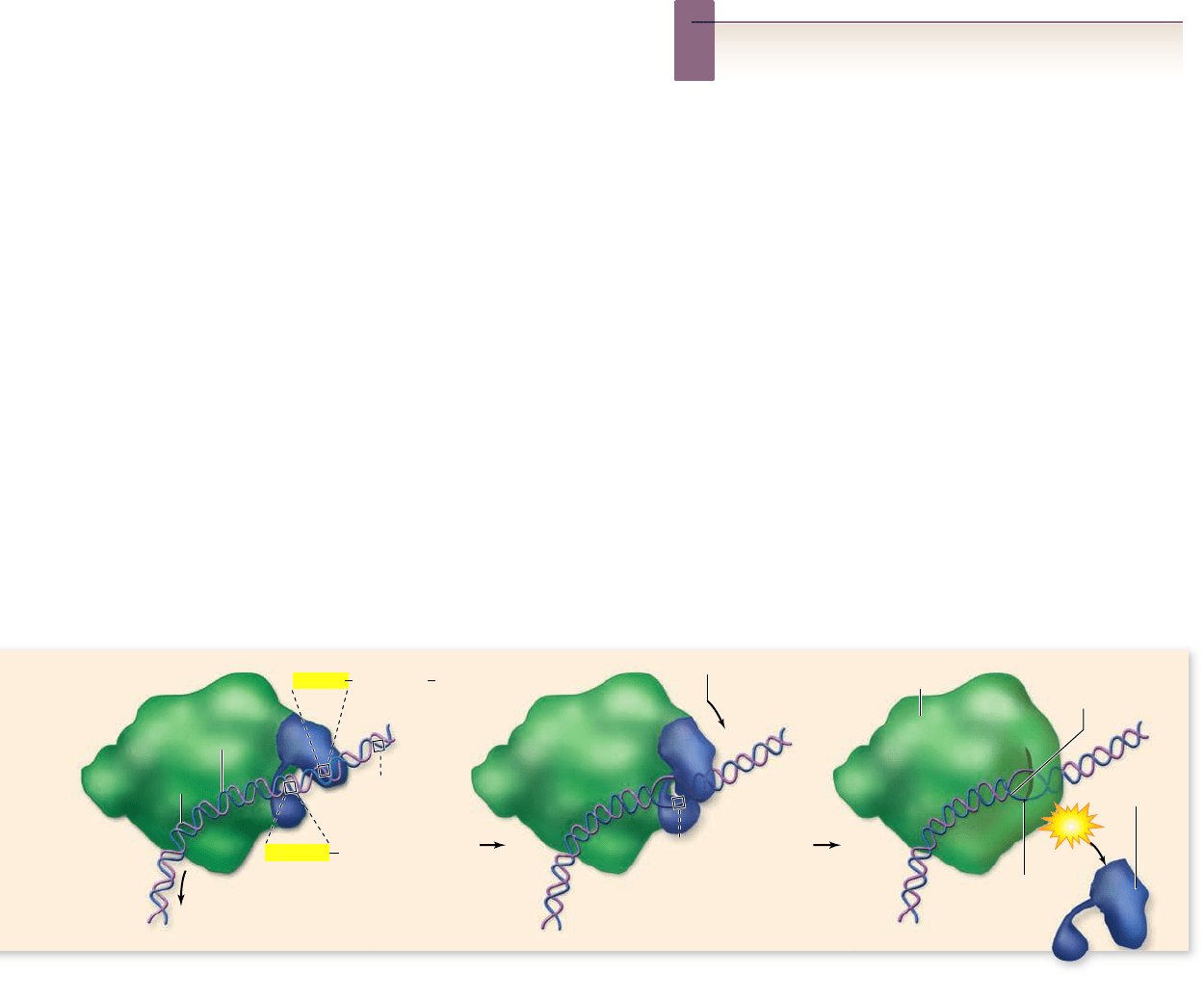
Figure 15.6
Bacterial RNA polymerase and transcription
initiation.
a. RNA polymerase has two forms: core polymerase and
holoenzyme. b. The
σ subunit of the holoenzyme recognizes promoter
elements at –35 and –10 and binds to the DNA. The helix is opened at
the –10 region, and transcription begins at the start site at +1.
15.3
Prokaryotic Transcription
Learning Outcomes
Describe the transcription process in bacteria.1.
Differentiate features of initiation from those 2.
of elongation.
Define the unique features of prokaryotic transcription.3.
We begin an examination of gene expression by describing the
process of transcription in prokaryotes. The later description of
eukaryotic transcription will concentrate on their differences
from prokaryotes.
symbiotic existence, mitochondria and chloroplasts began to
read the code differently, particularly the portion associated
with “stop” signals.
Inquiry question
?
The genetic code is almost universal. Why do you think it is
nearly universal?
Learning Outcomes Review 15.2
The genetic code was shown to be nucelotide base triplets with two forms
of punctuation and no spaces: three bases code for an amino acid, and the
groups of three are read in order. Sixty-one codons specify amino acids, one
of which also codes for “start,” and three codons indicate “stop,” for 64 total.
Because some amino acids are specifi ed by more than one codon, the code is
termed degenerate. All codons encode only one amino acid, however.
■ What would be the outcome if a codon specified more
than one amino acid?
284
part
III
Genetic and Molecular Biology
rav32223_ch15_278-303.indd 284rav32223_ch15_278-303.indd 284 11/9/09 2:42:39 PM11/9/09 2:42:39 PM
Apago PDF Enhancer
Promoter ( 10 sequence) TATAAT
Coding
strand
Template
strand
Upstream
Downstream
Transcription
bubble
RNA polymerase bound
to unwound DNA
Helix opens at
:10 sequence
5„
5„
3„
5„ 3„
3„
5„
3„
Start site (;1)
Start site RNA
synthesis begins
Promoter
(:35 sequence)
s binds to DNA
s dissociates
b.
ATP
TTGACA
Prokaryotes have a single RNA polymerase
The single RNA polymerase of prokaryotes exists in two
forms: the core polymerase and the holoenzyme. The core poly-
merase can synthesize RNA using a DNA template, but it can-
not initiate synthesis accurately. The holoenzyme can accurately
initiate synthesis.
The core polymerase is composed of four subunits: two
identical α subunits, a β subunit, and a β' subunit (figure 15.6a) .
The two α subunits help to hold the complex together and can
bind to regulatory molecules. The active site of the enzyme is
formed by the β and β' subunits, which bind to the DNA tem-
plate and the ribonucleotide triphosphate precursors.
The holoenzyme, which can properly initiate synthesis, is
formed by the addition of a σ (sigma) subunit to the core poly-
merase (see figure 15.6a). Its ability to recognize specific signals
in DNA allows RNA polymerase to locate the beginning of
genes, which is critical to its function. Note that initiation of
mRNA synthesis does not require a primer, in contrast to
DNA replication.
Initiation occurs at promoters
Accurate initiation of transcription requires two sites in DNA:
one called a promoter that forms a recognition and binding
site for the RNA polymerase, and the actual start site. The
polymerase also needs a signal to end transcription, which we
call a terminator. We then refer to the region from promoter
to terminator as a transcription unit.
The action of the polymerase moving along the DNA can
be thought of as analogous to water flowing in a stream. We can
speak of sites on the DNA as being “upstream” or “downstream”
of the start site. We can also use this comparison to form a
simple system for numbering bases in DNA to refer to posi-
tions in the transcription unit. The first base transcribed is
called +1, and this numbering continues downstream until the
last base is transcribed. Any bases upstream of the start site re-
ceive negative numbers, starting at –1.
The promoter is a short sequence found upstream of the
start site and is therefore not transcribed by the polymerase.
Two 6-base sequences are common to bacterial promoters: One
is located 35 nt upstream of the start site (–35), and the other is
located 10 nt upstream of the start site (–10) (figure 15.6b).
These two sites provide the promoter with asymmetry; they
indicate not only the site of initiation, but also the direction
of transcription.
The binding of RNA polymerase to the promoter is the
first step in transcription. Promoter binding is controlled by
the σ subunit of the RNA polymerase holoenzyme, which rec-
ognizes the –35 sequence in the promoter and positions the
RNA polymerase at the correct start site, oriented to transcribe
in the correct direction.
Once bound to the promoter, the RNA polymerase be-
gins to unwind the DNA helix at the –10 site (see figure 15.6b).
The polymerase covers a region of about 75 bp but only un-
winds about 12–14 bp.
Inquiry question
?
The prokaryotic promoter has two distinct elements that are
not identical. How is this important to the initiation
of transcription?
Elongation adds successive nucleotides
In prokaryotes, the transcription of the RNA chain usually
starts with ATP or GTP. One of these forms the 5' end of the
chain, which grows in the 5'-to-3' direction as ribonucleotides
are added. As the RNA polymerase molecule leaves the pro-
moter region, the σ factor is no longer required, although it
may remain in association with the enzyme.
This process of leaving the promoter, called clearance, or
escape, involves more than just synthesizing the first few nucleo-
tides of the transcript and moving on, because the enzyme has
made strong contacts to the DNA during initiation. It is neces-
sary to break these contacts with the promoter region to be able
to move progressively down the template. The enzyme goes
through conformational changes during this clearance stage,
and subsequently contacts less of the DNA than it does during
the initial promoter binding.
The region containing the RNA polymerase, the DNA
template, and the growing RNA transcript is called the
transcription bubble because it contains a locally unwound
chapter
15
Genes and How They Work
285www.ravenbiology.com
rav32223_ch15_278-303.indd 285rav32223_ch15_278-303.indd 285 11/9/09 2:42:41 PM11/9/09 2:42:41 PM
Apago PDF Enhancer
Four, or more U
ribonucleotides
RNA polymerase
DNA
5„
5„
5„
3„
3„
mRNA hairpin
causes RNA
polymerase to pause
DNA and RNA
polymerase dissociates
mRNA
dissociates
from DNA
Cytosine
Guanine
Adenine
Uracil
RNA
polymerase
DNA
Unwinding
Upstream
Start site
Downstream
5„
5„
5„
3„
3„
3„
Transcription bubble
mRNA
Coding strand
Template strand
Rewinding
placing it directly over the run of four uracils. The pairing of
U with the DNA’s A is the weakest of the four hybrid base-
pairs, and it is not strong enough to hold the hybrid strands
when the polymerase pauses. Instead, the RNA strand dissoci-
ates from the DNA within the transcription bubble, and tran-
scription stops. A variety of protein factors also act at these
terminators to aid in terminating transcription.
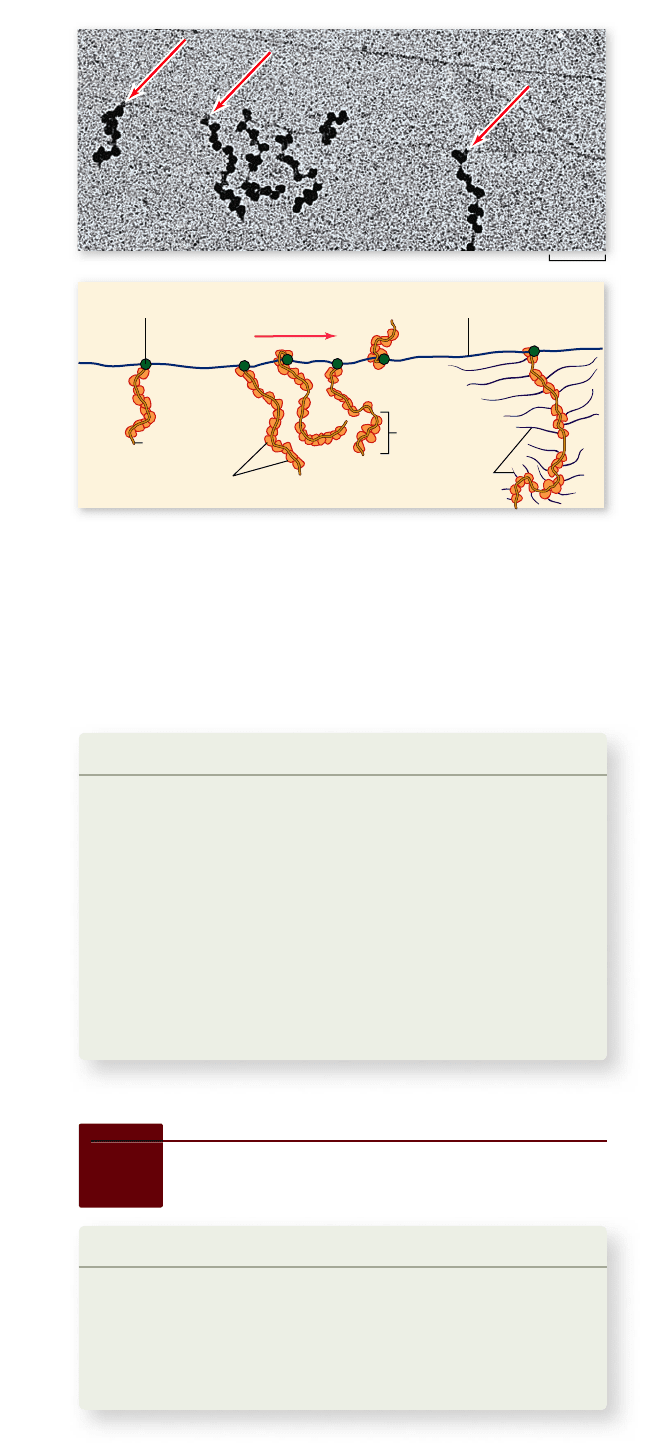
Prokaryotic transcription
is coupled to translation
In prokaryotes, the mRNA produced by transcription begins
to be translated before transcription is finished—that is, they
are coupled (figure 15.9) . As soon as a 5' end of the mRNA be-
comes available, ribosomes are loaded onto this to begin
translation. (This coupling cannot occur in eukaryotes be-
cause transcription occurs in the nucleus, and translation oc-
curs in the cytoplasm.)
Another difference between prokaryotic and eukaryotic
gene expression is that the mRNA produced in prokaryotes
may contain multiple genes. Prokaryotic genes are often orga-
nized such that genes encoding related functions are clustered
together. This grouping of functionally related genes is referred
to as an operon. An operon is a single transcription unit that
encodes multiple enzymes necessary for a biochemical pathway.
By clustering genes by function, they can be regulated together,
a topic that we return to in the next chapter.
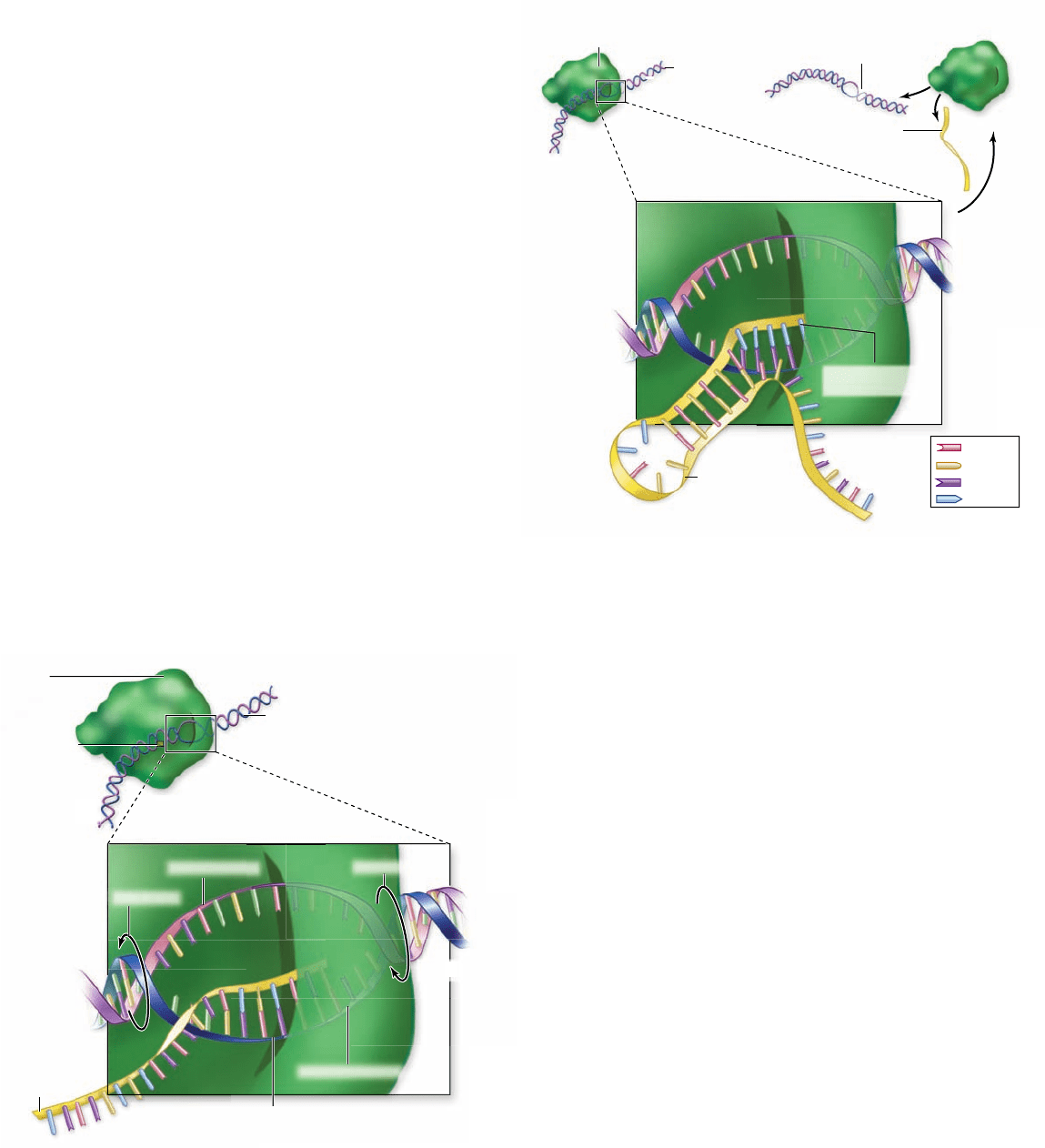
“bubble” of DNA (figure 15.7) . Within the bubble, the first
9 bases of the newly synthesized RNA strand temporarily form
a helix with the template DNA strand. This stabilizes the posi-
tioning of the 3' end of the RNA so it can interact with an in-
coming ribonucleotide triphosphate. The enzyme itself covers
about 50 bp of DNA around this transcription bubble.
The transcription bubble created by RNA polymerase
moves down the bacterial DNA at a constant rate, about 50 nt/
sec, with the growing RNA strand protruding from the bubble.
After the transcription bubble passes, the now-transcribed
DNA is rewound as it leaves the bubble.
Termination occurs at speci c sites
The end of a bacterial transcription unit is marked by termina-
tor sequences that signal “stop” to the polymerase. Reaching
these sequences causes the formation of phosphodiester bonds
to cease, the RNA–DNA hybrid within the transcription bub-
ble to dissociate, the RNA polymerase to release the DNA, and
the DNA within the transcription bubble to rewind.
The simplest terminators consist of a series of G–C
base-pairs followed by a series of A–T base-pairs. The RNA
transcript of this stop region can form a double-stranded
structure in the GC region called a hairpin, which is followed
by four or more uracil (U) ribonucleotides (figure 15.8). For-
mation of the hairpin causes the RNA polymerase to pause,
Figure 15.8
Bacterial transcription terminator.
The
self-complementary G–C region forms a double-stranded stem with
a single-stranded loop called a hairpin. The stretch of U’s forms a
less stable RNA–DNA hybrid that falls off the enzyme.
Figure 15.7
Model of a transcription bubble.
The DNA
duplex is unwound by the RNA polymerase complex, rewinding at
the end of the bubble. One of the strands of DNA functions as a
template, and nucleotide building blocks are added to the 3' end of
the growing RNA. There is a short region of RNA–DNA hybrid
within the bubble.
286
part
III
Genetic and Molecular Biology
rav32223_ch15_278-303.indd 286rav32223_ch15_278-303.indd 286 11/9/09 2:42:42 PM11/9/09 2:42:42 PM
Apago PDF Enhancer
0.25 µm
Ribosomes
RNA polymerase DNA
Polyribosome
Polypeptide
chains
mRNA
Figure 15.9
Transcription and translation are coupled
in prokaryotes.
In this micrograph of gene expression in E. coli,
translation is occurring during transcription. The arrows point to
RNA polymerase enzymes, and ribosomes are attached to the
mRNAs extending from the polymerase. Polypeptides being
synthesized by ribosomes, which are not visible in the micrograph,
have been added to the last mRNA in the drawing.
Learning Outcomes Review 15.3
Transcription in bacteria is accomplished by RNA polymerase, which has
two forms: a core polymerase and a holoenzyme. Initiation is accomplished
by the holoenzyme form, which can accurately recognize promoter
sequences. Elongation consists of RNA synthesis by the core enzyme, which
adds RNA nucleotides in sequence until it reaches a terminator where
synthesis stops, then the transcript is released. In prokaryotes, translation
of the RNA transcript begins before transcription is fi nished, making the
processes coupled.
■ Yeast are unicellular organism like bacteria; would
you expect them to have the same transcription/
translation coupling?
15.4
Eukaryotic Transcription
Learning Outcomes
List the different eukaryotic RNA polymerases.1.
Distinguish between the promoters of the RNA 2.
polymerases.
Define the processing that occurs to eukaryotic 3.
transcripts.
The basic mechanism of transcription by RNA polymerase is
the same in eukaryotes as in prokaryotes; however, the details
of the two processes differ enough that it is necessary to con-
sider them separately. Here we concentrate only on how eu-
karyotic systems differ from prokaryotic systems, such as the
bacterial system just discussed. All other features may be as-
sumed to be the same.
Eukaryotes have three RNA polymerases
Unlike prokaryotes, which have a single RNA polymerase en-
zyme, eukaryotes have three different RNA polymerases, which
are distinguished in both structure and function. The enzyme
RNA polymerase I transcribes rRNA, RNA polymerase II
transcribes mRNA and some small nuclear RNAs, and RNA
polymerase III transcribes tRNA and some other small RNAs.
Together, these three enzymes accomplish all transcription in
the nucleus of eukaryotic cells.
Each polymerase has its own promoter
The existence of three different RNA polymerases requires dif-
ferent signals in the DNA to allow each polymerase to recog-
nize where to begin transcription. Each polymerase recognizes
a different promoter structure.
RNA polymerase I promoters
RNA polymerase I promoters at first puzzled biologists, be-
cause comparisons of rRNA genes between species showed no
similarities outside the coding region. The current view is that
these promoters are also specific for each species, and for this
reason, cross-species comparisons do not yield similarities.
RNA polymerase II promoters
The RNA polymerase II promoters are the most complex of
the three types, probably a reflection of the huge diversity of
genes that are transcribed by this polymerase. When the first
eukaryotic genes were isolated, many had a sequence called the
TATA box upstream of the start site. This sequence was similar
to the prokaryotic –10 sequence, and it was assumed that the
TATA box was the primary promoter element. With the se-
quencing of entire genomes, many more genes have been ana-
lyzed, and this assumption has proved too simple. It has been
replaced by the idea of a “core promoter” that can be composed
of a number of different elements, including the TATA box.
Additional control elements allow for tissue-specific and devel-
opmental time–specific expression (see chapter 16 ).
RNA polymerase III promoters
Promoters for RNA polymerase III also were a source of sur-
prise for biologists in the early days of molecular biology who
were examining the control of eukaryotic gene expression. A
common technique for analyzing regulatory regions was to
make successive deletions from the 5' end of genes until
enough was deleted to abolish specific transcription. The
logic followed experiences with prokaryotes, in which the
regulatory regions had been found at the 5' end of genes. But
in the case of tRNA genes, the 5' deletions had no effect on
chapter
15
Genes and How They Work
287www.ravenbiology.com
rav32223_ch15_278-303.indd 287rav32223_ch15_278-303.indd 287 12/4/09 10:47:51 AM12/4/09 10:47:51 AM
Apago PDF Enhancer
Transcription
factor
Initiation
complex
Other transcription factors RNA polymerase II
1. A transcription factor recognizes and
binds to the TATA b ox sequence, which
is part of the core promoter.
2. Other transcription factors are
recruited, and the initiation complex
begins to build.
3. Ultimately, RNA polymerase II associates with the
transcription factors and the DNA, forming the
initiation complex, and transcription begins.
Eukaryotic
DNA
TATA b ox
OH
HO
A
A
A
A
A
A
A
A
A
U
A
A
A
Methyl group
mRNA
G
P
P
P
P
P
P
CH
3
CH
2
CH
3
N
+
+
5„ cap
3„
3„ poly-A tail
5„
expression! The promoters were found to actually be internal
to the gene itself. This has not proved to be the case for all
polymerase III genes, but appears to be for most.
Initiation and termination di er
from that in prokaryotes
The initiation of transcription at RNA polymerase II promoters
is analogous to prokaryotic initiation but is more complex. In-
stead of a single factor allowing promoter recognition, eukaryotes
use a host of transcription factors. These proteins are necessary
to get the RNA polymerase II enzyme to a promoter and to initi-
ate gene expression. A number of these transcription factors in-
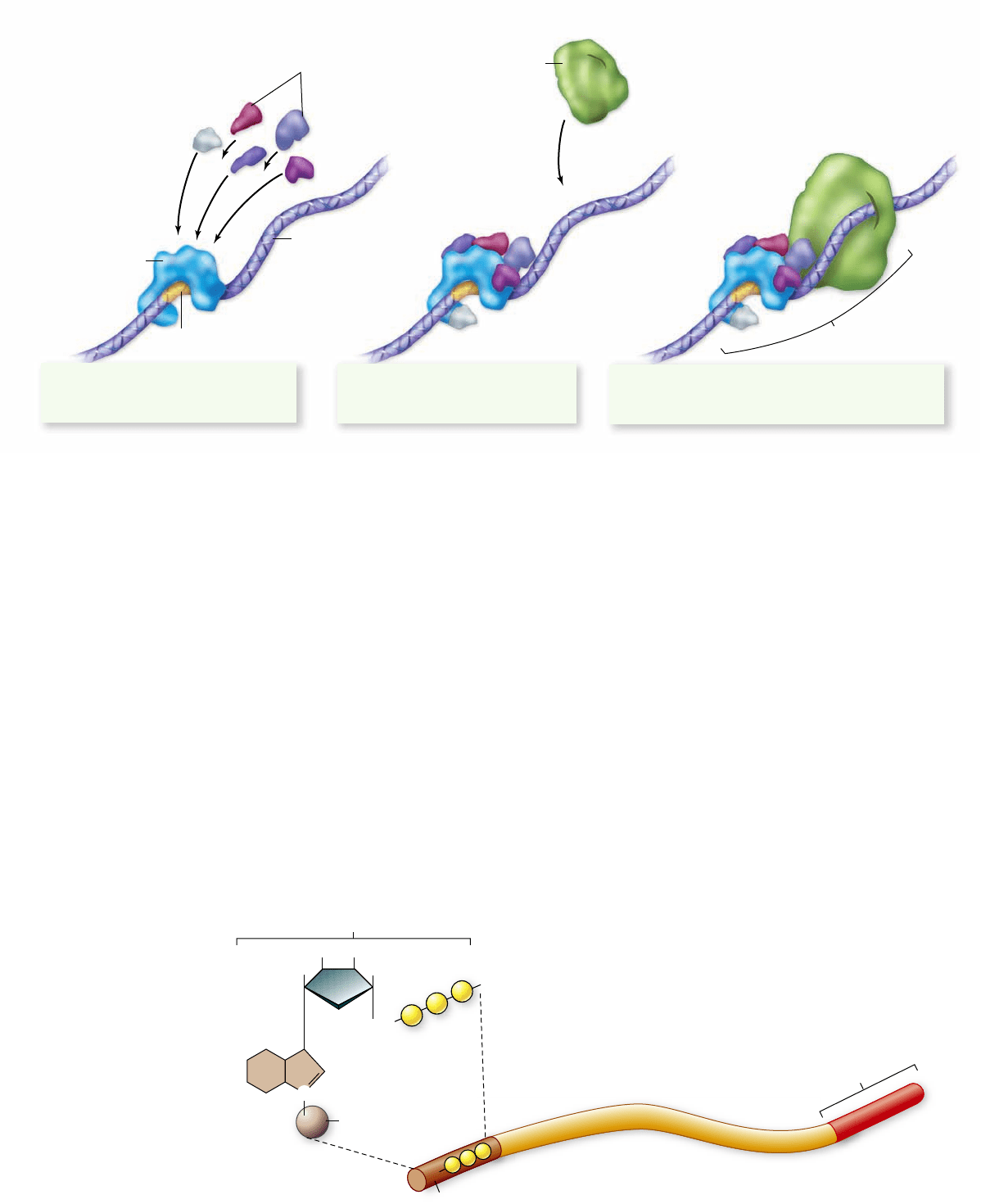
teract with RNA polymerase II to form an initiation complex at the
promoter (figure 15.10) . We explore this complex in detail in
chapter 16 when we describe the control of gene expression.
The termination of transcription for RNA polymerase
II also differs from that in prokaryotes. Although termination
Figure 15.10
Eukaryotic initiation complex.
Unlike transcription in prokaryotic cells, in which the RNA polymerase recognizes
and binds to the promoter, eukaryotic transcription requires the binding of transcription factors to the promoter before RNA polymerase II
binds to the DNA. The association of transcription factors and RNA polymerase II at the promoter is called the initiation complex.
sites exist, they are not as well defined as are prokaryotic ter-
minators. The end of the mRNA is also not formed by RNA
polymerase II because the primary transcript is modified
after transcription.
Eukaryotic transcripts are modi ed
A primary difference between prokaryotes and eukaryotes is
the fate of the transcript itself. Between transcription in the
nucleus and export of a mature mRNA to the cytoplasm, a
number of modifications occur to the initial transcripts made
by RNA polymerase II. We call the RNA synthesized by RNA
polymerase II the primary transcript and the final processed
form the mature mRNA.
The 5' cap
Eukaryotic transcripts have an unusual structure that is added
to the 5' end of mRNAs. The first base in the transcript is usu-
ally an adenine (A) or a guanine (G), and this is further modi-
fied by the addition of GTP to the 5' PO
4
group, forming what
is known as a 5' cap (figure 15.11) . The G nucleotide in the cap
is joined to the transcript by its 5' end; the only such 5'-to-5'
bond found in nucleic acids. The G in the GTP is also modified
by the addition of a methyl group, so it is often called a methyl-
G cap. The cap is added while transcription is still in progress.
This cap protects the 5' end of the mRNA from degradation
and is also involved in translation initiation.
Figure 15.11
Posttranscriptional
modi cations to 5' and
3' ends.
Eukaryotic
mRNA molecules are
modi ed in the nucleus with
the addition of a methylated
GTP to the 5
' end of the
transcript, called the 5
' cap,
and a long chain of adenine
residues to the 3
' end of the
transcript, called the 3
'
poly-A tail.
288
part
III
Genetic and Molecular Biology
rav32223_ch15_278-303.indd 288rav32223_ch15_278-303.indd 288 11/9/09 2:42:44 PM11/9/09 2:42:44 PM
Apago PDF Enhancer
5„ cap
DNA template
E1 I1 E2 I2 E3 I3 E4 I4
Transcription
Primary RNA transcript
Introns are removed
5„ cap
Mature mRNA
3„ poly-A tail
Intron
Exon
mRNA
DNA
1
2
3
4
5
6
7
3„ poly-A tail
a.
b. c.
Exons
Introns
The 3' poly-A tail
A major difference between transcription in prokaryotes and
eukaryotes is that in eukaryotes, the end of the transcript is not
the end of the mRNA. The eukaryotic transcript is cleaved
downstream of a specific site (AAUAAA) prior to the termina-
tion site for transcription. A series of adenine (A) residues,
called the 3' poly-A tail, is added after this cleavage by the
enzyme poly-A polymerase. Thus the end of the mRNA is not
created by RNA polymerase II and is not the end of the tran-
script (see figure 15.11).
The enzyme poly-A polymerase is part of a complex that
recognizes the poly-A site, cleaves the transcript, then adds
100–200 A’s to the end. The poly-A tail appears to play a role in
the stability of mRNAs by protecting them from degradation
(see chapter 16).
Splicing of primary transcripts
Eukaryotic genes may contain noncoding sequences that
have to be removed to produce the final mRNA. This pro-
cess, called pre-mRNA splicing, is accomplished by an or-
ganelle called the spliceosome. This complex topic is discussed
in the next section.
Learning Outcomes Review 15.4
Eukaryotes have three RNA polymerases called polymerase I, II, and III.
Each synthesizes a diff erent RNA and recognizes its own promoter. The
RNA polymerase I promoter is species-specifi c. The polymerase II promoter
is complex, but often includes a sequence called the TATA box. The
polymerase III promoter is internal to the gene, rather than close to the 5'
end. Polymerase II is responsible for mRNA synthesis. The primary mRNA
transcript is modifi ed by addition of a 5' cap and a 3' poly-A tail consisting of
100 –200 adenines. Noncoding regions are removed by splicing.
■ Does the complexity of the eukaryotic genome require
three polymerases?
15.5
Eukaryotic pre-mRNA Splicing
Learning Outcomes
Explain the concept of colinearity of genes and proteins 1.
and how it applies in prokaryotes and eukaryotes.
Describe the splicing reaction for pre-mRNA.2.
Illustrate how splicing changes the nature of genes.3.
The first genes isolated were prokaryotic genes found in E.
coli and its viruses. A clear picture of the nature and some of
the control of gene expression emerged from these systems
before any eukaryotic genes were isolated. It was assumed that
although details would differ, the outline of gene expression
in eukaryotes would be similar. The world of biology was in
for a shock with the isolation of the first genes from eukary-
otic organisms.
Eukaryotic genes may contain interruptions
Many eukaryotic genes appeared to contain sequences that
were not represented in the mRNA. It is hard to exaggerate
how unexpected this finding was. A basic tenet of molecular
biology based on E. coli was that a gene was colinear with its
protein product, that is, the sequence of bases in the gene cor-
responds to the sequence of bases in the mRNA, which in turn
corresponds to the sequence of amino acids in the protein.
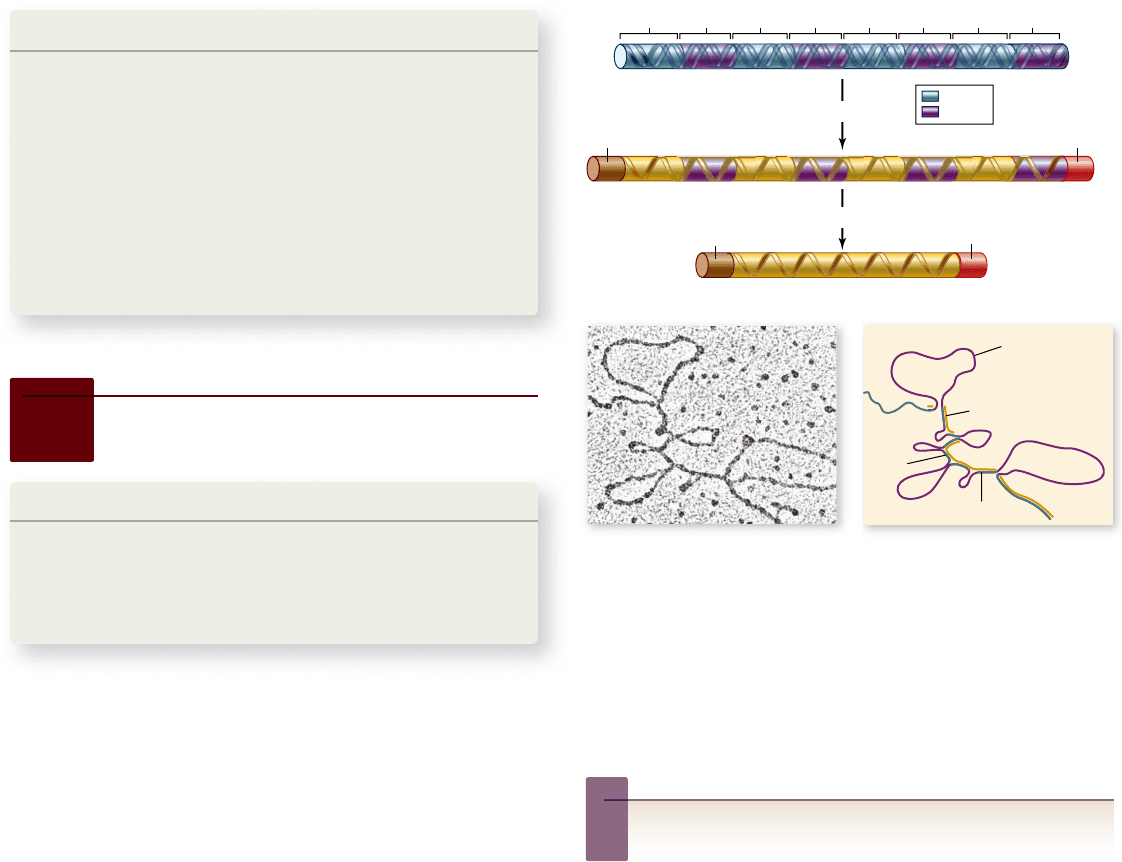
In the case of eukaryotes, genes can be interrupted by se-
quences that are not represented in the mRNA and the protein.
The term “split genes” was used at the time, but the nomenclature
that has stuck describes the unexpected nature of these sequences.
We call the noncoding DNA that interrupts the sequence of the
gene “intervening sequences,” or introns, and we call the coding
sequences exons because they are expressed (figure 15.12) .
The spliceosome is the splicing organelle
It is still true that the mature eukaryotic mRNA is colinear with
its protein product, but a gene that contains introns is not.
Imagine looking at an interstate highway from a satellite. Scat-
tered randomly along the thread of concrete would be cars,
Figure 15.12
Eukaryotic genes contain introns and
exons. a. Eukaryotic genes contain sequences that form the
coding sequence called exons and intervening sequences called
introns. b. An electron micrograph showing hybrids formed with
the mRNA and the DNA of the ovalbumin gene, which has seven
introns. Introns within the DNA sequence have no corresponding
sequence in the mRNA and thus appear as seven loops.
c. A schematic drawing of the micrograph.
Inquiry question
?
How can the same gene encode different transcripts?
chapter
15
Genes and How They Work
289www.ravenbiology.com
rav32223_ch15_278-303.indd 289rav32223_ch15_278-303.indd 289 11/9/09 2:42:44 PM11/9/09 2:42:44 PM
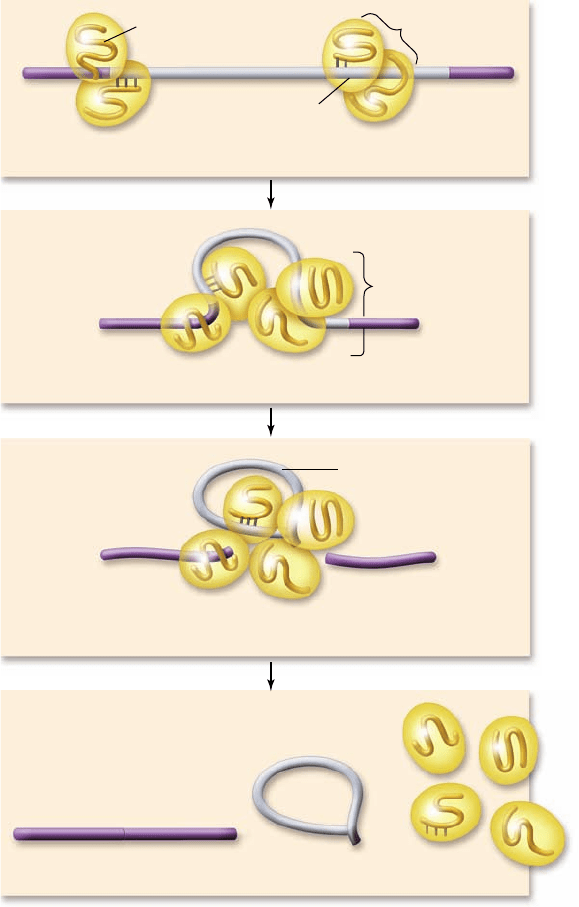
Apago PDF Enhancer
snRNPs
Exon 2 Exon 1 Intron
Branch point A
A
snRNA
Spliceosome
Exon 1 Exon 2
Excised
intron
Mature mRNA
Lariat
5„
5„
3„
3„
5„
5„
3„
3„
1. snRNA forms base-pairs with 5„ end of intron, and at branch site.
2. snRNPs associate with other factors to form spliceosome.
3. 5„ end of intron is removed and forms bond at branch site,
forming a lariat. The 3„ end of the intron is then cut.
4. Exons are joined; spliceosome disassembles.
A
A
some moving in clusters, others individually; most of the road
would be bare. That is what a eukaryotic gene is like—scattered
exons embedded within much longer sequences of introns.
In humans, only 1 to 1.5% of the genome is devoted to
the exons that encode proteins; 24% is devoted to the noncod-
ing introns within which these exons are embedded.
The splicing reaction
The obvious question is—How do eukaryotic cells deal with the
noncoding introns? The answer is that the primary transcript is
cut and put back together to produce the mature mRNA. The lat-
ter process is referred to as pre-mRNA splicing, and it occurs in
the nucleus prior to the export of the mRNA to the cytoplasm.
The intron–exon junctions are recognized by small nuclear
ribonucleoprotein particles, called snRNPs (pronounced
“snurps”). The snRNPs are complexes composed of snRNA and
protein. These snRNPs then cluster together with other associ-
ated proteins to form a larger complex called the spliceosome,
which is responsible for the splicing, or removal, of the introns.
For splicing to occur accurately, the spliceosome must be
able to recognize intron–exon junctions. Introns all begin with
the same 2-base sequence and end with another 2-base se-
quence that tags them for removal. In addition, within the in-
tron there is a conserved A nucleotide, called the branch point,
which is important for the splicing reaction (figure 15.13) .
The splicing process begins with cleavage of the 5' end of
the intron. This 5' end becomes attached to the 2' OH of the
branch point A, forming a branched structure called a lariat due
to its resemblance to a cowboy’s lariat in a rope (see figure 15.13).
The 3' end of the first exon is then used to displace the 3' end of
the intron, joining the two exons together and releasing the in-
tron as a lariat.
The processes of transcription and RNA processing do
not occur in a linear sequence, but are rather all part of a con-
certed process that produces the mature mRNA. The capping
reaction occurs during transcription, as does the splicing pro-
cess. The RNA polymerase II enzyme itself helps to recruit the
other factors necessary for modification of the primary tran-
script, and in this way the process of transcription and pre-
mRNA processing are coupled.
Distribution of introns
No rules govern the number of introns per gene or the sizes of
introns and exons. Some genes have no introns; others may
have 50. The sizes of exons range from a few nucleotides to
7500 nt, and the sizes of introns are equally variable. The pres-
ence of introns partly explains why so little of a eukaryotic
genome is actually composed of “coding sequences” (see
chapter 18 for results from the Human Genome Project).
One explanation for the existence of introns suggests that ex-
ons represent functional domains of proteins, and that the intron–
exon arrangements found in genes represent the shuffling of these
functional units over long periods of evolutionary time. This hy-
pothesis, called exon shuffling, was proposed soon after the discovery
of introns and has been the subject of much debate over the years.
The recent flood of genomic data has shed light on this
issue by allowing statistical analysis of the placement of introns
and on intron–exon structure. This analysis has provided support
for the exon shuffling hypothesis for many genes; however, it is
Figure 15.13
Pre-mRNA splicing by the spliceosome.
Particles called snRNPs contain snRNA that interacts with the 5'
end of an intron and with a branch site internal to the intron.
Several snRNPs come together with other proteins to form the
spliceosome. As the intron forms a loop, the 5
' end is cut and linked
to a site near the 3
' end of the intron. The intron forms a lariat that
is excised, and the exons are spliced together. The spliceosome then
disassembles and releases the spliced mRNA.
also clearly not universal, because all proteins do not show this
kind of pattern. It is possible that introns do not have a single ori-
gin, and therefore cannot be explained by a single hypothesis.
Splicing can produce multiple
transcripts from the same gene
One consequence of the splicing process is greater complexity
in gene expression in eukaryotes. A single primary transcript
can be spliced into different mRNAs by the inclusion of differ-
ent sets of exons, a process called alternative splicing.
290
part
III
Genetic and Molecular Biology
rav32223_ch15_278-303.indd 290rav32223_ch15_278-303.indd 290 11/9/09 2:42:45 PM11/9/09 2:42:45 PM
Apago PDF Enhancer
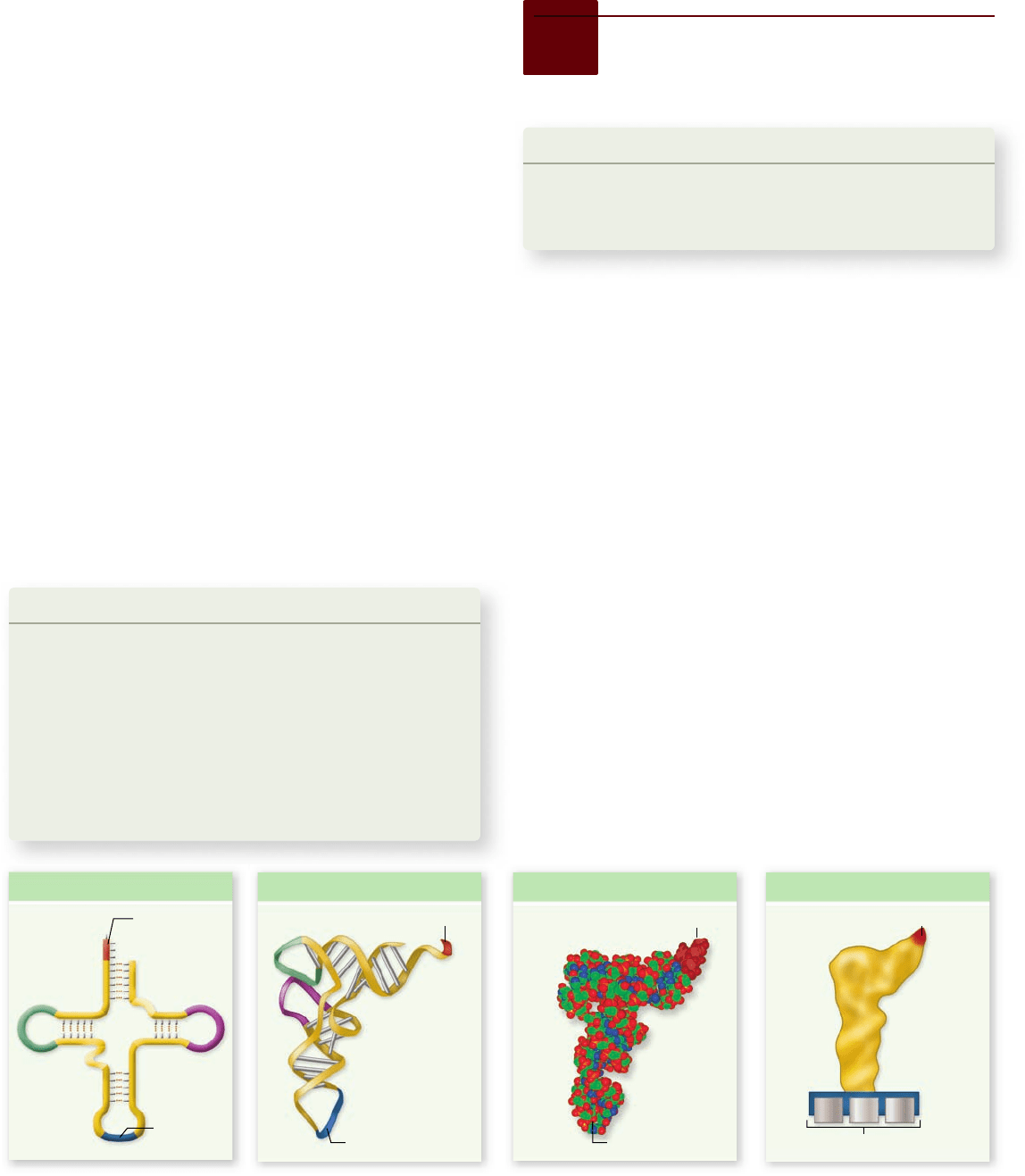
3D Space-filled Model 3D Ribbon-like Model Icon
3„
5„
Anticodon
loop
Acceptor end
2D “Cloverleaf” Model
Anticodon loop Anticodon loop Anticodon end
Acceptor end Acceptor end Acceptor end
Evidence indicates that the normal pattern of splicing is
important to an organism’s function. It has been estimated that
15% of known human genetic disorders are due to altered
splicing. Mutations in the signals for splicing can introduce
new splice sites or can abolish normal patterns of splicing. (In
chapter 16 we consider how alternative splicing can be used to
regulate gene expression.)
Although many cases of alternative splicing have been doc-
umented, the recent completion of the reference sequence of the
human genome, along with other large data sets of expressed se-
quences, now allow large-scale comparisons between sequences
found in mRNAs and in the genome. Three different computer-
based analyses have been performed, producing results that are in
rough agreement. These initial genomic assessments indicate a
range of 35 to 59% for human genes that exhibit some form of
alternative splicing. If we pick the middle ground of around 40%,
this result still vastly increases the number of potential proteins
encoded by the 25,000 genes in the human genome.
It is important to note that these analyses are primarily
computer-based, and the functions of the possible spliced prod-
ucts have been investigated for only a small part of the poten-
tially spliced genes. These analyses, however, do explain how
the 25,000 genes of the human genome can encode the more
than 80,000 different mRNAs reported to exist in human cells.
The emerging field of proteomics addresses the number and
functioning of proteins encoded by the human genome.
Learning Outcomes Review 15.5
In prokaryotes, genes appear to be colinear with their protein products.
Eukaryotic genes, by contrast, contain exon regions, which are expressed,
and intron sequences, which interrupt the exons. The introns are removed
by the spliceosome in a process that leaves the exons joined together.
Alternative splicing can generate diff erent mRNAs, and thus diff erent
proteins, from the same gene. Recent estimates are that as many as half of
human genes may be alternatively spliced.
■ What advantages would alternative splicing confer on
an organism?
15.6
The Structure of tRNA
and Ribosomes
Learning Outcomes
Explain why the tRNA charging reaction is critical 1.
to translation.
Identify the tRNA-binding sites in the ribosome.2.
The ribosome is the key organelle in translation, but it also
requires the participation of mRNA, tRNA and a host of other
factors. Critical to this process is the interaction of the ribo-
somes with tRNA and mRNA. To understand this, we first ex-
amine the structure of the tRNA adapter molecule and the
ribosome itself.
Aminoacyl-tRNA synthetases
attach amino acids to tRNA
Each amino acid must be attached to a tRNA with the correct
anticodon for protein synthesis to proceed. This covalent at-
tachment is accomplished by the action of activating enzymes
called aminoacyl-tRNA synthetases. One of these enzymes is
present for each of the 20 common amino acids.
tRNA structure
Transfer RNA is a bifunctional molecule that must be able to
interact with mRNA and with amino acids. The structure of
tRNAs is highly conserved in all living systems, and it can be
formed into a cloverleaf type of structure based on intramo-
lecular base-pairing that produces double-stranded regions.
This primary structure is then folded in space to form an
L-shaped molecule that has two functional ends: the acceptor
stem and the anticodon loop (figure 15.14) .
Figure 15.14
The structure of tRNA.
Base-pairing within the molecule creates three stem and loop structures in a characteristic
cloverleaf shape. The loop at the bottom of the cloverleaf contains the anticodon sequence, which can base-pair with codons in the mRNA.
Amino acids are attached to the free, single-stranded
–
OH end of the acceptor stem. In its nal three-dimensional structure, the loops of
tRNA are folded into the nal L-shaped structure.
chapter
15
Genes and How They Work
291www.ravenbiology.com
rav32223_ch15_278-303.indd 291rav32223_ch15_278-303.indd 291 11/9/09 2:42:45 PM11/9/09 2:42:45 PM