
Raven P.H., Johnson G.B., Mason K.A. Biology (Ninth Edition)
Подождите немного. Документ загружается.


Apago PDF Enhancer
Each polymerase has its own promoter.
Initiation and termination di er from that in prokaryotes.
Unlike prokaryotic promoters, RNA polymerase II promoters
require a host of transcription factors. Although termination sites
exist, the end of the mRNA is modi ed after transcription.
Eukaryotic transcripts are modi ed ( gure 15.11) .
After transcription, a methyl-GTP cap is added to the 5' end of the
transcript. A poly-A tail is added to the 3' end. Noncoding internal
regions are also removed by splicing.
15.5 Eukaryotic pre-mRNA Splicing
Eukaryotic genes may contain interruptions.
Coding DNA (an exon) is interrupted by noncoding introns. These
introns are removed by splicing (figure 15.13) .
The spliceosome is the splicing organelle.
snRNPs recognize intron–exon junctions and recruit spliceosomes.
The spliceosome ultimately joins the 3' end of the rst exon to the 5'
end of the next exon.
Splicing can produce multiple transcripts from the same gene.
15.6 The Structure of tRNA and Ribosomes
Aminoacyl-tRNA synthetases attach amino acids to tRNA.
The tRNA charging reaction attaches the carboxyl terminus
of an amino acid to the 3' end of the correct tRNA ( gure 15.15) .
The ribosome has multiple tRNA-binding sites ( gure 15.16).
A charged tRNA rst binds to the A site, then moves to the P site
where its amino acid is bonded to the peptide chain, and nally,
without its amino acid, moves to the E site from which it is released.
The ribosome has both decoding and enzymatic functions.
Ribosomes hold tRNAs and mRNA in position for a ribosomal
enzyme to form peptide bonds.
15.7 The Process of Translation
Initiation requires accessory factors.
In prokaryotes, initiation-complex formation is aided by the
ribosome-binding sequence (RBS) of mRNA, complementary to a
small subunit. Eukaryotes use the 5' cap for the same function.
Elongation adds successive amino acids ( gure 15.20).
As the ribosome moves along the mRNA, new amino acids from
charged tRNAs are added to the growing peptide ( gure 15.19).
Termination requires accessory factors.
Stop codons are recognized by termination factors.
Proteins may be targeted to the ER.
In eukaryotes, proteins with a signal sequence in their amino
terminus bind to the SRP, and this complex docks on the ER.
(15.8 Summary is omitted.)
15.9 Mutation: Altered Genes
Point mutations a ect a single site in the DNA .
Base substitutions exchange one base for another, and frameshift
mutations involve the addition or deletion of a base. Triplet repeat
expansion mutations can cause genetic diseases.
Chromosomal mutations change the structure of chromosomes.
Chromosomal mutations include additions, deletions, inversions,
or translocations.
Mutations are the starting point of evolution.
Our view of the nature of genes has changed with new information.
15.1 The Nature of Genes
Garrod concluded that inherited disorders can involve speci c enzymes.
Garrod found that alkaptonuria is due to an altered enzyme.
Beadle and Tatum showed that genes specify enzymes.
Neurospora mutants unable to synthesize arginine were found to lack
speci c enzymes. Beadle and Tatum advanced the “one gene/one
polypeptide” hypothesis ( gure 15.1).
The central dogma describes information ow in cells as DNA to RNA to
protein ( gure 15.2).
We call the DNA strand copied to mRNA the template (antisense)
strand; the other the coding (sense) strand.
Transcription makes an RNA copy of DNA.
Translation uses information in RNA to synthesize proteins.
An adapter molecule, tRNA, is required to connect the information
in mRNA into the sequence of amino acids.
RNA has multiple roles in gene expression.
15.2 The Genetic Code
The code is read in groups of three.
Crick and Brenner showed that the code is nonoverlapping and
is read in groups of three. This nding established the concept of
reading frame.
Nirenberg and others deciphered the code.
A codon consists of 3 nucleotides, so there are
64 possible codons. Three
codons signal “stop,” and one codon signals “start” and also encodes
methionine. Thus 61 codons encode the 20 amino acids.
The code is degenerate but speci c.
Many amino acids have more than one codon, but each codon
speci es only a single amino acid.
The code is practically universal, but not quite.
In some mitochondrial and protist genomes, a STOP codon is read
as an amino acid; otherwise the code is universal.
15.3 Prokaryotic Transcription
Prokaryotes have a single RNA polymerase.
Prokaryotic RNA polymerase exists in two forms: core polymerase,
which can synthesize mRNA; and holoenzyme, core plus σ factor,
which can accurately initiate synthesis ( gure 15.6).
Initiation occurs at promoters.
Initiation requires a start site and a promoter. The promoter
is upstream of the start site, and binding of RNA polymerase
holoenzyme to its –35 region positions the polymerase properly.
Elongation adds successive nucleotides.
Transcription proceeds in the 5'-to-3' direction. The transcription
bubble contains RNA polymerase, the locally unwound DNA
template, and the growing mRNA transcript ( gure 15.7) .
Termination occurs at speci c sites.
Terminators consist of complementary sequences that form a double-
stranded hairpin loop where the polymerase pauses ( gure 15.8) .
Prokaryotic transcription is coupled to translation.
Translation begins while mRNAs are still being transcribed.
15.4 Eukaryotic Transcription
Eukaryotes have three RNA polymerases.
RNA polymerase I transcribes rRNA; polymerase II transcribes
mRNA and some snRNAs; polymerase III transcribes tRNA.
Chapter Review
302
part
III
Genetic and Molecular Biology
rav32223_ch15_278-303.indd 302rav32223_ch15_278-303.indd 302 11/9/09 2:42:54 PM11/9/09 2:42:54 PM

Apago PDF Enhancer
3. During translation, the ribosome must move along the mRNA.
This movement
a. requires the ribosome to come apart into subunits.
b. requires an accessory factor and energy.
c. does not require energy, but requires the ribosome to
change conformation.
d. requires accessory factors and uses energy from peptide
bond formation.
4. In comparing transcription in prokaryotes and eukaryotes
the mRNAs
a. differ in that eukaryotic mRNAs often encode more than
one protein.
b. differ in that prokaryotic mRNAs often encode more than
one protein.
c. are similar in that both are always colinear with their genes.
d. are similar in that neither is colinear with their genes.
5. A nonsense mutation
a. results in large scale change to a chromosome.
b. will lead to the premature termination of transcription.
c. will lead to the premature termination of translation.
d. is the same as a transversion.
6. An inversion will
a. necessarily cause a mutant phenotype.
b. only cause a mutant phenotype if the inversion breakpoints
fall within a gene.
c. halt transcription in the inverted region because the
chromosome is now backwards.
d. interfere with translation of genes in the inverted region.
7. What is the relationship between mutations and evolution?
a. Mutations make genes better.
b. Mutations can create new alleles.
c. Mutations happened early in evolution, but not now.
d. There is no relationship between evolution and
genetic mutations.
SYNTHESIZE
1. A template strand of DNA has the following sequence:
3' –
CGTTACCCGAGCCGTACGATTAGG –
5'
Use the sequence information to determine
a. the predicted sequence of the mRNA for this gene.
b. the predicted amino acid sequence of the protein.
2. Frameshift mutations often result in truncated proteins. Explain
this observation based on the genetic code.
3. Describe how each of the following mutations will affect the
nal protein product (protein begins with START codon).
Name the type of mutation.
Original template strand:
3' – CGTTACCCGAGCCGTACGATTAGG – 5'
a. 3' – CGTTACCCGAGCCGTAACGATTAGG – 5'
b. 3' – CGTTACCCGATCCGTACGATTAGG – 5'
c. 3' – CGTTACCCGAGCCGTTCGATTAGG – 5'
4. There are a number of features that are unique to bacteria, and
others that are unique to eukaryotes. Could any of these
features offer the possibility to control gene expression in a way
that is unique to either eukaryotes or bacteria?
UNDERSTAND
1. The experiments with nutritional mutants in Neurospora by
Beadle and Tatum provided evidence that
a. bread mold can be grown in a lab on minimal media.
b. X-rays can damage DNA.
c. cells need enzymes.
d. genes specify enzymes.
2. What is the central dogma of molecular biology?
a. DNA is the genetic material.
b. Information passes from DNA directly to protein.
c. Information passes from DNA to RNA to protein.
d. One gene encodes only one polypeptide.
3. In the genetic code, one codon
a. consists of three bases.
b. speci es a single amino acid.
c. speci es more than one amino acid.
d. both a & b
4. Eukaryotic transcription differs from prokaryotic in that
a. eukaryotes have only one RNA polymerase.
b. eukaryotes have three RNA polymerases.
c. prokaryotes have three RNA polymerases.
d. both a & c
5. An anticodon would be found on which of the following types
of RNA?
a. snRNA (small nuclear RNA)
b. mRNA (messenger RNA)
c. tRNA (transfer RNA)
d. rRNA (ribosomal RNA)
6. RNA polymerase binds to a _________ to initiate _________.
a. mRNA; translation
b. promoter; transcription
c. primer; transcription
d. transcription factor; translation
7. During translation, the codon in mRNA is actually
“read” by
a. the A site in the ribosome.
b. the P site in the ribosome.
c. the anticodon in a tRNA.
d. the anticodon in an amino acid.
APPLY
1. Which of the following functions as a “stop” signal for a
prokaryotic RNA polymerase?
a. A speci c sequence of bases called a terminator
b. The Poly-A site
c. Addition of a 5' cap
d. A region of the mRNA that can base-pair to form
a hairpin
2. The splicing process
a. occurs in prokaryotes.
b. joins introns together.
c. can produce multiple mRNAs from the
same transcript.
d. only joins exons for each gene in one way.
Review Questions
chapter
15
Genes and How They Work
303www.ravenbiology.com
rav32223_ch15_278-303.indd 303rav32223_ch15_278-303.indd 303 11/9/09 2:42:55 PM11/9/09 2:42:55 PM
Apago PDF Enhancer
40
μ
m
I
CHAPTER
Chapter
16
Control of Gene
Expression
Chapter Outline
16.1 Control of Gene Expression
16.2 Regulatory Proteins
16.3 Prokaryotic Regulation
16.4 Eukaryotic Regulation
16.5 Eukaryotic Chromatin Structure
16.6 Eukaryotic Posttranscriptional Regulation
16.7 Protein Degradation
Introduction
In a symphony, various instruments play their own parts at different times; the musical score determines which instruments
play when. Similarly, in an organism, different genes are expressed at different times, with a “genetic score,” written in
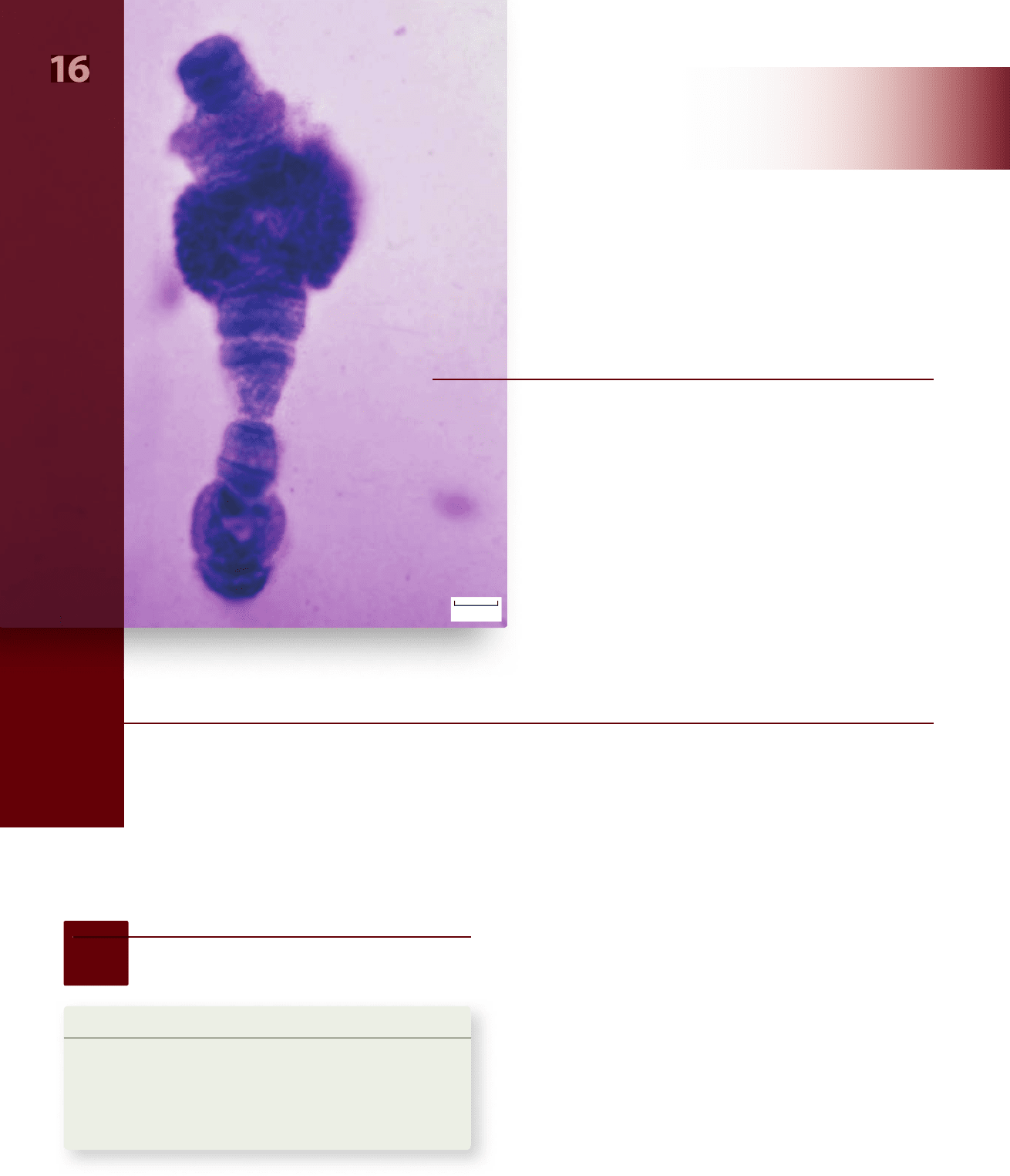
regulatory regions of the DNA, determining which genes are active when. The picture shows the expanded “puff” of this
Drosophila chromosome, which represents genes that are being actively expressed. Gene expression and how it is controlled
is our topic in this chapter.
16.1
Control of Gene Expression
Learning Outcomes
Identify the point at which control of gene expression 1.
usually occurs.
Describe the usual action of regulatory proteins.2.
List differences between control of gene expression in 3.
prokaryotes and that in eukaryotes.
Control of gene expression is essential to all organisms. In
prokaryotes, it allows the cell to take advantage of changing
environmental conditions. In multicellular eukaryotes, it is crit-
ical for directing development and maintaining homeostasis.
Control usually occurs at the level
of transcription initiation
You learned in the previous chapter that gene expression is the
conversion of genotype to phenotype—the flow of information
from DNA to produce functional proteins that control cellular
activities. We could envision controlling this process at any point
rav32223_ch16_304-326.indd 304rav32223_ch16_304-326.indd 304 11/9/09 3:38:50 PM11/9/09 3:38:50 PM

Apago PDF Enhancer
along the way, and in fact, examples of control occur at most steps.
The most logical place to control this process, however, is at the
beginning: production of mRNA from DNA by transcription .
Transcription itself could be controlled at any step, but
again, the beginning is the most logical place. Although cells
do not always behave in ways that conform to human logic,
control of the initiation of transcription is common.
RNA polymerase is key to transcription, and it must have
access to the DNA helix and must be capable of binding to the
gene’s promoter for transcription to begin. Regulatory
proteins act by modulating the ability of RNA polymerase to
bind to the promoter. This idea of controlling the access of
RNA polymerase to a promoter is common to both prokaryotes
and eukaryotes, but the details differ greatly, as you will see.
These regulatory proteins bind to specific nucleotide se-
quences on the DNA that are usually only 10–15 nt in length.
(Even a large regulatory protein has a “footprint,” or binding
area, of only about 20 nt.) Hundreds of these regulatory se-
quences have been characterized, and each provides a binding
site for a specific protein that is able to recognize the sequence.
Binding of the protein either blocks transcription by getting in
the way of RNA polymerase or stimulates transcription by fa-
cilitating the binding of RNA polymerase to the promoter.
Control strategies in prokaryotes are geared
to adjust to environmental changes
Control of gene expression is accomplished very differently in
prokaryotes than it is in eukaryotes. Prokaryotic cells have been
shaped by evolution to grow and divide as rapidly as possible,
enabling them to exploit transient resources. Proteins in
prokaryotes turn over rapidly, allowing these organisms to re-
spond quickly to changes in their external environment by
changing patterns of gene expression.
In prokaryotes, the primary function of gene control is to
adjust the cell’s activities to its immediate environment. Changes
in gene expression alter which enzymes are present in response
to the quantity and type of available nutrients and the amount of
oxygen. Almost all of these changes are fully reversible, allowing
the cell to adjust its enzyme levels up or down in response to
environment changes.
Control strategies in eukaryotes are aimed
at maintaining homeostasis
The cells of multicellular organisms, in contrast, have been
shaped by evolution to be protected from transient changes in
their immediate environment. Most of them experience fairly
constant conditions. Indeed, homeostasis — the maintenance of a
constant internal environment—is considered by many to be
the hallmark of multicellular organisms. Cells in such organisms
respond to signals in their immediate environment (such as
growth factors and hormones) by altering gene expression, and
in doing so they participate in regulating the body as a whole.
Some of these changes in gene expression compensate for
changes in the physiological condition of the body. Others me-
diate the decisions that actually produce the body, ensuring that
the correct genes are expressed in the right cells at the right
time during development. Later chapters deal with the details,
but for now we can simplify by saying that the growth and de-
velopment of multicellular organisms entail a long series of bio-
chemical reactions, each catalyzed by a specific enzyme. Once a
particular developmental change has occurred, these enzymes
cease to be active, lest they disrupt the events that must follow.
To produce this sequence of enzymes, genes are tran-
scribed in a carefully prescribed order, each for a specified period
of time, following a fixed genetic program that may even lead to
programmed cell death (apoptosis). The one-time expression
of the genes that guide a developmental program is fundamen-
tally different from the reversible metabolic adjustments
prokaryotic cells make in response to the environment. In all
multicellular organisms, changes in gene expression within par-
ticular cells serve the needs of the whole organism, rather than
the survival of individual cells.
Unicellular eukaryotes also use different control mecha-
nisms from those of prokaryotes. All eukaryotes have a
membrane-bounded nucleus, use similar mechanisms to con-
dense DNA into chromosomes, and have the same gene expres-
sion machinery, all of which differ from those of prokaryotes.
Learning Outcomes Review 16.1
Gene expression is usually controlled at the level of transcription initiation.
Regulatory proteins bind to specifi c DNA sequences and aff ect the binding
of RNA polymerase to promoters. Individual protein may either prevent or
stimulate transcription. In prokaryotes, regulation is focused on adjusting
the cell’s activities to the environment to ensure viability. In multicellular
eukaryotes, regulation is geared to maintaining internal homeostasis,
and even in unicellular forms, this control has mechanisms to deal with a
bounded nucleus and multiple chromosomes.
■ Would you expect the control of gene expression in a
unicellular eukaryote like yeast to be more like that of
humans or E. coli?
16.2
Regulatory Proteins
Learning Outcomes
Explain how proteins can interact with base pairs without 1.
unwinding the helix.
Describe the common features of DNA-binding motifs.2.
The ability of certain proteins to bind to specific DNA regula-
tory sequences provides the basic tool of gene regulation—the
key ability that makes transcriptional control possible. To un-
derstand how cells control gene expression, it is first necessary
to gain a clear picture of this molecular recognition process.
Proteins can interact with DNA
through the major groove
In the past, molecular biologists thought that the DNA helix
had to unwind before proteins could distinguish one DNA
chapter
16
Control of Gene Expression
305www.ravenbiology.com
rav32223_ch16_304-326.indd 305rav32223_ch16_304-326.indd 305 11/9/09 3:38:54 PM11/9/09 3:38:54 PM
Apago PDF Enhancer
H
N
J
A
H
Sugar
DNA molecule 2
T
Phosphate
G
Phosphate
DNA molecule 1
C
M
a
j
o
r
g
r
o
o
v
e
M
i
n
o
r
g
r
o
o
v
e
M
a
j
o
r
g
r
o
o
v
e
M
i
n
o
r
g
r
o
o
v
e
Vantage
point
= Hydrogen bond donors
= Hydrogen bond acceptors
= Hydrophobic methyl group
= Hydrogen atoms unable to form hydrogen bonds
N
H
N
O
H
CH
3
H
H N
J
O
N
N H
J
N
N
N
H
H
H
N
O H
H
H
J
N
O
N
J
H
N
N
N
Figure 16.1
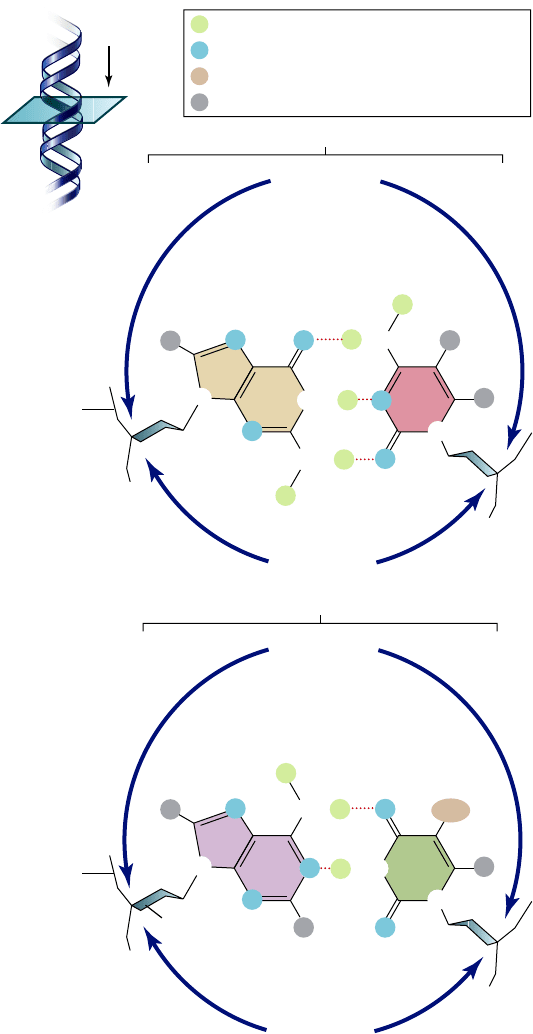
Reading the major groove of DNA. Looking
down into the major groove of a DNA helix, we can see the edges
of the bases protruding into the groove. Each of the four possible
base-pair arrangements (two are shown here) extends a unique set
of chemical groups into the groove, indicated in this diagram by
differently colored circles. A regulatory protein can identify the
base-pair arrangement by this characteristic signature.
sequence from another; only in this way, they reasoned, could
regulatory proteins gain access to the hydrogen bonds between
base-pairs. We now know it is unnecessary for the helix to un-
wind because proteins can bind to its outside surface, where the
edges of the base-pairs are exposed.
Careful inspection of a DNA molecule reveals two helical
grooves winding around the molecule, one deeper than the
other. Within the deeper groove, called the major groove, the
nucleotides’ hydrogen bond donors and acceptors are accessi-
ble. The pattern created by these chemical groups is unique for
each of the four possible base-pair arrangements, providing a
ready way for a protein nestled in the groove to read the se-
quence of bases (figure 16.1) .
DNA-binding domains interact
with speci c DNA sequences
Protein–DNA recognition is an area of active research; so far,
the structures of over 30 regulatory proteins have been ana-
lyzed. Although each protein is unique in its fine details, the
part of the protein that actually binds to the DNA is much less
variable. Almost all of these proteins employ one of a small set
of DNA-binding motifs. A motif, as described in chapter 3 , is
a form of three-dimensional substructure that is found in many
proteins. These DNA-binding motifs share the property of in-
teracting with specific sequences of bases, usually through the
major groove of the DNA helix.
DNA-binding motifs are the key structure within the
DNA-binding domain of these proteins. This domain is a func-
tionally distinct part of the protein necessary to bind to DNA
in a sequence-specific manner. Regulatory proteins also need to
be able to interact with the transcription apparatus, which is
accomplished by a different regulatory domain.
Note that two proteins that share the same DNA-binding
domain do not necessarily bind to the same DNA sequence.
The similarities in the DNA-binding motifs appear in their
three-dimensional structure, and not in the specific contacts
that they make with DNA.
Several common DNA-binding motifs
are shared by many proteins
A limited number of common DNA-binding motifs are found
in a wide variety of different proteins. Four of the best known
are detailed in the following sections to give the sense of how
DNA-binding proteins interact with DNA.
The helix-turn-helix motif
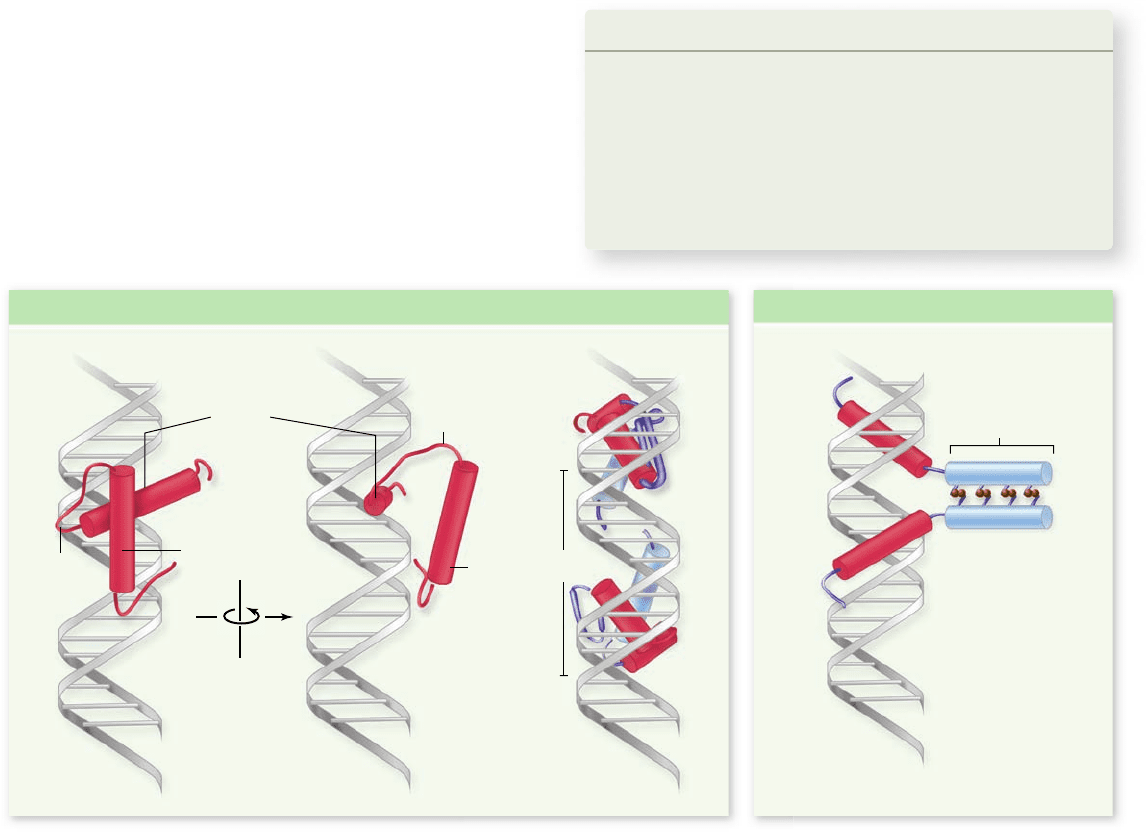
The most common DNA-binding motif is the helix-turn-
helix, constructed from two α-helical segments of the protein
linked by a short, nonhelical segment, the “turn” (figure 16.2a).
As the first motif recognized, the helix-turn-helix motif has
since been identified in hundreds of DNA-binding proteins.
A close look at the structure of a helix-turn-helix motif
reveals how proteins containing such motifs interact with the
major groove of DNA. The helical segments of the motif inter-
act with one another, so that they are held at roughly right an-
gles. When this motif is pressed against DNA, one of the helical
segments (called the recognition helix) fits snugly in the major
groove of the DNA molecule, and the other butts up against
the outside of the DNA molecule, helping to ensure the proper
positioning of the recognition helix.
Most DNA-regulatory sequences recognized by helix-
turn-helix motifs occur in symmetrical pairs. Such sequences
306
part
III
Genetic and Molecular Biology
rav32223_ch16_304-326.indd 306rav32223_ch16_304-326.indd 306 11/9/09 3:38:55 PM11/9/09 3:38:55 PM
Apago PDF Enhancer
a Helix
90°
The Leucine Zipper Motif
Zipper region
b.
The Helix-Turn-Helix Motif
Tu r n
Tu r n
a Helix
3.4 nm
a Helix
(Recognition helix)
a.
are bound by proteins containing two helix-turn-helix motifs
separated by 3.4 nanometers (nm), the distance required for
one turn of the DNA helix (see figure 16.2a). Having two
protein–DNA-binding sites doubles the zone of contact be-
tween protein and DNA and greatly strengthens the bond
between them.
The homeodomain motif
A special class of helix-turn-helix motifs, the homeodomain,
plays a critical role in development in a wide variety of eukary-
otic organisms, including humans. These motifs were discov-
ered when researchers began to characterize a set of homeotic
mutations in Drosophila (mutations that cause one body part to
be replaced by another). They found that the mutant genes en-
coded regulatory proteins. Normally these proteins would ini-
tiate key stages of development by binding to developmental
switch-point genes. More than 50 of these regulatory proteins
have been analyzed, and they all contain a nearly identical se-
quence of 60 amino acids, which was termed the homeodomain.
The most conserved part of the homeodomain contains a rec-
ognition helix of a helix-turn-helix motif. The rest of the ho-
meodomain forms the other two helices of this motif.
The zinc finger motif
A different kind of DNA-binding motif uses one or more zinc
atoms to coordinate its binding to DNA. Called zinc fingers,
these motifs exist in several forms. In one form, a zinc atom
links an α-helical segment to a β-sheet segment (see chapter 3 )
so that the helical segment fits into the major groove of DNA.
Figure 16.2
Major DNA-binding motifs. Two different DNA-binding motifs are pictured interacting with DNA. a. The helix-turn-
helix motif binds to DNA using one α helix, the recognition helix, to interact with the major groove. The other helix positions the recognition
helix. Proteins with this motif are usually dimers, with two identical subunits, each containing the DNA-binding motif. The two copies of the
motif (red) are separated by 3.4 nm, precisely the spacing of one turn of the DNA helix. b. The leucine zipper acts to hold two subunits in a
multisubunit protein together, thereby allowing α-helical regions to interact with DNA.
This sort of motif often occurs in clusters, the β sheets
spacing the helical segments so that each helix contacts the ma-
jor groove. The effect is like a hand wrapped around the DNA
with the fingers lying in the major groove. The more zinc fin-
gers in the cluster, the stronger the protein binds to the DNA.
The leucine zipper motif
In yet another DNA-binding motif, two different protein sub-
units cooperate to create a single DNA-binding site. This motif is
created where a region on one subunit containing several hydro-
phobic amino acids (usually leucines) interacts with a similar re-
gion on the other subunit. This interaction holds the two subunits
together at those regions, while the rest of the subunits remain
separated. Called a leucine zipper, this structure has the shape of
a Y, with the two arms of the Y being helical regions that fit into
the major groove of DNA (figure 16.2b). Because the two subunits
can contribute quite different helical regions to the motif, leucine
zippers allow for great flexibility in controlling gene expression.
Learning Outcomes Review 16.2
A DNA helix exhibits a major groove and a minor groove; regulatory proteins
interact with DNA by accessing bases along the major groove. These proteins
all contain DNA-binding motifs, and they often include one or two α-helical
segments. These motifs form the active part of the DNA-binding domain, and
another domain of the protein interacts with the transcription apparatus.
■ What would be the effect of a mutation in a helix-turn-
helix protein that altered the spacing of the two helices?
chapter
16
Control of Gene Expression
307www.ravenbiology.com
rav32223_ch16_304-326.indd 307rav32223_ch16_304-326.indd 307 11/9/09 3:38:55 PM11/9/09 3:38:55 PM
Apago PDF Enhancer
P
lac
Promoter
for I gene
Gene for
repressor
protein
Regulatory region
Coding region
CAP-binding site
Gene for
permease
Operator
Promoter for
lac operon
Gene for
b-galactosidase
Gene for
transacetylase
P
I
CAP
O
Z
Y
A
I
lac Control system
16.3
Prokaryotic Regulation
Learning Outcomes
Compare how control by induction differs from control 1.
by repression.
Explain control of gene expression in the 2. lac operon.
Explain control of gene expression in the 3. trp operon.
The details of regulation can be revealed by examining mecha-
nisms used by prokaryotes to control the initiation of transcrip-
tion. Prokaryotes and eukaryotes share some common themes,
but they have some profound differences as well. Later on we
discuss eukaryotic systems and concentrate on how they differ
from the simpler prokaryotic systems.
Control of transcription can be either
positive or negative
Control at the level of transcription initiation can be either
positive or negative. Positive control increases the frequency
of initiation, and negative control decreases the frequency of
initiation. Each of these forms of control are mediated by regu-
latory proteins, but the proteins have opposite effects.
Negative control by repressors
Negative control is mediated by proteins called repressors.
Repressors are proteins that bind to regulatory sites on DNA
called operators to prevent or decrease the initiation of tran-
scription. They act as a kind of roadblock to prevent the poly-
merase from initiating effectively.
Repressors do not act alone; each responds to specific ef-
fector molecules. Effector binding can alter the conformation
of the repressor to either enhance or abolish its binding to
DNA. These repressor proteins are allosteric proteins with an
active site that binds DNA and a regulatory site that binds ef-
fectors. Effector binding at the regulatory site changes the abil-
ity of the repressor to bind DNA (see chapter 6 for more details
on allosteric proteins).
Positive control by activators
Positive control is mediated by another class of regulatory, al-
losteric proteins called activators that can bind to DNA and
stimulate the initiation of transcription. These activators en-
hance the binding of RNA polymerase to the promoter to
increase the level of transcription initiation.
Activators are the logical and physical opposites of
repressors. Effector molecules can either enhance or decrease
activator binding.
Prokaryotes adjust gene expression
in response to environmental conditions
Changes in the environments that bacteria and archaea encounter
often result in changes in gene expression. In general, genes encod-
ing proteins involved in catabolic pathways (breaking down mole-
cules) respond oppositely from genes encoding proteins involved in
anabolic pathways (building up molecules). In the discussion that
follows, we describe enzymes in the catabolic pathway that trans-
ports and utilizes the sugar lactose. Later we describe the anabolic
pathway that synthesizes the amino acid tryptophan.
As mentioned in the preceding chapter, prokaryotic genes
are often organized into operons, multiple genes that are part of
a single transcription unit having a single promoter. Genes that
are involved in the same metabolic pathway are often organized
in this fashion. The proteins necessary for the utilization of lac-
tose are encoded by the lac operon, and the proteins necessary
for the synthesis of tryptophan are encoded by the trp operon.
Inquiry question
?
What advantage might a bacterium get by linking into a
single operon several genes, all of the products of which
contribute to a single biochemical pathway?
Induction and repression
If a bacterium encounters lactose, it begins to make the en-
zymes necessary to utilize lactose. When lactose is not present,
however, there is no need to make these proteins. Thus, we say
that the synthesis of the proteins is induced by the presence of
lactose. Induction therefore occurs when enzymes for a certain
pathway are produced in response to a substrate.
When tryptophan is available in the environment, a bacte-
rium will not synthesize the enzymes necessary to make trypto-
phan. If tryptophan ceases to be available, then the bacterium begins
to make these enzymes. Repression occurs when bacteria capable
of making biosynthetic enzymes do not produce them. In the case
of both induction and repression, the bacterium is adjusting to pro-
duce the enzymes that are optimal for its immediate environment.
Negative control
Knowing that gene expression is probably controlled at the level
of initiation of transcription does not tell us whether that control
is positive or negative. On the surface, repression may appear to
be negative and induction positive; but in the case of both the lac
and trp operons, control is negative by a repressor protein. The
key is that the effector proteins have opposite effects on the re-
pressor in induction with those seen in repression.
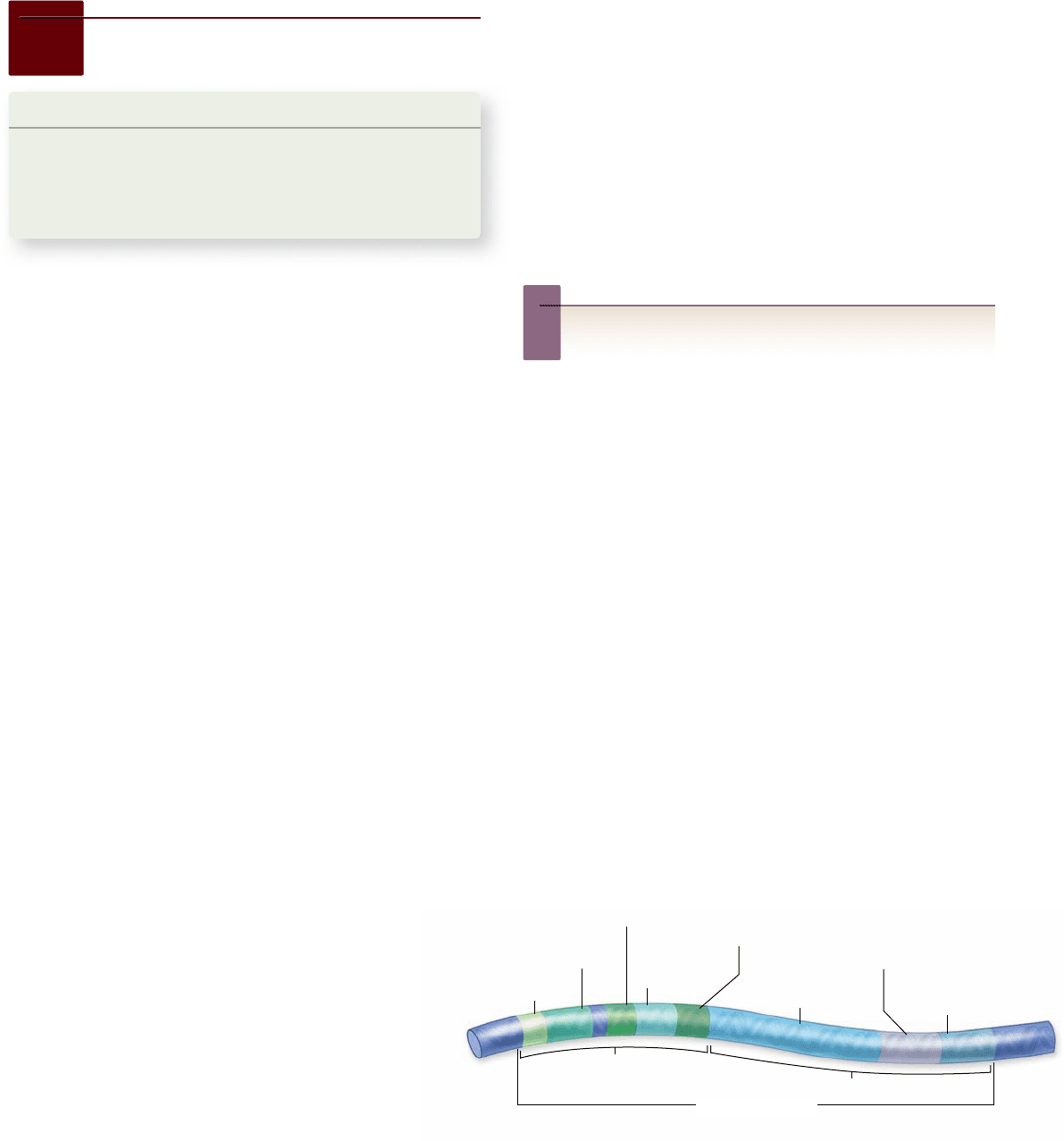
Figure 16.3
The lac region of the Escherichia coli
chromosome. The lac operon consists of a promoter, an operator,
and three genes (lac Z, Y, and A) that encode proteins required for the
metabolism of lactose. In addition, there is a binding site for the
catabolite activator protein (CAP), which affects RNA polymerase
binding to the promoter. The I gene encodes the repressor protein,
which can bind the operator and block transcription of the lac operon.
308
part
III
Genetic and Molecular Biology
rav32223_ch16_304-326.indd 308rav32223_ch16_304-326.indd 308 11/9/09 3:38:56 PM11/9/09 3:38:56 PM
Apago PDF Enhancer
Translation
RNA polymerase is blocked
by the lac repressor
Allolactose
(inducer)
(lactose present)
RNA polymerase is not blocked
and transcription can occur
mRNA
mRNA
mRNA
CAP
CAP–binding site
Operator
ZYA
ZY
A
Promoter for
lac operon
lac Operon Is “Repressed”
lac Operon Is “Induced”
b-Galactosidase
Permease
Transacetylase
lac Repressor
(No lactose present)
cAMP
lac Repressor
cannot bind to DNA
DNA
lac
repressor
lac repressor
polypeptide
lac repressor
gene
No transcription
Enzymes to degrade
lactose not produced
Enzymes to degrade
lactose produced
a.
b.
For either mechanism to work, the molecule in the envi-
ronment, such as lactose or tryptophan, must produce the
proper effect on the gene being regulated. In the case of lac in-
duction, the presence of lactose must prevent a repressor pro-
tein from binding to its regulatory sequence. In the case of trp
repression, by contrast, the presence of tryptophan must cause a
repressor protein to bind to its regulatory sequence.
These responses are opposite because the needs of the
cell are opposite in anabolic versus catabolic pathways. Each
pathway is examined in detail in the following sections to show
how protein–DNA interactions allow the cell to respond to en-
vironmental conditions.
The lac operon is negatively regulated
by the lac repressor
The control of gene expression in the lac operon was elucidated
by the pioneering work of Jaques Monod and François Jacob.
The lac operon consists of the genes that encode functions
necessary to utilize lactose: β-galactosidase (lacZ), lactose per-
mease (lacY), and lactose transacetylase (lacA), plus the regulatory
regions necessary to control the expression of these genes
( figure 16.3). In addition, the gene for the lac repressor (lacI) is
linked to the rest of the lac operon and is thus considered part of
the operon although it has its own promoter. The arrangement
of the control regions upstream of the coding region is typical of
most prokaryotic operons, although the linked repressor is not.
Action of the repressor
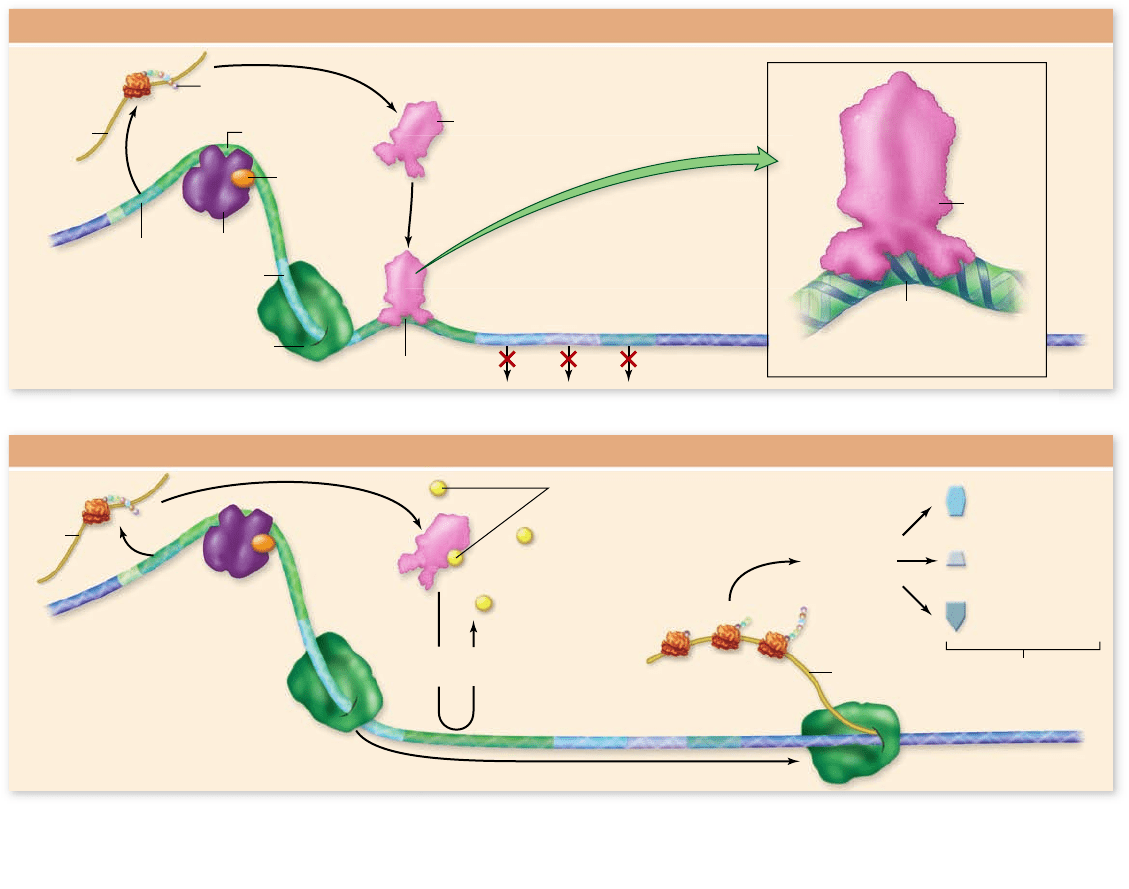
Initiation of transcription of the lac operon is controlled by the
lac repressor. The repressor binds to the operator, which is adja-
cent to the promoter (figure 16.4a). This binding prevents RNA
polymerase from binding to the promoter. This DNA binding is
sensitive to the presence of lactose: The repressor binds DNA in
the absence of lactose, but not in the presence of lactose.
Interaction of repressor and inducer
In the absence of lactose, the lac repressor binds to the operator,
and the operon is repressed (see figure 16.4a). The effector that
controls the DNA binding of the repressor is a metabolite of
Figure 16.4
Induction of the lac operon. a. In the absence of lactose the lac repressor binds to DNA at the operator site, thus
preventing transcription of the operon. When the repressor protein is bound to the operator site, the lac operon is shut down (repressed).
b. The lac operon is transcribed (induced) when CAP is bound and when the repressor is not bound. Allolactose binding to the repressor alters
the repressor’s shape so it cannot bind to the operator site and block RNA polymerase activity.
chapter
16
Control of Gene Expression
309www.ravenbiology.com
rav32223_ch16_304-326.indd 309rav32223_ch16_304-326.indd 309 11/9/09 3:38:56 PM11/9/09 3:38:56 PM
Apago PDF Enhancer
RNA polymerase is
blocked by the lac repressor
Allolactose
CAP-
binding
site
CAP does
not bind
Glucose Low, Inducer Present, Promoter Activated
Glucose High, Inducer Absent, Promoter Not Activated
DNA
CAP
Z
Y
A
mRNA
cAMP–CAP binds
to DNA
cAMP activates
CAP by causing a
conformation change
Glucose level
is low cAMP
is high
Effector site is empty,
and there is no
conformation change
Repressor will
not bind to DNA
Repressor binds to DNA
cAMP
Glucose is available
cAMP level is low
RNA polymerase is not blocked
and transcription can occur
cAMP
Z
Y
A
a.
b.
not induced. When the glucose is used up, the lac operon is in-
duced, allowing lactose to be used as an energy source.
Despite the name glucose repression, this mechanism in-
volves an activator protein that can stimulate transcription from
multiple catabolic operons, including the lac operon. This acti-
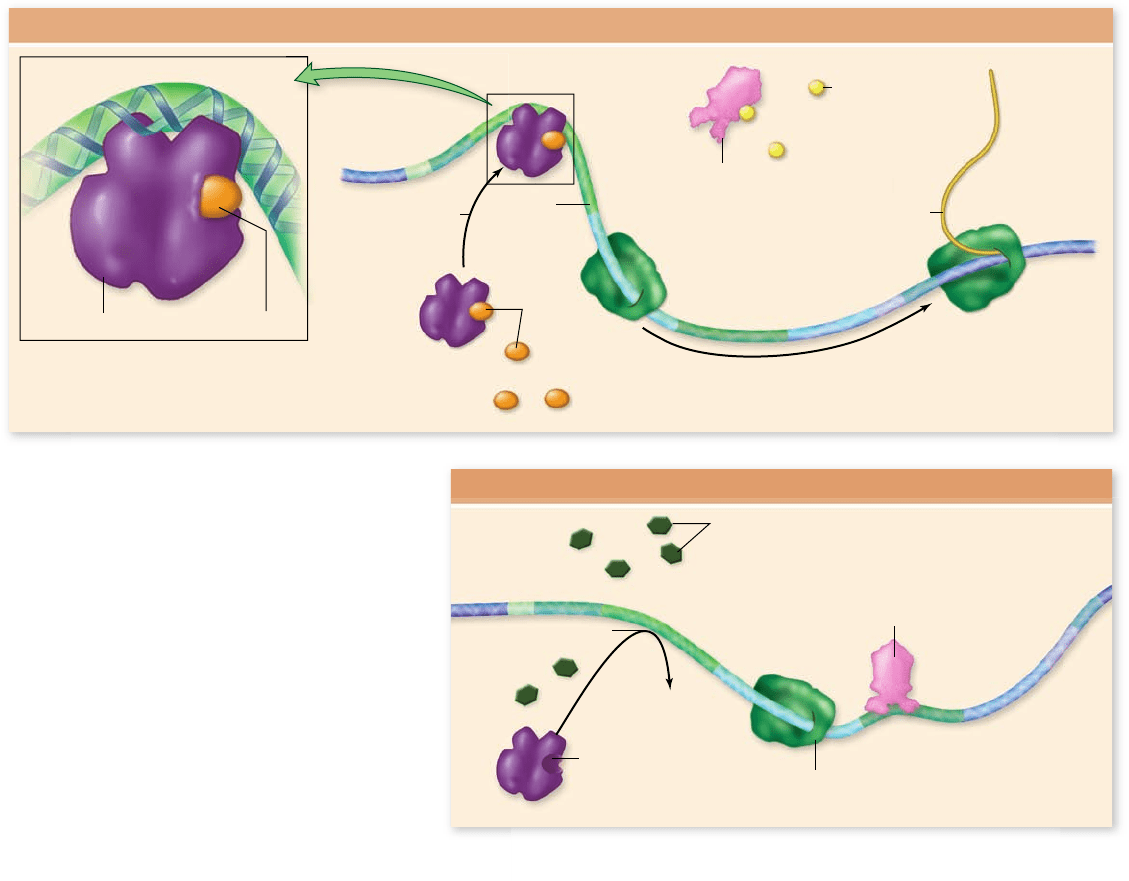
vator, catabolite activator protein (CAP), is an allosteric pro-
tein with cAMP as an effector. This protein is also called cAMP
response protein (CRP) because it binds cAMP, but we will
use the name CAP to emphasize its role as a positive regulator.
CAP alone does not bind to DNA, but binding of the effector
cAMP to CAP changes its conformation such that it can bind
to DNA (figure 16.5). The level of cAMP in cells is reduced in
the presence of glucose so that no stimulation of transcription
from CAP-responsive operons takes place.
The CAP–cAMP system was long thought to be the sole
mechanism of glucose repression. But more recent research
has indicated that the presence of glucose inhibits the trans-
port of lactose into the cell. This deprives the cell of the lac
operon inducer, allolactose, allowing the repressor to bind to
the operator. This mechanism, called inducer exclusion, is
now thought to be the main form of glucose repression of the
lac operon.
lactose, allolactose, which is produced when lactose is available.
Allolactose binds to the repressor, altering its conformation so
that it no longer can bind to the operator (figure 16.4b). The
operon is now induced. Since allolactose allows induction of
the operon, it is usually called the inducer.
As the level of lactose falls, allolactose will no longer be
available to bind to the repressor, allowing the repressor to bind
to DNA again. Thus this system of negative control by the lac
repressor and its inducer, allolactose, allows the cell to respond
to changing levels of lactose in the environment.
Even in the absence of lactose, the lac operon is expressed
at a very low level. When lactose becomes available, it is trans-
ported into the cell and enough allolactose is produced that
induction of the operon can occur.
The presence of glucose prevents
induction of the lac operon
Glucose repression is the preferential use of glucose in the
presence of other sugars such as lactose. If bacteria are grown
in the presence of both glucose and lactose, the lac operon is
Figure 16.5
E ect of glucose on the lac
operon. Expression of the lac operon is controlled
by a negative regulator (repressor) and a positive
regulator (CAP). The action of CAP is sensitive to
glucose levels. a. For CAP to bind to DNA, it must
bind to cAMP. When glucose levels are low, cAMP
is abundant and binds to CAP. The CAP–cAMP
complex causes the DNA to bend around it. This
brings CAP into contact with RNA polymerase (not
shown) making polymerase binding to the promoter
more ef cient. b. High glucose levels produce two
effects: cAMP is scarce so CAP is unable to activate
the promoter, and the transport of lactose is blocked
(inducer exclusion).
310
part
III
Genetic and Molecular Biology
rav32223_ch16_304-326.indd 310rav32223_ch16_304-326.indd 310 11/9/09 3:38:57 PM11/9/09 3:38:57 PM
Apago PDF Enhancer
Operator
Gene for
trp repressor
Inactive trp repressor
(No tryptophan present)
Tryptophan binds to repressor,
causing a conformation change
Tryptophan
Promoter for
trp operon
RNA polymerase is not blocked,
and transcription can occur
Gene for
trp repressor
RNA polymerase is blocked
by the trp repressor, and
transcription cannot occur
Enzymes for tryptophan
synthesis not produced
Repressor conformation change
allows it to bind to the operator
Tryptophan Absent, Promoter Activated
Tryptophan Present, Promoter Repressed
mRNA
Translation
E
E
D
D
C
C
B
B
A
A
trp repressor
cannot bind to DNA
E
D
C
B
A
a.
b.
Enzymes for
tryptophan
synthesis
produced
way. In the case of the trp operon these enzymes are necessary
for synthesizing tryptophan. The regulatory region that con-
trols transcription of these genes is located upstream of the
genes. The trp operon is controlled by a repressor encoded by
a gene located outside the trp operon. The trp operon is con-
tinuously expressed in the absence of tryptophan and is not ex-
pressed in the presence of tryptophan.
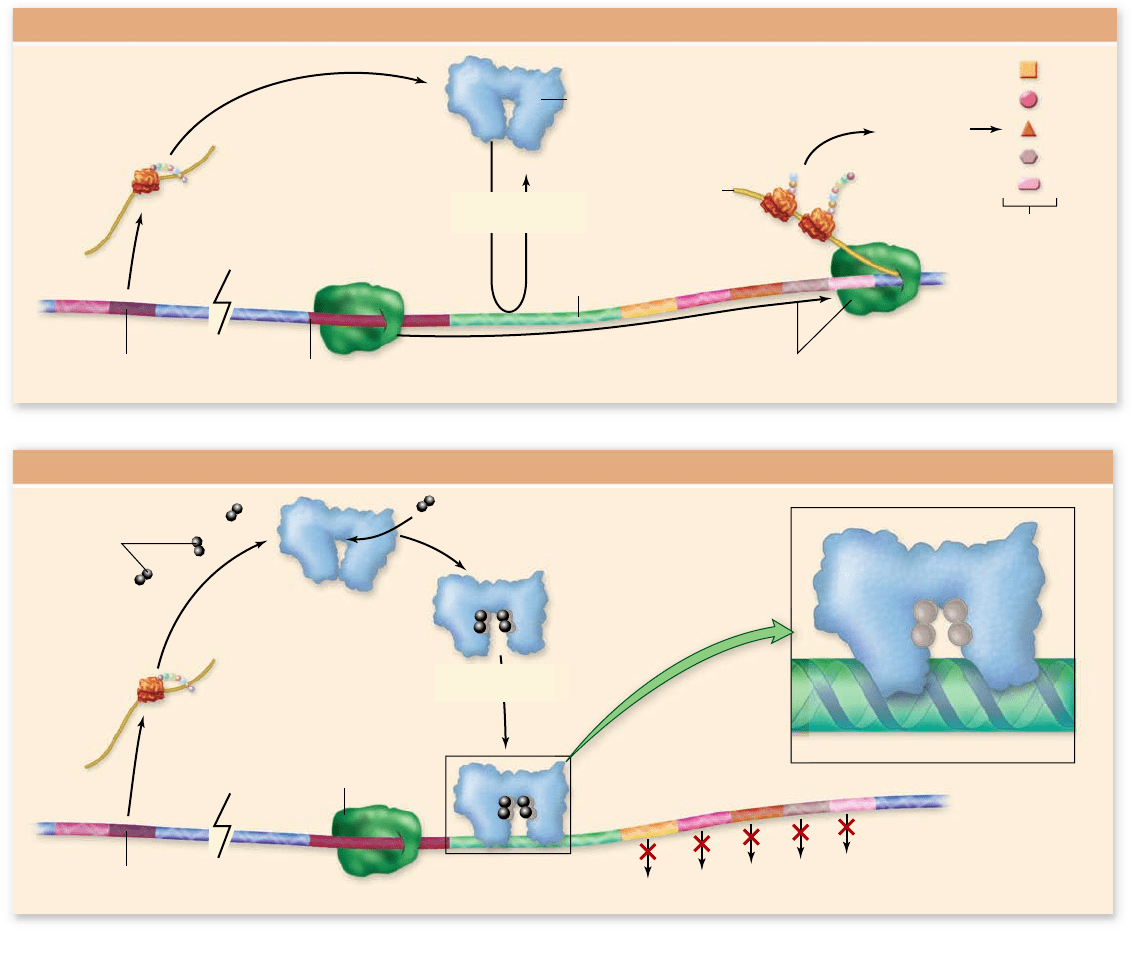
The trp repressor is a helix-turn-helix protein that
binds to the operator site located adjacent to the trp pro-
moter ( figure 16.6). This repressor behaves in a manner op-
posite to the lac repressor. In the absence of tryptophan, the
trp repressor does not bind to its operator, allowing expres-
sion of the operon, and production of the enzymes necessary
to make tryptophan.
Given that inducer exclusion occurs, the role of CAP in the
absence of glucose seems superfluous. But in fact, the action of
CAP–cAMP allows maximal expression of the operon in the ab-
sence of glucose. The positive control of CAP–cAMP is necessary
because the promoter of the lac operon alone is not efficient in bind-
ing RNA polymerase. This inefficiency is overcome by the action of
the positive control of the CAP–cAMP activator (see figure 16.5).
The trp operon is controlled
by the trp repressor
Like the lac operon, the trp operon consists of a series of genes
that encode enzymes involved in the same biochemical path-
Figure 16.6
How the trp operon is controlled. The tryptophan operon encodes the enzymes necessary to synthesize tryptophan.
a. The tryptophan repressor alone cannot bind to DNA. The promoter is free to function, and RNA polymerase transcribes the operon.
b. When tryptophan is present, it binds to the repressor, altering its conformation so it now binds DNA. The tryptophan–repressor complex
binds tightly to the operator, preventing RNA polymerase from initiating transcription.
chapter
16
Control of Gene Expression
311www.ravenbiology.com
rav32223_ch16_304-326.indd 311rav32223_ch16_304-326.indd 311 11/9/09 3:38:57 PM11/9/09 3:38:57 PM