
Raven P.H., Johnson G.B., Mason K.A. Biology (Ninth Edition)
Подождите немного. Документ загружается.

Apago PDF Enhancer
Tryptophan
3.4 nm
Learning Outcomes Review 16.3
Induction occurs when expression of genes in a pathway is turned on in
response to a substrate; repression occurs when expression is prevented
in response to a substrate. The lac operon is negatively controlled by
a repressor protein that binds to DNA, thus preventing transcription.
When lactose is present, the operon is turned on; allolactose binds to the
repressor, which then no longer binds to DNA. This operon is also positively
regulated by an activator protein. The trp operon is negatively controlled
by a repressor protein that must be bound to tryptophan in order to bind to
DNA. In the absence of tryptophan, the repressor cannot bind DNA, and the
operon is derepressed.
■ What would be the effect on regulation of the trp
operon of a mutation in the trp repressor that can still
bind to trp, but no longer bind to DNA?
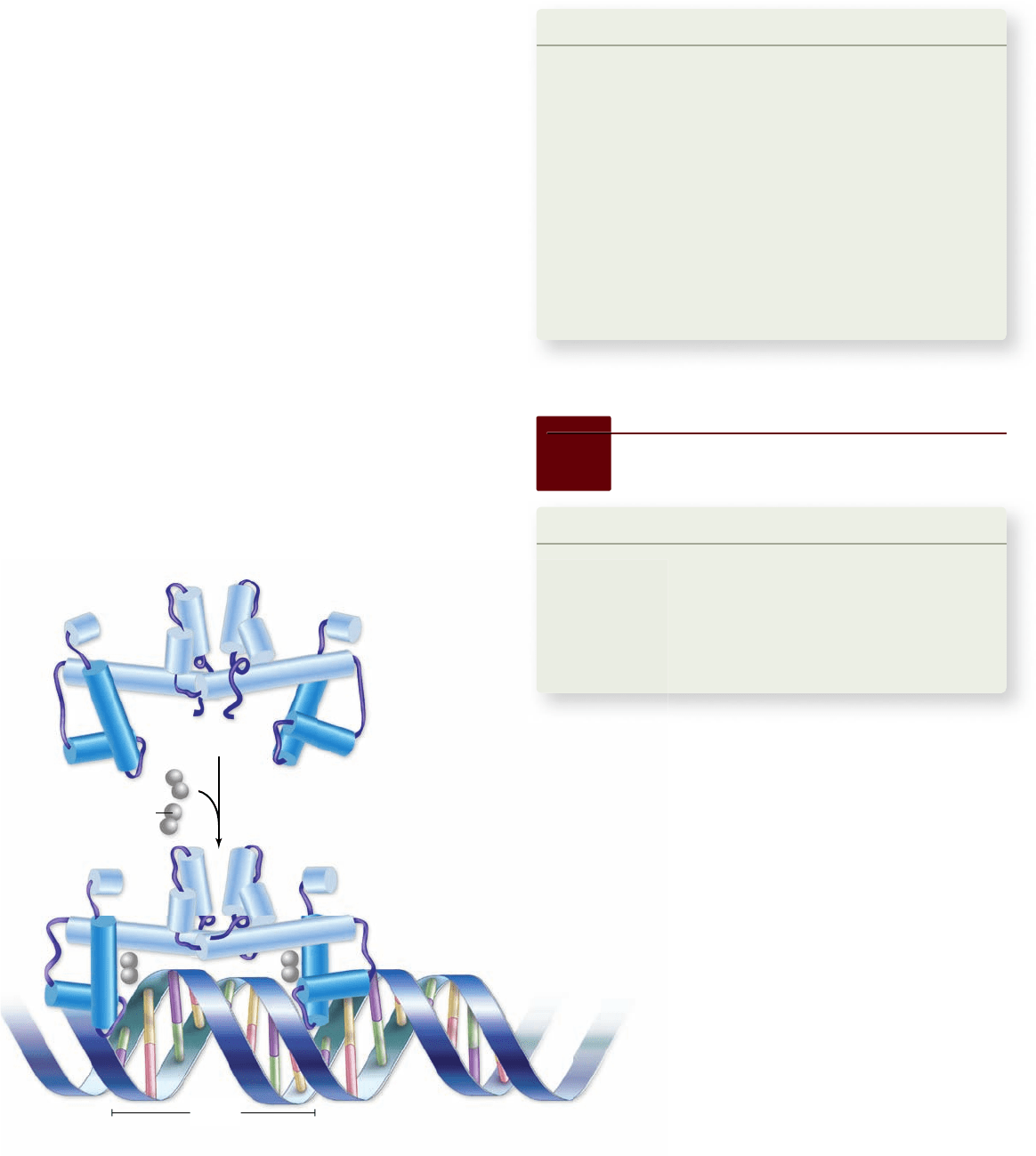
When levels of tryptophan rise, then tryptophan (the
corepressor) binds to the repressor and alters its conformation,
allowing it to bind to its operator. Binding of the repressor–
corepressor complex to the operator prevents RNA polymerase
from binding to the promoter. The actual change in repressor
structure due to tryptophan binding is an alteration of the ori-
entation of a pair of helix-turn-helix motifs that allows their
recognition helices to fit into adjacent major grooves of the
DNA (figure 16.7).
When tryptophan is present and bound to the repressor
and this complex is bound to the operator, the operon is said to
be repressed . As tryptophan levels fall, the repressor alone can-
not bind to the operator, allowing expression of the operon. In
this state, the operon is said to be derepressed, distinguishing
this state from induction (see figure 16.6).
The key to understanding how both induction and re-
pression can be due to negative regulation is knowledge of the
behavior of repressor proteins and their effectors. In induction,
the repressor alone can bind to DNA, and the inducer prevents
DNA binding. In the case of repression, the repressor only
binds DNA when bound to the corepressor. Induction and re-
pression are excellent examples of how interactions of mole-
cules can affect their structures, and how molecular structure is
critical to function.
Figure 16.7
How the tryptophan repressor works. The
binding of tryptophan to the repressor increases the distance
between the two recognition helices in the repressor, allowing the
repressor to t snugly into two adjacent portions of the major
groove in DNA.
16.4
Eukaryotic Regulation
Learning Outcomes
Distinguish between the role of general and specific 1.
transcription factors.
Describe events necessary for Pol II to bind to 2.
the promoter.
Explain how transcription factors can have an effect from 3.
a distance in the DNA.
The control of transcription in eukaryotes is much more com-
plex than in prokaryotes. The basic concepts of protein–DNA
interactions are still valid, but the nature and number of interact-
ing proteins is much greater due to some obvious differences.
First, eukaryotes have their DNA organized into chromatin,
complicating protein–DNA interactions considerably.
Second, eukaryotic transcription occurs in the nucleus,
and translation occurs in the cytoplasm; in prokaryotes,
these processes are spatially and temporally coupled. This
provides more opportunities for regulation in eukaryotes
than in prokaryotes.
Because of these differences, the amount of DNA in-
volved in regulating eukaryotic genes is much
greater. The need for a fine degree of flexible
control is especially important for multicellular
eukaryotes, with their complex developmental
programs and multiple tissue types. General
themes, however, emerge from this complexity.
Transcription factors can be either
general or speci c
In the preceding chapter we introduced the concept of tran-
scription factors. Eukaryotic transcription requires a variety of
312
part
III
Genetic and Molecular Biology
rav32223_ch16_304-326.indd 312rav32223_ch16_304-326.indd 312 11/9/09 3:38:58 PM11/9/09 3:38:58 PM
Apago PDF Enhancer
Base-pairs
GC CAAT GC TATA
-
60 bp
-
25 bp
Start site (+1)
-
80 bp
-
100 bp
Thymidine kinase
promoter
Thymidine
kinase
gene
TAFs
A
B
F
E
H
RNA
polymerase II
TATA b ox
TFIID
Core
promoter
Transcribed
region
these protein factors, which fall into two categories: general
transcription factors and specific transcription factors. General
factors are necessary for the assembly of a transcription appara-
tus and recruitment of RNA polymerase II to a promoter. Spe-
cific factors increase the level of transcription in certain cell
types or in response to signals.
General transcription factors
Transcription of RNA polymerase II templates (the majority
being genes that encode protein products) requires more
than just RNA polymerase II to initiate transcription. A host
of general transcription factors are also necessary to estab-
lish productive initiation. These factors are required for
transcription to occur, but they do not increase the rate
above this basal rate.
General transcription factors are named with letter desig-
nations that follow the abbreviation TFII, for “transcription
factor RNA polymerase II.” The most important of these fac-
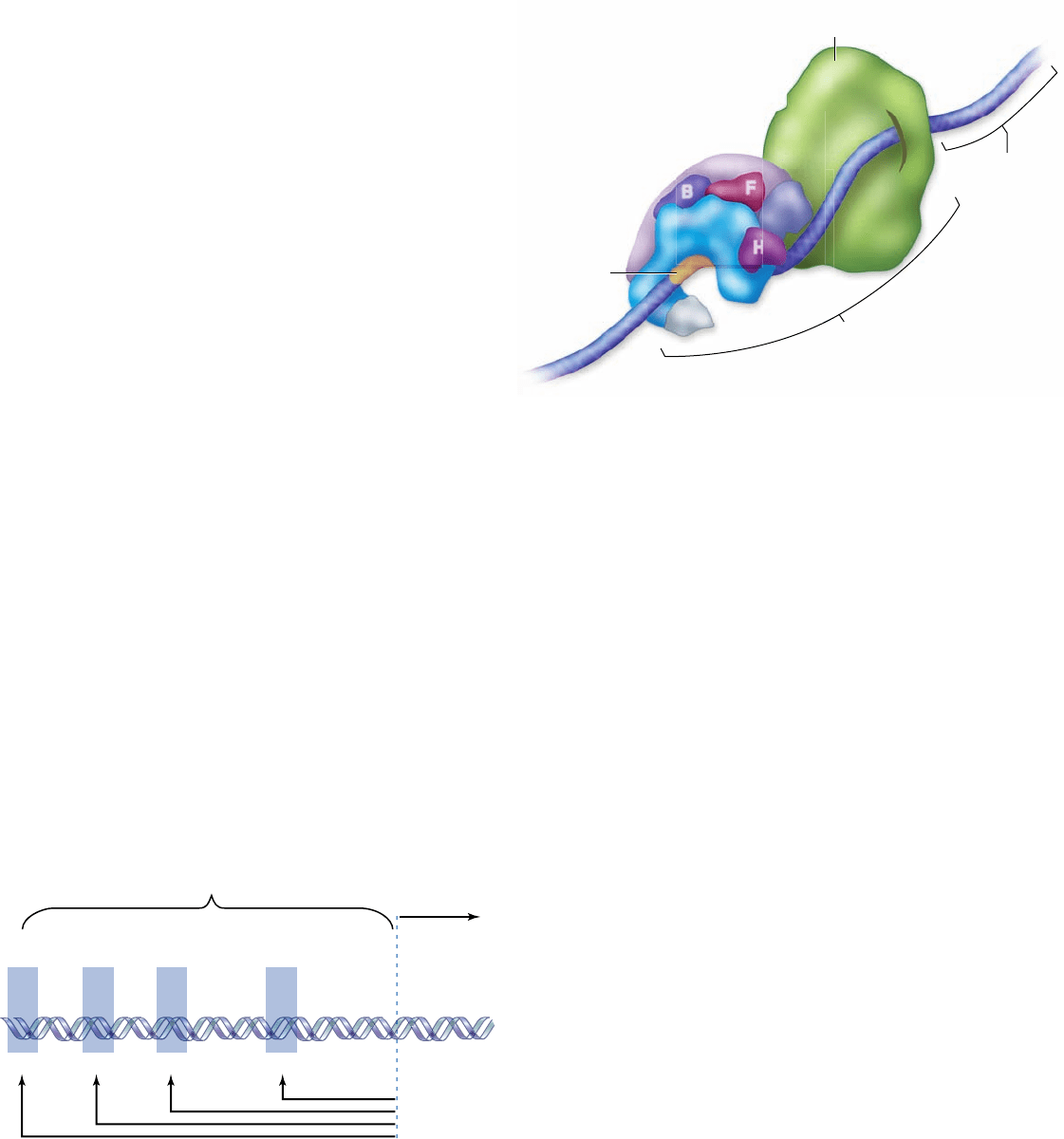
tors, TFIID, contains the TATA-binding protein that recog-
nizes the TATA box sequence found in many eukaryotic
promoters (figure 16.8).
Binding of TFIID is followed by binding of TFIIE, TFIIF,
TFIIA, TFIIB, and TFIIH and a host of accessory factors called
transcription-associated factors, TAFs. The initiation complex that
results (figure 16.9) is clearly much more complex than the bac-
terial RNA polymerase holoenzyme binding to a promoter. And
there is yet another level of complexity: The initiation complex,
although capable of initiating synthesis at a basal level, does not
achieve transcription at a high level without the participation of
other, specific factors.
Specific transcription factors
Specific transcription factors act in a tissue- or time- dependent
manner to stimulate higher levels of transcription than the basal
level. The number and diversity of these factors are overwhelm-
Figure 16.8
A eukaryotic promoter. This promoter is
for the gene encoding the enzyme thymidine kinase. Formation
of the transcription initiation complex begins with a general
transcription factor binding to the TATA box. There are three
other DNA sequences that direct the binding of other speci c
transcription factors.
ing. Some sense can be made of this proliferation of factors by
concentrating on the DNA-binding motif, as opposed to the
specific factors.
A key common theme that emerges from the study of
these factors is that specific transcription factors, called activa-
tors, have a domain organization. Each factor consists of a
DNA-binding domain and a separate activating domain that
interacts with the transcription apparatus, and these domains
are essentially independent in the protein. If the DNA-binding
domains are “swapped” between different factors the binding
specificity for the factors is switched without affecting their
ability to activate transcription.
Promoters and enhancers are binding
sites for transcription factors
Promoters, as mentioned in the preceding chapter, form the
binding sites for general transcription factors. These factors
then mediate the binding of RNA polymerase II to the pro-
moter (and also the binding of RNA polymerases I and III to
their specific promoters). In contrast, the holoenzyme portion
of the RNA polymerase of prokaryotes can directly recognize a
promoter and bind to it.
Enhancers were originally defined as DNA sequences
necessary for high levels of transcription that can act inde-
pendently of position or orientation. At first, this concept
seemed counterintuitive, especially since molecular biolo-
gists had been conditioned by prokaryotic systems to expect
control regions to be immediately upstream of the coding
region. It turns out that enhancers are the binding site of
Figure 16.9
Formation of a eukaryotic initiation
complex. The general transcription factor, TFIID, binds to the
TATA box and is joined by the other general factors, TFIIE,
TFIIF, TFIIA, TFIIB, and TFIIH. This complex is added to by a
number of transcription-associated factors (TAFs) that together
recruit the RNA pol II molecule to the core promoter.
chapter
16
Control of Gene Expression
313www.ravenbiology.com
rav32223_ch16_304-326.indd 313rav32223_ch16_304-326.indd 313 11/9/09 3:38:59 PM11/9/09 3:38:59 PM
Apago PDF Enhancer
RNA polymerase
RNA polymerase
Promoter
NtrC (activator)
Enhancer
Bacterial RNA polymerase
is loosely bound to the
promoter. The activator
(NtrC) binds at the enhancer.
DNA loops around so that
the activator comes into
contact with the
RNA polymerase.
The activator triggers RNA polymerase activation, and transcription begins.
DNA unloops.
mRNA synthesis
Activator
0
.0
05
µ
m
0.005
0 005
0.005
µ
µ
m
m
ATP
ADP
RNA polymerase
Promoter
Enhancer
Activator
TATA b ox
Transcription
factor
Transcribed
region
mRNA synthesis
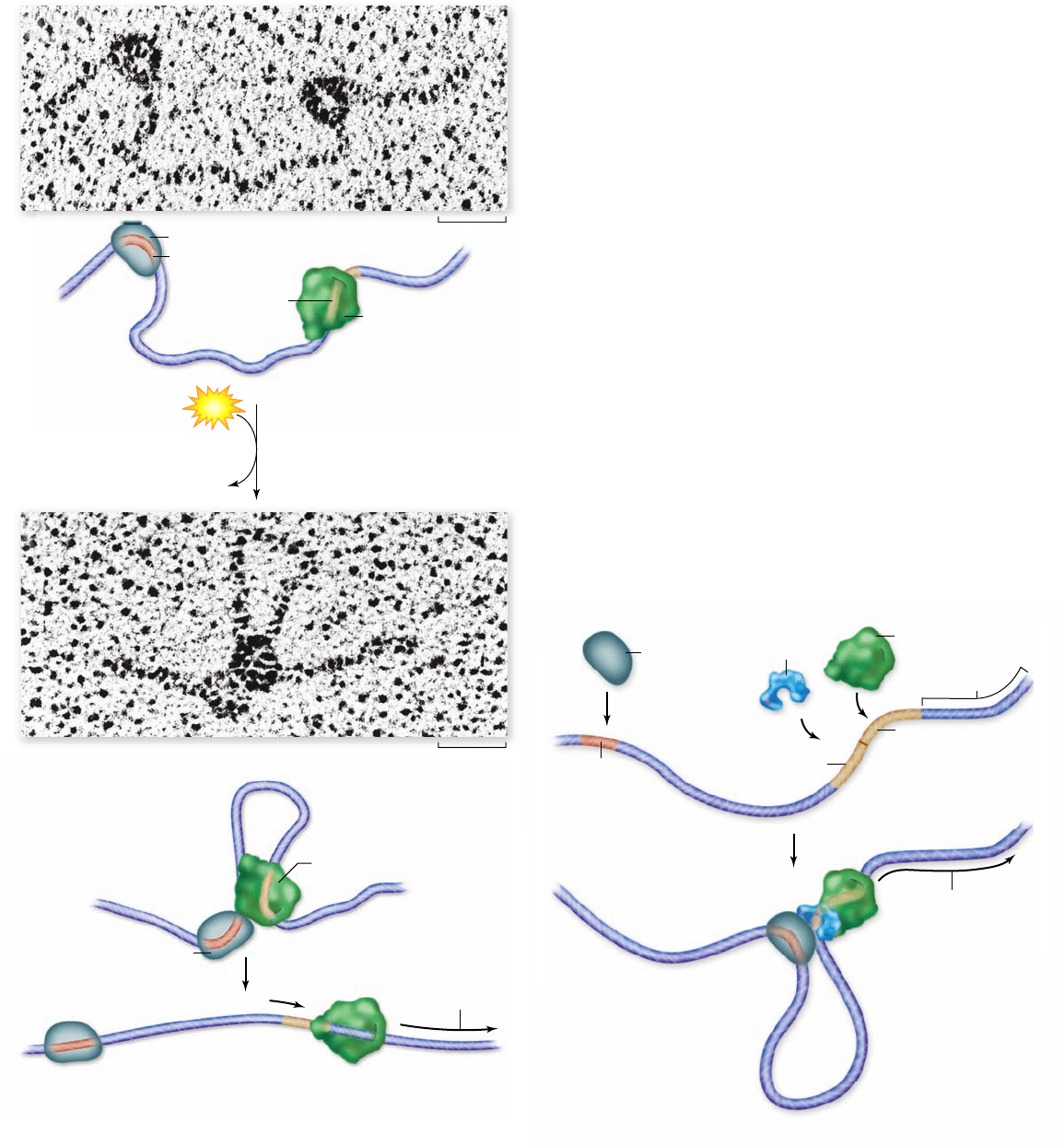
the specific transcription factors. The ability of enhancers
to act over large distances was at first puzzling, but
investigators now think this action is accomplished by DNA
bending to form a loop, positioning the enhancer closer to
the promoter.
Although more important in eukaryotic systems, this
looping was first demonstrated using prokaryotic DNA-
binding proteins (figure 16.10). The important point is that
the linear distance separating two sites on the chromosome
does not have to translate to great physical distance, because
the flexibility of DNA allows bending and looping. An activa-
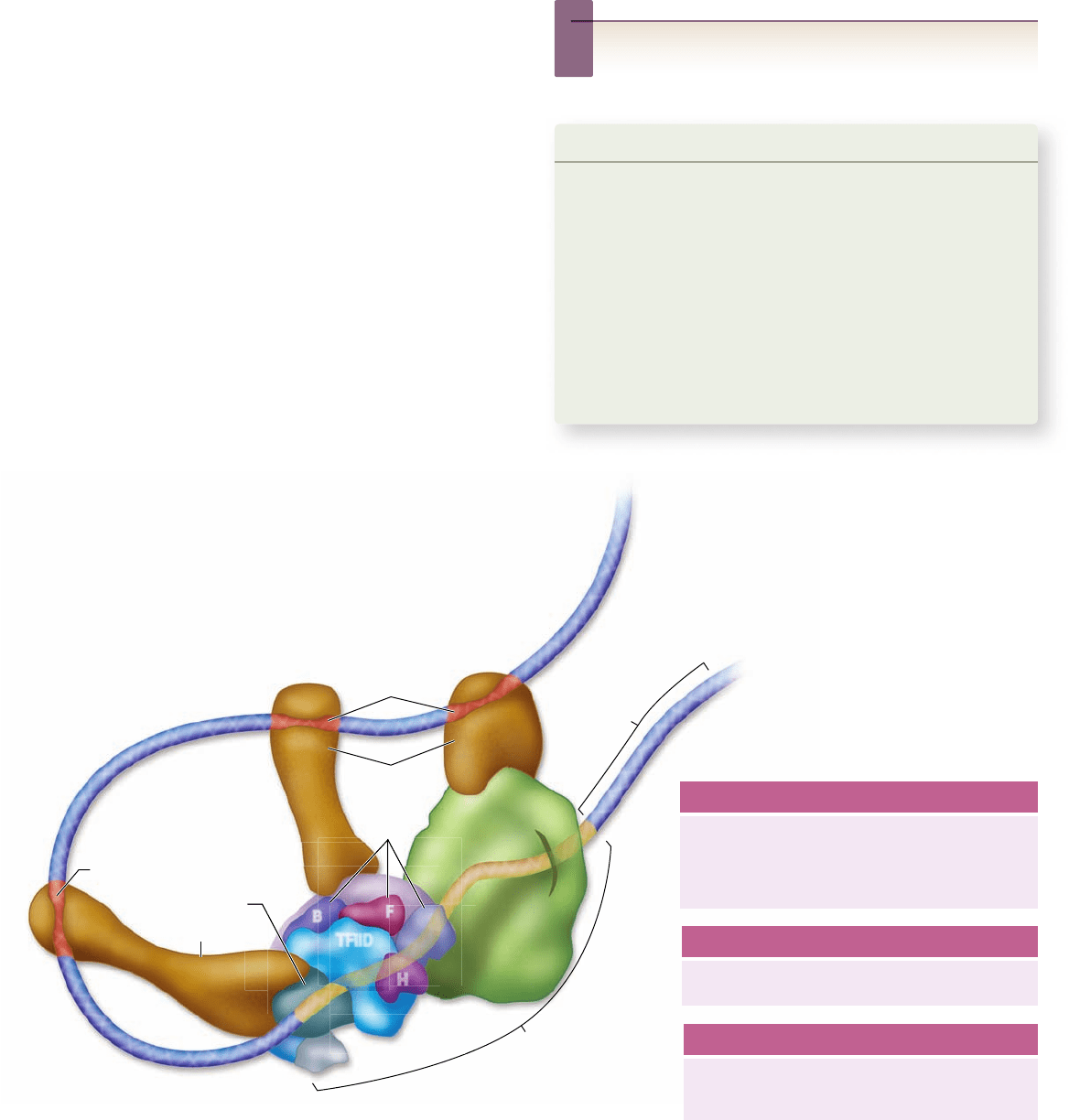
tor bound to an enhancer can thus be brought into contact
with the transcription factors bound to a distant promoter
(figure 16.11).
Coactivators and mediators link transcription
factors to RNA polymerase II
Other factors specifically mediate the action of transcription fac-
tors. These coactivators and mediators are also necessary for activa-
tion of transcription by the transcription factor. They act by
binding the transcription factor and then binding to another part
of the transcription apparatus. Mediators are essential to the
function of some transcription factors, but not all transcription
Figure 16.10
DNA looping caused by proteins. When
the bacterial activator NtrC binds to an enhancer, it causes the
DNA to loop over to a distant site where RNA polymerase is bound,
thereby activating transcription. Although such enhancers are rare
in prokaryotes, they are common in eukaryotes.
Figure 16.11
How enhancers work. The enhancer site is
located far away from the gene being regulated. Binding of an
activator (gray) to the enhancer allows the activator to interact with
the transcription factors (blue) associated with RNA polymerase,
stimulating transcription.
314
part
III
Genetic and Molecular Biology
rav32223_ch16_304-326.indd 314rav32223_ch16_304-326.indd 314 11/9/09 3:39:00 PM11/9/09 3:39:00 PM
Apago PDF Enhancer
Enhancer
Activator
Activator
Coactivator
Enhancers
TAFs
E
F
B
A
H
TFIID
Core
promoter
RNA
polymerase II
General
factors
Activators
These regulatory proteins bind to DNA at distant
sites known as enhancers. When DNA folds so that
the enhancer is brought into proximity with the
initiation complex, the activator proteins interact with
the complex to increase the rate of transcription.
Coactivators
These transcription factors transmit signals from
activator proteins to the general factors.
General Factors
These transcription factors position RNA polymerase
at the start of a protein-coding sequence and then
release the polymerase to initiate transcription.
Coding
region
Inquiry question
?
How do eukaryotes coordinate the activation of many genes
whose transcription must occur at the same time?
Learning Outcomes Review 16.4
In eukaryotes, initiation requires general transcription factors that
bind to the promoter and recruit RNA polymerase II to form an initiation
complex. General factors produce the basal level of transcription. Specifi c
transcription factors, which bind to enhancer sequences, can increase the
level of transcription. Enhancers can act at a distance because DNA can
loop, bringing an enhancer and a promoter closer together. Additional
coactivators and mediators link certain specifi c transcription factors to
RNA polymerase II.
■ What would be the effect of a mutation that results in
the loss of a general transcription factor versus the loss
of a specific factor?
Figure 16.12
Interactions of various factors within the transcription complex. All speci c transcription factors bind to
enhancer sequences that may be distant from the promoter. These proteins can then interact with the initiation complex by DNA looping
to bring the factors into proximity with the initiation complex. As detailed in the text, some transcription factors, called activators, can
directly interact with the RNA polymerase II or the initiation complex, whereas others require additional coactivators.
factors require them. The number of coactivators is much smaller
than the number of transcription factors because the same co ac-
ti va tor can be used with multiple transcription factors.
The transcription complex
brings things together
Although a few general principles apply to a broad range of
situations, nearly every eukaryotic gene—or group of genes
with coordinated regulation—represents a unique case. Vir-
tually all genes that are transcribed by RNA polymerase II
need the same suite of general factors to assemble an initia-
tion complex, but the assembly of this complex and its ulti-
mate level of transcription depend on specific transcription
factors that in combination make up the transcription
complex (figure 16.12).
The makeup of eukaryotic promoters, therefore, is ei-
ther very simple, if we consider only what is needed for the
initiation complex, or very complicated, if we consider all
factors that may bind in a complex and affect transcription.
This kind of combinatorial gene regulation leads to great
flexibility because it can respond to the many signals a cell
may receive affecting transcription, allowing integration of
these signals.
chapter
16
Control of Gene Expression
315www.ravenbiology.com
rav32223_ch16_304-326.indd 315rav32223_ch16_304-326.indd 315 11/9/09 3:39:00 PM11/9/09 3:39:00 PM
Apago PDF Enhancer
H
CH
3
N
H
H
H
N
O H
J
N
O
N
J
H
N
N
H N
N
J
Phosphate
G
C
Amino acid
histone tail
Acetyl
group
Addition of acetyl groups to histone
tails remodel the solenoid so that
DNA is accessible for transcription
N-terminus
DNA available for transcription
Condensed
solenoid
Nucleosomes block the binding of
RNA polymerase II to the promoter
16.5
Eukaryotic Chromatin
Structure
Learning Outcomes
Describe how chromatin structure can affect gene 1.
expression.
Explain the function of chromatin remodeling complexes.2.
Eukaryotes have the additional gene expression hurdle of pos-
sessing DNA that is packaged into chromatin. The packaging
of DNA first into nucleosomes and then into higher order
chromatin structures is now thought to be directly related to
the control of gene expression.
Chromatin structure at its lowest level is the organization
of DNA and histone proteins into nucleosomes (see chapter 10).
These nucleosomes may block binding of transcription factors
and RNA polymerase II at the promoter.
The higher order organization of chromatin, which is not
completely understood, appears to depend on the state of the
histones in nucleosomes. Histones can be modified to result in
a greater condensation of chromatin, making promoters even
less accessible for protein–DNA interactions. A chromatin re-
modeling complex exists that can make DNA more accessible.
Both DNA and histone proteins
can be modi ed
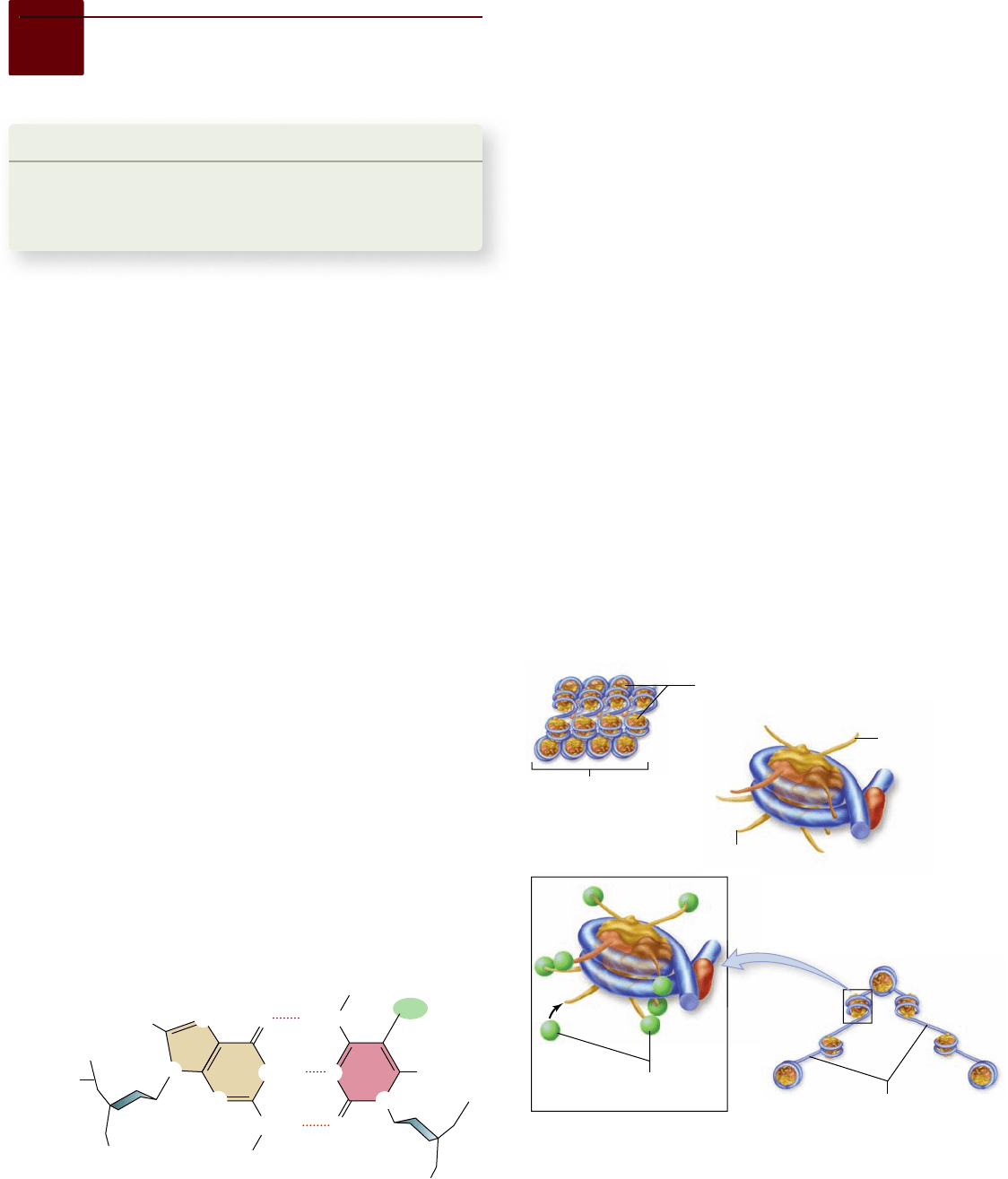
Chemical methylation of the DNA was once thought to play a
major role in gene regulation in vertebrate cells. The addition
of a methyl group to cytosine creates 5-methylcytosine, but
this change has no effect on its base-pairing with guanine
( figure 16.13). Similarly, the addition of a methyl group to ura-
cil produces thymine, which clearly does not affect base-pairing
with adenine.
Many inactive mammalian genes are methylated, and it
was tempting to conclude that methylation caused the inactiva-
tion. But methylation is now viewed as having a less direct role,
blocking the accidental transcription of “turned-off” genes.
Vertebrate cells apparently possess a protein that binds to clus-
ters of 5-methylcytosine, preventing transcriptional activators
from gaining access to the DNA. DNA methylation in verte-
brates thus ensures that once a gene is turned off, it stays off.
The histone proteins that form the core of the nucleosome
(chapter 10) can also be modified. This modification is corre-
lated with active versus inactive regions of chromatin, similar to
the methylation of DNA just described. Histones can also be
methylated, and this alteration is generally found in inactive
regions of chromatin. Finally, histones can be modified by the
addition of an acetyl group, and this addition is correlated with
active regions of chromatin.
Some transcription activators alter
chromatin structure
The control of eukaryotic transcription requires the presence
of many different factors to activate transcription. Some acti-
vators seem to interact directly with the initiation complex or
with coactivators that themselves interact with the initiation
complex, as described earlier. Other cases are not so clear. The
emerging consensus is that some coactivators have been
shown to be histone acetylases. In these cases, it appears that
transcription is increased by removing higher order chroma-
tin structure that would prevent transcription (figure 16.14).
Some corepressors have been shown to be histone deacety-
lases as well.
These observations have led to the suggestion that a
“histone code” might exist, analogous to the genetic code.
Figure 16.13
DNA methylation. Cytosine is methylated,
creating 5-methylcytosine. Because the methyl group (green) is
positioned to the side, it does not interfere with the hydrogen bonds
of a G
–
C base-pair, but it can be recognized by proteins.
Figure 16.14
Histone modi cation a ects chromatin
structure. DNA in eukaryotes is organized rst into nucleosomes
and then into higher order chromatin structures. The histones that
make up the nucleosome core have amino tails that protrude. These
amino tails can be modi ed by the addition of acetyl groups. The
acetylation alters the structure of chromatin, making it accessible to
the transcription apparatus.
316
part
III
Genetic and Molecular Biology
rav32223_ch16_304-326.indd 316rav32223_ch16_304-326.indd 316 11/9/09 3:39:01 PM11/9/09 3:39:01 PM
Apago PDF Enhancer
1. Nucleosome sliding
ATP-dependent
remodeling factor
2. Remodeled nucleosome
3. Nucleosome displacement 4. Histone replacement
P
i
ADP+
ATP
This histone code is postulated to underlie the control of
chromatin structure and, thus, of access of the transcription
machinery to DNA.
Chromatin-remodeling complexes also
change chromatin structure
The outline of how alterations to chromatin structure can
regulate gene expression are beginning to emerge. A key dis-
covery is the existence of so-called chromatin-remodeling
complexes. These large complexes of proteins include en-
zymes that modify histones and DNA and that also change
chromatin structure itself.
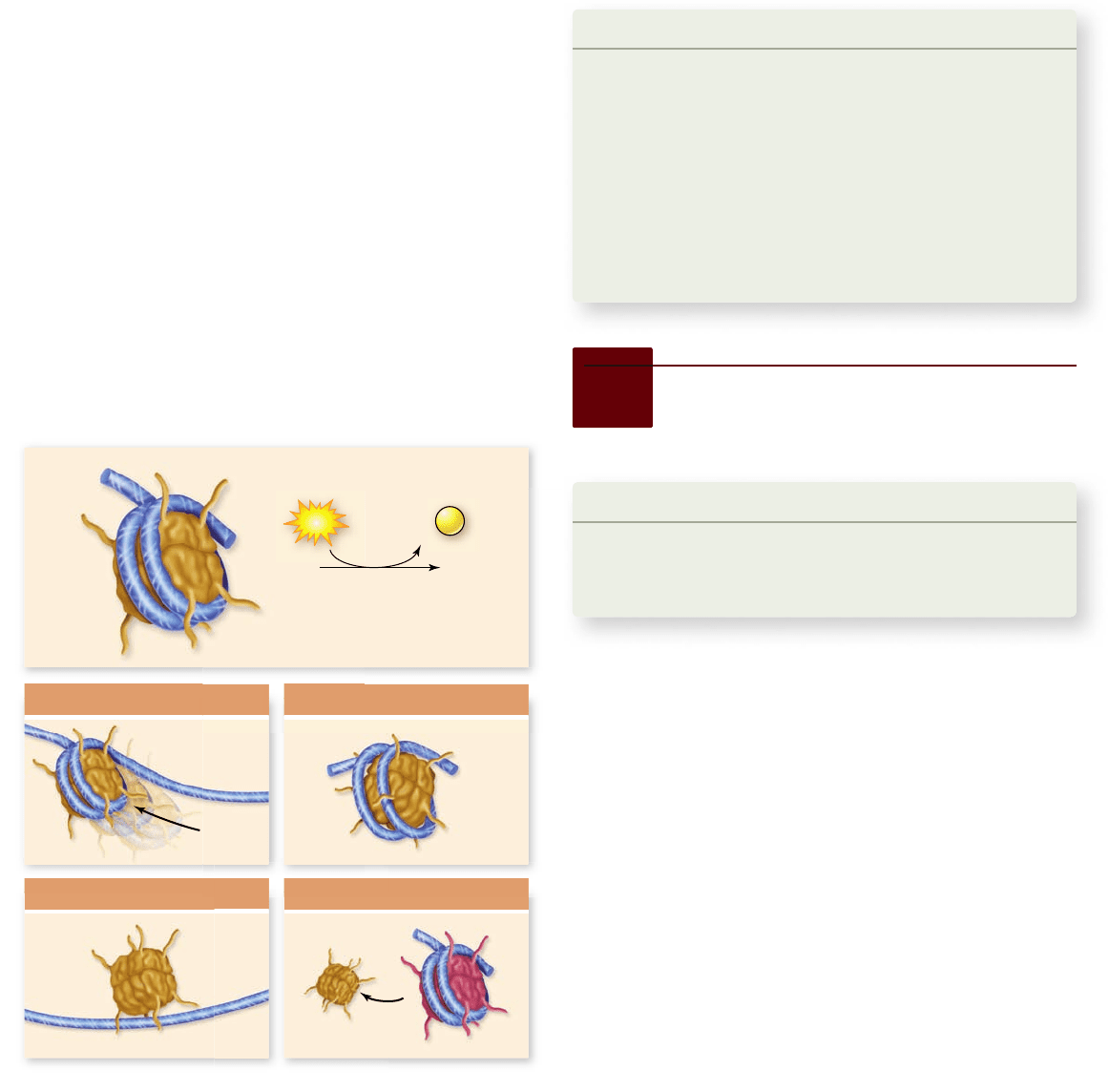
One class of these remodeling factors, ATP-dependent
chromatin remodeling factors, function as molecular motors
that affect DNA and histones. These ATP-dependent remodel-
ing factors use energy from ATP to alter the relationships be-
tween histones and DNA. They can catalyze four different
changes in histone/DNA binding (figure 16.15): 1) nucleosome
sliding along DNA, which changes the position of a nucleosome
on the DNA; 2) create a remodeled state where DNA is more
Figure 16.15
Function of ATP-dependent remodeling
factors. ATP dependent remodeling factors use the energy from
ATP to alter chromatin structure. They can (1) slide nucleosomes
along DNA to reveal binding sites for proteins; (2) create a
remodeled state of chromatin where the DNA is more accessible;
(3) completely remove nucleosomes from DNA; and (4) replace
histones in nucleosomes with variant histones.
accessible; 3) removal of nucleosomes from DNA; and 4) re-
placement of histones with variant histones. These functions all
act to make DNA more accessible to regulatory proteins that in
turn, affect gene expression.
Learning Outcomes Review 16.5
Eukaryotic DNA is packaged into chromatin, adding another structural
challenge to transcription. Changes in chromatin structure correlate with
modifi cation of DNA and histones, and access to DNA by transcriptional
regulators requires changes in chromatin structure. Some transcriptional
activators modify histones by acetylation. Large chromatin-remodeling
complexes include enzymes that alter the structure of chromatin, making
DNA more accessible to regulatory proteins.
■ Genes that are turned on in all cells are called
“housekeeping” genes. Explain the idea behind
this name.
16.6
Eukaryotic Posttranscriptional
Regulation
Learning Outcomes
Explain how small RNAs can affect gene expression.1.
Differentiate between the different kinds of 2.
posttranscriptional regulation.
The separation of transcription in the nucleus and translation
in the cytoplasm in eukaryotes provides possible points of regu-
lation that do not exist in prokaryotes. For many years we
thought of this as “alternative” forms of regulation, but it now
appears that they play a much more central role than previously
suspected. In this section we will consider several of these
mechanisms to control gene expression beginning with the ex-
citing new area of regulation by small RNAs.
Small RNAs act after transcription
to control gene expression
The study of development has lead to a number of important
insights into the regulation of gene expression. A striking exam-
ple is the discovery of small RNAs that affect gene expression. A
mutant isolated in the worm C. elegans called lin-4 was known to
alter developmental timing, a so-called heterochronic mutant.
Genetic studies had shown that this gene regulated another gene,
lin-14. When the lin-4 gene was isolated by Ambros, Lee, and
Feinbaum in 1992, they showed that it did not encode a protein
product. Instead, the lin-4 gene encoded only two small RNA
molecules, one of 22 nt and one of 61 nt. Further the 22 nt RNA
was derived from the longer 61 nt RNA. Further work showed
that this small RNA was complementary to a region in another
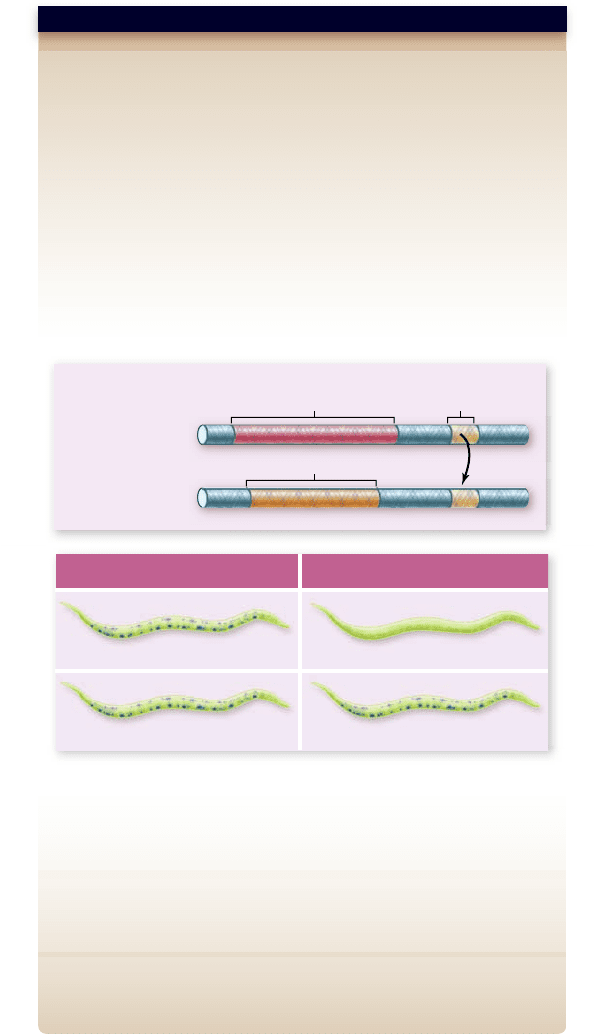
heterochronic gene, lin-14. A model was developed where the
lin-4 RNA acted as a translational repressor of the lin-14 mRNA
chapter
16
Control of Gene Expression
317www.ravenbiology.com
rav32223_ch16_304-326.indd 317rav32223_ch16_304-326.indd 317 11/9/09 3:39:02 PM11/9/09 3:39:02 PM
Apago PDF Enhancer
Hypothesis: The region of the lin-14 gene complementary to the lin-4
miRNA controls lin-14 expression.
Prediction: If the lin-4 complementary region of the lin-14 gene is
spliced into a reporter gene, then this reporter gene should show
regulation similar to lin-14.
Test: Recombinant DNA is used to make two versions of a reporter gene
(b-galactosidase). In transgenic worms (C. elegans), expression of the
reporter gene produces a blue color.
1. The b-galactosidase gene with the lin-14 3’ untranslated region
containing the lin-4 complementary region
2. The b-galactosidase gene with a control 3’ untranslated region lacking
the lin-4 complementary region
Result:
1. Transgenic worms with reporter gene plus lin-14 3’ untranslated region
show expression in L1 but not L2 stage larvae. This is the pattern expected
for the lin-14 gene, which is controlled by lin-4.
2. Transgenic worms with reporter gene plus control 3’ untranslated
region do not show expression pattern expected for control by lin-4.
Conclusion: The 3’ untranslated region from lin-14 is sufficient to turn
off gene expression in L2 larvae.
Further Experiments: What expression pattern would you predict for
these constructs in a mutant that lacks lin-4 function?
SCIENTIFIC THINKING
lin-4
complementary
Coding region
Coding region
lin-14 3„ untranslated
Control 3„ untranslated
b-Galactosidase
gene
lin-14 gene
L2 LarvaL1 Larva
Figure 16.16
Control of lin-14 gene expression. The lin-14
gene is controlled by the lin-4 gene. This is mediated by a region of the
3' untranslated region of the lin-14 mRNA that is complementary to
lin-4 miRNA.
(figure 16.16). Although it was not called that at the time, this
was the first identified micro RNA, or miRNA.
A completely different line of inquiry involved the use of
double-stranded RNAs to turn off gene expression. This has
been shown to act via another class of small RNA called small
interfering RNAs, or siRNAs. These may be experimenatally
introduced, derived from invading viruses, or even encoded in
the genome. The use of siRNA to control gene expression re-
vealed the existence of cellular mechanisms for the control of
gene expression via small RNAs.
Since its discovery, gene silencing by small RNAs has been a
source of great interest for both its experimental uses, and as an
explanation for posttranslational control of gene expression. As
these small RNAs have been studied in a variety of systems, it has
led to a proliferation of terms to describe them. Recent research has
uncovered a wealth of new types of small RNAs, but we will confine
ourselves to the two classes of miRNA and siRNA as these are well
established and illustrate the RNA silencing machinery.
m i R N A g e n e s
The discovery of the role of miRNAs in gene expression initially
appeared to be confined to nematodes as the lin-4 gene did not
have any obvious homologs in other systems. Seven years later, a
second gene, let-7, was discovered in the same pathway in C. ele-
gans. The let-7 gene also encoded a 22 nt RNA that could influ-
ence translation. In this case, homologs for let-7 were immediately
found in both Drosophila and in humans.
As an increasing number of miRNAs were discovered in
different organisms, miRNA gene discovery has turned to
computer searching and high throughput methods such as
microarrays and new high throughput sequencing. A data-
base devoted to miRNAs currently lists 695 known human
miRNA sequences.
Genes for miRNA are found in a variety of locations in-
cluding the introns of expressed genes, and they are often clus-
tered with multiple miRNAs in a single transcription unit.
They are also found in regions of the genome that were previ-
ously considered transcriptionally silent. This finding is par-
ticularly exciting because other work looking at transcription
across animal genomes has found that much we thought was
transcriptionally silent, is actually not.
miRNA biogenesis and function
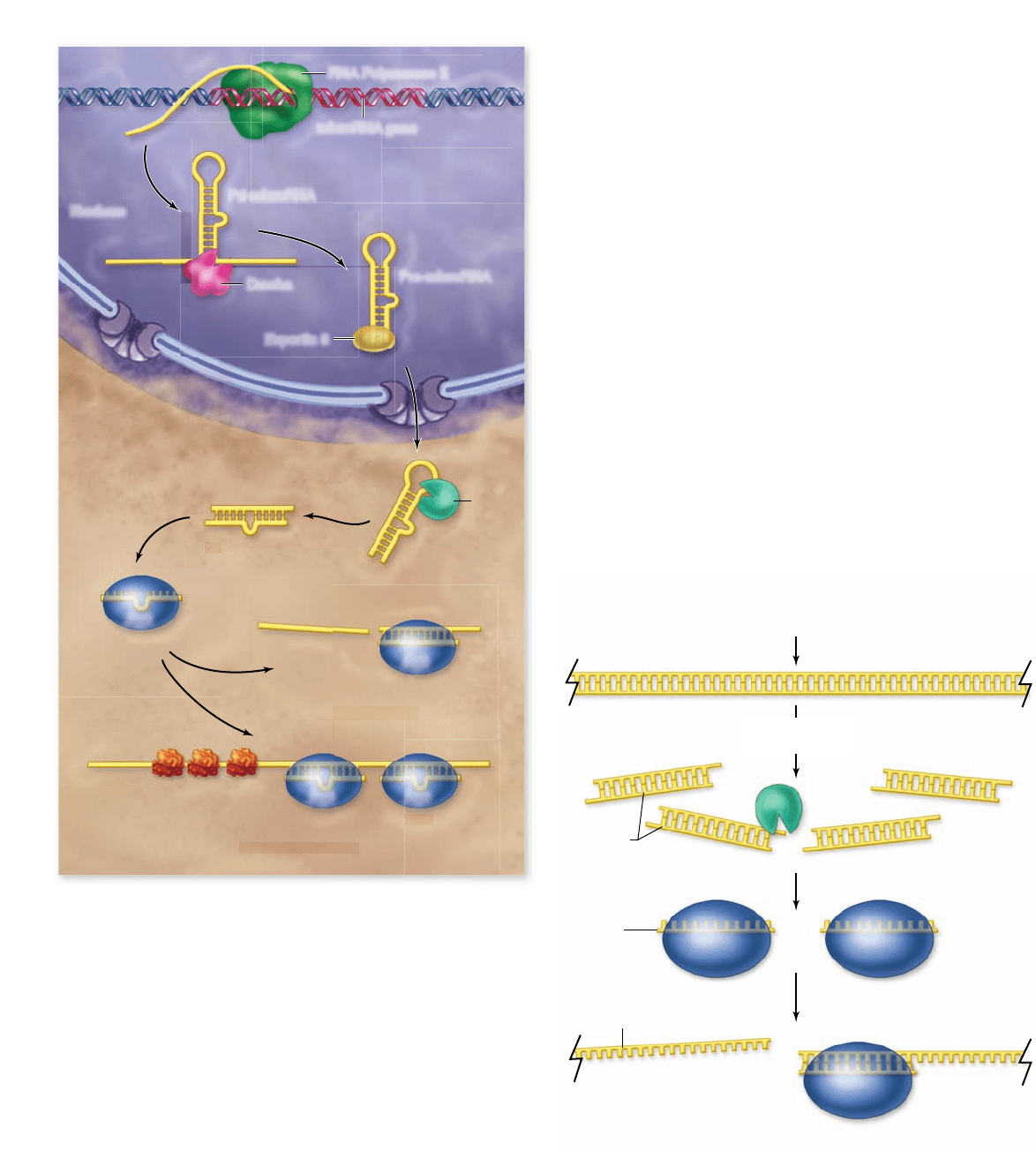
The production of a functional miRNA begins in the nucleus,
and ends in the cytoplasm with a ~22 nt RNA that functions to
repress gene expression (figure 16.17). The initial transcript of
an miRNA gene is by RNA polymerase II producing a transcript
called the Pri-miRNA. The region of this transcript containing
the miRNA can fold back on itself and base-pair to form a stem
and loop structure. This is cleaved in the nucleus by a nuclease
called Drosha that trims the miRNA to just the stem and loop
structure, which is now called the pre-miRNA. This pre-miRNA
is exported from the nucleus through a nuclear pore bound to
the protein exportin 5. Once in the cytoplasm the pre-miRNA is
further cleaved by another nuclease called Dicer to produce a
short double-stranded RNA containing the miRNA. The miRNA
is loaded into a complex of proteins called an RNA induced si-
lencing complex, or RISC. The RISC includes the RNA-binding
protein Argonaute (Ago), which interacts with the miRNA. The
complementary strand is either removed by a nuclease, or is re-
moved during the loading process.
At this point, the RISC is targeted to repress the expres-
sion of other genes based on sequence complementarity to the
miRNA. The complementary region is usually in the 3' un-
translated region of genes, and the result can be cleavage of the
mRNA or inhibition of translation. It appears that in animals,
318
part
III
Genetic and Molecular Biology
rav32223_ch16_304-326.indd 318rav32223_ch16_304-326.indd 318 11/9/09 3:39:03 PM11/9/09 3:39:03 PM
Apago PDF Enhancer
microRNA gene
RNA Polymerase II
Pri-microRNA
Nucleus
Cytoplasm
Pre-microRNA
Dicer
Inhibition of translation
mRNA cleavage
Drosha
Exportin 5
Mature miRNA
mRNA
mRNA
RISC
R
I
SC
RNA clea
vag
e
g
M
a
i
b
ition o
f
tr
a
n
sla
a
tion
R
g
Ago
RISC
Ago
RISC
Ago
RISC
Ago
Exogenous dsRNA, transposon, virus
Repeated cutting
by dicer
siRNA
in RISC
mRNA
P
P
P
P
P
P
P
P
siRNAs
+
Cleavage of target mRNA
Ago
RISC
Ago
RISC
Figure 16.17
Biogenesis and function of miRNA . Genes
for miRNAs are transcribed by RNA polymerase II to produce a
Pri-miRNA. This is processed by the Drosha nuclease to produce
the Pre-miRNA, which is exported from the nucleus bound to
export factor Exportin 5. Once in the cytoplasm, the pre-miRNA is
processed by Dicer nuclease to produce the mature miRNA. The
miRNA is loaded into a RISC, which can act to either cleave target
mRNAs, or to inhibit translation of target mRNAs.
the inhibition of translation is more common than the cleavage
of the mRNA, although the precise mechanism of this inhibi-
tion is still unclear. In plants, the cleavage of the mRNA by the
RISC is common and seems to be related to the more precise
complementarity found between plant miRNAs and their tar-
gets compared to animal systems.
RNA interference
Small RNA mediated gene silencing has been known for a
number of years. There has been some confusion created by
observations in different systems leading to multiple names
for similar phenomenon. Thus RNA interference, cosuppres-
sion, and posttranscriptional gene silencing all act through
similar biochemical mechanisms. The term RNA interfer-
ence is currently the most common and involves the produc-
tion of siRNAs.
The production of siRNAs is similar to miRNAs except
that they arise from a long double-stranded RNA (figure 16.18).
This can be either a very long region of self complementarity,
or from two complementary RNAs. These long double-stranded
RNAs are processed by Dicer to yield multiple siRNAs that
are loaded into an Ago containing RISC. The siRNAs usually
have near-perfect complementarity to their target mRNAs,
and the result is cleavage of the mRNA by the siRNA contain-
ing RISC.
The source of the double-stranded RNA to produce
siRNAs can be either from the cell, or from outside the cell.
From the cell itself, there are genes that produce RNAs with
long regions of self-complementarity that fold back to produce
a substrate for Dicer in the cytoplasm. They can also arise from
repeated regions of the genome that contain transposable ele-
ments. Exogenous double-stranded RNAs can be introduced
Figure 16.18
Biogenesis and function of siRNA. SiRNAs
can arise from a variety of sources that all produce long double-
stranded regions of RNA. The double-stranded RNA is processed
by Dicer nuclease to produce a number of siRNAs that are each
loaded onto their own RISC. The RISC then cleaves target mRNA.
chapter
16
Control of Gene Expression
319www.ravenbiology.com
rav32223_ch16_304-326.indd 319rav32223_ch16_304-326.indd 319 11/11/09 2:53:35 PM11/11/09 2:53:35 PM
Apago PDF Enhancer
Alternative splicing can change the splicing events that
occur during different stages of development or in different
tissues. An example of developmental differences is found in
Drosophila, in which sex determination is the result of a com-
plex series of alternative splicing events that differ in males
and females.
An excellent example of tissue-specific alternative splic-
ing in action is found in two different human organs: the thy-
roid gland and the hypothalamus. The thyroid gland is
responsible for producing hormones that control processes
such as metabolic rate. The hypothalamus, located in the brain,
collects information from the body (for example, salt balance)
and releases hormones that in turn regulate the release of hor-
mones from other glands, such as the pituitary gland. (You’ll
learn more about these glands in chapter 46.)
These two organs produce two distinct hormones: calci-
tonin and CGRP (calcitonin gene-related peptide) as part of
their function. Calcitonin controls calcium uptake and the bal-
ance of calcium in tissues such as bones and teeth. CGRP is
involved in a number of neural and endocrine functions. Al-
though these two hormones are used for very different physi-
ological purposes, they are produced from the same transcript
(figure 16.19).
The synthesis of one product versus another is deter-
mined by tissue-specific factors that regulate the processing of
the primary transcript. In the case of calcitonin and CGRP, pre-
mRNA splicing is controlled by different factors that are pres-
ent in the thyroid and in the hypothalamus.
RNA editing alters mRNA after transcription
In some cases, the editing of mature mRNA transcripts can
produce an altered mRNA that is not truly encoded in the
genome—an unexpected possibility. RNA editing was first dis-
covered as the insertion of uracil residues into some RNA tran-
scripts in protozoa, and it was thought to be an anomaly.
RNA editing of a different sort has since been found in
mammalian species, including humans. In this case, the editing
involves chemical modification of a base to change its base-
pairing properties, usually by deamination. For example, both
deamination of cytosine to uracil and deamination of adenine
to inosine have been observed (inosine pairs as G would dur-
ing translation).
Apolipoprotein B
The human protein apolipoprotein B is involved in the trans-
port of cholesterol and triglycerides. The gene that encodes
this protein, apoB, is large and complex, consisting of 29 exons
scattered across almost 50 kilobases (kb) of DNA.
The protein exists in two isoforms: a full-length
APOB100 form and a truncated APOB48 form. The trun-
cated form is due to an alteration of the mRNA that changes
a codon for glutamine to one that is a stop codon. Further-
more, this editing occurs in a tissue-specific manner; the ed-
ited form appears only in the intestine, whereas the liver
makes only the full-length form. The full-length APOB100
form is part of the low-density lipoprotein (LDL) particle
that carries cholesterol. High levels of serum LDL are thought
experimentally, or by infection with a virus. The last origin for
double-stranded RNAs may point to the evolution of the RNA
silencing machinery as a form of antiviral defense.
Distinguishing miRNAs and siRNAs
The biogenesis of both miRNA and siRNA involves cleavage
by Dicer, and incorporation into a RISC complex. The main
thing that distinguishes these two types of molecules is their
targets: miRNAs tend to repress genes different from their ori-
gin, while endogenous siRNAs tend to repress the genes they
were derived from. Additionally siRNAs are used experimen-
tally to turn off the expression of genes. This takes advantage of
the cellular machinery to turn off a gene based with a double-
stranded RNA corresponding to the gene of interest.
There are other differences between the two classes of
small RNA. When multiple species are examined, miRNAs tend
to be evolutionarily conserved while siRNAs do not. While the
biogenesis is similar in terms of the nucleases involved, the ac-
tual structure of the double-stranded RNAs is not the same. The
transcript of miRNA genes form stem-loop structures contain-
ing the miRNA while the double-stranded RNAs generating
siRNAs may be bimolecular, or very long stem-loops. These
longer double-stranded regions lead to multiple siRNAs while
there is only a single miRNA generated from a pre-miRNA.
Small RNAs can mediate
heterochromatin formation
RNA silencing pathways have also been implicated in the for-
mation of heterochromatin in fission yeast, plants, and Droso-
phila. In fission yeast, centromeric heterochromatin formation
is driven by siRNAs produced by the action of the Dicer nucle-
ase. This heterochromatin formation also involves modification
of histone proteins, and thus connects RNA interference with
chromatin remodeling complexes in this system. It is not yet
clear how widespread this is.
In Drosophila, there is genetic evidence for the involvement
of the RNA interference machinery in the formation of hetero-
chromatin. This is particularly clear in the germ line where a
specific class of small RNA appears to be involved in silencing
transposons during spermatogenesis and oogenesis. There is also
evidence that a similar mechanism may act in vertebrates.
Plants are an interesting case in that they have a variety of
small RNA species. The RNA interference pathway is more
complex than in animals with multiple forms of Dicer nuclease
proteins and Argonaute RNA binding proteins. One class of
endogenous siRNA can lead to heterochromatin formation by
DNA methylation and histone modification.
Alternative splicing can produce multiple
proteins from one gene
As noted in the preceding chapter, splicing of pre-mRNA is
one of the processes leading to mature mRNA. Many of these
splicing events may produce different mRNAs from a single
primary transcript by alternative splicing. This mechanism al-
lows another level of control of gene expression.
320
part
III
Genetic and Molecular Biology
rav32223_ch16_304-326.indd 320rav32223_ch16_304-326.indd 320 11/9/09 3:39:04 PM11/9/09 3:39:04 PM
Apago PDF Enhancer
1 2 3 4 1 2
1 3 2 4
3 4 5 5 6
Primary RNA transcript
5„ cap
Mature mRNA
Calcitonin
3„ Poly-A tail
3„ Poly-A tail
Thyroid splicing pattern Hypothalamus splicing pattern
Introns are spliced
5„ cap
1 3 2 5 6
Mature mRNA
CGRP
3„ Poly-A tail 5„ cap
Exons
Introns
by binding to the beginning of the transcript, so that it cannot
attach to the ribosome.
In humans, the production of ferritin (an iron-storing
protein) is normally shut off by a translation repressor protein
called aconitase. Aconitase binds to a 30-nt sequence at the be-
ginning of the ferritin mRNA, forming a stable loop to which
ribosomes cannot bind. When iron enters the cell, the binding
of iron to aconitase causes the aconitase to dissociate from the
ferritin mRNA, freeing the mRNA to be translated and increas-
ing ferritin production 100-fold.
The degradation of mRNA is controlled
Another aspect that affects gene expression is the stability of
mRNA transcripts in the cell cytoplasm. Unlike prokaryotic
mRNA transcripts, which typically have a half-life of about 3
min, eukaryotic mRNA transcripts are very stable. For example,
β-globin gene transcripts have a half-life of over 10 hr, an eter-
nity in the fast-moving metabolic life of a cell.
The transcripts encoding regulatory proteins and growth
factors, however, are usually much less stable, with half-lives of less
than 1 hr. What makes these particular transcripts so unstable? In
many cases, they contain specific sequences near their 3' ends that
make them targets for enzymes that degrade mRNA. A sequence
of A and U nucleotides near the 3' poly-A tail of a transcript pro-
motes removal of the tail, which destabilizes the mRNA.
Loss of the poly-A tail leads to rapid degradation by 3 to
5 RNA exonucleases. Another consequence of this loss is the
stimulation of decapping enzymes that remove the 5 cap lead-
ing to degradation by 5 to 3 RNA exonucleases.
Other mRNA transcripts contain sequences near their 3'
ends that are recognition sites for endonucleases, which cause
these transcripts to be digested quickly. The short half-lives of
the mRNA transcripts of many regulatory genes are critical to
the function of those genes because they enable the levels of
regulatory proteins in the cell to be altered rapidly.
A review of various methods of posttranscriptional con-
trol of gene expression is provided in figure 16.20.
to be a major predictor of atherosclerosis in humans. It does
not appear that editing has any effect on the levels of the
intestine-specific transcript.
The 5-HT serotonin receptor
RNA editing has also been observed in some brain receptors
for opiates in humans. One of these receptors, the serotonin
(5-HT) receptor, is edited at multiple sites to produce a total of
12 different isoforms of the protein.
It is unclear how widespread these forms of RNA editing
are, but they are further evidence that the information encoded
within genes is not the end of the story for protein production.
mRNA must be transported
out of the nucleus for translation
Processed mRNA transcripts exit the nucleus through the nu-
clear pores (described in chapter 4) . The passage of a transcript
across the nuclear membrane is an active process that requires
the transcript to be recognized by receptors lining the interior
of the pores. Specific portions of the transcript, such as the
poly-A tail, appear to play a role in this recognition.
There is little hard evidence that gene expression is regu-
lated at this point, although it could be. On average, about 10%
of primary transcripts consists of exons that will make up
mRNA sequences, but only about 5% of the total mRNA pro-
duced as primary transcript ever reaches the cytoplasm. This
observation suggests that about half of the exons in primary
transcripts never leave the nucleus, but it is unclear whether the
disappearance of this mRNA is selective.
Initiation of translation can be controlled
The translation of a processed mRNA transcript by ribosomes
in the cytoplasm involves a complex of proteins called transla-
tion factors. In at least some cases, gene expression is regulated
by modification of one or more of these factors. In other in-
stances, translation repressor proteins shut down translation
Figure 16.19
Alternative splicing. Many primary transcripts can be spliced in different ways to give rise to multiple mRNAs. In this
example, in the thyroid the primary transcript is spliced to contain four exons encoding the protein calcitonin. In the hypothalamus the fourth
exon, which contains the poly-A site used in the thyroid, is skipped and two additional exons are added to encode the protein calcitonin-gene-
related peptide (CGRP).
chapter
16
Control of Gene Expression
321www.ravenbiology.com
rav32223_ch16_304-326.indd 321rav32223_ch16_304-326.indd 321 11/9/09 3:39:05 PM11/9/09 3:39:05 PM