
Raven P.H., Johnson G.B., Mason K.A. Biology (Ninth Edition)
Подождите немного. Документ загружается.

Apago PDF Enhancer
T
Chapter
18
Genomics
Chapter Outline
18.1 Mapping Genomes
18.2 Whole-Genome Sequencing
18.3 Characterizing Genomes
18.4 Genomics and Proteomics
18.5 Applications of Genomics
Introduction
The pace of discovery in biology in the last 30 years has been like the exponential growth of a population. Starting with
the isolation of the first genes in the mid-1970s, researchers had accomplished the first complete genome sequence by the
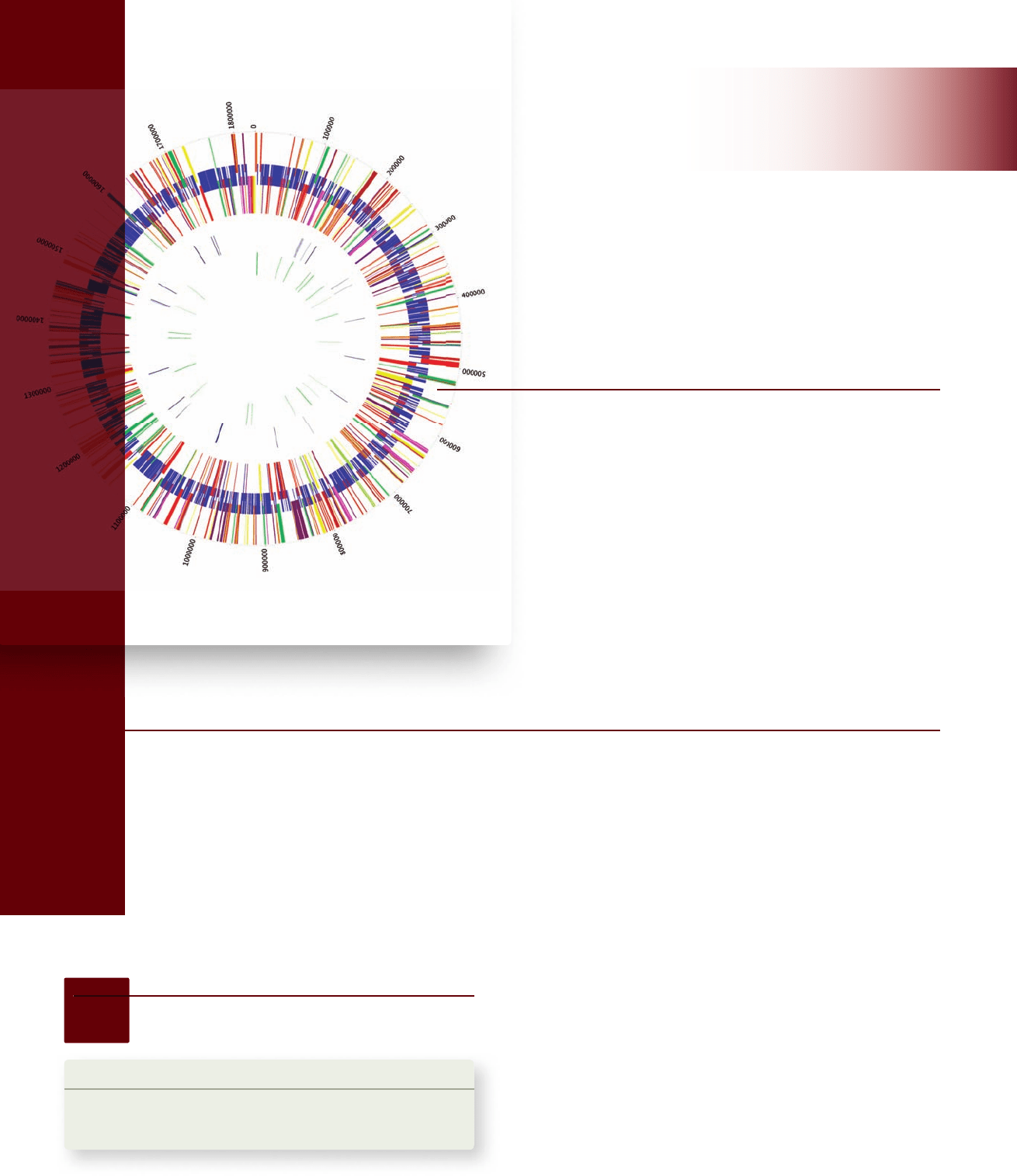
mid-1990s—that of the bacterial species Haemophilus in uenzae, shown in the picture (genes with similar functions are
shown in the same color). By the turn of the 21st century, the molecular biology community had completed a draft sequence
of the human genome. Put another way, scientific accomplishments moved from cloning a single gene, to determining the
sequence of a million base pairs in 20 years, then determining the sequence of a billion base pairs in another 5 years, and now
sequencing 20 billion base pairs at one time. In the previous chapter you learned about the basic techniques of molecular
biology. In this chapter you will see how those techniques have been applied to the analysis of whole genomes. This analysis
integrates ideas from classical and molecular genetics with biotechnology, scaled and applied to whole genomes.
1
8
CHAPTER
18.1
Mapping Genomes
Learning Outcomes
Distinguish between a genetic map and a physical map. 1.
Explain how genetic and physical maps can be linked. 2.
We use maps to find our location, and depending on how ac-
curately we wish to do this, we may use multiple maps with
different resolutions. In genomics, we can locate a gene on a
chromosome, in a subregion of a chromosome, and finally its
precise location in the chromosome’s DNA sequence. The
DNA sequence level requires knowing the entire sequence of
the genome, something that was once out of our reach techno-
logically. Knowing the entire sequence is useless, however,
rav32223_ch18_352-371.indd 352rav32223_ch18_352-371.indd 352 11/10/09 3:05:48 PM11/10/09 3:05:48 PM
Apago PDF Enhancer
Molecular
weight
marker
A
A
A
A
B
B
B
14 kb 5 kb
A A
8 kb 9 kb 2 kb
9 kb 5 kb 3 kb
2 kb
2 kb
2 kb
2 kb 2 kb
3 kb
6 kb
5 kb 5 kb
5 kb
10 kb
10 kb 19 kb
9 kb
9 kb
8 kb
14 kb
14 kb
e
n
zym
e
A
enzyme B
en
zyme A + B
1. Multiple copies
of a segment of
DNA are cut
with restriction
enzymes.
2.
The fragments
produced by
enzyme A only,
by enzyme B
only, and by
enzymes A and
B together are
run side-by-side
on a gel, which
separates them
according to
size.
3. The fragments
are arranged
so that the
smaller ones
produced by the
simultaneous
cut can be
grouped to
generate the
larger ones
produced by
the individual
enzymes.
4. A physical map
is constructed.
DNA
0
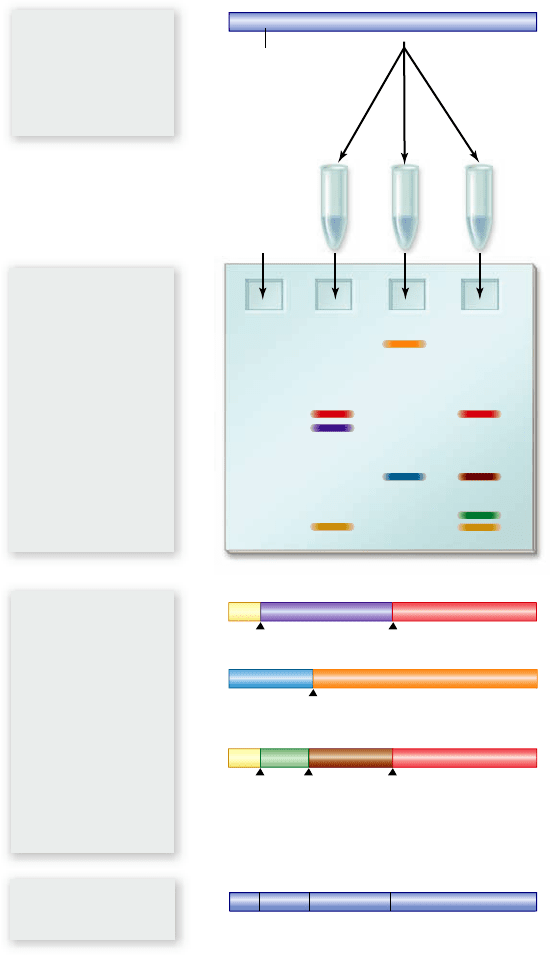
Figure 18.1
Restriction enzymes can be used to create a
physical map. DNA is digested with two different restriction
enzymes singly and in combination, then electrophoresed to
separate the fragments. The location of sites can be deduced by
comparing the sizes of fragments from the individual reactions with
the combined reaction.
tyrosine kinase that is always turned on, causing white blood
cell proliferation.
The use of hybridization with cloned DNA has added to
the utility of chromosome-banding analysis. In this case, be-
cause the hybridization involves whole chromosomes, it is
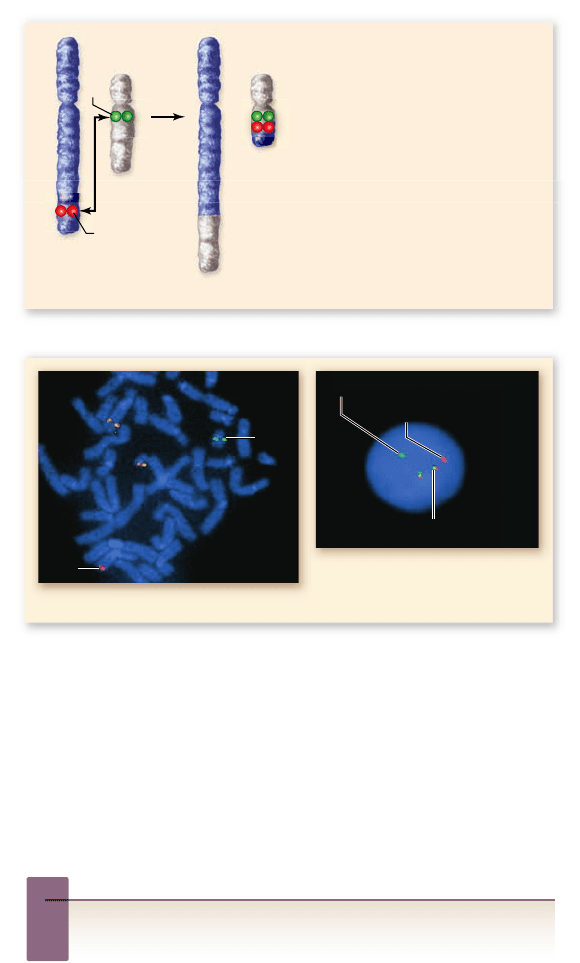
called in situ hybridization. It is done using fluorescently labeled
probes, and so its complete name is fluorescence in situ
hybridization (FISH) (figure 18.2b).
without other kinds of maps; finding a single gene within the
sequence of the human genome is like trying to find your house
on a map of the world.
To overcome this difficulty, maps of genomes are con-
structed at different levels of resolution and using different
kinds of information. We can distinguish between genetic maps
and physical maps. Genetic maps are abstract maps that place
the relative location of genes on chromosomes based on
recombination frequency (see chapter 13 ). Physical maps use
landmarks within DNA sequences, ranging from restriction
sites (described in the preceding chapter) to the ultimate level
of detail: the actual DNA sequence.
Di erent kinds of physical
maps can be generated
To make sense of genome mapping, it is important to have
physical landmarks on the genome that are at a lower level of
resolution than the entire sequence. In fact, long before the
Human Genome Project was even conceived, physical maps
of DNA were needed as landmarks on cloned DNA. Two
types of physical maps are (1) restriction maps, constructed
using restriction enzymes and (2) chromosome-banding pat-
terns, generated by cytological dye methods.
Restriction maps
Distances between “landmarks” on a physical map are mea-
sured in base-pairs (1000 base-pairs [bp] equal 1 kilobase, kb).
It is not necessary to know the DNA sequence of a segment of
DNA in order to create a physical map, or to know whether the
DNA encompasses information for a specific gene.
The first physical maps were created by cutting ge-
nomic DNA with different restriction enzymes, both singly
and with combinations of enzymes (figure 18.1) . The analy-
sis of the patterns of fragments generated were used to gen-
erate a map.
In terms of larger pieces of DNA, this process is repeated
and then used to put the pieces back together, based on size and
overlap, into a contiguous segment of the genome, called a
contig. Coincidently, the very first restriction enzymes to be
isolated came from Haemophilus, which was also the first free-
living genome to be completely sequenced.
Chromosome-banding patterns
Cytologists studying chromosomes with light microscopes
found that by using different stains, they could produce repro-
ducible patterns of bands on the chromosomes. In this way,
they could identify all of the chromosomes and divide them
into subregions based on banding pattern.
The use of different stains allows for the construction of
a cytological map of the entire genome. These large-scale phys-
ical maps are like a map of an entire country, in that they en-
compass the whole genome, but at low resolution.
Cytological maps are used to characterize chromo-
somal abnormalities associated with human diseases, such as
chronic myelogenous leukemia. In this disease, a reciprocal
translocation occurs between chromosome 9 and chromo-
some 22 (figure 18.2a), resulting in an altered form of
chapter
18
Genomics
353www.ravenbiology.com
rav32223_ch18_352-371.indd 353rav32223_ch18_352-371.indd 353 11/10/09 3:05:51 PM11/10/09 3:05:51 PM
Apago PDF Enhancer
Reciprocal translocation
between one 9 and one 22
chromosome forms an
extra-long chromosome 9
(“der 9”) and the Philadelphia
chromosome (Ph
1
) containing
the fused bcr-abl gene. This is
a schematic view representing
metaphase chromosomes.
a.
b.
abl
bcr
bcr (on normal 22)
abl (on normal 9)
fused gene
9
abl
bcr
der 9
22
Normal interphase nucleus
Interphase nucleus of leukemic
cell containing the Philadelphia
chromosome (Ph
1
)
Ph
1
Figure 18.2
Use of uorescence in situ hybridization to
correlate cloned DNA with cytological maps. a. Karyotype
of human chromosomes showing the translocation between
chromosomes 9 and 22. b. FISH using a bcr (green) and abl (red)
probe. The yellow color indicates the fused genes (red plus green
uorescence combined). The abl gene and the fused bcr-abl
gene both encode a tyrosine kinase, but the fused gene is
always expressed.
Inquiry question
?
Why are there only three colored spots on the karyotype for
two different genes?
sequence-based, but not to require generating a large amount
of sequence for any landmark. The solution was the sequence-
tagged site, or STS. This site is a small stretch of DNA that is
unique in the genome, that is, it only occurs once.
The boundary of the STS is defined by PCR primers, so
the presence of the STS can be identified by PCR using any
DNA as a template (see chapter 17 ). These sites need to be only
200–500 bp long, an amount of sequence that can be deter-
mined easily. The STS can contain any other kind of
landmark—for example, part of a cloned gene that has been
genetically mapped, or a restriction site that is polymorphic.
Any marker that has been mapped can be converted to an STS
by sequencing only 200–500 bp.
The use of STSs
As maps are generated, new STSs are identified and added to a
database, that indicates the sequence of the STS, its location in
the genome, and the PCR primers needed to identify it. Any
researcher is then able to identify the presence or absence of
any STS in the DNA that he or she is analyzing.
Fragments of DNA can be pieced together using STSs
by identifying overlapping regions in fragments. Because of
the high density of STSs in the human genome and the rel-
ative ease of identifying an STS in a DNA clone, investiga-
tors were able to develop physical maps on the huge scale of
the 3.2-gigabase genome in the mid-1990s (figure 18.3) .
STSs provide a scaffold for assembling genome sequences.
Genetic maps provide
a link to phenotypes
The first genetic (linkage) map was made in 1911 when Al-
fred Sturtevant mapped five genes in Drosophila. Distances
on a genetic map reflect the frequency of recombination be-
tween genes and are measured in centimorgans (cM) in
honor of the geneticist Thomas Hunt Morgan. One centi-
morgan corresponds to 1% recombination frequency be-
tween two loci. Over 14,000 genes have been mapped on
the Drosophila genome.
Linkage mapping can be done without knowing the
DNA sequence of a gene, as described in chapter 13 . Com-
puter programs make it possible to create a linkage map for a
thousand genes at a time. But a few limitations to genetic maps
still exist. One is that distances between genes determined by
recombination frequencies do not directly correspond to phys-
ical distance on a chromosome. The conformation of DNA
between genes varies, and this conformation can affect the fre-
quency of recombination. Another limitation is that not all
genes have obvious phenotypes that can be followed in segre-
gating crosses.
The human genetic map is quite dense, with a marker
roughly every 1 cM. This level of detail would have been un-
heard of 20 years ago, and it was made possible by development
of molecular markers that do not cause a phenotype change.
The most common type of markers are short repeated
sequences, called short tandem repeats, or STR loci, that dif-
fer in repeat length between individuals. These repeats are
identified by using PCR to amplify the region containing the
Sequence-tagged sites provide a
common language for physical maps
The construction of a physical map for a large genome requires
the efforts of many laboratories in different locations. A variety
of difficulties arose in comparing data from different labs, as
well as integrating different types of landmarks used on physi-
cal and genetic maps.
In the early days of the Human Genome Project, this
problem was addressed by the creation of a common molecular
language that could be used to describe the different types
of landmarks.
Defining common markers
Since all genetic information is ultimately based on DNA se-
quence, it was important for this common language to be
354
part
III
Genetic and Molecular Biology
rav32223_ch18_352-371.indd 354rav32223_ch18_352-371.indd 354 11/10/09 3:05:51 PM11/10/09 3:05:51 PM
Apago PDF Enhancer
Genetic map created
by analyzing patterns
of inheritance
Physical map created
by analyzing cloned DNA
Genes
Short repeated
sequences
3. The presence or absence of each STS in the clones identifies
regions of overlap. The final result is a contiguous sequence (contig)
of overlapping clones.
Clone A
Clone B
Clone C
Clone D
STS 1 STS 2
STS 2 STS 3
STS 2 STS 3 STS 4
STS 3 STS 4
Contig
STS 1 STS 2 STS 3 STS 4
2. The products of the PCR reactions are separated by gel
electrophoresis producing a different size fragment for each STS.
STS 1
STS 2
STS 3
STS 4
Clone A Clone B Clone C Clone D
Shorter
fragments
Longer
fragments
PCR runs with four clones
1. The location of 4 STSs in the genome is shown. PCR is used to
amplify each STS from different clones in a library. Amplifying each
STS by PCR generates a unique fragment that can be identified.
STS 1 STS 2 STS 3 STS 4
DNA
STS sites
PCR primers
repeat, then analyzing the products using electrophoresis.
Once a map is constructed using these markers, genes with
alleles that cause a disease state can be mapped relative to the
molecular landmarks. Thirteen of these STR loci form the
basis for modern DNA fingerprinting developed by the FBI.
The alleles for these 13 loci are what is cataloged in the Com-
bined DNA Index System (CODIS) database used to identify
criminal offenders.
Physical maps can be correlated
with genetic maps
We need to be able to correlate genetic maps with physical
maps, particularly genome sequences, to aid in finding physical
sequences for genes that have been mapped genetically.
The problem in finding genes is that the resolution of genetic
maps at present is not nearly as fine-grained as the genome se-
quence. Markers that are 1 cM apart may be as much as a mil-
lion base pairs apart.
Since the markers used to construct genetic maps are
now primarily molecular markers, they can be easily located
within a genome sequence. Similarly, any gene that has been
cloned can be placed within the genome sequence and can
also be mapped genetically. This provides an automatic cor-
relation between the two maps. The problem of finding genes
that have been mapped genetically but not isolated as molecu-
lar clones lies in the nature of genetic maps. Distances mea-
sured on genetic maps are not uniform due to variation in
recombination frequency along the chromosome. So 1 cM of
genetic distance translates to different numbers of base-pairs
in different regions.
Different kinds of maps are stored in databases so they
can be aligned and viewed. The National Center for Biotech-
nology Information (NCBI) is a branch of the National Library
of Medicine, and it serves as the U.S. repository for these data
and more. Similar databases exist in Europe and Japan, and all
are kept current. An enormous storehouse of information is
available for use by biological researchers worldwide.
Learning Outcomes Review 18.1
Maps of genomes can by either physical maps or genetic maps. Physical
maps include cytogenic maps of chromosome banding or restriction maps .
Genetic maps are correlated with physical maps by using DNA markers such
as sequence-tagged sites (STSs) unique to each genome.
■ What accounts for the difference between the proximity
of banding sites on a karyotype and the number of
base-pairs separating the two sites?
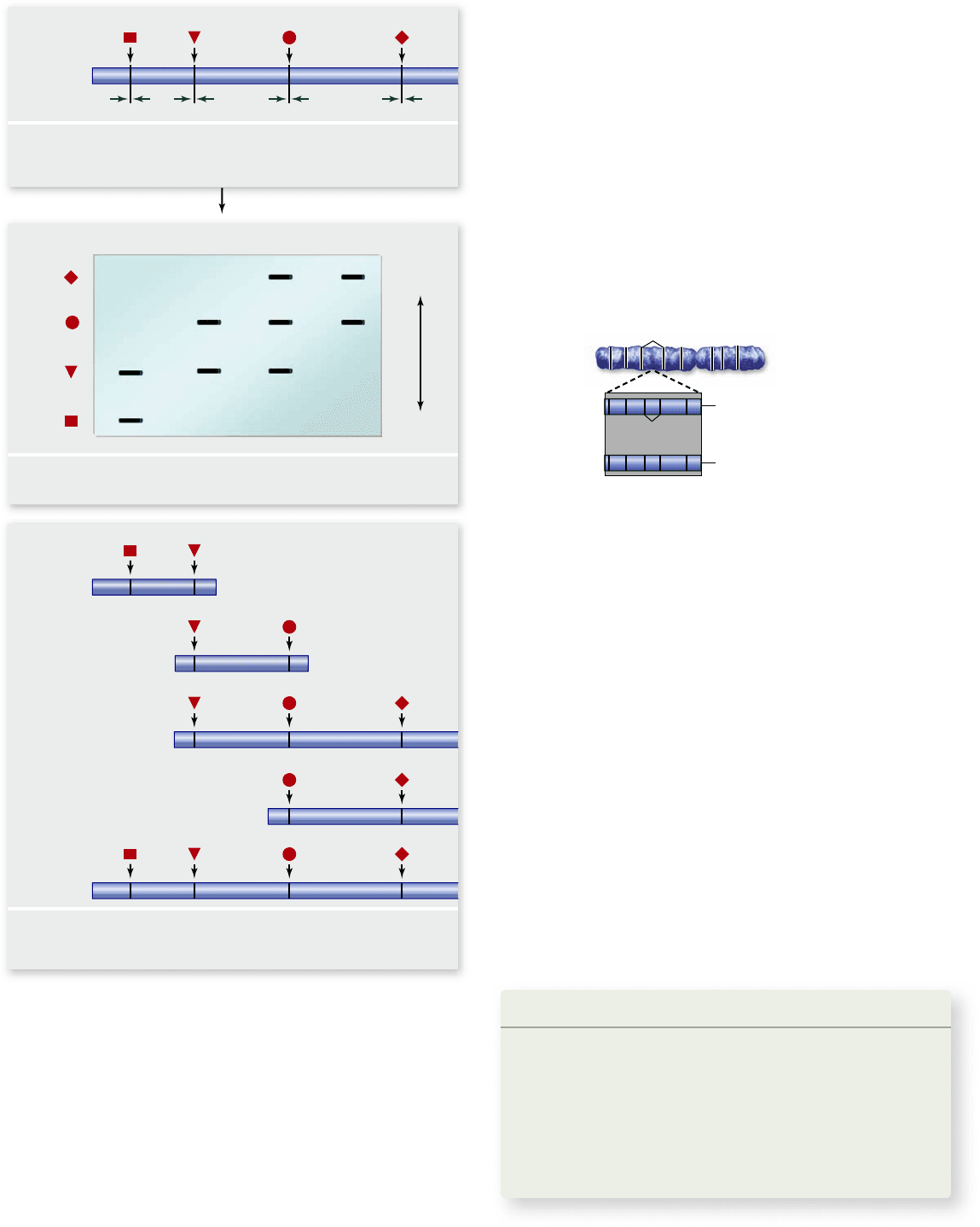
Figure 18.3
Creating a physical map with sequence-
tagged sites. The presence of landmarks called sequence-tagged
sites, or STSs, in the human genome made it possible to begin creating
a physical map large enough in scale to provide a foundation for
sequencing the entire genome. (1) Primers (green arrows) that recognize
unique STSs are added to cloned DNA, followed by DNA ampli cation
via polymerase chain reaction (PCR). (2) PCR products are separated
based on size on a DNA gel, and the STSs contained in each clone are
identi ed. (3) Cloned DNA segments are aligned based on STSs to
create a contig.
chapter
18
Genomics
355www.ravenbiology.com
rav32223_ch18_352-371.indd 355rav32223_ch18_352-371.indd 355 11/10/09 3:05:53 PM11/10/09 3:05:53 PM
Apago PDF Enhancer
a.
b. c.
1 cm
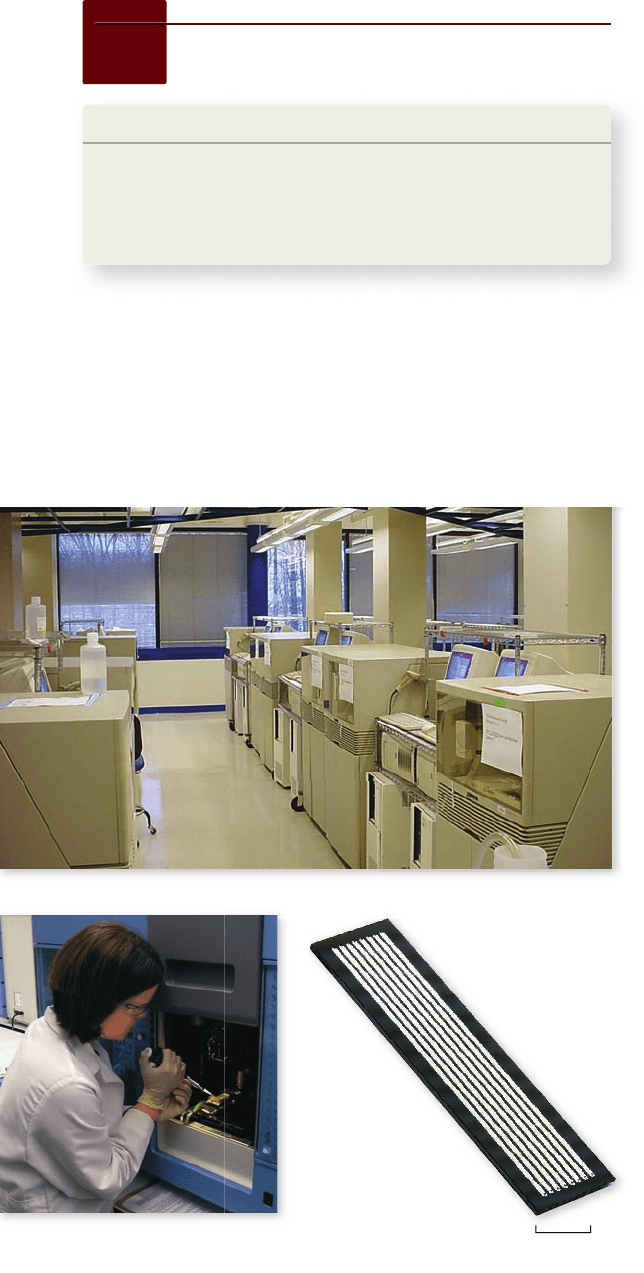
Figure 18.4
Automated sequencing. a. This Sanger
sequence facility runs multiple automated sequencers, each
processing 96 samples at a time. b. The development of new
sequencing technologies permit sequencing that is orders of
magnitude faster and that can be done in a very small space. c. Over
20 billion different DNA segments can be sequenced simultaneously
in a ow cell the size of a microscope slide.
Large-scale genome sequencing requires the use of high-
throughput automated sequencing and computer analysis
(figure 18.4). Genome sequencing is one case in which technology
drove the science, rather than the other way around. In a few hours,
an automated Sanger sequencer can sequence the same number of
base-pairs that a technician could manually sequence in a year—up
to 50,000 bp. With the current generation of sequencing technol-
ogy described in the previous chapter, the rate of sequence genera-
tion is now five orders of magnitude greater than when the human
genome was sequenced with automated Sanger sequencers. With-
out the automation of sequencing, it would have been impossible
to sequence large, eukaryotic genomes like that of humans.
Genome sequencing requires
larger molecular clones
Although it would be ideal to isolate DNA from an organism,
add it to a sequencer, and then come back in a week or two to
pick up a computer-generated printout of the genome sequence,
the process is not quite that simple. Sequencers provide accu-
rate sequences for DNA segments up to 800 bp long. Even
then, errors are possible. So, to reduce errors, each clone is se-
quenced 5–10 times.
Even with reliable sequence data in hand, each individual
sequencing run produces a relatively small amount of sequence.
Thus, the genome must be fragmented, and then individual
molecular clones isolated for sequencing (see chapter 17 ).
Artificial chromosomes
As described in chapter 17 , the development of artificial chromo-
somes has allowed scientists to clone larger pieces of DNA. The
first generation of these new vectors were yeast artificial chromo-
somes (YACs). These are constructed by using a yeast origin of
replication and centromere sequence, then adding foreign DNA
to it. The origin of replication allows the artificial chromosome to
replicate independently of the rest of the genome, and the cen-
tromere sequences make the chromosome mitotically stable.
YACs were useful for cloning larger pieces of DNA but
they had many drawbacks, including a tendency to rearrange,
or to lose portions of DNA by deletion. Despite the difficulties,
the YACs were used early on to construct physical maps by re-
striction enzyme digestion of the YAC DNA.
The artificial chromosomes most commonly used now,
particularly for large-scale sequencing, are made in E. coli. These
bacterial artificial chromosomes (BACs) are a logical extension of
the use of bacterial plasmids. BAC vectors accept DNA inserts
between 100 and 200 kb long. The downside of BAC vectors is
that, like the bacterial chromosome, they are maintained as a
single copy whereas plasmid vectors exist at high copy numbers.
Human artificial chromosomes
Human artificial chromosomes can introduce large segments
of human DNA into cultured cells. These artificial chromo-
somes are usually constructed by fragmentation of chromo-
somes with centromere sequence. Although circular, some can
still segregate correctly during mitosis up to 98% of the time.
Construction of linear human artificial chromosomes is not
yet possible.
18.2
Whole-Genome Sequencing
Learning Outcomes
Characterize the main hurdle to sequencing an entire 1.
genome and how it has been overcome.
Differentiate between clone-by-clone sequencing and 2.
shotgun sequencing.
The ultimate physical map is the base-pair sequence of an en-
tire genome. In the early days of molecular biology, all sequenc-
ing was done manually, and was therefore both time- and
labor-intensive. As mentioned in chapter 17 , the development
of machines to automate this process increased the rate of se-
quence generation.
356
part
III
Genetic and Molecular Biology
rav32223_ch18_352-371.indd 356rav32223_ch18_352-371.indd 356 11/10/09 3:05:53 PM11/10/09 3:05:53 PM
Apago PDF Enhancer
a.
b.
Clone-by-Clone Method
Shotgun Method
Large DNA clones are
first isolated. These are
arranged into
contiguous sequences
based on overlapping
tagged sites.
Large clones are
fragmented into smaller
clones for sequencing.
The entire sequence is
assembled from the
overlapping larger clones.
Cut DNA of entire
chromosome into small
fragments and clone.
Sequence each
segment and arrange
based on overlapping
nucleotide sequences.
3.
2.
1.
1.
2.
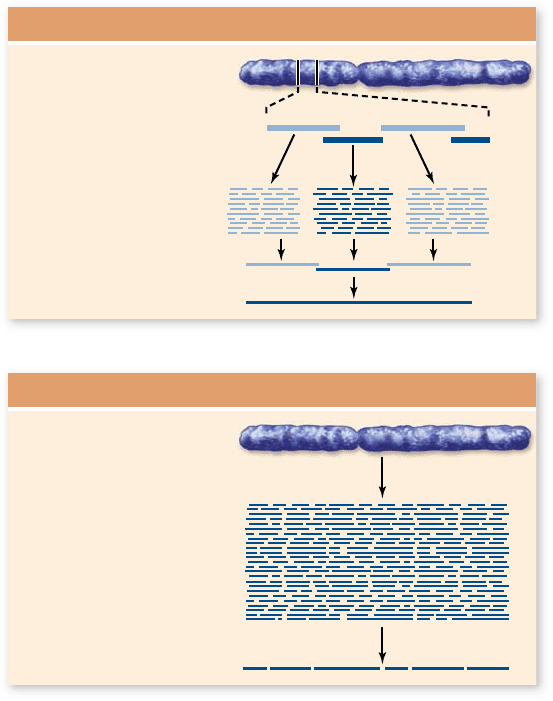
Figure 18.5
Comparison of sequencing methods. a. The
clone-by-clone method uses large clones assembled into overlapping
regions by STSs. Once assembled, these can be fragmented into
smaller clones for sequencing. b. In the shotgun method the entire
genome is fragmented into small clones and sequenced. Computer
algorithms assemble the nal DNA sequence based on overlapping
nucleotide sequences.
a single gene, a huge genome like the human genome requires
the collaborative efforts of hundreds of researchers.
The Human Genome Project originated in 1990 when a
group of American scientists formed the International Human
Genome Sequencing Consortium. The goal of this publicly
funded effort was to use a clone-by-clone approach to sequence
the human genome. Genetic and physical maps were used as
scaffolding to sequence each chromosome.
In May, 1998, Craig Venter, whose research group had
sequenced Haemophilus influenzae, announced his private com-
pany (Celera Genomics) would sequence the human genome.
He proposed to shotgun-sequence the 3.2-gigabase genome in
only two years. The Consortium rose to the challenge, and the
race to sequence the human genome began. The upshot was a
tie of sorts. On June 26, 2000, the groups jointly announced
success, and each published its findings simultaneously in 2001.
The Consortium’s draft alone included 248 authors.
The draft sequence of the human genome was just the
beginning. Gaps in the sequence are still being filled, and the
Whole-genome sequencing is approached
in two ways: clone-by-clone and shotgun
Sequencing an entire genome is an enormous task. Two ways of
approaching this challenge have been developed: one that ap-
proaches the sequencing one step at a time, and another that
attempts to take on the whole thing at once and depends on
computers to sort out the data. The two techniques grew out of
competing projects to sequence the human genome.
Clone-by-clone sequencing
The cloning of large inserts in BACs facilitates the analysis of
entire genomes. The strategy most commonly pursued is to
construct a physical map first, and then use it to place the site
of BAC clones for later sequencing.
Aligning large portions of a chromosome requires identi-
fying regions that overlap between clones. This can be accom-
plished either by constructing restriction maps of each BAC
clone, or by identifying STSs found in clones. If two BAC
clones have the same STS, then they must overlap.
The alignment of a number of BAC clones results in a
contiguous stretch of DNA called a contig. The individual BAC
clones can then be sequenced 500 bp at a time to produce the
sequence of the entire contig (figure 18.5a). This strategy of
physical mapping followed by sequencing is called clone-by-
clone sequencing.
Shotgun sequencing
The idea of shotgun sequencing is simply to randomly cut the
DNA into small fragments, sequence all cloned fragments, and
then use a computer to put together the overlaps (figure 18.5b).
This terminology actually goes back to the early days of molecu-
lar cloning when the construction of a library of randomly cloned
fragments was referred to as shotgun cloning. This approach is
much less labor-intensive than the clone-by-clone method, but it
requires much greater computer power to assemble the final se-
quence and very efficient algorithms to find overlaps.
Unlike the clone-by-clone approach, shotgun sequencing
does not tie the sequence to any other information about the
genome (figure 18.5b). Many investigators have used both
clone-by-clone and shotgun-sequencing techniques, and such
hybrid approaches are becoming the norm. This combination
has the strength of tying the sequence to a physical map while
greatly reducing the time involved.
Assembler programs compare multiple copies of se-
quenced regions in order to assemble a consensus sequence,
that is, a sequence that is consistent across all copies. Although
computer assemblers are incredibly powerful, final human
analysis is required after both clone-by-clone and shotgun se-
quencing to determine when a genome sequence is sufficiently
accurate to be useful to researchers.
The Human Genome Project used both
sequencing methods
The vast scale of genomics ushered in a new way of doing bio-
logical research involving large teams. Although a single indi-
vidual can isolate and manually sequence a molecular clone for
chapter
18
Genomics
357www.ravenbiology.com
rav32223_ch18_352-371.indd 357rav32223_ch18_352-371.indd 357 11/10/09 3:05:57 PM11/10/09 3:05:57 PM
Apago PDF Enhancer
Size of Genome (million base-pairs) Log Scale
Estimated Number of Genes
50,000
40,000
30,000
20,000
10,000
0
0 1 10 100 1000 10,000
Nematode (Caenorhabditis elegans)
Thale cress (Arabidopsis thaliana)
Bakers yeast (S. cerevisiae)
Fission yeast (Schizosaccharomyces pombe)
Protozoan
(Encephalitozoon
cuniculi )
Slime mold (Dictyostelium discoideum)
Malaria microbe (Plasmodium falciparum)
Fruit fly (Drosophila melanogaster)
Mosquito (Anopheles sp.)
Puffer fish (Fugu rubripes)
Mouse (Mus musculus)
Human (Homo sapiens)
Rice (Oryza sativa)
prokaryotes
eukaryotes
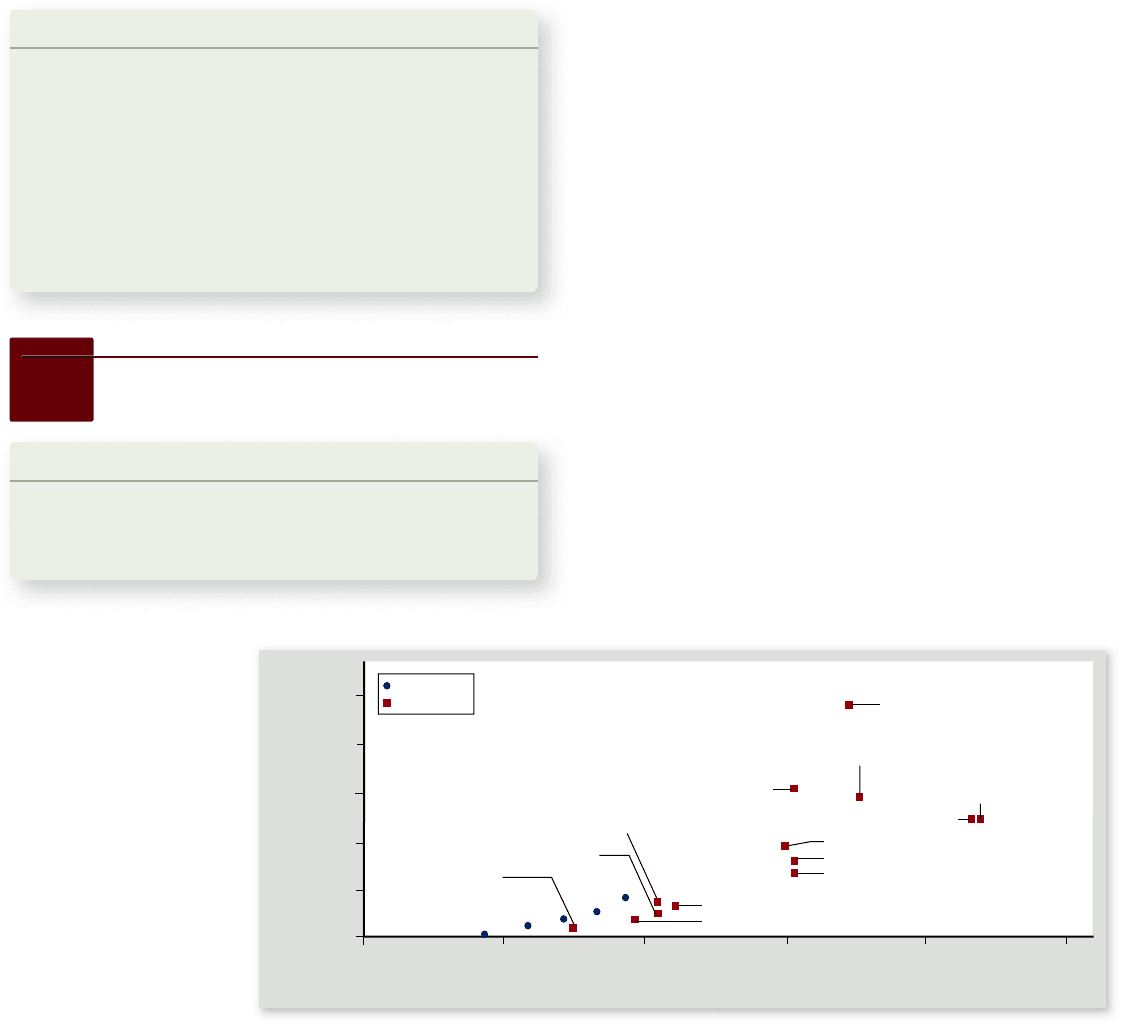
Figure 18.6
Size and
complexity of genomes.
In general, eukaryotic
genomes are larger and have
more genes than prokaryotic
genomes, although the size
of the organism is not the
determining factor. The
mouse genome is nearly as
large as the human genome,
and the rice genome contains
more genes than the
human genome.
18.3
Characterizing Genomes
Learning Outcomes
Describe the classes of DNA found in a genome.1.
Explain what an SNP is and why SNPs are helpful in 2.
characterizing genomes.
map is constantly being refined. The most recent “finished” hu-
man sequence is down to only 260 gaps , a 400-fold reduction in
gaps, and it now includes 99% of the euchromatic sequence, up
from 95%. The reference sequence has an error rate of 1 per
100,000 bases. Newer sequencing technologies are being used
to close the remaining gaps. A few individuals, including James
Watson who codiscovered the structure of DNA, have now had
their personal genomes sequenced. The cost for having one’s
genome sequenced is predicted to fall to $1000 in the next few
years, raising many questions about genome privacy.
Research on the whole genome can move ahead. Now
that the ultimate physical map is in place and is being inte-
grated with the genetic map, diseases that result from changes
in more than one gene, such as diabetes, can be addressed.
Comparisons with other genomes are already changing our un-
derstanding of genome evolution (see chapter 24).
Learning Outcomes Review 18.2
Because of the enormous size of genomes, sequencing requires the use of
automated sequencers running many samples in parallel. Two approaches
have been developed for whole-genome sequencing: one that uses clones
already aligned by physical mapping (clone-by-clone sequencing), and
one that involves sequencing random clones and using a computer to
assemble the fi nal sequence (shotgun sequencing). In either case, signifi cant
computing power is necessary to assemble a fi nal sequence.
■ Why would data from a single copy of a genome likely
be unreliable?
Automated sequencing technology has produced huge amounts
of sequence data, eventually sequencing entire genomes. This
has allowed researchers studying complex problems to move
beyond approaches restricted to the analysis of individual
genes. Sequencing projects in themselves are descriptive anal-
yses that tells us nothing about the organization of genomes,
let alone the function of gene products and how they may be
interrelated. Additional research and evaluation has given us
both answers and new puzzles.
The Human Genome Project found
fewer genes than expected
For many years, geneticists had estimated the number of hu-
man genes to be around 100,000. This estimate, although based
on some data, was really just a guess. Imagine researchers’ sur-
prise when the number turned out to be only around 25,000!
This represents only about twice as many genes as Drosophila
and fewer genes than rice (figure 18.6). Clearly the complexity
of an organism is not a simple function of the number of genes
in its genome.
Finding genes in sequence data requires
computer searches
Once a genome has been sequenced, the next step is to deter-
mine which regions of the genome contain which genes, and
what those genes do. A lot of information can be mined from
the sequence data. Using markers from physical maps and in-
formation from genetic maps, it is possible to find the se-
quence of the small percentage of genes that are identified by
mutations with an observable (phenotypic) effect. Genes can
also be found by comparing expressed sequences to genomic
sequences. The analysis of expressed sequences is discussed
later in this section.
Locating starts and stops
Information in the nucleotide sequence itself can also be
used in the search for genes. A protein-coding gene begins
with a start codon, such as ATG, and it contains no stop
358
part
III
Genetic and Molecular Biology
rav32223_ch18_352-371.indd 358rav32223_ch18_352-371.indd 358 11/10/09 3:05:58 PM11/10/09 3:05:58 PM
Apago PDF Enhancer
in segmental duplication. Blocks of similar genes in
the same order are found throughout the human
genome. Chromosome 19 seems to have been the
biggest borrower, sharing blocks of genes with
16 other chromosomes.
Multigene families. As more has been learned about
eukaryotic genomes, many genes have been found to exist
as parts of multigene families, groups of related but
distinctly different genes that often occur together in
clusters. These genes appear to have arisen from a single
ancestral gene that duplicated during an uneven meiotic
crossover in which genes were added to one chromosome
and subtracted from the other. These multigene families
may include silent copies called pseudogenes, which are
inactivated by mutation.
Tandem clusters. Identical copies of genes can also be found
in tandem clusters. These genes are transcribed
simultaneously, increasing the amount of mRNA available
for protein production. Tandem clusters also include
genes that do not encode proteins, such as clusters of
rRNA genes.
Noncoding DNA in eukaryotes
One of the most notable characteristics is the amount of non-
coding DNA they possess. The Human Genome Project has
revealed a particularly startling picture. Each of your cells has
about 6 feet of DNA stuffed into it, but of that, less than 1 inch
is devoted to genes! Nearly 99% of the DNA in your cells is
non-protein coding DNA.
True genes are scattered about the human genome in
clumps among the much larger amount of noncoding DNA,
like isolated oases in a desert. Seven major sorts of noncod-
ing human DNA have been described. (Table 18.1 shows
the composition of the human genome, including noncod-
ing DNA.)
Noncoding DNA within genes. As discussed in chapter 15 , a
human gene is not simply a stretch of DNA, like the letters
of a word. Instead, a human gene is made up of numerous
fragments of protein-encoding information (exons)
embedded within a much larger matrix of noncoding DNA
(introns). Together, introns make up about 24% of the
human genome and exons less than 1.5%.
Structural DNA. Some regions of the chromosomes remain
highly condensed, tightly coiled, and untranscribed
throughout the cell cycle. Called constitutive
heterochromatin, these portions tend to be localized around
the centromere or located near the ends of the
chromosome, at the telomeres.
Simple sequence repeats. Scattered about chromosomes are
simple sequence repeats (SSRs). An SSR is a 1- to 6-nt
sequence such as CA or CGG, repeated like a broken
record thousands and thousands of times. SSRs can arise
from DNA replication errors. SSRs make up about 3% of
the human genome.
Segmental duplications. Blocks of genomic sequences
composed of from 10,000 to 300,000 bp have duplicated
and moved either within a chromosome or to a
nonhomologous chromosome.
codons (TAA, TGA, or TAG) for a distance long enough to
encode a protein. This coding region is referred to as an
open reading frame (ORF). Although ORFs are likely to
be genes, they may or may not actually be translated into a
functional protein. Among putative genes, families of genes
can be identified based on common domains. For example,
genes in the HOX family have a conserved, 180-bp sequence
called the homeobox, which encodes the homeodomain re-
gion of certain transcription factors. Sequences for potential
genes need to be tested experimentally to determine whether
they have a function.
The addition of information to the basic sequence infor-
mation, like identifying ORFs, is called sequence annotation.
This process is what converts simple sequence data into some-
thing that we can recognize based on landmarks such as regions
that are transcribed and regions that are known or thought to
encode proteins.
Inferring function across species: the BLAST algorithm
It is also possible to search genome databases for se quences
that are homologous to known genes in other species. A re-
searcher who has isolated a molecular clone for a gene of
unknown function can search the database for similar se-
quences to infer function. The tool that makes this possible
is a search algorithm called BLAST (which stands for Basic
Local Alignment Search Tool). Using a networked computer,
one can submit a sequence to the BLAST server and get
back a reply with all possible similar sequences contained in
the sequence database.
Using these techniques, sequences that are not part of
ORFs have been identified that have been conserved over mil-
lions of years of evolution. These sequences may be important
for the regulation of the genes contained in the genome.
Using computer programs to search for genes, to
compare genomes, and to assemble genomes are only a few of
the new genomics approaches falling under the heading
of bioinformatics.
Genomes contain both coding
and noncoding DNA
When genome sequences are analyzed, regions that encode
proteins and other regions that do not encode proteins are
revealed. For many years investigators had known of the
latter, but they did not know the extent and nature of the
noncoding DNA. We first consider the types of coding
DNA that have been found, then move on to look at types
of noncoding DNA.
Protein-encoding DNA in eukaryotes
Four different classes of protein-encoding genes are found in
eukaryotic genomes, differing largely in gene copy number.
Single-copy genes. Many genes exist as single copies on a
particular chromosome. Most mutations in these genes
result in recessive Mendelian inheritance.
Segmental duplications. Sometimes whole blocks of genes
are copied from one chromosome to another, resulting
chapter
18
Genomics
359www.ravenbiology.com
rav32223_ch18_352-371.indd 359rav32223_ch18_352-371.indd 359 11/10/09 3:05:58 PM11/10/09 3:05:58 PM

Apago PDF Enhancer
TABLE 18.1
Classes of DNA Sequences Found in the Human Genome
Class
Estimated
Frequency
(%)
Description
Protein-encoding genes 1.5 Translated portions of the 25,000 genes scattered about the chromosomes
Introns 24 Noncoding DNA that constitutes the great majority of each human gene
Segmental duplications 5 Regions of the genome that have been duplicated
Pseudogenes
(inactive genes)
2 Sequence that has characteristics of a gene but is not a functional gene
Structural DNA 20 Constitutive heterochromatin, localized near centromeres and telomeres
Simple sequence repeats 3 Stuttering repeats of a few nucleotides such as CGG, repeated thousands of times
Transposable elements 45 21%: Long interspersed elements (LINEs), which are active transposons
13%: Short interspersed elements (SINEs), which are active transposons
8%: Retrotransposons, which contain long terminal repeats (LTRs) at each end
3%: DNA transposon fossils
microRNA 0.03 Code for RNAs complementary to one or more mature mRNAs
DNA moves to a new place in the genome, so the number of
copies of the transposon increases. Other types of transposons
are excised without duplication and insert themselves elsewhere
in the genome. The role of transposons in genome evolution is
discussed in chapter 24.
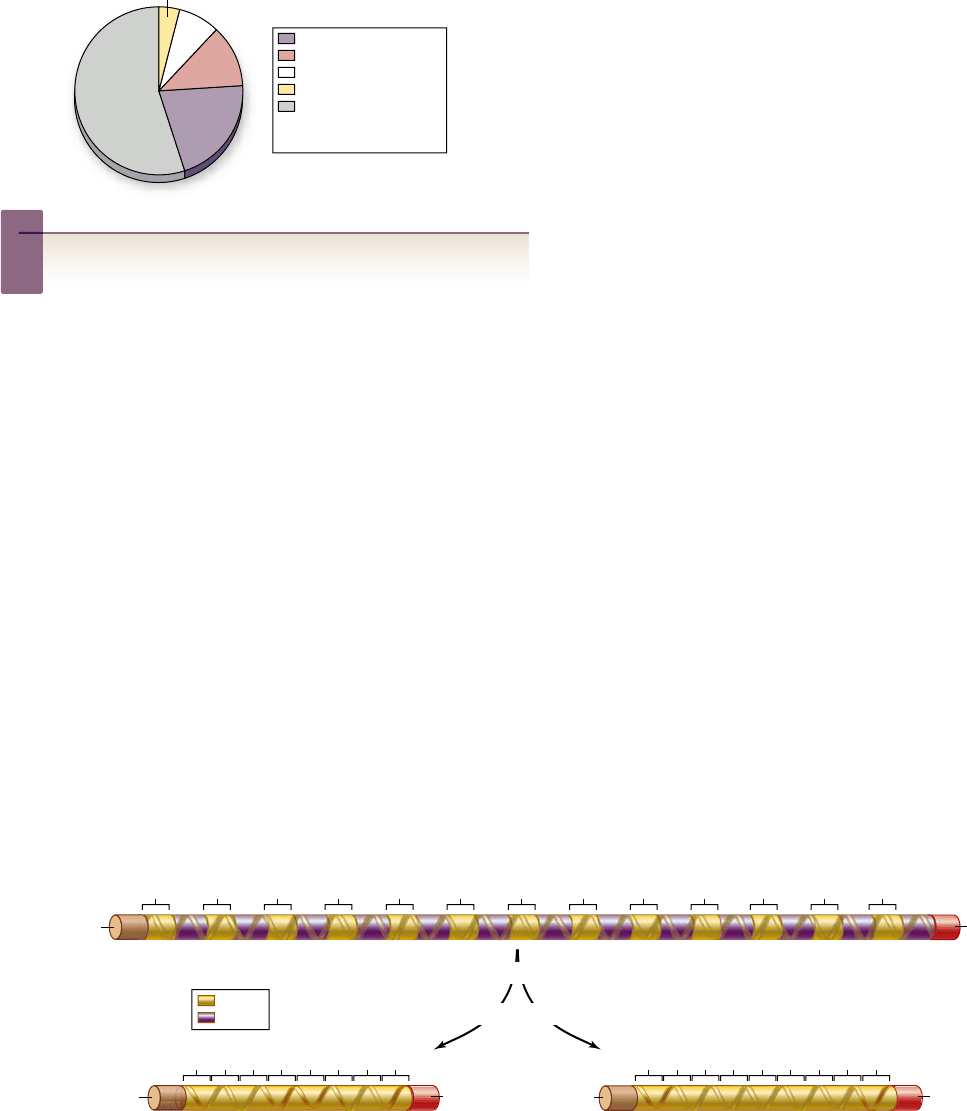
Human chromosomes contain four sorts of transpos-
able elements. Fully 21% of the genome consists of long
interspersed elements (LINEs). These ancient and very
successful elements are about 6000 bp long, and they contain
all the equipment needed for transposition. LINEs encode a
reverse transcriptase enzyme that can make a cDNA copy of
the transcribed LINE RNA. The result is a double-stranded
segment that can reinsert into the genome rather than un-
dergo translation into a protein. Since these elements use an
RNA intermediate, they are termed retrotransposons.
Short interspersed elements (SINEs) are similar to
LINEs, but they cannot transpose without using the transposi-
tion machinery of LINEs. Nested within the genome’s LINEs
are over half a million copies of a SINE element called Alu
(named for a restriction enzyme that cuts within the sequence).
The Alu SINE is 300 bp and represents 10% of the human
genome. Like a flea on a dog, Alu moves with the LINE it re-
sides within. Just as a flea sometimes jumps to a different dog,
so Alu sometimes uses the enzymes of its LINE to move to a
new chromosome location. Alu can also jump right into genes,
causing harmful mutations.
Two other sorts of transposable elements are also found
in the human genome: 8% of the human genome is devoted
to retrotransposons called long terminal repeats (LTRs).
Although the transposition mechanism is a bit different from
Pseudogenes. These are inactive genes that may have lost
function because of mutation.
Transposable elements. Fully 45% of the human genome
consists of mobile bits of DNA called transposable elements.
Some of these elements code for proteins, but many do
not. Because of the signi cance of these elements, we
describe them more fully in the following section.
microRNA genes. Hidden within the nonprotein-coding
DNA lies an extraordinary mechanism for controlling
gene expression and development. Compact regulatory
RNAs have a much larger role in directing development
in complex organisms than we imagined even a few years
ago. Specifically, DNA that was once considered “junk”
has been shown to encode microRNAs, or miRNAs,
which are processed after transcription to lengths of
21 to 23 nt, but never translated. About 10,000 unique
miRNAs have been identified that are complementary to
one or more mature mRNAs.
Transposable elements: mobile DNA
Discovered by Barbara McClintock in 1950, transposable
elements, also termed transposons and mobile genetic ele-
ments, are bits of DNA that are able to move from one loca-
tion on a chromosome to another. Barbara McClintock
received the 1983 Nobel Prize in physiology or medicine
for discovery of these elements and their unexpected ability
to change location.
Transposable elements move around in different ways. In
some cases, the transposon is duplicated, and the duplicated
360
part
III
Genetic and Molecular Biology
rav32223_ch18_352-371.indd 360rav32223_ch18_352-371.indd 360 11/10/09 3:05:58 PM11/10/09 3:05:58 PM
Apago PDF Enhancer
LINEs
SINEs
LTRs
dead transposons
remaining noncoding
and coding DNA in
human genome
55%
21%
13%
8%
3%
exons
introns
1
3 4 5 6 8 9 10 12 1 2 4 5 6 8 9 10 13
2 3 4 5 6 8 7 9 10 11 12 13
Primary RNA transcript
Mature mRNA in brain
3„ poly-A tail
3„ poly-A tail
Processed RNA in brain Processed RNA in muscle
mRNA splicing
Mature mRNA in muscle
3„ poly-A tail
5„ cap
5„ cap 5„ cap
Inquiry question
?
How do you think these repetitive elements would affect the
determination of gene order?
Figure 18.7
Alternative splicing can result in the production of di erent mRNAs from the same coding sequence. In some
cells, exons can be excised along with neighboring introns, resulting in different proteins. Alternative splicing explains why 25,000 human
genes can code for three to four times as many proteins.
unknown. You may wonder at this point how the estimated
25,000 genes of the human genome can result in 87,000 differ-
ent cDNAs. The answer lies in the modularity of eukaryotic
genes, which consist of exons interspersed with introns, as de-
scribed in chapter 15.
Following transcription in eukaryotes, the introns are re-
moved, and exons are spliced together. In some cells, some of
the splice sites are skipped, and one or more exons is removed
along with the introns. This process, called alternative splicing
(figure 18.7), yields different proteins that can have different
functions. Thus, the added complexity of proteins in the human
genome comes not from additional genes, but from new ways
to put existing parts of genes together.
SNPs are single-base di erences
between individuals
One fact becoming clear from analysis of the human genome is
that a huge amount of genetic variation exists in our species.
This information has practical use.
Single-nucleotide polymorphisms (SNPs) are sites where
individuals differ by only a single nucleotide. To be classified as
a polymorphism, an SNP must be present in at least 1% of the
population. SNPs occur about every 100 to 300 bp in the 3 bil-
lion bp human genome. As of January 2009, 1.5 million nonre-
dundant human SNPs had been identified, about 10% of the
variation available. These SNPs are being used to look for as-
sociations between genes. We expect that the genetic recombi-
nation occurring during meiosis randomizes all but the most
tightly linked genes. We call the tendency for genes not to be
randomized linkage disequilibrium. This kind of association
can be used to map genes.
The preliminary analysis of SNPs shows that many are
in linkage disequilibrium. This unexpected result has led to
the idea of genomic haplotypes, or regions of chromosomes
that are not being exchanged by recombination. The existence
of haplotypes allows the genetic characterization of genomic
regions by describing a small number of SNPs (figure 18.8). If
these haplotypes stand up to further analysis, they could
greatly aid in mapping the genetic basis of disease. The Hu-
man Genome Project is now working on a haplotype map of
the genome.
that of LINEs, LTRs also use reverse transcriptase to ensure
that copies are double-stranded and can reintegrate into
the genome.
Some 3% of the genome is devoted to dead transposons,
elements that have lost the signals for replication and can no
longer move.
Expressed sequence tags identify
genes that are transcribed
Given the complexity of coding and noncoding DNA, it is
important to be able to recognize regions of the genome
that are actually expressed—that is, transcribed and
then translated.
Because DNA is easier to work with than protein, one
approach is to isolate mRNA, use this to make cDNA, then
sequence one or both ends of as many cDNAs as possible. With
automated sequencing, this task is not difficult, and these short
sections of cDNA have been named expressed sequence tags
(ESTs). An EST is another form of STS, and thus it can be
included in physical maps. This technique does not tell us any-
thing about the function of any particular EST, but it does pro-
vide one view, at the whole-genome level, of what genes are
expressed, at least as mRNAs.
ESTs have been used to identify 87,000 cDNAs in differ-
ent human tissues. About 80% of these cDNAs were previously
chapter
18
Genomics
361www.ravenbiology.com
rav32223_ch18_352-371.indd 361rav32223_ch18_352-371.indd 361 11/10/09 3:05:58 PM11/10/09 3:05:58 PM