
Raven P.H., Johnson G.B., Mason K.A. Biology (Ninth Edition)
Подождите немного. Документ загружается.

Apago PDF Enhancer
Somatic cells
Oocyte
Somatic cells
Pluripotent
stem cells
Blastocyst
Nuclear
Transfer
Fusion
Culture
Defined
factors
Somatic cells
ES cells
Germ cells
Some adult stem cells
The skin cell
nucleus is inserted
into the enucleated
human egg cell.
Cell cleavage
occurs as the
embryo begins to
develop in vitro.
The embryo
reaches the
blastocyst stage.
The nucleus from a skin cell of a diabetic patient is removed.
Early embryo Blastocyst
Inner cell
mass
ES
cells
Diabetic
patient
Nuclear reprogramming has been
accomplished by use of de ned factors
Stimulated by the discovery of ES cells and success in the
reproductive cloning of mammals, much work has been put
into trying to find ways to reprogram adult cells to become
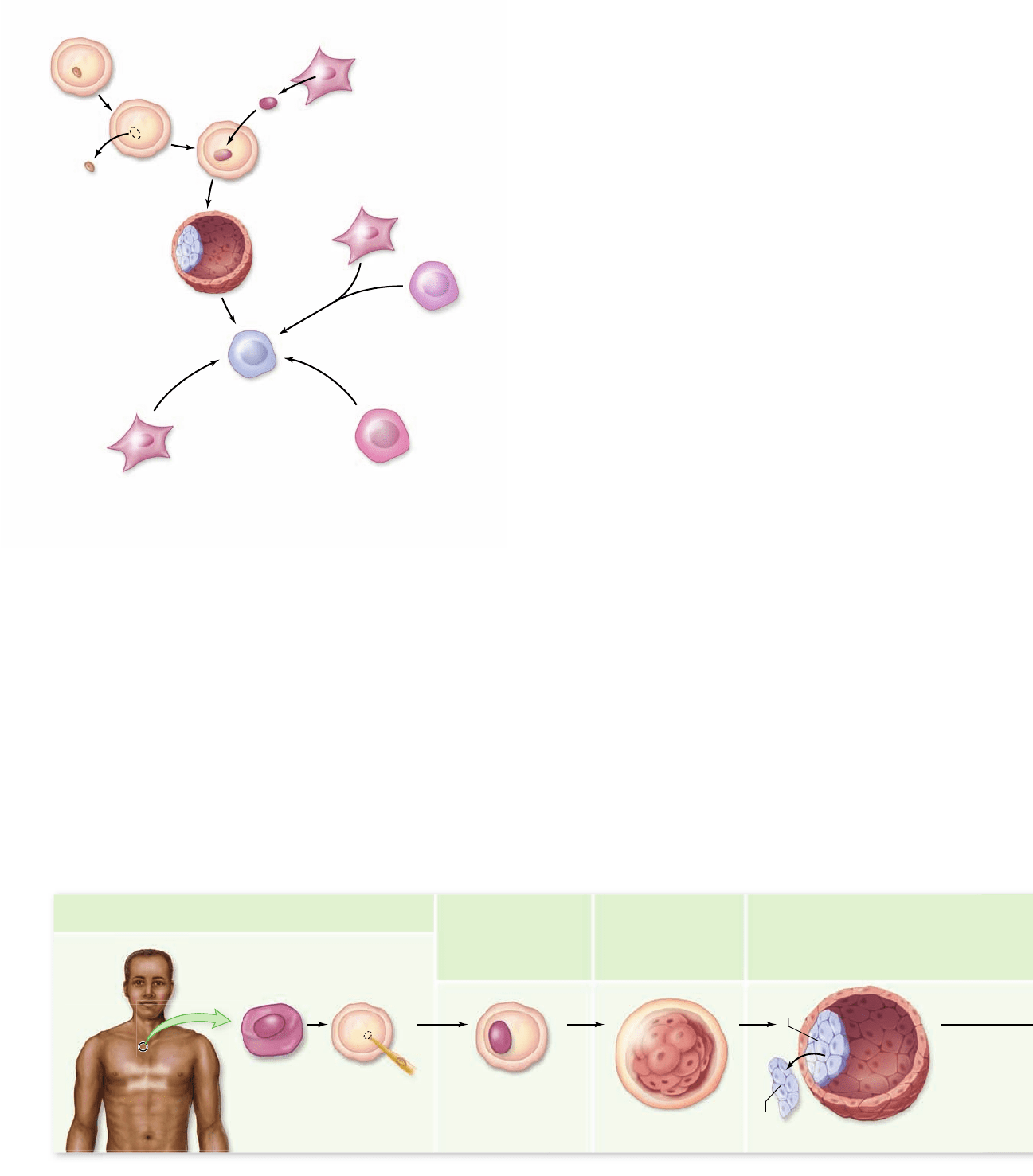
pluripotent cells without the use of embryos (figure 19.10).
One approach was to fuse an ES cell to a differentiated cell.
Figure 19.10
Methods to reprogram adult cell nuclei.
Cells taken from adult organisms can be reprogrammed to
pluripotent cells in a number of different ways. Nuclei from somatic
cells can be transplanted into oocytes as during cloning. Somatic
cells can be fused to ES cells created by some other means. Germ
cells, and some adult stem cells, after prolonged culture appear to be
reprogrammed. Recent work has shown that somatic cells in culture
can be reprogrammed by introduction of speci c factors.
These fusion experiments showed that the nucleus of the
differentiated cell could be reprogrammed by exposure to
ES cell cytoplasm. Of course, the resulting cells are tetra-
ploid (4 copies of the genome), which limits their experi-
mental and practical utility. Another line of research showed
that primordial germ cells explanted into culture can give
rise to cells that act similar to ES cells after extended time in
culture. There are also reports that some adult stem cells
become pluripotent cells with prolonged culture, but this is
still controversial.
All of these different lines of inquiry showed that repro-
gramming of somatic nuclei was possible. The next obvious
step was to reprogram nuclei using defined factors. While it
was assumed that this was possible, it was not accomplished un-
til 2006 when the genes for four different transcription factors,
Oct4, Sox2, c-Myc, and Klf4 were introduced into fibroblast
cells in culture. These cells were then selected for expression of
a gene that is a target for Oct4 and Sox2, and these cells appear
to be pluripotent. These were named induced pluripotent stem
cells, or iPS cells. This protocol has been improved by selection
for a different target gene, Nanog. These Nanog expressing
iPS cells appear to be similar to ES cells in terms of develop-
mental potential, as well as gene expression pattern.
This technology has now been used to construct ES cells
from patients with the inherited neurological disorder spinal
muscular atrophy. These ES cells will differentiate in culture
into motor neurons that show the phenotype expected for the
disease. The ability to derive disease specific stem cells will be
an incredible advance for researchers studying such diseases.
This will allow the creation of in vitro systems to study di-
rectly the cells affected by genetic diseases, and to screen for
possible therapeutics.
Pluripotent cell types have potential for therapeutic ap-
plications. One way to solve the problem of graft rejection,
such as in skin grafts in severe burn cases, is to produce patient-
specific lines of embryonic stem cells. Early in 2001, a research
team at Rockefeller University devised a way to accomplish
this feat.
First, skin cells are isolated; then, using the same SCNT
procedure that created Dolly, an embryo is assembled. After
removing the nucleus from the skin cell, they insert it into an
egg whose nucleus has already been removed. The egg with
382
part
III
Genetic and Molecular Biology
rav32223_ch19_372-395.indd 382rav32223_ch19_372-395.indd 382 11/10/09 4:28:43 PM11/10/09 4:28:43 PM
Apago PDF Enhancer
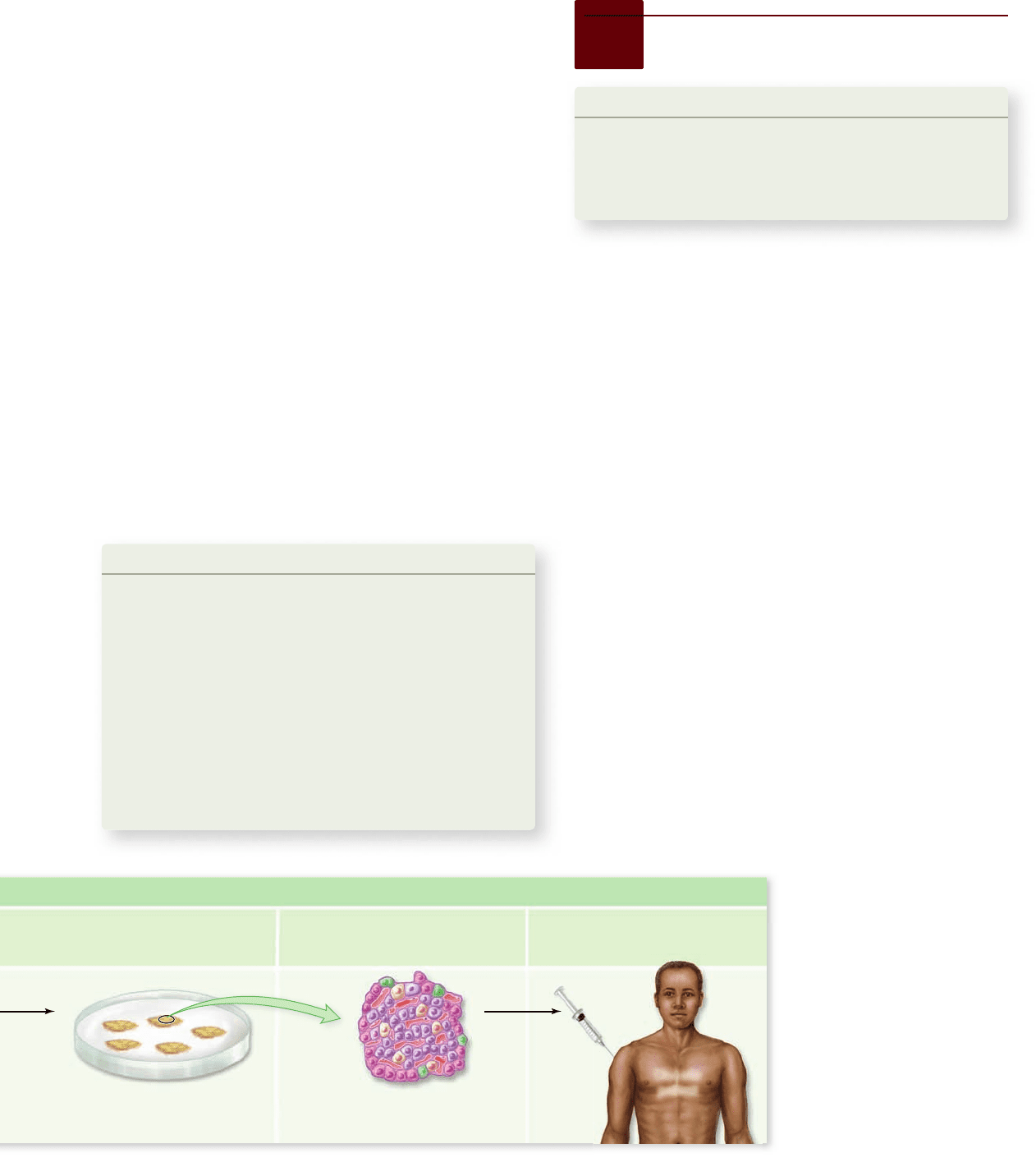
Therapeutic Cloning
Embryonic stem cells
(ES cells) are extracted
and grown in culture.
The stem cells are developed
into healthy pancreatic islet cells
needed by the patient.
The healthy tissue is
injected or transplanted
into the diabetic patient.
Healthy pancreatic islet cells
Diabetic
patient
Figure 19.11
How human
embryos might be used for
therapeutic cloning. In
therapeutic cloning, after initial
stages to reproductive cloning, the
embryo is broken apart and its
embryonic stem cells are extracted.
These are grown in culture and
used to replace the diseased tissue
of the individual who provided the
DNA. This is useful only if the
disease in question is not genetic as
the stem cells are genetically
identical to the patient.
its skin cell nucleus is allowed to form a blastocyst stage em-
bryo. This artificial embryo is then destroyed, and its cells are
used as embryonic stem cells for transfer to injured tissue
(figure 19.11).
Using this procedure, termed therapeutic cloning, the
researchers succeeded in converting cells from the tail of a
mouse into the dopamine-producing cells of the brain that are
lost in Parkinson disease. Therapeutic cloning successfully ad-
dresses the key problem that must be solved before stem cells
can be used to repair human tissues damaged by heart attack,
nerve injury, diabetes, or Parkinson disease—the problem of
immune acceptance. Since stem cells are cloned from a person’s
own tissues in therapeutic cloning, they pass the immune sys-
tem’s “self ” identity check, and the body readily accepts them.
These early attempts at therapeutic cloning may become
obsolete before they are even refined with the work described
above on iPS cells. The potential to produce pluripotent cells
from adult skin cells removes the ethical problems of embryo
destruction, and the practical problem of the requirement for
oocytes for therapeutic cloning. However, these cell types are
not without problems of their own. Two of the genes intro-
duced to reprogram the nuclei of cells are oncogenes, and al-
though these experiments have been reproduced without
c-Myc, the efficiency is greatly reduced. These also require the
introduction of new DNA, which can induce mutations by in-
tegration into the genome.
Learning Outcomes Review 19.4
Cloning has long been practiced in plants. In animals, cells from early-
stage embryos are also totipotent, but attempts to use adult nuclei for
cloning led to mixed results. The nucleus of a diff erentiated cell requires
reprogramming to be totipotent. This appears to be necessary at least in
part because of genomic imprinting. Nuclei may be reprogrammed by fusion
with an embryonic stem cell, which produces a tetraploid cell, or through the
introduction of four important transcription factors. That reprogramming is
possible was shown by reproductive cloning via somatic cell nuclear transfer
(SCNT). In therapeutic cloning, the goal is to produce replacement tissue
using a patient’s own cells.
■ What changes must occur to produce a totipotent cell
from a differentiated nucleus?
19.5
Pattern Formation
Learning Outcomes
Describe A/P axis formation in 1. Drosophila.
Describe D/V axis formation in 2. Drosophila.
Explain the importance of homeobox-containing genes 3.
in development.
For cells in multicellular organisms to differentiate into appro-
priate cell types, they must gain information about their rela-
tive locations in the body. All multicellular organisms seem to
use positional information to determine the basic pattern of
body compartments and, thus, the overall architecture of the
adult body. This positional information then leads to intrinsic
changes in gene activity, so that cells ultimately adopt a fate ap-
propriate for their location.
Pattern formation is an unfolding process. In the later
stages, it may involve morphogenesis of organs (to be dis-
cussed later), but during the earliest events of development,
the basic body plan is laid down, along with the establish-
ment of the anterior–posterior (A/P, head-to-tail) axis and
the dorsal– ventral (D/V, back-to-front) axis. Thus, pattern
formation can be considered the process of taking a radially
symmetrical cell and imposing two perpendicular axes to de-
fine the basic body plan, which in this way becomes bilater-
ally symmetrical. Developmental biologists use the term
polarity to refer to the acquisition of axial differences in de-
veloping structures.
The fruit fly Drosophila melanogaster is the best under-
stood animal in terms of the genetic control of early patterning.
We will concentrate on the Drosophila system here, and later
in chapter 54 we will examine axis formation in vertebrates in
the context of their overall development.
A hierarchy of gene expression that begins with mater-
nally expressed genes controls the development of Droso-
phila. To understand the details of these gene interactions,
we first need to briefly review the stages of Drosophila
development.
chapter
19
Cellular Mechanisms of Development
383www.ravenbiology.com
rav32223_ch19_372-395.indd 383rav32223_ch19_372-395.indd 383 11/10/09 4:28:46 PM11/10/09 4:28:46 PM
Apago PDF Enhancer
Hatching larva
c.
b.
Nurse
cells
AnteriorPosterior
Movement of
maternal mRNA
Oocyte
Follicle
cells
Fertilized egg
Nucleus
a.
d.
e.
Three larval stages
Syncytial blastoderm
Cellular blastoderm
Nuclei line up along
surface, and membranes
grow between them to
form a cellular blastoderm.
Segmented embryo prior to hatching
Metamorphosis
Abdomen
Thorax
Head
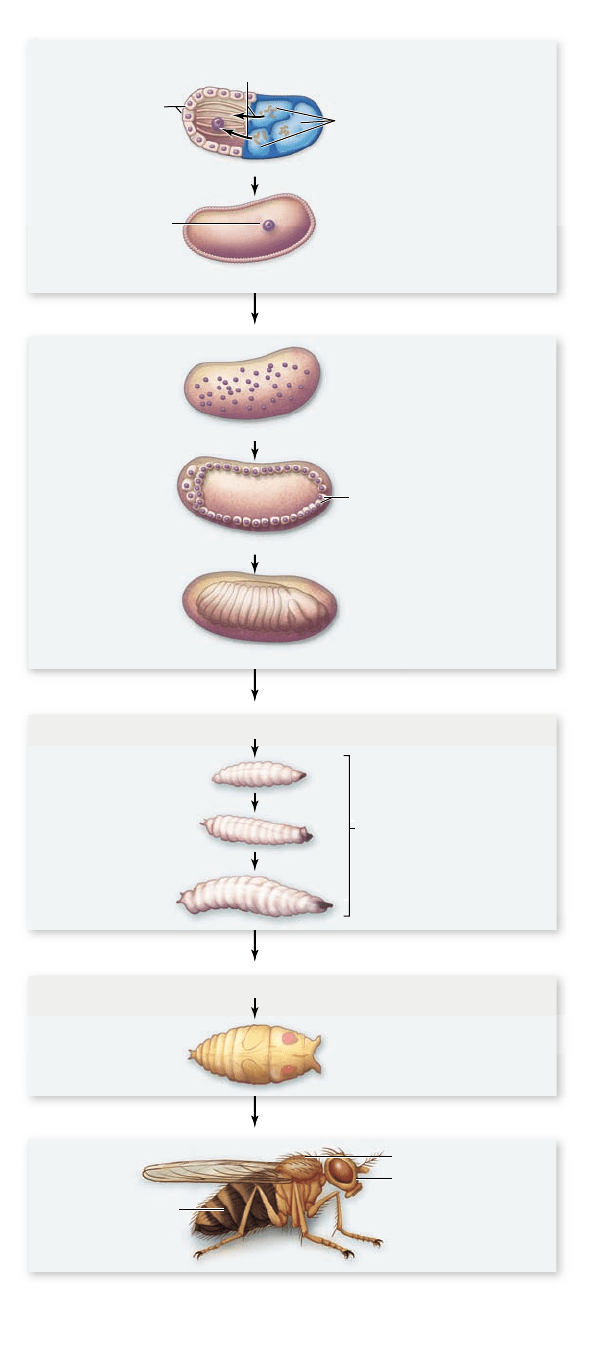
Figure 19.12
The path of fruit y development. Major
stages in the development of Drosophila melanogaster include
formation of the (a) egg, (b) syncytial and cellular blastoderm,
(c) larval instars, (d) pupa and metamorphosis into a (e) sexually
mature adult.
Drosophila embryogenesis produces
a segmented larva
Drosophila and many other insects produce two different kinds of
bodies during their development: the first, a tubular eating ma-
chine called a larva, and the second, an adult flying sex machine
with legs and wings. The passage from one body form to the other,
called metamorphosis, involves a radical shift in development
( figure 19.12). In this chapter, we concentrate on the process of go-
ing from a fertilized egg to a larva, which is termed embryogenesis.
Prefertilization maternal contribution
The development of an insect like Drosophila begins before fer-
tilization, with the construction of the egg. Specialized nurse cells
that help the egg grow move some of their own maternally en-
coded mRNAs into the maturing oocyte (figure 19.12a).
Following fertilization, the maternal mRNAs are tran-
scribed into proteins, which initiate a cascade of sequential
gene activations. Embryonic nuclei do not begin to function
(that is, to direct new transcription of genes) until approxi-
mately 10 nuclear divisions have occurred. Therefore, the ac-
tion of maternal, rather than zygotic, genes determines the
initial course of Drosophila development.
Postfertilization events
After fertilization, 12 rounds of nuclear division without cytoki-
nesis produce about 4000 nuclei, all within a single cytoplasm. All
of the nuclei within this syncytial blastoderm (figure 19.12b) can
freely communicate with one another, but nuclei located in dif-
ferent sectors of the egg encounter different maternal products.
Once the nuclei have spaced themselves evenly along the
surface of the blastoderm, membranes grow between them to form
the cellular blastoderm. Embryonic folding and primary tissue
development soon follow, in a process fundamentally similar to
that seen in vertebrate development. Within a day of fertilization,
embryogenesis creates a segmented, tubular body—which is des-
tined to hatch out of the protective coats of the egg as a larva.
Morphogen gradients form the basic
body axes in Drosophila
Pattern formation in the early Drosophila embryo requires posi-
tional information encoded in labels that can be read by cells.
The unraveling of this puzzle, work that earned the 1995 No-
bel Prize for researchers Christiane Nüsslein-Volhard and Eric
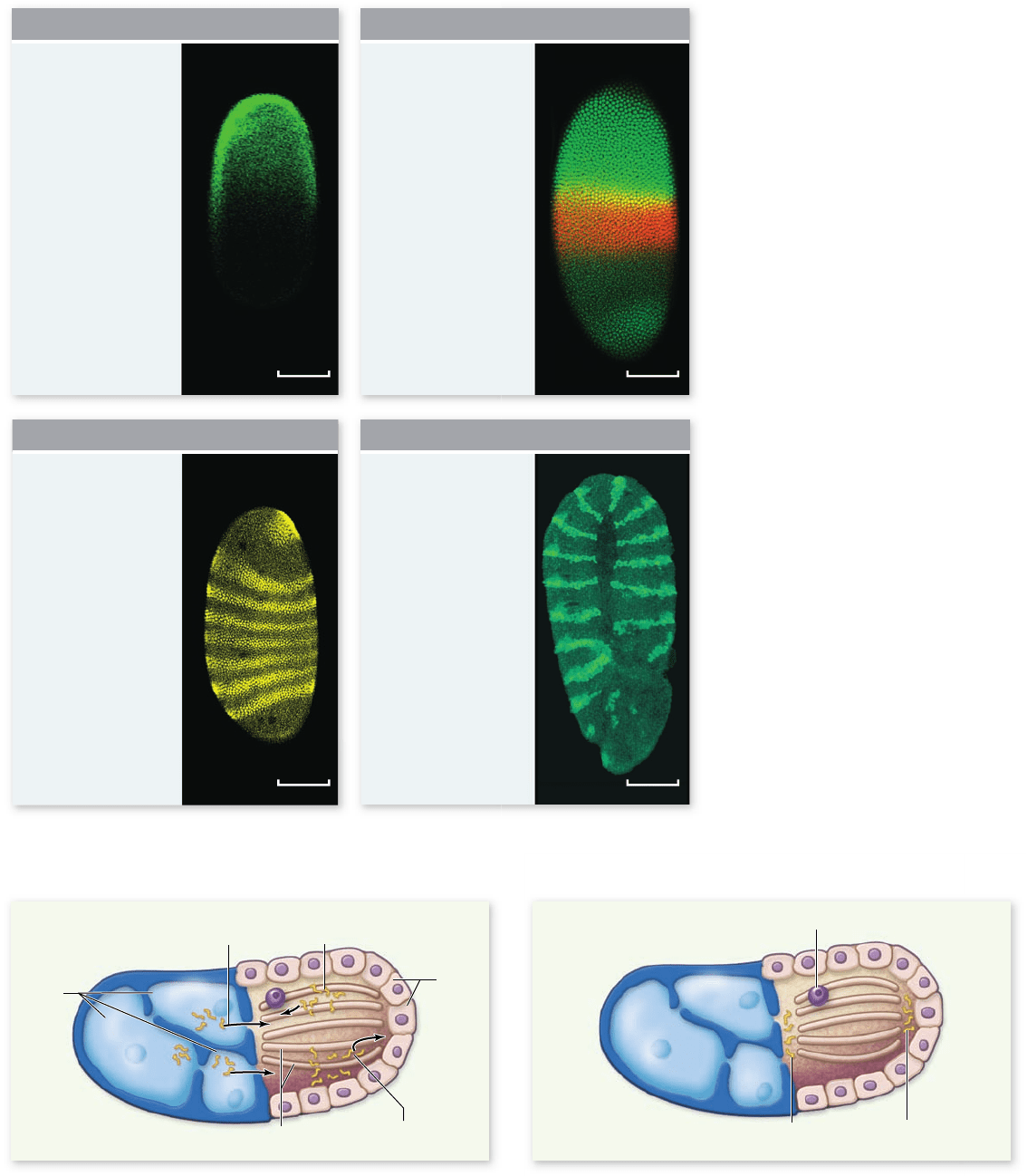
Wieschaus, is summarized in figure 19.13. We now know that
two different genetic pathways control the establishment of
A/P and D/V polarity in Drosophila.
Anterior–posterior axis
Formation of the A/P axis begins during maturation of the
oocyte and is based on opposing gradients of two different
proteins: Bicoid and Nanos. These protein gradients are es-
tablished by an interesting mechanism.
Nurse cells in the ovary secrete maternally produced bi-
coid and nanos mRNAs into the maturing oocyte where they are
differentially transported along microtubules to opposite poles
of the oocyte (figure 19.14a). This differential transport comes
384
part
III
Genetic and Molecular Biology
rav32223_ch19_372-395.indd 384rav32223_ch19_372-395.indd 384 11/10/09 4:28:48 PM11/10/09 4:28:48 PM
Apago PDF Enhancer
Fertilization of the egg
triggers the production
of Bicoid protein from
maternal RNA in the
egg. The Bicoid protein
diffuses through the
egg, forming a gradient.
This gradient
determines the polarity
of the embryo, with the
head and thorax
developing in the zone
of high concentration
(green fluorescent dye
in antibodies that bind
bicoid protein allows
visualization of the
gradient).
About 0.5 hr later, the
gap genes switch on
the “pair-rule” genes,
which are each
expressed in seven
stripes. This is shown
for the pair-rule gene
hairy. Some pair-rule
genes are only required
for even-numbered
segments while others
are only required for
odd numbered
segments.
About 2
1
/2 hours after
fertilization, Bicoid
protein turns on a series
of brief signals from
so-called gap genes.
The gap proteins act to
divide the embryo into
large blocks. In this
photo, fluorescent dyes
in antibodies that bind to
the gap proteins
Krüppel (orange) and
Hunchback (green)
make the blocks visible;
the region of overlap is
yellow.
The final stage of
segmentation occurs
when a “segment-
polarity” gene called
engrailed divides each
of the seven regions into
halves, producing 14
narrow compartments.
Each compartment
corresponds to one
segment of the future
body. There are three
head segments
(H, bottom right), three
thoracic segments
(T, upper right), and
eight abdominal
segments (A, from top
right to bottom left).
Forming the SegmentsLaying Down the Fundamental Regions
Setting the Stage for SegmentationEstablishing the Polarity of the Embryo
H
T
A
500 µm
500 µm
500 µm
500 µm
500 µm
500 µm
500 µm
500 µm
a.
b.
bicoid mRNA moves
toward anterior end
bicoid
mRNA
Movement of
maternal mRNA
Nucleus
Microtubules
Nurse
cells
Follicle
cells
nanos mRNA moves
toward posterior end
PosteriorAnterior
PosteriorAnterior
nanos
mRNA
Figure 19.13
Body organization in
an early Drosophila embryo. In these
uorescent microscope images by 1995
Nobel laureate Christiane Nüsslein-Volhard
and Sean Carroll, we watch a Drosophila egg
pass through the early stages of
development, in which the basic
segmentation pattern of the embryo is
established. The proteins in the photographs
were made visible by binding uorescent
antibodies to each speci c protein.
Figure 19.14
Specifying the A/P axis in Drosophila embryos I. a. In the ovary, nurse cells secrete maternal mRNAs into the cytoplasm
of the oocyte. Clusters of microtubules direct oocyte growth and maturation. Motor proteins travel along the microtubules transporting molecules
in two directions. Bicoid mRNAs are transported toward the anterior pole of the oocyte, nanos mRNA is transported toward the posterior pole of
the oocyte. b. A mature oocyte, showing localization of bicoid mRNAs to the anterior pole and nanos mRNAs to the posterior pole.
chapter
19
Cellular Mechanisms of Development
385www.ravenbiology.com
rav32223_ch19_372-395.indd 385rav32223_ch19_372-395.indd 385 11/10/09 4:28:50 PM11/10/09 4:28:50 PM
Apago PDF Enhancer
Concentration
Anterior
Anterior
a. Oocyte mRNAs
c. Early cleavage embryo proteins
b. After fertilization
Posterior
Posterior
nanos mRNA
hunchback mRNA
bicoid mRNA
caudal mRNA
Nanos protein
Hunchback protein
Bicoid protein
Caudal protein
Concentration
Anterior Posterior
nanos mRNA
hunchback mRNA
bicoid mRNA
caudal mRNA
Nanos protein
Hunchback protein
Bicoid protein
Caudal protein
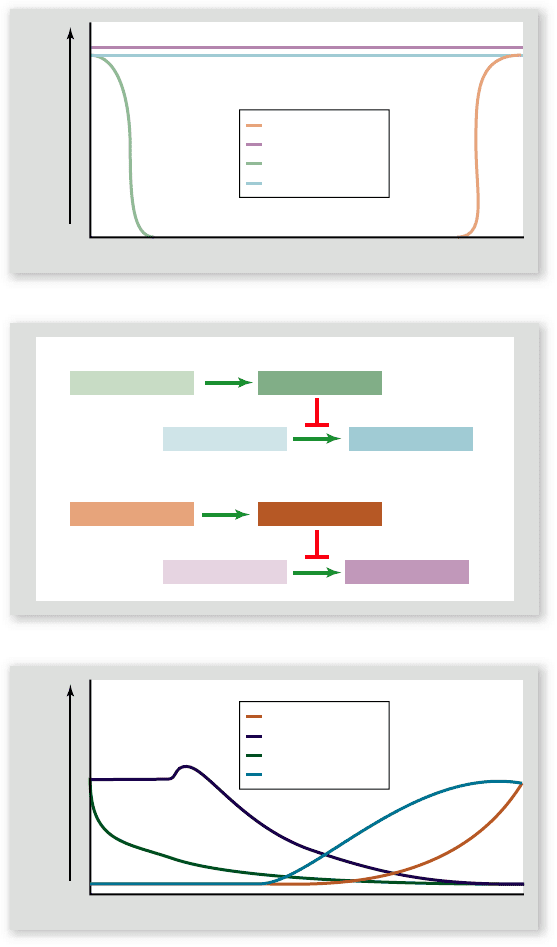
Figure 19.15
Specifying the A/P axis in Drosophila
embryos II. a. Unlike bicoid and nanos, hunchback and caudal
mRNAs are evenly distributed throughout the cytoplasm of the
oocyte. b. Following fertilization, bicoid and nanos mRNAs are
translated into protein, making opposing gradients of each protein.
Bicoid binds to and represses translation of caudal mRNAs (in
anterior regions of the egg). Nanos binds to and represses
translation of hunchback mRNAs (in posterior regions of the egg).
c. Translation of hunchback mRNAs in anterior regions of the egg
will create a Hunchback gradient that mirrors the Bicoid gradient.
Translation of caudal mRNAs in posterior regions of the embryo
will create a Caudal gradient that mirrors the Nanos gradient.
about due to the use of different motor proteins to move the
two mRNAs. The bicoid mRNA then becomes anchored in the
cytoplasm at the end of the oocyte closest to the nurse cells, and
this end will develop into the anterior end of the embryo. Nanos
mRNA becomes anchored to the opposite end of the oocyte,
which will become the posterior end of the embryo. Thus, by
the end of oogenesis, the bicoid and nanos mRNAs are already
set to function as cytoplasmic determinants in the fertilized egg
(figure 19.14b).
Following fertilization, translation of the anchored mRNA
and diffusion of the proteins away from their respective sites of
synthesis create opposing gradients of each protein: Highest
levels of Bicoid protein are at the anterior pole of the embryo
(figure 19.15a), and highest levels of the Nanos protein are at
the posterior pole. Concentration gradients of soluble molecules
can specify different cell fates along an axis, and proteins that act
in this way, like Bicoid and Nanos, are called morphogens.
The Bicoid and Nanos proteins control the translation of
two other maternal messages, hunchback and caudal, that encode
transcription factors. Hunchback activates genes required for
the formation of anterior structures, and Caudal activates genes
required for the development of posterior (abdominal) struc-
tures. The hunchback and caudal mRNAs are evenly distributed
across the egg (figure 19.15b), so how is it that proteins trans-
lated from these mRNAs become localized?
The answer is that Bicoid protein binds to and inhibits
translation of caudal mRNA. Therefore, caudal is only trans-
lated in the posterior regions of the egg where Bicoid is absent.
Similarly, Nanos protein binds to and prevents translation of
the hunchback mRNA. As a result, hunchback is only translated
in the anterior regions of the egg (figure 19.15c). Thus, shortly
after fertilization, four protein gradients exist in the embryo:
anterior–posterior gradients of Bicoid and Hunchback pro-
teins, and posterior–anterior gradients of Nanos and Caudal
proteins (figure 19.15c).
Dorsal–ventral axis
The dorsal–ventral axis in Drosophila is established by actions of
the dorsal gene product. Once again the process begins in the
ovary, when maternal transcripts of the dorsal gene are put into
the oocyte. However, unlike bicoid or nanos, the dorsal mRNA
does not become asymmetrically localized. Instead, a series of
steps are required for Dorsal to carry out its function.
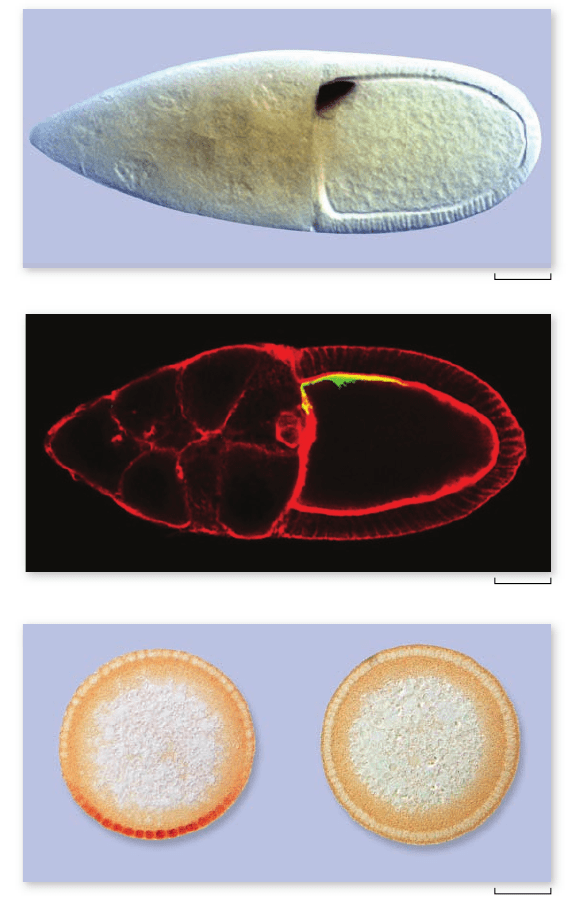
First, the oocyte nucleus, which is located to one side of
the oocyte, synthesizes gurken mRNA. The gurken mRNA then
accumulates in a crescent between the nucleus and the mem-
brane on that side of the oocyte (figure 19.16a). This will be the
future dorsal side of the embryo.
The Gurken protein is a soluble cell-signaling molecule,
and when it is translated and released from the oocyte, it binds
to receptors in the membranes of the overlying follicle cells
(figure 19.16b). These cells then differentiate into a dorsal mor-
phology. Meanwhile, no Gurken signal is released from the
other side of the oocyte, and the follicle cells on that side of the
oocyte adopt a ventral fate.
Following fertilization, a signaling molecule is differen-
tially activated on the ventral surface of the embryo in a com-
plex sequence of steps. This signaling molecule then binds to a
membrane receptor in the ventral cells of the embryo and acti-
vates a signal transduction pathway in those cells. Activation of
this pathway results in the selected transport of the Dorsal pro-
tein (which is everywhere) into ventral nuclei, forming a gradi-
ent along the D/V axis. The Dorsal protein levels are highest in
the nuclei of ventral cells (figure 19.16c).
386
part
III
Genetic and Molecular Biology
rav32223_ch19_372-395.indd 386rav32223_ch19_372-395.indd 386 11/10/09 4:28:53 PM11/10/09 4:28:53 PM
Apago PDF Enhancer
a.
b.
c.
400 µm
400 µm
100 µm
Dorsal
Wild-type embryo dorsal mutant Ventral
Figure 19.16
Specifying the D/V axis in Drosophila
embryos. a. The gurken mRNA (dark stain) is concentrated
between the oocyte nucleus (not visible) and the dorsal, anterior
surface of the oocyte. b. In a more mature oocyte, Gurken protein
(yellow stain) is secreted from the dorsal anterior surface of the
oocyte, forming a gradient along the dorsal surface of the egg.
Gurken then binds to membrane receptors in the overlying follicle
cells. Double staining for actin (red) shows the cell boundaries of
the oocyte, nurse cells, and follicle cells. c. For these images,
cellular blastoderm stage embryos were cut in cross section to
visualize the nuclei of cells around the perimeter of the embryos.
Dorsal protein (dark stain) is localized in nuclei on the ventral
surface of the blastoderm in a wild-type embryo (left). The dorsal
mutant on the right will not form ventral structures, and Dorsal is
not present in ventral nuclei of this embryo.
The Dorsal protein is a transcription factor, and once it
is transported into nuclei, it activates genes required for the
proper development of ventral structures, simultaneously re-
pressing genes that specify dorsal structures. Hence, the prod-
uct of the dorsal gene ultimately directs the development of
ventral structures.
(Note that many Drosophila genes are named for the mu-
tant phenotype that results from a loss of function in that gene.
A lack of dorsal function produces dorsalized embryos with no
ventral structures.)
Although profoundly different mechanisms are involved,
the unifying factor controlling the establishment of both A/P
and D/V polarity in Drosophila is that bicoid, nanos, gurken, and
dorsal are all maternally expressed genes. The polarity of the
future embryo in both instances is therefore laid down in the
oocyte using information coming from the maternal genome.
The preceding discussion simplifies events, but the outline
is clear: Polarity is established by the creation of morphogen gra-
dients in the embryo based on maternal information in the egg.
These gradients then drive the expression of the zygotic genes
that will actually pattern the embryo. This reliance on a hierarchy
of regulatory genes is a unifying theme for all of development.
The body plan is produced by sequential
activation of genes
Let us now return to the process of pattern formation in Droso-
phila along the A/P axis. Determination of structures is accom-
plished by the sequential activation of three classes of
segmentation genes. These genes create the hallmark seg-
mented body plan of a fly, which consists of three fused head
segments, three thoracic segments, and eight abdominal seg-
ments (see figure 19.12e).
To begin, Bicoid protein exerts its profound effect on the or-
ganization of the embryo by activating the translation and tran-
scription of hunchback mRNA (which is the first mRNA to be
transcribed after fertilization). Hunchback is a member of a group of
nine genes called the gap genes. These genes map out the initial
subdivision of the embryo along the A/P axis (see figure 19.13).
All of the gap genes encode transcription factors, which, in
turn, activate the expression of eight or more pair-rule genes.
Each of the pair-rule genes, such as hairy, produces seven dis-
tinct bands of protein, which appear as stripes when visualized
with fluorescent reagents (see figure 19.13). These bands subdi-
vide the broad gap regions and establish boundaries that divide
the embryo into seven zones. When mutated, each of the pair-
rule genes alters every other body segment.
All of the pair-rule genes also encode transcription fac-
tors, and they, in turn, regulate the expression of each other and
of a group of nine or more segment polarity genes. The seg-
ment polarity genes are each expressed in 14 distinct bands of
cells, which subdivide each of the seven zones specified by the
pair-rule genes (see figure 19.13). The engrailed gene, for ex-
ample, divides each of the seven zones established by hairy into
anterior and posterior compartments. The segment polarity
genes encode proteins that function in cell–cell signaling path-
ways. Thus, they function in inductive events—which occur
after the syncytial blastoderm is divided into cells—to fix the
anterior and posterior fates of cells within each segment.
In summary, within 3 hr after fertilization, a highly or-
chestrated cascade of segmentation gene activity transforms the
broad gradients of the early embryo into a periodic, segmented
chapter
19
Cellular Mechanisms of Development
387www.ravenbiology.com
rav32223_ch19_372-395.indd 387rav32223_ch19_372-395.indd 387 11/10/09 4:28:53 PM11/10/09 4:28:53 PM
Apago PDF Enhancer
Drosophila HOM genes
Thorax
Antennapedia complex
Head Abdomen
Bithorax complex
Fruit fly
Fruit fly
embryo
Mouse
Hox 1
Hox 2
Hox 3
Hox 4
Mouse
embryo
a. b.
Drosophila HOM Chromosomes Mouse Hox Chromosomes
lab pb Dfd Scr Antp Ubx abd-A abd-B
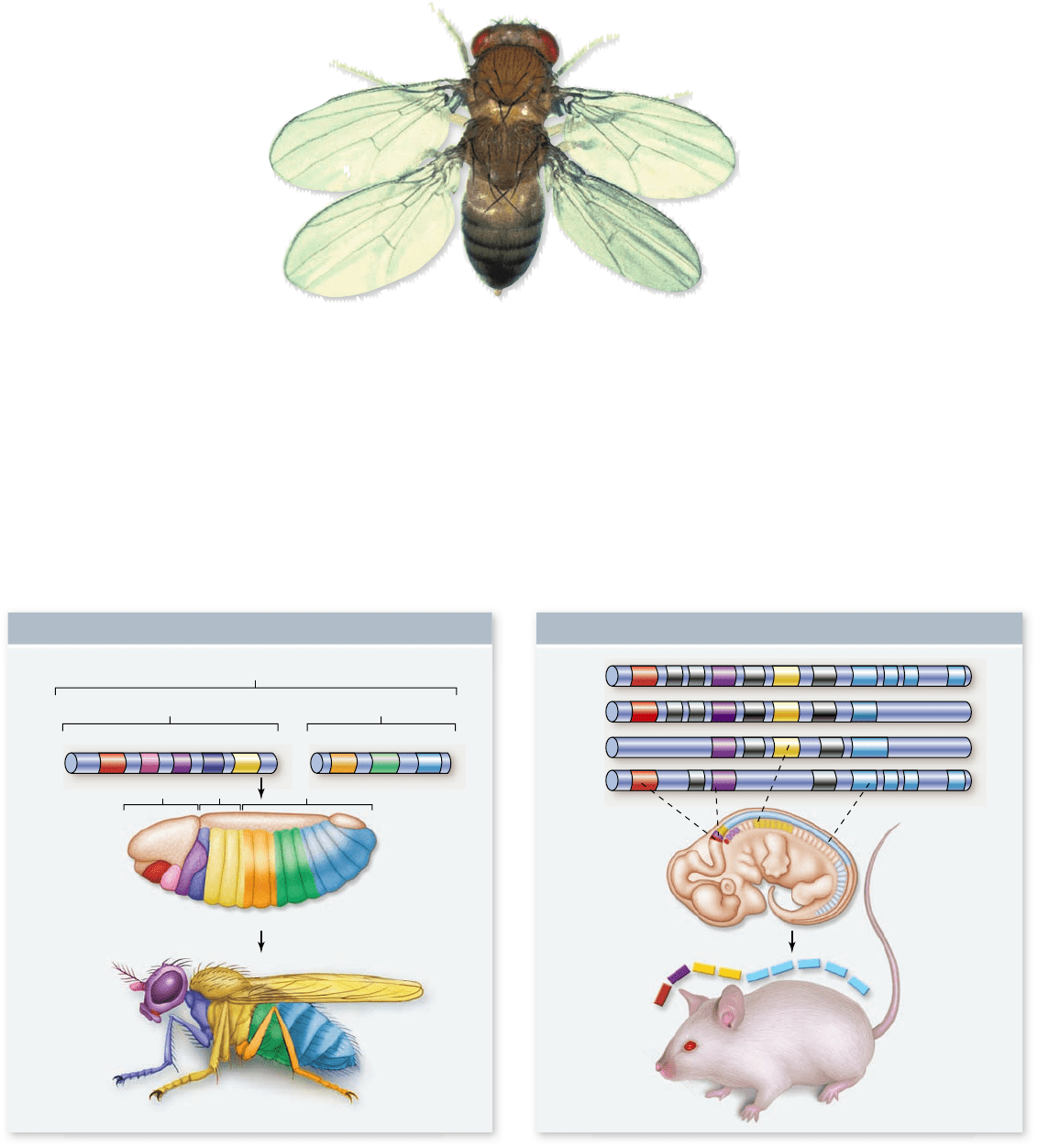
Figure 19.17
Mutations in
homeotic genes. Three separate
mutations in the bithorax complex caused
this fruit y to develop an additional
second thoracic segment, with
accompanying wings.
racic segments, but only the second thoracic segment
has wings. Mutations in the Ultrabithorax gene cause a
fly to grow an extra pair of wings, as though
it has two second thoracic segments
(figure 19.17). Even more bizarre are
mutations in Antennapedia, which
cause legs to grow out of the head in
place of antennae!
Thus, mutations in these genes
lead to the appearance of perfectly nor-
mal body parts in inappropriate places.
Such mutants are termed homeotic
mutants because the transformed body
part looks similar (homeotic) to another. The genes in which
such mutants occur are therefore called homeotic genes.
Homeotic gene complexes
In the early 1950s, geneticist and Nobel laureate Edward Lewis
discovered that several homeotic genes, including Ultrabitho-
rax, map together on the third chromosome of Drosophila in a
tight cluster called the bithorax complex. Mutations in these
genes all affect body parts of the thoracic and abdominal seg-
ments, and Lewis concluded that the genes of the bithorax
complex control the development of body parts in the rear half
of the thorax and all of the abdomen.
structure with A/P and D/V polarity.
The activation of the segmenta-
tion genes depends on the free
diffusion of maternally encoded
morphogens, which is only possible
within the syncytial blastoderm of the early Drosophila embryo.
Segment identity arises from the action
of homeotic genes
With the basic body plan laid down, the next step is to give
identity to the segments of the embryo. A highly interesting
class of Drosophila mutants has provided the starting point for
understanding the creation of segment identity.
In these mutants, a particular segment seems to have changed
its identity—that is, it has characteristics of a different segment. In
wild-type flies, a pair of legs emerges from each of the three tho-
Figure 19.18
A comparison of homeotic gene clusters in the fruit y Drosophila melanogaster and the mouse Mus musculus.
a. Drosophila homeotic genes. Called the homeotic gene complex, or HOM complex, the genes are grouped into two clusters: the Antennapedia
complex (anterior) and the bithorax complex (posterior). b. The Drosophila HOM genes and the mouse Hox genes are related genes that control the
regional differentiation of body parts in both animals. These genes are located on a single chromosome in the y and on four separate chromosomes
in mammals. In this illustration, the genes are color-coded to match the parts of the body along the A/P axis in which they are expressed. Note that
the order of the genes along the chromosome(s) is mirrored by their pattern of expression in the embryo and in structures in the adult y.
388
part
III
Genetic and Molecular Biology
rav32223_ch19_372-395.indd 388rav32223_ch19_372-395.indd 388 11/10/09 4:28:55 PM11/10/09 4:28:55 PM

Apago PDF Enhancer
Pattern formation in plants is also
under genetic control
The evolutionary split between plant and animal cell lineages
occurred about 1.6 bya, before the appearance of multicellular
organisms with defined body plans. The implication is that
multicellularity evolved independently in plants and animals.
Because of the activity of meristems, additional modules can be
added to plant bodies throughout their lifetimes. In addition,
plant flowers and roots have a radial organization, in contrast to
the bilateral symmetry of most animals. We may therefore ex-
pect that the genetic control of pattern formation in plants is
fundamentally different from that of animals.
Although plants have homeobox-containing genes, they
do not possess complexes of Hox genes similar to the ones that
determine regional identity of developing structures in animals.
Instead, the predominant homeotic gene family in plants ap-
pears to be the MADS-box genes.
MADS-box genes are a family of transcriptional regula-
tors found in most eukaryotic organisms, including plants, ani-
mals, and fungi. The MADS-box is a conserved DNA-binding
and dimerization domain, named after the first five genes to be
discovered with this domain. Only a small number of MADS-
box genes are found in animals, where their functions include
the control of cell proliferation and tissue-specific gene expres-
sion in postmitotic muscle cells. They do not appear to play a
role in the patterning of animal embryos.
In contrast, the number and functional diversity of MADS-
box genes increased considerably during the evolution of land
plants, and there are more than 100 MADS-box genes in the
Arabidopsis genome. In flowering plants, the MADS-box genes
dominate the control of development, regulating such processes
as the transition from vegetative to reproductive growth, root
development, and floral organ identity.
Although distinct from genes in the Hox clusters of ani-
mals, homeodomain-containing transcription factors in plants
do have important developmental functions. One such example
is the family of knottedlike homeobox (knox) genes, which are im-
portant regulators of shoot apical meristem development in
both seed-bearing and nonseed-bearing plants. Mutations that
affect expression of knox genes produce changes in leaf and
petal shape, suggesting that these genes play an important role
in generating leaf form.
Learning Outcomes Review 19.5
Pattern formation in animals involves the coordinated expression of a hierarchy
of genes. Gradients of morphogens in Drosophila specify A/P and D/V axes, then
lead to sequential activation of segmentation genes. Bicoid and Nanos protein
gradients determine the A/P axis. The protein Dorsal determines the D/V axis,
but activation requires a series of steps beginning with the oocyte’s Gurken
protein. The action of homeotic genes provide segment identity. These genes,
which include a DNA-binding homeodomain sequence, are called Hox genes (for
homeobox genes), and they are organized into clusters. Plants use a diff erent set
of developmental control genes called MADS-box genes.
■ Why would you expect homeotic genes to be conserved
across species evolution?
Interestingly, the order of the genes in the bithorax com-
plex mirrors the order of the body parts they control, as though
the genes are activated serially. Genes at the beginning of the
cluster switch on development of the thorax; those in the mid-
dle control the anterior part of the abdomen; and those at the
end affect the posterior tip of the abdomen.
A second cluster of homeotic genes, the Antennapedia
complex, was discovered in 1980 by Thomas Kaufmann. The
Antennapedia complex governs the anterior end of the fly, and
the order of genes in this complex also corresponds to the order
of segments they control (figure 19.18a).
The homeobox
An interesting relationship was discovered after the genes of
the bithorax and Antennapedia complexes were cloned and se-
quenced. These genes all contain a conserved sequence of
180 nucleotides that codes for a 60-amino-acid, DNA-binding
domain. Because this domain was found in all of the homeotic
genes, it was named the homeodomain, and the DNA that en-
codes it is called the homeobox. Thus, the term Hox gene now
refers to a homeobox-containing gene that specifies the iden-
tity of a body part. These genes function as transcription fac-
tors that bind DNA using their homeobox domain.
Clearly, the homeobox distinguishes portions of the ge-
nome that are devoted to pattern formation. How the Hox genes
do this is the subject of much current research. Scientists believe
that the ultimate targets of Hox gene function must be genes that
control cell behaviors associated with organ morphogenesis.
Evolution of homeobox-containing genes
A large amount of research has been devoted to analyzing the
clustered complexes of Hox genes in other organisms. These
investigations have led to a fairly coherent view of homeotic
gene evolution.
It is now clear that the Drosophila bithorax and Antenna-
pedia complexes represent two parts of a single cluster of genes.
In vertebrates, there are four copies of Hox gene clusters. As in
Drosophila, the spatial domains of Hox gene expression correlate
with the order of the genes on the chromosome (figure 19.18b).
The existence of four Hox clusters in vertebrates is viewed by
many as evidence that two duplication events of the entire ge-
nome have occurred in the vertebrate lineage.
This idea raises the issue of when the original cluster
arose. To answer this question, researchers have turned to more
primitive organisms, such as Amphioxus (now called Branchios-
toma), a lancelet chordate (see chapter 35). The finding of only
one cluster of Hox genes in Amphioxus implies that indeed there
have been two duplications in the vertebrate lineage, at least of
the Hox cluster. Given the single cluster in arthropods, this
finding implies that the common ancestor to all animals with
bilateral symmetry had a single Hox cluster as well.
The next logical step is to look at even more-primitive ani-
mals: the radially symmetrical cnidarians such as Hydra (see
chapter 33). Thus far, Hox genes have been found in a number of
cnidarian species, and recent sequence analyses suggest that cni-
darian Hox genes are also arranged into clusters. Thus, the ap-
pearance of the ancestral Hox cluster likely preceded the divergence
between radial and bilateral symmetries in animal evolution.
chapter
19
Cellular Mechanisms of Development
389www.ravenbiology.com
rav32223_ch19_372-395.indd 389rav32223_ch19_372-395.indd 389 11/10/09 4:28:56 PM11/10/09 4:28:56 PM

Apago PDF Enhancer
Cells change shape and size as
morphogenesis proceeds
In animals, cell differentiation is often accompanied by pro-
found changes in cell size and shape. For example, the large
nerve cells that connect your spinal cord to the muscles in your
big toe develop long processes called axons that span this entire
distance. The cytoplasm of an axon contains microtubules,
which are used for motor-driven transport of materials along
the length of the axon.
As another example, muscle cells begin as myoblasts, un-
differentiated muscle precursor cells. They eventually undergo
conversion into the large, multinucleated muscle fibers that make
up mammalian skeletal muscles. These changes begin with the
expression of the MyoD1 gene, which encodes a transcription
factor that binds to the promoters of muscle-determining genes
to initiate these changes.
Programmed cell death is a necessary
part of development
Not every cell produced during development is destined to sur-
vive. For example, human embryos have webbed fingers and
toes at an early stage of development. The cells that make up
the webbing die in the normal course of morphogenesis. As an-
other example, vertebrate embryos produce a very large num-
ber of neurons, ensuring that enough neurons are available to
make the necessary synaptic connections, but over half of these
neurons never make connections and die in an orderly way as
the nervous system develops.
Unlike accidental cell deaths due to injury, these cell
deaths are planned—and indeed required—for proper develop-
ment and morphogenesis. Cells that die due to injury typically
swell and burst, releasing their contents into the extracellular
fluid. This form of cell death is called necrosis. In contrast, cells
programmed to die shrivel and shrink in a process called apop-
tosis, which means “falling away,” and their remains are taken
up by surrounding cells.
Genetic control of apoptosis
Apoptosis occurs when a “death program” is activated. All ani-
mal cells appear to possess such programs. In C. elegans, the
same 131 cells always die during development in a predictable
and reproducible pattern.
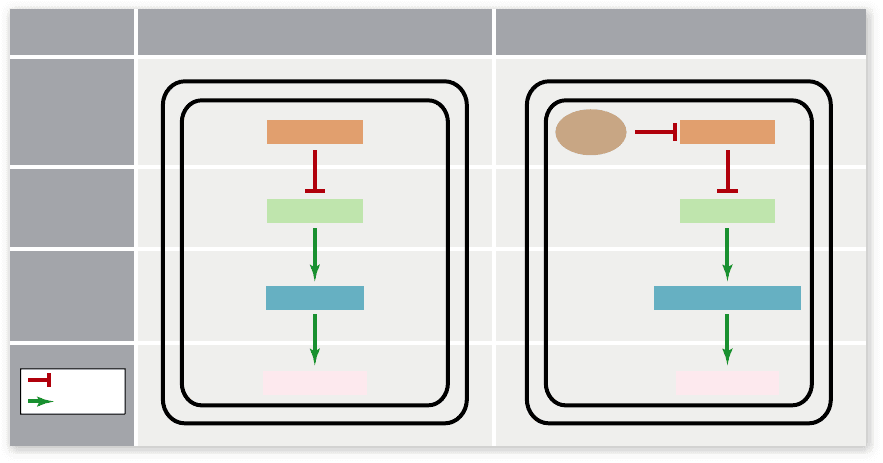
Work on C. elegans showed that three genes are central to
this process. Two (ced-3 and ced-4) activate the death program
itself; if either is mutant, those 131 cells do not die, and go on
instead to form nervous tissue and other tissue. The third gene
(ced-9) represses the death program encoded by the other two:
All 1090 cells of the C. elegans embryo die in ced-9 mutants. In
ced-9/ced-3 double mutants, all 1090 cells live, which suggests
that ced-9 inhibits cell death by functioning prior to ced-3 in the
apoptotic pathway (figure 19.19a).
The mechanism of apoptosis appears to have been highly
conserved during the course of animal evolution. In human
nerve cells, the Apaf1 gene is similar to ced-4 of C. elegans and
activates the cell death program, and the human bcl-2 gene acts
19.6
Morphogenesis
Learning Outcomes
Discuss the importance of cell shape changes and cell 1.
migration in development.
Explain how cell death can contribute to morphogenesis. 2.
Describe the role of the extracellular matrix in cell 3.
migration.
At the end of cleavage, the Drosophila embryo still has a rela-
tively simple structure: It comprises several thousand identical-
looking cells, which are present in a single layer surrounding a
central yolky region. The next step in embryonic develop-
ment is morphogenesis—the generation of ordered form
and structure.
Morphogenesis is the product of changes in cell structure
and cell behavior. Animals regulate the following processes to
achieve morphogenesis:
■ The number, timing, and orientation of cell divisions;
■ Cell growth and expansion;
■ Changes in cell shape;
■ Cell migration; and
■ Cell death.
Plant and animal cells are fundamentally different in that
animal cells have flexible surfaces and can move, but plant cells
are immotile and encased within stiff cellulose walls. Each cell
in a plant is fixed into position when it is created. Thus, animal
cells use cell migration extensively during development while
plants use the other four mechanisms but lack cell migration.
We consider the morphogenetic changes in animals first, and
then those that occur in plants.
Cell division during development may
result in unequal cytokinesis
The orientation of the mitotic spindle determines the plane of
cell division in eukaryotic cells. The coordinated function of
microtubules and their motor proteins determines the respec-
tive position of the mitotic spindle within a cell (see chapter 10).
If the spindle is centrally located in the dividing cell, two
equal-sized daughter cells will result. If the spindle is off to
one side, one large daughter cell and one small daughter cell
will result.
The great diversity of cleavage patterns in animal embryos
is determined by differences in spindle placement. In many
cases, the fate of a cell is determined by its relative placement in
the embryo during cleavage. For example, in preimplantation
mammalian embryos, cells on the outside of the embryo usually
differentiate into trophectoderm cells, which form only extra-
embryonic structures later in development (for example, a part
of the placenta). In contrast, the embryo proper is derived from
the inner cell mass, cells which, as the name implies, are in the
interior of the embryo.
390
part
III
Genetic and Molecular Biology
rav32223_ch19_372-395.indd 390rav32223_ch19_372-395.indd 390 11/10/09 4:28:57 PM11/10/09 4:28:57 PM
Apago PDF Enhancer
a. b.
Inhibitor CED-9 Bcl-2
CED-4 Apaf1
Caspase-8 or -9
Apoptosis
CED-3
Apoptosis
Inhibitor:
Activator:
Apoptotic
Protease:
Caenorhabditis elegans Mammalian Cell Organism
Inhibition
Activation
Figure 19.19
Programmed cell death pathway. Apoptosis, or programmed cell death, is necessary for the normal development of all
animals. a. In the developing nematode, for example, two genes, ced-3 and ced-4, code for proteins that cause the programmed cell death of 131
speci c cells. In the other (surviving) cells of the developing nematode, the product of a third gene, ced-9, represses the death program
encoded by ced-3 and ced-4. b. The mammalian homologues of the apoptotic genes in C. elegans are bcl-2 (ced-9 homologue), Apaf1 (ced-4
homologue), and caspase-8 or -9 (ced-3 homologues). In the absence of any cell survival factor, Bcl-2 is inhibited and apoptosis occurs. In the
presence of nerve growth factor (NGF) and NGF receptor binding, Bcl-2 is activated, thereby inhibiting apoptosis.
sion and the loss of adhesion. Adhesion is necessary for cells to
get “traction,” but cells that are initially attached to others must
lose this adhesion to be able to leave a site.
Cell movement also involves cell-to-substrate interac-
tions, and the extracellular matrix may control the extent or
route of cell migration. The central paradigm of morphogenetic
cell movements in animals is a change in cell adhesiveness,
which is mediated by changes in the composition of macromol-
ecules in the plasma membranes of cells or in the extracellular
matrix. Cell-to-cell interactions are often mediated through
cadherins, but cell-to-substrate interactions often involve
integrin-to- extracellular-matrix (ECM) interactions.
Cadherins
Cadherins are a large gene family, with over 80 members iden-
tified in humans. In the genomes of Drosophila, C. elegans, and
humans, the cadherins can be sorted into several subfamilies
that exist in all three genomes.
The cadherin proteins are all transmembrane proteins
that share a common motif, the cadherin domain, a 110-amino-
acid domain in the extracellular portion of the protein that
mediates Ca
2+
-dependent binding between like cadherins
( homophilic binding).
Experiments in which cells are allowed to sort in vitro il-
lustrate the function of cadherins. Cells with the same cadherins
adhere specifically to one another, while not adhering to other
cells with different cadherins. If cell populations with different
cadherins are dispersed and then allowed to reaggregate, they
sort into two populations of cells based on the nature of the
cadherins on their surface.
similarly to ced-9 to repress apoptosis. If a copy of the human
bcl-2 gene is transferred into a nematode with a defective ced-9
gene, bcl-2 suppresses the cell death program of ced-3 and ced-4.
The mechanism of apoptosis
The product of the C. elegans ced-4 gene is a protease that acti-
vates the product of the ced-3 gene, which is also a protease. The
human Apaf1 gene is actually named for its role: Apoptotic pro-
tease activating factor. It activates two proteases called caspases
that have a role similar to the Ced-3 protease in C. elegans
( figure 19.19b). When the final proteases are activated, they chew
up proteins in important cellular structures such as the cytoskel-
eton and the nuclear lamina, leading to cell fragmentation.
The role of Ced-9/Bcl-2 is to inhibit this program. Spe-
cifically, it inhibits the activating protease, preventing the acti-
vation of the destructive proteases. The entire process is thus
controlled by an inhibitor of the death program.
Both internal and external signals control the state of the
Ced-9/Bcl-2 inhibitor. For example, in the human nervous sys-
tem, neurons have a cytoplasmic inhibitor of Bcl-2 that allows
the death program to proceed (see figure 19.19b). In the pres-
ence of nerve growth factor, a signal transduction pathway leads
to the cytoplasmic inhibitor being inactivated, allowing Bcl-2
to inhibit apoptosis and the nerve cell to survive.
Cell migration gets the right cells
to the right places
The migration of cells is important during many stages of ani-
mal development. The movement of cells involves both adhe-
chapter
19
Cellular Mechanisms of Development
391www.ravenbiology.com
rav32223_ch19_372-395.indd 391rav32223_ch19_372-395.indd 391 11/10/09 4:28:57 PM11/10/09 4:28:57 PM