
Raven P.H., Johnson G.B., Mason K.A. Biology (Ninth Edition)
Подождите немного. Документ загружается.

Apago PDF Enhancer
b.
c.
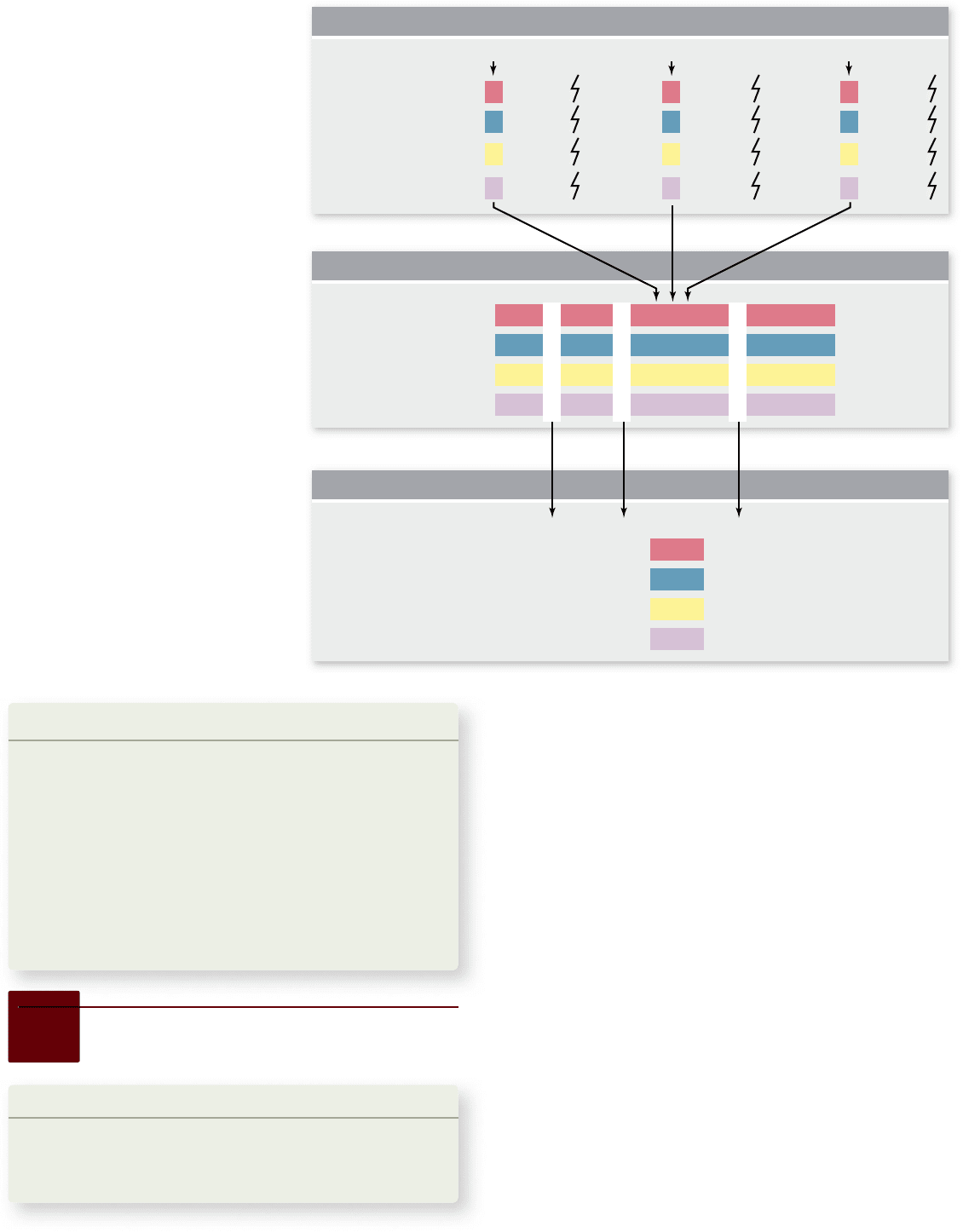
TCG GTCT CGGT ATA AG C
CCC GACT TGA T GAT GG T
Chromosome 1
SNP SNP SNP
SNPs
Diagnostic SNPs
Haplotype 1
Haplotypes
Haplotype 2
Haplotype 3
Haplotype 4
Chromosome 2
Chromosome 3
Chromosome 4
a.
AACA A A ATT TCCCG
CTCA AAGTA CGGT GTA AGCC
TTG
ACC
GTC
Haplotype 1
Haplotype 2
Haplotype 3
Haplotype 4
ATC
ACG
AGTGCT CAA C AAT AAGT
GT C
A
A/G T/C C/G
C C
CCTCCCGGGGGGG
AACA A A ATT TCCCGCCTCCCGGAGAGG
AACA A A ATT TTCCGCCTCCCGGAGGGG
AACA A A ATT TCCCG CCTCCCGGGGGGG
Learning Outcomes Review 18.3
Coding sequences in a genome can be found as a single copy, as repeated
clusters, as part of segmental duplications, or as part of a gene family. A
signifi cant amount of noncoding DNA is found in all eukaryotic organisms.
Transposable elements are capable of movement in the genome and are
found in all eukaryotic genomes. Single-nucleotide polymorphisms (SNPs)
provide a way of identifying individual variation, and they have also
revealed cases of nonrandom recombination (genomic haplotypes).
■ What explanation could you suggest, based on
principles of natural selection, for the many repeated
transposable elements in the human genome?
Learning Outcomes
Describe the advances that have come from 1.
comparative genomics.
Distinguish between genomics and proteomics.2.
18.4
Genomics and Proteomics
Figure 18.8
Construction of a
haplotype map. Single-nucleotide
polymorphisms (SNPs) are single-base
differences between individuals. Sections
of DNA sequences from four individuals
are shown in (a), with three SNPs
indicated by arrows. b. These three SNPs
are shown aligned along with 17 other
SNPs from this chromosomal region.
This represents a haplotype map for this
region of the chromosome. Haplotypes
are regions of the genome that are not
exchanged by recombination during
meiosis. c. Haplotypes can be identi ed
using a small number of diagnostic SNPs
that differ between the different
haplotypes. In this case, 3 SNPs out of
the 20 in this region are all that are
needed to uniquely identify each
haplotype. This greatly facilitates
locating disease-causing genes, as
haplotypes represent large regions of the
genome that behave as a single site
during meiosis.
To fully understand how genes work, we need to character-
ize the proteins they produce. This information is essential
to understanding cell biology, physiology, development, and
evolution. In many ways, we continue to ask the same ques-
tions that Mendel asked, but at a much different level
of organization.
Comparative genomics reveals
conserved regions in genomes
With the large number of sequenced genomes, it is now possible
to make comparisons at both the gene and genome level. The
flood of information from different genomes has given rise to a
new field: comparative genomics . One of the striking lessons learned
from the sequence of the human genome is how very similar
humans are to other organisms. More than half of the genes of
Drosophila have human counterparts. Among mammals, the simi-
larities are even greater. Humans have only 300 genes that have
no counterpart in the mouse genome.
The use of comparative genomics to ask evolutionary
questions is also a field of great promise. The comparison of the
many prokaryotic genomes already indicates a greater degree
of lateral gene transfer than was previously suspected. The lat-
est round of animal genomes sequenced has included the chim-
panzee, our closest living relative. The draft sequence of the
362
part
III
Genetic and Molecular Biology
rav32223_ch18_352-371.indd 362rav32223_ch18_352-371.indd 362 11/10/09 3:05:59 PM11/10/09 3:05:59 PM
Apago PDF Enhancer
Rice Genome
Sugarcane
Chromosome Segments
Wheat
Chromosome Segments
Corn Chromosome Segments
R
i
c
e
C
o
r
n
W
h
e
a
t
S
u
g
a
r
c
a
n
e
Genomic Alignment (Segment Rearrangement)
123456
7 8 9 10 11 12
123456712345678910
ABCDFGH I
chimp (Pan troglodytes) genome has just been completed, and
comparisons between the chimp and human genome may allow
us to unravel what makes us uniquely human.
The early returns from this sequencing effort confirm
that our genomes differ by only 1.23% in terms of nucleotide
substitutions. At first glance, the largest difference between
our genomes actually appears to be in transposable elements.
In humans, the SINEs have been threefold more active than
in the chimp, but the chimp has acquired two elements that
are not found in the human genome. The differences due to
insertion and deletion of bases are fewer than substitutions
but account for about 1.5% of the euchromatic sequence be-
ing unique in each genome.
Synteny allows comparison
of unsequenced genomes
Similarities and differences between highly conserved genes
can be investigated on a gene-by-gene basis between species.
Genome science allows for a much larger scale approach to
comparing genomes by taking advantage of synteny.
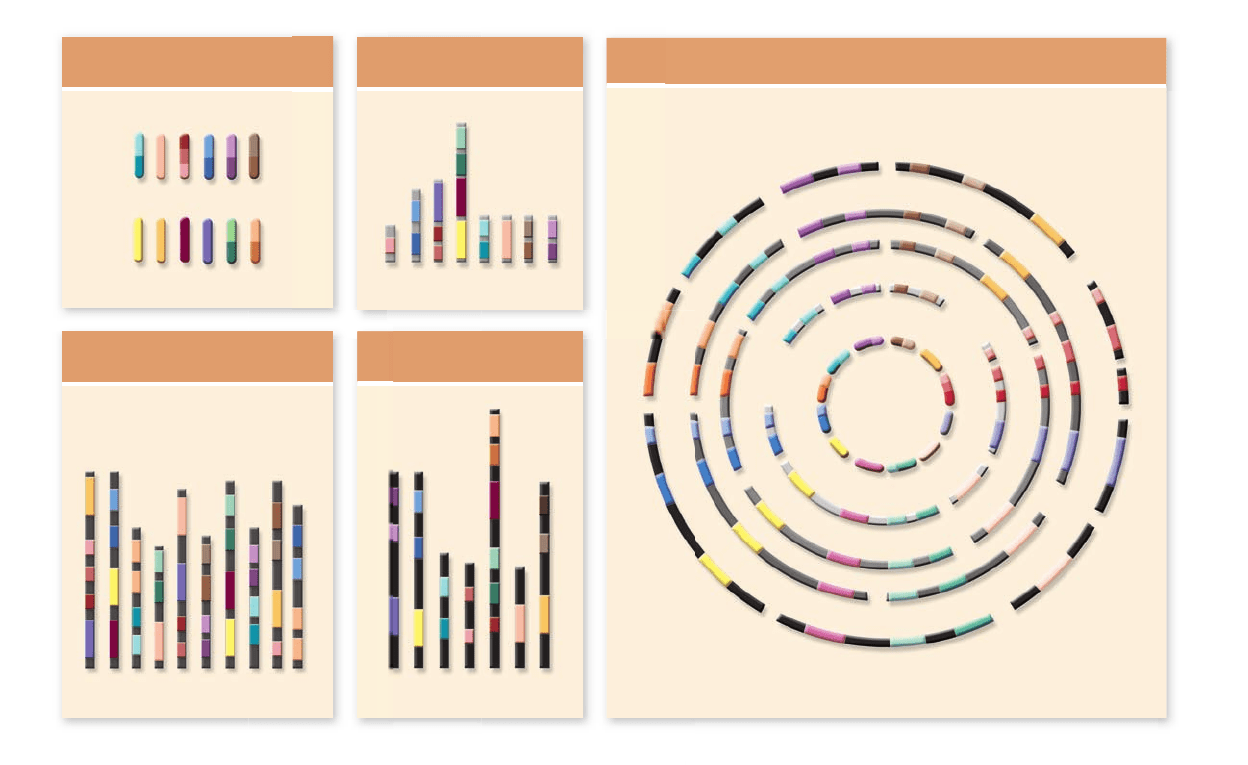
Figure 18.9
Grain genomes are rearrangements of similar chromosome segments. Shades of the same color represent pieces
of DNA that are conserved among the different species but have been rearranged. By splitting the individual chromosomes of major grass
species into segments and rearranging the segments, researchers have found that the genome components of rice, sugarcane, corn, and wheat
are highly conserved. This implies that the order of the segments in the ancestral grass genome has been rearranged by recombination as the
grasses have evolved.
Synteny refers to the conserved arrangements of segments
of DNA in related genomes. Physical mapping techniques can
be used to look for synteny in genomes that have not been se-
quenced. Comparisons with the sequenced, syntenous segment
in another species can be very helpful.
To illustrate this, consider rice, already sequenced, and
its grain relatives maize, barley, and wheat, none of which
have been fully sequenced. Even though these plants diverged
more than 50 million years ago, the chromosomes of rice,
corn, wheat, and other grass crops show extensive synteny
(figure 18.9). In a genomic sense, “rice is wheat.”
By understanding the rice genome at the level of its DNA
sequence, identification and isolation of genes from grains with
larger genomes should be much easier. DNA sequence analysis
of cereal grains could be valuable for identifying genes associ-
ated with disease resistance, crop yield, nutritional quality, and
growth capacity.
As mentioned earlier, the rice genome has more genes
than the human genome. However, rice still has a much smaller
genome than its grain relatives, which also represent a major
food source for humans.
chapter
18
Genomics
363www.ravenbiology.com
rav32223_ch18_352-371.indd 363rav32223_ch18_352-371.indd 363 11/10/09 3:06:00 PM11/10/09 3:06:00 PM
Apago PDF Enhancer
an international community of researchers has come together
with a plan to assign function to all of the 20,000–25,000
Arabidopsis genes by 2010 (Project 2010). One of the first
steps is to determine when and where these genes are ex-
pressed. Each step beyond that will require additional im-
provements in technology.
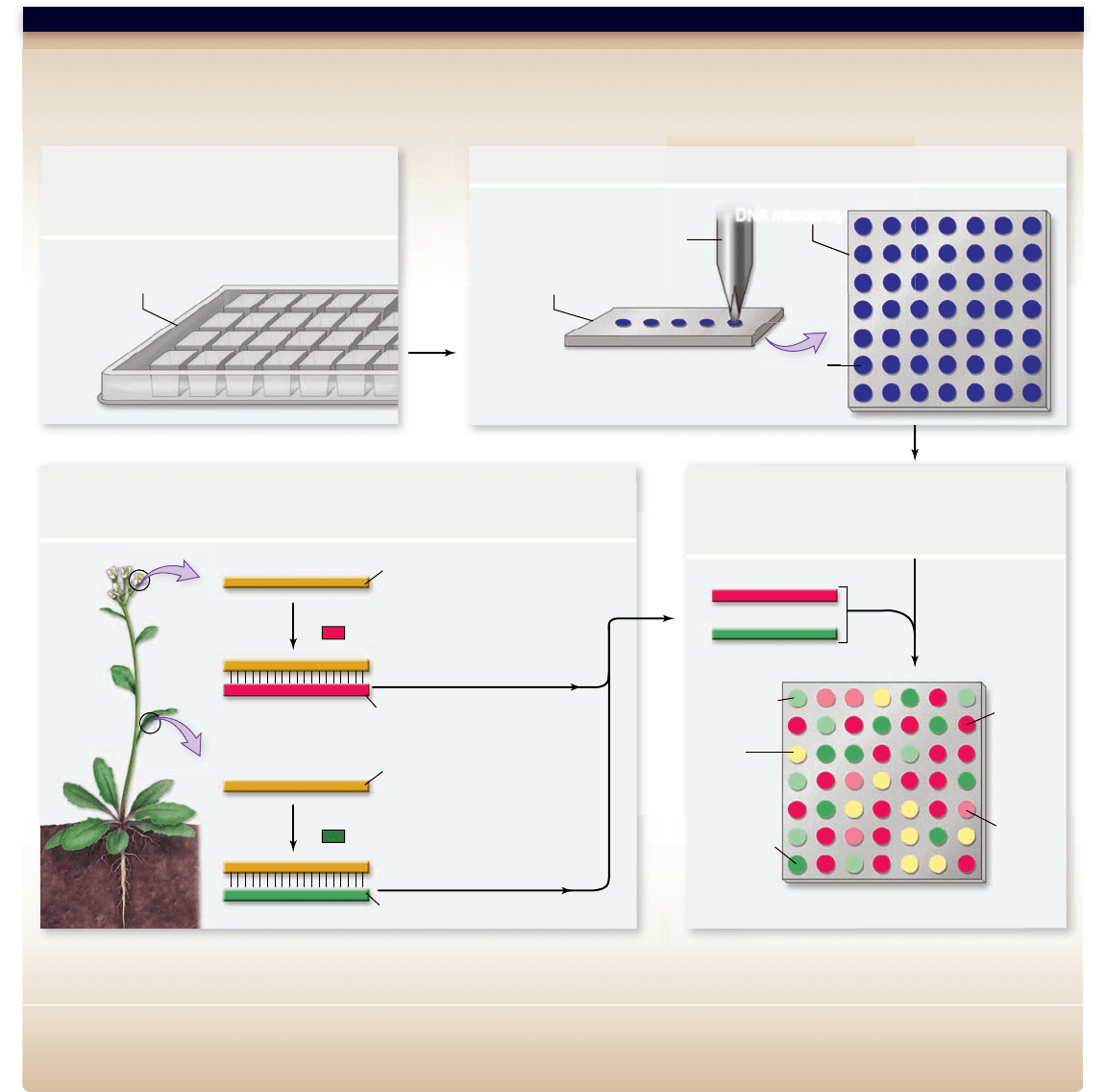
DNA microarrays
The earlier description of ESTs indicated that we could locate
sequences that are transcribed on our DNA maps—but this
tells us nothing about when and where these genes are turned
on. To be able to analyze gene expression at the whole-genome
level requires a representation of the genome that can be ma-
nipulated experimentally. This has led to the creation of DNA
microarrays, or “gene chips” (figure 18.10) .
Preparation of a microarray
To prepare a particular mi-
croarray, fragments of DNA are deposited on a microscope
slide by a robot at indexed locations (i.e., an array). Silicon
chips instead of slides can also be arrayed. These chips can
then be used in hybridization experiments with labeled mRNA
from different sources. This gives a high-level view of genes
that are active and inactive in speci c tissues.
Researchers are currently using a chip with 24,000 Ara-
bidopsis genes on it to identify genes that are expressed devel-
opmentally in certain tissues or in response to environmental
factors. RNA from these tissues can be isolated and used as a
probe for these microarrays. Only those sequences that are
expressed in the tissues will be present and will hybridize to
the microarray.
Microarray analysis and cancer.
One of the most exciting
uses of microarrays has been the pro ling of gene expression
patterns in human cancers. Microarray analysis has revealed
that different cancers have different gene expression patterns.
These ndings are already being used to diagnose and design
speci c treatments for particular cancers.
From a large body of data, several patterns emerge:
Speci c cancer types can be reliably distinguished from 1.
other cancer types and from normal tissue based on
microarray data.
Subtypes of particular cancers often have different gene 2.
expression patterns in microarray data.
Gene expression patterns from microarray data can be 3.
used to predict disease recurrence, tendency to
metastasize, and treatment response.
This represents an important step forward in both the
diagnosis and treatment of human cancers.
Microarray analysis and genome-wide
association mapping
Genome-wide association (GWA) is an approach that compares
SNPs throughout the genome between members in a popula-
tion with and without a specific trait. The goal is to find a SNP
that correlates with a specific trait as a way to map the trait. The
dog genome exemplifies the value of GWA mapping. Using
microarrays that distinguish between 15,000 SNP variants,
Organelle genomes have exchanged
genes with the nuclear genome
Mitochondria and chloroplasts are considered to be descen-
dants of ancient bacterial cells living in eukaryotes as a re-
sult of endosymbiosis (chapter 4 ). Their genomes have been
sequenced in some species, and they are most like prokary-
otic genomes. The chloroplast genome, having about 100
genes, is minute compared with the rice genome, with
32,000 to 55,000 genes.
The chloroplast genome
The chloroplast, a plant organelle that functions in photosyn-
thesis, can independently replicate in the plant cell because it
has its own genome. The DNA in the chloroplasts of all land
plants have about the same number of genes, and they are pres-
ent in about the same order. In contrast to the evolution of the
DNA in the plant cell nucleus, chloroplast DNA has evolved at
a more conservative pace and therefore shows a more easily
interpretable evolutionary pattern when scientists study DNA
sequence similarities. Chloroplast DNA is also not subject to
modification caused by transposable elements or to mutations
due to recombination.
Over time, some genetic exchange appears to have oc-
curred between the nuclear and chloroplast genomes. For ex-
ample, Rubisco, the key enzyme in the Calvin cycle of
photo synthesis (chapter 8 ), consists of large and small subunits.
The small subunit is encoded in the nuclear genome. The pro-
tein it encodes has a targeting sequence that allows it to enter
the chloroplast and combine with large subunits, which are
coded for and produced by the chloroplast.
The mitochondrial genome
Mitochondria are also constructed of components encoded
by both the nuclear genome and the mitochondrial genome.
For example, the electron transport chain (chapter 7 ) is made
up of proteins that are encoded by both nuclear and mito-
chondrial genomes—and the pattern varies with different
species. This observation implies a movement of genes from
the mitochondria to the nuclear genome with some lineage-
specific variation.
The evolutionary history of the localization of these genes
is a puzzle. Comparative genomics and their evolutionary im-
plications are explored in detail in chapter 24 , after we have
established the fundamentals of evolutionary theory.
Functional genomics reveals gene
function at the genome level
Bioinformatics takes advantage of high-end computer technol-
ogy to analyze the growing gene databases, look for relation-
ships among genomes, and then hypothesize functions of genes
based on sequence. Genomics is now shifting gears and moving
back to hypothesis-driven science, to functional genomics,
the study of the function of genes and their products.
Like sequencing whole genomes, finding how these ge-
nomes work requires the efforts of a large team. For example,
364
part
III
Genetic and Molecular Biology
rav32223_ch18_352-371.indd 364rav32223_ch18_352-371.indd 364 11/10/09 3:06:00 PM11/10/09 3:06:00 PM
Apago PDF Enhancer
DNA microarray
DNA
Flower-specific mRNA
(sample 1)
Reverse transcriptase
Fluorescent nucleotide
Reverse transcriptase
Different fluorescent nucleotide
cDNA probe
cDNA probe
Leaf-specific mRNA
(sample 2)
Probe 1
Probe 2
Strong
signal from
probe 2
Weak
signal from
probe 2
Strong
signal
from
probe 1
Weak
signal
from
probe 1
Similar
signals from
both probes
Mix
Hybridize
3. Isolate mRNA from flowers and leaves, convert to cDNA, and label with fluorescent
labels. Samples of mRNA are obtained from two different tissues. Probes for each
sample are prepared using a different fluorescent nucleotide for each sample.
4. Probe microarray with labeled cDNA. The two
probes are mixed and hybridized with the
microarray. Fluorescent signals on the microarray
are analyzed.
2. DNA is printed onto a microscope slide.
Robotic
quill
Microscope
slide
Plate containing
genome fragments
1
3
4
2
1. Start with an Arabidopsis genome microarray.
Unique, PCR-amplified Arabidopsis genome
fragments (1, 2, 3, 4...) are contained in each
well of a plate.
1
23
4
Hypothesis: Flowers and leaves will express some of the same genes.
Prediction: When mRNAs isolated from Arabidopsis flowers and from leaves are used as probes on an Arabidopsis genome microarray, the two different
probe sets will hybridize to both common and unique sequences.
Test:
Result: Yellow spots represent sequences that hybridized to cDNA from both flowers and leaves. Red spots represent genes expressed only in flowers. Green
spots represent genes expressed only in leaves.
Conclusion: Some Arabidopsis genes are expressed in both flowers and leaves, but there are genes expressed in flowers but not leaves and leaves but not flowers.
Further Experiments: How could you use microarrays to determine whether the genes expressed in both flowers and leaves are housekeeping genes or are
unique to flowers and leaves?
SCIENTIFIC THINKING
Figure 18.10
Microarrays.
how can we be sure that a gene identified by an annotation
program actually functions as a gene in the organism? One
way to address these questions is through transgenics —the
creation of organisms containing genes from other species
(transgenic organisms).
The technology for creating transgenic organisms
was discussed in chapter 17 ; it is illustrated for plants in
disease alleles for a recessive trait can be mapped by comparing
20 purebred dogs exhibiting the disease with 20 healthy dogs.
Transgenics
How can we determine whether two genes from different spe-
cies having similar sequences have the same function? And,
chapter
18
Genomics
365www.ravenbiology.com
rav32223_ch18_352-371.indd 365rav32223_ch18_352-371.indd 365 11/10/09 3:06:00 PM11/10/09 3:06:00 PM
Apago PDF Enhancer
a. b.
c. d.
2000 µm 2500 µm
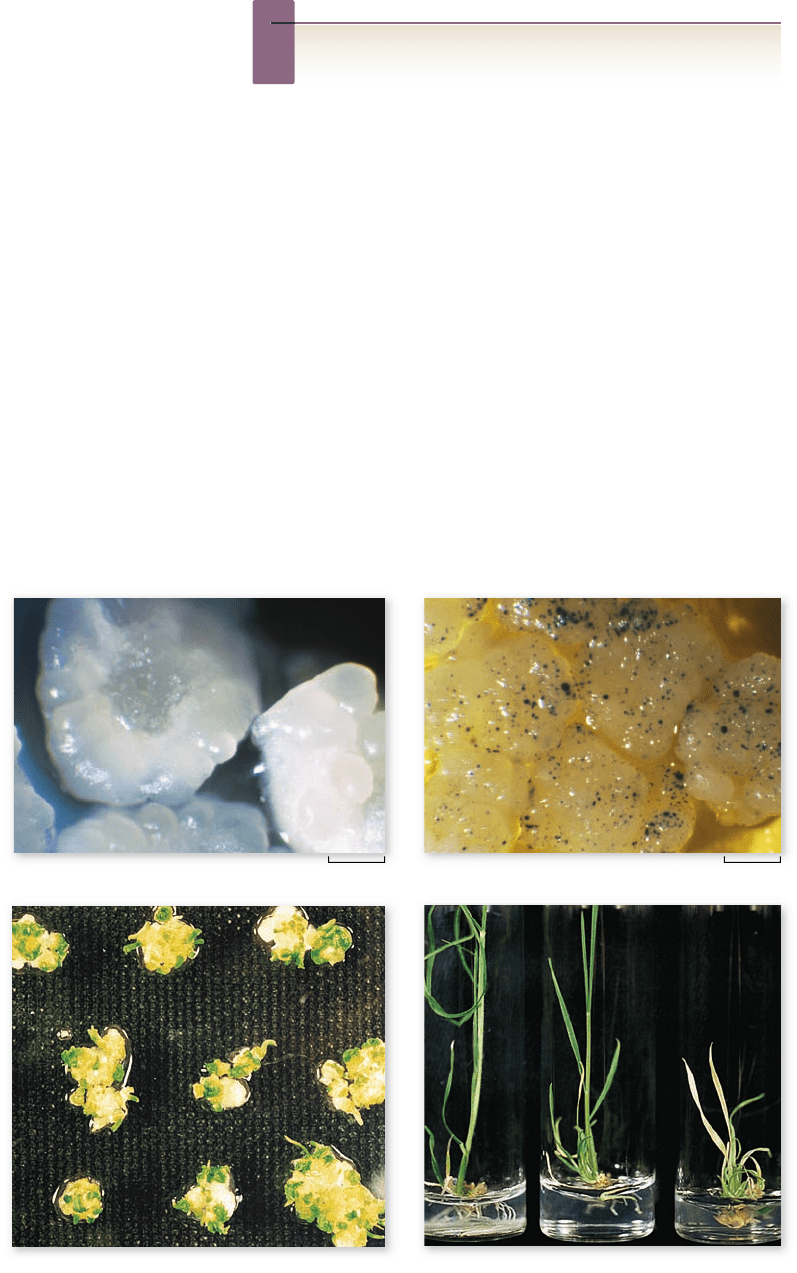
Figure 18.11
Growth of a
transgenic plant. DNA containing
a gene for herbicide resistance was
transferred into wheat (Triticum
aestivum). The DNA also contains the
GUS gene, which is used as a tag or
label. The GUS gene produces an
enzyme that catalyzes the conversion
of a staining solution from clear to
blue. a. Embryonic tissue just prior to
insertion of foreign DNA.
b. Following DNA transfer, callus
cells containing the foreign DNA are
indicated by color from the GUS gene
(blue spots). c. Shoot formation in the
transgenic plants growing on a
selective medium. Here, the gene for
herbicide resistance in the transgenic
plants allows growth on the selective
medium containing the herbicide.
d. Comparison of growth on the
selection medium for transgenic
plants bearing the herbicide
resistance gene (left) and a
nontransgenic plant (right).
function of a protein can also depend on its association with
other proteins. Nonetheless, since proteins perform most of
the major functions of cells, understanding their diversity
is essential.
Inquiry question
?
Why is the “proteome” likely to be different from simply
the predicted protein products found in the complete
genome sequence?
Predicting protein function
The use of new methods to quickly identify and characterize
large numbers of proteins is the distinguishing feature between
traditional protein biochemistry and proteomics. As with ge-
nomics, the challenge is one of scale.
Ideally, a researcher would like to be able to examine a
nucleotide sequence and know what sort of functional protein
the sequence specifies. Databases of protein structures in differ-
ent organisms can be searched to predict the structure and func-
tion of genes known only by sequence, as identified in genome
projects. Analysis of these data provides a clearer picture of how
gene sequence relates to protein structure and function. Having
a greater number of DNA sequences available allows for more
extensive comparisons as well as identification of common struc-
tural patterns as groups of proteins continue to emerge.
Although there may be as many as a million different
proteins, most are just variations on a handful of themes.
figure 18.11 . Different markers can be incorporated into the
gene so that its protein product can be visualized or isolated
in the transgenic plant, demonstrating that the inserted gene
is being transcribed. In some cases, the transgene (inserted
foreign gene) may affect a visible phenotype. Of course,
transgenics are but one of many ways to address questions
about gene function.
Proteomics moves from genes to proteins
Proteins are much more difficult to study than DNA because of
posttranslational modification and formation of protein com-
plexes. And, as already mentioned, a single gene can code for
multiple proteins using alternative splicing. Although all the
DNA in a genome can be isolated from a single cell, only a por-
tion of the proteome is expressed in a single cell or tissue.
Proteomics is the study of the proteome —all of the
proteins encoded by the genome. Understanding the proteome
for even a single cell will be a much more difficult task than
determining the sequence of a genome. Because a single gene
can produce more than one protein by alternative splicing, the
first step is to characterize the transcriptome —all of the RNA
that is present in a cell or tissue. Because of alternative splicing,
both the transcriptome and the proteome are larger and more
complex than the simple number of genes in the genome.
To make matters worse, a single protein can be modified
posttranslationally to produce functionally different forms. The
366
part
III
Genetic and Molecular Biology
rav32223_ch18_352-371.indd 366rav32223_ch18_352-371.indd 366 11/10/09 3:06:01 PM11/10/09 3:06:01 PM
Apago PDF Enhancer
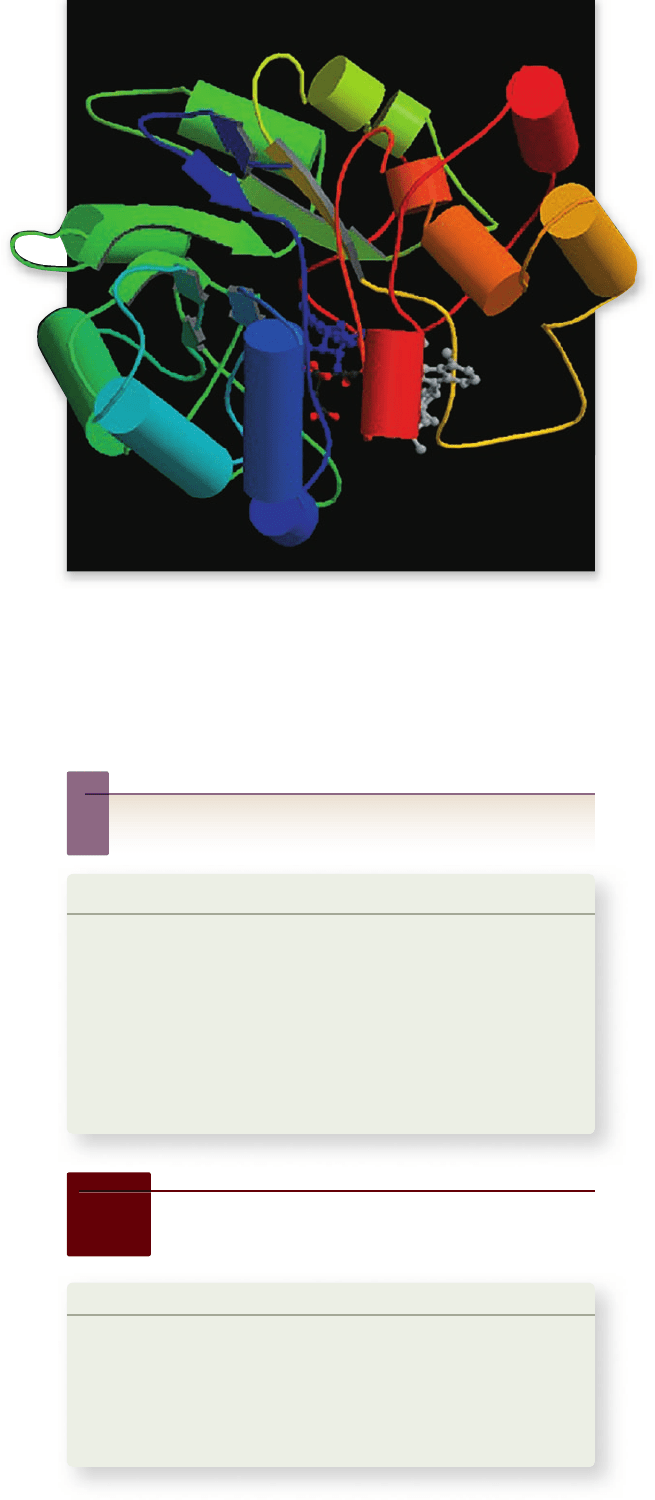
Figure 18.12
Computer-generated model of an
enzyme. Searchable databases contain known protein structures,
including human aldose reductase shown here. Secondary structural
motifs are shown in different colors.
Inquiry question
?
What is the relationship among genome, transcriptome,
and proteome?
Learning Outcomes Review 18.4
Comparisons of diff erent genomes allows geneticists to infer structural,
functional, and evolutionary relationships between genes and proteins as
well as relationships between species. Microarrays enable evaluation of
gene expression for many genes at once. Proteomics involves similar analysis
of all the proteins coded by a genome, that is, an organism’s proteome.
Because of alternative splicing, this task is much more complex.
■ Why is establishment of a species’ transcriptome an
important step in studying its proteome?
The same shared structural motifs—barrels, helices, mo-
lecular zippers—are found in the proteins of plants, insects,
and humans (figure 18.12 ; also see chapter 3 for more infor-
mation on protein motifs). The maximum number of dis-
tinct motifs has been estimated to be fewer than 5000. About
1000 of these motifs have already been cataloged. Efforts
are now under way to detail the shapes of all the com-
mon motifs.
Protein microarrays
Protein microarrays, comparable to DNA microarrays, are
being used to analyze large numbers of proteins simultaneously.
Making a protein microarray starts with isolating the transcrip-
tome of a cell or tissue. Then cDNAs are constructed and re-
produced by cloning them into bacteria or viruses. Transcription
and translation occur in the prokaryotic host, and micromolar
quantities of protein are isolated and purified. These are then
spotted onto glass slides.
Protein microarrays can be probed in at least three differ-
ent ways. First, they can be screened with antibodies to specific
proteins. Antibodies are labeled so that they can be detected,
and the patterns on the protein array can be determined by
computer analysis.
An array of proteins can also be screened with another
protein to detect binding or other protein interactions. Thou-
sands of interactions can be tested simultaneously. For example,
calmodulin (which mediates Ca
2+
function; see chapter 9 ) was
labeled and used to probe a yeast proteome array with 5800
proteins. The screen revealed 39 proteins that bound calmodu-
lin. Of those 39, 33 were previously unknown!
A third type of screen uses small molecules to assess
whether they will bind to any of the proteins on the array. This
approach shows promise for discovering new drugs that will
inhibit proteins involved in disease.
Large-scale screens reveal
protein–protein interactions
We often study proteins in isolation, compared with their nor-
mal cellular context. This approach is obviously artificial. One
immediate goal of proteomics, therefore, is to map all the phys-
ical interactions between proteins in a cell. This is a daunting
task that requires tools that can be automated, similarly to the
way that genome sequencing was automated.
One approach is to use the yeast two-hybrid system dis-
cussed in the preceding chapter. This system can be automated
once libraries of known cDNAs are available in each of the two
vectors used. The use of two-hybrid screens has been applied to
budding yeast to generate a map of all possible interacting pro-
teins. This method is difficult to apply to more complex multi-
cellular organisms, but in a technical tour-de-force, it has been
applied to Drosophila melanogaster as well.
For vertebrates, the two-hybrid system is being applied
more selectively, by concentrating on a biologically signifi-
cant process, such as signal transduction. The technique can
then be used to map all of the interacting proteins in a spe-
cific signaling pathway.
18.5
Applications of Genomics
Learning Outcomes
List ways in which genomics could be applied to 1.
infectious disease research.
Explain how genomics could enhance crop production 2.
and nutritional yield.
Evaluate the issues of genome ownership and privacy.3.
chapter
18
Genomics
367www.ravenbiology.com
rav32223_ch18_352-371.indd 367rav32223_ch18_352-371.indd 367 11/10/09 3:06:08 PM11/10/09 3:06:08 PM
Apago PDF Enhancer
TABLE 18.2
High-Priority Pathogens
for Genomic Research
Pathogen Disease Genome*
Variola major Smallpox Complete
Bacillus anthracis Anthrax Complete
Yersinia pestis Plague Complete
Clostridium botulinum Botulism In progress
Francisella tularensis Tularemia Complete
Filoviruses Ebola and Marburg
hemorrhagic fever
Both are complete
Arenaviruses Lassa fever and Argentine
hemorrhagic fever
Both are complete
*There are multiple strains of these viruses and bacteria. “Complete” indicates that at least one has been sequenced.
For example, the Florida strain of anthrax was the rst to be sequenced.
Due in large part to scientific advances in crop breeding
and farming techniques, in the last 50 years world grain pro-
duction has more than doubled, with an increase in cropland of
only 1%. The world now farms a total area the size of South
America, but without the scientific advances of the past
50 years, an area equal to the entire western hemisphere would
need to be farmed to produce enough food for the world.
Unfortunately, water usage for crops has tripled in that
time period, and quality farmland is being lost to soil erosion.
Scientists are also concerned about the effects of global climate
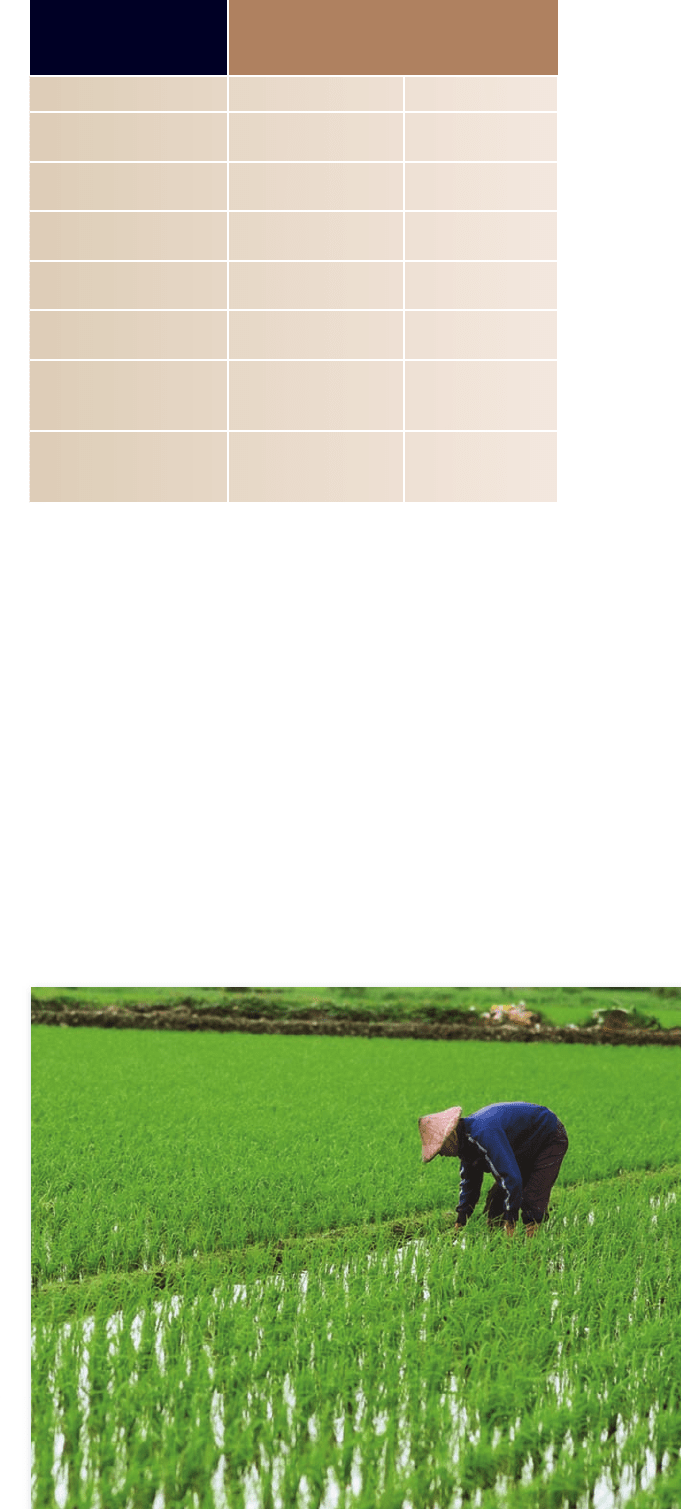
Figure 18.13
Rice eld. Most of the rice grown globally
is directly consumed by humans and is the dietary mainstay of
2 billion people.
Space allows us to highlight only a few of the myriad applications
of genomics to show the possibilities. The tools being developed
truly represent a revolution in biology that will likely have a last-
ing influence on the way that we think about living systems.
Genomics can help to
identify infectious diseases
The genomics revolution has yielded millions of new genes to
be investigated. The potential of genomics to improve human
health is enormous. Mutations in a single gene can explain
some, but not most, hereditary diseases. With entire genomes
to search, the probability of unraveling human, animal, and
plant diseases is greatly improved.
Although proteomics will likely lead to new pharmaceuti-
cals, the immediate effect of genomics is being seen in diagnos-
tics. Both improved technology and gene discovery are
enhancing the diagnosis of genetic abnormalities.
Diagnostics are also being used to identify individuals.
For example, short tandem repeats (STRs), discovered through
genomic research, were among the forensic diagnostic tools
used to identify remains of victims of the September 11, 2001,
terrorist attack on the World Trade Center in New York City.
The September 11 attacks were followed by an increased
awareness and concern about biological weapons. Five people
died and 17 more were infected with anthrax after envelopes
containing anthrax spores were sent through the U.S. mail. A
massive FBI investigation initially focused on the wrong indi-
vidual, Steven J. Hatfill, a government scientist. Genome se-
quencing allowed exploration of possible sources of the deadly
bacteria. A difference of only 10 bp between strains allowed the
FBI to trace the source to a single vial of the bacteria used in a
vaccine research program at U.S. Army Medical Research Insti-
tute for Infectious Diseases. By 2008, Hatfield was exonerated.
Another researcher, Bruce E. Ivins, committed suicide just be-
fore being formally charged by the FBI with criminal activity in
the 2001 anthrax attacks. Ivins had been working on vaccine de-
velopment. In addition, substantial effort has been turned toward
the use of genomic tools to distinguish between naturally occur-
ring infections and intentional outbreaks of disease. The Centers
for Disease Control and Prevention (CDC) have ranked bacteria
and viruses that are likely targets for bioterrorism (table 18.2).
Genomics can help improve
agricultural crops
Globally speaking, poor nutrition is the greatest impediment
to human health. Much of the excitement about the rice ge-
nome project is based on its potential for improving the yield
and nutritional quality of rice and other cereals worldwide.
The development of Golden Rice (chapter 17 ) is an example
of improved nutrition through genetic approaches. About one
third of the world population obtains half its calories from
rice (figure 18.13). In some regions, individuals consume up
to 1.5 kg of rice daily. More than 500 million tons of rice is
produced each year, but this may not be adequate to provide
enough rice for the world in the future.
368
part
III
Genetic and Molecular Biology
rav32223_ch18_352-371.indd 368rav32223_ch18_352-371.indd 368 11/10/09 3:06:09 PM11/10/09 3:06:09 PM

Apago PDF Enhancer
Figure 18.14
Corn crop productivity well below its
genetic potential due to drought stress. Corn production
can be limited by water de ciencies due to the drought that
occurs during the growing season in dry climates. Global climate
change may increase drought stress in areas where corn is the
major crop.
Inquiry question
?
As of February 2008 a draft version of the corn genome has
been sequenced. How could you use information from the
corn and rice genome sequences to try to improve drought
tolerance in corn?
change on agriculture worldwide. Increasing the yield and
quality of crops, especially on more marginal farmland, will de-
pend on many factors—but genetic engineering, built on the
findings of genomics projects, can contribute significantly to
the solution.
Most crops grown in the United States produce less than
half of their genetic potential because of environmental stresses
(salt, water, and temperature), herbivores, and pathogens
(figure 18.14). Identifying genes that can provide resistance to
stress and pests is the focus of many current genomics research
projects. Having access to entire genomic sequences will en-
hance the probability of identifying critical genes.
Genomics raises ethical issues over
ownership of genomic information
Genome science is also a source of ethical challenges and di-
lemmas. One example is the issue of gene patents. Actually, it is
the use of a gene, not the gene itself, that is patentable. For a
patent to be granted for a gene’s use, the product and its func-
tion must be known.
The public genome consortia, supported by federal fund-
ing, have been driven by the belief that the sequence of ge-
nomes should be freely available to all and should not be
patented. Private companies patent gene functions, but they of-
ten make sequence data available with certain restrictions. The
physical sciences have negotiated the landscape of public and
for-profit research for decades, but this is relatively new terri-
tory for biologists.
Another ethical issue involves privacy. How sequence
data are used is the focus of thoughtful and ongoing discus-
sions. The Universal Declaration on the Human Genome and
Human Rights states, “The human genome underlies the fun-
damental unity of all members of the human family, as well as
the recognition of their inherent dignity and diversity. In a
symbolic sense, it is the heritage of humanity.”
Although we talk about “the” human genome, each of us
has subtly different genomes that can be used to identify us. Ge-
netic disorders such as cystic fibrosis and Huntington disease
can already be identified by screening, but genomics will greatly
increase the number of identifiable traits. The Genetic Informa-
tion Nondiscrimination Act (GINA) was signed into law in 2008
to prevent discrimination based on genotype. Employers and
health insurance companies may not request genetic tests or dis-
criminate based on someone’s genetic code. Life, disability, and
long term care insurance are not covered by GINA. Members of
the military are excluded from GINA’s privacy protection. The
U.S. Armed Forces require DNA samples from members of the
military for possible casualty identification. The genome privacy
debate continues.
Behavioral genomics is an area that is also rich with possi-
bilities and dilemmas. Very few behavioral traits can be accounted
for by single genes. Two genes have been associated with fragile-
X mental retardation, and three with early-onset Alzheimer dis-
ease. Comparisons of multiple genomes will likely lead to the
identification of multiple genes controlling a range of behaviors.
Will this change the way we view acceptable behavior?
In Iceland, the parliament has voted to have a private
company create a database from pooled medical, genetic,
and genealogical information about all Icelanders, a particu-
larly fascinating population from a genetic perspective. Be-
cause minimal migration or immigration has occurred there
over the last 800 years, the information that can be mined
from the Icelandic database is phenomenal. Ultimately, the
value of that information has to be weighed, however, against
any possible discrimination or stigmatization of individuals
or groups.
Learning Outcomes Review 18.5
Genomics is one approach to better diagnosis, based on knowledge
of infectious agents’ genetic makeup; it also allows identifi cation of
individual disease strains. Genomics has enhanced DNA identifi cation of
remains. Agricultural crop yields and nutritional content could be
improved if genes that confer disease resistance or increased synthesis
can be identifi ed.
■ Suppose you produced an engineered form of potato
that had twice the amount of protein. Would you seek a
patent on this plant?
chapter
18
Genomics
369www.ravenbiology.com
rav32223_ch18_352-371.indd 369rav32223_ch18_352-371.indd 369 11/10/09 3:06:12 PM11/10/09 3:06:12 PM

Apago PDF Enhancer
Expressed sequence tags identify genes that are transcribed.
The number and location of expressed genes can be estimated
by sequencing the ends of randomly selected cDNAs to produce
expressed sequence tags (ESTs).
SNPs are single-base di erences between individuals.
Single-nucleotide difference between individuals are called single-
nucleotide polymorphisms (SNPs). To be classi ed as a polymorphism,
an SNP must be present in at least 1% of the population. At least
50,000 SNPs are currently known in coding regions.
Genomic haplotypes are regions of chromosomes that are not
exchanged by recombination. These regions can be used to map
genes by association (see gure 18.8).
18.4 Genomics and Proteomics
Comparative genomics reveals conserved regions in genomes.
More than half of the genes of Drosophila have human counterparts.
The biggest difference between our genome and the chimpanzee
genome is in transposable elements.
Synteny allows comparison of unsequenced genomes.
Synteny refers to the conserved arrangements of segments of DNA
in related genomes (see gure 18.9). Many separate species have been
found to have large regions of synteny.
Organelle genomes have exchanged genes with the nuclear genome.
Both chloroplasts and mitochondria contain components that
indicate exchange of genetic material with the nuclear genome.
Functional genomics reveals gene function at the genome level.
Functional genomics uses high-end computer technology to analyze
gene function and gene products. DNA microarrays allow the expression
of all of the genes in a cell to be monitored at once (see gure 18.10).
Proteomics moves from genes to proteins.
Proteomics characterizes all of the proteins produced by a cell. The
transcriptome is all the mRNAs present in a cell at a speci c time.
Protein microarrays can identify and characterize large numbers
of proteins.
Large-scale screens reveal protein–protein interactions.
The yeast two-hybrid system is used to generate large-scale maps of
interacting proteins; however, the scope of this task is daunting in
humans, mice, and other vertebrates. Selective applications in speci c
areas, such as signal transduction, have been undertaken.
18.5 Applications of Genomics
Genomics can help to identify infectious diseases.
Genomics can help identify naturally occurring and intentional
outbreaks of infectious diseases and tracing of disease strains.
Genomics can help improve agricultural crops.
Genomics can potentially increase the nutritional value of crops and
alter their responses to environmental stresses, potentially helping to
feed a growing population.
Genomics raises ethical issues over ownership of genomic information.
Questions regarding pro t and ownership of genomic data provide
ongoing challenges for the ethical use of scienti c knowledge.
18.1 Mapping Genomes
Di erent kinds of physical maps can be generated.
Physical genetic maps include fully sequenced genomes, restriction
maps, and maps of chromosome banding patterns .
Sequence-tagged sites provide a common language for
physical maps.
Any physical site can be used as a sequence-tagged site (STS),
based on a small stretch of a unique DNA sequence that allows
unambiguous identi cation of a fragment.
Genetic maps provide a link to phenotypes.
Short tandem repeats (STRs) are the most common type of
markers for distinguishing regions of the genome and assessing its
phenotypic effects.
Physical maps can be correlated with genetic maps.
Physical and genetic maps can be correlated. Any gene that can be
cloned can be placed within the genome sequence and mapped.
However, absolute correspondence of distances cannot
be accomplished.
18.2 Whole-Genome Sequencing
Genome sequencing requires larger molecular clones.
Yeast arti cial chromosomes (YACs) have allowed cloning of larger
pieces of DNA, although their use has some drawbacks. Bacterial
arti cial chromosomes (BACs) are most commonly used now.
Whole-genome sequencing is approached in two ways: clone-by-clone
and shotgun.
Clone-by-clone sequencing starts with known clones, often in BACs
that can be aligned with each other.
Shotgun sequencing involves sequencing random clones, then using a
computer to assemble the nished sequence.
The Human Genome Project used both sequencing methods.
By 2004, the “ nished” sequence was announced, and it includes 99%
of the euchromatic human DNA sequence.
18.3 Characterizing Genomes
The Human Genome Project found fewer genes than expected.
Although eukaryotic genomes are larger and have more genes than
those of prokaryotes, the size of the organism is not always correlated
with the size of the genome. The human genome contains only
around 25,000 genes, fewer than found in rice.
Finding genes in sequence data requires computer searches.
In a sequenced genome, protein-coding genes are identi ed by
looking for open-reading frames (ORFs). An ORF begins with
a start codon and contains no stop codon for a distance long
enough to encode a protein. Genes are then grouped based on
conserved regions.
Genomes contain both coding and noncoding DNA.
Protein-encoding DNA includes single-copy genes, segmental
duplications, multigene families, and tandem clusters. Noncoding
DNA in eukaryotes makes up about 99% of DNA. Approximately
45% of the human genome is composed of mobile transposable
elements, including LINEs, SINEs, and LTRs.
Chapter Review
370
part
III
Genetic and Molecular Biology
rav32223_ch18_352-371.indd 370rav32223_ch18_352-371.indd 370 11/10/09 3:06:16 PM11/10/09 3:06:16 PM

Apago PDF Enhancer
STS 5
Clone A —————————————
Clone B ——————————
Clone C ————————————
Clone D ————————
Clone E ———————
STS 3 STS 4
STS 2 STS 3
STS 5 STS 6
STS 3 STS 4
STS 1 STS 2
2. Genomic research can be used to determine if an outbreak of an
infectious disease is natural or “intentional.” Explain what a
genomic researcher would be looking for in a suspected
intentional outbreak of a disease like anthrax.
3. Which of the following techniques relies on prior knowledge of
overlapping sequences?
a. Yeast two-hybrid system
b. Shotgun method of genome sequencing
c. FISH
d. Clone-by-clone method of genome sequencing
4. The duplication of a gene due to uneven meiotic crossing over
is thought to lead to the production of a
a. segmental duplication. c. simple sequence repeat.
b. tandem duplication. d. multigene family.
5. What information can be obtained from a DNA microarray?
a. The sequence of a particular gene.
b. The presence of genes within a speci c tissue.
c. The pattern of gene expression.
d. Differences between genomes.
6. Which of the following is true regarding microarray technology
and cancer?
a. A DNA microarray can determine the type of cancer.
b. A DNA microarray can measure the response of a cancer
to therapy.
c. A DNA microarray can be used to predict whether the
cancer will metastasize.
d. All of the above
7. Which of the following techniques could be used to examine
protein–protein interactions in a cell?
a. Two-hybrid screens c. Protein microarrays
b. Protein structure d. Both a and c
databases
SYNTHESIZE
1. You are in the early stages of a genome-sequencing project. You
have isolated a number of clones from a BAC library and mapped
the inserts in these clones using STSs. Use the STSs to align the
clones into a contiguous sequence of the genome (a contig).
UNDERSTAND
1. A genetic map is based on the
a. sequence of the DNA.
b. relative position of genes on chromosomes.
c. location of sites of restriction enzyme cleavage.
d. banding pattern on a chromosome.
2. What is an STS?
a. A unique sequence within the DNA that can be used
for mapping
b. A repeated sequence within the DNA that can be used
for mapping
c. An upstream element that allows for mapping of the 3'
region of a gene
d. Both b and c
3. Which number represents the total number of genes in the
human genome?
a. 2500 b. 10,000
c. 25,000 d. 100,000
4. An open reading frame (ORF) is distinguished by the
presence of
a. a stop codon.
b. a start codon.
c. a sequence of DNA long enough to encode a protein.
d. All of the above
5. What is a BLAST search?
a. A mechanism for aligning consensus regions during whole-
genome sequencing
b. A search for similar gene sequences from other species
c. A method of screening a DNA library
d. A method for identifying ORFs
6. Which of the following is not an example of a protein-
encoding gene?
a. Single-copy gene b. Tandem clusters
c. Pseudogene d. Multigene family
7. What is a proteome?
a. The collection of all genes encoding proteins
b. The collection of all proteins encoded by the genome
c. The collection of all proteins present in a cell
d. The amino acid sequence of a protein
8. Which of the following is not an example of noncoding DNA?
a. Promoter b. Intron
c. Pseudogene d. Exon
APPLY
1. An arti cial chromosome is useful because it
a. produces more consistent results than a natural
chromosome.
b. allows for the isolation of larger DNA sequences.
c. provides a high copy number of a DNA sequence.
d. is linear.
2. Comparisons between genomes is made easier because of
a. synteny. b. haplotypes.
c. transposons. d. expressed sequence tags.
Review Questions
ONLINE RESOURCE
www.ravenbiology.com
Understand, Apply, and Synthesize—enhance your study with
animations that bring concepts to life and practice tests to assess
your understanding. Your instructor may also recommend the
interactive eBook, individualized learning tools, and more.
chapter
18
Genomics
371www.ravenbiology.com
rav32223_ch18_352-371.indd 371rav32223_ch18_352-371.indd 371 11/10/09 3:06:16 PM11/10/09 3:06:16 PM