
Raven P.H., Johnson G.B., Mason K.A. Biology (Ninth Edition)
Подождите немного. Документ загружается.

Apago PDF Enhancer
Parent
population
Bottleneck
(drastic reduction
in population)
Surviving
individuals
Next
generation
origin. In addition, gene flow may also result from the mating
of individuals belonging to adjacent populations.
Consider two populations initially different in allele fre-
quencies: In population 1, p = 0.2 and q = 0.8; in population 2,
p = 0.8 and q = 0.2. Gene flow will tend to bring the rarer allele
into each population. Thus, allele frequencies will change from
generation to generation, and the populations will not be in
Hardy–Weinberg equilibrium. Only when allele frequencies
reach 0.5 for both alleles in both populations will equilibrium
be attained. This example also indicates that gene flow tends to
homogenize allele frequencies among populations.
Nonrandom mating shifts
genotype frequencies
Individuals with certain genotypes sometimes mate with one
another more commonly than would be expected on a random
basis, a phenomenon known as nonrandom mating (figure 20.4c).
Assortative mating, in which phenotypically similar individu-
als mate, is a type of nonrandom mating that causes the fre-
quencies of particular genotypes to differ greatly from those
predicted by the Hardy–Weinberg principle.
Assortative mating does not change the frequency of the
individual alleles, but rather increases the proportion of ho-
mozygous individuals because phenotypically similar individu-
als are likely to be genetically similar and thus are also more
likely to produce offspring with two copies of the same allele.
This is why populations of self-fertilizing plants consist pri-
marily of homozygous individuals.
By contrast, disassortative mating, in which phenotypically
different individuals mate, produces an excess of heterozygotes.
Genetic drift may alter allele
frequencies in small populations
In small populations, frequencies of particular alleles may
change drastically by chance alone. Such changes in allele fre-
quencies occur randomly, as if the frequencies were drifting
from their values. These changes are thus known as genetic
drift (figure 20.4d). For this reason, a population must be large
to be in Hardy–Weinberg equilibrium.
If the gametes of only a few individuals form the next
generation, the alleles they carry may by chance not be repre-
sentative of the parent population from which they were drawn,
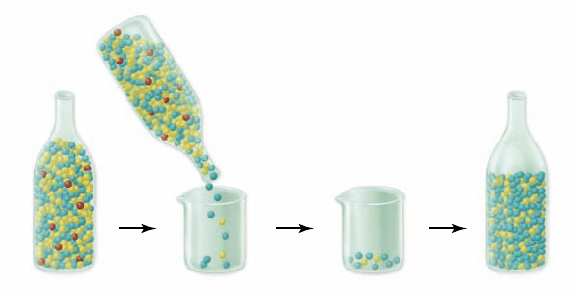
as illustrated in figure 20.5. In this example, a small number of
individuals are removed from a bottle containing many. By
chance, most of the individuals removed are green, so the new
population has a much higher population of green individuals
than the parent generation had.
A set of small populations that are isolated from one an-
other may come to differ strongly as a result of genetic drift,
even if the forces of natural selection are the same for both.
Because of genetic drift, sometimes harmful alleles may in-
crease in frequency in small populations, despite selective dis-
advantage, and favorable alleles may be lost even though they
are selectively advantageous. It is interesting to realize that hu-
mans have lived in small groups for much of the course of their
evolution; consequently, genetic drift may have been a particu-
larly important factor in the evolution of our species.
Larger populations also experience the effect of genetic
drift, but to a lesser extent than smaller populations—the mag-
nitude of genetic drift is inversely related to population size.
However, large populations may have been much smaller in
the past, and genetic drift may have greatly altered allele fre-
quencies at that time. Imagine a population containing only
two alleles of a gene, B and b, in equal frequency (that is, p = q
= 0.50). In a large Hardy–Weinberg population, the genotype
frequencies are expected to be 0.25 BB, 0.50 Bb, and 0.25 bb. If
only a small sample of individuals produces the next genera-
tion, large deviations in these genotype frequencies can occur
simply by chance.
Suppose, for example, that four individuals form the next
generation, and that by chance they are two Bb heterozygotes
and two BB homozygotes—that is, the allele frequencies in the
next generation would be p = 0.75 and q = 0.25. In fact, if you
were to replicate this experiment 1000 times, each time
randomly drawing four individuals from the parental popula-
tion, then in about 8 of the 1000 experiments, one of the two
alleles would be missing entirely.
This result leads to an important conclusion: Genetic
drift can lead to the loss of alleles in isolated populations. Al-
leles that initially are uncommon are particularly vulnerable
(see figure 20.5).
Although genetic drift occurs in any population, it is par-
ticularly likely in populations that were founded by a few indi-
viduals or in which the population was reduced to a very small
number at some time in the past.
The founder effect
Sometimes one or a few individuals disperse and become the
founders of a new, isolated population at some distance from
their place of origin. These pioneers are not likely to carry all
the alleles present in the source population. Thus, some alleles
may be lost from the new population, and others may change
Figure 20.5
Genetic drift: a bottleneck e ect. The parent
population contains roughly equal numbers of green and yellow
individuals and a small number of red individuals. By chance, the few
remaining individuals that contribute to the next generation are mostly
green. The bottleneck occurs because so few individuals form the next
generation, as might happen after an epidemic or a catastrophic storm.
402
part
IV
Evolution
rav32223_ch20_396-416.indd 402rav32223_ch20_396-416.indd 402 11/10/09 4:26:22 PM11/10/09 4:26:22 PM
Apago PDF Enhancer
Guadalupe
UNITED
STATES
MEXICO
population in 1890,
reduced to inhabiting
Guadalupe only
current population
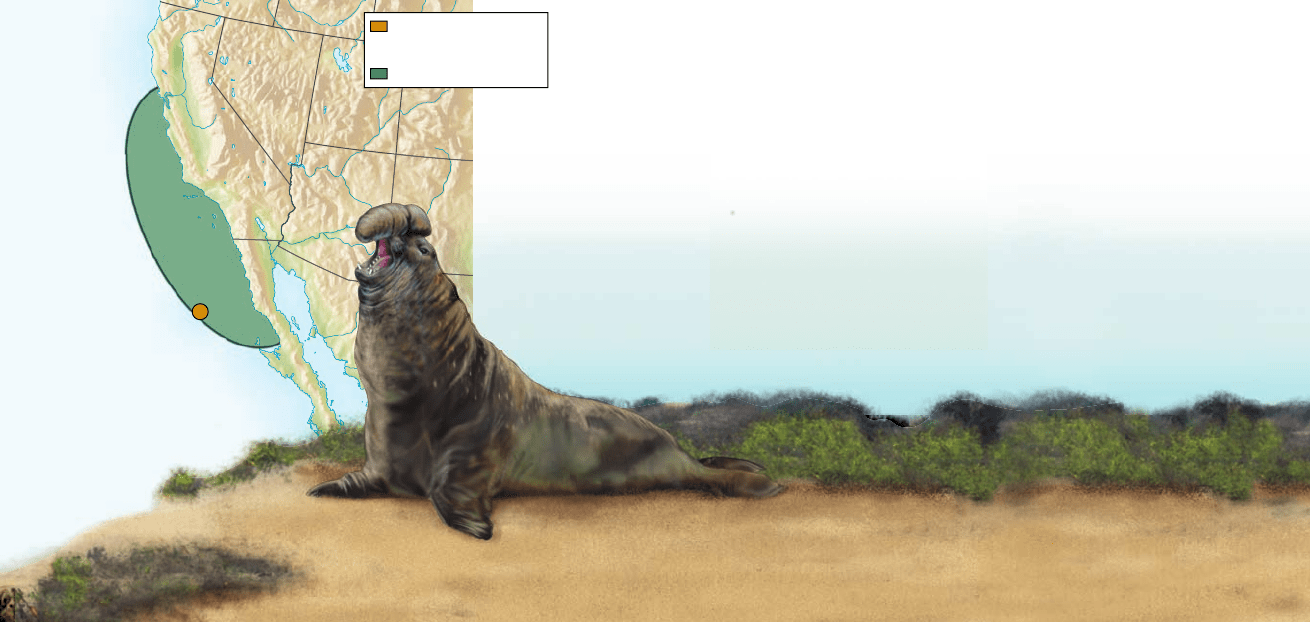
Figure 20.6
Bottleneck e ect: case study. Because the Northern Elephant
Seal (Mirounga angustirostris) lives in very cold wa ters, these, the world’s largest seals,
have thick layers of fat, for which they were hunted nearly to extinction late in the
nineteenth century. At the low point, only one population remained on Guadalupe
Island, with perhaps as few as 20 individuals; during this time, genetic variation was
lost through the process of random genetic drift. Since being protected, the species
has reclaimed most of its original range and now numbers in the tens of thousands, but
genetic variation will only recover slowly over time as mutations accumulate.
drastically in frequency. In some cases, previously rare alleles in
the source population may be a significant fraction of the new
population’s genetic endowment. This phenomenon is called
the founder effect.
Founder effects are not rare in nature. Many self-
pollinating plants start new populations from a single seed.
Founder effects have been particularly important in the evolu-
tion of organisms on distant oceanic islands, such as the Hawai-
ian and Galápagos Islands. Most of the organisms in such areas
probably derive from one or a few initial founders. Although
rare, such events are occasionally observed, such as when a mass
of vegetation carrying several iguanas washed up on the shore
of the Caribbean island of Anguilla in 1996, leading to the es-
tablishment of a population that still occurs there to this day.
In a similar way, isolated human populations begun by
relatively few individuals are often dominated by genetic fea-
tures characteristic of their founders. Amish populations in the
United States, for example, have unusually high frequencies of
a number of conditions, such as polydactylism (the presence of
a sixth finger).
The bottleneck effect
Even if organisms do not move from place to place, occasionally
their populations may be drastically reduced in size. This may
result from flooding, drought, epidemic disease, and other natural
forces, or from changes in the environment. The few surviving
individuals may constitute a random genetic sample of the origi-
nal population (unless some individuals survive specifically be-
cause of their genetic makeup). The resulting alterations and loss
of genetic variability have been termed the bottleneck effect.
The genetic variation of some living species appears to be
severely depleted, probably as the result of a bottleneck effect
in the past. For example, the northern elephant seal, which
breeds on the western coast of North America and nearby is-
lands, was nearly hunted to extinction in the nineteenth cen-
tury and was reduced to a single population containing perhaps
no more than 20 individuals on the island of Guadalupe off the
coast of Baja, California (figure 20.6). As a result of this bottle-
neck, the species has lost almost all of its genetic variation, even
though the seal populations have rebounded and now number
in the tens of thousands and breed in locations as far north as
near San Francisco.
Any time a population becomes drastically reduced in
numbers, such as in endangered species, the bottleneck effect is
a potential problem. Even if population size rebounds, the lack
of variability may mean that the species remains vulnerable to
extinction—a topic we will return to in chapter 59.
Selection favors some genotypes
over others
As Darwin pointed out, some individuals leave behind more
progeny than others, and the rate at which they do so is affected
by phenotype and behavior. We describe the results of this
process as selection (see figure 20.4e). In artificial selection , a
breeder selects for the desired characteristics. In natural selec-
tion , environmental conditions determine which individuals in
a population produce the most offspring.
For natural selection to occur and to result in evolution-
ary change, three conditions must be met:
Variation must exist among individuals in a population. 1.
Natural selection works by favoring individuals with some
traits over individuals with alternative traits. If no
variation exists, natural selection cannot operate.
Variation among individuals must result in 2.
differences in the number of offspring surviving in
the next generation. This is the essence of natural
selection. Because of their phenotype or behavior, some
individuals are more successful than others in producing
offspring. Although many traits are phenotypically
variable, individuals exhibiting variation do not always
differ in survival and reproductive success.
Variation must be genetically inherited. 3. For natural
selection to result in evolutionary change, the selected
differences must have a genetic basis. Not all variation has
a genetic basis—even genetically identical individuals may
be phenotypically quite distinctive if they grow up in
different environments. Such environmental effects are
chapter
20
Genes Within Populations
403www.ravenbiology.com
rav32223_ch20_396-416.indd 403rav32223_ch20_396-416.indd 403 11/10/09 4:26:30 PM11/10/09 4:26:30 PM
Apago PDF Enhancer
Light coat color favored by
natural selection because
it matches sand color
Dark coat color favored by
natural selection because
it matches black lava rock
Light coat color pocket mouse
is vulnerable on lava rock
common in nature. In many turtles, for example,
individuals that hatch from eggs laid in moist soil are
heavier, with longer and wider shells, than individuals
from nests in drier areas.
When phenotypically different individuals do not differ
genetically, then differences in the number of their offspring
will not alter the genetic composition of the population in
the next generation, and thus, no evolutionary change will
have occurred.
It is important to remember that natural selection and
evolution are not the same—the two concepts often are incor-
rectly equated. Natural selection is a process, whereas evolution
is the historical record, or outcome, of change through time.
Natural selection (the process) can lead to evolution (the out-
come), but natural selection is only one of several processes that
can result in evolutionary change. Moreover, natural selection
can occur without producing evolutionary change; only if varia-
tion is genetically based will natural selection lead to evolution.
Selection to avoid predators
The result of evolution driven by natural selection is that popu-
lations become better adapted to their environment. Many of
the most dramatic documented instances of adaptation involve
genetic changes that decrease the probability of capture by a
predator. The caterpillar larvae of the common sulphur but-
terfly Colias eurytheme usually exhibit a pale green color, provid-
ing excellent camouflage against the alfalfa plants on which
they feed. An alternative bright yellow color morph is kept at
very low frequency because this color renders the larvae highly
visible on the food plant, making it easier for bird predators to
see them (see figure 20.4e).
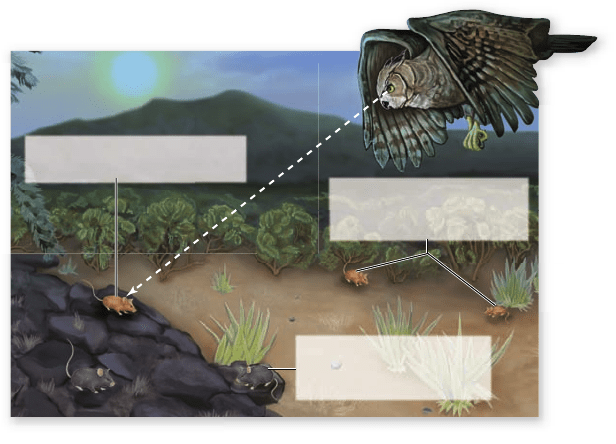
One of the most dramatic examples of background match-
ing involves ancient lava flows in the deserts of the American
Southwest. In these areas, the black rock formations produced
when the lava cooled contrast starkly with the surrounding bright
glare of the desert sand. Populations of many species of animals
occurring on these rocks—including lizards, rodents, and a vari-
ety of insects—are dark in color, whereas sand-dwelling popula-
tions in surrounding areas are much lighter (figure 20.7).
Predation is the likely cause for these differences in color.
Laboratory studies have confirmed that predatory birds such as
owls are adept at picking out individuals occurring on back-
grounds to which they are not adapted.
Selection to match climatic conditions
Many studies of selection have focused on genes encoding en-
zymes, because in such cases the investigator can directly assess
the consequences to the organism of changes in the frequency
of alternative enzyme alleles.
Often investigators find that enzyme allele frequencies
vary with latitude, so that one allele is more common in north-
ern populations, but is progressively less common at more
southern locations. A superb example is seen in studies of a fish,
the mummichog (Fundulus heteroclitus), which ranges along the
eastern coast of North America. In this fish, geographic varia-
tion occurs in allele frequencies for the gene that produces the
enzyme lactate dehydrogenase, which catalyzes the conversion
of pyruvate to lactate (see section 7.8).
Biochemical studies show that the enzymes formed by
these alleles function differently at different temperatures, thus
explaining their geographic distributions. The form of the en-
zyme more frequent in the north is a better catalyst at low tem-
peratures than is the enzyme from the south. Moreover, studies
indicate that at low temperatures, individuals with the northern
allele swim faster, and presumably survive better, than individu-
als with the alternative allele.
Selection for pesticide and microbial resistance
A particularly clear example of selection in natural populations
is provided by studies of pesticide resistance in insects. The
widespread use of insecticides has led to the rapid evolution of
resistance in more than 500 pest species. The cost of this evolu-
tion, in terms of crop losses and increased pesticide use, has
been estimated at $3-8 billion per year.
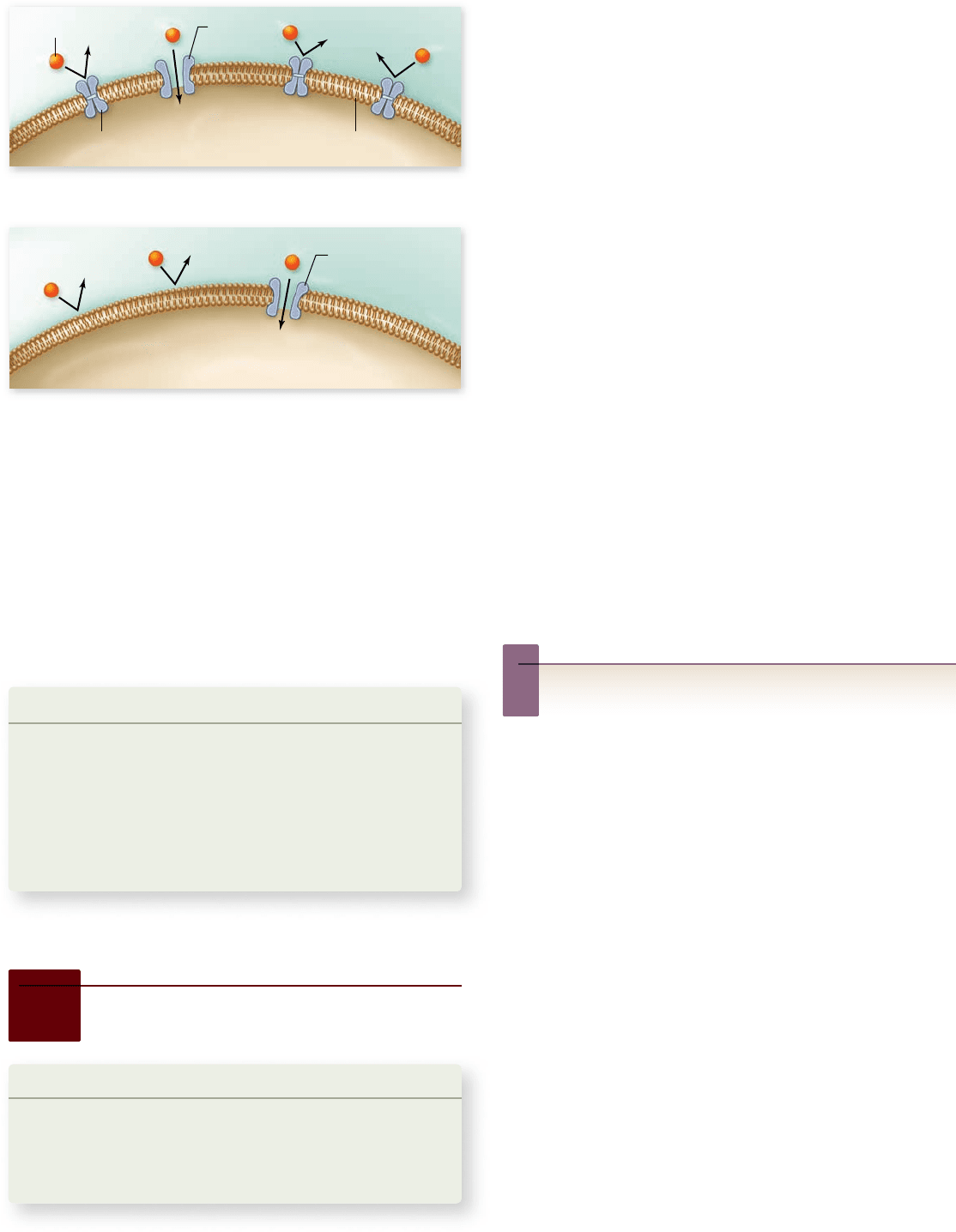
In the housefly, the resistance allele at the pen gene de-
creases the uptake of insecticide, whereas alleles at the kdr and
dld-r genes decrease the number of target sites, thus decreasing
the binding ability of the insecticide (figure 20.8). Other alleles
enhance the ability of the insects’ enzymes to identify and de-
toxify insecticide molecules.
Single genes are also responsible for resistance in other
organisms. For example, Norway rats are normally suscep-
tible to the pesticide warfarin, which diminishes the clotting
ability of the rat’s blood and leads to fatal hemorrhaging.
However, a resistance allele at a single gene reduces the abil-
ity of warfarin to bind to its target enzyme and thus renders
it ineffective.
Selection imposed by humans has also led to the evolu-
tion of resistance to antibiotics in many disease-causing patho-
gens. For example, Staphylococcus aureus, which causes staph
infections, was initially treated by penicillin. However, within
four years of mass-production of the drug, evolutionary change
Figure 20.7
Pocket mice from the Tularosa Basin of New
Mexico whose color matches their background. Black lava
formations are surrounded by desert, and selection favors coat color
in pocket mice that matches their surroundings. Genetic studies
indicate that the differences in coat color are the result of small
differences in the DNA of alleles of a single gene.
404
part
IV
Evolution
rav32223_ch20_396-416.indd 404rav32223_ch20_396-416.indd 404 11/10/09 4:26:34 PM11/10/09 4:26:34 PM
Apago PDF Enhancer
Pesticide molecule
Resistant target site Insect cell membrane
Target site
Target site
a. Insect cells with resistance allele at pen gene:
decreased uptake of the pesticide.
b. Insect cells with resistance allele at kdr gene:
decreased number of target sites for the pesticide.
in S. aureus modified an enzyme so that it would attack penicil-
lin and render it inactive. Since that time, several other drugs
have been developed to attack the microbe, and each time resis-
tance has evolved. As a result, staph infections have re-emerged
as a major health threat.
Learning Outcomes Review 20.3
Five factors can bring about deviation from the predicted Hardy–Weinberg
genotype frequencies. Of these, only selection regularly produces adaptive
evolutionary change, but the genetic constitution of populations, and
thus the course of evolution, can also be aff ected by mutation, gene fl ow,
nonrandom mating, and genetic drift.
■ How do each of these processes cause populations to
vary from Hardy-Weinberg equilibrium?
20.4
Fitness and Its Measurement
Figure 20.8
Selection for pesticide resistance. Resistance
alleles at genes such as pen and kdr allow insects to be more resistant
to pesticides. Insects that possess these resistance alleles have
become more common through selection.
Learning Outcomes
Define evolutionary fitness.1.
Explain the different components of fitness.2.
Demonstrate how the success of different phenotypes can 3.
be compared by calculating their relative fitness.
Selection occurs when individuals with one phenotype leave
more surviving offspring in the next generation than individu-
als with an alternative phenotype. Evolutionary biologists
quantify reproductive success as fitness, the number of surviv-
ing offspring left in the next generation.
Fitness is a relative concept; the most fit phenotype is
simply the one that produces, on average, the greatest number
of offspring.
A phenotype with greater tness usually
increases in frequency
Suppose, for example, that in a population of toads, two pheno-
types exist: green and brown. Suppose, further, that green toads
leave, on average, 4.0 offspring in the next generation, but
brown toads leave only 2.5. By custom, the most fit phenotype
is assigned a fitness value of 1.0, and other phenotypes are ex-
pressed as relative proportions. In this case, the fitness of the
green phenotype would be 4.0/4.0 = 1.000, and the fitness of
the brown phenotype would be 2.5/4.0 = 0.625. The difference
in fitness would therefore be 1.000 – 0.625 = 0.375. A difference
in fitness of 0.375 is quite large; natural selection in this case
strongly favors the green phenotype.
If differences in color have a genetic basis, then we would
expect evolutionary change to occur; the frequency of green
toads should be substantially greater in the next generation.
Further, if the fitness of two phenotypes remained unchanged,
we would expect alleles for the brown phenotype eventually to
disappear from the population.
Inquiry question
?
Why might the frequency of green toads not increase
in the next generation, even if color differences have a
genetic basis?
Fitness may consist of many components
Although selection is often characterized as “survival of the fit-
test,” differences in survival are only one component of fitness.
Even if no differences in survival occur, selection may op-
erate if some individuals are more successful than others in at-
tracting mates. In many territorial animal species, for example,
large males mate with many females, and small males rarely get
to mate. Selection with respect to mating success is termed
sexual selection; we describe this topic more fully in the discus-
sion of behavioral biology in chapter 54.
In addition, the number of offspring produced per mating
is also important. Large female frogs and fish lay more eggs
than do smaller females, and thus they may leave more off-
spring in the next generation.
Fitness is therefore a combination of survival, mating suc-
cess, and number of offspring per mating. Selection favors phe-
notypes with the greatest fitness, but predicting fitness from a
single component can be tricky because traits favored for one
component of fitness may be at a disadvantage for others. As an
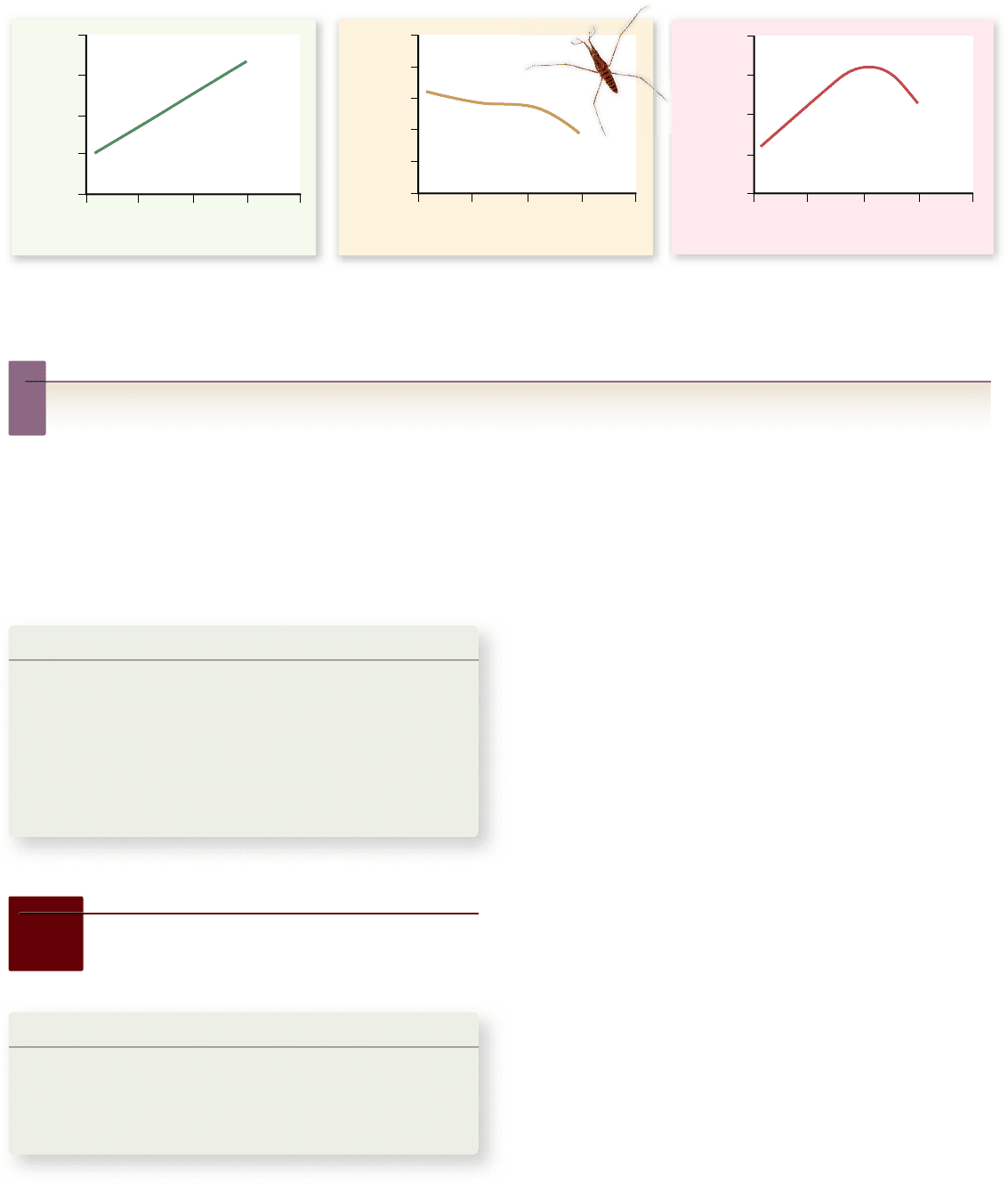
example, in water striders, larger females lay more eggs per day
chapter
20
Genes Within Populations
405www.ravenbiology.com
rav32223_ch20_396-416.indd 405rav32223_ch20_396-416.indd 405 11/10/09 4:26:43 PM11/10/09 4:26:43 PM
Apago PDF Enhancer
200
150
100
50
0
8
6
4
2
0
50
40
30
20
10
0
12 13 14 15 16
12 13 14 15 16 12 13 14 15 16
Length of Adult Female Water Strider (mm) Length of Adult Female Water Strider (mm) Length of Adult Female Water Strider (mm)
Number of Eggs Laid
During Lifetime
Life Span of Adult
Female (days)
Number of Eggs
Laid per Day
Figure 20.9
Body size and egg-laying in water striders. Larger female water striders lay more eggs per day (left panel), but also
survive for a shorter period of time (cente r panel). As a result, intermediate-sized females produce the most offspring over the course of their
entire lives and thus have the highest tness (right panel).
20.5
Interactions Among
Evolutionary Forces
(figure 20.9). Thus, natural selection at this stage favors large
size. However, larger females also die at a younger age and thus
have fewer opportunities to reproduce than smaller females.
Overall, the two opposing directions of selection cancel each
other out, and the intermediate-sized females leave the most
offspring in the next generation.
Learning Outcomes Review 20.4
Fitness is defi ned by an organism’s reproductive success relative to other
members of its population. This success is determined by how long it
survives, how often it mates, and how many off spring it produces per
mating. Relative fi tness assigns numerical values to diff erent phenotypes
relative to the most fi t phenotype.
■ Is one of these factors always the most important in
determining reproductive success? Explain.
Inquiry question
?
What evolutionary change in body size might you expect? If the number of eggs laid per day was not affected by body size, would your
prediction change?
Learning Outcomes
Discuss how evolutionary processes can work 1.
simultaneously, but in opposing ways.
Evaluate what determines the evolutionary outcome 2.
when multiple processes are operating simultaneously.
The amount of genetic variation in a population may be deter-
mined by the relative strength of different evolutionary pro-
cesses. Sometimes these processes act together, and in other
cases they work in opposition.
Mutation and genetic drift may
counter selection
In theory, if allele B mutates to allele b at a high enough rate,
allele b could be maintained in the population, even if natural
selection strongly favored allele B. In nature, however, muta-
tion rates are rarely high enough to counter the effects of natu-
ral selection.
The effect of natural selection also may be countered by
genetic drift. Both of these processes may act to remove varia-
tion from a population. But selection is a nonrandom process
that operates to increase the representation of alleles that en-
hance survival and reproductive success, whereas genetic drift
is a random process in which any allele may increase. Thus, in
some cases, drift may lead to a decrease in the frequency of an
allele that is favored by selection. In some extreme cases, drift
may even lead to the loss of a favored allele from a population.
Remember, however, that the magnitude of drift is in-
versely related to population size; consequently, natural selec-
tion is expected to overwhelm drift, except when populations
are very small.
Gene ow may promote or constrain
evolutionary change
Gene flow can be either a constructive or a constraining force.
On one hand, gene flow can spread a beneficial mutation that
arises in one population to other populations. On the other
hand, gene flow can impede adaptation within a population by
the continual flow of inferior alleles from other populations.
Consider two populations of a species that live in differ-
ent environments. In this situation, natural selection might fa-
vor different alleles—B and b—in the two populations. In the
absence of other evolutionary processes such as gene flow, the
frequency of B would be expected to reach 100% in one popu-
lation and 0% in the other. However, if gene flow occurred
406
part
IV
Evolution
rav32223_ch20_396-416.indd 406rav32223_ch20_396-416.indd 406 11/10/09 4:26:44 PM11/10/09 4:26:44 PM
Apago PDF Enhancer
Index of Copper Tolerance
Distance Away
from Mine (m)
Distance Upwind
from Mine (m)
Non-
mine
Mine site Nonmine
Pollen
20 0
0
20 40 60 80 100 120 140 160
0
20
40
60
Prevailing wind
Bent grass
(Agrostis tenuis)
20.6
Maintenance of Variation
Learning Outcomes
Define frequency-dependent selection, oscillating 1.
selection, and heterozygote advantage.
Explain how these processes affect the amount of genetic 2.
variation in a population.
In the previous pages, natural selection has been discussed as a
process that removes variation from a population by favoring
one allele over others at a gene locus. However, in some cir-
cumstances, selection can do exactly the opposite and actually
maintain population variation.
Frequency-dependent selection may favor
either rare or common phenotypes
In some circumstances, the fitness of a phenotype depends on
its frequency within the population, a phenomenon termed
frequency -dependent selection. This type of selection favors
certain phenotypes depending on how commonly or uncom-
monly they occur.
Negative frequency-dependent selection
In negative frequency-dependent selection, rare phenotypes
are favored by selection. Assuming a genetic basis for pheno-
typic variation, such selection will have the effect of making
rare alleles more common, thus maintaining variation.
Negative frequency-dependent selection can occur for
many reasons. For example, it is well known that animals or
people searching for something form a “search image.” That is,
they become particularly adept at picking out certain objects.
Consequently, predators may form a search image for com-
mon prey phenotypes. Rare forms may thus be preyed upon
less frequently.
between the two populations, then the less favored allele would
continually be reintroduced into each population. As a result,
the frequency of the alleles in the populations would reflect a
balance between the rate at which gene flow brings the inferior
allele into a population, and the rate at which natural selection
removes it.
A classic example of gene flow opposing natural selection
occurs on abandoned mine sites in Great Britain. Although min-
ing activities ceased hundreds of years ago, the concentration of
metal ions in the soil is still much greater than in surrounding
areas. Large concentrations of heavy metals are generally toxic
to plants, but alleles at certain genes confer the ability to grow
on soils high in heavy metals. The ability to tolerate heavy met-
als comes at a price, however; individuals with the resistance al-
lele exhibit lower growth rates on nonpolluted soil. Consequently,
we would expect the resistance allele to occur with a frequency
of 100% on mine sites and 0% elsewhere.
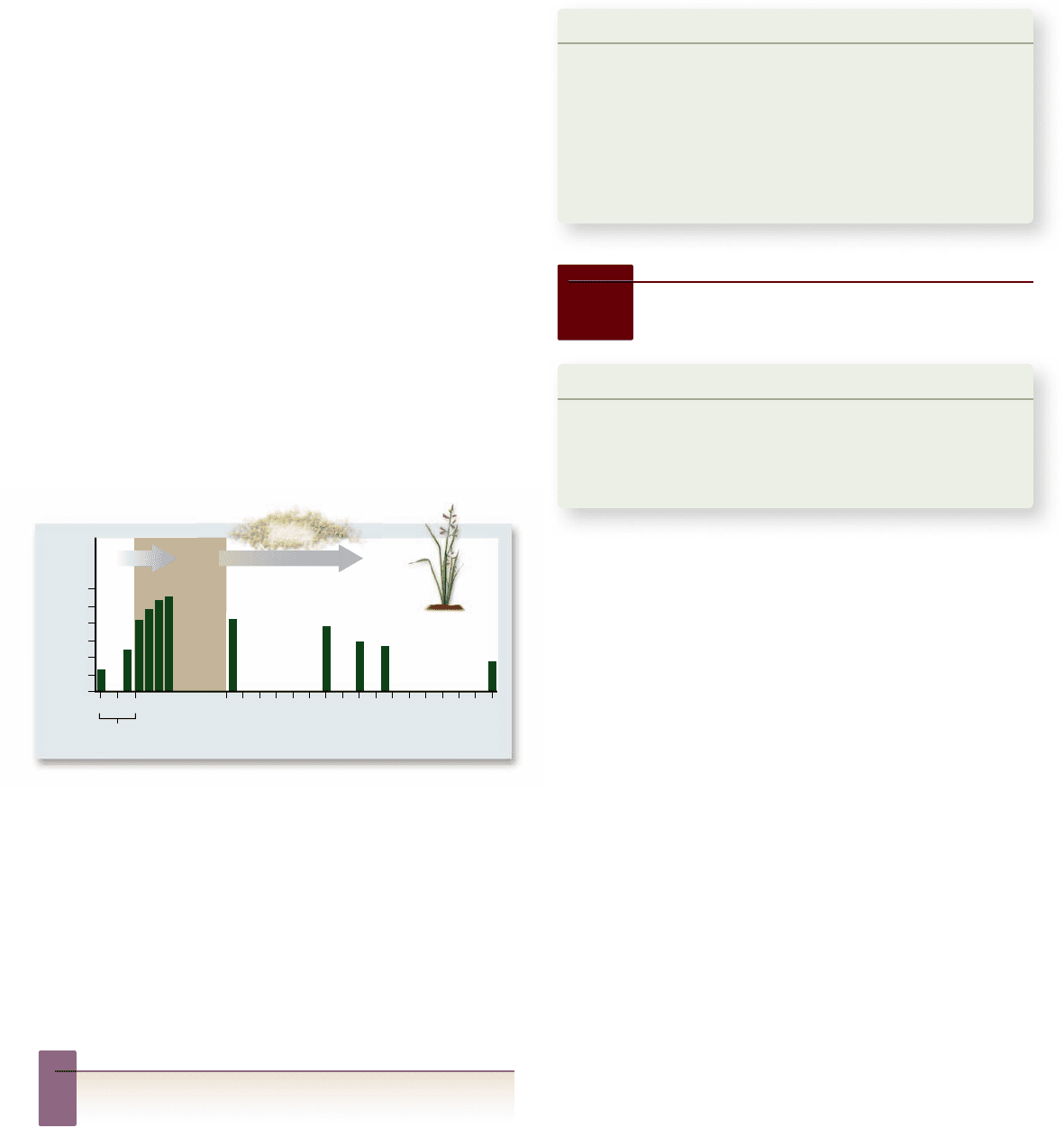
Heavy-metal tolerance has been studied intensively in the
slender bent grass Agrostis tenuis, in which the resistance allele
occurs at intermediate levels in many areas (figure 20.10). The
explanation relates to the reproductive system of this grass, in
which pollen, the floral equivalent of sperm, is dispersed by the
wind. As a result, pollen grains—and the alleles they carry—can
move great distances, leading to levels of gene flow between
mine sites and unpolluted areas high enough to counteract the
effects of natural selection.
In general, the extent to which gene flow can hinder the
effects of natural selection should depend on the relative
strengths of the two processes. In species in which gene flow is
generally strong, such as in birds and wind-pollinated plants,
the frequency of the allele less favored by natural selection may
be relatively high. In more sedentary species that exhibit low
levels of gene flow, such as salamanders, the favored allele
should occur at a frequency near 100%.
Learning Outcomes Review 20.5
Allele frequencies sometimes refl ect a balance between opposing
processes. Gene fl ow, for example, may increase some alleles while natural
selection decreases them. Where several processes are involved, observed
frequencies depend on the relative strength of the processes.
■ Under what circumstances might evolutionary
processes operate in the same direction, and what
would be the outcome?
Figure 20.10
Degree of copper tolerance in grass plants
on and near ancient mine sites. Individuals with tolerant
alleles have decreased growth rates on unpolluted soil. Thus, we
would expect copper tolerance to be 100% on mine sites and 0% on
non-mine sites. However, prevailing winds blow pollen containing
nontolerant alleles onto the mine site and tolerant alleles beyond the
site’s borders. The amount of pollen received decreases with
distance, which explains the changes in levels of tolerance. The
index of copper tolerance is calculated as the growth rate of a plant
on soil with high concentrations of copper relative to growth rate
on soils with low levels of copper; the higher the index, the more
tolerant the plant is of heavy metal pollution.
Inquiry question
?
Would you expect the frequency of copper tolerance to be
affected by distance from the mine site?
chapter
20
Genes Within Populations
407www.ravenbiology.com
rav32223_ch20_396-416.indd 407rav32223_ch20_396-416.indd 407 11/10/09 4:26:45 PM11/10/09 4:26:45 PM
Apago PDF Enhancer
Color type of
water boatman
dark brown
medium brown
light brown
Percent of Color Type
Taken by Fish Predators
20 40 60 80
100
20
40
60
80
100
Color Type Frequency in Population
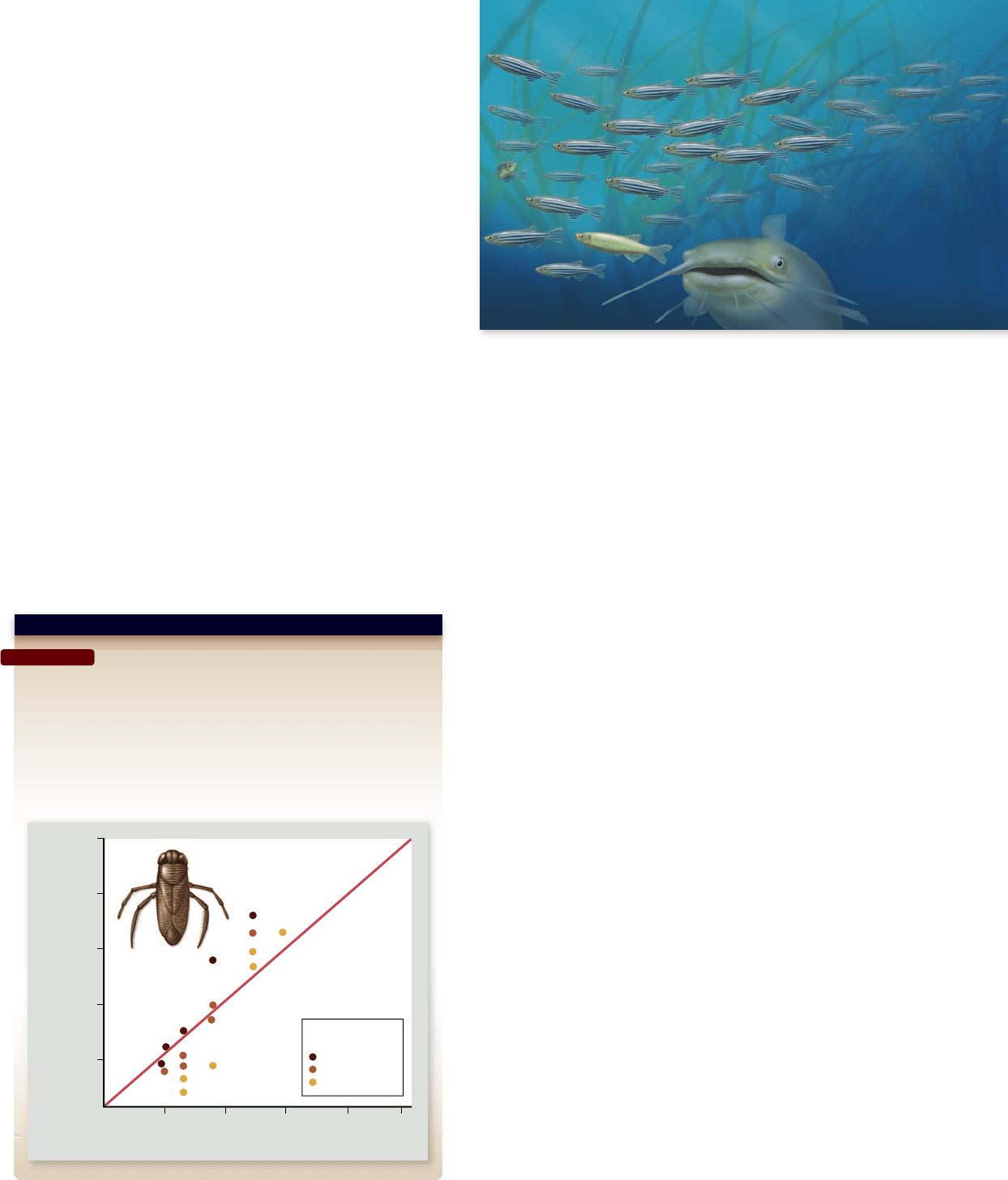
Question: Does negative frequency-dependent selection maintain
variation in a population?
Hypothesis: Fish may disproportionately capture water boatmen (a type
of aquatic insect) with the most common color.
Experiment: Place predatory fish in different aquaria with the different
frequencies of the color types in each aquarium.
Result: Fish prey disproportionately on the common color in each
aquarium. The rare color in each aquarium generally survives best.
SCIENTIFIC THINKING
Figure 20.11
Frequency-dependent selection.
Figure 20.12
Positive frequency-dependent selection.
In some cases, rare individuals stand out from the rest and draw the
attention of predators; thus, in these cases, common phenotypes
have the advantage (positive frequency-dependent selection).
In oscillating selection, the favored phenotype
changes as the environment changes
In some cases, selection favors one phenotype at one time and
another phenotype at another time, a phenomenon called
oscillating selection. If selection repeatedly oscillates in this
fashion, the effect will be to maintain genetic variation in the
population.
One example, discussed in chapter 21, concerns the me-
dium ground finch of the Galápagos Islands. In times of drought,
the supply of small, soft seeds is depleted, but there are still
enough large seeds around. Consequently, birds with big bills
are favored. However, when wet conditions return, the ensuing
abundance of small seeds favors birds with smaller bills.
Oscillating selection and frequency-dependent selection
are similar because in both cases the form of selection changes
through time. But it is important to recognize that they are
not the same: In oscillating selection, the fitness of a phenotype
does not depend on its frequency; rather, environmental changes
lead to the oscillation in selection. In contrast, in frequency-
dependent selection, it is the change in frequencies themselves
that leads to the changes in fitness of the different phenotypes.
In some cases, heterozygotes may exhibit
greater tness than homozygotes
If heterozygotes are favored over homozygotes, then natural
selection actually tends to maintain variation in the population.
This heterozygote advantage favors individuals with copies of
both alleles, and thus works to maintain both alleles in the pop-
ulation. Some evolutionary biologists believe that heterozy-
gote advantage is pervasive and can explain the high levels of
polymorphism observed in natural populations. Others, how-
ever, believe that it is relatively rare.
The best documented example of heterozygote advantage
is sickle cell anemia, a hereditary disease affecting hemoglobin
in humans. Individuals with sickle cell anemia exhibit symptoms
of severe anemia and abnormal red blood cells that are irregular
An example is fish predation on an insect, the water
boatman, which occurs in three different colors. Experiments
indicate that each of the color types is preyed upon dispropor-
tionately when it is the most common one; fish eat more of
the common-colored insects than would occur by chance
alone (figure 20.11 ).
Another cause of negative frequency dependence is re-
source competition. If genotypes differ in their resource re-
quirements, as occurs in many plants, then the rarer geno type
will have fewer competitors. When the different resource types
are equally abundant, the rarer genotype will be at an advantage
relative to the more common genotype.
Positive frequency-dependent selection
Positive frequency-dependent selection has the opposite effect;
by favoring common forms, it tends to eliminate variation from
a population. For example, predators don’t always select com-
mon individuals. In some cases, “oddballs” stand out from the
rest and attract attention (figure 20.12 ).
The strength of selection should change through time
as a result of frequency-dependent selection. In negative
frequency- dependent selection, rare genotypes should become
increasingly common, and their selective advantage will de-
crease correspondingly. Conversely, in positive frequency de-
pendence, the rarer a geno type becomes, the greater the chance
it will be selected against.
408
part
IV
Evolution
rav32223_ch20_396-416.indd 408rav32223_ch20_396-416.indd 408 11/10/09 4:26:45 PM11/10/09 4:26:45 PM
Apago PDF Enhancer
Sickle cell
allele in Africa
1–5%
5–10%
10–20%
malaria
Geographic
distribution of
P. falciparum
Normal red
blood cells
Sickled red
blood cells
in shape, with a great number of long, sickle-shaped cells
( figure 20.13). Chapter 13 discusses why the sickle cell mutation
(S) causes red blood cells to sickle.
The average incidence of the S allele in central African
populations is about 0.12, far higher than that found among
African Americans. From the Hardy–Weinberg principle, you
can calculate that 1 in 5 central African individuals is heterozy-
gous at the S allele, and 1 in 100 is homozygous and develops
the fatal form of the disorder. People who are homozygous for
the sickle cell allele almost never reproduce because they usu-
ally die before they reach reproductive age.
Why, then, is the S allele not eliminated from the central
African population by selection rather than being maintained at
such high levels? As it turns out, one of the leading causes of
illness and death in central Africa, especially among young chil-
dren, is malaria. People who are heterozygous for the sickle cell
allele (and thus do not suffer from sickle cell anemia) are much
less susceptible to malaria. The reason is that when the parasite
that causes malaria, Plasmodium falciparum, enters a red blood
cell, it causes extremely low oxygen tension in the cell, which
leads to sickling in cells of individuals either homozygous or
heterozygous for the sickle cell allele (but not in individuals
that do not have the sickle cell allele). Such cells are quickly
filtered out of the bloodstream by the spleen, thus eliminating
the parasite. (The spleen’s filtering effect is what leads to ane-
mia in persons homozygous for the sickle cell allele because
large numbers of red blood cells become sickle-shaped and are
removed; in the case of heterozygotes, only those cells contain-
ing the Plasmodium parasite sickle, whereas the remaining cells
are not affected, and thus anemia does not occur.)
Consequently, even though most homozygous recessive
individuals die at a young age, the sickle cell allele is maintained
at high levels in these populations because it is associated with
resistance to malaria in heterozygotes and also, for reasons not
yet fully understood, with increased fertility in female heterozy-
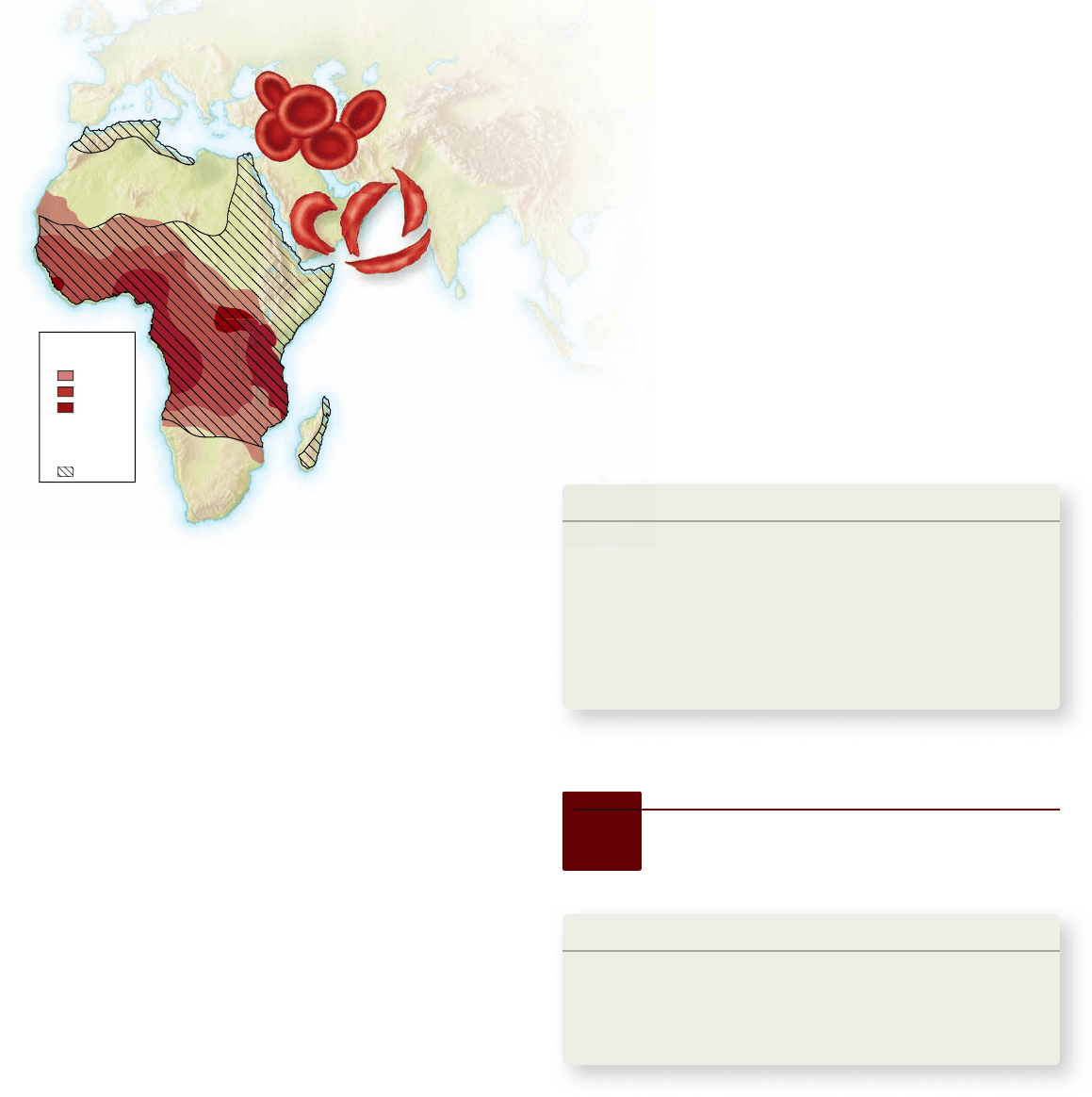
gotes. Figure 20.13 shows the overlap between regions where
sickle cell anemia is found and where malaria is prevalent.
For people living in areas where malaria is common, hav-
ing the sickle cell allele in the heterozygous condition has adap-
tive value (see figure 20.13). Among African Americans, however,
many of whose ancestors have lived for many generations in a
country where malaria is now essentially absent, the environ-
ment does not place a premium on resistance to malaria. Con-
sequently, no adaptive value counterbalances the ill effects of
the disease; in this nonmalarial environment, selection is acting
to eliminate the S allele. Only 1 in 375 African Americans de-
velops sickle cell anemia, far fewer than in central Africa.
Learning Outcomes Review 20.6
Selection can maintain variation within populations in a number of ways.
Negative frequency-dependent selection tends to favor rare phenotypes.
Oscillating selection favors diff erent phenotypes at diff erent times. In some
cases, heterozygotes have a selective advantage that may act to retain
deleterious alleles.
■ How would genetic variation in a population change if
heterozygotes had the lowest fitness?
Figure 20.13
Frequency of sickle cell allele and
distribution of Plasmodium falciparum malaria. The red
blood cells of people homozygous for the sickle cell allele collapse
into sickled shapes when the oxygen level in the blood is low. The
distribution of the si ckle cell allele in Africa coincides closely with
that of P. falciparum malaria.
20.7
Selection Acting on Traits
A ected by Multiple Genes
Learning Outcomes
Define and contrast disruptive, stabilizing, and 1.
directional selection.
Explain the evolutionary outcome of each of these types 2.
of selection.
In nature, many traits—perhaps most—are affected by more
than one gene. The interactions between genes are typically
complex, as you saw in chapter 12. For example, alleles of many
different genes play a role in determining human height (see
figure 12.11). In such cases, selection operates on all the genes,
influencing most strongly those that make the greatest contri-
bution to the phenotype. How selection changes the popula-
tion depends on which genotypes are favored.
Disruptive selection removes intermediates
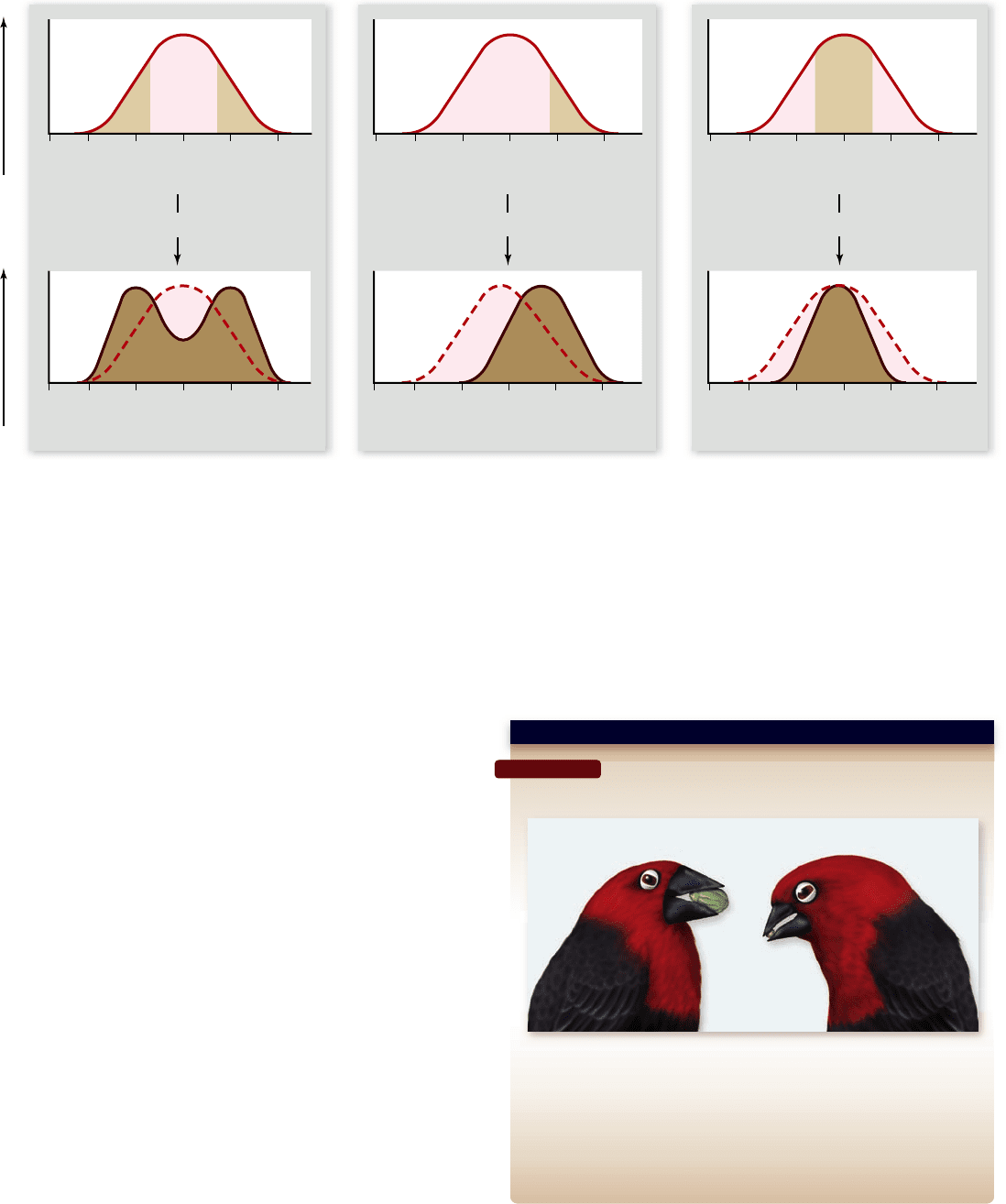
In some situations, selection acts to eliminate intermediate types, a
phenomenon called disruptive selection (figure 20.14a). A clear
example is the different beak sizes of the African black- bellied
chapter
20
Genes Within Populations
409www.ravenbiology.com
rav32223_ch20_396-416.indd 409rav32223_ch20_396-416.indd 409 11/10/09 4:26:48 PM11/10/09 4:26:48 PM
Apago PDF Enhancer
0 25 50 100 12575
Body Size (g)
Number of Individuals
a. Disruptive selection
Two peaks
form
Number of Individuals
0 25 50 100 12575
c. Stabilizing selection
Distribution
gets narrower
0 25 50 100 12575
Body Size (g)
0 25 50 100 12575
b. Directional selection
Peak shifts
0 25 50 100 12575
Body Size (g)
Body Size (g) Body Size (g)Body Size (g)
0 25 50 100 12575
Selection for small and large individuals Selection for larger individuals Selection for mid-size individuals
Question: Does disruptive selection promote dierences in beak size in
the African Black-bellied Seedcracker Finches (Pyrenestes ostrinus)?
Field Study: Capture, measure, and release birds in a population. Follow
the birds through time to determine how long each lives.
Result: Large- and small-beaked birds have higher survival rates than
birds with intermediate-sized beaks.
Interpretation: What would happen if the distribution of seed size and
hardness in the environment changed?
SCIENTIF I C THINKING
Figure 20.14
Three kinds of selection. The top panels show the populations before selection has occurred (under the solid red line).
Within the population, those favored by selection are shown in light brown. The bottom panels indicate what the populations would look like
in the next generation. The dashed red lines are the distribution of the original population and the solid, dark brown lines are the true
distribution of the population in the next generation. a. In disruptive selection, individuals in the middle of the range of phenotypes of a
certain trait are selected against, and the extreme forms of the trait are favored. b. In directional selection, individuals concentrated toward
one extreme of the array of phenotypes are favored. c. In stabilizing selection, individuals with midrange phenotypes are favored, with
selection acting against both ends of the range of phenotypes.
Figure 20.15
Disruptive selection for large and small
beaks. Differences in beak size in the black-bellied seedcracker
nch of west Africa are the result of disruptive selection .
seedcracker finch Pyrenestes ostrinus (figure 20.15). Populations of
these birds contain individuals with large and small beaks, but very
few individuals with intermediate-sized beaks.
As their name implies, these birds feed on seeds, and the
available seeds fall into two size categories: large and small.
Only large-beaked birds can open the tough shells of large
seeds, whereas birds with the smaller beaks are more adept at
handling small seeds. Birds with intermediate-sized beaks are at
a disadvantage with both seed types—they are unable to open
large seeds and too clumsy to efficiently process small seeds.
Consequently, selection acts to eliminate the intermediate phe-
notypes, in effect partitioning (or “disrupting”) the population
into two phenotypically distinct groups.
Directional selection eliminates phenotypes
o n one end of a range
When selection acts to eliminate one extreme from an array of
phenotypes, the genes promoting this extreme become less fre-
quent in the population and may eventually disappear. This form
of selection is called directional selection (see figure 20.14b).
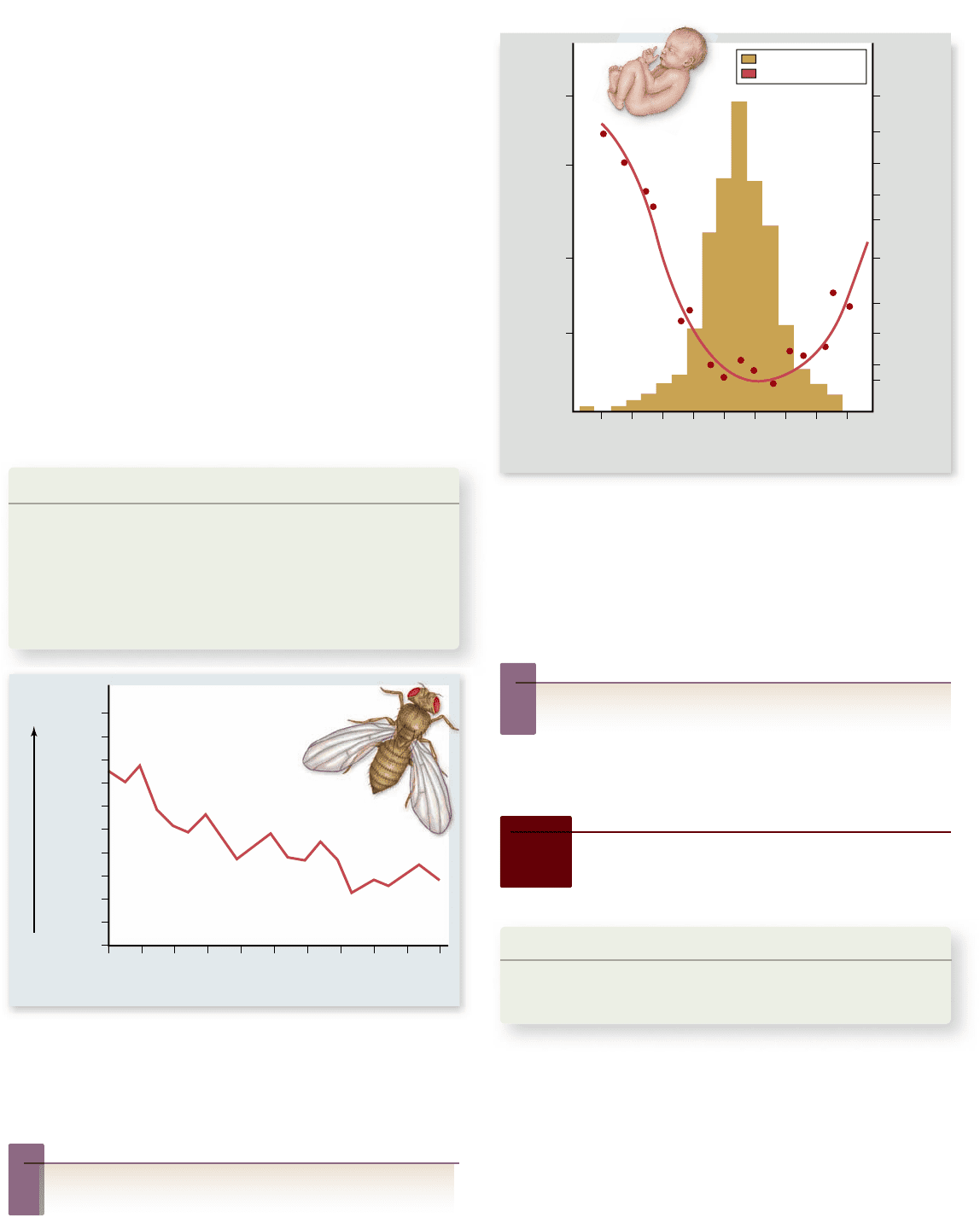
Thus, in the Drosophila population illustrated in figure 20.16,
eliminating flies that move toward light causes the population
over time to contain fewer individuals with alleles promoting
such behavior. If you were to pick an individual at random from
a later generation of flies, there is a smaller chance that the fly
410
part
IV
Evolution
rav32223_ch20_396-416.indd 410rav32223_ch20_396-416.indd 410 11/10/09 4:26:53 PM11/10/09 4:26:53 PM
Apago PDF Enhancer
0 2 4 6 8 10
Number of Generations
Dark
Light
Average Tendency to Fly Toward Light
2
1
3
4
5
6
7
8
9
10
11
12 18 20 14 16
20
15
10
5
10
20
30
50
70
100
5
7
3
2
2 3 4 5 6
Birth Weight in Pounds
Percent of Births in Population
Percent Infant Mortality
7 8 9 10
births in population
infant mortality
Figure 20.16
Directional selection for negative
phototropism in Drosophila. Flies that moved toward light
were discarded, and only ies that moved away from light were used
as parents for the next generation. This procedure was repeated for
20 generations, producing substantial evolutionary change.
Figure 20.17
Stabilizing selection for birth weight in
humans. The death rate among babies (red curve; right y-axis) is
lowest at an intermediate birth weight; both smaller and larger
babies have a greater tendency to die than those around the most
frequent weight (tan area; left y-axis) of between 7 and 8 pounds.
Recent medical advances have reduced mortality rates for small and
large babies.
Inquiry question
?
What would happen if after 20 generations, experimenters
started keeping flies that moved toward the light and
discarded the others?
Inquiry question
?
As improved medical technology leads to decreased infant
mortality rates, how would you expect the distribution of
birth weights in the population to change?
would spontaneously move toward light than if you had selected
a fly from the original population. Artificial selection has changed
the population in the direction of being less attracted to light.
Directional selection often occurs in nature when the environ-
ment changes; one example is the widespread evolution of pesti-
cide resistance discussed earlier in this chapter.
Stabilizing selection favors individuals
with intermediate phenotypes
When selection acts to eliminate both extremes from an array
of phenotypes, the result is to increase the frequency of the al-
ready common intermediate type. This form of selection is
called stabilizing selection (see figure 20.14c). In effect,
selection is operating to prevent change away from this middle
range of values. Selection does not change the most common
phenotype of the population, but rather makes it even more
common by eliminating extremes. Many examples are known.
In humans, infants with intermediate weight at birth have the
highest survival rate (figure 20.17). In ducks and chickens, eggs
of intermediate weight have the highest hatching success.
Learning Outcomes Review 20.7
In disruptive selection, intermediate forms of a trait diminish; in stabilizing
selection, intermediates increase, whereas in disruptive selection they
decrease. Directional selection shifts frequencies toward one end or the
other and may eventually eliminate alleles entirely.
■ How does directional selection differ from frequency-
dependent selection?
Learning Outcome
Explain how experiments can be used to test evolutionary 1.
hypotheses.
To study evolution, biologists have traditionally investigated
what has happened in the past, sometimes many millions of years
ago. To learn about dinosaurs, a paleontologist looks at dinosaur
fossils. To study human evolution, an anthropologist looks at hu-
man fossils and, increasingly, examines the “family tree” of muta-
tions that have accumulated in human DNA over millions of
years. In this traditional approach, evolutionary biology is similar
to astronomy and history, relying on observation rather than ex-
perimentation to examine ideas about past events.
20.8
Experimental Studies
of Natural Selection
chapter
20
Genes Within Populations
411www.ravenbiology.com
rav32223_ch20_396-416.indd 411rav32223_ch20_396-416.indd 411 11/10/09 4:26:54 PM11/10/09 4:26:54 PM