
Raven P.H., Johnson G.B., Mason K.A. Biology (Ninth Edition)
Подождите немного. Документ загружается.

Apago PDF Enhancer
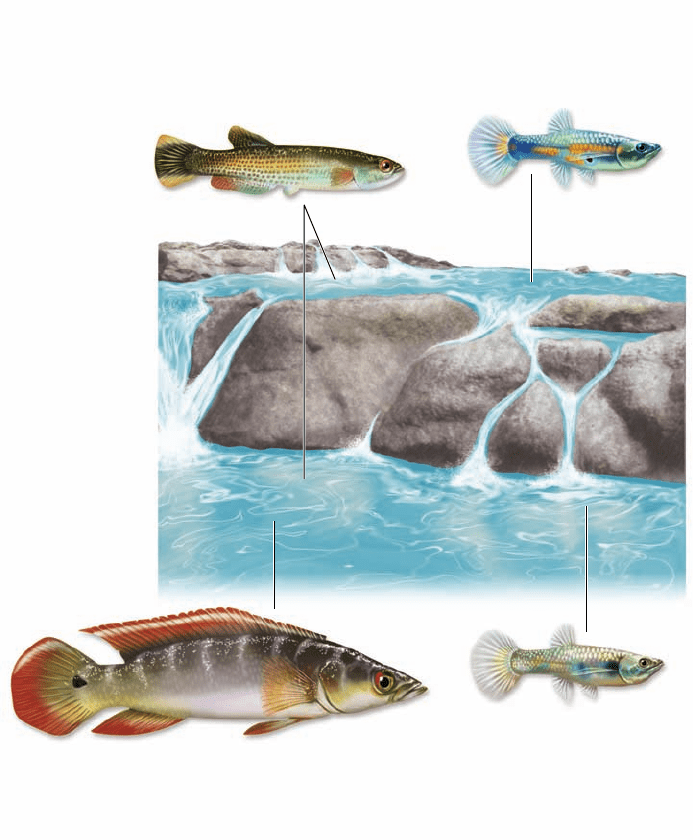
Guppy
(Poecilia reticulata)
Killifish
(Rivulus hartii)
Guppy
(Poecilia reticulata)
Pike cichlid
(Crenicichla alta)
Figure 20.18
The evolution of protective coloration in
guppies. In pools below waterfalls where predation is high, male
guppies are drab in color. In the absence of the highly predatory
pike cichlid (Crenicichla alta) in pools above waterfalls, male guppies
are much more colorful and attractive to females. The killi sh is
also a predator, but it only rarely eats guppies. The evolution of
these differences in guppies can be experimentally tested.
Nonetheless, evolutionary biology is not entirely an ob-
servational science. Darwin was right about many things, but
one area in which he was mistaken concerns the pace at which
evolution occurs. Darwin thought that evolution occurred at a
very slow, almost imperceptible pace. But in recent years many
case studies have demonstrated that in some circumstances,
evolutionary change can occur rapidly. Consequently, experi-
mental studies can be devised to test evolutionary hypotheses.
Although laboratory studies on fruit flies and other organ-
isms have been common for more than 50 years, scientists have
only recently started conducting experimental studies of evolution
in nature. One excellent example of how observations of the natu-
ral world can be combined with rigorous experiments in the lab
and in the field concerns research on the guppy, Poecilia reticulata.
Guppy color variation in di erent environments
suggests natural selection at work
The guppy is a popular aquarium fish because of its bright col-
oration and prolific reproduction. In nature, guppies are found
in small streams in northeastern South America and in many
mountain streams on the nearby island of Trinidad. One inter-
esting feature of several of the streams is that they have water-
falls. Amazingly, guppies and some other fish are capable of
colonizing portions of the stream above the waterfall.
The killifish is a particularly good colonizer; apparently
on rainy nights, it will wriggle out of the stream and move
through the damp leaf litter. Guppies are not so proficient, but
they are good at swimming upstream. During flood seasons,
rivers sometimes overflow their banks, creating secondary
channels that move through the forest. On these occasions,
guppies may be able to swim upstream in the secondary chan-
nels and invade the pools above waterfalls.
By contrast, some species are not capable of such disper-
sal and thus are only found in streams below the first waterfall.
One species whose distribution is restricted by waterfalls is the
pike cichlid a voracious predator that feeds on other fish, in-
cluding guppies.
Because of these barriers to dispersal, guppies can be
found in two very different environments. In pools just below
the waterfalls, predation by the pike cichlid is a substantial risk,
and rates of survival are relatively low. But in similar pools just
above the waterfall, the only predator present is the killifish,
which rarely preys on guppies.
Guppy populations above and below waterfalls
exhibit many differences. In the high-predation
pools, guppies exhibit drab coloration. Moreover,
they tend to reproduce at a younger age and at-
tain relatively smaller adult sizes. Male fish above
the waterfall, in contrast, are colorful (figure 20.18),
mature later, and grow to larger sizes.
These differences suggest the operation of natural selec-
tion. In the low-predation environment, males display gaudy
colors and spots that they use to court females. Moreover, larger
males are most successful at holding territories and mating with
females, and larger females lay more eggs. Thus, in the absence
of predators, larger and more colorful fish may have produced
more offspring, leading to the evolution of those traits.
In pools below the waterfall, natural selection would favor
different traits. Colorful males are likely to attract the attention
of the pike cichlid, and high predation rates mean that most fish
live short lives. Individuals that are more drab and shunt energy
into early reproduction, rather than growth to a larger size, are
therefore likely to be favored by natural selection.
Experimentation reveals the agent of selection
Although the differences between guppies living above and be-
low the waterfalls suggest evolutionary responses to differences
in the strength of predation, alternative explanations are possi-
ble. Perhaps, for example, only very large fish are capable of
crawling past the waterfall to colonize pools. If this were the
case, then a founder effect would occur in which the new popu-
lation was established solely by individuals with genes for large
size. The only way to rule out such alternative possibilities is to
conduct a controlled experiment.
The laboratory experiment
The first experiments were conducted in large pools in labora-
tory greenhouses. At the start of the experiment, a group of
412
part
IV
Evolution
rav32223_ch20_396-416.indd 412rav32223_ch20_396-416.indd 412 11/10/09 4:26:55 PM11/10/09 4:26:55 PM
Apago PDF Enhancer
Spots per Fish
8
9
10
11
12
13
14
01284
Duration of Experiment (months)
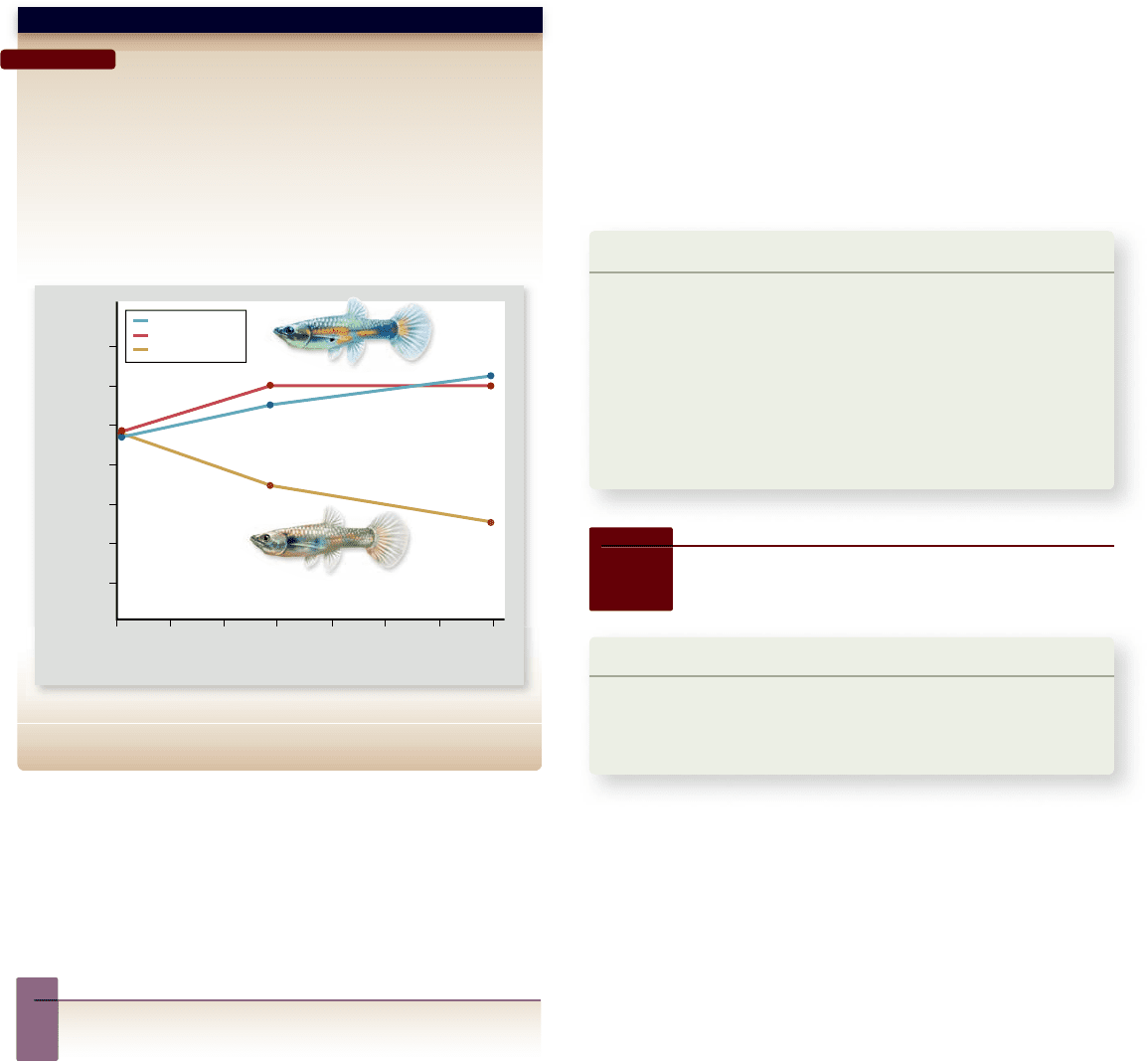
no predation
low predation
high predation
Question: Does the presence of predators affect the evolution of
guppy color?
Hypothesis: Predation on the most colorful individuals will cause a
population to become increasingly dull through time. Conversely, in
populations with few or no predators, increased color will evolve.
Experiment: Establish laboratory populations of guppies in large pools
with or without predators.
Result: The populations with predators evolved to have fewer spots,
while the populations in pools without predators evolved more spots.
Interpretation: Why does color increase in the absence of predators?
How would you test your hypothesis?
SCIENTIFIC THINKING
2000 guppies was divided equally among 10 large pools. Six
months later, pike cichlids were added to four of the pools and
killifish to another four, with the remaining two pools left to
serve as “no-predation” controls.
Fourteen months later (which corresponds to 10 guppy
generations), the scientists compared the populations. The gup-
pies in the killifish and control pools were indistinguishable—
brightly colored and large. In contrast, the guppies in the pike
cichlid pools were smaller and drab in coloration (figure 20.19) .
These results established that predation can lead to rapid
evolutionary change, but do these laboratory experiments re-
flect what occurs in nature?
The field experiment
To find out whether the laboratory results were an accurate re-
flection of natural processes, the scientists located two streams
that had guppies in pools below a waterfall, but not above it. As in
other Trinidadian streams, the pike cichlid was present in the
lower pools, but only the killifish was found above the waterfalls.
The scientists then transplanted guppies to the upper
pools and returned at several-year intervals to monitor the pop-
ulations. Despite originating from populations in which preda-
tion levels were high, the transplanted populations rapidly
evolved the traits characteristic of low-predation guppies: they
matured late, attained greater size, and had brighter colors. The
control populations in the lower pools, by contrast, continued
to be drab and to mature early and at a smaller size. Laboratory
analysis confirmed that the variations between the populations
were the result of genetic differences.
These results demonstrate that substantial evolutionary
change can occur in less than 12 years. More generally, these
studies indicate how scientists can formulate hypotheses about
how evolution occurs and then test these hypotheses in natural
conditions. The results give strong support to the theory of
evolution by natural selection.
Learning Outcome Review 20.8
Although much of evolutionary theory is derived from observation,
experiments are sometimes possible in natural settings. Studies have
revealed that traits can shift in populations in a relatively short time.
The data obtained from evolutionary experiments can be used to refi ne
theoretical assumptions.
■ What experiments could you design to test other
examples of natural selection, such as the evolution of
pesticide resistance or background color matching?
Figure 20.19
Evolutionary change in spot number.
Guppy populations raised for 10 generations in low-predation or
no-predation environments in laboratory greenhouses evolved a
greater number of spots, whereas selection in more dangerous
environments, such as the pools with the highly predatory pike
cichlid, led to less conspicuous sh. The same results are seen in
eld experiments conducted in pools above and below waterfalls.
Inquiry question
?
How do these results depend on the manner by which the
guppy predators locate their prey?
20.9
The Limits of Selection
Learning Outcomes
Define pleiotropy and epistasis.1.
Explain how these phenomena may affect the 2.
evolutionary response to selective pressure.
Although selection is the most powerful of the principal agents
of genetic change, there are limits to what it can accomplish.
These limits result from multiple phenotypic effects of alleles,
lack of genetic variation upon which selection can act, and in-
teractions between genes.
Genes have multiple e ects
Alleles often affect multiple aspects of a phenotype (the phe-
nomenon of pleiotropy; see chapter 12). These multiple effects
tend to set limits on how much a phenotype can be altered.
chapter
20
Genes Within Populations
413www.ravenbiology.com
rav32223_ch20_396-416.indd 413rav32223_ch20_396-416.indd 413 11/10/09 4:26:58 PM11/10/09 4:26:58 PM
Apago PDF Enhancer
110
115
120
125
130
Year
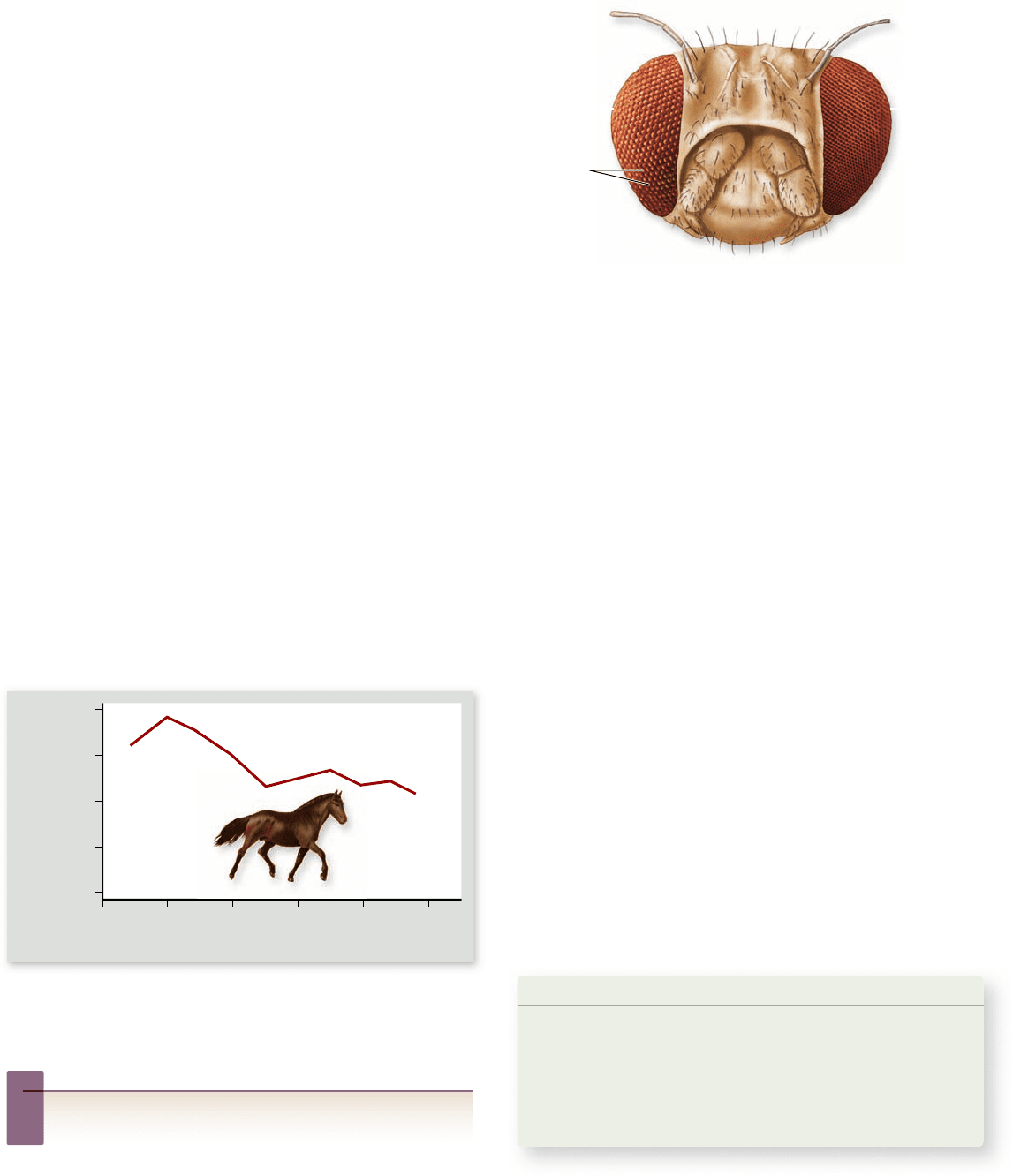
Kentucky Derby Winning Time
(seconds)
1900 1920 1940 1960 1980 2000
Left eye
of insect
Ommatidia
Right eye
of insect
Figure 20.20
Selection for increased speed in
racehorses is no longer e ective. Kentucky Derby winning
speeds have not improved signi cantly since 1950.
Figure 20.21
Phenotypic variation in insect ommatidia.
In some individuals, the number of ommatidia in the left eye is
greater than the number in the right.
that occur as the eyes are formed in the development process.
Thus, despite the existence of phenotypic variation, no under-
lying genetic variation is available for selection to favor.
Gene interactions a ect tness of alleles
As discussed in chapter 12, epistasis is the phenomenon in which an
allele for one gene may have different effects, depending on alleles
present at other genes. Because of epistasis, the selective advantage
of an allele at one gene may vary from one genotype to another. If
a population is polymorphic for a second gene, then selection on
the first gene may be constrained because different alleles are fa-
vored in different individuals of the same population.
Studies on bacteria illustrate how selection on alleles for
one gene can depend on which alleles are present at other
genes. In E. coli, two biochemical pathways exist to break down
gluconate, each using enzymes produced by different genes.
One gene produces the enzyme 6-PGD, for which there are
several alleles. When the common allele for the second gene,
which codes for the other biochemical pathway, is present, se-
lection does not favor one allele over another at the 6-PGD
gene. In some E. coli, however, an alternative allele at the sec-
ond gene occurs that is not functional. The bacteria with this
alternative allele are forced to rely only on the 6-PGD pathway,
and in this case, selection favors one 6-PGD allele over another.
Thus, epistatic interactions exist between the two genes, and
the outcome of natural selection on the 6-PGD gene depends
on which alleles are present at the second gene.
Learning Outcomes Review 20.9
In pleiotropy, a single gene aff ects multiple traits; in epistasis, interaction
between alleles of diff erent genes aff ects a single trait. Both these
conditions can constrain the eff ects of natural selection.
■ How can epistasis and pleiotropy constrain the
evolutionary response to natural selection?
Inquiry question
?
What might explain the lack of change in winning speeds?
For example, selecting for large clutch size in chickens
eventually leads to eggs with thinner shells that break more
easily. For this reason, we could never produce chickens that lay
eggs twice as large as the best layers do now. Likewise, we can-
not produce gigantic cattle that yield twice as much meat as our
leading breeds, or corn with an ear at the base of every leaf,
instead of just at the bases of a few leaves.
Evolution requires genetic variation
Over 80% of the gene pool of the thoroughbred horses rac-
ing today goes back to 31 ancestors from the late eighteenth
century. Despite intense directional selection on thorough-
breds, their performance times have not improved for more
than 50 years (figure 20.20). Decades of intense selection
presumably have removed variation from the population at
a rate greater than mutation can replenish it, such that little
genetic variation now remains, and evolutionary change is
not possible.
In some cases, phenotypic variation for a trait may never
have had a genetic basis. The compound eyes of insects are
made up of hundreds of visual units, termed ommatidia (de-
scribed in chapter 34). In some individuals, the left eye contains
more ommatidia than the right. In other individuals, the right
eye contains more than the left (figure 20.21). However, despite
intense selection experiments in the laboratory, scientists have
never been able to produce a line of fruit flies that consistently
has more ommatidia in the left eye than in the right.
The reason is that separate genes do not exist for the left
and right eyes. Rather, the same genes affect both eyes, and dif-
ferences in the number of ommatidia result from differences
414
part
IV
Evolution
rav32223_ch20_396-416.indd 414rav32223_ch20_396-416.indd 414 11/10/09 4:26:58 PM11/10/09 4:26:58 PM

Apago PDF Enhancer
Chapter Review
Gene ow may promote or constrain evolutionary change.
Gene ow can spread a bene cial mutation to other populations, but
it can also impede adaptation due to in ux of alleles with low tness
in a population’s environment.
20.6 Maintenance of Variation
Frequency-dependent selection may favor either rare or
common phenotypes.
Negative frequency-dependent selection favors rare phenotypes and
maintains variation within a population. Positive frequency-dependent
selection favors the common phenotype and leads to decreased variation.
In oscillating selection, the favored phenotype changes as the
environment changes.
If environmental change is cyclical, selection would favor rst one
phenotype, then another, maintaining variation.
In some cases, heterozygotes may exhibit greater tness
than homozygotes.
Heterozygote advantage favors individuals with both alleles.
20.7 Selection Acting on Traits A ected by
Multiple Genes
( gure 20.13)
Disruptive selection removes intermediates.
When intermediate phenotypes are at a disadvantage,
a population
may exhibit a bimodal trait distribution.
Directional selection eliminates phenotypes at one end of a range.
Directional selection tends to shift the mean value of the population
toward the favored end of the distribution.
Stabilizing selection favors individuals with intermediate phenotypes.
Stabilizing selection eliminates both extremes and increases the
frequency of an intermediate type. The population may have the
same mean value, but with decreased variation.
20.8 Experimental Studies of Natural Selection
The hypothesis that natural selection leads to evolutionary change can
be tested experimentally.
Guppy color variation in di erent environments suggests natural
selection at work.
Experimentation reveals the agent of selection.
Guppies in natural populations subject to different predators were
shown to undergo color change over generations.
20.9 The Limits of Selection
Genes have multiple e ects.
Pleiotropic genes, which have multiple effects, set limits on how
much a phenotype can be altered. Even if one affected trait is
favored, other affected traits may not be.
Evolution requires genetic variation.
Intense selection pressure may remove genetic variation.
Gene interactions a ect tness of alleles.
In epistasis, tness of one allele may vary depending on the genotype
of a second gene.
20.1 Genetic Variation and Evolution
Many processes can lead to evolutionary change.
Darwin proposed that evolution of species occurs by the process of
natural selection. Other processes can also lead to evolutionary change.
Populations contain ample genetic variation.
For a population to be able to evolve, it must contain genetic
variation. DNA testing shows that natural populations generally have
substantial variation.
20.2 Changes in Allele Frequency ( gure 20.3)
The Hardy–Weinberg principle allows prediction of genotype
frequencies
.
Hardy–Weinberg equilibrium exists when observed genotype
frequencies match the prediction from calculated frequencies. It
occurs only when evolutionary processes are not acting to shift the
distribution of alleles or genotypes in the population .
Hardy–Weinberg predictions can be applied to data to nd evidence
of evolutionary processes.
If genotype frequencies are not in Hardy–Weinberg equilibrium,
then evolutionary processes must be at work.
20.3 Five Agents of Evolutionary Change ( gure 20.4)
Mutation changes alleles.
Mutations are the ultimate source of genetic variation.
Because
mutation rates are low, mutation usually is not responsible for
deviations from Hardy–Weinberg equilibrium.
Gene ow occurs when alleles move between populations.
Gene ow is the migration of new alleles into a population. It can
introduce genetic variation and can homogenize allele frequencies
between populations.
Nonrandom mating shifts genotype frequencies.
Assortative mating, in which similar individuals tend to mate,
increases homozygosity; disassortative mating increases the
frequency of heterozygotes.
Genetic drift may alter allele frequencies in small populations.
Genetic drift refers to random shifts in allele frequency. Its effects
may be severe in small populations.
Selection favors some genotypes over others.
For natural selection to occur, genetic variation must exist, it must
result in differential reproductive success, and it must be inheritable.
20.4 Fitness and Its Measurement
A phenotype with greater tness usually increases in frequency.
Fitness is de ned as the reproductive success of an individual.
Relative tness refers to the success of one genotype relative to
others in a population. Usually, the genotype with highest relative
tness increases in frequency in the next generation.
Fitness may consist of many components.
Reproductive success is determined by how long an individual survives,
how often it mates, and how many offspring it has per reproductive event.
20.5 Interactions Among Evolutionary Forces
Mutation and genetic drift may counter selection.
In theory, a high rate of mutation could oppose natural selection,
but this rarely happens. Genetic drift also can work counter to
natural selection.
chapter
20
Genes Within Populations
415www.ravenbiology.com
rav32223_ch20_396-416.indd 415rav32223_ch20_396-416.indd 415 11/10/09 4:27:00 PM11/10/09 4:27:00 PM
Apago PDF Enhancer
20
15
10
5
10
20
30
50
70
100
5
7
3
2
2 3 4 5 6
Birth Weight in Pounds
Percent of Births in Population
Percent Infant Mortality
7 8 9 10
births in population
infant mortality
UNDERSTAND
1. Assortative mating
a. affects genotype frequencies expected under Hardy–
Weinberg equilibrium.
b. affects allele frequencies expected under Hardy–Weinberg
equilibrium.
c. has no effect on the genotypic frequencies expected under
Hardy–Weinberg equilibrium because it does not affect the
relative proportion of alleles in a population.
d. increases the frequency of heterozygous individuals above
Hardy–Weinberg expectations.
2. When the environment changes from year to year and different
phenotypes have different tness in different environments
a. natural selection will operate in a frequency-dependent manner.
b. the effect of natural selection may oscillate from year to
year, favoring alternative phenotypes in different years.
c. genetic variation is not required to get evolutionary change
by natural selection.
d. none of the above.
3. Many factors can limit the ability of natural selection to cause
evolutionary change, including
a. a con ict between reproduction and survival as seen
in Trinidadian guppies.
b. lack of genetic variation.
c. pleiotropy.
d. all of the above.
4. Stabilizing selection differs from directional selection because
a. in the former, phenotypic variation is reduced but the
average phenotype stays the same, whereas in the latter
both the variation and the mean phenotype change.
b. the former requires genetic variation, but the latter does not.
c. intermediate phenotypes are favored in directional selection.
d. none of the above.
5. Founder effects and bottlenecks are
a. expected only in large populations.
b. mechanisms that increase genetic variation in a population.
c. two different modes of natural selection.
d. forms of genetic drift.
6. Relative tness
a. refers to the survival rate of one phenotype compared to
that of another.
b. is the physical condition of an individual’s siblings and cousins.
c. refers to the reproductive success of a phenotype.
d. is none of the above.
7. For natural selection to result in evolutionary change
a. variation must exist in a population.
b. reproductive success of different phenotypes must differ.
c. variation must be inherited from one generation to the next.
d. all of the above.
APPLY
1. In a population of red (dominant allele) or white owers
in Hardy–Weinberg equilibrium, the frequency of red owers
is 91%. What is the frequency of the red allele?
a. 9% c. 91%
b. 30% d. 70%
2. Genetic drift and natural selection can both lead to rapid rates
of evolution. However,
a. genetic drift works fastest in large populations.
b. only drift leads to adaptation.
c. natural selection requires genetic drift to produce new
variation in populations.
d. both processes of evolution can be slowed by gene ow.
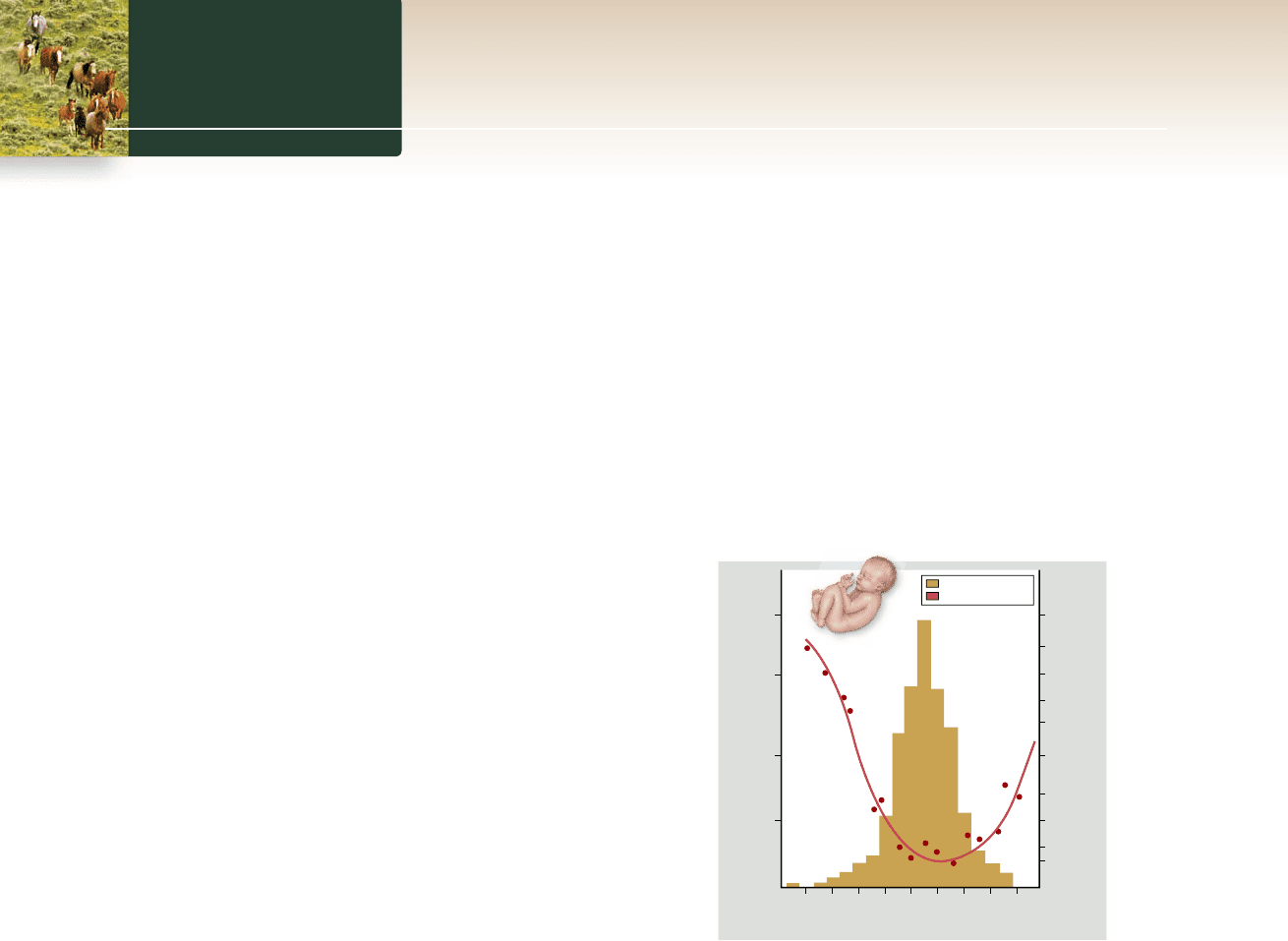
3. What would happen to average birth weight if over the next
several years advances in medical technology reduced infant
mortality rates of large babies to equal that for intermediate-
sized babies (see the following gure, red line). Assume that
differences in birth weight have a genetic basis.
a. Over time, average birth weight would only increase.
b. Over time, average birth weight would only decrease.
c. Both a and b.
d. None of the above.
Review Questions
SYNTHESIZE
1. In Trinidadian guppies a combination of elegant laboratory and
eld experiments builds a very compelling case for predator-
induced evolutionary changes in color and life history traits. It
is still possible, though not likely, that there are other
differences between the sites above and below the falls aside
from whether predators are present. What additional studies
could strengthen the interpretation of the results?
2. On large, black lava ows in the deserts of the southwestern
United States, populations of many types of animals are
composed primarily of black individuals. By contrast, on small
lava ows, populations often have a relatively high proportion of
light-colored individuals. How can you explain this difference?
3. Based on a consideration of how strong arti cial selection has
helped eliminate genetic variation for speed in thoroughbred
horses, we are left with the question of why, for many traits like
speed (continuous traits), there is usually abundant genetic
variation. This is true even for traits we know are under strong
selection. Where does genetic variation ultimately come from,
and how does the rate of production compare with the strength
of natural selection? What other mechanisms can maintain and
increase genetic variation in natural populations?
416
part
IV
Evolution
rav32223_ch20_396-416.indd 416rav32223_ch20_396-416.indd 416 11/10/09 4:27:00 PM11/10/09 4:27:00 PM
Apago PDF Enhancer
A
Chapter
21
The Evidence
for Evolution
Chapter Outline
21.1 The Beaks of Darwin’s Finches: Evidence
of Natural Selection
21.2 Peppered Moths and Industrial Melanism: More
Evidence of Selection
21.3 Arti cial Selection: Human-Initiated Change
21.4 Fossil Evidence of Evolution
21.5 Anatomical Evidence for Evolution
21.6 Convergent Evolution
and the Biogeographical Record
21.7 Darwin’s Critics
Introduction
As we discussed in chapter 1, when Darwin proposed his revolutionary theory of evolution by natural selection, little actual
evidence existed to bolster his case. Instead, Darwin relied on observations of the natural world, logic, and results obtained
by breeders working with domestic animals. Since his day, however, the evidence for Darwin’s theory has
become overwhelming.
The case is built upon two pillars: first, evidence that natural selection can produce evolutionary change, and
second, evidence from the fossil record that evolution has occurred. In addition, information from many different areas of
biology—fields as different as anatomy, molecular biology, and biogeography—is only interpretable scientifically as being
the outcome of evolution.
CHAPTER
rav32223_ch21_417-435.indd 417rav32223_ch21_417-435.indd 417 11/11/09 4:15:24 PM11/11/09 4:15:24 PM
Apago PDF Enhancer
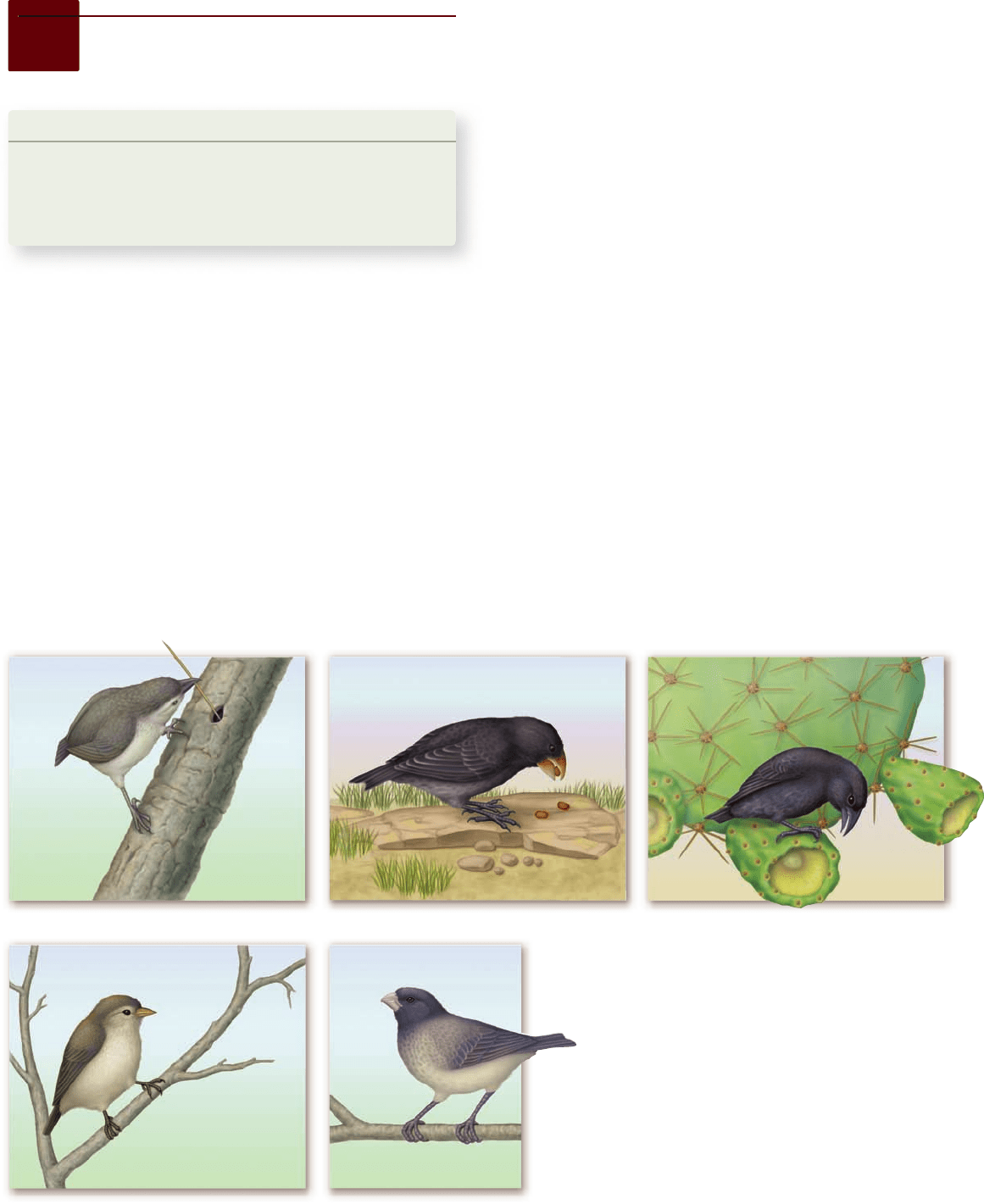
Woodpecker finch (Cactospiza pallida) Large ground finch (Geospiza magnirostris) Cactus finch (Geospiza scandens)
Warbler finch (Certhidea olivacea) Vegetarian tree finch (Platyspiza crassirostris)
Upon Darwin’s return to England, ornithologist John
Gould informed Darwin that his collection was in fact a closely
related group of distinct species, all similar to one another ex-
cept for their bills. In all, 14 species are now recognized.
Galápagos nches exhibit variation
related to food gathering
The diversity of Darwin’s finches is illustrated in figure 21.1.
The ground finches feed on seeds that they crush in their pow-
erful beaks; species with smaller and narrower bills such as the
warbler finch eat insects. Other species include fruit and bud
eaters, and species that feed on cactus fruits and the insects they
attract; some populations of the sharp-beaked ground finch
even include “vampires” that sometimes creep up on seabirds
and use their sharp beaks to pierce the seabirds’ skin and drink
their blood. Perhaps most remarkable are the tool users, wood-
pecker finches that pick up a twig, cactus spine, or leaf stalk,
trim it into shape with their bills, and then poke it into dead
branches to pry out grubs.
The correspondence between the beaks of the finch
species and their food source suggested to Darwin that natu-
ral selection had shaped them. In The Voyage of the Beagle,
Darwin wrote, “Seeing this gradation and diversity of struc-
ture in one small, intimately related group of birds, one
might really fancy that from an original paucity of birds in
this archipelago, one species has been taken and modified
for different ends.”
21.1
The Beaks of Darwin’s Finches:
Evidence of Natural Selection
Learning Outcomes
Describe how the species of Darwin’s finches have adapted 1.
to feed in different ways.
Explain how climatic variation drives evolutionary 2.
change in the medium ground finch.
As you learned in the preceding chapter, a variety of processes
can produce evolutionary change. Most evolutionary biologists,
however, agree with Darwin’s thinking that natural selection is
the primary process responsible for evolution. Although we
cannot travel back through time, modern-day evidence allows
us to test hypotheses about how evolution proceeds and con-
firms the power of natural selection as an agent of evolutionary
change. This evidence comes from both the field and the labo-
ratory and from both natural and human-altered situations.
Darwin’s finches are a classic example of evolution by
natural selection. When he visited the Galápagos Islands off
the coast of Ecuador in 1835, Darwin collected 31 specimens
of finches from three islands. Darwin, not an expert on birds,
had trouble identifying the specimens, believing by examining
their bills that his collection contained wrens, “gross-beaks,”
and blackbirds.
Figure 21.1
Darwin’s nches. These species show
differences in bills and feeding habits among Darwin’s
nches. This diversity arose when an ancestral nch
colonized the islands and diversi ed into habitats lacking
other types of small birds. The bills of several species
resemble those of different families of birds on the
mainland. For example, the warbler nch has a beak very
similar to warblers, to which it is not closely related.
418
part
IV
Evolution
rav32223_ch21_417-435.indd 418rav32223_ch21_417-435.indd 418 11/11/09 4:15:28 PM11/11/09 4:15:28 PM
Apago PDF Enhancer
•
•
•
•
•
•
•
•
•
•
•
•
•
•
•
•
•
b.
Beak depth of offspring (mm)
Mean beak depth of parents (mm)
8
8 9 10 11
9
10
11
a.
Pointed
Blunt
Dry year Dry year Wet year
:0.5
1970 1980 1990
0
0.5
Modern research has veri ed
Darwin’s selection hypothesis
Darwin’s observations suggest that differences among species
in beak size and shape have evolved as the species adapted to
use different food resources, but can this hypothesis be tested?
In chapter 20 , you read that the theory of evolution by natural
selection requires that three conditions be met:
Variation must exist in the population.1.
This variation must lead to differences among individuals 2.
in lifetime reproductive success.
Variation among individuals must be genetically 3.
transmissible to the next generation.
The key to successfully testing Darwin’s proposal proved
to be patience. For more than 30 years, starting in 1973, Peter
and Rosemary Grant of Princeton University and their stu-
dents have studied the medium ground finch, Geospiza fortis, on
a tiny island in the center of the Galápagos called Daphne Ma-
jor. These finches feed preferentially on small, tender seeds,
produced in abundance by plants in wet years. The birds re-
sort to larger, drier seeds, which are harder to crush, only
when small seeds become depleted during long periods of dry
weather, when plants produce few seeds.
The Grants quantified beak shape among the medium
ground finches of Daphne Major by carefully measuring beak
depth (height of beak, from top to bottom, at its base) on indi-
vidual birds. Measuring many birds every year, they were able
to assemble for the first time a detailed portrait of evolution
in action. The Grants found that not only did a great deal of
variation in beak depth exist among members of the popula-
tion, but the average beak depth changed from one year to the
next in a predictable fashion.
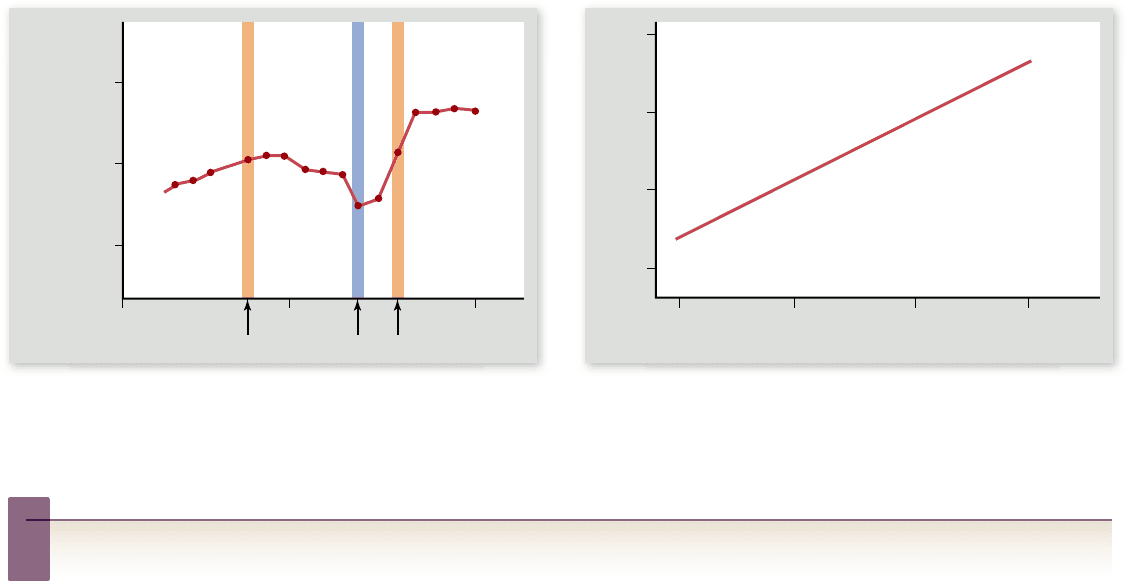
During droughts, plants produced few seeds, and all
available small seeds were quickly eaten, leaving large seeds as
the major remaining source of food. As a result, birds with
deeper, more powerful beaks survived better, because they
were better able to break open these large seeds. Consequent-
ly, the average beak depth of birds in the population increased
the next year. Then, when normal rains returned, average
beak depth of the population decreased to its original size
(figure 21.2a).
Conversely, in particularly wet years, plants flourished,
producing an abundance of small seeds; as a result, small-beaked
birds were favored, and beak depth decreased greatly.
Could these changes in beak dimension reflect the action
of natural selection? An alternative possibility might be that the
changes in beak depth do not reflect changes in gene frequen-
cies, but rather are simply a response to diet—for example, per-
haps crushing large seeds causes a growing bird to develop a
larger beak.
To rule out this possibility, the Grants measured the re-
lation of parent beak size to offspring beak size, examining
many broods over several years. The depth of the beak was
very similar between parents and offspring regardless of
environmental conditions (figure 21.2b), suggesting that the
differences among individuals in beak size reflect genetic dif-
ferences, and therefore that the year-to-year changes in aver-
age beak depth represent evolutionary change resulting from
natural selection.
Figure 21.2
Evidence that natural selection alt ers beak shape in the medium ground nch (Geospiza fortis). a. In dry
years, when only large, tough seeds are available, the mean beak depth increases. In wet years, when many small seeds are available, mean beak
depth decreases. b. Beak depth is inherited from parents to offspring.
Inquiry question
?
Suppose a bird with a large bill mates with a bird with a small bill. Would the bills of the pair’s offspring tend to be larger or smaller than
the bills of offspring from a pair of birds with medium-sized bills?
chapter
21
The Evidence for Evolution
419www.ravenbiology.com
rav32223_ch21_417-435.indd 419rav32223_ch21_417-435.indd 419 11/11/09 4:15:29 PM11/11/09 4:15:29 PM

Apago PDF Enhancer
Figure 21.3
Tutt’s hypothesis explaining industrial melanism. These photographs show preserved specimens of the peppered
moth (Biston betularia) placed on trees. Tutt proposed that the dark melanic variant of the moth is more visible to predators on unpolluted trees
(left), while the light “peppered” moth is more visible to predators on bark blackened by industrial pollution (right).
21.2
Peppered Moths and Industrial
Melanism: More Evidence
of Selection
Learning Outcomes
Explain the relationship between pollution and color 1.
evolution in peppered moths.
Distinguish between demonstrating that evolution 2.
has occurred and understanding the mechanism that
caused it.
When the environment changes, natural selection often may
favor different traits in a species. One classic example concerns
the peppered moth, Biston betularia. Adults come in a range of
shades, from light gray with black speckling (hence the name
“peppered” moth) to jet black (melanic).
Extensive genetic analysis has shown that the moth’s body
color is a genetic trait that reflects different alleles of a single gene.
Black individuals have a dominant allele, one that was present but
very rare in populations before 1850. From that time on, dark indi-
viduals increased in frequency in moth populations near industrial-
ized centers until they made up almost 100% of these populations.
Learning Outcomes Review 21.1
Among Darwin’s fi nches, natural selection has been responsible for changes
in the shape of the beak corresponding to characteristics of the available
food supply. Because beak morphology is a transmissible trait, a beak
better suited to the distribution of available seed types would become more
common in subsequent generations.
■ Suppose that the act of eating hard seeds caused birds
to develop bigger beaks. Would this lead to an
evolutionary increase in beak size after a drought?
Biologists soon noticed that in industrialized regions
where the dark moths were common, the tree trunks were
darkened almost black by the soot of pollution, which also
killed many of the light-colored lichens on tree trunks.
Light-colored moths decreased
in polluted areas
Why did dark moths gain a survival advantage around 1850? In
1896, an amateur moth collector named J. W. Tutt proposed what
became the most commonly accepted hypothesis explaining the
decline of the light-colored moths. He suggested that peppered
forms were more visible to predators on sooty trees that have lost
their lichens. Consequently, birds ate the peppered moths resting
on the trunks of trees during the day. The black forms, in contrast,
had an advantage because they were camouflaged (figure 21.3).
Although Tutt initially had no evidence, British ecologist
Bernard Kettlewell tested the hypothesis in the 1950s by re-
leasing equal numbers of dark and light individuals into two
sets of woods: one near heavily polluted Birmingham, and the
other in unpolluted Dorset. Kettlewell then set up lights in the
woods to attract moths to traps to see how many of both kinds
of moths survived. To evaluate his results, he had marked the
released moths with a dot of paint on the underside of their
wings, where birds could not see it.
In the polluted area near Birmingham, Kettlewell recap-
tured only 19% of the light moths, but 40% of the dark ones.
This indicated that dark moths had a far better chance of sur-
viving in these polluted woods, where tree trunks were dark. In
the relatively unpolluted Dorset woods, Kettlewell recovered
12.5% of the light moths but only 6% of the dark ones. This
result indicated that where the tree trunks were still light-
colored, light moths had a much better chance of survival.
Kettlewell later solidified his argument by placing moths
on trees and filming birds looking for food. Sometimes the
birds actually passed right over a moth that was the same color
as its background.
Kettlewell’s finding that birds more frequently detect
moths whose color does not match their background has subse-
quently been confirmed in eight separate field studies, with a
variety of experimental designs and corrections for deficiencies
420
part
IV
Evolution
rav32223_ch21_417-435.indd 420rav32223_ch21_417-435.indd 420 11/11/09 4:15:30 PM11/11/09 4:15:30 PM

Apago PDF Enhancer
0
10
20
30
40
60
50
80
70
90
100
Percentage of melanic moths
Year
59 63 67 71 75 79 83 87 91 95
in Kettlewell’s initial design. These results, combined with the
recapture studies, provide strong evidence for the action of
natural selection and implicate birds as the agent of selection in
the case of the peppered moth.
When environmental conditions reverse,
so does selection pressure
In industrialized areas throughout Eurasia and North America,
dozens of other species of moths have evolved in the same way
as the peppered moth. The term industrial melanism refers to
the phenomenon in which darker individuals come to predomi-
nate over lighter ones. In the second half of the 20th century,
with the widespread implementation of pollution controls, the
trend toward melanism began reversing for many species of
moths throughout the northern continents.
In England, the air pollution that promoted industrial
melanism began to reverse following enactment of the Clean
Air Act in 1956. Beginning in 1959, the Biston population at
Caldy Common outside Liverpool has been sampled each year.
The frequency of the melanic (dark) form has dropped from a
high of 93% in 1959 to a low of 15% in 1995 (figure 21.4).
The drop correlates well with a significant drop in air
pollution, particularly with a lowering of the levels of sulfur
dioxide and suspended particulates, both of which act to darken
trees. The drop is consistent with a 15% selective disadvantage
acting against moths with the dominant melanic allele.
Interestingly, the same reversal of melanism occurred in
the United States. Of 576 peppered moths collected at a field
station near Detroit from 1959 to 1961, 515 were melanic, a
frequency of 89%. The American Clean Air Act, passed in 1963,
led to significant reductions in air pollution. Resampled in
1994, the Detroit field station peppered moth population had
only 15% melanic moths (see figure 21.4). The moth popula-
tions in Liverpool and Detroit, both part of the same natural
experiment, exhibit strong evidence for natural selection.
The agent of selection may be
di cult to pin down
Although the evidence for natural selection in the case of the
peppered moth is strong, Tutt’s hypothesis about the agent of
selection is currently being reevaluated. Researchers have noted
that the recent selection against melanism does not appear to
correlate with changes in tree lichens.
At Caldy Common, the light form of the peppered moth be-
gan to increase in frequency long before lichens began to reappear
on the trees. At the Detroit field station, the lichens never changed
significantly as the dark moths first became dominant and then de-
clined over a 30-year period. In fact, investigators have not been
able to find peppered moths on Detroit trees at all, whether cov-
ered with lichens or not. Some evidence suggests the moths rest on
leaves in the treetops during the day, but no one is sure. Could
poisoning by pollution rather than predation by birds be the agent
of natural selection on the moths? Perhaps—but to date, only pre-
dation by birds is backed by experimental evidence.
Researchers supporting the bird predation hypothesis
point out that a bird’s ability to detect moths may depend less on
the presence or absence of lichens, and more on other ways in
which the environment is darkened by industrial pollution. Pol-
lution tends to cover all objects in the environment with a fine
layer of particulate dust, which tends to decrease how much light
surfaces reflect. In addition, pollution has a particularly severe
effect on birch trees, which are light in color. Both effects would
tend to make the environment darker, and thus would favor
darker moths by protecting them from predation by birds.
Despite this uncertainty over the agent of selection, the
overall pattern is clear. Kettlewell’s experiments established in-
disputably that selection favors dark moths in polluted habitats
and light moths in pristine areas. The increase and subsequent
decrease in the frequency of melanic moths, correlated with
levels of pollution independently on two continents, demon-
strates clearly that this selection drives evolutionary change.
The current reconsideration of the agent of natural selection
illustrates well the way in which scientific progress is achieved:
Hypotheses, such as Tutt’s, are put forth and then tested. If rejected,
new hypotheses are formulated, and the process begins anew.
Learning Outcomes Review 21.2
Natural selection has favored the dark form of the peppered moth in areas
subject to severe air pollution, perhaps because on darkened trees they are
less easily seen by moth-eating birds. As pollution has abated, selection
has in turn shifted to favor the light form. Although selection is clearly
occurring, further research is required to understand whether predation by
birds is the agent of selection.
■ How would you test the idea that predation by birds is
the agent of selection on moth coloration?
Figure 21.4
Selection against melanism. The red circles
indicate the frequency of melanic Biston betularia moths at Caldy
Common in England, sampled continuously from 1959 to 1995.
Green diamonds indicate frequenc ies of melanic B. betularia in
Michigan from 1959 to 1962 and from 1994 to 1995.
Inquiry question
?
What can you conclude from the fact that the frequency of
melanic moths decreased to the same degree in the two
locations?
chapter
21
The Evidence for Evolution
421www.ravenbiology.com
rav32223_ch21_417-435.indd 421rav32223_ch21_417-435.indd 421 11/11/09 4:15:32 PM11/11/09 4:15:32 PM