
Raven P.H., Johnson G.B., Mason K.A. Biology (Ninth Edition)
Подождите немного. Документ загружается.


Apago PDF Enhancer
One such example is the southern beech tree, which is found in
Chile, and also in Australia and New Zealand. In cases such as
this, Earth’s history and evolutionary history must be consid-
ered jointly to make sense of geographical distributions.
Learning Outcomes Review 21.6
Convergence is the evolution of similar forms in diff erent lineages when
exposed to similar selective pressures. The biogeographical distribution
of species often refl ects the outcome of evolutionary diversifi cation with
closely related species in nearby areas.
■ Why does convergent evolution occur and why might
species occupying similar environments in different
localities sometimes not exhibit it?
shrubs, or other small bushes. For example, on many islands,
the native trees are members of the sunflower family.
Why do these plants evolve into trees on islands? Proba-
bly because seeds from trees rarely make it to isolated islands.
As a result, those species that do manage to colonize distant
islands face an empty ecological landscape upon arrival. In the
absence of other treelike plants, natural selection often would
favor individual plants that could capture the most sunlight for
photosynthesis, and the result is the evolution of similar tree-
like forms on islands throughout the world.
Convergent evolution is even seen in humans. People in
most populations stop producing lactase, the enzyme that di-
gests milk, some time in childhood. However, individuals in
African and European populations that raise cattle produce
lactase throughout their lives. DNA analysis indicates that this
has been accomplished by the incorporation of different muta-
tions in Africa and Europe, which indicates that the populations
have independently acquired this adaptation.
Biogeographical studies provide further
evidence of evolution
Darwin made several important observations during his voyage
around the world. He noted that islands often are missing plants
and animals common on continents, such as frogs and land mam-
mals. Accidental human introductions have proved that these
species can survive if they are released on islands, so lack of suit-
able habitat is not the cause. In addition, those species that are
present on islands often have diverged from their continental
relatives and sometimes—as with Darwin’s finches and the island
trees just discussed—occupy ecological niches used by other spe-
cies on continents. Lastly, island species usually are more closely
related to species on nearby continents, even though the envi-
ronment there is often not very similar to that on island.
Darwin deduced the explanation for these phenomena.
Many islands have never been connected to continental areas.
The species that occur there arrived by dispersing across the
water; dispersal from nearby areas is more likely than from
more distant sources, though long-distance colonization does
occur occasionally. Some species, those that can fly, float, or
swim are more likely to get to the island than others. Some, like
frogs, are particularly vulnerable to dehydration in salt water
and have almost no chance of island colonization.
The absence of some types of plants and animals provides
opportunity to those that do arrive; as a result, colonizers often
evolve into many species exhibiting great ecological and morph-
ological diversity.
Geographic proximity is not always a good predictor of
evolutionary relationships, however. Earth’s continents have
not always been where they are today; rather, continents are
constantly moving because of the process known as continental
drift. Although the pace is slow, on the order of several centi-
meters per year, the configuration of the continents can, and
has, changed considerably over geologic time. As a result,
closely related species that at one time occurred near each other
may now be separated by thousands of miles. Many examples
occur on the southern continents, which were last united as the
super continent Gondwana more than 100 million years ago.
21.7
Darwin’s Critics
Learning Outcomes
Characterize the criticisms of evolutionary theory and list 1.
counterarguments that can be made.
Distinguish between hypothesis and theory in 2.
scientific usage.
In the century and a half since he proposed it, Darwin’s theory
of evolution by natural selection has become nearly universally
accepted by biologists, but has been a source of controversy
among some members of the general public. Here we discuss
seven principle objections that critics raise to the teaching of
evolution as biological fact, along with some answers that sci-
entists present in response.
Evolution is not solidly demonstrated. 1. “Evolution is
just a theory,” Darwin’s critics point out, as though theory
meant a lack of knowledge, or some kind of guess.
Scientists, however, use the word theory in a very
different sense than the general public does. Theories are
the solid ground of science—that about which we are
most certain. Few of us doubt the theory of gravity
because it is “just a theory.”
There are no fossil intermediates.2. “No one ever saw a
n on the way to becoming a leg,” critics claim, pointing
to the many gaps in the fossil record in Darwin’s day.
Since that time, however, many fossil intermediates
in vertebrate evolution have indeed been found. A clear
line of fossils now traces the transition between hoofed
mammals and whales, between reptiles and mammals,
between dinosaurs and birds, and between apes and
humans. The fossil evidence of evolution between major
forms is compelling.
The intelligent design argument.3. “The organs of living
creatures are too complex for a random process to have
produced—the existence of a clock is evidence of the
existence of a clockmaker.”
432
part
IV
Evolution
rav32223_ch21_417-435.indd 432rav32223_ch21_417-435.indd 432 11/11/09 4:15:45 PM11/11/09 4:15:45 PM

Apago PDF Enhancer
Evolution by natural selection is not a random
process. Quite the contrary, by favoring those variations
that lead to the highest reproductive fitness, natural
selection is a nonrandom process that can construct
highly complex organs by incrementally improving them
from one generation to the next.
For example, the intermediates in the evolution of
the mammalian ear can be seen in fossils, and many
intermediate “eyes” are known in various invertebrates.
These intermediate forms arose because they have
value—being able to detect light slightly is better than
not being able to detect it at all. Complex structures such
as eyes evolved as a progression of slight improvements.
Moreover, inefficiencies of certain designs, such as the
vertebrate eye and the existence of vestigial structures, do
not support the idea of an intelligent designer.
Evolution violates the Second Law of 4.
Thermodynamics. “A jumble of soda cans doesn’t by
itself jump neatly into a stack—things become more
disorganized due to random events, not more organized.”
Biologists point out that this argument ignores
what the second law really says: Disorder increases in a
closed system, which the Earth most certainly is not.
Energy continually enters the biosphere from the Sun,
fueling life and all the processes that organize it.
Proteins are too improbable.5. “Hemoglobin has 141
amino acids. The probability that the rst one would be
leucine is 1/20, and that all 141 would be the ones they
are by chance is (1/20)
141
, an impossibly rare event.”
This argument illustrates a lack of understanding
of probability and statistics—probability cannot be used
to argue backwards. The probability that a student in a
classroom has a particular birthdate is 1/365; arguing
this way, the probability that everyone in a class of 50
would have the birthdates that they do is (1/365)
50
, and
yet there the class sits, all with their actual birthdates.
Natural selection does not imply evolution.6. “No
scientist has come up with an experiment in which sh
evolve into frogs and leap away from predators.”
Can we extrapolate from our understanding that
natural selection produces relatively small changes that are
observable in populations within species to explain the
major differences observed between species? Most
biologists who have studied the problem think so. The
differences between breeds produced by artificial
selection—such as chihuahuas, mastiffs, and greyhounds—
are more distinctive than the differences between some
wild species, and laboratory selection experiments
sometimes create forms that cannot interbreed and thus
would in nature be considered different species. Thus,
production of radically different forms has indeed been
observed, repeatedly. To object that evolution still does
not explain really major differences, such as those between
fish and amphibians, simply takes us back to point
number 2. These changes take millions of years, and they
are seen clearly in the fossil record.
The irreducible complexity argument.7. Because each
part of a complex cellular mechanism such as blood
clotting is essential to the overall process, the intricate
machinery of the cell cannot be explained by evolution
from simpler stages.
What’s wrong with this argument is that each part
of a complex molecular machine evolves as part of the
whole system. Natural selection can act on a complex
system because at every stage of its evolution, the system
functions. Parts that improved function are added.
Subsequently, other parts may be modified or even lost,
so that parts that were not essential when they first
evolved become essential. In this way, an “irreducible
complex” structure can evolve by natural selection. The
same process works at the molecular level.
For example, snake venom initially evolved as
enzymes to increase the ability of snakes to digest large
prey items, which were captured by biting the prey and
then constricting them with coils. Subsequently, the
digestive enzymes evolved to become increasingly lethal.
Rattlesnakes kill large prey by injecting them with
venom, letting them go, and then tracking them down
and eating them after they die. To do so, they have
evolved extremely toxic venom, highly modified
syringelike front teeth, and many other characteristics.
Take away the fangs or the venom and the rattlesnakes
can’t feed—what initially evolved as nonessential parts
are now indispensable; irreducible complexity has
evolved by natural selection.
The mammalian blood clotting system similarly has
evolved from much simpler systems. The core clotting
system evolved at the dawn of the vertebrates more than
500 million years ago, and it is found today in primitive
fishes such as lampreys. One hundred million years later,
as vertebrates continued to evolve, proteins were added
to the clotting system, making it sensitive to substances
released from damaged tissues. Fifty million years later, a
third component was added, triggering clotting by
contact with the jagged surfaces produced by injury. At
each stage, as the clotting system evolved to become
more complex, its overall performance came to depend
on the added elements. Thus, blood clotting has become
“irreducibly complex” as the result of Darwinian
evolution.
Statements that various structures could not have
been built by natural selection have repeatedly been
made over the past 150 years. In many cases, after
detailed scientific study, the likely path by which such
structures have evolved has been discovered.
Learning Outcomes Review 21.7
Darwin’s theory of evolution is controversial to some in the general public.
Objections are often based on a misunderstanding of the theory. In scientifi c
usage, a hypothesis is an educated guess, whereas a theory is an explanation
that fi ts available evidence and has withstood rigorous testing.
■ Suppose someone suggests that humans originally
came from Mars. Would this be a hypothesis or a theory,
and how could it be tested?
chapter
21
The Evidence for Evolution
433www.ravenbiology.com
rav32223_ch21_417-435.indd 433rav32223_ch21_417-435.indd 433 11/11/09 4:15:46 PM11/11/09 4:15:46 PM

Apago PDF Enhancer
Chapter Review
21.1 The Beaks of Darwin’s Finches: Evidence
of Natural Selection
Galápagos nches exhibit variation related to food gathering.
The correspondence between beak shape and its use in obtaining
food suggested to Darwin that nch species had diversi ed and
adapted to eat different foods.
Modern research has veri ed Darwin’s selection hypothesis.
Natural selection acts on variation in beak morphology, favoring
larger-beaked birds during extended droughts and smaller-beaked
birds during long periods of heavy rains.
Because this variation is heritable, evolutionary change occurs in the
frequencies of beak sizes in subsequent generations.
21.2 Peppered Moths and Industrial Melanism:
More Evidence of Selection
Light-colored moths decreased in polluted areas.
In polluted areas where soot built up on tree trunks, the dark-colored
form of the peppered moth became more common. In unpolluted
areas, light-colored forms remained predominant.
Experiments suggested that predation by birds was the cause; light-
colored moths stand out on dark trunks, and vice-versa.
When environmental conditions reverse, so does selection pressure.
In the last 40 years, pollution has decreased in many areas and the
frequency of light-colored moths has rebounded.
The agent of selection may be di cult to pin down.
Recent research has questioned whether bird predation is the agent
of selection. Regardless, the observation that the dark-colored form
has increased during times of pollution and then declined as pollution
abates indicates that natural selection has acted on moth coloration.
21.3 Arti cial Selection: Human-Initiated Change
(see gure 21.5)
Experimental selection produces changes in populations.
Laboratory experiments in directional selection have shown that
substantial evolutionary change can occur in these controlled
populations.
A
gricultural selection has led to extensive modi cation of crops and
livestock.
Domesticated breeds have arisen from arti cial selection.
Crop plants and domesticated animal breeds are often substantially
different from their wild ancestors.
If arti cial selection can rapidly create substantial change, then it is
reasonable to assume that natural selection could have created the
Earth’s diversity of life over millions of years.
21.4 Fossil Evidence of Evolution
The age of fossils is estimated by rates of radioactive decay.
Specimens become fossilized in different ways. Fossils in rock can be
dated by calculating the extent of radioactive decay based on half-
lives of known isotopes.
Fossils present a history of evolutionary change.
Fossils document evolutionary transition.
The history of life on Earth can be traced through the fossil record.
In recent years, new fossil discoveries have provided more detailed
understanding of major evolutionary transitions.
The evolution of horses is a prime example of evidence from fossils.
The fossil record indicates that horses have evolved from small, forest-
dwelling animals to the large and fast plains-dwelling species alive today.
Over the course of 50 million years, evolution has not been constant
and uniform. Rather, change has been rapid at some times, slow at
others. Although a general trend toward increase in size is evident,
some species evolved to smaller sizes.
21.5 Anatomical Evidence for Evolution
Homologous structures suggest common derivation.
Homologous structures may have different appearances and functions
even though derived from the same common ancestral body part.
Early embryonic development shows similarities in some groups.
Embryonic development shows similarity in developmental patterns
among species whose adult phenotypes are very different.
Species that have lost a feature that was present in an ancestral
form often develop and then lose that feature during embryological
development.
Some structures are imperfectly suited to their use.
Natural selection can in uence only the variation present in a
population; because of this, evolution often results in workable,
but imperfect structures, such as the vertebrate eye.
Vestigial structures can be explained as holdovers from the past.
The existence of vestigial structures supports the concept of common
ancestry among organisms that share them.
21.6 Convergent Evolution and the
Biogeographical Record
Marsupials and placentals demonstrate convergence.
Convergent evolution may occur in species or populations exposed
to similar selective pressures. Marsupial mammals in Australia have
converged upon features of their placental counterparts elsewhere.
Convergent evolution is a widespread phenomenon.
Examples include hydrodynamic streamlining in marine species and
the evolution of tree species on islands from ancestral forms that
were not treelike.
Biogeographical studies provide further evidence of evolution.
Island species usually are closely related to species on nearby
continents even if the environments are different. Early island
colonizers often evolve into diverse species because other, competing
species are scarce.
21.7 Darwin’s Critics
Darwin’s theory of evolution by natural selection is almost universally
accepted by biologists. Many criticisms have been made both
historically and recently, but most stem from a lack of understanding
of scienti c principles, the theory’s actual content, or the time spans
involved in evolution.
434
part
IV
Evolution
rav32223_ch21_417-435.indd 434rav32223_ch21_417-435.indd 434 11/11/09 4:15:46 PM11/11/09 4:15:46 PM

Apago PDF Enhancer
R eview Questions
UNDERSTAND
1. Arti cial selection is different from natural selection because
a. arti cial selection is not capable of producing large changes.
b. arti cial selection does not require genetic variation.
c. natural selection cannot produce new species.
d. breeders (people) choose which individuals reproduce
based on desirability of traits.
2. Gaps in the fossil record
a. demonstrate our inability to date geological sediments.
b. are expected since the probability that any organism will
fossilize is extremely low.
c. have not been lled in as new fossils have been discovered.
d. weaken the theory of evolution.
3. The evolution of modern horses (Equus) is best described as
a. the constant change and replacement of one species
by another over time.
b. a complex history of lineages that changed over time,
with many going extinct.
c. a simple history of lineages that have always resembled
extant horses.
d. none of these.
4. Homologous structures
a. are structures in two or more species that originate as the
same structure in a common ancestor.
b. are structures that look the same in different species.
c. cannot serve different functions in different species.
d. must serve different functions in different species.
5. Convergent evolution
a. is an example of stabilizing selection.
b. depends on natural selection to independently produce
similar phenotypic responses in different species or
populations.
c. occurs only on islands.
d. is expected when different lineages are exposed to vastly
different selective environments.
6. Darwin’s nches are a noteworthy case study of evolution
by natural selection because evidence suggests
a. they are descendants of many different species that
colonized the Galápagos.
b. they radiated from a single species that colonized the
Galápagos.
c. they are more closely related to mainland species than
to one another.
d. none of the above.
7. The possession of ne fur in 5-month human embryos indicates
a. that the womb is cold at that point in pregnancy.
b. humans evolved from a hairy ancestor.
c. hair is a de ning feature of mammals.
d. some parts of the embryo grow faster than others.
APPLY
1. In Darwin’s nches,
a. occurrence of wet and dry years preserves genetic variation
for beak size.
b. increasing beak size over time proves that beak size
is inherited.
c. large beak size is always favored.
d. all of the above.
2. Arti cial selection experiments in the laboratory such as in
gure 21.5 are an example of
a. stabilizing selection.
b. negative frequency-dependent selection.
c. directional selection.
d. disruptive selection.
3. Convergent evolution is often seen among species on different
islands because
a. island populations are usually smaller and more affected by
genetic drift.
b. disruptive selection occurs commonly on islands.
c. island species are usually most closely related to species in
similar habitats elsewhere.
d. when islands are rst colonized, many ecological resources
are unused, allowing descendants of a colonizing species
to diversify and adapt to many different parts of the
environment .
SYNTHESIZE
1. What conditions are necessary for evolution by natural
selection?
Refer to gure 21.2 for the following two questions.
2. Explain how data shown in gure 21.2a and b relate to the
conditions identi ed by you in question 1.
3. On gure 21.2b, draw the relationship between offspring beak
depth and parent beak depth, assuming that there is no genetic
basis to beak depth in the medium ground nch.
4. Refer to gure 21.5, arti cial selection in the laboratory. In this
experiment, one population of Drosophila was selected for low
numbers of bristles and the other for high numbers. Note that
not only did the means of the populations change greatly in 35
generations, but also all individuals in both experimental
populations lie outside the range of the initial population. What
would the result of this experiment have been if only ies with
high numbers of bristles were allowed to breed?
5. The ancestor of horses was a small, many-toed animal that lived
in forests, whereas today’s horses are large animals with a single
hoof that live on open plains. A series of intermediate fossils
illustrate how this transition has occurred, and for this reason,
many old treatments of horse evolution portrayed it as a steady
increase through time in body size accompanied by a steady
decrease in toe number. Why is this interpretation incorrect?
ONLINE RESOURCE
www.ravenbiology.com
Understand, Apply, and Synthesize—enhance your study with
animations that bring concepts to life and practice tests to assess
your understanding. Your instructor may also recommend the
interactive eBook, individualized learning tools, and more.
chapter
21
The Evidence for Evolution
43 5www.ravenbiology.com
rav32223_ch21_417-435.indd 435rav32223_ch21_417-435.indd 435 12/4/09 10:51:07 AM12/4/09 10:51:07 AM
Apago PDF Enhancer
A
Introduction
Although Darwin titled his book On the Origin of Species, he never actually discussed what he referred to as that “mystery
of mysteries”—how one species gives rise to another. Rather, his argument concerned evolution by natural selection; that
is, how one species evolves through time to adapt to its changing environment. Although an important mechanism of
evolutionary change, the process of adaptation does not explain how one species becomes another, a process we call
speciation. As we shall see, adaptation may be involved in the speciation process, but it does not have to be.
Before we can discuss how one species gives rise to another, we need to understand exactly what a species is. Even
though the definition of a species is of fundamental importance to evolutionary biology, this issue has still not been
completely settled and is currently the subject of considerable research and debate.
Chapter Outline
22.1 The Nature of Species and the Biological Species
Concept
22.2 Natural Selection and Reproductive Isolation
22.3 The Role of Genetic Drift and Natural Selection
in Speciation
22.4 The Geography of Speciation
22.5 Adaptive Radiation and Biological Diversity
22.6 The Pace of Evolution
22.7 Speciation and Extinction Through Time
Chapter
22
The Origin of Species
CHAPTER
rav32223_ch22_436-455.indd 436rav32223_ch22_436-455.indd 436 11/12/09 11:31:24 AM11/12/09 11:31:24 AM

Apago PDF Enhancer
Scarlet kingsnake
(Lampropeltis
triangulum elapsoides)
Red milk snake
(Lampropeltis
triangulum syspila)
“Intergrade” form
Eastern milk
snake (Lampropeltis
triangulum triangulum)
Figure 22.1
Geographic variation in the milk snake,
Lampropeltis triangulum.
Although subspecies appear
phenotypically quite distinctive from one another, the y are
connected by populations that are phenotypically intermediate.
The biological species concept focuses
on the ability to exchange genes
What can account for both the distinctiveness of sympatric
species and the connectedness of geographically separate
populations of the same species? One obvious possibility is
that each species exchanges genetic material only with other
members of its species. If sympatric species commonly ex-
changed genes, which they generally do not, we might expect
such species to rapidly lose their distinctions, as the gene
pools (that is, all of the alleles present in a species) of the dif-
ferent species became homogenized. Conversely, the ability
of geographically distant populations of a single species to
share genes through the process of gene flow may keep these
populations integrated as members of the same species.
Based on these ideas, in 1942 the evolutionary biologist
Ernst Mayr set forth the biological species concept, which
defines species as “. . . groups of actually or potentially inter-
breeding natural populations which are reproductively isolated
from other such groups.”
In other words, the biological species concept says that a
species is composed of populations whose members mate with
each other and produce fertile offspring—or would do so if
they came into contact. Conversely, populations whose mem-
bers do not mate with each other or who cannot produce fertile
offspring are said to be reproductively isolated and, therefore,
are members of different species.
What causes reproductive isolation? If organisms cannot
interbreed or cannot produce fertile offspring, they clearly belong
to different species. However, some populations that are consid-
ered separate species can interbreed and produce fertile offspring,
22.1
The Nature of Species and the
Biological Species Concept
Learning Outcomes
Distinguish between the biological species concept and 1.
the ecological species concept.
Define the two kinds of reproductive isolating mechanisms. 2.
Describe the relationship of reproductive isolating 3.
mechanisms to the biological species concept.
Any concept of a species must account for two phenomena: the
distinctiveness of species that occur together at a single locality,
and the connection that exists among different populations be-
longing to the same species.
Sympatric species inhabit the same
locale but remain distinct
Put out birdfeeders on your balcony or in your back yard, and
you will attract a wide variety of birds (especially if you in-
clude different kinds of foods). In the midwestern United
States, for example, you might routinely see cardinals, blue
jays, downy woodpeckers, house finches—even hummingbirds
in the summer.
Although it might take a few days of careful observation,
you would soon be able to readily distinguish the many differ-
ent species. The reason is that species that occur together
(termed sympatric) are distinctive entities that are phenotypi-
cally different, utilize different parts of the habitat, and behave
differently. This observation is generally true not only for birds,
but also for most other types of organisms.
Occasionally, two species occur together that appear to be
nearly identical. In such cases, we need to go beyond visual
similarities. When other aspects of the phenotype are exam-
ined, such as the mating calls or the chemicals exuded by each
species, they usually reveal great differences. In other words,
even though we might have trouble distinguishing them, the
organisms themselves have no such difficulties.
Populations of a species exhibit
geographic variation
Within a single species, individuals in populations that occur
in different areas may be distinct from one another. Such
groups of distinctive individuals may be classified as
subspecies (the vague term race has a similar connotation,
but is no longer commonly used). In areas where these popu-
lations occur close to one another, individuals often exhibit
combinations of features characteristic of both populations
(figure 22.1). In other words, even though geographically
distant populations may appear distinct, they are usually
connected by intervening populations that are intermediate
in their characteristics.
chapter
22
The Origin of Species
437www.ravenbiology.com
rav32223_ch22_436-455.indd 437rav32223_ch22_436-455.indd 437 11/12/09 11:31:30 AM11/12/09 11:31:30 AM
Apago PDF Enhancer
but they ordinarily do not do so under natural conditions. They
are still considered reproductively isolated in that genes from one
species generally will not enter the gene pool of the other.
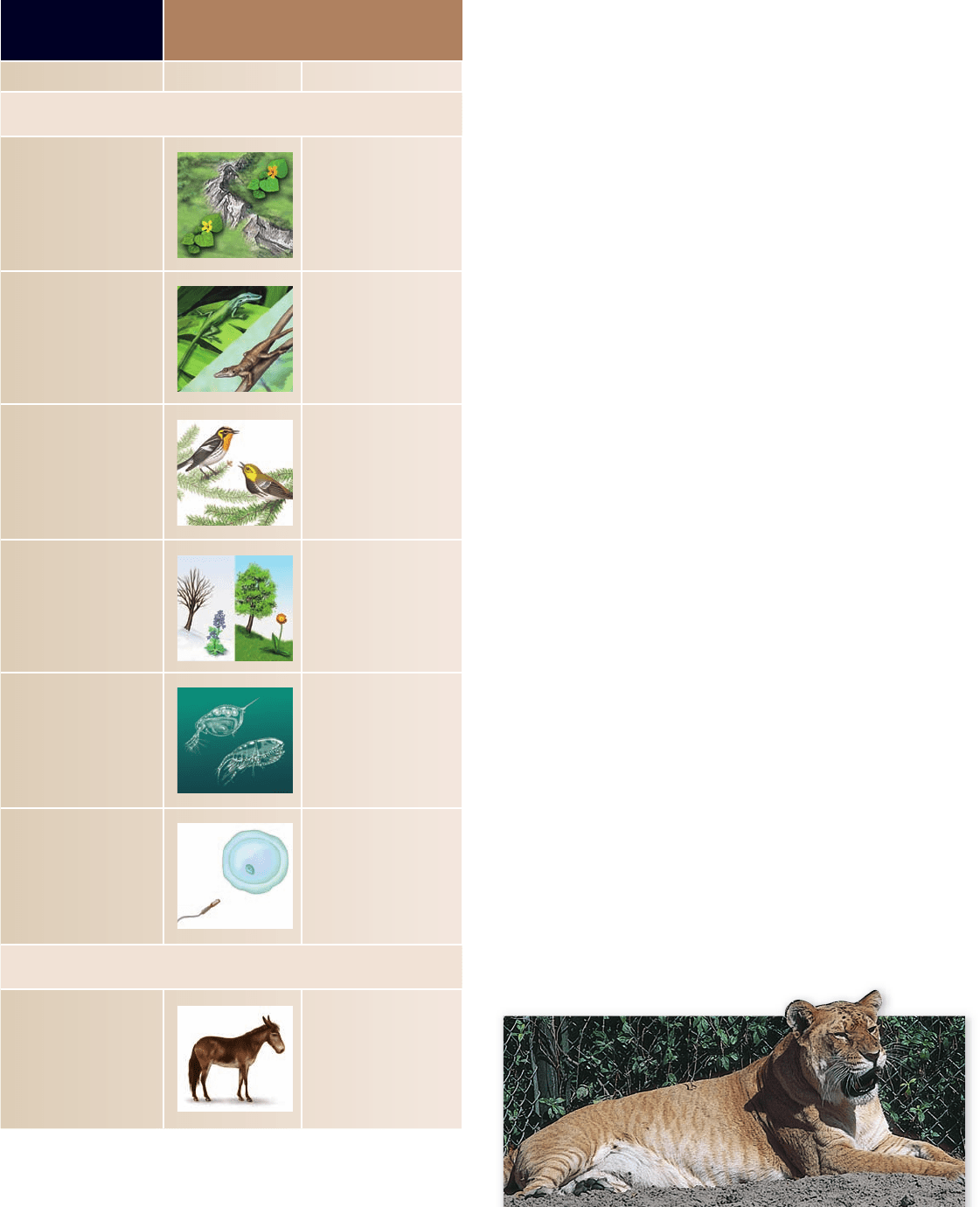
Table 22.1 summarizes the steps at which barriers to suc-
cessful reproduction may occur. Such barriers are termed
reproductive isolating mechanisms because they prevent
gen etic exchange between species. We will discuss examples of
these next, beginning with those that prevent the formation of
zygotes, which are called prezygotic isolating mechani sms.
Mechanisms that prevent the proper functioning of zygotes af-
ter they form are called postzygotic isolating mechanisms.
Prezygotic isolating mechanisms prevent
the formation of a zygote
Mechanisms that prevent formation of a zygote include
ecological or environmental isolation, behavioral isolation,
temporal isolation, mechanical isolation, and prevention of
gamete fusion.
Ecological isolation
Even if two species occur in the same area, they may utilize differ-
ent portions of the environment and thus not hybridize because
they do not encounter each other. For example, in India, the
ranges of lions and tigers overlapped until about 150 years ago.
Even so, there were no records of natural hybrids. Lions stayed
mainly in the open grassland and hunted in groups called prides;
tigers tended to be solitary creatures of the forest (figure 22.2).
Because of their ecological and behavioral differences, lions and
tigers rarely came into direct contact with each other, even though
their ranges overlapped over thousands of square kilometers.
In another example, the ranges of two toads, Bufo wood-
housei and B. americanus, overlap in some areas. Although these
two species can produce viable hybrids, they usually do not
interbreed because they utilize different portions of the habitat
for breeding. B. woodhousei prefers to breed in streams, and
B. americanus breeds in rainwater puddles.
Similar situations occur among plants. Two species of
oaks occur widely in California: the valley oak, Quercus lobata,
and the scrub oak, Q. dumosa. The valley oak, a graceful decidu-
ous tree that can be as tall as 35 m, occurs in the fertile soils of
open grassland on gentle slopes and valley floors. In contrast,
the scrub oak is an evergreen shrub, usually only 1 to 3 m tall,
which often forms the kind of dense scrub known as chaparral.
The scrub oak is found on steep slopes in less fertile soils. Hy-
brids between these different oaks do occur and are fully fertile,
but they are rare. The sharply distinct habitats of their parents
limit their occurrence together, and there is little intermediate
habitat where the hybrids might flourish.
TABLE 22.1
Reproductive Isolating
Mechanisms
Mechanism Description
PREZYGOTIC ISOLATING
MECHANISMS
Geographic isolation Species occur in di erent
areas, which are often
separated by a physical
barrier, such as a river or
mountain range.
Ecological isolation
Species occur in the same
area, but they occupy
di erent habitats and
rarely encounter
each other.
Behavioral isolation
Species di er in their
mating rituals.
Temporal isolation
Species reproduce in
di erent seasons or at
di erent times of the day.
Mechanical isolation
Structural di erences
between species
prevent mating.
Prevention of
gamete fusion
Gametes of one species
function poorly with the
gametes of another species
or within the reproductive
tract of another species.
POSTZYGOTIC
ISOLATING MECHANISMS
Hybrid inviability
or infertility
Hybrid embryos do not
develop properly, hybrid
adults do not survive in
nature, or hybrid adults
are sterile or have
reduced fertility.
Figure 22.2
Lions and tigers are ecologically isolated.
The ranges of lions and tigers overlap in India. However, lions and
tigers do not hybridize in the wild because they utilize different
portions of the habitat. Lions live in open grassland, whereas tigers
are solitary animals that live in the forest. Hybrids, such as this
tiglon, have been successfully produced in captivity, but
hybridization does not occur in the wild.
438
part
IV
Evolution
rav32223_ch22_436-455.indd 438rav32223_ch22_436-455.indd 438 11/12/09 11:31:32 AM11/12/09 11:31:32 AM
Apago PDF Enhancer
0 1 2 3 4 5 6 7 8 9 10 11 12
Time (seconds)
Amplitude (dB)
Chrysoperla
plorabunda
Chrysoperla
adamsi
Chrysoperla
johnsoni
Behavioral isolation
Chapter 54 describes the often elaborate courtship and mating
rituals of some groups of animals. Related species of organisms
such as birds often differ in their courtship rituals, which tends to
keep these species distinct in nature even if they inhabit the same
places (figure 22.3). For example, mallard and pintail ducks are
perhaps the two most common freshwater ducks in North Amer-
ica. In captivity, they produce completely fertile hybrid offspring,
but in nature they nest side by side and only rarely hybridize.
Sympatric species avoid mating with members of the
wrong species in a variety of ways; every mode of communica-
tion imaginable appears to be used by some species. Differences
in visual signals, as just discussed, are common; however, other
types of animals rely more on other sensory modes for commu-
nication. Many species, such as frogs, birds, and a variety of in-
sects, use sound to attract mates. Predictably, sympatric species
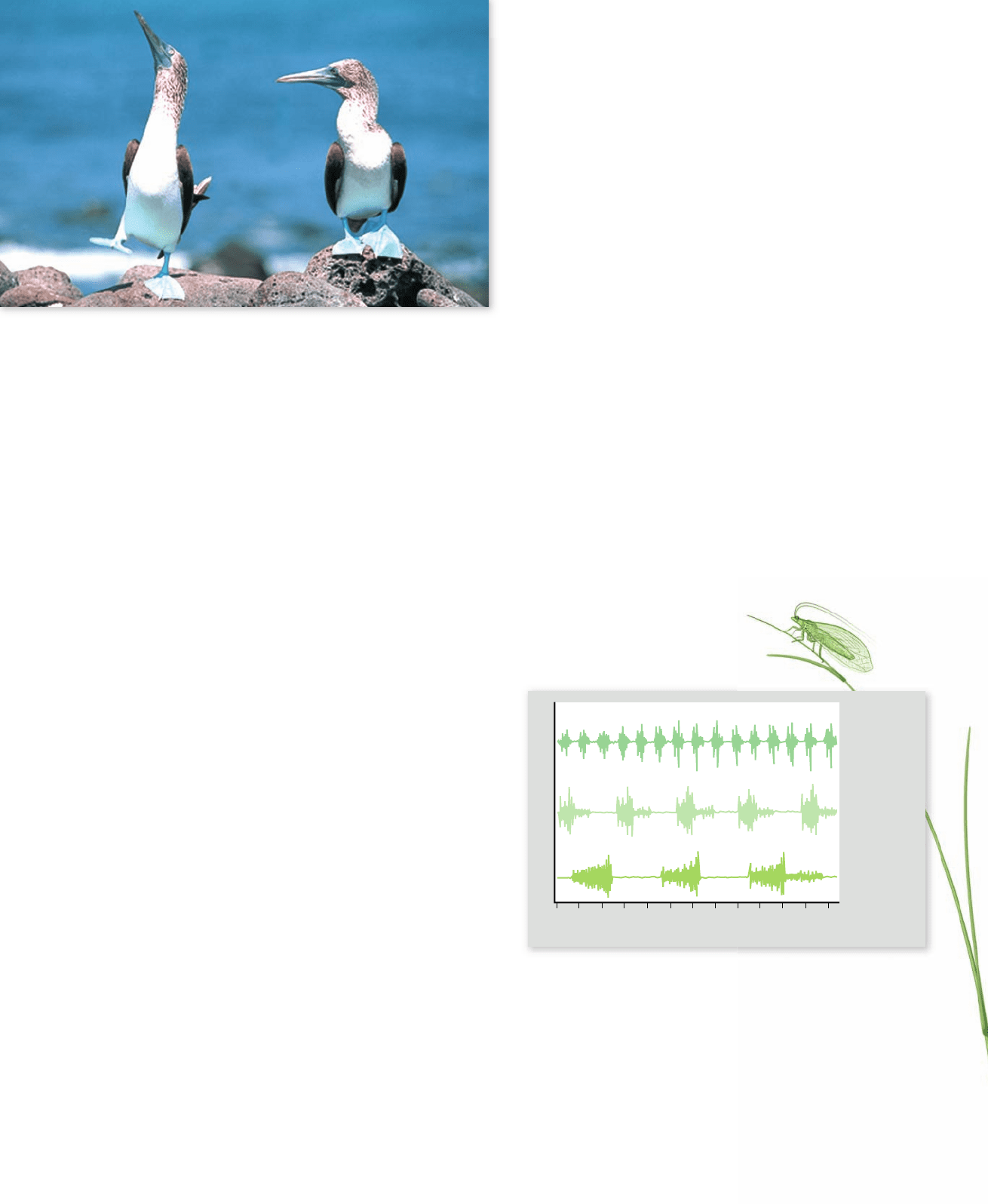
of these animals produce different calls. Similarly, the “songs” of
lacewings are produced when they vibrate their abdomens against
the surface on which they are sitting, and sympatric species pro-
duce different vibration patterns (figure 22.4).
Other species rely on the detection of chemical signals,
called pheromones. The use of pheromones in moths has been
particularly well studied. When female moths are ready to mate,
they emit a pheromone that males can detect at great distances.
Sympatric species differ in the pheromone they produce: Ei-
ther they use different chemical compounds, or, if using the
same compounds the proportions used are different. Labora-
tory studies indicate that males are remarkably adept at distin-
guishing the pheromones of their own species from those of
other species or even from synthetic compounds similar, but
not identical, to that of their own species.
Some species even use electroreception. African and
South Asian electric fish independently have evolved special-
ized organs in their tails that produce electrical discharges and
electroreceptors on their skins to detect them. These dis-
charges are used to communicate in social interactions; field
Figure 22.3
Di erences in courtship rituals can isolate
related bird species. These Galápagos blue-footed boobies
select their mates only after an elaborate c ourtship display. This
male is lifting his feet in a ritualized high-step that shows off his
bright blue feet. The display behavior of the two other species of
boobies that occur in the Galápagos is very different, as is the color
of their feet.
Figure 22.4
Di erences in courtship song of sympatric
species of la cewings. Lacewings are small insects that rely on
auditory signals produced by moving their abdomens to vibrate the
surface on which they are sitting to attract mates. As these
recordings indicate, the vibration patterns produced by sympatric
species differ greatly. Females, which detect the calls as they are
transmitted through solid surfaces such as branches, are able to
distinguish calls of different species and only respond to individuals
producing their own species’ call.
experiments indicate that males can distinguish between signals
produced by their own and other species, probably on the basis
of differences in the timing of the electrical pulses.
Temporal isolation
Lactuca graminifolia and L. canadensis, two species of wild let-
tuce, grow together along roadsides throughout the southeast-
ern United States. Hybrids between these two species are easily
made experimentally and are completely fertile. But these hy-
brids are rare in nature because L. graminifolia flowers in early
spring and L. canadensis flowers in summer. When their bloom-
ing periods overlap, as happens occasionally, the two species do
form hybrids, which may become locally abundant.
Many species of closely related amphibians have different
breeding seasons that prevent hybridization. For example, five
species of frogs of the genus Rana occur together in most of the
eastern United States, but hybrids are rare because the peak
breeding time is different for each of them.
Mechanical isolation
Structural differences prevent mating between some related
species of animals. Aside from such obvious features as size, the
structure of the male and female copulatory organs may be in-
compatible. In many insect and other arthropod groups, the
sexual organs, particularly those of the male, are so diverse that
they are used as a primary basis for distinguishing species.
Similarly, flowers of related species of plants often differ
significantly in their proportions and structures. Some of these
differences limit the transfer of pollen from one plant species to
another. For example, bees may
carry the pollen of one species on
a certain place on their bodies; if
this area does not come into
chapter
22
The Origin of Species
439www.ravenbiology.com
rav32223_ch22_436-455.indd 439rav32223_ch22_436-455.indd 439 11/12/09 11:31:37 AM11/12/09 11:31:37 AM
Apago PDF Enhancer
1
2
4
3
1. Rana pipiens
2. Rana blairi
3. Rana sphenocephala
4. Rana berlandieri
contact with the receptive structures of the flowers of another
plant species, the pollen is not transferred.
Prevention of gamete fusion
In animals that shed gametes directly into water, the eggs and
sperm derived from different species may not attract or fuse
with one another. Many land animals may not hybridize suc-
cessfully because the sperm of one species functions so poorly
within the reproductive tract of another that fertilization never
takes place. In plants, the growth of pollen tubes may be im-
peded in hybrids between different species. In both plants and
animals, isolating mechanisms such as these prevent the union
of gametes, even following successful mating.
Postzygotic isolating mechanisms prevent
normal development into reproducing adults
All of the factors we have discussed so far tend to prevent hy-
bridization. If hybrid matings do occur and zygotes are pro-
duced, many factors may still prevent those zygotes from
developing into normally functioning, fertile individuals.
As you saw in chapter 19, development is a complex pro-
cess. In hybrids, the genetic complements of two species may
be so different that they cannot function together normally in
embryonic development. For example, hybridization between
sheep and goats usually produces embryos that die in the earli-
est developmental stages.
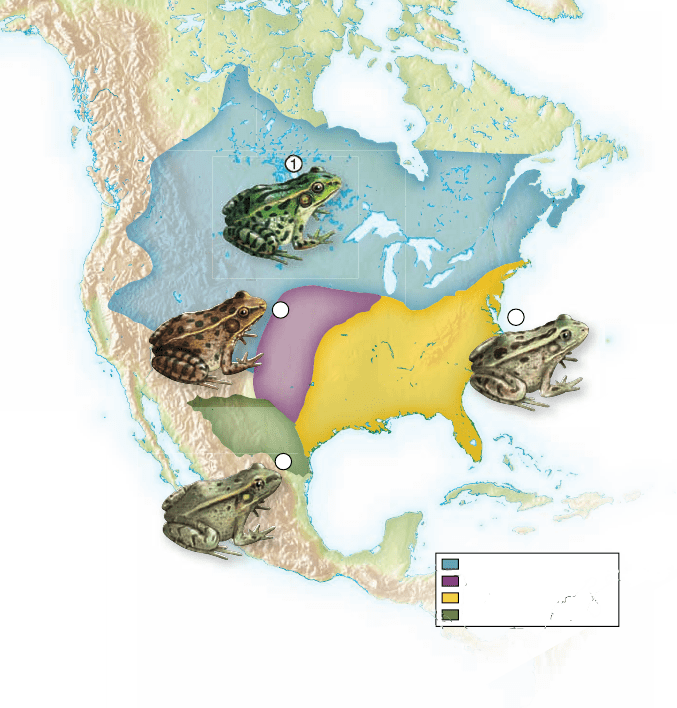
The leopard frogs (Rana pipien s complex) of the eastern
United States are a group of similar species, assumed for a long
time to constitute a single species (figure 22.5). Careful exami-
nation, however, revealed that although the frogs appear simi-
lar, successful mating between them is rare because of problems
that occur as the fertilized eggs develop. Many of the hybrid
combinations cannot be produced even in the laboratory.
Examples of this kind, in which similar species have been
recognized only as a result of hybridization experiments, are
common in plants. Sometimes the hybrid plant embryos can be
removed at an early stage and grown in an artificial medium.
When these hybrids are supplied with extra nutrients or other
supplements that compensate for their weakness or inviability,
they may complete their development normally.
Even when hybrids survive the embryo stage, they may
still not develop normally. If the hybrids are less physically fit
than their parents, they will almost certainly be eliminated in
nature. Even if a hybrid is vigorous and strong, as in the case of
the mule, which is a hybrid between a female horse and a male
donkey, it may still be sterile and thus incapable of contributing
to succeeding generations.
Hybrids may be sterile because the development of sex
organs is abnormal, because the chromosomes derived from the
respective parents cannot pair properly during meiosis, or due
to a variety of other causes.
The biological species concept
does not explain all observations
The biological species concept has proved to be an effective
way of understanding the existence of species in nature. None-
theless, it fails to take into account all observations, leading
some biologists to propose alternative species concepts.
One criticism of the biological species concept concerns
the extent to which all species truly are reproductively isolated.
By definition, under the biological species concept, species should
not interbreed and produce fertile offspring. But in recent years,
biologists have detected much greater amounts of interspecies
hybridization than was previously thought to occur between
populations that seem to coexist as distinct biological entities.
Botanists have always been aware that plant species often
undergo substantial amounts of hybridization. More than 50%
of California plant species included in one study, for example,
were not well defined by genetic isolation. This coexistence
without genetic isolation can be long-lasting: Fossil data show
that balsam poplars and cottonwoods have been phenotypically
distinct for 12 million years, but they also have routinely pro-
duced hybrids throughout this time. Consequently, many bota-
nists have long felt that the biological species concept applies
only to animals.
New evidence, however, increasingly indicates that hy-
bridization is not all that uncommon in animals, either. In re-
cent years, many cases of substantial hybridization between
animal species have been documented. One recent survey indi-
cated that almost 10% of the world’s 9500 bird species are
known to have hybridized in nature.
The Galápagos finches provide a particularly well-studied
example. Three species on the island of Daphne Major—the
Figure 22.5
Postzygotic
isolation in leopard frogs. These
four species resemble one another closely in
their external features. Their status as separate species
rst was suspected when hybrids between some pairs of
these species were found to produce defective embryos in the
laboratory. Subsequent research revealed that the mating calls
of the four species differ substantially, indicating that the species
have both pre- and postzygotic isolating mechanisms.
440
part
IV
Evolution
rav32223_ch22_436-455.indd 440rav32223_ch22_436-455.indd 440 11/12/09 11:31:38 AM11/12/09 11:31:38 AM

Apago PDF Enhancer
medium ground finch, the cactus finch, and the small ground
finch—are clearly distinct morphologically, and they occupy
different ecological niches. Studies over the past 20 years by
Peter and Rosemary Grant found that, on average, 2% of the
medium ground finches and 1% of the cactus ground finches
mated with other species every year. Furthermore, hybrid off-
spring appeared to be at no disadvantage in terms of survival or
subsequent reproduction. This is not a trivial amount of ge-
netic exchange, and one might expect to see the species coalesce
into one genetically variable population—but the species are
maintaining their distinctiveness.
Hybridization is not rampant throughout the animal
world, however. Most bird species do not hybridize, and prob-
ably even fewer experience significant amounts of hybridiza-
tion. Still, hybridization is common enough to cast doubt on
whether reproductive isolation is the only force maintaining
the integrity of species.
Natural selection and the ecological species concept
An alternative hypothesis proposes that the distinctions among
species are maintained by natural selection. The idea is that
each species has adapted to its own specific part of the environ-
ment. Stabilizing selection, described in chapter 20 , then main-
tains the species’ adaptations. Hybridization has little effect
because alleles introduced into one species’ gene pool from
other species are quickly eliminated by natural selection.
You probably recall from chapter 20 that the interaction
between gene flow and natural selection can have many out-
comes. In some cases, strong selection can overwhelm any ef-
fects of gene flow—but in other situations, gene flow can
prevent populations from eliminating less successful alleles
from a population.
As a general explanation, then, an ecological species con-
cept is not likely to have any fewer exceptions than does the bio-
logical species concept, although it might prove to be a more
successful description for certain types of organisms or habitats.
Other weaknesses of the biological species concept
The biological species concept has been criticized for other
reasons as well. For example, it can be difficult to apply the
concept to populations that are geographically separated in na-
ture. Because individuals of these populations do not encounter
each other, it is not possible to observe whether they would
interbreed naturally.
Although experiments can determine whether fertile hy-
brids can be produced, this information is not enough. Many
species that coexist without interbreeding in nature will readily
hybridize in the artificial settings of the laboratory or zoo. Con-
sequently, evaluating whether such populations constitute dif-
ferent species is ultimately a judgment call. In addition, the
concept is more limited than its name would imply. Many or-
ganisms are asexual and reproduce without mating. Reproduc-
tive isolation therefore has no meaning for such organisms.
For these reasons, a variety of other ideas have been put
forward to establish criteria for defining species. Many of these
are specific to a particular type of organism, and none has uni-
versal applicability. In reality, there may be no single explanation
for what maintains the identity of species. Given the incredible
variation evident in plants, animals, and microorganisms in all
aspects of their biology, it would not be surprising to find that
different processes are operating in different organisms.
In addition, some scientists have turned from emphasiz-
ing the processes that maintain species distinctions to examin-
ing the evolutionary history of populations. These genealogical
species concepts are currently a topic of great debate and are
discussed further in chapter 23.
Learning Outcomes Review 22.1
Species are populations of organisms that are distinct from other, co-
occurring species, and are interconnected geographically. The biological
species concept therefore defi nes species based on their ability to
interbreed. Reproductive isolating mechanisms prevent successful
interbreeding between species. The ecological species concept relies on
adaptation and natural selection as a force for maintaining separation
of species.
■ How does the ability to exchange genes explain why
sympatric species remain distinct and geographic
populations of one species remain connected?
22.2
Natural Selection and
Reproductive Isolation
Learning Outcomes
Define reinforcement in the context of reproductive 1.
isolation.
Explain the possible outcomes when two populations that 2.
are partially reproductively isolated become sympatric.
One of the oldest questions in the field of evolution is: How does
one ancestral species become divided into two descendant species
(a process termed cladogenesis)? If species are defined by the ex-
istence of reproductive isolation, then the process of speciation is
identical to the evolution of reproductive isolating mechanisms.
Selection may reinforce isolating mechanisms
The formation of species is a continuous process, and as a
result, two populations may only be partially reproductively
isolated. For example, because of behavioral or ecological dif-
ferences, individuals of two populations may be more likely
to mate with members of their own population, and yet
between-population matings may still occur. If mating occurs
and fertilization produces a zygote, postzygotic barriers may
also be incomplete: developmental problems may result in lower
embryo survival or reduced fertility, but some individuals may
survive and reproduce.
What happens when two populations come into contact
thus depends on the extent to which isolating mechanisms have
already evolved. If isolating mechanisms have not evolved at all,
chapter
22
The Origin of Species
441www.ravenbiology.com
rav32223_ch22_436-455.indd 441rav32223_ch22_436-455.indd 441 11/12/09 11:31:46 AM11/12/09 11:31:46 AM