
Raven P.H., Johnson G.B., Mason K.A. Biology (Ninth Edition)
Подождите немного. Документ загружается.

Apago PDF Enhancer
Mean
Mean
Mean
High
population
Bristle number in Drosophila
Number of Individuals
0 10 20 30 40 50 60 70 80 90 100 110
Low
population
Initial
population
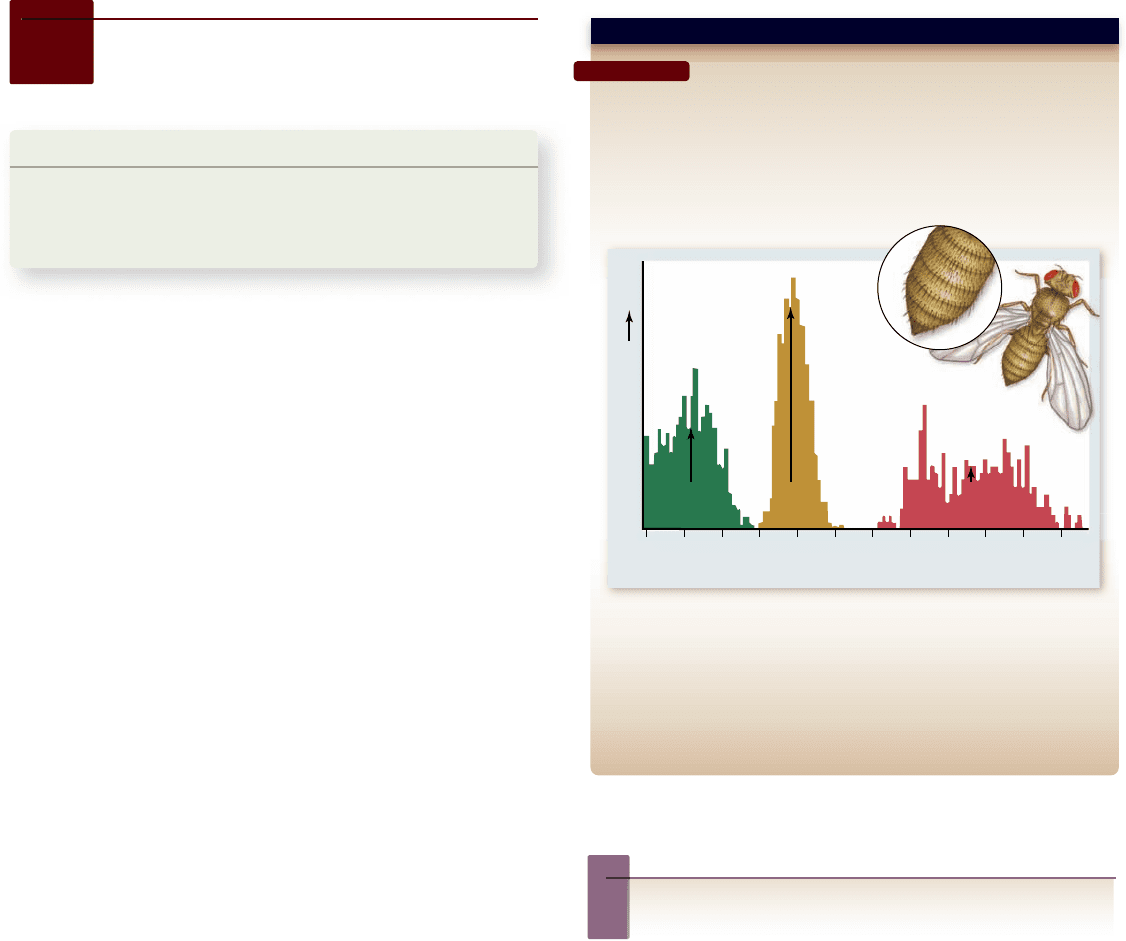
Question: Can artificial selection lead to substantial evolutionary change?
Hypothesis: Strong directional selection will quickly lead to a large shift
in the mean value of the population.
Experiment: In one population, every generation pick out the 20% of
the population with the most bristles and allow them to reproduce to
form the next generation. In the other population, do the same with the
20% with the fewest number of bristles.
Result: After 35 generations, mean number of bristles has changed
substantially in both populations.
Interpretation: Note that at the end of the experiment, the range of
variation lies outside the range seen in the initial population. Selection
can move a population beyond its original range because mutation and
recombination continuously introduce new variation into populations.
SCIENTIFIC THINKING
21.3
Arti cial Selection:
Human-Initiated Change
Learning Outcomes
Contrast the processes of artificial and natural selection.1.
Explain what artificial selection demonstrates about the 2.
power of natural selection.
Humans have imposed selection upon plants and animals since
the dawn of civilization. Just as in natural selection, artificial
selection operates by favoring individuals with certain pheno-
typic traits, allowing them to reproduce and pass their genes on
to the next generation. Assuming that phenotypic differences
are genetically determined, this directional selection should
lead to evolutionary change, and indeed it has.
Artificial selection, imposed in laboratory experiments,
agriculture, and the domestication process, has produced sub-
stantial change in almost every case in which it has been ap-
plied. This success is strong proof that selection is an effective
evolutionary process.
Experimental selection produces
changes in populations
With the rise of genetics as a field of science in the 1920s and 1930s,
researchers began conducting experiments to test the hypothesis
that selection can produce evolutionary change. A favorite subject
was the laboratory fruit fly, Drosophila melanogaster. Geneticists have
imposed selection on just about every conceivable aspect of the
fruit fly—including body size, eye color, growth rate, life span, and
exploratory behavior—with a consistent result: Selection for a trait
leads to strong and predictable evolutionary response.
In one classic experiment, scientists selected for fruit flies
with many bristles (stiff, hairlike structures) on their abdomens.
At the start of the experiment, the average number of bristles
was 9.5. Each generation, scientists picked out the 20% of the
population with the greatest number of bristles and allowed
them to reproduce, thus establishing the next generation. After
86 generations of this directional selection, the average number
of bristles had quadrupled, to nearly 40! In another experiment,
fruit flies in one population were selected for high numbers of
bristles, while fruit flies in the other cage were selected for low
numbers of bristles. Within 35 generations, the populations did
not overlap at all in range of variation (figure 21.5 ).
Similar experiments have been conducted on a wide vari-
ety of other laboratory organisms. For example, by selecting for
rats that were resistant to tooth decay, in less than 20 genera-
tions scientists were able to increase the average time for onset
of decay from barely over 100 days to greater than 500 days.
Agricultural selection has led to extensive
modi cation of crops and livestock
Familiar livestock, such as cattle and pigs, and crops, such as
corn and strawberries, are greatly different from their wild an-
Figure 21.5 Arti cial selection can lead to rapid
and substantial evolutionary change.
Inquiry question
?
What would happen if, within a population, both small and
large individuals were allowed to breed, but middle-sized
ones were not?
cestors (figure 21.6). These differences have resulted from gen-
erations of human selection for desirable traits, such as greater
milk production and larger corn ear size.
An experiment with corn demonstrates the ability of artifi-
cial selection to rapidly produce major change in crop plants. In
1896, agricultural scientists began selecting for the oil content of
corn kernels, which initially was 4.5%. Just as in the fruit fly
experiments, the top 20% of all individuals were allowed to repro-
duce. By 1986, at which time 90 generations had passed, average oil
content of the corn kernels had increased approximately 450%.
Domesticated breeds have arisen
from arti cial selection
Human-imposed selection has produced a great variety of
breeds of cats, dogs (figure 21.7) , pigeons, and other domestic
animals. In some cases, breeds have been developed for particu-
lar purposes. Greyhound dogs, for example, resulted from
422
part
IV
Evolution
rav32223_ch21_417-435.indd 422rav32223_ch21_417-435.indd 422 11/11/09 4:15:32 PM11/11/09 4:15:32 PM
Apago PDF Enhancer
Teosinte Intermediates
Modern
corn
Greyhound
Wolf
Mastiff
Dachshund
Chihuahua
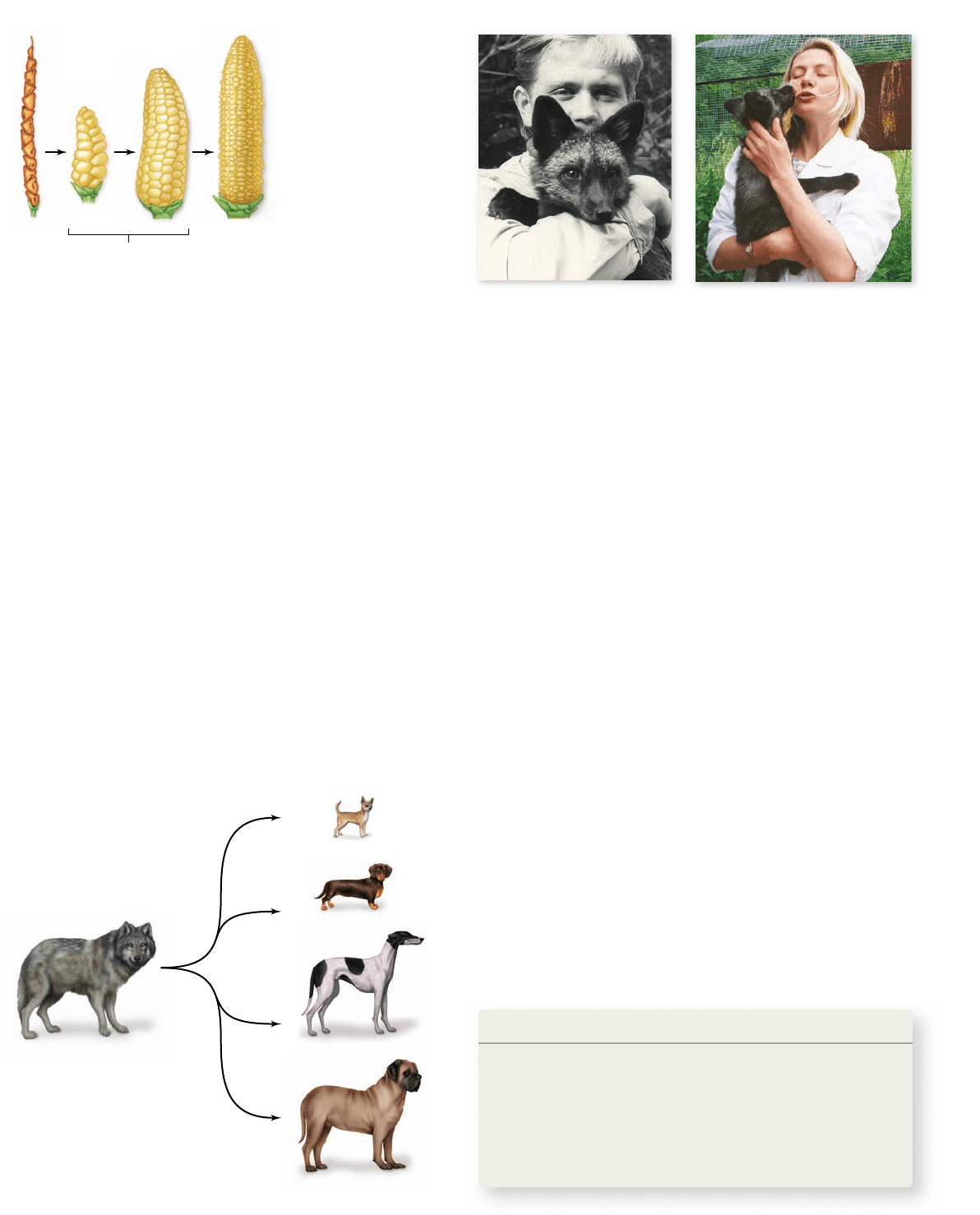
Figure 21.6
Corn
looks very di erent
from its ancestor.
Teosinte, whic h can be
found today in a
remote part of Mexico,
is very similar to the
ancestor of modern
corn. Arti cial
selection has
transformed it into the
form we know today.
Figure 21.7
Breeds of
dogs. The differences among
dog breeds are greater than
the differences displayed
among wild species of canids.
Figure 21.8
Domesticated foxes. After 40 years of
selectively breeding the tamest individuals, arti cial selection has
produced silver foxes that are not only as friendly as dom estic dogs,
but also exhibit many physical traits seen in dog breeds.
selection for maximal running ability, resulting in an animal
with long legs, a long tail for balance, an arched back to increase
stride length, and great muscle mass. By contrast, the odd pro-
portions of the ungainly dachshund resulted from selection for
dogs that could enter narrow holes in pursuit of badgers. In
other cases, varieties have been selected primarily for their ap-
pearance, such as the many colorful breeds of pigeons or cats.
Domestication also has led to unintentional selection
for some traits. In recent years, as part of an attempt to do-
mesticate the silver fox, Russian scientists have chosen the
most docile animals in each generation and allowed them to
reproduce. Within 40 years, most foxes were exceptionally
tame, not only allowing themselves to be petted, but also
whimpering to get attention and sniffing and licking their
caretakers ( figure 21.8). In many respects, they had become
no different from domestic dogs.
It was not only their behavior that changed, however. These
foxes also began to exhibit other traits seen in some dog breeds,
such as different color patterns, floppy ears, curled tails, and
shorter legs and tails. Presumably, the genes responsible for docile
behavior either affect these traits as well or are closely linked to
the genes for these other traits (the phenomena of pleiotropy and
linkage, which are discussed in chapters 12 and 13 ).
Can selection produce major evolutionary changes?
Given that we can observe the results of selection operating
over a relatively short time, most scientists think that natural
selection is the process responsible for the evolutionary
changes documented in the fossil record. Some critics of evolu-
tion accept that selection can lead to changes within a species,
but contend that such changes are relatively minor in scope and
not equivalent to the substantial changes documented in the
fossil record. In other words, it is one thing to change the num-
ber of bristles on a fruit fly or the size of an ear of corn, and
quite another to produce an entirely new species.
This argument does not fully appreciate the extent of
change produced by artificial selection. Consider, for exam-
ple, the existing breeds of dogs, all of which have been pro-
duced since wolves were first domesticated, perhaps 10,000
years ago. If the various dog breeds did not exist and a pale-
ontologist found fossils of animals similar to dachshunds,
greyhounds, mastiffs, and chihuahuas, there is no question
that they would be considered different species. Indeed, the
differences in size and shape exhibited by these breeds are
greater than those between members of different genera in
the family Canidae—such as coyotes, jackals, foxes, and
wolves—which have been evolving separately for 5 to 10
million years. Consequently, the claim that artificial selec-
tion produces only minor changes is clearly incorrect. If se-
lection operating over a period of only 10,000 years
can produce such substantial differences, it should be power-
ful enough, over the course of many millions of years, to
produce the diversity of life we see around us today.
Learning Outcomes Review 21.3
In artifi cial selection, humans choose which plants or animals to mate in an
attempt to conserve desirable traits. Rapid and substantial results can be
obtained over a very short time, often in a few generations. From this we can
see that natural selection is capable of producing major evolutionary change.
■ In what circumstances might artificial selection fail to
produce a desired change?
chapter
21
The Evidence for Evolution
423www.ravenbiology.com
rav32223_ch21_417-435.indd 423rav32223_ch21_417-435.indd 423 11/11/09 4:15:33 PM11/11/09 4:15:33 PM
Apago PDF Enhancer
2200
Millions of
years ago
Oldest eukaryotes
Diversification of multicellular
life and algae
4600
3800 First signs of life
Plants
Vertebrates
Colonization of
land by animals
Insects and amphibians
Reptiles
Mammals and dinosaurs
Flowering plants
and first birds
Extinction of
the dinosaurs
First hominids
600
100
200
300
400
500
3500 Oldest fossils
2700 Oxygen increases
in the atmosphere
Proportion of parent
isotope remaining
Time in half-lives
0
1 2 3 4 5
0
.25
.50
.75
1
Amount of daughter isotope
daughter
isotope
parent
isotope
radioactive decay
2
1
4
1
8
1
16
1
Amount of
parent isotope
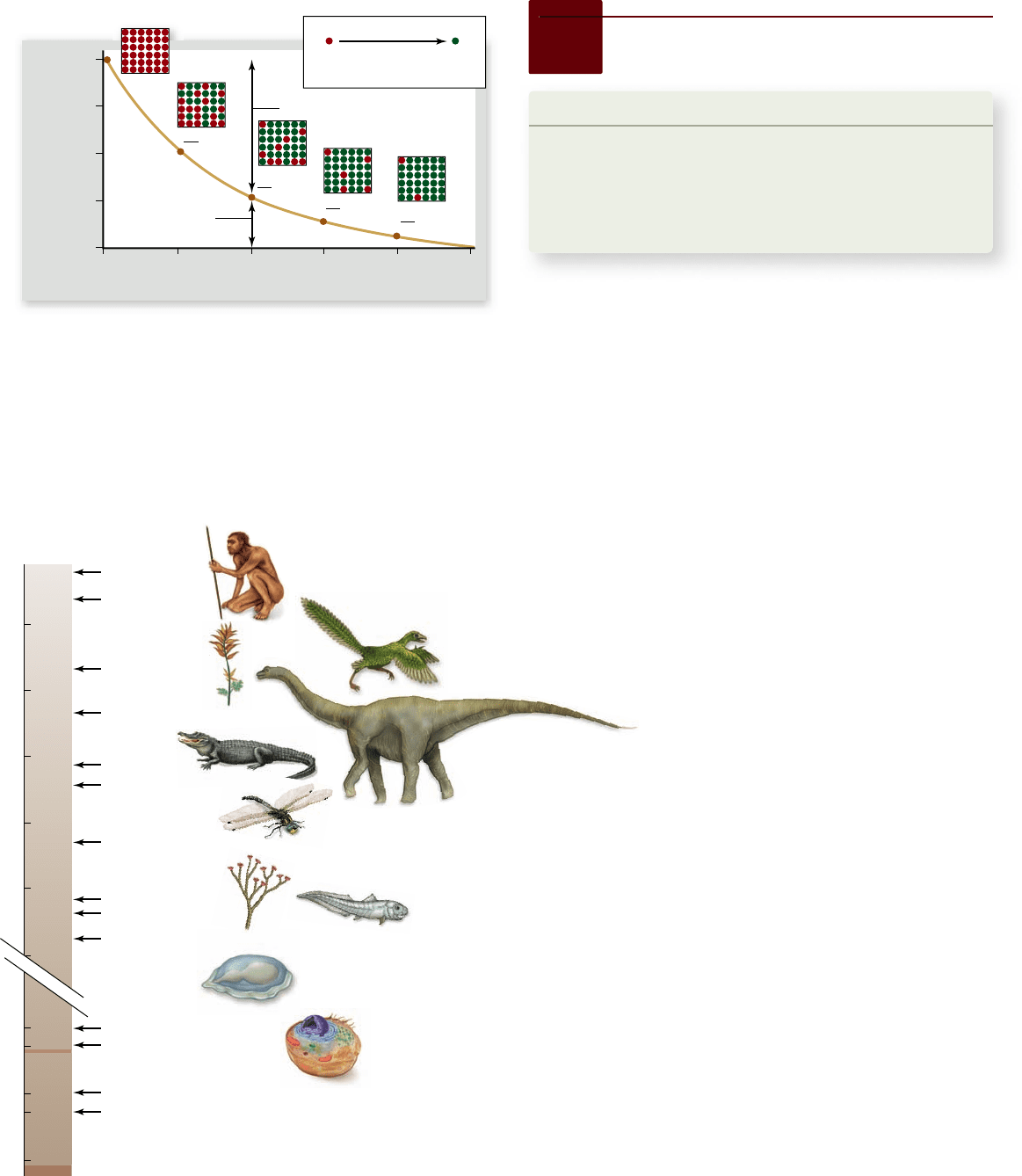
Figure 21.9
Radioactive decay. Radioactive elements decay
at a known rate, called their half-life. After one half-life, one half of
the original amount of parent isotope has transformed into a
nonradioactive daughte r isotope. After each successive half-life, one
half of the remaining amount of parent isotope is transformed.
Figure 21.10
History of evolutionar y change as
revealed by the fossil record.
21.4
Fossil Evidence of Evolution
Learning Outcomes
Describe how fossils are formed.1.
Explain the importance of the discovery of transitional 2.
fossils.
Name the evolutionary trends revealed by study of horse 3.
evolution.
The most direct evidence that evolution has occurred is found
in the fossil record. Today we have a far more complete under-
standing of this record than was available in Darwin’s time.
Fossils are the preserved remains of once-living organ-
isms. They include specimens preserved in amber, Siberian
permafrost, and dry caves, as well as the more common fossils
preserved as rocks.
Rock fossils are created when three events occur. First, the
organism must become buried in sediment; then, the calcium in
bone or other hard tissue must mineralize; and finally, the sur-
rounding sediment must eventually harden to form rock.
The process of fossilization occurs only rarely. Usually,
animal or plant remains decay or are scavenged before the
process can begin. In addition, many fossils occur in rocks that
are inaccessible to scientists. When they do become available,
they are often destroyed by erosion and other natural pro-
cesses before they can be collected. As a result, only a very
small fraction of the species that have ever existed (estimated
by some to be as many as 500 million) are known
from fossils. Nonetheless, the fossils that have
been discovered are sufficient to provide de-
tailed information on the course of evolution
through time.
The age of fossils is estimated by rates
of radioactive decay
By dating the rocks in which fossils occur, we can get an accu-
rate idea of how old the fossils are. In Darwin’s day, rocks were
dated by their position with respect to one another (relative dat-
ing); rocks in deeper strata are generally older. Knowing the
relative positions of sedimentary rocks and the rates of erosion
of different kinds of sedimentary rocks in different environ-
ments, geologists of the 19th century derived a fairly accurate
idea of the relative ages of rocks.
Today, geologists take advantage of radioactive decay to es-
tablish the age of rocks (absolute dating). Many types of rock, such
as the igneous rocks formed when lava cools, contain radioactive
elements such as uranium-238. These isotopes transform at a
precisely known rate into nonradioactive forms. For example, for
U
238
the half-life (that is, the amount of time needed for one-half
of the original amount to be transformed) is 4.5 billion years.
Once a rock is formed, no additional radioactive isotopes are
added. Therefore, by measuring the ratio of the radioactive iso-
tope to its derivative, “daughter” isotope (figure 21.9), geologists
424
part
IV
Evolution
rav32223_ch21_417-435.indd 424rav32223_ch21_417-435.indd 424 11/11/09 4:15:35 PM11/11/09 4:15:35 PM
Apago PDF Enhancer
Modern toothed whales
Pakicetus attocki lived on land,
but its skull differed from that of
its ancestors and exhibited
many characteristics seen in
whales today.
Rodhocetus kasrani's
reduced hind limbs
could not have aided it
in walking or swimming.
Rodhocetus swam with
an up-and-down motion,
as do modern whales.
Ambulocetus natans
probably walked on land
(as do modern sea lions)
and swam by flexing
its backbone and paddling
with its hind limbs
(as do modern otters).
can determine the age of the rock. If a fossil is found between two
layers of rock, each of which can be dated, then the age at which
the fossil formed can be determined.
Fossils present a history of evolutionary change
When fossils are arrayed according to their age (figure 21.10),
from oldest to youngest, they often provide evidence of succes-
sive evolutionary change. At the largest scale, the fossil record
documents the course of life through time, from the origin of
first prokaryotic and then eukaryotic organisms, through the
evolution of fishes, the rise of land-dwelling organisms, the
reign of the dinosaurs, and on to the origin of humans. In addi-
tion, the fossil record shows the waxing and waning of biologi-
cal diversity through time, such as the periodic mass extinctions
that have reduced the number of living species.
Fossils document evolutionary transition
Given the low likelihood of fossil preservation and recovery, it
is not surprising that there are gaps in the fossil record. None-
theless, intermediate forms are often available to illustrate how
the major transitions in life occurred.
Undoubtedly the most famous of these is the oldest known
bird, Archaeopteryx (meaning “ancient feather”) which lived
around 165 million years ago (figure 21.11). This specimen is
clearly intermediate between birds and dinosaurs. Its feathers,
similar in many respects to those of birds today, clearly reveal
that it is a bird. Nonetheless, in many other respects—for ex-
ample, possession of teeth, a bony tail, and other anatomical
characteristics—it is indistinguishable from some carnivorous
dinosaurs. Indeed, it is so similar to these dinosaurs that several
specimens lacking preserved feathers were misidentified as
dinosaurs and lay in the wrong natural history museum cabinet
for several decades before the mistake was discovered!
Archaeopteryx reveals a pattern commonly seen in inter-
mediate fossils—rather than being intermediate in every trait,
such fossils usually exhibit some traits like their ancestors and
others like their descendants. In other words, traits evolve at
different rates and different times; expecting an intermediate
form to be intermediate in every trait would not be correct.
The first Archaeopteryx fossil was discovered in 1859, the
year Darwin published On the Origin of Species. Since then,
paleontologists have continued to fill in the gaps in the fossil
record. Today, the fossil record is far more complete, particu-
larly among the vertebrates; fossils have been found linking all
the major groups.
Recent years have seen spectacular discoveries, closing
some of the major remaining gaps in our understanding of
vertebrate evolution. For example, a four-legged aquatic
mammal was discovered only recently that provides impor-
tant insights concerning the evolution of whales and dolphins
from land-dwelling, hoofed ancestors (figure 21.12). Simi-
larly, a fossil snake with legs has shed light on the evolution
of snakes, which are descended from lizards that gradually
Figure 21.11
Fossil of Archaeopteryx, the rst bird.
The remarkable preservation of this specimen reveals soft parts
usually not preserved in fossils; the pre sence of feathers makes
clear that Archaeopteryx was a bird, despite the presence of many
dinosaurian traits.
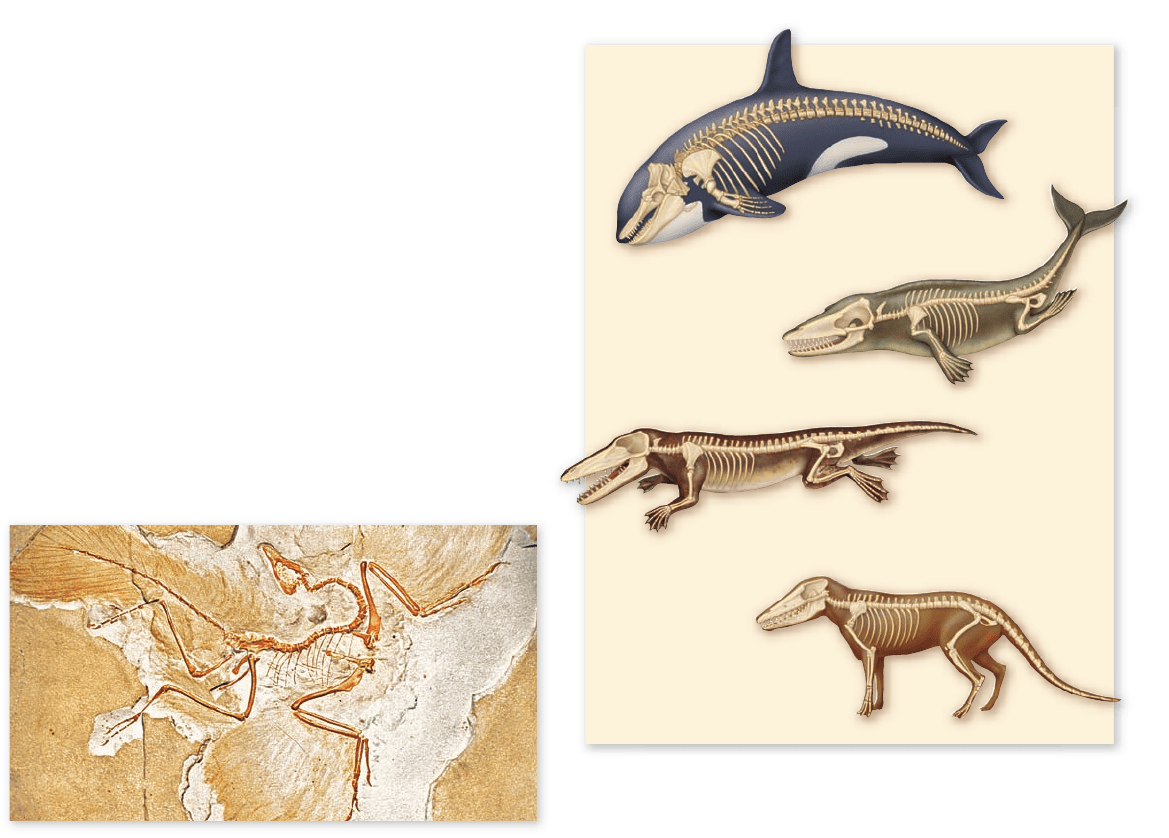
Figure 21.12
Whale “missing links.” The recent
discoveries of Ambulocetus, Rodhocetus, and Pakicetus have lled in the
gaps between whales and their hoofed mammal ancestors. The
features of Pakicetus illustrate that intermediate forms are not
intermediate in all characteristics; rather, some traits evolve before
others. In the case of the evolution of w hales, changes occurred in
the skull prior to evolutionary modi cation of the limbs. All three
fossil forms occurred in the Eocene period, 45–55 mya.
chapter
21
The Evidence for Evolution
425www.ravenbiology.com
rav32223_ch21_417-435.indd 425rav32223_ch21_417-435.indd 425 11/11/09 4:15:36 PM11/11/09 4:15:36 PM
Apago PDF Enhancer
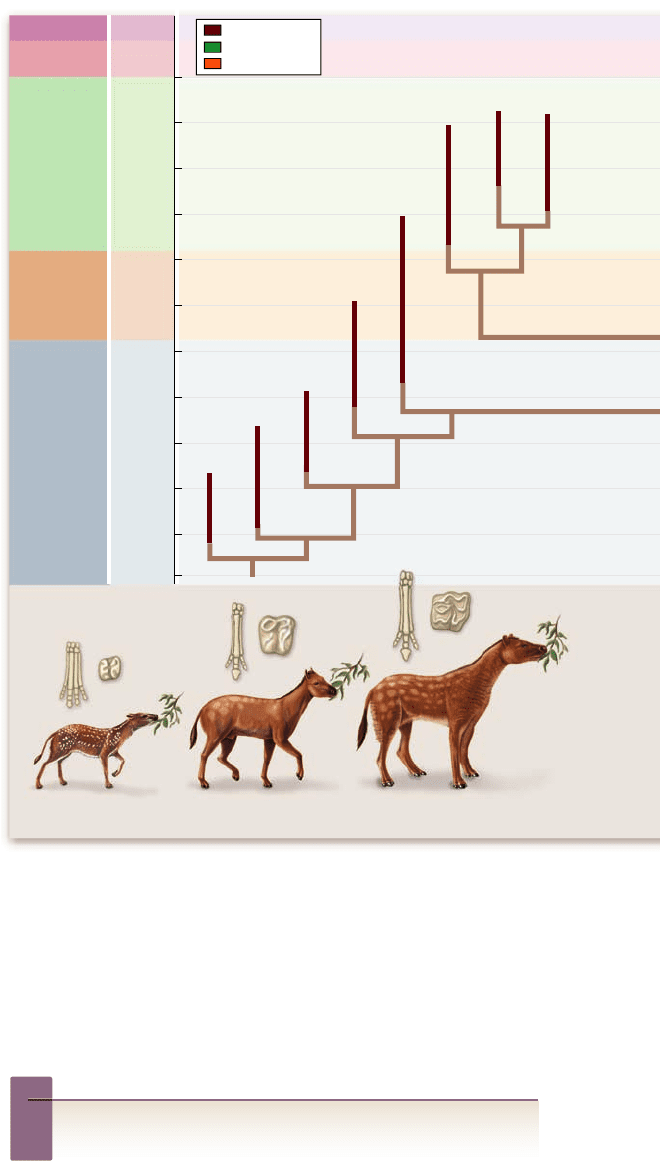
Hyracotherium
Orohippus
Epihippus
Mesohippus
Anchitherium
Miohippus
Megahippus
Hypohippus
Eocene
55 MYA
60 MYA
50 MYA
45 MYA
40 MYA
35 MYA
30 MYA
25 MYA
20 MYA
15 MYA
10 MYA
5 MYA
Oligocene
Miocene
Pliocene
Pleistocene
Anchitherium
(browsers)
Mesohippus
(browsers)
Hyracotherium
(browsers)
browsers
grazers
mixed feeders
became more and more elongated with the simultaneous
reduction and eventual disappearance of the limbs. In chap-
ter 35 , we discuss the most recent such discovery, Tiktaalik, a
species that bridged the gap between fish and the first
amphibians.
On a finer scale, evolutionary change within some types
of animals is known in exceptional detail. For example, about
200 million years ago (mya), oysters underwent a change from
small, curved shells to larger, flatter ones, with progressively
flatter fossils seen in the fossil record over a period of 12 mil-
lion years. A host of other examples illustrate similar records
of successive change. The demonstration of this successive
change is one of the strongest lines of evidence that evolution
has occurred.
The evolution of horses is a prime example
of evidence from fossils
One of the most studied cases in the fossil record concerns the
evolution of horses. Modern-day members of the family Equi-
dae include horses, zebras, donkeys, and asses, all of which are
large, long-legged, fast-running animals adapted to living on
open grasslands. These species, all classified in the genus Equus,
are the last living descendants of a long lineage that has pro-
duced 34 genera since its origin in the Eocene period, approxi-
mately 55 mya. Examination of these fossils has provided a
particularly well-documented case of how evolution has pro-
ceeded through adaptation to changing environments.
The first horse
The earliest known members of the horse family, species in the
genus Hyracotherium, didn’t look much like modern-day horses
at all. Small, with short legs and broad feet, these species oc-
curred in wooded habitats, where they probably browsed on
leaves and herbs and escaped predators by dodging through
openings in the forest vegetation. The evolutionary path from
these diminutive creatures to the workhorses of today has in-
volved changes in a variety of traits, including size, toe reduc-
tion, and tooth size and shape (figure 21.13).
Changes in size
The first species of horses were as big as a large house cat or a
medium-sized dog. By contrast, modern equids can weigh
more than 500 kg. Examination of the fossil record reveals that
horses changed little in size for their first 30 million years, but
since then, a number of different lineages have exhibited rapid
and substantial increases. However, trends toward decreased
size were also exhibited in some branches of the equid evolu-
tionary tree.
Toe reduction
The feet of modern horses have a single toe enclosed in a tough,
bony hoof. By contrast, Hyracotherium had four toes on its front
feet and three on its hind feet. Rather than hooves, these toes
were encased in fleshy pads like those of dogs and cats.
Examination of fossils clearly shows the transition through
time: a general increase in length of the central toe, develop-
ment of the bony hoof, and reduction and loss of the other toes
(see figure 21.13 ). As with body size, these trends occurred con-
currently on several different branches of the horse evolution-
ary tree and were not exhibited by all lineages.
At the same time as toe reduction was occurring, these
horse lineages were evolving changes in the length and skeletal
structure of their limbs, leading to animals capable of running
long distances at high speeds.
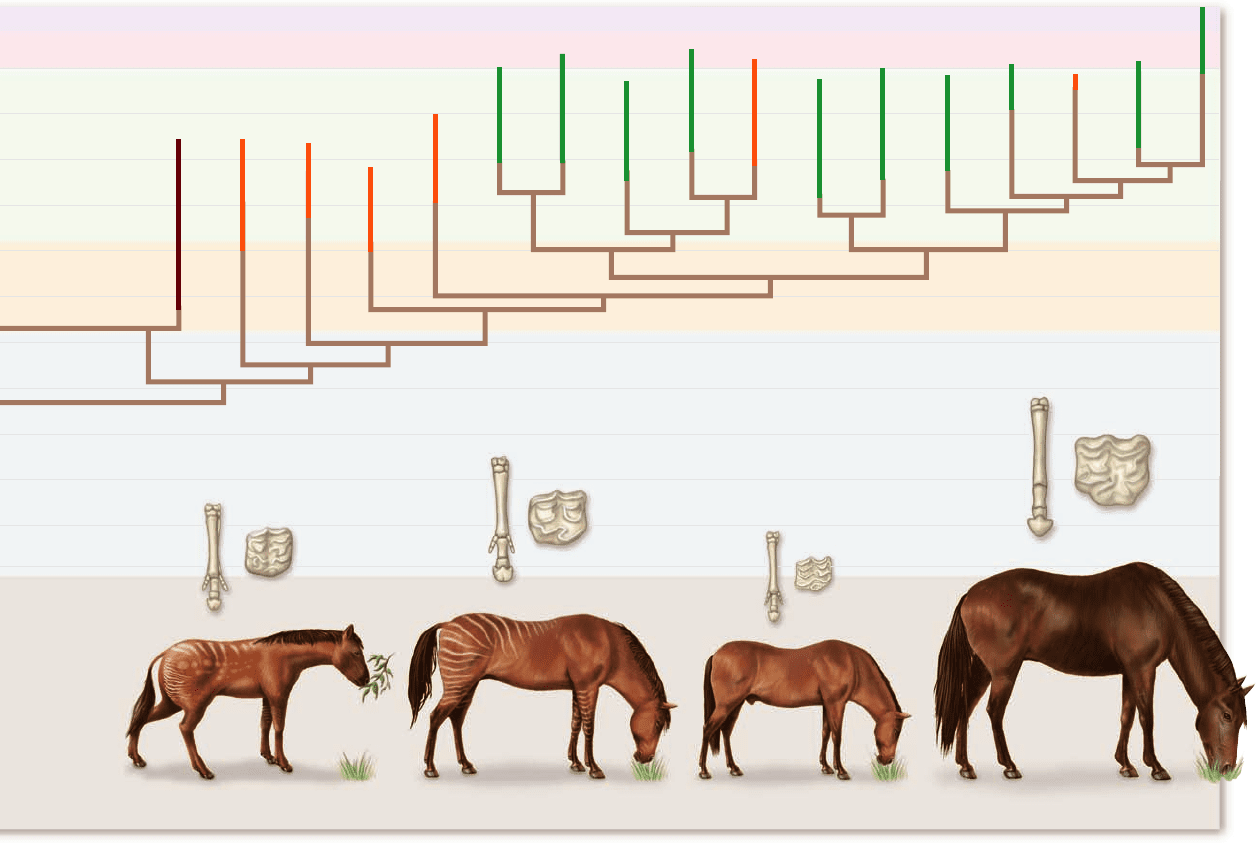
Figure 21.13
Evolutionary change in body size of
horses. Lines indicate evolutionary relationships of the horse
family. Horse evolution is more like a bush than a single-trunk tree;
diversity was much greater in the past than it is today. In general,
there has been a trend toward larger size, more complex molar
teeth, and fewer toes, but this trend has exceptions. For example, a
relatively recent form, Nannippus, evolved in the opposite direction,
toward decreased size.
Inquiry question
?
Why might the evolutionary line leading to Nannippus have
experienced an evolutionary decrease in body size?
426
part
IV
Evolution
rav32223_ch21_417-435.indd 426rav32223_ch21_417-435.indd 426 11/11/09 4:15:39 PM11/11/09 4:15:39 PM
Apago PDF Enhancer
Kalobatippus
Archaeohippus
Desmatippus
Parahippus
Merychippus
Pseudhipparion
Neohipparion
Hipparion
Nannippus
Cormohipparion
Protohippus
Calippus
Pliohippus
Astrohippus
Onohippidion
Dinohippus
Equus
Equus
(grazers)
Nannippus
(grazers)
Merychippus
(mixed feeders)
Neohipparion
(grazers)
Tooth size and shape
The teeth of Hyracotherium were small and relatively simple in
shape. Through time, horse teeth have increased greatly in
length and have developed a complex pattern of ridges on their
molars and premolars. The effect of these changes is to produce
teeth better capable of chewing tough and gritty vegetation,
such as grass, which tends to wear teeth down.
Accompanying these changes have been alterations in the
shape of the skull that strengthened the skull to withstand the
stresses imposed by continual chewing. As with body size, evo-
lutionary change has not been constant through time. Rather,
much of the change in tooth shape has occurred within the past
20 million years, and changes have not been constant among all
horse lineages.
All of these changes may be understood as adaptations to
changing global climates. In particular, during the late Miocene
and early Oligocene epochs (approximately 20 to 25 mya),
grasslands became widespread in North America, where much
of horse evolution occurred. As horses adapted to these habi-
tats, high-speed locomotion probably became more important
to escape predators. By contrast, the greater flexibility provided
by multiple toes and shorter limbs, which was advantageous for
ducking through complex forest vegetation, was no longer ben-
eficial. At the same time, horses were eating grasses and other
vegetation that contained more grit and other hard substances,
thus favoring teeth and skulls better suited for withstanding
such materials.
Evolutionary trends
For many years, horse evolution was held up as an example of
constant evolutionary change through time. Some even saw in
the record of horse evolution evidence for a progressive, guiding
force, consistently pushing evolution in a single direction. We
now know that such views are misguided, and that the course of
evolutionary change over millions of years is rarely so simple.
Rather, the fossils demonstrate that even though overall
trends have been evident in a variety of characteristics, evolution-
ary change has been far from constant and uniform through time.
Instead, rates of evolution have varied widely, with long periods of
little observable change and some periods of great change. More-
over, when changes happen, they often occur simultaneously in
different lineages of the horse evolutionary tree.
chapter
21
The Evidence for Evolution
427www.ravenbiology.com
rav32223_ch21_417-435.indd 427rav32223_ch21_417-435.indd 427 11/11/09 4:15:40 PM11/11/09 4:15:40 PM
Apago PDF Enhancer
Human
Humerus
Radius
Ulna
Carpals
Metacarpals
Phalanges
Cat Bat
Porpoise Horse
21.5
Anatomical Evidence
for Evolution
Learning Outcomes
Explain the evolutionary significance of homologous and 1.
vestigial structures.
Describe how patterns of early development provide 2.
evidence for evolution.
Much of the power of the theory of evolution is its ability to pro-
vide a sensible framework for understanding the diversity of life.
Many observations from throughout biology simply cannot be un-
derstood in any meaningful way except as a result of evolution.
Homologous structures suggest
common derivation
As vertebrates have evolved, the same bones have sometimes
been put to different uses. Yet the bones are still recognizable,
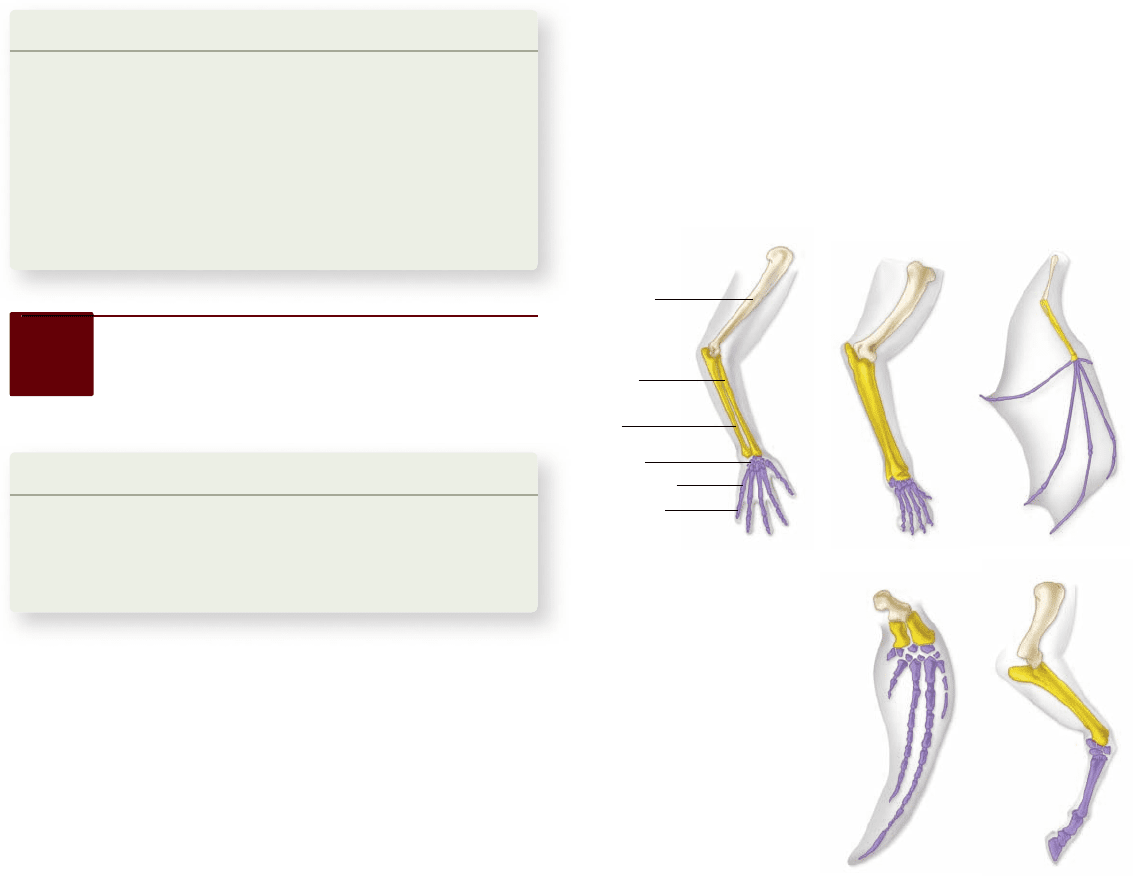
Figure 21.14
Homology
of the bones of the forelimb
of mammals. Although these
structures show considerable
differences in form and
function, the same basic bones
are present in the forelimbs of
humans, cats, bats, porpoises,
and horses.
Finally, even when a trend exists, exceptions, such as the
evolutionary decrease in body size exhibited by some lineages,
are not uncommon. These patterns are usually discovered for
any group of plants and animals for which we have an extensive
fossil record, as you will see when we discuss human evolution
in chapter 35 .
Horse diversity
One reason that horse evolution was originally conceived of as
linear through time may be that modern horse diversity is rela-
tively limited. For this reason it is easy to mentally picture a
straight line from Hyracotherium to modern-day Equus. But to-
day’s limited horse diversity—only one surviving genus—is un-
usual. In fact, at the peak of horse diversity in the Miocene
epoch, 13 genera of horses could be found in North America
alone. These species differed in body size and in a wide variety
of other characteristics. Presumably, they lived in different hab-
itats and exhibited different dietary preferences. Had this diver-
sity existed to modern times, early evolutionary biologists
would likely have had a different outlook on horse evolution.
Learning Outcomes Review 21.4
Fossils form when an organism is preserved in a matrix such as amber,
permafrost, or rock. They can be used to construct a record of major
evolutionary transitions over long periods of time. The extensive fossil
record for horses provides a detailed view of evolutionary diversifi cation
of this group, although trends are not constant and uniform and may
include exceptions.
■ Why might rates and direction of evolutionary change
vary through time?
their presence betraying their evolutionary past. For example,
the forelimbs of vertebrates are all homologous structures—
structures with different appearances and functions that all de-
rived from the same body part in a common ancestor.
You can see in figure 21.14 how the bones of the forelimb
have been modified in different ways for different mammals.
Why should these very different structures be composed of the
same bones—a single upper forearm bone, a pair of lower fore-
arm bones, several small carpals, and one or more digits? If evo-
lution had not occurred, this would indeed be a riddle. But
when we consider that all of these animals are descended from
a common ancestor, it is easy to understand that natural selec-
tion has modified the same initial starting blocks to serve very
different purposes.
Early embryonic development shows
similarities in some groups
Some of the strongest anatomical evidence supporting evolu-
tion comes from comparisons of how organisms develop. Em-
bryos of different types of vertebrates, for example, often are
similar early on, but become more different as they develop.
Early in their development vertebrate embryos possess pha-
ryngeal pouches, which develop into different structures. In
humans, for example, they become various glands and ducts;
in fish, they turn into gill slits. At a later stage, every human
embryo has a long tail, the vestige of which we carry to adult-
hood as the coccyx at the end of our spine. Human fetuses
428
part
IV
Evolution
rav32223_ch21_417-435.indd 428rav32223_ch21_417-435.indd 428 11/11/09 4:15:41 PM11/11/09 4:15:41 PM
Apago PDF Enhancer
Blind
spot
a. b.
Nerve fibers
To brain via
optic nerve
Photoreceptor cells
Photopigment
Photopigment Photoreceptor cells
Nerve fibers
to brain
Interneuron
Nerve impulse
Light
Light
even possess a fine fur (called lanugo) during the fifth month
of development.
Similarly, although most frogs go through a tadpole stage,
some species develop directly and hatch out as little, fully-
formed frogs. However, the embryos of these species still ex-
hibit tadpole features, such as the presence of a tail, which
disappear before the froglet hatches (figure 21.15).
These relict developmental forms suggest strongly
that our development has evolved, with new instructions
modifying ancestral developmental patterns. We will return
to the topic of embryonic development and evolution in
chapter 25.
Some structures are imperfectly
suited to their use
Because natural selection can only work on the variation pres-
ent in a population, it should not be surprising that some or-
ganisms do not appear perfectly adapted to their environments.
For example, most animals with long necks have many neck
vertebrae for enhanced flexibility: Geese have up to 25, and
plesiosaurs, the long-necked reptiles that patrolled the seas
during the age of dinosaurs, had as many as 76. By contrast,
almost all mammals have only 7 neck vertebrae, even the gi-
raffe. In the absence of variation in vertebrae number, selection
led to an evolutionary increase in vertebra size to produce the
long neck of the giraffe.
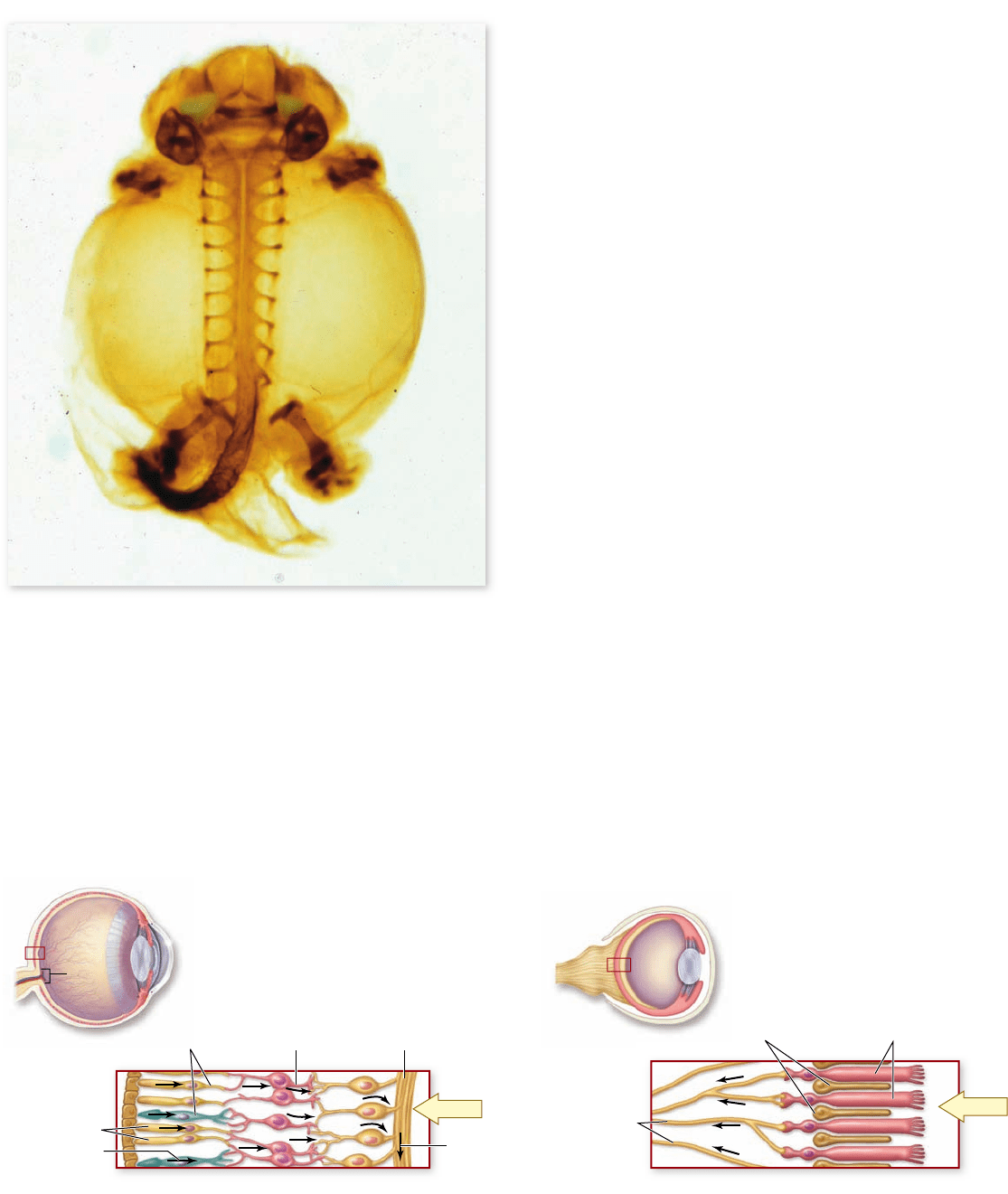
An excellent example of an imperfect design is the eye of
vertebrate animals, in which the photoreceptors face back-
ward, toward the wall of the eye (figure 21.16a). As a result,
the nerve fibers extend not backward, toward the brain, but
forward into the eye chamber, where they slightly obstruct
light. Moreover, these fibers bundle together to form the op-
tic nerve, which exits through a hole at the back of the eye,
creating a blind spot.
By contrast, the eye of mollusks—such as squid and
octopuses—are more optimally designed: The photoreceptors
face forward, and the nerve fibers exit at the back, neither ob-
structing light nor creating a blind spot (figure 21.16b).
Such examples illustrate that natural selection is like a
tinkerer, working with whatever material is available to craft a
workable solution, rather than like an engineer, who can design
Figure 21.15
Developmental features re ect
evolutionary ancestry. Some species of frogs have lost the
tadpole stage. Nonetheless, tadpole features rst appear and then
disappear during development in the egg.
Figure 21.16
The eyes of vertebrates and mollusks. a. Photoreceptors of vertebrates point backward, whereas (b) those of mollusks
face forward. As a result, vertebrate nerve bers pass in front of t he photoreceptor; and where they bundle together and exit the eye, a blind
spot is created. Mollusks’ eyes have neither of these problems.
chapter
21
The Evidence for Evolution
429www.ravenbiology.com
rav32223_ch21_417-435.indd 429rav32223_ch21_417-435.indd 429 11/11/09 4:15:41 PM11/11/09 4:15:41 PM
Apago PDF Enhancer
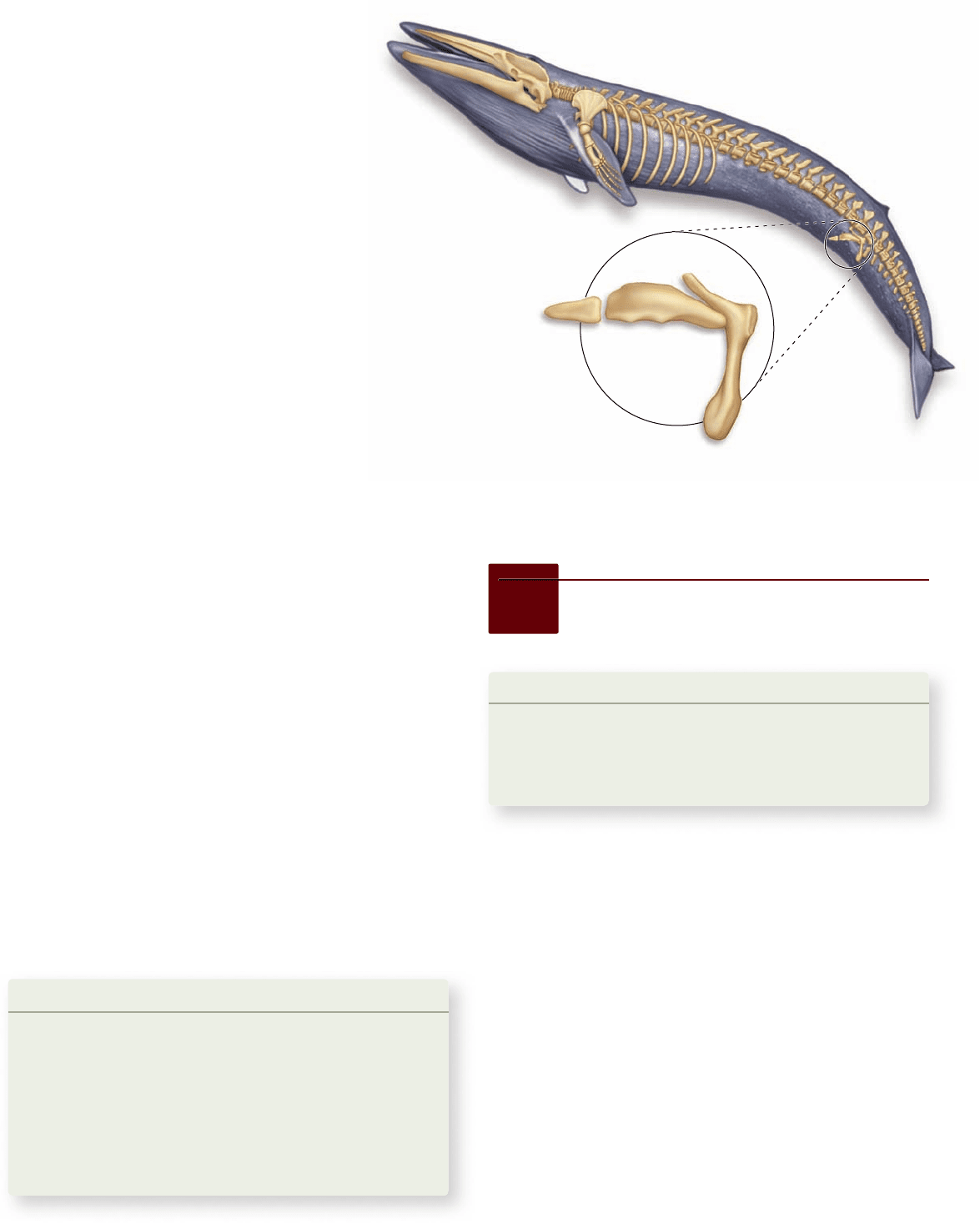
Figure 21.17
Vestigial structures. The skeleton of a whale
reveals the presence of pelvic bones. These bones resemble those of
other mammals, but are only weakly de veloped in the whale and
have no apparent function.
and build the best possible structure for a given
task. Workable, but imperfect, structures such as
the vertebrate eye are an expected outcome of evo-
lution by natural selection.
Vestigial structures can be explained
as holdovers from the past
Many organisms possess vestigial structures that have no
apparent function, but resemble structures their ancestors
possessed. Humans, for example, possess a complete set of
muscles for wiggling their ears, just like many other mam-
mals do. Although these muscles allow other mammals to
move their ears to pinpoint sounds such as the movements or
growl of a predator, they have little purpose in humans other
than amusement.
As other examples, boa constrictors have hip bones
and rudimentary hind legs. Manatees (a type of aquatic
mammal often referred to as “sea cows”) have fingernails on
their fins, which evolved from legs. Blind cave fish, which
never see the light of day, have small, nonfunctional eyes.
Figure 21.17 illustrates the skeleton of a baleen whale,
which contains pelvic bones, as other mammal skeletons do,
even though such bones serve no known function in
the whale.
The human vermiform appendix is apparently vestigial;
it represents the degenerate terminal part of the cecum, the
blind pouch or sac in which the large intestine begins. In oth-
er mammals, such as mice, the cecum is the largest part of the
large intestine and functions in storage—usually of bulk cel-
lulose in herbivores. Although some functions have been sug-
gested, it is difficult to assign any current function to the
human vermiform appendix. In many respects, it can be a dan-
gerous organ: appendicitis, which results from infection of the
appendix, can be fatal.
It is difficult to understand vestigial structures such as
these as anything other than evolutionary relicts, holdovers
from the past. However, the existence of vestigial structures ar-
gues strongly for the common ancestry of the members of the
groups that share them, regardless of how different those
groups have subsequently become.
All of these anatomical lines of evidence—homology, de-
velopment, and imperfect and vestigial structures—are readily
understandable as a result of descent with modification, that
is, evolution.
Learning Outcomes Review 21.5
Comparisons of the anatomy of diff erent living animals often reveal
evidence of shared ancestry. In cases of homology, the same organ has
evolved to carry out diff erent functions. In other cases, an organ is still
present, usually in diminished form, even though it has lost its function
altogether; such an organ or structure is termed vestigial.
■ How might homologous and vestigial structures be
explained other than as a result of evolutionary descent
with modification?
21.6
Convergent Evolution and the
Biogeographical Record
Learning Outcomes
Explain the principle of convergent evolution.1.
Demonstrate how the biogeographical distribution of 2.
plant and animal species on islands provides evidence of
evolutionary diversification.
Biogeography, the study of the geographic distribution of spe-
cies, reveals that different geographical areas sometimes exhibit
groups of plants and animals of strikingly similar appearance,
even though the organisms may be only distantly related.
It is difficult to explain so many similarities as the result
of coincidence. Instead, natural selection appears to have fa-
vored parallel evolutionary adaptations in similar environments.
Because selection in these instances has tended to favor changes
that made the two groups more alike, their phenotypes have
converged. This form of evolutionary change is referred to as
convergent evolution.
Marsupials and placentals
demonstrate convergence
In the best known case of convergent evolution, two major
groups of mammals—marsupials and placentals—have evolved
in very similar ways in different parts of the world. Marsupials
430
part
IV
Evolution
rav32223_ch21_417-435.indd 430rav32223_ch21_417-435.indd 430 11/11/09 4:15:44 PM11/11/09 4:15:44 PM
Apago PDF Enhancer
Wolf
Thylacine
Flying squirrel
Flying phalanger
Niche
Placental
Mammals
Australian
Marsupials
Burrower
Mole
Lesser anteater
Grasshopper
mouse
Ring-tailed lemur
Ocelot
Tasmanian
quoll
Spotted cuscus
Numbat
Marsupial mole
Marsupial
mouse
Anteater
Nocturnal
Insectivore
Climber Glider
Stalking
Predator
Chasing
Predator
are a group in which the young are born in a very immature
condition and held in a pouch until they are ready to emerge
into the outside world. In placentals, by contrast, offspring are
not born until they can safely survive in the external environ-
ment (with varying degrees of parental care).
Australia separated from the other continents more
than 70 million years ago; at that time, both marsupials and
placental mammals had evolved, but in different places. In
particular, only marsupials occurred in Australia. As a result
of this continental separation, the only placental mammals
in Australia today are bats and a few colonizing rodents
(which arrived relatively recently), and Australia is dominated
by marsupials.
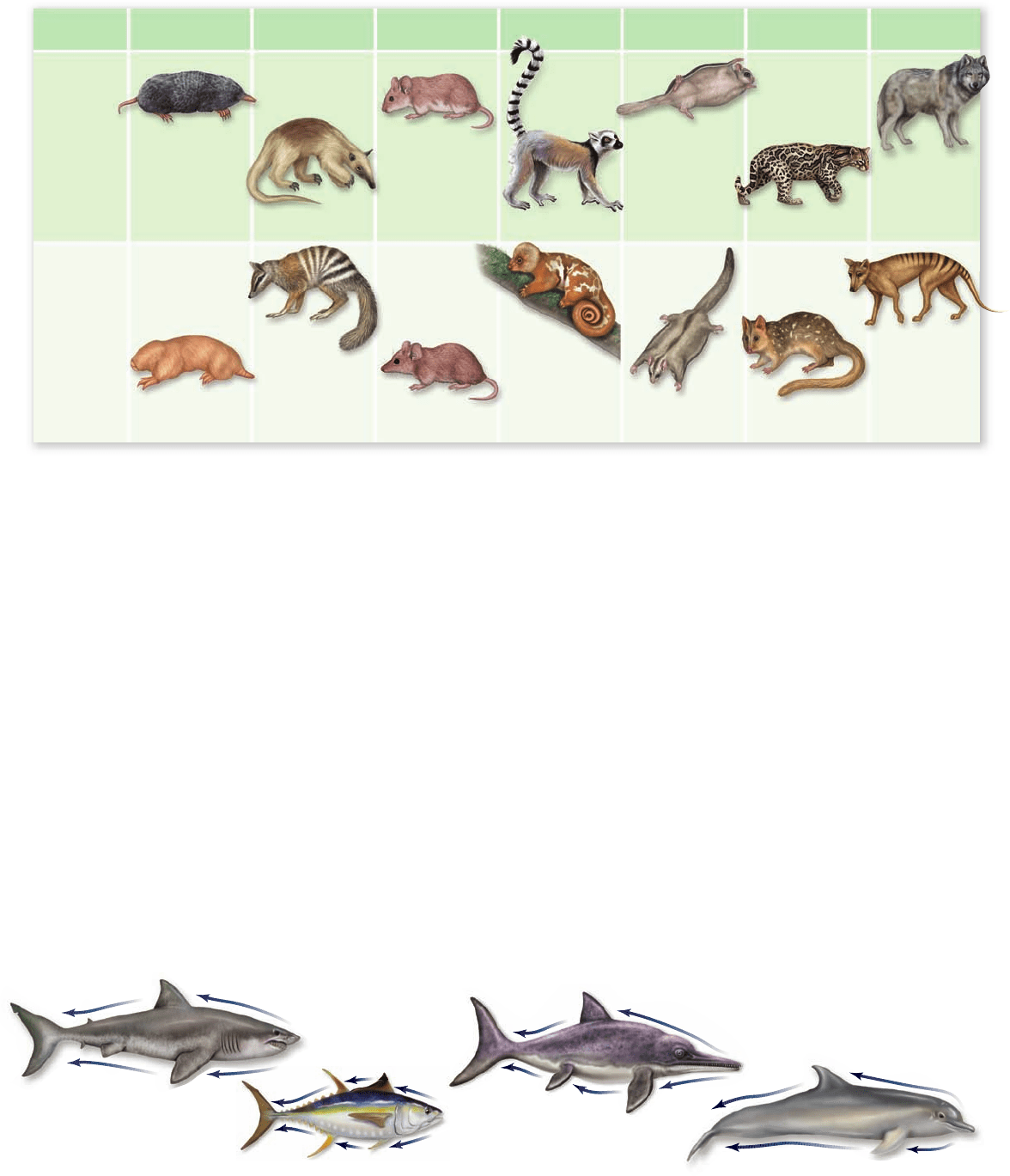
What are the Australian marsupials like? To an astonish-
ing degree, they resemble the placental mammals living today
on the other continents (figure 21.18). The similarity between
some individual members of these two sets of mammals argues
strongly that they are the result of convergent evolution, simi-
lar forms having evolved in different, isolated areas because of
similar selective pressures in similar environments.
Convergent evolution
is a widespread phenomenon
When species interact with the environment in similar ways, they
often are exposed to similar selective pressures, and they therefore
frequently develop the same evolutionary adaptations. Consider,
for example, fast-moving marine predators ( figure 21.19). The
hydrodynamics of moving through water require a streamlined
body shape to minimize friction. It is no coincidence that dol-
phins, sharks, and tuna—among the fastest of marine species—
have all evolved to have the same basic shape. We can infer as well
that ichthyosaurs—marine reptiles that lived during the Age of
the Dinosaurs—exhibited a similar lifestyle.
Island trees exhibit a similar phenomenon. Most islands
are covered by trees (or were until the arrival of humans). Care-
ful inspection of these trees, however, reveals that they are not
closely related to the trees with which we are familiar. Although
they have all the characteristics of trees, such as being tall and
having a tough outer covering, in many cases island trees are
members of plant families that elsewhere exist only as flowers,
Figure 21.18
Convergent evolution. Many m arsupial species in Australia resemble placental mammals occupying similar ecological
niches elsewhere in the rest of the world. Marsupials evolved in isolation after Australia separated from other continents.
Figure 21.19
Convergence among fast-swimming predators. Fast movement through water requires a streamlined body form,
which has evolved numerous times.
chapter
21
The Evidence for Evolution
431www.ravenbiology.com
rav32223_ch21_417-435.indd 431rav32223_ch21_417-435.indd 431 11/11/09 4:15:44 PM11/11/09 4:15:44 PM